







Abstract
In December 2019, Covid-19 virus spread from Wuhan, China, to the rest of the world and had profound impact on politics, economy, society, and culture as well as significant effect on libraries and information utilization. This study aimed to propose future directions for library service by analyzing information use behavior of researchers and deriving the requirements through a survey method. As a result, it was initially identified that the data types and search paths used by researchers have changed to using electronic or online resources. Second, it was difficult to access and acquire certain data only available offline along with difficulty in searching and selecting data suitable for the purpose of research, difficulty in grasping the material, and technical problems such as usage method, search, and information use environment were identified. Third, after Covid-19, there has been a change in demand for services people need from libraries. Including the expansion of budget support for securing digital content, free provision of e-books and e-journals for a limited time by publishers, free provision of paid educational content for a certain period, and temporary copyright agreement for works, libraries were required to make efforts to secure information resources available online in response to Covid-19.
Keywords
Introduction
The whole world has experienced how Covid-19 transformed our lives upside down. Coronavirus is a new form of respiratory tract infection that first occurred in Wuhan, China, in December 2019 and has spread worldwide. As of 14 July 2020, the accumulated confirmed cases was 13,479 people in Korea and 12,788,682 people worldwide, and among these the United States has the most confirmed cases with 3,301,820 people, followed by Brazil with 1,864,681 people, and India with 849,553 people (Yoon, 2020b).
Coronavirus is entirely changing our daily lives. The education system is revolutionized from offline to online, and not only elementary, middle, and high schools but also universities are providing recorded or live stream classes. Upon this, online education platforms have become the basics of educational infrastructure of most schools and the communication between students and teachers changed as well. Hence, workplace culture has changed tremendously. Work from home is now the new normal, flextime workweek has been implemented, and this is also a solution to the issue of dense population. Covid-19 is also influencing corporate ecosystem, travel and leisure, and new industry fields (Yoon, 2020c).
How about libraries? Almost every library in Korea has closed its doors and initiated a Covid-19 response service strategy. The most common services include drive-through lending, “walking through lending,” “lending reservation service,” “secure lending service,” “self-service reservation lending,” and “safe delivery box for women,” among others, and digital information resource services such as e-book or electronic journal were invigorated along with emphasis on online reference service and online lecture service. In addition, a method of solution has been proposed on public utilization of data for supporting research and education of libraries and its copyright issues (Kim, 2020).
Library is taking the role of providing the most accurate information at the right moment by accommodating specific information users need. In this Covid-19 pandemic era, library’s role of providing trustworthy information source was especially emphasized. Following this, libraries not only provide information regarding Covid-19 and response information, frequently asks questions about Covid-19, but also arranging media literacy education for people to differentiate from the correct one. On 16 April 2020, International Federation of Library Association and Federation (IFLA) announced an infographic for people to distinguish fake news, especially at this time of global pandemic. This infographic proposes about eight ways to how to discern the source of information, the validity of information source, and professionals.
It appears that libraries will play various roles at this time of crisis. The interest on Complex Cultural Space or Makerspace that have extended with public libraries at the center brainstorming ways to substitute with contact-free services. Special library or university library users usually received support on their research or education through offline services (Korean Library Association, 2020a). However, the current use behavior of special or university libraries would be completely different from the past plus the users’ demands toward these libraries would be entirely different as well.
Accordingly, this study intends to analyze information use behavior and needs of university or research institution affiliate researchers to propose the direction of future library services. To identify users’ needs, the researchers developed a survey that approaches the requirements in multiple angles such as information source, information usage route, and preferred institution. Moreover, this assessment of use behavior before and after the outbreak of Covid-19 aims to provide reference for librarians to develop services in the future.
Theoretical background
Covid-19 and library
The Covid-19 is more than a virus since it brought a new paradigm to life. The core transformation and attributes of the post-corona virus is “contactless trend.” The contactless culture is settling across various fields of everyday life, consumption, education, workplace, and medical industry, among others, thereby bringing change to the overall economy and industry. The world of “new normal (new standard following changes of time)” has arrived where unusual phenomena became the norm (Yoon, 2020b). SK Telecom also supported the view for the contactless trend conceived since the Covid-19 crisis as a new opportunity for the information and communication technology (ICT) corporations (Yoon, 2020c). Likewise, Lotte Group mentioned the need to accelerate digital transition such as smart factory in preparations for the post-Covid-19 (Yoon, 2020a).
Among the influences on cultural trend caused by this pandemic, it is important to pay attention to the strengthened contactless services. First, the online performance culture is active more than ever—spanning from opera, theater to church services. Second, the effective power of live tools including Instagram and YouTube has been proven, and the third, changes have taken place in chatting (communication). Live conversations with and among the audiences would disrupt concentration in the offline performances, but the audience attending online performances would naturally chat with each other, displaying complete changes in the performance culture (Cha, 2020).
In addition, it is an agreed outlook that the social economic recovery from the Covid-19 would extend over a long time period, and library is also changing and sharing the regional information and resources, and most popular programs into online services while maintaining communication with local residents through chat, text, telephone, and email (Noh and Chang, 2020). In this way, we can expect the consolidation of contactless and online services in the libraries, and according to the U.S. Public Library Association, most public libraries in the United States have closed their buildings due to the Covid-19, yet they are providing innovative services to the local community. According to a survey, library services are rapidly changing following the promotion of the online period extension policy (76%), online service expansion to e-books and streaming media (74%), while adding virtual programming (61%), among others (Australian Library and Information Association (ALIA), 2019). Moreover, further changes are planned, such as switching budget from purchasing printed data to digital data or providing phone service to the users who are not able to connect digitally.
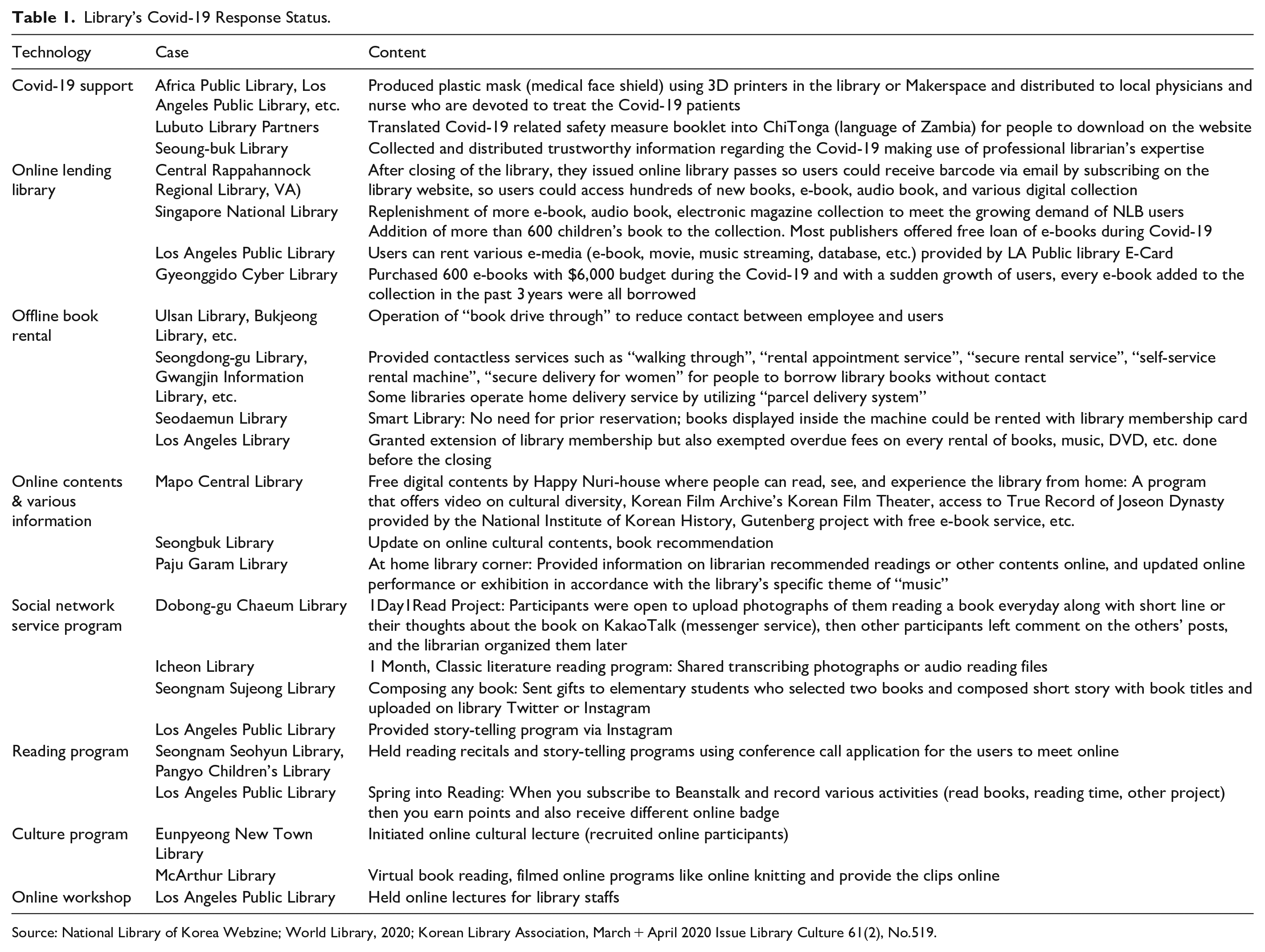
Table 1 illustrates how most libraries around the world are converting their programs to the “virtual,” and with the recent rendezvous of international emergency and new technology, the prospect of educational culture including libraries would have increased contactless, online services and contents. Particularly for the ways of providing services, libraries are offering various services through various online platforms such as YouTube and Zoom.
Library’s Covid-19 Response Status.
Source: National Library of Korea Webzine; World Library, 2020; Korean Library Association, March + April 2020 Issue Library Culture 61(2), No.519.
Relative previous research
A significant number of trend reports, forum materials, and thesis accounts the swift response of the library associations, other library related interagency institutions and researchers in response to this national crisis. Libraries and other related fields have encountered a critical situation due to Covid-19, but they managed to get their hands quickly on related research as well. The most recent thesis by Kim (2020) recommended five sustainable library service measures. In other words, the study delved but not limited to preventive measures, disinfection, rental and reading, user service, electronic resources utilization, exploration of external resources, manpower utilization plan, and consolidation of promotion among others. Noh and Chang (2020) investigated library awareness on public library’s response toward Covid-19, and based on this study, they proposed response plan for public libraries in this prolonged proliferation of new infectious virus.
Due to prolonged Covid-19 pandemic, multiple studies have been administered to suggest alternative according to different types of various libraries worldwide, and Rafiq et al. (2021) conducted an exploratory investigation on university libraries’ response to the Covid-19 pandemic. This study explored the practices and services pattern during the pandemic when the university classes all shifted to online classes. Ali and Gatiti (2020) reflect on role of librarians during the pandemic in the context of Pakistan. They described the following three key roles of the health sciences librarian during the Covid-19 pandemic: promotion and dissemination of information related to preventive measures for public health awareness; supporting researchers by providing latest information regarding the disease; and to fulfill the information needs of everyday library users. Yuvaraj (2020) also suggests that health science librarians have three important roles to play during the COVID-19 pandemic: to provide awareness on preventive measures relating to COVID-19; to provide document delivery services during lockdown; to support researchers working on COVID-19.
However, multiple pilot studies on disaster preparation plan have been conducted with intent for libraries to take the leading role of bringing social integration as service providing organizations during disastrous situations. Previous studies are as follows: a study that organized how to prevent, prepare, respond, and restore in preserving library books during disastrous events like fire or flood (Bang, 1998), a study related to setting disaster response for library in general (Kim, 2006), a study that proposed disaster plan for individual libraries by rearranging existent disaster plans during the period of Sewol Ferry disaster when safety awareness was at its height (Jeon, 2014), a study that suggested arrangement standards of distance and emergency stairs to help with escape during emergent situation (Kim and Jeon, 2017), a study on basic principles for general “conservation and disaster management” for libraries and archives (Forde and Rhys-Lewis, 2013), a study related to “disaster plan establishment” that includes factors and necessary procedures in setting disaster plan (Kahn, 2012; Shepard, 2018), and a study on “detailed elements of disaster prevention” (Sharpe, 2017).
Some disaster response research have been conducted on the user perspective, and Lee et al. (2016) have proposed a safety manual for user safety and library staffs with four domains: establishment of safety management plan, safety measure per incidents, restoration of information resources, and safety management checklist, for reference in response to disaster that could possibly occur in libraries.
Especially in this study, “infectious disease” is included in the subsection of user safety, extending from the existent natural disaster-centered disaster management. Aside from this, another study organized and proposed six elements including the establishment of disaster prevention committee and division of labor, danger evaluation, production of disaster handbook for instant response, restoration, work continuity plan, then training and collaborative activities (Lee, 2019). There is also a study that rearranged library response regarding the spreading of Covid-19 in the United States (Ryu, 2020).
Several manuals were developed based on their research study including IFLA’s (2006) “IFLA Disaster Preparedness and Planning: A Brief Manual,” “Library as Safe Haven: Disaster Planning, Response, and Recovery; A How-To-Do-It Manual for Librarians” (Halsted et al., 2014) published as a book, and Australian Library and Information Association’s (2019) “ALIA Disaster Management for Libraries.”
Moreover, there has been a rapid increase in cases of developing websites that share electronic resources following the high demand of electronic resources due to Covid-19, such as the IFLA (2020), The Institute of Museum and Library Services (IMLS, 2020), The American Library Association (2020), The Association of College and Research Libraries (2020), ALIA (2020), and The International Coalition of Library Consortia (2020).
Meanwhile, this study focuses on the change in use behavior of researchers after the outbreak of Covid-19 along with investigating the information use behavior. The research on information use behavior of users is a major interest field of library and information science studies with its long history and abundant relative studies. Initially, studies on information use behavior according to each specialized field were accompanied. There are various research including science technology realm (Bae, 2010; Han, 1976; Yoo, 2002), social science field (Choi, 1997; Kim, 2012; Park et al., 2000), medical field (Lee, 1999), law (Hong, 1997), humanities (Yoon, 2009), education (Park, 2011), theology (Ahn, 1991), art & design (Lee and Jung, 2012), industry & corporation (Cho, 1979; Kim, 1990), and so on. Lee and Kim (2015) researched/analyzed prior research related to various academic and professional fields with regard to researchers’ information use behavior. In other words, studies in intimate relation to information use behavior conducted from 1970s to 2014 were investigated with emphasis on research method, subject, variable, and results were divided into the realm of science technology, social science, and other fields. The analysis methods employed by researchers above include survey, in-person interview, survey + in-person interview, and so on. There are variety of analysis variable for every researcher such as information gathering frequency, information acquisition route, factors to consider in information gathering, difficulty in information acquisition, information data behavior, information use frequency, information data satisfaction level, major resource used, and view of electronic information utilization.
Research design and research question
Research question
The Covid-19 virus has changed various aspects of our daily lives such as keeping 2 m distance, refraining from going out and staying at home and suggestion of other guidelines to prevent spread of the infectious disease. In fact, this pushed a lot of people to adapt to the changing daily lives from enjoying relationship with friends and family to continuing education of children; it ultimately forced people to discover new ways to explore everyday lives. Libraries also temporarily closed their doors in response to this matter, but with the unprecedented closing of educational institutions and proceeding of online courses, the situation demanded libraries of extended untact services, changes in the service method, and especially, a demand for re-examination of digital library service. There appears to be a demand in use behavior change of library users and probably brought changes to researcher’s material exploration behavior. Following this, the current study raises the following research questions:
RQ1. How did Covid-19 influence information use behavior of researchers?
RQ2. How did Covid-19 cause difficulty for researchers in using library and information use?
RQ3. Is there a change in demand for library services after Covid-19?
The answers to the questions above are intended to be discovered through bibliography analysis, case study, survey, and so on and further will be discussed intensively in the discussion section.
Research method
The respective study intended to analyze the user behavior through the method of survey. The survey model was based on human power currently conducting research development activities, the entire researcher group who works on national research projects by receiving funds from Korea Research Foundation. In other words, the subjects of the survey model are based on the human-social based interdisciplinary researcher group, who received research funds from the Korea Research Foundation (complete enumeration survey method). The range of respondents are chief of research and co-researchers. There are a total of 42 organizations with 152 chiefs of research and co-researchers. The researchers distributed the survey to total of 152 people and 108 people participated in the survey, making the collection rate 71.05%.
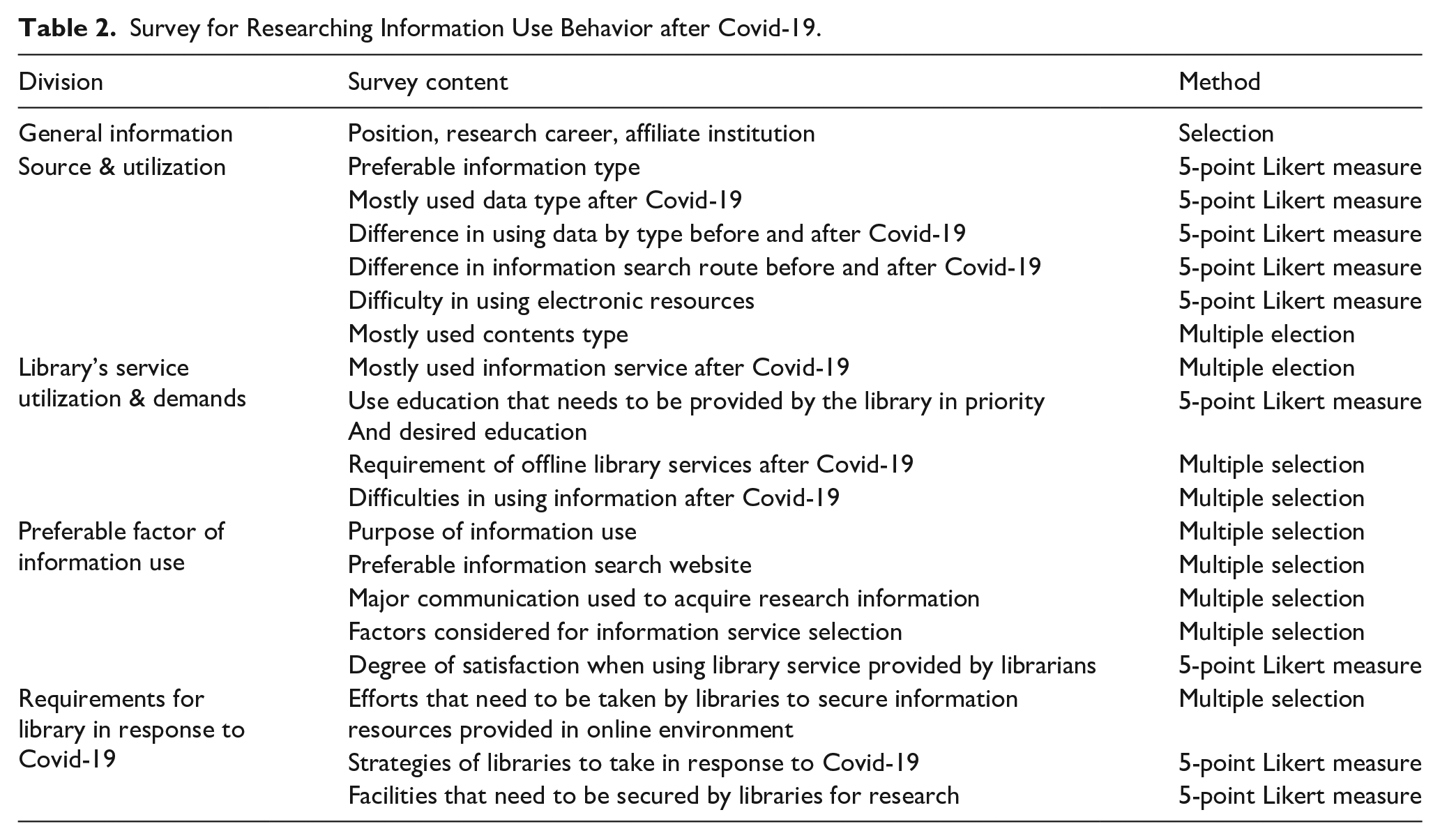
The starting point for the analysis of use behavior and users’ demand post Covid-19 is the infectious virus itself. Covid-19 has influenced with changes on information use type, difficulty in using information, information seeking route, and demands to the library. This is due to the imperativeness of online activities, which have heightened due to the limits of offline activities. The contents of the survey were developed from thorough analysis of the aforementioned research studies. In other words, the composition of the survey is divided to general information, source and utilization, library service utilization and requirement, information cost and preferable factors, and demands to the library in response to Covid-19. The detail of such survey is as highlighted in Table 2. To assess the transformation in researcher’s use behavior post Covid-19, the method of frequency analysis, descriptive statistics, and multiple response analysis have been conducted.
Survey for Researching Information Use Behavior after Covid-19.
Analysis result
Demographical attribute
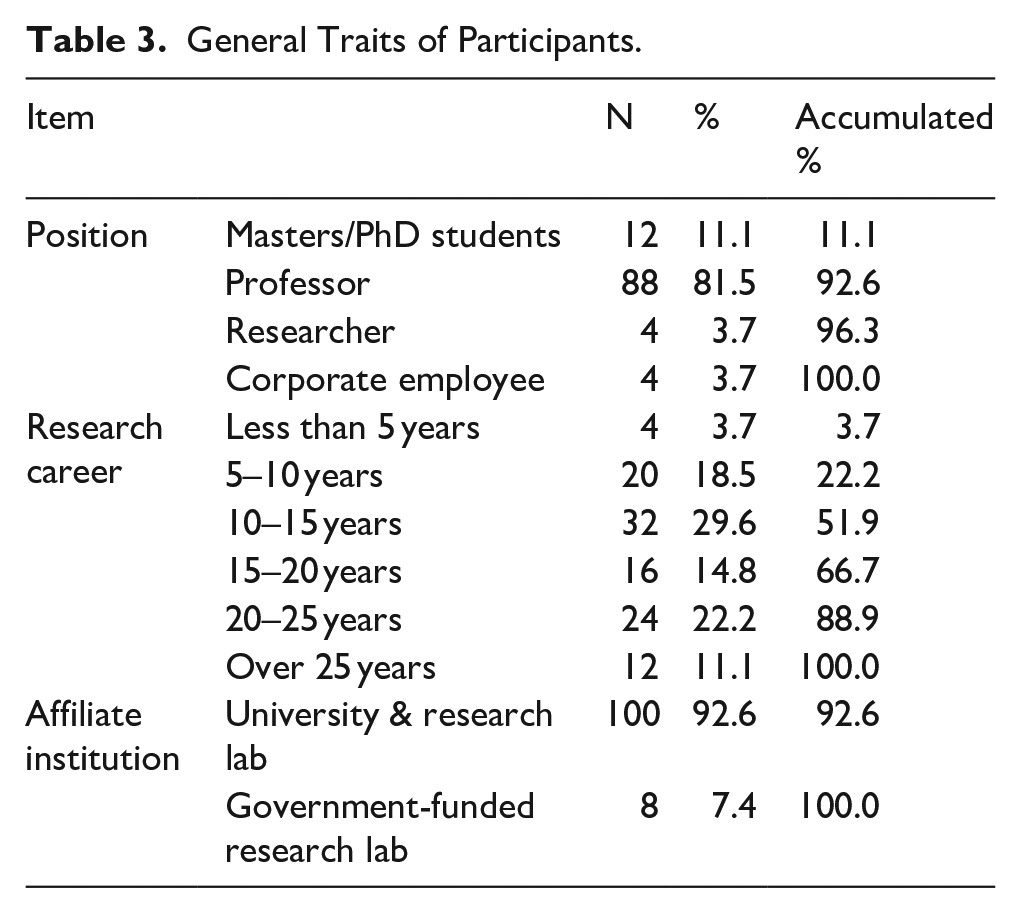
The frequency analysis of general attributes on 109 people who participated in this survey will be outlined in the next sentence. In position, professors were the majority, with 81.5% and 11.1% master’s and PhD students, respectively, and 3.7% researchers and 3.7% corporate employees. For the question on research career, 10–15 years was highest with 29.6%, 20–25 years with 22.2%, 5–10 years with 18.5%, 15–20 years with 14.8%, and over than 25 years with 11.1%. Moreover, for the survey on affiliate institution, university and research laboratory took up majority with 92.6% (refer to Table 3).
General Traits of Participants.
Source and utilization analysis
Preferable information type
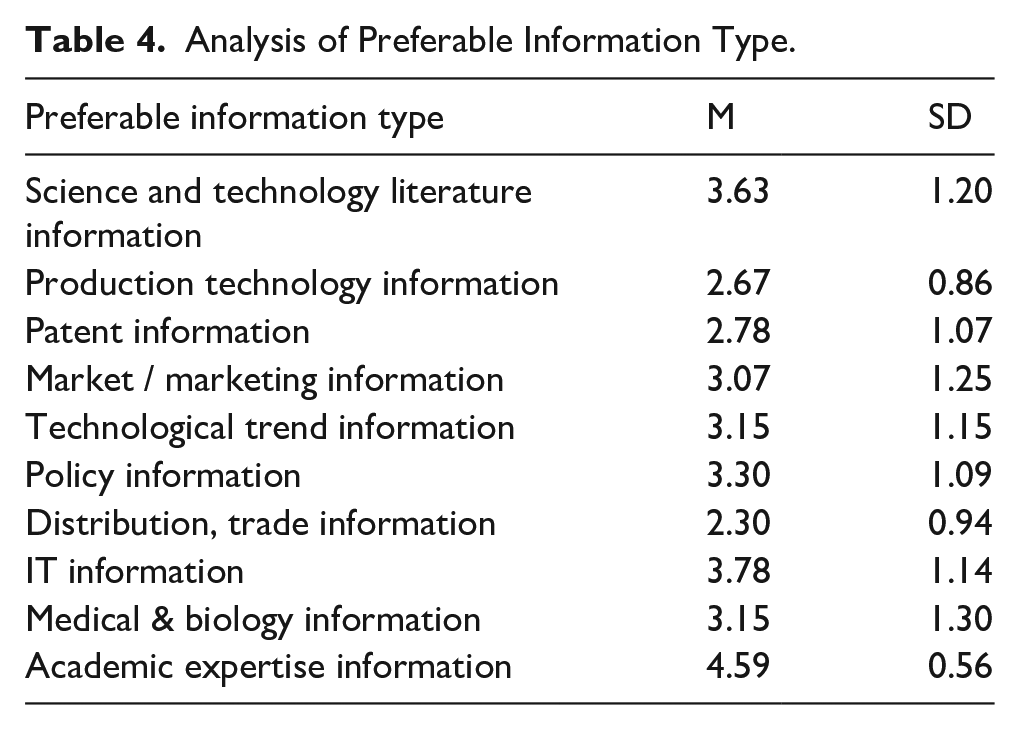
This study conducted descriptive statistical analysis to assess contents related to source and utilization (Table 4). As a result, academic expertise information has the highest average of 4.59, followed by IT (Information Technology) information 3.78, science and technology literature information 3.63, and policy information 3.30. The lowest average was distribution, trade information with 2.30.
Analysis of Preferable Information Type.
Transformation of data type use & information search route before and after Covid-19
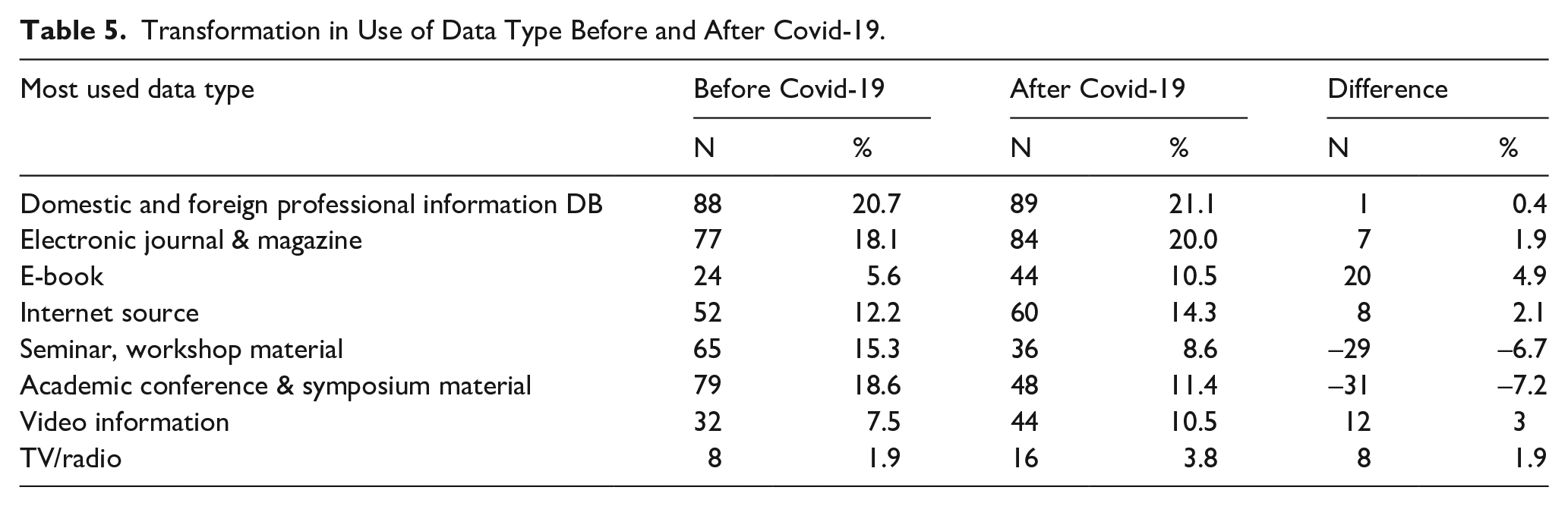
For the multiple response analysis on most used data type before Covid-19, domestic and foreign professional information DB showed highest frequency with 20.7% followed by conference and symposium materials 18.8%, electronic journal and magazine 18.1%, seminar, workshop material 15.3%, Internet source 12.2%, video information 7.5%, and e-book 5.6%. Then for the analysis of most used data type after Covid-19, domestic and foreign professional information DB came out to be 21.1%, electronic journal and magazine 20%, Internet source 14.3%, academic conference and symposium data 11.4%, e-book and video information each had 10.5%, and seminar and workshop with 8.6%.
As a result of the analysis, the use of e-book and video information increased in comparison to before and after Covid-19, and on the contrary, there has been a distinctive reduction trend in contact-required data types such as seminar and workshop data, academic conference, and symposia data (refer to Table 5).
Transformation in Use of Data Type Before and After Covid-19.
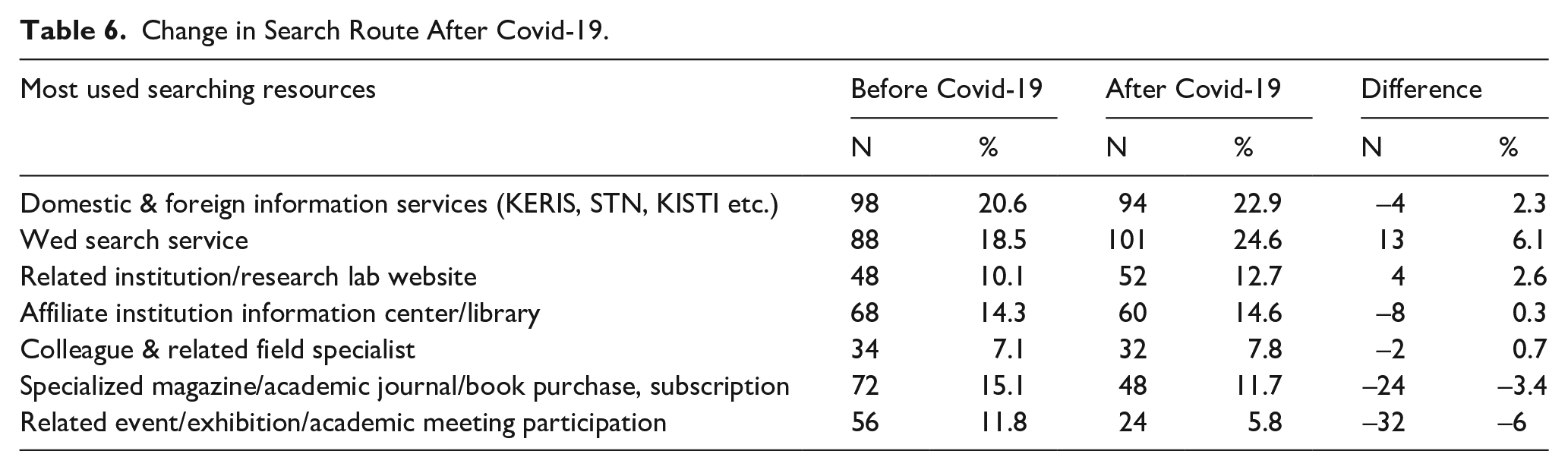
For the survey on information search route before Covid-19, domestic and foreign information services (KERIS, STN, KISTI, etc.) were highest with 20.6%, followed by web search service with 18.5%, specialized magazine/academic journal/book purchase, subscription with 15.1%, affiliate institution information center/library with 14.3%, related event/exhibition/academic conference participation with 11.8%, and related institution/research lab website had 10.1%, but on the contrary, for the survey on information search route after Covid-19, web search service was the highest with 24.6%, domestic and foreign information services (KERIS, STN, KISTI, etc.) followed with 22.9%, affiliate institution information center/library with 14.6%, related institution/research lab website with 12.7%, and specialized magazine/academic journal/book purchase, subscription had 11.7%.
To recap the analysis result, the item with the highest percentage post Covid-19 is the untact web search service, and the lowest item was related event/exhibition/academic conference participation and specialized magazine/academic journal/book purchase, subscription (refer to Table 6).
Change in Search Route After Covid-19.
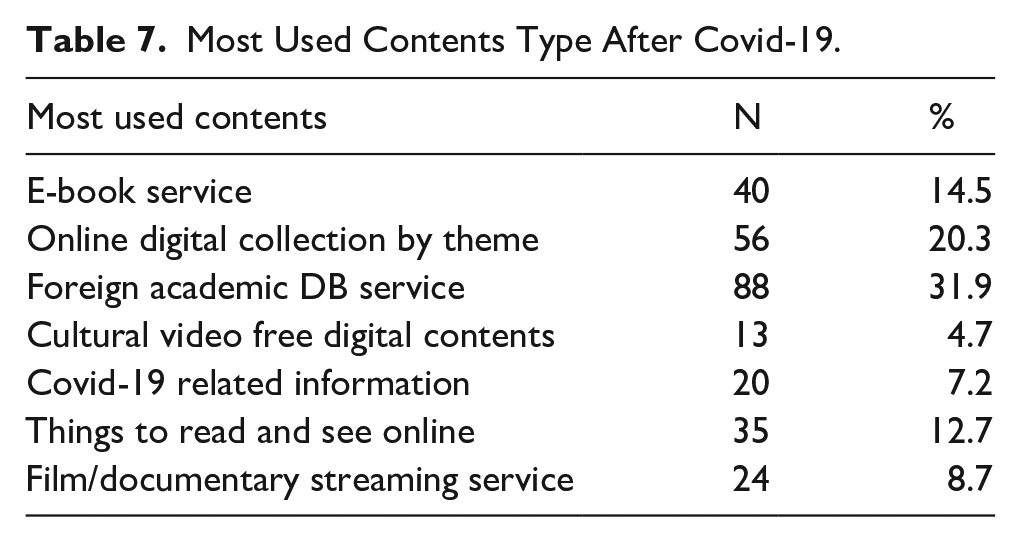
For the survey on most used contents type, foreign academic DB service ranked the highest with 31.9%, followed by online digital collection by theme 20.3%, e-book service 14.5%, online things to read and see 12.7%, film/documentary streaming service 8.7%, and Covid-19 related information was 7.2% (refer to Table 7).
Most Used Contents Type After Covid-19.
Difficulty in using electronic resources
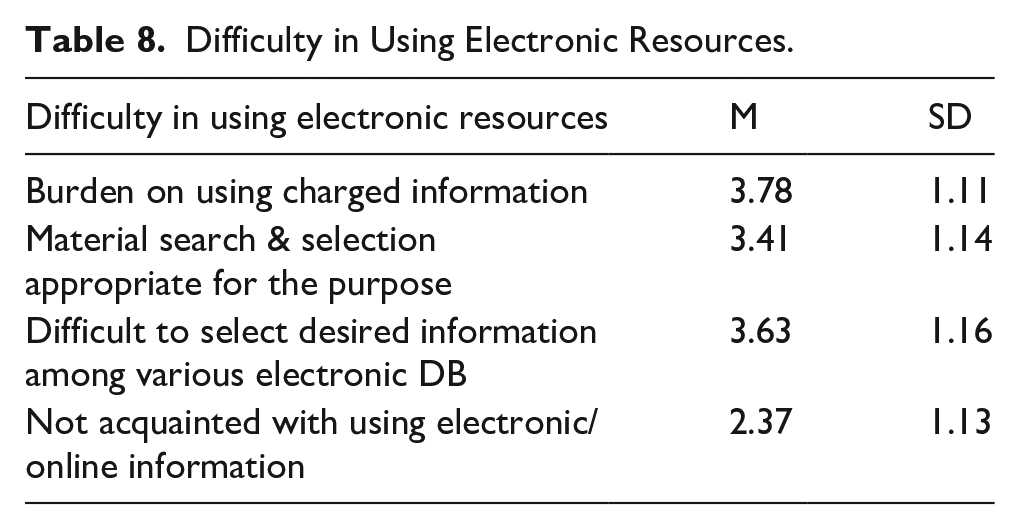
For the survey on difficulty using electronic resources, the burden on using charged information had the highest with average of 3.78 followed by difficulty in selecting desired information from various electronic DB with 3.63. The lowest average item was not knowing how to use electronic/online information with 2.37. From this result, researchers are mostly burdened by charged information rather than difficulty in searching information; therefore, libraries should consider ways to reduce user expense on charged information and mutual loan by constructing a common resource sharing system (refer to Table 8).
Difficulty in Using Electronic Resources.
Analysis of library service utilization and demand
Analysis of library service utilization and demand after Covid-19
The survey on library service utilization and demand is outlined in Table 9. Examining the details of analysis result, the survey on most used information service after Covid-19 presented online database with highest percentage of 47.3%, data rental/reading service was 23.4%, followed by original text copy service 11.2%, and 10.6% PUSH service.
Major Library Service in Demand After Covid-19.
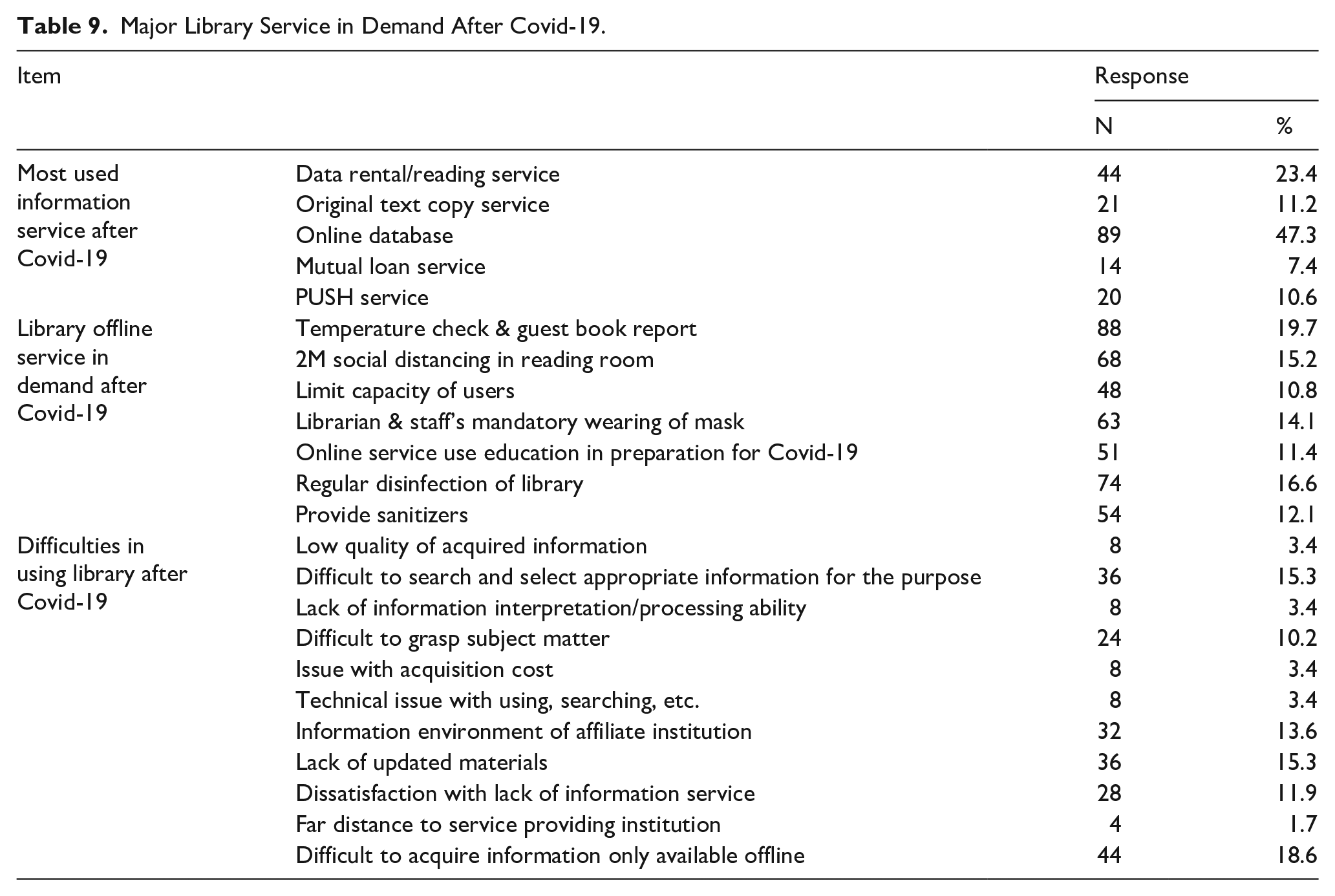
For the analysis on library service demand after Covid-19, user temperature checks and the guest book report was highest with 19.7%, regular disinfection of library was 16.6%, 2M social distancing reading room service was 15.2%, librarian and staff’s mandatory mask wearing with 14.1%, installment of sanitizers 12.1%, online service use education in response to Covid-19 11.4%, and user capacity limitation appeared to be 10.8%. People who participated in this survey are recognizing the necessity for temperature check, regular disinfection, and keeping more than 2M distance.
The analysis on difficulty in using library after Covid-19 shows the highest frequency of 18.6% for difficulty in acquiring information only available offline, the lack of updated materials and difficulty to search and select appropriate information for the purpose each appeared to be 13.6% along with 11.9% for lack of information service and dissatisfaction, and 10.2% of difficulty in grasping the subject matter.
Demand for library’s education after Covid-19
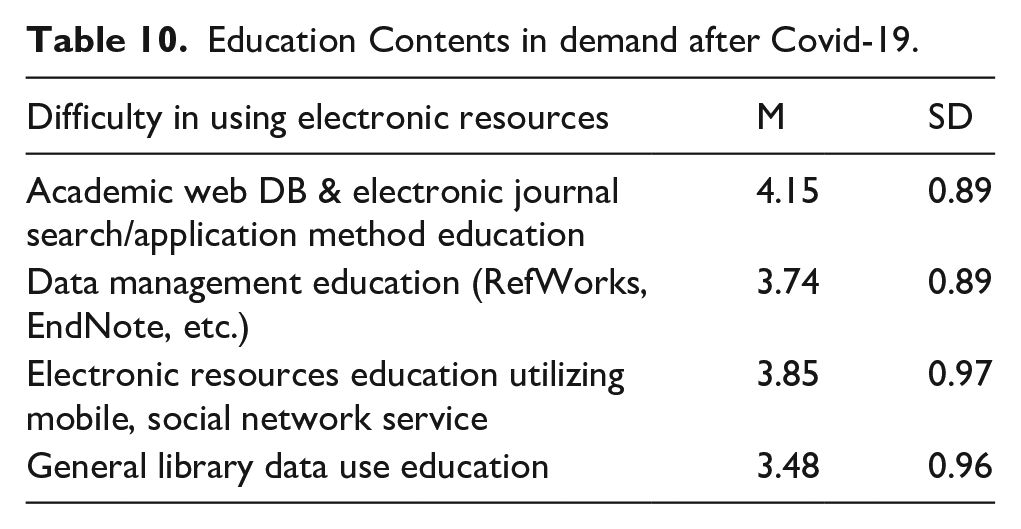
Conducting descriptive analysis on main education provided by the library since the outbreak of Covid-19, the education of electronic journal search and application method and academic web DB and electronic journal showed the highest demand with average of 4.15, and on the contrary, general library material use education showed the lowest demand with average of 3.48 (refer to Table 10).
Education Contents in demand after Covid-19.
Analysis on preferable information use
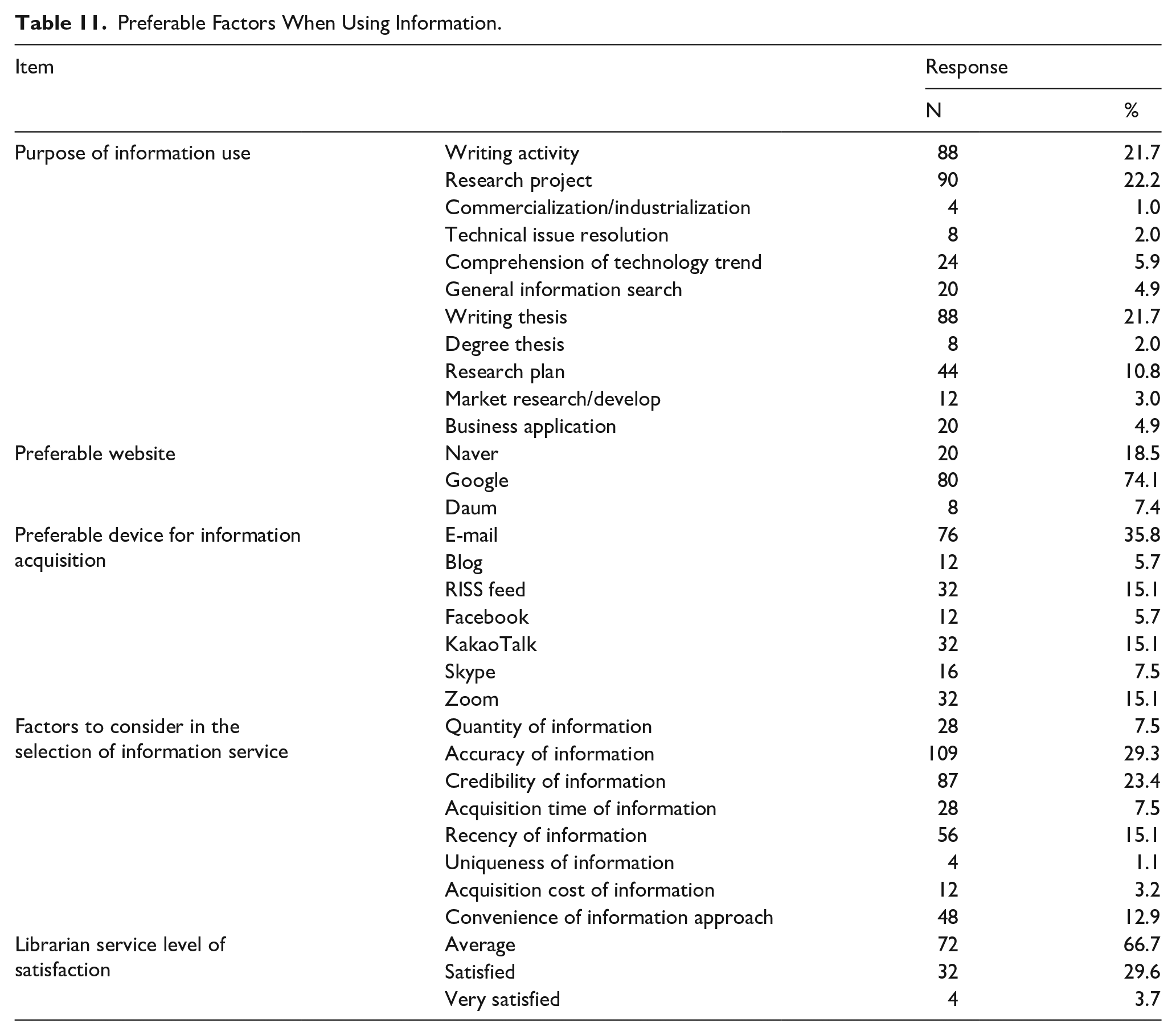
For the analysis on participants’ preferred information use, information use purpose (multiple responses) exhibited the highest with 22.2% and writing activity and writing thesis each showed 21.7%. Next was research plan with 10.8%, and then comprehension of technology trend was 5.9%. The survey on preferable website (singe question) showed that Google was the most used website with 74.1%, followed by Naver 18.5% and Daum 7.4%. The analysis on preferable device for research information acquisition (multiple responses) exhibited e-mail as the highest with 35.8%, then RSS Feed, KakaoTalk, Zoom each came out to be 15.1% and the last was Skype with 7.5%.
The difference in preferable device rather reflects the current circumstances of Korea. If we were in the United States, Skype would likely have been the highest, while the Korean messenger application KakaoTalk would have been the last.
In the analysis for factors to consider in selecting information services (multiple response), the accuracy of information exhibited highest percentage with 29.3%, followed by the credibility of information 23.4%, recency of information 15.1%, convenience of information approach 12.9%, and acquisition time and quantity of information each exhibited 7.5%.
The analysis on librarian service level of satisfaction (single question) displayed 66.7% average, 29.6% satisfied, and 3.7% very satisfied, meaning that most participants have positive awareness of librarian provided services (refer to Table 11).
Preferable Factors When Using Information.
Analysis of demand for library in response to Covid-19
Efforts by libraries to acquire information resources to be provided in online environment post Covid-19
As a result of analyzing demands to libraries in preparation for Covid-19, the detailed results for the efforts by libraries to acquire information resources for online environment after Covid-19, free temporary distribution of e-book and e-journal by publishers, and budget increase to acquire library digital contents each exhibited highest percentage with 19.7%. Next was 18.4%, free provision of charged education contents for certain period, then temporary 17.1% copyright use agreement, followed by contract of contents license for teaching-learning and temporary exemption came out to be 13.2% (refer to Table 12).
Library’s Effort to Acquire Information Resources to be Provided Online Post Covid-19.

Library’s response strategy to Covid-19
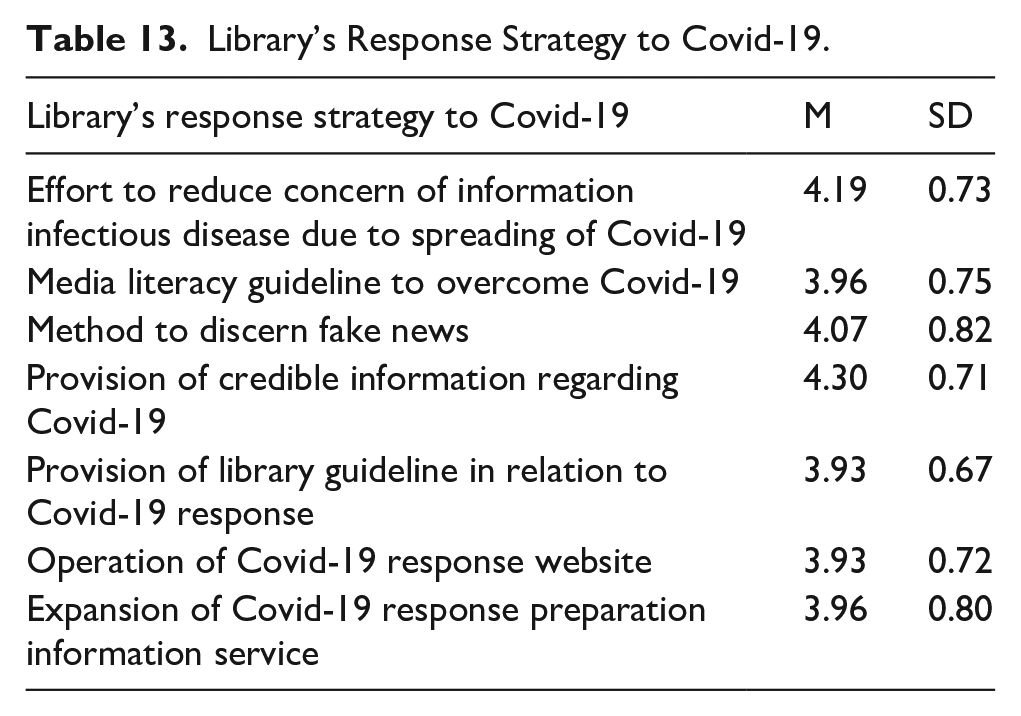
The analysis of library’s response strategy in preparation for Covid-19 is shown in Table 13. The provision of credible information regarding Covid-19 exhibited highest average of 4.30, and effort to reduce concern of infectious disease followed next with 4.19. On the opposite side, provision of Covid-19 related library guideline and operation of Covid-19 response website each had the lowest average with 3.93, but this number is relatively high so it represents quite high demand as well.
Library’s Response Strategy to Covid-19.
Demand for library research facility in response to Covid-19
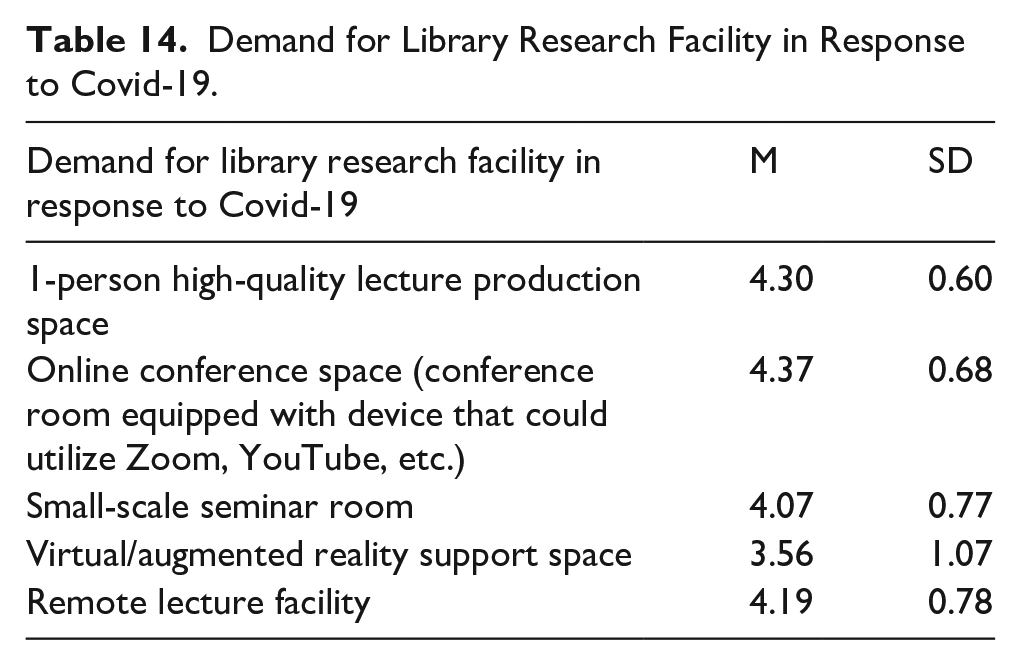
The research on facilities that people want the library to acquire in response to Covid-19 is shown in Table 14. Online conference (conference room equipped with device that could utilize Zoom, YouTube, etc.) had the highest average with 4.37, followed by high-quality 1-person lecture production space came out to be 4.30. Every item had high demands except for virtual/augmented reality support space.
Demand for Library Research Facility in Response to Covid-19.
Discussion
As a result of studying domestic and foreign case studies and pilot studies, it appears various rental services are available after Covid-19, including smart library (rental return), drive through, book delivery, rental reservation, bookstore rental, and so on. Moreover, it would be possible to consider adopting active rental service that induces more rentals with recommendation service equipped with users’ rental record (Kim, 2020). This recommendation service was also arranged via online and telephone, and in case of the United States, 40% of libraries strengthened virtual recommendation services (ALIA, 2020). In this way, various global libraries are transforming due to Covid-19, and actively changing service platform and service strategy.
Therefore, this must have brought tremendous change in users’ information use behavior or the information resources they use. This study intended to examine the respective transformations and aims to discuss this phenomenon in relation to various research questions.
The first one is how Covid-19 influenced the use behavior of researchers. From the results of the survey analysis, there was a shift in using data type and search route with electronic resource and online. Following this, the use rate of domestic and foreign information service, web search service, and related institution/research increased, but acquiring information through specialized magazine/academic journal/book purchase, subscription, and related event/exhibition/participation in academic conference greatly decreased (Korean Library Association, 2020a, 2020b; Noh and Chang, 2020). In addition, it was evident that Covid-19 had affected researcher’s information resource use. The data clearly show the decrease in direct contact required services such as participating in seminar or referencing to seminar materials. On the contrary, usage of e-book increased by 4.9% from 5.6% to 10.5%, usage of video information increased 5% from 7.5% to 10.5%, Internet resource, electronic journal and electronic magazine, specialized DB, and so on increased about 14%, but the usage of seminar, workshop materials, academic conference, and symposium decreased the same amount (Yoon, 2020a).
Then the researchers investigated difficulties users faced when using library after the outbreak of Covid-19, and the biggest issue was difficulty in acquiring information only available offline. Apart from this, difficulty in searching and selecting materials appropriate for purpose or grasping the subject matter, application method, search, technical issue, and information use environment also relatively had high rate. This would have been easily resolved if the users were actually at the library where they can readily get the help from a librarian. As a matter of fact, libraries and librarians should think about solutions to resolve such issues. For example, it would be necessary to provide live online reference service such as chatting for users to utilize information they need at their convenient time. They could also consider providing remote video service utilizing YouTube, KakaoTalk, and so on (Kim, 2020) on their website with the manual or an education program that guides library information and other international information resources. It would also be effective to develop various forms of educational materials on how to use foreign database, and possibly collaborate with other libraries for use education materials for identical database. This is well presented in main demands for education from libraries after Covid-19. The survey applicants showed high demand for education of using academic Web DB and E-Journal search, and for education of using electronic resources via social network service.
In addition, the researchers conducted research on change in demand for library service after Covid-19. According to the analysis results, people wanted libraries to make effort in providing and acquiring online services in response to Covid-19, such as increase in budget for acquiring digital contents, temporary provision of free e-book and e-journal by publishers, temporary provision of free educational contents, and temporary use agreement on copyrighted materials. In fact, when using affiliate institution’s internal information resource, offline materials and charged contents were available to access without logging in due to the library license contract, but after Covid-19, people cannot visit the library most of the time, thus people’s demand ought to be high for electronic resources to substitute offline ones. Consequently, libraries should lower budget on offline materials for now and raise budget on purchasing electronic resources to meet user’s demand. Meanwhile, people also showed high demand for libraries to provide high-quality 1-person lecture production space along with online conference space (conference optimized space for using Zoom, YouTube, etc.), small-scale seminar room, virtual/augmented reality support space, and remote lecture facility (Cha, 2020). It seems highly unlikely for individual researchers to be equipped with facilities for research activities in remote environment. Hence it is anticipated that approachable libraries would provide high-quality research environment for researchers to use together and bring about economic effect as well.
Conclusion and proposal
Covid-19 has tremendously affected our lives. It is completely changing our way of life, and there exist multiple untact service initiated by libraries. Most libraries provide contactless rental service such as drive through and the proliferation of automatic return machine is rapidly growing. Even book clubs, cultural programs, and experiential activities are arranged contact-free, and reference services are being replaced with online services as well. The purchase and utilization of information resources are speedily changing into electronic resources. And in case of the utilization of electronic resources and search for possible external resources, the electronic resource-centered digital library, cyber exhibition, online lecture, and so on could be the services to reinforce. The electronic form of information resource could add to its existent application and be an extremely important resource for acquiring sustainable library service in this pandemic era. Libraries with possible conditions could maximize the use of electronic resources including e-book, online contents, audio book, recorded book, and so on (Ryu, 2020). They can especially provide guidance on collection status and application plan to users unfamiliar with respective resources’ access and use. Besides, introducing and actively discovering external resources that could be used without a fee could be another service area to strengthen. On the account of the spread of Covid-19, a number of various external resources are now provided free, and this is a service domain that libraries should actively promote (Kim, 2020).
This study researched cases of library’s contact-free services, change in researcher’s use behavior, and user’s demand for library services in response to Covid-19. However, it was difficult to obtain wide range of response due to the pandemic, along with absence of in-depth analysis based on interviews and low number of participants. The prospective research should be conducted not only with researchers, but also on general user’s use behavior and their requirements for public libraries, so that librarians and staff members could set course of improvement for libraries.
And the subsequent issue is the limitation of the research methodologies. In general, researchers need to use intimate observation or interview methods to clearly understand the change in user’s use behavior (Park, 2011). However, this study only employs survey method, and this limits the generalization of the study results. Accordingly, the prospective study should include methods of interviews on librarians, in-person observation at the library to study the change in use behavior, and systematic observation to detect change in user’s online search behavior, to define the use behavior change after the Covid-19 pandemic and propose appropriate direction of future library service to accommodate the needs.
In addition, there should be a prospective study on the important issue of difficulty experienced by people with disabilities when acquiring information during this extended period of pandemic. People with disabilities usually acquire information in direct contact, and it is a known fact that they already experience immense digital gap in acquiring digital information (Noh and Chang, 2020). Plus, the lack of communication and digitization of information service since Covid-19 are likely heightening their difficulty in acquiring necessary information. Therefore, it is necessary to conduct a study on developing Covid-19 appropriate information service for people with disabilities and seeking the means to provide such service in the best way possible.
Footnotes
Acknowledgements
The author thanks anonymous reviewers for their thoughtful and constructive comments that helped to improve this article. The author also thanks Esther Son for editing this article into fluent American English.
Declaration of conflicting interests
The author(s) declared no potential conflicts of interest with respect to the research, authorship, and/or publication of this article.
Funding
The author(s) disclosed receipt of the following financial support for the research, authorship, and/or publication of this article: This work was supported by Konkuk University in 2021.
