







Abstract
This study proposes a mobile application as a new approach for first-year student orientation to promote knowledge of library services using the gamification concept. The application is based on mobile devices with GPS to locate students, allowing them to catch, collect, and battle monsters around the library with questions on library service instructions. To evaluate the learning effectiveness of the approach, we performed a comparative experiment in which the control group used e-learning, while the experimental group used the mobile application of the CMU Journey. We evaluated the pre-and post-test scores, delayed 1-month post-test scores, and intrinsic motivation based on the IMI questionnaire. The results demonstrated that the preference for gamified experience among students can enhance knowledge retention and intrinsic motivation compared to other groups.
Introduction
Background
When the first academic term starts in a college school, orientations are widely used by new college students to introduce and adjust them to the new environment. According to Soria et al. (2013), new college student orientations help college students identify themselves with others based on what they have in common. In addition, they help college students feel like they are accepted and a part of the community in college (Soria et al., 2013). New college student orientations began in the mid-1920s, organized by faculty management. Earlier, however, in the late 1870s, upcoming student orientations started in the campus-based programs at Young Men’s Christian Association (YMCA) in order to confirm the well-being of their members and slowly expanded into new college student orientations (Finnegan and Alleman, 2013). Orientations usually provide college students with information about their college, the details of their field of study (Denhardt et al., 2009), school rules or general policies, and academic resources in an assembly hall. Moreover, Hollins (2009) notes that college students are more successful in the college community and environment when they are introduced to it through orientations. This is because orientations assist college students by enabling them to change from a high school environment to a college community (Hollins, 2009).
To help first-year students adjust themselves to the college environment, the orientations shape students’ scholastic preparation, individual adaptation, and raise students’ and their patents’ awareness of the changing stages.
Chiang Mai University
Since 1964, Chiang Mai University has been the first higher education college and the first provincial college located in Thailand, with approximately 35,000 students. Engineering, science, agriculture, and medicine are the key fields of study at University Name. It has instructional capacity at the undergraduate, graduate, and professional levels. The goal of the university is to be a natural and healthy university with a community for Lanna cultural conservation and a developing, sustainable economy. It also supports learning transformation, life-long learning, and being a prototype of innovation for society and sustainable development. The university has produced a number of good, and skillful graduates with great potential. Additionally, it has conducted much excellent research and spearheaded numerous innovations.
First-year orientation
In her book, Designing Successful Transitions: A Guide for Orienting Students to College, Ward-Roof (2010) asserts that first-year student orientations certainly assist new students in feeling familiar with their campus environment and teach them about university resources to maximize their academic and social achievement. Noel, Levitz, Saluri, and associates (as cited in Ward-Roof, 2010) note that the objective of introducing orientations to college students is to provide them with beneficial information about their lives, such as the way of life, customs, ancient stories, other students, and the environment of their university. Furthermore, introducing the university through orientations to college students will make them anticipate their duties toward their scholastic occupations. In the meantime, these students become acquainted with their scholastic and behavioral expectations, learning plans, and college lives. According to Noel et al. (as cited in Ward-Roof, 2010), learning only fundamental introductory matters is insufficient for first-year students. They need to know how to meet new friends, where to get food, and how to use scholastic resources, namely the library. Thus, in order for first-year college students to learn to use scholastic resources or a library efficiently, orientation is the first important step to provide them with useful information, and students tend to get engaged and learn to use the library when the orientations are interesting and enjoyable for them.
Literature review
Traditional orientations
Orientations are often held for 1–3 hours in a conference room or assembly hall. They are a prime opportunity to provide new information and knowledge to students to prepare them for and familiarize them with their academic surroundings. However, sitting and listening in the conference room can be uninteresting and fail to motivate first-year college students to gain new information or knowledge. To ensure that the orientations are sufficient for new students, the administrator must seek new strategies so that students can obtain knowledge and experience efficiently.
There is research on the use of orientations in many beneficial ways to support new students. Since a university community is made up of students of various races and cultural backgrounds (Cook et al., 2003), teaching and informing first-year students about multiculturalism is critical because it helps build trustworthiness and acceptance, making students more aware of racism and accepting of multiculturalism. According to Boening and Miller (2005), providing orientation for first-year students significantly helps raise awareness of multiculturalism among newcomer students, finding that writing strategies help promote multiculturalism through the use of academic headers on how to appreciate and respect differences. They collected data using a customary mail service in the 2003/2004 scholastic year. Most respondents stated that these two methods help promote multiculturalism through the orientation of first-year students. The first method demonstrates the correlation between higher earnings and stronger promotion of multiculturalism. Second, it demonstrates the relationship between growing economies and their successful surroundings. In addition, respondents admitted regarding the method of demonstrating the importance of multiculturalism, followed by devoting time to observing the behaviors of college students, and providing models of multiculturalism. Equally important for schools is that they inform and effectively educate students about multiculturalism. Orientations have a responsibility to show appropriate behavior to students, and collective activities should be included as early as possible in the campus experience of college students.
Orientation techniques
To familiarize new students with the environment of their campuses, orientation and instructors need to inform them about the needs of students from different backgrounds, such as health, education, and identity (Ward-Roof, 2010). Since first-year student orientations generally focus on convention, they do not show the adaptability to acknowledge the total number of students and their needs. To ensure that first-year orientation addresses the needs of students, instructors often need to estimate the total number of students and assist students whose individual needs are not articulated properly. This examination may offer a helpful survey that can acknowledge the needs of unique student groups, enabling orientation narrators to analyze the different needs of students, especially those from low-income families and minority groups. Orientation narrators must expand their professional skills and knowledge of significant topics to include varied backgrounds of students in order to encourage the establishment of learning surroundings for new students. They need to discuss research on students’ needs for the preparation of first-year orientation. Orientation narrators can expand their relevant skills and knowledge through pertinent research by going to the library and meeting faculty and co-workers in other service places. The aim of acknowledging particular underrepresented groups during orientation is not to make the students feel isolated in orientations; for these students to gain the most from the orientation, each student group requires particular facts and associations that are indicated in a particular way. In addition, Ward-Roof (2010) argued for the necessity of creating a sufficient system of assistance for students, especially those from low-income and minority groups, that starts by creating studios and stands for students’ parents during the orientation. This can provide their parents with more information about the university environment and equipment to help their students. Parents can meet the main social needs and provide support for students by attending the orientation. Information about the types of students accepted at school can be provided to parents through booklets, websites, and printed materials.
Additionally, Guthrie (2010) reported that the Service Leadership Seminar (SLS) is provided to first-year students at Florida State University to aid their knowledge of their campus, to become familiar with campus environments, and to learn about leadership. SLS not only provides students with information about their college but also about service and leadership. The main aim of SLS is to allow new students to create equipment for optimistic and sustainable change. First-year students get to know each other, the assistants, and the faculty during orientation; they then work in the service of non-profit agencies and gain significant leadership insight, ability, and morals. First-year students have the opportunity to survey issues concerning leadership and service by participating in the orientation, which includes service components, workshops, reflective communion, and problem-solving activities in both large and small groups. As large and small groups offer the chance to forge relationships, new students have several opportunities to get to know others and learn from them. Finally, Guthrie (2010) concluded that SLS efficiently influences students’ adjustment to their new university. Correspondingly, the students gain confidence in their awareness of themselves. Their participation in orientations supports their adjustment and growth of individual identity.
Gamification in library services and orientation
Gamification is the employment of game metaphors, gaming features, and concepts in contexts other than games to boost motivation and commitment as well as to impact user behavior (Marczewski, 2013). As defined by Kapp (2012), gamification is the “use of game-based mechanics, aesthetics, and game thinking to engage people, motivate action, encourage learning, and solve problems” (p. 266). The use of game elements enhances motivation and learning in both formal and informal settings (GamifyingEducation, n.d.). Moreover, gamification is described as the employment of game design principles in non-gaming situations (Deterding et al., 2011). It may serve as a method to increase people’s engagement and motivation in carrying out various duties and activities that are not always appealing. Its use is not limited to a single field but may be applied in a variety of situations, including education (Lee and Hammer, 2011), the development of respectful conduct toward the natural surroundings (Brewer et al., 2011; Inbar et al., 2011), and the improvement of the well-being of the elderly (Gerling and Masuch, 2011).
Gamification can be a useful tool for libraries, as it can be used for both academic and semi-business purposes. For academic purposes, gamification can guide learners and explain activities. Libraries also may have semi-business purposes, including marketing library services, supporting their projects to increase their participation and the sense of the abundance of studying the resources provided by libraries (Kim, 2015). Felker (2013) reports that at Grand Valley State University (GVSU), the library created a mobile app called “Library Quest” to encourage library use. The mobile app was opened to the public in August 2013 and is available for both the iPhone and Android devices. Library Quest asks their students to complete quests and test students’ development by demanding their alphanumeric codes as inputs or letting them scan QR codes. This makes students visit the huge new library building, which gives them a sense of the many library services and lets them gain points when they complete certain tasks. Once they reach 30 points, they can win an iPad.
Similarly, the Pierce County Public Library (Scout Website, 2014) has an online gamification called “Scout” that was created to encourage adults to survey the library and complete certain activities to earn tokens for rewards, and encourages them to share their experiences. Competitors can enroll on the Scout website to check their status on the leaderboard and can also ask questions about tokens and quests in a forum. In September 2014, 1693 competitors completed 28,381 activities, earning 187,003 points and 3965 tokens (NCSU Libraries, 2014). Furthermore, the NCSU library created the mobile application Scavenger Hunt to encourage students to survey the library, while the librarians counted the hunt scores in real time at a central place. Students were handed a paper with 12 problems about the library and library services, a map of the library, and an iPad Air to send their answers. The librarians give students short instructions on the activity, the rules, and how to use the iPad and Snapchat. Students should survey the libraries in 25 minutes, answer all questions, and check their answers at the starting place. The team that won the challenge received rewards (NCSU Libraries, 2014).
In addition, online gamification has been employed as a method for library orientation by several libraries (Rod-Welch, 2017). One study described a partnership between librarians and the Office of First-Year Experience at Ohio State University Libraries for which they designed a game to introduce all freshmen to the library beforehand in college (O’Hanlon et al., 2009). The game was titled “Head Hunt” (Mallon, 2013). Smith and Baker remarked on Utah Valley University’s “Get a Clue” game, which orientated freshmen throughout two semesters (Smith and Baker, 2011). Another orientation game created at California State University-Fresno stood out because it was integrated into the learning management system (LMS) of the university (Fusich et al., 2011). As orientation activities, many educational libraries have also employed library mystery games. “Mission Quite Possible: A Library Adventure” at Queensborough Community College challenged participants to retrace the movements of a lost student through the library (Marcus and Beck, 2003). They got a hint at each spot to where the missing student had gone and what library resources she or he had been using. Voice recordings, reference materials, microfilms, and an internet database were all provided. Participants deduced from the student’s study trial that she had left the university to achieve her aspiration to become a Hollywood star. Moreover, some games combine real-life elements with computer games or multimedia information. Lycoming College’s “Secret Agents in the Library” is a Flash-based online game “developed to be performed in the library lecture at a specified time” (Broussard, 2010: 24). Students acted as undercover agents entrusted with arresting an invader. The game presented a set of questions that could be solved via the library’s website and resources located within the library. To progress through the game, pupils had to input a number code at various stages. They had to first identify a certain book or journal volume in the library collection in order to obtain these codes. Furthermore, Trinity University developed “Blood on the Stacks,” an Egyptology-themed ARG, to take the place of a typical treasure hunt game employed during freshmen orientation (Donald, 2008). Freshmen received an email informing them about the game and encouraging them to visit the website to discover information. The website included an introductory video, gaming instructions, and the first hints about the mysterious robber of an Egyptian treasure. Students were supposed to finish the work within 3 days with their orientation teams to determine the robber by finding evidence in the library and online. In addition, there are a number of libraries using gamification in their library orientations by creating the mobile app SCVNGR. This mobile app awards points when its users go to certain places to finish tasks, such as taking photos or simply responding to questions. In Oregon State University libraries, the mobile app SCVNGR is used for universal student orientation to increase students’ knowledge of the library’s services. Similarly, at the University of Arizona, the library uses gamification in the library orientation to support the library and raise student consciousness. It is suggested that using gamification in orientation significantly increases completion and participation when the trek is about homework (Vecchione and Mellinger, 2011).
Development of the mobile application for the first-year orientation (CMU Journey)
The application of the CMU journey (http://lis.human.cmu.ac.th/cmujourney/) was proposed by the Student Development Division University Office Chiang Mai University. In addition, the objective of this organization is to support and develop student activities during their studies at Chiang Mai University.
However, due to the COVID-19 pandemic, all educational institutions issued rules to avoid student meetings in large groups in order to stop the spread of the virus. The mobile application of CMU Journey has been proposed to first-year students to learn and understand the history of the university, including important places and services for students during their study at the university.
The concept of the CMU journey was based on the Pokémon Go core game mechanics implementing augmented reality with the geolocation of real-world objects to locate, capture, train, and battle creatures in the virtual world, which has proven to be successful (Khamzina et al., 2020). At the foundation of our game design are core game mechanics and the core game loop. In short, it is the main activity that structures the entire design and shows the direction of the game, defining the repetitive tasks of the player. Our core game loop and game mechanics are shown in Figures 1 and 2. Our core game loop consists of the following steps: Explore the important place, Capture the monster, Question from the monster, and Collect the reward. We describe each step below.
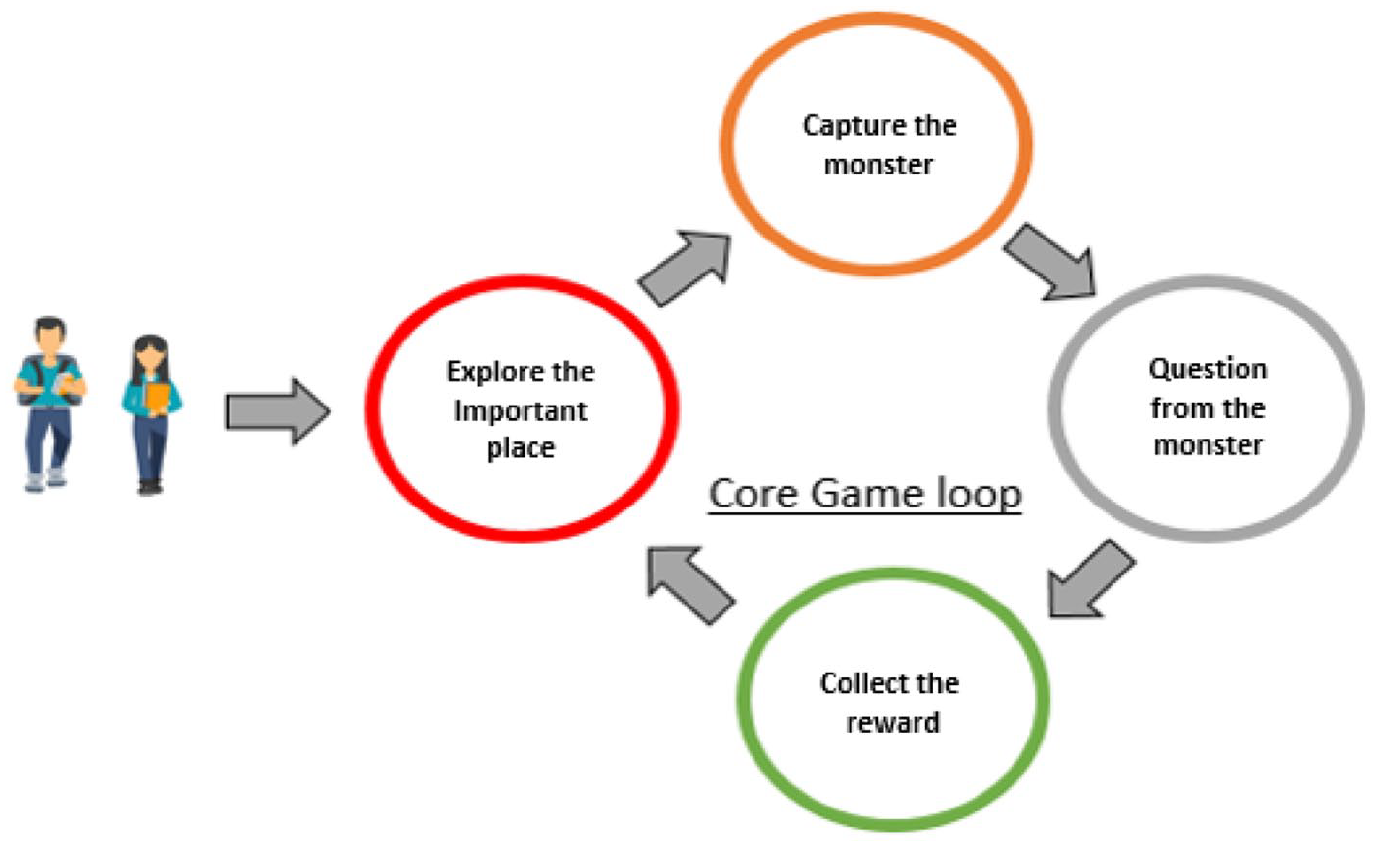
The activity flow of the core game loop of CMU journey.
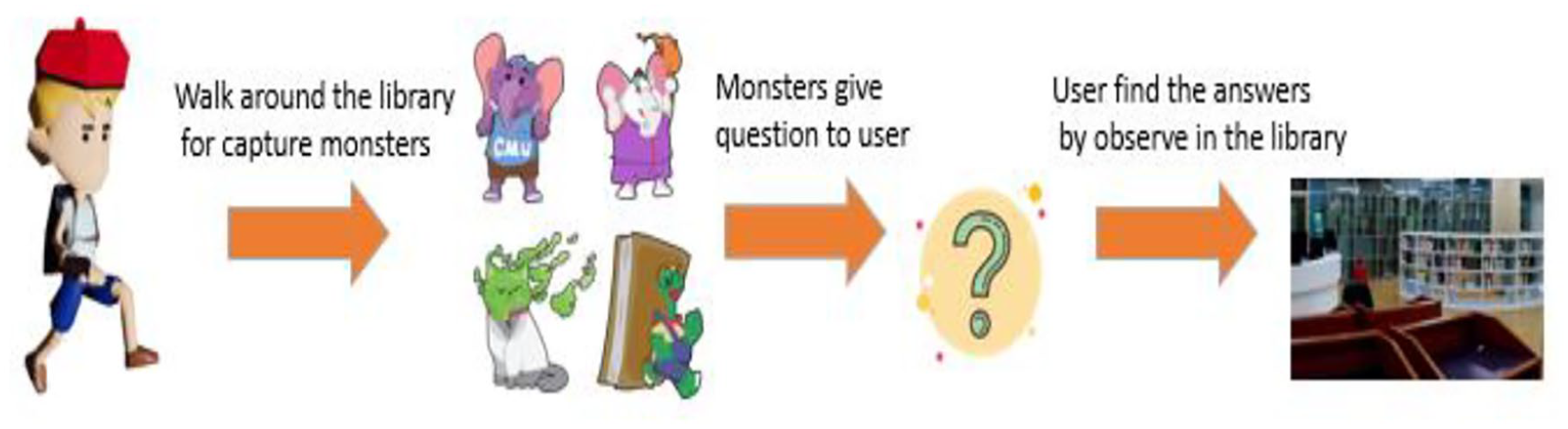
An example of the core game mechanics of CMU journey.
Explore the important place: In the first activity flow that we designed for the students, users visit the important places of Chiang Mai University. The CMU journey proposes seven important places for first-year students for the purpose of learning and understanding the historical information and important services for each place, as shown in Figure 3. Once a student joins the game, a student icon is displayed on a minimap based on the Geo location data, which navigates the students as they explore the university site. However, in this research, for effectiveness we focused only on the place of the main library of Chiang Mai University.
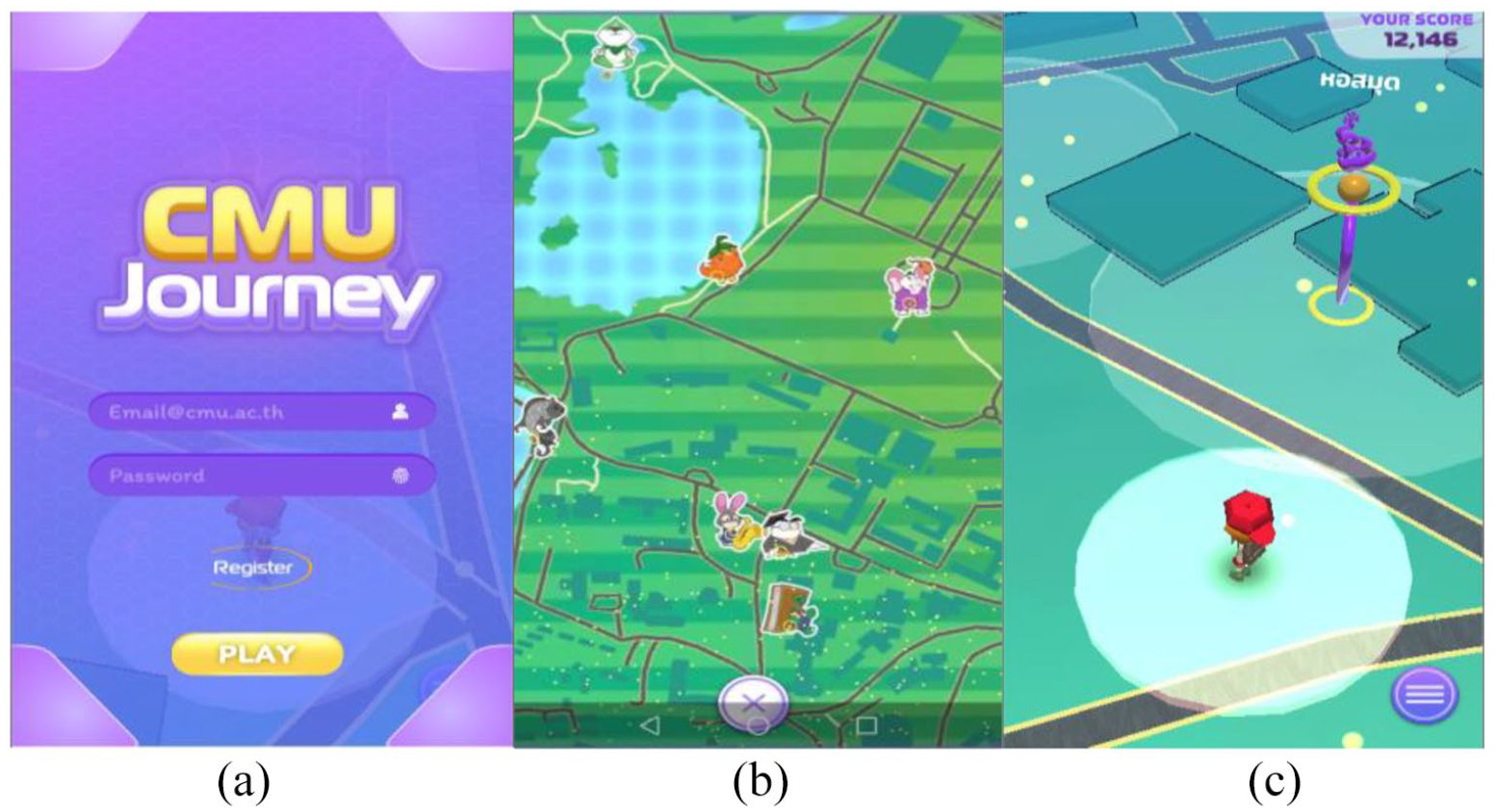
(a) Login screen, (b) map navigation, and (c) screen of gameplay.
Capturing the monster: In this activity flow, game mechanics were designed for students to seek and find the monsters around important places. When capturing the monsters, students walk around the places until an egg of the monster appears, and then they click on the screen of the mobile device to capture it. This allows first-year students to feel the journey experience while exploring the space and learning about that place at the same time.
Question from the monster: In this game mechanics, after the students captured the monster where they were visiting, it asked them a question about something important about the place, as shown in Figure 4, and students had 10 minutes to find the answer by investigating the place. These mechanics are designed to integrate augmented reality into blend learning (Chen et al., 2017) where answers can be found by learning in the physical environment.
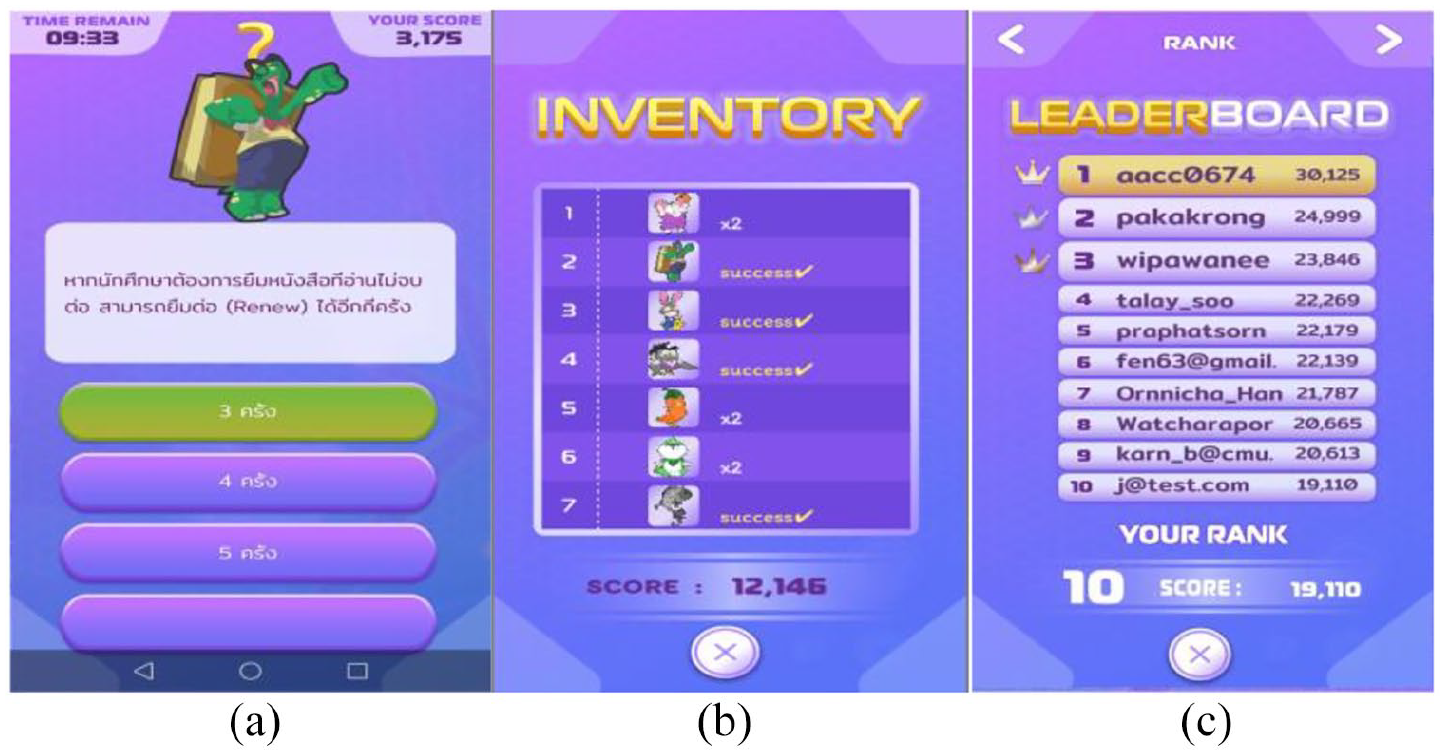
(a) Question screen, (b) inventory, and (c) screen of leaderboard.
Collecting the reward: This activity is very important for gamifying orientation. The concept of gamification uses game elements such as points, avatars, and leaderboards to reward students in order to drive both intrinsic and extrinsic motivation (Pramana et al., 2018). For the CMU journey, we implemented the game elements of score points (Borges et al., 2016; Puritat, 2019a), leaderboard (Puritat, 2019b; Taspinar et al., 2016), inventory (Holmes et al., 2015), choice (Harteveld and Sutherland, 2017), and time pressure (Firican, 2018). After the students answered the question, the score point was computed based on the total time remaining and the number of correct answers. The inventory allows the collection of monsters in the area, and the leaderboard allows users to observe the scores of other students to generate a competitive situation for points.
The CMU journey was developed with the Unity game engine (https://unity.com/), which consists of a game application and a backend. For the backend, we developed PHP 7.0 and MySQL to store the database and manage the questions for each area. For the game applications, we deployed both the play store and an Apple store for iOS and Android mobile applications in the name of “CMU Journey.”
Purpose of the study
This study aims to research and develop a mobile application using the gamification approach for first-year library orientation in Chiang Mai University. There are three research questions: RQ1 “Can students effectively use mobile gamification-based orientation to obtain the knowledge acquisition of the library service in the main library?,” RQ2: “Is the knowledge retention of students using mobile gamification orientation longer than that of the e-learning group of the library service in the main library?,” and RQ3: “Can the mobile gamification orientation improve motivation for first-year students?”
To provide a more precise definition, the term knowledge acquisition can be defined as the attainment of information due to instruction. Thus, successful acquisition is measured by the amount of information the student is able to immediately recall based on predetermined learning objectives (Anderson, 2007). In this study, knowledge acquisition was defined as the score on a unit assessment carried out immediately after receiving the instruction material (post-test). On the other hand, knowledge retention is defined as the maintenance of knowledge acquired through instruction for an extended amount of time. The amount of content retained signifies the level of thinking at which the student acquired the information (Anderson, 2007). For this study, knowledge retention was defined as the score difference of the unit assessments regarding the instruction material carried out at two different times (post-test and follow-up post-test 1 month later). However, given that human memory is imperfect in storing new information, a variety of teaching methods and materials can improve the retention and recall of information (Goins and Fisher, 2018; Lindsey et al., 2014). Research questions RQ1 and RQ2 aim to find an effective and creative way to support the long-term preservation of students’ knowledge.
In addition, this study was designed to promote the main library services for tens of thousands of first-year students every year. Thus, the researchers seek an alternative technique for library orientation with the gamified experience for a wide range of first-year students. Finally, the study intended to determine whether this mobile gamification orientation might be used as an effective orientation method for first-year students in the university and serves as a case study for the future use of the academic library at the university.
Research methodology
In this study, we employed an explanatory sequential design of a mixed-method approach. According to this method, qualitative data were used to explain the quantitative results. According to Creswell and Clark (2017: 58), “it is most useful when the researcher wants to assess trends and relationships with quantitative data but also aims to explain the mechanism or reasons behind.” The explanatory sequential design consists of two phases: a quantitative phase and a qualitative phase. For the quantitative phase, we gathered and analyzed quantitative data (pre/post-test, intrinsic motivation inventory), which aimed to measure knowledge and intrinsic motivation in order to identify group differences. For the qualitative phase, the collection and analysis of qualitative data (summary of the feedback) was conducted to explain the results of the quantitative phase and analyze the CMU journey and E-learning user experience of students. In addition, we adapted the sequential design of a mixed method approach from previous research based on the gamification approach (Lo and Hew, 2020; Zainuddin et al., 2020). When verifying the research questions, we compared the results of the “traditional e-learning for library orientation” group and the “mobile gamification of library orientation” group and summarized the feedback to effectively collect related data. An overview of the research methodology is shown in Figure 5.
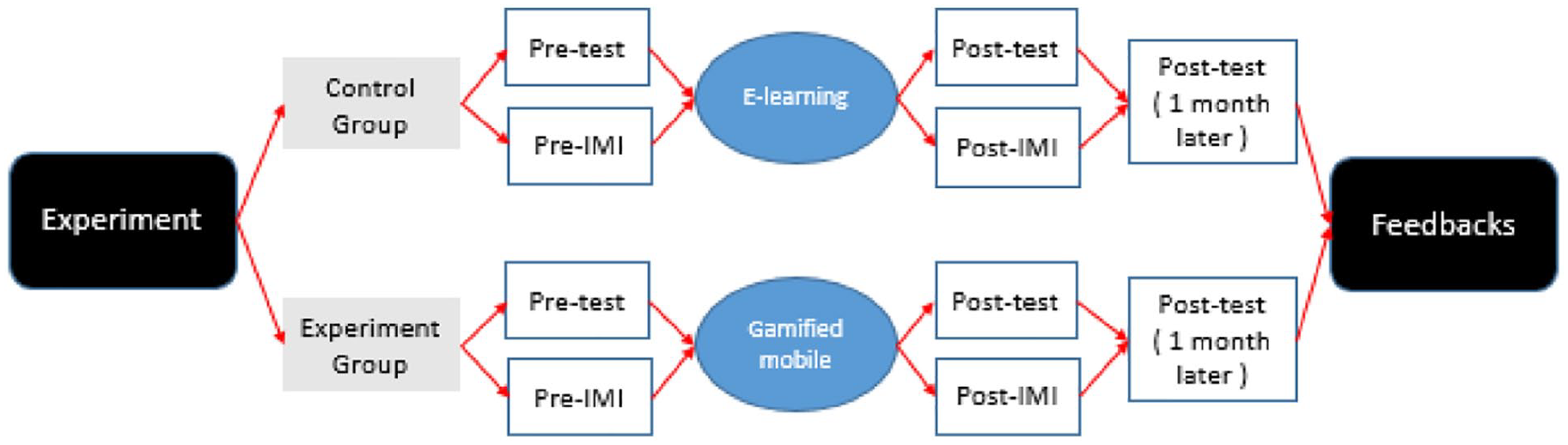
Overview of the research methodology.
Participants
We recruited first-year students in-person and via the student development division university office’s Facebook page. A total of 60 participants (34 male and 26 female) were recruited through these methods. We recruited only first-year students who had never dropped out from other faculties. Participants were randomly divided into two groups: experimental and control groups. Each group consisted of 30 participants.
Procedure
The participants in both groups were asked to answer a pre-test about their basic knowledge about using the main library of the university. The pre-test focused on basic information regarding literacy for education research, such as how to use OPAC (Online Public Access Catalog), the meanings of the class number of books, and how to find them. Then, after both groups took the pre-tests of knowledge acquisition and a questionnaire on motivation for learning the content, the experimental group was set up to play the CMU journey, while the control group took the e-learning course from the main library; both tasks lasted 3 hours. The content of the CMU journey and the e-learning course were created by the staff of the main library. After finishing the activity, they were asked to take the post-test and a questionnaire similar to the pre-test.
Data analysis and results
Quantitative data analysis
For the quantitative data analysis, we used the pre-test/post-test quiz (Appendix A) to evaluate knowledge acquisition about library services. The questions of the pre-test and post-test focused on basic knowledge for using the main library, which is also the subject of orientation for first-year students in all faculties of the university. For the statistical analysis, a paired-samples t-test was used to determine whether the difference in means between the control and experimental groups was significant.
In terms of motivation, self-determination theory (SDT) (Ryan and Deci, 2000a) distinguishes types of motivation based on different goals or reasons related to different activities. Extrinsic motivation refers to doing something because it leads to a separable outcome, such as pressure, or extrinsic rewards in the form of money or verbal feedback, whereas intrinsic motivation refers to doing something because it is inherently interesting or enjoyable. According to the effect of motivation, educational games have the potential to satisfy the psychological needs for autonomy, competence, and relatedness (Przybylski et al., 2010), whose satisfaction has been found to be positively related to the enjoyment of human computation games (Pe-Than et al., 2014). Additionally, it has the benefit of improving intrinsic motivation for learning, because games stimulate effort, curiosity, and interest by presenting learning activities in the educational context (Chen and Law, 2016; Kirriemuir and McFarlane, 2004).
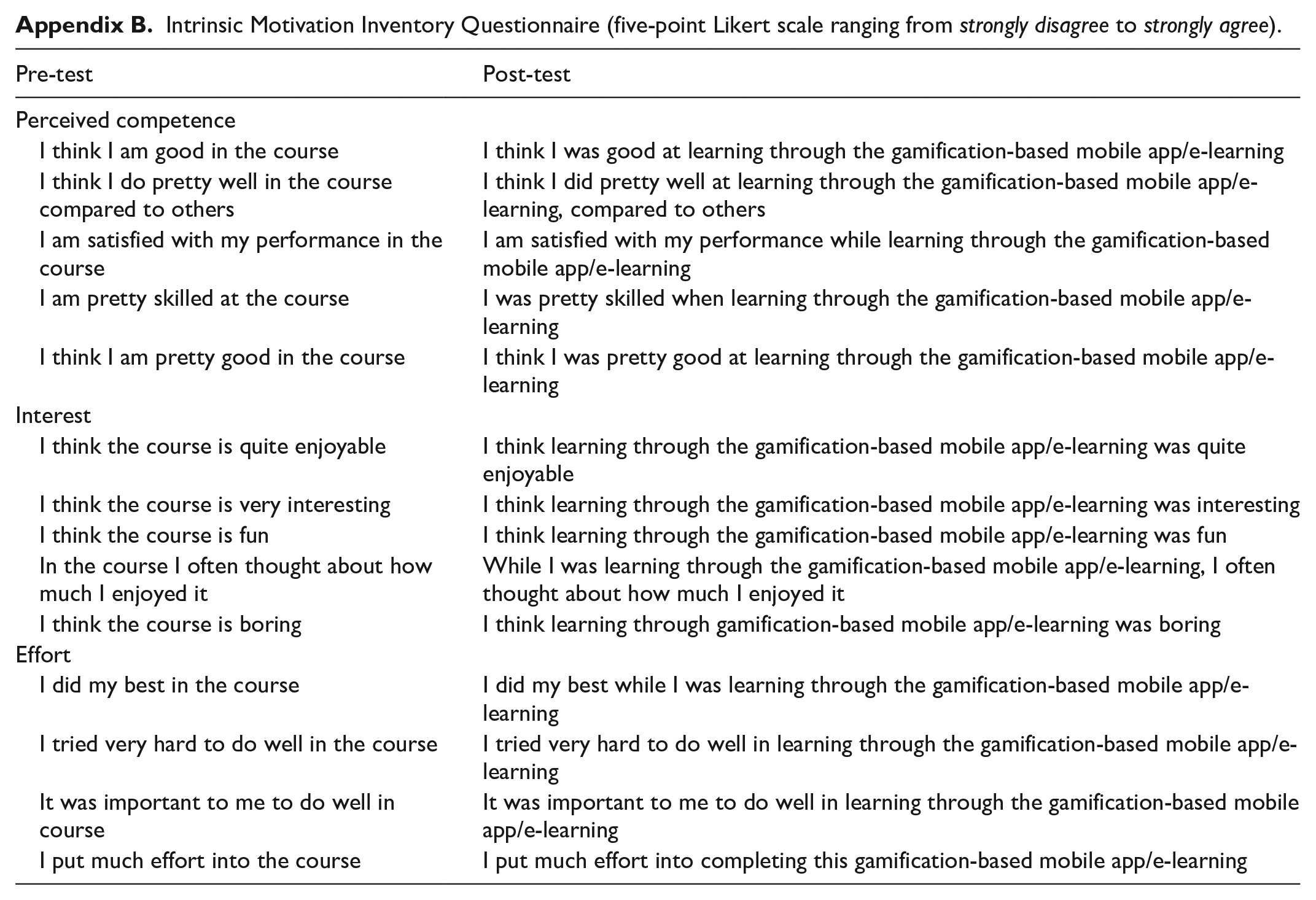
In order to measure intrinsic motivation, we employed the short version of the IMI (Vos et al., 2011) questionnaire, with modifications (Ryan and Deci, 2000b) to measure the motivation of participants. The IMI questionnaire (Appendix B) has 14 items scored on a five-point Likert scale ranging from strongly disagree to strongly agree covering the sub-contents of intrinsic motivation: Effort, Interest, and Perceived Competence.
Qualitative data analysis
To analyze qualitative data, the mobile gamification orientation was based on the data collected in the survey form using the Google form software after completing the post-test of the experimental groups. The survey question was an open-response area prefaced with an open discussion: “Do you have any suggestion for the mobile gamification orientation?” In all, 25 of the 30 survey respondents in the experimental group chose to answer the open question.
After that, the written comments of students were first transcribed in Thai, then thematically analyzed and rearranged into categories. Moreover, the data were analyzed based on the qualitative data analysis procedures proposed by Creswell (2012): The first step was to read all the comments to gain the overall idea of the data. Then, we first began the coding by picking the shortest comment transcript assigned to pieces of data. The codes were the exact wording of the students and concepts from the literature. After that, all codes were reviewed and grouped, the redundant codes were deleted, and the preliminary list of codes was used to analyze the remaining qualitative data. To enhance the consistency of coding, the exemplary quotes clearly illustrated each constructed theme. Finally, all the codes were organized into subthemes.
Four major areas emerged through the qualitative data feedback survey form based on the Google form software (Reed and Miller, 2020): positive and negative feedback, game improvement tips, and library services feedback. It is important to note that some participants gave feedback on multiple concerns, so the total number of items of concern (n = 36) was higher than the total number of responses (n = 25). The total number of pieces of feedback is listed in Table 6.
Results
RQ1: Obtaining knowledge acquisition
We obtained the data from the control and experimental groups at the start and end of the activity to answer RQ1: “Can students effectively use mobile gamification-based orientation to obtain the knowledge acquisition of the library service in the main library?” The results are presented in Table 1, obtained through a paired-samples t-test using the SPSS program. Table 2 shows a p-value of 0.036, indicating no significant difference in the knowledge acquisition between the control group (e-learning) and the experimental group (mobile gamification orientation) at a highly significance level of 0.01. Based on the statistical evidence, the implementation of mobile gamification orientation to promote library service cannot support knowledge acquisition better than e-learning for first-year students.
Results for pre-test and post-test.

Results of t-test of pre-test and post-test scores.

RQ2: Knowledge retention
To answer RQ2, “Is the knowledge retention of students using mobile gamification orientation longer than that of the e-learning group of the library service in the main library?,” we administered the post-test to the participants 1 month after the activity and applied a t-test to the results, similar to RQ1. As shown in Table 2, the difference between the groups has a p-value of 0.000, indicating a significant difference in knowledge retention.
From the student comments, several benefits of mobile gamification for knowledge retention were identified that could reveal new methods for promoting library services during the first-year student orientation. In particular, knowledge retention regarding library services is very important because all students at all faculties need to use these services for at least 3 years during their studies at the university to support their academic work. The application can guide students in exploring the library even if they do not want to visit it, for as one student said: “This game makes me want to explore the main library even if in the at first I had no idea why I need to visit the library; it was so great!” This evidence of the benefits of gamification supports the suggested relationship between long-term memory and gamification (Turan et al., 2016)
RQ3: Improving motivation
To collect data to address RQ3, “Can the mobile gamification orientation improve motivation for first-year students?,” we employed the questionnaire of the short version of the Intrinsic Motivation Inventory to evaluate the motivation of participants. The results for the IMI are shown in Table 3.
Results of IMI questionnaires for the control group and the experimental group.
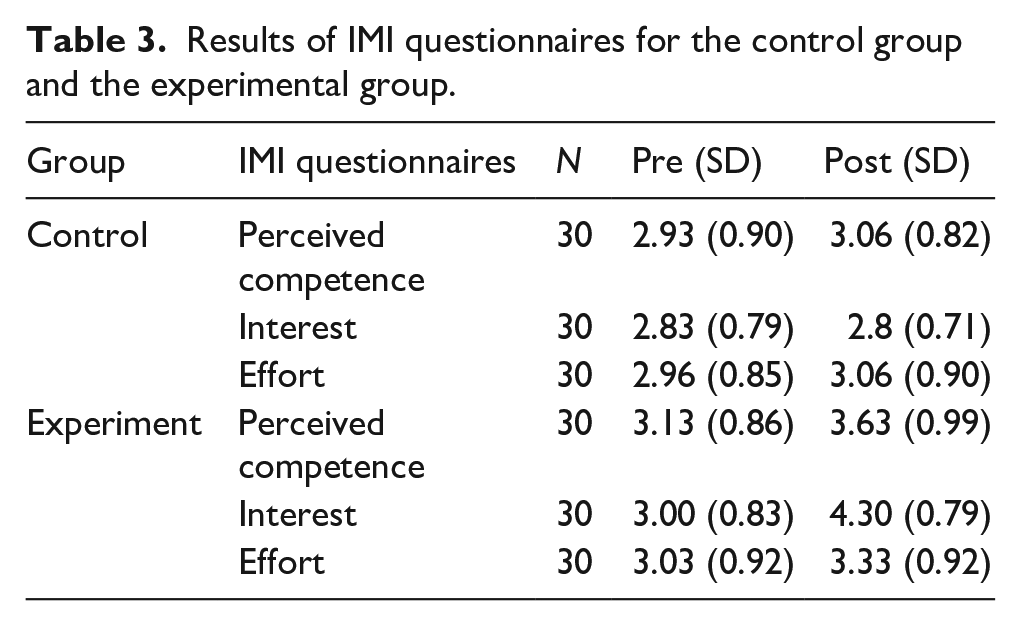
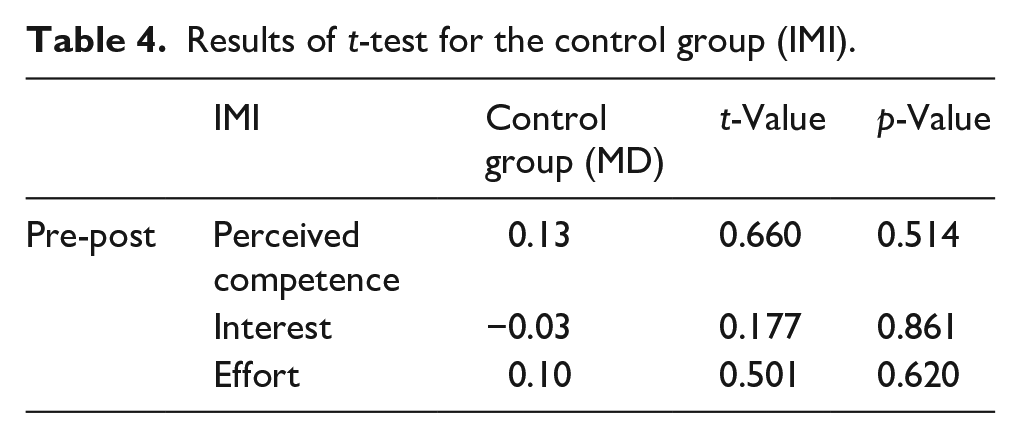
Both groups were asked to complete the IMI questionnaire after answering the pre-and post-questionnaires. A summary of the data are shown in Table 3 for the IMI pre- and post-questionnaires. A paired-samples t-test was applied to the data for Interest, Perceived competence, and Effort. Table 4 reports the results, which show no significant difference for using e-learning to improve motivation for Perceived competence (t = 0.660, p = 0.514), Interest (t = 0.177, p = 0.861), and Effort (t = 0.501, p = 0.620). Table 5 shows the t and p-values for the experimental group. Perceived competence showed no significant difference (t = 1.94, p = 0.062). Interestingly, Interest showed a significant difference (t = 6.19, p = 0.000). Finally, Effort did not show a significant difference (t = 1.17, p = 0.248).
Results of t-test for the control group (IMI).
Results of t-test for the experiment group (IMI).
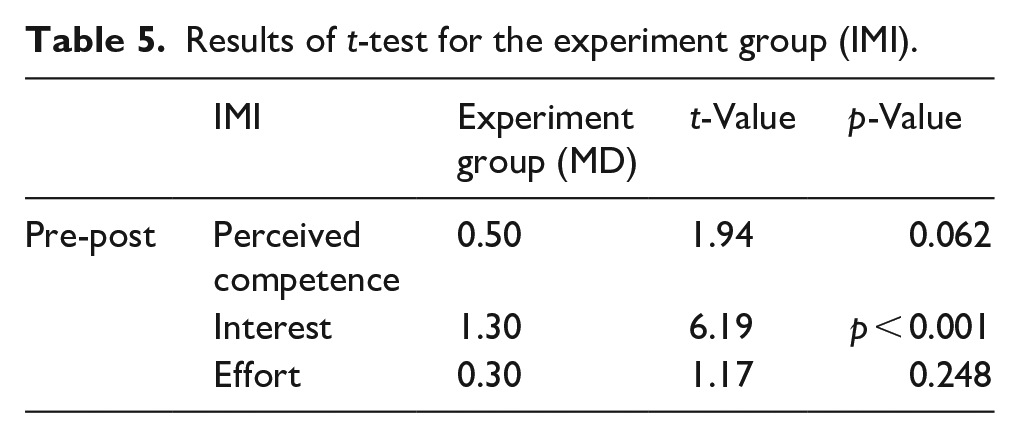
To summarize the data for the IMI questionnaire, the control group showed no significant difference in any of the subscales of the Intrinsic Motivation Inventory (IMI), which means that e-learning material cannot improve intrinsic motivation for first-year students. For the experimental group, the data showed significant differences only for Interest in intrinsic motivation, which means that mobile gamification orientation material can improve intrinsic motivation from the perspective of interest but not perceived competence or effort.
Data from student comments reveal that mobile gamification orientation also supports intrinsic motivation as a dimension of interest. The CMU journey could provide new innovations regarding orientation for students. As one of the students remarked, “This game is very fun and addictive, it was a very innovative way of orientation.” Also, most of the students commented that the game was “very fun and good.”
Additional information
Qualitative feedback data of the experimental group
The analysis of the feedback of the experimental group (mobile gamification orientation) was based on the data collected from the experimental group in the survey form after they completed the post-test. The survey question was an open-response area to the question: “Do you have any suggestion for the mobile gamification orientation?” As stated above, 25 of the 30 experimental group participants answer the question. The feedback information is presented in Table 6.
Feedback on the CMU journal.
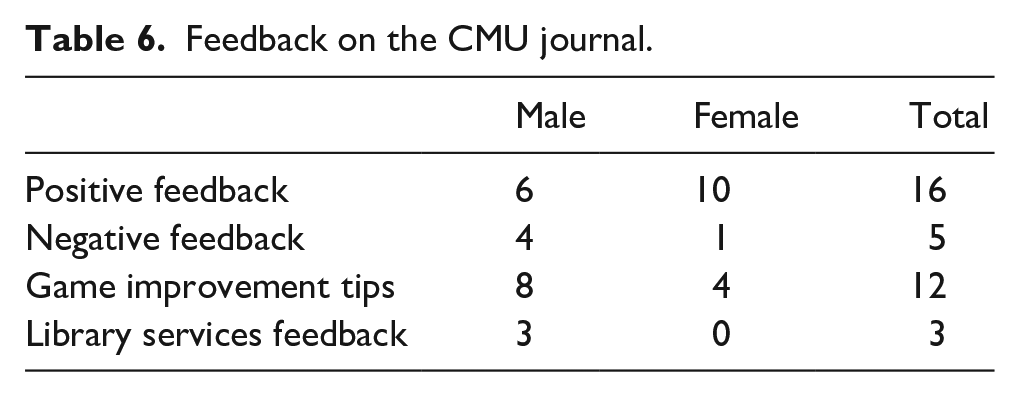
Positive feedback (15 comments): Comments regarding CMU journeys were primarily split between male and female students. Surprisingly, most of the positive feedback was from female users, who stated that the game was a great introduction to the main library services and was very helpful. Apart from “Fun and Good,” one comment read, “This game is very fun and addictive, it was a very innovative way of orientation.” Another student commented, “This game makes me want to explore the main library even if at first I had no idea why I needed to visit the library; it was so great!” or an interesting comment: “I think this game should be the main orientation for every student.”
Negative feedback (five comments): Negative reactions to the CMU journey were related to the lack of fun. One student commented, “The game is a good idea but the content of the library service is still boring,” and another comment stated, “I personally prefer the online-based game not the physical activity because it was very tiring.”
Game improvement tips (12 comments): Regarding the comments on game improvement tips for the CMU journey, we categorized the comments into three themes: Design and experience, Technology, and Content.
Design and experience: The feedback included suggestions for improvements and more engaging and fun experiences. One student suggested adding more game mechanics beyond multichoice, such as sorting, filling the blank or matching, and the use of a more complicated quiz. Another suggestion was to add more multiplayer gameplay, such as cooperative games and chat with other players. In conclusion, most of the comments suggested adding more game mechanics that would not be easy to implement if we want to keep the game simple and easy to understand for everyone.
Technology: The feedback issues primarily addressed only technology usage. Most of the concerns were hardware issues of the Android mobile, which has a variety of OS versions and hardware. Some Android versions cannot run games and crash after the title screen, which is not found in the IOS version. Another issue was GPS accuracy in cheaper mobile Android hardware and the problem of high battery consumption during game play. To summarize the issues of technology, IOS-related problems are not very different from those of the Android versions, which need to be fixed on a case-by-case basis depending on the version of Android used.
Content: Content-related feedback mostly targeted the question of the monsters. Suggestions included providing deep questions on library services sorted from easiest to hardest, which could help provide challenges for the gameplay.
Library service feedback (three comments): One of the students suggested making the main library more user-friendly, which could improve the library’s value-added. Another requested more plugs to charge mobile phones to facilitate electronic devices. Several students asked for greater enforcement of spacious co-working spaces.
Qualitative feedback data of the control group
On the other hand, we also collected survey data from the control group (e-learning). The survey question was an open-response area to the question: “Do you have any suggestion for the e-learning orientation of library services?” In all, 20 of the 30 control group participants answered the open question. The feedback information is presented in Table 7.
Summary of e-learning feedback.
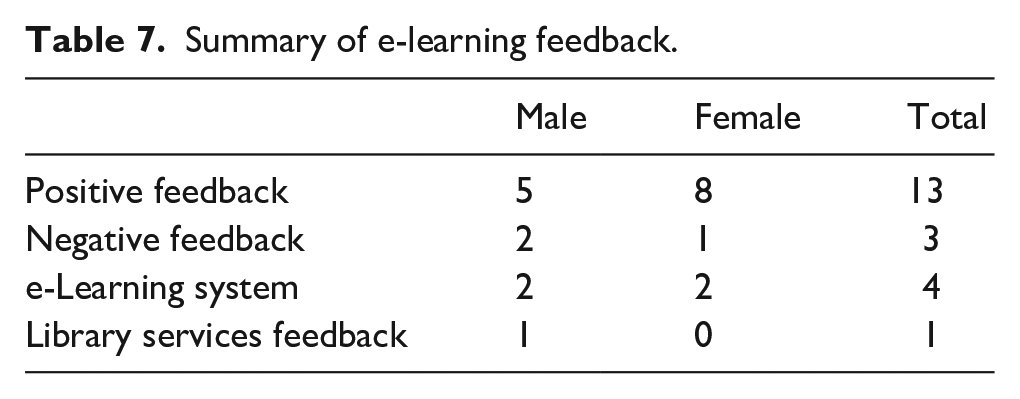
Positive feedback (13 comments): The comments regarding e-learning were primarily split between male and female students. The comments stated that the video content was very helpful. All comments were “Good and Helpful,” except one stating, “The e-learning is helpful for the student who can learn anytime and anywhere.”
Negative feedback (three comments): Negative comments on e-learning were directly related to the quality of the content. One comment stated, “I have no idea how the service of library can be useful for my degree,” another stated, “I think the content of the video is too long,” and a final comment stated, “The video content is not interesting, it is very boring.”
E-learning system (four comments): Regarding the suggestions in the comments on the e-learning experience during course learning on the CMU MOOC, most of the comments stated that they had problems with login and system registration (three comments). Two comments stated, “I cannot register because I did not receive the SMS of the OTP verification system,” and a comment on login problems stated, “I cannot login with the same password of my registration.” On the other hand, there was one comment suggesting the improvement of the system by adding more subtitles and transcript text below the video, which can help international students understand the language.
Library service feedback (1 comment): For this topic, students suggested providing rental accounts for watching streaming movies such as Netflix. One comment stated that “Library should provide the service of rental account to watch Netflix.”
Discussion
The results of our study indicate that mobile gamification orientation to promote library services cannot support knowledge acquisition better than e-learning for first-year students, but it can improve the retention of knowledge on library services better than e-learning. This finding provides evidence for the efficacy of the optimal choice for the university to promote library services for first-year students. Our results are consistent with the findings of previous studies of library orientation that showed no positive learning of gamification for library orientation (Kaneko et al., 2018) but are inconsistent with others (Smith and Baker, 2011; Vos et al., 2011) that showed that learning competency is immediately higher than other groups. In terms of knowledge retention, our study is consistent with Kaneko et al. (2018) and Vos et al. (2011) which means that gamification could help promote library services in the long term.
In terms of intrinsic motivation, our study found a significant difference in intrinsic motivation only for Interest but not Perceived competence or Effort in the Intrinsic Motivation Inventory questionnaire. Thus, mobile gamification can enhance intrinsic motivation regarding Interest. Alsawaier (2018) indicated that the enhancement of motivation and engagement in gamification application can lead to a change in the student’s behavior for the acquisition of important knowledge and skills in college courses. Our study corroborates this, as gamification has been proven to be beneficial for the enhancement of motivation and engagement of students and is also convenient for a wide range of other students who show interest in library services.
Conclusions, limitations, and future directions
This study proposed a new approach to orientation with mobile applications using the gamification concept to promote library services among first-year students. The results show that there was a significant difference in knowledge retention in the group using mobile orientation applications. In addition, results show that mobile orientation applications enhance the intrinsic motivation only in the category of Interest but do not improve it in the category of Effort and Perceived competence. In summary, this study shows that it is worth implementing gamification to promote library services that can enhance learners’ knowledge retention and intrinsic motivation, facilitating the interest of students in mobile applications designed for learning library services.
This study has several limitations. First, it was based solely on qualitative and quantitative data collected from students at Chiang Mai University. Moreover, the scope of this work was limited to a small sample size (n = 60), and only one university participated in it Thailand. Thus, the results of the study cannot be generalized beyond this population and small area. Moreover, the sample size of male (n = 34) participants was rather larger than that of the female (n = 26) participants, which might slightly affect the results and the overall comparison.
In the future, we plan to implement new game elements to CMU journey such as levels, social participation, and new monsters to keep users’ engagement and enjoyment levels high over the long term, not just for 1-day activities. Second, we plan to test the new methods to provide in-depth feedback from learners regarding their learning data and apply a new version of the CMU journey to the library environment. Finally, we plan to conduct further studies on the same topic with larger sample sizes and extend it to university libraries in other countries in order to improve the overall stability of the data collection, as we believe this could be an area for future research that can serve as a guideline for the new approach of orientation-promoting library services.
Footnotes
Appendix
Intrinsic Motivation Inventory Questionnaire (five-point Likert scale ranging from strongly disagree to strongly agree).
| Pre-test | Post-test |
|---|---|
| Perceived competence | |
| I think I am good in the course | I think I was good at learning through the gamification-based mobile app/e-learning |
| I think I do pretty well in the course compared to others | I think I did pretty well at learning through the gamification-based mobile app/e-learning, compared to others |
| I am satisfied with my performance in the course | I am satisfied with my performance while learning through the gamification-based mobile app/e-learning |
| I am pretty skilled at the course | I was pretty skilled when learning through the gamification-based mobile app/e-learning |
| I think I am pretty good in the course | I think I was pretty good at learning through the gamification-based mobile app/e-learning |
| Interest | |
| I think the course is quite enjoyable | I think learning through the gamification-based mobile app/e-learning was quite enjoyable |
| I think the course is very interesting | I think learning through the gamification-based mobile app/e-learning was interesting |
| I think the course is fun | I think learning through the gamification-based mobile app/e-learning was fun |
| In the course I often thought about how much I enjoyed it | While I was learning through the gamification-based mobile app/e-learning, I often thought about how much I enjoyed it |
| I think the course is boring | I think learning through gamification-based mobile app/e-learning was boring |
| Effort | |
| I did my best in the course | I did my best while I was learning through the gamification-based mobile app/e-learning |
| I tried very hard to do well in the course | I tried very hard to do well in learning through the gamification-based mobile app/e-learning |
| It was important to me to do well in course | It was important to me to do well in learning through the gamification-based mobile app/e-learning |
| I put much effort into the course | I put much effort into completing this gamification-based mobile app/e-learning |
Acknowledgements
Special thanks to our students at the College of Art, Media and Technology, Chiang Mai University, who worked with the CMU Journey, and The Student Development Division University Office, Chiang Mai University, who supported it.
Declaration of conflicting interests
The author(s) declared no potential conflicts of interest with respect to the research, authorship, and/or publication of this article.
Funding
The author(s) received no financial support for the research, authorship, and/or publication of this article.
