







Abstract
This systematic literature review was conducted to analyse the existing literature on the internship programme in library and information science (LIS) education. The review was guided by the RAMESES (Realist and Meta-Narrative Evidence Syntheses: Evolving Standards) method. The data source was Scopus, Web of Science and Google Scholar. In addition to the three main phases of the review process, mainly identification, screening, and eligibility, data abstraction and analysis are also reported. Findings reveal that studies on LIS internship have focused on satisfaction, educational benefits, educational setting, programme design and roles of the stakeholders involved in internship programmes. Modernising the LIS Internship programme requires a focus on the design of the programme structure with an emphasis on the learning outcomes relating to career readiness. Collaborative learning, service-learning and personal objectives are found to be beneficial. However, there is also an increasing demand for needs of the stakeholders and not just the student-centred learning. Further works into the assessment of the learning outcomes is recommended by the literature.
Introduction
Many agree that training or education without any real-world application is inadequate for the task of helping individuals achieve success in their chosen professions. In the majority of colleges and universities, the internship in an industrial setting is considered a vital component of the curriculum. Depending on the educational institution, each programme has different purposes and aims in offering internships and industrial training (Aini et al., 2019). While it has become common for universities to require students to undertake or perform a certain amount of minimum industrial training hours as part of their study programme, several others consider internship to be an elective that students choose and complete at their discretion (Nghia and Duyen, 2019).
As with any other profession, a librarian’s education is incomplete without exposure to practical aspects and hands-on experience (Kelsey and Ramaswamy, 2005). In the competitive environment of the library and information science (LIS) industry, it is critical to gain some practical understanding of the subject matter. As Melville Dewey pointed out, the training of a library professional is considerably more demanding and rigorous than the number of lecture hours a student devotes to the discipline (Grogan, 2007). In view of the value of the industrial education, LIS programmes emphasises the internship experiences and encourage students to complete minimum hours of on the job training with the recommended hours associated with this training programme (Juznic and Pymm, 2011).
Some skills are distinguished and unique in library works. The changing needs of employers means that even LIS graduates can’t rely solely on their academic knowledge to stay afloat (Warraich and Ameen, 2011). There is significant variation in how well prepared graduates are. Often, educators worldwide are subjected to backlash and to endure criticism for the poor job readiness of their students at the workplace (Okello-Obura and Kigongo-Bukenya, 2011). For library directors, qualifications and preparation of graduates is generally very uneven, and at times greatly lacking (Mullins, 2012). The perception of being unprepared reflects a proclivity to place blame on formal education (Cronk and Fleming, 2018). In LIS education, students have a strong belief that their internship training was the most valuable experience they had during the programme (Goodsett and Koziura, 2016; Sare et al., 2012). In spite of this, it is widely accepted that formal education can only take one so far, and that much of what one needs to succeed in a given field must be picked up through experience on the job (Hussey and Campbell-Meier, 2021). Therefore, as with hands-on experience, the gap between professional theories and professional practice is unequivocally witnessed through first-hand professional training. As any other subject matter, a review of the internship is necessary to develop the content, the assessment and expected outcomes in relation to the changing demands of the discipline and the industry.
One of the key impact of research is to inform practice. The LIS education has long depended on the internship component in the curricula to provide professional or work-based experiences and competencies to the graduate. However, as workplace demands in the 21st century are drastically changing, the learning outcomes, the conduct and the management of the internship programme should be also revisited. Roles of the modern librarian and the modern library should be incorporated in the LIS curricula and more so in the internship programme. Academic librarians, on the other hand, often complain that students and faculty don’t pay enough attention to their teaching roles (Allard et al., 2020). Despite an abundance of research on internship in library and information science, there is still a dearth of effort to systematically review this research and this area remains in need of more rigorous study. Ball (2008) contends that the lack of a comprehensive and rigorous effort is the main drawback with previous studies on internship programmes. Even in the present state of knowledge, this subject matter still has much to be discovered, an issue to be resolved is the uniqueness of the programme options (Goodsett and Koziura, 2016).
This systematic review, as well as highlighting the existing research gaps, is a valuable resource for future researchers as they seek to modernise the LIS internship programme to better suit the current needs of the industry. This review is also significant and requires attention to detail, as the lack of research studies is causing gaps globally in the context of library and information science internship programmes and holding us back from doing an in-depth investigation of the value library internship programmes bring. The purpose of this paper is to present a comprehensive systematic literature review on the trends and topic of library and information science internship with the objective of ascertaining the key research findings that can inform the modernisation of the LIS internship programme. More specifically the review question is: What are the key elements to be considered in modernising the LIS internship as revealed by the literature?
This paper is organised as follows: first, a section describing the methodology and illustrating the method used to conduct a systematic literature review. The following discussion is devoted to explaining the key findings of the investigation and highlighting future research directions and recommendations. The next component is then followed by the final discussion of the article, which serves as the conclusion and brings the paper to a close.
Methods
Systematic reviews employs a research protocol in order to help increase the transferability, replicability and transparency of the results (Booth et al., 2016). This section explains the methodology that was used to gather relevant resources in regards to research on internship in the field of library and information science. The authors used the RAMESES (Realist and Meta-Narrative Evidence Syntheses: Evolving Standards) method. The data source was Scopus, Web of Science and Google Scholar. In addition to the three main phases of the review process (identification, screening, and eligibility), data abstraction and analysis are critical throughout.
Conducting systematic literature review
A systematic review is a systematic means of locating, searching, and synthesising previous studies or research, employing standardised techniques throughout the entire process. The other two contributing factors for using a systematic literature review approach were: (1) a systematic literature review can be employed to address wide-spread diversity (Torraco, 2016); and (2) SLR controls the quality of review by making sure the strength of evidence is not compromised and the search for impact, evidence, validity, and causality is made first (Lockwood et al., 2015). This helps to minimise the effects of any biases, because it conducts extensive literature searches.
RAMESES
The review was guided by the RAMESES (Realist and Meta-Narrative Evidence Syntheses: Evolving Standards), practiced by Wong et al. (2013), as it focuses on mixed-method studies and RAMESES can also be used in other fields of study. In connection with this, Shaffril et al. (2021) emphasised the significance of the term guided as it pertains to the use of publication or reporting standards of SLR because it can assist researchers from other fields of study in utilising medical-related publication or reporting standards. This standard assists in ensuring that certain key elements are integrated into a document, such as abstract, introduction, methods, results and discussion sections (processes of review, search, and document selection).
Systematic reviews of literature in social sciences benefit from three major advantages provided by RAMESES; (1) the research questions are clearly defined, (2) efforts to look into scientific literature from the main database within a specific time frame and (3) allows for the identification of criteria (inclusion and exclusion). With RAMESES, a rigorous search based on diverse research designs for library internship studies and valuable LIS research and reviews becomes possible. Monitoring the trends and patterns in library internship studies can be done using this method. Specifically, Samsuddin et al. (2020) use of RAMESES in an SLR article published in LIS journal (WoS, Q2 journals) provides compelling evidence for this claim. In order to construct the retrieval process of the article, this review used an adaptation of Shaffril et al. (2021) for the flow diagram (see Figure 1), an enhanced flow diagram from Moher et al. (2009). The enhanced version allows for a smoother process of eliminating duplicate articles after the screening stage.
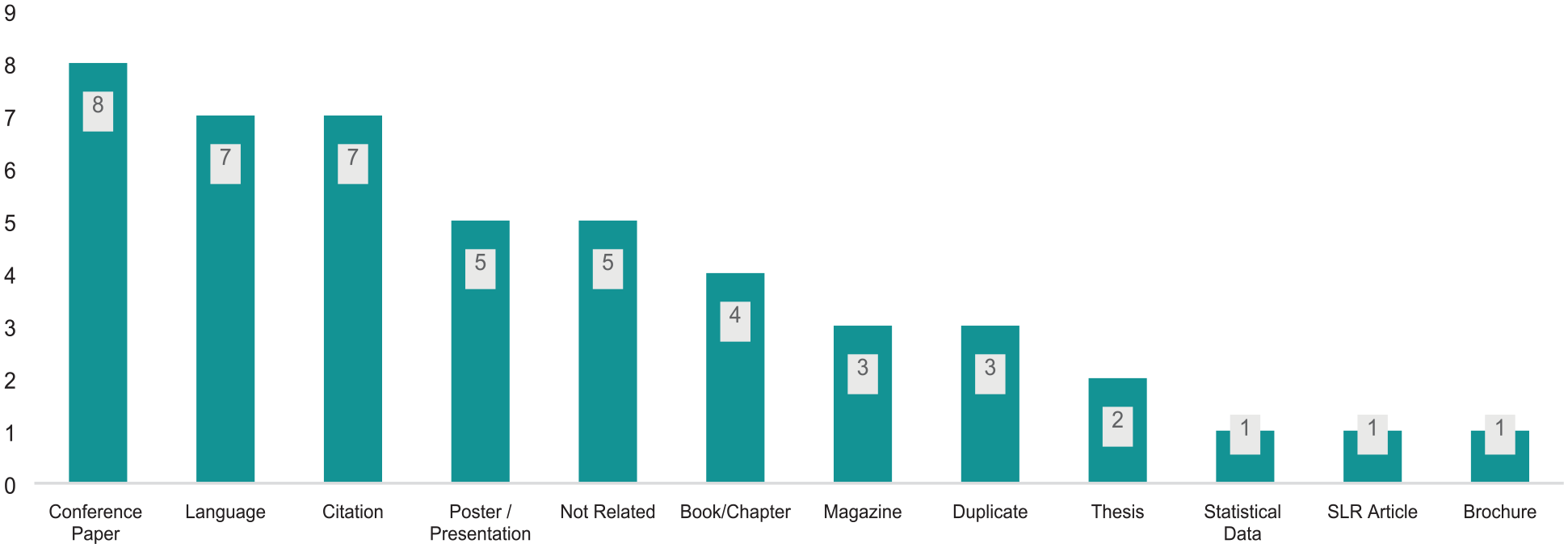
Google Scholar results categories and reasons for exclusion.
Resources
This review was conducted using Scopus, Web of Science (WoS), and Google Scholar. Both Scopus and WoS are widely acknowledge as the leading citation indexing tools. The combination of Scopus’s comprehensive and expertly curated abstract database and citation database with enriched data and linked scholarly literature is a feature that sets it apart from other abstract and citation databases. A thoroughly-vetted and independent review board selects the 25,000 titles and 7000 publishers to be included in Scopus. In total, it contains 82 millions items from over 7000 publishers, 25,751 serial titles, 234,000 books, 80,000 affiliation profiles and 17 million author profiles, with 1.7 billion cited references dating back to 1970 (Elsevier, 2021). Because Scopus is updated on a daily basis, the figures presented here are subject to change. Essentially, this means that one can find out whether or not a specific article in the database has been cited, as well as the details of the citing article. Scopus features robust and innovative searching and browsing features, along with the ability to link to the full text of subscribed articles. Web of Science was the other database used in the review. WoS is a platform made up of several literature search databases that are intended to aid scientific and scholarly research. WoS access is granted to institutional subscriptions, which offers a comprehensive citation search function. It is a comprehensive platform which makes it possible to keep track of ideas from a variety of disciplines and over time, as well as keeping track of almost 1.9 billion cited references from over 171 million records (Clarivate, 2021). With the indexing of every article and all cited references from every journal, the most comprehensive and complete citation network has been created, allowing for both confident discovery and trusted assessment to be powered by the citation network. These two indexed databases have been selected because of their prominence, which is critical in ensuring the quality of the articles reviewed in this paper, as well as their accessibility. In addition, reviewers consider using Google Scholar in the search process for this review. According to Haddaway et al. (2015) Google Scholar has the potential to be an extremely useful supporting database during the search process. The Google Scholars search database is one of the most popular in the world (Athukorala et al., 2016). A number of features that can be found in Google Scholar include (1) the identification of related works, authors, citations and publications, (2) the ability to locate the full document on the web, and (3) adhere to all developments in a given discipline. The use of supporting database supplements the search using the primary database to ensure comprehensive coverage of the literature search. This supported by Xiao and Watson (2019) that every database will never capture a complete set of published materials.
Systematic review process
Identification
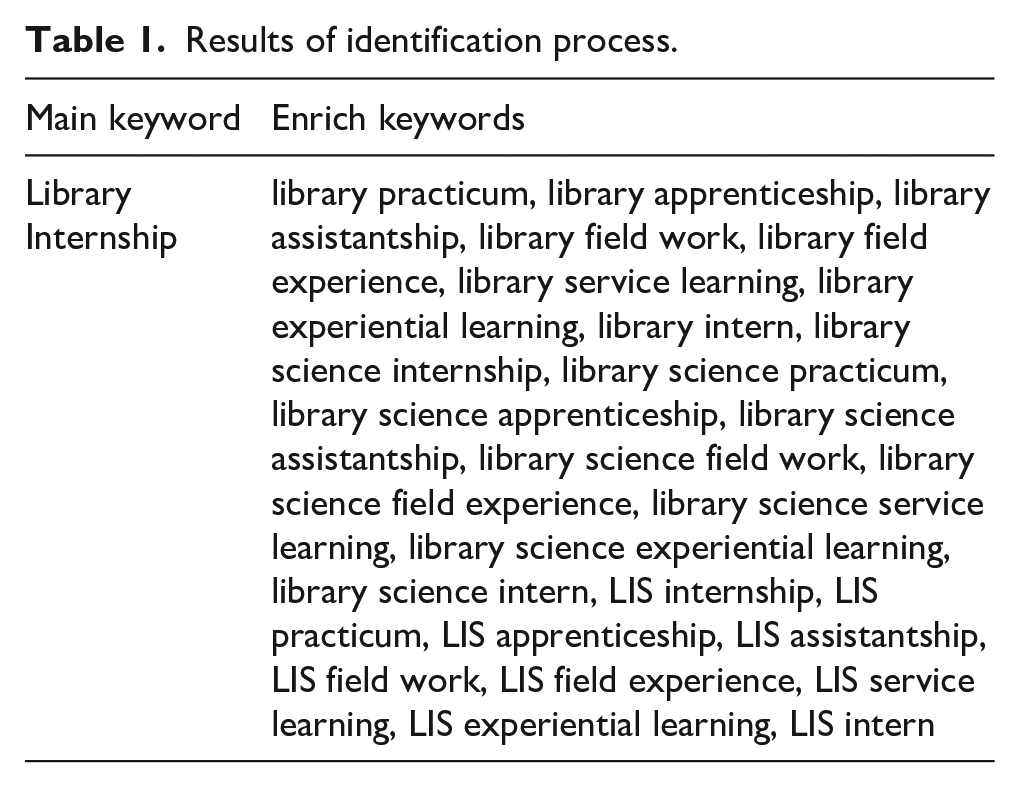
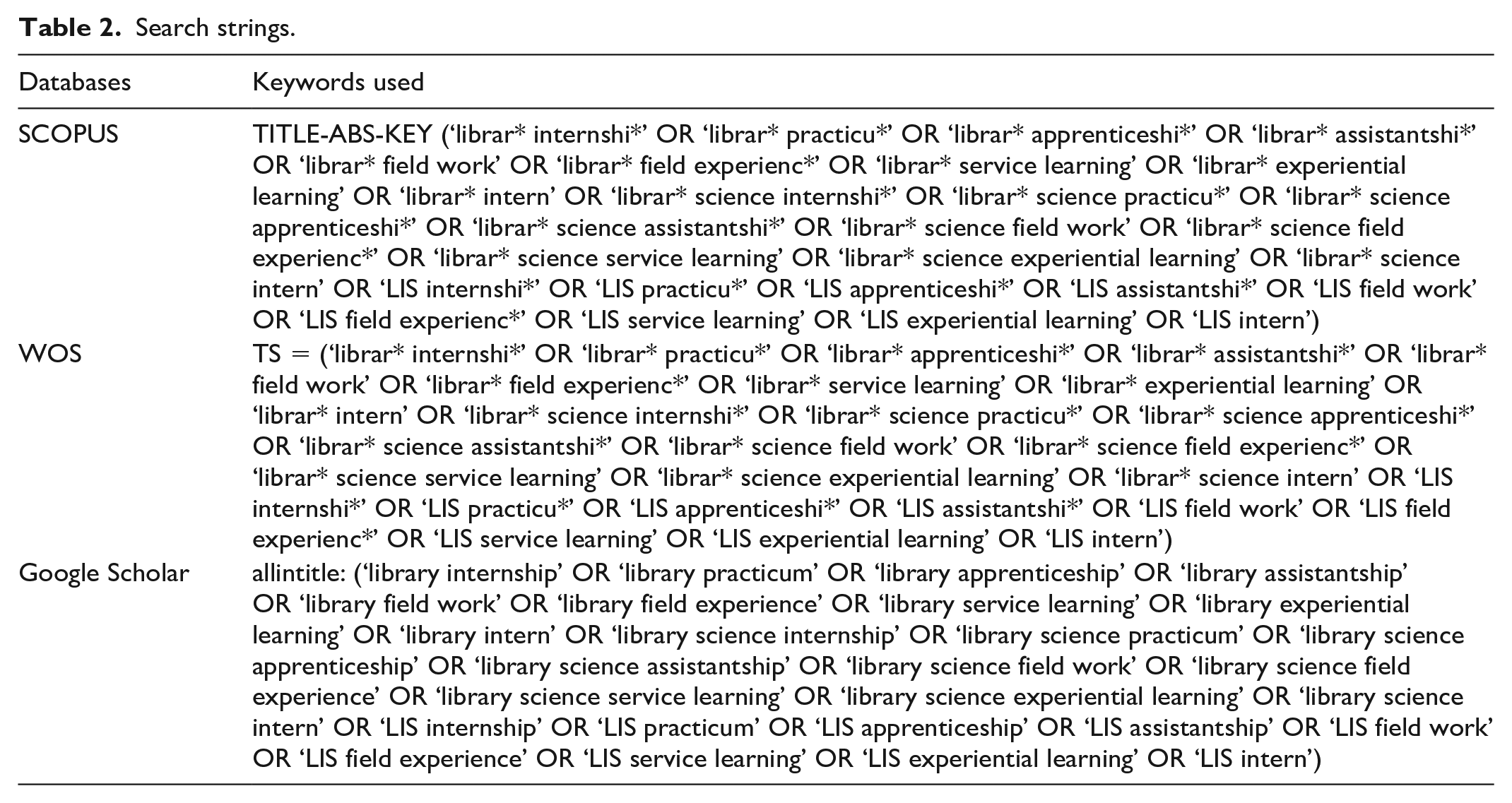
Three main stages were involved in the systematic review process that resulted in the selection of a number of pertinent articles for this study. The first stage is the identification of keywords which is then followed by a process of searching for related and similar terms. Keywords and similar terms are discovered based on thesaurus, dictionaries, encyclopaedia, previous research and Scopus recommended keywords and related terms to the library internship, as well as other similar variations of the term (Table 1). Search strings were created for Scopus, Web of Science and Google Scholar in August 2021 after all relevant keywords had been discovered (Table 2). This process resulted in the retrieval of 54 documents from the Scopus database, 17 documents from the Web of Science database, and 107 documents from the Google Scholar database. The following search and access were made on August 8, 2021. Diligent processes were done to avoid the possibility of human error like spelling mistakes and missing keywords when conducting advanced searches in each database.
Results of identification process.
Search strings.
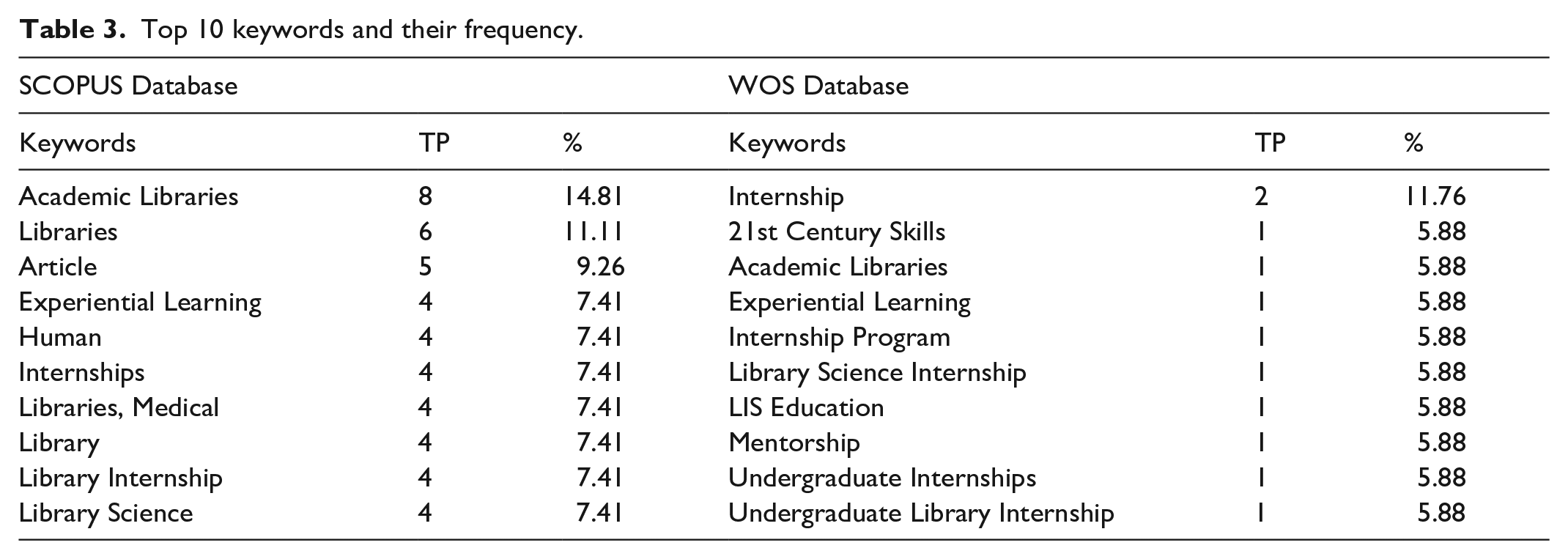
Furthermore, the reviewers points out the most popular keywords, culled from the Scopus and WOS databases (Table 3). The top 10 keywords that were used in the search results from both Scopus and WOS are taken into consideration by the reviewers as the foundation for this information. This demonstrates that the terms and keywords used by the authors for the identification process were met and were conclusive in obtaining the results. The terms also demonstrate keywords in the article that denote acquisition of 21st century skills, mentorship and experiential learning, among other things. The papers were primarily written to describe the internship in an academic library, as evidenced by the keywords they contained.
Top 10 keywords and their frequency.
Screening (inclusion and exclusion criteria)
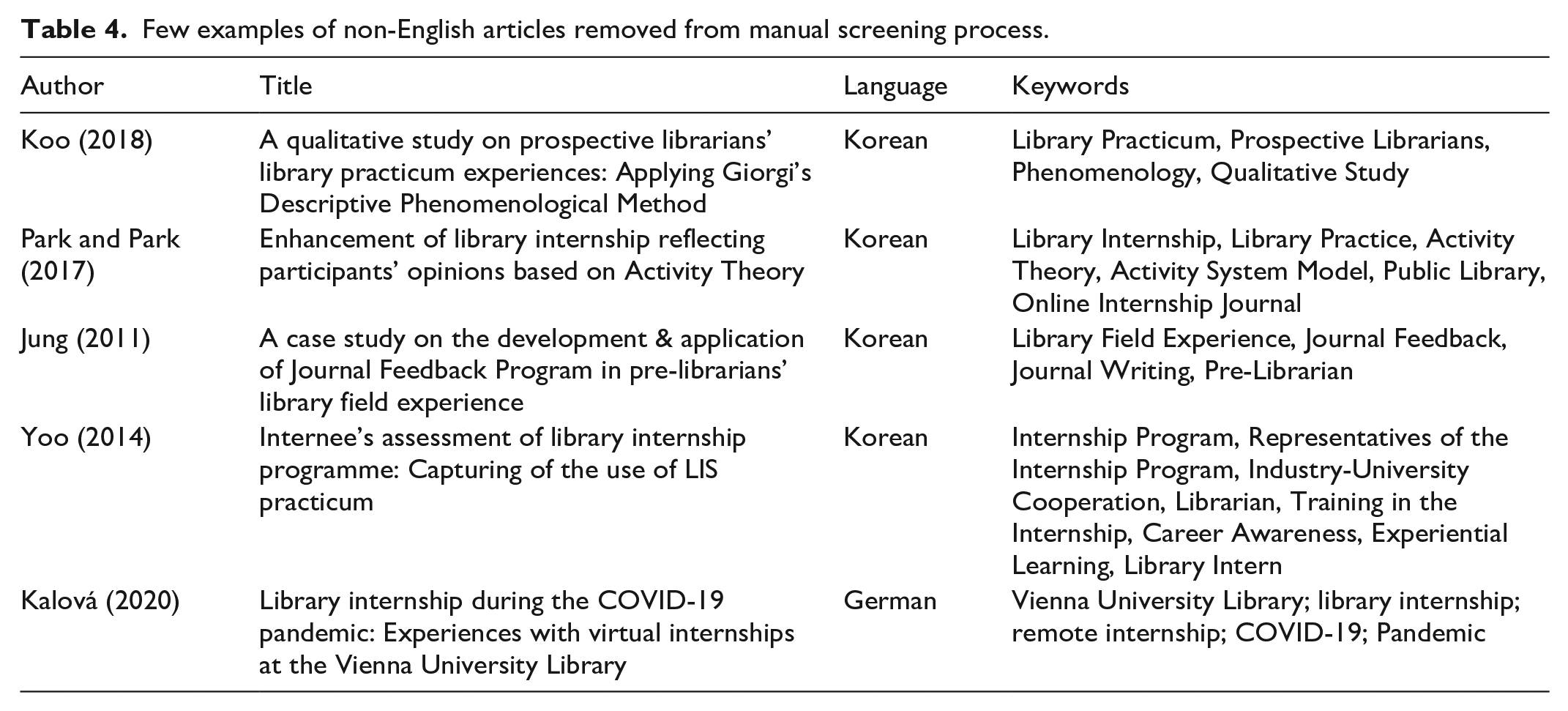
Screening process was the second stage. As the purpose was to obtain broad and relevant articles for the study, the screening criteria were not used in the first identification process. Screening is the process of selecting articles for inclusion or exclusion based on criteria established by the reviewers with the assistance of specific databases. During the screening process, eligibility, inclusion, and exclusion criteria were established in order to identify articles that would be suitable for inclusion in the systematic review process. For the first criterion, a timeline spanning the years 2005 to 2020 (15 years) was chosen based on the total number of related publications that were retrieved to be reviewed. The reviewers of this paper do not dispute the significance of papers written before 2005, but doing so would be impossible due to the amount of literature available and searching through all of the literature is infeasible. The importance of this fact has been noted by Okoli (2015) where studies relevant to a review will often concentrate on specific dates or time periods. To define the second set of inclusion criteria, we chose article journals with empirical data as the types of documents. All other types of documents such as books, chapters in books, review articles and conference proceedings were excluded because they were not deemed primary sources. The third criterion used to determine whether an item should be included or excluded on the list was language. Despite there being few pieces of potential literature that could be significant in other languages solely by examining the title and abstract, it is still imperative to select publications written in languages the reviewers can comprehend. Due to the fact that the title and abstract were written in English and contained the keywords that were searched for, they appeared in the search results. In this case, it can be seen that the majority of non-English articles were written in Korean (Table 4). Therefore, to help ensure that no errors would occur in translations, no documents other than those in English were used in this paper (Table 5). It was found that out of 178 documents to be screened, 65 articles remained after the process was finished (see Figure 2).
Few examples of non-English articles removed from manual screening process.
The inclusion and exclusion criteria.

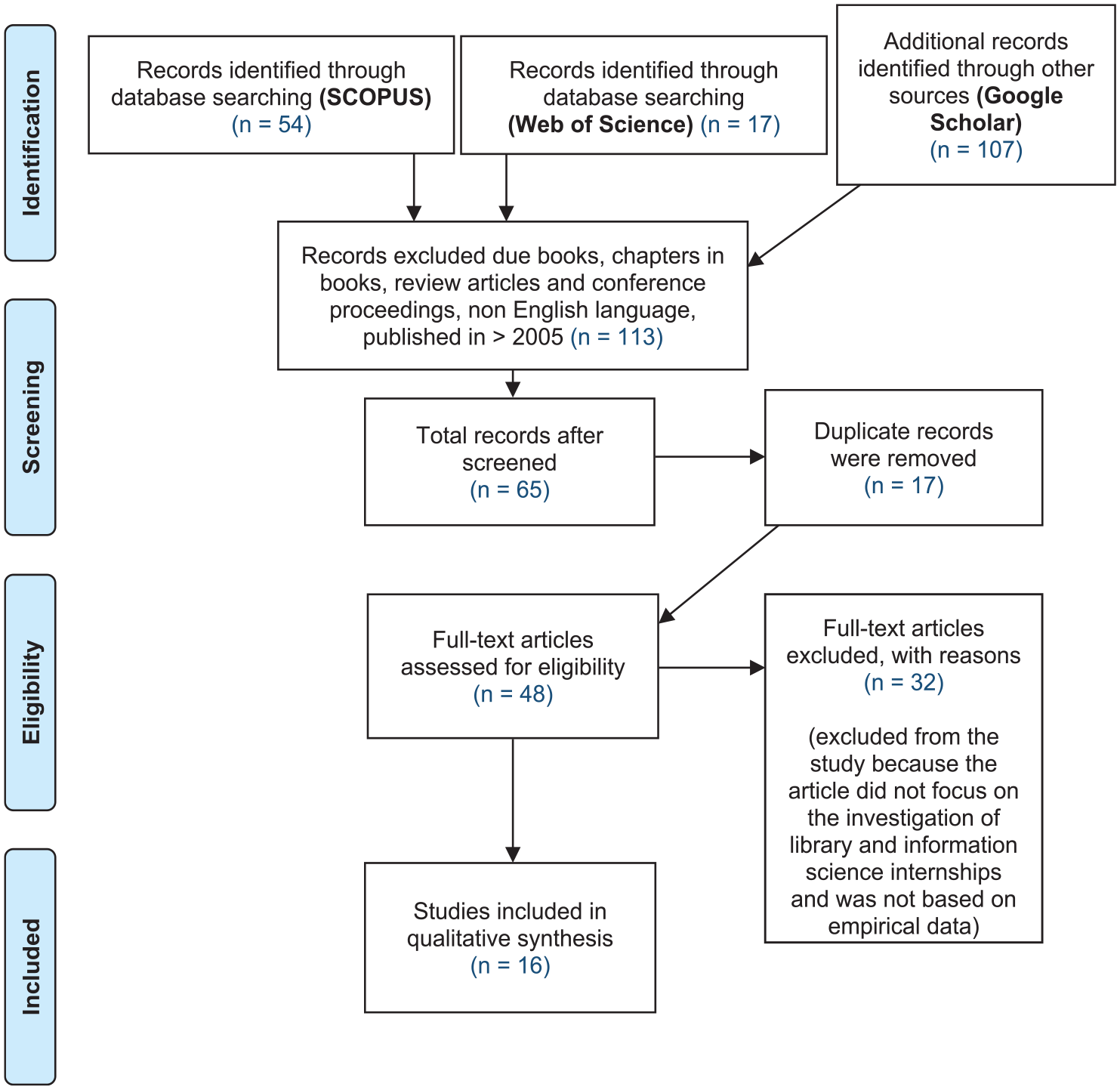
Flow diagram of the study. (Adapted from Shaffril et al., 2021).
Despite its ease of use, Google Scholar screening has been meticulously carried out due to the limited refinement capabilities of the search engine and the need to conduct a thorough review in order to avoid missing important articles. Research results can be hit or miss, and it is the reviewer’s responsibility to select which findings to use. The Figure 1 shows the various screening categories of Google Scholar and the reason that led to the exclusion.
Eligibility and duplication exclusion (manual screening)
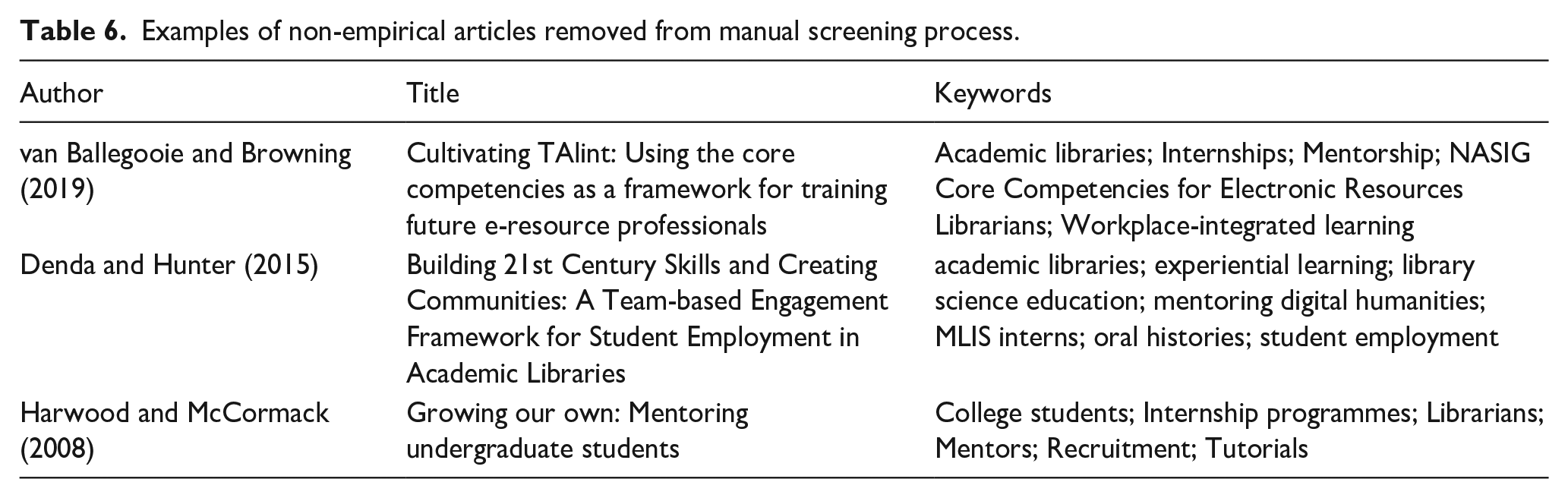
An overall total of 65 articles were prepared for the third stage, which is referred to as the eligibility stage. Eligibility is a process in which articles are manually included or excluded based on the specific criteria set forth by the reviewers. A more significant step was taken at this point in order to ensure that all of the articles’ titles, abstracts, and main contents met the inclusion criteria and were appropriate to be used in the current study in order to achieve the research objectives. Duplicate documents were removed first before the eligibility process began. This brings us to a total of 17 duplicate articles that were removed. Thus, 48 documents remained for consideration in the eligibility process, which were manually screened for literature focusing on library internships and criteria from previous screening processes (inclusion and exclusion criteria). Following careful analysis, 32 articles were removed from consideration as they did not investigate library and information science internships, and were not empirically-based research. These 32 articles that were removed appeared in the search results because they were of the article type and because they contained keywords that the reviewers were looking for. Manual screening was necessary because it required a meticulous effort to determine whether or not an article was eligible for inclusion. Table 6 provided a few examples of articles that were removed because they did not meet the criteria for an empirical paper.
Examples of non-empirical articles removed from manual screening process.
During the final stage of the review process, we identified a total of 16 articles that were used for the qualitative analysis. Robinson and Lowe (2015) claims that it is common for SLR articles to have fewer than 50 articles, and often fewer than 10, and the article count reviewed here in the present article is consistent with what has been claimed by the author. Shaffril et al. (2021) agreed, stressing that the emphasis should be placed not on the number of articles reviewed but on the process (methodology) of acquiring the articles. To provide an example of this in the context of the LIS field, there are a number of LIS SLR papers published in WoS-indexed journals with fewer than 15 articles reviewed, such as (Tharani, 2021) with 13 articles and (Zareef and Ahmad, 2021) with the same number of articles.
Quality assessment
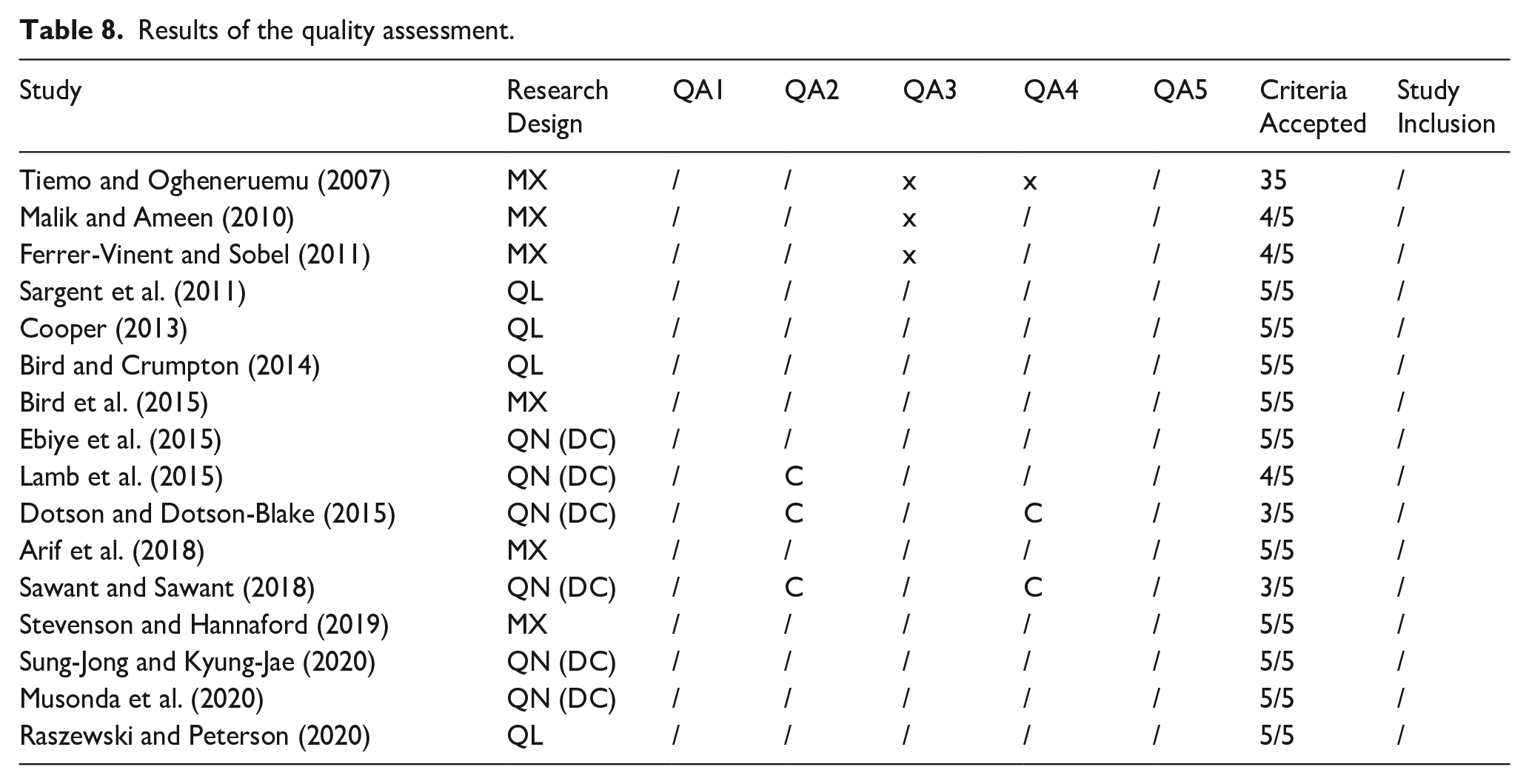
The quality assessment step was necessary to verify that the selected studies had met all necessary methodological and analysis requirements. To gauge this purpose, an evaluation tool called the Mixed-Method Appraisal Tool (MMAT) by Hong et al. (2018) was used. Before moving on to the quality assessment of each selected study, two screening processes were carried out. The quality of the selected articles was evaluated in accordance with five main criteria that were established in the research design. For qualitative study, MMAT was employed to evaluate the criteria such as looking into study approach that is suitable for answering the research question, the adequacy of the research method employed to answer the question, data validity, sufficient data to support the results and the coherence linking qualitative data sources, collection, analysis and interpretation. The reviewers relied on assessment criteria such as sampling strategy to address the research question, sample representation of the target population, and measurement appropriateness for quantitative research design. For the mixed method approach, assessment criteria include a sound rationale supports of the used of a mixed method design in addressing the question, various component working together to address the research question, as well as integration of qualitative and quantitative results into analysis.
Each study was subjected to thorough scrutiny alongside the involvement of the co-author. Every article was read meticulously, and each was given special attention to make sure that the methodology and analysis were both comprehensive. In order to determine if the sample was consistent and the analysis was based on that consistency, the reviewers employed the Mixed Methods Appraisal Tool (MMAT), the quality criteria assessment (Table 7).
Mixed Methods Appraisal Tool (MMAT) criteria to appraise the methodological quality of selected paper.
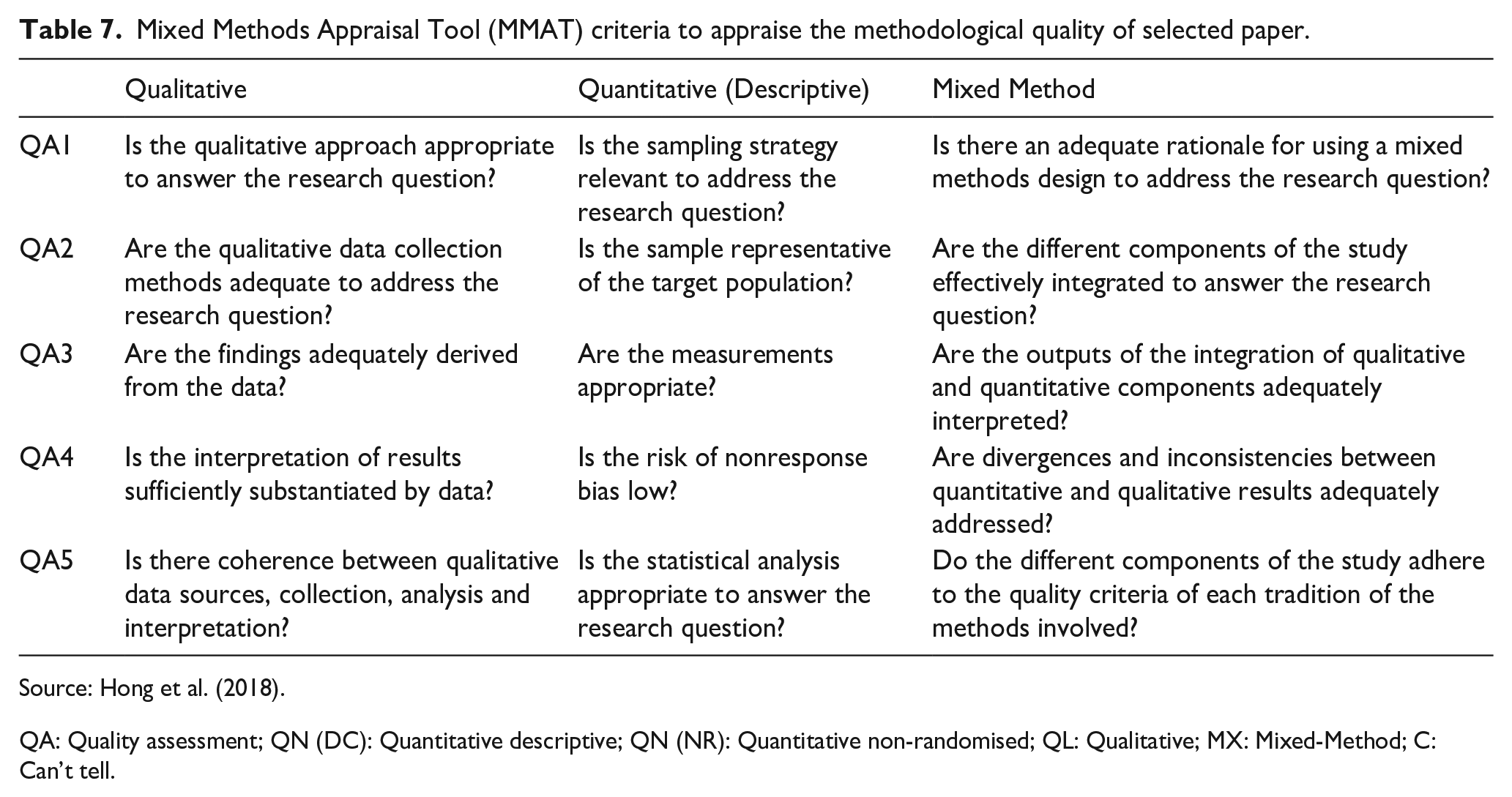
Source: Hong et al. (2018).
QA: Quality assessment; QN (DC): Quantitative descriptive; QN (NR): Quantitative non-randomised; QL: Qualitative; MX: Mixed-Method; C: Can’t tell.
Five criteria were applied to each article, with three possible responses provided to indicate the level of confidence: ‘yes’, ‘no’, and ‘can’t tell’. These answers represent three different levels of whether the condition was met. The response ‘yes’ indicates that the criterion has been met, ‘no’ implies that the criterion was not met, and ‘can’t tell’ is used when there is not enough information to determine if the criterion was satisfied (Hong et al., 2018). Articles that satisfied at least three criteria were incorporated into the review. Every assessment decision was arrived at through mutual agreement. The reviewers engaged in constructive discussion to address any conflicts. After discussing this, the reviewers agreed that the chosen articles were of sufficient quality, as far as the methodology and analysis was concerned. Overall, 10 papers met all the criteria, three papers met at least four of the criteria, and a final three papers achieved at least three of the parameters (Table 8).
Results of the quality assessment.
Data abstraction and analysis
Following the eligibility process, the remaining articles were evaluated, reviewed, and analysed; the results are discussed in detail in this paper. Reviews were conducted by consulting those particular studies that directly pertained to the research question. After scanning the titles, reading the abstracts, and studying the articles, the relevant themes and sub-themes were extracted from the studies for in-depth and thorough analysis. This study employed an integrative review, which is a type of review technique that blends multiple research approaches; analysed and synthesised together as a whole (quantitative, qualitative and mixed methods). The integrative review methods according to Whittemore and Knafl (2005) let researchers use various approaches and when dealing with one type of data, it is possible to transform it into the other, whether by qualitizing the quantitative data or by quantitizing the qualitative data. In this study, the authors chose to qualitatively analyse all of the data. A thematic analysis was performed to discover themes related to research patterns and trends in library internship studies. The authors focused on the first stage of the thematic analysis by extracting information that addressed the study’s research question from the remaining 16 articles. Following the first phase, the authors developed meaningful groups through a coding technique.
Data abstraction and analysis tools
ATLAS.ti Version 9.1.2 for MAC was used to complete a thorough reading of all remaining articles, highlighting an important quotation and establishing codes using the research question as the first focus point. After data collection and qualitative analysis, ATLAS.ti was employed to examine the results, generate a coding group based on the results of the studies. It is a sophisticated tools that helps with the organisation and management of the articles (materials) in both creative and efficient ways. ATLAS.ti has a completely unique quotation level and it provides a more powerful level of analysis that is beyond coding and works better with inductive and interpretive research methodologies.
Results
Background of the selected studies
From the 16 articles, United States (US) was the primary study area for eight papers (Bird and Crumpton, 2014; Bird et al., 2015; Cooper, 2013; Dotson and Dotson-Blake, 2015; Ferrer-Vinent and Sobel, 2011; Lamb et al., 2015; Raszewski and Peterson, 2020; Sargent et al., 2011), two in Pakistan (Arif et al., 2018; Malik and Ameen, 2010), and two in Nigeria (Ebiye et al., 2015; Tiemo and Ogheneruemu, 2007). The remaining studies, meanwhile, also addressed India (Sawant and Sawant, 2018), Canada (Stevenson and Hannaford, 2019), South Korea (Sung-Jong and Kyung-Jae, 2020) and Zambia (Musonda et al., 2020) (see Figure 3).
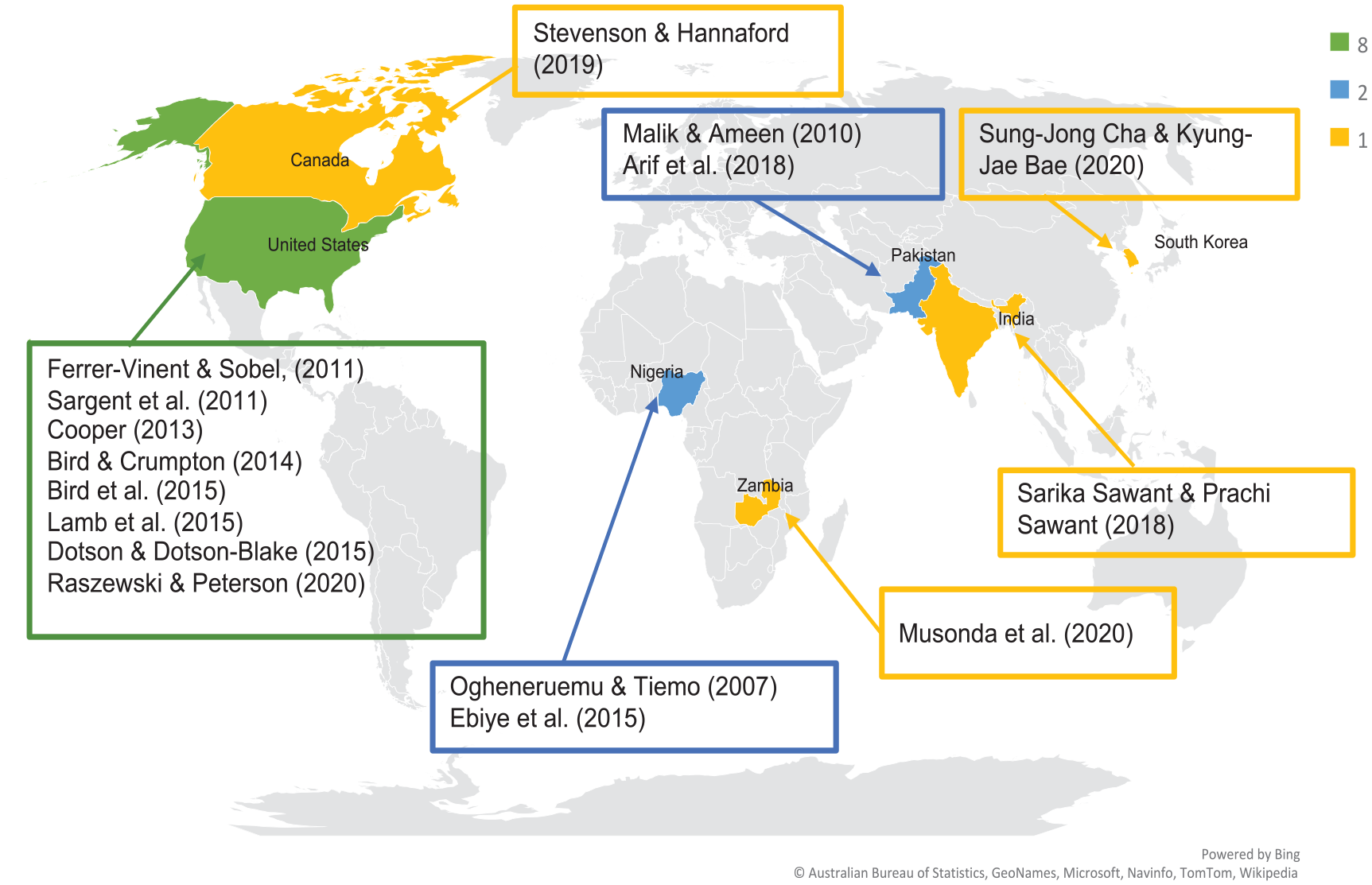
The countries of the reported studies.
Within the scope of this review (Figure 4), six articles dealt with quantitative research (Dotson and Dotson-Blake, 2015; Ebiye et al., 2015; Lamb et al., 2015; Musonda et al., 2020; Sawant and Sawant, 2018; Sung-Jong and Kyung-Jae, 2020), four articles dealt with qualitative research (Bird and Crumpton, 2014; Cooper, 2013; Raszewski and Peterson, 2020; Sargent et al., 2011). The remaining six articles (Arif et al., 2018; Bird et al., 2015; Ferrer-Vinent and Sobel, 2011; Malik and Ameen, 2010; Tiemo and Ogheneruemu, 2007; Stevenson and Hannaford, 2019) are concerned with mixed methods research.
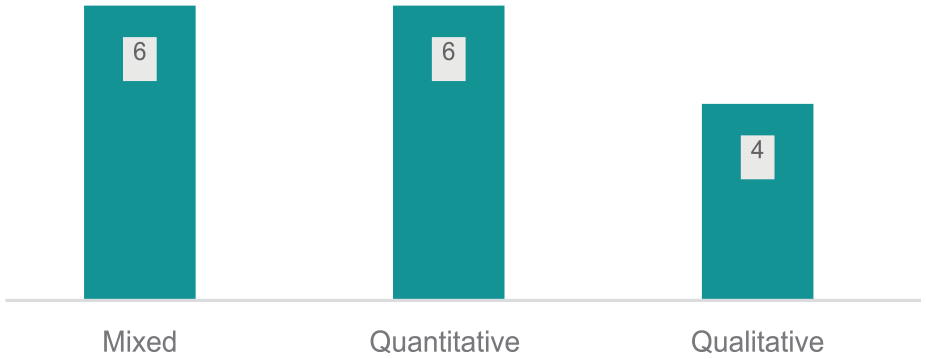
Research design of the reported studies.
In terms of publication year, one article were published in 2007 (Tiemo and Ogheneruemu, 2007), one were published in 2010 (Malik and Ameen, 2010), two articles were published in 2011 (Ferrer-Vinent and Sobel, 2011; Sargent et al., 2011), both the years 2013 (Cooper, 2013) and 2014 (Bird and Crumpton, 2014) saw the publication of a single article. In addition, there were four articles published in 2015 (Bird et al., 2015; Dotson and Dotson-Blake, 2015; Ebiye et al., 2015; Lamb et al., 2015), two articles published in 2018 (Arif et al., 2018; Sawant and Sawant, 2018), one article published in 2019 (Stevenson and Hannaford, 2019), and three articles published in 2020 (Musonda et al., 2020; Raszewski and Peterson, 2020; Sung-Jong and Kyung-Jae, 2020) (see Figure 5).
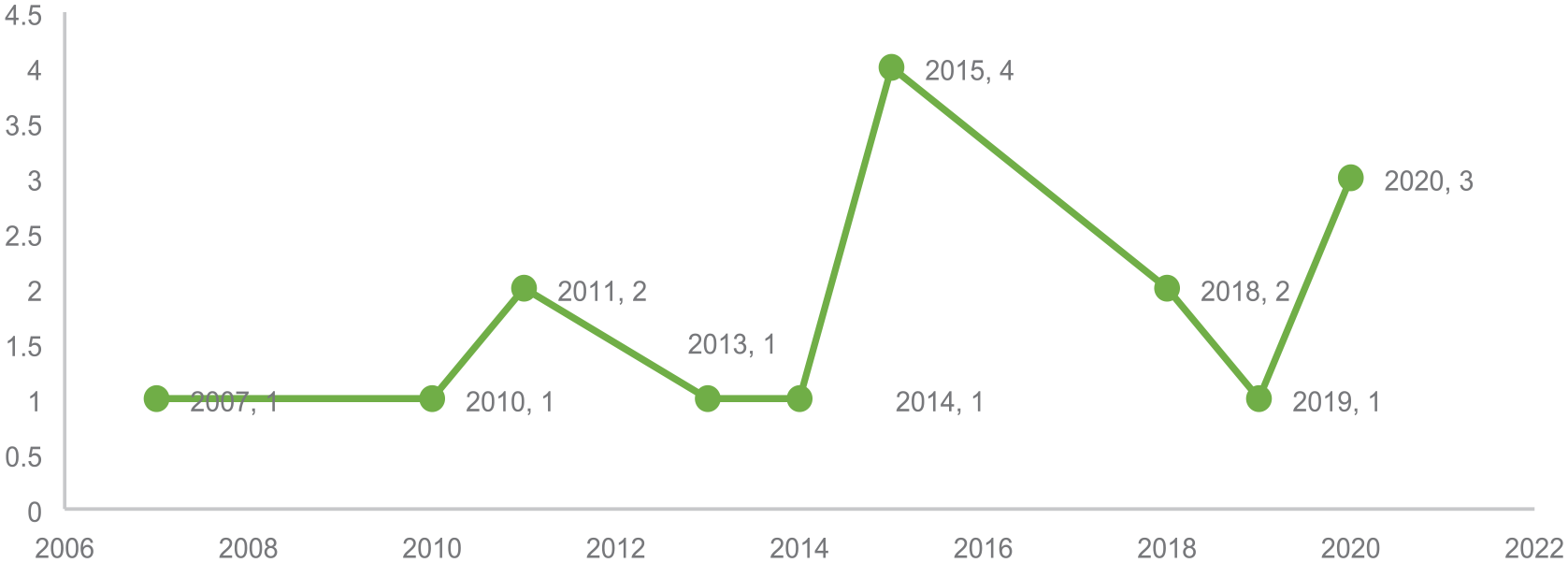
Publication years of the reported studies.
In addition, the review discovered that three articles were published in Journal of Academic Librarianship (Arif et al., 2018; Sargent et al., 2011; Stevenson and Hannaford, 2019), three articles were published in Library Philosophy and Practice (Ebiye et al., 2015; Tiemo and Ogheneruemu, 2007; Sawant and Sawant, 2018) and another two articles were published in Journal of Education for Library and Information Science (Bird and Crumpton, 2014; Cooper, 2013). Only one article, on the other hand, was published in each of the following publications: College & Undergraduate Libraries (Lamb et al., 2015), TechTrends (Dotson and Dotson-Blake, 2015), IFLA Journal (Bird et al., 2015), Journal of Information Science Theory and Practice (Sung-Jong and Kyung-Jae, 2020), Journal of the Medical Library Association (Raszewski and Peterson, 2020), Library Review (Malik and Ameen, 2010), New Library World (Ferrer-Vinent and Sobel, 2011) and International Journal of Multidisciplinary and Current Educational Research (Musonda et al., 2020).
More than half of the 16 reported articles were of high quality, as evidenced by the fact that they were indexed by both the Scopus and Web of Science databases (Table 9). The majority of the indexed publications were ranked in either Quartile 1 or Quartile 2, with only a few falling into Quartile 3 and Quartile 4 of the rankings. In contrast to SCOPUS, this subject lacks well-indexed articles in WOS (Q1 or Q2). The rankings were obtained from the Scopus and WOS databases on September 7, 2021.
Quartile rankings of the reported articles.
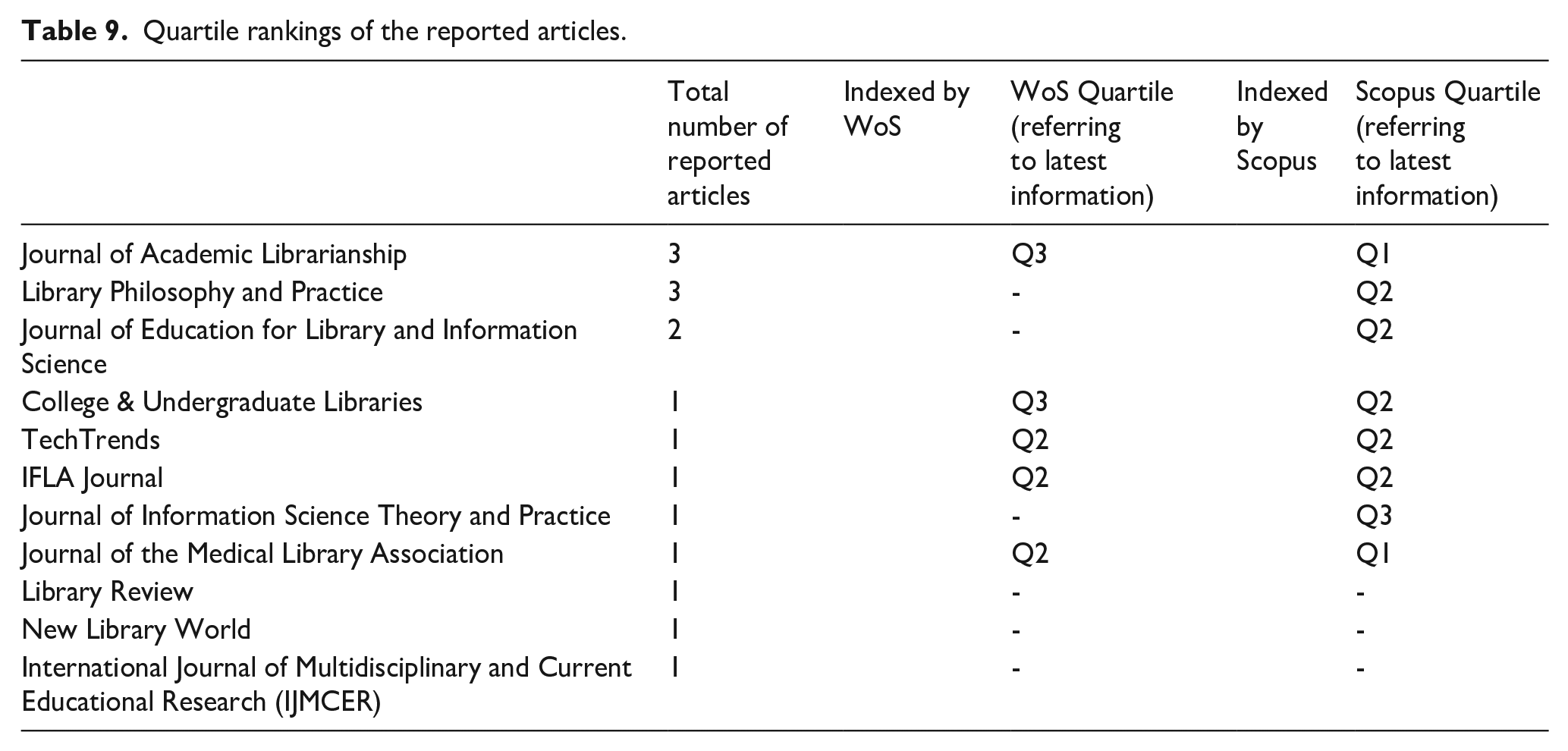
The reviewed article was published in 11 journals, a mix of impact and non-impact factor journals. The combination of these journals was justified on the grounds that selecting only high-impact journals will lead to what (Durach et al., 2017) and (Shaffril et al., 2021) have described as retrieval bias and publication bias, respectively. Retrieval bias occurs as a result of an insufficient search process; as the authors cannot claim to have conducted exhaustive searches based solely on searches conducted in impactful journals, as the search process must be conducted in every possible journal and database, regardless of their status (impact or non-impact). According to Durach et al. (2017) publication bias can occur if authors only search reputable journals for articles. This should not occur in SLR because it emphasises comprehensive searching. Searching from impactful journals is undoubtedly beneficial to systematic review, but ignoring non-impactful journals will jeopardise the comprehensiveness of SLR because good articles can also be found in non-impactful journals.
The developed themes
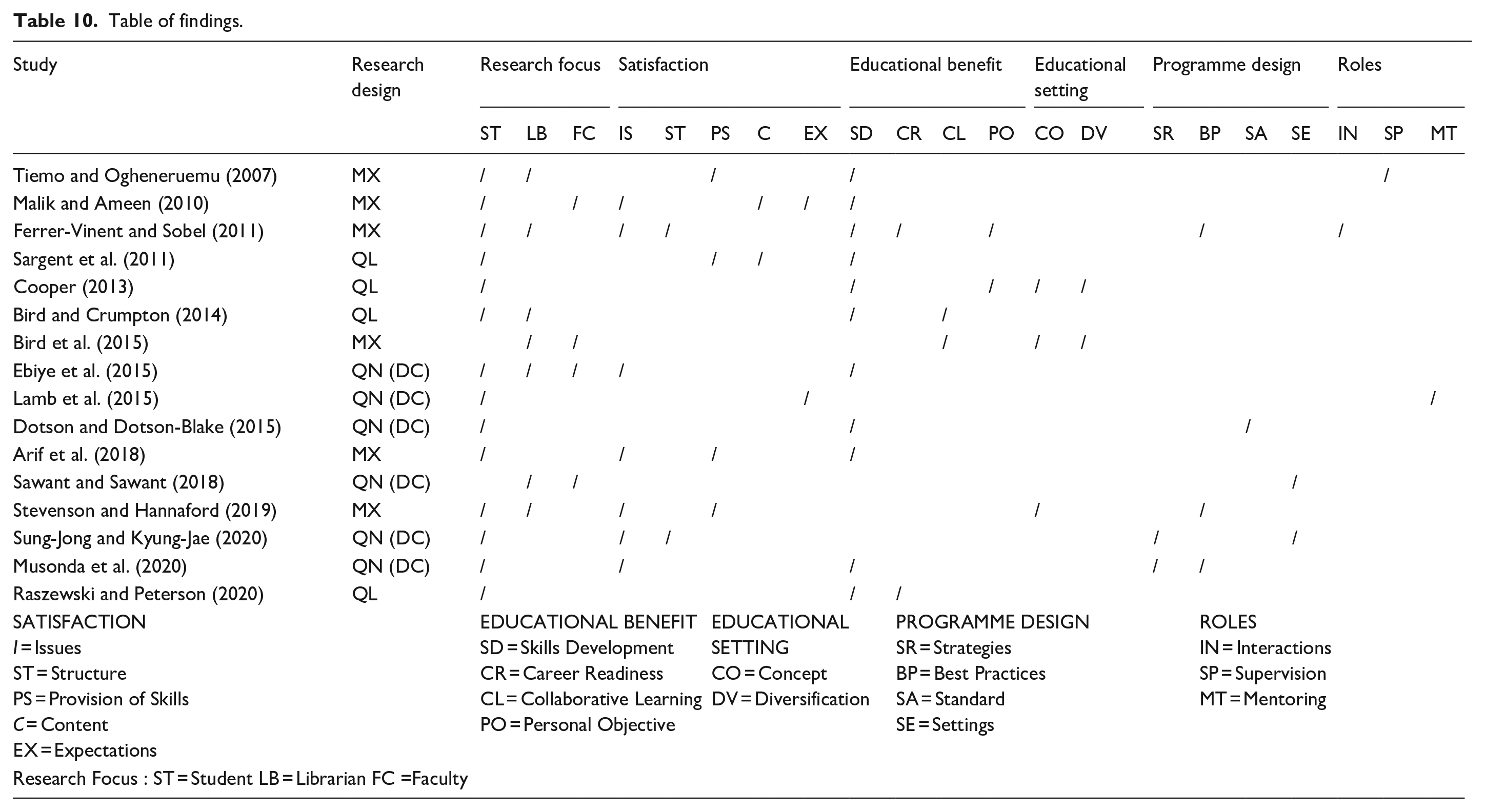
This section explores five main themes and 18 sub-themes related to library internship studies. The five main themes are satisfaction (five sub-themes), educational benefits (four sub-themes), educational settings (two sub-themes), programme design (four sub-themes) and roles (three sub-themes) (Table 10). Figure 6, on the other hand, is a treemap chart, which provides a comprehensive overview of the themes. Treemaps are typically employed to illustrate hierarchical or tree-like data sets (Mahipal and Kesha, 2015). This tree maps were created using Excel and the themes’ frequency of occurrence. The results in Table 10 also provided a thorough overview of the studies about library and information science internships and what has been done in this area previously. The themes and sub-themes were developed in a systematic manner using the ATLAS.ti software (see Figure 7).
Table of findings.
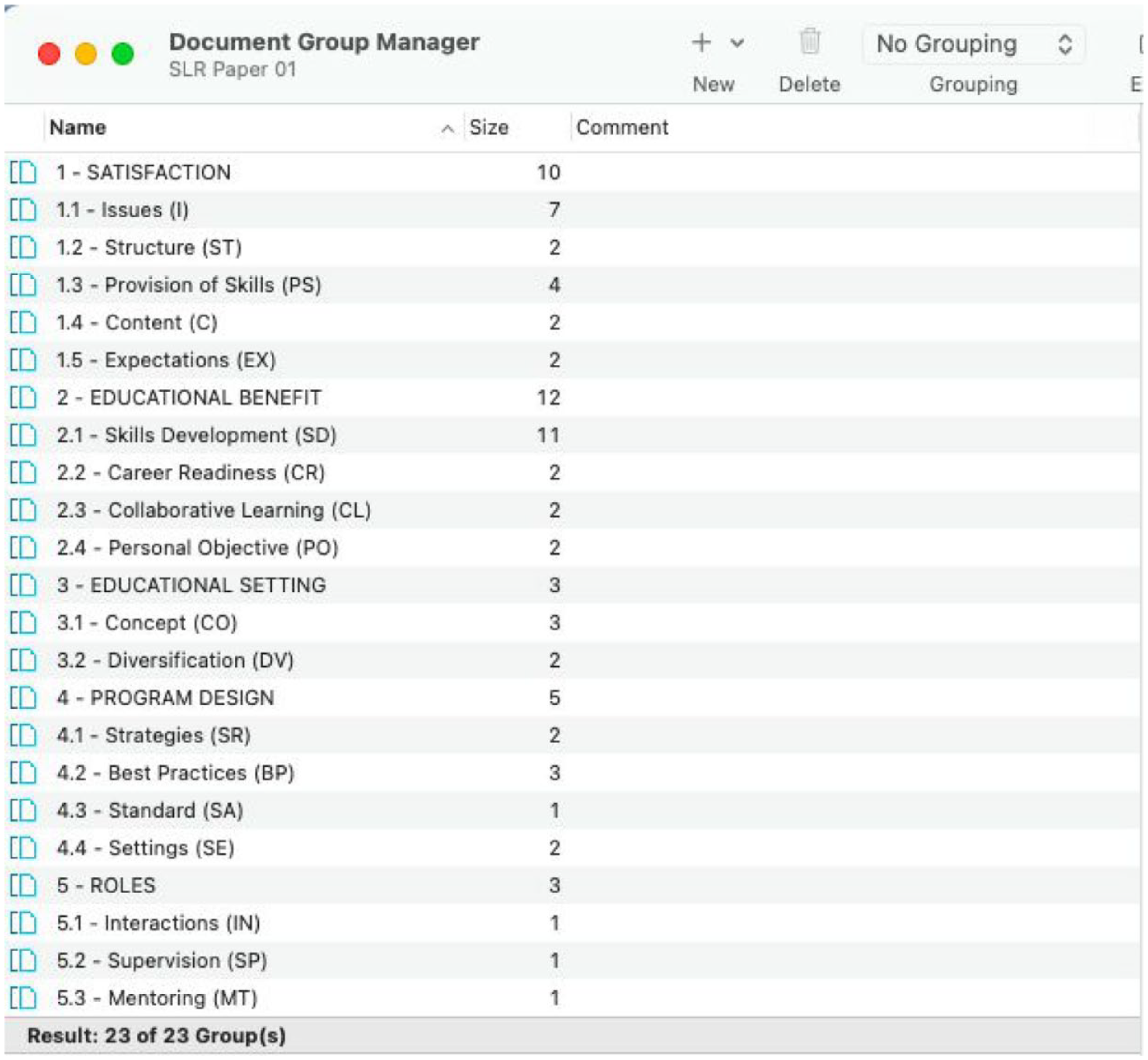
Treemap charts on distribution of themes.
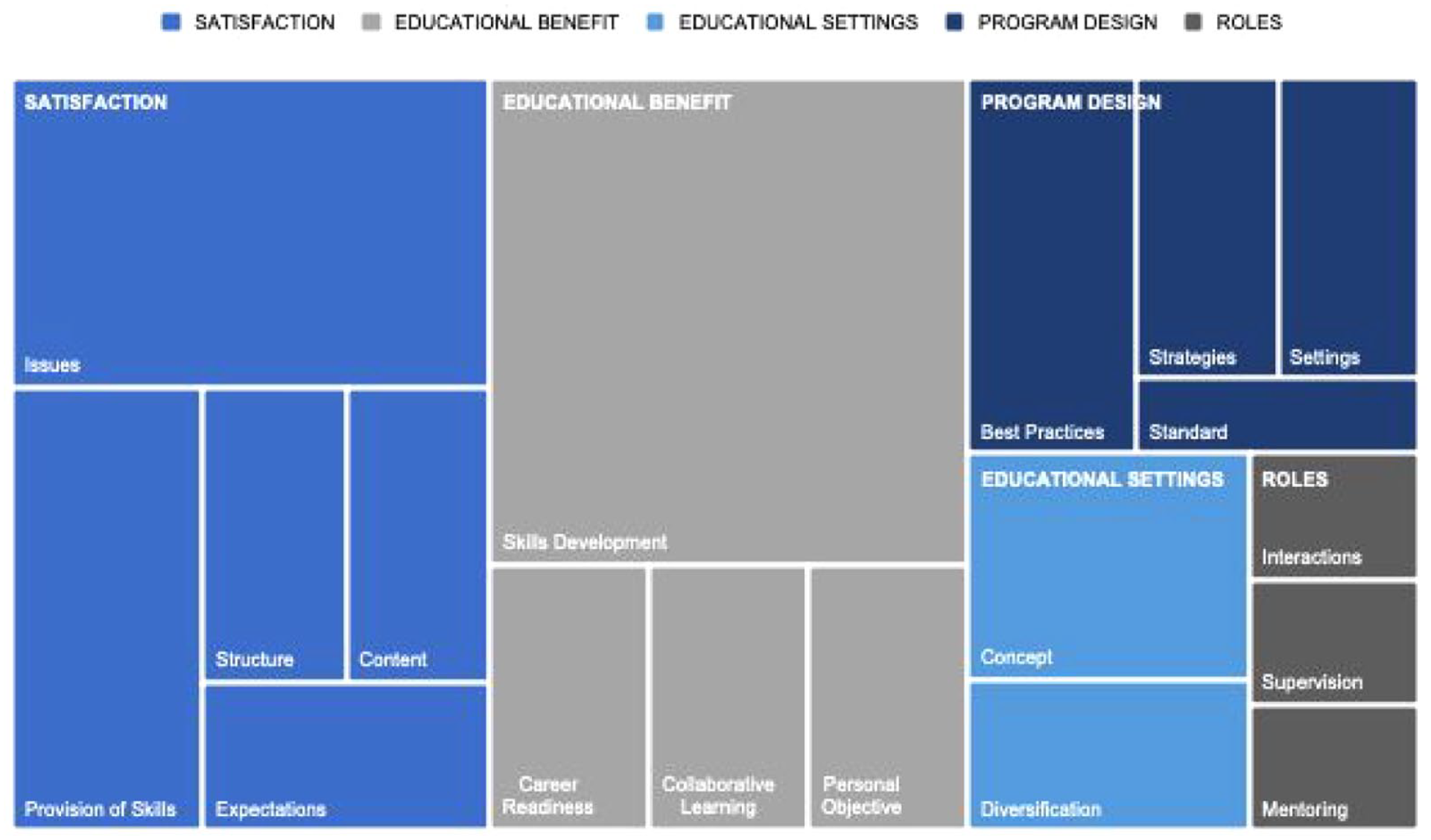
Themes and sub-themes generated in ATLAS.ti.
Research patterns and trends in Library Internship Studies
From the 16 articles that were reviewed, it was discovered that 14 of them (Arif et al., 2018; Bird and Crumpton, 2014; Cooper, 2013; Dotson and Dotson-Blake, 2015; Ebiye et al., 2015; Ferrer-Vinent and Sobel, 2011; Lamb et al., 2015; Malik and Ameen, 2010; Musonda et al., 2020; Tiemo and Ogheneruemu, 2007; Raszewski and Peterson, 2020; Sargent et al., 2011; Stevenson and Hannaford, 2019; Sung-Jong and Kyung-Jae, 2020) were concerned with students as the primary research focus. A total of seven studies (Bird and Crumpton, 2014; Bird et al., 2015; Ebiye et al., 2015; Ferrer-Vinent and Sobel, 2011; Tiemo and Ogheneruemu, 2007; Sawant and Sawant, 2018; Stevenson and Hannaford, 2019) also chose to focus on the librarian. Only four (Bird et al., 2015; Ebiye et al., 2015; Malik and Ameen, 2010; Sawant and Sawant, 2018) of the 16 articles in their study focused on faculty members. It can be said that from the earliest of the research on library internship until the most current, the focused would be on the student and their satisfaction towards the training. We can claim that from the beginning of library internship research, and even the most recent study had students as the primary focus, which is something we can say has been true since the beginning of research on library internships.
Among the trends in library internship research were satisfaction, educational benefit, educational settings, programme design and roles. This trend is a topic commonly studied by researcher for all types of library such as academic library (Bird and Crumpton, 2014; Cooper, 2013; Ebiye et al., 2015; Ferrer-Vinent and Sobel, 2011; Lamb et al., 2015; Malik and Ameen, 2010; Musonda et al., 2020; Tiemo and Ogheneruemu, 2007; Raszewski and Peterson, 2020; Sargent et al., 2011; Sawant and Sawant, 2018; Stevenson and Hannaford, 2019), school library (Dotson and Dotson-Blake, 2015) and research employing quantitative approach (Arif et al., 2018; Bird et al., 2015; Sung-Jong and Kyung-Jae, 2020) focused on different types of library such as national, special and public. As previously discovered (Table 3), academic libraries are among the most popular keywords used in search results, which is significant in this context.
Satisfaction
Mostly, the purpose of the studies (Arif et al., 2018; Bird and Crumpton, 2014; Cooper, 2013; Dotson and Dotson-Blake, 2015; Ebiye et al., 2015; Ferrer-Vinent and Sobel, 2011; Malik and Ameen, 2010; Musonda et al., 2020; Tiemo and Ogheneruemu, 2007; Raszewski and Peterson, 2020; Sargent et al., 2011; Stevenson and Hannaford, 2019; Sung-Jong and Kyung-Jae, 2020) focused on the students and the primary concerns, as they relate to the students, were over their satisfaction obtained through the internship programme. The majority of the related studies have spent considerable time discussing the issues that students encountered while undergoing the programme. The fact that the training itself has limitations because of its environment puts it in an awkward position where its educational purpose is not effectively served. Sung-Jong and Kyung-Jae (2020) in his study feared that the gap between academic and practical training sites may confuse students, thus weakening the effectiveness of internship training and decreasing overall satisfaction with the education, therefore conducted a quantitative approach to assess current status of LIS students from eight universities in South Korea. The study were based on general and major-related attributes, internship conditions, and overall satisfaction with the internship training. While Stevenson and Hannaford (2019) through a 2-year paid internship programme assess the students through pre and post internship survey, which aim to provide more room for reflection and learning. Considering the special needs of the distance student from underserved areas of Pakistan, Arif et al. (2018) study the challenges students are dealing with, explore problems faced by the internship students in addition to help in the revision of the MLIS curriculum and for the development of a feedback mechanism for the programme, among other things. Other studies that put satisfaction as primary objectives to be studied covered the programme located in United States (Ferrer-Vinent and Sobel, 2011; Malik and Ameen, 2010; Sargent et al., 2011), Zambia (Musonda et al., 2020) and Nigeria (Ebiye et al., 2015; Tiemo and Ogheneruemu, 2007). Considering the role of the LIS internship programme in teaching practical skills and the dearth of literature on the subject in Nigeria, makes the research to be carried out all the more important (Ebiye et al., 2015). Still, new literature (Musonda et al., 2020) has emphasised the issue of a scarcity of literature in the context of evaluating the effectiveness of this library training, and in Zambia there has no mention of library training outcomes to date.
A second sub-theme that emerged under the main theme of satisfaction was found to be structure, indicating that the programme structure was a concern that was also addressed under the main theme of satisfaction. Since Ferrer-Vinent and Sobel (2011) feel that little understanding exists of library practicum, they have directed their efforts to evaluation, as few strategies for assessing library practicum programmes have been applied so far. To achieve the goal of analysing factors affecting LIS student satisfaction with the practicum, among items developed by Sung-Jong and Kyung-Jae (2020) are six variables of practicum (programme, setting, instructor, timeframe and duration, evaluation and preparation).
It is widely recognised that internships are essential in bridging the gap between academic theory and individual development in the workplace, developing real-world workplace skills, and gaining a great deal of practical work experience. The question of whether internships are essential to the acquisition and provision of important skills has long been a subject of controversy, and it continues to be. In order to ascertain whether the industrial training programme has filled the existing gap between theory and practical work, Tiemo and Ogheneruemu (2007) sought to discover one of the main areas of focus being time management during the programme. In the South Asian context, literature offers a silent picture, and Pakistani researchers in particular did not research the internship programme in the context of distance education, thus Arif et al. (2018) is one of many attempts to assess skills such as professional, technical and communication students gain from MLIS internship programme. Stevenson and Hannaford (2019) employed both pre and post placement surveys to better understand how well students were able to integrate their work experiences into their formal education and how well they applied theories into practice. This information is crucial for curriculum development if the goal is to break down the walls between theory and practice, and classroom and workplace, which are the heart of workplace-intergrated-learning. If the aim is to do away with the gulf between theory and practice, then this information is absolutely necessary for curriculum design. Through a focus group Sargent et al. (2011) asked students about their professional objectives and if they had realised them while interning as library interns. To aid students and the internship programme itself, researchers conducting research on students will solicit recommendations from intern participants.
Sung-Jong and Kyung-Jae (2020) define the content of practicums as those improvements that can be made by developing and reflecting detailed guidelines for the LIS practicum programme in order to improve student learning outcomes. Studies like (Malik and Ameen, 2010; Sargent et al., 2011) surveyed interns to obtain feedback on their training experiences and if they had access to training across the library’s various departments and functions. The goal was to discover the kinds of professional tasks libraries neglect, fail to satisfy, or prioritise over others. When it comes to internships, on the other hand, it is essential that everyone is on the same page. It is imperative that the internship programme has uniform expectations from all parties, including the library and the students. Lamb et al. (2015) in the United States who used a quantitative approach, provides information about the internship programme and survey results about both the interns and library mentors’ expectations and achievements, meanwhile in contrast Malik and Ameen (2010) considering students and senior faculty members for insights on their perceptions and expectations regarding practicum using multiple data collection techniques to probe the real status.
From the results of this review, it was found that most studies on library internship were conducted to study the satisfaction of LIS student itself. These types of studies are common throughout the world, and they are important because they are frequently associated with the overall success of the programme. Scholars believe that if this research is not carried out, they will not be able to assess the effectiveness of the programme they implemented, and of course, no similar research has been conducted yet. While this is being done, programmes should also increase participant satisfaction in practice settings by equipping fieldwork sites with the necessary infrastructure to successfully run the training courses and create a welcoming and enjoyable environment for library work training (Sung-Jong and Kyung-Jae, 2020).
Furthermore, the findings of this study may be useful to researchers in developing countries who are evaluating internship programmes in a similar context. Ferrer-Vinent and Sobel (2011) concurred that individual institutions can measure the worth of their current practices by conducting comparative programmes or controlled experiments. A successful internship programme should be advantageous to both the organisation and to the interns. It is imperative that an internship programme is beneficial to both the organisation and its interns. Future research might be done from a workforce point of view, which associated to the professional librarian who oversaw the interns and ran the internship programme. Most research seems to support the notion that supervision creates an environment that may be challenging for the supervisors and students to navigate.
This type of research, while done previously, is still important and relevant. The level of satisfaction in various aspects, as seen through the eyes of all those involved, will change as the structure itself will undoubtedly change over time. Every person involved in the project will have a different sense of satisfaction based on the evolving design, as it changes through the times.
Educational benefit
A second theme discovered is educational benefit, with a total of 12 studies reporting on it. Under the educational benefit theme, a total of four themes emerged, namely, skills development, career readiness, collaborative learning and personal objective. A total of 11 studies (Arif et al., 2018; Bird and Crumpton, 2014; Cooper, 2013; Dotson and Dotson-Blake, 2015; Ebiye et al., 2015; Ferrer-Vinent and Sobel, 2011; Malik and Ameen, 2010; Musonda et al., 2020; Tiemo and Ogheneruemu, 2007; Raszewski and Peterson, 2020; Sargent et al., 2011) focused on the skills development, two studies (Ferrer-Vinent and Sobel, 2011; Raszewski and Peterson, 2020) investigated on the career readiness. Collaborative learning were mentioned by two studies (Bird and Crumpton, 2014; Bird et al., 2015), while personal objective was also mentioned in two studies (Cooper, 2013; Ferrer-Vinent and Sobel, 2011).
Aside from satisfaction as the primary focus, the majority of related studies have spent a significant amount of time discussing the skills that students gained from participating in the internship programme. For LIS students, library internships are commonly accepted as a vital component of their education that provides numerous benefits in the form of putting their theoretical knowledge into practice and increasing their professional skills, both of which are needed for their future employability. Studies such as (Arif et al., 2018; Ebiye et al., 2015; Ferrer-Vinent and Sobel, 2011; Malik and Ameen, 2010; Musonda et al., 2020; Tiemo and Ogheneruemu, 2007; Sargent et al., 2011) looked at the role of internships in the development of students’ skills in addition to the satisfaction of students. Both the sub-themes of skills development and the theme of satisfaction were significant to each other because studies would look into both of these aspects at the same time. Through a 90-minute focus group session, Sargent et al. (2011) explored how internships contribute to the achievement of personal goals and the advancement of one’s professional career. Most of the studies conducted that focused on skills development were done so in the context of the academic library (Arif et al., 2018; Ebiye et al., 2015; Ferrer-Vinent and Sobel, 2011; Malik and Ameen, 2010; Musonda et al., 2020; Tiemo and Ogheneruemu, 2007; Sargent et al., 2011). With a quantitative research design, both (Ebiye et al., 2015; Musonda et al., 2020) assess the effectiveness of library internships in providing opportunities for students to link theory with practice, and also discover how students can enhance their practical skills. To get a better understanding of the various skills acquired by students as a result of the programme, interview, focus group discussion, and observation were used in addition to questionnaire surveys (Arif et al., 2018; Ferrer-Vinent and Sobel, 2011; Malik and Ameen, 2010; Tiemo and Ogheneruemu, 2007). This discovery appears to imply that a crucial part of any training is reflecting on what was seen and learned.
The findings of Bird and Crumpton (2014) demonstrate that it is worthwhile to pay attention to the learning effects of an internship experience on all of the individuals who participate in it. However, there have been fewer studies that have looked at all of the actors involved in the internship programme. A number of studies, such as (Bird and Crumpton, 2014; Ebiye et al., 2015; Ferrer-Vinent and Sobel, 2011; Tiemo and Ogheneruemu, 2007), attempted to focus on librarians other than students in order to determine what they believed students gained from practicum experiences. Planning for the experiences according to the model of Bird and Crumpton (2014) can foster collaboration between academic LIS department and librarian practitioners in order to both educate and learn from the graduate students that they are both supporting. Apart from that, LIS faculty can learn about new problems and tasks from librarians, which can then be used to modify the curriculum in order to meet the needs of the current and future librarians. Moreover, only two research studies (Ebiye et al., 2015; Malik and Ameen, 2010) pay attention to the LIS faculty as part of study context. A similar approach was used in previous studies that used librarians as the context, in which the researchers attempted to determine what the faculty believed their students would gain from participating in an internship programme.
There is another sub-theme that has emerged under the educational benefit umbrella: career readiness. Only two studies have been conducted under this sub-theme (Ferrer-Vinent and Sobel, 2011; Raszewski and Peterson, 2020). These two studies demonstrate that students generally view internship as highly beneficial, increasing their chances of success in their chosen careers. Career readiness is crucial to students, and internships or field experiences are an excellent way to prepare for it. Ferrer-Vinent and Sobel (2011) stated that students sometimes use their practical experience to affirm their decision about which type of library they want to work in or to discover that they would be better off doing something else. A similar conclusion was drawn in their investigation into how internships help students’ career paths by influencing their career choices and abilities. On the other hand, Raszewski and Peterson (2020) aimed to discover whether their participants had been able to find employment after completing a joint practicum in health sciences, and if so, whether they were applying any skills they learned in their internships. These kinds of studies need to be performed more often because they can help in assessing the effectiveness of internships following LIS students’ graduation. While it is important to focus on developing skills, the emphasis of this training is in assessing how well the library is preparing students for work. This would give both the curriculum and the library internship room to grow, as well as in students’ impressions of their readiness for the workforce. This can be related to the fact that practicum projects help students enhance their resumes with tangible, in-field accomplishments (Raszewski and Peterson, 2020).
The library internship studies were also assessed the element or sub-theme of collaborative learning. When (Bird and Crumpton, 2014; Bird et al., 2015) researched library internships, they wanted to know who could benefit from such an opportunity. Bird and Crumpton (2014) envisioned a programme where internships were specifically designed to tackle the three big problems of academic isolation, practitioner burnout, and student unpreparedness in the workplace. To reinvigorate and fortify the library profession and the schools that train students for it, reproducing some of the activities from these programmes could prove beneficial. They go on to study a global perspective, Bird et al. (2015) and the current research investigates whether an international or virtual placement is necessary, for what reasons, and whether it can be done locally or abroad. These are the strategies for providing students with a richer education.
Finally two studies (Bird et al., 2015; Cooper, 2013) reported on the sub-theme of personal objective. Among the many positive effects on students would be their personal development. Cooper (2013) study probes how participants conceive of their learning and the extent to which they understand their own learning process. The findings mentioned, because service-learning is more likely to be personally meaningful to participants and to generate emotional consequences, to challenge values as well as ideas, and to support social, emotional, and cognitive learning and development, students concluded that it is more suitable for learning and development. According to Bird et al. (2015), the internship’s benefits can be more effectively shared with the LIS programme and students if the LIS programme works to better connect the students’ long-term professional goals with their short-term internship experience.
Overall, a majority of the internship studies that were covered in this review found that the most prevalent area in which scholars involved themselves was satisfaction and educational benefit. Efforts should also be emphasised rather than being solely focused on students, and consideration should be given to the perspectives of others who are participating in these activities as well. Furthermore, it is time to pay attention, and priorities should be realigned to place greater emphasis on the needs of all stakeholders, rather than solely on student-centred learning, as previously stated. These studies confirmed what has been widely reported elsewhere; that practical training provides students with a highly relevant educational experience and benefit that they find extremely valuable.
Educational settings
Educational settings in the internship programme have also been used in this area of studies. Under this theme, two sub-themes emerged namely concept and diversification. (Bird et al., 2015; Cooper, 2013; Stevenson and Hannaford, 2019) are three studies that emerged under the sub-theme of concept. Introducing the concept of workplace-integrated-learning into the academic library literature, Stevenson and Hannaford (2019) present a case study of an internship programme that was inspired with this concept. Students have received consistent mentoring as a result of this programme and the concept that underpins it, despite the fact that there are numerous placements and supervisors to choose from. In order to obtain a global perspective Bird et al. (2015) conducted an international study on internship in library education that examined North America and 69 different countries around the world using a mixed-methods approach. They were looking for evidence about the characteristics and concepts that were being used around the world on placements that were associated with an international approach and a virtual internship programme. Other studies should expand upon the findings in this report and explore how online education programmes can provide internships and other experiential learning opportunities. A case study, as well, was conducted in the United States, Cooper (2013) scrutinises an internship that uses service learning and how the students involved feel about their own education in two different learning environments. According to a review of the literature on service learning, it is possible for an internship to qualify as service learning under widely accepted definitions of service learning in the field of library and information science and other fields. Although there is a general understanding of what internships entail, it appears that the concept is limited. The most applicable one according to Ferrer-Vinent and Sobel (2011) might concentrate on the idea of the library environment. Due to the fact that many library school students are not certain of what type of library setting they will be working in, research into how to assist students in developing a versatile based would be beneficial in assisting students for their future careers.
The previously mentioned studies (Bird et al., 2015; Cooper, 2013) both studied on the diversification of the educational settings while examining the concept. Bird et al. (2015) targeted the four I’s characteristics; intentional, interconnected, interdisciplinary, and international. They focused on creating richer learning opportunities for students while also diversifying the programme to be done globally and enhancing the learning environment into a virtual setting. In the absence of geographic constraints, virtual internships could become an option for students. Additionally, Cooper (2013) highlights the need to promote the internship experience as a two-fold learning environment, where the student stands to benefit not only in the extrinsic experience and information learned, but in addition, they also use the intrinsic learning that comes with community service values. However, in the context of educational settings, there is still a dearth of empirical research. A greater range of satisfaction and educational benefits is seen in library internship studies. Still, an organised practicum programme has a significant impact on the results of fieldwork courses, for instance, by offering well-structured programmes that deliver students with clear instruction and feedback on their assignments and fieldwork tasks, and provide accurate course requirements and a clear idea of the project’s scope (Sung-Jong and Kyung-Jae, 2020). The studies are important and relevant because it dealt with the internship programme planning, a subject that’s commonly associated with educational settings.
Programme design
Another popular theme that emerged was not as prevalent as the others mentioned above. It was found that only six articles (Dotson and Dotson-Blake, 2015; Ferrer-Vinent and Sobel, 2011; Musonda et al., 2020; Sawant and Sawant, 2018; Stevenson and Hannaford, 2019; Sung-Jong and Kyung-Jae, 2020) reported on ideas that were discussed within this theme and its sub-themes. Among the sub-themes that fall under the programme design theme are strategies (2), best practices (3) and settings (2). The strategies of the programme was found to be one of the research topics of previous studies. Sung-Jong and Kyung-Jae (2020) drew six assessment items and factors from previous research to gauge student satisfaction after training, because effective strategy is required to improve the practicum due to the causal relation of factors affecting its efficacy. Musonda et al. (2020) were deemed to have investigated practical strategies for the successful implementation of the practical training programme. The results showed that students are more likely to select their preferred placement over assignments chosen by the departments. This validated by Sung-Jong and Kyung-Jae (2020) that there is a statistically significant difference in satisfaction with the fieldwork course depending on the practicum site that the student has selected, according to the findings, offering the idea that familiarity with the site or a preference for a specific site is an important attributes for satisfaction. Musonda et al. (2020) agreed, saying that student preference for choosing their own institutions for their library practicum, is greater than being assigned to a pre-selected institution by the department.
The internship programme has seen significant changes in best practices since it began (Stevenson and Hannaford, 2019). When it comes to bridging the gap between theoretical concepts and actual practice, there is frequently a constant battle between library employers and library schools (Ebiye et al., 2015). This programme has been the subject of previous research (Ferrer-Vinent and Sobel, 2011; Musonda et al., 2020; Stevenson and Hannaford, 2019) which has examined the best practices from it. Since this is the first such study, Musonda et al. (2020) hope that the findings will help to design more effective and better-designed library practical training in Zambia and other developing countries. The purpose of the study, led by the librarian Ferrer-Vinent and Sobel (2011), are aimed at sharing their findings in order to improve practice. In direct response to this research, their library was able to make changes to its practicum programme. The author Stevenson and Hannaford (2019) on the other hand, discuss the outcomes of that case study with respect to best practices, the implications of policy and recommendations for future research into the changing face of the professional academic library workforce. Therefore, it’s still relevant if they are to be conducted because of differences in each place and the way they are implemented. Nonetheless, the only one study (Dotson and Dotson-Blake, 2015) has been conducted regarding professional standards in library internship studies specifically American Association of School Librarians (AASL) Standards and International Society for Technology in Education (ISTE) Standards for Coaches. A survey with items focused on standards and service delivery during the internship was developed to gain a better understanding of the relationship between professional standards and practical components of the internship that were focused on technology integration. This research could aid the creation of standards-based library internships activities, which can be implemented in schools.
Finally, two studies (Sawant and Sawant, 2018; Sung-Jong and Kyung-Jae, 2020) discussed the sub-theme under the programme design, which dealt with the settings. Sawant and Sawant (2018) endeavoured to determine the status of job placement and the internship activity in LIS schools or colleges in India. It was mentioned that, in contrast to other training programmes, LIS schools are less likely to aggressively seek placement for their students. Sung-Jong and Kyung-Jae (2020) on the other hand examine the practicum settings attributes that involved the practicum sites, the choice of the sites, residency during the practice, distance between residential location and work place and previous experience in practicum. An overall positive impression of the practicum setting is correlated with positive feelings about the overall practicum, as was evident in the orderly, well-structured way they were carried out, and the well-crafted scope of the course. It is important to spend more time researching the responsibilities of the sites and library practitioners when planning the internships in order to develop high-quality programmes.
Roles
The final theme that we’ll cover is one with three sub-themes: interactions (Ferrer-Vinent and Sobel, 2011), supervision (Tiemo and Ogheneruemu, 2007), and mentoring (Lamb et al., 2015). This theme is addressed by just one of the studies covered in this review, with each of the sub-themes being addressed by a different study. The sub-themes discussed the roles that were involved in the administration of the internship programme. This is a role that would always be subjected to the librarian practitioner’s in the library setting as well as in the three of the study. Ferrer-Vinent and Sobel (2011) set out to define the nature of the interactions between site librarians and practicum students. Specifically, it sought to determine site librarians’ reactions and suggestions for improvement related to working with practicum students. Regular interaction and informal discussions with the librarian are important to students (Sargent et al., 2011). However, Tiemo and Ogheneruemu (2007) were interested in finding out what supervisors thought about the time spent in supervision, student attitudes, and the comprehension of the workload of this practitioner in order to better understand the practice. Studies like (Arif et al., 2018; Ebiye et al., 2015; Malik and Ameen, 2010; Musonda et al., 2020; Sargent et al., 2011; Sung-Jong and Kyung-Jae, 2020) discussed their findings regarding the supervision element over students’ satisfaction, demonstrating that there is a need for additional research in this area. Despite the many value that internship bring, Ebiye et al. (2015) reveals that LIS students still struggle with the many challenges, which include the supervisory circumstances. In contrast to the aforementioned assertion, as both student satisfaction with the practicum supervisor are at their highest, while the readiness and preparation of the practicum sites is the lowest (Sung-Jong and Kyung-Jae, 2020). Another option would be to further probe the librarians’ preparations during this programme. The final aspect of this theme is a study by Lamb et al. (2015) of their mentoring programme in the library training. The study additionally addresses the origin, purpose, and development of the programme, as well as the latter part on mentors’ expectations and programme outcomes. According to the findings of a number of studies (Arif et al., 2018; Cooper, 2013; Ferrer-Vinent and Sobel, 2011; Sargent et al., 2011), the element of mentorship is well-liked, both positively and negatively.
Discussion and future direction
Even though the library internship has been around for some time, a dearth of understanding regarding it still exists, as the review in this paper shows. While there is an abundance of literature for this subject, most of it uses the approach from individual programme and small group of participants (Asher and Alexander, 2006; Ball, 2008). Numerous areas for investigation and research are possible, all of which deserve scrutiny.
Methodological concerns
In the papers analysed for this review, the methodologies used are a mixture of those more common; with an equal number of papers using mixed methods (6), quantitative (6) and those less common; qualitative (4). The research methodology used for the paper chosen for this review is both appropriate and balanced. The majority of the articles included in this review are entirely quantitative in nature, and they also used a mixed methods approach. Qualitative research, in contrast, should be applied whenever the research calls for that kind of investigations, including the feasibility, availability and needs assessment. Studies that emphasise the specifics of a situation, such as the roles and experiences, can be drawn from the participants involved in order to better understand the intricacies of the subject. Rather than using surveys to gain insight into the various populations present in the library internship programme, it is essential to conduct interviews to learn more. Additionally, academic library internships aren’t the only library internships worth researching; internships in other libraries should be highlighted as well. Quantitative approaches may be used to observe situations or events that affect people, and findings are communicated through statistics and numbers, whereas qualitative approaches are primarily concerned with narratives and accounts, which include subjective perceptions, feelings, opinions, and beliefs (Matthews and Ross, 2010). Quantitative data may not be sufficiently robust to account for complex issues. There are some issues that cannot be answered using (only) quantitative methods, such as personal experiences and practices, as well as an in-depth understanding of the roles involved. Qualitative designs are required in order to discover the reasons for observed patterns, particularly those that are invisible or unexpected. It appears from this review that qualitative approaches may have an in-depth explanation.
One study, for example (Sargent et al., 2011) found that students who participated in the programme could describe their teamwork experience by talking about what they did on the team. On the other hand, using a quantitative approach, such as (Musonda et al., 2020) it was found that students complained about non-cooperative attitudes between staff and students, but no further explanation could be discovered. After learning about these findings, we would like to learn more about the difficulties that students encountered in these circumstances and we will need to conduct additional research approach into their personal experiences, more importantly, what lies behind the story. Following the findings of this research, the reviewers concluded that this area or topic required further qualitative investigation in order to better understand what constitutes this type of learning for the beneficiaries involved and what we still don’t know was needed. This study demonstrates the importance of increased transparency and discussion regarding the benefits of library internships as transformative educational experiences.
On a more important note, the majority of the studies in the library internship were conducted in the United States and Canada (9). There were four (4) studies in Asian countries, and the remaining three (3) were in African countries. According to the findings of this review, there is a significant gap in empirical evidence due to the lack of studies conducted in large regions such as Europe, South America, and the Middle East, among other places. Either the countries in question are not making internship positions in libraries compulsory for students or this issue is not considered important to researchers in the region. Research is also possible in the domain of comparison between countries, which helps grow the body of knowledge.
Modernising the internship
Topics that emerged in the themes of educational settings, programme design, and roles are examples of areas of concern in the development of internship programmes as well as indication of other research gaps that need to be addressed. Findings from this review draw attention to the issue of programme design comprehensiveness. In Stevenson and Hannaford (2019) findings, students want more in-depth assignments and the opportunity to work on a tedious project while in training. They also want the ability to choose their own schedules while enrolled in the programme. According to Ferrer-Vinent and Sobel (2011) there were two groups of students; those who needed more structure and those who had too much from their training. While this was true, another finding from the same study stated that having more structure at the start of the practicum experience would have been beneficial. Student preference is for a practicum with a mix of structure and freedom, with more structure initially and more freedom later. Malik and Ameen (2010) brought attention to the issue of the comprehensiveness of the programme design, highlighting the dissatisfaction of students with their limited opportunities to serve in all areas of the library. For the most part, interns expressed the wish that they could have seen more of the library in order to better understand how everything works together (Lamb et al., 2015). It was brought up in Ebiye et al. (2015) that interns were not given enough exposure to hands-on experience, among others. In far too many cases, the internship experience is intended solely as an opportunity to gain entry into the library and begin performing the duties of a librarian (Dotson and Dotson-Blake, 2015). Instead, the internship should be a transformative experience, rather than a means of maintaining the status quo. Sung-Jong and Kyung-Jae (2020) suggests that future strategies for improving practicum satisfaction should focus on programme design to improve the effectiveness of the LIS fieldwork course. As a result, it is critical for researchers and practitioners to continue to examine the planning of programme design through the lens of the librarian, as this is one of the most direct ways to contribute to programme success.
Outside of collaborations with faculty, librarians may not be able to directly take ownership of many of these initiatives; therefore, conducting a future study to determine the direct impact of faculty involvement on the programme would be a fruitful area of investigation. As suggested by Damasco and McGurr (2008), the faculty and librarian who prepare and design the library training programme play a crucial role in its success. Another finding from this review draws attention to the roles that emerged as a result of the themes being explored in depth. The concept of mentorship was brought up by a large number of students on their own, despite the fact that no questions addressed it explicitly (Ferrer-Vinent and Sobel, 2011). Students have expressed serious reservations about the feasibility of incorporating a mentoring component into the programme. For Stevenson and Hannaford (2019), this reaffirmed the notion that the supervisors know how to supervise, but were not aware of how to mentor. There was a lack of guidance and supervision, which students were concerned about, which was brought to light in three studies (Ebiye et al., 2015; Malik and Ameen, 2010; Musonda et al., 2020). Students feel the need for greater dedication from librarians, particularly in the area of students training (Tiemo and Ogheneruemu, 2007).
In order to complete the gaps left by our systematic review, the next step will be to look directly into the responsibilities of the supervising librarian. Moreover, it can facilitate the exchange of best practices and strategies for dealing with the practical issues that librarian supervisors may encounter, for example, a scarcity of all three; expertise, time and resources. Internships in libraries, on the other hand, are something in which librarians can invest themselves fully, and it is one of the ways in which librarians can directly impact students’ educational outcomes by facilitating transformative learning experiences. Supervisors who are reluctant may jeopardise the student internship experience. In turn, this raises an important question: how to prepare librarian supervisors for the supervisory roles? These questions remain unanswered due to a paucity of research addressing them. So far, we have only been able to draw generalisations about the current state of research on library internships. We can conclude that what we value as researchers is the sharing of the productivity of library internship programmes and describing what students do for the training, which we can infer from our findings. In order to help librarian practitioners, the host library, faculty, and future scholars understand the real conditions of this training, it is critical that each findings be documented in a scholarly and meaningful manner. By conducting further studies on these themes, especially on roles and programme design, it will be possible to assess and continue to advance the improvement of the provision of this training.
Conclusion
This review fill the gaps in our understanding of library internship research which reveals the key concerns in the development, implementation and advancement of LIS internship. The findings of this study have led to the development of new variables and domains, which may provide valuable knowledge and could serve as a foundation for not only future academic work, as well as fill in the empirical gaps of the study area (library internship), but also improved internship programmes which fulfils the requirements and needs of the current industry. This type of review can overcome significant shortcomings in the field on a global scale by repeating the process in the library internship context, and in other subject areas as well. In the hope of assisting information providers in providing better understanding and emphasis of their roles, this systematic review study may also make sense to relevant practitioners in the field.
The review presents a number of recommendations for future studies, including that more in-depth qualitative studies should be conducted on library internship and their beneficiaries, research concerning other types of libraries, and research on library internship focused on other countries (Europe, South America and the Middle East). As a final note, researchers are strongly encouraged to further explore on the programme design and related issues of roles in this area, as they are highly relevant to the training of LIS professionals.
Footnotes
Declaration of conflicting interests
The author(s) declared no potential conflicts of interest with respect to the research, authorship, and/or publication of this article.
Funding
The author(s) received no financial support for the research, authorship, and/or publication of this article.
