







Abstract
This investigation aimed to assess the perceived level of interpersonal competencies possessed by academic librarians working in public and private sector universities across Pakistan. The study also examined differences in perceived interpersonal competencies of academic librarians based on demographic characteristics. A quantitative survey method was opted to collect data from 276 academic librarians selected through proportionate stratified simple random sampling technique. A total of 257 (92.4%) responses were received back that were analyzed using Statistical Package for Social Sciences (SPSS-23). The findings showed that academic librarians’ perceived collaboration, communication, customer service, ethics & values, leadership, and learning & innovation were at very skilled level. On the basis of age and professional experience, there were no significant differences in respondents’ opinions; however academic librarians from private universities were found to be more skillful about interpersonal competencies than those from public universities. Female respondents thought they were more adept at interpersonal skills than male respondents. Further, the respondents having MS/MPhil degrees were more interpersonal competent than those having BS (Hons.)/MLIS/MA degrees. Strong interpersonal abilities enable university librarians to play a significant role that support social and political well-being of the university. In local scenario, they could organize lectures and training sessions to help other academic librarians develop their skills. They could join statutory groups that develop laws to advance the field of librarianship. Moreover, the present study suggested the development a comprehensive instrument in assessing the interpersonal competencies of academic librarians based on the competency index for the library field prepared by OCLC web junction in 2014.
Keywords
Introduction
Organizations’ employment and recruitment procedures have altered in line with the rapidly evolving workplace. Employers are compelled to hire workers that possess personal, social, soft, and people skills and competences. Managers and leaders should master these skills because they are people-related (Balcar, 2016; Dean, 2017; Marin-Zapata et al., 2022; Vasanthakumari, 2019). These abilities make any person competitive and productive (Al-Tarawneh, 2017). Graduates’ employability is enhanced by interpersonal skills (Salleh et al., 2010). Self-management, motivation, accountability, professional ethics, leadership, and a service-oriented mentality are a few examples of interpersonal skills. These are the fundamental characteristics of proactive managers who work in a networked environment (Stueart, 2007).
Like other organizations that is, business and corporate, the university libraries have also witnessed the phenomenon of providing services to remote users. Academic librarians with strong communication skills can form alliances and partnerships with other stakeholders, as well as meet the library needs of their users in an efficient and effective manner (Farooq et al., 2016). Interpersonal or soft skills have been extensively investigated at international level as it is evident from few key studies such as Davis and Saunders (2020), Decker (2020), Creel and Welsh (2021), and Oghenekaro (2018). Pakistan’s university libraries are not an exception in this regard. Several research studies conducted by Pakistani authors, such as Ashiq et al. (2019), Hamid and Younus (2022), Fatima Warraich and Ameen (2011), and Ahmad et al. (2021), have highlighted the importance of communication and soft skills for academic librarians. However, these studies have focused on specific academic institutions and respondents, making it difficult to generalize their findings to the entire population. Additionally, none of these studies utilized a single comprehensive scale to measure the interpersonal competencies of academic librarians, encompassing communication, leadership, collaboration, and customer service. Consequently, the information regarding the perceived level of interpersonal skills among academic librarians in Pakistani universities remains unclear. To address this gap, the present study employed the “Competency Index for the Library Field,” developed by OCLC web junction in 2014 (Gutsche and Hough, 2014), to examine the interpersonal competencies of academic librarians in Pakistan. The study aimed to assess collaboration, communication, leadership, innovation and learning, ethics and values, and customer service. The findings will offer a coherent and comprehensive understanding of the perceived level of interpersonal competencies among academic librarians in Pakistan.
Research objectives
This study intends to address the following research objectives.
RO1. To ascertain the perceived level of interpersonal competencies that academic librarians possess.
RO2. To examine the difference of interpersonal competencies among academic librarians based on their: gender, type of university, qualification, age, and professional experience.
Literature review
The workplace environment significantly influences the development of academic librarians’ interpersonal competencies. In developed countries, librarians benefit from advanced technologies, modern infrastructure, and supportive work cultures. These factors provides platform for skill enhancement through formal training, workshops, and networking events (Kennedy and Garewal, 2020; Martin, 2020; Stevenson and Hannaford, 2019). In contrast, academic librarians in developing countries may face challenges due to limited financial resources, outdated infrastructure, and a lower priority placed on developing interpersonal skills within their educational and professional settings (Alegbeleye et al., 2020; Ashiq et al., 2022; Rafiq et al., 2018).
However, it is important to note that this categorization is based on perceived differences and does not imply inherent deficiencies or superiority. It underscores the need for equitable support and resources to enhance the interpersonal competencies of librarians in developing countries.
Evidence from developed countries
In the context of workplace environments and 21st-century librarianship, research studies in developed countries have focused on examining the significance of soft skills, also known as people or personal/interpersonal skills. This is evident in various research studies, including one conducted by Read and Cox (2020). Extensive semi-structured interviews were conducted with UK-based scholarly communication librarians. The study found that common technologies, such as internet, computers, and audio-visual technology, require the use of soft skills. Additionally, the research emphasized the significance of developing soft skills to effectively utilize emerging technologies like artificial intelligence (AI) and augmented reality, currently employed by scholarly communication librarians. Wai (2020) conducted a qualitative study in Hong Kong, identifying three leadership qualities in librarians, essential for fulfilling four leadership responsibilities: navigator, experimenter, people developer, and connection builder. McTavish and Robertson (2020) conducted a survey in Canada to create a competency framework for academic librarians in online environments. The study highlighted that regardless of job title, librarians were expected to perform online duties and teaching responsibilities. They were supposed to act as designers, developers, and leaders, actively promoting online learning within their organizations.
Saunders (2020) surveyed 4000 ALA (American Library Association) graduates in the USA and identified 10 crucial knowledge, skills, and abilities (KSAs) for academic librarianship. These KSAs encompass interpersonal communication, customer service abilities, writing proficiency, teamwork, cultural competency, and working with diverse populations, along with reflective practice grounded in diversity and inclusion. Do and Nuth (2020) conducted a qualitative study in the USA, finding that middle managers displayed greater motivation to improve their leadership and librarianship skills. The study also emphasized the crucial role of middle managers as change agents, succession planners, and project initiators.
Sutton and Collinge (2018) conducted a study in the USA that involved analyzing job postings. The study revealed that job advertisements for E-resources Librarian positions commonly included phrases related to interpersonal skills, collaboration, written and oral communication abilities, teamwork, independent work capabilities, service-oriented mindset, problem-solving aptitude, adaptability, creativity, and initiative. Fraser-Arnott (2017) conducted a study comparing competency profiles for librarians, records managers, information managers, archivists, and knowledge managers. This resulted in the development of a universal competency profile applicable across disciplines, encompassing personal qualities like adaptation, flexibility, cooperation, collaboration, values, ethics, initiative, time management, ability to work under pressure, decision-making, analytical thinking, and dedication to continuous professional improvement.
Decker (2017) studied challenges faced by professionals in academic libraries due to misalignment of their skills with the evolving field. The research emphasized the need for librarians to acquire new skills to handle demanding responsibilities and adapt to changes. The study highlighted library leadership’s role in promoting lifelong learning for staff skill development and goal achievement. Boatright (2015) identified individuals capable of making a positive impact through their work and relationships as leaders, drawing insights from corporate leaders and librarianship. Leadership was defined as the ability to influence others voluntarily, whether in adopting a concept or following a procedure. The study emphasized the importance of fostering a happy and engaged workforce, which leads to improved library performance.
Gerolimos et al. (2015) used content analysis of job advertisements to develop a profile of contemporary American academic librarians. The study emphasized on the importance of emotional intelligence and communication skills being crucial for all types of librarian positions.
Shek et al. (2015) highlighted the significance of interpersonal skills for efficiency in a diverse workplace. The study further provided methods for developing these competencies to foster meaningful connections and drive successful project completion. In a quantitative study by Le (2015) on senior library leaders in American academic libraries that identified the top five leadership qualities for library executives in the digital era. The qualities comprised on vision, integrity, managerial abilities, collaborative and communication skills. According to Haddow et al. (2012), who conducted a study in Australia, verbal communication and customer service skills were ranked second in a list of knowledge and skills needed for academic reference librarians. Moreover, emphasis was given on their significance for reference-related tasks in academic libraries. In a content analysis study of 246 job adverts, Sutton and Davis (2011) found that the most frequently mentioned competencies for electronic resources librarianship were “analytical and problem-solving skills,” “experience managing/maintaining electronic resources,” and having knowledge of technology.’
A group of five participants from the American Library Association’s Emerging Leaders Program identified meta-competencies essential for library workers through literature review. These meta-competencies, as outlined by Ammons-Stephens et al. (2009) include cognitive ability, vision, interpersonal effectiveness, and managerial effectiveness. The study concluded that these competencies are crucial for library workers to effectively create and deliver successful services. In a separate review of research studies, Fallis (2007) argued that library professionals must possess a solid knowledge of information ethics to address the challenges they encounter. The study highlighted the significance of ethics in the work of librarians in the modern era.
In developed countries, researchers have employed diverse methodologies, such as surveys, content analysis, case studies and interviews, to emphasize and assess the interpersonal skills of library professionals. These approaches provide insights into communication abilities, teamwork, customer service, and other crucial interpersonal skills necessary for effective library services.
Evidence from developing countries
The importance of soft skills, interpersonal skills, and personal skills in the library context has prompted research in developing countries as well. This claim is supported by the studies discussed in this section, which highlight the ongoing research in developing countries focusing on these areas. These studies recognize the relevance of soft skills and interpersonal competencies for library professionals in developing countries. Studies have also indicated an increased emphasis on enhancing these skills in order to improve library services and meeting the needs of diverse user. Awan and Ameen (2020) employed an exploratory sequential mixed methods approach to gather data from HR managers. The aim of the study was to identify the specific skills sought by employers in Pakistan’s business sector when hiring library professionals. The study revealed that HR managers prioritized leadership skills, task coordination, knowledge of intellectual property rights, proficiency in web searching, and dependability.
Saleem and Ashiq (2020) conducted a descriptive literature assessment to gather and compile information on available options for Pakistani librarians and information professionals to pursue continued professional development (CPD). The study emphasized the pressing requirement for CPD programs due to the identified lack of communication and leadership skills among the participants. Awoyemi (2019) identified competencies for LIS workers, including adaptability, communication, advocacy, change management, decision-making, problem-solving, initiative, and innovation, writing, and presentation skills. The study emphasized that these skills are vital for LIS professionals to excel in digitally focused workplaces. According to Ashiq et al. (2019) based on interviews with 15 senior academic library executives, a library leader should possess qualities like imagination, innovation, daring, and knowledge. The study also identified other important traits for academic library executives, including a humanistic and charismatic personality, the ability to lead a team, and the skill to develop interpersonal and social outreach capabilities.
Odili (2019) used a quantitative approach to gather information from academic libraries in Nigeria in order to evaluate the leadership roles within the ranks. The study reported that academic librarians in non-supervisory positions demonstrated leadership abilities that helped them enhance user services. According to Abubakar and Attahir (2018), academic librarians must embrace creativity to introduce new services and improve existing ones, as change is inevitable. Aslam (2018) found that library leaders could benefit from developing good leadership qualities like creative thinking and openness to exploring new approaches based on personal experiences in leadership positions. Santos (2018) established a profile for modern LIS professionals in the Philippines through focus group discussions and interviews, highlighting the significance of effective communication skills in successful job performance. The study also emphasized the importance of being proactive, knowledgeable, adaptable, and supportive of librarianship for contemporary LIS practitioners.
Ahmad et al. (2017) utilized a quantitative study to assess the perceived level of soft skills among information workers. The findings revealed that information professionals considered themselves to possess a wide range of soft skill competencies, including interpersonal, persuasive and self-control skills. Based on an evidence-based systematic review, Lewis (2015) documented personal qualities that will determine the success of future library directors and senior managers. The qualities encompassed credibility, comfort with ambiguity, commitment to the profession, ability to handle stress, innovation, honesty, good judgment, and the ability to articulate direction.
Robinson et al. (2015) developed eight categories of skill sets for academic librarians after content analysis of competence documents. They identified positive and effective interpersonal connection as a separate ability for academic librarians. Nonthacumjane (2011) identified a range of personal skills, including analytical, creative, flexible, introspective, user-focused, receptive, enthusiastic, and self-motivated. These skills were deemed essential for the new generation of LIS professionals. Tanloet and Tuamsuk (2011) used a Delphi survey to identify essential competencies for information professionals in Thai academic libraries. The competencies were grouped into three categories: knowledge, abilities, and personal qualities. Personal qualities included adaptability, leadership, service-mindedness, morality and professional ethics, achievement motivation, responsibility, and self-management.
Fatima Warraich and Ameen (2011) conducted a comprehensive study using questionnaires, focus group, and personal experiences to highlight the significance of employability skills in the rapidly evolving information technology work environment. The research identified key skills for enhancing employability in this dynamic setting, including communication skills and a problem-solving mindset. Ahmad et al. (2021) conducted a qualitative study on university information professionals’ perceptions of Continuous Professional Development (CPD) opportunities for improving soft skills. Few participants utilized CPD specifically targeting soft skill enhancement, but over half reported a positive impact on their soft skill development.
Hamid and Younus (2021) collect data through questionnaire from LIS professionals in Punjab and Islamabad, Pakistan, to assess their perceived communication skills. The study found that participants were having high perceived level of communication skills. Farooq et al. (2016) conducted quantitative research on university librarians’ perceptions of their current and required competencies. The study found higher levels of personal competencies, such as effective communication, mutual respect and trust, broad perspective, acknowledging others’, and creative thinking. In a study conducted by Mahmood (2003), a list of competencies was developed through a literature review and subsequently validated by chief librarians of various universities. The study concluded that leadership and communication competencies were identified as the highly sought-after skills by university library administrators. Mahmood (2002) defined and validated competencies for entry-level professionals, considering future requirements. Participants highlighted the importance of strong interpersonal skills, effective communication (verbal and written), and commitment to professional ethics. Private sector academic institutions additionally expected academic librarians to demonstrate strong leadership and communication skills. Khan and Parveen (2020) conducted a quantitative survey to identify the core competencies required for librarians working in special libraries. The study revealed that these librarians exhibited a high level of interpersonal skills. The literature review indicated that the exploration of this phenomenon has been conducted in both developed and developing countries, employing various research methodologies such as qualitative, quantitative, and mixed methods. However, a discernible gap is evident in the literature when it comes to the specific context of Pakistan.
Problem statement
Researchers have emphasized on the importance of developing soft, people, or personal skills of professionals for improving working conditions (Al-Tarawneh, 2017; Lewis, 2015). Research studies from across the disciplines had outlined soft and interpersonal skills by using qualitative methods that is, content analysis, literature reviews, and focus group discussions. Likewise researchers from LIS profession had also identified soft and interpersonal competencies required by library professionals in the 21st century workplace. Studies had taken each segment of interpersonal competencies as independent case such as communication, leadership, customer services, ethics and values. These interpersonal skills are very crucial for academic librarians who work in a library in any position or in any section. No study is found which have accumulated all these competencies in one frame. Moreover, not a single study had used the competency index of OCLC (Gutsche & Hough, 2014) to determine the interpersonal competencies of academic librarians. Therefore, a quantitative study was designed to assess the interpersonal competence of academic librarians using the competency index provided by OCLC (Gutsche & Hough, 2014). It would provide a holistic picture of perceived level of interpersonal competencies of academic librarians in developing countries’ context.
Rationale of the study
This study aims to fill a gap in the literature by evaluating the interpersonal skills of academic librarians in Pakistan comprehensively. Unlike previous research that explored specific aspects of these skills or focused on specific contexts, this study develops a scale based on the “Competency Index for the Library Field” to integrate all soft or interpersonal skills previously examined separately. By recognizing the significance of interpersonal skills alongside technological competencies in library work, this research offers valuable insights into the perceived level of these competencies among academic librarians in Pakistan.
Research method and procedure
A quantitative approach based on cross-sectional survey method was considered suitable to achieve the research objective of this study. Survey methodology is a popular data collection strategy used to gather information from a specific population, primarily aiming to describe present conditions and study individuals’ attitudes, preferences, behaviors, practices, concerns, or interests (Gay et al., 2009). The flexibility of surveys allows researchers to explore various research topics, and they provide generalizable results when respondents’ anonymity is maintained (Muijs, 2004).
Population, sampling technique, and sample size
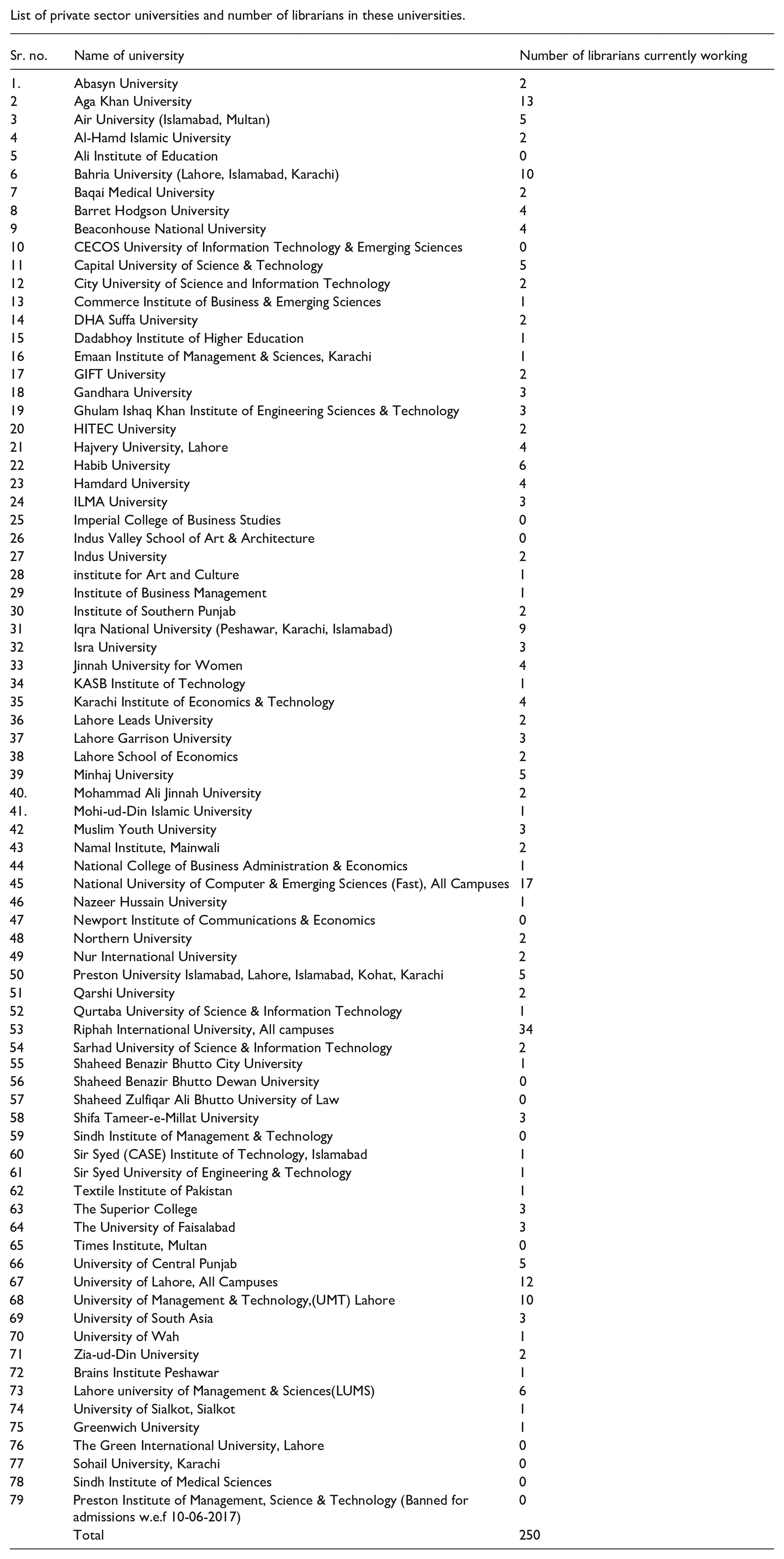
The participants of this study comprised on academic librarians currently employed within both public and private sector universities recognized by the Higher Education Commission (HEC) across all provinces of Pakistan, namely Punjab, Sindh, Khyber Pakhtunkhwa (KPK), and Baluchistan. Additionally, the study included administrative units, namely Azad Kashmir and Gilgit Baltistan, as well as Islamabad, the federal territory and capital of Pakistan. Total number of HEC-recognized universities and degree awarding institutions (DAIs) were 213 at the time of data collection. In order to compile a comprehensive list of targeted academic librarians, multiple sources were utilized, including the websites of all HEC-recognized universities and degree awarding institutions (DAIs). Additionally, a local online directory named Sada-E-Librarian, compiled by a professional organization of Library and Information Science (LIS) professionals, was consulted. Moreover, to collect information about the librarians currently working in their respective institutes, friends-of-friends method and direct communication with administration of each university library was made. Same procedure was also adopted by Hamid and Younus (2022) to enlist the total number of library professionals for their research study working in universities of Punjab and Islamabad. After thorough investigation of these sources, a total of 900 librarians were identified, with 650 belonging to the public sector and 250 from the private sector universities (Appendix I).
To calculate the sample size, the formula of Yamane (1967) was used as detailed below:


That is,
n = sample size
N = population
e = sampling error, at 95% confidence level it is 0.05.
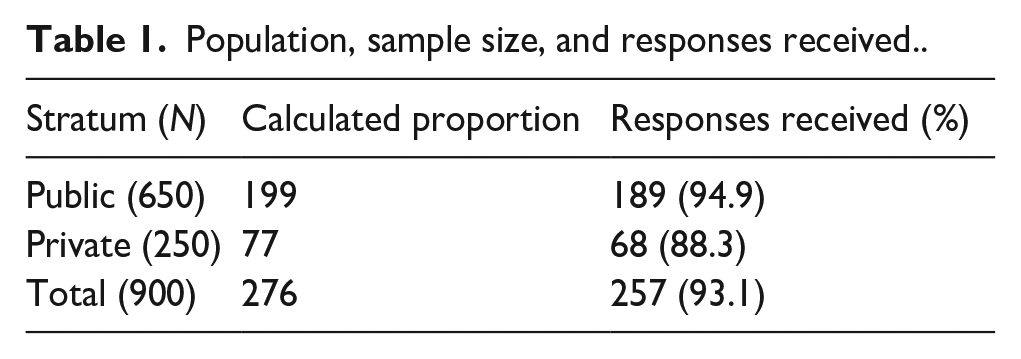
Keeping in view the diverse nature of the population, a proportionate stratified simple random sampling technique was considered suitable to select the sample. Based on this sampling technique, two strata were identified that is, public and private sector universities for adequate representation of the whole population. However, the proportion to select the sample from each stratum was calculated using formula provided in Table 1.

Population, sample size, and responses received..
A self-administered questionnaire was used to collect data from the intended population. The items to assess the interpersonal competencies of academic librarians were adapted from “Competency index for the library field” prepared by OCLC web junction (Gutsche and Hough, 2014).The main justification for using this competency index is that it states that interpersonal skills are fundamental and necessary for any librarian working in any type of library.
The competencies, totaling 22 items, were categorized into six sub segments: collaboration (three items), communication (three items), customer service competencies (four items), ethics and values (five items), leadership (four items), and learning & innovation competencies (three items). Due to the large number of statements associated with each segment, it was not feasible to include all of them. To ensure comprehensiveness, specific items were selected for each main segment of the interpersonal competency scale. In order to gather expert opinions on the scale, a panel of experts consisting of three library practitioners, three academicians, and one library expert from a developed country was consulted. The aim of seeking their input was twofold: first, to assess the scale’s applicability to respondents in 2023, and second, to evaluate its relevance in the local context. Notably, the competency index for the library field was initially prepared in 2014, necessitating expert opinions on its suitability for the current study. The experts unanimously endorsed the scale as suitable for the present research. An example item from this survey was: “I rate myself to be capable of working effectively in teams with strong team-building skills and attitudes,” measured on a scale of 1 = novice, 2 = capable, 3 = proficient, 4 = very skilled, and 5 = expert.
Methodological limitations
The current study utilized a self-assessment method to guage the perceived level of interpersonal competencies, a common technique for evaluating the skills of librarians in academic settings. Self-report techniques have been shown to yield valuable and reliable measures for various constructs (Lucas and Baird, 2006). However, it is important to acknowledge the presence of the Dunning-Kruger Effect (DK), where individuals with lower abilities tend to overestimate their competence (Magnus and Peresetsky, 2022). Therefore, it is crucial to consider the potential influence of the Dunning-Kruger Effect when interpreting the study’s findings. It is important to note that the scale was developed specifically for academic librarians in Pakistan’s private and public universities, and thus the generalizability of the results to librarians in other organizations and institutions within the country may be limited.
Reliability of the measures
The reliability of all the measures was ensured through Cronbach’s alpha value. The resultant value of α (0.972) indicated that these items were reliable as α value was well above than the threshold value of 0.70 (Kline, 2005). The segment-wise alpha values are presented in Table 2.
Reliability analysis.

The questionnaire consisted of two sections; first section was about demographic information of the respondents, whereas the second section was comprised on the 22 items related to the interpersonal competencies. The questionnaire was sent to the selected sample through email, Facebook messenger, WhatsApp, and through personal visits. The collected data was analyzed through SPSS (Statistical Package for Social Sciences) version 23. Mean and standard deviation of perceived level of interpersonal competencies possessed by academic librarians were found out through descriptive analysis. A Welch’s t-test was applied to observe if there is any significant difference of opinion regarding interpersonal skills of academic librarians based on gender and type of university exists. Kruskal Wallis H test was run to check the significant difference of opinion of academic librarians based on respondents ‘academic qualifications, age and professional experience.
Results
Demographic information of the survey respondents
Respondents of this study were asked about their designation, qualifications and professional experience. The detailed demographic data of the participants is presented in Table 3 that show a balanced representation of the different segments of the population in the responses.
Demographic detail of the respondents (n = 257).
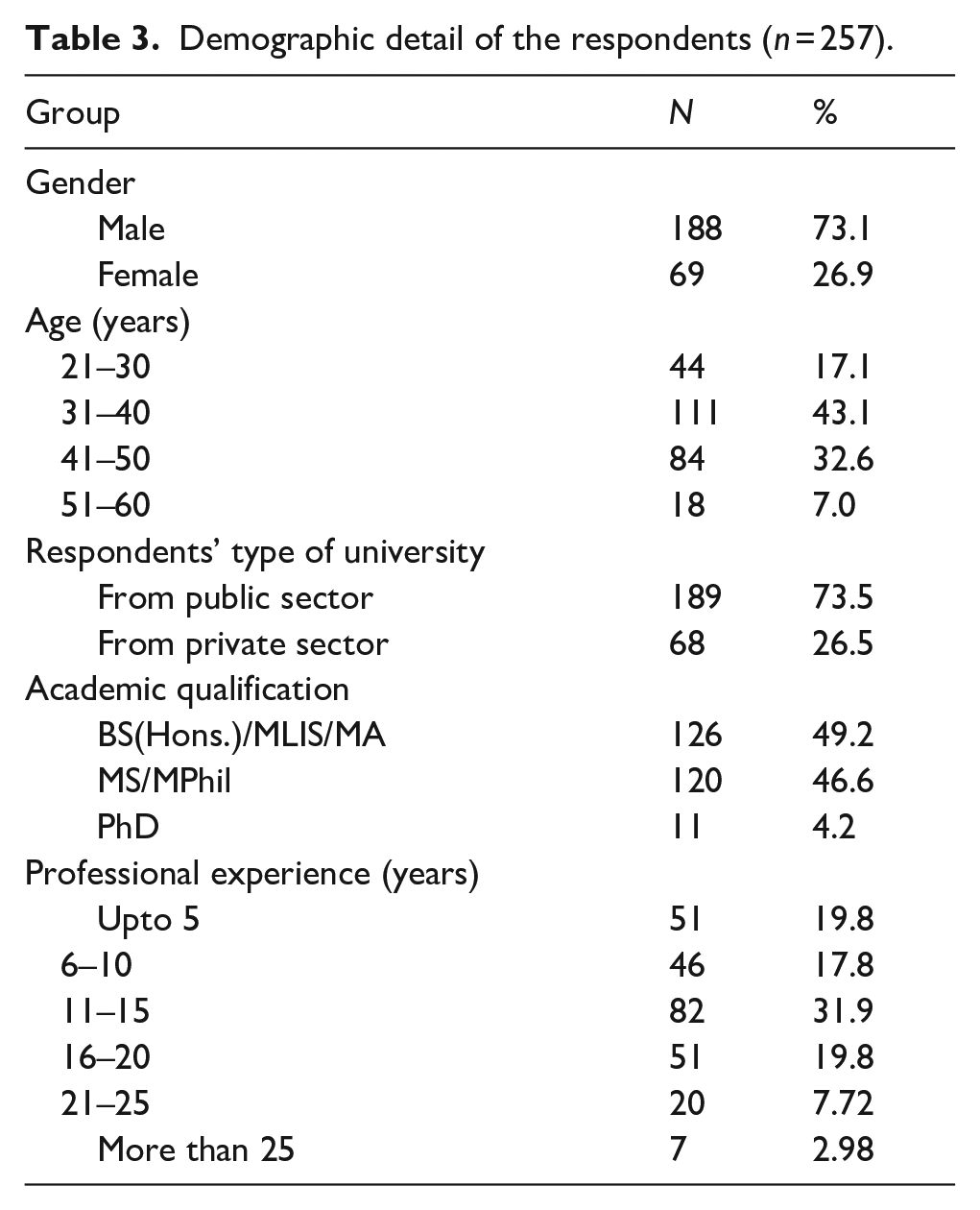
The study exhibited a greater representation of male respondents compared to females. The age group between 31 and 40 years had the highest number of participants, followed by the age group between 41 and 50 years. The age group of 21–30 years had a notable presence as well. Participants aged 51–60 years constituted a smaller proportion of the sample.
The subsequent query in the demographic section of the study focused on the type of university where the participating academic librarians were employed. Among the respondents, a majority were affiliated with public sector universities, while a smaller proportion worked in private universities. Regarding academic qualifications, two primary categories encompassed over half of the respondents. The first group consisted of individuals with a BS (Hons.)/MLIS/MA degree, followed closely by those with an MS/MPhil degree. A smaller subset of respondents held a PhD degree. Further details on this distribution can be found in Table 3. The study included respondents with diverse levels of professional experience. The largest group had between 11 and 15 years of experience, followed by another group with either less than 5 years or between 16 and 20 years of experience. A smaller subset of participants reported having 21–25 years of experience, while a few indicated having more than 25 years of experience.
RO1—perceived level of academic librarians’ interpersonal competencies
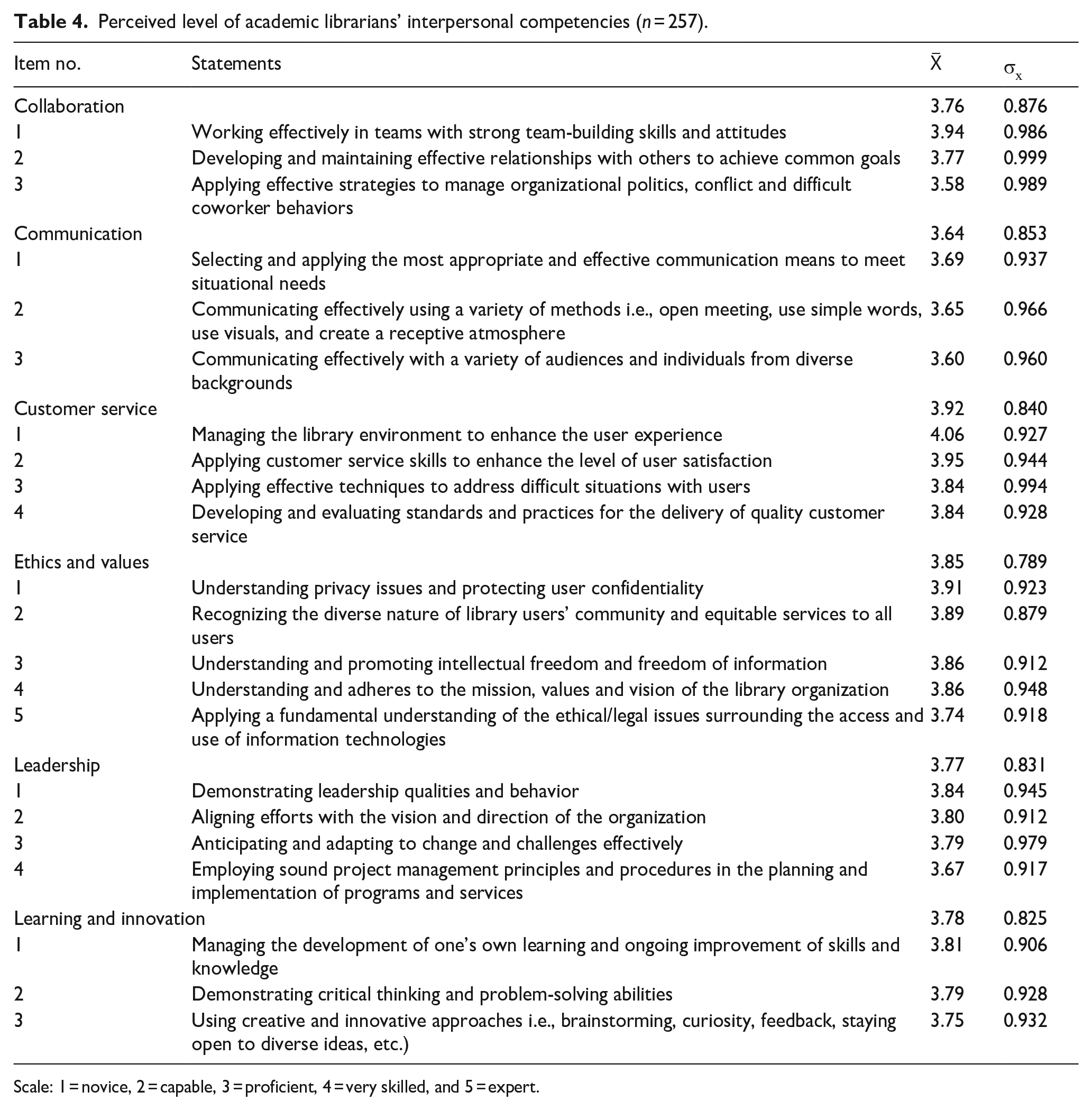
All the primary subdivisions of interpersonal competencies were analyzed, and their mean scores were computed and presented in Table 3. The respondents rated themselves as highly skilled in all the sub segments of interpersonal competencies. Among these sub segments, customer service competencies received the highest mean score (
The respondents were asked to respond to items eliciting information on their interpersonal competencies. Results revealed that academic librarians across the universities rated themselves as very skilled in all statements measuring the collaboration skills. The collaboration skills: working effectively in teams with strong team-building skills got high mean (
Results in Table 3 show that respondents rated all their perceived level of communication skills as very skilled. However, the competency of selection and application of effective communication techniques for meeting situational needs got high mean (
Furthermore, respondents also perceived themselves very skilled in all the competencies related to leadership, fifth segment of interpersonal competencies. The competency of demonstrating leadership qualities and behavior got high mean (
Perceived level of academic librarians’ interpersonal competencies (n = 257).
Scale: 1 = novice, 2 = capable, 3 = proficient, 4 = very skilled, and 5 = expert.
RO2a—interpersonal competencies of academic librarians and gender
Welch’s t-test was applied because it was a modification of the traditional t-test that relaxes the assumption of equal variances. It allows for more accurate and reliable comparisons between groups with unequal variances (Field, 2018). Therefore, the Welch’s t-test was applied to see the difference of opinion among the respondents based on their gender.
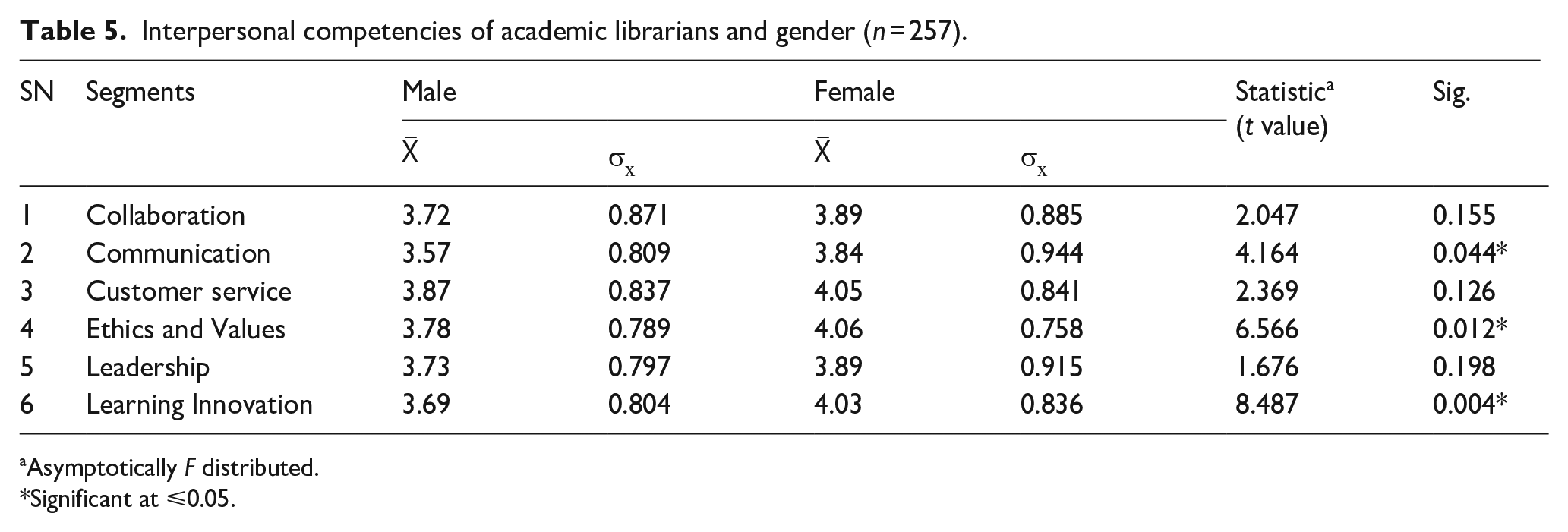
The results revealed in Table 5 that there was a significant difference of opinion between male and female academic librarians on three out of six dimensions under investigation, that is, communication skills (0.044 < 0.05); ethics and values (0.012 < 0.05); learning and innovation competences (0.004 < 0.05) at p-level of <0.05. The female respondents perceived their communication skills (
Interpersonal competencies of academic librarians and gender (n = 257).
Asymptotically F distributed.
Significant at ⩽0.05.
RO2b—interpersonal competencies of academic librarians and type of university
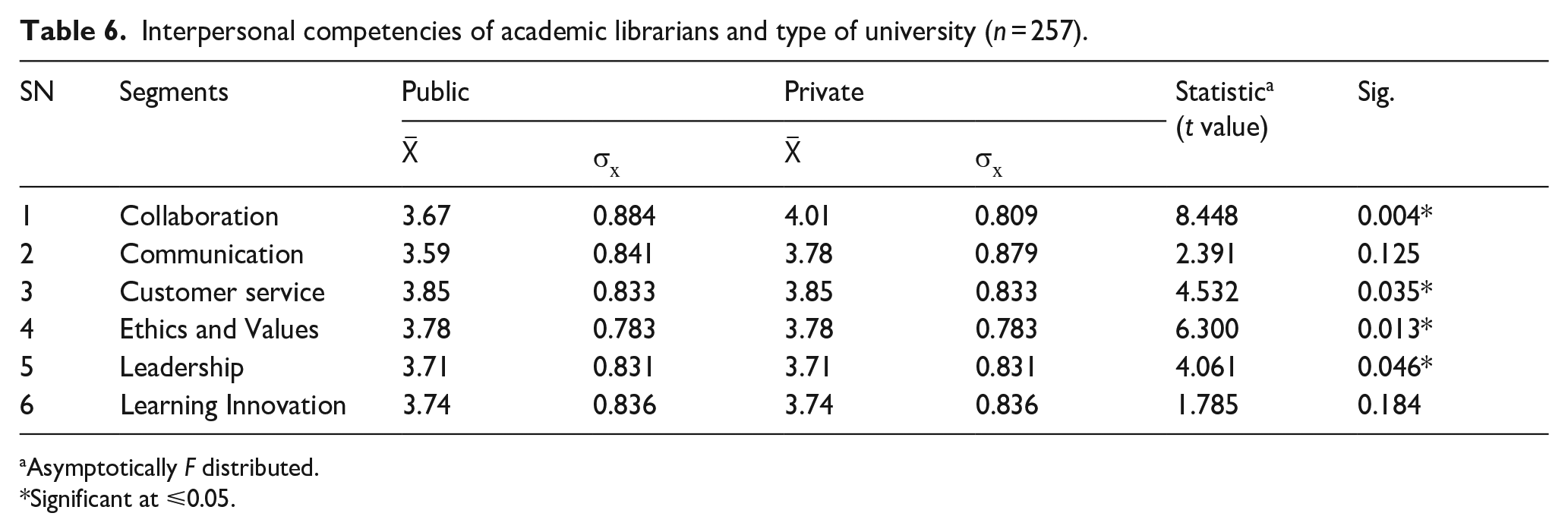
The Welch’s t-test was applied to see the difference of opinion among the respondents based on their gender. A significant difference of opinion was observed on collaboration (0.004 < 0.05), Customer service (0.03 < 0.05), Ethics and values (0.013 < 0.05), and Leadership (0.046 < 0.05) between academic librarians of public and private universities (Table 6).
Interpersonal competencies of academic librarians and type of university (n = 257).
Asymptotically F distributed.
Significant at ⩽0.05.
The opinion of academic librarians working in private sector universities was dominant on following dimensions: collaboration (
RO2c—interpersonal competencies of academic librarians and qualification
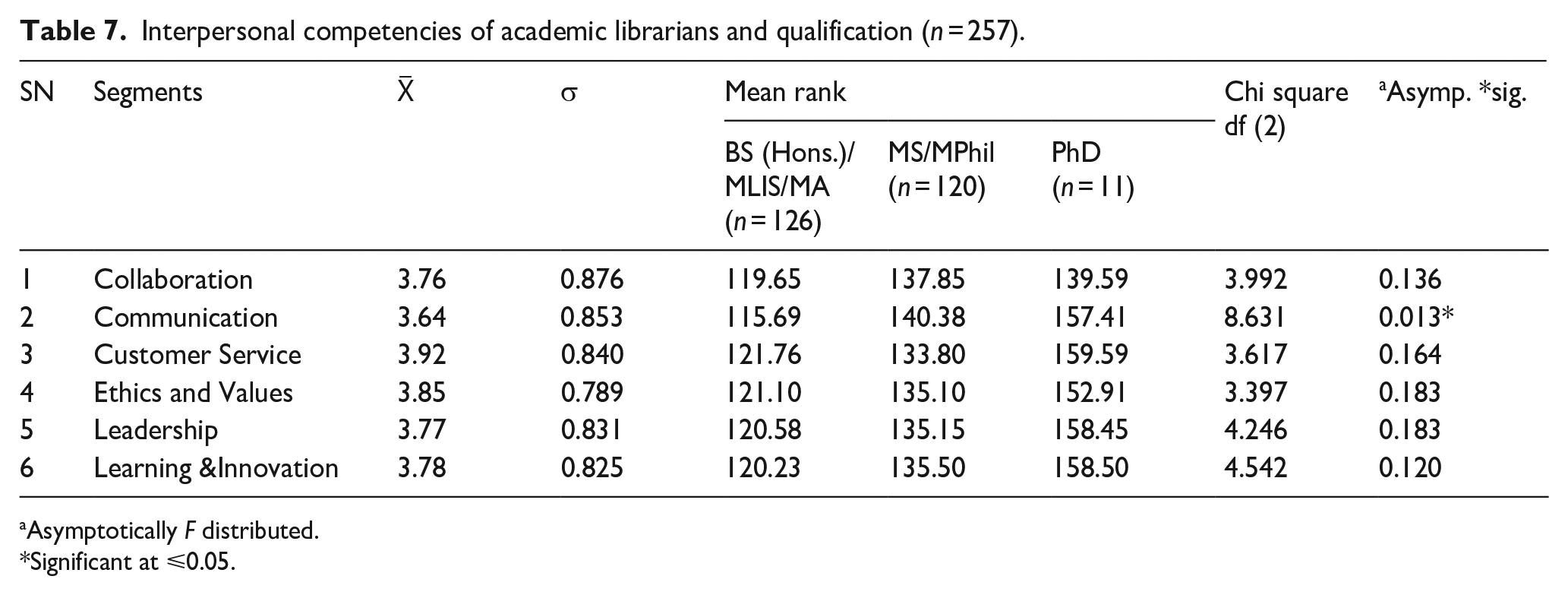
A Kruskal Wallis H test was conducted to identify statistically significant variance in the interpersonal competencies based on qualification of the respondents. A significant difference of opinion was observed on one (communication, sig. = 0.013, p < 0.05) out of six dimensions of interpersonal competencies (Table 7). The results revealed that communication competencies of those academic librarians having PhD qualification (MR = 157.41) were higher than those academic librarian having MS/MPhil and BS (Hons.)/MLIS/MA.
Interpersonal competencies of academic librarians and qualification (n = 257).
Asymptotically F distributed.
Significant at ⩽0.05.
RO2d—interpersonal competencies of academic librarians and age
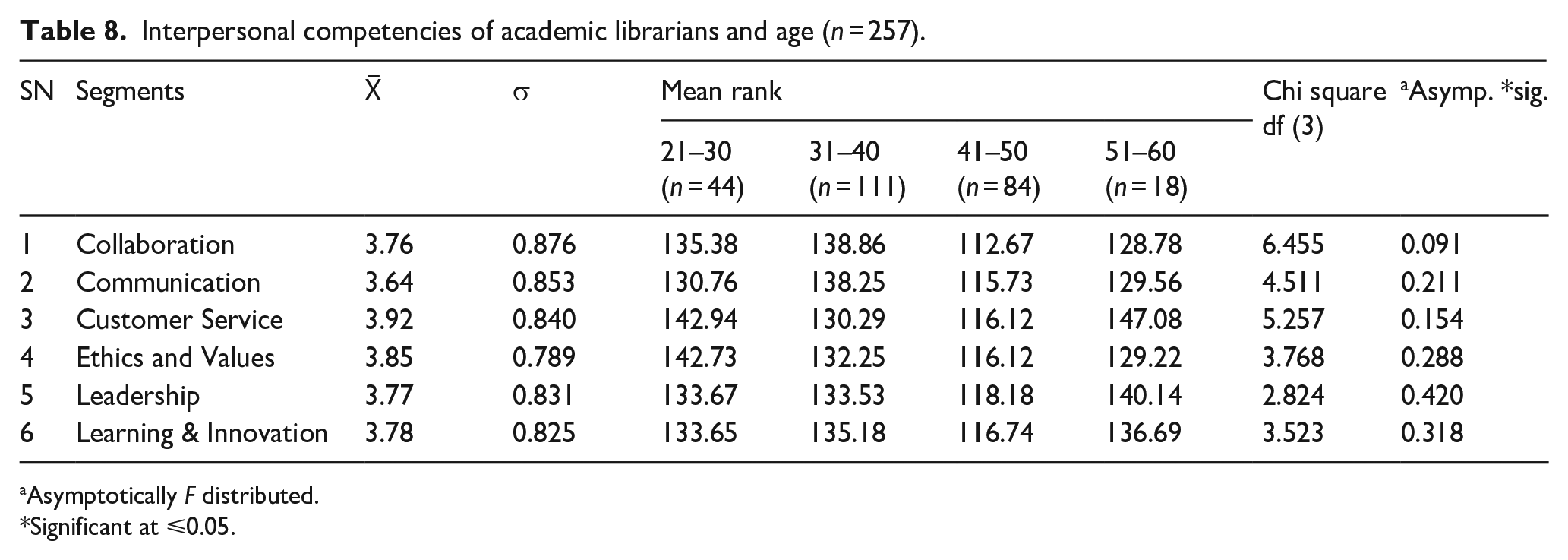
A Kruskal-Wallis H test was performed to examine whether there is statistically significant variance in the interpersonal competencies based on the age of the respondents. The analysis revealed a non-significant difference of opinion in all six dimensions of interpersonal competencies at p < 0.05. The results from Table 8 indicated that there was no significant relationship observed between age groups of academic librarians and their interpersonal competencies.
Interpersonal competencies of academic librarians and age (n = 257).
Asymptotically F distributed.
Significant at ⩽0.05.
RO2e—interpersonal competencies of academic librarians and professional experience
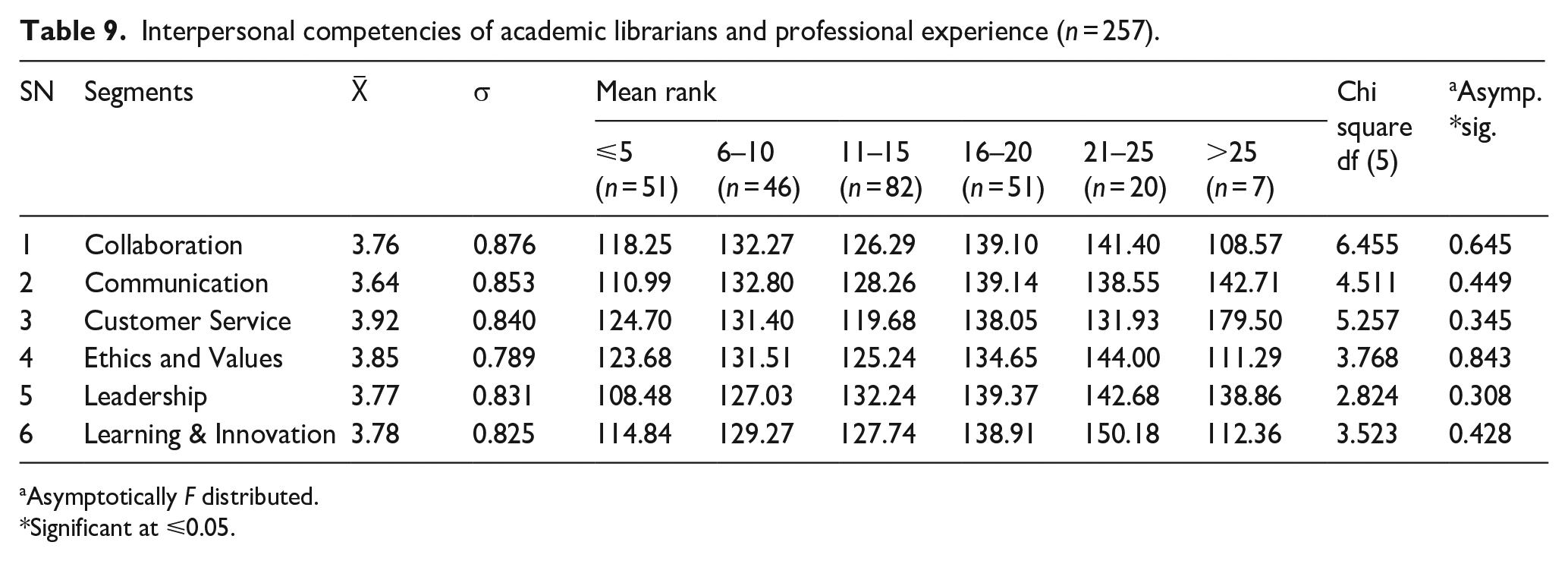
A Kruskal-Wallis H test was performed to assess whether there is a statistically significant variation in the interpersonal competencies based on the professional experience of the respondents. The findings indicated a non-significant difference of opinion in all six dimensions of interpersonal competencies at p < 0.05. The results from Table 9 demonstrate that there was no significant relationship between professional experience and interpersonal competencies among academic librarians.
Interpersonal competencies of academic librarians and professional experience (n = 257).
Asymptotically F distributed.
Significant at ⩽0.05.
Discussion
The study aimed to assess the perceived level of interpersonal competencies among academic librarians in Pakistani public and private sector universities. To measure these competencies, a survey instrument was developed based on the competency index for the library field provided by OCLC web junction. The findings revealed that academic librarians in Pakistan regarded themselves as highly skilled in collaboration. They demonstrated effective teamwork and had strong abilities in building relationships with their peers to achieve common goals. These findings align with the study conducted by Farooq et al. (2016), which emphasized the importance of collaboration as a crucial skill in bridging the communication gap among various stakeholders in academic libraries.
The findings of this study are consistent with previous studies by Kwanya et al. (2012), Nonthacumjane (2011), and Robinson et al. (2015), which demand collaboration skills for university librarians. These studies indicated that university librarians are required to collaborate with colleagues, university administration, stakeholders, and external individuals for various tasks, such as acquiring library resources, providing liaison services, and participating in policy-making processes. The emphasis on collaboration skills underscores the importance of effective teamwork and cooperation in the academic library setting.
The study also revealed that university librarians in Pakistan thought their communication skills were excellent. They used the appropriate communication methods to address various types of situational needs. University librarians in Pakistan believed that open meetings, simple words, and visuals could help them to communicate effectively with students from various backgrounds. These findings are aligned with the studies of Koh and Abbas (2015), Shek et al. (2015), and Saunders (2020).These studies found interpersonal skills necessary for promotion, leadership and for new employees. Findings about the segment of customer service showed that Pakistani academic librarians perceived themselves skilled in customer services. They claimed to be sufficiently skilled to provide quality services to their customers even in unusual situations with users. They also saw themselves as capable of creating a cohesive library environment for a better user experience and increased user satisfaction. Klein et al. (2006) and Saunders (2020) also claimed that librarians should possess certain level of skills in making conducive environment for better customer services. The study’s findings further divulged that the university librarians in Pakistan perceived themselves as very skillful in ethics and values and protected the user confidentiality by recognizing the diverse nature of library users’ groups. They perceived themselves as very skillful about intellectual freedom, freedom of information and had better understanding about the ethical/legal issues associated with the use and access of information technologies. Libraries mostly dealt with various kinds of information packages having diversified nature of users which have legal, ethical, and intellectual values and issues. To cope with these issues, they had to have certain competencies as Fallis (2007), Horvat and Hebrang (2010), and Onoyeyan et al. (2014) had rightly pointed out the importance of ethics and values for library professionals working in digital environment of 21st century.
The results further revealed that academic librarians working in public and private universities perceived themselves very skilled in the demonstration of leadership qualities and behaviors. The librarians perceived themselves as skilled in aligning their efforts with the organization’s vision and direction, while also being adept at anticipating and adapting to changes and challenges. They demonstrated the ability to apply sound project management principles in planning and implementing programs and services. These results are in echo with Nonthacumjane (2011) who found that these skills are crucial for effective leadership, completing projects successfully and assuming the role of knowledge manager.
Concerning with learning and innovation, the participants of this study rated their competencies as very skilled. They perceived that they could equally give weightage to their own learning and on-going improvement of skills and knowledge. They perceived themselves as very skilled in critical thinking and problem solving with the qualities of brainstorming, curiosity, feedback, staying open to diverse ideas, etc. These results are supported by studies of Saunders (2020), Toane and Figueiredo (2018) who also revealed innovation skills as key competencies for librarians.
Additionally, the study examined the difference of opinion regarding interpersonal competencies based on gender, revealing significant difference in communication, ethics & values, and learning & innovation, with female respondents expressing a dominant opinion. These results corroborated the findings of Farooq et al. (2016), who also concluded that female librarians in Pakistan exhibited higher interpersonal competencies compared to male librarians. However, the results differed from those of Samah et al. (2021), as they did not find any significant difference of opinion on interpersonal skills based on gender.
Moreover, the study revealed a significant difference in interpersonal competencies, with respondents from private sector universities demonstrating higher levels of these skills compared to those from public sector universities. This difference can be attributed to the nature of work in private universities, which is primarily task-oriented, involving specific responsibilities and tight deadlines. Private sector universities offer enriched learning opportunities, enabling academic librarians to enhance their skills through active participation in workshops and seminars. Additionally, a noteworthy trend in private universities is assigning librarians additional tasks beyond traditional library activities. As a result, librarians interact with various departments and staff members, fostering the development of improved leadership and collaboration abilities (Al-Qatawneh, 2014; Hyder and Batool, 2013). Moreover, academic librarians having PhD qualifications were having higher level of communication skills as compared to other respondents having MS/ M.Phil and BS (Hons.)/MLIS/MA qualification. Further, the study didn’t find any significant difference in the academic librarians’ interpersonal competencies based on their qualification, age groups, and professional experience. These findings are consistent with the findings of Mirhosseini et al. (2021), Afkhami et al. (2019), and Samah et al. (2021) who concluded that there was no significant relationship between age, education level, and interpersonal competencies of library professionals. Furthermore the results revealed that there was insignificant difference of interpersonal competences among academic librarians based on their different professional experience. These findings are aligned with the results of Afkhami et al. (2019) and Samah et al. (2021), who similarly indicated no significant difference in interpersonal skills among library professionals based on their professional experience.
Implications and future research directions
This study has theoretical as well as practical implications. From theoretical implications’ side, it would be good addition in the area of interpersonal competencies, as no study has been conducted so far in Pakistan on this area. This study assessed the perceived level of competencies of academic librarians through a scale developed from competency index for the library field prepared by OCLC web junction (Gutsche and Hough, 2014). For holistic findings, this scale can be applied to measure the perceived level of interpersonal competencies of library professionals other than universities, because every workplace environment has needs of interpersonal competencies. The quantitative research approach has been used to conduct this study. In future, using other research methods such as qualitative research or mixed methods approach, this phenomenon can further be investigated for holistic finings. The relationship or impact of interpersonal competencies with other variables such as job satisfaction, organization commitment, education & training, job performance, stress management and lifelong learning can also be a good addition in the literature of Library and Information Science.
The study has some practical implications for Pakistani university librarians, who can plan training programs and seminars for their colleagues and paraprofessional library staff who lack information literacy skills as a study by Khan (2020) concluded. Similarly, academic librarians with strong interpersonal skills should play leadership roles in their parent organizations for the sake of their social and political well-being. They can also be involved in the development of organizational policies. Statutes can be amended to allow organizations to collaborate with one another to accelerate capacity building activities for their students and graduates.
Conclusion
The study highlights that academic librarians in Pakistan hold a strong perception of their high proficiency in diverse interpersonal competencies, encompassing collaboration, communication, customer service, ethics & values, leadership, and learning & innovation. Notably, this perception varied significantly based on respondents’ gender and the type of university they were associated with (public and private). However, in contrast, the study revealed notable variations in opinions among respondents’ qualifications in one of the six interpersonal competencies, namely communication. On the other hand, no significant differences were found in opinions regarding interpersonal competencies concerning respondents’ age and professional experiences.
This suggests that regardless of their age, or professional background, academic librarians generally perceive themselves to possess comparable levels of interpersonal competencies. These findings shed light on the importance of addressing gender-related and institutional differences when developing training programs and support systems for enhancing interpersonal skills among academic librarians in Pakistan. Moreover, the study emphasizes the need for a holistic approach to interpersonal competency development, taking into account individual experiences and qualifications to ensure a well-rounded and effective skill set among library professionals.
Footnotes
Appendix
List of private sector universities and number of librarians in these universities.
| Sr. no. | Name of university | Number of librarians currently working |
|---|---|---|
| 1. | Abasyn University | 2 |
| 2 | Aga Khan University | 13 |
| 3 | Air University (Islamabad, Multan) | 5 |
| 4 | Al-Hamd Islamic University | 2 |
| 5 | Ali Institute of Education | 0 |
| 6 | Bahria University (Lahore, Islamabad, Karachi) | 10 |
| 7 | Baqai Medical University | 2 |
| 8 | Barret Hodgson University | 4 |
| 9 | Beaconhouse National University | 4 |
| 10 | CECOS University of Information Technology & Emerging Sciences | 0 |
| 11 | Capital University of Science & Technology | 5 |
| 12 | City University of Science and Information Technology | 2 |
| 13 | Commerce Institute of Business & Emerging Sciences | 1 |
| 14 | DHA Suffa University | 2 |
| 15 | Dadabhoy Institute of Higher Education | 1 |
| 16 | Emaan Institute of Management & Sciences, Karachi | 1 |
| 17 | GIFT University | 2 |
| 18 | Gandhara University | 3 |
| 19 | Ghulam Ishaq Khan Institute of Engineering Sciences & Technology | 3 |
| 20 | HITEC University | 2 |
| 21 | Hajvery University, Lahore | 4 |
| 22 | Habib University | 6 |
| 23 | Hamdard University | 4 |
| 24 | ILMA University | 3 |
| 25 | Imperial College of Business Studies | 0 |
| 26 | Indus Valley School of Art & Architecture | 0 |
| 27 | Indus University | 2 |
| 28 | institute for Art and Culture | 1 |
| 29 | Institute of Business Management | 1 |
| 30 | Institute of Southern Punjab | 2 |
| 31 | Iqra National University (Peshawar, Karachi, Islamabad) | 9 |
| 32 | Isra University | 3 |
| 33 | Jinnah University for Women | 4 |
| 34 | KASB Institute of Technology | 1 |
| 35 | Karachi Institute of Economics & Technology | 4 |
| 36 | Lahore Leads University | 2 |
| 37 | Lahore Garrison University | 3 |
| 38 | Lahore School of Economics | 2 |
| 39 | Minhaj University | 5 |
| 40. | Mohammad Ali Jinnah University | 2 |
| 41. | Mohi-ud-Din Islamic University | 1 |
| 42 | Muslim Youth University | 3 |
| 43 | Namal Institute, Mainwali | 2 |
| 44 | National College of Business Administration & Economics | 1 |
| 45 | National University of Computer & Emerging Sciences (Fast), All Campuses | 17 |
| 46 | Nazeer Hussain University | 1 |
| 47 | Newport Institute of Communications & Economics | 0 |
| 48 | Northern University | 2 |
| 49 | Nur International University | 2 |
| 50 | Preston University Islamabad, Lahore, Islamabad, Kohat, Karachi | 5 |
| 51 | Qarshi University | 2 |
| 52 | Qurtaba University of Science & Information Technology | 1 |
| 53 | Riphah International University, All campuses | 34 |
| 54 | Sarhad University of Science & Information Technology | 2 |
| 55 | Shaheed Benazir Bhutto City University | 1 |
| 56 | Shaheed Benazir Bhutto Dewan University | 0 |
| 57 | Shaheed Zulfiqar Ali Bhutto University of Law | 0 |
| 58 | Shifa Tameer-e-Millat University | 3 |
| 59 | Sindh Institute of Management & Technology | 0 |
| 60 | Sir Syed (CASE) Institute of Technology, Islamabad | 1 |
| 61 | Sir Syed University of Engineering & Technology | 1 |
| 62 | Textile Institute of Pakistan | 1 |
| 63 | The Superior College | 3 |
| 64 | The University of Faisalabad | 3 |
| 65 | Times Institute, Multan | 0 |
| 66 | University of Central Punjab | 5 |
| 67 | University of Lahore, All Campuses | 12 |
| 68 | University of Management & Technology,(UMT) Lahore | 10 |
| 69 | University of South Asia | 3 |
| 70 | University of Wah | 1 |
| 71 | Zia-ud-Din University | 2 |
| 72 | Brains Institute Peshawar | 1 |
| 73 | Lahore university of Management & Sciences(LUMS) | 6 |
| 74 | University of Sialkot, Sialkot | 1 |
| 75 | Greenwich University | 1 |
| 76 | The Green International University, Lahore | 0 |
| 77 | Sohail University, Karachi | 0 |
| 78 | Sindh Institute of Medical Sciences | 0 |
| 79 | Preston Institute of Management, Science & Technology (Banned for admissions w.e.f 10-06-2017) | 0 |
| Total | 250 |
Declaration of conflicting interests
The author(s) declared no potential conflicts of interest with respect to the research, authorship, and/or publication of this article.
Funding
The author(s) received no financial support for the research, authorship, and/or publication of this article.
