







Abstract
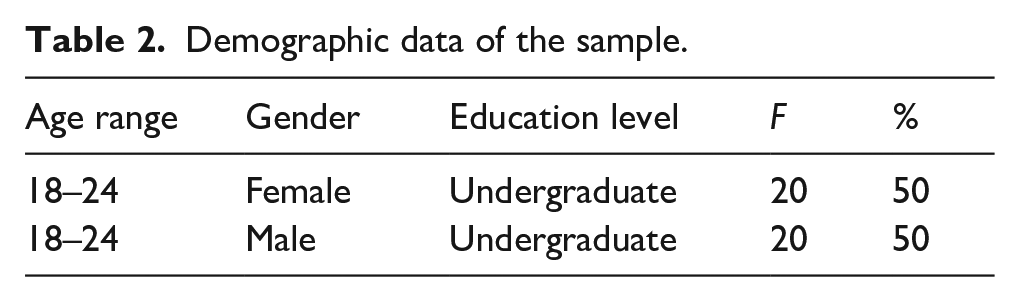
In this study, we investigated reader experiences on reading in VR. The study was conducted with undergraduate students (N = 40) who read a chapter of the Turkish novel. In the four different groups read the same chapter of the novel in different formats: print, digital, audio, and VR. In this context, firstly we measured cognitive activities using EEG device while participants were reading. Secondly, they answered the questions about the recall of the details of the chapter they read and reading experiences in VR. Result of the research, we found that reading in VR had significantly higher levels of engagement and stress cognitive activity. E-book and VR experiences can increase the accurate recall of details more than printed books. In addition, VR can increase the comfort of the book reading experience by providing a personalized reading environment through the VR content that enables users to select their virtual environment.
Introduction
Printed books have been an important part of our reading experience for many years. However, digital books have started to change our reading habits considerably in recent years. This change is not only limited to the convenience of carrying books but also takes the reading experience to a whole new level. Besides, this digital transformation has also led to the emergence of new genres such as interactive books, audiobooks, etc. By interacting with these books, readers can now have a more immersive and layered reading experience. Research in this area can lead to the creation of better reading experiences for both readers and publishers.
The reason we investigated reading in VR is to understand how reading experiences are affected by VR technology. The study can help better understand users’ preferences for reading in VR. In addition, this study may contribute to evaluating the VR reading experience as an alternative method to facilitate learning in education. Results obtained from the study can be useful for both publishers and VR developers to improve their applications and the user experience.
Book reading experiences
Digital technology is a significant factor in the digitalization process of the printed book. E-books and audiobooks, which are the products of the intersection of printed books with digital technology, have become widespread in recent years, as well as VR technology-supported book reading experiences. Each reading experience can present different reading experiences depending on the technical features of the device used for reading. Therefore, with the introduction of new technologies into our lives and learning environments, the nature of reading has started to change rapidly (Tyner, 2014).
E-books are digital versions of printed materials transmitted through various media (Poon, 2014). It has been stated that e-book reading is preferred by younger, more educated, and higher-income consumers who tend to show higher levels of awareness, interest, and intention to use e-book readers (Jung et al., 2012). The convenience of use (Ismail, 2007), reading online or offline (Bulur and Gönül, 2020), avoiding going to the library, and added features such as searching, copying, and pasting (Jamali et al., 2009), storage, accessibility 24/7, currency of information, and availability from any location (Bulur and Gönül, 2020; Shelburne, 2009and) accessibility of the resource (Walton, 2007) have been stated as significant factors affecting the use of e-books. However, studies have suggested that printed books are preferred more than e-books in terms of book reading preferences (Levine-Clark, 2006; Shelburne, 2009; Walton, 2007). Readers are hesitant to embrace e-books as the primary format for leisure reading (Walton, 2007), and if they were reading a book from cover to cover their preference was for a print copy (Shelburne, 2009). That’s why, it has been argued that the interest in printed books is increasing in today’s digital society (McLouglin, 2022; Okuyay, 2019; TwoSides, 2017).
The fact that reading on screen has drawbacks such as eye fatigue, unreliable service, lack of manipulability of online features and flaws in the physical design and insufficient e-book collection cause the participants to feel uncomfortable with the service, being distracting, screen resolution, sustainable reading, screen brightness, contrast settings can make printed texts more comfortable (Kang et al., 2009; Kim et al., 2014; Letchumanan and Stoop et al., 2013; Tarmizi, 2011). But, according to Hermena et al. (2017), when the screen brightness level is regulated similar to printed books during the reading process in digital environment (the text luminance should be 1.0 cd/m2, background luminance should be 18.5 cd/m2, and Michelson contrast ratio should be 0.90), it is stated that it will not cause eye fatigue.
According to Cheng et al. (2014), information and communication technologies familiarity might be an significant factor to the reading performance, and screen reading has the potential to increase reading motivation of the readers (Liman Kaban and Karadeniz, 2021). In studies conducted in terms of the relationship between reading, and comprehension, while it has been observed that different environments can affect reading comprehension (Chen et al., 2014), in other studies comprehension of written materials is almost equally on paper and digital (Connell et al., 2012; Grimshaw et al., 2007; Liman Kaban and Karadeniz, 2021; Margolin et al., 2013; Moore and Zabrucky, 1995; Schugar et al., 2011;Wright et al., 2013). On the other hand, it has been suggested that reading on paper can result in slower reading times compared to reading on a screen (Connell et al., 2012; Grimshaw et al., 2007; Moore and Zabrucky, 1995; Nielsen, 2010; Wright et al., 2013).
Audiobooks are a digital audio recording of a written book conveyed by an artificial narrator, and not only audio-edited versions of print books, but also a continuance of the storytelling traditions of oral culture and the practice of reading audibly to others (Have and Pedersen, 2016). During the 1990s, new devices were introduced, such as Playaway and Audible players, which made listening to audiobooks convenient. This led to people being able to play audiobooks on their personal devices, like iPods and Zunes, by downloading them through their libraries using the OverDrive platform. In this way, audiobooks gained popularity alongside e-books (Dali and Brochu, 2020). The development of digital media technologies has changed the status of the audiobook from being a by-product of the printed book to being a mass medium in its own right, and have made digital publishing central to reading (Have and Pedersen, 2021). Audiobooks compared to printed books are preferred by younger people in terms of readership (Anderson, 2017). In terms of reading experience, it has been suggested that audiobooks can be more difficult to follow than printed text when used alone, and many audiobook readers find it more difficult to stop and think, reread or take notes (Baron, 2015). It has been found that users have negative perceptions of the functional value of audiobook apps, and that users would use audiobook apps more if the apps offered more discounts, promotional benefits, and expanded libraries (Nguyen et al., 2023). Nevertheless, when audiobooks are used in the field of education, it has been stated that they can help students develop the reading skills and strategies (Nash, 2023) positive impact attitudes toward reading (Whittingham, et al., 2013), tend to facilitate comprehension better than print when students were younger (Singh and Alexander, 2022), and can supports their reading stamina, vocabulary development, and reading motivation (Larson, 2015). According to Wolfson (2008), audiobooks can present opportunities to develop comprehension skills and strategies in critical and creative thinking for proficient readers.
Reading in virtual reality
Virtual Reality (VR) is defined as a technology that artificially stimulates our senses to create an illusion of a different reality (Burdea and Coiffet, 2003; Lavalle, 2023; Yoh, 2001). According to a recent study (Park, 2023) estimates that the number of VR headsets installed worldwide across consumer and commercial settings will grow to 73.6 million by 2026. Besides, the global VR market size will increase by more than 22 billion U.S. dollars by 2025 (Alsop, 2024).
VR technology has expanded the boundaries of technology to reading books. In this case, it can change the way we read by taking readers beyond the pages of printed books and into the virtual realm. Additionally, research suggests that individuals with extensive digital gaming experience are more likely to embrace VR technology due to their familiarity with controllers (Dahya et al., 2021). This inclination toward VR among avid gamers underscores the potential for VR reading experiences to attract a broad audience.
The book can be read in VR using two methods (Demir, 2023):
Using VR e-book reading applications designed to read books in a virtual environment: Chimera Reader, Story VR, Virtual Book Viewer, etc.
Downloading and reading e-books directly in a virtual environment. In this research, a book reading experience was realized using this method.
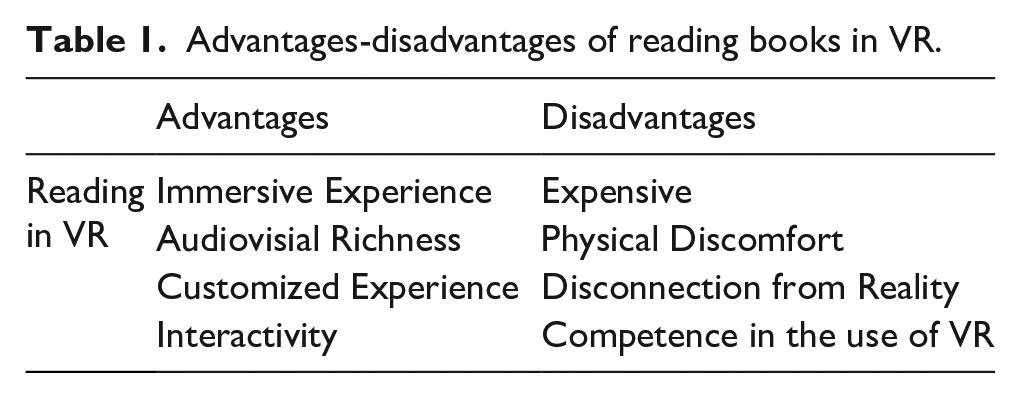
To read a book on a VR, a VR headset is required. In the virtual atmosphere in VR headset, the user can choose the virtual environment in which to read a book according to their personal preferences. These virtual environments are also supported aurally. For instance, when the user chooses a nature environment to read a book, bird sounds and campfire sounds can accompany the environment. Thus, the user can minimize distracting environmental factors and have a fully integrated reading experience on the VR. In addition, the user can adjust the size, font and light settings of the reading screen in the VR. However, there are also some drawbacks to using VR technology for reading books. First of all, The use of VR glasses requires competence in the use of digital technology. For instance, those who cannot use VR headsets cannot experience reading a book in the virtual environment. Besides, the fact that VR headsets are an expensive tool may limit access to this technology. In this case, the availability of these devices among young users may be in problem. In addition, the fact that VR headsets are not comfortable to use for a long time may limit their preferability for reading books. These disadvantages of VR for book reading may also delay the users’ introduction to the experience of reading books on a VR. Therefore, the experience of reading a book on a VR remains as an alternative book reading experience waiting to be discovered for readers.
Related work
Studies related to VR are below
Dingler et al. (2018) conducted a study to explore the comfortable reading settings on VR. They provided design recommendations for text size, view box dimensions, and positioning. The study participants preferred a sans-serif font to a serif font and white text on a black background to a black text with a white background. According to researchers, text displayed in a 3D virtual environment should be larger than on a 2D display. In a study conducted by Wei et al. (2020), the impact of different surface shapes on user’s reading experience was explored. The researchers found that when a text is warped around a 3D object in a virtual environment using a single axis, it is more comfortable to read than when it is warped using two axes. They also provided recommendations on the ideal warp angle of curved displays and the field of view of curved text view boxes in virtual reality. Kojić et al. (2020) in a study investigated the values selected by participants as the best settings of text parameters of size, distance and color contrast, as well as the values for the worst settings concerning reading text in virtual reality on standalone headsets. They found that different VR devices had an influence when it comes to reading with the negatively set text parameters, even though no significant difference was found when choosing the best possible text settings.
The use of high-speed 3D graphics and 3D audio in VR has made it possible to create highly realistic and believable experiences. As a result, VR has the potential to be used in various levels of education to enhance learning (Pantelidis 2010). According to Riley (2008), virtual reality has the potential to transform the educational process from being teacher-centered to being student-centered by allowing for realistic exploration and manipulation of objects in the 3D virtual world. Acar and Cavas (2020) investigated the impact of a VR learning environment on students’ academic performance in English reading and writing. They found that the virtual reality environment has a positive effect on students’ academic success in reading and writing English. According to Kaplan-Rakowski and Gruber (2022), VR has the potential to motivate and engage students in the context of reading comprehension tasks. Rau et al. (2018) explored reading performance on VR, and the effect of reading speeds. They found that the response time of answering multiple choice questions on VR is approximately 10% longer than that on LCD with both normal and fast reading speeds. They suggest that teachers should give students 10% more time if tests or other text-processing tasks are administrated via VR. Baceviciute et al. (2021) investigated their study of the effects of environmental embeddedness on reading in VR using EEG. The results show that reading in VR provides higher transfer, requires more cognitive engagement, and is less time efficient. Therefore, VR implementations were liked by students therefore use of the VR technology in course activities would be beneficial. Especially the feelings of reality and being present in the location, which were caused by VR implementations, were among the factors that affected participants and increased students interest in the course (Yildirim et al., 2018). Besides, libraries are incorporating VR technologies in their services due to its popularity, which will lead to increased adoption in the future (Oyelude, 2018).
After conducting a literature review, we discovered limited research on the experience of reading a book in VR. Therefore, we aim to investigate the dynamics of book reading within VR environments. Our findings may be of great interest to both publishers and VR developers, as they offer insights to improve their applications and enhance user experiences. Additionally, our research has the potential to pave the way for innovative reading experiences, particularly in educational settings, which may revolutionize traditional approaches to learning. By identifying user preferences in VR reading, this study not only sheds light on the effectiveness of VR as a learning tool but also provides valuable data for refining VR applications in various fields. This study aims to answer the following questions:
RQ1: Does reading a book in VR affect cognitive activities (engagement, excitement, focus, interest, relaxation, stress)?
RQ2: Does reading a book in VR affect accurate recall of the details of the chapter participation read?
RQ3: What did participants think about the experience of reading a book in VR?
Hypotheses of the research
H01a: There is no significant difference in engagement cognitive activity between individuals who read a book in VR and those who do not use VR for reading.
H01b: There is no significant difference in excitement cognitive activity between individuals who read a book in VR and those who do not use VR for reading.
H01c: There is no significant difference in focus cognitive activity between individuals who read a book in VR and those who do not use VR for reading.
H01d: There is no significant difference in interest cognitive activity between individuals who read a book in VR and those who do not use VR for reading.
H01e: There is no significant difference in relaxation cognitive activity between individuals who read a book in VR and those who do not use VR for reading.
H01f: There is no significant difference in stress cognitive activity between individuals who read a book in VR and those who do not use VR for reading.
H02a: There is no significant difference in the accuracy of recall of the details of the chapter read between individuals who read a book in VR and those who do not use VR for reading.
Method
This study is part of a doctoral thesis. We conducted the study to examine how readers experience reading in VR. The data of the study were collected in two stages using quasi-experimental and interview techniques. Participants were divided into four groups: printed book, e-book, audiobook and VR technology supported book reading group. There were ten participants in each reading group. All participants were made to read the same parts of the book in line with their reading experience in the group they were in.
In the first phase of the study, an experiment was conducted. Engagement, excitement, focus, interest, relaxation and stress cognitive activities of the reading groups during the reading experience were measured using a mobile EEG device. In the second stage of the study, participants were asked recall questions about the book read by the researcher and their correct recall levels were measured. Then, the participants in the VR book reading group were interviewed about the reading experience.
Sample
The study was conducted with undergraduate students (N = 40) studying at a foundation university in Türkiye. Before sample selection, a participation form was created to include eligible participants in the study. In the participation form, the criteria of having previous experience of reading books using digital technologies, having no physical health problems and not having read the book to be read to the participants within the scope of the research were determined. The participation form was sent to university students via e-mail. Participants who met the criteria specified in the form were selected by random sampling technique and invited to the study.
Study design
The data collection process of the study was carried out between May 2, 2022 and June 30, 2022. Each participant took part in the research on a different date. The study was conducted in a laboratory environment and the average duration was planned to be 40 minutes.
Before starting the data collection process, each participant was informed about the study and signed a consent form. Each participant was introduced to the EEG device used in the experimental process of the study and the device was set up and placed on the participants. When a good quality signal was received from the device, the participants were placed in the laboratory area allocated for reading books and the experimental process was started. The fact that the book was suitable for all the reading experiences investigated within the scope of the research and that the participants had not read this book before played an important role in the selection of this book. During the experimental process, participants in all groups read the same chapter of the same book. When the reading experience was over, the experimental process was terminated and the first phase of the study was completed. In the second phase of the study, all participants were asked recall questions about the chapter read and the answers were recorded in an excel file. Thus, the data collection process of the printed book reading group, e-book reading group and audiobook reading group was finalized. After the recall questions, the participants in the VR book reading group were interviewed about their experiences of reading books in a virtual environment, and the answers were recorded in an audio file, and the entire data collection process of the research was finalized.

Research design
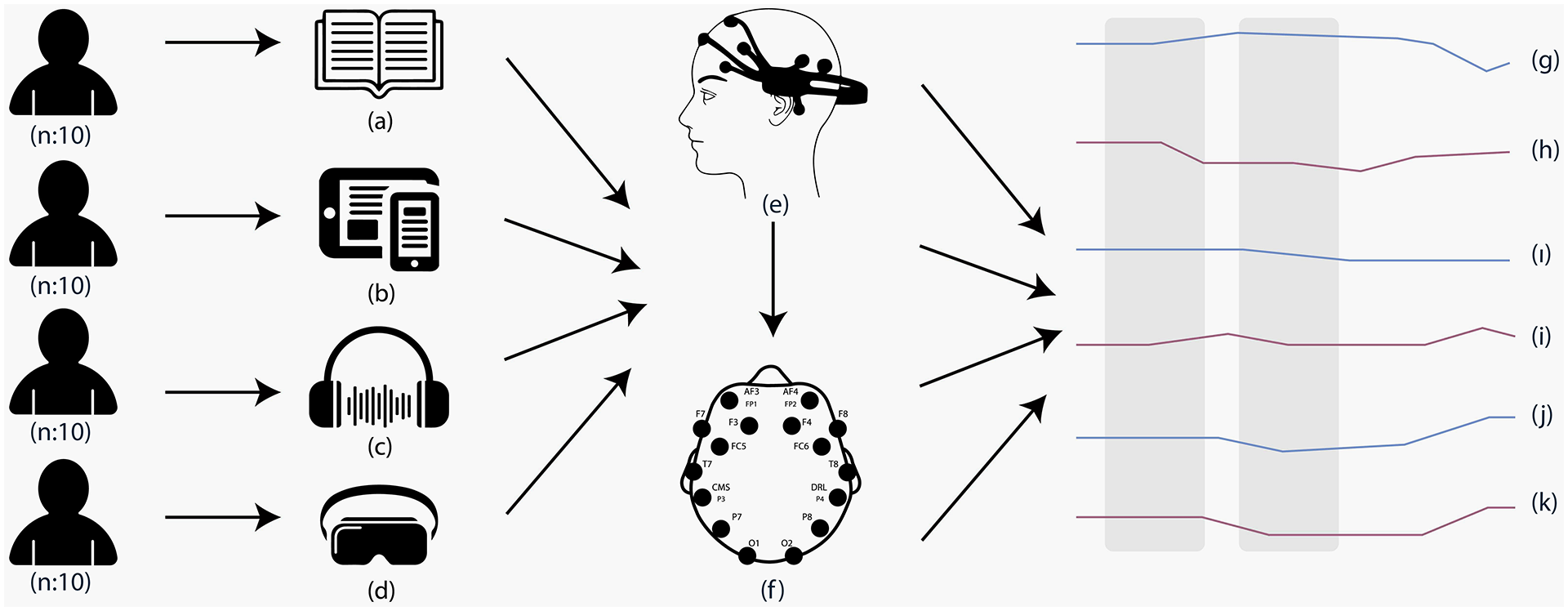
Experimental design: (a) printed book group, (b) e-book, (c) audiobook group (d) VR technology supported book group (e) mobile EEG device used in the experiment, (f) EEG signals, (g) engagement metrics, (h) excitement metrics, (ı) focus metrics, (i) interest metrics, (j) relaxation metrics, and (k) stress metrics.
Printed book reading group (n = 10)
In the printed book reading group, the printed version of the book was used. Each participant was individually involved in the research process on different dates. Before starting the experimental process, a 14-channel mobile EEG device was placed on the participants and the signal quality was adjusted. Only the predetermined chapter of the book was read to the participants. Then, participants were asked recall questions about the chapter and the research was completed. The whole experiment process was recorded.
E-Book reading group (n = 10)
In the e-book reading group, participants were made to read the digital version of the book in pdf format. Participants used the iPad Pro (11-inch) device provided for reading the book. Each participant was individually involved in the research process on different dates. Before starting the experimental process, participants were fitted with a 14-channel mobile EEG device and the signal quality was adjusted. Only the predetermined chapter of the book was read to the participants. Then, participants were asked recall questions about the chapter and the research was completed. The whole experiment process was recorded.
Read audiobook reading group (n = 10)
In the audiobook reading group, participants were listened to the audio version of the book. Participants used an Android smart cell phone with an audiobook listening application and headphones provided for reading the book. Each participant was individually involved in the research process on different dates. Before starting the experimental process, participants were fitted with a 14-channel mobile EEG device and the signal quality was adjusted. Only the predetermined chapter of the book was played to the participants. Then, participants were asked recall questions about the chapter and the research was completed. The whole experiment process was recorded.
VR technology supported book reading group (n = 10)
In the VR technology supported book reading group, the participants were made to read the digital version of the book in pdf format in a virtual environment. Participants used the Oculus Quest 2 VR headset provided for reading the book. Participants chose the VR environment in which they would read the book according to their personal preferences. The selected virtual environments were also supported with ambient sound. Each participant was individually involved in the research process on different dates. Before starting the experimental process, participants were fitted with a 14-channel mobile EEG device and the signal quality was adjusted. Only the predetermined chapter of the book was made read to the participants. Then, participants were asked recall questions about the chapter and the research was completed. In addition to the entire experimental process, the book reading experience processes in the VR glasses were recorded by screen recording.
Intervention material
Published in 2021 in the Turkish language in the fictional-detective genre, the book The Land of the Lost Gods was selected to be made read to the research groups. Due to the high number of pages, only the first chapter of the book was made to read to the participants and participants were asked recall questions from this chapter.
Measurement of cognitive activities
A mobile EEG device was used to measure the cognitive activity of all groups during their book reading experience. The device is a simple 14-channel EEG device designed for academic research that transmits EEG signals to a computer screen via Bluetooth. The device is used by wetting the mats located at the signal points with a solution and placing them on the head like headphones. In order for the device to work, there is a need for preliminary preparation for wetting the mats with a solution, placing the wetted mats on the device end apparatus, and pairing them with the computer on which the device software is installed. In order for the signal quality of the device to work well, the seals must be fully wetted and placed precisely on the appropriate parts of the head. The EEG device instantly records EEG signals at a sample rate of 128 Hz. The cognitive activities (performance metrics) range from 0 to 100.
The device instantaneously measures six different cognitive activities: engagement, excitement, focus, interest, relaxation, stress. Cognitive activities are described in the user manual as follows (emotiv.com, 2023):
Engagement: It is experienced as the state of staying awake to stimuli related to a task and consciously directing attention to task-related stimuli. It measures the level of engagement with the experienced situation and immersion in the moment. However, engagement is a combination of attention and concentration. In the study, this value was used to measure changes in participants’ reading engagement compared to different reading experiences.
Excitement: It shows the level of physiological arousal, which is a positive value. It is characterized by activation in the nervous system, which is the tangible manifestation of a range of physiological responses, including pupil dilation, sweat gland, heart rate and muscle tension increases, blood circulation, and digestion. In general, the greater the increase during physiological arousal, the higher the excitement value for detection. The excitement value was adjusted to provide output scores that reflect short-term changes in excitement over time periods as short as a few seconds. In the study, this value was used to measure changes in participants’ excitement levels compared to different reading experiences.
Interest: It refers to the liking or disliking of the current stimuli, environment or activity. A low interest value indicates a strong aversion to what is being experienced, while a high interest value indicates a strong affinity. In the study, this value was used to measure the changes in participants’ interest compared to different reading experiences.
Focus: Indicates a measure of sustained attention to what is being experienced. Focus measures the depth of attention, the frequency of switching between tasks, and the level of ignoring distractions. A high level of task switching is an indicator of poor focus and distraction. In the study, this value was used to measure changes in participants’ level of sustained attention compared to different reading experiences.
Relaxation: It indicates physiologically intense calming and relaxation in the face of the current situation. In the study, this value was used to measure the changes in the participants’ level of relaxation compared to different reading experiences.
Stress: It is a measure of comfort with current challenges. High stress can be caused by the inability to complete a difficult task, feeling overwhelmed and fearing the negative consequences of not meeting task requirements, while a low to moderate level of stress tends to increase productivity. In the study, this value was used to measure changes in stress levels of participants in comparison to different reading experiences.
Analysis techniques
While analyzing the data of the experimental research, in the first stage, the instant cognitive activities of the periods covering the beginning and end of the reading for each participant were transferred to an excel file. All cognitive activity data obtained were analyzed to obtain numerical data by calculating the average values for each participant. Therefore, a data set was created for the averages of the cognitive activities of all groups.
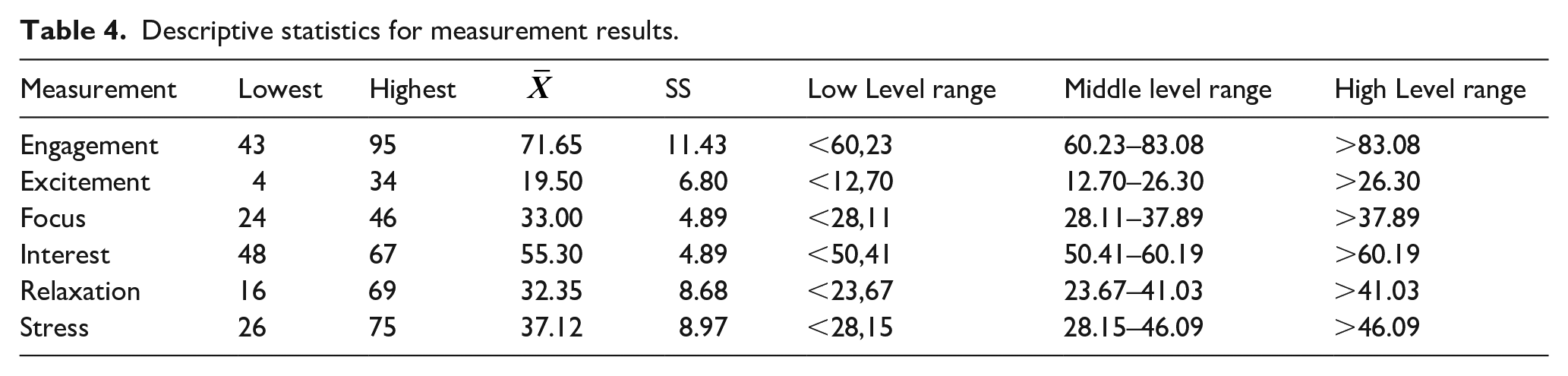
Descriptive statistics were determined according to the mean and standard deviation values of the data set. For this purpose, three levels were determined as low level (values lower than “mean – standard deviation”), high level (values higher than “mean + standard deviation”), intermediate level (values between “mean – standard deviation” and “mean + standard deviation”). These levels were calculated separately for each measurement type and frequency and percentage distributions were created.
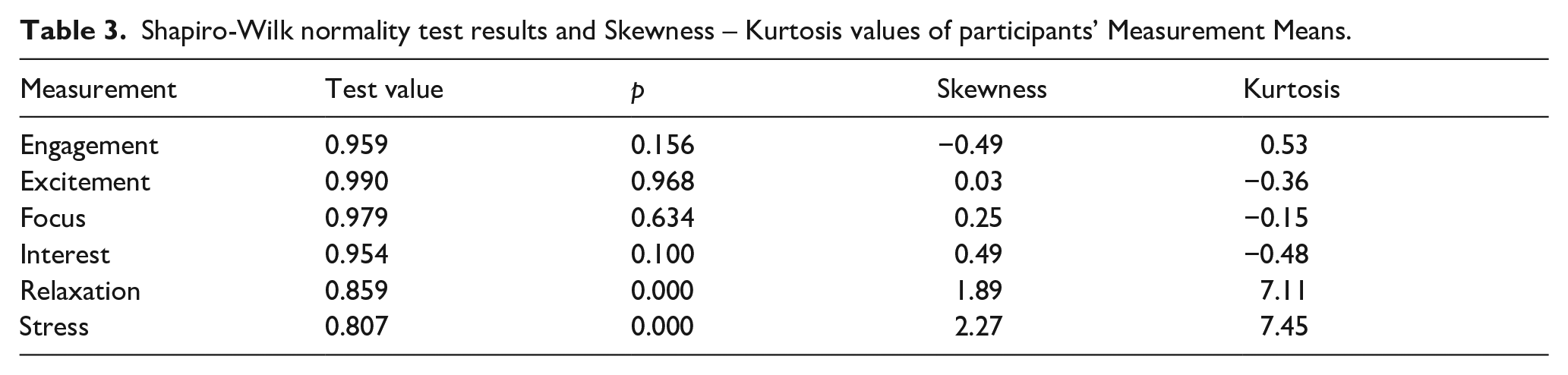
The cognitive activity data set obtained from all groups was analyzed by subjecting it to statistical interpretation and interpretation process through the SPSS 25.0 program to determine whether there was a significant difference between the groups. In this context, in order to analyze whether there is a significant difference between the groups in the cognitive activity data set, the suitability of the data for normal distribution was examined using the Shapiro-Wilk test and skewness and kurtosis values. According to the Shapiro–Wilk test, if the significance value is p > 0.05, it is stated that the data are suitable for normal distribution. The fact that the skewness and kurtosis values used to control the normal distribution are between −2 and +2 indicates that the data are suitable for normal distribution.
One Way ANOVA is an analysis method used in the analysis of quantitative data sets obtained from three or more groups. However, in One Way ANOVA analysis, the dependent variable (engagement, excitement, focus, interest, relaxation, stress) is required to be suitable for normal distribution. If the condition of conformity to normal distribution is not met, Kruskal Wallis H test is applied to the data set. In this direction, One Way ANOVA analysis was applied to the data set suitable for normal distribution, while Kruskal Wallis H analysis was applied for the data set not suitable for normal distribution.
While analyzing the level of correct recall compared to book reading experience, in the first stage, the answers of the participants in each group were recorded on the scoring sheet. Participants were scored with “1” point for the correct answer of each question and “0” for the incorrect answer. Accordingly, participants who answered both questions correctly received 2 points, participants who answered 1 correct and 1 incorrect question received 1 point, and participants who answered both questions incorrectly or could not answer both questions received 0 points. The maximum score that each group can get is 20 points. After the quantitative data set was created, the Independent Samples Kruskal Wallis H test, which is used to test the significance of the difference between the averages of three or more groups, was applied to analyze the relationship between book reading groups and correct recall levels.
In the last stage of data analysis, qualitative data were obtained from the interview with the VR technology supported book reading group. The interview data obtained were transcribed in QDA Miner 5 program and a qualitative data set was created. The qualitative data set was subjected to descriptive analysis in order to present the data obtained as a result of the interview in an organized and interpreted manner.
Procedure
Before starting the study, a pilot study was conducted with 10 participants with different undergraduate education levels from the study sample. The pilot study was conducted to check the simultaneous use of the mobile EEG device in book reading experiences, to improve the signal quality, to use VR headset and the EEG device simultaneously, and to prevent difficulties that may arise in the experimental design. The experimental design was finalized in line with the participants’ feedback and researcher observations.
Results
In terms of the measurement results regarding the normality of the cognitive activity data set, it was observed that engagement, excitement, focus, interest cognitive activity measurements were in accordance with the normal distribution, while relaxation and stress cognitive activity measurements were not in accordance with the normal distribution.
Accordingly, the level ranges of the data were determined as low level, medium level and high level regarding the measurement results of the participants’ cognitive activities. When the table is examined, in terms of the mean values of the participants’ cognitive activities related to the measurement results, the engagement level (
Advantages-disadvantages of reading books in VR.
Demographic data of the sample.
Shapiro-Wilk normality test results and Skewness – Kurtosis values of participants’ Measurement Means.
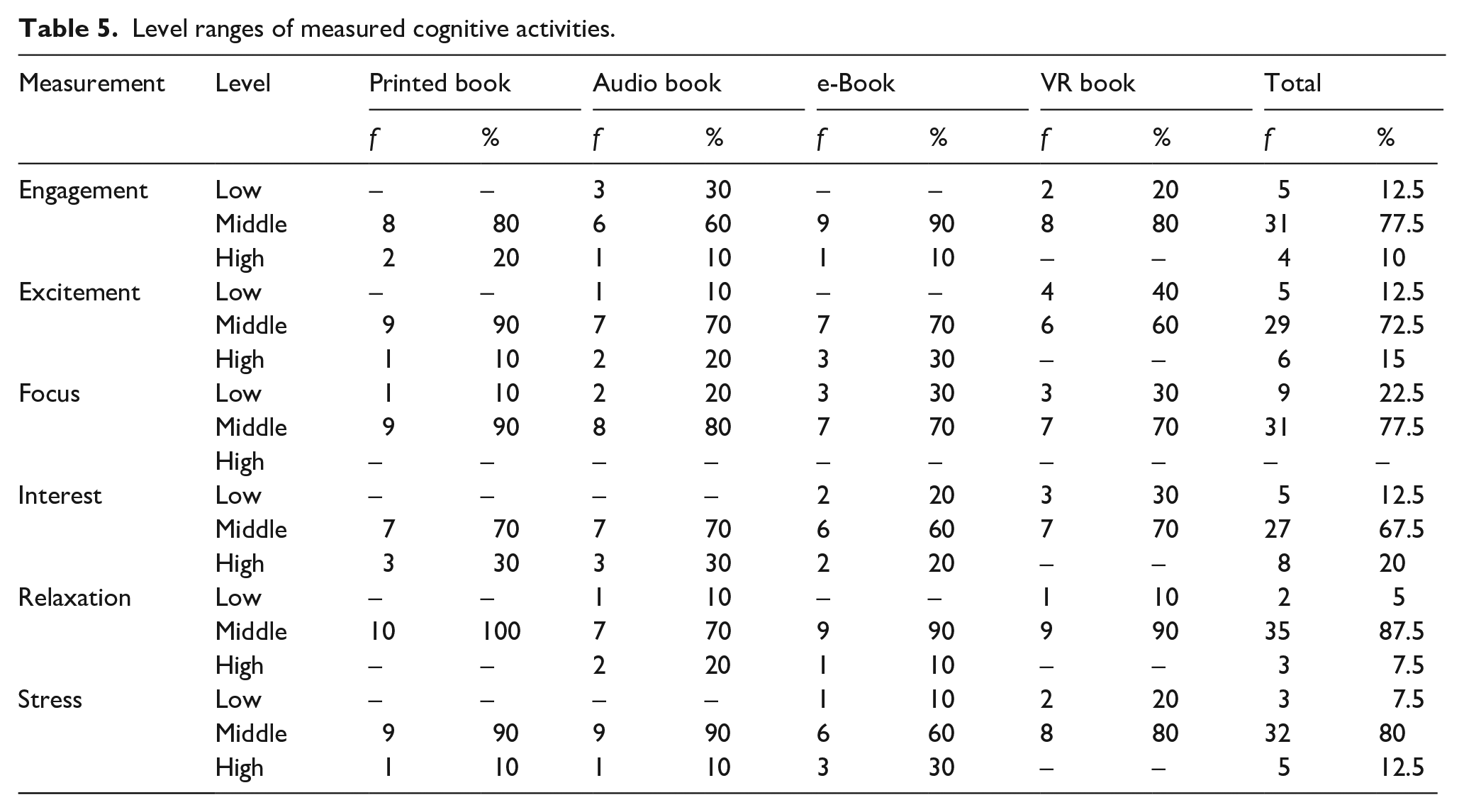
According to Table 5, 80% of those who read printed books, 60% of those who read audiobooks, 90% of those who read e-books, and 80% of those who read VR technology-supported books have medium level values in engagement data. In Excitement data, 90% of those who read printed books, 70% of those who read audiobooks, 70% of those who read e-books, and 60% of those who read books with VR technology support have medium level values. In Focus data, 90% of those who read printed books, 80% of those who read audiobooks, 70% of those who read e-books, and 70% of those who read books with VR technology support have a medium level value. In Interest data, 70% of those who read printed books, 70% of those who read audiobooks, 60% of those who read e-books, and 70% of those who read books with VR technology support have a medium level value. In Relaxation data, 100% of those who read printed books, 70% of those who read audiobooks, 90% of those who read e-books, 90% of those who read books with VR technology support have medium level values. In the stress data, 90% of those who read printed books, 90% of those who read audiobooks, 60% of those who read e-books, and 80% of those who read books with VR technology support had moderate values. When all measurement results are evaluated together, it is seen that the participants mostly have medium level values in all book reading tools. In addition, it was observed that there were no participants at high level in focus data.
Results on the effect of different reading experiences on cognitive activities
This section shows the effect of different reading experiences on cognitive activities. In order to determine whether there is a significant relationship between cognitive activities and different reading experiences, a comparative analysis was performed and the statistics between groups were interpreted. Table 6 shows the comparative analysis between cognitive activities and reading groups.
Descriptive statistics for measurement results.
Level ranges of measured cognitive activities.
Results on the relationship between different book reading experiences and cognitive activities.
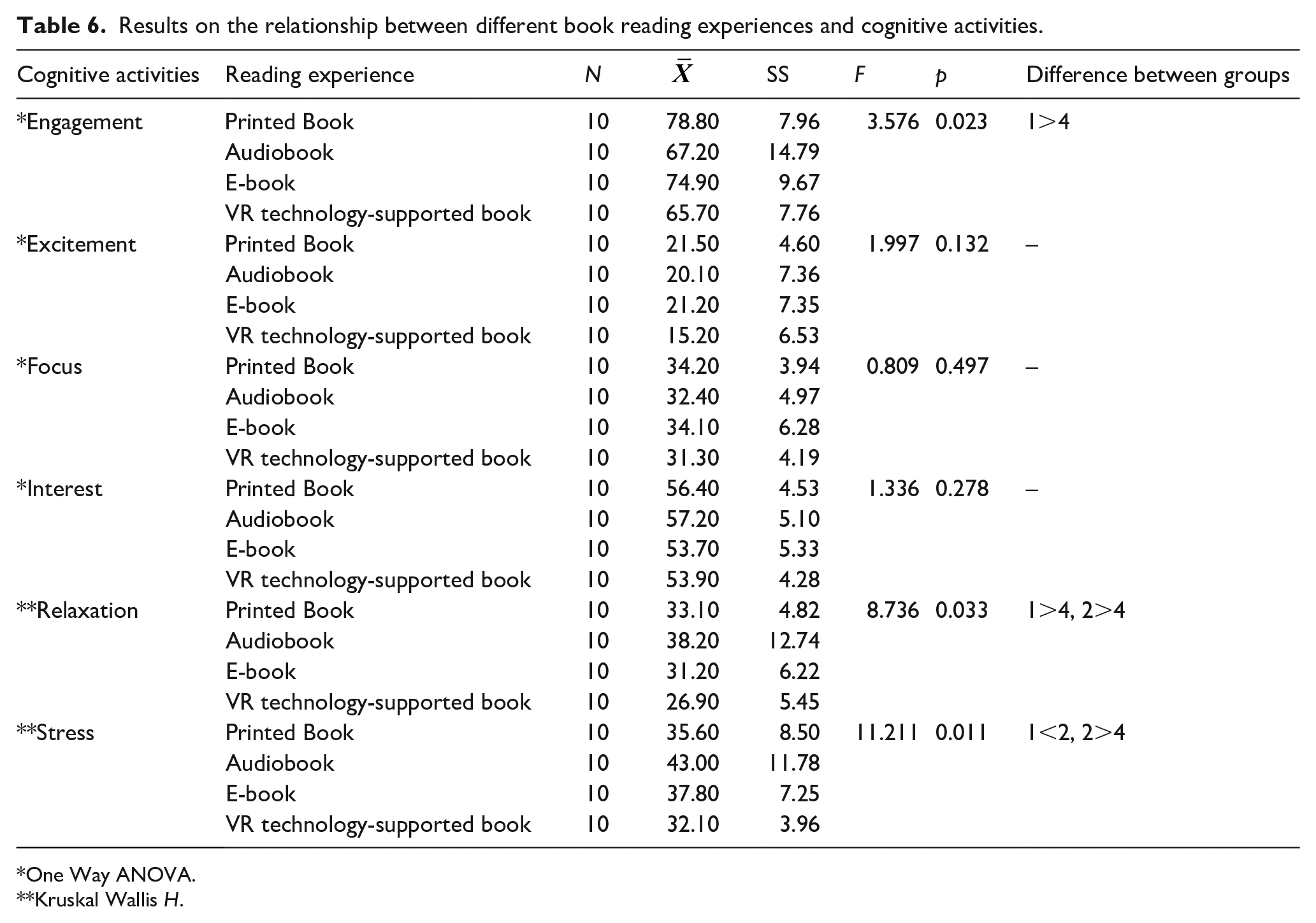
One Way ANOVA.
Kruskal Wallis H.
It is seen that there is a statistically significant difference (p < 0.05) between the engagement results according to different book reading experiences. When the groups between which the differences are analyzed, it is seen that the level of reading engagement of those who read printed books (
It is seen that there is a statistically significant difference (p < 0.05) between the relaxation results according to the participants’ book reading experience. When it is examined between which groups the differences are between, it is seen that the relaxation level of those who read printed books (
It is seen that there is a statistically significant difference (p < 0.05) between the stress results according to the participants’ book reading experiences. When it is examined between which groups the differences are between, it is seen that the stress level of those who read audio books (
In the results of excitement, focus and interest cognitive activities according to different book reading experiences, it is seen that there is no statistically significant difference between the measurement results of the participants who read printed books, read audiobooks, read e-books and read VR technology supported books (p > 0.05). Therefore, we accept the null hypotheses H01b, H01c, and H01d, indicating that there were no significant differences in excitement, focus, and interest levels between individuals who read a book in VR and those who do not use VR for reading.
Results on the effect of different reading experiences on accurate recall of details
This section shows the effect of different book reading experiences on the level of accurate recall. Table 7 shows the comparative analysis between groups to determine whether there is a significant relationship between different reading experiences and accurate recall.
Results on the relationship between different book reading experiences and accurate recall.
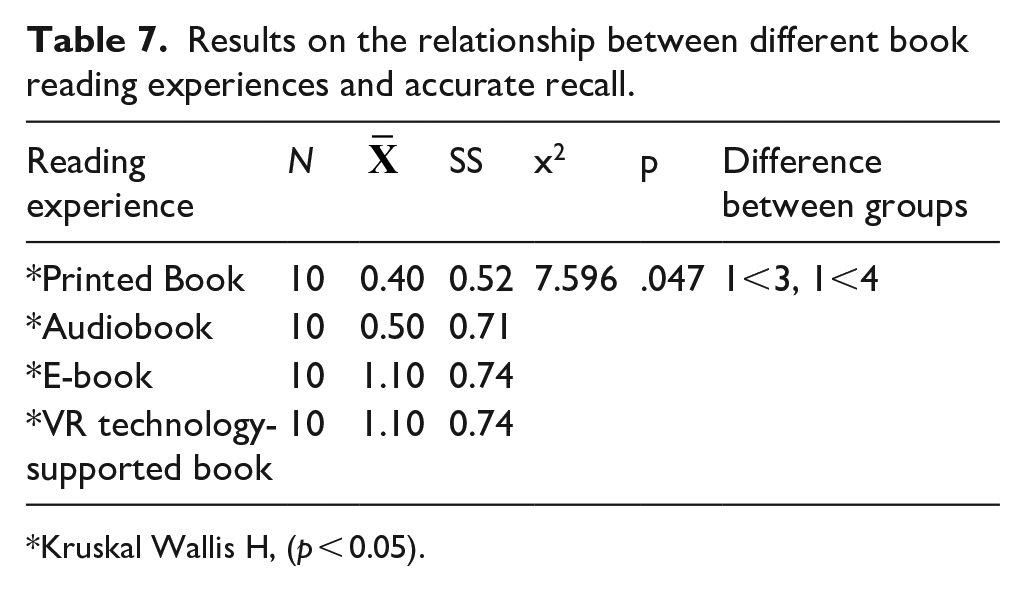
Kruskal Wallis H, (p < 0.05).
When the table is examined, it is seen that there is a statistically significant difference (p < 0.05) between the participants’ answers to the recall questions about the chapter according to their book reading experience. When it is examined between which groups the differences are between, it is seen that the average number of correct answers of those who read e-books (
Results on the reading experiences of the VR technology supported book reading group
This section contains the descriptive results of the interview about the reading experiences of the participants who were made to read books in virtual environment. The participants were asked the question “What are your thoughts about the experience of reading books in a virtual environment?”. The answers given by the participants are given below.
The northern lights visible through the window in the environment of my choice in the virtual environment, the layout of the reading environment made me feel very comfortable. I can say that I almost forgot that I was in the experiment. (Interviewee 1) It was quite enjoyable. I only felt that I was in a virtual environment. The atmosphere of the virtual environment I was in was one of the places I always wanted to be to read books. (Interviewee 2) I really enjoyed the experience of reading a book in a virtual environment. I first felt peaceful in the environment I chose and then I had the experience of reading a book in this peaceful environment. I also think that the fact that it could be personally selected according to my reading mode increased my sense of focus. It was as if I was really in the virtual environment. (Interviewee 3) (. . .) the virtual environment I was in was designed very favourable for reading books. It created a feeling of calmness and peace. When reading a printed book, it is not possible to determine the reading environment to such an extent. From my own point of view, I think that being able to create such an environment with VR makes reading books more convenient. I would like to be able to use the experience of reading books in a virtual environment in all areas of life. (Interviewee 4) (. . .) I really felt like I was reading the book in the environment I chose, so the comfortable and peaceful ambiance of the environment I chose caused me to have the same feeling while reading the book. As a result, I enjoyed my experience of reading a book in a virtual environment. (. . .) I think that adapting books to new media technologies such as augmented reality and VR can be positive for people to have new experiences in their book reading habits. It can also encourage individuals to read books as it can be interesting for people who do not like reading books. (Interviewee 5) Reading books online was quite enjoyable. However, I think that reading on the device for a long time may cause discomfort. With the further development of technology, I think this experience will become more comfortable and more useful. (Interviewee 6) It really gave me a different reading experience as it gave me the feeling of being away from my environment. (. . .) I believe that this technology can take the reader to a different dream world and its effects can be very different. (Interviewee 7) The position of the body while reading a printed book can cause neck and back pain. However, in the virtual environment, I felt more comfortable with my body position. I did not need to hold a printed book or any electronic device in my hand. Choosing the virtual environment to read the book myself also helped me to focus. (Interviewee 8) It was a better experience than I thought. I am someone who prefers to read books using e-book reading devices in my daily life. However, the experience of reading in a virtual environment was even more enjoyable. It was especially great that I could manage the environment in which I would read books in the virtual environment (. . .). With this technology, everyone can create their own reading environment and read their books in peace. (Interviewee 9) The experience of reading books online was uncomfortable for me. It is too technological. I like reading printed books, so I don’t think I can easily adapt to the experience of reading books online. (Interviewee 10)
As a result of the interview, it was seen that 90% of the participants who read books online found this experience enjoyable. In addition, participants thought that it would be useful to get away from the physical environment while reading books in the virtual environment. The ability to choose the reading environment according to personal preferences in the virtual environment contributed to the satisfaction of the participants. Surprisingly, it was seen that the selected virtual reading environment was effective in making the participants feel peaceful and comfortable. Only one participant found the virtual reading experience disturbing. This was understood to be due to the participant’s adherence to traditional reading habits.
Another interview question asked to the participants was “Would you like to continue the experience of reading books in a virtual environment in your daily life?”. To this question, 90% of the participants responded that they would want to continue reading online outside of the research. Only one participant stated that they would not prefer this experience in daily life.
Discussion
The aim of this study is to understand the effects of different book reading experiences (printed book, e-book, audiobook, and VR technology supported reading) on cognitive activities (engagement, excitement, focus, interest, relaxation, stress) and accurate recall of the details of the chapter read. In addition, the other aim of the research is to provide the reader experience of reading a book in a virtual environment.
Discussion of the findings of RQ1: Does reading a book in VR affect cognitive activities ? The results of the study showed that different book reading experiences may have an impact on participants’ cognitive activities. It was found that different book reading experiences had a significant relationship with engagement, relaxation, and stress cognitive activities, but not with excitement, focus and interest cognitive activities. In this context, it was determined that the engagement level of the participants who were made to read printed books was significantly higher than the participants who were made to read VR technology supported books unlike Baceviciute et al. (2021). The fact that the engagement level was higher in participants who were made to read printed books was associated with the fact that printed books offer a reading experience for multiple senses such as sight, touch and smell. In addition, participants who were made to read printed books and audiobooks had significantly higher levels of relaxation compared to participants who were made to read VR technology-supported books. Printed books and audiobooks may be more effective than VR technology-supported books in terms of making participants feel comfortable. It was associated with the fact that print and audiobook reading experiences provide a non-coercive and familiar experience.
Considering the responses of the participants who were made to read books in VR that they felt peaceful in this experience, this result was surprising in terms of surprising research results. It was also observed that the stress level of the participants who were made to read audiobooks was higher than the participants who were made to read printed books and the participants who were made to read books with VR technology. However, the average stress level of the participants who were made to read audiobooks was considered as a positive stress level in terms of increasing productivity.
Discussion of the findings of RQ2: Does reading a book in VR affect accurate recall of the details of the chapter participation read?
The results of the study showed that different book reading experiences had an impact on the participants’ accurate recall of the details of the chapter they read. Interestingly, it was found that the average number of correct answers of the participants who were made to read e-books and the average number of correct answers of the participants who were made to read VR technology supported books were higher than the participants who were made to read printed books. This result suggests that e-book and VR-supported book reading experiences may be more effective than printed books in helping participants recall details correctly. The results of the study support studies that indicate that recall levels of electronic text are higher than printed text (Moore and Zabrucky, 1995), readers who are familiar with the use of tablets are more likely to understand the text (Chen et al., 2014), that different media environments have an effect on reading comprehension (Margolin et al., 2013), and similar to Kaplan-Rakowski and Gruber (2022) reading in VR can motivate comprehension. Therefore, reading in VR can have a positive impact on academic achievement (Acar and Cavas, 2020).
Discussion of the findings of RQ3: What did participants think about the experience of reading a book in VR?
The results of the study showed that the participants who were made to read books in a virtual environment were satisfied with this experience. Most of the participants stated that they would like to repeat this reading experience in their daily lives outside the research process. It has been seen that the experience of reading books in virtual environment can be effective in the preference of the experience of reading books in daily life again in terms of experiencing a complete disconnection from the physical environment, the choice of personalized reading environment in the virtual environment and the feeling of comfort and peace in the selected environment. As a result, the VR content that allows to choose the reader’s virtual environment can increase reading pleasure and reader satisfaction. As a result, we can conclude that VR content allows choosing the reader’s virtual environment and presents a promising alternative reading experience that could be widely adopted soon, similar to Oyelude (2018). By immersing the readers in dynamic and interactive virtual environments, VR-supported book reading goes beyond traditional textual engagement and offers a multi-sensory journey that stimulates not only visual but also auditory and tactile senses. This immersive experience can enhance comprehension, retention, and overall engagement with literary content, especially among digital-native generations who are used to multimedia interactions. In addition, VR technology enables the creation of personalized and adaptive reading environments that cater to diverse learning styles and preferences. Therefore, the proliferation of reading books in VR has the potential to revolutionize the literary consumption landscape and foster a renewed appreciation for the written word in the digital age.
Conclusion
This study we found that different book reading experiences can have an impact on readers’ cognitive activity and recall of details. We found that reading printed books can increase engagement and relaxation cognitive activity, while audiobooks can increase positive stress. In addition, we found that e-book and virtual book reading experiences can increase the level of accurate recall of details. Consequently, the VR content that allows to choose the reader’s virtual environment that satisfied with this experience and state of being integrated into the virtual environment, the ability to choose a personalized reading environment in the virtual environment and the feeling of comfort and peace in the selected environment can increase the comfort of the book reading experience.
Limitations and future research opportunities
The study has limitations that may affect the results of the study and therefore, recommendations for further studies are presented. First of all, due to the ongoing Covid-19 pandemic during the data collection process of the study, the number of participants (N = 40) was limited since mask and distance rules should be followed. Participants were selected from a single university since it was thought that the increase in the course of the disease during the pandemic would cause difficulties in the data collection process. Therefore, the results of the study are specific to this study and the results can be re-evaluated by increasing the number of participants in order to generalize the results in future studies. In addition, a Turkish book in the fictional detective fiction genre was selected as the intervention material in the study. In future studies, the study can be repeated by selecting different types of books as intervention materials and the results can be compared. Finally, due to the high number of pages of the book, the reading time was limited by reading a certain part of the book. In future studies, the study can be repeated with longer reading times and longer data sets can be obtained. Despite all these limitations of the study, the results of the study contribute to the effects of different book reading experiences on cognitive activities and detail recall and the reader experience of reading books in a virtual environment.
Footnotes
Acknowledgements
This paper is based on the Ph.D thesis of Sema BULAT DEMİR at Istanbul University, Istanbul, Türkiye. The authors are grateful to the participants for their contribution to the study.
Declaration of conflicting interests
The author(s) declared no potential conflicts of interest with respect to the research, authorship, and/or publication of this article.
Funding
The author(s) received no financial support for the research, authorship, and/or publication of this article.
Ethics declarations
The Social Sciences and Humanities Research Ethics Committee at Istanbul University, on April 20th, 2022, approved the proposed study as ethically appropriate (numbered 858781).
