







Abstract
This study aimed to investigate the languages, countries, geographic distribution, and commonly used journal metrics of multilingual Library and Information Science (LIS) journals indexed in Scopus. The Scimago Journal Rank (SJR) portal was used as a proxy for Scopus-indexed LIS journals. Through examination of the homepages of 249 LIS journals listed in SJR, 42 multilingual LIS journals were identified. For this study, multilingual journals were defined as those publishing in a combination of English and other languages. The findings revealed that although English-only journals have historically dominated the field, a significant number of multilingual journals have been indexed in Scopus over the past two decades. The 42 identified multilingual journals span 25 countries and encompass 18 languages, reflecting a diverse linguistic landscape in LIS scholarship. Notably, 67% are Open Access (OA) and affiliated with major publishers, including university presses. Spain and Brazil emerge as key players, accounting for 27% of all identified multilingual journals, highlighting the importance of their regional languages in LIS scholarship. However, the study also uncovered disparities in journal metrics and rankings, with multilingual journals consistently scoring lower than their English-only counterparts. Despite efforts to include regional and local journals in major databases, these results underscore the persistent challenges multilingual publications face in achieving and maintaining Scopus indexing.
Keywords
Introduction
The prevalence of English-language journals, particularly those published by major Anglo-American publishers, is evident on a global scale (Cargill and Burgess, 2017). In Library and Information Science (LIS), the dissemination of scholarly research is predominantly conducted in English. However, there are multilingual journals that serve as valuable platforms for researchers and scholars in LIS who may prefer to publish their work in languages other than English. For the purposes of this study, non-English language journals are those that publish primarily in languages other than English whereas multilingual journals are those that publish in multiple languages, including English. Multilingual journals that use English in conjunction with another language often accommodate both local and international readerships.
Some of these multilingual journals are indexed in Scopus, playing an important role in promoting inclusivity and diversity within the LIS community. They enable researchers from different linguistic backgrounds to contribute to the global discourse on LIS. They also contribute to the enrichment of the field by providing a space for exploring regional perspectives and disseminating research findings from non-English speaking regions. There are views such as one made by Di Ferrante et al. (2019) that the use of multiple languages which embraces diversity should be encouraged in order to ensure that authors from various linguistic backgrounds and cultures can have their voices heard in global scholarly discussions. Researchers can thus directly access contributions from around the world, fostering engagement in global scholarly conversations.
However, within the field of LIS, the landscape of multilingual journals, particularly those cataloged in databases like Scopus, is a relatively small yet pivotal aspect that warrants examination. A thorough examination of various aspects of these journals becomes essential in order to ensure that valuable research from diverse linguistic backgrounds is acknowledged and integrated into the broader academic community. In terms of citations and visibility, multinational journals face a disadvantage, whereas English-language journals enjoy a clear advantage on the international stage. Despite the expanded coverage by Web of Science (WoS) and Scopus, they still do not fully encompass important regional journals. Given the bias in journal selection by large databases, the imperative to analyze multilingual LIS journals becomes evident. This not only ensures a smoother transition in the discussion but also emphasizes the importance of comprehensive inclusion and global representation, advocating for the incorporation of more multilingual journals in these databases.
Furthermore, it is worthwhile to examine the adequacy of current indexing systems for capturing the linguistic diversity of scholarly output in specific regions within the field of LIS. Despite the wealth of information on journal publishing, there is a noticeable gap in the understanding of non-English LIS journals indexed in global databases such as Scopus. Consequently, the objective of this study is to investigate the characteristics of multilingual LIS journals indexed in Scopus. Specifically, we aim to explore their representation, publishers, distribution, and correlation with journal metrics.
Research questions
The following research questions were formulated to guide this research:
• How are multilingual journals represented compared to English-language journals in Scopus within LIS?
• What languages do multilingual journals indexed in Scopus in LIS use to engage with their users and publish their papers?
• How do languages co-occur in multilingual LIS journals indexed in Scopus, and what is the geographical distribution of these journals?
• How do multilingual LIS journals perform in terms of journal metrics and ranks compared to English-language journals?
• How has the coverage of multilingual journals evolved in comparison to English-only journals over time?
Literature review
The existing literature relevant to this study explores language representation in scholarly communication, examining how language influences research dissemination, visibility, and citation across disciplines. First, there is a large body of studies addressing language barriers in scholarly communication. A rising trend in English-language papers has been noted by previous studies such as Liu (2017) and Kulczycki et al. (2020). Konno et al. (2020) warned that ignoring non-English language studies may introduce bias in ecology. Lund et al. (2023) identified barriers such as language proficiency and inadequate research funding, proposing mitigation strategies. Amano et al. (2016) advocated for addressing global science language barriers through effective multilingualization. Popovic et al. (2023) argued that it is essential to preserve regional languages in the face of increasing internationalization and the growing preference for foreign-language publications in science. Taken together, these studies contribute to the understanding of evolving trends in the dissemination of multilingual publications.
Second, several studies scrutinized the impact of language on research citation metrics, revealing a significant association between journal language and citation metrics. Di Bitetti and Ferreras (2017) demonstrated that papers published in English receive higher citations in the natural sciences. Nussbaumer-Streit et al. (2020) and Liu et al. (2018) investigated the consequences of excluding non-English publications from evidence syntheses and the potential penalty associated with containing more non-English papers in journals, highlighting the complex relationship between the language of journal documents, visibility, and citation metrics. Kim et al. (2014) showed that journals written in English exhibit higher Scimago Journal Rank (SJR) and h-index values compared to those written in Korean. The findings of all these studies are useful for understanding the association between journal language and citation metrics. However, they were not examined in the field of LIS. Furthermore, since the relationship between language and citation metrics could also include aspects such as the target audience, country of editors, and whether they are examined at the journal or article level, additional studies may provide further insight into the relationship between journal language and citation metrics.
Third, studies have indicated biases in language coverage in major databases such as WoS and Scopus, uncovering interesting patterns. These biases affect both non-English language journals, which publish primarily in a single non-English language, and multilingual journals, which publish in multiple languages including English. For instance, Vera-Baceta et al. (2019) examined the language coverage of WoS and Scopus, identifying various non-English languages such as Chinese, Danish, Japanese, Persian, Swedish, and Russian. González-Sala et al. (2019) found disparities among psychology journals in Ibero-American countries and the Netherlands, highlighting potential biases related to language representation in major bibliographic databases. Céspedes (2021) observed Brazil’s leadership in Scopus and WoS but suggested a need to reconsider the role of English as the academic lingua franca, given the prevalence of Spanish over Portuguese in Latin American journals. Moskaleva and Akoev (2019) found that English publications are read and cited more outside their origin country, while open access boosts native language citations. They concluded that non-English publications are underestimated in research evaluation in non-English speaking countries. Albarillo (2014) and Petrushka et al. (2020) noted that databases such as Scopus have expanded their coverage to include more diverse languages, and JSTOR has also expanded in recent years. This expansion prompts a reevaluation of how Scopus represents languages within the field of LIS.
Lastly, several studies examined international journals published in non-English-speaking regions, exposing coverage issues of major databases and scholarly publishing patterns in non-English-speaking regions. For example, Yoon et al. (2023) analyzed LIS journals in Scopus from non-English-speaking countries, Kim and Jeong (2023) compared Scopus journals in East Asia, and Hiraba et al. (2024) scrutinized English dentistry journals in Japan. The findings of these studies are similar to the point made by Malvić et al. (2022) that small journals from non-English countries face challenges in gaining visibility. One noticeable limitation of these studies is that while they offered insights into non-English journals, they often overlooked language-related aspects.
In sum, the existing literature in this area reveals evolving patterns between language and research visibility and offers insights into both non-English language and multilingual journals indexed in global databases. Although previous literature has discussed efforts to remove language barriers and promote multilingualism, there remains a clear gap in understanding the characteristics of multilingual LIS journals indexed in Scopus. To this end, this study analyzes multilingual LIS journals indexed in Scopus to gain an in-depth understanding of the evolving landscape of scholarly communication in the field and to determine potential advantages and challenges associated with publishing Scopus-indexed multilingual journals.
Methodology
To conduct the study, 249 journals listed under the category of LIS in the SJR portal for the year 2022 were manually inspected, and multilingual journals were identified through this process. In this study, the SJR portal was used as a proxy for Scopus-indexed journals due to its provision of an annual list, enabling standardized reporting and result validation. Moreover, the SJR portal offers metrics such as h-index, SJR, and quartiles, and its public accessibility makes information readily available to other researchers. Scopus provides language information for indexed journals. Since the provided information often tended to be inaccurate, manual inspection of the homepage of indexed journals was found to be a better choice than relying on Scopus-provided information regarding the journal language.
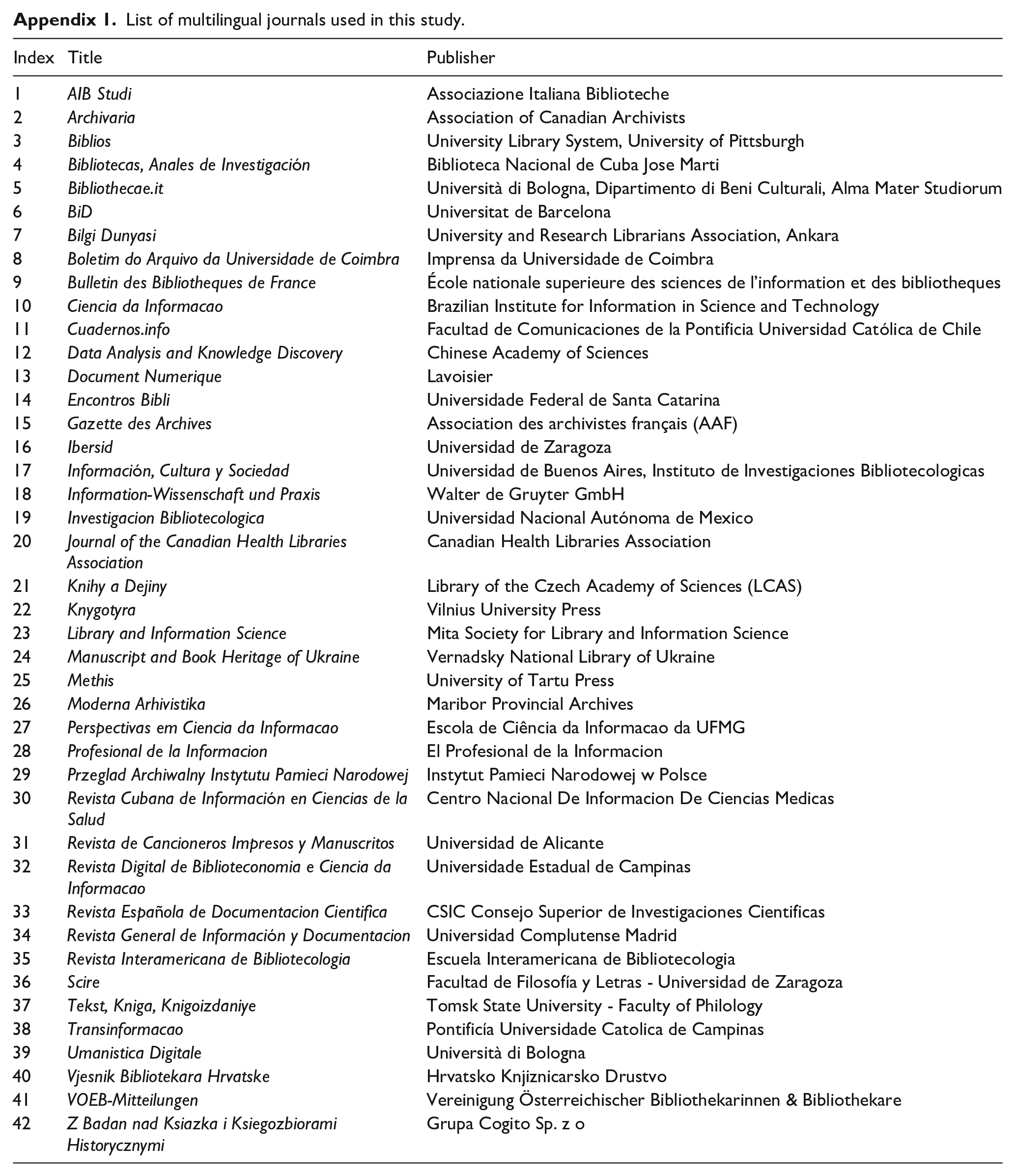
The homepage of each journal was identified by cross-referencing the SJR portal and conducting searches on Google. The assessment of whether a journal was multilingual primarily relied on two criteria: homepage language and publication language. Homepage language refers to the language used on the journal’s homepage for communication with information seekers. Journals mentioning languages other than English or having multilingual homepages were categorized as multilingual LIS journals. For publication language, journals often specify the language of the articles accepted for submission or the language of the published articles. In cases where the language of published articles was unclear, language details were examined within the listed article information. Additionally, Scopus was consulted to verify the language of published articles. If a journal’s website had no English or insufficient information in English, ChatGPT was utilized for translation purposes. The Appendix 1 shows 42 LIS journals that met the specified criteria.
Once the language of the journals and other relevant information had been identified, an analysis of these journals was conducted using the journal metrics provided by SJR to identify their characteristics. Variables related to homepage language and language of publication were analyzed in conjunction with the journal metrics to gain insight into multilingual journals. These metrics include the SJR (González-Pereira et al., 2010), the h-index, the quartile of the journal, the total number of documents produced by the journal in 2022 (TD2022), the name of the editor, the country of the journal, and the citations per document in the last 2 years (CITES2YR). In addition, open access (OA) journals published in LIS were downloaded separately, and anti-join techniques were used to identify non-OA journals by merging them with all LIS journals. The R programing language was used to process the collected data and perform the analysis. The statistical analyses performed in this study include the Mann-Whitney U test.
Results
Journal metrics and ranks between English-only journals and multilingual journals
Figure 1 shows the distribution of journal metrics for non-English and English-only papers (multilingual journals vs English journals). In this figure, journals that publish non-English papers consistently show higher median values for journal metrics (SJR, HI, TD2022, CITES2YR) than journals that do not publish non-English papers. The range of journal metrics is substantial, with outliers often showing significantly higher values than the metrics of multilingual journals. Furthermore, English journals have a higher quartile (Q2) than multilingual journals (Q4). The Mann-Whitney U test was also used to determine whether differences between these two types of journals in journal metrics and ranks are statistically significant. Since the p-value for all journal metrics and ranks shown in this figure is less than 0.05, it was concluded that the journal metrics and ranks of English-language journals are significantly higher than those of multilingual LIS journals in various journal metrics.
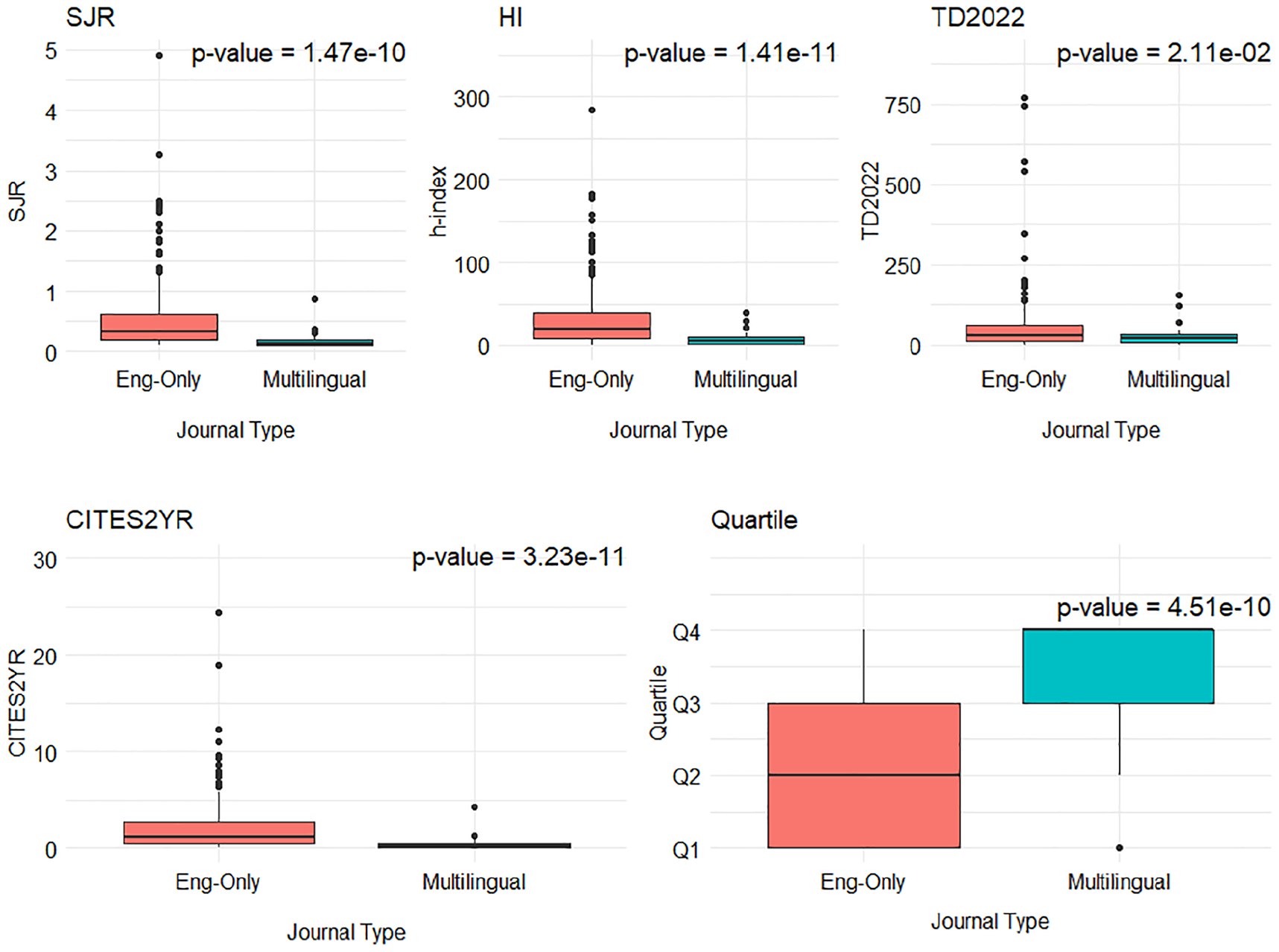
Journal metrics: English-only journals versus multilingual journals.
Multilingual journals by publisher’s country
Table 1 shows the global contributors to multilingual LIS journals, reflecting the richness of LIS scholarship. The distribution of multilingual LIS journals is shown on the basis of the publisher’s country, and the publisher’s country is available in the SJR portal data. For 42 multilingual LIS journals indexed in Scopus, a total of 25 countries are represented in publishing these journals. While multilingual journals are published in diverse countries, only a fraction of countries worldwide are represented in publishing multilingual journals in LIS. Moreover, multilingual journals are somewhat evenly published among developed countries (e.g. Italy and Spain) and developing countries (e.g. Brazil and Mexico). However, it’s worth noting that multilingual LIS journals are mostly published in non-English-speaking countries. Exceptions are in the United States and Canada, where French is also recognized as an official language. Spain published the most journals (7 journals, 16.7%), indicating a strong presence of the Spanish language. Brazil follows with five journals (11.9%), indicating the central role of the Portuguese language in the LIS. Approximately 27% of all multilingual journals are published in Spain and Brazil, suggesting the importance of the languages in these regions. Contributions from European countries such as France indicate linguistic and cultural influences in the production of multilingual LIS journals.
Frequency distribution of multilingual languages by publisher country.
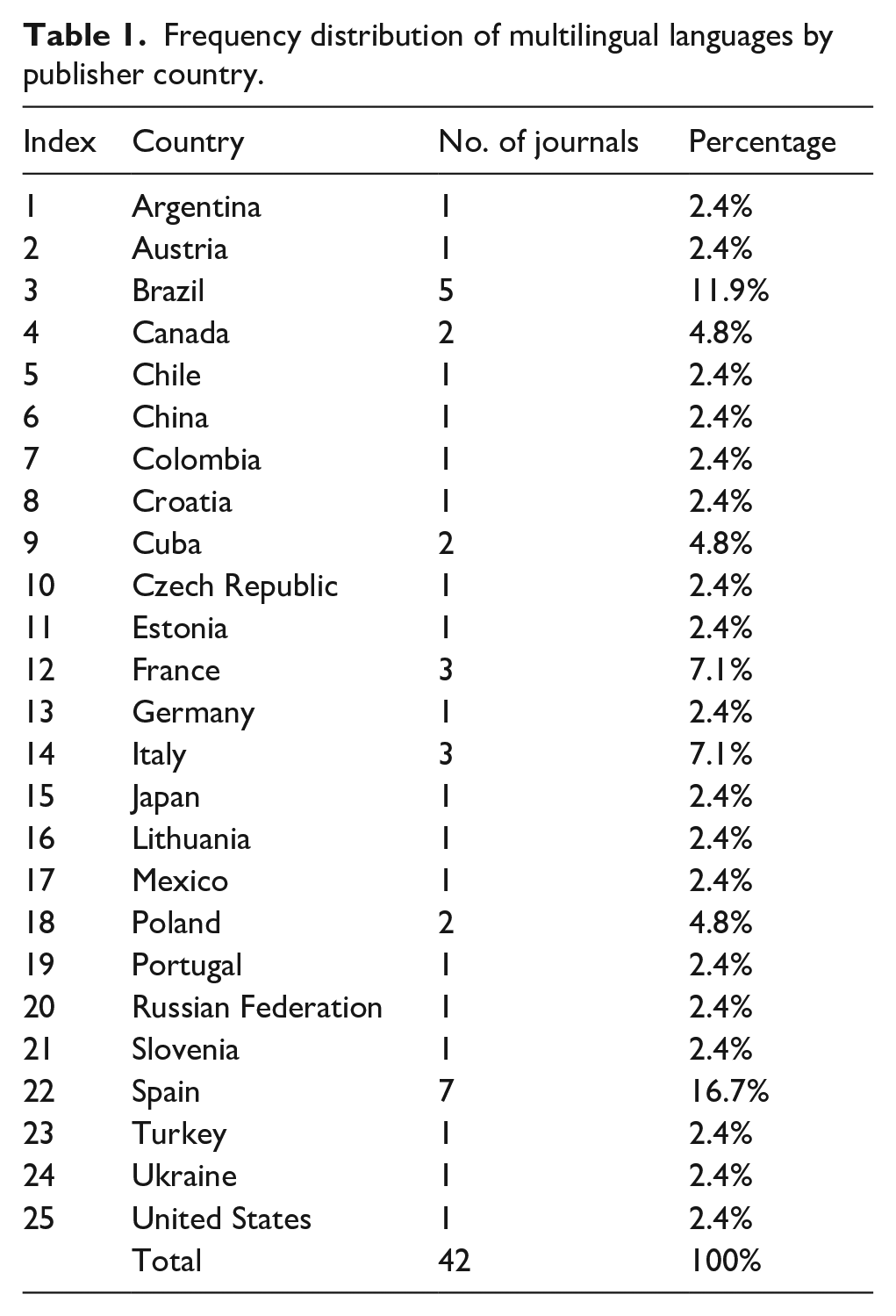
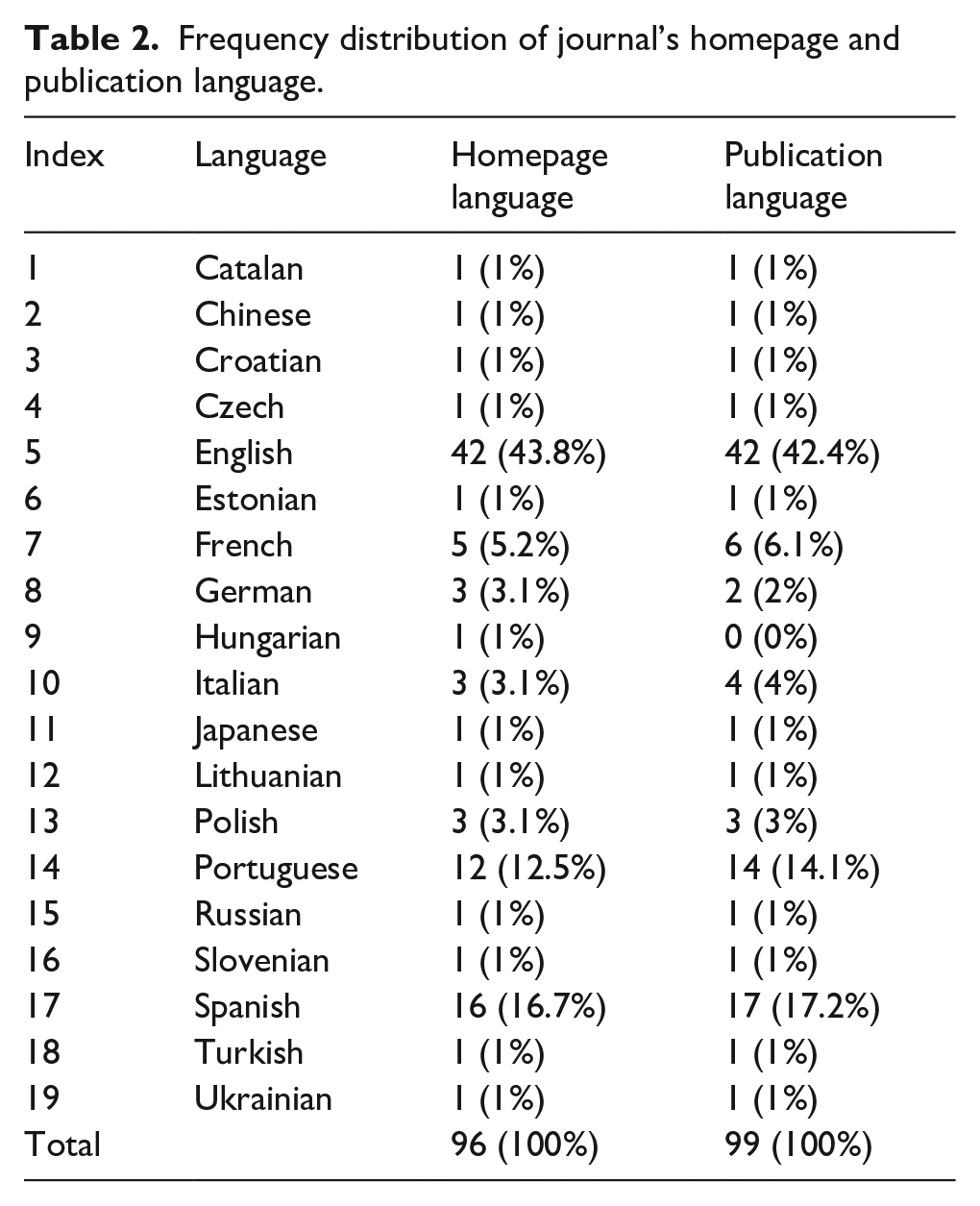
Table 2 presents the frequency of homepage and publication languages in multilingual journals indexed in Scopus. Most journals allow equivalent languages for both the homepage and publication language. For example, the journal Revista Digital de Biblioteconomia e Ciência da Informação, published in Brazil, is a bilingual journal with a homepage written in Portuguese and English. These same languages were used for publishing their journal papers. The table reveals a total of 19 languages, indicating diverse representation. As expected, English is the most prevalent language used in multilingual journals, appearing on the homepages of 43.8% of these journals and in the language of publication in 39.6% of cases. Spanish follows English, constituting 16.7% of homepage languages and 17.2% of publication languages. Portuguese, though less common, still holds a notable share (12.5% for homepages and 14.1% for publications). French comes in third, used by 5.2% for homepages and 6.1% for publications. Beyond English dominance, various non-English, mainly European, languages are utilized, with a weaker representation of non-European languages in multilingual journals. Overall, the distribution of language preferences for both journal homepages and publications underlines the diverse contribution of multilingualism in the LIS and reflects the researchers’ language preference for scholarly communication.
Frequency distribution of journal’s homepage and publication language.
Co-occurrences of multilingual journals
The manually collected publication languages were visualized using VOSViewer (Van Eck and Waltman, 2011). Figure 2 illustrates co-occurring patterns of multilingual journals indexed in Scopus, depicting the simultaneous and intertwined use of languages in academic discourse in the field of LIS. As shown, English appears with the most languages in this diagram, indicating that most multilingual journals allow English-language submissions. The co-occurrence of the English language is expected since Scopus requires its indexed journals to have English-language abstracts and titles, ensuring relevance and readability for an international audience (Elsevier, 2024). Upon examining the homepages of the journals, it was found that English, Spanish, and Portuguese are most prevalent in journals published in Spain and Brazil. In particular, a co-occurrence of languages such as Spanish and Portuguese can be detected in this graph, suggesting a regional concentration of multilingual journals, particularly in Spain and Brazil. French and English journals are mainly found in journals published in Canada and France. In general, the graph shows a trend toward the co-occurrence of European languages in the collected data, representing a landscape of multilingualism in the LIS.
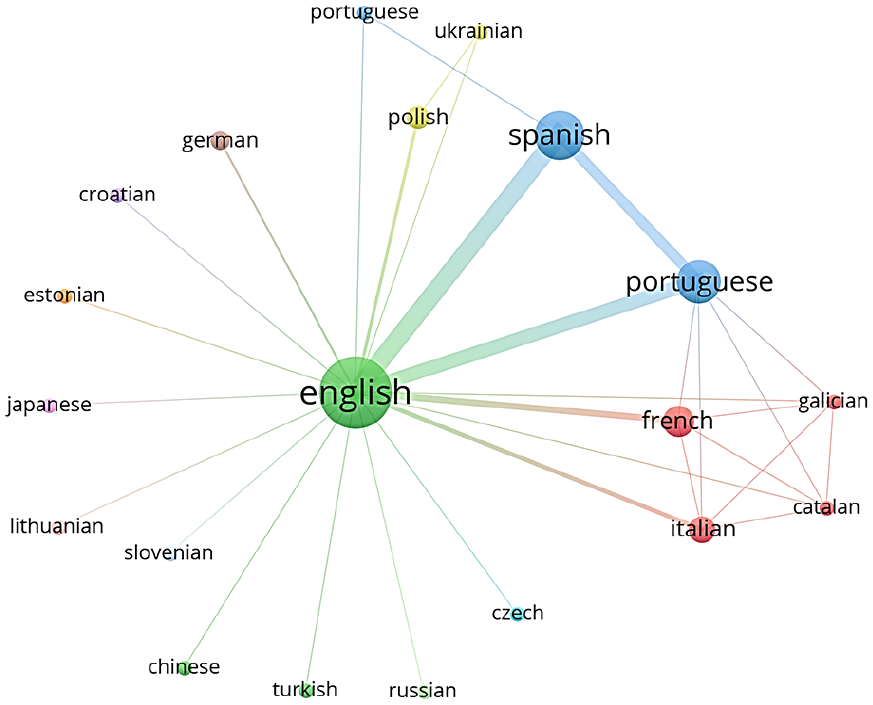
Co-occurring publication languages of LIS non-English only journals.
OA status of multilingual journals
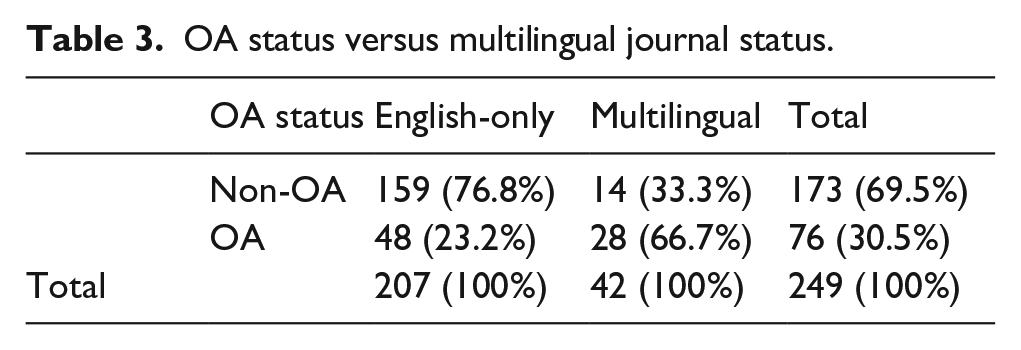
The contingency table (Table 3) illustrates the relationship between the OA status of journals and the publication language of 249 LIS journals. In this table, the majority of multilingual LIS journals fall under the non-OA type, constituting 76.8% of the total number of multilingual journals. In contrast, within the OA category, multilingual journals represent 33.3%. This suggests that a significant proportion of multilingual LIS journals indexed in Scopus are not available as OA. Conversely, a higher percentage (66.7%) of OA journals publish multilingual documents. Based on the frequency counts shown in this table, a Pearson’s Chi-squared test was performed to determine the significance of the relationship between the OA status of the journal and multilingual status and revealed a significant association between the OA status and multilingual status (χ² = 29.108, df = 1, p = 0.00000006845). Since the p-value is below the significance threshold of 0.05, it can be concluded that the multilingual status of journals is significantly associated with their OA status.
OA status versus multilingual journal status.
Coverage years of English-only and multilingual journals
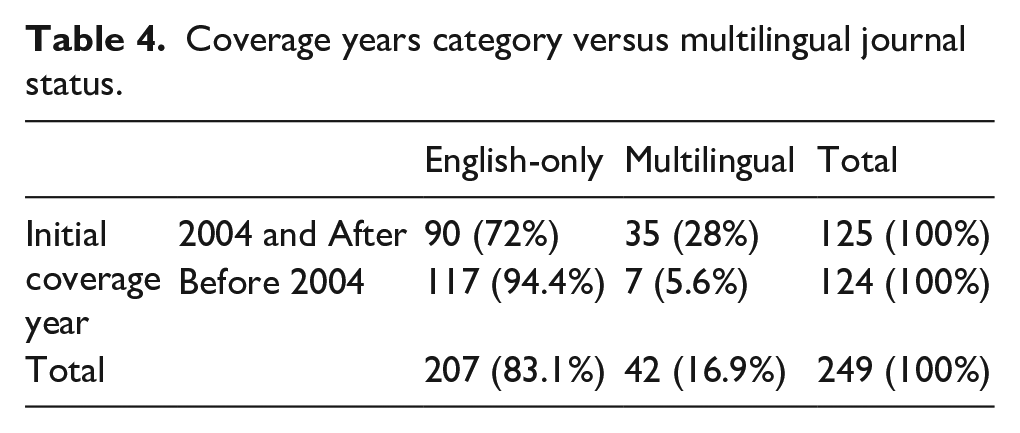
Table 4 presents an analysis of the relationship between the coverage year category and the status of journals as either English-only or multilingual. Scopus initiated its service in 2004 (Schotten et al., 2017). For most older journals established before this year, Scopus uses the journal’s establishment year as the initial coverage year rather than the actual coverage year. Due to the incompatibility in calculating the number of years covered, the journals are categorized based on their coverage years: “2004 and after”’ and “before 2004.” As shown, journals indexed after 2004 show a more balanced distribution between English-only (72%) and multilingual (28%) journals, representing linguistic diversity in recent Scopus indexing. Conversely, the number of journals indexed before 2004 reveals the dominance of English-only journals (94.4%), with only a small fraction (5.6%) being multilingual. Overall, this suggests a noteworthy shift toward inclusivity in the Scopus database in the last two decades.
Coverage years category versus multilingual journal status.
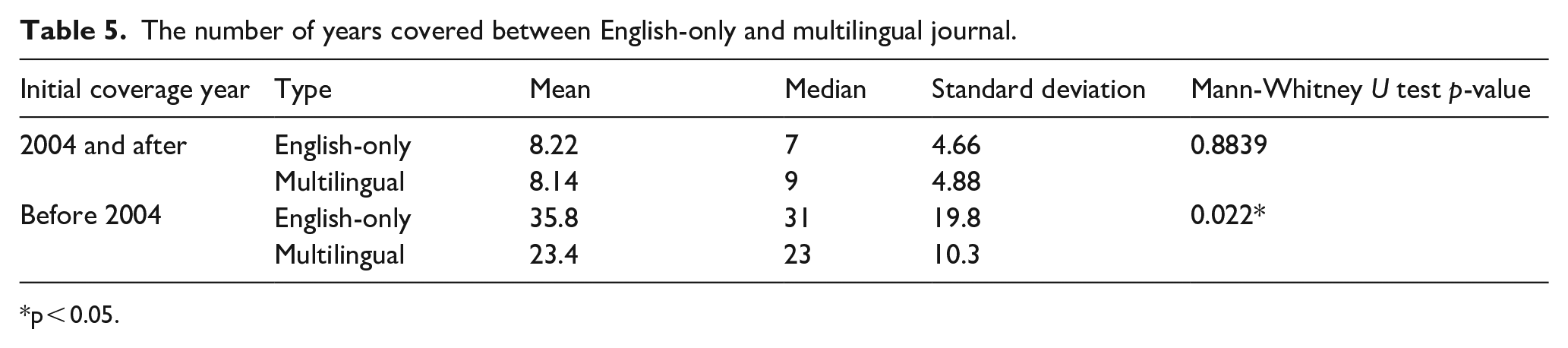
The historical indexing of multilingual journals was analyzed on the basis of the years of coverage of English-language and multilingual journals. Table 5 reveals differences in their historical and more recent inclusion in Scopus. For journals established in 2004 and after, both types exhibit relatively similar mean coverage durations, with the English-only journals having a slightly higher mean of 8.22 than the mean of multilingual journals (8.14). Despite this, the median coverage years for the English-only and multilingual journals in this category are 7 and 9, respectively, indicating some variability in the distribution. The standard deviation values for both types suggest moderate variability around the mean. In contrast, for journals established before 2004, English-only journals have a significantly higher mean coverage duration of 35.8 years than multilingual journals, which have a mean of 23.4 years. This stark difference reflects the presence of much older journals in the English-only category, contributing to the higher mean. For the “2004 and after” category, English-only journals have a higher mean but lower median coverage duration than multilingual journals. This suggests that while some English-only journals have longer coverage durations, most tend to have durations closer to the middle of the distribution.
The number of years covered between English-only and multilingual journal.
p < 0.05.
Table 5 also shows the Mann-Whitney U test results. As shown, no significant difference is present in the number of years covered between English-only and multilingual journals founded in 2004 and after (U = 1602, p = 0.8839). Thus, there is insufficient evidence to reject the null hypothesis that there is no significant difference in the mean number of years covered during this period. In contrast, the Mann-Whitney U test indicated a significant difference in the number of years covered (NYC) between multilingual (M) and English-only (E) journals founded before 2004 (W = 621.5, p = 0.022). Thus, the results suggest that while there is no significant difference in the coverage years for journals founded in 2004 and after, there is a significant difference in the coverage years between multilingual and English-only journals founded before 2004.
Discussion
In this study, the complex characteristics of multilingual LIS journals indexed in Scopus were examined in detail. A noteworthy finding is that only 16.9% of the journals indexed by Scopus are multilingual, aligning with a broader trend identified in previous studies, such as Chang (2022). This trend reflects a significant increase in English-language journals in countries where English is not the native language. Hence, the findings of this study should be interpreted within the larger narrative of a growing trend in publishing both multilingual and English-only journals in regions where English is not the dominant language. Although English-only journals have historically been predominant, a substantial proportion of multilingual journals have been indexed in the last two decades. This trend indicates a growing effort to diversify and include journals with different linguistic backgrounds, reflecting evolving considerations of inclusivity and global representation in scholarly communication.
The prevalence of English-language only journals, although expected, is an important finding likely influenced by Scopus indexing practices. English prevalence in multilingual LIS journals, often alongside other languages, underscores this trend. While recent studies note increased inclusion of non-English journals in Scopus (Céspedes, 2021; González-Sala et al., 2019; Vera-Baceta et al., 2019), questions persist about the database’s linguistic diversity, particularly given the overrepresentation of European languages.
One interesting aspect of multilingual journals indexed in Scopus is that European languages are predominantly represented compared to non-European languages. Despite the dominance of English, the findings of this study suggest that Spanish plays a substantial role in both presentation and scholarly contributions within these journals (approximately 17%). More specifically, regional concentrations of languages, such as Spanish and Portuguese in Spain and Brazil, contribute to distinct multilingual dynamics in journals. The co-occurrence of languages on a larger scale represents a mutual exchange of cultures and ideas. Journals from Spain and Brazil play a vital role in LIS scholarship originating from non-English-speaking European countries. This suggests that publishers in these countries have had more success in running multilingual LIS journals indexed in Scopus than some Asian countries such as Vietnam, Thailand, and South Korea, whose languages (Vietnamese, Thai, and Korean) are not represented in Scopus.
It seems reasonable to assume that the editors and publishers of the multilingual LIS journals identified in this study are well aware of how the language used in communication and publication might affect their readers and Scopus indexing status. They have made judicious choices in both homepage and publication languages, reflecting a strategic approach. This is particularly evident as these journals implement various strategies to enhance their status and secure a coveted spot in Scopus, as discussed by Gasparyan and Kitas (2021). While the authors did not explicitly suggest a specific language of choice, their observations suggest the multifaceted strategies employed by journals to gain Scopus indexing status. Yet, the majority of multilingual journals indexed in Scopus appear to consciously embrace multilingualism and strategically aim to appeal to both the local readership in the journal’s home country and an international audience.
However, it remains uncertain whether this strategy is practicable for many other regional journals worldwide, as the ultimate decision on the indexing of these journals lies solely with Scopus. Among various selection criteria guidelines, Scopus explicitly states that journal contents, such as the title, abstracts, and keywords, should be accessible in English to make the content available to an international audience (Elsevier, 2024). This implies the importance of the English language for the published papers, regardless of the specific language that the journal decides to accommodate. The journal metrics and rankings of multilingual LIS journals indicate that international journals published exclusively in English still have the upper hand over multilingual journals in terms of indexing status on Scopus.
A notable observation regarding multilingual journal publishers, presented in the Appendix 1, is that multilingual journal publishers consist of different types of institutions, including commercial, university, and academic societies. This pattern of publishers is supported by previous studies (Kim and Atteraya, 2023; Kim and Jeong, 2023; Larivière et al., 2015). In particular, several well-known universities, such as the University of Bologna, are involved in publishing multilingual LIS journals that are indexed in Scopus. The composition of publishers potentially reflects distinct motivations and challenges across different regions and languages. The absence of large commercial publishers, such as Elsevier, that are involved in publishing multilingual LIS journals is worth noticing. This observation raises the question of what incentives exist for large publishers to venture into the multilingual arena, most likely due to a lack of commercial viability or market demand.
This study challenges the exclusive reliance on traditional journal metrics as the sole indicators of a journal’s success. In particular, English-language journals in the field of LIS exhibited significantly higher scores in metrics such as SJR, h-index, TD2022, CITES2YR, and quartiles compared to their multilingual counterparts. Tennant (2020) highlights the structural bias against research from non-Western countries, non-English language research, and the arts, humanities, and social sciences on platforms like Scopus and Web of Science, indicating an incomplete representation of global knowledge. This bias underscores the challenges faced by multilingual journals in securing indexing in Scopus, as they may not fit within the scope of these platforms. Moreover, the association between OA publishing and multilingual journals highlights the complexities of publishing in regions with limited market access and further exacerbates the structural biases in scholarly publishing. Nonetheless, multilingual journals indexed in Scopus contribute significantly to scholarly discourse, particularly to those serving regional (local) markets as well as catering to an international audience present in various regions of the world. Their presence underscores the importance of linguistic diversity in academic publishing and the need for tailored strategies to address the unique challenges faced by journals from diverse linguistic and economic contexts.
One evident constraint of this study lies in its exclusive reliance on Scopus to gauge the global recognition and dissemination of LIS research. This reliance poses the risk of overlooking locally significant journals that fall outside Scopus’ listings. Given Scopus’ stringent criteria for journal inclusion, there exists the possibility that it may not comprehensively capture the diverse dimensions of scholarly impact, potentially neglecting regional LIS journals that play a substantial role in advancing knowledge in the field. Compounding this limitation is the fact that regional journals, often focused on publishing non-English language papers, encounter challenges in meeting Scopus’ requirements (Pranckutė, 2021). This inherent selection bias introduces a degree of constraint on the generalizability of the study’s results. Despite this limitation, this study found that multilingual journals in LIS face challenges not only in terms of representation but also in terms of journal performance.
Conclusion
The indispensable role of English-language journals for the global scientific community is undeniable. However, it is crucial to recognize the importance of preserving multilingualism to promote diverse perspectives and ensure the development of academic knowledge, thereby fostering a more inclusive and globally relevant scholarly landscape. Consequently, this study advocates for a reevaluation of success criteria in evaluating journals, urging consideration of both traditional benchmarks and the intrinsic value of multilingualism to cultivate a more comprehensive scientific environment.
Many regions of the world struggle to have their non-English or multilingual journals indexed in Scopus. However, a more promising trend has emerged in the past two decades: Scopus-indexed multilingual LIS journals, especially those from Spain and Brazil, have increased in number. To improve the visibility of research published in non-English languages, an essential strategy would be to develop a comprehensive multilingual journal index as an alternative to Scopus. This index could enhance indexing standards across all academic disciplines while being more inclusive of linguistic diversity. Such an approach would include more multilingual journals and support open access publishing models to increase accessibility and citations.
Future studies can be conducted by comparing different regions and linguistic contexts to identify variations in language preferences for publishing scholarly journals. There is also an argument that being indexed in Scopus and publishing in English leads to nationally oriented journals becoming internationalized (Moed et al., 2020). Given this seemingly valid argument, there is a need in LIS research to measure the degree of internationalization when multilingual journals are published and indexed in databases such as Scopus. Understanding the degree of internationalization in the context of multilingual journals would provide additional insights into the effectiveness and impact of efforts to promote linguistic diversity in scholarly communication in the field of LIS.
Footnotes
Appendix
List of multilingual journals used in this study.
| Index | Title | Publisher |
|---|---|---|
| 1 | AIB Studi | Associazione Italiana Biblioteche |
| 2 | Archivaria | Association of Canadian Archivists |
| 3 | Biblios | University Library System, University of Pittsburgh |
| 4 | Bibliotecas, Anales de Investigación | Biblioteca Nacional de Cuba Jose Marti |
| 5 | Bibliothecae.it | Università di Bologna, Dipartimento di Beni Culturali, Alma Mater Studiorum |
| 6 | BiD | Universitat de Barcelona |
| 7 | Bilgi Dunyasi | University and Research Librarians Association, Ankara |
| 8 | Boletim do Arquivo da Universidade de Coimbra | Imprensa da Universidade de Coimbra |
| 9 | Bulletin des Bibliotheques de France | École nationale superieure des sciences de l’information et des bibliotheques |
| 10 | Ciencia da Informacao | Brazilian Institute for Information in Science and Technology |
| 11 | Cuadernos.info | Facultad de Comunicaciones de la Pontificia Universidad Católica de Chile |
| 12 | Data Analysis and Knowledge Discovery | Chinese Academy of Sciences |
| 13 | Document Numerique | Lavoisier |
| 14 | Encontros Bibli | Universidade Federal de Santa Catarina |
| 15 | Gazette des Archives | Association des archivistes français (AAF) |
| 16 | Ibersid | Universidad de Zaragoza |
| 17 | Información, Cultura y Sociedad | Universidad de Buenos Aires, Instituto de Investigaciones Bibliotecologicas |
| 18 | Information-Wissenschaft und Praxis | Walter de Gruyter GmbH |
| 19 | Investigacion Bibliotecologica | Universidad Nacional Autónoma de Mexico |
| 20 | Journal of the Canadian Health Libraries Association | Canadian Health Libraries Association |
| 21 | Knihy a Dejiny | Library of the Czech Academy of Sciences (LCAS) |
| 22 | Knygotyra | Vilnius University Press |
| 23 | Library and Information Science | Mita Society for Library and Information Science |
| 24 | Manuscript and Book Heritage of Ukraine | Vernadsky National Library of Ukraine |
| 25 | Methis | University of Tartu Press |
| 26 | Moderna Arhivistika | Maribor Provincial Archives |
| 27 | Perspectivas em Ciencia da Informacao | Escola de Ciência da Informacao da UFMG |
| 28 | Profesional de la Informacion | El Profesional de la Informacion |
| 29 | Przeglad Archiwalny Instytutu Pamieci Narodowej | Instytut Pamieci Narodowej w Polsce |
| 30 | Revista Cubana de Información en Ciencias de la Salud | Centro Nacional De Informacion De Ciencias Medicas |
| 31 | Revista de Cancioneros Impresos y Manuscritos | Universidad de Alicante |
| 32 | Revista Digital de Biblioteconomia e Ciencia da Informacao | Universidade Estadual de Campinas |
| 33 | Revista Española de Documentacion Cientifica | CSIC Consejo Superior de Investigaciones Cientificas |
| 34 | Revista General de Información y Documentacion | Universidad Complutense Madrid |
| 35 | Revista Interamericana de Bibliotecologia | Escuela Interamericana de Bibliotecologia |
| 36 | Scire | Facultad de Filosofía y Letras - Universidad de Zaragoza |
| 37 | Tekst, Kniga, Knigoizdaniye | Tomsk State University - Faculty of Philology |
| 38 | Transinformacao | Pontificía Universidade Catolica de Campinas |
| 39 | Umanistica Digitale | Università di Bologna |
| 40 | Vjesnik Bibliotekara Hrvatske | Hrvatsko Knjiznicarsko Drustvo |
| 41 | VOEB-Mitteilungen | Vereinigung Österreichischer Bibliothekarinnen & Bibliothekare |
| 42 | Z Badan nad Ksiazka i Ksiegozbiorami Historycznymi | Grupa Cogito Sp. z o |
Declaration of conflicting interests
The author declared no potential conflicts of interest with respect to the research, authorship, and/or publication of this article.
Funding
The author received no financial support for the research, authorship, and/or publication of this article.
