







Abstract
Smart libraries, integrating advanced digital technologies to enhance information retrieval and user experience, have seen a dynamic research growth from 1990 to 2023. This study investigates the global research landscape of smart libraries, analyzing 1801 articles from 92 journals using scientometric techniques with Bibliometrix and MS-Excel. Findings indicate a 12.2% annual publication growth rate, with significant contributions from the USA, UK, and China, and highlight the prevalence of collaborative research. Prominent figures such as Professor Edward A. Fox and institutions like the University of California System are identified as key contributors. Thematic analyses underscore the importance of concepts like “digital libraries,” “information retrieval,” and “user studies” in shaping the field. The study provides practical insights for researchers, policymakers, and practitioners, identifying leading journals and institutions, and offering strategic directions for technological adoption and interdisciplinary collaboration in smart library initiatives.
Keywords
Introduction
Libraries have long been regarded as knowledge storehouses, serving as essential hubs for the dissemination of information. However, in the modern age of information and communication technology, libraries have experienced a significant evolution driven by technological progress and evolving user demands. The evolution of advanced technologies like Artificial Intelligence, the Internet-of-Things, Big Data Analytics, and Machine Learning have enabled libraries to come a long way from traditional clay tablets to cloud storage, thereby revolutionizing traditional library services and giving rise to “smart libraries.”
The term “smart library” is believed to have originated in the work of Aittola, Ryhanen, and Ojala in 2003 (Zimmerman and Chang, 2018), and since then, libraries are thriving to adopt latest technologies to harvest the services in efficient ways. Gul and Bano (2019) define “smart library” as “a library which renders its special services making use of electronic and communication technology” and “is a new move towards the multi-dimensional management and use of information”, while Giffinger et al. (2007) define it as “an information-hub, providing access to information and improving information literacy; the concept that refers to the search and identification of intelligent solutions, allowing modern libraries to enhance the quality of the services”. The evolution of libraries into smart libraries can be understood within the broader context of digital transformation in information institutions. With the advent of internet in 1990’s, libraries transitioned from print-based collections to digital repositories, thereby, facilitating the online access to scholarly articles, e-books, and multi-media resources (Lynch, 2003). Over time, libraries began digitizing their collections and adopting integrated library systems (ILS) to manage digital assets and streamline cataloguing processes (Borgman, 2000). As technology continued to evolve, libraries embraced innovative practices such as open access publishing, collaborative digitization initiatives, and metadata enrichment to enhance discoverability and accessibility of digital resources (Toms and O’Brien, 2008). These developments laid the groundwork for the concept of smart libraries, which represent the convergence of library science, information technology, and data analytics (Bawden and Robinson, 2015).
Smart libraries, nowadays, are utilizing smart technologies to become integrated community centres. Online events, webinars, and digital literacy workshops hosted by libraries reach a wider community, thereby, promote social inclusion. Smart libraries represent a significant evolution in the way information is accessed, disseminated, and utilized. By embracing technology and prioritizing user experience, smart libraries can bridge the digital divide, upskill learners, and remain updated with an ever-changing information era. The future of libraries is intelligent and community-driven, ensuring that they continue to serve as vital cornerstones of knowledge and learning for generations to come. We can now speak of libraries with hearts, libraries that are, indeed, for the people, by the people.
Review of literature
The literature on smart libraries is expanding rapidly, with a significant increase in the number of publications and citation activity. Researchers are increasingly recognizing the importance of incorporating smart technologies in libraries to enhance the user experience and streamline library operations. The review of literature on smart libraries is divided into the following sections:
i) Integration of smart technologies in libraries
ii) Smart Libraries through the lens of scientometrics
Integration of smart technologies in libraries
Several studies have highlighted the integration of smart technologies in libraries, which have significantly ehnaced library operations and user experiences. For instance, the Internet-of-Things (IoT) enables seamless communication between devices and objects and enhances inventory management, automate routine tasks, and improve user experiences (Liang, 2020), nevertheless the challenges include technical infrastructure limitations, security and privacy concerns, lack of technological skills, and insufficient policy and strategic planning (Shahzad et al., 2024a). Similarly, artificial intelligence (AI) techniques, such as natural language processing and machine learning, empower libraries to provide personalized services, while chatbots, recommendation systems, and intelligent search engines enhance user interactions and information retrieval (Gul and Bano, 2019).
The integration of big data further advances smart library services by enhancing user experiences, therebycontributing to the evolution of library systems (Ruan and Wang, 2016; Oladokun et al., 2023). However, its implementation is still in early stages and presents challenges such as efficiently meeting user requirement (Anna and Mannan, 2020; Ping, 2024). The implementation of technologies like RFID, AI, and self-service kiosks personalize user experiences, streamline operations, optimize resource allocation and offer extended hours, fostering a more user-centric approach(Adetayo et al, 2021; Azubuike and Emeka, 2021; Panda and Kaur, 2023).
Moreover, blockchain technology offers transformative potential for university libraries through improved information management, user privacy, collaboration, and access control (Jha, 2023; Shahzad et al., 2024b). Emerging innovations such as the metaverse in libraries further enhance the information sharing, literacy training, and accessibility through virtual reality tours and immersive learning environments (Laybats and Tredinnick, 2023). Overall, the integration of smart technologies in libraries has the potential to transform traditional library services, enhance user experience, and increase operational efficiency.
Smart libraries through the lens of scientometrics
The literature on smart libraries is rapidly growing, however, the studies measuring the overall landscape of this rapidly growing field are limited. Borgohain et al. (2024) mapped research on the application of AI in libraries and revealed that the research on the application of AI in libraries is limited as compared to other fields. However, the growth in the literature has followed an exponential trend, with the USA leading in productivity. Similarly, Vasishta et al. (2024) highlighted the need for more research in areas like machine learning, robotics, data mining and big data in academic libraries. Hussain and Ahmad (2023) analyzed the research productivity on the implementation of AI in academic libraries and found China as the key contributor, while Wuhan University emerged as the prolific institution.
Wang (2023) also reported China as a leader in smart library research in terms of publications and citations. The study highlighted Library Hi Tech as the preferred journal, and “mobile library” as a frequently used keyword. Similarly, Islam et al. (2024) analyzed big data applications within librarianship. They observed a rapid growth in the field, with China and the USA leading in publication output. Library Hi Tech and the ACM International Conference Proceeding Series were identified as the leading sources.
Research questions
RQ1: What are the global trends, key contributors, and collaborative dynamics shaping the research landscape of smart libraries?
RQ2: What are the evolving trends in smart library research, as revealed by patterns of conceptual structure analysis?
Methods
The data for the present study were collected from the Web of Science (WoS) database. Birkle et al. (2020) describe the database best known for its reputation for quality, extensive coverage of literature, robust citation tracking features, and advanced analytical tools. A large amount of scientometric studies, including Loan and Shah (2022), Loan and Shah (2023), Shueb et al. (2022), and Verma et al. (2023), have relied on the WoS database to retrieve the relevant data.
The following search query was formulated to retrieve the maximum relevant data on smart libraries: “Smart Librar*” OR “Intelligent Librar*” OR “Digital Librar*” OR “Next-Gen* Librar*”OR “Learning Common” OR “Information Commons” OR “Tech-Savvy Librar*” OR “Data-Driven Librar*” OR “Cloud-based Librar*” OR “AI-Powered Librar*” OR “IoT Librar*” OR “Omni-Channel Librar*” OR “User-Centered Librar*”
While executing the title search of the above search query in the source database and setting the time frame of 1990 to 2023, the retrieved data were subjected to a refinement process wherein the data were refined to journal articles only, excluding all other document types. The refined data were collected in plain text format with full record content, including cited references, which were then further subjected to several scientometric techniques using Bibliometrix (R Package).
Results
Key data elements
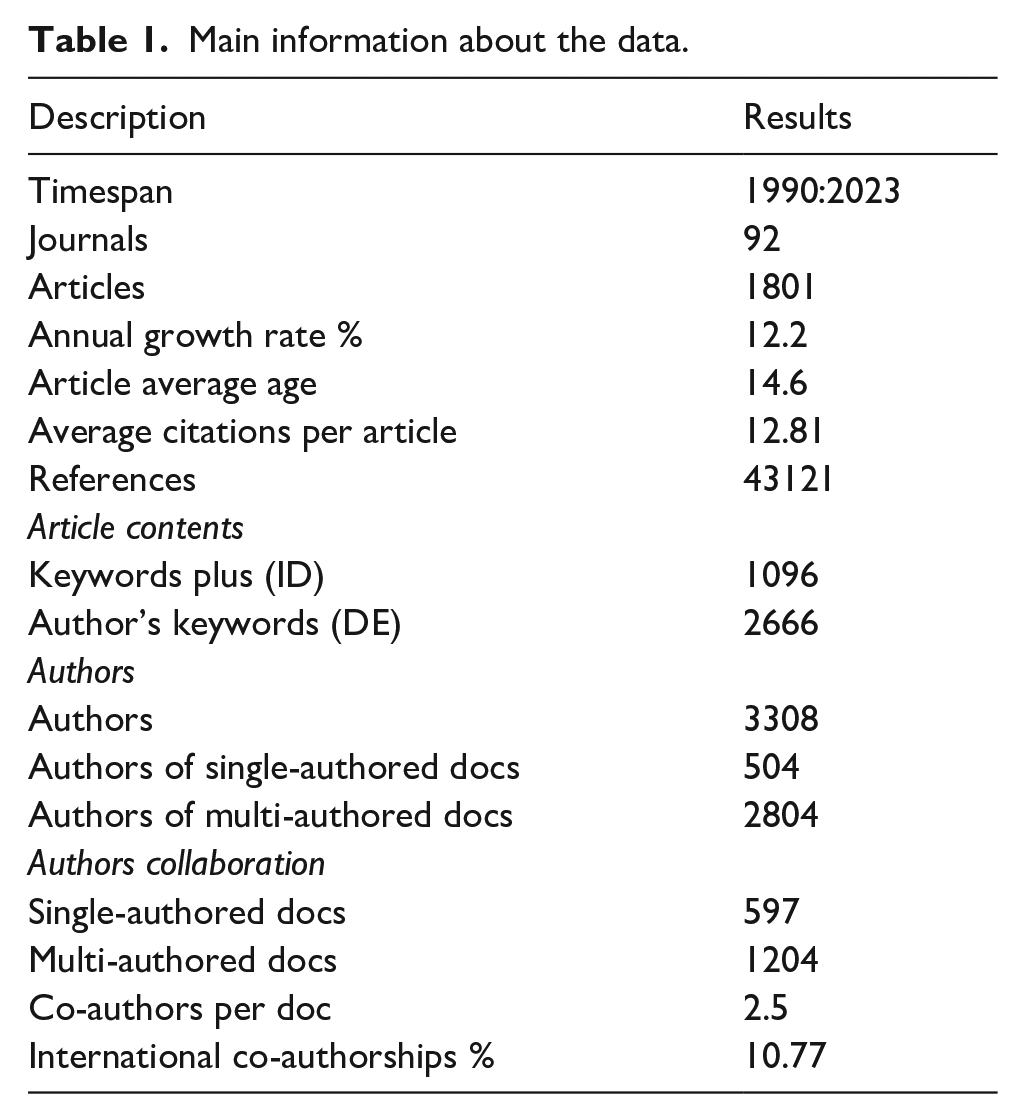
Table 1 represents the primary information regarding the dataset. The data spans from 1990 to 2023, encompassing 1801 documents sourced from 92 journals. This represents a substantial body of literature with an annual growth rate of 12.2%, indicating a continuously expanding field. The analysis reveals an average of 12.81 citations per document, indicating a moderate level of scholarly exchange within the field. Furthermore, 43,121 references are identified, highlighting the extensive body of knowledge that informs current research. An examination of document content reveals a diverse range of keywords. A higher number of author-assigned keywords (2,666) than database-assigned keywords (1,096) suggest a focus on emerging or domain-specific terminology. Authorship patterns indicate a prevalence of collaborative research, with an average of 2.5 co-authors per document. While a small number of single-authored documents exist (594), the data suggests a trend towards collaborative research efforts. Interestingly, 10.77% of documents include international co-authorship, highlighting an increasing level of global collaboration within the field.
Main information about the data.
Performance analysis
Publication trends and citation patterns
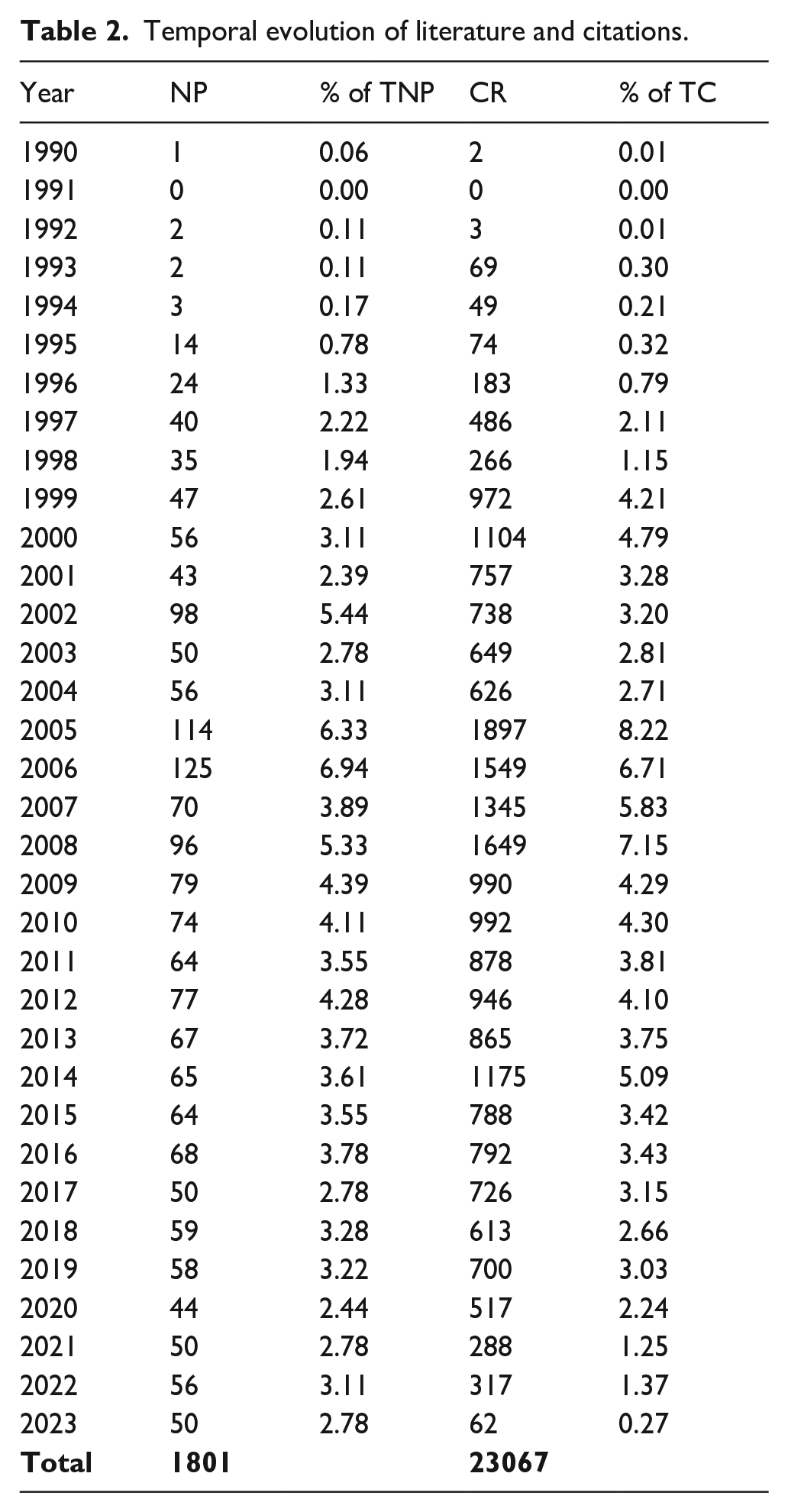
Table 2 represents the temporal evolution of literature and the citations within the domain of smart libraries from 1990 to 2023. The overall growth in publication output has steadily increased from 1 in 1990 to 50 in 2023, with an accumulated total of 1801 publications by 2023. Meanwhile, the citation pattern has also seen a considerable rise, totaling 23,067 citations over the same period. Notably, the average growth rate (AGR) of 12.2% reflects a dynamic expansion in scholarly activity related to smart libraries. Examining the data yearly, a substantial increase in publications and citations post-2000 indicates heightened interest and engagement in the subject domain. Citations per publication exhibit variability, with peaks and troughs suggesting varying impact and reception of research contributions. The findings underscore the evolution and maturation of smart library research, highlighting both the quantity and quality of academic output in this field over time. The analysis provides valuable insights into understanding the trajectory and impact of smart libraries within the broader scientometric landscape.
Temporal evolution of literature and citations.
Leading publishing countries
Table 3 highlights the top 10 countries associated with smart library research based on their publication and citation metrics. The United States, the United Kingdom, and China emerge as the top contributors in terms of publications and citations. Notably, China demonstrates the highest average citation per publication (ACPP) score among these countries, indicating a significant impact of its research output in the field of smart libraries. Countries like Taiwan, India, Spain, Germany, Canada, Brazil, and Pakistan also make significant contributions to smart library research, reflecting a diverse global participation in this academic domain.
Leading countries in smart library research.
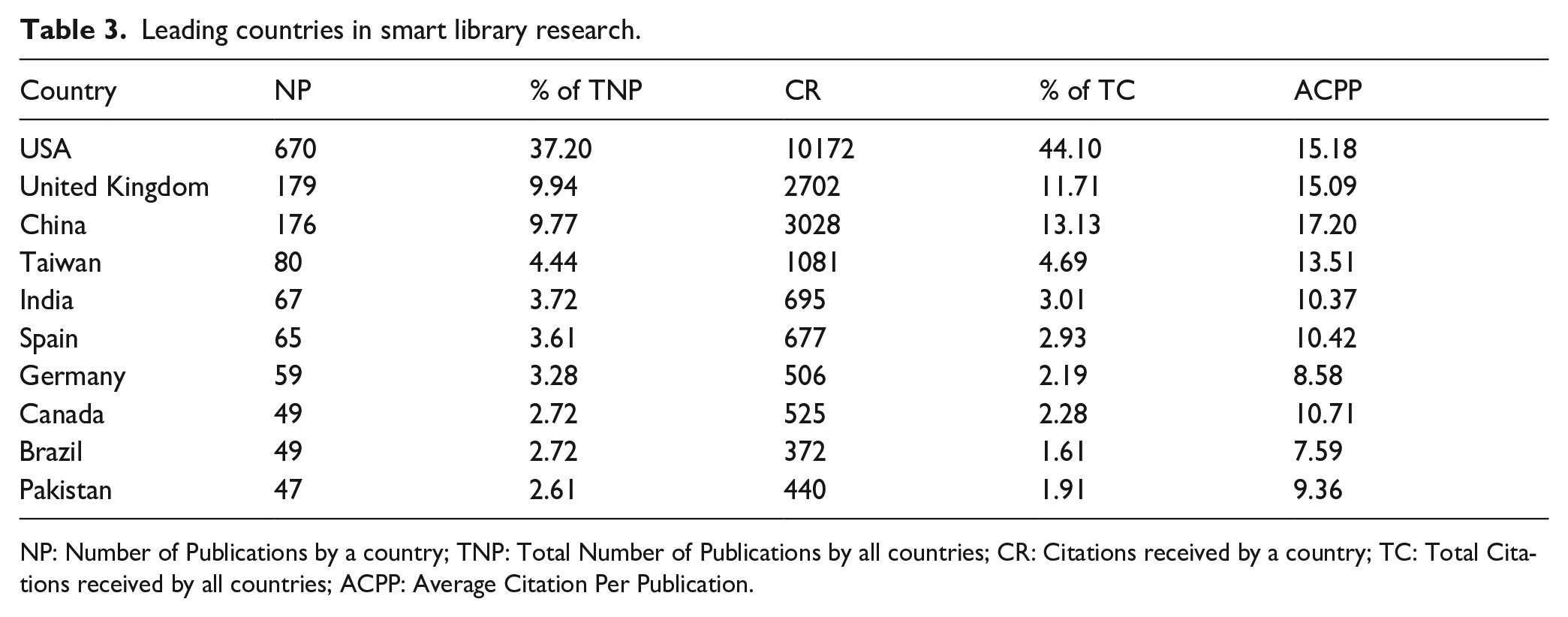
NP: Number of Publications by a country; TNP: Total Number of Publications by all countries; CR: Citations received by a country; TC: Total Citations received by all countries; ACPP: Average Citation Per Publication.
Authorship analysis
Distribution of authorship
Figure 1 shows the % share of single and multi-authored publications in the smart library research and the associated citations. It is observed that the multi-authorship pattern has dominated the scene with an overall share of 66.9% of the total output, receiving 71.6% of the total citation score. The single-authored publications contribute 33.1% of the literature with a citation share of 28.4%.
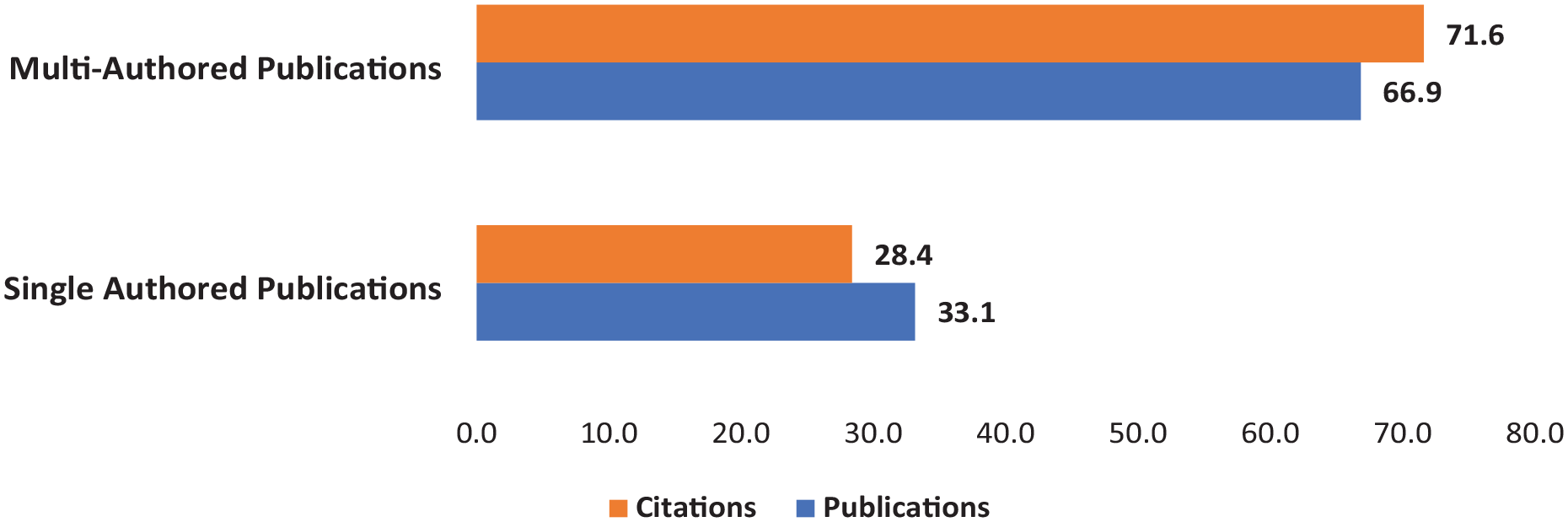
Authorship pattern of publications.
Figure 2 gives a graphical representation of the distribution of multi-authorships in the field of smart libraries. It is evident that the publications with two authors rank first, sharing 40.4% of the total multi-authored publications, followed by publications with three and four authors, with a total share of 28.1% and 15.9%, respectively. The highest share of citations among the multi-authored publications is shared by those having two authors (36.7% of total citations received by multi-authored publications). However, on an average, the highest share of citations is received by a publication having 54 authors, followed by eleven and eight authors. This indicates that the publications with more collaboration tend to have a more significant impact.
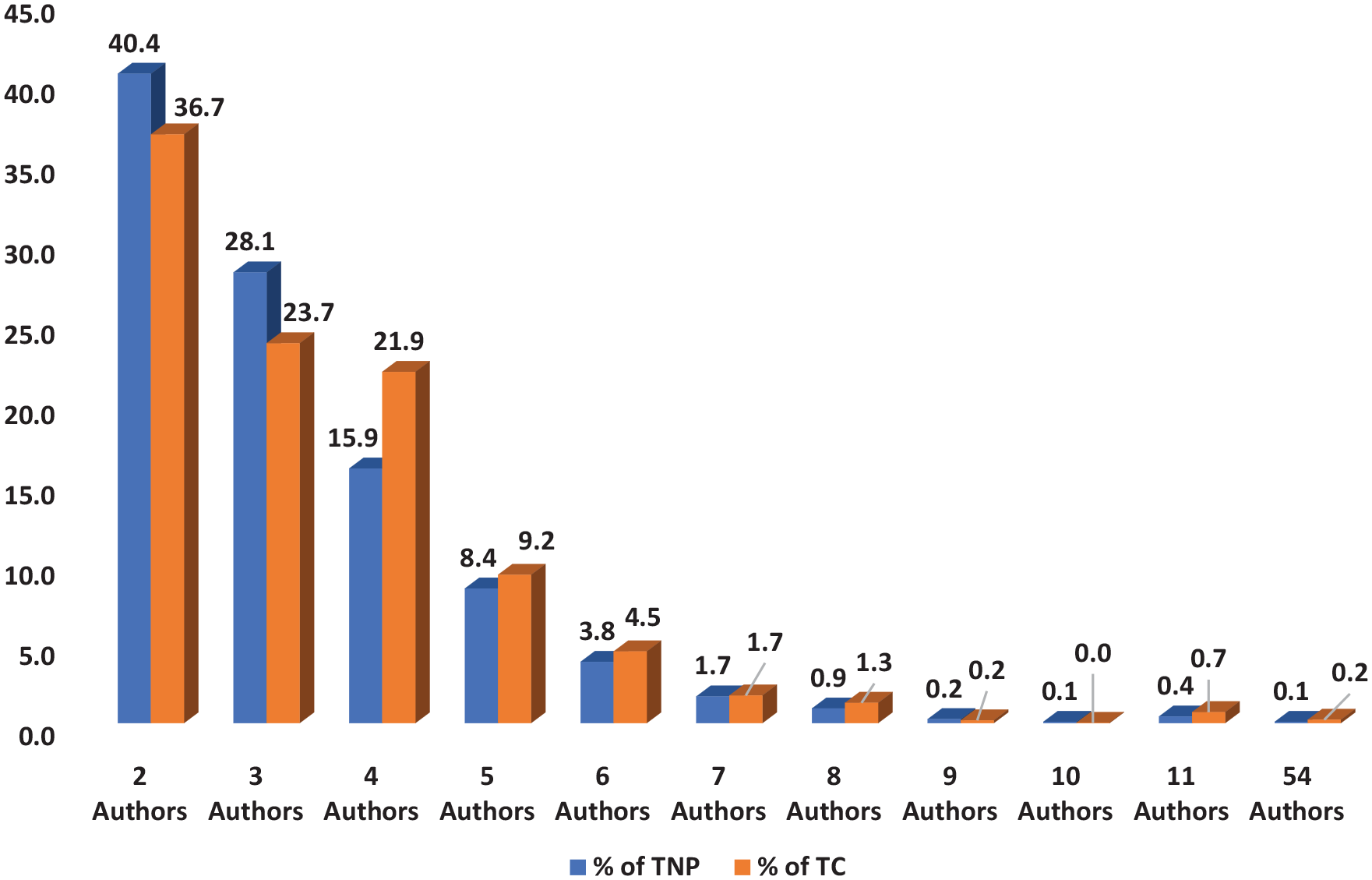
Distribution of multi-authorship pattern.
Author productivity
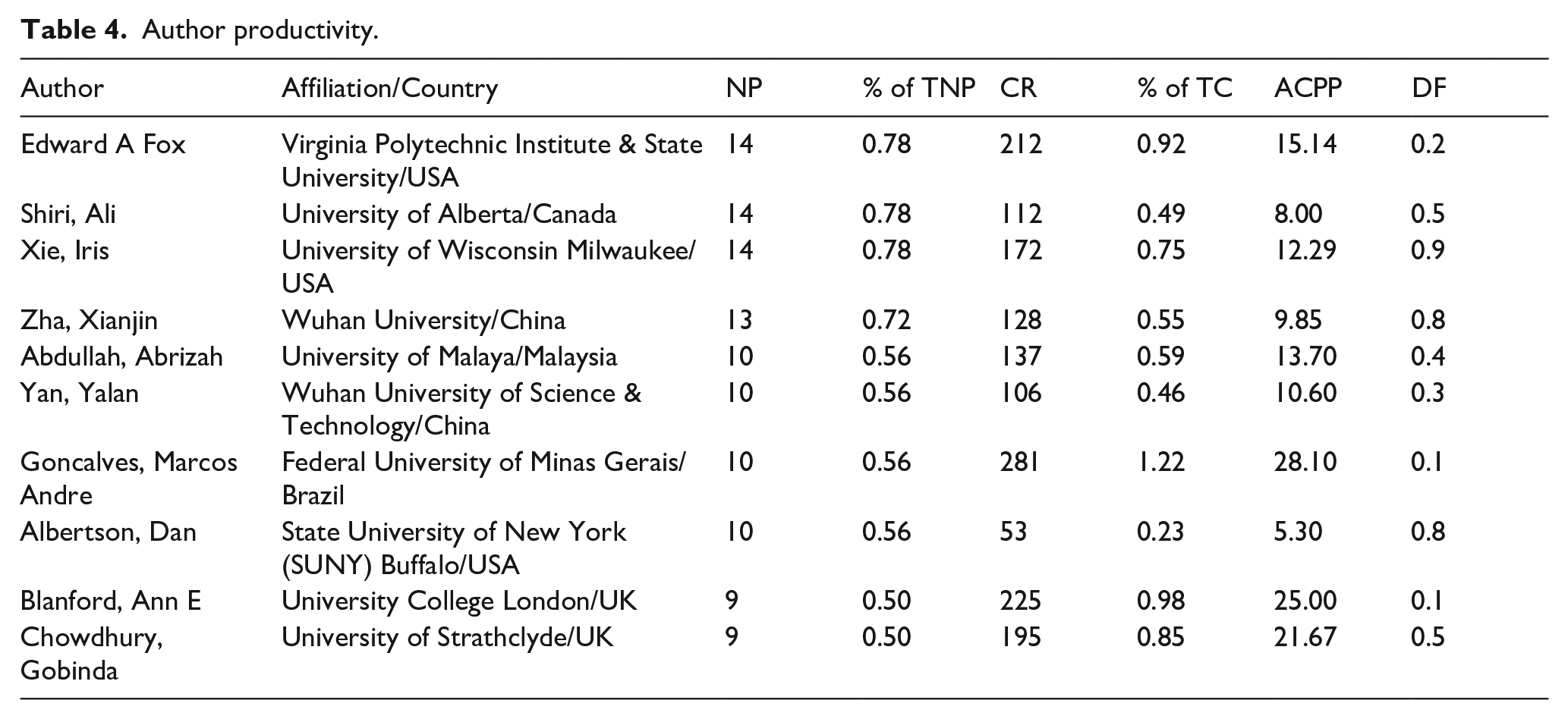
Table 4 represents the authors’ dominance in the domain of smart libraries by examining their publication count, citation share, and dominance factor. Regarding publication share, Professor Edward A Fox, affiliated with Virginia Polytechnic Institute and State University, USA; Professor Shiri Ali, from the University of Alberta, Canada; and Professor Xie Iris, from the University of Wisconsin, USA, stand ahead, each contributing 0.78% (14 publications) share towards the total output. However, Professor Goncalves Marcos Andre from the Federal University of Minas Gerais, Brazil, leads in terms of citations received, with a citation share of 1.22%. Notably, the author also has the highest average citation score of 28.10. The results in Table 3 also highlight the authors’ dominance (Dominance Factor) in academic publications by taking into account the number of publications in which they are designated as the first author among all multi-authored publications. It can be seen from the data in the table that the dominance factor ranges from 0.1 to 0.9, showing that the authors have varied degrees of dominance. Authors with higher dominance factors, such as Xie Iris and Zha Xianjin, have a higher proportion of their publications as first-authors, implying a significant individual contribution to research output. The analysis emphasizes the need to take into account not just the number of publications or citations but also the author’s participation in multi-authored works when evaluating their dominance and effect in academic publishing. It implies that a larger dominance factor could signify a greater individual contribution and influence in their field of study.
Author productivity.
Leading sources
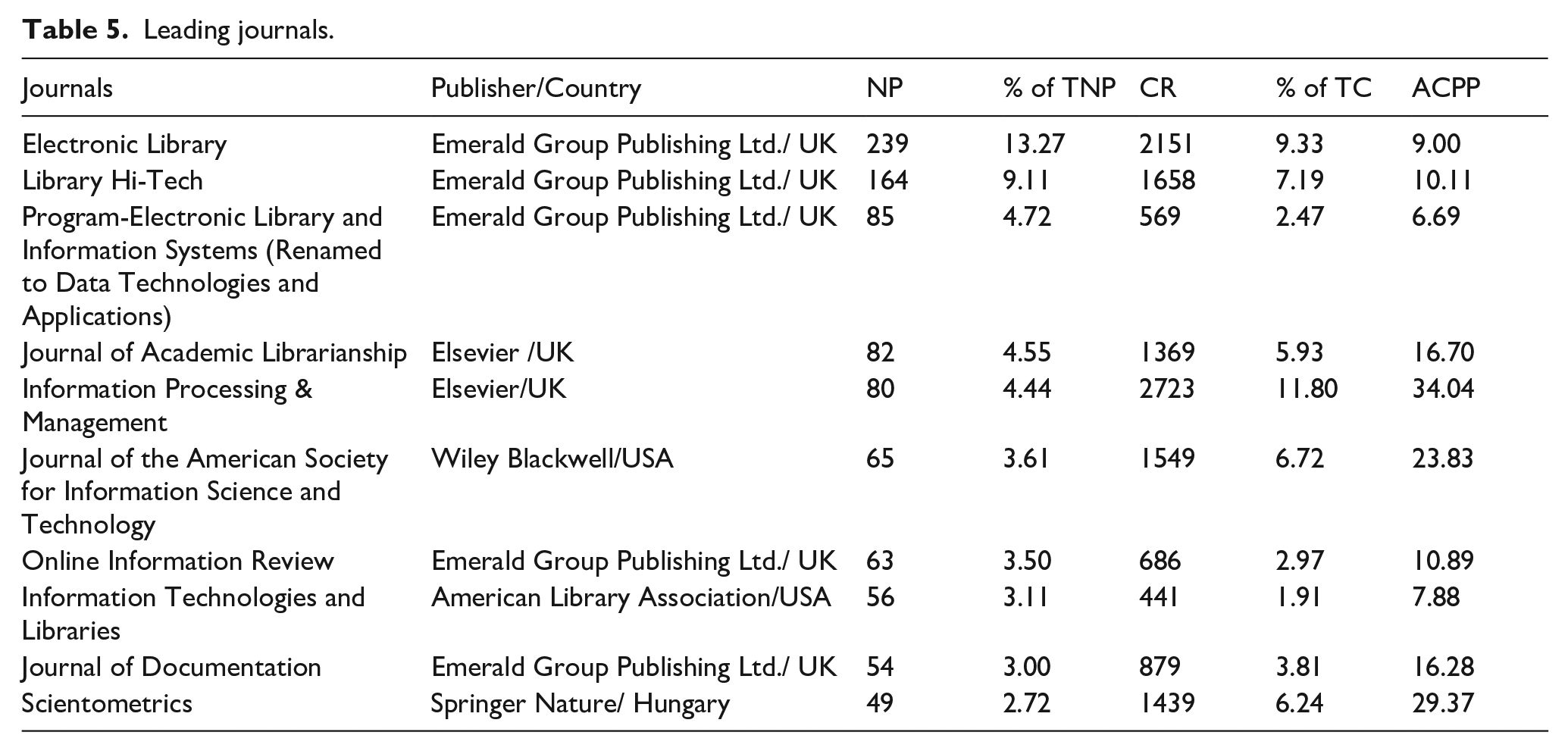
The leading sources, along with their citation metrics, in the domain of smart libraries are presented in Table 5. Notably, “The Electronic Library”, published by Emerald Group Publishing Ltd., stands at the forefront, with a publication share of 13.27% (239). Following closely is “Library Hi-Tech” from the same publisher, with a publication share of 9.11%. It can be noted that five of the top ten journals are published by the Emerald Group. However, regarding citations received by the top ten most productive journals, “Information Processing and Management,” published by Elsevier from the UK, is the front runner, with a citation share of 11.8%. Notably, the journal also leads in the average citation score (34.04). It is followed by “Scientometrics,” published by Springer from Hungary, with an average citation score of 29.37, despite being ranked the last among the list in terms of publications. Overall, the table shows varying levels of productivity and citation performance, providing valuable insights for researchers and scholars navigating the scholarly literature in the domain of smart library research.
Leading journals.
Institutional productivity
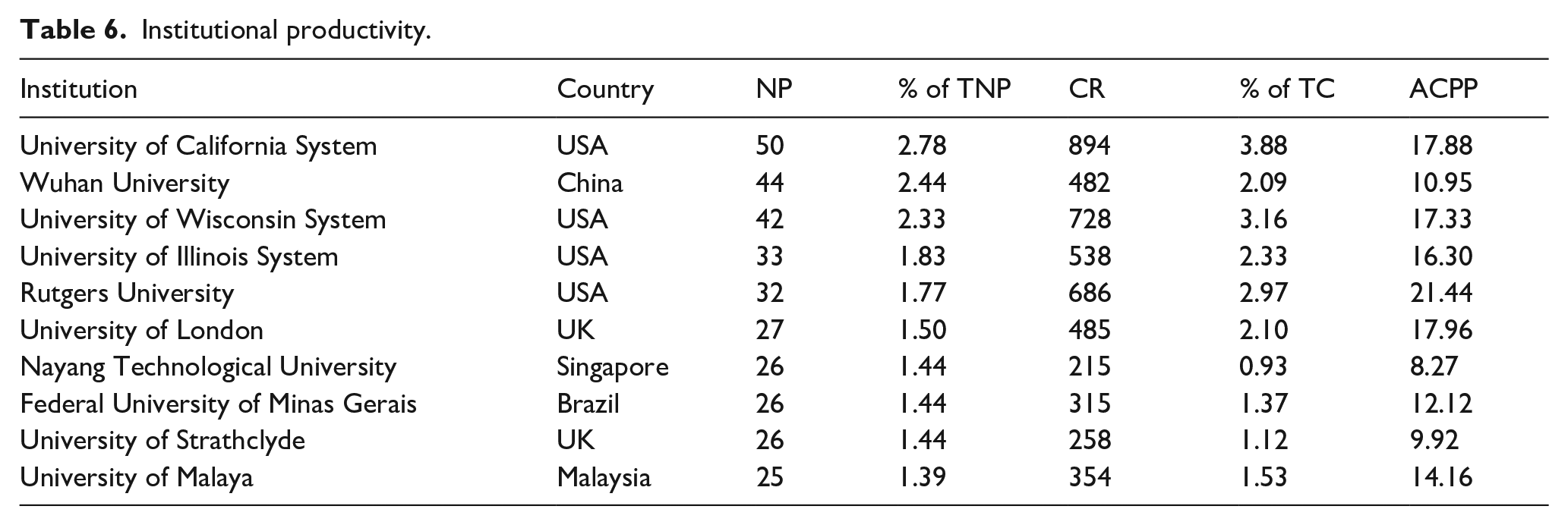
Table 6 provides insights into various academic institutions’ publication and citation metrics across different countries. The University of California System in the USA leads in terms of productivity, contributing 50 papers, which accounts for 2.78% of the total output. With a citation count of 894, representing 3.88% of the total citations, and an average citation per paper of 17.88, it demonstrates significant scholarly output and impact. Wuhan University in China follows closely with 44 papers, accounting for 2.44% of output and an ACPP of 10.95. Meanwhile, several other prominent institutions from the USA, including the University of Wisconsin System, the University of Illinois System, and Rutgers University, also feature prominently in terms of publication volume and citation impact. Additionally, universities from countries like the UK, Singapore, Brazil, and Malaysia exhibit noteworthy contributions to the academic literature in their respective fields, as evidenced by their publication and citation metrics. Overall, the data underscores the global distribution of research output and highlights the diverse contributions of academic institutions worldwide to scholarly knowledge and advancement.
Institutional productivity.
Country collaborations
Figure 3 presents a snapshot of the international collaboration dynamics, highlighting the extent of collaboration across various nations. The most notable collaboration emerges between the USA and China, with a substantial count of 32 publications, reflecting the significance of their relationship in scientific research. Following closely, the USA also demonstrates significant collaborations with the United Kingdom, Brazil, and Korea. China’s collaborations extend beyond its relationship with the USA, with notable collaborations with Pakistan and Australia, indicating its efforts to foster connections with countries across different continents. The relatively lower frequency of collaborations between some countries, such as China and Canada or Saudi Arabia, hints at potential areas for further collaborations.
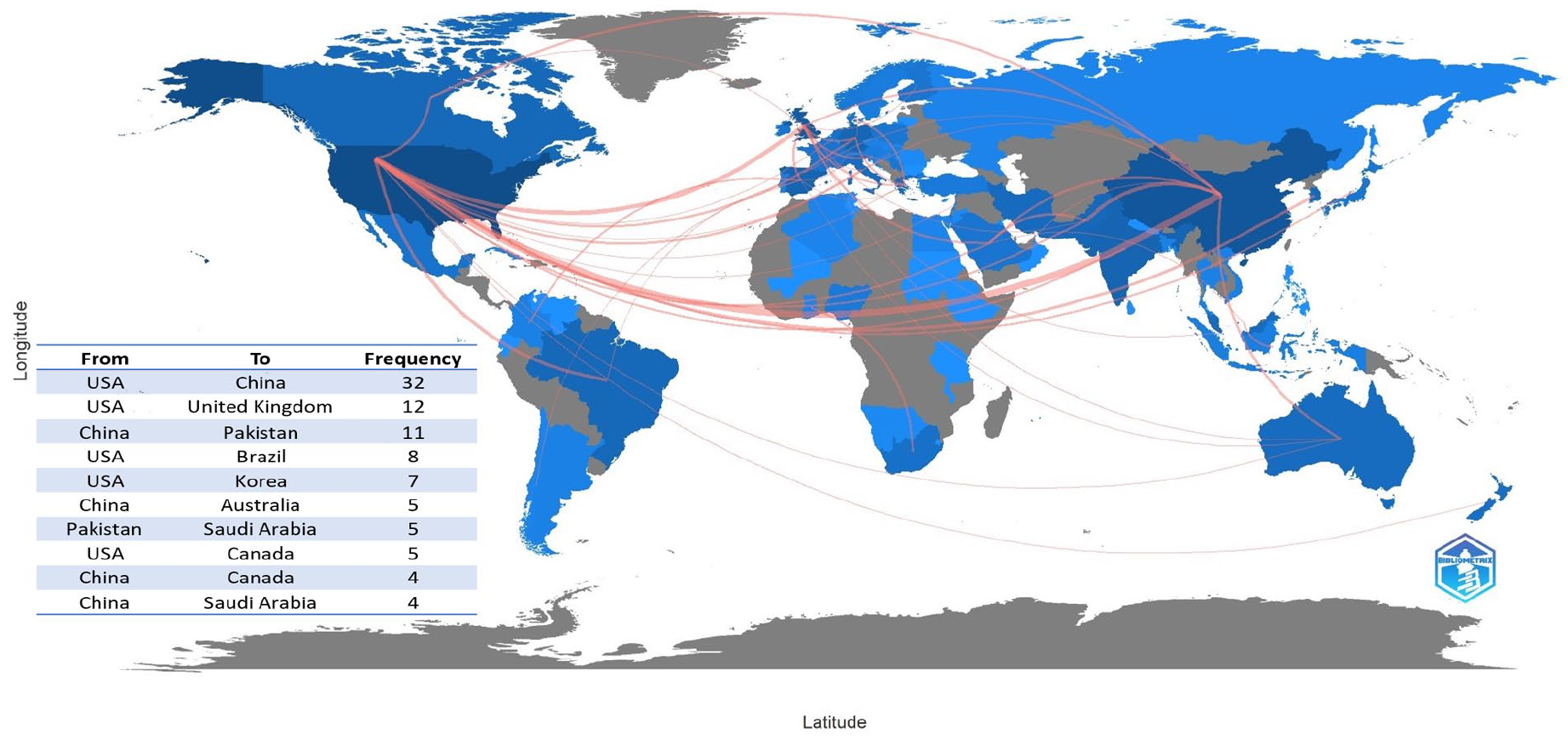
Country collaboration network.
Conceptual structure analysis
In conceptual structure analysis, the research domains have been studied using keyword, thematic and factorial analysis. For the purpose, the Biblioshiny app (web interface) of the Bibliometrix (R Package) has been used.
Keyword analysis (KeyWords Plus and Author Keywords)
A total of 1096 KeyWords Plus and 2666 Author Keywords were identified, out of which at least 147 KeyWords Plus occur five times and 97 occur ten times, while 157 Author Keywords occur five times, and 62 occur ten times. The most occurring KeyWord Plus is “digital libraries,” with an occurrence score of 97, followed by “information” (94) (Figure 4). At the same time, the most occurring Author Keyword is “digital library,” occurring 537 times, followed by “information retrieval,” occurring 75 times (Figure 5). This suggests a research landscape invested in how digital libraries are designed and utilized for information retrieval and access. Interestingly, among the KeyWords Plus, ‘model’ (76 occurrences), “web” (65), and ‘design’ (59) also rank high, indicating a significant emphasis on the structure and functionality of these digital libraries. Other keywords, such as “technology” (46) and “impact” (42), are also commonly used, suggesting a wider interest in the ways that technological breakthroughs are impacting digital libraries and the information landscape. Among the Author Keywords, the prominence of “academic libraries” (74, “user studies” (42), “university libraries” (32), and “user interfaces” (21) suggest an emphasis on user interaction with digital libraries in academics. The concern for long-term information accessibility is evident from terms like “archives” (17) and “digital preservation” (14 occurrences).
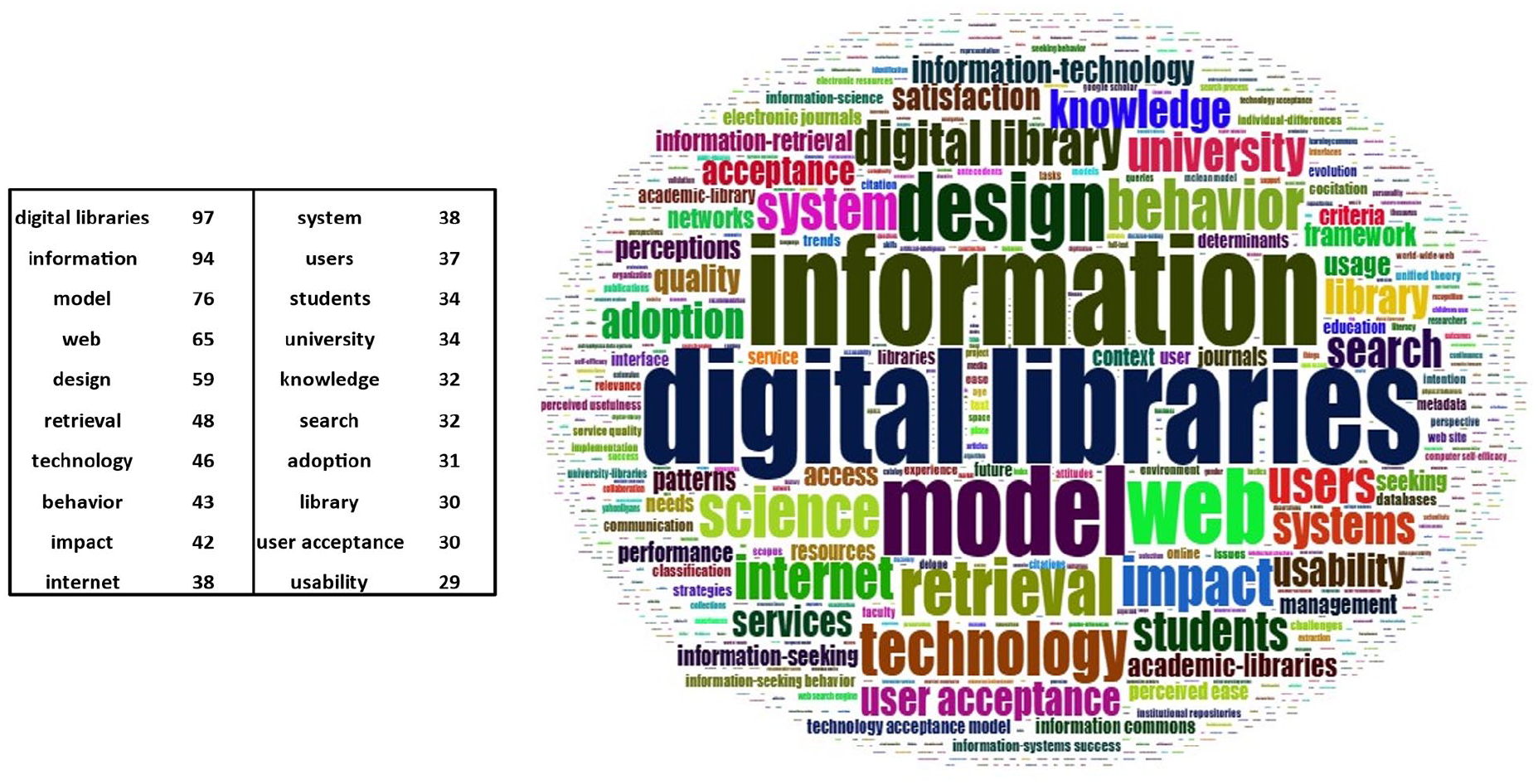
Keywords Plus Word Cloud (Figure Generated by Authors from Biblioshiny App).
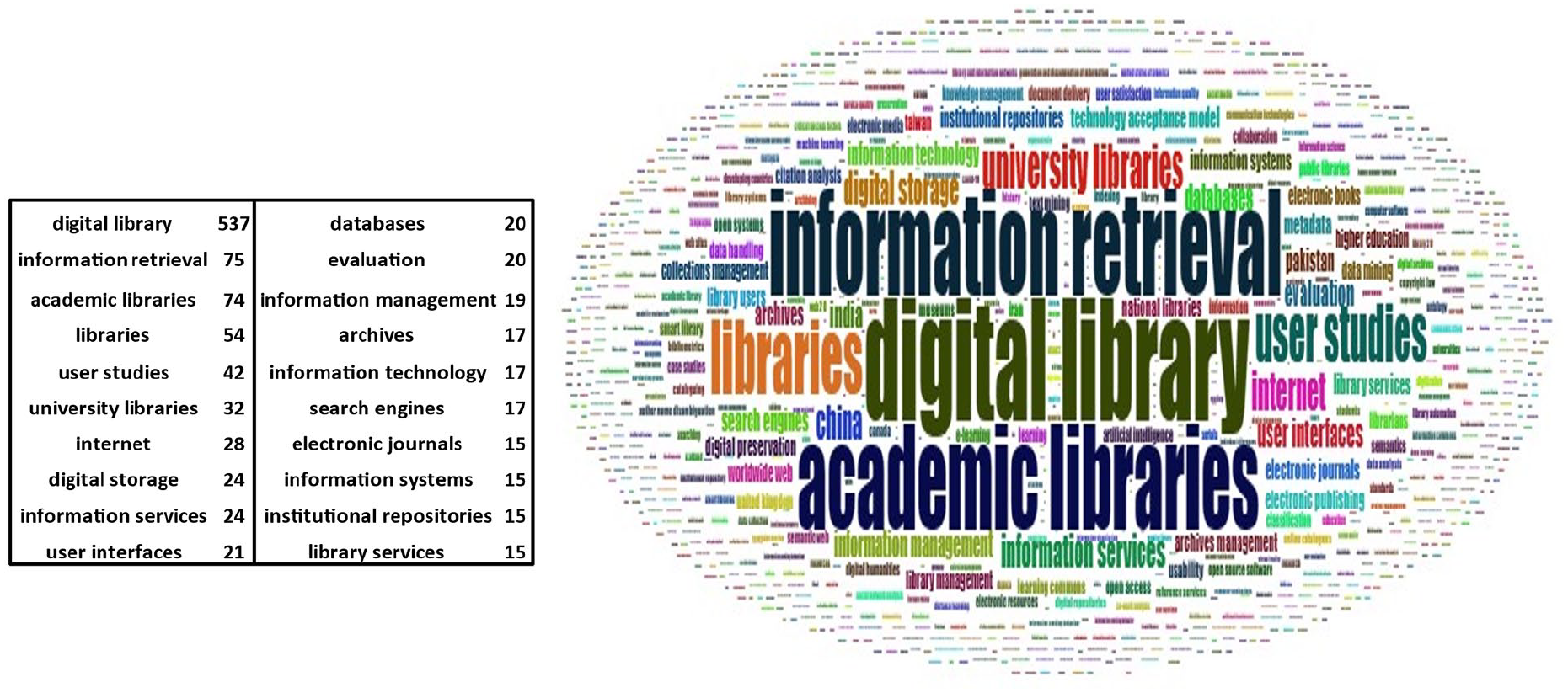
Author Keywords Word Cloud (Figure Generated by Authors from Biblioshiny App).
Temporal analysis of trend topics
The trend topic analysis provides valuable insights into the evolving landscape of research topics within the domain of smart libraries, as reflected by the frequency and temporal distribution of Author Keywords (Figure 6). The prominence of “digital libraries,” with a substantial occurrence score of 537, emerges as a focal point within the domain. Its trajectory suggests a gradual rise in scholarly interest from around 2007, peaking around 2010, and maintaining relevance until at least 2015. This trend underscores the growing significance of digital library initiatives in the context of smart libraries, facilitating enhanced access to vast repositories of information. Similarly, “information retrieval” and “user studies” command notable attention, with occurrence scores of 75 and 42, respectively. “Information retrieval” witnesses a steady ascent from approximately 2006, reaching its zenith by 2010, indicative of heightened efforts to optimize search and retrieval mechanisms within smart library environments. Conversely, “user studies” gains traction from around 2008, attaining peak visibility in scholarly discourse by 2013, reflecting an increased focus on understanding user behaviours and preferences in the context of smart library services. “Internet,” with an occurrence score of 28, traces a trajectory mirroring the exponential growth of online connectivity, rising in prominence from 2001, peaking around 2004, and plateauing by 2008, likely reflecting the maturation of internet-related research within smart library frameworks.
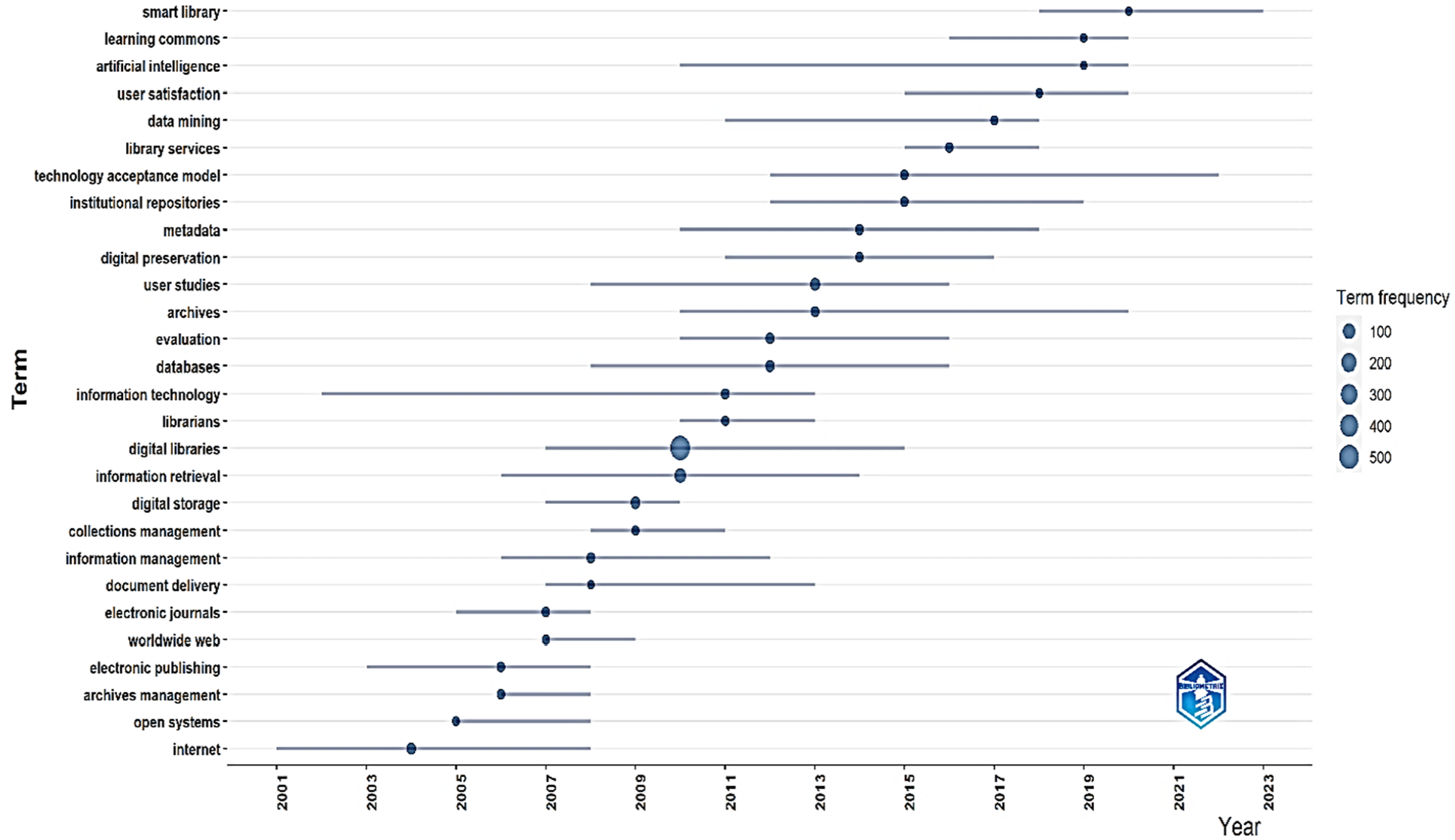
Trend topics.
Two of the relatively recent research interests include “artificial intelligence” and “learning commons,” with occurrence scores of 10 and 11, respectively. The “artificial intelligence” trajectory suggests a gradual but accelerating trend in scholarly interest, starting from around 2010 and peaking notably in 2019 and 2020. This trend underscores a growing recognition of AI’s transformative potential in reshaping library operations and services. Similarly, “learning commons” gains traction in 2016 and peaking around 2019 and 2020. The increasing focus on learning commons within smart library research reflects a growing emphasis on creating inclusive and interactive learning environments that empower patrons to engage in collaborative learning, research, and creativity.
Thematic analysis
The thematic analysis identifies the set of themes and their evolution across different stages of time. Its purpose is to gain insight into the field’s current status and what its future sustainability holds. The analysis provides a rich landscape of the smart libraries’ research domain, as evidenced by the centrality measures applied to various terms within the cluster. Centrality measures, such as betweenness centrality, closeness centrality, and PageRank centrality, serve as quantitative indicators of the prominence and influence of specific nodes within a network. From Figure 7, words with high centrality measures, such as “digital libraries,” “information retrieval,” and “user studies,” can be identified as motor themes within the cluster. These terms serve as central nodes that connect various other words and themes, highlighting their significance in shaping the discourse and research directions in smart libraries. On the other hand, words like “internet,” “user interfaces,” “databases,” “evaluation,” “archives,” and “metadata” can be considered as other themes that support and complement the motor themes in the thematic map. While these terms may not exhibit the highest centrality measures, they play crucial roles in enriching the network of concepts within the digital libraries cluster, contributing to a more comprehensive understanding of the field.
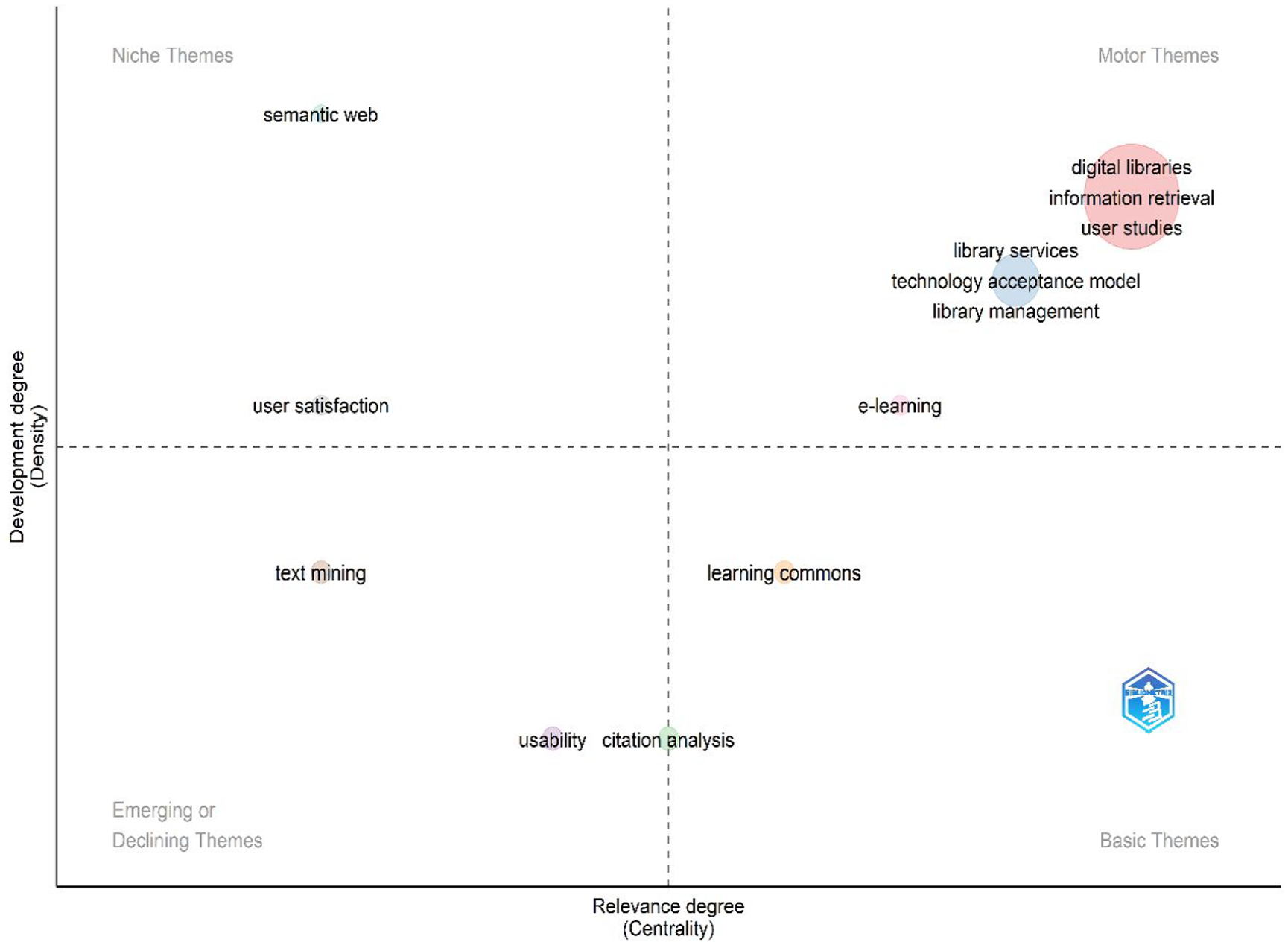
Thematic analysis (Figure Generated by Authors from Biblioshiny App).
Factorial analysis
Factorial Analysis is a statistical procedure for identifying the smallest number of factors that can represent the relationship between several variables (Iman et al., 2023). In the present study, factorial analysis has been performed using Multiple Correspondence (MC), a statistical technique for analyzing the relationship between multiple categorical variables in two-dimensional space. The graph in Figure 8 displays two axes, Dim. 1 (61.8%) and Dim. 2 (12.35%), constituting 74.2% of the total variation in the original data. This indicates that the two-dimensional space created by the MC analysis effectively captures most of the important relationships between the words in the data set. The remaining unexplained variance (around 25.8%) might be due to random noise or minor variations not captured by the first two dimensions. The analysis produces two clusters: a red cluster containing keywords like digital libraries, academic libraries, design, retrieval, model, usability, behavior, etc., and a blue cluster containing keywords like technology, internet, services, quality, etc. These keywords are treated as categorical variables, and the dimensions (dim 1 and dim 2) represent the principal components derived from the MC analysis.
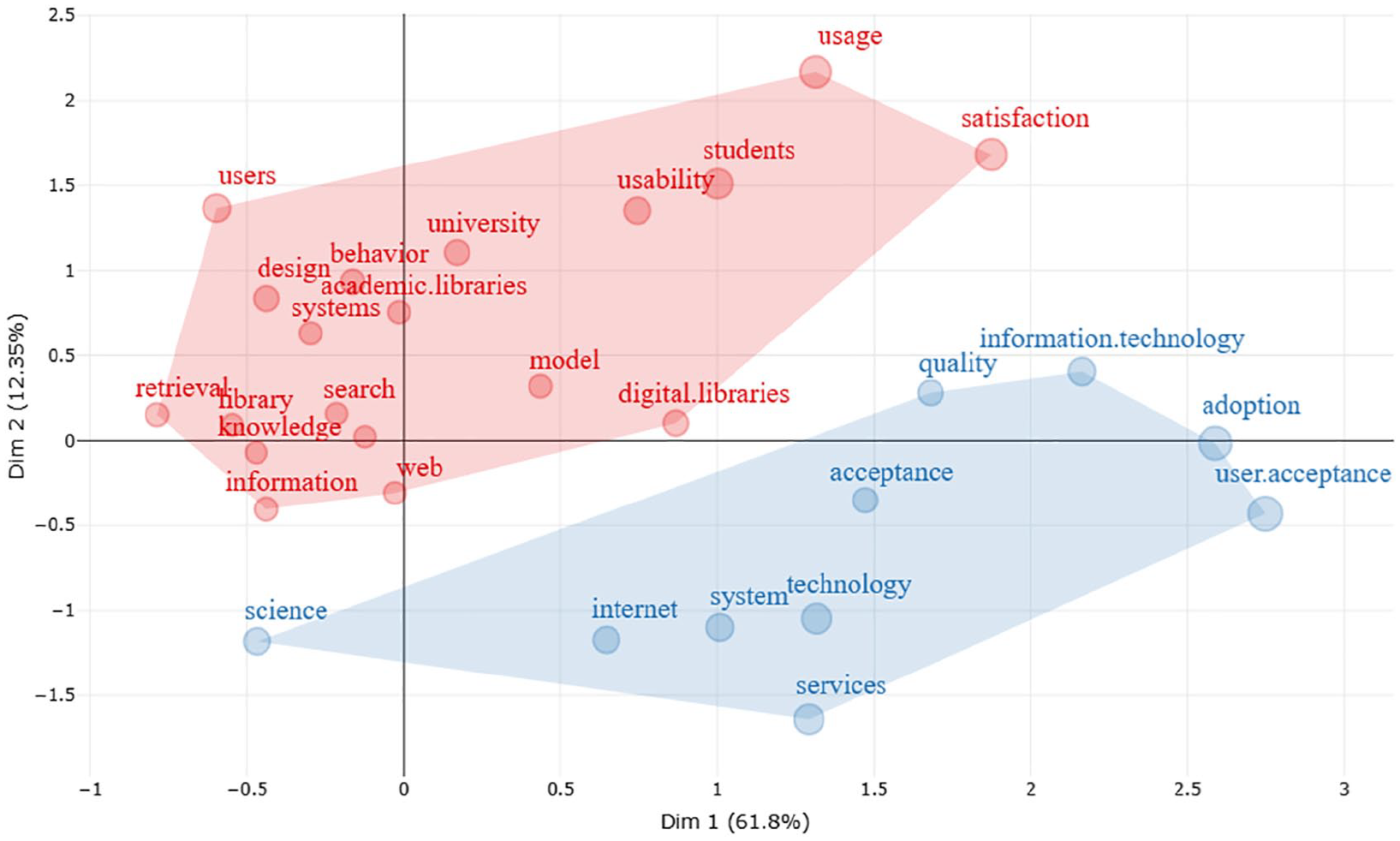
Conceptual structure map using multiple correspondence method (Figure Generated by Authors from Biblioshiny App).
Interpretation of Dim. 1 and Dim. 2
Words with higher positive values on Dim.1 are more strongly associated with each other within the dataset. This suggests that these words tend to co-occur or have similar characteristics. Similarly, words with negative or lower values on Dim. 1 tend to be less related to the words with positive or higher values. Similarly to Dim. 1, words with higher positive values on Dim.2 are associated with each other in a specific way within the dataset. This dimension captures a different aspect of variation compared to Dim.1. The clusters or grouping of related words can be identified by analyzing the positions of words along Dim.1 and Dim.2. Words that are close together on the graph (in terms of their Dim.1 and Dim.2 values) share common features or tend to occur together within the dataset.
Interpretation of clusters
Cluster 1: User Interaction and Academic Focus
“Digital Libraries,” positioned with a high positive value in Dim.1 (0.87) and a moderate value in Dim.2 (0.1), indicate their significance in the smart library context. “Information,” with negative values in both dimensions, may represent a foundational concept but not a distinguishing feature within this cluster. “Model” shows positive values in both dimensions (0.44, 0.32), suggesting its relevance and positioning within this cluster. “Web,” “design,” “retrieval,” “behavior,” “impact,” “users,” “students,” “university,” “systems,” “knowledge,” “search,” “library,” “academic libraries,” “usability,” “satisfaction,” “usage,” exhibit varying positions on Dim.1 and Dim.2, reflecting their diverse roles and importance within the user interaction and academic focus of smart libraries.
Cluster 2: Technological aspects and quality
“Technology,” “science,” “internet,” “system,” “adoption,” “user acceptance,” “services,” “acceptance,” “quality,” and “information technology” exhibit high positive values in Dim.1 and mostly negative values in Dim.2, indicating their association with the technological aspects, adoption, and quality within smart libraries.
The clustering of words suggests distinct thematic areas within the domain of smart libraries, with each cluster representing different aspects, ranging from digital technologies and systems to user-centric studies on satisfaction and usability in smart library environments.
Discussion
The analysis of smart library research landscape from 1990 to 2023 reveals several significant trends and patterns that shed light on the evaluation and dynamics in this field. The temporal analysis demonstrates a notable growth trajectory of publications and citations over the years, with an annual publication growth rate of 12.2%. This growth rate highlights the expanding research interest in the smart library domain. Notably, key countries in this domain include the USA, the UK, and China, which collectively drive advancements in smart library initiatives and scholarly exchange. China, in particular, demonstrates significant impact with a high average citation per publication.
In terms of authorship patterns, the dominance of certain prolific authors like Professor Edward A Fox and Professor Shiri Ali underscores their significant contributions to the field. Notably, Professor Goncalves Marcos Andre from the Federal University of Minas Gerais, Brazil, stands out for his impactful research with a high average citation score, suggesting the influence of his work within the field. The examination of leading journals and institutional productivity further illuminates the diverse publishing landscape and scholarly networks driving research in smart libraries. Journals like “Electronic Library” and “Library Hi-Tech” from Emerald Group Publishing Ltd. emerge as key platforms for disseminating research, while institutions like the University of California System and Wuhan University demonstrate strong publication volume and citation impact.
The conceptual structure analysis reveals insightful trends in keyword occurrence and thematic evolution. The thematic analysis underscores the pivotal role of concepts such as “digital libraries,” “information retrieval,” and “user studies” within smart library research, highlighting evolving trends in technology adoption and user-centric design. Factorial analysis using multiple correspondence delineates distinct clusters of thematic areas, showcasing the interplay between user interaction and academic focus versus technological aspects and quality within smart libraries.
Conclusion
The results of the study offer an in-depth comprehension of the changing dynamics of smart library research by highlighting key trends, contributors, and thematic directions shaping the field. The analysis underscores the importance of collaborative endeavors, global partnerships, and interdisciplinary approaches in advancing smart library technologies and enhancing scholarly exchange. The future of smart library research holds promising avenues for exploration and innovation. Researchers can delve deeper into emerging topics such as artificial intelligence (AI) and learning commons, which are gaining popularity within the scholarly discourse. AI’s transformative potential in reshaping library operations and services present exciting opportunities for advancing smart library technologies. Additionally, a sustained emphasis on user-centric research, digital preservation, and long-term information accessibility will augment and diversify smart libraries. As the discipline evolves, multi-disciplinary studies, international collaborations and cooperative efforts will be essential for the advancement of the field. The future of smart libraries, by using emerging technologies and responding to changing user requirements, is poised to significantly transform information management and knowledge dissemination.
Footnotes
Declaration of conflicting interests
The author(s) declared no potential conflicts of interest with respect to the research, authorship, and/or publication of this article.
Funding
The author(s) received no financial support for the research, authorship, and/or publication of this article.
