







Abstract
This study examines how Greek librarians understand, engage with, and perceive Artificial Intelligence (AI) technologies. Using a cross-sectional online survey, data were collected on AI-related knowledge and familiarity, personal and professional use, perceived impact across operational domains, challenges to adoption, institutional and individual readiness, and the provision of AI literacy instruction. Respondents reported moderate to good overall understanding, with higher familiarity and use in personal contexts than in workplace settings. Common personal applications included text generation, editing, translation, and information seeking, while professional use focussed on assisting user queries, suggesting search terms, plagiarism detection, and developing instructional materials. Adoption of chatbots and AI-supported cataloguing remained limited. Perceived impact was strongest in areas related to user and staff training, as well as frontline services. Most challenges were rated above the midpoint—particularly infrastructure limitations, funding constraints, staff training needs, and ethical or legal concerns—while fear of job loss was relatively low. AI literacy instruction was infrequent across institutions. Comparisons by library type revealed no significant differences in perceived impact or challenges, though small but significant differences emerged in readiness and professional use. Based on these findings, the authors propose targeted actions to support the successful integration of AI in library services.
Introduction
Artificial Intelligence (AI) is rapidly changing the library landscape, with scholars and practitioners exploring both its possibilities and its constraints. The broad availability of tools like ChatGPT has created new avenues for experimentation while highlighting the methodological and ethical issues that must be tackled (Formanek, 2025). A growing body of literature emphasises the impact of AI on almost every aspect of library work (Das and Islam, 2021; Mannheimer et al., 2024; Zhu et al., 2024). Although many studies focus on sociocultural issues and theoretical perspectives, increasing attention is being given to the practical applications of AI and its potential to enhance library services and operations (Vrindha and Syamili, 2025). Metadata and knowledge organisation have been significant areas for experimentation, as cataloguing represents one of the most resource-demanding tasks in libraries (Asula et al., 2021; Chou and Chu, 2022). Experiments with AI tools demonstrate their ability to create MARC records and suggest subject headings faster than human specialists; however, they often produce results of lower quality, and they have difficulties with complex, hierarchical vocabularies such as LCSH, underscoring the ongoing necessity for human monitoring and quality control (Asula et al., 2021; Brzustowicz, 2023; Chou and Chu, 2022; Chow et al., 2024). In user services, AI-powered tools enhance accessibility and alleviate routine tasks, yet they also present concerns regarding reliability, privacy, and maintenance. For instance, chatbots provide 24/7 assistance for common enquiries and help navigate electronic resources, though challenges persist in terms of accuracy, maintenance, and managing user expectations (Li and Coates, 2025; Panda and Chakravarty, 2022; Rodriguez and Mune, 2022; Yan et al., 2023). Recommender systems analyse patterns in user behaviour, personalise the discovery process and inform decisions related to collections development (Hu and Zhang, 2025; Xiao and Gao, 2020), but they raise privacy concerns and possible biases in machine-learning algorithms (Ekstrand et al., 2025; Gulsoy et al., 2023). Assistive technologies, such as speech translation, text recognition, and hands-free control, promote accessibility and inclusivity while requiring robust protective measures (Chauhan, 2024).
Although AI has begun to change libraries, the pattern of this transformation remains unclear. Some libraries are actively using AI technologies, others are exploring possible applications or considering implementation, while some have little interest in adopting them (Huang and Dong, 2024; Lo and Hudson Vitale, 2023). Effective and sustainable implementation is not solely a matter of technology. Studies repeatedly stress the importance of ethical standards, clear policies, risk management strategies and continuous professional development to equip staff with AI-related skills (Monyela and Tella, 2024; Moulaison-Sandy and Coble, 2024; Oyighan et al., 2024; Sussmeier and Henry, 2025). Prior work also indicates that librarians’ knowledge, perceptions, attitudes and expectations significantly influence the integration of AI in library services (Andrews et al., 2021; Juego and Masalinto, 2025; Yakubu et al., 2023)
Thus, and in response to Cox’s (2023) call for more empirical research on the role of AI in libraries, the aim of the present study is to investigate the perspectives of AI within libraries among information professionals in Greece. Despite the strong interest of the Greek library community in the potential and effects of AI in libraries—reflected by the hosting of recent conferences on the topic—there is a lack of empirical evidence regarding the practices and opinions of librarians. Addressing this gap, the present study surveys Greek library professionals to map current patterns of AI use and document perceptions and expectations. Gaining a deeper insight into librarians’ views of AI could be beneficial for implementation strategies and educational initiatives.
Literature review
Research on librarians’ knowledge, views, and feelings about AI offers insights into the way they comprehend and interact with it. Overall, the literature suggests an uneven and fragmented understanding of AI among librarians. According to some studies, self-assessed knowledge ranges from moderate to high (Lo, 2024; Lund et al., 2020). Many practitioners associate AI with Natural Language Processing (NLP), machine learning, or intelligent machines that can think and behave like people (Begum and Elahi, 2025; Harisanty et al., 2024; Yoon et al., 2022).
Nevertheless, complex concepts, like deep learning and generative adversarial networks, are less understood (Lo, 2024). Librarians often lack a shared understanding of what defines AI (Harisanty et al., 2024), and they have limited confidence in their ability to explain basic concepts or evaluate specific tools (Alam et al., 2024). Moreover, there is evidence that many librarians failed to identify AI tools as components of their services, despite these technologies being integrated into library systems and processes for some time (Hervieux and Wheatley, 2021)
Irrespective of their level of knowledge, librarians tend to hold positive views of AI and increasingly see it as a driver of innovation. They believe that it provides numerous advantages for both library personnel and patrons. They view reference services as the area most likely to benefit from AI (Abayomi et al., 2021; Begum and Elahi, 2025; Yoon et al., 2022).
There is a consensus that a key advantage of AI is its ability to enhance the overall user experience. AI-based search technologies, such as NLP and machine learning, enable more efficient and precise retrieval of information (Alam et al., 2024; Kisilowska-Szurmińska, 2025; Lund et al., 2020; Subaveerapandiyan and Gozali, 2024). In addition, ChatGPT is recognised for its ability to help users in performing complex database searches and speeding up the retrieval of information (Patra et al., 2025; Rahman and Islam, 2024). The literature also emphasises the value of personalisation: some librarians are excited about 24/7 support through chatbots and virtual assistants (de Leon et al., 2024; Kaushal and Yadav, 2022), while others point out that one of AI’s major advantages is customised user support (Eiriemiokhale and Sulyman, 2023; Shahzad et al., 2024; Yang et al., 2024).
Another key area of perceived benefit is operational efficiency and automation. Librarians consistently identify AI as very effective for routine and repetitive tasks, such as circulation and shelving, allowing staff to focus on more specialised and challenging responsibilities (Abayomi et al., 2021; Alam et al., 2024; Bøyum and Khosrowjerdi, 2025; Eiriemiokhale and Sulyman, 2023; Harisanty et al., 2024; Lulu-Pokubo and Okwu, 2025; Lund et al., 2020; Rahman and Islam, 2024; Yoon et al., 2022). It can also streamline technical services workflows, particularly by increasing cataloguing accuracy and efficiency and simplifying the creation of metadata (Begum and Elahi, 2025.; Bøyum and Khosrowjerdi, 2025; Kisilowska-Szurmińska, 2025; Lulu-Pokubo and Okwu, 2025; Lund et al., 2020). Beyond routine operations, librarians recognise AI as a useful tool for library administration, decision-making, and collection management. According to several studies, it is valued for advanced data analysis, which helps libraries to understand usage trends and make evidence-based decisions (Alam et al., 2024; Yoon et al., 2022). AI applications are also acknowledged as beneficial in managing human resources and physical infrastructure, thereby enhancing efficiency and supporting strategic planning (Subaveerapandiyan and Gozali, 2024).
Professional development represents an additional domain in which AI is considered beneficial. Yang et al. (2024) found that subject librarians appreciated AI as a valuable aid in staying updated on recent developments and research findings, which in turn strengthened their expertise and confidence. This implies that in addition to changing library operations and services, AI is also facilitating librarians’ ongoing learning and growth.
Alongside optimism, librarians raise several ethical, organisational and professional considerations related to the adoption of AI. Ethical issues remain a dominant concern, with librarians frequently citing risks such as bias, discrimination, lack of transparency, privacy violations, data security, and threats to intellectual freedom (Bøyum and Khosrowjerdi, 2025; de Leon et al., 2024; Grote et al., 2024; Hlatshwako and Tsabedze, 2024; Kisilowska-Szurmińska, 2025; Rahman and Islam, 2024; Subaveerapandiyan and Gozali, 2024).
Another challenge is the quality, accuracy and reliability of automatically generated content (Bøyum and Khosrowjerdi, 2025; Lo, 2024). As Cox et al. (2019) caution, there is a danger that “robo-content” may be incorporated into library collections or discovery systems, undermining the library’s role as a source of quality information. Fears about job security and changing job roles also arise, though their intensity varies across contexts (de Leon et al., 2024; Kaushal and Yadav, 2022; Kisilowska-Szurmińska, 2025; Lulu-Pokubo and Okwu, 2025; Lund et al., 2020; Patra et al., 2025; Subaveerapandiyan and Gozali, 2024).
At the institutional level, challenges include unclear policies, insufficient infrastructure, and lack of support (Begum and Elahi, 2025; Bøyum and Khosrowjerdi, 2025; Hussain and Khan, 2025). Adoption is further impeded by financial barriers like inadequate budgets, high costs, and energy demands (Huang and Dong, 2024; Kalbande et al., 2024; Kaushal and Yadav, 2022). Professional obstacles, such as low AI literacy and resistance to change, are also significant (Alam et al., 2024; Cox et al., 2019). Finally, concerns around vendor dependency and marketisation raise questions about autonomy and credibility (Cox et al., 2019; Grote et al., 2024).
Several studies have examined the factors influencing librarians’ intentions to adopt AI. Attitude emerges as the central driver of readiness and intention: those who regard AI as advantageous are more inclined to integrate it into their professional activities (Andrews et al., 2021; Juego and Masalinto, 2025; Lund et al., 2020; Yakubu et al., 2023).
Attitude is shaped by antecedent perceptions of performance expectancy—belief that AI improves job performance, ease of use, and interactivity (Andrews et al., 2021; Hussain and Khan, 2025; Yang et al., 2024). Facilitating conditions, such as access to technical resources, training and reliable infrastructure, add weight, reinforcing intentions to use (Fang et al., 2025). These results suggest that the acceptance of AI is complex and depends on a dynamic interplay between personal beliefs and institutional resources. Therefore, efforts to encourage AI use in libraries should focus equally on cultivating positive perceptions and creating the practical conditions that empower librarians to implement them.
The literature shows a clear trajectory from moderate knowledge and limited hands-on experience to growing confidence in AI’s potential to enhance library services. AI is viewed less as a threat and more as a tool that can complement professional expertise, offering efficiency gains and improved user experience. At the same time, professionals are aware of the challenges: concerns about content quality, privacy, bias, technical reliability, costs and infrastructure persist. They emphasise that successful adoption will require not only robust technology but also careful attention to ethics, training and organisational readiness.
Aim and research questions
The aim of the present study is to explore Greek librarians’ understanding, use and perceptions of AI. In this context, the study seeks to address the following research questions:
To what extent do librarians understand the concept of AI, and how familiar are they with using it?
How do librarians perceive their readiness, the barriers to adoption, and the expected impact of AI on library operations?
Do librarians’ perceptions (readiness, impact, challenges) and reported AI use differ by library type?
To what extent do libraries offer AI user training, and which topics are covered?
Methodology
This study employed a quantitative, descriptive research design based on an online questionnaire, which was distributed in May 2025 via a national library listserv. The survey was addressed to all categories of library personnel in Greece, regardless of library type or position, to capture perspectives across a diverse range of libraries. Before completing the questionnaire, each participant was informed about the purpose of the study, the voluntary nature of participation, and the anonymity of their responses, and provided informed consent prior to proceeding with the survey.
The instrument consisted of closed-ended questions, and it was organised into the following sections:
Demographic information.
Familiarity with AI.
This section of the questionnaire included questions on how well participants understand AI, how familiar they are with using AI tools, and the frequency and reasons for use in both their personal and professional lives.
3. Perceived readiness, barriers, and impact
Respondents were asked to indicate their level of agreement with seven statements regarding their library’s preparedness to integrate AI tools, as well as their own personal readiness, including their confidence in using AI tools, participating in AI-related discussions, and evaluating ethical issues. To assess perceived barriers, respondents were presented with a list of potential challenges and asked to express their agreement with statements such as “There is a lack of technological infrastructure,” “Funding is insufficient,” or “There is a risk of job loss due to AI.” All responses were recorded on a five-point Likert scale ranging from 1 (strongly disagree) to 5 (strongly agree). Respondents also rated the expected degree to which AI would affect certain areas of library operations. Responses were recorded on a five-point Likert-type scale (1 = Not at all, 5 = To a great extent).
4. User training
Respondents indicated whether their library offers training to users on the use of AI tools, and they selected all applicable topics from a list.
A total of 266 valid responses were collected, a sample that is considered adequate for exploratory purposes and provides useful insights into current trends and attitudes within the Greek library sector. Not all respondents answered every question; therefore, the number of valid responses (N) varies slightly across analyses. Quantitative data were analysed using SPSS (Statistical Package for the Social Sciences). Descriptive statistics were used to summarise responses, and, where relevant, inferential analyses, including t-tests and analysis of variance (ANOVA), were employed to examine differences across variables.
Results
Background characteristics of the respondents
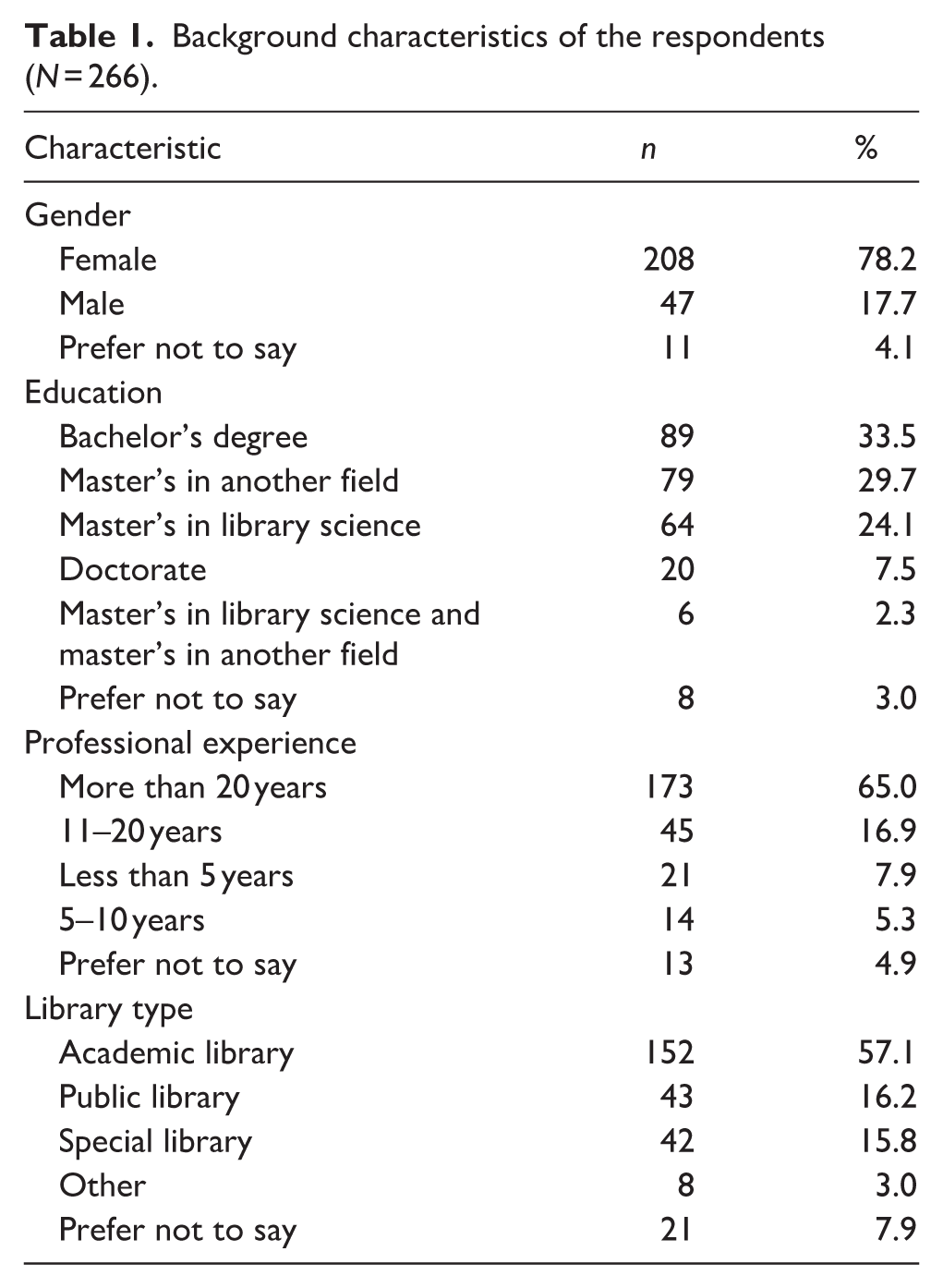
The sample consisted of 266 library professionals. The majority of participants were female, with males making up less than 20% of the sample. The educational background was notably high, as most participants reported postgraduate degrees either in LIS or in other fields. Most participants indicated they had over 20 years of experience in libraries, with relatively few reporting less than a decade of experience. As for the type of institutions, academic libraries were the most frequently represented, followed by public and special libraries (Table 1).
Background characteristics of the respondents (N = 266).
Respondents were also asked to indicate their areas of work. They reported involvement in a wide range of roles, often covering multiple responsibilities. User services and technical services, including acquisitions, cataloguing, and metadata creation, were the most reported areas. A considerable number of respondents were also involved in collection development, as well as user education and information literacy (Table 2).
Participants’ job areas.
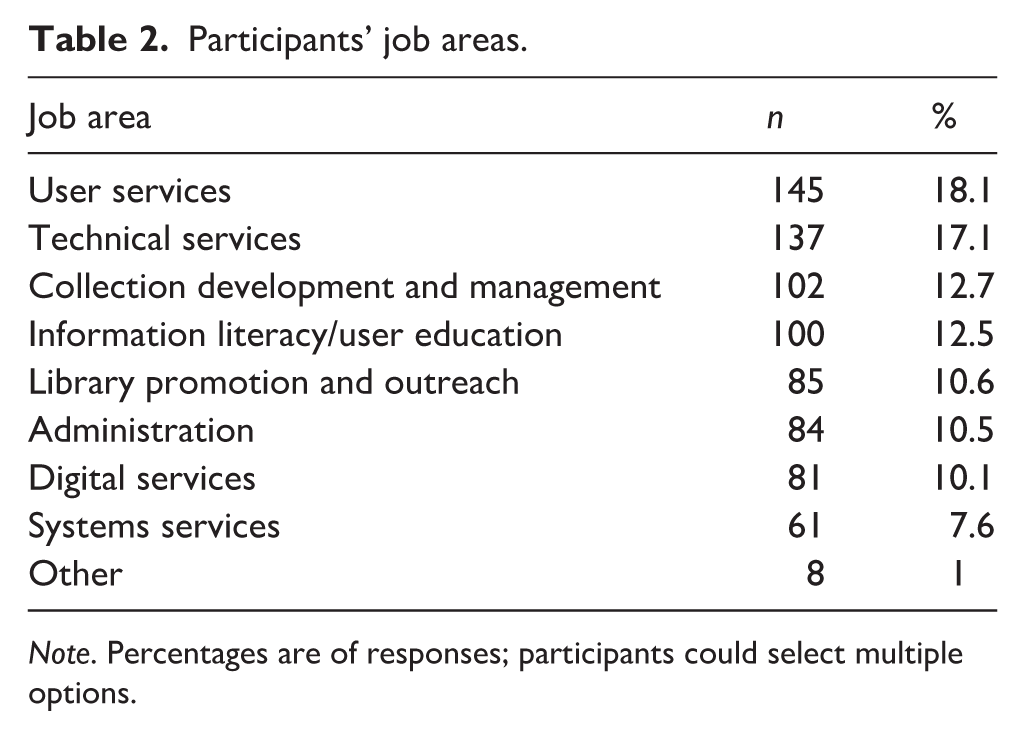
Note. Percentages are of responses; participants could select multiple options.
Knowledge and familiarity
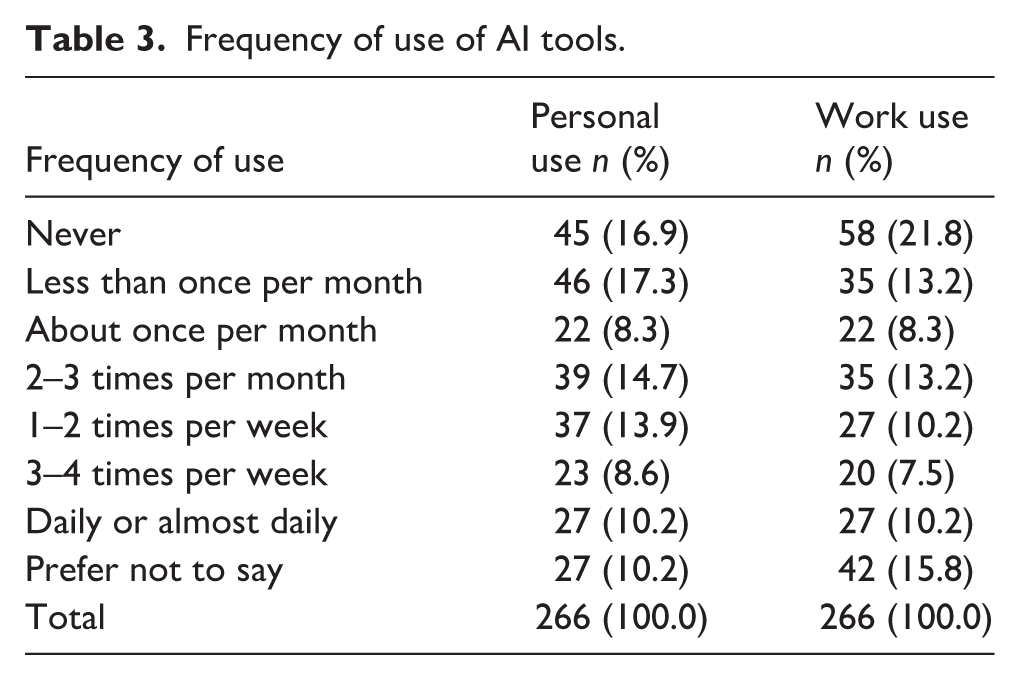
Most respondents reported at least moderate understanding of AI concepts (moderate 41.2%, high 29.0%, very high 9.9%; Valid N = 262), whereas familiarity with specific AI tools was lower (23.7% high/very high, 76.2% moderate or below; Valid N = 261). Access to paid AI tools was uncommon: only 7.9% indicated an organisational subscription, and 7.1% reported a personal subscription. On this basis, we examined how often librarians use AI and for what purposes. Participants demonstrated a slightly higher level of interaction with AI in personal contexts compared to professional settings. However, roughly 20% of the respondents stated they never utilised AI, whether in their personal lives or work activities. Among those who acknowledged using AI, frequency varied considerably, ranging from occasional use (less than once per month or about once per month) to regular engagement several times per week (Table 3).
Frequency of use of AI tools.
As presented in Table 4, the most frequently reported reasons for personal use of AI tools include creating and editing text (such as emails, essays, or letters), information seeking, and text translation. In the “Other” category, although most participants mentioned practical reasons, a small number provided more reflective and exploratory uses such as decision support (using AI to evaluate choices in personal dilemmas); exploration and experimentation (using AI tools merely to observe their functionality, assess their response accuracy, or examine their reasoning abilities); creative experimentation (composing songs); and curiosity (interacting with AI purely out of curiosity about its capabilities).
Reasons for personal use.
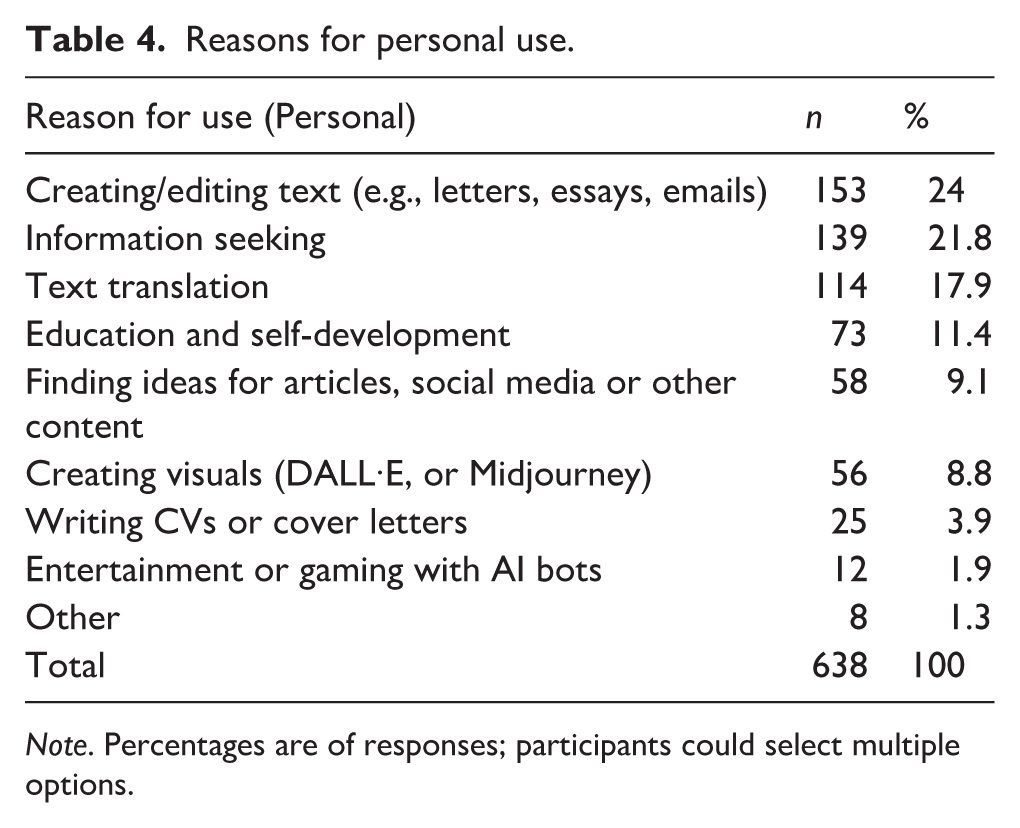
Note. Percentages are of responses; participants could select multiple options.
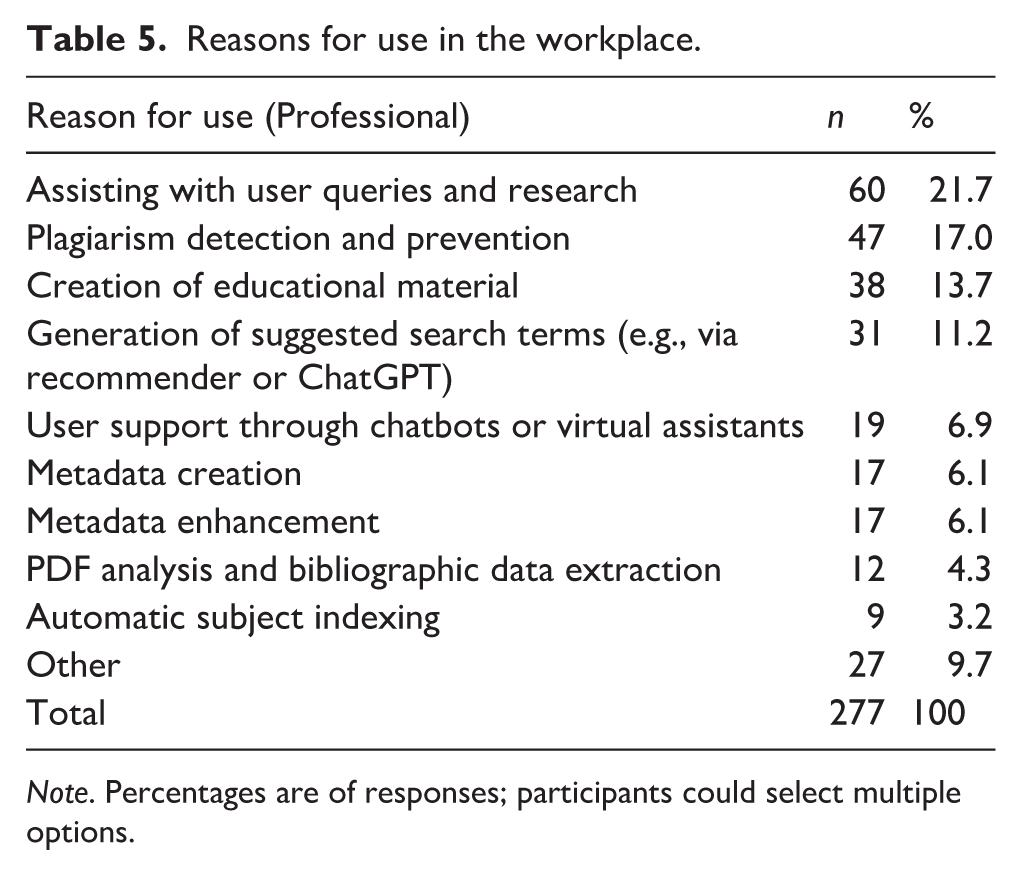
Workplace use of AI mainly focuses on supporting users and maintaining academic integrity, with applications such as assisting with research queries, plagiarism detection, and creating educational materials being most frequently mentioned. In contrast, use in technical services and metadata work was reported significantly less. Tools such as virtual assistants were also very uncommon, while other specialised applications—such as document extraction and subject indexing—were noted even less frequently. “Other” uses of AI included developing promotional activities, designing greeting cards, and locating information about library operations or best practices. Some participants highlighted linguistic support, such as refining foreign-language texts and identifying topics or themes within broad texts. A few noted the use of AI for various technical and administrative functions, including aid with HTML, CSS, and SQL queries, especially in Koha reporting. Some even mentioned using AI to document procurement of digital resources—like databases and journals—and experimenting with AI-powered tools and workflows (Table 5).
Reasons for use in the workplace.
Note. Percentages are of responses; participants could select multiple options.
Perceptions of AI
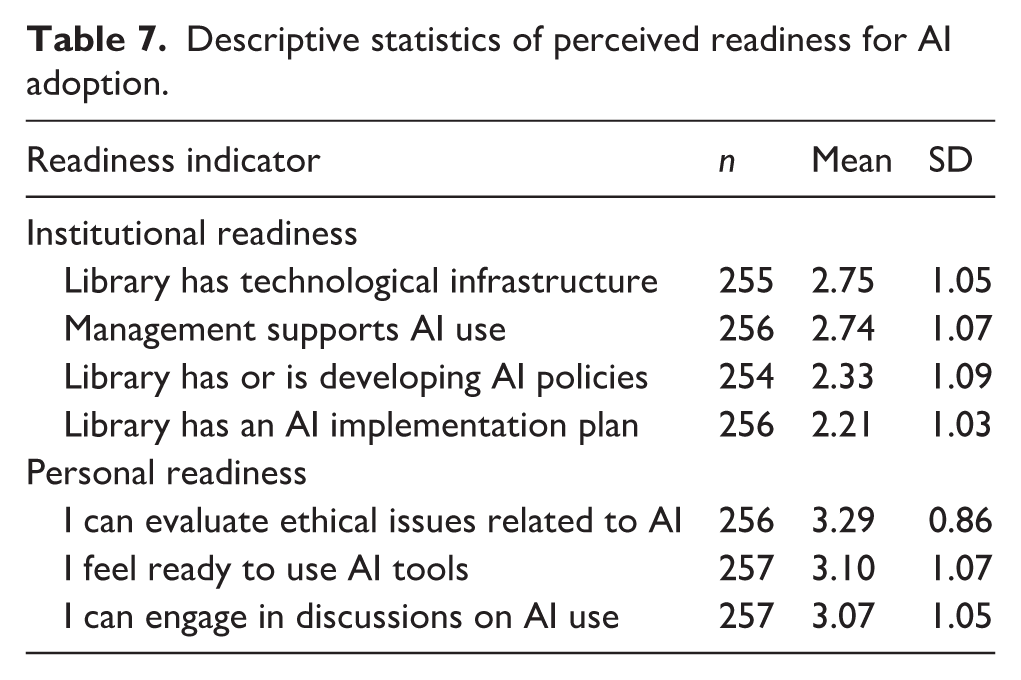
Internal consistency of the scale measuring perceived readiness for AI adoption in libraries was satisfactory (α = 0.807). Based on this result, a new variable was created, representing the mean scores of all items for each participant. One-sample t-test was used to examine whether the mean of the new variable was statistically different from the midpoint of the responding scale (3). Results showed that librarians reported decreased levels of readiness. This difference, apart from being statistically significant, was also very meaningful, as suggested by Cohen’s d value (Table 6). Descriptive statistics for the items are presented in Table 7. Mean scores suggest that institutional readiness, such as implementation plans and policies, was rated lowest, while personal capabilities were rated moderately higher.
One-sample t-test analysis of librarians’ perceptions.

Descriptive statistics of perceived readiness for AI adoption.
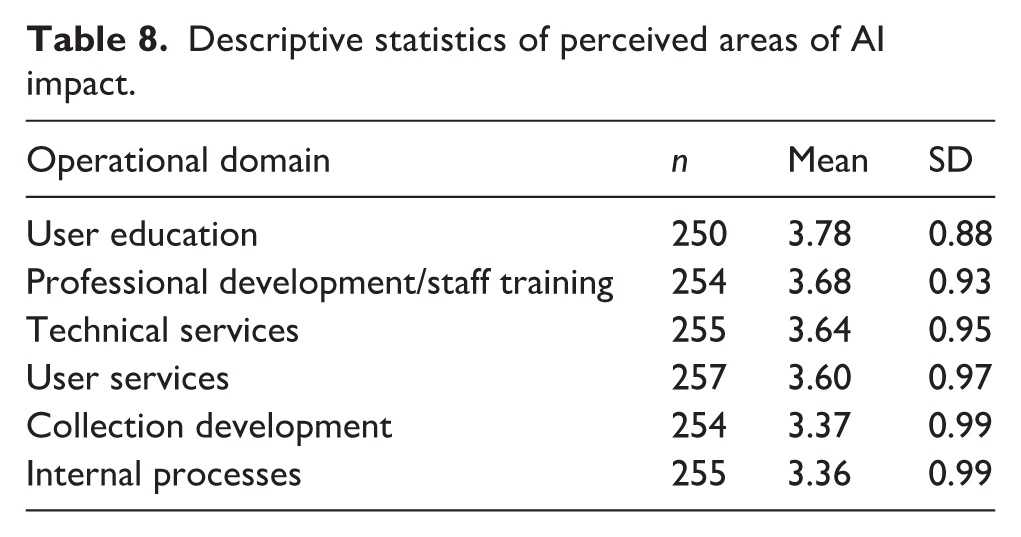
Similar procedures and analyses were carried out for the six items measuring respondents’ perceptions about the possible impact of AI in libraries. The scale demonstrated excellent reliability (α = 0.892). Participants’ mean scores were statistically significant from the scale’s midpoint (3), indicating that library personnel generally anticipate AI to play a significant role in library operations (Table 6). Mean values of the items ranged from 3.36 (internal processes) to 3.78 (user education). Respondents expected AI to have the greatest impact on user and staff training, followed by technical and user services. Other areas, such as collection management and internal processes management, were rated positively but somewhat lower (Table 8).
Descriptive statistics of perceived areas of AI impact.
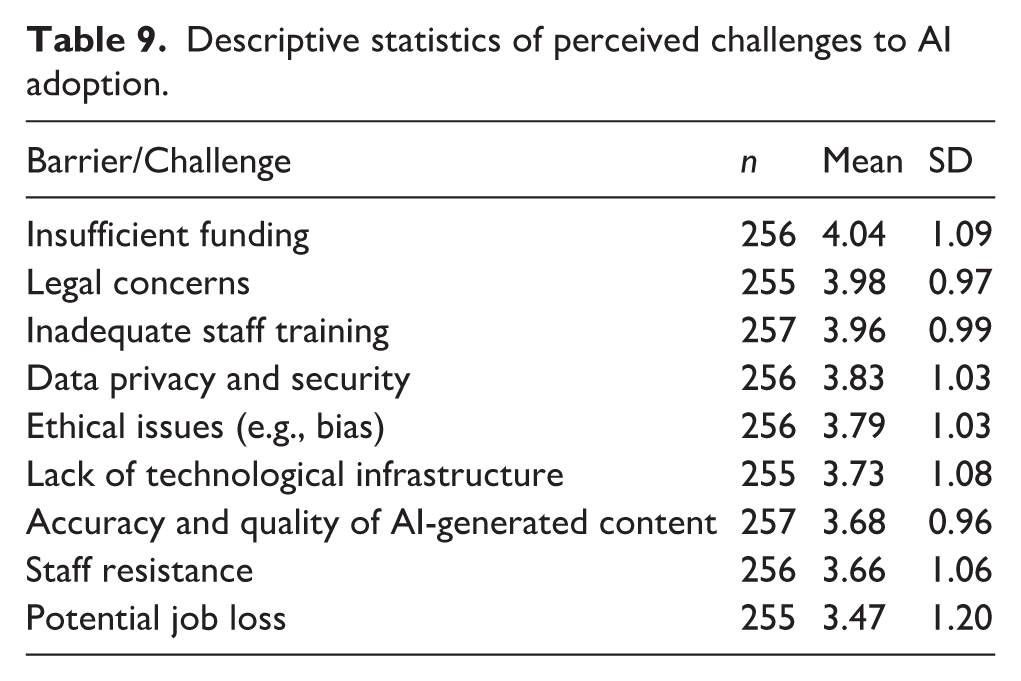
Respondents were also asked to assess the likelihood that various issues may present challenges to the implementation of artificial intelligence in their libraries. The scale demonstrated excellent internal consistency (α = 0.880). The overall mean score across the listed challenges reached statistical significance, a finding indicating that librarians perceive multiple barriers to AI adoption (Table 6). They rated most challenges above the midpoint, particularly infrastructural limitations, insufficient funding, lack of staff training, and ethical or legal concerns (Table 9).
Descriptive statistics of perceived challenges to AI adoption.
Differences among types of libraries
One-way ANOVA was employed to examine whether the mean scores of the three composite variables (perceived readiness, perceived impact and perceived challenges) and the frequency of professional use differed in relation to the type of library. Based on the frequencies of each library type (see Table 1), we focussed on academic (n = 152), public (n = 43) and special (n = 42) libraries. Perceived impact and challenges did not differ by library type (all ps ⩾ 0.21), suggesting broadly similar expectations and concern profiles across academic, public, and special libraries. Significant differences emerged only for the perceived readiness and the frequency of use. Post-hoc comparisons using the Bonferroni criterion revealed that academic librarians reported higher readiness for the integration of AI in libraries than public librarians, with special libraries not differing from either. Similar post-hoc analysis indicated that frequency of use was higher among special librarians in comparison to public librarians, while other pairwise differences were not significant (Table 10).
Analysis of variance results for the four examined variables across the three types of libraries.
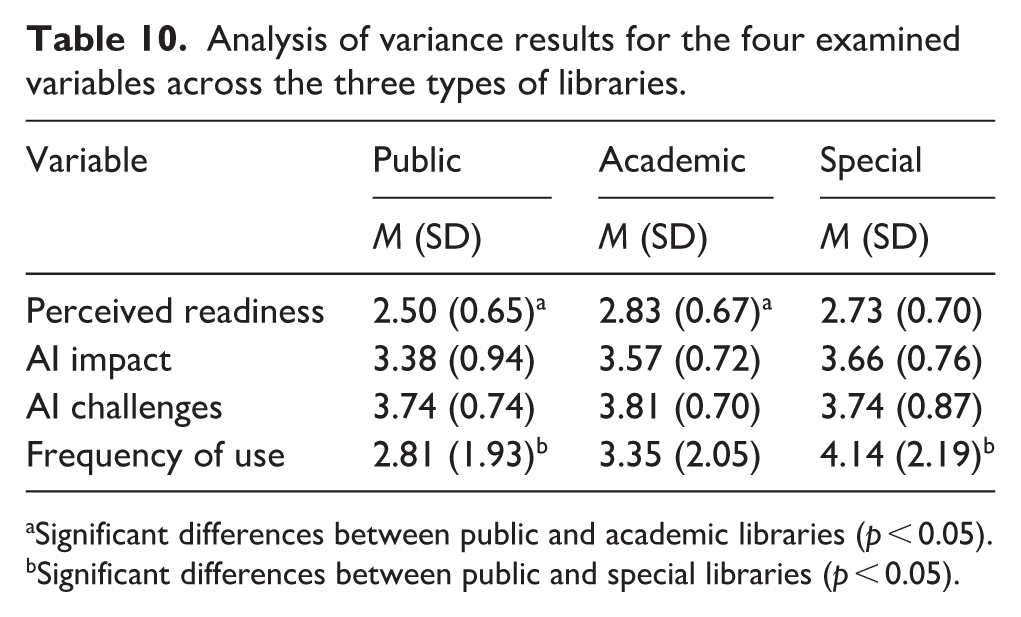
Significant differences between public and academic libraries (p < 0.05).
Significant differences between public and special libraries (p < 0.05).
User education
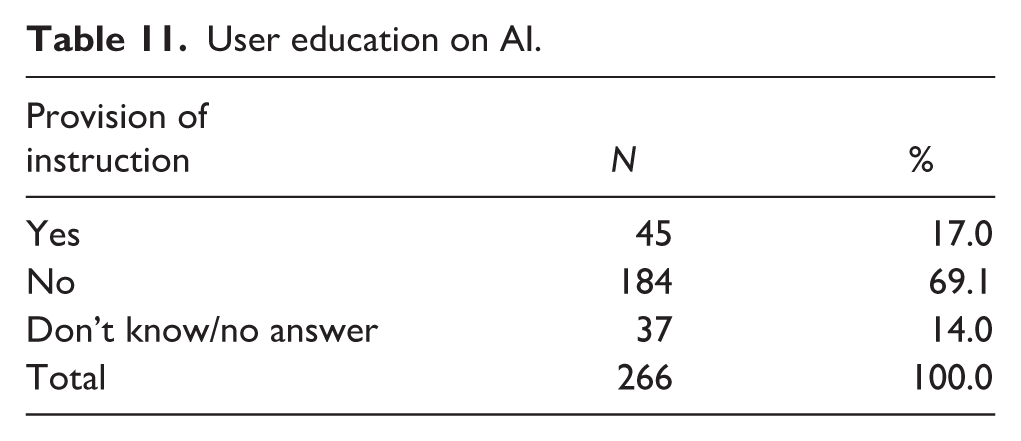
Participants were asked whether their library offers user education concerning the responsible use of AI tools. As shown in Table 11, most respondents (69.1%) reported that no such education is currently provided, while only 17.0% reported its existence.
User education on AI.
Among the 45 respondents who indicated that their library offers user education on the responsible use of artificial intelligence (AI) tools, a multiple response analysis was conducted to examine the specific topics covered. As summarised in Table 12, the most frequently selected topics were avoiding plagiarism through AI use and evaluating the reliability of AI-generated information. Other covered areas included identifying misinformation, developing critical thinking skills, understanding the limitations of AI tools, and addressing ethical issues and privacy concerns.
Topics covered in user education.
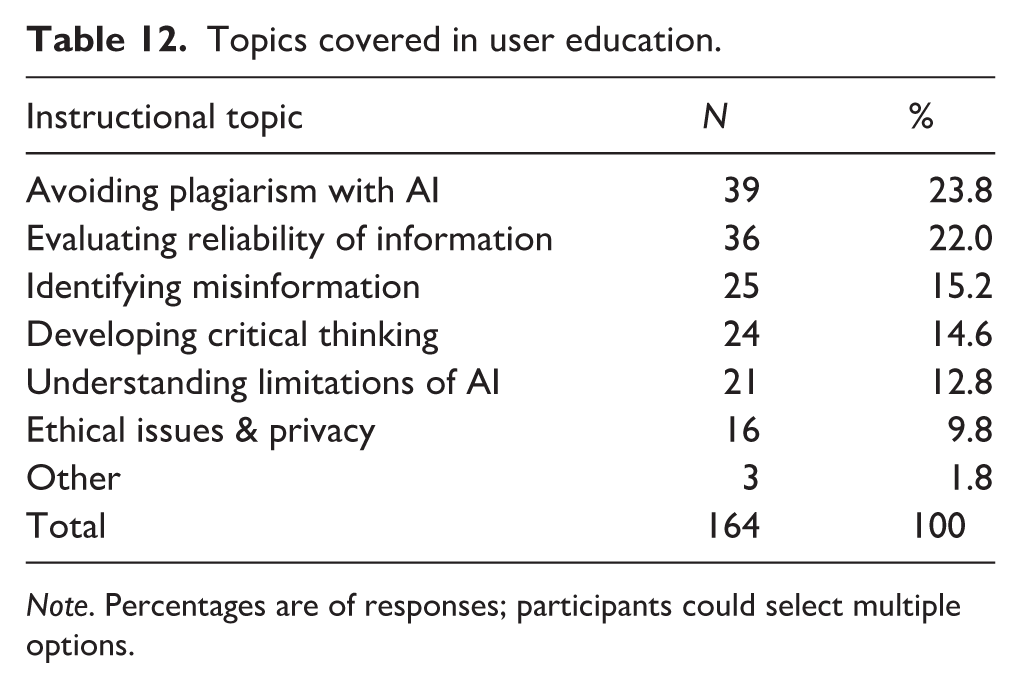
Note. Percentages are of responses; participants could select multiple options.
Discussion
Most respondents indicated moderate to good understanding of AI, echoing findings from previous studies that librarians are generally knowledgeable about AI (Begum and Elahi, 2025; Lund et al., 2020). Only a small fraction reported very good knowledge, while roughly one in five reported low or no knowledge. This pattern suggests a good grasp of core concepts alongside a lower understanding of advanced topics (Lo, 2024). Familiarity and use followed the same trend: most individuals feel fairly familiar, with smaller groups at the high and low ends, and usage was more prevalent in personal settings than in professional ones. This is consistent with earlier findings that personal engagement exceeds professional adoption (Hervieux and Wheatley, 2021) and that organisational use is generally infrequent (Abayomi et al., 2021; Lo, 2024; Yoon et al., 2022). Subscription access to AI tools was uncommon at both institutional and personal levels. Such constraints mirror reports of low premium uptake, which has been associated with lower self-rated AI literacy and confidence (Lo, 2024), and may impede sustained, work-embedded practice.
The everyday use of AI reported by participants for text generation, editing and translation mirrors findings that librarians who do use AI tend to focus on content creation and research support (Lo, 2024). Studies on everyday interactions with AI indicate that such engagement is primarily motivated by productivity, learning, and convenience (Skjuve et al., 2024; Wolf and Maier, 2024). Similarly, the tasks most frequently reported in the literature—such as writing, information seeking, summarisation, and language assistance—align with those identified in the present study. Our results also revealed that the use of AI tools is somewhat more prevalent in personal than in professional contexts, with librarians tending to experiment and adopt these technologies more readily at home than in the workplace. This finding is in line with recent evidence, where personal use modestly exceeds use for work or academic purposes (Bick et al., 2024; Gasaymeh et al., 2025).
Workplace use primarily involved user-support functions, a pattern aligning with previous research that identifies reference services and research assistance as main areas of AI application (Hervieux and Wheatley, 2021; Lo, 2024; Lund et al., 2020; Yoon et al., 2022). In addition, across multiple studies, respondents consistently recognise AI’s potential to improve information retrieval, support research processes, and foster knowledge discovery (Ali et al., 2025; Harisanty et al., 2024; Hervieux and Wheatley, 2021; Lulu-Pokubo and Okwu, 2025; Patra et al., 2025; Yoon et al., 2022). By contrast, the very limited use of virtual assistants—and the similarly infrequent use in cataloguing and metadata creation—is inconsistent with the well-documented, widespread deployment of chatbots and AI in technical services and routine operations (Huang and Dong, 2024; Patra et al., 2025; Rahman and Islam, 2024; Yang et al., 2024).
Our respondents generally anticipated a significant role for AI in library operations, with the strongest expected effects in user and staff training, followed by technical and user services. These results corroborate the findings of a great deal of the previous work on the perceived impact of AI (e.g. Begum and Elahi, 2025; Harisanty et al., 2024; Juego and Masalinto, 2025; Yang et al., 2024). The findings of the present study also confirm an emerging trend that AI is increasingly viewed not only as a technical tool but also as a resource for user education. Pantzar (2023) reported that while many school librarians doubted ChatGPT’s reliability, they acknowledged its value as a tool for teaching information literacy. Similarly, the findings of Shahzad et al. (2024) revealed participants’ perceptions about the potential of AI to promote innovative learning.
Consistent with this emphasis on learning, we examined whether libraries offer AI instruction. Provision of AI literacy training programmes was very limited. Where available, instruction focussed mainly on academic integrity (such as avoiding plagiarism) and evaluating AI-generated information, alongside misinformation, critical thinking, limitations of tools, and issues of ethics and privacy. This scarcity and emphasis on evaluation mirror findings from academic libraries in North America, where only a minority reported hosting workshops for patrons, and the topics revolved around technical applications and sociotechnical issues (Hervieux and Wheatley, 2021). Notably, a small but meaningful group of respondents in our study were uncertain whether their library offers AI literacy instruction. One possible explanation for this might be professional segmentation: employees who work in “behind-the-scenes” departments (such as cataloguing, systems, or acquisitions) might be less exposed to educational offerings and less aware of such services. The ambiguity might also be a result of poor internal communication regarding AI-related endeavours.
Findings regarding limited perceived readiness are in line with Lo (2024), who reported that most academic librarians in the U.S. considered their institutions “not prepared” to integrate generative AI within a year, and many felt personally unprepared. Hussain and Khan (2025) likewise note that, despite optimism, librarians expressed concerns about institutional preparedness, skills gaps, and low AI literacy. In our data, the lowest ratings were clustered around implementation strategies and policies, while perceived AI-related skills received comparatively higher scores. These trends suggest that individual competencies are advancing more rapidly than institutional frameworks. The findings on perceived readiness are closely intertwined with the challenges librarians associated with AI. Participants expected several constraints that could impede or complicate adoption, a finding that confirms previous studies highlighting, among other things, ethical concerns, budget limitations, insufficient infrastructure, and lack of technical expertise (e.g. de Leon et al., 2024; Huang and Dong, 2024; Rahman and Islam, 2024). Overall, these findings suggest that to ensure effective and sustainable implementation, libraries should prioritise technical capacity and budgets, staff development, and clear policy frameworks that leverage the increasing personal proficiency with AI tools. Interestingly, while organisational constraints were salient, concerns about job loss were among the least frequently selected. This finding is consistent with research that portrays AI as a supportive tool that complements professional judgement rather than replaces it (Lund et al., 2020; Patra et al., 2025; Subaveerapandiyan and Gozali, 2024), while it contrasts with studies reporting greater concerns about job displacement, particularly in repetitive tasks (de Leon et al., 2024; Kaushal and Yadav, 2022; Kisilowska-Szurmińska, 2025; Lulu-Pokubo and Okwu, 2025). Variations in professional roles, labour market conditions, and temporal context likely contribute to the divergence, suggesting that job security concerns are not the same everywhere.
Both expectations and concerns were generally similar across different library types, whereas academic librarians demonstrated greater readiness, and usage of AI was more prevalent in special libraries. This disparity in readiness aligns with findings from Yoon et al. (2022), which indicated a higher usage in academic environments, a pattern typically associated with enhanced preparedness. On the contrary, Yoon et al. (2022) noted that public librarians had more optimistic expectations, while our findings did not reveal any differences. These discrepancies could be attributed to context, timing, or measurement methods. The relatively increased usage in special libraries likely stems from their specialised workflows and suitability of tools, an issue that has not been sufficiently explored in the literature. Despite having similar expectations, public libraries appear less prepared and less engaged, suggesting that efforts should focus on targeted investment and support rather than on changing attitudes.
Conclusions
This study offers a preliminary overview of Greek librarians’ perceptions of AI, its expected significance, and the obstacles to its adoption. Participants indicated a fair to good understanding of the concept and greater personal than workplace use, focussed on content creation and research support. They anticipated meaningful impact on various operations—particularly in user and staff training as well as frontline services—but also recognised certain organisational barriers.
These findings have both practical and theoretical implications. From the practice viewpoint, they confirm the need for Greek libraries to focus on the ongoing training and upskilling of staff, and to establish clear, institution-wide frameworks governing the responsible use of AI. Furthermore, integrating AI and GAI education into Library and Information Science (LIS) curricula is critical for preparing future professionals to meet the demands of a rapidly evolving digital landscape. Empowering librarians with the knowledge and competencies they need to effectively utilise AI tools is crucial—not only for internal operations but also for guiding patrons in their use. The development of appropriate infrastructure, along with transparent policies and guidelines, will minimise uncertainty and promote consistent practices. While librarians should be involved in discussions surrounding policies, the responsibility for creating and updating these frameworks falls to library leadership. Policies ought to be regularly assessed and modified to keep pace with technological progress and shifting ethical considerations. Establishing a unified regulatory framework for AI usage across libraries in Greece would further improve consistency and accountability. Collaboration with AI tool developers, in addition to interlibrary cooperation, will be essential for sharing experiences, exchanging insights, and creating a supportive professional community. Collectively, these actions can support data-informed decision-making and ensure the ethical and effective use of AI across library functions.
From the theoretical perspective, this study offers an addition to the overall body of knowledge regarding AI adoption in libraries, by extending our understanding of AI acceptance to a national context that has been underrepresented in the literature. The situation in Greece provides a clear example of how institutional structures—such as policies, infrastructure, and managerial support—interact with individual factors, including technological competence and ethical awareness, to shape librarians’ opinions, attitudes and readiness for AI adoption. This contextualised approach emphasises that AI integration in libraries is not uniform but influenced by organisational culture, resources, and national conditions. Accordingly, the findings offer valuable insights for comparative research across diverse cultural and organisational settings, enriching theoretical frameworks that explain how technological innovation is adopted within the information profession.
Limitations and future research
This research has several limitations that should be considered when interpreting its findings. The use of a specific national listserv for survey distribution may have led to selection and nonresponse biases, favouring individuals who are subscribers and willing to participate in such studies. Furthermore, relying on self-reported data raises concerns about various biases, including social desirability and response bias, which could impact the accuracy and objectivity of the results. The cross-sectional design provides a snapshot at one point in time, restricting the ability to observe changes over time or establish causal relationships. Additionally, the rapid advancement of AI technology suggests that the relevance of the findings could decrease quickly as new technologies emerge. Lastly, the study is limited to the Greek context, and its conclusions may not be applicable to other settings.
As this study was exploratory and descriptive in nature, it did not employ a formal theoretical framework. Its primary aim was to establish baseline evidence on how Greek librarians perceive and engage with artificial intelligence, as no prior empirical research on this topic exists in Greece. Future investigations could build on these findings by adopting established theoretical models—such as the Technology Acceptance Model (TAM) or the Unified Theory of Acceptance and Use of Technology (UTAUT)—to examine the specific determinants and predictors of AI adoption in Greek libraries. Applying such frameworks would allow for hypothesis testing and provide deeper insight into the mechanisms underlying librarians’ technology-related attitudes and behaviours. Future work should also combine longitudinal surveys with qualitative designs to capture the evolution of perceptions and practices over time. Moreover, evaluating the impact of training interventions on librarians’ readiness and actual use of AI tools could help identify effective strategies for professional development. In addition, future studies should seek to connect subjective perceptions with objective indicators, offering a more robust assessment of AI integration. Given the relatively higher uptake observed in special libraries, closer examination of their workflows and operations could yield valuable insights, while comparative analyses across library types may further illuminate how institutional context shapes attitudes and adoption patterns.
Footnotes

Ethical considerations
The study involved an anonymous online survey of library professionals in Greece. As the questionnaire focussed on professional practices and workplace experiences of library employees, the subject matter was deemed to be of low sensitivity and posed minimal risk to participants. The study was conducted in accordance with relevant institutional and national guidelines for research with human participants.
Consent to participate
Before accessing the questionnaire, all potential participants were informed about the purpose of the study, the voluntary nature of their participation, and the procedures for protecting their data. All respondents provided informed consent after being informed of the study’s purpose and data-protection procedures.
Funding
The authors received no financial support for the research, authorship, and/or publication of this article.
Declaration of conflicting interests
The authors declared no potential conflicts of interest with respect to the research, authorship, and/or publication of this article.
Data availability statement
The data that support the findings of this study are available from the corresponding author upon reasonable request.