







Abstract
Understanding researchers’ use and needs of digital scholarship resources is essential for strengthening research support across academic institutions. Drawing on the research lifecycle, KAP, and performance improvement models, this study developed a theoretical framework to examine researchers’ academic activities and resource requirements. An empirical survey was conducted among 1226 researchers at the Chinese Academy of Sciences. Results show that most respondents viewed contemporary research as increasingly data-driven and tool-dependent (85.5%), and believed that digital technologies have fundamentally reshaped research practices (74.6%). Academic search engines, literature databases, reading and translation tools, and editing and formatting tools were the most frequently used resources. Chi-square tests and regression analyses revealed that gender, academic rank, and discipline significantly influenced the use of specific digital resources; notably, female researchers exhibited higher overall usage rates than their male counterparts. Moreover, researchers highlighted several unmet needs, including broader access to literature, expanded institutional access to paid tools, and fewer network restrictions on international resources. In conclusion, this study provides a comprehensive evaluation of the transformative role of digital resources in modern scholarship and highlights the evolving needs of researchers in a digitized academic landscape, underscoring the importance of coordinated support from academic libraries, research departments, publishers, funding agencies, and information service providers.
Keywords
Introduction
Scholarship is evolving dynamically (Husain et al., 2020) as digital technologies reshape how knowledge is produced, disseminated, and used. This evolution has crystallized under the umbrella of digital scholarship—a term that emerged from earlier labels such as e-science, cyberinfrastructure, e-scholarship, research hub, and scholar’s lab (Adams et al., 2017; Longmeier and Murphy, 2021)—and is now a prominent trend in research and education (ACRL Research Planning and Review Committee, 2016; Lippincott, 2021). Academic and research libraries initially regarded themselves as incubators of digital scholarship (Sinclair, 2014) and have long played roles as service providers, research partners, project coordinators, and interdisciplinary collaborators (Greenhall, 2019; Hurrell, 2019; Mulligan, 2016).
Despite its prominence, digital scholarship remains variably defined across disciplines and institutions (Adams et al., 2017; Collins et al., 2024; Wexelbaum, 2016). It may be interpreted from both macro-theoretical and micro-practical perspectives, each contributing to a multifaceted digital scholarship ecosystem in the digital era (Tu and Xu, 2018). From the perspective of research paradigm, it introduces a new paradigm of data-intensive science (Adams et al., 2017), enabling researchers to ask and answer questions in novel ways (NC State University Libraries, 2024). From the perspective of scholarly communication, digital scholarship represents new-model scholarly communication, involving the use of digital evidence and method, digital authoring, publishing, curation, preservation, and the reuse of scholarship (Rumsey, 2011). In technological terms, it refers to the application of digital and computational techniques in scholarship (Adams et al., 2017; TIB, 2024), particularly in discovery, integration, application, and teaching (Pearce et al., 2012). In terms of scholarly outputs, digital scholarship often consists of works that are either digitalized or born digital, such as multimedia, databases, digital text and images, digital music or art, digital exhibits, scholarly archives, and datasets (Adams et al., 2017; Tu and Xu, 2018). As these practices diversify, digital scholarship continues to expand in scope, with its boundaries not always sharply defined.
Digital scholarship manifests a technological shift from traditional methodologies to digital approaches, drawing significant attention across higher education and scientific research communities (e.g. Hurrell, 2019; King, 2018; Lewis et al., 2015; Quinn et al., 2018). Researchers in diverse disciplines are increasingly adopting a wide range of digital, automated, and visualization-based resources and tools to enhance research efficiency, facilitate data-intensive inquiry, and improve the quality of scholarly outputs. Weller (2011) argued that digital technologies have reshaped scholarly behaviors, leading academics to increasingly become “digital scholars.” At the same time, instructors and students rely on diverse digital tools and platforms to support teaching and learning, enriching classroom engagement, improving instructional effectiveness, and strengthening students’ motivation and academic success. Kinash et al. (2015), for example, examined online lectures and found that while digital content significantly supports student learning, its pedagogical effectiveness depends on careful consideration of disciplinary context and instructional design.
Against this backdrop, researchers’ use and needs of digital scholarship resources have attracted growing attention (Kerns, 2023), particularly within the field of library and information science (LIS), which bridges scientific research and higher education through its intertwined research and practice dimensions. In practice, academic libraries have taken a leading role in developing digital scholarship services from multiple perspectives—including data services (e.g. New York University libraries), scholarly communication (e.g. MIT libraries), and research data management (e.g. Libraries of University College London)—to support evolving research workflows. In research, scholars have examined how digital tools and environments shape scholarly behaviors and research paradigms. For example, Cardoso and Oliveira (2015) investigated scholars’ use of digital tools and the resulting concepts of social scholarship, open scholarship, and networked scholarship. Linking research with practice, user-centered studies have helped translate empirical insights into service design. For instance, Hurrell (2019), Lučić and Jagman (2019), and Norris et al. (2023) examined researchers’ needs within their respective institutions to inform the development of digital scholarship services.
However, several gaps warrant further exploration. First, although many studies attempt to map the landscape of digital resources available to researchers, existing assessments are typically based on services offered within individual libraries and constrained by small, institution-specific samples. As a result, they provide only a partial view of the broader digital resource ecosystem, limiting the representativeness and generalizability of their findings. Second, most studies focus on specific stages of the research lifecycle or isolated types of digital resources, leaving insufficient understanding of digital scholarship as an end-to-end scholarly process. This narrow scope constrains holistic insights into how digital resources support different phases—and the full trajectory—of scholarly work. Third, current research primarily documents what digital resources researchers use or require but often overlooks deeper investigations of their perceptions, attitudes, and motivations. Collectively, these limitations highlight the need for a more inclusive theoretical framework and a rigorously validated survey instrument capable of capturing the complexity of researchers’ interactions with digital resources.
China offers a particularly important context for such investigation. As a major force in global science and technology, it has one of the world’s largest populations of researchers and research outputs (Springer Nature, 2024). While Chinese researchers’ use and needs for digital resources share many similarities with those of their international counterparts, they also exhibit distinctive characteristics shaped by China’s technological, cultural, and policy environment. Compared with regions such as Europe and North America—where research ecosystems are strongly influenced by long-established open science mandates, decentralized institutional cultures, and mature scholarly communication infrastructures—China’s research landscape is characterized by strong national policy steering, rapid digital infrastructure development, and a culturally embedded emphasis on collective responsibility and national strategic goals.
Recent policy initiatives, such as advocating “writing papers on the motherland” (Liu and Zhang, 2020) and the reform agenda of “breaking the four-only criteria” (Xu and Li, 2022), have reshaped expectations related to research planning, evaluation, and dissemination. These shifts have directly influenced Chinese researchers’ adoption and use of digital resources, particularly in relation to evaluation requirements, compliance, and publication strategies. Given the scale and diversity of China’s research ecosystem, it is instructive to focus on key national research institutions that exemplify broader patterns of digital scholarship practices, among which the Chinese Academy of Sciences (CAS) is preeminent.
The Chinese Academy of Sciences (CAS), as China’s largest and one of the most influential national research systems, comprises over 100 research institutes, several universities, and various affiliated institutions nationwide. Although CAS is primarily oriented toward science, technology, and engineering, it also hosts active research communities in medicine as well as social sciences and humanities. Given CAS’s central role in China’s research ecosystem, understanding the use of and unmet needs for digital scholarship resources among CAS researchers is of particular importance. However, systematic empirical investigations into their digital scholarship practices and resource requirements remain limited.
To address these gaps, this study focuses on the digital scholarship practices of CAS researchers and aims to answer three key questions:
(1) What is the current landscape of available digital scholarship resources throughout the research lifecycle?
(2) Which digital resources do CAS researchers actually use, and what unmet needs do they perceive in their scholarly workflows?
(3) What performance improvements do CAS researchers expect from using or requiring these digital resources?
Literature review
Multidimensional manifestations of digital scholarship
Drawing from various definitions of digital scholarship, Table 1 summarizes its multifaceted manifestations as identified in the literature, categorizing them into three dimensions based on the most commonly cited original terms.
(1) Digital scholarship technologies: Numerous emerging and evolving technologies drive digital scholarship. In some cases, digital scholarship itself is regarded as a suite of technologies, referred to as “digital scholarship technologies” (Adams et al., 2017). These technologies include web-based, media-based, database-based, computing-based, and cloud-based systems.
(2) Digital scholarship products: The outputs of digital scholarship, often referred to as “digital scholarship products,” can take many forms, including digital publications, datasets, digital archives, software tools, and multimedia works. These products represent the tangible results of digital scholarship activities and are typically disseminated through digital platforms, enhancing their accessibility and reusability across different academic fields (Lippincott, 2021).
(3) Digital scholarship activities: Digital scholarship is frequently conducted by researchers, while its support is provided by service entities such as libraries, academic departments, and publishers (Tu and Liu, 2023). In this context, both research activities and the support mechanisms are considered part of digital scholarship activities, reflecting the collaborative nature of the digital scholarship ecosystem.
Key technologies, products, and activities in digital scholarship.
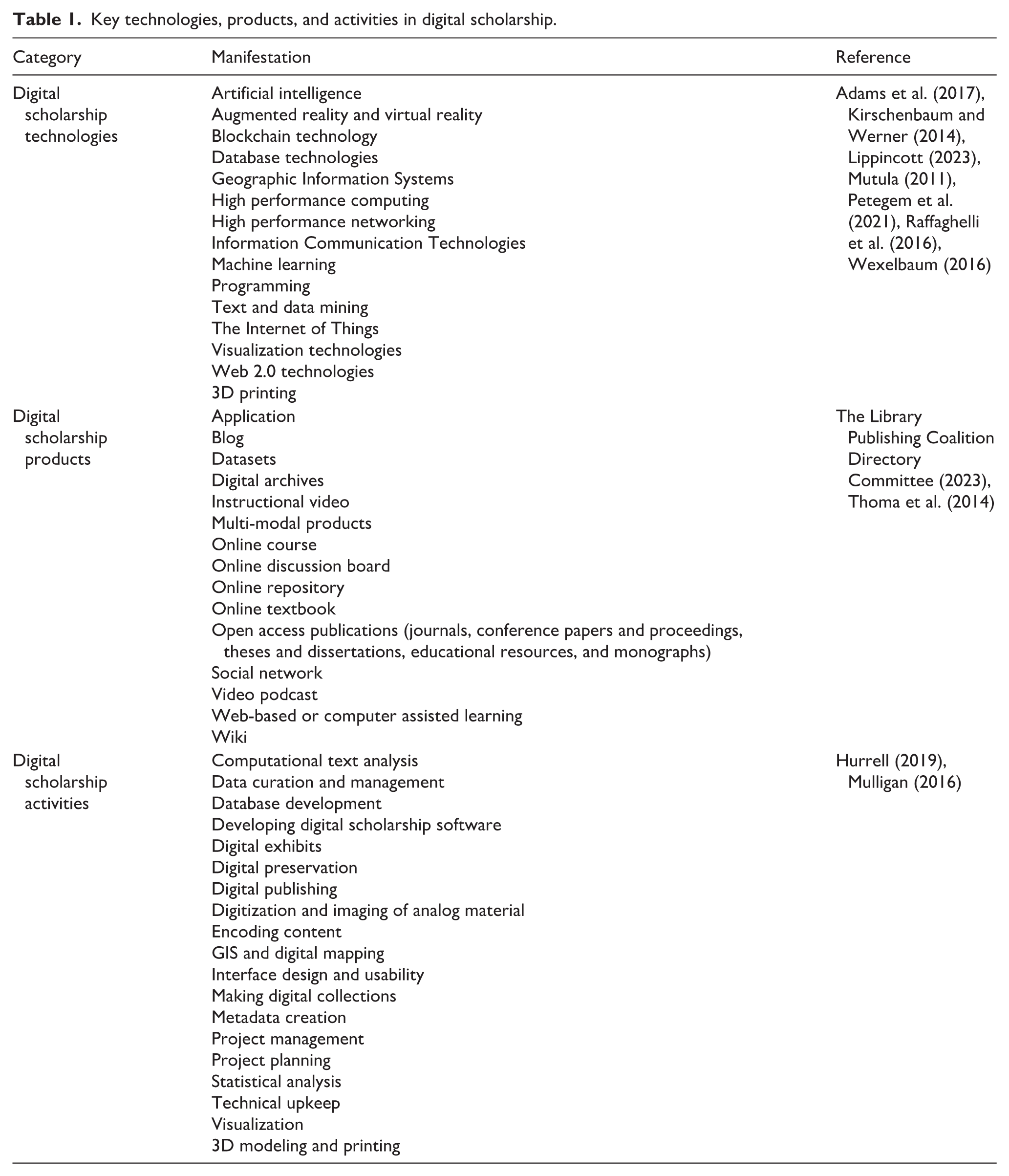
Despite extensive efforts to define and categorize the components of digital scholarship from technological, product-based, and activity-oriented perspectives, the literature offers relatively limited clarity on how these elements map onto the concrete needs of academic researchers across the research lifecycle. Existing work outlines what digital scholarship is, yet offers less systematic insight into which digital resources are available or relevant at specific stages of research, or how demand varies across different types of resources. Without a lifecycle-oriented and researcher-centered overview, it becomes difficult to connect conceptual frameworks with day-to-day scholarly practices. Developing such an understanding would help establish a clearer landscape of digital resources in digital scholarship and offer more targeted guidance for supporting its continued development.
Academic researchers’ use and needs of digital resources
Academic researchers’ use and needs of digital resources have been explored across fields such as academic libraries, information science, and higher education. These discussions highlight the importance of examining their behavior as users (Cardoso and Oliveira, 2015) and assessing their needs to guide service provision (Mitchem and Rice, 2017; Norris et al., 2023; Vinopal and McCormick, 2013). While academic researchers share common practices and requirements in digital scholarship, these demands are also shaped by disciplinary practices, institutional contexts, and individual expertise.
In terms of use, researchers incorporate various digital tools to advance and disseminate their work. Among the most widely used are digital publishing resources, data visualization tools, text editing and annotation software, statistical software, text and data mining tools (Norris et al., 2023). Specifically, researchers often use software like R, Python, SPSS, Stata, and SAS for analysis, and hardware such as 360 cameras, 3D scanners, and GPUs for production. Additionally, they utilize cloud platforms such as Google Drive and Drobox, along with data repositories like Dryad and figshare for storage and archiving (Kerns, 2023). Moreover, researchers rely on diverse metrics, such as traditional citation counts and altmetrics, to track their scholarly impact. They connect with peers across diverse departments, disciplines, and geographies through platforms like ResearchGate, ORCID, and LinkedIn, expanding network and fostering collaboration (Collins et al., 2024).
With respect to needs, researchers’ requirements throughout the research lifecycle can be grouped into the following areas: formulating research ideas, locating research partners, writing research proposals, conducting research, and publishing results (Li et al., 2020). Researchers seek to enhance skills, secure funding, collaborate across units, identity potential collaborators, and improve access to resources (Lučić and Jagman, 2019). They need reliable websites or repositories for storing and presenting digital research content (Vinopal and McCormick, 2013) and require collaborative spaces and interdisciplinary partners to facilitate commutation, collaboration, and innovation (Hurrell, 2019). Additionally, training and consultation on digital methods and tools are essential to build digital skills and expertise (Hurrell, 2019; Vinopal and McCormick, 2013).
Digital resources, in turn, provide substantial affordances that align with these usage and needs (Raffaghelli et al., 2016), enhancing research performance, academic reputation (Raffaghelli et al., 2016), and even the human condition (Wexelbaum, 2016). Researchers capitalize on these affordances to advance their scholarly inquiries (Lippincott, 2021), developing digital literacy and cultivating digital identities to participate in increasingly digital, networked, and open scholarly environment (Cardoso and Oliveira, 2015), ultimately evolving into “digital scholars” (Petegem et al., 2021). For example, machine-actionable digital collections facilitate computational research, enabling the development of AI and machine learning applications, while big-data analytics open new avenues of inquiry for humanities scholars (Lippincott, 2021).
Although these studies provide valuable insights into the digital tools researchers adopt and the needs they express at various research stages, much of the existing work is primarily descriptive in nature. Many studies catalog the resources researchers use or outline the services they require, but they tend to offer less explanation of the underlying perceptions and motivations that shape these behaviors. As digital technologies evolve rapidly and new tools emerge, descriptive accounts alone may not fully capture the more stable factors driving researchers’ engagement with digital resources. This suggests the value of research that complements descriptive findings with more explanatory and theoretically informed perspectives, enabling a deeper understanding of why researchers rely on certain digital resources, how they evaluate them, and what motivates their preferences or unmet needs.
Digital scholarship in the global and Chinese context
In the global context, digital scholarship services are widely implemented, though the explicit use of the term digital scholarship remains inconsistent. A recent survey of 130 academic libraries worldwide (Tu and Yuan, 2026) shows that North America offers the most comprehensive and mature service systems, while Europe, Africa, and Oceania maintain relatively well-developed and structured service frameworks. In Asia, digital scholarship services are expanding rapidly, with a strong focus on digitized collections, scholarly communication, digital publishing, and technical support for digital tools. Latin American libraries remain in exploratory stages, centering primarily on digitization. Within regions, the UK, Singapore and Hong Kong, South Africa, and Australia represent leading practices. Notably, Africa—despite more constrained economic conditions—demonstrates unexpectedly rich and well-organized service offerings. Taken together, these regional contrasts outline a global landscape in which North America leads, Europe–Africa–Oceania act as stabilizing contributors, Asia emerges as an active and fast-growing participant, and Latin America represents a developing yet promising area for future growth.
In the Chinese context, digital scholarship has attracted sustained attention from scholars and practitioners since its early stages (e.g. Liu and Tu, 2017; Zhou et al., 2018). Researchers across disciplines actively engage in activities aligned with digital scholarship, though often without explicitly identifying them as such (Mitchem and Rice, 2017). Academic libraries, including the National Science Library at the Chinese Academy of Sciences and Peking University Library, provide services such as open access publishing, digital skills training, and digital humanities workshops, which can broadly be considered digital scholarship services (Tu and Xu, 2018), even though institutions may not label them consistently. LIS researchers have contributed more systematic frameworks for understanding digital scholarship needs and service models: for example, Li et al. (2020) classified service needs across the research lifecycle into four types (must-be, one-dimensional, attractive, and indifferent), while Zhou et al. (2018, 2019) proposed a framework of 25 distinct digital scholarship services for Chinese universities libraries. Subsequent studies have also examined contextual factors and emerging AI-driven service models (Han et al., 2020; Jin and Liu, 2023). Nonetheless, collaborations between researchers and library specialists on digital scholarship projects are generally less extensive than those observed in North America and parts of Europe (Liu and Tu, 2017).
Despite these efforts, empirical research specifically examining Chinese academic researchers’—particularly those at the Chinese Academy of Sciences (CAS)—use and needs of digital resources remains relatively limited. Existing studies offer useful conceptual frameworks and service models, yet fewer investigations focus on which digital resources researchers use, what unmet needs they experience, and what contextual factors shape these patterns. Given China’s unique research environment—characterized by national policy steering, rapid digital infrastructure development, and evolving research evaluation mechanisms—there is a clear need for more detailed and up-to-date evidence on the digital practices and expectations of researchers within major national research systems such as CAS. Such insights would inform more targeted digital scholarship services and contribute contextually grounded perspectives to international discussions on digital scholarship.
Methodology
Instrument development
Theoretical framework
This study develops an integrated theoretical framework by combining three complementary models: the research lifecycle model, the knowledge–attitude–practice (KAP) model, and the performance improvement model (Figure 1).
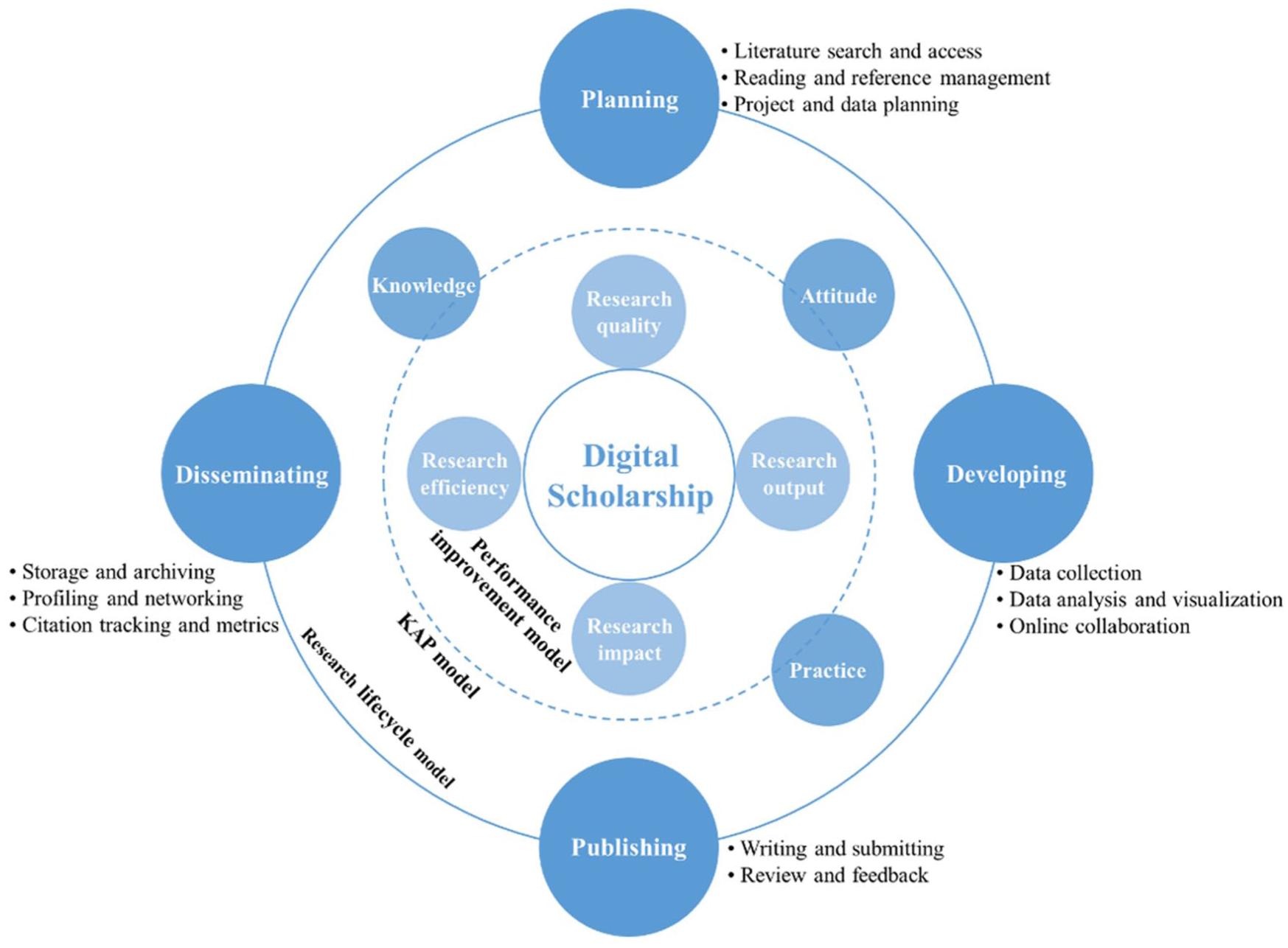
The theoretical framework of this study.
The integration follows a stage-based and outcome-oriented logic. From an outcome perspective, the primary purpose of digital scholarship resources is to enhance research performance. However, such improvements are not uniform across researchers; rather, they vary according to differences in researchers’ knowledge, attitudes, and practices related to digital scholarship. These differences are manifested in how researchers use and perceive digital resources at different stages of the research lifecycle. Conversely, from a process perspective, researchers encounter distinct, stage-specific demands for digital resources as their research progresses. Variations in usage patterns and unmet needs reflect heterogeneous levels of knowledge, attitudes, and practices, which in turn shape how effectively digital resources are integrated into research workflows and translated into performance gains. Together, the three models form a coherent analytical framework in which the research lifecycle provides the structural context, the KAP model explains individual-level variation in engagement, and the performance improvement model captures differentiated research outcomes. This framework guides both instrument design and variable operationalization in the present study.
Research lifecycle model: It serves as the structural foundation for categorizing digital scholarship activities. Following Humphrey (2006), the lifecycle is divided into four stages: planning, developing, publishing, and disseminating, each comprising a range of research tasks. For instance, the planning stage includes literature search and access, reading and reference management, and project or data planning (University of Central Florida Libraries, 2024; University of Colorado Boulder Libraries, 2024). These tasks are supported by diverse digital resources, such as academic search engines, reference management tools, and research funding databases. Applying the lifecycle model enables a systematic organization of diverse research activities and associated digital resources, providing a coherent analytical framework for the digital resource landscape.
KAP model: Building on this structural framework, the KAP model (Kwol et al., 2020; Zhao et al., 2017) offers an explanatory lens for understanding researchers’ engagement with digital scholarship. In this study, knowledge refers to researchers’ awareness and understanding of digital scholarship concepts and practices; attitude reflects their perceived value, benefits, and concerns regarding digital resource use; and practice captures their actual usage behaviors and unmet needs across research stages. By linking these three dimensions, the KAP model helps explain variations in digital resource adoption and use among different researcher groups, complementing the lifecycle model with insights into underlying cognitive and behavioral factors.
Performance improvement model: It is incorporated to examine researchers’ expectations regarding the outcomes of digital resource use (Dessinger et al., 2012; Guerra-López and Hutchinson, 2013). This model assumes that researchers adopt digital tools with the intention of enhancing research performance. In this study, research performance is conceptualized across four dimensions: improving research efficiency, enhancing research quality, increasing research output, and expanding research impact, consistent with prior assessments of digital scholarship outcomes (Research Information Network, Joint Information Systems Committee, 2011).
Questionnaire design
Guided by the theoretical framework above, the questionnaire was developed through a two-stage process combining evidence from existing studies with insights from expert consultation.
First, a scoping review (Aromataris and Pearson, 2014; Chawinga and Zinn, 2019) and prior investigations into academic researchers’ digital scholarship needs (Hurrell, 2019; Mitchem and Rice, 2017; Vinopal and McCormick, 2013) provided the conceptual basis for the initial questionnaire structure. Detailed survey instruments from DePaul University (Lučić and Jagman, 2019) and the University of Mississippi (Norris et al., 2023) were particularly informative in shaping item categories and question types.
Second, to refine and validate the draft instrument, six academic researchers from different disciplinary backgrounds (see Supplemental Appendix A) participated in interviews and a pilot pre-survey. Their feedback informed the revision, expansion, and clarification of questionnaire items, especially regarding motivations for using digital resources and expectations for performance improvement.
The finalized questionnaire comprised three sections:
(1) Digital scholarship environment—respondents’ perceptions of the digital scholarship landscape and attitudes toward transitioning from traditional to digital research contexts (two Likert-scale items, one multiple-choice item).
(2) Digital scholarship activities and needs—eleven activities across the four stages of the research lifecycle, covering: (a) digital resources used (multiple-choice), and (b) additional needs (open-ended), with optional comments for each stage.
(3) Demographic and academic information—including discipline, academic rank, institutional affiliation, gender, and age (see Supplemental Appendix B).
Data collection
The questionnaire survey targeted academic researchers from diverse disciplines and career stages, with data collection primarily focused on the Chinese Academy of Sciences (CAS). To ensure broad disciplinary and career-stage coverage within CAS, we mapped all research institutes and identified 105 institutes with publicly accessible researcher contact information. A stratified sampling method was employed within each institute, grouping researchers by academic rank (e.g. professor, associate professor, assistant professor) or organizational units (e.g. departments, laboratories), followed by random selection within each stratum. Master’s and PhD students were also invited via emails forwarded by their supervisors to capture early-career perspectives.
The survey was administered online and distributed by email from October 2023 to March 2024. A total of 11,027 researchers were invited, and 1226 responses were collected, resulting in a response rate of 11.1%.
Data analysis
Survey responses were cleaned and standardized prior to analysis, including the unification of affiliation names to ensure data consistency. Analyses were conducted using Excel 2016 and SPSS 27.
Descriptive statistics were used to summarize overall patterns of digital resource use across different stages of the research lifecycle. Group differences by gender, age, academic rank, and discipline were assessed using chi-square tests (χ2), with p < 0.05 indicating statistical significance.
To further examine whether these differences persisted after controlling for other variables, binary logistic regression analyses were conducted for the three most frequently used resources at each research stage. In these models, resource use (use vs non-use) served as the outcome variable. Gender, academic rank, and discipline, treated as categorical variables, were included as independent variables. Age was excluded due to its strong correlation with academic rank (r = −0.79, p < 0.001), which raised concerns about potential multicollinearity. Odds ratios (ORs) with 95% confidence intervals (CIs) were reported to indicate the direction and magnitude of associations.
Information on potential performance improvements associated with digital resources was synthesized from platform descriptions and qualitative insights from pilot interviews with six researchers, providing contextual interpretation for the quantitative findings.
All procedures adhered to ethical research guidelines. Participation was voluntary, and confidentiality and anonymity were strictly maintained.
Results
Respondents’ characteristics
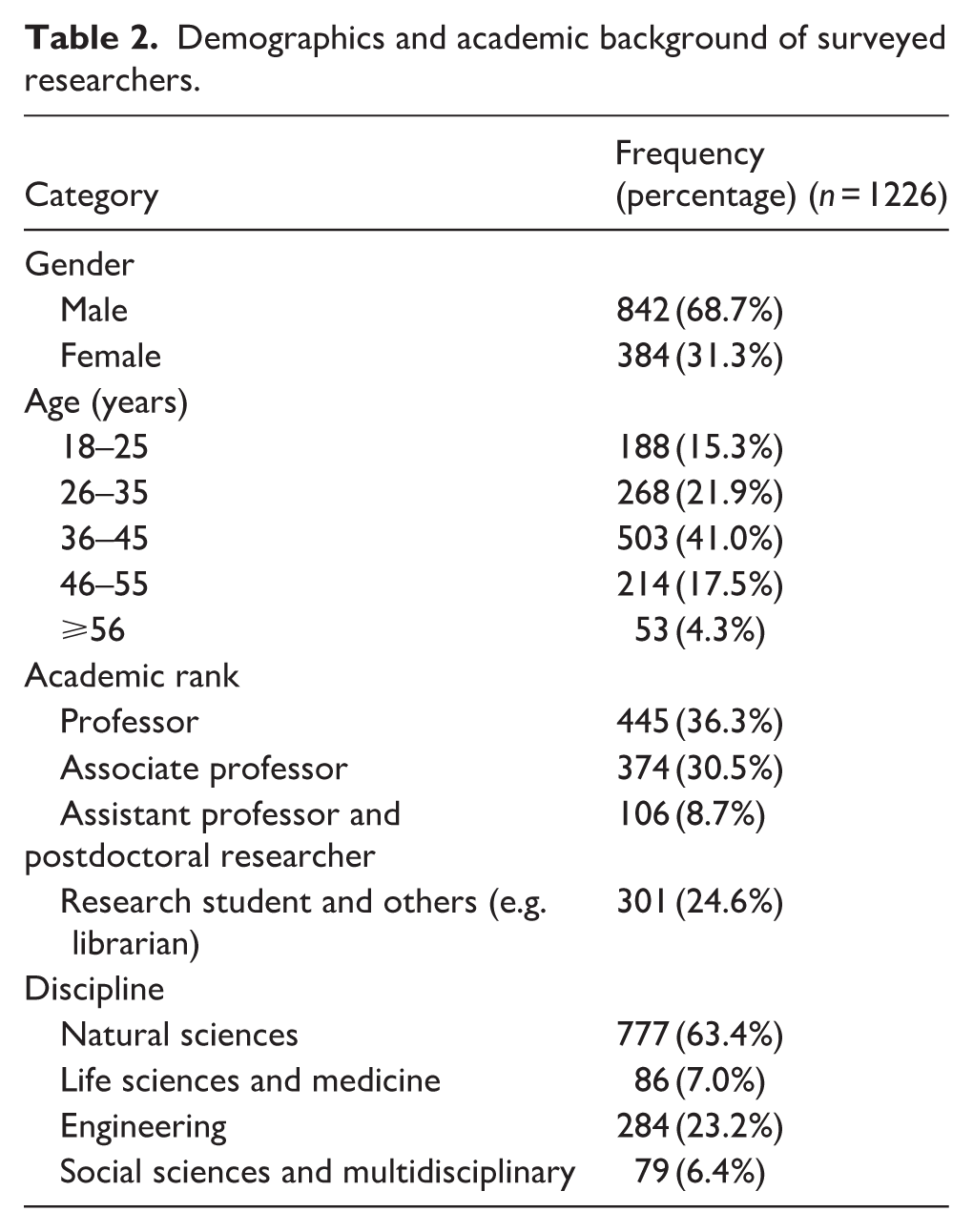
The characteristics of the 1226 surveyed researchers are outlined in Table 2. First, 97.9% of the participants were affiliated with CAS; the remaining participants include joint researchers, visiting scholars and students, or guest researchers at CAS. Second, 63.4% of the respondents were from the nature sciences domain, 23.2% from engineering, 7.0% from life sciences and medicine, 6.4% from social sciences and multidisciplinary backgrounds. Of the respondents, 36.3% occupied a professor position, 30.5% were associate professors, 8.7% were assistant professors and postdoctoral researchers, 24.6% were research students or held other positions (e.g. librarians). Additionally, 68.7% of the respondents identified as male and 31.3% as female. The proportions of the age groups 18–25, 26–35, 36–45, 46–55, and 56 years old and older were 15.3%, 21.9%, 41.0%, 17.5%, and 4.3%, respectively.
Demographics and academic background of surveyed researchers.
Respondents’ perceptions of digital transition
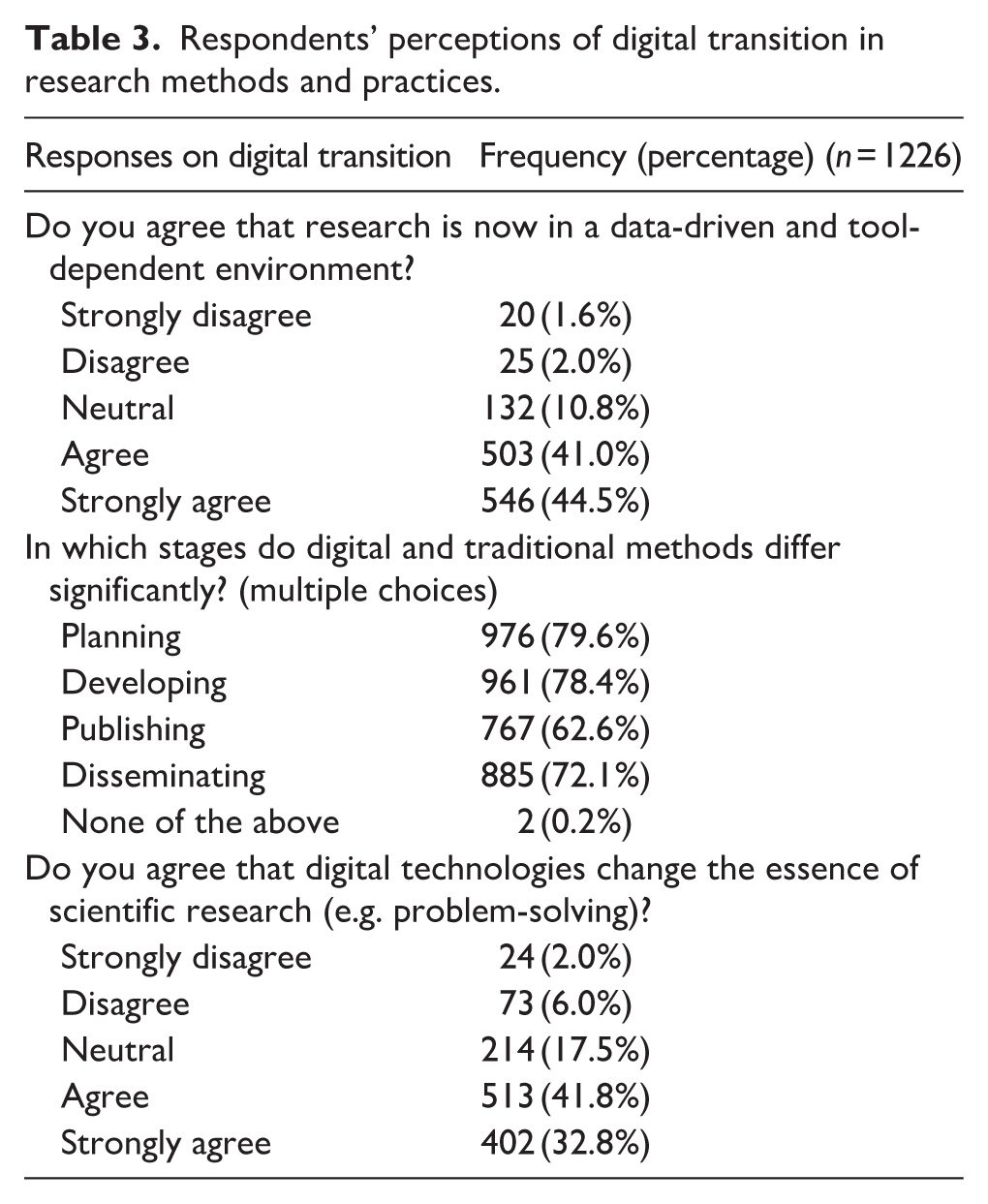
A total of 85.5% of respondents indicated that research is now in a data-driven and tool-dependent environment. Based on their academic experience, they perceived that the differences between traditional and digital research are more pronounced in the planning and developing stages of the research lifecycle, whereas the differences are less significant in the publishing and disseminating stages. In contrast, a smaller proportion (32.8%) of respondents strongly agreed, and 41.8% agreed, that digital technologies have fundamentally changed the nature of research (e.g. problem formulation, problem analysis, and problem-solving; see Table 3).
Respondents’ perceptions of digital transition in research methods and practices.
Digital resources use
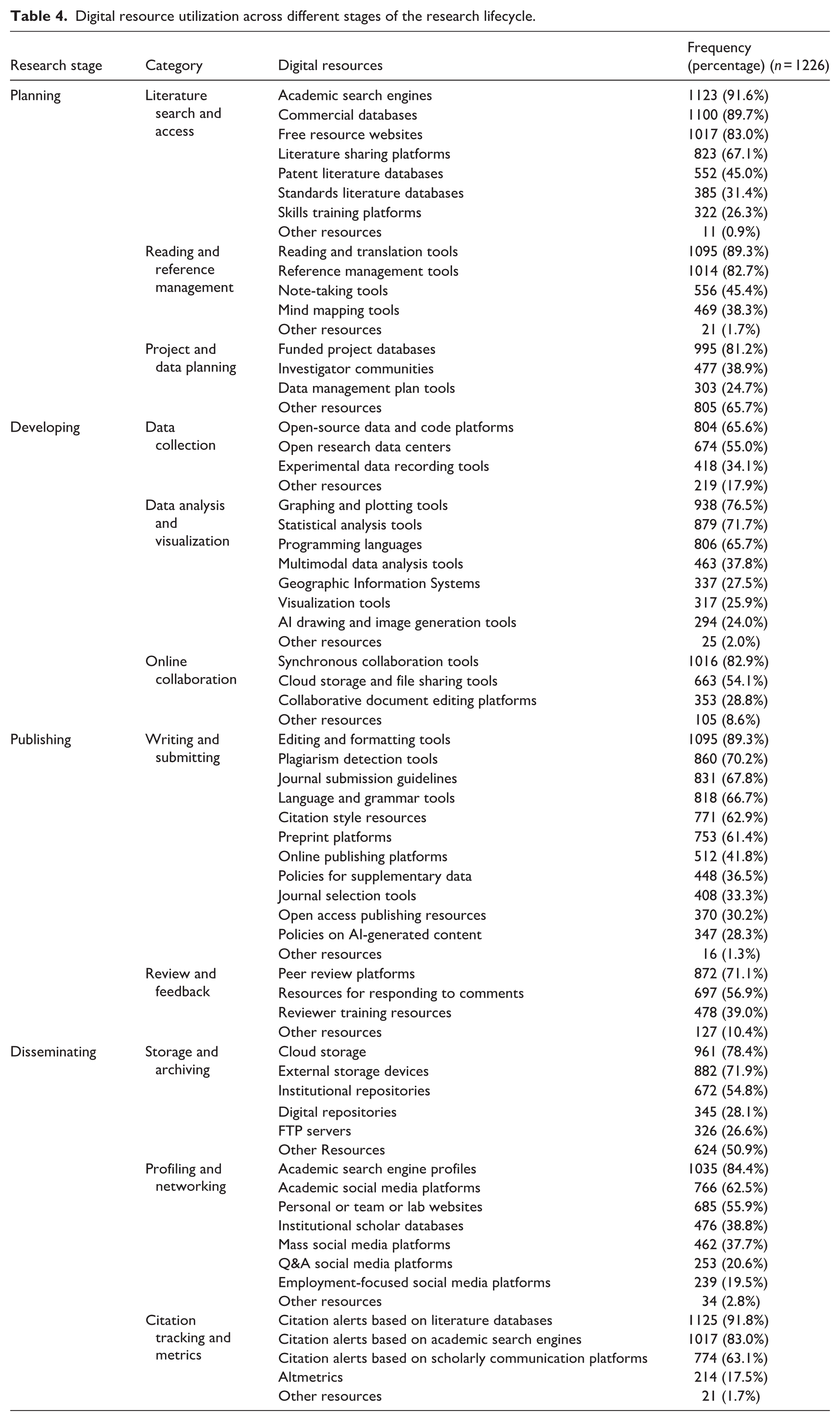
The usage of digital resources by the surveyed researchers across different stages and activities of the research lifecycle reflects their habits, preferences, and the availability of resources. Detailed statistics can be found in Table 4, with specific examples of digital resources provided in Supplemental Appendix C.
Digital resource utilization across different stages of the research lifecycle.
Planning stage
The planning stage typically begins with the generation of initial ideas, which encompass various research activities such as literature search and access, reading and reference management, as well as project and data planning. In the literature search and access process, the majority of researchers (91.6%) primarily relied on academic search engines (e.g. Google Scholar). Additionally, they frequently turned to commercial databases (e.g. Web of Science). Moreover, free resource websites (e.g. PubMed), literature sharing platforms (e.g. ResearchGate), patent literature websites, and standards literature websites served as valuable supplementary channels for accessing resources. A portion of researchers (26.3%) have also expressed interest in information literacy education and skills training platforms.
During the reading and reference management phase, 89.3% of surveyed researchers utilized reading and translation tools, while 82.7% used reference management tools. They also made use of note-taking tools and mind mapping tools to a certain extent (45.4% and 38.3%, respectively). In the project and data planning phase, researchers primarily (81.2%) referred to funded project databases, with a substantial proportion (65.7%) expressing a strong interest in additional resources, such as proposal templates and funding application training.
Developing stage
The developing stage encompasses a wide range of research activities, primarily including data collection, data analysis and visualization, and online collaboration cross these activities. In the data collection phase, researchers tended to prefer accessing open-source data and code, along with open research data, while tools for recording their experimental data (e.g. LabArchives) were used less frequently. During the data analysis and visualization phase, a diverse array of tools is available. Among them, 76.5% of surveyed researchers favored using graphing and plotting tools (e.g. GraphPad), 71.7% preferred statistical analysis tools (e.g. SPSS), and 65.7% commonly used programming languages (e.g. Python). At this stage, synchronous collaboration tools (e.g. Google Docs) and cloud storage and file sharing tools (e.g. Dropbox) facilitated convenient online collaboration.
Publishing stage
The publishing stage comprises several sub-stages, including writing and submitting, review and feedback. In the writing and submitting phase, alongside widely used editing and formatting tools (e.g. LaTeX), researchers often utilized language and grammar tools (e.g. Grammarly) to improve the quality of their English writing. Moreover, they reviewed journal submission policies and guidelines, including those for manuscript submission, AI-generated content, and supplementary research data, familiarized themselves with different citation styles, and employed plagiarism detection tools to ensure their work meets journal standards and publication requirements. In addition, researchers paid attention to and made use of preprint platforms, online publishing platforms, journal selection tools, and open access publishing resources.
During the review and feedback phase, researchers may assume both reviewer and author roles. As reviewers, they used peer review platforms such as publons and ORCID to document their review activities and voluntary contributions to the academic community. As authors, they referred to experiences, discussions, and resources from platforms like Muchong and LetPub to help them better respond to reviewer comments. Additionally, reviewer training resources supported their development from non-reviewers to reviewers, and from novice to more experienced reviewers.
Disseminating stage
The disseminating stage includes activities such as storage and archiving, profiling and networking, and citation tracking and metrics. In the storage and archiving phase, researchers primarily used cloud storage (78.4%) and external storage devices (71.9%) for archiving. They also chose institutional repositories and other websites (e.g. journal websites, personal websites) for preservation, but made less use of digital repositories and FTP servers.
In the profiling and networking phase, researchers preferred to use academic search engine profiles (e.g. Google Scholar profile), academic social media platforms (e.g. ResearchGate), and personal or team or lab websites to showcase their work and establish connections. Additionally, institutional scholar databases (e.g. Scholars @ Peking University), mass social media platforms (e.g. Twitter), Q&A social media platforms (e.g. Reddit), employment-focused social media platforms (e.g. LinkedIn) also attracted a segment of researchers.
During the citation tracking and metrics phase, researchers exhibited a strong interest in monitoring citations and quantifying metrics. Specifically, 91.8% of surveyed researchers tracked citations using literature databases (e.g. Web of Science Citation Alerts), 83.0% utilized academic search engines for citation tracking (e.g. Google Scholar Alerts), and 63.1% relied on scholarly communication platforms (e.g. ResearchGate). In contrast, only 17.5% of researchers showed interest in altmetrics, such as views, downloads, likes, mentions, and posts.
Descriptive analysis and multivariable regression
Descriptive analyses reveal clear differences in digital resource use across gender, age, academic rank, and discipline (Table 5). Female researchers consistently report higher usage than males, with the largest gap observed during the publishing stage. Younger and early-career researchers exhibit higher engagement, whereas researchers aged 56 and above and professors show comparatively lower use. Disciplinary differences are most pronounced in the planning, developing, and publishing stages, with social sciences and multidisciplinary researchers showing overall higher engagement than those in natural sciences, engineering, and life sciences and medicine. Detailed resource-level differences are provided in Supplemental Appendix D.
Digital resource utilization differences across gender, age, academic rank and discipline.
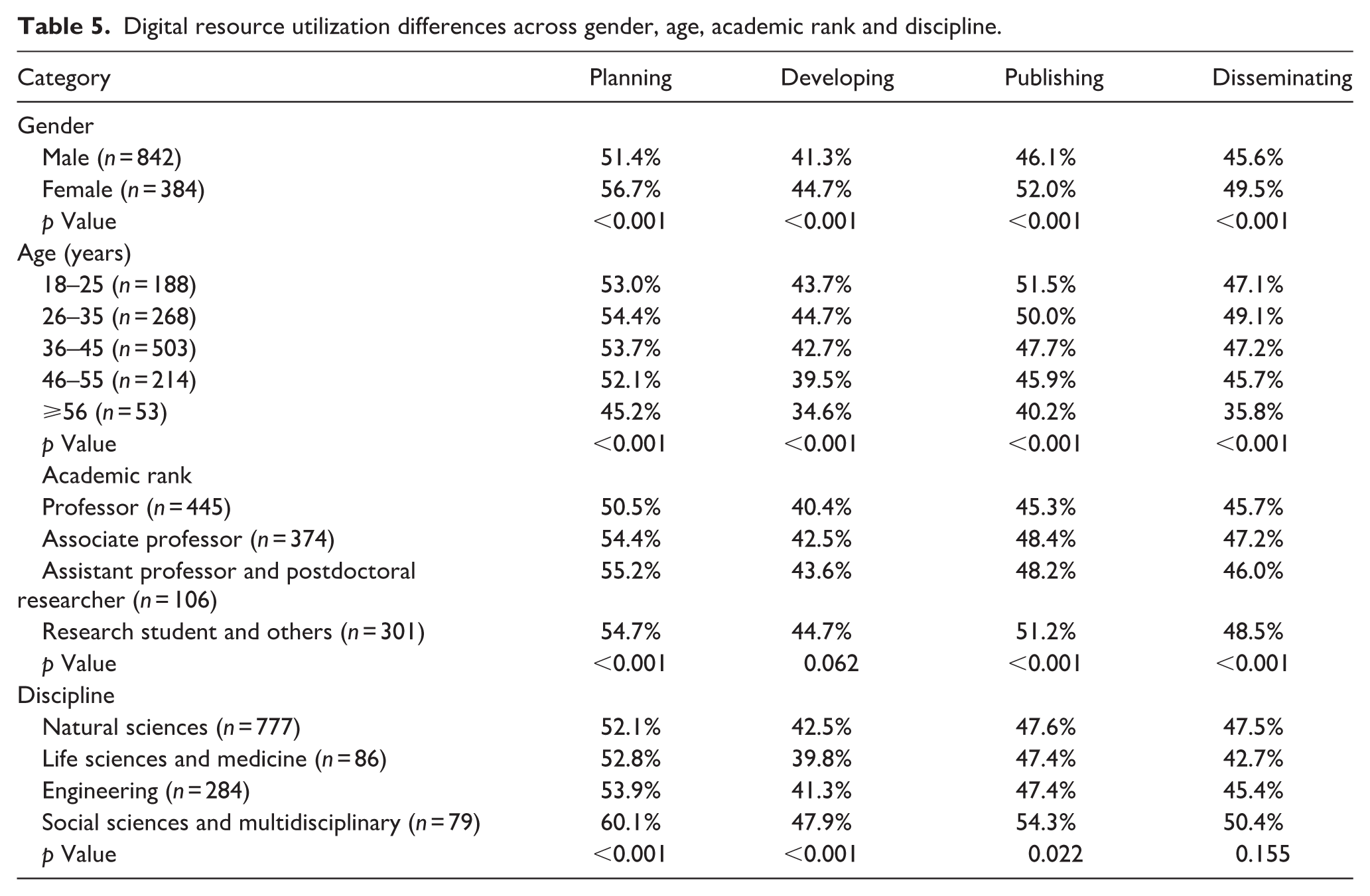
The multivariable logistic regression analyses (full results are presented in Supplemental Appendix E) indicate that gender significantly predicts the use of nearly half of the examined resources, with female researchers showing higher adoption across multiple categories. Academic rank also affects resource use: senior researchers are less likely to utilize plagiarism detection tools but more likely to use peer-review platforms compared with research students. In contrast, disciplinary background primarily predicts usage of technically oriented resources, such as graphing and plotting tools.
Table 6 presents three representative regression models. Researchers from natural sciences, life sciences and medicine, and engineering are significantly more likely to use graphing and plotting tools than those from social sciences and multidisciplinary fields (e.g. natural sciences: OR = 2.82, 95% CI: 1.73–4.60). Male researchers are less likely to use synchronous collaboration tools (OR = 0.50, 95% CI: 0.34–0.73), and senior academic ranks are substantially less likely to use plagiarism detection tools compared with research students (e.g. professors: OR = 0.30, 95% CI: 0.20–0.45).
Multivariable logistic regression results for selected digital scholarship resources.
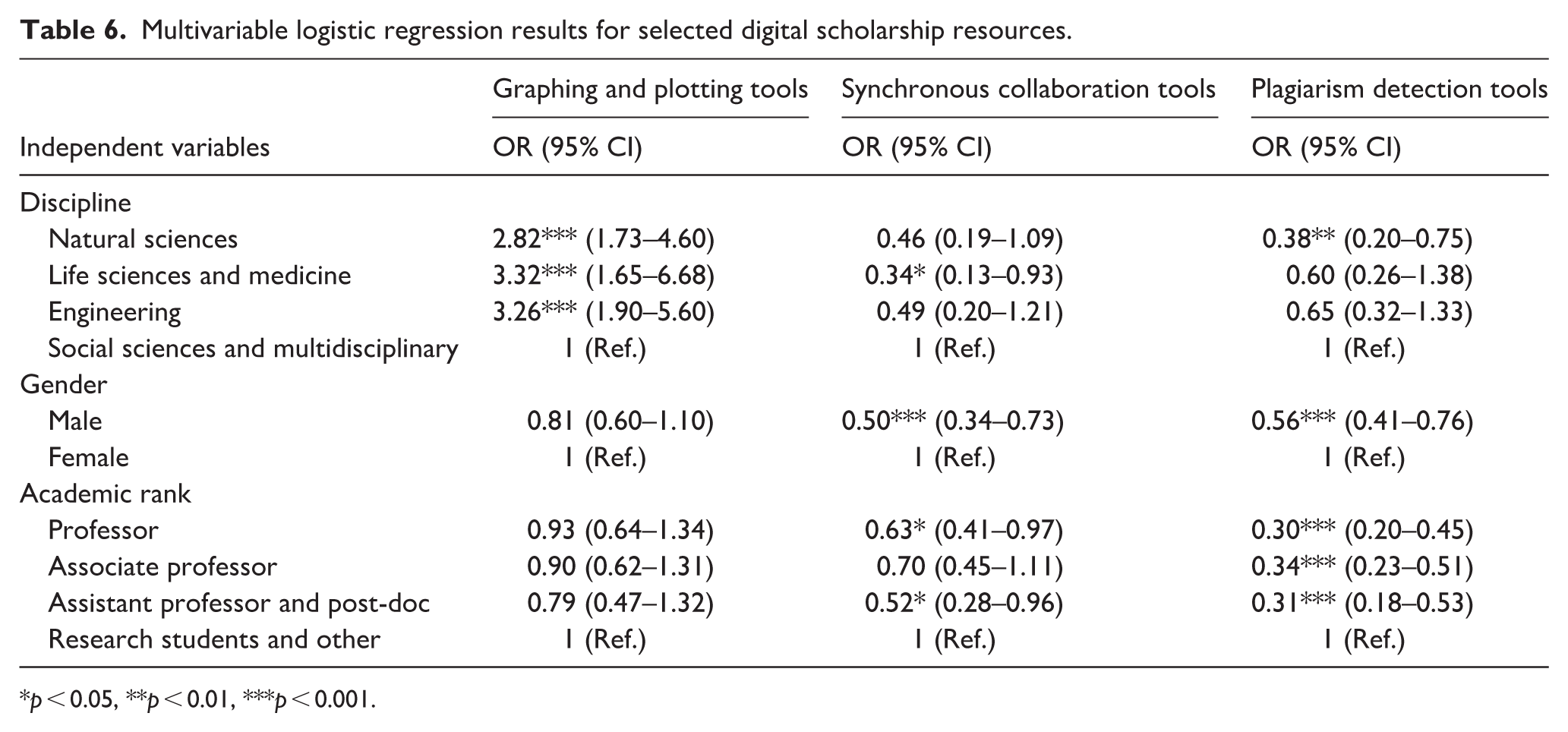
p < 0.05, **p < 0.01, ***p < 0.001.
These findings demonstrate that while differences in digital resource use across groups are widespread, the magnitude and direction of these differences vary by resource type, highlighting resource-specific effects of gender, academic rank, and discipline.
Unmet digital resources needs
Despite the wide availability of digital academic resources, researchers reported substantial unmet needs across the research lifecycle. Open-ended survey responses were analyzed using inductive thematic coding, grouping similar responses into coherent themes and calculating their frequency. The main themes are summarized in Table 7.
Thematic coding results of unmet digital resource needs.
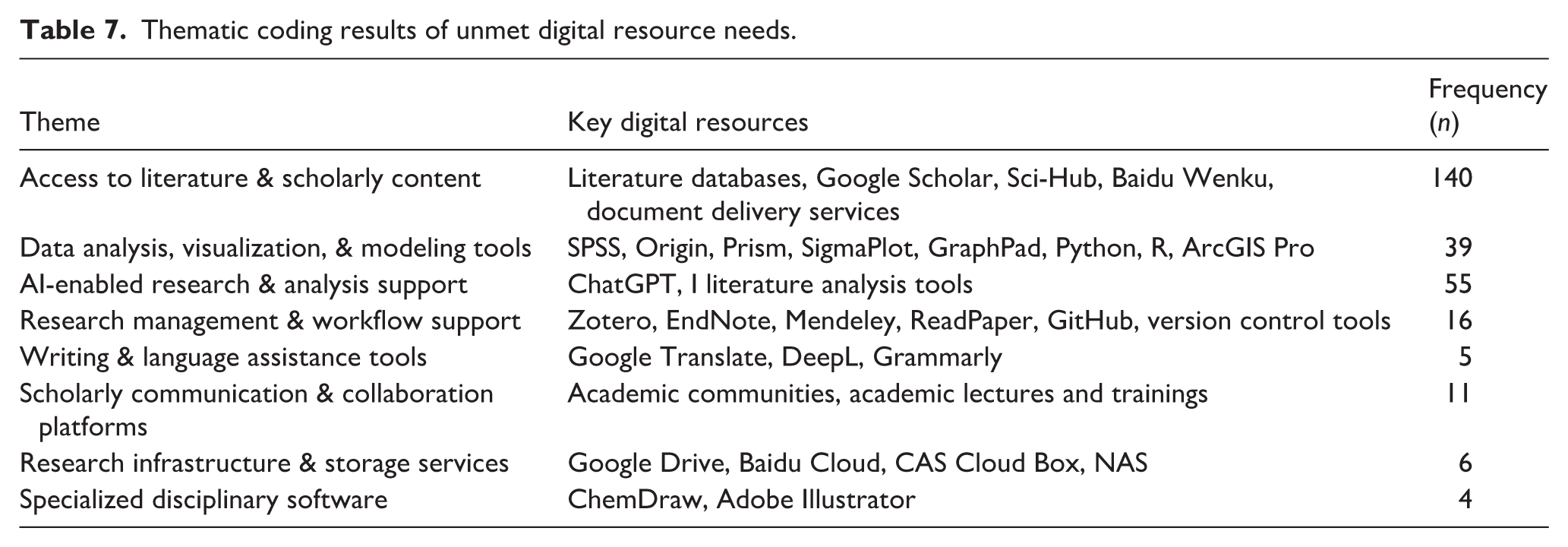
Planning stage: The main unmet need was broader access to literature and scholarly content, including journals, conference proceedings, dissertations, patents, standards, datasets, and discipline-specific databases. Key access points such as Google Scholar, Baidu Wenku, institutional repositories, and document delivery services were notably cited. Tools supporting literature reading and management, including Zotero, Mendeley, and ReadPaper, were also considered essential but inadequately supported.
Developing stage: Unmet needs focused on data analysis, visualization, and modeling tools (e.g. SPSS, Origin, GraphPad, SigmaPlot, ChemDraw, Adobe Illustrator, ArcGIS Pro) and programming environments (e.g. Python, R). Researchers also highlighted growing demand for AI-enabled research support, cloud-based computing platforms, and advanced literature analysis tools to handle data-intensive tasks.
Publishing stage: Writing and language assistance were emphasized, particularly translation tools (e.g. Google Translate, DeepL) and grammar-checking software (e.g. Grammarly), with access often limited or unstable.
Disseminating stage: Unmet needs primarily involved research infrastructure and scholarly communication. Researchers noted insufficient cloud storage services (e.g. Google Drive, CAS Cloud Box) and platforms for academic collaboration and community engagement.
Beyond stage-specific patterns, unmet needs can be synthesized into five overarching categories:
(1) Training and guidance: Researchers require support to effectively use advanced tools such as Python, R, EndNote, and Origin.
(2) Broader resource access: Expanded access to literature databases and commonly used paid software is needed.
(3) Institutional access expansion: Easier access to dissertations, scientific reports, and other restricted resources is desired.
(4) Better-developed platforms: Researchers seek more robust databases (e.g. funding project approvals, final reports), advanced cloud-based analysis platforms, and localized collaboration tools.
(5) Reduced network restrictions: Limited access to services such as Google Scholar, Google Translate, ChatGPT, and Zoom was reported as hindering research efficiency and international collaboration.
Discussion and implications
Digital resources use across the research lifecycle
Interpreted through the research lifecycle model, digital resource use among CAS researchers follows clear stage-based pattern shaped by the evolving tasks of the research process. During the planning stage, literature-related resources remain foundational, with academic search engines and commercial databases being the most frequently used tools, aligning with global usage patterns (Kramer and Bosman, 2016; Xiang and Zhu, 2019). The demand for specialized materials such as dissertations, standards, and scientific reports further highlights the importance of domain-specific knowledge infrastructures in supporting early-stage research activities. In addition, grant acquisition emerges as a prominent concern for faculty members, reflected in their interest in funded-project databases, exemplary proposals, and grant-writing training.
In the developing stage, researchers rely more heavily on tools for data analysis and visualization. However, adoption is fragmented across different software ecosystems (Lučić and Jagman, 2019), suggesting that analytical practices are often shaped by individual technical backgrounds. During the publishing stage, tool selection is influenced by disciplinary norms, journal requirements, and methodological preferences, resulting in diverse choices of writing, formatting, and submission-related resources. In the dissemination stage, citation tracking systems and professional networking platforms become more prominent, reflecting the growing importance of visibility and reputation in digital scholarly communication. Moreover, the emerging interest in AI tools suggests a potential shift toward more computational and automated research practices in the near future.
The lifecycle perspective also highlights several structural constraints affecting digital resource use. Researchers reported unmet needs in literature access, language support, and collaborative tools. The strong demand for translation and language-editing services reflects ongoing challenges faced by non-native English-speaking researchers. In addition, inconsistent access to certain global platforms—including Google Scholar, Google Docs, LinkedIn, Twitter, and some AI tools—creates an uneven digital environment that may limit opportunities for international collaboration. Institutional factors such as subscription budgets, procurement policies, training availability, and digital infrastructure further shape the range of resources researchers can effectively adopt across the research lifecycle.
Individual differences in digital resource engagement from KAP perspective
The knowledge–attitude–practice (KAP) framework helps explain how variations in researchers’ knowledge exposure, attitudes toward digital technologies, and everyday research practices jointly shape digital resource adoption.
Gender emerges as a notable predictor of digital resource use. Female researchers show a higher likelihood of adopting a range of digital tools, although gender differences are minimal for widely established tools such as academic search engines and editing and formatting tools. This pattern suggests that gender differences are more evident in the adoption of supplementary or emerging tools than in core research infrastructure.
Academic rank also influences digital resource practices. Senior researchers tend to rely more on established tools, reflecting stable research routines developed through experience. In contrast, junior researchers appear more willing to experiment with emerging tools, including AI-assisted platforms. At the same time, differences in professional roles shape tool usage: senior researchers are more likely to engage in peer-review activities and therefore use related platforms, whereas research students more frequently rely on plagiarism detection tools.
Disciplinary background shows a more selective influence, particularly in the use of graphing and plotting tools. Different fields often favor specific visualization software that reflects disciplinary research methods and data practices.
Digital resources and perceived research performance improvement
In terms of performance improvement, digital resources function as tools through which researchers seek to enhance different aspects of research performance.
Different types of digital tools are associated with distinct perceived benefits. Integrated search platforms and automated analytical tools are primarily linked to improved research efficiency by reducing time spent on information retrieval and routine data processing. Visualization and graphing software are widely perceived to enhance research quality by enabling clearer data presentation and interpretation. Big-data platforms and cloud-computing services support increased research output by enabling large-scale analyses. Meanwhile, academic profiling systems and scholarly networking platforms contribute to greater research impact by increasing visibility and facilitating dissemination.
Importantly, the adoption of these tools is shaped not only by their technical affordances but also by the institutional and policy context of contemporary academic work. In China, as in some other research systems, evaluation and funding mechanisms place considerable attention on research productivity, publication quality, and scholarly visibility. Such policy environments can influence researchers’ preferences for digital resources that help streamline research workflows, improve manuscript preparation, and enhance the dissemination of research outputs. Performance-based evaluation systems and expectations for publication productivity further motivate researchers to adopt tools that improve efficiency, presentation quality, and scholarly visibility. In this sense, digital resources function both as technical enablers and as strategic instruments that researchers use to navigate academic evaluation systems and enhance research outcomes.
Research implications
The evolving digital scholarship requires coordinated efforts from multiple stakeholders, including academic libraries, research departments, publishers, funding agencies, and information service providers. Stakeholders should account for gender, career stage, and disciplinary differences, while also responding to institutional and infrastructural barriers.
In the planning stage, improving access to research information is critical. Academic libraries should strengthen discovery systems and expand collections of specialized resources such as dissertations, standards, and technical reports. Research departments and graduate programs should provide training in literature discovery, reference management, and proposal development to support early-stage research planning. Funding agencies can also contribute by improving the transparency and accessibility of grant information and funding databases.
In the developing stage, stronger support is needed for data analysis, programming, and visualization. Institutions and IT units should ensure access to analytical software, high-performance computing, and collaborative research environments. Libraries can complement this infrastructure by offering training in data analysis, research data management, and reproducible research practices. Publishers and data repositories should continue to improve access to open datasets and code-sharing platforms to facilitate data reuse and transparency.
In the publishing stage, support services should address both technical and procedural challenges in scholarly communication. Libraries can assist researchers through academic writing support, language editing, and guidance on journal selection and open access policies. Publishers should enhance author services by providing clearer submission guidance and tools that facilitate manuscript preparation. Research departments can further support researchers by offering guidance on publication strategies and research evaluation practices.
In the dissemination stage, increasing research visibility and impact becomes a priority. Institutions should strengthen repositories and long-term preservation infrastructures to support open dissemination of research outputs. Libraries can provide training in bibliometrics and research visibility strategies, while scholarly platforms and information providers should improve systems for academic profiling and citation tracking to help researchers expand their scholarly reach.
Across all stages, addressing structural barriers—such as uneven digital infrastructure, fragmented training opportunities, and limited access to international platforms—remains essential for strengthening researchers’ capacity to effectively engage with digital scholarship.
Conclusion
This study provides a comprehensive overview of the use and needs of digital resources among CAS researchers throughout the research lifecycle, based on responses from 1226 participants. By integrating the research lifecycle model, the KAP model, and the performance improvement model, the study offers a multidimensional understanding of the behavioral, perceptual, and performance-oriented factors that shape digital scholarship practices. The results highlight the centrality of literature access, the widespread need for data analysis and visualization tools, the importance of securing funding and publications, and the ongoing relevance of tracking scholarly impact. The growing interest in AI tools and collaborative platforms further reflects the dynamic evolution of digital scholarship. Additionally, the findings show that language barriers and restricted access to certain global digital platforms pose significant challenges for researchers seeking to engage more fully in international scholarly communication.
Although digital resources offer clear opportunities to improve efficiency, quality, output, and impact, the extent to which these benefits are realized depends on broader institutional and infrastructural conditions. The results therefore hold practical implications for libraries, academic departments, publishers, and policymakers seeking to strengthen research support ecosystems.
This study is subject to several limitations. First, the sample is drawn primarily from researchers affiliated with the Chinese Academy of Sciences (CAS), its disciplinary composition is heavily oriented toward natural sciences and engineering, social sciences and humanities are underrepresented. This may limit the extent to which the findings reflect the broader population of academic researchers. Second, the survey response rate is relatively modest (11.1%), which is common in large-scale online surveys but raises the possibility of non-response bias. It is possible that researchers who chose to participate are more interested in digital tools or possess higher levels of digital literacy than the broader research community, which may lead to an overestimation of digital resource adoption and engagement. Third. China’s specific technological, cultural and policy environment—particularly regarding access to certain global platforms—may limit the generalizability of some findings to other contexts.
Despite these limitations, the study provides valuable empirical insights into digital scholarship practices within a major research community and underscores the importance of institutional, technological, and policy environments in shaping the adoption and use of digital resources. Future research could expand the sample to include a broader range of universities and disciplines, particularly in the social sciences and humanities, in order to provide a more comprehensive understanding of digital scholarship practices.
Supplemental Material
sj-docx-1-lis-10.1177_09610006261447517 – Supplemental material for Investigating the use and needs of digital resources across the digital scholarship lifecycle: Evidence from researchers at the Chinese Academy of Sciences
Supplemental material, sj-docx-1-lis-10.1177_09610006261447517 for Investigating the use and needs of digital resources across the digital scholarship lifecycle: Evidence from researchers at the Chinese Academy of Sciences by Zhifang Tu and Jiashu Shen in Journal of Librarianship and Information Science
Supplemental Material
sj-docx-2-lis-10.1177_09610006261447517 – Supplemental material for Investigating the use and needs of digital resources across the digital scholarship lifecycle: Evidence from researchers at the Chinese Academy of Sciences
Supplemental material, sj-docx-2-lis-10.1177_09610006261447517 for Investigating the use and needs of digital resources across the digital scholarship lifecycle: Evidence from researchers at the Chinese Academy of Sciences by Zhifang Tu and Jiashu Shen in Journal of Librarianship and Information Science
Supplemental Material
sj-docx-3-lis-10.1177_09610006261447517 – Supplemental material for Investigating the use and needs of digital resources across the digital scholarship lifecycle: Evidence from researchers at the Chinese Academy of Sciences
Supplemental material, sj-docx-3-lis-10.1177_09610006261447517 for Investigating the use and needs of digital resources across the digital scholarship lifecycle: Evidence from researchers at the Chinese Academy of Sciences by Zhifang Tu and Jiashu Shen in Journal of Librarianship and Information Science
Supplemental Material
sj-docx-4-lis-10.1177_09610006261447517 – Supplemental material for Investigating the use and needs of digital resources across the digital scholarship lifecycle: Evidence from researchers at the Chinese Academy of Sciences
Supplemental material, sj-docx-4-lis-10.1177_09610006261447517 for Investigating the use and needs of digital resources across the digital scholarship lifecycle: Evidence from researchers at the Chinese Academy of Sciences by Zhifang Tu and Jiashu Shen in Journal of Librarianship and Information Science
Supplemental Material
sj-xlsx-5-lis-10.1177_09610006261447517 – Supplemental material for Investigating the use and needs of digital resources across the digital scholarship lifecycle: Evidence from researchers at the Chinese Academy of Sciences
Supplemental material, sj-xlsx-5-lis-10.1177_09610006261447517 for Investigating the use and needs of digital resources across the digital scholarship lifecycle: Evidence from researchers at the Chinese Academy of Sciences by Zhifang Tu and Jiashu Shen in Journal of Librarianship and Information Science
Footnotes
Acknowledgements
The authors would like to express their sincere gratitude to Dr. Yanqin Weng, Ms. Bo Tan, Dr. Wenyu Zhu, Dr. Wenyue Huang, and Dr. Lanfang Li at National Science Library, Chinese Academy of Sciences for their assistance in the design and implementation of the questionnaire. Special appreciation is also extended to all the researchers who participated in the survey.

Funding
The authors disclosed receipt of the following financial support for the research, authorship, and/or publication of this article: This work was supported by the Youth Talent Fund of National Science Library at Chinese academy of Sciences [grant number: E3510301].
Declaration of conflicting interests
The authors declared no potential conflicts of interest with respect to the research, authorship, and/or publication of this article.
Supplemental material
Supplemental material for this article is available online.
Author biographies
References
Supplementary Material
Please find the following supplemental material available below.
For Open Access articles published under a Creative Commons License, all supplemental material carries the same license as the article it is associated with.
For non-Open Access articles published, all supplemental material carries a non-exclusive license, and permission requests for re-use of supplemental material or any part of supplemental material shall be sent directly to the copyright owner as specified in the copyright notice associated with the article.
