







Abstract
This study examines the silent socialisation of artificial intelligence (AI) in academic library work, focussing on how AI becomes an implicit and routine presence shaping professional practices. Using a quantitative cross-sectional design, data were collected from 100 academic library professionals in India through a structured questionnaire. Exploratory factor analysis identified seven dimensions of AI integration, including workflow embeddedness, implicit decision influence, cognitive backgrounding, and future embeddedness. The findings indicate that AI is increasingly experienced as an infrastructural condition of work rather than a discrete tool, influencing task flow, decision-making, and cognitive processes in subtle and often unarticulated ways. Significant differences were observed across professional designations, while perceptions remained consistent across other demographic variables. The study contributes to the literature by conceptualising AI integration as a process of silent socialisation, highlighting the need for greater institutional awareness, governance, and critical engagement with AI in professional environments.
Keywords
Introduction
Artificial intelligence (AI) is no longer arriving in libraries as a clearly bounded “new tool”; it is increasingly embedded within everyday information environments where librarians and users search, evaluate, and communicate knowledge. The public release of generative AI systems such as ChatGPT accelerated this shift, making visible broader questions about the role of AI in librarianship and professional identity (Appedu and Tacheva, 2025). However, beyond this visibility, AI is quietly becoming routine, embedded in search systems, writing tools, and platform infrastructures that shape how work begins and progresses.
This everyday embedding matters because AI introduces both efficiency and uncertainty. While generative systems can support faster searching and drafting, they also produce probabilistic outputs that may contain inaccuracies. In library contexts, where credibility and verification are central, this creates a subtle shift in how evidence is evaluated and how professional accountability is exercised (Ford et al., 2026). As AI becomes routine, unreliable outputs may be absorbed into practice through habit and time pressure rather than critical scrutiny.
A further shift concerns professional agency. AI systems do not simply assist; they participate in shaping attention, interpretation, and decision-making. When systems frame queries, rank results, or generate summaries, they act as cognitive extenders that both support and constrain professional judgement (McCrary, 2026). This reflects a broader move towards distributed agency, where decisions emerge through human–machine interaction rather than individual control (Appedu and Tacheva, 2025).
At the organisational level, the integration of AI is uneven. Individual familiarity with AI tools is often advancing faster than institutional frameworks for governance, policy, and ethical guidance. This gap creates conditions in which AI becomes embedded in practice without being fully articulated or formally regulated (Togia et al., 2026). As a result, librarians frequently adapt to AI in situ, negotiating its role within workflows even in the absence of structured institutional direction.
Against this backdrop, the present study examines the silent socialisation of AI in academic library work. Rather than focussing on explicit adoption decisions or formal implementation strategies, the study explores how AI becomes an unspoken, routine presence that shapes task flow, influences decisions, and redistributes cognitive effort in everyday professional practice. By centring this implicit and practice-based dimension, the study contributes to understanding how AI reshapes librarianship not only through visible transformation but also through gradual and often unnoticed integration.
Objectives of the study
To examine how AI becomes an unspoken, routine presence in academic library work.
To analyse how AI changes task flow and distributes work between staff and AI-enabled systems.
To explore how AI inputs shape professional decisions without formal discussion or approval.
To investigate how routine AI use shifts attention away from (and compresses) human cognitive effort in daily tasks.
To assess how AI subtly reshapes librarians’ roles towards oversight, coordination, and accountability.
To evaluate how reliance on AI becomes normal, habitual, and less consciously chosen over time.
To understand how library professionals assume AI will remain embedded in future practice and planning.
Research questions
This study addresses the following research questions:
Review of literature
Artificial Intelligence in academic and research libraries
Research on artificial intelligence (AI) in academic libraries has expanded significantly, particularly in the context of digital transformation. Studies consistently position AI as an enabling technology that enhances efficiency, scalability, and service innovation rather than replacing librarianship (Asemi et al., 2021; Pence, 2022). Common applications include machine learning, natural language processing, chatbots, and recommender systems, with use cases in cataloguing, classification, information retrieval, and reference services (Concha et al., 2024; Harisanty et al., 2025).
AI is also widely framed as a driver of digital transformation. Conceptual frameworks emphasise its role in delivering value-added services and enabling new forms of knowledge access and service delivery (Okunlaya et al., 2022). Empirical studies on chatbot deployment highlight both efficiency gains and limitations related to accuracy, contextual understanding, and ethical transparency (Li and Coates, 2025; Liu and Liu, 2026).
At the same time, recent research indicates that AI is increasingly embedded within library systems in less visible ways, subtly reshaping information-seeking processes and redistributing decision-making agency between users and algorithms (McCrary, 2026). Studies also show generally positive attitudes among librarians towards AI, alongside concerns regarding infrastructure, skills, and governance (Harisanty et al., 2024).
Digital technologies and changing library work practices
Digital technologies in libraries are not simply tools but mechanisms that reshape workflows, decision processes, and organisational structures. Research shows that technology adoption often disrupts established routines and introduces new forms of work distribution (Rahman et al., 2024, 2025).
Infrastructure developments such as cloud computing further transform service delivery by enabling scalable and continuous access, while also requiring organisational readiness and strategic planning (Ibrahim et al., 2025). Adoption models integrating TAM and TOE frameworks highlight the importance of technological, organisational, and human factors in shaping these transitions (Yuan, 2026).
Data-driven tools also influence professional decision-making, particularly in planning, resource allocation, and service evaluation, while introducing challenges related to skills, privacy, and system complexity (Roy, 2024; Xu et al., 2025).
Human–technology interaction in professional work settings
Research on human–technology interaction shows a shift from tool-based use to continuous interaction with intelligent systems. Studies emphasise the importance of usability, cognitive alignment, and user-centred design in shaping both workflows and service outcomes (Khan et al., 2025). AI systems increasingly perform routine communicative tasks, redistributing labour between humans and machines while maintaining human responsibility for oversight and contextual judgement (Aboelmaged et al., 2025; Li and Coates, 2025). Librarians often engage with AI as collaborative assistants rather than autonomous tools, reflecting evolving patterns of interaction. At a conceptual level, AI integration is understood as reshaping professional agency by embedding algorithmic processes into everyday systems, thereby influencing decision-making and reducing transparency in practice (McCrary, 2026).
Technology influence on professional decision-making
Digital and AI-driven systems increasingly shape professional decision-making indirectly. Algorithmic systems influence how information is prioritised, framed, and interpreted, introducing new ethical and practical challenges (Cox, 2023). Research on algorithmic bias highlights how system design and training data affect search results and knowledge representation, raising concerns about fairness and accountability (Igbinovia and Mensah Danquah, 2025). Studies also show that awareness of such limitations does not necessarily reduce reliance on AI systems (Okuonghae et al., 2025).
Empirical work confirms that AI tools influence both managerial and service-level decisions in libraries, reinforcing institutional dependence on automated systems despite ongoing concerns regarding governance and expertise (Çakmak and Eroğlu, 2025; Fabunmi and Akinyemi, 2024).
Cognitive backgrounding and invisible cognitive labour
Recent scholarship highlights how AI reshapes professional work by redistributing cognitive effort. AI systems perform tasks such as summarisation and recommendation, enabling cognitive offloading but potentially reducing critical engagement (Shin et al., 2025). Studies identify risks such as reduced metacognitive monitoring and increased reliance on automated outputs (Fan et al., 2025). Algorithmic systems also shape perception and attention invisibly, structuring information before professionals actively engage with it (Monteiro-Krebs et al., 2023). Within libraries, this results in a shift towards supervisory roles, where professionals oversee rather than perform core cognitive tasks (McCrary, 2026).
Silent socialisation of technology
AI integration often occurs gradually and without explicit articulation, becoming embedded in everyday practice through routine use. Research shows that technologies are frequently normalised without formal discussion or conceptual framing (Borgohain et al., 2024). Empirical studies demonstrate how AI systems such as chatbots are absorbed into workflows, redistributing responsibilities without formal redefinition of roles (Adewojo et al., 2026; Kaushal and Yadav, 2022). This process reflects a form of silent socialisation, where adoption occurs through practice rather than strategy.
Future orientation and sustainability
AI is increasingly framed as a long-term infrastructural component of library systems. Research highlights the need to align AI adoption with sustainability, equity, and institutional responsibility (Mathiasson and Jochumsen, 2022). Studies emphasise that AI can support future service delivery and knowledge systems, but its sustainability depends on governance, training, and ethical alignment (Chen, 2026; Tella, 2026). Strategic frameworks further highlight the importance of balancing innovation with institutional risks and sustainability goals (Kamińska, 2026)
Theoretical framework
The integration of artificial intelligence (AI) into academic library work can be understood through a combination of technology adoption, organisational, and sociotechnical perspectives. Rather than representing discrete theoretical domains, these frameworks collectively inform the multidimensional nature of AI socialisation examined in this study.
The Technology Acceptance Model (TAM) provides a foundational lens for understanding how individuals perceive and engage with AI technologies. Core constructs such as perceived usefulness and perceived ease of use explain how AI becomes normalised within routine professional practices (Davis, 1989). In the context of this study, TAM informs constructs such as Normalised Reliance on AI and Taken-for-Granted Co-Presence of AI, reflecting how repeated interaction leads to cognitive and behavioural acceptance of AI tools. Prior studies have shown that perceived utility and usability significantly influence librarians’ adoption of AI-enabled systems (Subuhpoto et al., 2026).
Complementing this individual-level perspective, the Technology–Organisation–Environment (TOE) framework situates AI adoption within broader institutional contexts. TOE emphasises the role of technological readiness, organisational support, and environmental pressures in shaping adoption outcomes (Tornatzky and Fleischer, 1990). In this study, TOE informs constructs such as Redistribution of Work Practices and Re-Alignment of Professional Roles, as AI integration often depends on institutional infrastructure, leadership support, and external innovation pressures (Sang, 2025).
The Unified Theory of Acceptance and Use of Technology (UTAUT) further extends this understanding by incorporating social and facilitating factors, including social influence and facilitating conditions (Venkatesh et al., 2003). These elements are reflected in constructs such as Implicit Influence on Professional Decisions, where AI systems shape decision-making processes through embedded recommendations and algorithmic outputs. Empirical evidence highlights the importance of social and contextual factors in influencing AI use behaviour in library settings (Kang, 2026).
At the diffusion level, Diffusion of Innovations (DOI) theory explains how AI technologies spread and become embedded within professional communities over time (Rogers, 2003). DOI informs the construct of Assumed Future Embeddedness of AI, capturing expectations regarding the continued integration of AI into library work. Librarians’ roles as early adopters and innovators have been documented, highlighting their proactive engagement with emerging technologies (Harisanty et al., 2025).
Beyond adoption models, the study is conceptually anchored in Sociotechnical Systems Theory, which views technology and human practices as interdependent and co-evolving (Trist, 1981). AI in libraries is not merely a tool but a sociotechnical condition that reshapes knowledge production, authority, and professional identity (Sousa, 2025). This perspective is central to constructs such as Cognitive Backgrounding of Work Processes and Implicit Influence on Professional Decisions, where AI operates subtly within workflows, influencing cognition and action without explicit awareness. The observed convergence of factors in the empirical analysis supports this view of AI socialisation as an emergent and interconnected process rather than a set of discrete dimensions.
Finally, ethical and sustainability frameworks provide a normative lens for understanding the long-term implications of AI integration. Issues such as algorithmic bias, transparency, data privacy, and institutional responsibility are increasingly central to AI adoption in libraries (Matsieli and Mutula, 2025). These considerations inform constructs such as Re-Alignment of Professional Roles and Assumed Future Embeddedness of AI, highlighting the need for responsible and sustainable integration strategies aligned with broader institutional and societal goals (Kamińska, 2026).
Taken together, these theoretical perspectives provide a comprehensive framework for understanding the silent socialisation of AI in academic library work. The study integrates these approaches to examine how AI becomes embedded in professional practices, not only through conscious adoption decisions but also through gradual, often implicit, transformations in workflows, cognition, and institutional structures.
Conceptual framework
Figure 1 shows the conceptual framework of the silent socialisation of artificial intelligence (AI) in academic library work. The framework illustrates how AI technologies, institutional context, and user perceptions act as key antecedents that drive the integration of AI into professional practice. These antecedents collectively contribute to the process of silent socialisation, which is conceptualised as a gradual, implicit, and unarticulated embedding of AI within everyday work activities.
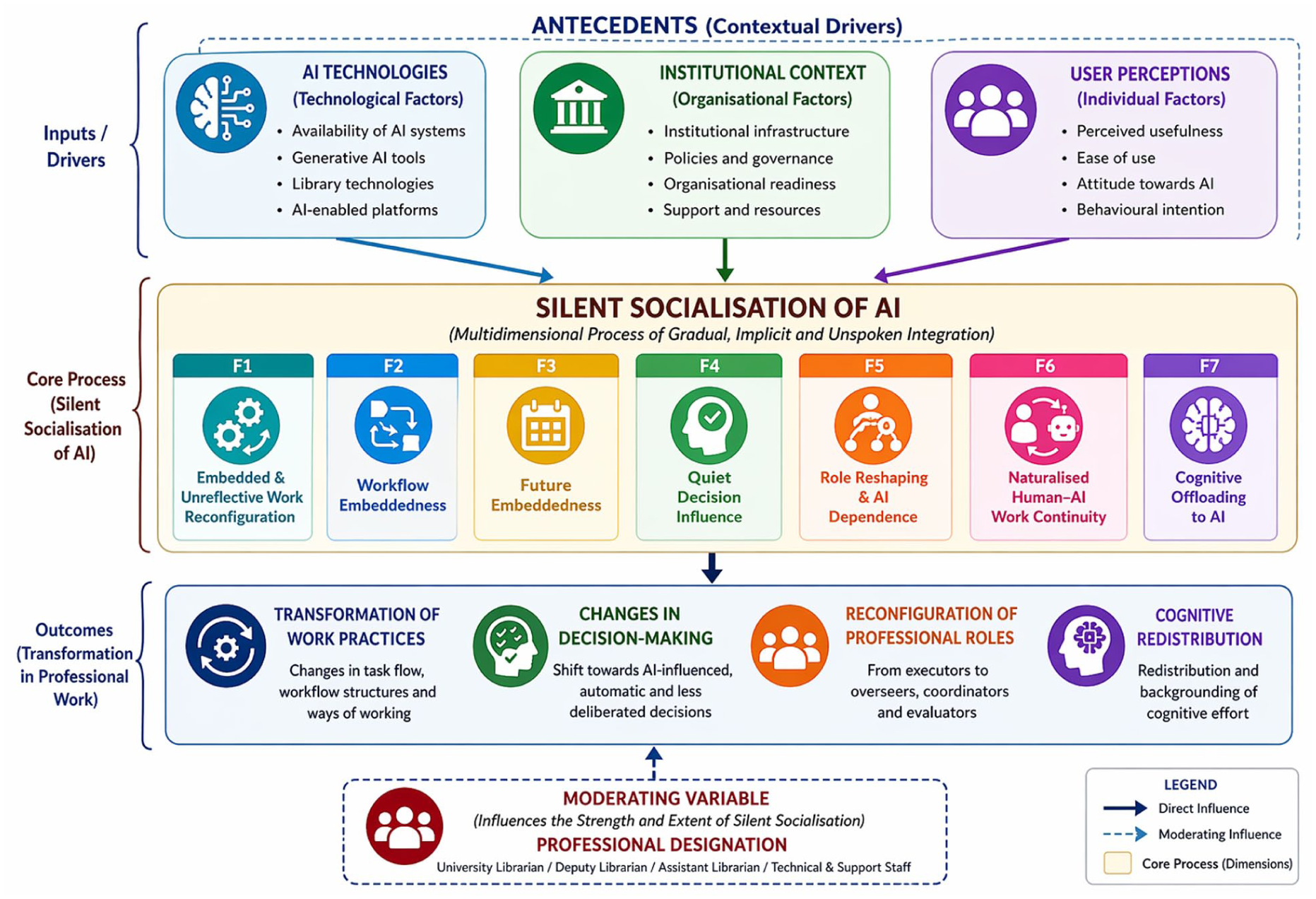
Conceptual framework of silent socialisation of artificial intelligence in academic library work.
The core process of silent socialisation is operationalised through seven interrelated dimensions: embedded and unreflective AI work reconfiguration (F1), workflow embeddedness (F2), future embeddedness (F3), quiet decision influence (F4), role reshaping and AI dependence (F5), naturalised human–AI work continuity (F6), and cognitive offloading to AI (F7). These dimensions collectively capture how AI becomes integrated into workflows, influences decision-making, redistributes cognitive effort, and reshapes professional roles in subtle and routine ways.
The framework further demonstrates that this process leads to broader outcomes in professional work, including transformation of work practices, changes in decision-making processes, reconfiguration of professional roles, and cognitive redistribution. These outcomes reflect the shift from traditional task execution towards more oversight-oriented and AI-mediated forms of professional work.
Additionally, the framework incorporates professional designation as a moderating variable, influencing the strength and extent of AI socialisation across different professional groups. This suggests that the experience of AI integration varies depending on role and level of engagement within the organisational structure. Overall, the framework presents AI integration not as a discrete adoption event but as an ongoing sociotechnical process embedded within everyday professional practice.
Methodology
Research design
This study adopted a quantitative cross-sectional research design to examine the silent socialisation of artificial intelligence (AI) in the professional work practices of academic library professionals. The design enabled the systematic collection of self-reported data at a single point in time to capture perceptions of AI integration, workflow transformation, cognitive shifts, and professional role reconfiguration. A structured survey approach was employed to operationalise the multidimensional nature of AI socialisation through measurable constructs.
Population, sampling, and setting
The target population comprised academic library professionals working in universities and university-affiliated colleges in India. Institutions were identified using the National Institutional Ranking Framework (NIRF) 2024 listings to ensure representation across major institutional categories, including central universities, state universities, deemed universities, and affiliated colleges. A non-probability purposive sampling technique was employed, as participation required respondents who were actively engaged in academic library work and had exposure to AI-enabled tools or systems within their professional environment. This approach ensured the inclusion of respondents with relevant experience of AI-mediated work practices.
Data collection and sample size
Data were collected using a structured online questionnaire distributed through email invitations and professional communication platforms such as WhatsApp groups. Approximately 525 email invitations were circulated; however, some addresses were inactive or undeliverable. A total of 102 responses were received, of which 100 fully completed questionnaires were retained after screening for completeness and suitability for analysis. Prior to full administration, the questionnaire was pilot tested to assess clarity, wording, and relevance of items. Minor revisions were made to improve item clarity and contextual appropriateness for academic library professionals. The final sample of 100 respondents was considered adequate for the planned statistical analyses, including exploratory factor analysis and inferential testing. Data collection was concluded on 1 February 2026.
Instrument and measures
Data were collected using a self-developed structured questionnaire designed to capture the multidimensional nature of AI integration in academic library work. The instrument was developed by the authors on the basis of the study objectives and an extensive review of literature on AI adoption in libraries, human–technology interaction, algorithmic mediation, cognitive offloading, professional role reconfiguration, and future embeddedness of AI. The questionnaire comprised seven constructs: Taken-for-Granted Co-Presence of AI, Redistribution of Work Practices, Implicit Influence on Professional Decisions, Cognitive Backgrounding of Work Processes, Re-Alignment of Professional Roles, Normalised Reliance on AI, and Assumed Future Embeddedness of AI. Each construct was measured using five items, yielding a total of 35 substantive items, in addition to demographic questions.
Because no single existing scale fully captured the concept of silent socialisation in academic library work, the items were developed by the authors and contextually framed for academic library professionals rather than directly adopted from a single previously validated instrument. Nevertheless, the item pool was theoretically informed by prior scholarship on AI-enabled work practices, distributed agency, cognitive mediation, and routine technology integration. All items were measured on a five-point Likert scale ranging from Strongly Agree to Strongly Disagree. A pilot test was conducted before the final survey administration, and feedback from the pilot was used to refine item wording, reduce ambiguity, and improve contextual relevance. The final questionnaire is reproduced in Supplemental Appendix A.
Reliability and validity
Internal consistency reliability was assessed using Cronbach’s alpha, with values ranging from 0.796 to 0.842 across the seven constructs, indicating acceptable to good reliability. Detailed reliability coefficients for each construct are presented in Table 2. Construct validity was evaluated using exploratory factor analysis. The Kaiser–Meyer–Olkin (KMO) measure of sampling adequacy was 0.854, indicating excellent suitability for factor analysis. Bartlett’s Test of Sphericity was statistically significant (χ2 = 2872.048, df = 595, p < 0.001), confirming that the data were appropriate for factor analysis.
Although seven factors were extracted, the item distribution differed from the theoretically proposed constructs, suggesting that AI socialisation is experienced in a more integrated and practice-driven manner than originally theorised. Factor loadings exceeded the acceptable threshold of 0.40, supporting the multidimensional structure of the instrument. Taken together, the pilot testing, internal consistency results, and factor-analytic evidence indicate that the self-developed questionnaire was sufficiently reliable and valid for examining the silent socialisation of AI in academic library work. However, the factor structure derived from EFA showed variations in item distribution across factors compared to the theoretically proposed constructs, reflecting the exploratory nature of the analysis.
Ethical considerations
Ethical approval for the study was obtained from the Institutional Ethics Committee (IEC Approval Ref. No.: JWS/IEC/AI-LIB/2026/01), approved on 29 January 2026. Participation in the study was voluntary, and informed consent was obtained from all respondents. The survey was anonymous, and all responses were used solely for academic research purposes, ensuring confidentiality and ethical compliance.
Statistical analysis
Data analysis was conducted using statistical software. Reliability was assessed using Cronbach’s alpha, and construct validity was examined through exploratory factor analysis using principal component analysis (PCA) as the extraction method with varimax rotation. Varimax rotation was selected to achieve a simplified and interpretable factor structure. Factors were retained based on the Kaiser criterion (eigenvalues greater than 1). The analysis resulted in a seven-factor solution, aligning in number (but not structure) with the theoretically proposed constructs, and accounting for a substantial proportion of the total variance.
Inferential analyses included Pearson correlation to examine relationships among factors, and one-way analysis of variance (ANOVA) to evaluate differences across demographic variables such as designation, institution type, educational qualification, and years of experience. Where significant differences were identified, Tukey’s HSD post hoc test was applied. Effect sizes were reported using eta squared (η2) to assess the practical significance of findings. Post hoc comparisons were interpreted only for factors with statistically significant ANOVA results.
Prior to conducting ANOVA, assumptions of normality and homogeneity of variance were assessed using the Shapiro–Wilk test and Levene’s test, respectively. Homogeneity of variance was satisfied for all factors (p > 0.05). While minor deviations from normality were observed, ANOVA is considered robust to moderate violations. Effect sizes were interpreted using eta squared (η2), with thresholds of 0.01 (small), 0.06 (medium), and 0.14 (large).
Results
Figure 2 presents the demographic profile of the respondents (N = 100). The majority of participants were affiliated with University-Affiliated Colleges (67%), followed by State Universities (18%), Central Universities (8%), and Deemed Universities (7%). In terms of designation, nearly half of the respondents were University Librarians/Chief Librarians (46%), while Technical/Semi-Professional/Support Staff constituted 26%, Assistant Librarians/Library Officers/Information Scientists 21%, and Deputy/Associate Librarians 7%.
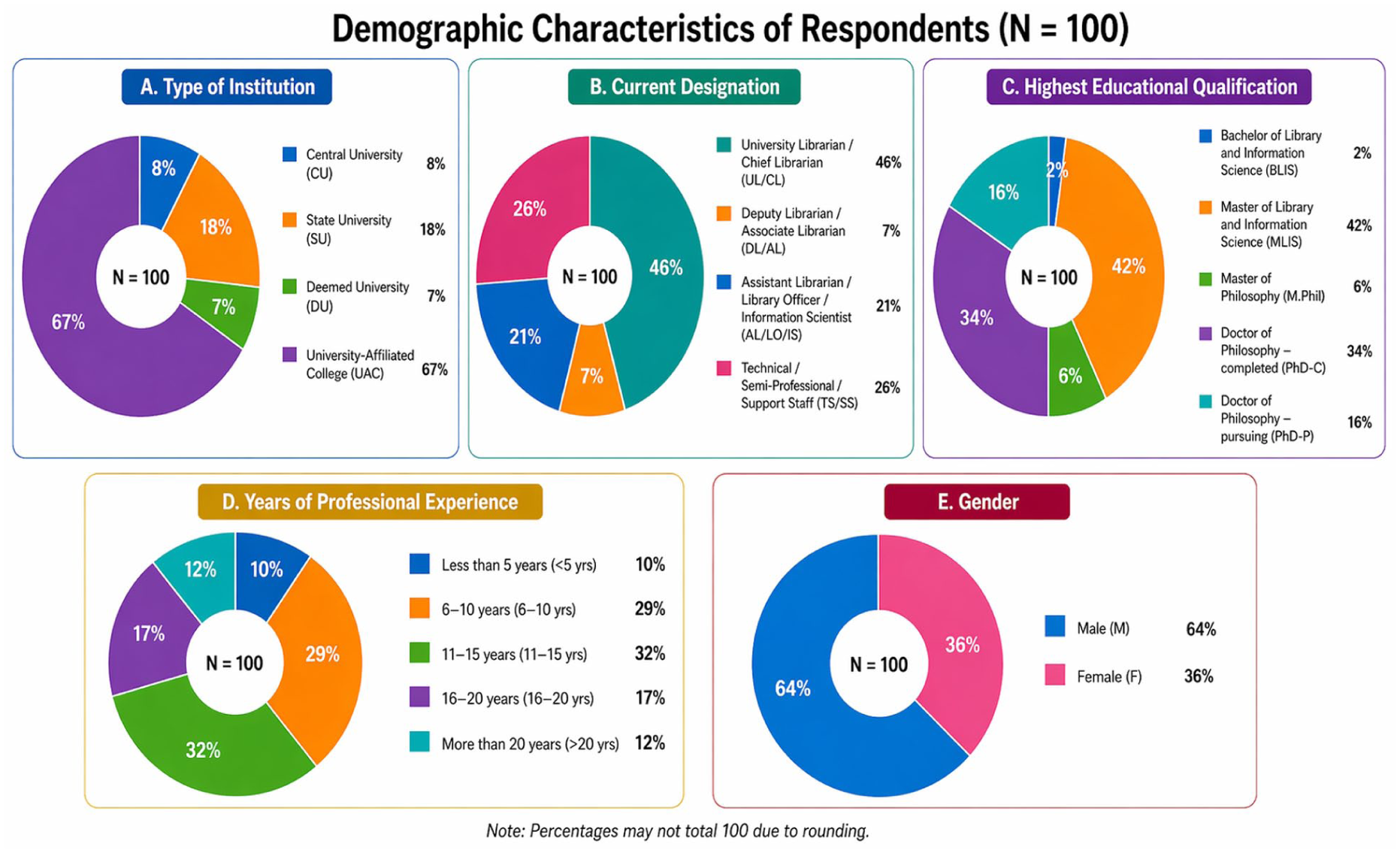
Demographic characteristics of respondents (N = 100).
Regarding educational qualifications, most respondents held an MLIS degree (42%) or a completed PhD (34%), with smaller proportions pursuing a PhD (16%), holding an M.Phil (6%), or a BLIS degree (2%). With respect to professional experience, the largest share had 11–15 years of experience (32%), followed by 6–10 years (29%), 16–20 years (17%), more than 20 years (12%), and less than 5 years (10%). The gender distribution shows a higher representation of male respondents (64%) compared to female respondents (36%).
Table 1 presents the results of the exploratory factor analysis (EFA), which identified a seven-factor structure underlying the dimensions of AI socialisation in academic library work. Together, these factors explain a substantial proportion of the total variance, indicating a robust multidimensional construct.
Exploratory factor analysis.
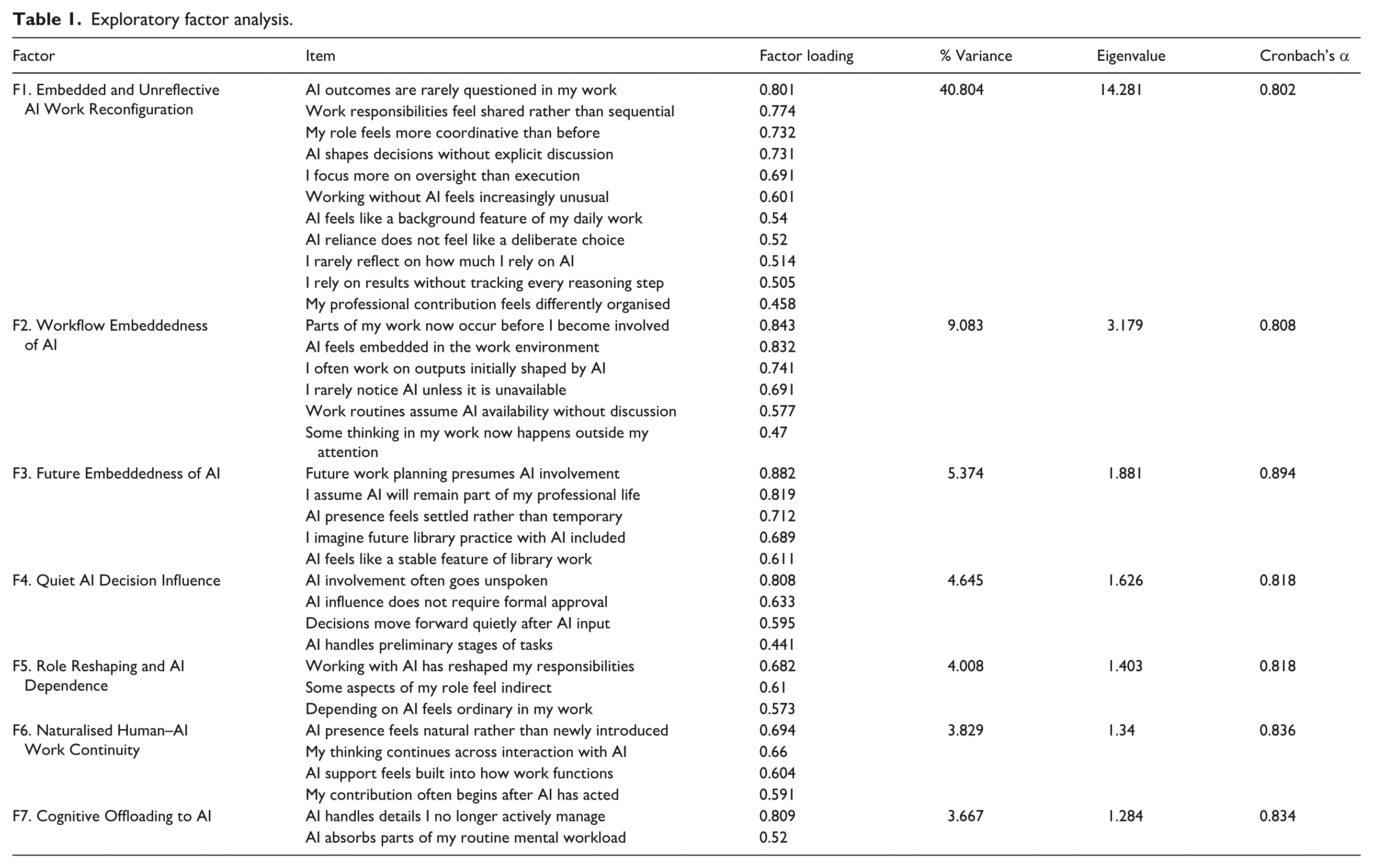
The first factor, “Embedded and Unreflective AI Work Reconfiguration” (F1), accounts for the largest share of variance (40.804%; eigenvalue = 14.281; α = 0.802). This factor comprises 11 items with strong loadings (0.458–0.801), reflecting a pattern in which AI is deeply integrated into daily work practices and often operates without conscious reflection. The items indicate that AI influences task execution, decision-making, and role orientation in subtle and routine ways, suggesting a high degree of normalisation and cognitive absorption.
The second factor, “Workflow Embeddedness of AI” (F2), explains 9.083% of the variance (eigenvalue = 3.179; α = 0.808). With factor loadings ranging from 0.470 to 0.843, this dimension captures the extent to which AI is integrated into the sequencing and initiation of tasks. The items indicate that AI frequently performs preliminary stages of work, shaping workflows before human intervention.
The third factor, “Future Embeddedness of AI” (F3), accounts for 5.374% of the variance (eigenvalue = 1.881; α = 0.894) and demonstrates the highest internal consistency among all factors. The strong loadings (0.611–0.882) suggest that respondents hold clear and consistent expectations regarding the continued presence of AI in their professional practice, indicating a strong future-oriented orientation towards AI integration.
The fourth factor, “Quiet AI Decision Influence” (F4), explains 4.645% of the variance (eigenvalue = 1.626; α = 0.818). Factor loadings (0.441–0.808) indicate that AI influences decision-making processes in subtle and often unarticulated ways, where its role is neither formally acknowledged nor explicitly discussed, yet remains embedded in everyday professional judgements.
The fifth factor, “Role Reshaping and AI Dependence” (F5), contributes 4.008% of the variance (eigenvalue = 1.403; α = 0.818). With loadings between 0.573 and 0.682, this factor reflects perceived shifts in professional roles towards greater coordination, oversight, and dependence on AI-supported processes.
The sixth factor, “Naturalised Human–AI Work Continuity” (F6), accounts for 3.829% of the variance (eigenvalue = 1.340; α = 0.836). The loadings (0.591–0.694) suggest that AI is experienced as a continuous and natural component of work, seamlessly integrated into ongoing cognitive and task-based processes.
Finally, the seventh factor, “Cognitive Offloading to AI” (F7), explains 3.667% of the variance (eigenvalue = 1.284; α = 0.834). Although this factor consists of only two items, both show adequate loadings (0.520–0.809), capturing the extent to which AI absorbs routine cognitive tasks and reduces the need for active mental effort.
All factor loadings exceed the acceptable threshold of 0.40, supporting the construct validity of the instrument. The Cronbach’s alpha values (ranging from 0.802 to 0.894) indicate good internal consistency across all factors. However, the uneven distribution of items across factors particularly the concentration of items in F1 and the two-item structure of F7 suggests that the dimensions of AI socialisation may be experienced as interconnected and emergent rather than strictly discrete constructs. This pattern reinforces the interpretation of AI socialisation as a fluid and practice-driven phenomenon rather than a strictly bounded theoretical structure.
Figure 3 reveals the descriptive statistics of the extracted factors across 100 respondents. Among all factors, F3 (Mean = 3.62, SD = 0.86) records the highest average score, indicating a stronger agreement regarding the future embeddedness of AI in professional work. This is followed by F6 (Mean = 3.16, SD = 0.89), suggesting a relatively high perception of naturalised human–AI work continuity.
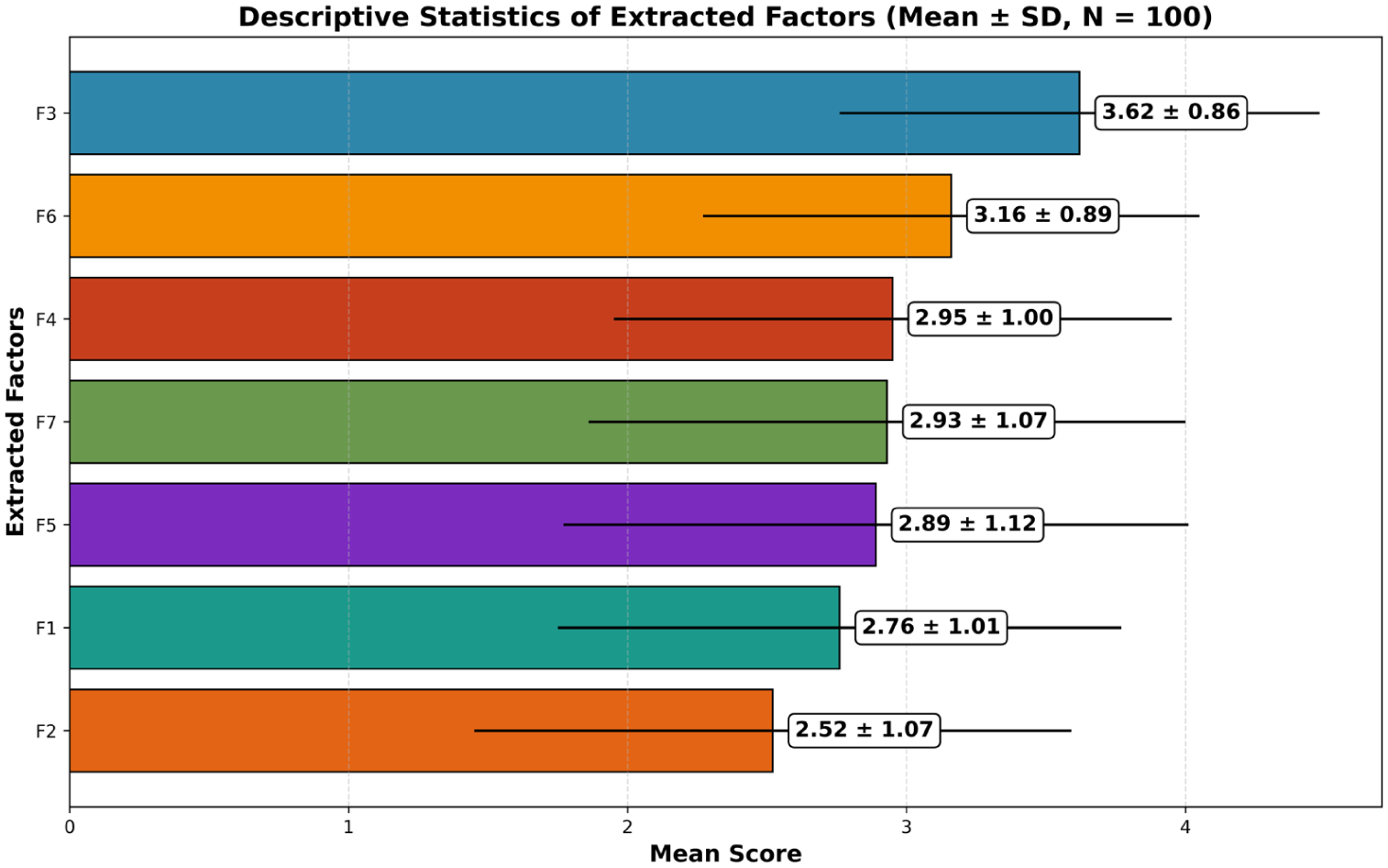
Descriptive statistics of extracted factors.
In contrast, F2 (Mean = 2.52, SD = 1.07) and F1 (Mean = 2.76, SD = 1.01) show comparatively lower mean values, reflecting moderate levels of agreement regarding workflow embeddedness and unreflective AI work reconfiguration. The remaining factors F4 (Mean = 2.95), F5 (Mean = 2.89), and F7 (Mean = 2.93) indicate moderate level of agreement across dimensions of AI influence, role reshaping, and cognitive offloading. The standard deviation values (ranging from 0.86 to 1.12) suggest a moderate level of variability in responses, with relatively more consistency observed in F3 and F6 compared to other factors.
Figure 4 reveals the correlation relationships among the extracted factors. Several factors show strong and statistically significant positive correlations, particularly between F1 and F2 (r = 0.774), F2 and F4 (r = 0.725), and F1 and F4 (r = 0.684), indicating close interconnections between embedded AI practices and workflow restructuring. Moderate correlations are also observed among F5, F6, and F7, reflecting related dimensions of role reshaping and cognitive reliance. In contrast, F3 shows weak and non-significant correlations with other factors, suggesting that future-oriented perceptions of AI operate relatively independently. While some overlap exists, the factors demonstrate meaningful but distinct relationships.
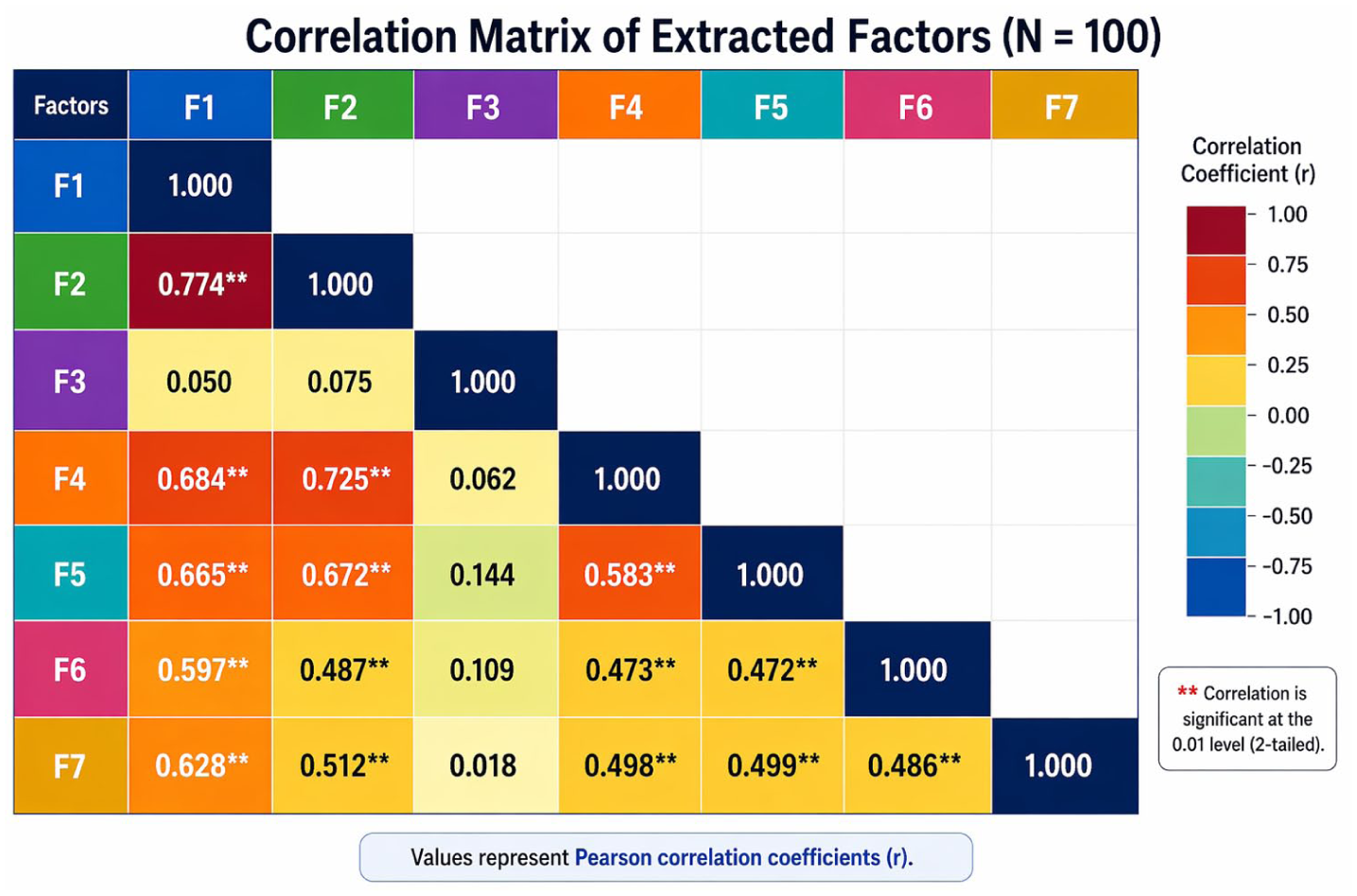
Correlation matrix of extracted factors.
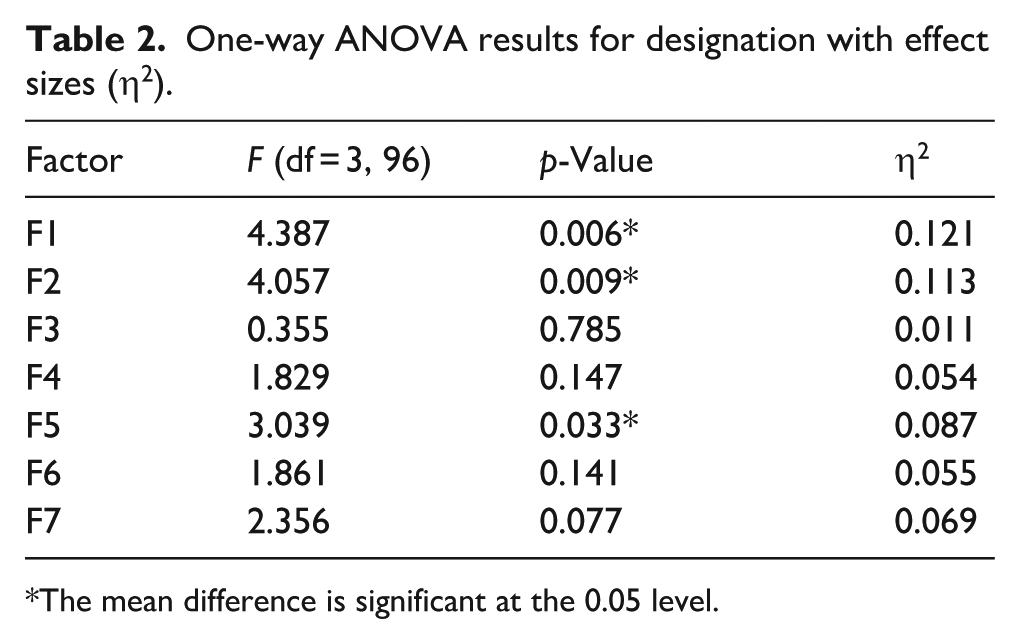
Table 2 shows the results of the one-way analysis of variance (ANOVA) conducted to examine differences in the extracted factors across professional designation groups, along with the corresponding effect sizes (η2). The findings indicate that statistically significant differences are present for three factors: F1 (Embedded and Unreflective AI Work Reconfiguration), F2 (Workflow Embeddedness of AI), and F5 (Role Reshaping and AI Dependence). Specifically, F1 demonstrates a significant effect, F(3, 96) = 4.387, p = 0.006, with a moderate-to-large effect size (η2 = 0.121), indicating that approximately 12.1% of the variance in this factor is explained by professional designation. Similarly, F2 shows a significant difference, F(3, 96) = 4.057, p = 0.009, with a comparable effect size (η2 = 0.113), suggesting that workflow-related experiences of AI integration vary meaningfully across designation levels. F5 also reveals a statistically significant difference, F(3, 96) = 3.039, p = 0.033, with a moderate effect size (η2 = 0.087), indicating that perceptions of role reshaping and dependence on AI differ across professional groups.
One-way ANOVA results for designation with effect sizes (η2).
The mean difference is significant at the 0.05 level.
In contrast, no statistically significant differences are observed for the remaining factors. F3 (Future Embeddedness of AI) records a very low F-value, F(3, 96) = 0.355, p = 0.785, with a small effect size (η2 = 0.011), suggesting that expectations regarding the future presence of AI are consistent across designation groups. Similarly, F4 (Quiet AI Decision Influence) shows a non-significant result, F(3, 96) = 1.829, p = 0.147, with a small-to-moderate effect size (η2 = 0.054), indicating relatively uniform perceptions of implicit AI influence on decision-making. F6 (Naturalised Human–AI Work Continuity) also does not exhibit significant variation, F(3, 96) = 1.861, p = 0.141, with a small effect size (η2 = 0.055). Finally, F7 (Cognitive Offloading to AI) approaches but does not reach statistical significance, F(3, 96) = 2.356, p = 0.077, with a moderate effect size (η2 = 0.069), suggesting some variation across groups, though not at a statistically reliable level.
These results indicate that professional designation significantly influences perceptions of AI integration primarily in relation to workflow restructuring, role transformation, and the unreflective embedding of AI in work practices, while other dimensions of AI socialisation remain relatively consistent across different designation groups.
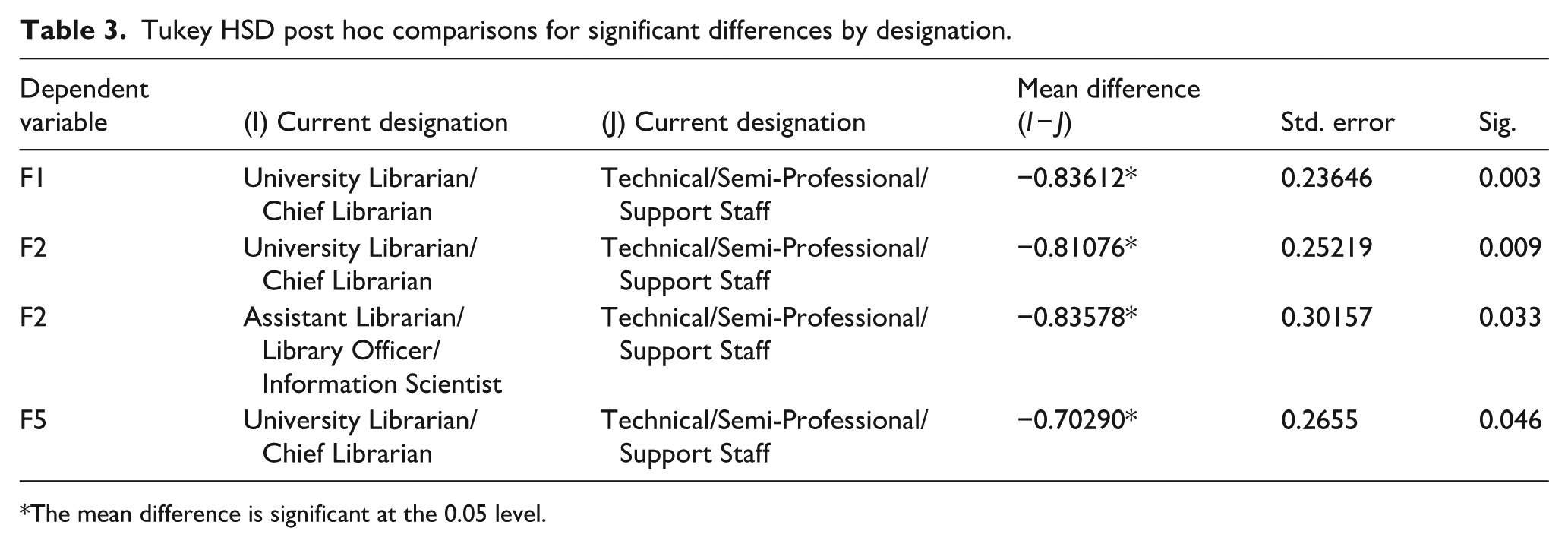
Table 3 presents the results of the Tukey HSD post hoc comparisons conducted to identify specific group differences across professional designations for the factors that showed statistically significant ANOVA results.
Tukey HSD post hoc comparisons for significant differences by designation.
The mean difference is significant at the 0.05 level.
For F1 (Embedded and Unreflective AI Work Reconfiguration), a significant difference was observed between University Librarians/Chief Librarians and Technical/Semi-Professional/Support Staff, with the latter group reporting higher levels (Mean Difference = −0.836, p = 0.003). This indicates that technical and support staff perceive stronger embedding and unreflective integration of AI in their daily work compared to senior-level professionals.
For F2 (Workflow Embeddedness of AI), two significant differences were identified. First, Technical/Semi-Professional/Support Staff reported significantly higher levels than University Librarians/Chief Librarians (Mean Difference = −0.811, p = 0.009). Second, Technical/Semi-Professional/Support Staff also reported higher levels than Assistant Librarians/Library Officers/Information Scientists (Mean Difference = −0.836, p = 0.033). These findings suggest that AI is more deeply embedded in the workflow processes of staff engaged in operational and task-oriented roles.
For F5 (Role Reshaping and AI Dependence), a significant difference was again observed between University Librarians/Chief Librarians and Technical/Semi-Professional/Support Staff (Mean Difference = −0.703, p = 0.046), indicating that support-level staff perceive greater shifts in roles and higher dependence on AI compared to senior professionals.
The post hoc results consistently show that Technical/Semi-Professional/Support Staff report higher levels of AI integration across multiple dimensions compared to more senior professional groups. This pattern suggests that proximity to operational tasks may intensify the experience of AI embedding, workflow restructuring, and role transformation in academic library work.
Discussion
This study examined the silent socialisation of artificial intelligence (AI) in academic library work, focussing on how AI becomes embedded in professional routines, influences decision-making, redistributes cognitive effort and reshapes professional roles. The findings suggest that AI integration is not merely a visible process of formal adoption, but also an implicit, gradual and practice-based transformation. Importantly, the results reflect respondents’ perceptions and levels of agreement rather than direct observation of professional behaviour. This distinction is critical, as it indicates how AI is experienced and interpreted by professionals, even where formal institutional structures may not yet fully reflect these changes.
This is significant because much of the existing literature discusses AI in libraries in terms of adoption, readiness, efficiency and service innovation, whereas the present study highlights how AI becomes normalised through everyday work practices and routine engagement.
Taken-for-granted presence of AI in academic library work
The findings indicate that AI is increasingly perceived as a routine and background feature of academic library work. Although the mean scores suggest moderate rather than complete agreement, the factor structure suggests that AI is not experienced solely as a discrete tool; rather, it is increasingly understood as part of the infrastructure through which work is organised. This aligns with recent research indicating that AI is being embedded within library systems, discovery platforms and reference services, often operating without explicit visibility (Liu and Liu, 2026; McCrary, 2026).
McCrary (2026) argues that AI embedded in research environments reshapes professional agency by influencing how information is accessed and interpreted, while Liu and Liu (2026) show that chatbot-based services are becoming integrated into routine service delivery, even if unevenly implemented.
The present study demonstrates that such embedding is also perceptual and professional. Respondents’ agreement with statements relating to background presence, routine reliance and unreflective use suggests that AI is becoming socially absorbed into practice. This supports the idea that technologies may become normalised through repeated use rather than through formal adoption processes alone.
Workflow restructuring and redistribution of professional tasks
The emergence of Workflow Embeddedness of AI indicates that respondents perceive AI as influencing how tasks are initiated, structured and distributed. Findings suggest that AI is associated with preliminary task execution, with professionals engaging more frequently at later stages of the workflow. This aligns with systematic evidence that AI applications in academic libraries span reference services, information retrieval, cataloguing and administrative functions (Ayinde et al., 2026).
Similarly, research on AI-enabled reference services shows that chatbots increasingly handle initial user interactions and routine queries (Li and Coates, 2025; Liu and Liu, 2026).
However, these findings should be interpreted as perceived transformations rather than confirmed structural changes. The results suggest that professionals experience a shift towards human–AI distributed workflows, where AI shapes early stages of work while human roles emphasise evaluation and oversight. This helps explain why workflow, decision influence and role transformation appear empirically interconnected in the factor structure.
AI, professional agency, and quiet decision influence
The findings suggest that AI is perceived to influence professional decision-making in subtle and often unarticulated ways. The factor “Quiet AI Decision Influence” indicates that AI outputs may be incorporated into decisions without explicit acknowledgement or formal discussion.
This aligns with the concept of algorithmic mediation, where systems shape how information is framed and prioritised (Monteiro-Krebs et al., 2023). McCrary (2026) similarly highlights that AI systems can redistribute agency by shaping the conditions under which decisions are made.
The present findings extend this by showing that such influence is not only present but also experienced as routine and unremarkable. This has important implications for accountability. When AI contributions remain implicit, professional responsibility may become diffused, particularly in environments where transparency and verification are core values.
Cognitive backgrounding and offloading of professional work
The factors relating to Cognitive Offloading and Human–AI Work Continuity suggest that respondents perceive AI as absorbing aspects of routine cognitive effort. AI is seen as supporting tasks such as summarisation, formatting, and preliminary analysis, which aligns with the concept of cognitive automation in library work (Mandiá-Rubal, 2026). Mandiá-Rubal (2026) argues that AI can reconfigure labour by shifting professionals towards oversight and relational roles, provided that governance and professional autonomy are maintained.
At the same time, cognitive offloading presents potential risks. Studies show that reliance on AI may reduce critical engagement and increase dependence on automated outputs (Gültekin and Kavak, 2025). The present findings suggest that such processes may be normalised rather than actively questioned, reinforcing the concept of silent socialisation.
Normalised reliance and the move beyond intentional adoption
The study extends traditional adoption models by showing that reliance on AI may become habitual and less consciously chosen. While frameworks such as TAM, UTAUT and TOE explain initial adoption behaviour, the present findings suggest that integration continues beyond conscious decision-making and becomes embedded through routine practice.
This supports sociotechnical perspectives that emphasise co-evolution between technology and practice (Trist, 1981). It also aligns with recent work showing that AI integration requires institutional adaptation alongside technological adoption (Ncube et al., 2026).
Importantly, these findings are based on reported perceptions of reliance, not direct behavioural evidence. Nevertheless, they indicate that AI may be experienced as a default component of work, rather than an actively chosen tool.
Future embeddedness of AI
Future Embeddedness recorded the highest mean score, indicating strong agreement that AI will remain part of professional practice. This aligns with broader trends showing increasing institutionalisation of AI in libraries (Ayinde et al., 2026).
However, the weak correlations between this factor and others suggest that expectations about AI’s future may be somewhat independent of current experiences. This indicates a potential gap between perceived inevitability and present integration.
Such a gap reinforces the need for proactive governance. As noted in recent research, AI integration often progresses faster than institutional frameworks (Sousa, 2025).
Differences across professional designation
Significant differences were observed across designation groups, with Technical/Semi-Professional/Support Staff reporting higher perceived levels of AI integration. This suggests that proximity to operational tasks intensifies the experience of AI embedding.
In contrast, no significant differences were found across institution type, educational qualification, experience or gender. This indicates that AI socialisation is becoming a broadly shared professional phenomenon, rather than one shaped by specific demographic characteristics.
However, these findings should be interpreted cautiously due to small subgroup sizes, particularly for Deputy/Associate Librarians.
Ethical, governance, and policy implications
The findings highlight a potential gap between practice and governance, where AI becomes embedded in workflows before formal institutional policies are established. This concern is supported by Liu and Liu (2026), who found that only a small proportion of library chatbots include explicit privacy disclosures. Sousa (2025) argues that AI should be understood as a sociotechnical agent requiring ethical oversight and institutional accountability.
The present study reinforces this by showing that AI integration may occur silently, increasing the risk of unexamined reliance. Institutions should therefore develop governance frameworks addressing transparency, accountability, bias, and professional responsibility.
Theoretical implications
This study contributes by conceptualising AI integration as silent socialisation. The divergence between theoretical constructs and empirical factors suggests that AI integration is not experienced as discrete dimensions but as an interconnected process.
This finding supports sociotechnical theory and extends adoption models by showing that integration continues beyond initial acceptance. The clustering of constructs such as workflow, decision influence and cognitive reliance indicates that AI socialisation is an emergent phenomenon.
Limitations
This study has several limitations.
First, the relatively small sample size (N = 100) and the use of purposive non-probability sampling limit generalisability. Second, the study is confined to a single national context, which may influence institutional practices and perceptions.
Third, the cross-sectional design captures perceptions at one point in time and does not account for changes over time. Fourth, the reliance on self-reported data reflects perceived agreement rather than observed behaviour, introducing potential response bias.
Fifth, although exploratory factor analysis was employed, confirmatory factor analysis was not conducted. Additionally, the divergence between theoretical constructs and empirical factors suggests the need for further scale refinement.
Finally, the small subgroup size for certain categories (e.g. Deputy/Associate Librarians) may affect the robustness of comparative findings.
Future research directions
This study opens several avenues for future research on the socialisation of artificial intelligence in professional contexts. First, future studies should employ larger and more diverse samples across multiple institutional and national contexts to enhance the generalisability of findings. Second, longitudinal research designs would be valuable in capturing how perceptions and practices of AI integration evolve over time, particularly as technologies and institutional frameworks continue to develop. Third, the use of confirmatory factor analysis (CFA) is recommended to validate the factor structure identified in this study and to refine the measurement instrument. Fourth, qualitative or mixed-method approaches could provide deeper insights into how AI is experienced in everyday work, including the nuances of decision-making, cognitive processes, and professional identity. Additionally, future research should examine the relationship between perceived AI use and actual behavioural practices, addressing the limitations of self-reported data. Finally, there is a need to explore institutional governance, policy development, and ethical frameworks in greater depth, particularly in relation to how organisations can manage the implicit and often unregulated integration of AI into professional workflows.
Conclusion
This study demonstrates that artificial intelligence is becoming embedded in academic library work through gradual and often implicit processes of integration. Rather than being experienced solely as a tool, AI is perceived as a routine and infrastructural component of professional practice that shapes workflows, decision-making, and cognitive processes.
The findings highlight that AI socialisation occurs through everyday use and interaction, leading to normalisation, cognitive redistribution, and evolving professional roles. While differences across professional designations suggest variation in experience, the overall pattern indicates that AI integration is a broadly shared phenomenon.
By conceptualising AI integration as silent socialisation, the study contributes to a more nuanced understanding of how emerging technologies reshape professional environments. These insights emphasise the need for greater institutional awareness, governance, and critical engagement to ensure that AI integration aligns with professional values and ethical standards.
Supplemental Material
sj-docx-1-lis-10.1177_09610006261449862 – Supplemental material for When algorithms become colleagues: The silent socialisation of AI in librarians’ professional lives
Supplemental material, sj-docx-1-lis-10.1177_09610006261449862 for When algorithms become colleagues: The silent socialisation of AI in librarians’ professional lives by A. Subaveerapandiyan, Dattatraya Kalbande, Janakiraman Amirthalingam, Neelam Tiwary and J. Kesavan in Journal of Librarianship and Information Science
Footnotes

Funding
The authors received no financial support for the research, authorship, and/or publication of this article.
Declaration of conflicting interests
The authors declared no potential conflicts of interest with respect to the research, authorship, and/or publication of this article.
Data availability statement
Data is available on reasonable request from the corresponding author.
AI usage statement
The authors used ChatGPT and Grammarly for language editing and figure design support. All outputs were reviewed and approved by the authors.
Supplemental material
Supplemental material for this article is available online.
Author biographies
References
Supplementary Material
Please find the following supplemental material available below.
For Open Access articles published under a Creative Commons License, all supplemental material carries the same license as the article it is associated with.
For non-Open Access articles published, all supplemental material carries a non-exclusive license, and permission requests for re-use of supplemental material or any part of supplemental material shall be sent directly to the copyright owner as specified in the copyright notice associated with the article.
