






Abstract
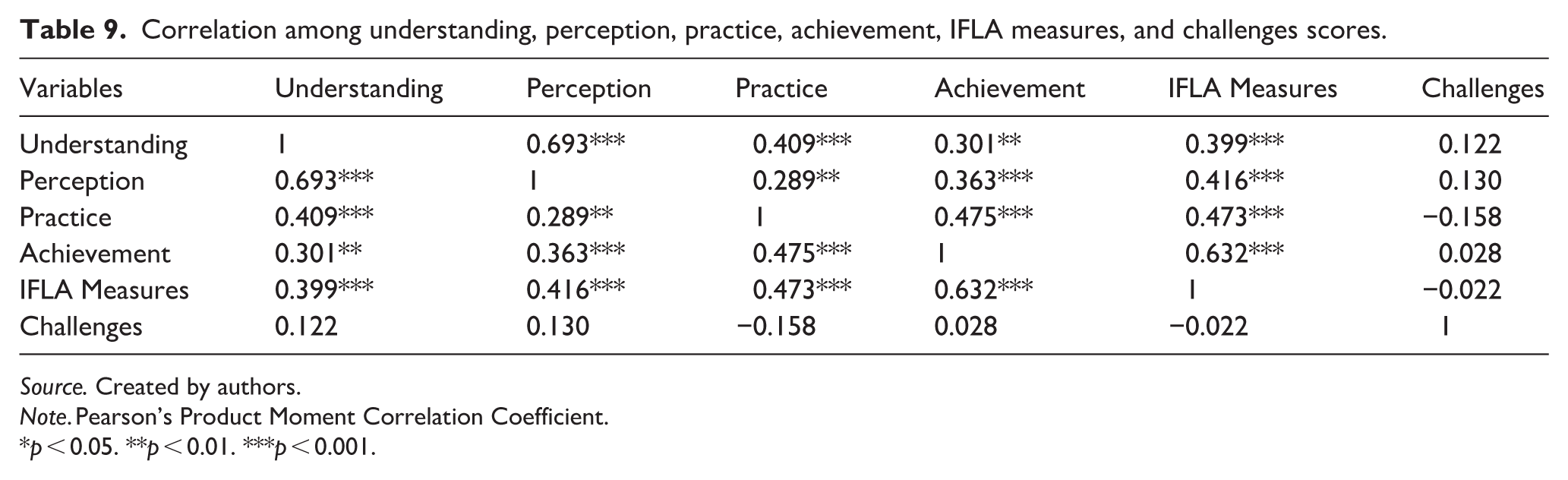
Libraries are widely recognized as active partners in advancing the implementation of the United Nations Sustainable Development Goals (SDGs). This study aims to explore how the public libraries in Bangladesh are contributing to the achievement of the SDGs by 2030. The study conducted an online questionnaire-based survey of 135 purposefully selected government and non-government public libraries along with key informant interviews (KIIs) of 10 library experts. The analysis of 113 survey responses reveals that the libraries generally have a good understanding and a positive perception of the SDGs. The results of the bivariate statistical analysis show the differences in understanding, perceptions, practices, achievements, IFLA measures, and challenges of SDGs integration across demographic and activity-based groups. Pearson’s Product Moment Correlation Coefficient finds strong association among the dependent covariates, such as a stronger positive association of understanding with perceptions, practices, and IFLA measures; perceptions with achievements and IFLA measures; practices with achievements and IFLA measures; and between achievements and IFLA measures (p < 0.001). Considering the existing practices of SDGs, this study suggests that Bangladeshi public libraries should integrate policy framework, incorporate digital technologies, allocate sufficient funds, foster collaboration, build institutional capacity, and strengthen community engagement, etc. to achieve the SDGs by the targeted time frame.
Introduction
The Sustainable Development Goals (SDGs) is a globally recognized agenda that unites the whole world in support of development on various issues. With the ultimate goal of leaving no one behind, the SDG framework is a comprehensive and ambitious plan of action for people, planet and prosperity that consists of 17 goals and 169 targets (OECD, 2022). The SDGs is one of the much-talked development plans of the United Nations which has been adopted by its 193 member countries in September 2015, and they came into force on 1 January 2016 (IFLA, 2018). Bangladesh, a signatory to the UN Agenda 2030 for sustainable development, is actively working to implement the SDGs by adopting a “whole-of-society approach” (Khatun and Saadat, 2021). To call it a “Universal Success,” contribution from all spheres of life whether it is public, private or civil society, is a prerequisite (Aregbesola et al., 2024). The country, however, received a score of 63.9, ranking 114th out of 167 countries globally in terms of SDG progress in 2025 (Sachs et al., 2025). Bangladesh has been on track or maintaining progress on only 20.8% of the SDG targets with limited progress on 44.2% of the targets over the past 10 years, while 35.1% are worsening (Nahr, 2025). A number of initiatives have been taken by Bangladesh to promote the SDGs, including the SDG Action Plan, the launch of the SDG Tracker webpage, a framework for government-UN agency collaboration, the adoption of 39 + 1 priority indicators for SDGs implementation at nation al level, the inclusion of the SDGs in the school curriculum, and more (Mojumder, 2024).
Libraries have strong potential to play a powerful advocacy for the UN 2030 agenda (McDonald, 2023) which are constantly patronized by the organizations for example, International Federation of Library Associations and Institutions (IFLA), American Library Association (ALA), etc. (IFLA, 2022; Kear and Garcia-Febo, 2026). In 2019, the ALA Council recognized sustainability as a core value of librarianship and committed to the “triple bottom line” framework for sustainability, which includes practices that are environmentally sound, economically feasible and socially equitable (ALA, 2019). Libraries play a catalytic role in advancing the SDGs by facilitating public access to information. As trusted social institutions, public libraries are dedicated to ensure human right to information access (Kosciejew, 2019; Mathiesen, 2013; McCook and Phenix, 2006). They contribute to progression of the SDGs and creation of more equitable, humane, and sustainable societies through their missions of core services related to information, literacy, education, inclusion, civic engagement, and culture (IFLA, 2022). In Bangladesh, different types of libraries, including public libraries, support the promotion of education, research and other development agendas in the public and private sectors. The government public libraries started their journey with the opening of Bangladesh Central Public Library in 1958, whereas the non-government public library movement started with the establishment of four public libraries in the year 1854 (Shuva and Akter, 2012). The Department of Public Libraries (DPL), Ministry of Cultural Affairs, People’s Republic of Bangladesh governs the country’s government public libraries envisioning building a knowledge-based enlightened society. On the other hand, the non-government public libraries are established, operated and funded by private initiatives with a view to cater the information needs of the local community.
Despite their high potential, the public libraries of developing countries face a number of challenges that hinder the implementation of national and international development plans (Dapo-Asaju and Bamgbose, 2019), and Bangladesh is not an exception. Against the backdrop of libraries’ role in advancing the SDGs, this study examines how the public libraries of Bangladesh, both government and non-government, are working within their existing framework. The study is significant as it explores the organizational practices, identifies the challenges and suggests future strategies for Bangladeshi public libraries to support the SDGs implementation. The organizational insights and evidence from the leaders of public libraries will create public awareness and assist concerned authorities, policymakers and library professionals in taking effective steps to build library capacity and promote SDGs implementation by 2030.
Literature review
A body of literature suggests the integration of the SDGs into various national policies, development strategies, and planning frameworks by aligning global priorities with local contexts (Annan-Aggrey et al., 2021; Hu et al., 2023; Lafortune and Fuller, 2025; Mojumder, 2024; Sengupta and Sinha, 2022). This literature review focuses on how libraries are related to the SDGs, IFLA’s role in promoting SDGs, and the SDGs in the context of Bangladeshi libraries.
Libraries and SDGs
The role of libraries to advance SDGs is well articulated (Adekoya et al., 2023; Bangani, 2024a, 2024b; Dabengwa, 2025; Fonseca et al., 2020; Koech, 2025; Kosciejew, 2020, 2022; Mathiasson and Jochumsen, 2022; Noh, 2021; Ochôa and Pinto, 2020; Rubiyo et al., 2024; Thorpe and Gunton, 2022). “Access to Information” has been recognized as a target (16.10) under SDG 16, and libraries can make a true contribution to development by facilitating access to information (Bradley, 2016; Garrido and Wyber, 2017) through multidimensional information services to address social, economic, and environmental issues (Akidi and Igbinovia, 2026). In fact, there is no truly sustainable development without access to information, and no meaningful, inclusive access to information without libraries (Scheeder, 2019). Garrido and Wyber (2017) further described how libraries can act as a development agent to ensure access to information (A2I) and to what extent A2I can help end hunger and promote nutrition (SDG 2), healthy lives and promote well-being (SDG 3), empowers women and girls (SDG 5) and act as a fundamental pillar for innovation, infrastructure, and industrialization (SDG 9).
A conceptual framework by Kosciejew (2020) addressed some of the goals and targets of SDGs where public libraries can contribute to the context of community, culture, education, economy, and democracy, while a performance measurement model by Ochôa and Pinto (2020) established the relationship between SDGs and library activities. The core services of libraries—such as providing access to information, safeguarding cultural heritage, promoting universal literacy, and facilitating access to information technology— are closely aligned with the ways that the UN SDGs promote change (Willems, 2022). Lahyani et al. (2024) showed how a university library in Morocco integrated the SDGs into its resources, activities, programs, and projects. South African academic libraries adopted strategic approach of community engagement to address SDG 5, 8 and 11 (Bangani, 2024a, 2024b). Public libraries can contribute to ensuring quality education (SDG 4) and promote inclusivity by being a strong institution (SDG 16; Noh, 2021; Rubiyo et al., 2024). Jain and Jibril (2018) highlighted major SDG initiatives of Botswana public libraries emphasizing zero poverty (SDG 1), good health (SDG 3), quality education (SDG 4), gender equality (SDG 5), sustainable cities and communities (SDG 11), and partnerships for the goals (SDG17). In Nigeria, public libraries help to attain sustainable food security (SDG 2) by facilitating agricultural research that in return reduces the poverty margin (SDG 1) to a great extent (Adekoya et al., 2023). As mentioned by Aregbesola et al. (2024), many libraries have initiated an epoch-making approach by adopting energy efficient infrastructure (SDG 7), eco-friendly disposal system (SDG 12) and public garden (SDG 15) in numerous capacities. The empirical evidence shows that the most common environmentally sustainable practices and services in the libraries of California, Florida, and Georgia are to reduce, reuse, and recycle (3Rs) (Ren, 2025). In order to maximize the potential of libraries to achieve the SDGs, Koech (2025) focuses on information access, education, community engagement, cultural preservation, environmental sustainability, digital inclusion, and health promotion. Oladokun and Durodolu (2025) highlighted the impact of libraries in attaining environmental justice through collaboration and technological adoption for accessing information, which Ajani et al. (2026) identified as accelerating factors/strategies for reducing negative environmental effect and making a climate-literate, informed and empowered community. In this way, public libraries are adopting long-term commitments by replacing ad hoc attempts to address goal 13 (de Leon and Flores, 2025).
Even though public libraries and the SDGs are closely related, there are still a number challenges that libraries must overcome in order to succeed. These challenges include a lack of awareness among stakeholders in public libraries, a lack of policies and framework for implementing the SDGs in libraries, budgetary constraints, inadequate ICT infrastructure, shortage of professional staff, a lack of top management support, a lack of collaboration, and more (Adamu et al., 2023; Islam et al., 2024; Khalid et al., 2021). Despite the fact that libraries can be used to enhance sustainable development, Dabengwa (2025) found limited awareness and sustainability literacy among librarians, and thus, they often exaggerated their role of SDG-related initiatives, mislabeled routine tasks as SDG contributions, or used SDG terminology in a superficial way without taking any meaningful action.
IFLA and SDGs
The International Federation of Library Associations and Institutions (IFLA) is widely acknowledged for its engagement and advocacy in the United Nation’s development agenda, especially regarding initiatives and activities related to the role of libraries in attaining the SDGs (Devi et al., 2024; IFLA, 2025; Irinco, 2023; Kear, 2018). IFLA recognizes that libraries and access to information contribute to achieve the SDGs and involves in diverse activities, such as promoting universal literacy, closing information access gaps, advancing digital inclusion, acting as the hub of research and academic community, building capacity, strengthening civic engagement and collaboration, and preserving and providing access to the world’s culture and heritage, among others (Bradley, 2016; IFLA, 2016). In 2017, IFLA introduces 7 steps project plan in the International Advocacy Programme (IAP) for the libraries to contribute fully to the development and implementation of SDGs (Kear, 2018). On the other hand, many studies explore how the librarians perceive and to what extent they are aware of the notion of IFLA in achieving the SDGs (Irinco, 2023; Mansour, 2020; Noh, 2021; Poluru, 2020; Thorpe and Gunton, 2022). IFLA library map of the world makes it possible to identify the current status of libraries across the globe along with its resources and services to identify how much progress they have made to attain the SDG (Chudasma and Panchal, 2021). To explore IFLA’s role in empowering libraries to achieve the SDGs, Devi et al. (2024) analyzed a number of initiatives and key projects including the Green Library Award, toolkits, library map of the world and the SDG stories. In addition, IFLA is actively engaged in mobilizing libraries and raising awareness about the SDGs among the wider cross-section of the community.
The context of Bangladesh
The value of library and information sector has been recognized in various national plans and policies throughout the journey of Bangladesh’s SDGs achievement. Ahmed and Roknuzzaman (2022) found that the government public libraries of Bangladesh provided community-based extension activities and services; however, these libraries were not in a position to become true community centers due to a number of obstacles. In a study of Bangladeshi public libraries’ responses to a global pandemic, Begum et al. (2022) emphasize that libraries should adopt programs and practices, considering the diversity of their societal, cultural, and local needs. Alam (2020) investigated the degree of SDG awareness among public librarians in Bangladesh and identified several obstacles, such as severe resource limitations, inadequate ICT-enabled services, a lack of media and information literacy among librarians, reluctance on the part of librarians on new responsibilities, etc. An attempt has been made by Islam et al. (2024) to ascertain the perceived understanding of the librarians regarding the role of government public libraries of Bangladesh to achieve SDGs that failed to address the public libraries of private sectors. Thus, the aim of the present study is to examine the initiatives of both government and non-government public libraries in Bangladesh taken so far as well as the strategies they must adopt to implement the SDGs by 2030.
Research questions
The study is designed to answer the following research questions (RQs):
Research design and methodology
The study is descriptive and exploratory in nature, and it adopted a mixed-method research approach. The quantitative component, that is, the survey questionnaire, is suitable for the first four research questions (RQ1–RQ4), which pertain to the exploration of the current status of public libraries in Bangladesh with regard to SDG-related activities. The quantitative approach is helpful for the generalization, correlation and comparison among the constructs of the study. On the other hand, the qualitative aspect such as key informant interviews (KIIs) with library experts provides in-depth insights centered on the final research question (RQ5) suggesting future strategies for public libraries to adopt for advancing the SDGs implementation. The expert opinion is useful for the interpretation of the quantitative findings more meaningfully.
Sampling technique
Currently, 71 government public libraries across the country are operated and administered by the Department of Public Libraries under the Ministry of Cultural Affairs (Department of Public Libraries, 2024). There is no updated data regarding the number of non-government public libraries in the country right now. Although some sources estimate the number to be approximately 1603, the majority could neither be reached nor verified as active contributor to any development projects like SDGs. (British Council, 2015; Shuva and Akter, 2012). This study employed a purposive sampling technique to select public libraries for the survey and library experts for key informant interviews (KIIs). For the survey, all 71 government public libraries and 64 non-government public libraries—one from each of the 64 administrative district headquarters of the country—were selected to ensure geographical representation, resulting in a total of 135 public libraries as respondents for the study. Besides geographical coverage, the non-government public libraries were selected based on their physical existence, availability of resources, and active service provision, with at least one responsible staff member and/or a designated contact person. For the purpose of KIIs, 10 (ten) library experts with rich of experience and expertise, who are currently working in senior leadership roles in government and non-government public libraries in Bangladesh, were selected.
Data collection
A survey questionnaire (Supplemental Appendix 1) was designed using Google Forms which was structured in nature. The questionnaire consists of two parts. The first part was designed to collect the respondent’s demographic information viz. type of library, year of establishment, location, number of collections, number of staff along with policy and programs regarding SDGs. For the other part, A 5-point Likert scale was used to explore the understanding and perception of the public libraries regarding SDG (RQ1), and the challenges faced by the public libraries to implement SDG in their libraries (RQ4) where “1” indicates “Strongly Disagree” and “5” indicates “Strongly Agree.” To know the SDG achievement status (RQ3), the questionnaire also included a 5-point Likert scale defining “1” as “Not achieved at all” to “5” as “Fully Achieved.” Moreover, a 5-point Likert scale, comprising of “Not adopted” (1) to “Fully adopted” (5), was also developed to address the RQ3, that is, the adoption of IFLA guided measures. Multiple choice questions (Yes/No) were developed to know the ongoing practices of the libraries to achieve SDGs (RQ2). To dig deep into the future strategies of the libraries (RQ5), an open-ended question was also designed. Besides, a short semi-structured interview protocol was designed to gather in-depth insights from 10 library experts. Primarily, the KIIs were conducted in person, however, in some cases; telephone and email were used as means for further explanation and clarification of data. A rapporteur was employed to take field notes, document the interview data and generate readable and meaningful report.
Reliability and validity test
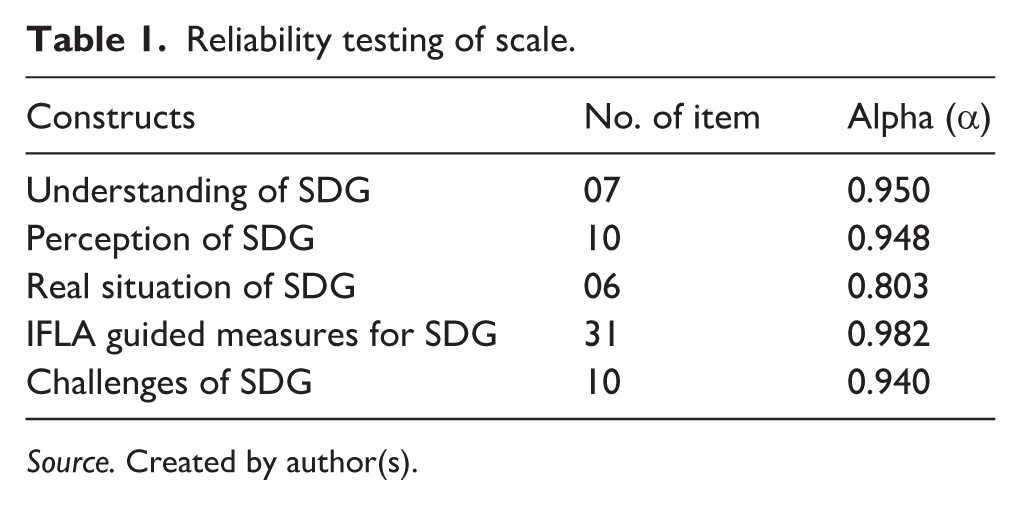
A reliability test was performed on 5 constructs through Cronbach’s alpha (α) coefficient to measure the reliability of each construct (Table 1) mentioned in the survey questionnaire.
Reliability testing of scale.
Source. Created by author(s).
According to Hair et al. (2013), a construct is considered reliable if the alpha (α) value becomes greater than 0.70. For the 7 items of the first construct, understanding of SDGs, the calculated α value is α = 0.950 which is found much reliable compared to the proposed value. Similarly, the α value shows that the constructs 2, 3 and 4 with 10, 6 and 31 items respectively are worthy of retention (α = 0.948, α = 0.803, and α = 0.982) as deletion of a single item is decreasing the existing value. However, deletion of item no. 5 could improve the α value of the fifth construct, challenges of SDGs, due to the significance of that item, it has been retained with a α = 0.940 instead of α = 0.944. The data normality and homogeneity of variances were assessed using Shapiro-Wilk test and Levene’s test respectively. Furthermore, the study didn’t use any established scale; rather, it went through an extensive literature review to develop the items under each construct covering all important dimensions regarding the SDGs (see Tables 3, 4 and 7). The items under each construct were reviewed by two subject experts. The theoretically grounded dimensions and the appearance and clarity of the items confirm both the content and face validity.
Data analysis
The survey questionnaire, administered via Google Forms, was distributed to librarians, heads of libraries, librarians-in-charge or designated library authorities of 135 sample libraries, and 113 responses were received for a response rate of 83.7%. The quantitative data were analyzed using SPSS version 25. The scores of understanding, perceptions, existing practices, contribution to achievements, IFLA measures, and challenges for each library were calculated separately and converted to percentile scores. The means and standard deviations (mean ± SD) for each category were computed against different factors, that is, type of library, year of establishment, location, number of collections, number of staff, policy for implementing SDG, and existing program regarding the SDGs. The demographic profile of the libraries was analyzed with simple descriptive statistics like frequencies and percentages while inferential statistics were applied to know the current status of SDGs implementation in the libraries. Bivariate statistical analysis for example, t-test and one-way analysis of variance (ANOVA) were conducted where appropriate to examine if there exist any differences between the independent variables (demographic profile of the libraries) and dependent variables (statements for understanding, perceptions, practices, achievements, IFLA measures or challenges) along with the mean and standard deviation (SD) for each statement. The effect size of the constructs across the demographic variables was calculated to measure the significance of the differences observed. In addition, Pearson’s Product Moment Correlation Coefficient was also conducted to find the correlation among the dependent variables.
The data from key informant interviews (KIIs) were manually labeled as KII1, KII2, KII3. . .KII10 and applied abductive (hybrid) coding method to interpret KII data thematically. Primarily deductive coding was used to address RQ5, followed by inductive coding to extract meaningful insights and suggest future strategies for the implementation of the SDGs in the public libraries of Bangladesh. The research employed AI tools like ChatGPT, Claude.ai and QuillBot for minor language refinement and grammar checks during composing, and editing the text.
Ethical consideration
Participation in the survey and KIIs of this study was completely voluntary, and the respondents gave informed consent during the study, and they were at liberty to quit the survey or interview anytime. The data were collected anonymously, kept confidential, and only used for this survey purpose. No human being as an individual self has shared any personal or sensitive data in this survey. Only the institutional data has been collected to know the present status of the public libraries in Bangladesh regarding the implementation of the SDGs.
Results and discussion
Profile of the respondent libraries
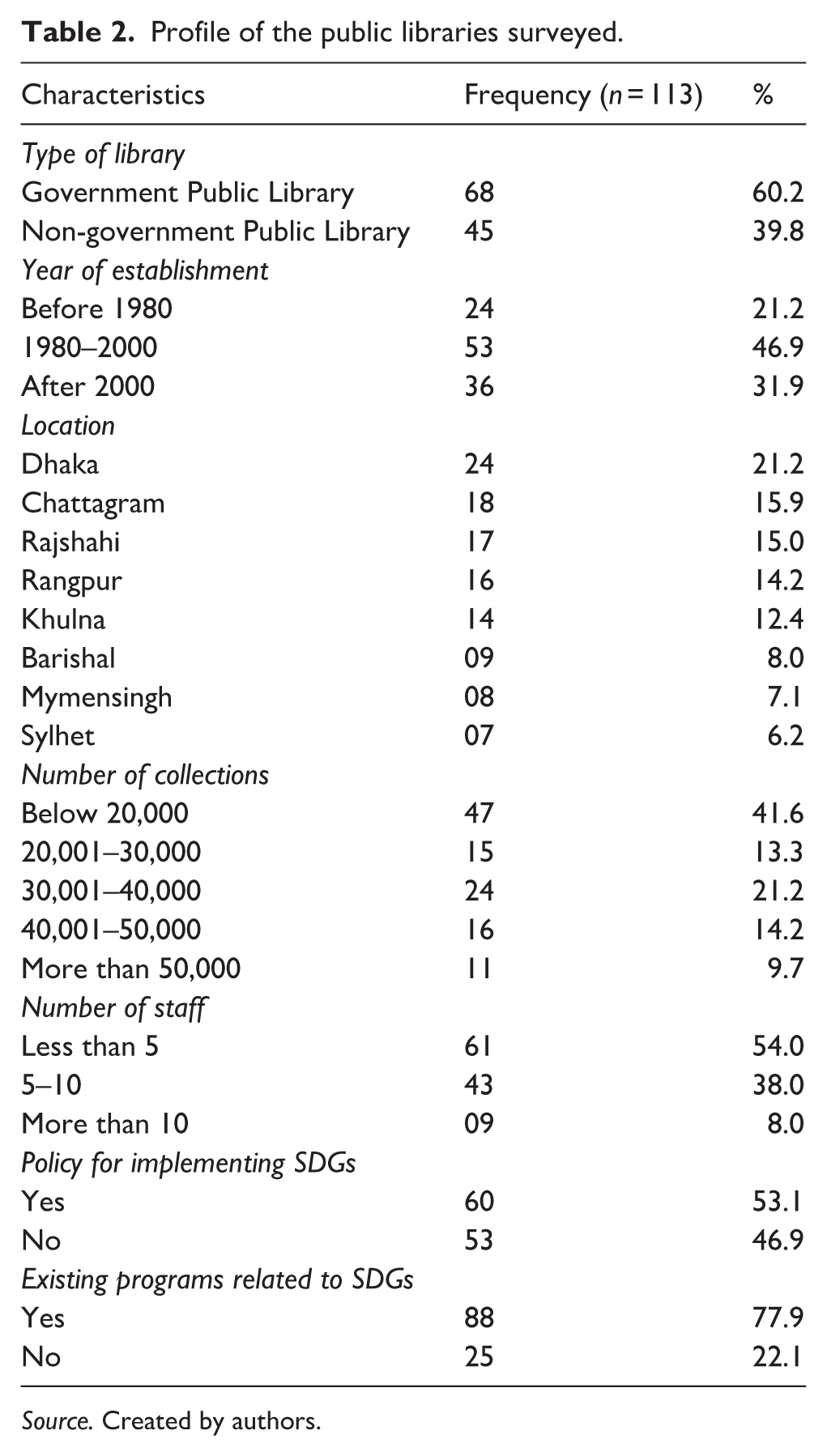
For collecting the primary data, a questionnaire was sent to 71 government and 64 non-government public libraries. Out of these 135 libraries 113 have responded back (response rate 83.7%). As can be seen in Table 2, out of 113 libraries, 68 (60.2%) libraries are government while other 45 (39.8%) are non-government in nature.
Profile of the public libraries surveyed.
Source. Created by authors.
Understanding and perceptions of libraries toward SDGs
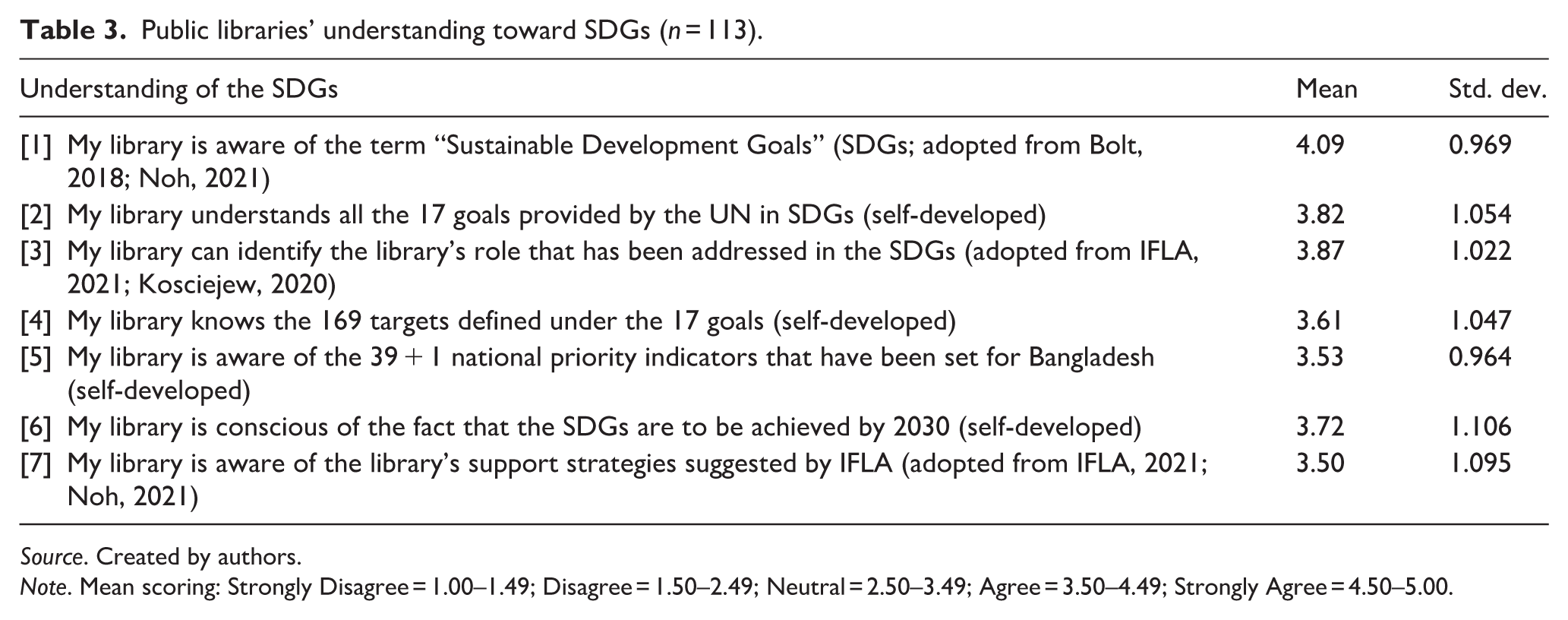
The mean scores ranging from 3.50 to 4.09 indicate that the libraries agreed to all the statements on understanding (Table 3). Libraries are aware of the SDG term, and they understand all of the 17 goals and 169 targets of SDG. They can identify their roles addressing the SDGs. The libraries also recognize the national priority indicators for SDGs, its deadline and IFLA’s proposed strategy to achieve the goals.
Public libraries’ understanding toward SDGs (n = 113).
Source. Created by authors.
Note. Mean scoring: Strongly Disagree = 1.00–1.49; Disagree = 1.50–2.49; Neutral = 2.50–3.49; Agree = 3.50–4.49; Strongly Agree = 4.50–5.00.
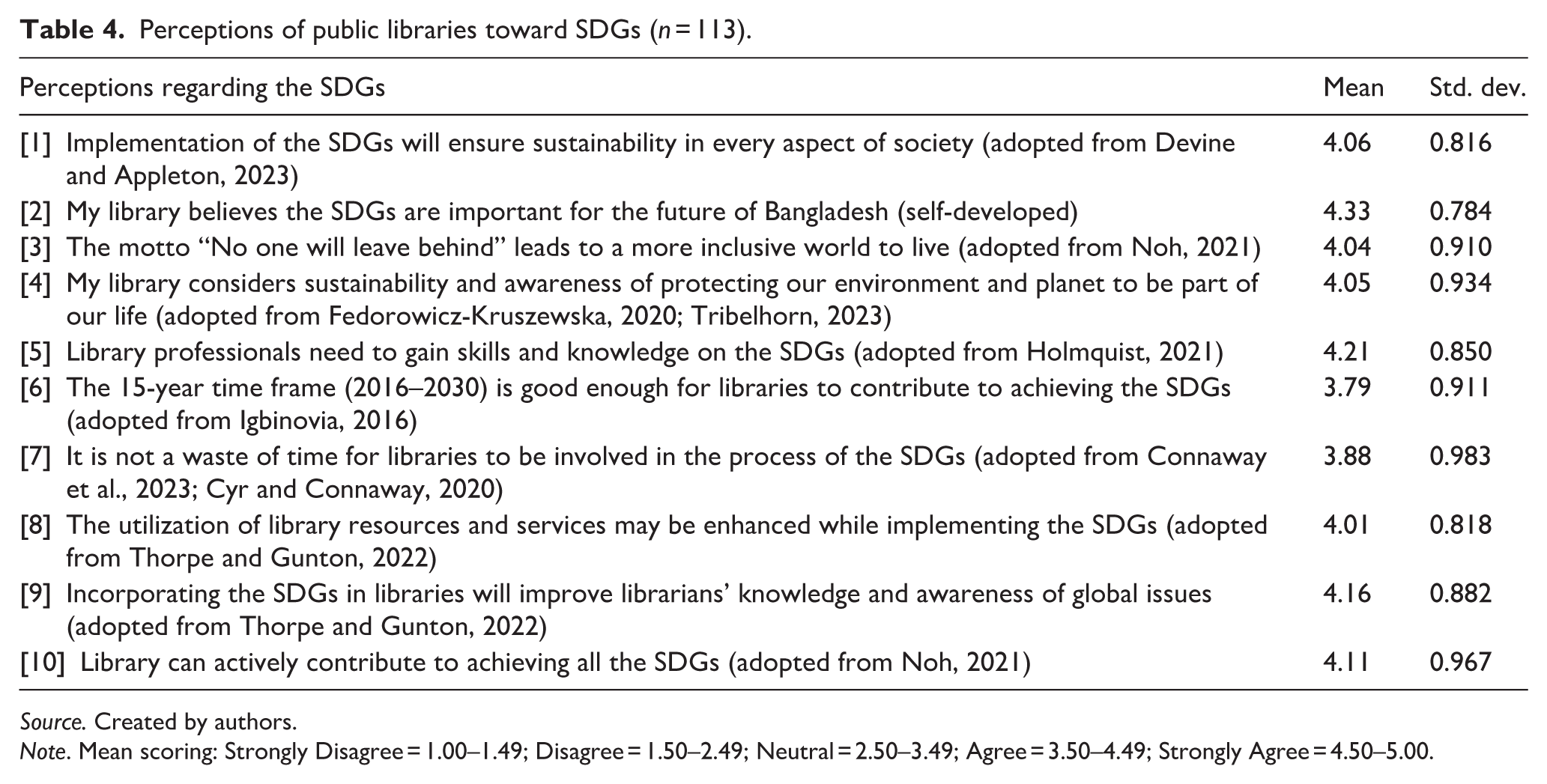
Similarly, Table 4 reveals that the mean score for all the statements regarding the perceptions of libraries toward SDGs ranges between 3.50 and 4.49, showing that, the libraries agreed to the statement on the implementation of SDGs and their association with the libraries though not to the extent of strong agreement.
Perceptions of public libraries toward SDGs (n = 113).
Source. Created by authors.
Note. Mean scoring: Strongly Disagree = 1.00–1.49; Disagree = 1.50–2.49; Neutral = 2.50–3.49; Agree = 3.50–4.49; Strongly Agree = 4.50–5.00.
Existing status of SDGs implementation
As illustrated in Figure 1, more than half of the participating libraries are aware of achieving the SDGs (72.6%), working on the development goals (74.3%), and incorporating the SDGs in their development plans (59.3%). However, majority of libraries don’t get enough government funding to accelerate the knowledge building process for the librarians (57.5%). In addition, most of them are not required to submit any performance reports on SDG (61.1%) and not in a consortium to incorporate SDGs in development plans (54%).
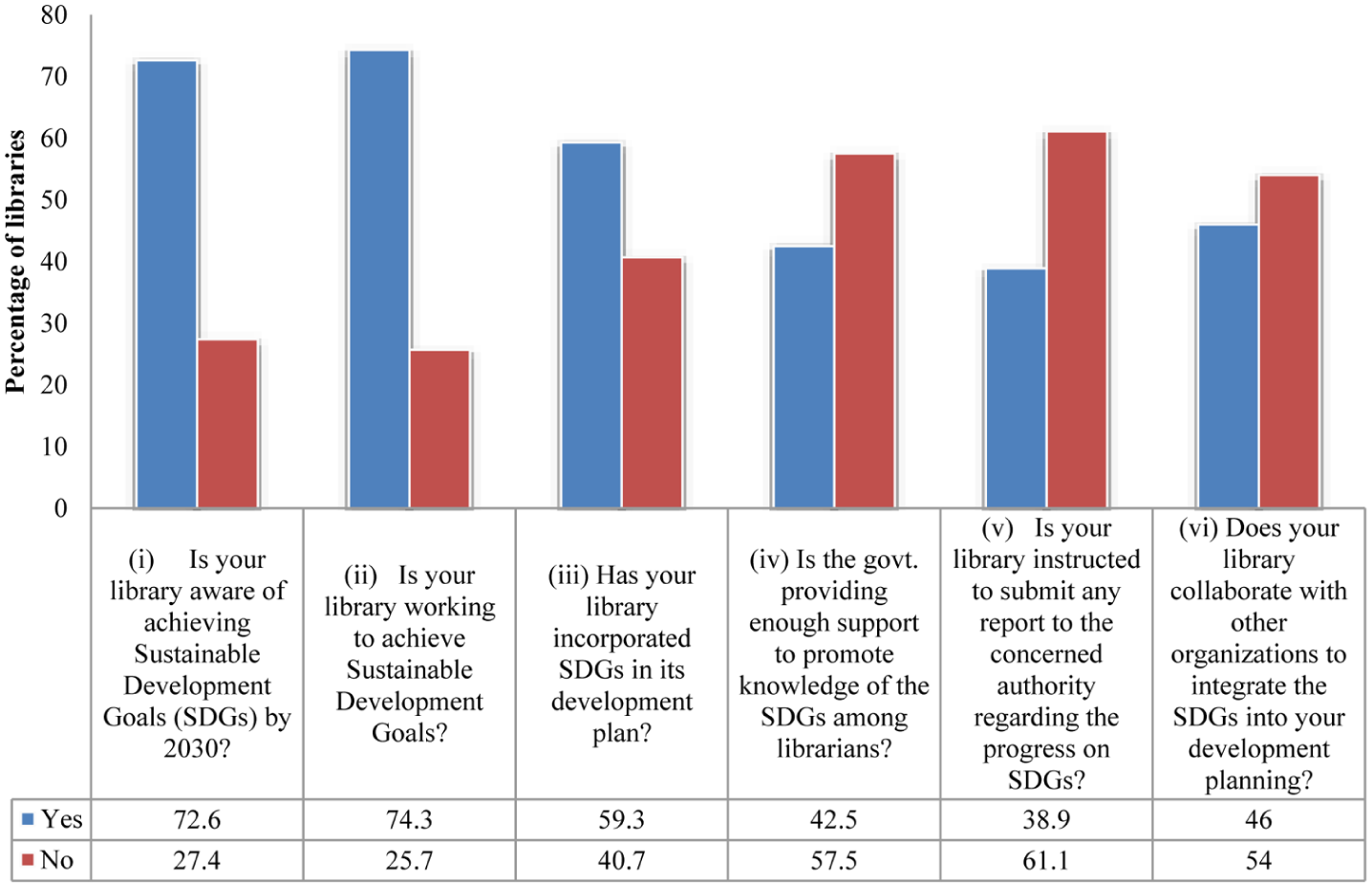
Status of SDG implementation by public libraries (n = 113).
Providing access to information resources to support SDGs
Based on a 5-point Likert Scale (1 = none and 5 = excellent), the study shows that the libraries have a good collection of language and literature (3.91 ± 0.840) followed by art, history and culture (3.64 ± 0.936). The status of collections on philosophy and ethics is average (3.02 ± 0.896), followed by laws and good governance (3.00 ± 1.026, social and behavioral science (2.94 ± 0.929), business and economics (2.83 ± 0.925), science, technology and engineering (2.81 ± 1.016), agricultural, food and nutritional science (2.80 ± 1.019), and gender studies and women empowerment (2.50 ± 0.927). The collections on rest of the categories including biological sciences (2.46 ± 0.991), medical and health sciences (2.37 ± 0.928), and water, environment and climate (2.33 ± 0.901) are very poor (Figure 2).
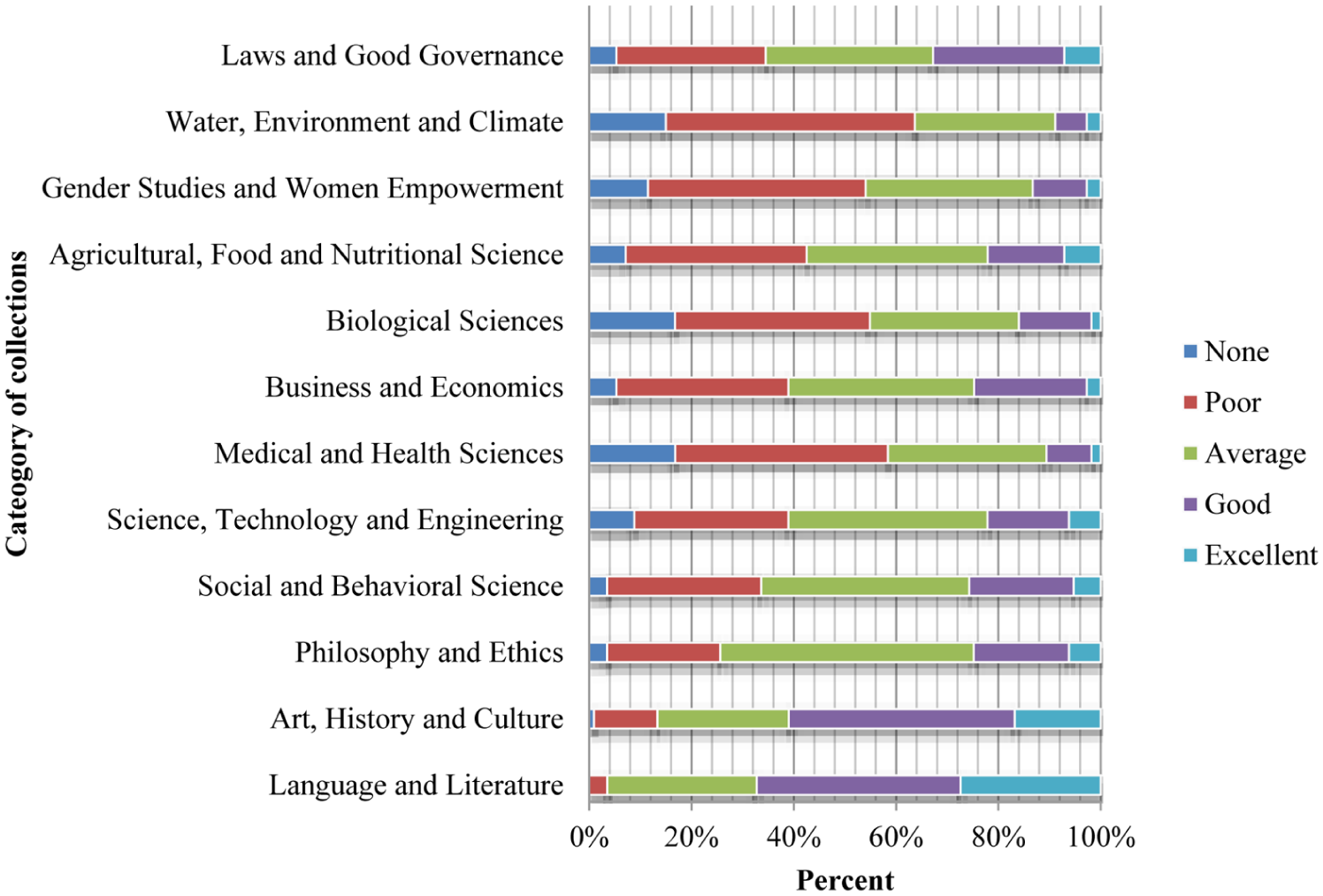
Status of library collections.
Public libraries’ contribution to support SDGs achievements
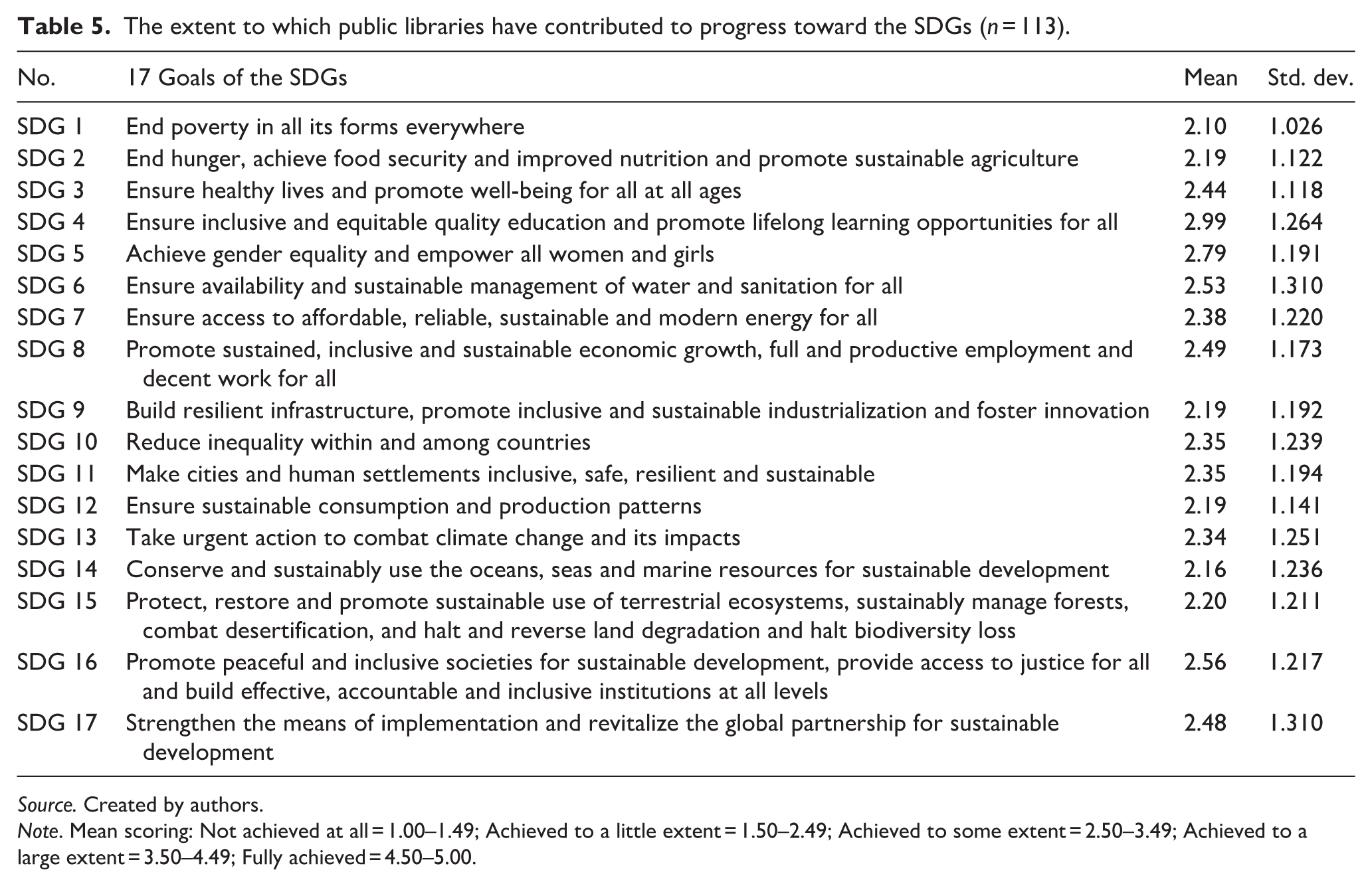
Table 5 shows the extent to which the public libraries in Bangladesh have contributed to progress toward the SDGs against each of the 17 goals.
The extent to which public libraries have contributed to progress toward the SDGs (n = 113).
Source. Created by authors.
Note. Mean scoring: Not achieved at all = 1.00–1.49; Achieved to a little extent = 1.50–2.49; Achieved to some extent = 2.50–3.49; Achieved to a large extent = 3.50–4.49; Fully achieved = 4.50–5.00.
Although SDGs 4, 5, 6, and 16 have been achieved to some extent, the libraries show a negligible degree of success in attaining the rest of the goals which contradicts with the findings of Islam et al. (2024) that highlights high ranking achievement in SDG 1,2,3,4 and 17.
Libraries’ adoption of IFLA guided measures
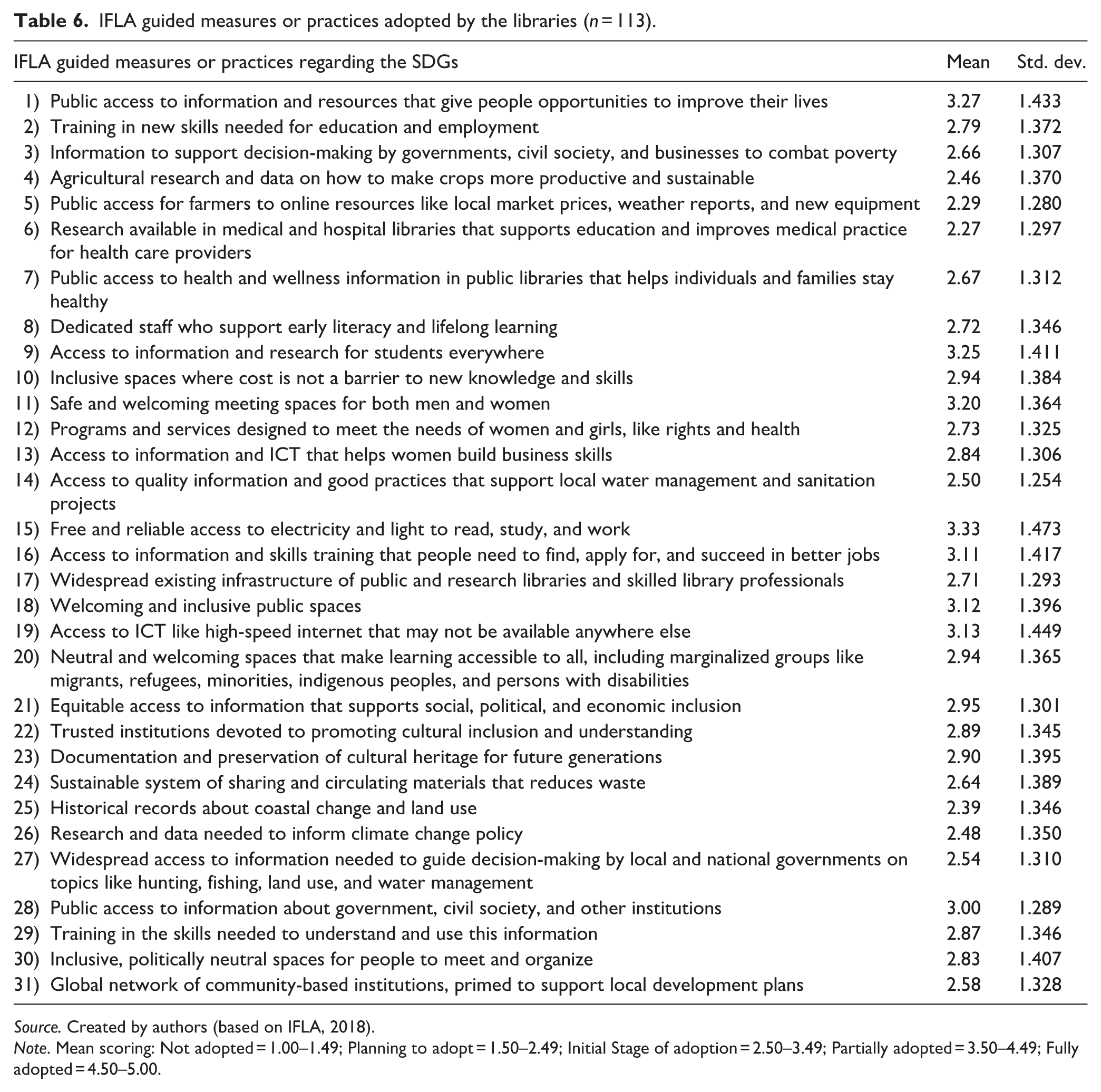
The libraries were asked to indicate their level of adoption of a number of IFLA recommended measures to attain the SDGs. Table 6 shows that neither of the practices has been fully adopted nor even partially adopted. While some practices are being planned to be adopted by the libraries (practice no. 4, 5, 6, 26, 27), other practices are at the initial stage of their adoption.
IFLA guided measures or practices adopted by the libraries (n = 113).
Source. Created by authors (based on IFLA, 2018).
Note. Mean scoring: Not adopted = 1.00–1.49; Planning to adopt = 1.50–2.49; Initial Stage of adoption = 2.50–3.49; Partially adopted = 3.50–4.49; Fully adopted = 4.50–5.00.
Challenges of achieving of SDGs by 2030
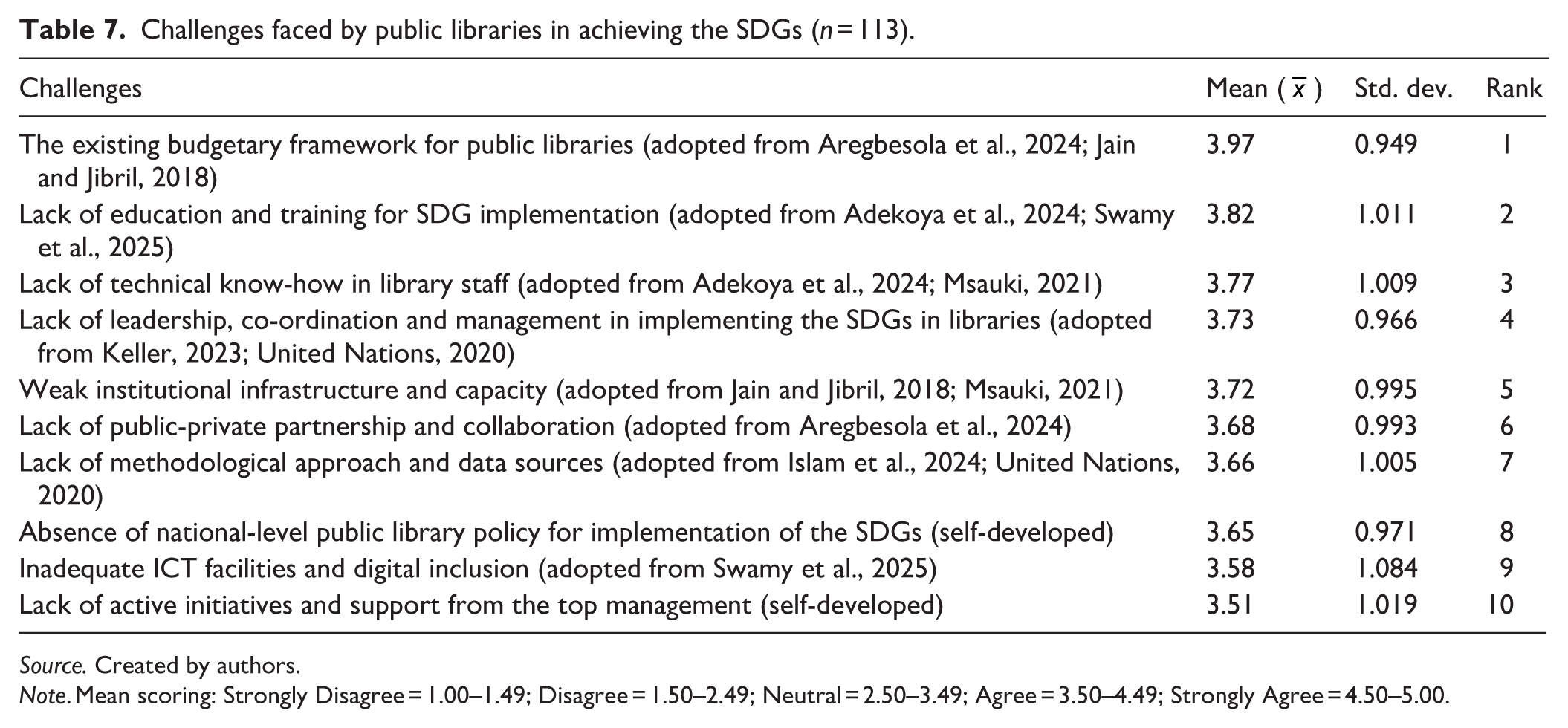
The challenges mentioned from a management perspective to practical initiatives were generally agreed upon by the surveyed libraries, albeit not unanimously, which is consistent with the findings of Islam et al. (2024) and Adamu et al. (2023). As shown in Table 7, the top-ranked obstacle to libraries achieving the SDGs is a lack of funding (
Challenges faced by public libraries in achieving the SDGs (n = 113).
Source. Created by authors.
Note. Mean scoring: Strongly Disagree = 1.00–1.49; Disagree = 1.50–2.49; Neutral = 2.50–3.49; Agree = 3.50–4.49; Strongly Agree = 4.50–5.00.
The challenges include partnership and collaboration (rank 6), availability of data sources (rank 7), policy integration (rank 8), digital inclusion (rank 9) and initiatives and support from the top management (rank 10). The findings of KIIs support most of the predetermined factors (Table 7) impeding the success of SDGs implementation in the public libraries of Bangladesh. Besides, other challenges include a lack of strong community engagement, the absence of appropriate policies tailored to local context, and ineffective library promotional activities (KII5).
Comparative discussion
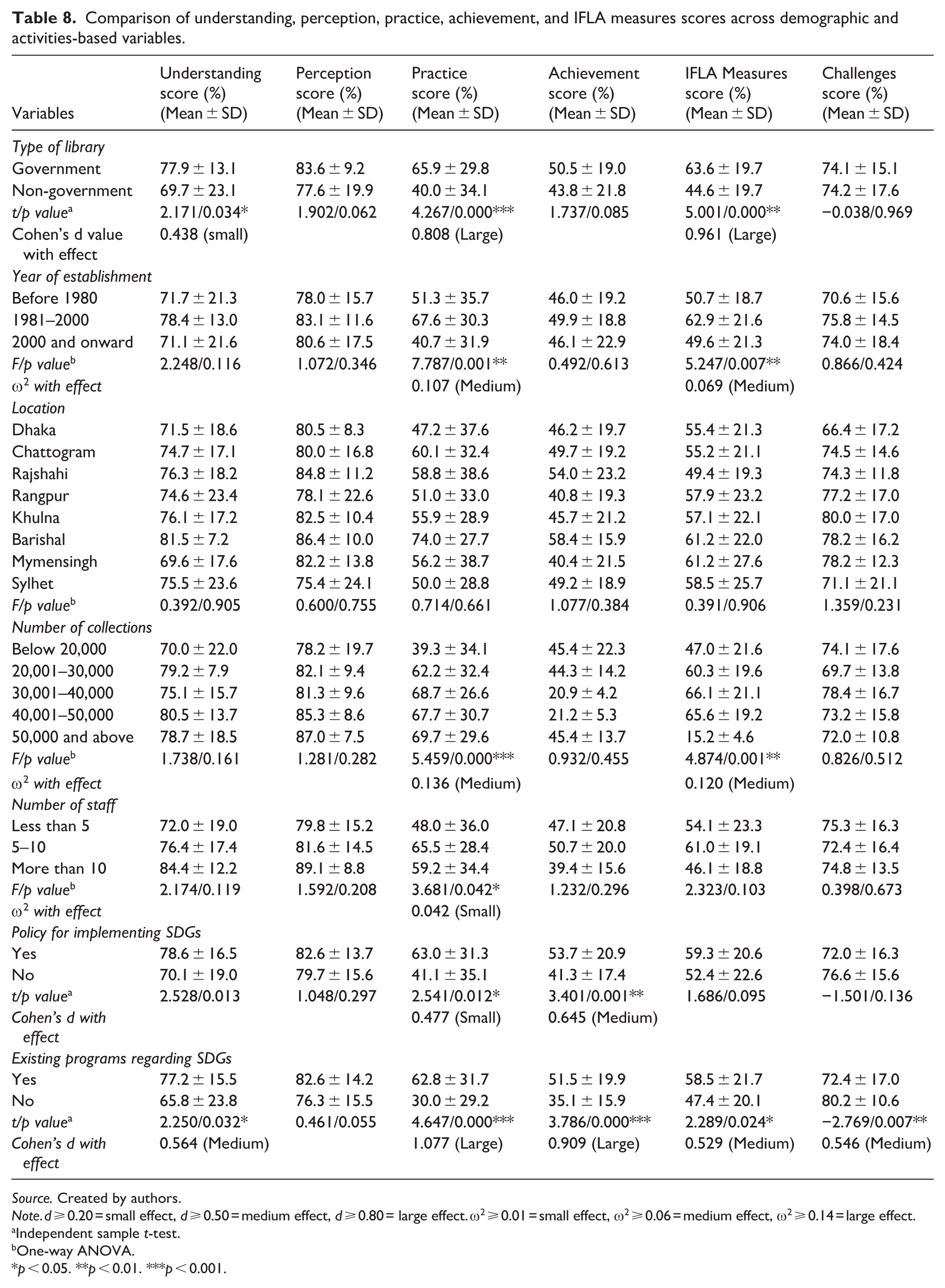
To compare if there exists any difference of understanding, perception, practice, achievement, and measures taken by the libraries across various demographic and activity-based groups, independent sample t-test and one-way ANOVA tests were applied as required. Besides, effect size was also calculated manually and reported using Cohen’s d and ω2 values to assess the practical significance (Cohen, 1988; Kroes and Finley, 2025). This study finds significant differences in understanding (p < 0.05, d ⩾ 0.20), practice (p < 0.001, d ⩾0.80) and IFLA measures (p < 0.001, d ⩾ 0.80) scores between government and non-government public libraries. As the government public libraries are operated, financed and managed by the government body, they are supposed to work in alignment with government plans and agendas, which can advance their understanding of certain national and global issues (KII4 and KII9). Besides, applying global-scale practices is even easier for government public libraries, as they own expertise and face less budgetary crisis compared to non-government libraries. Thus, the differences indicate that government public libraries are likely to adopt concerned practices and have more capacity to contribute to achieving SDGs relative to non-government public libraries with a deeper understanding of the issue (KII2).
In addition, the libraries established between 1980 and 2000, have achieved higher scores on practice (p < 0.01, ω2 ⩾ 0.06) and IFLA measures (p < 0.01, ω2 ⩾ 0.06) compared to those founded before 1980 or after 2000. Based on the life-cycle theory of organizations (Jirásek and Bílek, 2018; Phelps et al., 2007), a possible explanation for better performance of the libraries founded between 1980 and 2000 might be their administrative stability, their adaptability with Industry 4.0, and a stronger community engagement. Conversely, libraries established before 1980 that resist changes to their older set-up or those founded after 2000 facing challenges for survival due to budget, space, or weak organizational appearance exhibit lower performance.
Similarly, libraries with more than 50,000 collections performed better on practice (p < 0.001, ω2 ⩾ 0.06) and IFLA measures (p < 0.01, ω2 ⩾ 0.06) than libraries with less than 50,000 collections. Diversification in the collection always supports the development of an enriched collection reflecting strong institutional capacity, which facilitates broader user access, enabling them to build an educated, literate, and inclusive society (IFLA, 2022). As traditional and local mandates may vary from library to library, lower scores in this regard do not explicitly mean poor performance; rather, they would indicate the institutional scope and resource constraints for certain goals to be implemented/contributed for implementation (KII7).
Moreover, libraries with 5–10 staff members have a significantly higher practice score (p < 0.05, ω2 ⩾ 0.01) than those who belong to less than 5 or more than 10 staff. As a service-oriented organization, from creating to disseminating knowledge, libraries require sufficient supporting staff (KII3 and KII6). A supportive team of staff can reflect strong institutional capacity, facilitating workload balance, productivity, and improved service quality, whereas a shortage of logistic support can hamper day-to-day activities, let alone implementing any agenda (Hossain and Islam, 2025; IFLA, 2022; Opoku and Barfi, 2022).
Libraries that adopt a policy for advancing the SDGs have a higher practice (p < 0.05, d ⩾ 0.20) and SDG achievement scores (p < 0.01, d ⩾ 0.50) compared to those lacking a policy. Based on the existing programs on the SDGs, there is a significant difference in understanding (p < 0.05, d ⩾ 0.50), practice (p < 0.001, d ⩾0.80), achievement (p < 0.001, d ⩾ 0.80), IFLA measures (p < 0.05, d ⩾ 0.50) and challenge score (p < 0.01, d ⩾ 0.50) achieved by the libraries (Table 8). Thus, the more activity-based programs libraries adopt, the more opportunities they have to gain real-world experience that lead to better understanding of the SDGs and their implementation issues.
Comparison of understanding, perception, practice, achievement, and IFLA measures scores across demographic and activities-based variables.
Source. Created by authors.
Note. d ⩾ 0.20 = small effect, d ⩾ 0.50 = medium effect, d ⩾ 0.80 = large effect. ω2 ⩾ 0.01 = small effect, ω2 ⩾ 0.06 = medium effect, ω2 ⩾ 0.14 = large effect.
Independent sample t-test.
One-way ANOVA.
p < 0.05. **p < 0.01. ***p < 0.001.
To explore the correlation among the understanding, perception, practice, achievement, measures, and challenges, Pearson’s Product Moment Correlation Coefficient was run across the dependent variables. Table 9 finds a positive correlation between understanding and perception, practice, achievement, and IFLA measures scores.
Correlation among understanding, perception, practice, achievement, IFLA measures, and challenges scores.
Source. Created by authors.
Note. Pearson’s Product Moment Correlation Coefficient.
p < 0.05. **p < 0.01. ***p < 0.001.
Future strategies
Based on qualitative data received from the open-ended question of the survey and the findings of KII, the study recommends the following strategic actions for Bangladeshi libraries in general and public libraries in particular to implement the SDGs by 2030:
Integration of policy framework: To achieve the SDGs, a national policy framework for libraries must be formulated and implemented, addressing local priorities while aligning with global goals. The policy should provide guidelines for building balanced library collections, ensuring equitable access to information resources and services, enhancing capacity and professional development, promoting community engagement, collaborating with other organizations, and measuring the progress in achieving the SDGs within 2030 (KII6).
Inclusion of digital technologies: Public libraries should integrate digital technologies into their operations and services in order to minimize the digital divide, embrace sustainability, and measure the progress of SDGs implementation. They should make e-resources accessible, provide online information services, launch a dynamic website with a specific SDG portal, and promote remote access (KII2 and KII5). By providing public access to information and communication technology, public libraries can contribute directly to achieving Targets 5B, 9C and 16.10 (Alam, 2020).
Allocation of adequate funding: The government must come forward to patronize both government and non-government public libraries in the country to accelerate their activities related to SDGs. As libraries are nonprofit organizations and always rely on their parent organizations for their basic expenses, government and private sectors should provide long-term investment in support of implementing the SDGs. Thus, sustainable finances should be ensured for upgrading the public libraries, which includes not only enriching their collections but also increasing the expertise of libraries in providing services that necessarily contribute to the national priorities (KII2 and KII7). Donations can be a good alternative on which many libraries have started relying on (Ngo Kobhio Balôck, 2020).
Raising awareness: Dabengwa (2025) identified inadequate awareness, knowledge and expertise as key barriers to the transformation of libraries into sustainable ones. The public libraries of Bangladesh need to design programs and events to create awareness among library stakeholders on different issues related to lifelong learning, information literacy, health and hygiene, digital literacy, environment pollution, water purification, sanitation, etc. (KII3). Thus, organizing awareness raising workshops, seminars, exhibition, social media campaigns, stakeholder meetings, dialogs, online and offline display of SDG news and updates, etc. can facilitate the implementation of the SDGs.
Developing SDG-related resources and services: A wide range of information resources, community-friendly programs and services can facilitate progress toward the SDGs. However, public libraries in Bangladesh often lack adequate resources and services aligned with these goals. They should focus on creating collections specifically related to SDGs and providing cutting-edge services to achieve SDGs (KII7). It is further suggested making use of the resources currently available in a way that can satisfy user needs and ensure environmental sustainability (KII5).
Developing partnerships and collaboration: Collaboration is one of the key factors of attaining the SDGs (Bangani, 2024b; Dabengwa, 2025; Koech, 2025; Oladokun and Durodolu, 2025). To support SDG-related programs and activities, efforts should be made to establish partnerships and collaborate with other libraries, academic institutions, and government and non-government organizations. Collaboration among other public, academic, national and special libraries at local, regional, national, and international levels can foster a cooperative environment that facilitates knowledge sharing and enhances the implementation of the SDGs (KII4). Public libraries can also collaborate with concerned departments and ministries including Education, Cultural Affairs, Health, Environment, etc. to work on aligned topics to support the SDGs.
Encouraging research and innovation: Innovation and creativity are considered as important factors for achieving the SDGs (Aregbesola et al., 2024). Libraries can foster innovation and competitiveness by providing access to research infrastructure (IFLA, 2018). The public libraries in Bangladesh ought to be centers of excellence that foster an innovative and research-oriented culture and provide access to high quality research output to support the SDGs.
Expatriation and capacity building: Public libraries of Bangladesh should take necessary measures to strengthen both individual and institutional capacity. Continuous professional development and skills enhancement programs for library human resources, robust digital infrastructure, inclusive library collections, user-centered services design, open access initiatives, collaborative efforts, and supportive policies should be ensured to advance the SDGs, and to track the libraries’ progress toward the implementation of the SDGs (KII4 and KII9).
Strengthening community engagement: Inclusive and participatory approaches should be adopted to ensure that SDG strategies are context-specific and responsive (Panda and Dash, 2025). Public libraries should promote community engagement through innovative services and outreach programs including lifelong learning opportunities for community people without any discrimination. Improved communication from service providers—through local meetings, mobile outreach, or digital platforms should be ensured (KII6). This will create public libraries an inclusive social hub for masses and enhance public access to information and services.
Conclusion
Sustainable Development Goals (SDGs) have widened the opportunity for each organization to get engaged to build a sustainable planet. Library, being a non-profit organization, has an influence on society which not only addresses societal changes but also adds value and works for sustainable positive changes. As an important stakeholder of implementing SDGs, libraries are continuously discovering, exploring, implementing and adapting enormous assessment tools and frameworks to assess their contribution to achieve SDGs (Pinto and Ochôa, 2017). To support global agenda, local advocacy and engagement involving libraries and librarians must be ensured (Bradley, 2016). Libraries should integrate SDGs into their own strategy to fulfill their social, economic and environmental role (European Libraries and Sustainable Working Group (ELSA), 2020). Consistent with Dabengwa (2025), this study emphasized sustainable literacy, dynamic leadership, organizational culture, individual initiatives, and collaboration as influential factors for advancing SDGs implementation in libraries (KII9). As Koech (2025) mentions, libraries can increase their impact, enhance inclusivity, and promote community transformation by actively collaborating with their stakeholders.
This study shows that both government and non-government public libraries have a good understanding of the SDGs and a favorable opinion of their implementation. The current level of action, however, is not sufficient to achieve the goals by 2030, which is consistent with Cyr and Connaway’s (2020) contention that the existing library facilities and services do not contribute to attain the SDGs. Librarians’ awareness and enthusiasm will not be enough to meet the challenges of achieving the SDG targets unless the SDGs policy framework addressing local library priorities is implemented; adequate funding dedicated to the SDGs is allotted; government patronage, private sector initiatives, and local community participation are ensured. Bangladeshi libraries need to go a long way to make SDGs a sustainable success, as evidenced by the fact that only four of the goals—SDGs 4, 5, 6 and 16 have been achieved to some extent. However, embracing IFLA measures can shed light on the initiatives of the libraries so far. If the obstacles are being addressed and the libraries are facilitated to work in full-fledged, it will be a stone’s throw to have the SDGs status within the defined timeframe.
Considering the overall situation of the government and non-government public libraries of Bangladesh, it has become essential to utilize the SDGs as a quality assessment tool to drive and upgrade the current scenario (Thorpe and Gunton, 2022). In order to achieve the SDGs by 2030 with dignity, public libraries of Bangladesh must rethink and reshape their plans, policies, programs, and operations to an effective level. The present study paves the way for exploring the condition of national, academic, special as well as other public libraries of the country in terms of contributing to SDGs. Although this study includes all the government public libraries in Bangladesh, its scope is limited to investigating only 64 non-government public libraries. In addition to many non-government public libraries, academic, special and other private-sector libraries were excluded due to time and financial constraints. Thus, the findings may not be generalized to figure out the overall library landscape of Bangladesh in terms of SDG implementation. Future research should cover a large sample involving public, academic, national, special, and NGO libraries to portray comprehensive scenario of Bangladeshi libraries’ role toward SDG achievement. Furthermore, comparative case analysis among different types of libraries may be conducted to explore their strengths, weakness, achievement, and future plans regarding the integration of the SDGs.
Supplemental Material
sj-docx-1-lis-10.1177_09610006261461295 – Supplemental material for Toward Achieving the SDGs: Unveiling Current Practices and Future Strategies of Public Libraries in Bangladesh
Supplemental material, sj-docx-1-lis-10.1177_09610006261461295 for Toward Achieving the SDGs: Unveiling Current Practices and Future Strategies of Public Libraries in Bangladesh by Md. Roknuzzaman and Susmita Saha in Journal of Librarianship and Information Science
Footnotes

Funding
The authors disclosed receipt of the following financial support for the research, authorship, and/or publication of this article: The author received financial support for the research by the University Grants Commission of Bangladesh.
Declaration of conflicting interests
The authors declared no potential conflicts of interest with respect to the research, authorship, and/or publication of this article.
Supplemental material
Supplemental material for this article is available online.
Author biographies
References
Supplementary Material
Please find the following supplemental material available below.
For Open Access articles published under a Creative Commons License, all supplemental material carries the same license as the article it is associated with.
For non-Open Access articles published, all supplemental material carries a non-exclusive license, and permission requests for re-use of supplemental material or any part of supplemental material shall be sent directly to the copyright owner as specified in the copyright notice associated with the article.
