







Abstract
Background
Lupus comprises a complex group of inflammatory disorders including cutaneous lupus erythematosus (CLE) and systemic lupus erythematosus (SLE). The issue of health misinformation is increasingly problematic, although the content of misinformation related to lupus available online has not been deeply explored. This study aimed to qualitatively assess the type of misinformation related to lupus available online.
Methods
A literature search on PubMed was conducted, using search terms “cutaneous lupus” OR “discoid lupus” OR “lupus” AND “misinformation” OR “conspiracy” OR “disinformation.” Further searches were also performed on Google, YouTube, Twitter, Facebook, Instagram, and TikTok.
Results
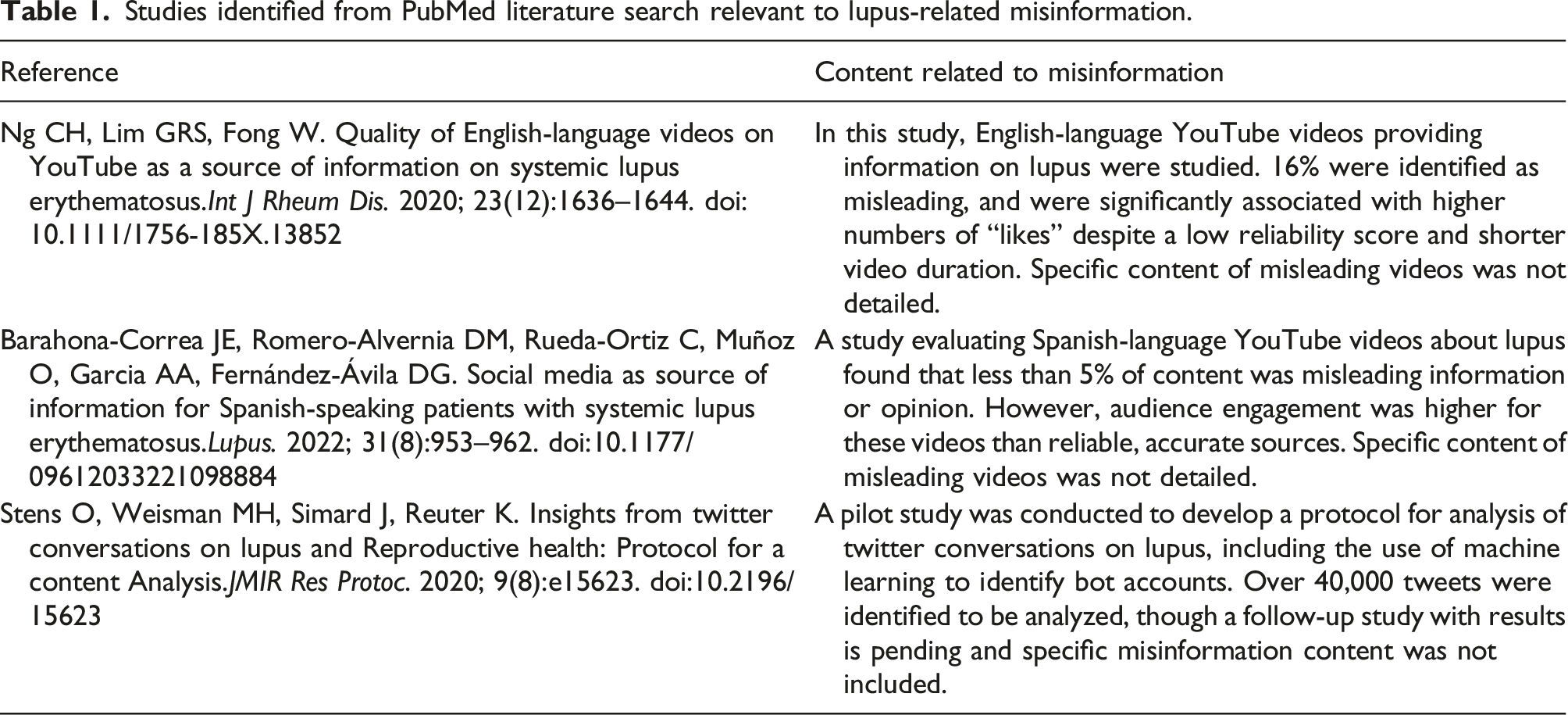
Published literature describing lupus-related misinformation was minimal, with only three manuscripts identified. Conversely, a variety of points of misinformation were identified online and on social media. Key themes identified in online content included suggestion of incorrect causes such as infection or aspartame consumption, false risk assessments such as lupus never developing in males, false claims about conventional treatments, and promotion of alternative treatments or “cures” without evidence.
Conclusion
Dermatologists, rheumatologists, and all clinicians treating patients with lupus play an essential role in dispelling the pervasive misinformation surrounding the disease and its treatments, encouraging patients to seek reliable sources of information, and advocating for evidence-based guidance.
Introduction
Cutaneous lupus erythematosus (CLE) comprises a complex category of inflammatory dermatoses which can occur independently or in combination with systemic lupus erythematosus (SLE). 1 Social media and internet-based resources are widely used by patients with lupus to access information and support, which can result in rapid proliferation of misinformation.2,3 Misleading or conflicting messaging has potential for harm to patients by weakening trust in medical providers, increasing anxiety and fear (particularly in those newly diagnosed or with mild disease), and influencing delay or discontinuation of treatment. The global proliferation of health misinformation, defined as health-related claims that are not consistent with scientific consensus and are not biologically plausible, has been referred to by the World Health Organization as the “Infodemic” (https://www.who.int/health-topics/infodemic#tab=tab_1). The outbreak of the COVID-19 pandemic revealed the pace at which misleading “fake news” can spread about healthcare. 4 Despite this, little is known about the content of misinformation or misleading content available online related to lupus. The aim of this study was to qualitatively assess the content of misinformation, disinformation, and conspiracy theories related to lupus available online.
Methods
Studies identified from PubMed literature search relevant to lupus-related misinformation.
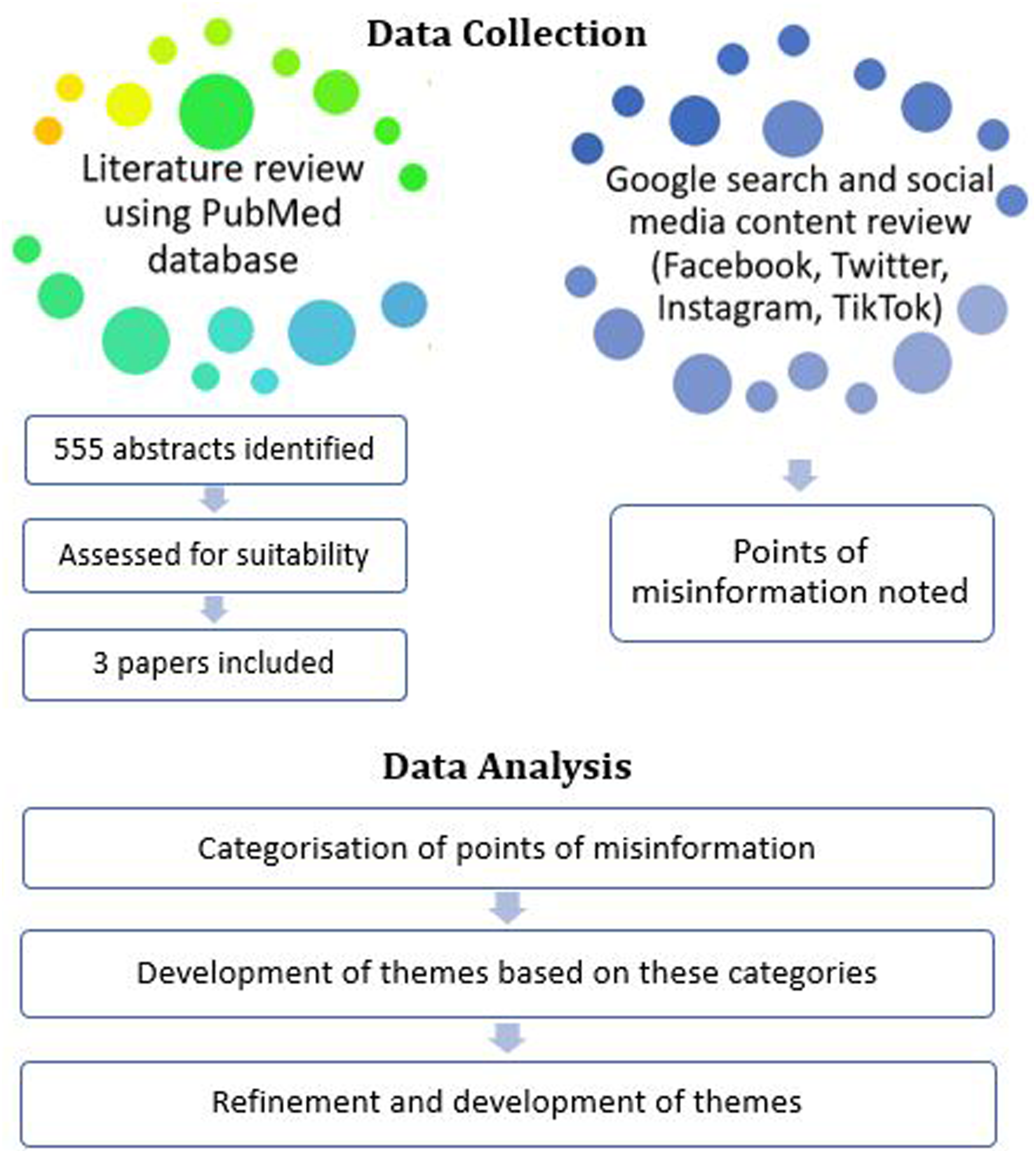
Flowchart illustrating methodologies of data collection and analysis.
Results
Themes included implausible causes such as contagion or exposure to aspartame, false risk assessments such as lupus never developing in males, allegations about the toxicity of common treatments such as hydroxychloroquine, and alternative unfounded treatments or “cures.”
Fake causes
The pathogenesis of lupus is complex and multifactorial, including genetic susceptibility, hormonal, and environmental factors. Some discussions on social media alluded to the perception that lupus is contagious. Lupus patients described frustration with others’ misguided concerns that the disease was sexually transmitted or related to a fungal skin infection. This perceived stigma is troubling for those affected, however, most information online sought to dispel this myth.
Functional medicine accounts referred to heavy metals and “mycotoxins” as “surprisingly common toxins” linked to lupus and autoimmune disease. “Detoxification,” using dietary changes and alternative remedies, was recommended. Mycotoxins, referring to toxic gas released by fungi or molds, have been falsely blamed for a wide range of autoimmune disorders with no evidence or plausible mechanism. 5 Evidence for lupus development in association with environmental exposures to solvents, pesticides, and heavy metals is limited. Roles in epigenetic changes, oxidative stress, inflammatory cytokine upregulation, and hormonal effects have been theorized; stronger evidence exists for association with crystalline silica and smoking. 6
The conspiracy surrounding the sweetener aspartame as a toxic substance has been prevalent online for over 20 years. False claims abound that it is responsible for an “epidemic” of diseases, including cancer, multiple sclerosis and lupus. Elaborate allegations were made blaming the consumption of diet beverages and other artificially sweetened foods containing the substance as a cause of these conditions. This was typically asserted by naturopathic or functional medicine sources, and propagated in some peer-to-peer forums for those with lupus. Despite no evidence for this potential causality, and extensive safety assessments by food regulatory bodies, the conspiracy receives undue consideration online regarding causation of lupus.
False risk assessment
While lupus predominantly affects females, approximately 10% of those with lupus are male. 7 Men with lupus described frustration in explaining their diagnosis to those who questioned its presentation in males. Social media posts about lupus by males were infrequent, though reliable sources cited the common misbelief that only females were affected and sought to educate about incidence of lupus in males.
Toxicity of traditional treatments
The use of conventional medications for lupus is supported by robust medical evidence and guidelines, though they do have recognized potential adverse effects. Well-studied treatments such as hydroxychloroquine, methotrexate, and topical steroids were often cited as “toxic” on social media. Misinformation related to topical steroids is increasingly recognized, particularly in the context of atopic dermatitis. 8 Similar spread of overstated claims of skin thinning, systemic absorption, and “addiction” was occasionally seen in lupus online forums. Disparagement of traditional treatments was typically paired with promotion of “natural” alternatives.
Conversely, the exaggeration of potential benefits of hydroxychloroquine was a more recent feature of disinformation online. This was a subject of public controversy during the pandemic, when inaccurate claims were made by influential public figures regarding its protective effects in COVID-19.
9
An ensuing surge in hydroxychloroquine demand was anticipated, and patients with lupus voiced concern and anxiety about medication availability (Figure 2). Composite of images representing online lupus-related misinformation themes. Sources: Instagram, Twitter, Facebook, TikTok, YouTube, draxe.com, amazon.com, goodreads.com, sciencenews.org, wholenewmom.com, lupus.net, behance.net, lupusnewstoday.com.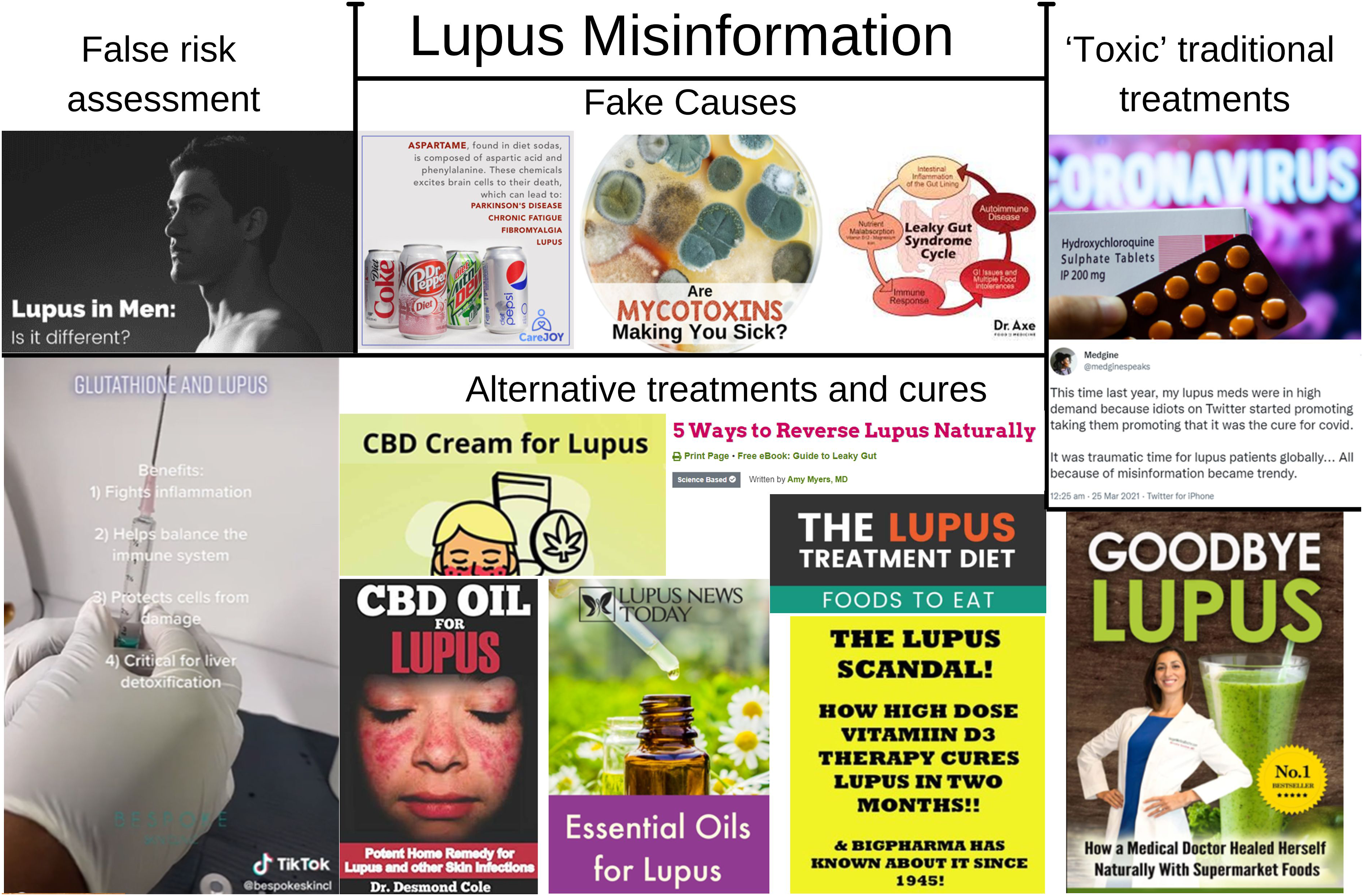
Alternative treatments and cures
Promotion of alternative treatments for lupus was a dominant theme of misinformation. Functional doctors or naturopaths were often at the face of these, recommending or selling herbal supplements, homeopathic remedies, cannabis oil, and/or dietary changes in the absence of supportive evidence. These suggestions were echoed on social media by patients who reported success with varying combinations of these. Specific online advice by one functional medicine doctor advised on multiple steps to “reverse” lupus, including repair of “leaky gut” through elimination of toxins and avoiding gluten. The concept of intestinal barrier dysfunction resulting in altered permeability and “leaky gut” is frequently referred to in functional medicine as an association with multiple autoimmune and inflammatory diseases, though it has limited supportive evidence in medical literature. 10 Though there is evolving evidence to support the immunologic influence of the gut microbiome in the context of inflammatory and autoimmune disorders, including lupus, 11 the directionality of the relationship remains unclear. Gluten-free diets in the absence of coeliac disease were frequently cited, with the misconception that gluten is inflammatory or harmful to health. 12 Though an increased prevalence of coeliac disease in patients with SLE is recognized, 13 unnecessary elimination of gluten from the diet is not warranted in those without coeliac disease, and may lead to dietary deficiencies. Autohemotherapy, which involves reinjection of small volumes of a patient’s blood, occasionally following ex-vivo treatment with ozone, 14 was infrequently mentioned by social media accounts of functional medicine practitioners, advertising treatment in private clinics. There is a significant risk of inducing major flares in lupus activity if auto-antibodies are reinjected into a patient at high concentrations, highlighting the predatory behavior of online grifters to potentially vulnerable lupus patients.
Supplements recommended as alternative lupus treatments included turmeric, cannabinoids, omega-3 fatty acids, and vitamin D. Turmeric, containing the compound curcumin, was reported to improve symptoms. While there is some in vitro evidence of potential immunomodulatory effects in SLE, 15 oral bioavailability is poor, there are no clinical trials showing benefit in lupus, and it is not considered potent enough to form part of standard medical treatment. Endorsement of cannabis products was common—typically in reference to pain and stress management, though some advocated topical application of cannabis oil to improve cutaneous lupus. Cannabinoids may have symptomatic benefit through anti-inflammatory and immunomodulatory effects, though high quality evidence of clinical benefit is scant, particularly with regards to topical use. 16 Cannabis oil has been used to treat pain associated with epidermolysis bullosa and pyoderma gangrenosum, 17 but there is minimal evidence of benefit on disease activity. Despite the potential theoretical benefit of cannabinoids in lupus, given the mixed quality and content of cannabinoid oils on the market 18 and the lack of clinical trials showing benefit, it is likely that cannabis-derived products will remain an alternative treatment for lupus for the foreseeable future. Vitamin D and omega-3 fatty acid supplements have weak evidence to support benefit in lupus, 19 although they are only likely to be harmful in excess. Vitamin D may be deficient in patients with lupus as a consequence of the photoprotection necessary to avoid disease flare. Lower levels have been associated with greater SLE disease activity, although there are multiple potential confounding factors. 20 The role of vitamin D was overemphasized by some as a potential cure for lupus. Encouragement to sunbathe to improve lupus symptoms was a critically misleading mention in peer forums. Some individuals reported improved joint symptoms with sunlight and sunbed exposure, proposing that others with lupus consider this—a potentially dangerous suggestion given the recognized risk of lupus flare with any UV exposure. These divergent perceptions were often refuted within comment sections, and correct guidance on photoprotection prevailed.
Discussion
Misinformation related to lupus is pervasive online despite best efforts from reliable sources to dispel falsehoods. Unsupported assertions regarding incorrect causes of lupus can unnecessarily complicate understanding of the disease for patients and families. The distorted perception that lupus may be contagious further propels disease stigma. False risk assessment could result in delayed presentation or treatment in males due to assumptions that males cannot be affected by lupus. Patients with all subtypes of lupus voice frustration with an unpredictable disease and may feel desperate to find a cure. Unproven alternative or “natural” strategies can misguide vulnerable patients to adopt unhelpful, expensive and possibly dangerous methods in an effort to achieve disease control. Though in some cases innocuous, dietary deficiencies and adverse effects of excess supplements can be important negative consequences. Exaggerated claims of success with these unsubstantiated remedies, and deceptive statements regarding conventional therapies, may further discourage patients from seeking timely and appropriate medical treatment. The inappropriate endorsement of sun exposure as a treatment for arthralgia is particularly dangerous in this patient population, due to the strong risk of photosensitivity and disease flare with UV exposure.
The escalation of healthcare-related misinformation has been increasingly recognized globally and poses serious threats to society. This study highlights the vast array of misinformation related to lupus online. Dermatologists, rheumatologists, and general physicians alike should be aware of these misleading sources and inaccuracies in circulation. The role of addressing and refuting incorrect facts, promoting reliable educational resources, and providing evidence-based guidance is essential in optimizing care for patients with lupus.
ORCID iD
Cathal O’Connor https://orcid.org/0000-0001-7084-5293
Footnotes
Declaration of conflicting interests
The author(s) declared no potential conflicts of interest with respect to the research, authorship, and/or publication of this article.
Funding
The author(s) received no financial support for the research, authorship, and/or publication of this article.