







Abstract
A popular and well-established image of scientists and science dominates in the public field, signifying a contradictory and multifaceted combination of stereotypes. This paper investigates crucial aspects of the visual self-image of Greek scientists and science as exposed in photographic material retrieved from relevant institutions’ websites. In total 971 photos were analysed along dimensions corresponding to the image of scientists and science. Analysis demonstrates ambivalence in Greek scientists’ self-images between traditional stereotypic characteristics and an intention to overcome them. Differences between the self-images of physics, chemistry and biology are determined, as well as between the “masculine” and “feminine” face of science. Implications concerning improvements in science and scientists’ self-images and further research are presented.
Keywords
1. Introduction
The prevailing public image of science is a relatively stable combination of traditional stereotypes, drawing their historic references from the pre-scientific period and modern, constantly transforming perceptions about scientific and technological progress and its positive and negative effects on society and the planet (Hüppauf and Weingart, 2008; Schummer and Spector, 2008). This image reveals a low level of public understanding of science-related professions. At the same time, it reflects the stability of “collective meanings” apparently related to myths and stereotypes with deep cultural roots (Flicker, 2008).
This popular image of science is particularly complex and indicates ambivalence and a retrogression of the public between trust and mistrust towards science, between faith in progress on one hand and scepticism towards technology, or fear about its uncontrollable effects on the other (Flicker, 2008; Weingart, 2008). This contradictory image is revealed by research studies concerning the public representation of scientists in comic strips and clipart cartoons, fiction films, mass media (Flicker, 2008; Locke, 2005; Schummer and Spector, 2008; Pansegrau, 2008; Steinke, 2005; Weingart, 2008), even in children’s books (McAdam, 1990) and educational programmes for children (Long and Steinke, 1996).
In subsequent paragraphs features of public images of scientists and science will be outlined, along with a special reference to the relevant visual (self-)images.
Public images of scientists
Stereotype representations of scientists
The term “images of scientists” mainly refers to stereotypes and caricatures of technicians wearing white coats, working in gleaming laboratories and using complex technological equipment to carry out measurements, gather data and demonstrate hypotheses. Scientists are mostly men, generally represented as geniuses, hard-working and attentive to the degree of obsession, surrounded by a veil of abstraction, or confusion. Sometimes their enthusiasm and scientific curiosity can put humanity in danger, since they possess secret knowledge and power over nature. Within this picture scientists can be “madmen,” capable of disastrous inventions and dangerous interventions on nature, or gentle gurus devoted to saving the world (Haynes, 2003; Mitchell, 2008; Nisbet et al., 2002; Song and Kim, 1999; Weingart et al., 2003).
Thus, a stereotype image of the scientist portrayed as
a man who wears a white coat and works in a laboratory … elderly or middle aged … and wears glasses … he may wear a beard … he is surrounded by equipment: test tubes, Bunsen burners, flasks and bottles … he writes neatly in black notebooks … one day he may straighten up and shout: “I’ve found it” … Through his work people will have new and better products … he has to keep dangerous secrets … his work may be dangerous … he always reads a book. (Mead and Metraux, 1957: 386–387)
has been found to be prevailing among non-specialists (Basalla, 1976; Beardslee and O’Dowd, 1961; Etzioni and Nunn, 1974; Krajkovich and Smith, 1982; Ward, 1977) and in the public field (Aikenhead, 1988; Hüppauf and Weingart, 2008; Pansegrau, 2008; Schummer and Spector, 2007, 2008). Many depictions of scientists show them as eccentric and antisocial (Long and Steinke, 1996) and being so dedicated that they spend most of their day at work. Often, scientists lose control of their research or their technology, to the detriment of society (Basalla, 1976). As part of the separation from the general public, scientists are also portrayed as an elite and privileged group (Long and Steinke, 1996), having answers to all questions.
In 1983, Chambers developed the “Draw-A-Scientist Test” (DAST) technique to investigate elements rendering young pupils’ images of scientists stereotypic. He invited children to draw a picture of a scientist while at work. He proposed seven stereotype indicators consistently appearing in students’ drawings: lab coat, eyeglasses, growth of facial hair (e.g. beard, moustache), research symbols (laboratory equipment and scientific instruments), knowledge symbols (e.g. books, blackboards), technology products (such as computers), and relevant captions (e.g. formulae, taxonomic classifications, captions like “eureka!,” etc.). Later, She (1998) proposed an eighth indicator to the above-mentioned, namely natural objects (e.g. animals, astronomical objects).
Several subsequent studies using variations of the DAST technique came up with similar results (Finson, 2002; Losh et al., 2008; Mason et al., 1991; Moseley and Norris, 1999; Newton and Newton, 1998; Quita, 2003; Rubin et al., 2003; Schibeci and Riley, 1986; Schibeci and Sorenson, 1983). These studies suggest that stereotypical qualities in non-experts’ drawings indicate that they hold distorted, superficial and inaccurate perceptions of science and scientists (Pion and Lipsey, 1981), which could be interpreted as deficits in their scientific literacy (Palmer, 1997). What is more, stereotypic images reflecting young people’s perceptions of scientists are considered to correlate with their attitudes towards science (Boylan et al., 1992; Finson, 2002; Fung, 2002; She, 1998), as well as with their personal, professional and social aspirations (Schibeci and Lee, 2003; Song and Kim, 1999).
A gendered image
Women are hardly present in the public image of science (Flicker, 2008; Losh, 2010; She, 1998). Studies of newspapers and magazines indicate that science is predominantly portrayed as a masculine endeavour. The sporadic representations of women scientists in these media, as well as in films and television drama, mainly incorporate components of gender stereotypes rather than scientific ones (Boyce and Kitzinger, 2008; Haran et al., 2008; LaFollette, 1988; Long et al., 2001; Steinke, 2005). Such representations reinforce traditional assumptions about women in science.
Sex-role stereotypes regarding scientific professions have also been revealed in non-experts’ drawings, which in the majority involve male scientists (Buldu, 2006; Chambers, 1983; Finson, 2002; Hill and Wheeler, 1991; Mason et al., 1991; Schibeci and Sorenson, 1983; Sumrall, 1995), while women scientists tend to be drawn exclusively by female participants (Christidou et al., 2012; Hatzinikita et al., 2009; Maoldomhnaigh and Hunt, 1988; She, 1998). Stereotypic perceptions about scientists have been found to be embraced even by female researchers and postgraduate students (Auguste et al., 1999). On the other hand, males exhibit greater gender and overall stereotyping of scientists than females (Huber and Burton, 1995; Steinke, 1997; Steinke et al., 2007).
In the public field female scientists’ roles are secondary and differentiated from those of their male counterparts (Flicker, 2008; Schummer and Spector, 2008). Even women scientists’ biographies in popular magazines portray them as less apt than men, and either in minor and supportive roles, or as “superscientists.” Those profiles present scientific research as requiring certain “masculine” attributes (LaFollette, 1988). Stereotypical images of scientists in the media that reinforce traditional gender roles and gender-stereotyped views of professional roles may influence young people’s perceptions of the gender of scientists and possibly restrict adolescent girls’ career choices (Steinke, 1997).
However, media images of female scientists have lately been improving. Recent depictions tend to represent them as professionals with a high status, confident, realistic, passionate about their work, articulate, sincere, inventive, and autonomous, thus providing examples of role models who succeeded in male-dominated fields (Steinke, 1997, 2005). At the same time, the public welcomes female scientists’ depictions in positions of responsibility and high status, as well as programmes that demonstrate women coping with a “masculine” workplace and revealing the excitement of science (Haran et al., 2008). Thus, the media may be effective in counterbalancing widespread cultural stereotypes of women scientists and initiating changes in perceptions and attitudes needed to narrow the gender gap in science (Boyce and Kitzinger, 2008; Long et al., 2001; Steinke, 2004, 2005).
Public images of science
Public images of scientists often depict their careers as uninviting (Losh, 2010). Science is misleadingly presented as a primarily practical and mechanistic activity of proof and demonstration; experimental and quantitative in nature; oriented towards data collection and production of certainties; rule-bound and positivist (Mitchell, 2008; Steinke, 2005). The public adopts this conception. Moreover, science careers are considered as competitive, impersonal, abstract, deprived of imagination and creativity (Hill and Wheeler, 1991; Losh, 2010; She, 1998; Steinke, 2005) and entailing absolute dedication (Monhardt et al., 1999). Even worse, science is often depicted in the public sphere as mysterious, magical, or dangerous (Haynes, 2003; Long and Steinke, 1996). As such, scientific achievement is distrusted because of possible unforeseen ramifications.
Yet there are instances where science is presented as truthful, or as an important tool for solving problems, a sacred and omnipotent field offering hope for the future with qualified individuals as guides (Nisbet et al., 2002). These images present science as an enjoyable activity, a part of everyday life and a challenging pursuit, appropriate for everyone (Long and Steinke, 1996). More particularly, newspapers, science television, television drama series, documentaries and science magazines promote up-to-date and non-gender-stereotyped images of science. The social, international and interdisciplinary dimensions of science are emphasized; a diversity of inviting careers are illustrated. Such positive images may generate motivations for engaging in science (Haran et al., 2008; Nisbet et al., 2002) and have indeed been found to be embraced by the general public (Losh, 2010).
In the views of both non-specialists and the public field scientific activity takes place exclusively in research laboratories (Barman, 1999; Chambers, 1983). Undeniably, in popular visual culture science – frequently identified with the discipline of chemistry – is archetypically experimental; modern research equipment, industrial applications of scientific knowledge, as well as its theoretical aspects are generally silenced (Schummer and Spector, 2008). The historical origins of this prevalence of the experimental aspect of science can be traced back in late ancient, medieval and early modern medicine. This image bears negative symbolisms – of which scientists are probably unaware – reinforcing negative attitudes among the public. During the 19th century, however, other types of visual portrayals have been preferred, depicting scientists reading books to denote a theoretical orientation, or demonstrating their inventions to suggest technological applications of science (Schummer and Spector, 2007).
The visual image of science is frequently signified by the use of “emblems,” i.e. simple and easily recognized visual symbols. Emblems are used to represent different disciplines by means of archetypal objects, e.g. glassware (test tubes, flasks, etc.) intended to symbolize chemistry. The popular visual culture tends to select scientific emblems from the historical imagery of science, rather than from representations of contemporary research (Schummer and Spector, 2007, 2008).
To summarize, the stereotype of scientists prevailing in the public field appears in several variations. Science and scientists are sometimes depicted as mean and sometimes as noble and moral powerful forces. Negative images promote reservations towards science while representations of science as omnipotent and offering hope for the future appear to promote a competing schema related to the promise of scientific research. What is common in both positive and negative images is that science and scientists tend to be portrayed as unusual, and that science is not “common knowledge” (Nisbet et al., 2002). Likewise, the prevailing image in the public field obviously implies that the scientist is not “someone like us,” but deviates from the norm in appearance and behaviour and constitutes a mythical hero of the world of science and the big adventure of the conquest of knowledge (Long and Steinke, 1996).
The origin of those stereotypic images is not easy to trace. On the one hand a “popular visual image” of scientists has been cultivated for decades – if not centuries – and is being reproduced by the media, literature, the internet and other channels of diffusion to the public field. On the other, the media, which address the general public, also address its anticipations and experiences, by mediating images that echo the public opinion. Therefore this image is particularly strong because it is recognizable by the public. Hence, there is an essential coincidence, constant interaction and mutual amplification between images projected by the media and those held by the public about techno-scientific research and its people (Flicker, 2008). Moreover, the public image of science is considered to be a product of the interface between scientists and non-scientists, which indicates that the scientific community – even unconsciously – also contributes to the cultivation of this image (Schummer and Spector, 2007).
Visual (self-)images of science and scientists
According to Schummer and Spector (2008) the public image of almost anything is substantially a visual image. Research interest in the public understanding of science has emerged simultaneously with the development of visual studies and, although the public image of science has become an important topic, the public visual image of science has not, despite the fact that visual images are considered as particularly important in conveying meanings about science to the public (Schummer and Spector, 2007).
This popular visual image is nourished mainly by science fiction and less by actual scientific research. Therefore, while there are only a few real scientists known to the general public, the corresponding fantastic heroes (like Frankenstein) are very popular (Aikenhead, 1988; Mead and Metraux, 1957; Pansegrau, 2008). These fictional heroes determine the images of science that are (re)produced and diffused by public media to a much larger extent than do real researchers (Hüppauf and Weingart, 2008).
Thus, the popular visual culture, frequently assisted by members of the research community, has conserved an image of science that largely draws its historical references from the period before the 19th century, when science and technology had not yet developed in the current sense. This indicates that there is a strongly consolidated public conception of science that has remained unaffected by the rapid and radical processes of scientific development during the last two centuries. Therefore, this old-fashioned, stereotypical and inaccurate public image of science is not apt to change (Schummer and Spector, 2007, 2008).
Scientists – and more specifically chemists – have shaped a public self-image by producing and diffusing visual images comprising conventions easily associated with their profession. For instance, they select to be depicted with their discipline’s emblems to associate science with the notions of experimentation and empiricism. This allows them to develop a visual professional identity readily communicated to the public, even if it is outdated.
Probably, self-concepts and self-images of scientists diverge considerably from those of the public. In their self-images addressed to the public, scientists intend to convey positive messages about their activity. Yet in their self-representations scientists themselves frequently replicate even the most traditional stereotypes – to which they otherwise object – thus participating in the vicious circle of their perpetuation and dissemination (Schummer and Spector, 2007, 2008).
Rationale and aim of the study
Although the public image of science and scientists is thought to be extremely influential – albeit distorted, stereotypic, and often negative – the implicit messages it conveys have not been systematically investigated. More particularly, research on the visual self-images of scientists and their cultural connotations is particularly limited (Schummer and Spector, 2007, 2008).
This paper aims at investigating the public self-image of Greek scientists presented in websites of universities and research institutions. More specifically, we will explore if – and to what extent – Greek scientists’ self-images involve components of the public image of science and scientists prevailing in the popular culture as well as in the drawings produced by non-experts. This investigation will allow a fruitful comparison between the popular and self-images of science and scientists.
The public self-image of scientists and science is an important means of communication between science and the public. Photos are often detailed and may provide valid information about the setting in which scientists work, their equipment, or the social context of their activity (Bigg, 2008). In addition, owing to its extensive use internationally, the internet provides a channel through which scientists can disseminate their image to the wider public. Internet photos are usually selected by scientists themselves and therefore are more authentic than photos published in print material, hence providing a more reliable and realistic view of their self-image (Schummer and Spector, 2007, 2008).
2. Method
Sample and data collection
The sample of the study consists of digital photographs uploaded on Greek science-related institutions’ websites. More particularly, the websites of 7 universities and 13 research institutes in Greece were searched for photos related to physics, chemistry and biology experts and their workplaces. Physics and chemistry prevail in the public image and self-image of science with quite opposing representational styles (Schummer and Spector, 2008) and therefore were considered as typical discipline clusters for our investigation. Biology was also included, since relevant departments exist in most of the Greek universities’ schools of science and related research institutes.
The exploration of the above-mentioned 20 websites concerned academics (namely professors, associate professors, assistant professors, lecturers, doctoral and graduate students), researchers and laboratory staff as well as their workplaces and yielded a total of 971 photos: 448 related to physics, 275 related to chemistry, and 248 related to biology. It should be noted that not all of the visited sites or personal webpages of scientists contained photos. Table 1 presents the distribution of the photos collected corresponding to each discipline and the total personnel populations at the relevant institutions. Therefore the sample consists of photos numerically corresponding to approximately 40% of the scientists included in the webpages of all institutions relevant to physics, chemistry and biology in Greece. Also, the sample’s and the total personnel populations’ distributions to different disciplines are fairly similar. Therefore, it can be claimed that the photos collected constitute a reasonably representative sample of Greek scientists working in universities and research institutions.
Sample of photos and total personnel populations in Greek institutions according to discipline.

Analysis framework and procedure
Analysis of Greek scientists’ public self-images was based on a comprehensive framework previously developed for analysing images of scientific researchers and scientific research developed in an earlier study (Christidou et al., 2012). The analysis framework (Figure 1) incorporates components of the public image of scientists and science as identified in the relevant literature, and was slightly modified to reflect the data as accurately as possible. The dimensions of the analysis framework will be presented in the following paragraphs.
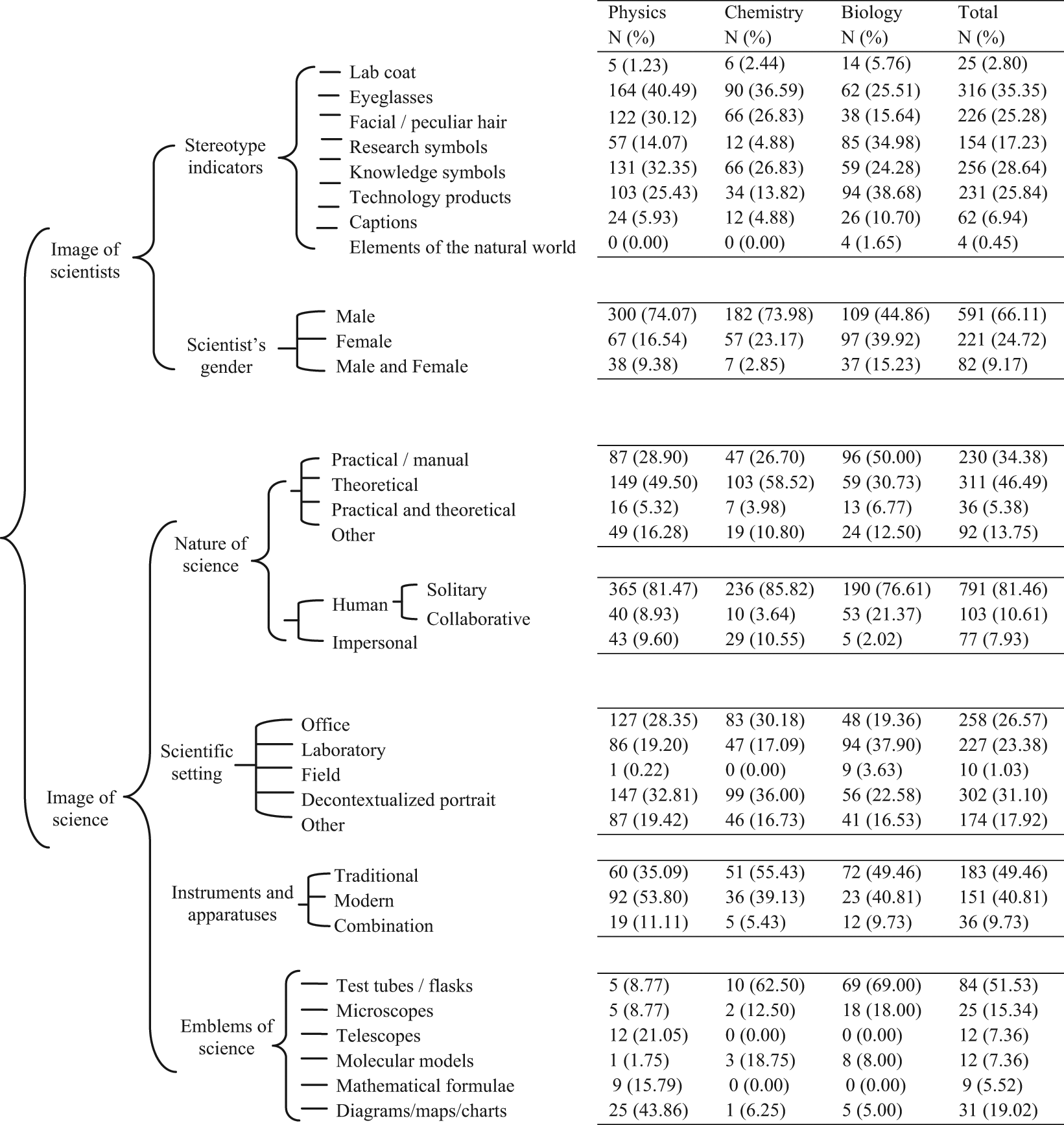
Analysis framework for the self-image of Greek scientists and science, relevant frequencies and percentages. Based on Christidou et al. (2012), Figure 1.
The self-image of scientists
The self-image of scientists comprises two distinct dimensions. These include:
The 8 indicators of the stereotypic image of the scientist identified by Chambers (1983) and She (1998), namely lab coats, eyeglasses, facial hair or peculiar hairstyles, research symbols (laboratory equipment or any kind of scientific instruments), knowledge symbols (e.g. books, filing cabinets), technology products (e.g. computers), captions such as mathematics and chemical formulae, or taxonomic classifications, and natural objects (e.g. animals, plants, or astronomical objects).
The gender of the depicted persons, who were obviously classified as male or female. Additionally, there were instances of photographs including both male and female individuals and were classified in a distinct category.
The self-image of science
The photographs collected for analysis promote aspects of scientific endeavour, concerning (see Figure 1):
The nature of science. This dimension involves two components: the first explores if scientific activity is represented as a practical/manual or a theoretical activity (Mitchell, 2008), or as a combination of the two. Moreover, some photographs depict scientists in contexts which are not directly associated with practical or theoretical work and therefore were classified as “other.” The second component of the nature of science explores depictions of its social aspect. This part of the analysis considered the presence or absence of scientists. In the first case, science is represented as a human endeavour, either solitary (a scientist working alone) or collaborative (depiction of a group of scientists). In the second, absence of scientists corresponds to a representation of science as detached and impersonal.
The scientific setting, according to which science-related activities take place in offices, laboratories, or in the field. Alternatively, scientists can be represented in decontextualized photographs (i.e. portraits), or in other locations (e.g. in university hallways, or scientist group photos commemorating a meeting or conference).
The instruments and apparatuses used for scientific research. This dimension classifies research equipment as traditional (e.g. test tubes) or modern, usually complex apparatuses, relying on technological applications. Furthermore, traditional and contemporary instruments may coexist in the same photograph (classified as “combination”).
The “emblems” of science (Schummer and Spector, 2008), that is elements included in the photographs that serve as symbols to denote scientific activity. Such “emblems” are commonly used in the public visual image of science and include glassware (e.g. test tubes and flasks), microscopes, telescopes, molecular models, mathematical formulae, and other symbols of scientific research (mainly maps and charts).
Analysis procedure
Scientists’ photos were analysed according to the dimensions of the analysis framework concerning the image of scientists and the image of science described above. Analysis was independently performed by the two authors and arrived at an inter-rater agreement of at least 95% for each dimension, while discrepancies were discussed and resolved with the contribution of a third, independent researcher.
The analysis also explored possible correlations between different dimensions of analysis as well as between each dimension of the framework and the discipline of depicted individuals. The chi-square test was used to detect and interpret statistically significant correlations (Blalock, 1987; Erickson and Nosanchuk, 1985).
3. Results
The analysis outcomes are presented in the following paragraphs along the dimensions concerning the image of scientists and the image of science presented in the previous section.
The image of the scientists
For this part of the analysis photos not involving individuals (mostly representing research laboratories) were excluded. Therefore, 894 of the 971 photos were analysed, and the relevant percentages refer to this part of the sample.
Indicators of the stereotypic scientist
Greek scientists’ photographs incorporate a diversity of features, characteristic of the scientist stereotype. Each photo includes 1.43 indicators of the stereotypic scientist (Chambers, 1983; She, 1998) on average. Moreover, the pictures corresponding to different disciplines are not equally stereotypic: biologists are represented more stereotypically (1.57 indicators on average in each photo), closely followed by physicists (1.50 indicators on average), while chemists’ photos only incorporate 1.16 indicators on average.
As indicated in Figure 1, eyeglasses appear most frequently (in 35.35% of the analysed photos), followed by knowledge symbols (28.64%), technology products (25.84%), and scientists with facial and/or peculiar hair – e.g. bald scientists, individuals wearing beards, or moustaches (25.28%). Scientists surrounded by research symbols (17.23%) are also quite frequently represented, followed by scientists with relevant captions (6.94%), i.e. mathematical or chemical formulae. Lab coats appear less frequently in scientists’ photos (2.80%), while elements of the natural world scarcely appear (0.45%). Figure 2 is an indicative example of a scientist represented with two of these stereotype indicators.

Male biologist with facial hair and research symbols.
Indicators of the stereotype scientist are not equally distributed across different disciplines. Physicists and chemists tend to wear glasses, to have facial hair and to be surrounded by knowledge symbols, while biologists tend to be represented with research symbols, technology products, captions, and elements of the natural world more frequently than expected (χ2 = 133.03, df = 14, p < 0.001).
Scientists’ gender
The scientists represented in photos are largely male (66.11%), while pictures of female scientists constitute 24.72% of the sample (see Figure 1). Also, another 9.17% of the photos represent male and female scientists working together. In these pictures men and women are typically depicted in equivalent roles, for instance performing experiments as in Figure 3. A few exceptions occur with male participants in roles of experts lecturing or directing male and female students in laboratory work.
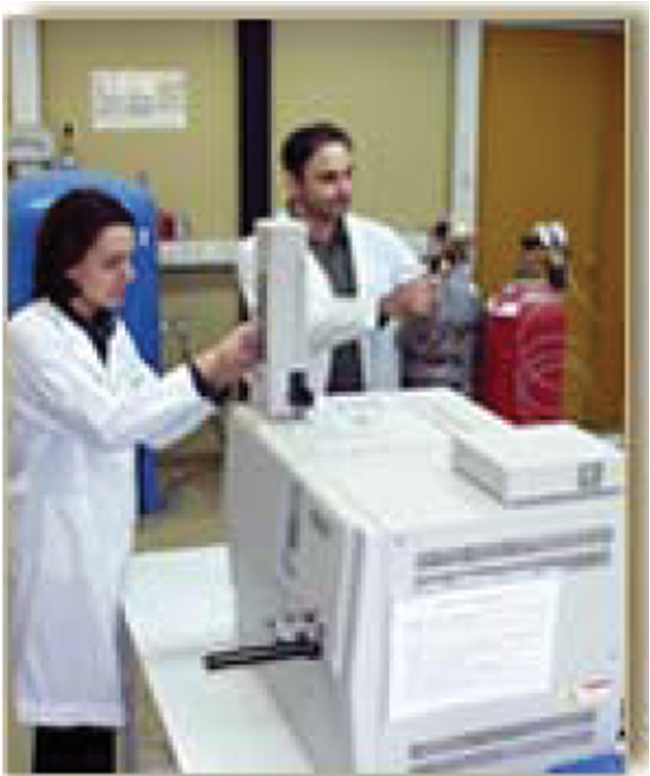
Male and female physicists with lab coats and technological equipment, working in equivalent roles.
Statistically significant gender differences are revealed in respect to pictures of scientists in different disciplines. More particularly, the represented male scientists are physicists or chemists more frequently than expected, while females and scientists of both genders working in collaboration tend to be biologists (χ2 = 77.16, df = 4, p < 0.001). These tendencies reflect gender distributions in the actual total populations of the personnel working in Greek science-related institutions, where males constitute the vast majority in academia and research institutes related to physics and chemistry, while female biologists are almost equal in number with male ones.
Interestingly, male and female scientists’ representations are not equally stereotypic. Photos depicting only male participants involve 1.35 indicators of the stereotype model on average, while those depicting females involve 1.22 indicators, and photos including male and female scientists in co-operation comprise 2.40 indicators on average.
Moreover, differences arise in regards to the different stereotype indicators according to scientist gender: male scientists tend to wear eyeglasses and facial hair, and to be surrounded by knowledge symbols more frequently than expected; females tend to wear lab coats, and to be surrounded by research symbols and technological equipment; when male and female scientists coexist in the same photo, they tend to be surrounded by research symbols and technology products. These differences are also statistically significant (χ2 = 113.32, df = 14, p < 0.001).
The image of scientific research
The nature of science
In order to determine if science is represented as a manual/practical or as a theoretical endeavour 302 photos were excluded from analysis. This part of the sample comprised decontextualized portraits of scientists and therefore gave no indications of the nature of their work. The remaining 669 representations most frequently represent scientists engaged in theory-related activities (e.g. studying books, taking notes, or in front of blackboards with formulae written them, as in Figure 4a), which amount to 46.49% of the analysed photos. Another 34.38% of representations indicate practical activity, depicting either scientists handling laboratory equipment to perform measurements and experiments (as in Figure 3), or laboratories and experimental settings (see Figure 4b). In 5.38% of the analysed photos both practical and theoretical aspects of science are suggested. Scientists’ poses not identified as practical or theoretical are also quite frequent (13.75%).
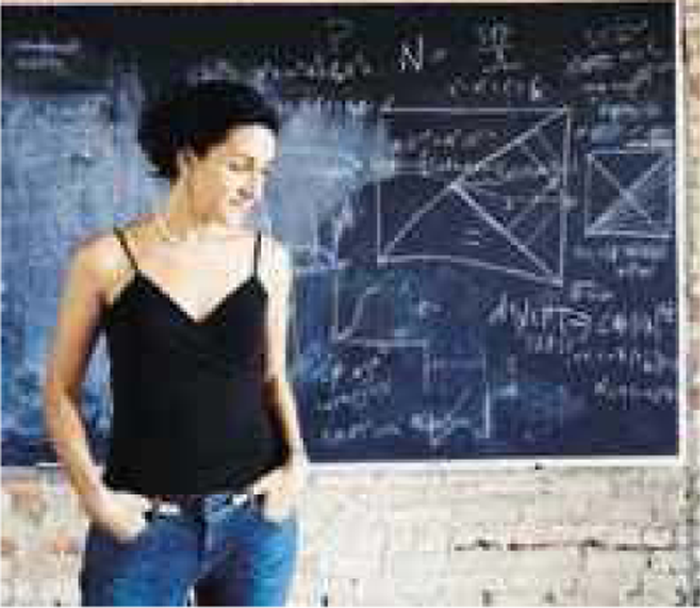
Female physicist with formulae and figures on blackboard, suggesting theoretical work.

Impersonal representation of a chemistry laboratory.
Physicists’ and chemists’ representations are considerably more oriented towards theoretical work, whereas biologists tend to be represented in laboratories doing experiments – or at least combining practical and theoretical work – more frequently than expected. Also, physicists tend to be represented in other activities. These differences are statistically significant (χ2 = 39.67, df = 6, p < 0.001).
Male scientists tend to be represented doing theoretical work more frequently than expected; females’ photos tend to represent them as combining practical and theoretical aspects of scientific activity; photos representing groups of male and female scientists tend to favour practical, experimental work (χ2 = 264.59, df = 9, p < 0.001).
As far as the social aspect of science is concerned, a solitary image is prevalent with 81.46% of the 971 photos representing individual scientists (as in Figures 2 and 4a). Photos suggesting the collaborative facet of scientific activity (see Figure 3) amount to only 10.61%. This percentage is comparable to the 7.93% of photos implying an impersonal image of science. These representations merely depict research settings –usually laboratories, as in Figure 4b – with no human presence.
Furthermore, chemists appear individually, and biologists are depicted in collaborative representations more frequently than expected. Also, physics and chemistry tend to be represented as impersonal and these differences are statistically significant (χ2 = 57.11, df = 4, p < 0.001).
The scientific setting
Most often (i.e. in 31.10% of their photos) Greek scientists choose to be represented by means of decontextualized portraits. Figure 5a presents a typical example of such a representation. When the setting of scientific activity is represented, it is mainly identified with offices (26.57%), or laboratories (23.38%). Quite often, however, scientists are represented in other settings (17.92%), such as university hallways, conference venues, or even homes and holiday scenes. Pictures of scientists doing fieldwork, as in Figure 5b, are particularly rare (1.03%).

Decontextualized portrait of male chemist.
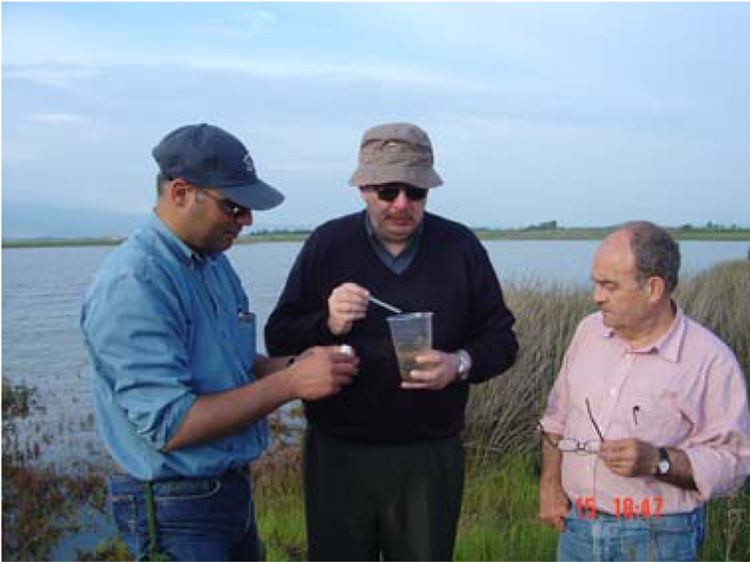
Biologists doing fieldwork.
Physicists and chemists tend to be represented either in decontextualized portraits, or as working in offices, whereas biologists are shown in laboratories or in the field more frequently than expected. Also, physicists are more likely to be represented in other settings than are others (χ2 = 68.43, df = 8, p < 0.001).
Statistically significant correlations also occur between different settings when explored in relation to scientists’ gender. Men tend to be represented in decontextualized portraits, or working in offices, women appear in laboratories, or in portraits, while mixed groups tend to appear in laboratories and other settings more frequently than expected (χ2 = 166.79, df = 8, p < 0.001).
Furthermore, scientists in offices tend to be represented as solitary, while those posing in laboratories or in the field tend to promote a collaborative image of science. However, laboratories also seem to promote an impersonal image much more than other settings. Decontextualized portraits obviously reflect a solitary image of science, while other settings (e.g. conference venues) tend to indicate the collaborative aspect of scientific endeavour (χ2 = 425.81, df = 8, p < 0.001).
Instruments and apparatuses
Regarding this dimension of analysis, it should be noted that the majority of collected photos did not involve any kind of instrument or apparatus. This was the case for 601 pictures comprising portraits, scientists in their offices, or photos commemorating different occasions. This part of the sample corresponds to 61.83% of the photos related to physics, 66.55% of chemistry-related photos and 56.85% of biology-related ones. The remaining 370 photos were analysed and the relevant percentages in Figure 1 correspond to this part of the sample.
The equipment used in scientific research, as represented in Greek scientists’ photos tends to be traditional (49.46%) as in Figures 2 and 5b, with modern instruments and apparatuses also frequently represented (40.81%, see Figure 3). In fewer cases (9.73%) traditional and modern equipment coexist in the same representation (see Figure 4b).
Biology and chemistry research tend to be associated with traditional instruments and apparatuses, while depictions of physics research involve modern equipment (such as lasers, or mass spectrometers) more frequently than expected (χ2 = 33.92, df = 4, p < 0.001).
Also, statistically significant differentiations of the types of instruments and apparatuses used are revealed in relation to gender; men tend to be surrounded by traditional equipment, women by combinations of traditional and contemporary instruments, while mixed groups of scientists tend to be represented with contemporary apparatuses more frequently than expected (χ2 = 16.52, df = 4, p < 0.01).
In respect to the social dimension of science, solitary individuals tend to be represented with traditional, or combinations of traditional and contemporary equipment more frequently than expected. Traditional instruments, however, appear more frequently in representations of collaborative scientific research as well. Contemporary instruments and apparatuses mostly appear in impersonal representations depicting research settings (namely laboratories). Chi-square analysis indicates that these differences are statistically significant (χ2 = 85.60, df = 4, p < 0.001).
Emblems of science
Greek scientists’ photos tend not to include symbolic elements considered as emblems of science. This is the case for the vast majority of collected pictures. However, 163 photos (i.e. 16.80% of the sample) involved a total of 173 such emblems and the percentages presented below (see also Figure 1) refer to these pictures.
Test tubes, flasks, Bunsen burners and relevant laboratory equipment typically used in popular imagery as emblems of chemistry appeared in 51.53% of the analysed photos. Diagrams, maps and charts appeared in 19.02% of the images. Microscopes, an emblem of biomedical research (see Figure 6a), were included in 15.34% of the photographs, followed by telescopes (7.36%) symbolizing astronomy (Figure 6b) and molecular models (7.36%). Mathematical formulae (as in Figure 4a) only appeared in 5.52% of the pictures comprising emblems of science.
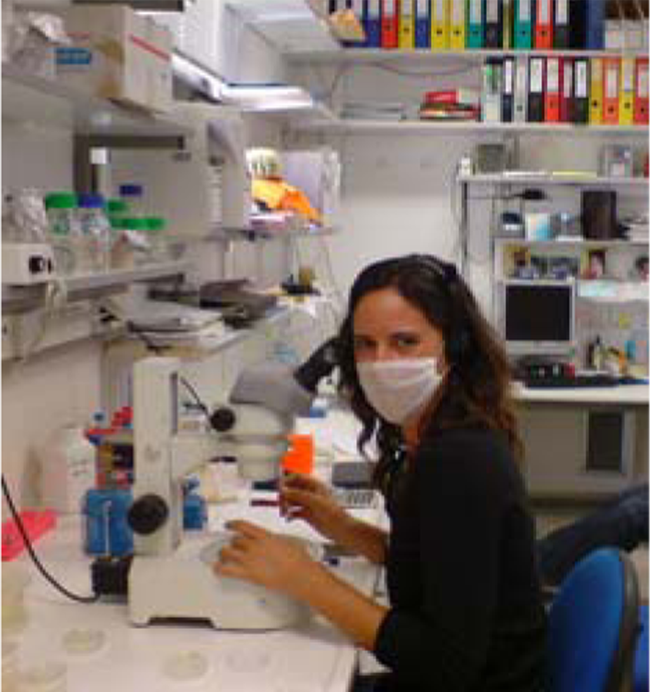
Female biologist with biology and chemistry emblems.
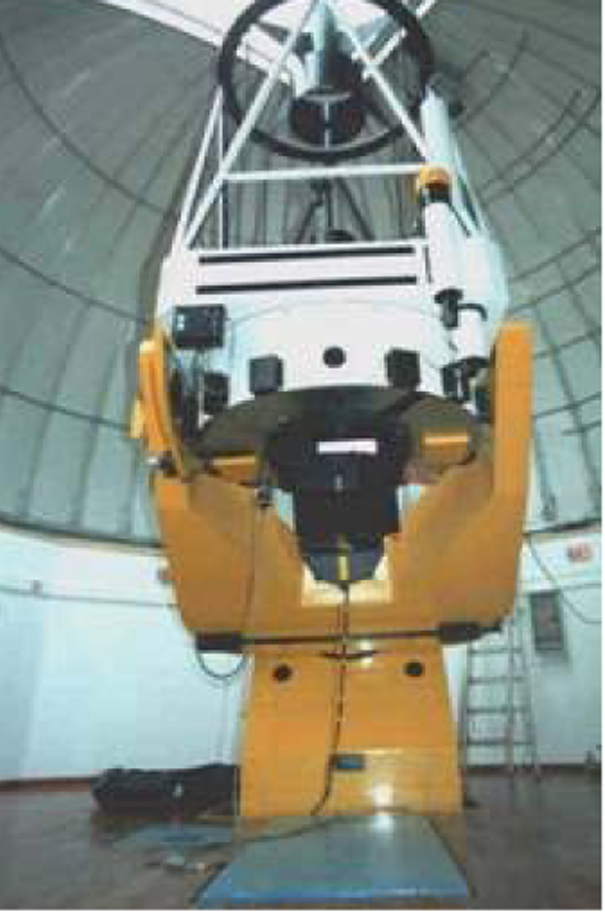
Telescope as an emblem of astronomy.
Interesting differentiations occur between photos including emblems of science. First, concerning different discipline clusters, it should be noted that their visual representations do not make equally extensive use of scientific emblems: photos related to physics involve 0.13 emblems on average, those related to chemistry only comprise 0.07 emblems, while an average of 0.39 emblems corresponds to each picture related to biology. As it would obviously be expected, telescopes appear exclusively in photos related to physics – since astronomy sections pertain to physics departments – while microscopes tend to appear in biology-related pictures. Quite remarkably, though, test tubes and flasks tend to appear much more frequently than expected in biologists’ photos, whereas formulae and maps/charts are mainly included in photos of physicists (χ2 = 110.28, df = 10, p < 0.001).
Second, in respect to gender, male scientists are portrayed with molecular models and maps/diagrams, and females with test tubes/glassware and microscopes more frequently than expected. Photos including telescopes tend to involve both male and female participants (χ2 = 29.69, df = 10, p < 0.001).
Third, test tubes, microscopes and telescopes tend to appear in photos emphasizing the practical and experimental facet of science, whereas mathematical formulae, charts, diagrams and maps are visually associated with the theoretical one. Telescopes and molecular models appear in representations involving both practical and theoretical aspects of scientific research (χ2 = 158.91, df = 15, p < 0.001).
4. Discussion and conclusions
Greek scientists’ internet photos tend to include a variety of elements considered as indicative of the stereotypic scientist. Comparison of the self-image of Greek scientists with the image of scientists yielded by previous studies based on non-experts’ drawings (Barman, 1999; Chambers, 1983; Christidou et al., 2012; Fung, 2002; Hatzinikita et al., 2009; Quita, 2003) indicates that this self-image is overall considerably less stereotypic, since the average number of indicators in each photo is considerably lower than in these studies. Also, qualitative differentiations appear in the types of indicators used: Greek scientists tend to be depicted wearing eyeglasses and being surrounded by knowledge symbols and technology products more frequently than in studies based on non-experts’ drawings and less frequently with lab coats and research symbols.
In regards to the image of science, outcomes of the present study diverge from previous ones suggesting that science is first and foremost an experimental, i.e. practical activity realized in laboratories (Barman, 1999; Chambers, 1983; Mitchell, 2008; Steinke, 2005). A considerable percentage of Greek scientists chose to be presented primarily in photographs denoting the theoretical aspect of their discipline – mainly in their offices, surrounded by books and notes, or in front of blackboards.
However, science is also represented as an experimental activity. In addition science is frequently severed from any context and merely identified with close-up portraits of its people. Scientific instruments and apparatuses present in photos denoting the experimental aspect of science are mostly traditional, although modern laboratory equipment is also regularly represented.
The image of scientists (mainly biologists) working in collaboration, also providing a more realistic picture of contemporary research, is relatively restricted. This progressive image is partially reversed by two relevant outcomes; first, the considerably more stereotypic – by means of more frequent inclusion of relevant indicators – representation of these mixed groups; second, the comparably extensive representation of an impersonal image of science implied by photos illustrating laboratories with sophisticated, technologically advanced equipment, devoid of any human presence.
Also, the Greek visual self-image of science is relatively liberated from the anxiety to identify with traditional emblems, which are not generally included in Greek scientists’ internet photos. When they are, these are mainly emblems of chemistry (i.e. glassware such as test tubes and flasks), maps, charts and diagrams, or microscopes.
Physics, chemistry and biology respond differently to the popular visual image of science. More particularly, biologists and physicists are represented more stereotypically. Quite unexpectedly, chemists – otherwise considered as promoting the most stereotypic and conservative popular and self-image, accountable for the overall image of science (Schummer and Spector, 2008) – are here found to be represented significantly less stereotypically.
Furthermore, physics and chemistry self-images are not as opposing as found in a previous study by Schummer and Spector (2008). Yet, they are quite opposing to the self-image of biology. First, physicists and chemists appear with eyeglasses, facial hair and knowledge symbols; biologists with research symbols, technology products, captions and elements of the natural world.
Second, physics and chemistry appear as essentially male. In contrast, biology reflects a more balanced image, since it is almost equally represented by males and females, but also by mixed groups of researchers. This visual self-representation of male and female Greek scientists accurately represents actual gender distributions: it neither adapts to the popular image, nor promotes a fictitious visual gender balance (Schummer and Spector, 2008).
Third, physics and chemistry are more likely to be depicted as decontextualized, or even impersonal. On the other hand, biology tends to promote a collaborative self-image of science.
Fourth, physics but also chemistry, which has otherwise been found to largely rely on emblematic imagery (Schummer and Spector, 2008), do not overtly rely on emblems. Biology on the other hand, seems to be significantly more dependent on visual symbolisms, incorporating emblems of both biomedical sciences (i.e. microscopes) and chemistry (e.g. flasks, beakers, test tubes).
As well as the similarities and dichotomies determined above, other discipline differentiations appear. In terms of the social dimension of science, chemistry seems to be the most conservative discipline, being represented as an individual, solitary endeavour more frequently than the others. When it comes to instruments and apparatuses, chemistry, but especially biology, preserve the traditional character of science, while physics tends to demonstrate its technology-enhanced, sophisticated equipment. This tendency of physics self-images to involve modern apparatuses has been interpreted as a response of the discipline to its lack of a traditional “visual lexicon” leading it to adopt a differentiated and up-to-date self-image (Schummer and Spector, 2008: 85).
At the same time, differences in results indicate distinctions between the masculine and feminine faces of the Greek self-image of science. To begin with, male scientists prevail over females, both in visual self-representations and in actual populations in Greek universities and research institutions related to physics, chemistry and biology. Also, male scientists’ photos induce an inclination towards intellectual and theoretical activity, whereas females tend to be associated with laboratory experimentation, therefore reproducing the practical facet of science. These tendencies are also confirmed by the stereotype indicators preferred in males’ and females’ depictions (eyeglasses, peculiar hair, knowledge symbols for men, presence of lab coats and research symbols for women). Interestingly, these tendencies harmonize with depictions of researchers in Greek students’ (Christidou et al., 2012) and teachers’ (Hatzinikita et al., 2009) drawings and could be interpreted as an indication that female scientists seek to establish their scientific status by means of readily recognizable, conventional elements of science in their depictions. Conversely, male scientists, having overcome such concerns, feel more confident to promote theoretical aspects of their endeavour, which reverses the norm in popular and self-images of science (at least in the case of chemistry) as described by previous research (Schummer and Spector, 2008). On the other hand, when it comes to contemporariness of represented equipment, male scientists’ self-images tend to be more conservative than females’, who combine traditional and contemporary apparatuses; collaborative research by mixed groups of male and female scientists tends to be depicted as even more modern, relying on contemporary equipment.
Greek scientists have still much improvement to do in their popular self-images and the images of their disciplines they promote to the public in order to counterbalance the overwhelmingly stereotypic and conservative popular visual image of science. The outcomes of the present study reveal a perplexed and contradictory condition. In some respects Greek scientists seem to embrace an intention to overcome stereotypic imagery and therefore improve the public image of science. At the same time, they adopt easily recognizable conventions of the popular visual culture to effectively communicate their status and profession, even at the expense of promoting unintended stereotypes (Schummer and Spector, 2008). Even worse, they promote decontextualized and impersonal images of science that match public perceptions of science as solitary, abstract and impersonal (Hill and Wheeler, 1991; Losh, 2010; She, 1998; Steinke, 2005) and could therefore be expected to obscure the scientific setting and activity in the first case, or preserve public reluctance towards science in the second.
Meaningful and instructive interventions are required to raise scientists’ visual awareness in order for them to be able to select and promote more contemporary, realistic and less stereotypic and conventional self-images to the public. Their self-image could primarily be improved in terms of a) the multiplicity of scientific activities and settings, combining theoretical and experimental aspects, diversity of equipment and technology-enhanced apparatuses, but also involving imagination and inspiration; b) the collaborative nature of research, requiring team work, exchange of ideas and data; and c) more “humane” and contextualized aspects of science, relevant to society and everyday life. Improvements in these directions could assist the self-image of scientists and science in escaping the pitfalls of well-established popular images prevailing in the general public and eventually start influencing instead of reproducing them.
Furthermore, actions to increase participation of women in science and visibility in their workplaces are essential. Aside from the apparent requirement for gender proportionality and equity in scientific careers, the feminine face of science would also be expected to counterbalance several and important aspects of the negative stereotypes associated with science overall.
Additionally, the visual self-image of Greek scientists explored in the present study raises interesting questions requiring further investigation. Analysis of the textual context of analysed internet photos could give valuable and more complete information about the self-image of science. Also, the represented Greek scientists’ views of their profession and self-image could be explored to determine the components of their image of their profession and what they intend to promote by making the particular representational choices analysed in this paper. Last, the results presented in the previous section reveal interesting discrepancies from those yielded by previous research; an attempt to explain them would probably merit attention. In this direction, an analysis of a wider sample of scientists’ photos in different countries using the framework proposed here would demonstrate if the tendencies revealed by the present analysis are representative of scientists’ self-images internationally, or if they constitute a Greek “paradox,” and what differences occur between different cultural contexts.