







Abstract
This article analyzes the internet discourses of Korean people who supported Hwang Woo Suk despite the disclosure of his scientific misconduct. During the controversial period, those who supported Hwang constructed a narrative of a fallen hero trapped by jealous rivals and an “unjust” society. The supporters’ dramatized discourses compete with expert opinions of Seoul National University’s Audit Board and prosecutors that investigated the scientific fraud. By introducing and applying an innovative method of semantic network analysis, this study explores how the supporters represent their personal concerns in daily life and latent social problems in South Korea, as well as the failure of science communication. In short, the supporters’ internet representations connote concerns in daily life that motivated their sympathy and activism for Hwang.
Richtig und falsch ist, was Menschen sagen; und in der Sprache stimmen die Menschen überein. Dies ist keine Übereinstimmung der Meinungen, sondern der Lebensform. [It is what human beings say that is true and false; and they agree in the language they use. That is not agreement in opinions but in form of life.]
1. Introduction
The Hwang affair was unprecedented in science history not only in the magnitude of misconduct and the global impact but also in terms of the South Korean public’s response. In February 2004, Professor Hwang’s Seoul National University team published a ground breaking paper in the journal Science, announcing the successful derivation of a single stem cell line from a cloned human embryo. In the following year, Hwang reported an even more stunning accomplishment, namely the derivation of 11 “patient specific” stem cell lines, which were seen as bearing witness to strikingly improved levels of efficiency in using human eggs. However, what was celebrated in South Korea as the nation’s scientific triumph was soon undermined by allegations of ethical misconduct in acquiring human eggs from women in disadvantageous positions, and then followed by accusations of scientific fraud. What brought about the international attention was not Hwang’s fraud alone. In November 2005, the South Korean broadcaster the MBC reported Hwang’s unethical collection of ova, and questioned the authenticity of his experiment. After the broadcast, tens of thousands of angry South Korean people posted comments on the MBC’s web page fiercely criticizing the broadcasting. Online communities of Hwang fandoms each composed of thousands of members boycotted television commercials and organized massive demonstrations in front of the MBC building.
In response to the threat and animosity felt throughout the country, the MBC dissolved the 20 years’ long-lived investigative program PD Notebook without any promise of return – until anonymous scientists on the Korean website of the Biology Research Information Center (BRIC) started to post evidence of Hwang’s fabrications. Meanwhile, a truck driver set himself alight in protest over the charges against Hwang, claiming Hwang was the victim of a conspiracy and unjustness in Korean society. The public protest went on even after, in 2006, Seoul National University and the Prosecutor’s Office investigated the affair and concluded that Hwang had fabricated evidence and behaved unethically (see online Appendix I, available at http://pus.sagepub.com/).
The fraud itself, however abhorrent, more or less represents arising global problems in scientific experiments, as well as local social problems of South Korea intertwined in the affair. On the other hand, the frenetic support of a star scientist and violent activism, even after the disclosure of his misconduct, seems hardly imaginable in other parts of the globe. The phenomenon unveiled a variety of interesting characteristics for researchers in social science as well as experts in the public understanding of science. Firstly, people’s support for Hwang and their attack on the MBC through internet media was a new form of social movement that proved the effectiveness of utilizing information technology. Living in one of the most densely wired (with optic fibers and Wi-Fi nets) countries in the world, South Korean citizens spontaneously initiated their social engagement in scientific affairs through online websites. They successfully mobilized a “cyber attack” that immediately brought down one of Korea’s major broadcasters, the MBC, which had raised questions on the unethical collection of ova and the fabrications in Hwang’s laboratory. Secondly, the demonstration was unprecedented because supporters refused to conform to official verdicts of Hwang’s fraud. Somewhat paradoxically, they actively mobilized social criticisms against state institutions and expert groups by exploiting nationalist rhetoric originally produced by the government and the major mass media to encourage science for national growth. Thirdly, the campaign was not driven by an “underclass” or “scientifically illiterate” people. The movement consisted of a wide range of sympathetic and conscious actors including some intellectuals and activists who were willing to fight for a “just cause” (Kang, Kim and Han, 2006; Kim, 2009).
Previous studies provide some clues for this phenomenon. To counter explanations that de-contextualize or stigmatize the public as merely “irrational,” some sociological studies focused on the intricate logic of the public’s feelings about science. There was a story of Hwang that a number of Korean people readily approved of: a humble boy who had grown up in a poor rural family yet had established himself as a diligent global scientist, always pronouncedly displaying modesty and patriotism. This dramatic personal life also epitomized people’s pride in the contemporary history of South Korea, a nation that has risen from being one of the poorest countries to one of the most industrialized countries in half a century. Meanwhile, many media reviews and social science studies have mentioned the lack of accountability of responsible institutions, which undoubtedly aggravated the public’s distrust, whilst Hwang’s story stirred the pathos of nationalism (Kang et al., 2006; Won and Jun, 2006; Kim, 2009).
Nevertheless, the “blind nationalism” thesis requires a more elaborate substantiation, running short of explanations when questioned: a) Can people showing support and sympathy to Hwang and his stem cell research be reduced to a simple nationalism as a formal ideology?, b) If not, which connotative elements associated with people’s lives, feelings, and social context drove them to violent activism?, and c) What explicit and implicit frames used by supporters might be captured by an alternative analysis?
The majority of South Koreans are known to be very nationalistic. However, this does not mean that these people always unconsciously follow the formal ideology and cultural hegemony associated with nationalism. Even under the hegemonic authority structure as witnessed in Hwang’s own laboratory, the concerned actors applied adept tactics to incorporate, appropriate, and twist the cultural “rules of the game” for their own interests, finally betraying their master – Hwang (Kim, 2008). This fact leads us to ask:
Was there a core element to the discourse underlying the denoted nationalism, and what might that be?
What was the narrative told in the public discourse following the MBC broadcast and expert groups’ investigations?
Why did Hwang’s case attract such dogged support? What kind of underlying desire was expressed in the public discourse?
The semantic analysis of the general public’s internet dialogues on the scandal attempts to offer an answer to these questions. In contrast to a nationalism frame argued by existing literatures (Kang et al., 2006; Won and Jun, 2006; Gottweise and Kim, 2009), public anger swelled not only from Korean patriotism, regarding Hwang’s confession of his misconduct as dissolving national research capacity. As I will argue, people were also upset because of Hwang’s humiliation and his public disgrace; these were believed to be typical consequences of social mobility in South Korean society. To the eyes of the general public, the personal tragedy was imagined to be motivated by jealous rivals who plotted to embarrass and subdue a gifted individual who rose from a humble, innocent, social status. The feeling of shared sympathy for Hwang and deep distrust against expert institutions lingers on in the networked semantic representations, with changing objects of blame.
2. Research object and methodology
Research object
My target of analysis was the general public, not the official groups of Hwang supporters. I chose to study broader public dialogue on a website for two main reasons. Firstly, the majority of South Koreans, independent from official supporters’ activism, have been in favor of Hwang despite his misconduct. 1 Secondly, this general support through the internet not only created a sympathetic national environment for Hwang but also provided grounds for public engagement that led to thousands of people demonstrating in public places. For similar reasons, I chose a general and open discussion website in South Korea (Daum Agora) to analyze the uploaded dialogues. Daum Agora is a South Korean website for open discussion that has more than 30 million affiliated members in which both pros and cons freely express their opinions on controversial issues. In the Hwang supporters’ official websites, opinions were unilateral and the members usually did not allow dissenting voices to be posted on their boards. In comparison, supporters’ discourses in Daum Agora tended to be more persuasive, more often than not trying to make sense of their ideas rather than merely bursting with emotion. This provides a researcher an advantage for systematic coding of their statements. (As to the coding method, see online Appendix II B, available at http://pus.sagepub.com/).
The duration of the data coding is separated by three main events, starting from 25 November 2005 to 9 January 2006; from 10 January to 14 May 2006; and from 15 to 31 May 2006. The online debate initially exploded after Hwang made a profuse apology at a press conference on 24 November 2005. Hwang admitted his unethical collection of ova from purchase and from junior researchers in his laboratory. November 25 is one day after; 10 January 2006 is the date the verdict was made by the Auditing Committee of Seoul National University on Hwang’s fabrication. 31 May 2006 is two weeks after the Prosecutor’s Office announced Hwang guilty of fraud and embezzlement of research funds.
Novel interpretation of semantic network
There have been vigorous challenges to the development of a methodology for representing and analyzing people’s thoughts and desires, extracted from texts, as a “cognitive map” that is shown as a network of symbols and metaphors composed of keywords or concepts (see Carley and Palmquist, 1992; Park and Leydesdorff, 2004; Hellsten, Dawson and Leydesdorff, 2010). From the network perspective, a “relational” attribute of textual data turns out to be important. In conventional content analysis, manual coding of themes, actors, and also emotions into pre-established categories becomes the main operation and the focus is typically on the frequency of keywords representing particular concepts. However, it misses out how both frequent and comparatively non-frequent concepts co-construct “explicit and implicit frames” of political and social agendas (Hellsten et al., 2010). A network such as a cognitive map, on the other hand, is not usually based on manual extraction of concepts but automated co-word mapping. This enables one to identify and measure implicit as well as explicit concepts in the communication through their position emerging from their pattern of referential linkages to other concepts. In this article, as I will explain in more detail, I merge the two approaches of manual coding of co-occurring words and the automatic analysis of centralities and patterns of linkages.
In terms of selective links of concepts in the semantic network, the frames represent a symptom of social representation (Moscovici, 2000) of utterers, and they are incorporated into discourse analyses that delve into microscopic relations of power among actors – mediated by language. To paraphrase Wittgenstein, “A representation (image) is not a picture, but a picture may correspond to it” (2001: 86, para. 301). The graphically depicted dialogue, in this sense, is a social action that creates a narrative: an “occurring” event (Bourdieu, 1991). The event represents specific socio-historical contexts; and words and concepts become ideological units of life which both reflect and refract particular social relations. Therefore, when a word is uttered it is not merely an individual’s identity that is invoked, but also a social and historical whole through which the utterance has been indicated and through which it has gained a specific evaluation (Crossley and Roberts, 2004: 77, 85).
In this regard, two measurable concepts other than frequency – conductivity and prominence – are proposed to open up additional dimensions in analyzing the discourse. Both are represented by the linkage of identified concepts in the text. Conductivity is the capacity of an expression in context to carry (or trigger) information in a directional flow, which is connected by a path between two nodes of concepts as keywords or phrases (Carley and Kaufer, 1993). Information flows with a certain direction when it triggers and is triggered by other available information in the context; the former becomes a trigger of information and the latter a referent. Therefore, observers can identify the sequential relationship between concepts. And the identical pattern of linkage that information and opinion refer to other concepts as their referent objects reveals homogeneous clusters of theme.
In this article, I analyze the relational content of keywords, the thematic “roles” that determine the association between subjects and descriptives that are composed of substantives (Moscovici, 2000). This thematic role can be identified as segments, or subgroups, in the network. This root idea is already being applied in co-occurrence analysis of text that applies hierarchical clustering of co-occurring keywords. Conceptual realms are very often hierarchically related, which means that an object A is inferred or thought about within the context of the object B, but not vice versa. This psychological assumption embodies a powerful methodology for classifying keywords (Kronberger and Wagner, 2007: 302–309). The method of blockmodeling (de Nooy, Mrvar and Batagelj, 2005) elaborates the co-occurrence approach based on the same principle of hierarchical clustering, but with incorporated patterns of directionality that are more explicitly considered. The criterion of categorization is the “structural equivalence” that focuses on the structural/functional role of nodes (keywords), by studying their associations among semantic relations, and identifying homogeneous nodes that are identically located in the network of relations (Wasserman and Faust, 1994: 348–349). 2
The concept of prominence refers to the properties of central locations of actants or main concepts. In social network analysis, betweenness and closeness centrality (Freeman, 1979) have been the most frequently utilized indices to represent the notion of importance. In brief, the idea of betweenness centrality is that an actor (node) is central if it lies between other actors in their geodesics (shortest path between the two nodes), implying that to have a large betweenness centrality, the actor must be between many of the actors via their geodesics. Thus, the actants with high betweenness centrality are translated as active mediators in the communication. 3 Closeness centrality focuses on how “close” an actor is to all the other actors in the set of actors. Central actors are close if they have minimum steps relating to all other nodes. Hence, the aggregates of geodesics or shortest paths linking the central nodes to the other nodes must be as short as possible. 4 In a directed graph, this is averaged by input (receiver of arcs) and output (starter of arcs) centrality, and the input centrality requires particular attention in semantic analysis because it has the “prestige” of receiving referential links of other concepts.
The two centrality measures of betweenness and input-closeness centrality, respectively, deliver Roland Barthes’ (1967) main tool of investigation, that is, a semantic dichotomy of “denotation” versus “connotation.” Since denotation is the literal or core meaning of a sign and connotation refers to secondary meanings associated with it, the theory of connotation appears to be a most appropriate tool for the discovery of “hidden” layers of meaning in the message based on the associated cultural knowledge. This semantic translation of the social network analysis is possible because the relevant (corresponding) nodes essentially inherit the functionally prominent roles: a node with the highest betweenness centrality takes up the role as a mediator of communication, as it is required to represent itself explicitly to bridge different clusters of concepts. In comparison, a key concept with the highest input-closeness centrality is “connotative” because it is the eventual result of communicative interaction that positions itself closest to the center of reference.
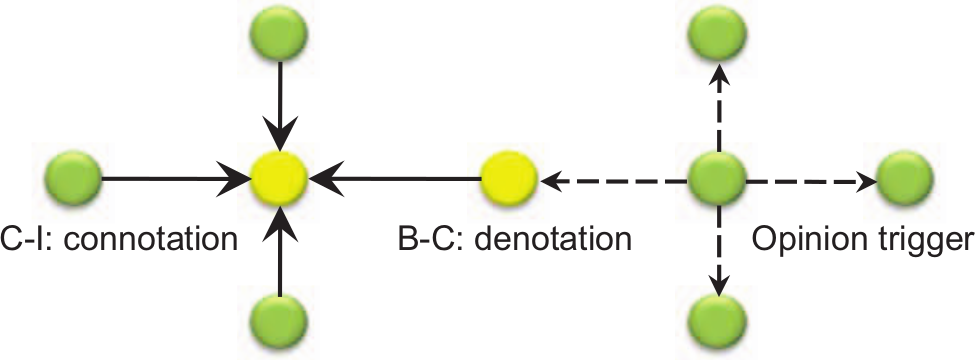
Functional location of denotation and connotation.
In sum, the cognitive map representation of text can be regarded as a constellation of signifiers that are expressed by linkages of keywords or concepts. The links have directions: arrows, that, according to Lacan’s “transference” (Lacan, 1994), refer to not only statements but also the implicit flow of desires embedded in people’s expressions. That is, a node emerges as a central object when it is strategically positioned in the entire communicative map to become an explicit passage point in the communication (denotation) or most meaningfully positioned in the referential structure (connotation). Different segmentations of communicative themes emerge because of the differing patterns of referential relations. The network visualizing and analyzing this relational dimension broadens the concept of social representation, because it introduces a methodology that might uncover concealed meanings in the complex web of signification. In doing so, I try to open a novel way of “understanding” (Verstehen in Max Weber’s sense), rather than claiming a fixable interpretation, on the observed outcomes of the systematized semantic network analysis.
Data and coding
Applying the search keyword “Hwang Woo Suk” (“황우석”) in an IT/science discussion room, out of 12,278 postings in the South Korean website Daum Agora (http://agora.media.daum.net), I collected 200 postings and divided the data according to the three different phases: 100 for the most controversial first period and 50 each for the subsequent two periods. The collected data are not a representative sample, but a “data corpus” (Bauer and Gaskell, 2007) akin to a transcription of a sizable focus group interview (FGI) of discussants that has occurred online. Therefore, the data do not mechanically “re-present” the population of discussants and the frequency of their opinions; but rather open up an opportunity to engage in a systematized analysis on the core feature of discussion.
As to the coding, the researcher should be aware that the selection of data and coding requires semantic and cultural interpretations of the data (Carley and Cicourel, 1990). Despite variable manual and automatic techniques developed for different contexts, there are certain transcending principles and convergence of ideas regarding the procedure and rules for the coding of textual data into a matrix format of network. Above all, defining the relation of a directed link between two concepts, has to do with whether the first concept is seen to have some type of “prior” relationship to the second concept (Franzosi, 1990; Carley, 1993; Kronberger and Wagner, 2007). Various types of prior relationship can be thought of. For example, “a implies b,” “a comes before b,” “if a is true, then b is true,” “a qualifies b,” or “a (subject) <verb> b (object).” This coding directionality can provide information about the way in which the impact of new information propagates through the network and affects decisions, and the structure of meaning (Carley, 1993: 96).
In comparison, automated co-occurrence analysis consists of measuring co-occurrences between search terms consisting of words or word combinations which according to the researcher measure a certain concept. It is assumed that search terms identifying actors or issues that appear close to each other in a text indicate an association between these actors or issues. The drawback of this technique is that it ignores the semantics of concepts, context and expressed relations (van Atteveldt and Takens, 2010), and the links become too complex to concisely denote the relation of reference (in the end, mechanical relation of co-occurring words in a sentence or a paragraph presupposes the relation of reference, but those words are not always mutually referential). Moreover, the currently available automated technique gives limited insight, for example, by considering the direction of the relation and the question as to whether it is a relation expressing association or disassociation. Therefore, I apply a manual technique focused on identifying a key associative thematic relation between two concepts of keywords in each posting, summarized as an “a refers to b (a→b)” relation, and study their emergent meanings. In this operation, the emergent pattern of linkage (betweenness and closeness centrality, and blockmodeling) instead of frequency of linked words (number of co-occurrence or degree of centrality) becomes the object of analysis.
3. Network representation
The communication between science and lay people is not a simple flow of information from top to bottom. It embodies a complex structure of co-dependency and interaction between different value systems. In the public sphere of science, overlapping representations constructed by various social groups mediate actors’ own desires. The representations reflect their social life, and influence the feedback process between science and social practice. Although discourses as effects of communication are operations which cannot be observed directly (Luhmann, 1995), one can make inferences about them by testing hypotheses against the observable interactions among the agents. Communications and agents are structurally coupled in the network form of communication, which can be used as indicators of the evolving communication processes (Leydesdorff, 2006). Likewise, popular opinions about the Hwang scandal undergo a process of selection and expansion over time, which forms a network of meaning, a system interconnected with other representations. Looking at the frequency of postings, 68.7% are concentrated from November 25 to December 2005 (3,544) and January 2006 (4,890), the periods when the public inquiry into Hwang’s misconduct and the investigative announcement by the expert committee at Seoul National University (SNU) were made, respectively. After the SNU team’s investigation, the number plummets; and continues to decrease after the Prosecutor’s Office accused Hwang in May 2006. This flow generally captures the change of public climate. The lay public’s demonstration of support declined rapidly after the SNU announced fabrications in Hwang’s experiments. However, the figure may deliver a misleading image that people’s general “feeling” of support also proportionately declined. As observed in recent polling (see Note 1), it is the form rather than the content of support that changed, which can be understood as a transformation from an explicit support to an implicit sympathy.
The semantic network analysis tries to capture the content and meaning of unchanged support through their narrative structures. Figure 2 shows the illustrated outcomes of semantic networks in the three phases. The computerized network analysis tool Pajek visualizes the positions of keywords as nodes in the network, and the frequency of their relations as link width. This also locates the most central keywords in the center of the map, and peripheral nodes in the periphery. The mutual distance among the nodes of keywords roughly reflects a proximity in their referential linkage. Finally, the nodes with the same color are grouped together as denoting the same theme by blockmodeling.
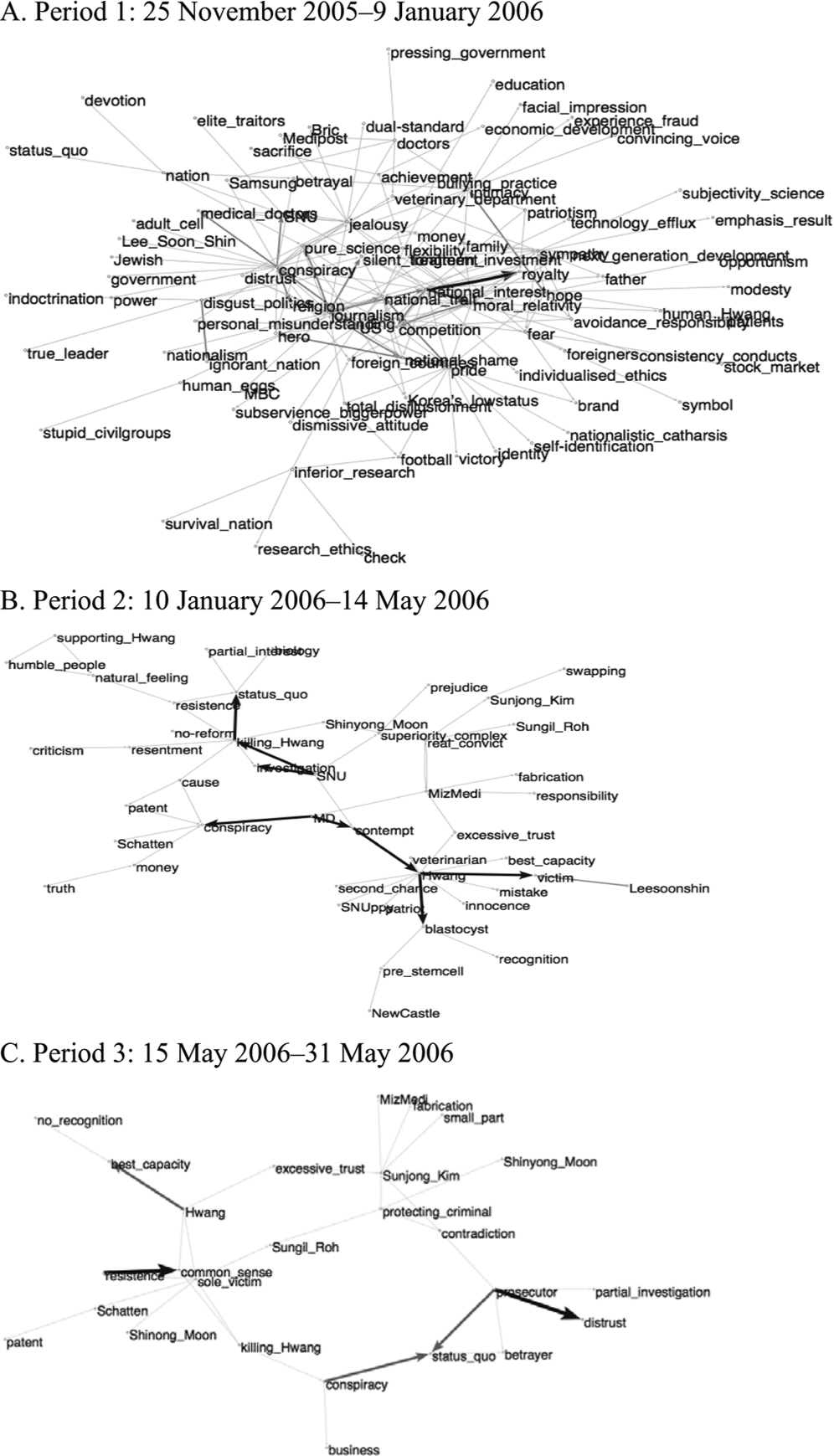
Semantic network.
Period 1: Surging controversy (25 November 2005–9 January 2006)
In Figure 2(A), the node “national interest” in the center is strongly linked to the expectation of “royalty” that is anticipated to come out of Hwang’s experimental achievements in the future. The concept of “moral relativity” is also frequently mentioned to exonerate Hwang’s misdemeanor; that scientific fraud is a blurry concept and unethical collection of ova could be pardoned when the “national interest” to build a scientific capacity becomes an impending national agenda.
To study the structural pattern of the discourse, we need to reduce the complex network into a visible relation of subthemes. The blockmodeling method (see online Appendix II C, available at http://pus.sagepub.com/) categorizes structurally equivalent – having the same pattern of references with the same nodes – keywords into the same groups with the same colors. In other words, words with the same color are “interchangeable,” and they have the same functional meaning to construct a common theme.
Having applied the Convergent Correlation (CONCOR: see Note 2) method, six thematic subgroups emerge: while people’s minds are divided by a strong feeling of 1) <pride> and 2) <conspiracy> on Hwang’s scientific accomplishment and the scandal, 3) emphasis to protect “national interest,” the people’s “hero” and “pure science” from the plotting of the “US” and “journalism,” or an attempt to trivialize the scandal as a “personal matter,” led to their constructing a common motivation for the support of Hwang. 4) “National trait” is grouped together with “jealousy” and “competition”; actors such as Seoul National University (“SNU”), competing medical doctors (“MD background”), “government” and “foreigners” comprise <conspiring elements>. 5) Meanwhile, people also express their sense of <national identity> through the Hwang scandal. Finally, 6) people express their <emotional feelings> with keywords like “distrust” and “national shame”; they also express support for Hwang with feelings of a “father” or “intimacy” about him, while criticizing the “bullying culture” aligned against him (see online Appendix III, available at http://pus.sagepub.com/).
Graphically reducing the network into the core themes provides an intuitive way to learn how these themes are interrelated to form a collective narrative and how they make a logic of reference. Supporters’ pride in Hwang’s stem cell achievement produces a strong relation with their self-identity and defending logic; and the defending logic refers to some conspiring elements as their explanatory objects. Likewise, the notion of conspiracy presents dense reference to various conspiring elements. In short, Korean people’s pride in their scientific achievement needs a defending logic for the shameful charge against Hwang. And the defending logic induces a drive to find conspiring objects in order to support a conspiracy theory.
Period 2: After the investigation (10 January 2006–14 May 2006)
The report of Seoul National University’s investigation on 10 January 2006 cast more suspicion rather than bringing an end to the scientific controversy. The represented network (Figure 2(B)) demonstrates people’s shift of focus toward general feelings about Hwang’s identity and suspected plots against him. As a whole, feelings about Hwang and evaluation of the SNU’s investigation occupy the semantic network. Hwang’s ability to produce a “blastocyst” with his unique somatic cell nuclear transfer (SCNT) technique is consistently emphasized. Meanwhile, Hwang himself is portrayed as a victim of hostile rivals such as more privileged medical doctors (“MDs”) who are known to “despise” Hwang who is from a less prestigious academic (veterinarian) background.
In their communication, people generally assume that emotional elements such as “contempt” and “prejudice” coupled with the “superiority complex” of a “status quo” have subdued Hwang who is from a humble social background. Participants in the communication believe this “scapegoating” is related to a conspiracy, which is essentially motivated by “money” or a “patent” issue. In this discourse, contrasting Hwang’s humble identity against a conspiring status quo with pejorative motives produces a typical narrative of a fallen hero – of humble origins.
On the fraud issue itself, supporters do not consider Hwang as mainly responsible for the misconduct. People are aware of the fact that Hwang’s own contribution to the experiment was limited to the somatic cell nuclear transfer stage, while the rest of the process – culturing inner cell mass extracted from the blastocyst and deriving stem cells – was undertaken completely by external collaborative teams including Mizmedi hospital, medical researcher Sunjong Kim, and other domestic and foreign collaborators. Therefore people come to inquire, “Where are others’ responsibilities, as they also shared fame and interests?” As demonstrated in the network, people’s resistance against the experts’ decision springs from this often cited “common sense” doubt. This doubt not only justifies people’s feelings about the Hwang scandal but also compels them to identify a “real convict” such as Sunjong Kim and the American collaborator Gerald Schatten (Figure 3(B)) who had been a co-author of Hwang but announced severance of ties immediately after the public suspicion.
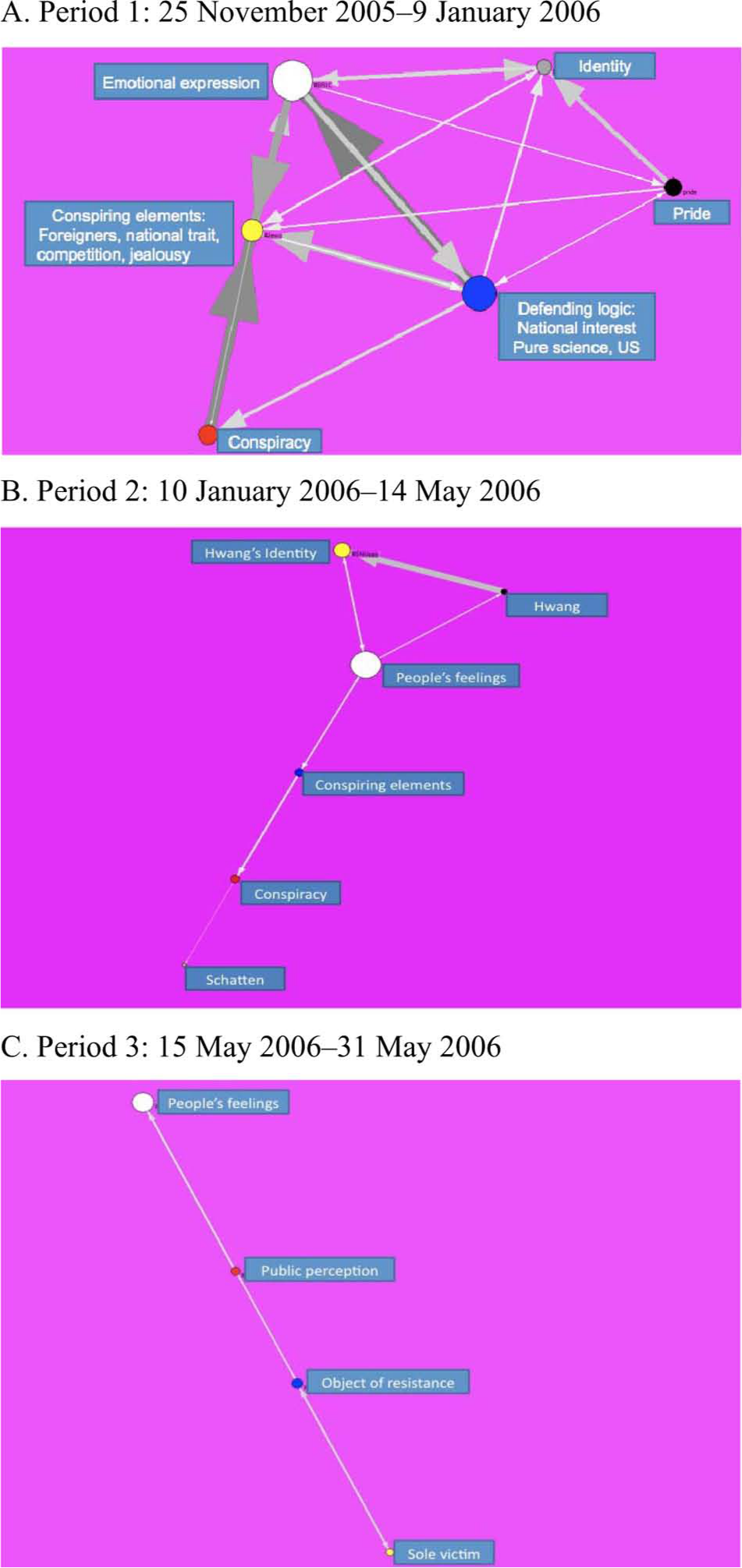
Reduced discursive structure.
Period 3: After the prosecution (15 May 2006–31 May 2006)
For many, the prosecutor’s investigation was expected to answer the unresolved question of the responsibility of the other researchers. The prosecutor’s announcement confirmed that Sunjong Kim brought already established stem cells from Mizmedi hospital and reported to Hwang that he had derived the stem cells. Hwang then asked Kim, initially believing Kim’s report, to exaggerate the number of derived stem cells to highlight the efficiency.
People’s general reactions to the report are critical. They regard the prosecutor’s conclusion as a “partial investigation” or even a “contradiction” that is “protecting the [real] criminal” and concealing a “conspiracy” while not recognizing Hwang’s innocence (Figure 2(C)). Supporters question why Sunjong Kim was not convicted for the grave crime, fabrication, while Hwang was charged with the relatively minor transgression of committing embezzlement of research funds. From a legal perspective, it made sense that Kim was only charged for the minor “obstruction of work” and not for the “fraud” in legal terms. 5 But people found it hard to accept that this enormous scandal had been reduced to a transgression of one junior researcher, while Hwang had been charged with other, trivial affairs. For the public, therefore, Hwang continues to be the sole victim of the complex and ambiguous crime. Consequently, this dissatisfaction compels people to seek objects of resistance that include Hwang’s other collaborators who evaded collective responsibility for the misconduct. In other words, the objects of accusation become mediated objects of resentment and distrust, which is finally channeled to the status quo represented by prosecutors, major media and other scientists.
4. Analysis of discourse
Denotation and connotation
The trajectory of Hwang supporters’ dialogues shows a narrowing of theme: from national pride and conspiracy theory to a personal sympathy for Hwang, suspicion of his collaborators, and distrust of authority (at least those who make scientific judgments). In contrast to the conventional view that depicts the supporters as irrational, the studied discourse demonstrates a certain rationality of “collective intelligence.” The internet participants quickly find logical loopholes in official explanations and request more information. South Korean people’s resentment comes from an institutional vulnerability: that the institution in question is incapable of handling “information and legitimation deficits” (Bauer, 2002). Through collective sharing of knowledge and information in the alternative web space, Hwang’s supporters gathered a number of detailed, if not always accurate, pieces of scientific information related to the debate. In contrast, the Investigative Committee’s accounts did not fully respond to the ordinary people’s demands, eager to know the truth on every point of the issues. Because Hwang was charged with the fraud of the stem cell experiment that he himself did not conduct at first hand, public suspicion was directed to the role and the responsibility of Schatten and other colleagues. Therefore, the sudden denouncement of Hwang alone provoked a predictable public resistance. And the expertise of the authorities in SNU and of the prosecutor was seriously questioned or denied.
In the public imagination, the personalized drama represented as Hwang’s rise and fall, and people’s highly emotional attachment to the narrative, fueled the collective resistance to authority. This representation may suggest an alternative explanation to the “blind nationalism” thesis. Besides the blockmodeling method described in the previous section, that categorized a group of structurally equivalent keywords with a common theme, the analysis of the position of individual keywords unveils their functional and discursive importance. Betweenness (denotation) and closeness-input (connotation) centrality each identify critical signifiers that have central positions in the semantic interactions (see Methodology section). While the former represents a denotative character by mediating both triggers of information and referents, the latter represents a connotative concern that positions itself in the center of referents. These indices open up the possibility to question why some concepts turn out to be more prominent than others in the communicative relation composed of causal linkages between subject and object and respective flow of desires.
As Table 2 summarizes, most denotative arguments in the first period mobilize “national interest” as a rationale and blame “journalism” and “conspiracy” that worked against Hwang. On the other hand, the most prominent concept that is located in the connotative frame is “national trait” (gookminsung). From people’s written explanations, this trait is interpreted as a shared national sentiment, describing reluctance to recognize another individual’s success and a collective attempt to destroy his reputation out of jealousy. The theme of severe “competition” is also closely linked to this expressed frustration. These concepts may reflect people’s core anxiety felt in their daily lives, the downside of the national trait, as well as a rationale to compete with foreign countries by any means and devoid of just principles in scientific practice. Meanwhile, Hwang is often referred to as a “father” of a “family-nation” who should not be disgraced in such an open manner, revealing a family-oriented Korean culture pervasive in public affairs, amounting to a “silent treatment” of the Hwang scandal.
Network translation of representational concepts.
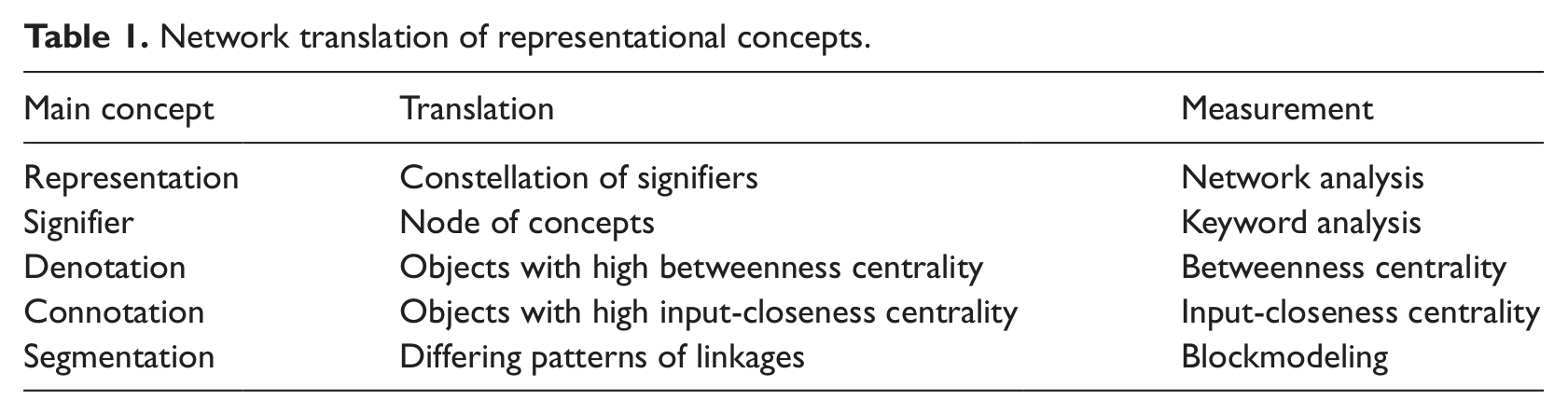
Central denotations and connotations.
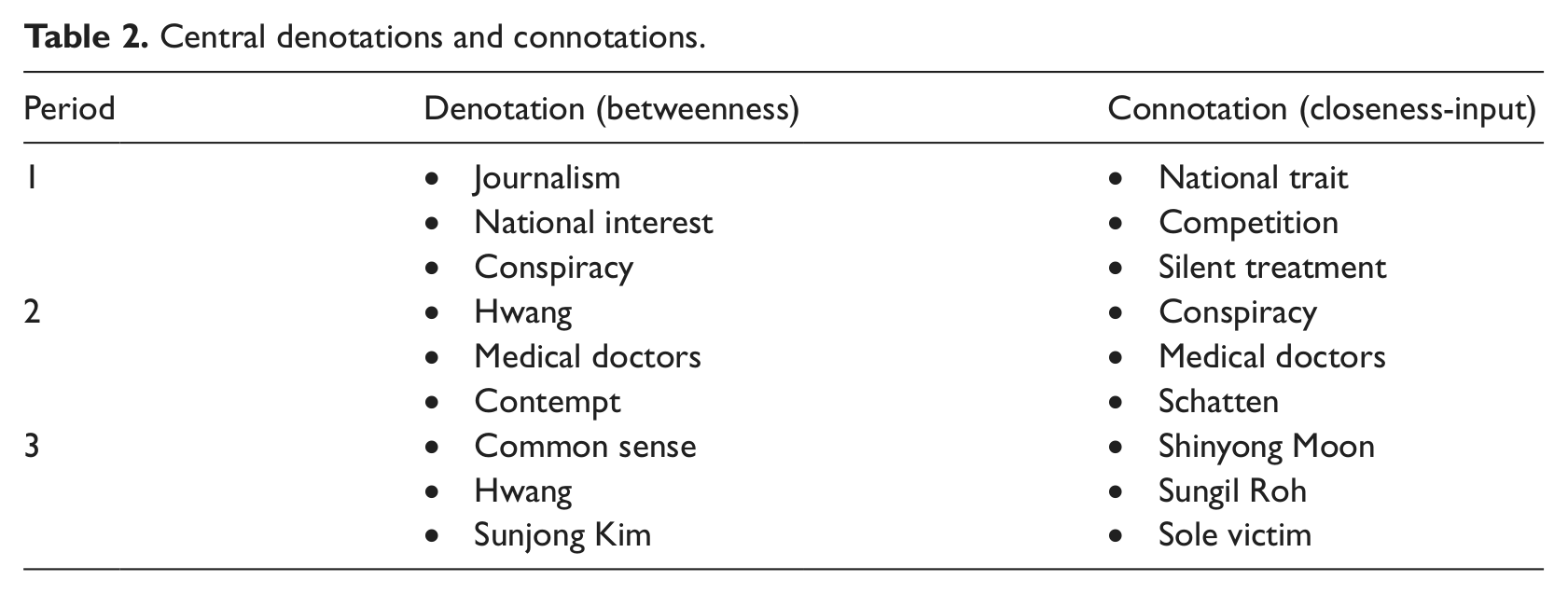
The core concern in the second period is a personal struggle between medical doctors and Hwang. The word “medical doctors” is one of the most important keywords in both denotative and connotative framing that is represented as a subject of “contempt” and “conspiracy” against Hwang. In the last period, supporters finally take recourse to a “common sense” while defying the verdict of the prosecutor. As the institutional decisions of fraud stand against the people’s common sense or belief system, Hwang would finally remain the unfortunate victim of the “mysterious” tragedy.
Understanding the resistance
Particular institutional conditions and performances that failed to gain the public’s trust led the public to coin unofficial interpretations that spurred resistance. No wonder, since the most representative institutional authorities, depicted as the status quo by the public, i.e. the government, the scientific community and the press, lost credibility because of their inconsistent, opaque and dishonest responses to the Hwang affair (Kim, 2009). However, the institutional failure does not fully explain the unprecedented degree of public hype, personal aspiration and subsequent frustration that escalated to a social movement that reflects a Durkheimian admixture of “selfish-altruistic suicide.”
The results of the analysis of the semantic networks imply that public responses were neither purely cognitive nor positioned on the debate about the validity of the experiment. They were rather tied to people’s emotional motives, reflecting their own daily experiences. The public image of a fallen hero, Hwang, subdued by a conspiracy of the status quo, is consistently related to the people’s implicit concern for the matters of recognition and disrespect. For instance, the director of the Investigative Committee, Myunghee Chung, inflamed the public when she bluntly denounced Hwang’s capacity to produce a stem cell line in the public announcement. Although it was clear that Hwang did not produce any stem cell line, Koreans nonetheless highly regarded his team’s skill in animal cloning and also felt that having developed quite a number of human blastocysts was already a great achievement. A number of people even called this blastocyst stage “pre-stem cell.” Therefore, the committee’s total denial of Hwang’s potential was received as an obscure motivation of other jealous scientists to “kill Hwang.”
Moreover, the centrality analysis of concepts suggests that there is ambivalence in the notion of a “nationhood.” In contrast to claims that the “Hwang fandom” was simply motivated by a culture of nationalism, the represented frame of the network discloses that both “national interest” as a rationale of the movement and disgust at the “national trait” coexist in the supportive discourse. More crucially, the absence of salient concepts related to serious debates on ethical transgression or the possibility of fabrication suggests that neither the ethical issue of collecting ova nor the authenticity of Hwang’s research itself really mattered to the public at all. In brief, the source of public anger over the scientific event existed elsewhere.
The characteristic of public hype on embryonic stem cell research preceding the Hwang scandal offers a clue to my different interpretation. Before the scandal, the South Korean government zealously propagated the prospect of Hwang’s success to justify the elaborate level of state support of the life sciences. Resorting to deeply rooted nationalism was a means of delivering this justification symbolically, and emotionally. And Hwang’s success fit well into this symbolic demand for dramatization (Kim, 2008: 402–403). In general, people accepted this symbolic mobilization of national projection, but the cause of their personal enthusiasm and the sentiment of attachment came from elsewhere. As mentioned, people favored the Hwang story because his skyrocketing success from an institutionally humble status inspired aspiration. Living in a rapidly industrialized nation where achievement motivation used to be emphasized as a raison d’être to survive severe competition, people identified Hwang’s success story with the projection of their own success, while conforming to the official discourse of national glory won by scientific success. When Hwang’s sudden failure and the subsequent institutional charges against him were reported, people were ready to react with accusations against frustrating institutional environments where “pure effort” is thought to be hampered or betrayed. Out of this sentiment, a number of South Korean people firmly believed that resisting the official verdicts of fraud was a civil commitment, in order to restore a sense of justice. An interview on condition of anonymity with a professor of pharmacology in South Korea implies that this public sentiment is not confined to a scientifically illiterate group of activists or “non-experts”:
It is obvious that jealousy was involved in the killing of Hwang, as it happens all the time. Those medical doctors and other academics who barely make any efforts on their own scapegoated a person like Hwang who had made such sincere efforts to position himself on the international level. Hwang was destined to fall after acquiring such huge fame, and this really is a problem of our national trait. (Interview with a pharmacologist, 5 March 2010)
Therefore, it is logical to conclude that the Hwang supporters’ denoted nationalism was only one side of what was expressed. The other side was the connotation of frustration, born of watching Hwang’s success slide into failure. Having projected their own aspirations to succeed onto Hwang, his supporters identified with his failure, thus energizing their defense of the “fallen hero.” To a certain extent, this kind of Janus-faced representation may reflect the historical background of Korea. This background is one where knowledge, and science, have been typically defined narrowly as a means to gain status and recognition in a highly stratified society (Kim, 2008: 399–401) rather than a pure pursuit of truth. Whereas the fact that popular resistance could occur only when coupled with the rhetoric of “national interest” reflects Korea’s history of modern state-building and industrialization with a recursive, and coercive, emphasis on nationalism for mobilization by military regimes, while suppressing individuals’ desires to “stand-out” in public affairs.
5. Summary: Implications for PUS
My analyses and conclusion differ from existing literatures in two key points. First, the nationalism frame suspected as the cause of public activism embodies a duality, as it also contains a feeling of disgust against a negative side of the national trait. Second, this feeling of disgust as a source of anger is related to people’s frustration over barriers to personal success, imagined to be confirmed by Hwang’s disgrace. From this perspective, the public protest in support of Hwang functioned as an opportunistic event for people to express their latent desire and frustration, with little consideration of the scientific issues or the misconduct itself. In a cultural context where scientific progress was thoroughly framed and dramatized as an individual’s success, spurred by institutional propagations, there was little room for rational assessment or ethical deliberation on the topic of governance of human embryonic stem cell technology. Institutional incapacity to respond to people’s suspicions after the scandal also provoked a conspiracy theory and activism.
The “active participation” of the public in the Hwang scandal leaves room to reflect on desirable modes of public engagement in science communication. Neither the deficit model (Wynne, 1992) nor romanticization of public participation seems to be a viable solution, as both reify the actors as value-laden social entities without questioning their social capacity to reflect on the science. Reflecting the South Korean experience, how to engage expert knowledge and its underlying logic of debate into everyday dialogues, and construct a “socially deliberative subject” of communication in the public sphere, seems to be vital for safeguarding against “miscommunication” that sprung out from a DAD (Decide, Announce, Defend) science policy.
Deliberations on ways of representing scientific issues based on better understanding of the lay public’s general sentiment on technology and knowledge in daily life, turn out to be no less important. In this light, my semantic network analysis has proposed a pathway to study and understand the public’s sentiment and their Lebensform (form of life) in relation to science and knowledge. Further methodological rigor should continue to explore veiled characteristics in dialogical data that are waiting to be heard from every “gap” of the public sphere.
Footnotes
Acknowledgements
I am grateful to a number of anonymous reviewers who toiled to read my draft and provided valuable comments and support. I am also thankful to Professor Martin Bauer for initially delivering the concept of denotation and connotation, and showing remarkable patience for the gradual improvement of my work.
Notes
Author biography
References
Supplementary Material
Please find the following supplemental material available below.
For Open Access articles published under a Creative Commons License, all supplemental material carries the same license as the article it is associated with.
For non-Open Access articles published, all supplemental material carries a non-exclusive license, and permission requests for re-use of supplemental material or any part of supplemental material shall be sent directly to the copyright owner as specified in the copyright notice associated with the article.
