







Abstract
The article examines the conditions of production and recognition of scientific cinema in Brazil by comparing three distinct moments and contexts: the first moment takes place in the nineteenth century, and it is related to the contribution of a Brazilian astronomer otherwise little known to Brazilian film scholars, the second addresses Benedito Junqueira Duarte’s voluminous mid-twentieth-century filmography, and the third moment documents recent scientific film experiences within ultra high resolution movies transmitted over photonic networks. Future trajectories for aesthetic concerns and practical issues such as the archiving of ultra high definition cinema are usefully informed by these histories of scientific cinema, even as a current generation of multidisciplinary teams including scientists, filmmakers, computer scientists, and network engineers reinvent, rediscover, and necessarily expand the scientific cinema toward concerns of real time collaboration and teaching.
Keywords
1. Introduction
After producing several high resolution experimental films in collaboration with computer scientists, network engineers, physicians, astronomers, and educators, our research group, based mostly in Brazil, started investigating past Brazilian scientific cinema production in order to analyze the conditions of production and reception of such films. Nine journals databases were searched for terms related to “scientific cinema” with little success, demonstrating insufficient material to be referred to. However, there are two disconnected events that are instructional regarding the cultural reception and relative lack of knowledge about such films in Brazil: the first is documented in reports on a contribution to nineteenth-century astronomy otherwise little known within the historiography of Brazilian cinema, connecting a scientific mission to the development of influential future cinema instrumentation, particularly the famous Janssen “photographic revolver.” The second experience outlines the sustained contribution of the photographer and filmmaker Benedito Junqueira Duarte in the field of medicine. In both cases, the material examined is the writings of the two authors directly involved in the experiences.
In order to compare the conditions of Brazilian scientific research with regard to scientific cinema, we also examine international discussions related to the context of the experiments, and address the acceptance of these scientific initiatives. Also treated is the experience of scientific cinema already well recognized in film literature: Jean Painlevé and Jean Comandon films, and surgeries by Eugène Doyen, especially focusing on articles written by Doyen that promoted a kind of specificity to a scientific cinema. There is a reference to an article written by the recognized film critic Andre Bazin that compels us to reflect upon cinematic aspects that remain within scientific cinema, yet rest beyond the primary concerns intrinsic to science. We outline aspects of viewership which suggest an aesthetic “excess of reality” that must be coped with.
We assume that the Brazilian research does not indicate any consolidated theoretical framework regarding scientific film, and there is no effort to define it as an autonomous field. 1 In order to understand a praxis and also to participate in a debate about radical changes in the production of such a cinema in the twenty-first century, these events are connected with the two demonstrations realized by our research group and described in the part 4 of this article, expressing both similarities and new relations. In this sense, the essay describes new challenges and changes in the production of scientific cinema, inquiring about a specificity of practice given constant technological change. We believe that in current research in scientific cinema, there is now a tendency to assess such films in terms of technological success, rather than on their scientific or cinematic content. This essay also aims to lend a certain historicity to our current practices, demonstrating some leads which might suggest an advance of “scientific cinema”.
Nowadays, there are several festivals that promote scientific films, and some of them make a distinction between films for the general dissemination of science knowledge, and scientific films intended for narrower professional audiences. Some examples are the new Raw Science Film Festival in San Francisco, USA, and the Cinecien (Mercosur Scientific Film and Video Festival) in Buenos Aires, Argentina, which began in 2005. Some festivals are more directed at specific special interest fields, such as VIDEOMED (International Festival of Medical Cine) taking place in Barcelona, Spain. Others address a wide public including young audiences and professionals in media and technology, such as the Pariscience (International Science Film Festival) that takes place in Paris, France. 2 Frequently sponsored by scientific associations, scientific film festivals are generally hosted by exploratoriums, planetariums, and museums of natural history. We note, such forums have not yet been established in Brazil.
Despite the fact that the international interest in scientific cinema has seen a remarkable contemporary ascent among historians, researchers, programmers, and cinema professionals, the term scientific cinema does not define a single or commonly held notion of the practice of scientific cinema. The term can refer to science education and training films, and also ranges from very discipline-specific, narrow technical experiments relevant to only a few researchers all the way through the more comprehensive genre of documentary filmmaking for general audiences. What it does not refer to is narrative forms or science fiction cinema; scientific cinema is specifically non-fiction albeit in many forms. This essay addresses the “scientific cinema” as a larger and more complex subject which may include the dissemination of science and the documentary film, but mostly we are interested in the filmic exercise of a position of “equal partner and reflexive maker of science” (Gouyon, 2015: 2). The scientific film can be used for scientific disclosure, but this is often a secondary use of footage that was originally produced for investigative purposes in the process of original research. One point to be emphasized is that in addition to the above aspects, scientific cinema is compounded by the fact that it also sometimes contributes to the production of novel imaging technologies. During the twentieth century, the scientific cinema made use of technological mechanisms of cinema that were adapted, re-engaged, and re-invented as tools for a particular audiovisual production tuned toward discovery. The results generally are exhibited independently of the programmatic standards inherent in the distribution of entertainment and culture cinema (Machado, 2014).
2. First moment: An illustration from the origins of cinema
The relationship between science and technology is the origin of the cinema itself, that is, the scientific cinema precedes even the history of cinema in its aesthetic or theatrical senses. Virgilio Tosi (1997)
3
affirms that
the real birth of cinema was established in the nineteenth century for the needs of scientific research and the need (and the gradual increase of the technical possibilities) to record physical reality in its dynamic quality for the purpose of analysis, discovery and then understanding. (p. xi)
Tosi relates work of physicists, engineers, and photographers that were, at the same time, manufacturers of optical machines and kinematics, such as Muybridge, the Lumières, Edison, Méliès, Marey and his disciple Lucien Bull. He also recounts the multiple scientists and researchers from different fields such as physics, mathematics, chemistry, and astronomy such as Faraday, Plateau, Flammarion (who coined the term “cosmocinematography”).
The historical research by Tosi (1997) also presents curious pre-cinematic devices such as the Thaumatrope, Zoetrope, Mutoscope, Zoopraxiscope, Phenakistoscope, Electrotachyscope, which were invented in the service of astronomy, physiology, psychology, and medicine (p. 163). Tosi’s (1997) thesis is also that scientific cinema that was born many years before what we now consider traditional film represents a new way to perceive and communicate, and despite the eventual entertainment cinema hegemony over the form, the scientific cinema nevertheless continued to contribute immensely to scientific and technological discoveries (p. 183). Besides Tosi, Laurent Mannoni’s work 4 dives even further into the past, assembling a history of more than four centuries of moving image inventions. As Tom Gunning (2000) stated on the introduction of Mannoni’s book, “that cinema is only part of a broad visual culture that stands in the intersection of modern science and modern media” (p. XXV).
In Tosi’s work, there is a chapter dedicated to the astronomer Jules Janssen and his “photographic revolver,” considered one of the key milestones of cinema instrumentation and a precursor of cinema; a thesis which is posited by other historians (Mannoni, 2000, 2005).
The “revolver,” in fact similar to a cannon, can be seen in a well-known image from the history of pre-cinema made by the illustrator Bonnafoux (Figure 1) and published in the scientific journal La Nature in 1875, depicting an astronomer operating the instrument. Originally, the illustration accompanies an article written by the astronomer Camille Flammarion reporting the observation of the transit of Venus in Japan in December, 1874. This illustration was attributed by The Biosphere, a publication of the Observatoire de Paris, to be operated by the Brazilian astronomer Francisco Antonio de Almeida. 5
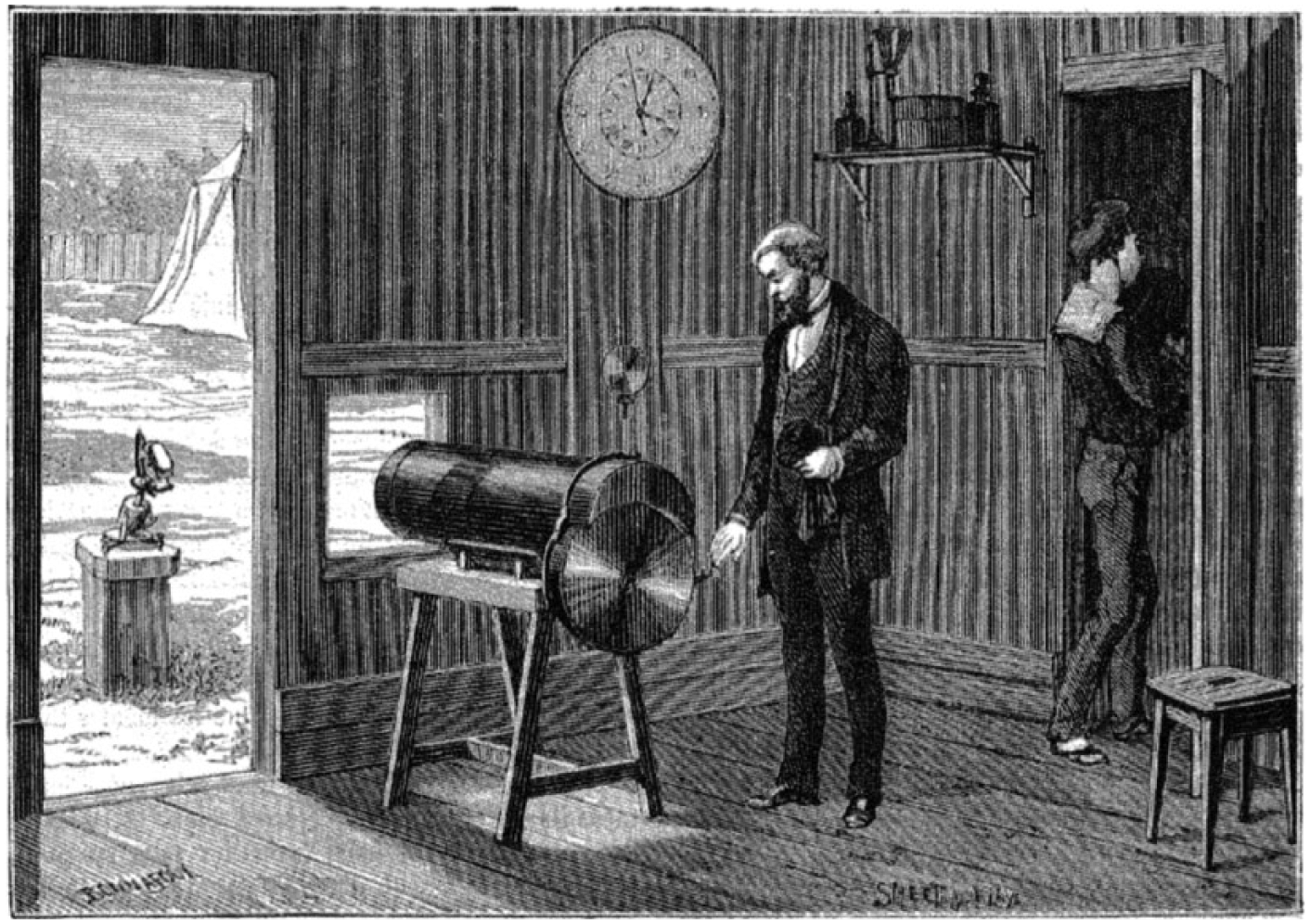
Janssen’s photographic revolver: image created during the 1874 solar transit of Venus.
Almeida joined Janssen’s 1874 mission to observe Venus Transit in Nagasaki and records show that he was the first Brazilian to visit Japan, at least officially (Abreu, 2012: xi; Okamoto, 2010: 104–108). Jules Janssen cited Almeida as “M. D’Almeida” in his Scientific Works, and the scholars Tosi and Mannoni also quoted Almeida’s work on their research referring to Janssen’s achievements (Launay, 2012: 81; Mannoni, 2005: 327). In his reports on the astronomic mission, Janssen (1929–1930) affirmed that the Brazilian had “managed to record 47 photo cards from the transit that led to the same conclusions from their experiences” (p. 313). Pierre-Jules-Cesar Janssen prepared his instrument to photograph the passage over short time intervals, to be verified later. The images taken had to be subsequently “reinforced and redesigned” in order to be printed due to bad weather and the limitations of the apparatus. There are, together, only 17 of these pictures that were produced from the 47 samples obtained (Tosi, 1997: 35). According to Mannoni (2000), the mission was a scientific triumph for Janssen, providing proof for one of his theories: “the corona was a part of the sun, not a refraction effect of the Earth’s atmosphere” (p. 302).
Almeida (1879) wrote a book in which he reports on the scientific mission, the goal of a long journey to the “most extreme country of the Orient” (p. 191). Almeida left France on 19 August 1874 traveling through China in order to arrive in Nagasaki before the 9th of December for the Transit of Venus. The 235 pages of the book “From France to Japan” (In Portuguese: Da França ao Japão: narração de viagem e descripção historica, usos e costumes dos habitantes da China, do Japão e de outros paizes da Asia) relates various impressions about the people of Japan and China whom he called the “indígenas.” At the time, according to the astronomer Rogerio Mourão, it was usual that astronomical expeditions were associated with geographic explorations, which led to considerable advancements in both (Mourão, 2004a). Such association ended up producing a book which mixes Almeida’s impressions with those drawn from other important journeys such as Fernão Pinto’s first Portuguese contact with the Japanese in the sixteenth century. On the few pages where he actually reports on the central scientific mission, he refers to the planet Venus in a stylized and often romantic form apparently drawn from the literature of the era, using expressions such as “beautiful goddess” and made continuous erotic suggestions, such as “the fiery hits” of Venus, the brightest of the planets. 6 Apart from these references, Almeida (1879) says, “At 10 am and plus a few minutes we watched the triumphal entry of Venus into the solar regions … We saw Venus as a whole and distinctly while entering the realm of her lover” (p. 193). Almeida (1879) refers to Janssen only twice in social gatherings, such as dinners and social occasions (pp. 192–193).
The focus of his book is his travel in the Orient and not the debates about image quality or the validity of the “photographic” method for observational astronomy, which was an intense topic of debate in France at that time. 7 However, Almeida does observe that the Venus Transit and Japan make an ideal viewing location enabling young astronomers to work with trained astronomy teams and senior scientists visiting Japan for the occasion. He compares the number of journeymen astronomers with the number of bachelor’s degrees in Brazil: Brazilians derogatorily consider themselves as a “land of bacharéis” (Almeida, 1879: 193). In comparison to the United States, Britain, and Italy, France by itself organized six missions for the Transit of Venus involving 100 scientists in different parts of the world. The France mission in Japan was led by Janssen, along with Tisserand, director of the observatory in Toulouse (Mannoni, 2005: 300) (Figure 2).
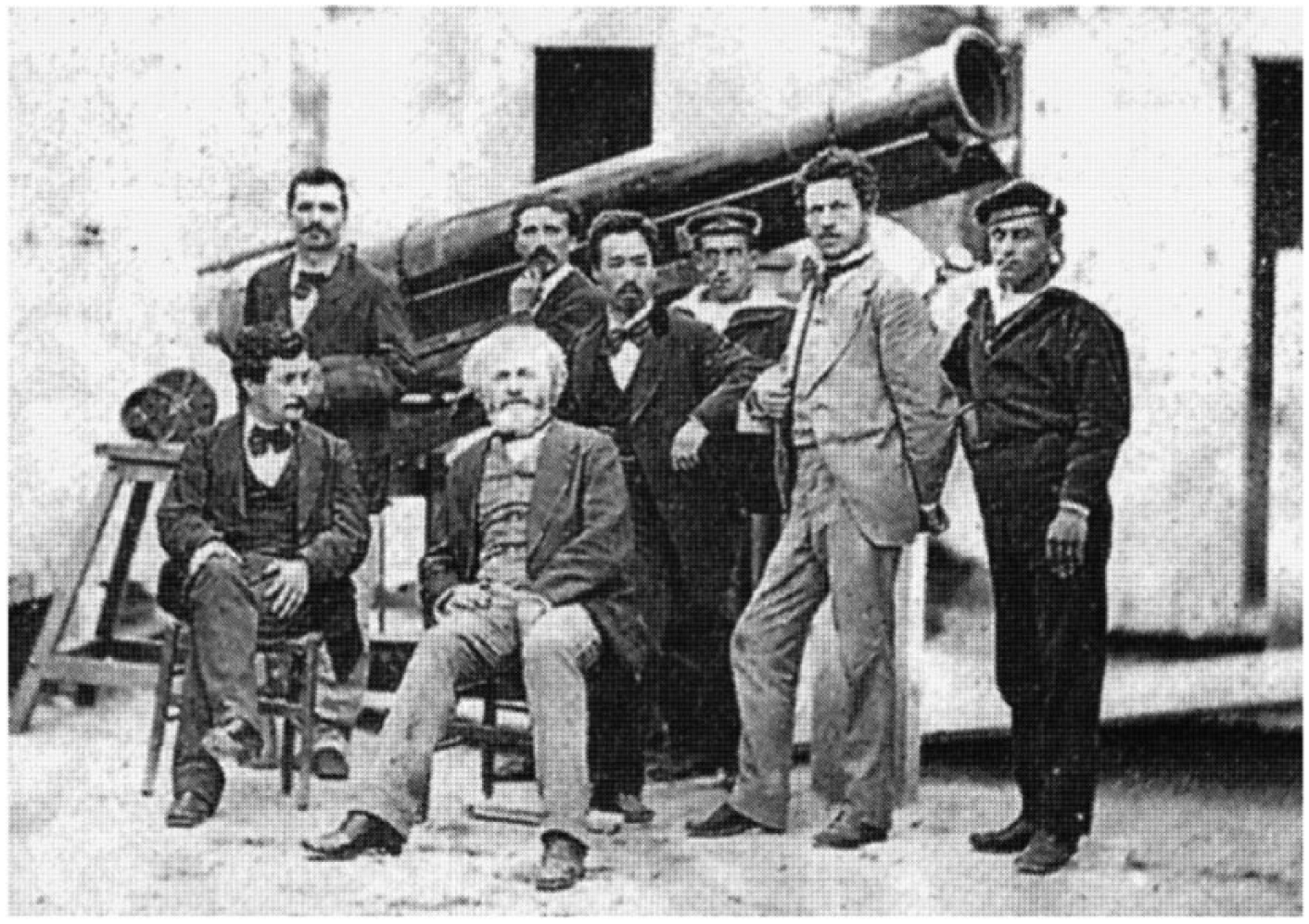
Janssen’s photo mission, 1874. 8
Meanwhile, in Brazil such astronomical missions were not well received. Revista Illustrada (Illustrada Magazine), a satirical abolitionist publication that lasted from 1876 to 1898, regularly criticized such scientific missions. In 1882, the magazine published cartoons about the Brazilian participation in Venus Transit observation mission that would next take place in 1884, asserting that the emperor was more concerned with Venus (and astronomy) than with the social problems of the country. The magazine editorially argues against the effort, claiming that the observation of the “Transit of Venus” is “old stuff” in astronomy. 9 In fact, the photographic method for astronomic observation was itself under scrutiny by the international community for the next stages of the study of the Transit of Venus which would occur in 1882 and 1884, competing with an older concept of using measurements of solar parallax and the speed of the light to make the desired calculations.
During the Conférence Internationale du Passage de Vénus in 1881, the astronomical community dissented from the last expedition of 1874, claiming that different instruments led to divergent results. The international cooperation of scientists “acting in an independent and personal manner,” said the Ministre d’Instruction Publique should create a common plan in 1882 for “all civilized nations” (Apud Canales, 2002: 603). The astronomer Rogerio Mourão (2004b) affirms that several scientific communications were made at that time “with relative results to astronomy” (p. 155), including that the “determination of the solar parallax by the Brazilian Commission […] represented at that time one of the most precise values” (p. 159). Mourão also assumes the creation of the Museum of the Passage of Venus in the northeastern city of Olinda, Brazil as a positive result which received international recognition and still keeps the instruments and documents of the event.
In Brazil, the budgetary discussions in planning for the next Transit in 1882 became a conversation about government largess. The magazine editorialized that the mission was receiving unnecessary support, and suggested in a satirical cartoon that the delegation was a “imperial comet” full of “flatterers”; 10 also only an emperor’s whim supporting the construction of a Brazilian observatory on the faraway Island of St Thomas in the Antilles. The cover of the magazine published on 6 December 1882 is about the transit of Venus (Issue 324) and some illustrative cartoons show Dom Pedro II observing the Transit in his telescope, disappointed with the failure of the operation (Figure 3). 11 This presentation lacked focus on the scientific aspects of the mission, and Almeida was considered by the Brazilian parliament just a “shipper of instruments,” an allegation that Mourão considers quite unfair. 12
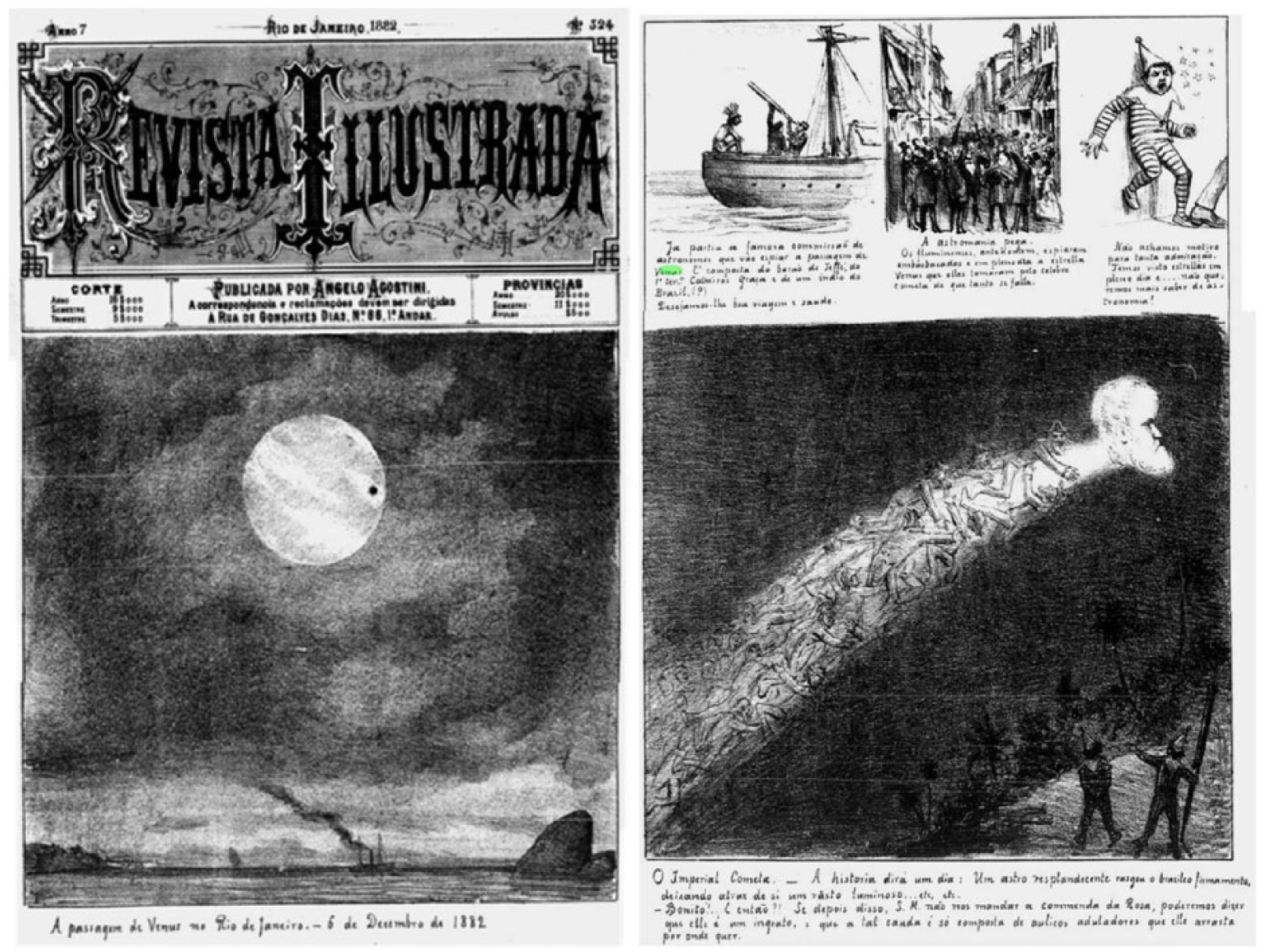
Cover and illustration of Revista Illustrada.
3. Second moment: Physicians and cinema, excess of reality in cinematic arts
The medical field was particularly interested in the new cinematic techniques from early on. The partnership between Marey, the doctor-photographer, Albert Londe, and Jean-Martin Charcot produced the intriguing photographs of the Psychiatric Hospital Salpêtrière. 13 By 1898, in Edinburgh, the French physician Eugène-Louis Doyen presented three films of surgeries during a meeting of the British Medical Association, including a craniotomy and an abdominal hysterectomy. Interestingly, the earliest Argentine movie preserved is 3 minutes of a surgery performed by Dr Alejandro Posadas in 1899. This film, at one time considered missing, was rescued in 1970 at the Hospital of the University of Buenos Aires (Finkielman, 2004: 6–7).
Two of Doyen’s films, compiled by himself in 1906 from 10 source films, were found and restored by the Portuguese Cinematheque in 2002 and displayed with the title “As Operações do Dr. Doyen” (The Dr. Doyen operations). Doyen’s films were intended for the dissemination and development of surgical techniques, but the successful separation surgery of two conjoined twins, Doodica and Radica, provoked reactive controversy in the French press at the time (Lefebvre, 2004). The compilation of the films, recently shown at the French Cinémathèque, is now called Maniement de la table d’opération (1898), Resection du fathered (1900), and La Séparation of Doodica–Radica (1902).
14
Baptista (2005) presents a more interesting critique of Doyen’s films by pointing out the divergent poles created by, on one hand, the idea of pure “theoretical demonstration” and, on the other hand, “abstract films” in the sense of “the surgery’s and the organ’s details,” quoting the surgeon Jean-Louis Faure and the journalist Paul Sabon, respectively (p. 44). However, according to Baptista, for Doyen “demonstrating the surgeon’s self-confident personality while operating was as important as demonstrating any particular surgical technique itself.” In Doyen’s (1899) words,
It is not enough, finally, to comprehend an operative procedure, seeing a performance of an operation by a surgeon who has studied this process, according to the authors. We must attend one or more operations made by the practitioner himself, who settled the technique. In a word, we must see the master. (p. 146)
Some years later, the French physician and researcher Jean Comandon developed more innovative technological solutions in the production of moving images after 1909. Comandon directed at least 400 short films and is considered the “father of cinephotomicrography.” It is with him that the “microimage” film arises, turning the cinema camera into a recording microscope, just as Janssen gave to his device a telescopic attribute. 15 Joseph Leclerc, in the film Le cinéma au service de la science (1945), claims that Janssen’s pictures created the “cinema astronomique,” while Comandon through his laboratory contributed to the techniques of time lapse imaging in the study of plants, flowers, and even smaller organisms. The “cinephotomicrography” of Comandon presented for the first time films of bacteria (spirochetes) and red blood cells; films which had a great impact in 1909 when they were presented to the Academy of Sciences of Paris (Lefebvre, 2012). Via topics such as The Human Blood (1910) and The Phagocytosis of Trypanosoma by White Blood Cells (1936), the invisible universe of microbiology first became visible to the world.
In the 1920s, the biologist Jean Painlevé removed the scientific cinema from the circles of research and training, popularizing it with considerable success. His biography describes his contacts with the Surrealists and the French vanguard, pushing science to the field of aesthetics. The French cinema theorist Bazin Andre (1947) compliments the scientific cinema writing an apologetic article about Painlevé stating that “When Muybridge and Marey made the first scientific research films, they not only invented the technology of cinema but also created its purest aesthetic. For this is the miracle of the science film, its inexhaustible paradox” (p. 146). Bazin (1947) also discusses the acceptance of the audience saying that
It is not certain, unfortunately, that this startling cinematic truth can be widely accepted. It harbors too much potential scandal at a cost to current notions of art and science. This is perhaps why local audiences protested against and declared as sacrilege the jazz music that accompanies the little underwater dramas in Jean Painlevé’s film Freshwater Assassins. (p. 147)
In 1937, Painlevé worked with the mathematician Andre Sainte-Lague to produce The Fourth Dimension making use of animations and graphics to demonstrate the four dimensions didactically, anticipating recent scientific visualization with computer-generated images. Painlevé and Comandon are figures who redefine the scientific cinema of the last century, emblematic figures of the practice.
In Brazil, the scientific film came about during the 1910s, with initiatives such as the Roquette Pinto Foundation for the purpose of disseminating science (Oliveira, 2006). There are records of films made in the fight against yellow fever by the Oswaldo Cruz Institute in 1911 (Thielen, 1997 in Oliveira, 2006). However, the best-known filmmaker of the sciences was Benedito Junqueira Duarte. He produced over 500 films for the Department of Culture of the Municipality of São Paulo beginning in 1936. Among the educational films, documentation, and production of corporate films, Duarte produced films within the scope of scientific cinema, with his best-known experiment being the heart transplant surgery performed by Dr Euryclides Zerbini in 1968 (Catani, 2000; Machado, 2014; Silva, 2007) (Figure 4). It was the first heart transplant performed in Latin America and received great attention from the Brazilian media at the time (Braile and Godoy, 2012).
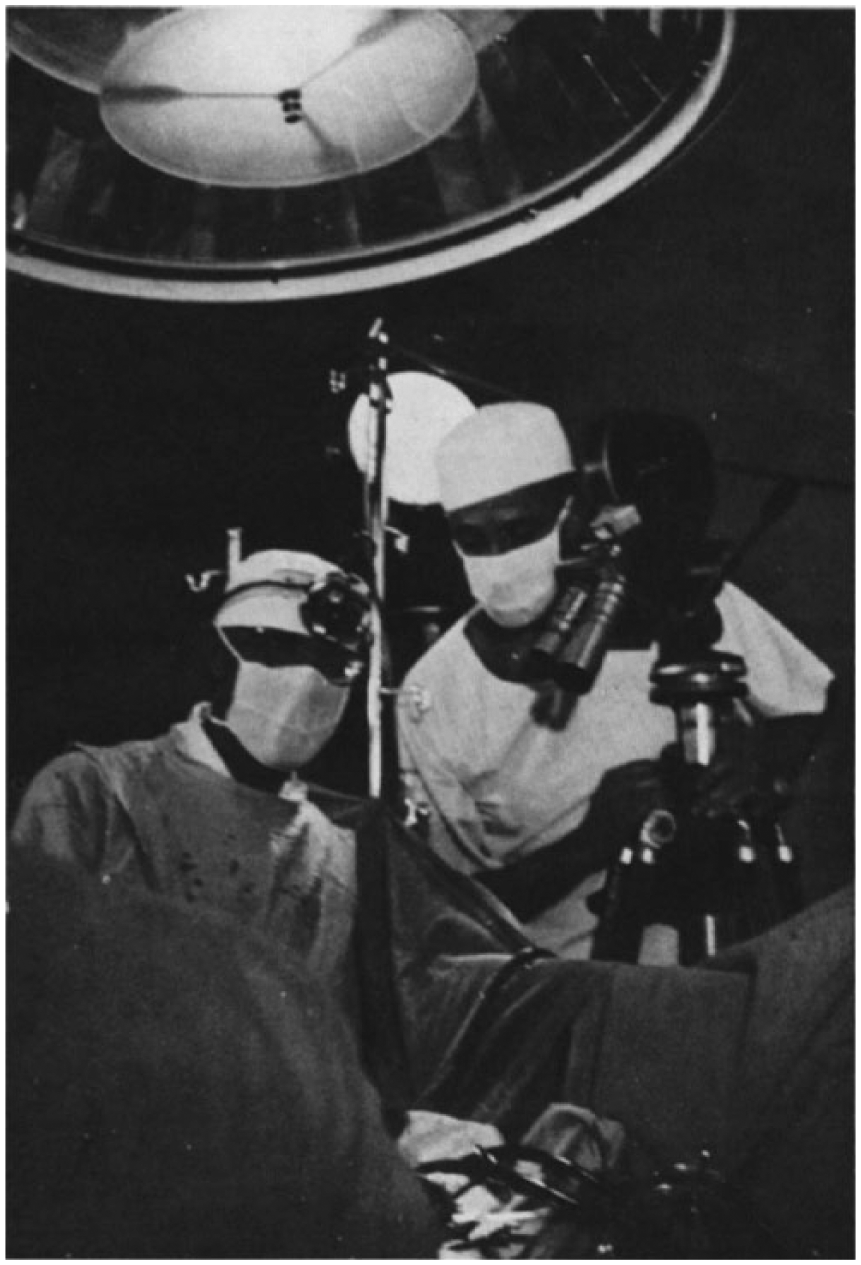
B.J. Duarte (cameraman) and Dr Euryclides Zerbini in a filmed cardiac surgery.
As recorded in the database of the Cinemateca Brasileira, his first scientific movie was called Appendectomy (Apendicectomia) and was shot in 1949. It is a short film, 35 mm, black and white but without further references or other metadata. In total, the Cinemateca Brasileira database contains 261 references of Duarte’s films, and it can be assumed from the titles that 204 at least suggest a “scientific” character. However, the two related to other of Zerbini’s surgeries, Marca-passo implantável (Implantable pacemaker) and Válvula Cardíaca (Heart Valve), are not included in the Cinematheque database, at least under these titles. Some guesswork is involved in that many of the registered movies that do not have any metadata beyond belonging to a collection from the “Sandoz Lab.”
B.J. Duarte also wrote an article defending the scientific film published in the Brazilian journal Filme Cultura, in which he considers the film applied to surgery and medicine as “one of the branches of scientific cinema.” The filmmaker lays out an archaeological panorama of scientific film quite similar to other consolidated surveys such as Tosi’s or Mannoni’s, though concise. He adds to the known literature the work of the German physician Schuster, who produced films about Parkinson’s disease as soon as the cinematograph was invented, 1 year before Doyen. Duarte (1970) also affirms that there was an investment gap between international universities and hospitals in Brazil, where the problem of “production financing of (scientific films) is never contemplated within the budget committees of the official scientific institutions” (p. 36). Regarding “film libraries,” Duarte affirms that they become obsolete very quickly due to the evolution of science. Similar to Bazin, Duarte believes that the scientific film should not abandon the artistic and also states that scientific films must be accompanied by didactic explanations.
He explains that for his film The Science Against Schistosomiasis, he managed to create a soundtrack, a bossa nova composition by Luiz Sá and his band (Duarte, 1970: 38). It is a colorful short film in 16 mm and length of 30 minutes, released in 1970. In the article, Duarte says the color, film quality, composition, and the duration of the shots and pans are procedures that are important in this genre, pushing mere registration toward the field of aesthetics. He spends many paragraphs talking about the relationship between film production and pharmaceutics industry, explaining that without their sponsorship there would not be any scientific film production in Brazil. He hastily clarifies that the support of the pharmaceutical industry refers to “prestige sponsorship,” and not merely propaganda or worse, advertising. For Duarte (1970), there is “no breach of ethics, nor any imposition of consumption of a product” (p. 36).
Durate encourages the practice of producing a booklet to accompany the film due to the fact that sound capture was very precarious at the time. These leaflets, according to Duarte, are important for teachers to manage their classes using certain movies—even to properly select the films to be screened—and so that future students have all the necessary information on the subject studied. Duarte (1970) believes in an “outside” of the film, which must be published in the booklet that accompanies it, following the report by the American physicians Mackeith and Engel (1955) who wrote a scientific paper called The Film Pamphlet. The Film Pamphlet describes the content, provides information that is not contained in the films, and also directions on how to lead the discussion after the projection, essentially the contemporary idea of a lesson plan (p. 38).
He then begins his manifesto on the aesthetic issues in scientific cinema, noting that the filmmakers of this genre tend not to worry about the aesthetics of the film, and assume that technical fidelity is sufficient to the task. He claims, on the contrary, the “scientific” does not obviate the “artistic” (Duarte, 1970: 38). Duarte affirms, “why not state the facts through an image that in addition to being proper and faithful can be artistic and emotional?.” Duarte’s (1970) perspective is that is possible to create a “dramatized climate” through a “functional lighting,” with details of refinement:
If in a film about abdominal surgery it is necessary to obtain all shades of red and blue contained in the cavity, from the purplish gallbladder from the brownish liver to the pink of the gastric pouch striated by the living red arteries, or the density of the veins that irrigate the organ, if it is essential to obtain this chromatic objectivity, nothing prevents the cameraman from dramatizing this faithful set of colors and shades, and representing in his own work the highly dramatic climate of the operating room. (p. 38)
For Duarte, the use of bi-colored gloves, blue color medical uniforms, gauzes, and compresses may help obtain dramatic compositions of color. It is interesting to observe that color composition is a widespread concern in the arts and cinema; however, in the surgical context the content can be disturbing, and it raises questions about documentary ethics for filmmakers coming from a non-scientific, or traditional cinema universe.
About lighting, Duarte recounts his experience with photo-flood lights that hindered the deep operative field surgeries because they were diffuse and did not allow the lighting of the inner areas of the organs. Then he suggests that reflectors and spot lights could be used to better control light intensity. He is keen to raise our concern with the medical procedure in first and foremost, and then to address aesthetic concerns. After that, he reports his concern for the “secondary sectors” of the film: signs (lettering), illustration figures, music selection, all elements that according to him, magnify the film. Finally, Duarte (1970) discusses the “physical and intellectual understanding between the cameraman and the scientist” (p. 36). But what really draws his attention, “after producing more than 500 films,” is the versatile and unlimited capacity of creation in the scientific film field, as well as (in the same way) in science. Duarte warns that even if the film is a powerful educational instrument, it does not replace the teacher in the classroom and highlights the difference: the scientific film is a vivid demonstration of phenomena that otherwise might not be viewable, then recommending an average duration of 20–30 minutes for scientific films.
B.J. Duarte was a film critic in the major newspapers in Brazil during the 1950s and 1960s and wrote about iconic films of the era such as those produced by Jean-Luc Godard, Alain Resnais, Louis Malle, Frederico Fellini, and about Brazilian films made by Flávio Tambellini, Anselmo Duarte, Joaquim Pedro de Andrade among many others (Macedo, 2009). B.J. Duarte certainly intended to push the boundaries of the filmic record. He received awards in Brazil, Italy, France, and England for his medically themed films (Silva, 2007).
4. Third moment: The scientific film in times of big data, computer-generated images, data visualization, ultra high resolution, and the photonic grid
With the advent of digital cinema, inventive procedures such as those discovered in previous cinemas now stem from a computational universe involving a rather extensive and complex production workflow which includes advanced scientific data visualization: a sort of return to the photograph (passive media), due to its typically static interface as in viewers seated in front of a projection. We note that digital media is also capable of interactivity such as in Cave Automated Virtual Environments (CAVEs), but the specific topic of interactivity is beyond the scope of the article.
In the data visualization field, high definition (HD) digital technologies have enabled the creation of increasingly sophisticated scientific images. An example is the images of ultra definition (including multi-tiled displays capable of billions of pixels) created in supercomputing centers supporting physics research laboratories such as CERN (Conseil Européen pour la Recherche Nucléaire) in Switzerland, or simulations of Astrophysics produced by EVL (Electronic Visualization Laboratory) in Chicago, or big data (astrophysics, environmental science, biology, etc.) research and visualization at the San Diego Supercomputing Center (University of California, San Diego (UCSD)). Some of these productions are online at repositories such as CineGrid. 16
The pixel density of this imaging capability enables viewing phenomena in both macro and micro scales that exceed lens-based technology (whether analog or digital), such as generated images (directly sampled utilizing non-optical methods or as simulations) of proteins or bacteria in dimensions approaching the near subatomic, advancing the trajectories originally traced by Janssen and Comandon. As the intersection of basic research and computation evolved these kinds of super-resolution scenarios, scientists sought the support of the cinematic arts field and visual artists to assist them in the production of images, producing creative narratives explaining the images generated in laboratories to the public. It should be emphasized that the world of images shot with real references as had happened with Jean Painlevé and Jean Comandon has been transformed. Visualization is increasingly using computer-generated imagery produced by algorithms that can be mixed with real-world images which often makes it difficult to tease the respective techniques of simulation or sampling reality apart, or even to tell them readily from one another.
In the case of the continuous media, and the ultra high definition (UHD) film, the techniques and aesthetics seem to be in a process of both rediscovery and new formation at this time. Computer scientist Richard Weinberg, echoing his predecessors Comandon and Painlevé, has produced scientific films resulting from his experiments with the microscope and a digital camera. His 2009 film MicrOrganisms uses material shot on a 4K Red One camera coupled to a microscope, revealing micro beings (diatoms, hydras, and amoebae) found in water droplets from a pond in Los Angeles. The generated and edited moving images can be viewed in high resolution and film-quality color, and it also can be transmitted online in high speed photonic networks (De Almeida, 2011: 382–383; Weinberg, 2011) This adds to traditional filmmaking processes the fact that the resolution can now be increased to 4K and 8K, 17 and the fact that this video can now be transmitted instantaneously and shared with other scientists, realizing the dream of a network of laboratories disseminating experimental results using ultra high resolution, including the possibility of zooming into the details in order to “look” at the data in multiple ways.
The 4K movie image has more than 8 million pixels per frame and has been widely disseminated. Quadrupling this resolution, the so-called UHD or Super Hi-Vision film, also known as 8K, has been assumed as the future resolution that will replace the 4K, or even immediately replace Full HD. 8K is considered to be an adequate future replacement for 70 mm film, especially for large screens, and has been established as a next step for the UHD image, once again challenging assumptions that have not yet been converted into action, and not allowing time for consensual practices to develop or even settle into practice. For example, the European Film Gateway (EFG) project carried out by European film archives in Belgium, Denmark, and Germany have produced a document regarding scanning and film archiving that already predicts an increase in standard definition up to 16K. 18 Since 2005, several researchers, among them astronomers, physicists, artists, and engineers, have engaged in a new global enterprise dedicated to connecting their research using ultra high speed connections, also called Global Lambdas, which are fiber optic cables operated by National Research Networks agencies around the world.
These agencies are supported by National governments or research agencies from the science and technology fields. This so-called Lambda Society is represented by some international consortia, National Research Network agencies, backbone network corporations, undersea fiber optic cable operators, and research labs from universities, among other scientific research networks around the world dedicated to the exchange of big data for science and technology, such as the CERNlight network that connects the Large Hadron Collider (CERN) in Switzerland to international physics labs, sending petabytes of information to universities and laboratories around the world at a data transfer rate thousands of times faster than the regular Internet. According to astrophysicist Larry Smarr (1999),
Brain surgeons in Chicago could control MRI machines in Urbana and collaborate with colleagues in San Francisco. […] These visualizations can be used, in turn, to steer the instrument or to create a digital library on the fly, which people can look at remotely through web browsers. This is a perfect example of the type of science that we would like to be able to do at much higher bandwidth, with much more robust software for a broad range of scientific instruments. (p. 9)
Based on developments in photonic networking, two cinematic experiments, also considered “applications” by the computer field, have been conducted in partnership with the medical field. The first experiment was a heart surgery performed at the Onofre Lopes University Hospital (Hospital Universitário Onofre Lopes (HUOL)) in the city of João Pessoa, State of Paraíba in Brazil (Figure 5). This surgery was captured in 4K and transmitted over a Gigabit photonic network to the Virtual Reality Laboratory at the Federal University of Rio Grande do Norte in the city of Natal, State of Rio Grande do Norte, in February 2013.
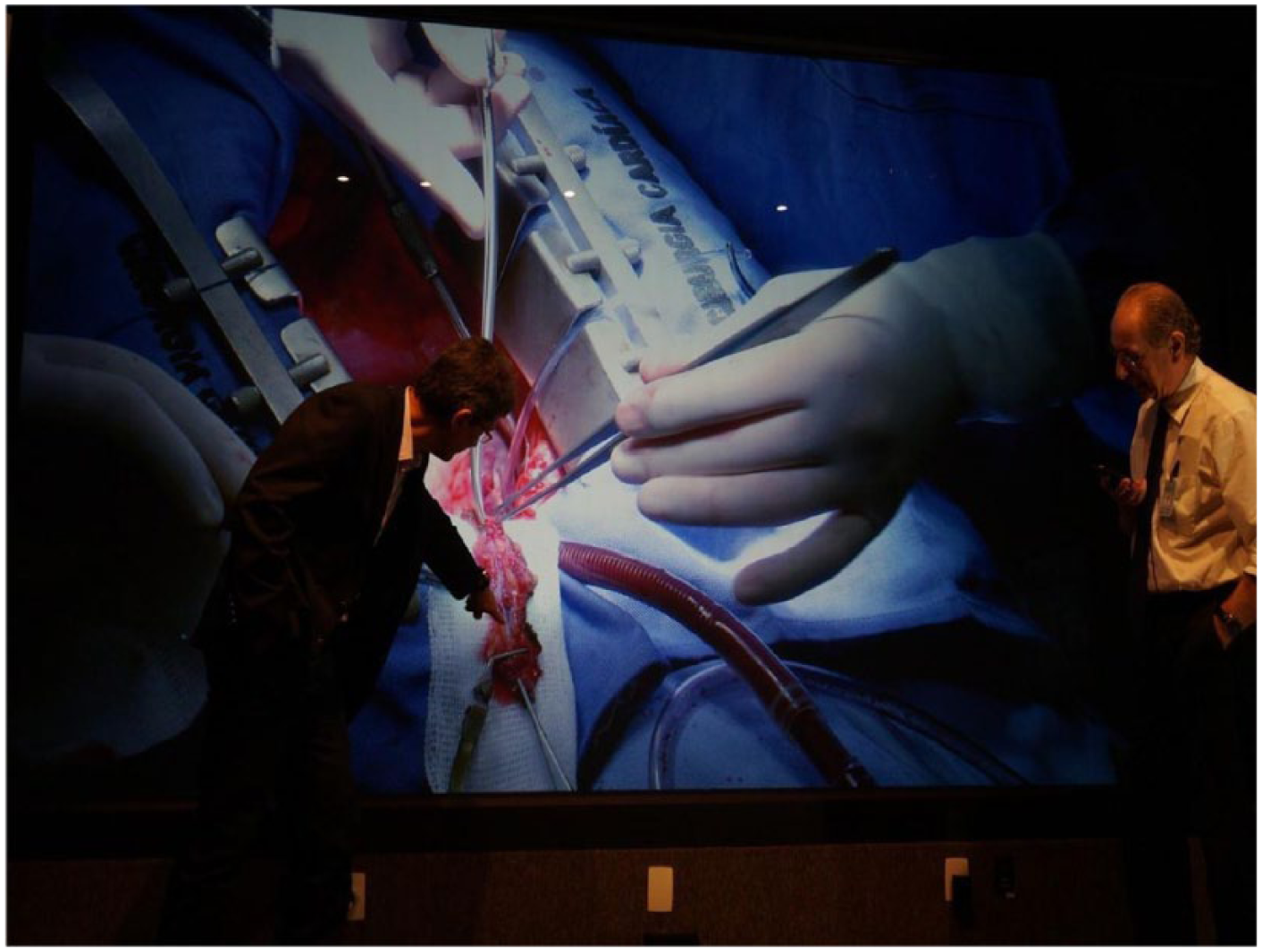
4K image from the Onofre Lopes University Hospital cardiac surgery.
The academic network provided by the ANSP (An Academic Network in Sao Paulo) and RNP (The Brazilian National Research Network Agency), were connected to the Global Lambda Integrated Facility (GLIF) using a 10 Gigabit per second connection fully dedicated to the venue. A second experiment was the transmission of a cataract surgery from the Paulista School of Medicine at the São Paulo Federal University to the School of Medicine at the University of São Paulo, during the CineGrid Brasil Workshop in August 2014. Conducting these experiments required a multidisciplinary team that included physicians, filmmakers, computer scientists, and network engineers reaching a total of 60 researchers distributed globally. 19
The first part of the experiments is similar to that made by Comandon and Painlevé; it is the adaptation of the microscope to the camera, using instruments specially built for this project. To capture the imagery, a microscope for optical surgeries was used, designed with a special feature that allows for the adaptation of a secondary microscopic viewer system. To capture and to stream the surgery image, it was necessary to connect a 4K camera to a secondary viewer system, and as the microscope does not have any adapter, a special connector was created using a three-dimensional (3D) printer to hold the camera to the microscope. The second part of the experiments is similar to B.J. Duarte’s recommendations: positioning cameras, thinking about light and props: in this case, framing microscopically an image in which the cinematographer is the surgeon himself. The third part is related to the UHD image processing that can generate around 2 terabytes of accumulated data in 5 minutes of a surgery.
The audience was generally very enthusiastic about partaking in the intimate visual perspective of the doctor over the patient. At the same time other viewers expressed repulsion because of the image’s surgical rawness, indeed an “aesthetic” reaction obviously exterior to the professional expectations of trained medical personnel. For the doctors involved in surgeries, it was a unique opportunity to participate in such an experiment, both for teaching reasons and for having their work recorded.
In the case of the experiments in which the authors are involved, there are moments of great resemblance to Duarte’s complaints regarding funding. It is a long time since research was funded by King’s will as was Almeida’s, nor is Brazilian research under popular scrutiny and engaged by Royal policy. However, national research agencies have denied the author’s projects simply stating that they do not finance films, despite excellent peer review analysis in the granting process. Some proposals were denied for the reasons that the grantors do not recognize scientific films as “science” and, on the other hand, the cultural public reception has considered the films too “technological.” The existence of the films produced by the authors’ group is due to the recognition of the scientists involved in the experiments that cinematics and computation is a necessity for collaboration and data sharing, so they include our contribution when allocating budgets. Cinema is an extension of their research, but not an end of its own; cinema is not being funded as cinematic research.
5. Conclusion
Hospitals and doctors have long produced movies for training younger physicians and educating patients, often streaming and blogging videos on hospital websites for additional marketing reasons too. The point of the experiments presented here is not the same, because there is no commercial commitment to the success of a final cinema object to be marketed; in principle, the recent projects are not video propaganda for doctors or hospitals. Instead, the goal is to stimulate a conversation among the integrated fields and foment the opportunity to further develop research and thinking about future applications of ultra high resolution streamed video. Computer scientists will test their knowledge, producing solutions for challenges discovered, network engineers will test their connections and prevent future application failures, medical practitioners will record their research and teach other doctors through the special opportunity to “see the master” at work and watch previous procedures and techniques in order to capture the mistakes and successes of surgery frame by frame, in ultra high resolution.
In addition to the debate about the aesthetics and the beauty of the images as mentioned earlier in the discussion of Bazin, Sabon, Duarte, and others, these ultra high resolution streaming videos are an undeniable the register of an age. 20 Yet, watching Doyen’s films today is a singular cinematic experience. In Luxembourg, the curatorship experienced challenges with the decision to screen Doyen’s films for a non-specialist audience. Aware of the spectacle implied by cinema, the curators decided to re-exhibit the films that were shown in 1900 at the same theater, at that time “only for gentlemen,” and considered it a paradox to show such ruthless “real” images in the context of political correctness of the twenty-first century. Thus, they decided to relieve some of the psychological and political effects of the surgical images with the counterpoint of burlesque and comic procedures originally devised by Doyen. They also distributed vomit paper bags for the audience comically anticipating the tensions audiences face due to the rawness of Doyen’s images (Berteme and Dahlen, 2012: 97–100). The brutality of the open human body, and questions of cinematic composition once again suggest representational limits in moving images for the film spectator.
The encounter between computer science and human–computer interface researchers that aims to improve the relationship between medical students and the doctors, and especially among medical researchers, is still under development. Technologically, for the cinema field, beyond the real time surgery performance that was captured, we are left with huge (in terabytes) and often boring (in terms of duration) video recordings, that is, many hours of a surgical video to be edited and transformed into what it is more commonly called a “movie,” for history, education purposes or, for cinematics. In these times of big data, one of the contemporary challenges to be faced is how to deal with the “excess” of the material filmed, both in quantity and related archival problems as well as the visual quality. The latter is especially the case for medical cinema when high resolution drives the image’s rawness toward excessive reality. In other words, what will be saved as the future’s register of this moment, and what aspects of the composition and aesthetics of the present scientific cinematic experience will remain to represent our current time.
Footnotes
Funding
The author(s) disclosed receipt of the following financial support for the research, authorship, and/or publication of this article: The English review of this essay was supported by a MackPesquisa grant.