







Abstract
Genetically modified organisms have been at the centre of a major public controversy, involving different interests and actors. While much attention has been devoted to consumer views on genetically modified food, there have been few attempts to understand the perceptions of genetically modified technology among farmers. By investigating perceptions of genetically modified organisms among Brazilian farmers, we intend to contribute towards filling this gap and thereby add the views of this stakeholder group to the genetically modified debate. A comparative analysis of our data and data from other studies indicate there is a complex variety of views on genetically modified organisms among farmers. Despite this diversity, we found variations in such views occur within limited parameters, concerned principally with expectations or concrete experiences regarding the advantages of genetically modified crops, perceptions of risks associated with them, and ethical questions they raise. We then propose a classification of prevailing profiles to represent the spectrum of perceptions of genetically modified organisms among farmers.
1. Introduction
Science and technology (S&T) play an increasingly central role in the modern world, with a strong influence on political and economic relations and major social impact. Despite surveys in various countries showing optimism on the part of society with regard to S&T (European Commission, 1997; Gaskell et al., 2003, 2006, 2010; Luján and Todt, 2000; Ministério da Ciência e Tecnologia (MCT) and Museu da Vida, 2006, 2010; MCT and CGEE, 2015), there are technological applications that evoke distrust, anxiety and rejection in certain sectors of society, sometimes interfering in their development and weakening the fragile relationship between science and society. Among them are genetically modified organisms (GMOs), which have been at the centre of a major public controversy over the last decades. Popular rejection of GMOs in Europe has been responsible for restricting the sale of genetically modified (GM) food, imposing labelling of products made by GM processes, and stopping commercial cultivation of GM varieties within these territories (Augoustinos et al., 2010; Cressey, 2013; Hosseini and Rezaei, 2011; Knight, 2008; Todt et al., 2008).
The public debate surrounding GMOs involves various stakeholders: scientists, farmers, consumers, government officials, parliamentarians, multinational companies and others. Among them, there is a wide spectrum of positions, ranging from fervent critics to enthusiastic advocates of GM technology, and from a short-term vision regarding their potential benefits and risks to concern with long-term impacts. A better understanding of such views has been the aim of academics (e.g. Einsiedel et al., 2001; Knight, 2008; Luján and Todt, 2000; Ricroch and Jesus, 2008; Shaw, 2002; Veltri and Suerdem, 2013), decision makers (European Commission, 1997; Gaskell et al.,2003, 2006; Horlick-Jones et al., 2007), non-governmental organizations (NGOs) and social movements (IBOPE, 2001, 2002, 2003; Pimbert et al., 2011; Toni and Von Braun, 2001). Regardless of the vested interests behind some of these efforts, they have been important sources of data and insight about public attitudes towards biotechnology. Initiatives such as these can also be useful in formulating and evaluating public policies in the sector. Finally, they may be part of a wider movement for public engagement with science, which aims to encourage a more active participation of society in scientific debates (Holliman et al., 2009; Stilgoe et al., 2014).
In the context of these efforts and beyond, disproportionate attention has been given to the opinions of the end consumers of GM food compared to the views of the primary consumers of this technology (Hall, 2008). Farmers are directly affected by the spread of GM crops and have an important responsibility for their future. Their absence from the discussions and the limited academic interest in the views of farmers regarding GM crops amount to an important missing element in the debate and policymaking in the sector (Guehlstorf, 2008; Hall, 2008).
Silencing of this group has also allowed other interest groups to speak on their behalf for their own ends. Organizations concerned with spreading the technology, for example, tend to emphasize the benefits of GM crops for farmers, often relying on absolute figures with regard to the adoption of the technology in agriculture (James, 2013; Monsanto, 2014; Syngenta, 2014). For NGOs and social movements critical of GM crops, the promised benefits preached by advocates of GMOs are illusory, particularly for producers in developing countries (Friends of the Earth International (FOEI), 2006; Soil Association, 2002). According to them, GM crops present new threats to producers, such as the development of super-weeds and contamination of conventional crops. The charging of royalties and the ban on keeping seeds for future harvests constitute, in their view, a violation of the farmers’ rights and makes them more dependent on the biotech companies (De la Perrière and Seuret, 2000).
Rather than trying to resolve the disputes between different interest groups, this article brings together the results of research involving Brazilian small-scale farmers and scholarly evidence on farmers’ perceptions of GM crops, to identify views regarding the subject among this stakeholder group, and to propose a classification of prevailing perception profiles. Rather than trying to understand whether the majority of farmers have positive or negative attitudes towards GMOs, we wish to better understand their views on the subject. We also want to understand what new/different issues and arguments these actors add to the public debate on GMOs and what role they play in their perceptions on the topic.
2. Studying Brazilian small-scale-farmers’ perceptions of GM crops
Brazil, with a powerful agriculture sector and an important position in the global market of agricultural products, plays a central role in the development of crop technologies, including GM crops. Since 2009, the country ranks second, behind the United States, in GM farming, with 44.2 million hectares devoted to the cultivation of GM varieties of soya (principally), maize and cotton (James, 2015).
However, the entry of this technology into Brazilian agriculture was troubled. Controversies in the country regarding GMOs began in the 1990s, with the first attempts at commercial use of GM seeds on Brazilian territory made by Monsanto. A legal battle headed by the Brazilian Consumers Protection Institute and Greenpeace succeeded in blocking commercial GM crops and delaying legal authorization for almost 7 years. Despite the legal impediment, it was revealed in February 2003 that a significant portion of Brazilian soya was GM due to illegal cultivation of GM seeds in the south of the country, smuggled from Argentina – where GM soya was approved in 1996. A heated debate followed until 2005, when the new Biosafety Law was approved. This gave the green light to the commercial production of Monsanto’s RR soya and created mechanisms for a case-by-case evaluation of applications to produce other GM varieties in the country (for a more complete account see Almeida et al., 2015; Almeida and Massarani, 2011, 2012 and Bauer, 2006).
Clashes over the drafting of the new Biosafety Law and the approval of GM crops for commercial purposes involved various pressure groups, including the ruralist group in Congress, biotechnology companies, and research institutions on the pro-GM side, and environmental and consumer NGOs and social movements opposing. Brazilian consumers were consulted through national surveys that showed widespread rejection of the immediate release of GMOs (IBOPE, 2001, 2002, 2003). A national survey held in 2015 also expressed public concern towards GM crops (MCT and CGEE, 2015).
Although farmers, particularly large-scale farmers, were represented by the ruralist group in Congress and many lobbied for the release of GM crops, there were few attempts – whether academic, governmental or non-governmental – to understand farmers’ perceptions of GM technology. In order to help fill this knowledge gap and bring the voices of this important stakeholder group to the public debate on GMOs, we designed a study to investigate the views of Brazilian small-scale producers on the subject. For this purpose, we conducted 15 focus groups, involving 110 small-scale farmers, in three Brazilian states – Acre, Paraná (PR) and Rio Grande do Sul (RS), between February and November of 2006.
Following international guidelines (Barbour, 2007; Kitzinger, 1995), five focus groups were conducted per state, comprising between 5 and 11 participants each. Farmers were recruited by local research collaborators, through agricultural cooperatives, public companies for technical assistance and rural extension, farmers associations, social movements and state secretariats of agriculture. The only selection criterion was to be owners of lands no bigger than 100 hectares of productive area. The farmers themselves chose the focus group sites, which ranged from farmers’ houses, agricultural cooperatives, city councils and others. The length of the conversations – ranging from 34 to 121 minutes – was also at the discretion of the farmers, who were encouraged to speak whatever they thought relevant on the subject, even when they were not familiar with it.
In February 2006, when our fieldwork began, the biosafety law had been approved in Brazil for less than a year, after a long and contentious battle. Our work captures therefore a crucial moment in the debate. On one hand, growing Monsanto’s GM soya ceased to be an illegal act; on the other, royalties began to be officially collected. Farmers had to rethink their choices.
Field research areas were chosen for their characteristics regarding GM crops, allowing us to show to some extent the diverse situations in Brazil. RS and PR are neighbour states that have agriculture as the basis of the economy and are located in the South, where GM soya spread from seeds smuggled from Argentina. Although both states were under anti-GM governments in the late 1990s and early 2000s, they followed different paths in relation to GM crops. In RS, soya spread rapidly in the late 1990s. In 2004, the state accounted for 90% of the GM soya produced illegally in Brazil (Futema, 2004). In PR, the anti-GM government made several attempts, including applying local legislation and vigilance, to restrain GM production in the state, delaying widespread adoption of GM soya in its territory (Pelaez and Albergoni, 2004). Acre, in the North, integrates the Amazon, protected by a series of environmental regulations. Its main economic activities are linked to the forest and are predominantly extractive. When the fieldwork was held, GM crops had not yet been introduced in the state.
The concentration of land into large farms is an old and persistent social problem in Brazil. Since 1985, farms with more than a thousand hectares occupy 43% of the total area of agricultural establishments in the country, while those with less than 10 hectares represent 2.7% of the total area (Instituto Brasileiro de Geografia e Estatística (IBGE), 2006). Although small-scale farmers occupy a relatively small percentage of the total producible land in the country, they generate 47.3% of the total agribusiness’ revenues in Brazil (IBGE, 2006). We chose to work with this group of farmers because they account for a numerical majority in terms of Brazilian agriculture and at the same time an underprivileged minority in terms of access to information, technical assistance and voice in agricultural governance.
The 110 farmers who make up the corpus of this study, although not a representative group of Brazilian agriculturists, conform to the profile of the Brazilian small farmer outlined by the country’s Agricultural Census (IBGE, 2006), especially in terms of gender distribution, educational level and property-size. They are 82 men and 28 women, between 17 and 69 years old, with low levels of education – more than 60% attended only elementary school. On land ranging from 1 to 110 hectares, 1 they plant different types of crops for their own subsistence, for sale in local markets and in the system of agricultural cooperatives for exportation. Some of them grow GM soya – the only GM crop legally available in Brazil in 2006.
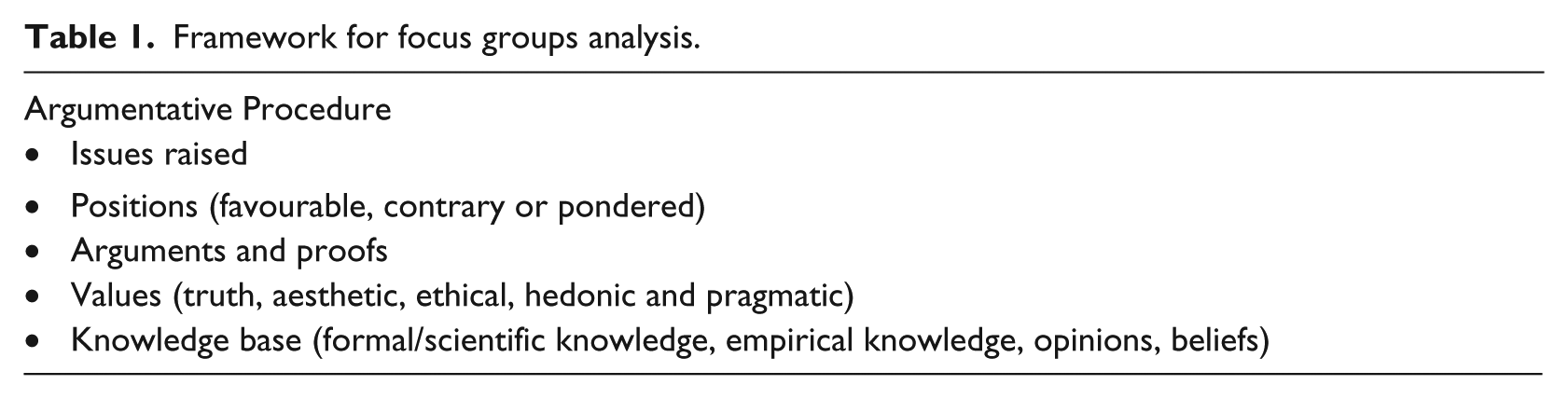
The focus groups were recorded, making a total audio time of 857 minutes, and transcribed. Data were analysed on the basis of the Semio-linguistic Theory of Patrick Charaudeau (1992, 2008b) particularly on the argumentative mode for the organization of the discourse (Charaudeau, 2007, 2008a). According to Charaudeau, the individual involved in an argumentative process engages in a triple discursive activity. First, he or she establishes the issue(s) to be discussed/questioned; this is the act of problematizing (problématiser). Then, he or she takes a stand on the issue(s), which is the positioning act (se positionner). Finally, he or she presents arguments/proofs to justify and reinforce his or her positions, trying to convince others of their pertinence. In this final act of proving (prouver), different types of knowledge and domains of values are mobilized. Charaudeau identifies two types of knowledge at play: savoirs de connaissance and savoirs de croyance. 2 The savoirs de connaissance is outside the individual; it is an external, verifiable truth, imposed on him or her. This knowledge may be scientific, proven according to the scientific method, or it may be empirical knowledge, based on experience. The savoirs de croyance lies within the individual; it is an inner, unverifiable truth that can be shared, assessed and judged. This type of knowledge can be divided into other two: knowledge of revelation, which expresses a belief (religious, ideological or doctrinal) to be honoured, and opinion, which can be individual or collective and is open to discussion. The values mobilized in the argumentative procedure can belong to five different domains: (1) truth, (2) aesthetic, (3) moral (or ethical), (4) hedonic, and, finally, (5) pragmatic. Following this theoretical framework, we identified recurrent issues and those that gave rise to a greater amount of discussion among farmers during the focus groups, the varied views they presented and the arguments they posed to validate and reinforce their positions, considering also the values and types of knowledge mobilized during the argumentative procedure. Table 1 outlines of the methodological approach adopted for the focus groups’ analysis.
Framework for focus groups analysis.
3. Main results and comparative data 3
In this section, we will compare the results of our research in Brazil with data from other studies on the perceptions of farmers regarding GM crops conducted in the same and other countries. We are aware that the contextual and socialdemographic differences are large and that this could weaken the comparison. Nonetheless, we were struck by the fact that, regardless of these differences, data comparison reveals common patterns of perceptions. This led us to a classification proposal of perception profiles among farmers, which we present in the next section. It is also important to mention that although we have identified distinctions among data from each of the geographic contexts researched in Brazil, for the purpose of this article, we will focus on the common patterns of perceptions, leaving the differences to be presented in a future work.
General attitudes towards GM crops
We noticed that the strong polarization that marks the public debate on GMOs is not as present in the views of the farmers consulted, which are in general more nuanced. We encountered a complex set of opinions – constructed from a series of reflections, doubts and contradictions expressed throughout our conversations – going well beyond the radical positions for or against GM products, and this tallies with other qualitative studies on attitudes to GMOs among farmers and consumers in other countries (e.g. Augoustinos et al., 2010; Dietrich and Schibeci, 2003; Einsiedel et al., 2001; Hall, 2008; Marris et al., 2001 Parales-Quenza, 2004; Veltri and Suerdem, 2013).
We observed acceptance of the technology among some of the Brazilian farmers consulted, confirming somewhat the optimistic views revealed by studies of farmers in the United States (Chimmiri et al., 2007; Darr and Chern, 2002; Kondoh and Jussaume, 2006; Van der Sluis and Van Scharrel, 2002), Argentina (Vara, 2005), Colombia (Zambrano et al., 2011) and also in Brazil (Lima, 2005). On the other hand, we also identified views which were more critical, nearer to those shown in studies carried out, for example, with producers in Scotland (Hall, 2008), New Zealand (Cook and Fairweather, 2004), India and again in Brazil (Pimbert et al., 2011; Toni and Von Braun, 2001). In our view, however, the most interesting aspect is that the majority, even when recognizing some of the benefits of GM crops, holds reservations with regard to aspects of the technology. For example, some had a definite positioning on a specific GM crop, but showed different opinions on other varieties. Others opposed a particular application of biotechnology, but considered other uses acceptable. Still others started the conversation with a vision and changed their minds throughout the discussion. Like the Scottish farmers surveyed by Hall (2008), Brazilian producers, rather than adopting definitive attitudes in relation to GM crops in general, tend to weigh up the pros and cons of different varieties, taking a pragmatic view in the face of the possibilities presented by these products.
Main issues, positioning and arguments
Of the topics discussed in the focus groups conducted in Brazil, the ones that generated the greatest amount of discussion and were most spontaneously raised by participants were those related to the advantages and disadvantages of GM soya and the risks and concerns related to it. These issues are part of the broader debate on GMOs, but because they directly implicate the farmers, our participants raised important points that have been left out of the wider debate.
Among the arguments in favour of GM soya, the most common were the fall in production costs, with the reduced use of agrochemicals, the easier application of herbicides, and better weed control, advantages regarding GM crops also identified by farmers in other studies (Carpenter and Gianessi, 1999; Chimmiri et al., 2007; Darr and Chern, 2002; Hall, 2008; Kondoh and Jussaume, 2006; Lima, 2005; Van der Sluis and Van Scharrel, 2002; Vara, 2005). The greater return on certain GM varieties, noted by producers in other contexts (Chimmiri et al., 2007; Hall, 2008; Van der Sluis and Van Scharrel, 2002), was not supported by the farmers we consulted. In any event, not all of them perceived the advantages mentioned in the same way. We identified distinct degrees of satisfaction regarding GM soya even among producers who grew the same variety, in the same region, which leads us to conclude that other factors – from periods of droughts to the exchange rate of the dollar, including the level of technical assistance and production infrastructure – have an influence on production results and, consequently, on farmers’ perception concerning this crop technology.
The arguments against GMOs were more varied. As also shown by other studies (Chimmiri et al., 2007; Guehlstorf, 2008; Hall, 2008; Pimbert et al., 2011; Van der Sluis and Van Scharrel, 2002; Zambrano et al., 2011), farmers’ worries concerning GM crops go beyond financial and practical issues – despite the fact that these carry more weight. The payment of royalties to the companies that own the technology and the ban they impose on replanting their seeds in ensuing seasons are mentioned – in ours and other studies – as important disadvantages in adopting GM varieties.
Among the main risks posed by GM crops, in the views of farmers in our and other studies, are the contamination of conventional crops, which meant financial penalties for the producer, and greater resistance of weeds to herbicides used in the growing process (Hall, 2008; Pimbert et al., 2011; Toni and Von Braun, 2001), a real problem for some of the GM producers consulted in our study as well as in previous studies carried out in Brazil (Silva, 2009), Mexico (Dalton, 2008, 2009; Piñeyro-Nelson et al., 2009; Quist and Chapela, 2001), Chile (Estrada, 2008) and Uruguay (Galeano et al., 2009).
As shown by ours and other studies (e.g. Darr and Chern, 2002; Hall, 2008; Pimbert et al., 2011; Toni and Von Braun, 2001; Van der Sluis and Van Scharrel, 2002), uncertainties regarding the risks to health and environment posed by GMOs also affect farmers. We observed, however, that farmers deal with this issue in their own way. If, on one hand, controversy around these potential risks has led to doubts and a loss of confidence in the scientific community among producers – ‘They know, but they do not want to tell us’, said one producer in Ivaí, Paraná – on the other, many are unable to see how GM crops could be harmful. The fact that they use a less aggressive herbicide – in comparison with those used in growing conventional crops – and that they notice a positive effect on the environment around them because of such use makes them believe that these crops are good rather than bad.
Farmers with more critical attitudes towards GM crops, and often associated with social and rural movements, added to the list of arguments against them, their view that the spread of these crops will lead to a greater dependency of farmers on biotechnology companies, to the end of traditional seeds, and to destabilization of country life, threats also identified by farmers in other studies (Pimbert et al., 2011; Toni and Von Braun, 2001).
Only a small group of producers argued that GM products are unacceptable, that they are not ‘natural’ and that the technology goes against the desire of God.
Values, worldviews and knowledge base
We observed that when discussing biotechnology in a general way, farmers tended to view the subject in a less pragmatic and more moralistic manner than when arguing about GM crops specifically. Regarding medical uses of biotechnology, for example, even though farmers generally considered them acceptable, due to their perceived benefits, they raised a number of ethical questions associated to these applications that were almost absent from their attitudes towards GM soya. This attitude corroborates the assessment of Luján and Todt (2000) to the effect that, when individuals consider the uses of biotechnology in broader terms, they tend to make moral judgments, but when the question is related to a concrete use of the technology, utilitarian considerations prevail.
Although religious beliefs have been identified in other studies as a factor associated with more negative views on biotechnology among consumers (Nielsen et al., 2002), we observed among farmers who declared themselves religious an attitude of openness regarding the various uses of biotechnology. For the majority, if GMOs have practical benefits and are not harmful to health or the environment, they do not offend religious principles. A minority of very religious individuals, however, expressed strong negative views on GM plants and other biotechnology applications.
These more wide-ranging discussions on the uses of biotechnology and their interaction with religion brought to light not only positive attitudes towards S&T but also more ambivalent feelings regarding its impact, noted also in surveys of public opinion on S&T carried out in Brazil (MCT and Museu da Vida, 2006, 2010; MCT and CGEE, 2015) and elsewhere (European Commission, 1997; Luján and Todt, 2000). Here again only a small group of very religious farmers expressed a negative view of scientific development as a whole. Such a minority is also present in other contexts, as shown by Nielsen et al. (2002). In the opinion of this group, manipulation of nature is wrong in itself, regardless of motivation.
As to the knowledge possessed by farmers regarding GMOs, we observed the same situation noted in other studies, of both farmers and consumers: level of formal knowledge about the techniques that enable the development of these products is usually low (European Commission, 1997; Todt et al., 2008). In the specific case of RR soya, some farmers showed they were aware that scientists had manipulated the genes of the plant to make it resistant to glyphosate, but none showed a knowledge of how exactly this is done. Lack of understanding of this process and of the scientific concepts behind it is a matter of concern to scientists and political authorities, who tend to associate it with public rejection to the technology (Cuppen et al., 2009; Hosseini and Rezaei, 2011). However, it has become clear from our study, and beyond (e.g. Castelfranchi et al., 2013; Dietrich and Schibeci, 2003; Marris et al., 2001; Midden et al., 2002; Shaw, 2002; Veltri and Suerdem, 2013), that this lack of technical knowledge is not sufficient to explain the different views on GMOs. In the particular case of Brazilian small-scale farmers, we observed that producers with the same level of education and formal knowledge on GMOs might hold different perceptions concerning this technology.
4. Patterns of perceptions and distinct profiles
Our data show that there is no such thing as a single opinion on GMOs among farmers, even when they share similar social, demographic and agricultural conditions. We believe, therefore, that any attempt to reconcile the different perceptions and build a single viewpoint will necessarily amount to a distortion and simplification of important and complex aspects of the debate over GMOs. On the other hand, we have found that, in broader terms, the repertoire of attitudes on GM crops among farmers is frequently repeated, both in similar and in different contexts. Our study suggests that these repertoires vary less according to the different contexts of farmers and more depending on the knowledge base and values that they bring to bear when they discuss GMOs, as well as their willingness to weigh risks and benefits and general attitude towards S&T.
Based on these observations, we propose a classification of profiles (Table 2), which we believe to represent the large spectrum of repertoires of perceptions regarding GMOs among farmers identified not only in our study but also in a wider selection of research making up the literature on the subject, regardless of differences in social, economic and geographical contexts existing among the farmers consulted.
Farmers profiles regarding GM crops.
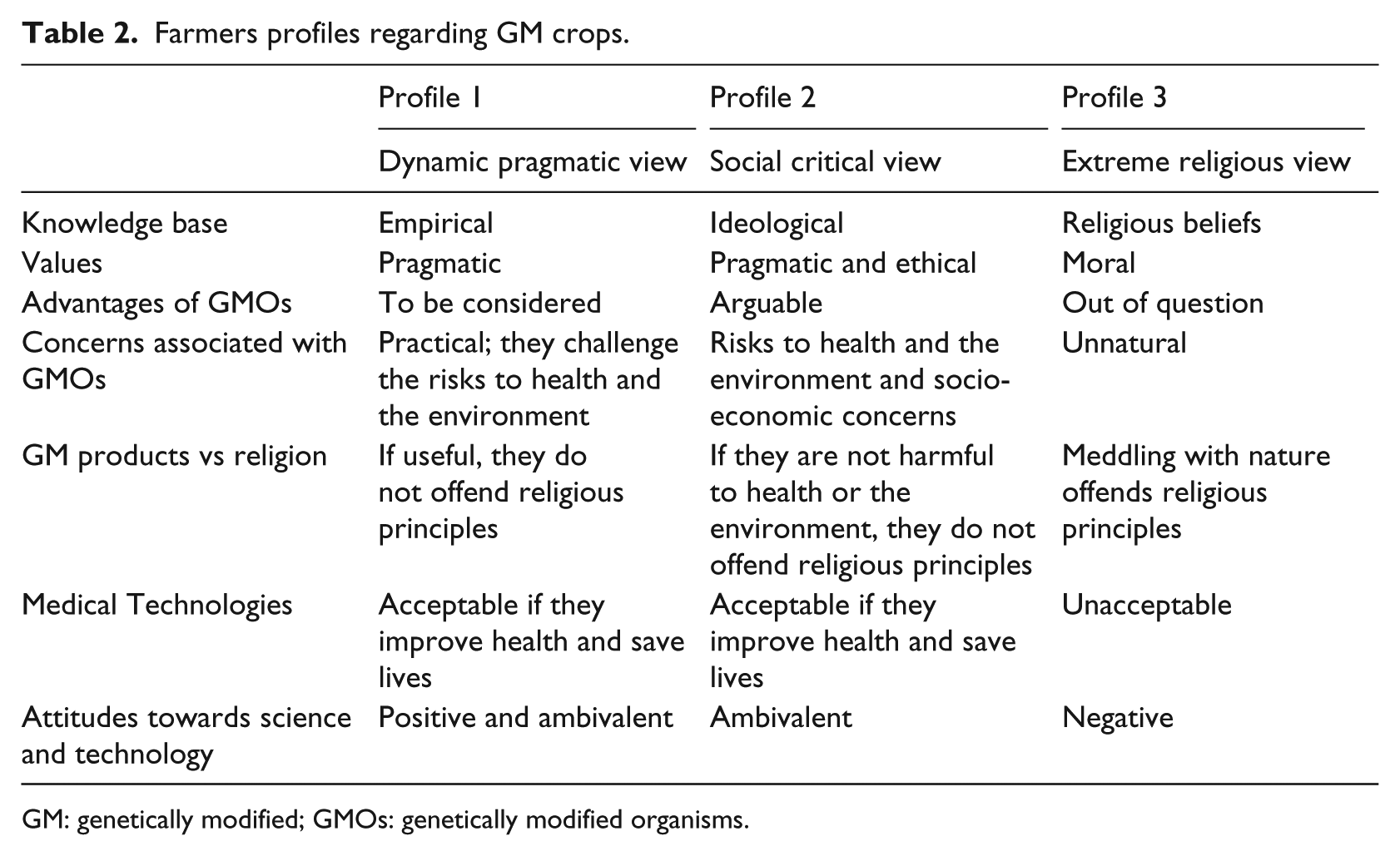
GM: genetically modified; GMOs: genetically modified organisms.
Profile 1: Dynamic pragmatic view
We have used the term ‘dynamic pragmatic view’ to denote the view marked by pragmatic values and empirical knowledge. When they discuss GMOs, farmers within this profile tend to seize on their experience as country producers. Even if they have not heard of these plants before, they talk about them based on their experiences with products that they judge similar. When they grow or have knowledge about a specific GM variety, they tend to focus the debate on this particular plant, sharing their knowledge about it, instead of generalizing.
In the debate over GM crops, what most concerns the farmers within this profile are the concrete advantages and disadvantages of cultivating them. Those with real prospects of growing GM crops tend to consider each variety individually, weighing up costs and benefits and using principally economic and practical criteria: Will it reduce my costs? Will it resolve the practical problems of growing crops? Will it give me less work? Will there be more money left over after the harvest? The disadvantages, concerns and risks that they associate with GMOs are also, in most cases, of a pragmatic nature, related to costs, the market, the planting of each specific variety and to the infrastructure available for production and sale. These farmers challenge the potential risks posed by GMOs to health and environment because they cannot conceive how they could be harmful if a less toxic herbicide is used in their cultivation.
They do not necessarily see a conflict between science and religion: if the technology is useful, it is welcome. They also tend to accept medical uses by this logic: if they lead to an improvement in health and save lives, they should be encouraged. To this extent, they present a generally positive view of science, advocating the development of research and recognizing the fruits of scientific progress. However, they can also question its limitations and its impact on society, and sometimes present an ambivalent view regarding S&T.
This was the predominant profile among farmers we consulted in Brazil, being represented in the three studied contexts and including farmers within different demographic conditions, for example, a woman aged between 46 and 55 from Bujari (Acre), owner of an area of 1 hectare and who did not attend school; a man from Palmeira (Paraná), in his 40s, with high school education, planting on between 11 and 50 hectares of land; and another male farmer aged 45–55, from Não-Me-Toque (Rio Grande do Sul), with incomplete primary education and owner of an area of 60 hectares. Only the one from Não-Me-Toque grew GM crops (RR soybean).
Scottish farmers described by Hall (2008) as being ‘benefit believers’, though operating in a context that is very different from that of Brazilian farmers, fall neatly within this profile. In both groups, the producers tend to favour the idea of GMOs, though not blindly; they are aware of the potential benefits of GM plants, such as reduced costs; they are concerned with food safety, which does not prevent them from adopting the technology; and they are not apprehensive of the risks posed by GMOs for the environment. They are also of an optimistic and adventurous disposition with regard to new technologies.
Profile 2: Social critical view
The ‘social critical view’ is represented by farmers who have a more analytical outlook towards GMOs. Although this profile was distributed unevenly in the different contexts analysed, it is prevalent among members of NGOs and social movements. It is rooted in ethical values, especially in the ideological nature of knowledge circulating through these movements. When they talk about GMOs, they tend to stress their social impact and judge them in terms of right and wrong. In their discourse, they express the movement’s ideas and propagate their opposing positions on GM crops.
While the ‘dynamic pragmatic view’ focuses on specific crops and their practical and economic advantages and disadvantages, the ‘social critical view’ revolves around the risks that GM crops in general pose to society. These producers are more convinced of the harmful effects of GMOs on health and the environment. In addition, they point to a series of socio-economic dangers that these plants represent for producers and consumers. They vigorously challenge the advantages stressed by advocates, arguing that the benefits claimed are illusory.
Even though they extend their criticisms to all types of GM varieties, farmers within this profile remain open to other uses of the technology. As regards the medical uses of GMOs, they hold similar views to those of the farmers in Profile 1: if they improve health and save lives, they are deemed acceptable. As regards the relationship between GMOs and religion, they argue that, if the technology is not harmful to health or the environment, it does not offend religious principles. In general, they have ambivalent views regarding science, seeing both positive and negative sides of its development.
Some aspects of these views are shared by the ‘risk perceivers’ described by Hall (2008), such as concern with the potential risks of GMOs and questioning of the benefits involved in their cultivation. Both are reluctant to adopt the technology, preferring to stick to other agricultural methods. However, among the Scottish farmers within this profile, perceptions of GMOs tend to be more moderate than those of the members of social movements consulted in our study. They do not rule out all the potential advantages, nor adopt a position that is against these products a priori. In fact, these characteristics are nearer to the views of the farmers in our study who have a more critical attitude towards GMOs but do not belong to any social movement. These farmers are more politicized and wish to understand the various issues that run through the debate on the subject.
Profile 3: Extreme religious view
The ‘extreme religious view’ is characterized by the prevalence of moral values and religious beliefs, which tend to shape farmers’ (within this profile) attitudes towards GMOs and their opinions on S&T – generally negative.
Advantages and disadvantages of GM crops are irrelevant for these farmers. They argue in favour of ‘natural’ products and processes and reject those they consider transformed by humankind. Farmers in this group tend to position themselves against research, medicines, and surgical procedures, whether or not they involve GMOs. They disapprove of biotech applications in agriculture or in medicine. In their view, man should not try to change the world created by God.
Although this profile represents a small minority in our study, it is present in the three contexts studied. We can fit within this profile, for example, an illiterate male farmer from Wilson Pinheiro (Acre), aged 26–35 years, who owns 6.9 acres of land; a male farmer in the same age group, who lives in the settlement of Contestado (Paraná), where he plants vegetables, fruits and grains in a community garden; and a female farmer, from Resettlement Nova Esperança (Rio Grande do Sul), aged 45–55 years, with incomplete high school education, who plants vegetables, legumes and fruits in 12 hectares.
We note a number of similarities between the members of this group and those classified under the heading of ‘traditionalist opponents’ by Nielsen et al. (2002). Both groups consist of people who have had little formal education, are very religious, and dislike weighing up advantages and disadvantages of GM technology. Their attitudes are founded on moral and religious values and, in their opinion, interventions in nature are wholly unacceptable.
5. Discussion and concluding thoughts
Data from our study of perceptions regarding GMOs among Brazilian small-scale-farmers, which is of a qualitative and exploratory nature and restricted to specific contexts, cannot be simply extrapolated and applied to a wider group of farmers. However, by comparing our findings with data from other research with similar objectives, carried out in diverse contexts, with farmers producing on different scales, we were able to identify prevalent characteristics regarding farmers’ perception of GM crops.
As the data gathered in this article indicate, framing the debate on GMOs in terms of groups in favour versus groups against is too simplistic. This polarization, which is forced in public discussions, in the corridors of power and in the media, tends not to be repeated in broader social contexts. People usually see more than one side to the story, weigh up the arguments for and against, and evaluate risks and benefits, in order to form and re-form their opinions. Although some studies on the perceptions of consumers to GM food already show this more nuanced aspect of the debate, there is very little research involving farmers that emphasizes this diversity of views. Our comparative data show that there is a great variety of issues raised and views on GMOs among rural producers, across different conditions and contexts.
We have seen that the introduction of new agricultural technologies such as GM crops poses a number of complex issues for farmers. Some of these issues, such as the potential risks of GM crops to human health and the environment and others of a moral and ethical nature, are also relevant to consumers. But others are specifically pertinent to farmers, such as the new dynamics of work these crops establish, their impact on production, quantity and toxicity of herbicides required for their use, development of weed resistance to such herbicides, contamination problems that may result in fines paid to multinationals, among others. We observed that, on one hand, these practical and economic issues, contrary to what proponents and detractors of GM crops present, are far from consensual among farmers. On the other hand, they play a central role in the constitution of farmers’ perception of GM crops. This implies that farmers in general have a rather pragmatic and short-term viewpoint on GM crops and their perceptions about this technology will vary mostly according to their direct experiences with each crop or their observations of the experience of other farmers.
In line with this reasoning and possibly because they can see more tangible and immediate benefits as a result of their use, farmers tend to express a more positive perception of GM crops than end consumers consulted in Brazil (IBOPE, 2001, 2002, 2003) and other countries (Einsiedel et al., 2001; European Commission, 1997; Institut National de la Recherche Agronomique (INRA), 2000; Joss, 2005). While most consumers do not see the direct benefits of GM food and focus on their concerns on the ethical side of the debate and the long-term impacts of GM technology on human health and the environment (Shaw, 2012), farmers are trying to weigh concrete and immediate benefits and risks of GM crops in their lives. When the risks are not palpable, immediate or visible, it is harder for farmers to perceive them.
According to Knight (2009), most of the literature on public perceptions of GM food has focused on debates such as ‘whether they are natural or unnatural, and whether they challenge the divine order as they are created by humans, not God’ (Knight, 2009: 179). In the case of farmers, we find that although this issue is present in their discourse, it is far from their main concern. In the case of Brazilian small-scale-farmers, for example, we observed that even for those who claimed to be religious GM crops did not necessarily represent a moral dilemma. Only a small minority of extremely religious farmers presented negative views on GM crops based on this argument. Other moral dilemmas raised by consumers in different research contexts, such as equity and social justice (Knight, 2009), tended to be restricted to farmers engaged in social and rural movements. However, we observed that when discussing biotechnology more broadly, instead of specific applications, farmers tended to make moral judgments, confirming a general trend of the public perceptions of biotechnology identified by Luján and Todt (2000).
Finally, the literature reviewed shows that, despite the diverse views farmers present about GM technology, such variation occurs within limited repertoires of discourse. They are characterized less by specific socio-demographic features and more by factors relating to expectations or concrete experiences of the advantages and disadvantages of GMOs, perceptions of the risks associated with them, and moral and ethical questions that they raise. Added to attitudes towards biotechnology and S&T in general and to level of religious belief, these are among the main factors shaping the different perceptions among farmers concerning GMOs.
Therefore, we have suggested the existence of three perception profiles among farmers regarding their views on GM crops: the ‘dynamic pragmatic view’, characterized by empirical knowledge and pragmatic values, relating to views of the actual utility of GM crops; the ‘social critical view’, which emphasizes ethical judgments on the negative impacts of GMOs, especially those which affect society, and the ‘extreme religious view’, characterized by the dominance of moral values and strong religious beliefs, which generally come into conflict with scientific and technological progress.
We encourage other research groups to test the proposed classification in other contexts. Broader analysis of cross-cultural studies on the perceptions of farmers concerning GMOs will allow our proposal to be examined. It would also be interesting to see if there is a relationship between the three profiles and socio-demographic factors such as gender, age and production scale, something we could not analyse in this study, since literature on the subject rarely offers this data and farmers we consulted were mostly middle-aged, male owners of small farms.
In presenting this classification proposal, we do not intend in any way to restrict the wide range of perceptions we and others identified about GM crops among farmers. In each of the proposed profiles, there are different ways of accepting, pondering or rejecting agricultural technology. Our goal is to identify more general patterns of perceptions to contribute to a richer academic and public debate on GMOs, with a greater understanding of the views from those who are in the field of production and therefore have direct contact with GM crops and direct impact on the development of GM technology. We also believe that a better comprehension of what affects farmers’ perceptions of new technologies can help develop more effective strategies of science communication and dialogue designed for this group and perhaps achieve more democratic governance of biotechnology.
Footnotes
Funding
The author(s) disclosed receipt of the following financial support for the research, authorship, and/or publication of this article: This research was funded by the International Development Research Centre - IDRC (grant number 102334-009).