







Abstract
This study sought to determine how the residents of Pohang, Korea, perceive geothermal plants after the 2017 Pohang earthquake by applying social representation theory through a mixed-method approach incorporating qualitative and quantitative research. The residents’ perception of the geothermal plant was largely anchored to their perception of nuclear power plants. At the time of the Gyeongju earthquake in 2016, public discourse on nuclear accidents developed and was thereafter perpetuated by the Pohang earthquake victims via cognitive anchoring. The survey results demonstrated that Pohang residents had a significantly negative opinion on geothermal plants regardless of safety, climate change mitigation, and economic factors. Upon analyzing the respondents’ energy preferences through factor analysis, geothermal power plants were found to aggregate in the same category as nuclear power plants. This result statistically confirms that Pohang residents associate geothermal power plants with the risk discourse on nuclear power plants.
Keywords
1. Introduction
Geothermal energy is recognized as a promising energy alternative in the age of climate change. This energy source is expected to play an increasingly important role in economic development, energy security, and climate change mitigation (Dowd et al., 2011). With the launch of the first enhanced geothermal system (EGS) in Pohang in 2012, geothermal power was spotlighted and welcomed in South Korea. However, as geothermal power plant operations rely on fracturing the deep crustal layer to extract geothermal heat, they might induce earthquakes (Zaunbrecher et al., 2018). Previous studies have highlighted these issues (Ellsworth, 2013; Giardini, 2009), and several geothermal power projects have been abandoned owing to induced earthquakes. Importantly, these seismic events have also caused locals to oppose geothermal energy technologies.
In comparison with neighboring countries, Korea is relatively safe from seismic activity. Yet along with the earthquake in Pohang in 2017 an earthquake with magnitude > 5.0 also occurred in Gyeongju in 2016. Given that Korea has historically experienced few earthquakes, people were shocked by the Pohang earthquake despite its moderate magnitude. Initially, the Pohang earthquake was considered a natural disaster. However, some experts argued that it had potentially been triggered by local geothermal power plant operations (Grigoli et al., 2018; Kim et al., 2018b). The earthquake victims were understandably outraged and actively supported the notion of an induced earthquake. National attention focused on this issue and the government conducted an official investigation. Subsequently, the government investigation team officially announced that the earthquake was indeed triggered by the water injection procedures of the geothermal power plant (Korean Government Commission on the Cause of the Pohang Earthquake (KGCCPE), 2019). Consequently, the social image of geothermal power, which previously had been positive and future-oriented, deteriorated rapidly. The induced earthquake that shocked Pohang residents exacerbated the change in public perception of geothermal plant from a clean/renewable energy source to a potentially devastating threat.
The public has also expressed concern regarding the risks associated with nuclear power plants near Pohang. Overall, eight nuclear power plants are in operation in Ulsan and Gyeongju, the neighboring cities of Pohang, and two new nuclear power plants (Shin-Gori numbers 5 and 6) are under construction.
This study aimed to identify how the residents of Pohang perceive geothermal energy technology in the aftermath of the 2017 earthquake using social representation theory (SRT). The basis of SRT is that people perceive novel objects based on familiarity or previous experience. The Gyeongju earthquake and increased discussion around nuclear power plants in neighboring areas have greatly affected Pohang residents’ perception of geothermal energy. Thus, this study investigated whether the geothermal power plant system, which was originally unfamiliar to the public but widely embraced, became the target of public fear because of the unexpected occurrence of the 2017 earthquake.
The findings of this study will contribute to both the academic and political understanding of public awareness and perception of geothermal power plants and renewable energy policies. Several previous SRT studies have characterized public acceptance of novel energy sources and technologies (Batel and Devine-Wright, 2015; Boudet, 2019); notably, Upham et al. (2015) investigated public perception of shale gas development. Nevertheless, few SRT studies have considered public awareness of geothermal power generation. Moreover, public perception of the potential risks associated with renewable energy sources is poorly understood. This study’s findings will provide policy implications regarding the risk–risk tradeoff problem (Chung and Kim, 2018) encountered when adopting new technology systems to combat climate change.
This study was based on a mixed-method approach that integrated both qualitative and quantitative research. Changes in the perception of geothermal power plants among Pohang’s residents were explored through interviews that were then verified through surveys.
2. Literature review
Risk perception and geothermal energy
Many factors can influence people’s risk perception including hazard characteristics, characteristics of risk perceivers, and their heuristics (Siegrist and Arvai, 2020). Among them, the hazard characteristics of new and emerging technologies have been topics of interest, particularly in the psychometric approach. Many seminal studies have identified a two-dimensional factor space according to whether the hazard characteristics were unknown (new, unknown to science, and delayed) and dreaded (uncontrollable, catastrophic, and involuntary) (Siegrist and Arvai, 2020; Slovic, 1987). In case of new and unknown technologies such as geothermal power plants, even a small accident can elicit great public concern (Kasperson et al., 1988).
As for these new and emerging technologies, trust in technology and their management has a critical influence on people’s risk perception (Siegrist and Arvai, 2020). According to Taylor-Gooby (2006), the extant studies of trust are categorized into political, sociological, and psychological approaches. The political science approaches address the decline of public trust in political institutions and emphasize the significance of democracy (Mouffe, 1993; Nye et al., 1997). The sociological approach varies from the rational actor model (Coleman, 1986) to the structuralization, and cultural approach (Beck et al., 1994; Giddens, 1998; Lash et al., 1996; Wynne, 1982). The trust between experts and lay people is a critical issue here. The psychological approaches identify the detailed components of trust such as competence, care, objectivity, fairness, consistency, and so on, and examine the relationship between individual/institutional trust, decision-making, and uncertainty (Hovland et al., 1953; Lofstedt, 2005; Metlay, 1999; Renn and Levine, 1991).
Recent years have seen a growing body of literature on the risk perception of geothermal power plants. In particular, the potential risks of seismic events induced by these power plants are central to risk perception of geothermal power plants (Ellsworth, 2013; Giardini, 2009; Majer et al., 2007; Pellizzone et al., 2017). Some previous studies compared human-induced earthquakes to natural earthquakes in terms of risk perception, arguing that the public takes human-induced earthquakes as significantly worse than natural earthquakes (McComas et al., 2016). From this perspective, others identified the critical role of the media that shifts the risk perception of geothermal power plants significantly from positive to negative (Dowd et al., 2011; Kunze and Hertel, 2017). At the same time, some scholars have argued that the public risk perception of geothermal power is associated with other energy types. Zaunbrecher et al. (2018) conjectured that public attitudes toward geothermal energy were similar to attitudes regarding nuclear power. Given the aforementioned previous studies, social science approaches to the risk perception of geothermal plants are still quite limited.
Social representation theory and energy
This study was based on the principles of SRT (Höijer, 2011; Moscovici, 1988), a well-known sociopsychological theory used to understand public perception of new technologies, such as genetically modified organisms and renewable energy (Batel and Devine-Wright, 2015; Fischer et al., 2012). SRT aims to understand how people interpret new technologies by analyzing their existing values, ideas, and practices in terms of social representations and the way in which they shape public attitudes toward new technologies.
Central to this theory is that society plays an important role in familiarizing the new and unfamiliar (Höijer, 2011; Moscovici, 1988). Unlike Emile Durkheim’s notion of “collective representations,” the basic societal units in SRT are social groups rather than society as a whole (Moscovici, 1988). SRT also goes beyond microsocial approaches, such as the value-belief-norm theory, which focuses on individual cognitive beliefs (Boudet, 2019). By exploring social interactions and communication between individuals and groups, SRT embraces multilevel perspectives (Levidow and Upham, 2017), meaning that social representations are diverse, plural, and multidimensional but also individual, cultural, and institutional (Batel and Devine-Wright, 2015; Moscovici, 1988). Therefore, SRT considers both stability and change in the perception of new technologies (Batel and Devine-Wright, 2015; Höijer, 2011).
SRT can contribute to the study of risk perception. However, according to Joffe (2003), SRT has posed a critical challenge to the traditional risk perception approach (Slovic, 1987) based on cognitive psychology. SRT goes beyond the “methodological individualism” (Joffe, 2003: 59) of cognitive psychology and focuses on the meaning-making of social groups rather than risk information processing by individuals. It rejects the “deficit model” (Wynne, 1982) of risk communication based on cognitive psychology, thereby viewing the lay people as those who produce risk knowledge with experts rather than those who lack (scientific) knowledge of risks. Moreover, SRT is not interested in whether the public response to risk is erroneous or biased, but instead how and why society forms the social representations of risks, which are always real in the minds of the public (Joffe, 2003: 68). Moreover, SRT stresses the role of memory, images, and symbols in risk perception more strongly than the quantitative psychometric approach. Accordingly, this study combines the two approaches to account for the public perception of geothermal power plants.
SRT presents two core processes to make the unfamiliar familiar: (1) anchoring, a process whereby perception of new concepts is associated with preconceived worldviews and taken-for-granted knowledge, and (2) a process of objectification that makes abstract ideas concrete by transforming them into tangible images and symbols that can be grasped easily (Batel and Devine-Wright, 2015; Höijer, 2011). In this study, anchoring is used to explain the relationship between geothermal energy and nuclear energy. We argue that the public understanding of the geothermal-energy-induced earthquake in Pohang is anchored to their knowledge regarding the natural earthquake in Gyeongju. This anchoring then leads to concerns that another earthquake could cause damage to a nuclear power plant. An earthquake serves as a medium of anchoring to associate geothermal energy risk with nuclear plant risk.
3. Background
Recently, the Korean government allocated substantial resources for research and policy development on climate change and sustainable development. Consequently, support for environmentally friendly energy sources, such as solar, wind, and geothermal energy, has increased steadily since 2000. Geothermal energy attracted public attention due to its advantages when compared with the risks of nuclear power and intermittency of solar/wind power. Local governments also supported the implementation of EGS projects in Korea. Therefore, geothermal energy was regarded as one of the most promising energy sources during the early stages of its adoption.
The first EGS project in Korea began in 2010. The project was undertaken by a consortium comprised of a private company, national research institutes, and universities. This attracted significant attention from the Korean energy sector. Pohang, which is a non-volcanic area, was selected as an optimal EGS site based on existing geothermal data and the regional geographic and socioeconomic conditions (Lee et al., 2010). To generate energy, boreholes up to 4–5 km deep were drilled, and deep geothermal heat was extracted by creating EGS reservoirs through hydraulic stimulation (Yoon et al., 2011).
In 2011, the consortium signed an agreement with the local government to purchase an installation site and obtained permission to build the power plant. The opening ceremony was held in 2012 and the drilling operation commenced immediately after. Two boreholes (PX-1, PX-2) were drilled in 2013 and 2015, respectively. In January 2016, hydraulic stimuli were performed five times on the geothermal nodes (PX-1 and PX-2) to create the EGS reservoirs (KGCCPE, 2019). The Pohang earthquake occurred on 15 November 2017 following the fifth hydraulic stimulation (PX-2) on 18 September 2017. Subsequently, the project was suspended.
Some scientists raised suspicions that the earthquake was induced by the EGS (Grigoli et al., 2018; Kim et al., 2018b). In response, the Korean government established a joint investigation team to examine the cause of the earthquake, which ultimately announced that the Pohang earthquake was triggered by the high-pressure water injection operations of the EGS. The Korean government utilized the term “triggered earthquake” instead of “induced earthquake” to refer to the event. The term “triggered earthquake” was defined by the team as an earthquake that was initiated by anthropogenic activities but was far beyond the spatial range that could have been attributed to human activities alone. In other words, the earthquake was possibly induced by the EGS, but the EGS was not the sole cause.
4. Research method
Research design
This research was based on a mixed-method approach incorporating both qualitative and quantitative analyses. Thematic analysis was applied to the materials collected from interviews, newspapers, and online community posts. Then, we also utilized a quantitative survey to validate the findings of the qualitative research. Thus, an exploratory sequential mixed-method design was adopted (Creswell and Creswell, 2017).
Data collection
First, the media data on the Pohang earthquake and EGS were collected from four national newspapers and two local papers. The newspapers were selected based on their political inclination. Articles that were published between January 2010 and August 2019 were examined. The articles were retrieved via an online search using the keywords “geothermal power plant (EGS)” and “Nexgeo” (i.e. the power plant operator). Articles with duplicated content were excluded. From a total of 417 news articles, 212 articles were from national newspapers (Hankyoreh (20), Kyunghyang Shinmun (50), Chosunilbo (72), and Korea Joongang Daily (70)) and 204 articles were from local newspapers.
Second, we collected the posts from an online community called “Pohang Mom’s Playground” (i.e. the most recognized online community in Pohang). In this community’s web pages, a special bulletin board was opened for Pohang earthquakes. Overall, 243 posts were retrieved from this special bulletin board using the keywords “geothermal power plant,” “geothermal,” and “consortium” (i.e. Nexgeo).
Third, during March 24 to June 14, 2018, semi-structured interviews were conducted with 26 Pohang residents (aged 19-86, 42% female). For our initial interviewees, we searched for people who frequently handled local issues, such as local city councilors and directors of NGOs. Snowball sampling was used to diversify information. Interviews were conducted with various occupational groups, including schoolteachers, bus/taxi drivers, real estate agents, pastors, homemakers, and college students who had experienced the Pohang earthquake. The main interview questionnaires were as follows: (1) earthquake experience and sentiments, (2) earthquake and geothermal power plant, and (3) disaster assistance or compensation.
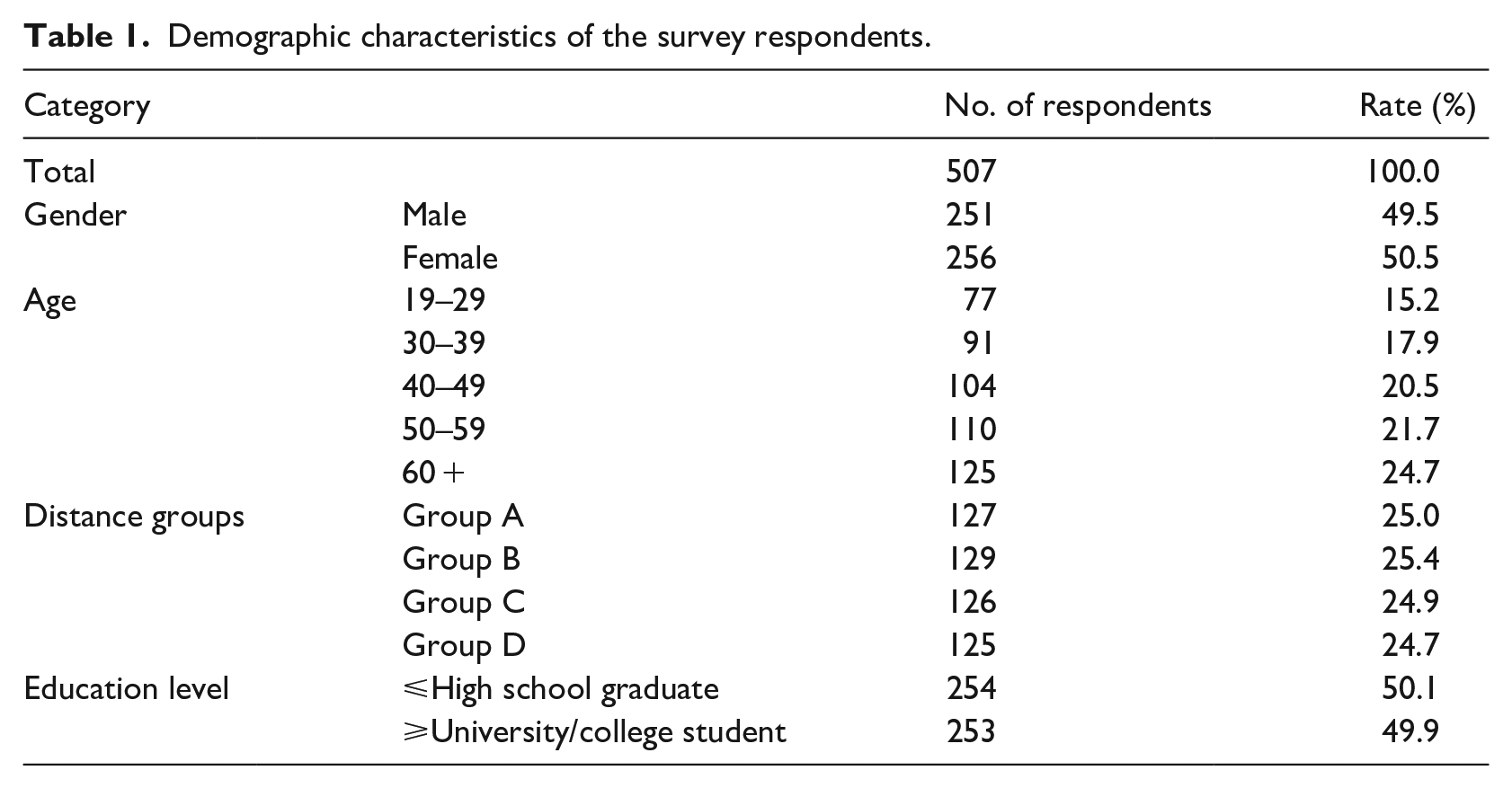
Finally, a face-to-face survey was conducted from 22 October to 19 November, 2018. A stratified random sampling of the respondents aged 19 or over was performed according to the population characteristics (age, gender, and distance from the epicenter) in Pohang. The distance groups (A, B, C, and D) were selected by drawing a series of concentric circles from the epicenter at 6 km diameter increments and assigning administrative districts to each group. This enabled the formation of a sample group closely resembling the entire Pohang population (see Table 1).
Demographic characteristics of the survey respondents.
Data analysis
A thematic analysis (Braun and Clarke, 2020; Vaismoradi and Snelgrove, 2019) was conducted to examine qualitative data such as interview transcripts, online posts, and newspapers. We generated three codes based on the qualitative dataset. The first code is fear of earthquakes, which is closely connected to the 2011 East Japan earthquake and Fukushima nuclear power plant accident. The second code is the locational context, which is associated with the facts that more than 10 nuclear power plants are located around Pohang and a major earthquake in Gyeongju (adjacent to Pohang) occurred just 1 year before the Pohang earthquake. The final code was the causal relationship between the geothermal power plant and earthquake. From these codes and other nuanced interpretation of the data, we developed the following hypothesis: The public understanding of the unfamiliar geothermal plant may be anchored by the risk of nuclear power plants. This hypothesis leads to our theme—the social representation of geothermal power plants anchored by nuclear power plants. Under this theme, we classified our data according to the three codes, and interpreted how the risk of geothermal power plants is linked to nuclear power plants. The qualitative result was later validated by quantitative research.
5. Results
Social representation of the geothermal plant: A qualitative approach
The image of EGS, which was originally regarded as an environmentally friendly energy source, deteriorated rapidly following the Pohang earthquake in 2017. We adopted the SRT concepts of anchoring and objectification to analyze public perception of geothermal power plants.
Anchoring is the process of understanding new social concepts through past events or familiar knowledge (Batel and Devine-Wright, 2015). Pohang borders Gyeongju, and Pohang residents vividly remembered the 2016 Gyeongju earthquake. Moreover, given the proximity of several nuclear power plants to Pohang and Gyeongju, the occurrence of the Gyeongju earthquake increased concern regarding nuclear accidents, stemming largely from memories of the 2011 Fukushima disaster. Thus, the public’s association between earthquakes and nuclear accidents is well founded. According to a newspaper article: When an earthquake occurs, people can generally be evacuated to empty and open spaces without surrounding buildings. However, I didn’t know where to evacuate because there is a nuclear power plant around this area. What if the nuclear accident occurs while we evacuated? In that case, it would be better to stay inside the house and lock myself in. (From the newspaper interview with a 68-year-old woman in Gyeongju, 13 September 2016.) Even if the earthquake is inevitable, I was more anxious because I thought there might have been a nuclear accident since the plant was located near my town. (From the newspaper interview with a 69-year-old man in Gyeongju, 13 September 2016.)
In much the same way that the Gyeongju earthquake was anchored to the nuclear power plant through experience of the media reaction to the Fukushima nuclear accident, the discourse on the risks of nuclear power in Gyeongju served as an anchoring factor for the Pohang residents in relation to the Pohang earthquake. In other words, Pohang residents understood the most recent earthquake through their experience of the Gyeongju earthquake. The anchoring between the earthquake and nuclear power was amplified further through the discourse of the government, media, and field experts. Moreover, expert comment on the correlation between earthquakes and EGS projects was presented to the public. On the day of the Pohang earthquake, expert interviews on EGS and earthquakes were reported in major news broadcasts, and the causal relationship between EGS and earthquakes was discussed. Expert opinions developed a risk discourse that portrayed EGS as having a causal relationship with the earthquake and nuclear power risks.
Pohang residents focused on the fact that the Pohang earthquake was not a natural disaster, but one that was induced. They argued that the EGS project would likely induce another seismic disaster and compromise the nuclear power plants in neighboring areas. The interviewees were also concerned about additional nuclear consequences, as manifested in the following testimonies: There is another big issue apart from the earthquake. We do have many nuclear power plants installed around this city. I think there are too many in Gyeongju and Ulsan. What if an earthquake occurs right below those nuclear power plants? I know the government mentioned that we don’t have to worry about safety even when the earthquake hits. However, I don’t believe what the government says. I am very much suspicious about the safety issues on those plants. (Interview with G, 15 April 2018)
The negative response of Pohang residents became more objectified and various channels were used to form the representations of victims toward geothermal power plants. People began to communicate with each other through local online communities and created a bulletin board to discuss the earthquake. Information on earthquake damage was shared online and people discussed the potential for subsequent EGS-induced earthquakes. News articles regarding the potential for EGS-induced earthquakes were posted on the board and people shared their opinion on those issues. The following post was written on the bulletin board:
(Fragment from a news article from Kyongbuk Maeil Shinmun) The hydraulic fracturing method used in the EGS project is very likely to be the main cause of the Pohang earthquake . . . The case of Basel in Switzerland in 2006 is a well-known instance of an induced earthquake by a geothermal power project. The power plant was eventually shut down.
The Pohang residents had accepted that EGS was the major cause of the Pohang earthquake and had concerns regarding the surrounding nuclear power plants. These perceptions of the victims often manifested with anger. Some were even enraged by other victims who did not believe that the earthquake was caused by the EGS project: [After the media raised the possibility of an induced earthquake,] there were many telephone calls to our office regarding the closure of the EGS in Pohang. Those who didn’t even know about geothermal power plants began to place the blame on it because the expert interviews were on the media. We received approximately two or three phone calls a day. They resented and strongly blamed the EGS. They also requested the environmental organization to take action for shutting down the plant. I almost became neurotic at this point. However, you need to make your own judgment. I basically determined that it was up to me to form my own opinion on whether the earthquake was caused by the geothermal plant or not. Although some people thought the Pohang earthquake was not induced by the EGS project, many other people passionately disagreed based largely on their emotions. If we did not agree with them, we were treated as ‘traitors.’ (Interview with B, 24 May 2018.) We are housewives. We were so frustrated when the Pohang earthquake occurred that we thought we shouldn’t let it go like this. At that time, the news was being reported on JTBC that the Pohang earthquake may have been induced by the EGS project. We began to realize that it was not a natural disaster but a man-made one . . . So we made a large placard that said ‘The Pohang earthquake was induced by the EGS project. The geothermal power plant should be shut down for safety..’ (Interview with G, 13 April 2018.)
Anger toward the geothermal plant led to the formation of a social group composed of earthquake victims. On 10 December 2017, a month after the Pohang earthquake occurred, the victims established the Pohang Citizens’ Earthquake Countermeasures Headquarters to investigate the cause of the earthquake and seek action for damage compensation. The group comprised 500 victims and members of relevant organizations. The victims were mostly from near the epicenter area and were those affected most severely. They demanded the government to take the following actions: (1) determine whether the Pohang earthquake was induced by the EGS operation, (2) compensate for the damage, and (3) shut down the plant. The group conducted collective action such as requesting the suspension of the EGS and compiling a petition. Their petition campaign began on 22 December 2017 and nearly 15,000 people had pledged support by May 2018.
The victims further supported the opinion that the Pohang earthquake was likely induced by the EGS project after relevant study results were published at the beginning of 2018. Two journal papers were published in Science. Grigoli et al. (2018) noted that the Pohang earthquake was most likely caused by the 2-year operation of high-pressure water injection conducted during the EGS project. Moreover, Kim et al. (2018b) reported that the high-pressure water injection eventually induced the earthquake once a critical stress level was reached in the deep faults. The people in Pohang strongly embraced this notion and criticisms of the EGS intensified. These views were manifested in the following interviews: Interviewee 1: People consider that at least 80% of the research findings are correct. The correlation between the earthquake and the EGS project were demonstrated to be more significant than I anticipated. Also, the research findings of the Pohang earthquake were published in Science. This is very compelling. Interviewee 2: I thought the Pohang earthquake was a natural disaster at first. However, I heard there was a case of an induced earthquake in Switzerland triggered by a geothermal power plant. The victims were compensated for the damages caused by the earthquake. This led me to believe that the Pohang earthquake was also induced by the geothermal power plant. (A group interview, 1 June 2018.)
The emotional responses of earthquake victims toward the EGS project are reflected in the online community. The following posts showed not only the negative perceptions toward the EGS project but also the symbolic expression of specific subjects: From the beginning, I believed that the Pohang earthquake was induced by the EGS project. However, I am now relieved that research findings also confirm that the Pohang earthquake was induced by the geothermal power plant operation. I hope the government shuts down and never reactivates the plant in the future. (Pohang Mom’s Playground, Post: as24**** livili in Duho-dong, Buk-gu, Pohang, 27 April 2018.) After the geothermal power plant was shut down, aftershocks seemed to have quieted down. I am so grateful that experts scientifically revealed the facts on the Pohang earthquake. Based on the research results, all of the rotten eggs (referring to the key EGS project operators) should be punished.” (Pohang Mom’s Playground, Post: dori**** living in Ocheon-eup, Nam-gu, Pohang, 27 April 2018.)
Similar arguments continued to appear via the online community, the image of geothermal plant became increasingly negative. Moreover, the victims sent an open letter to the president on behalf of the Pohang citizens in February 2018 (Lim, 2018). In the letter, they expressed their negative attitudes toward the EGS as “seeds of misfortune” and “trees of misfortune.” Subsequently, the Pohang community demanded the permanent closure of the EGS that caused the earthquake (Kwak, 2018). In May 2018, a press conference was held in support of the research results that linked the Pohang earthquake to the EGS project. The participants requested the release of the EGS project information and demanded compensation for the earthquake victims.
The geothermal plant became a scapegoat in the aftermath of the earthquake, not only because of the experts’ opinions, but also for economic reasons. In the case of natural disasters, the Korean government provides only a small amount of disaster assistance grant (US$1,750 to US$12,500) compared with the huge real damage. However, in the case of man-made disasters, the victims can get a lot more compensation because there is someone who should pay for it. These economic incentives might reinforce the perception of EGS as the main cause of the disaster: [Requesting the closure of the geothermal plant and investigation of the main causes] would lead to reimbursement of earthquake damage. We will receive some amount of compensation for collapsed buildings to cover disaster support. However, if the Pohang earthquake was induced by the geothermal power plant operation, we would be able to claim compensation indefinitely. (Interview with A, 24 March 2018.)
In summary, geothermal plant risk becomes associated with nuclear plant risk through a process of anchoring of one earthquake to the other. The two energies, seen as oppositional in the past, become either related or classified into one risk category. With SRT, we explained how this linkage took place in terms of multi-level perspectives, including not only victims’ voices but also roles of mass media, science (i.e. experts), and the government. The Pohang residents anchored the Pohang earthquake to the Gyeongju earthquake experience. The Gyeongju earthquake had created discourse on risks of nuclear power plants that led to recognition of the dangers of nuclear power linked to the Pohang earthquake. Society perceived the geothermal power plant as a dangerous energy source that causes earthquakes and could threaten communities and nuclear power plants in neighboring areas. Anchoring was reinforced by the information provided by the media and scientific research, as well as by the victims. Moreover, despite the anchoring between the Gyeongju and Pohang earthquakes, these two cases differed significantly in that the Pohang earthquake was induced by the geothermal power plant operations. The Pohang residents shared, specified, and reinforced their recognition of induced earthquakes. This might have been influenced substantially by the economic incentive of compensation.
Quantitative validation: Survey results
This study conducted a quantitative survey to validate the findings from qualitative research and to examine the perception of Pohang residents toward EGS as an energy source in response to climate change. To cope with the seriousness of climate change, renewable energy sources including geothermal or nuclear power could be used as alternatives. The risks associated with the operation of geothermal or nuclear power plants might be tolerated if such action were to mitigate the risks associated with climate change, which is often referred to as a risk–risk tradeoff strategy (Bickerstaff et al., 2008; Chung and Kim, 2018). However, this strategy has not been particularly successful regarding nuclear power plants in Korea because of the negative national image of nuclear technology (Chung and Kim, 2018). This raises questions about the case of geothermal power plants in Pohang. Pohang residents are well aware that climate change is caused by fossil fuels. For example, when asked if “the use of fossil fuels (e.g. coal, oil, and gas) contributes significantly to global warming and climate change,” 88.8% of respondents agreed. However, more than half of the respondents answered that nuclear power plants (60%) and renewable power plants, including geothermal (51.7%) plants, also exacerbate climate change problems (Figure 1).
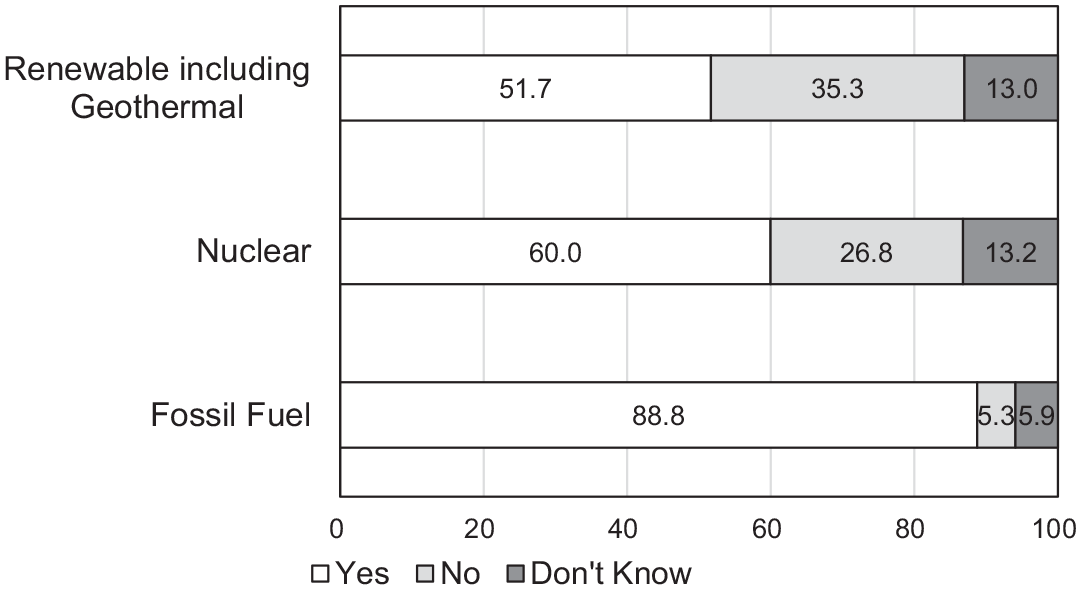
Responses to consideration of whether the use of the above plants contributes significantly to global warming and climate change (%).
The respondents’ negative perception of geothermal plants can be extended to their negative perception of the plants’ impact on climate change; this is also the case with nuclear power plants (Chung and Kim, 2018). Furthermore, the negative perception of geothermal plant construction was more severe than that of nuclear power plant construction. Survey participants in Pohang reflected their preferences for various energy sources using the 5-point Likert-type scale (“1” meaning “very unfavorable” and “5” meaning “very favorable”). According to the results (Figure 2), the responses of Pohang residents were consistent with previous similar surveys (Chung and Kim, 2018; European Commission, 2007; Parkhill et al., 2013; Poortinga et al., 2013), whereby a preference for renewable energy sources over fossil fuels was evident. The preference levels for nuclear energy and fossil fuels (i.e. gas, oil, and coal) were below neutral (3.0); however, the preference level for geothermal energy was the lowest among all energy sources.
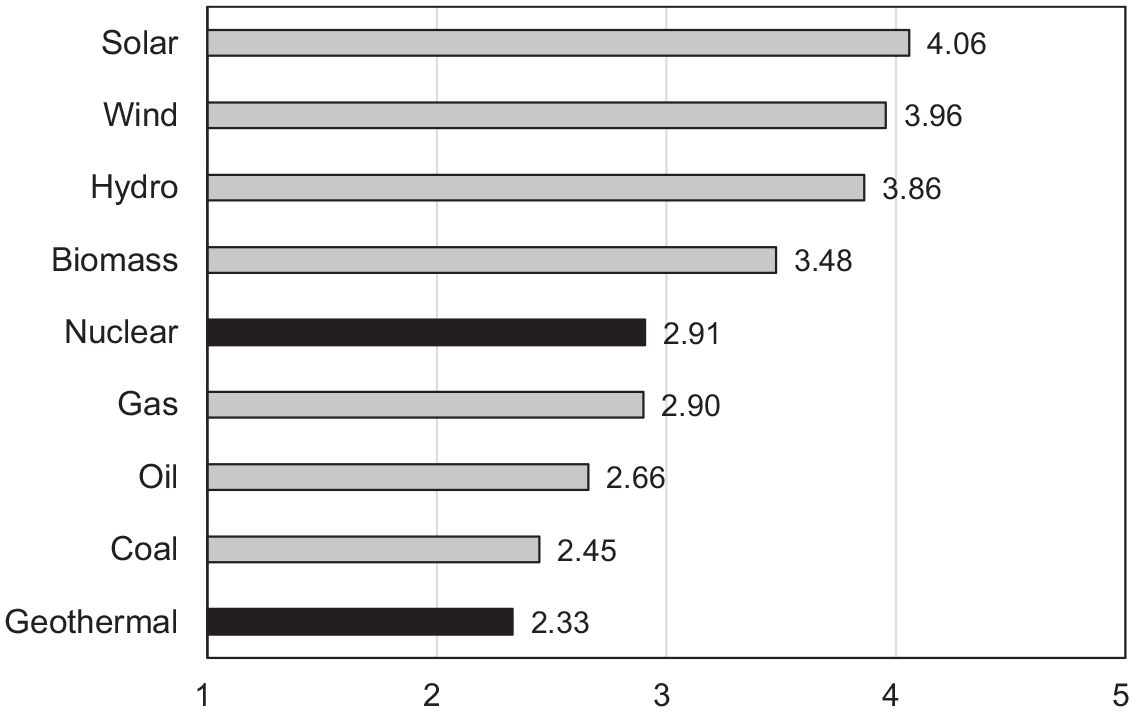
Favorability of energy sources for electricity generation (“1”: very unfavorable, “5”: very favorable).
The respondents were asked to express their conditional support for nuclear and geothermal plants if specific safety, economic, and climate change conditions were met (Figure 3). Compared with the research by Chung and Kim (2018), the attitudes of Pohang citizens toward nuclear power plants were slightly positive. However, their attitudes toward geothermal plants were far more negative than toward nuclear power plants. Overall, the respondents tended to disagree with the proposition of building new geothermal plants, even if they were considered safe (2.65), lowered the cost of electricity (2.42), and mitigated the effects of climate change (2.52). In comparison with other energy sources, this result demonstrated that the attitudes of Pohang citizens toward geothermal plants were particularly negative.
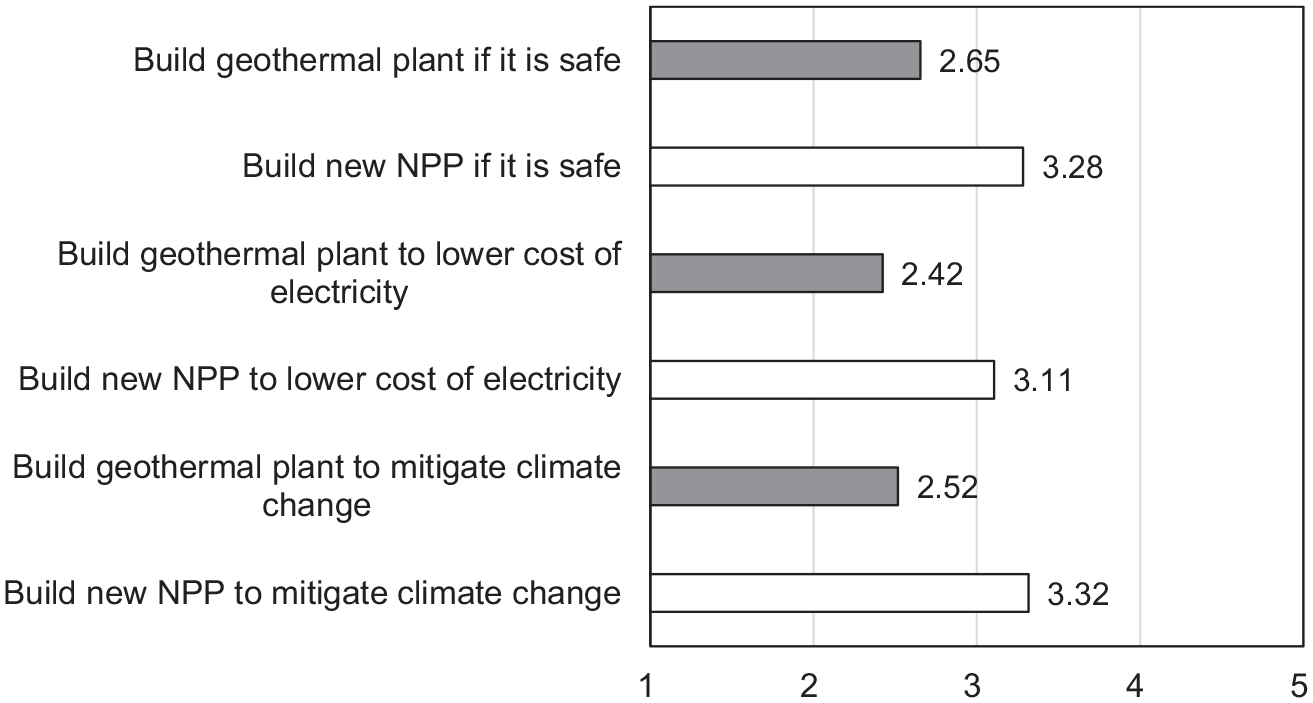
Agreement with the above statements (“1”: strongly disagree, “5”: strongly agree).
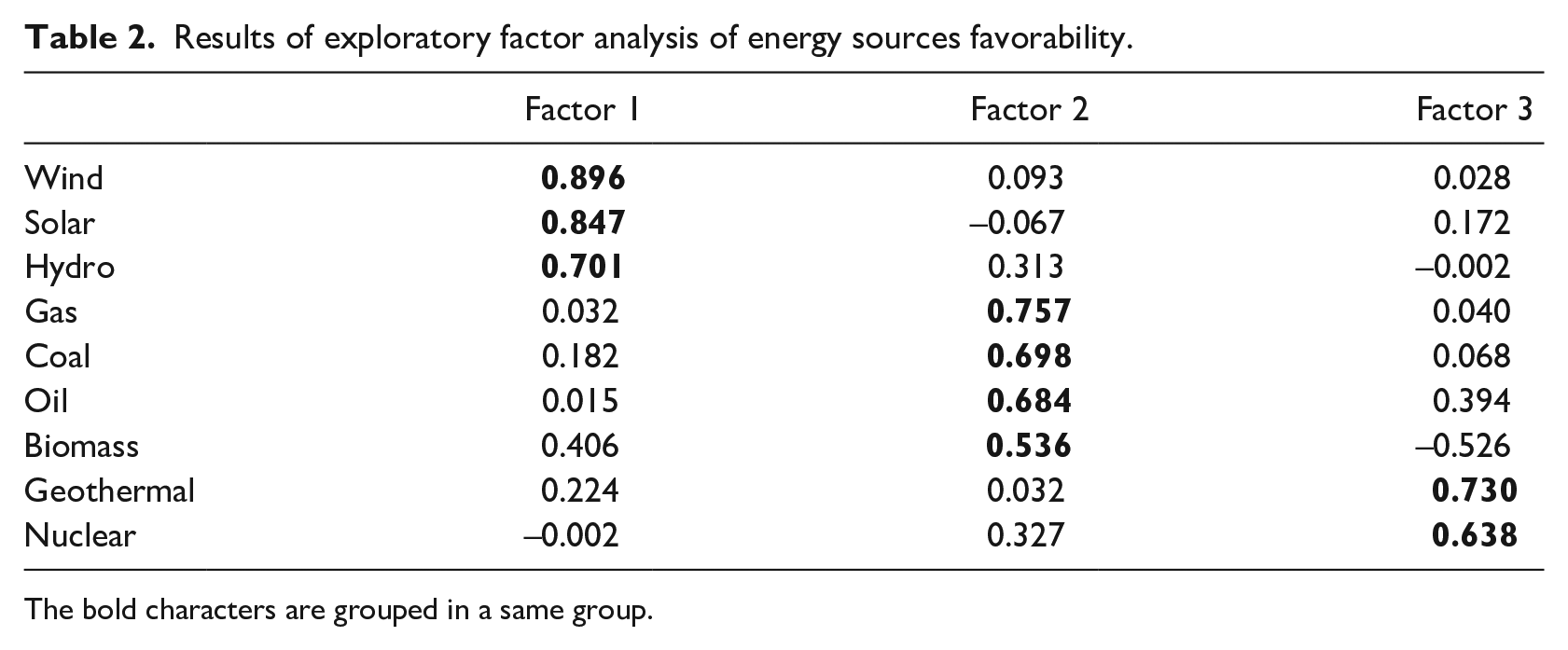
To characterize Pohang residents’ perception of various energy sources, we conducted an exploratory factor analysis of energy sources favorability using principal component analysis with varimax rotation. Using exploratory factor analysis, we elucidated the underlying structure of the variables and determined the groups of energy sources that have the same characteristics according to the people’s perceptions.
The results revealed three distinct groups (Table 2). The first group (Factor 1) consisted of wind, solar, and hydroelectric energy, which we labeled as a strictly renewable energy group. The second group (Factor 2) consisted of gas, coal, oil, and biomass, which mostly comprises fossil fuels, with the sole exception of biomass. In Korea, the most widely recognized biomass energy source is wood, and biomass burning is known to release carbon dioxide. Therefore, people’s perception of biomass might be linked more closely to fossil fuels than to renewable energies. The most interesting finding was that geothermal plants were classified in the same group as nuclear power plants (Factor 3). This fact suggests that we can accept the hypothesis that the public understanding of the unfamiliar geothermal plant may be anchored by the risk of nuclear power plants.
Results of exploratory factor analysis of energy sources favorability.
The bold characters are grouped in a same group.
6. Conclusion and policy implications
The Pohang earthquake transformed the image of geothermal plants from a sustainable, beneficial technology into a type of risky technology in South Korea. Interviews and survey questionnaires on the Pohang case provided an overview of the risk awareness process of earthquake victims. The strong feelings of Pohang residents toward earthquakes were developed from anchoring the 2016 Gyeongju earthquake with the media discourse on nuclear power plant risks. Consequently, while addressing the damage caused by the earthquake, the public focused on the discourse regarding nuclear power plant risks in relation to the induced earthquake. In other words, public discourse on nuclear accidents, developed at the time of the Gyeongju earthquake, was perpetuated by the Pohang earthquake victims via cognitive anchoring.
The results of the survey showed that Pohang residents’ perception of geothermal power plants was significantly negative. Factor analysis revealed that respondents perceived geothermal power plants and nuclear power plants to have similar characteristics; thus, they were classified in the same group. This result confirms statistically that negative perception of geothermal plants is based on their reputation as a risky technology via connection with the discourse on nuclear power plant risks.
This study has both academic and policy significance. First, in terms of SRT theory, according to Höijer (2011), SRT involves various forms of anchoring such as naming, emotional anchoring, thematic anchoring, and anchoring in antinomies. Just as the public in Switzerland linked geothermal plants to nuclear power (Stauffacher et al., 2015), the relationship between the induced earthquake and nuclear power plants was anchored with the concept of fear. In this context, the anchoring between the Gyeongju and Pohang earthquakes belongs to both thematic anchoring and anchoring in antinomies. Both earthquakes belong to the same category in that they potentially posed a risk of nuclear accident, which is referred to as thematic anchoring. However, the Gyeongju earthquake was a natural earthquake, whereas the Pohang earthquake was induced by the EGS project. Thus, this can also be regarded as “anchoring in antinomies” (Höijer, 2011). Furthermore, the relationship between geothermal energy and nuclear power is causal, unlike previous research on anchoring that examined similar relationships between technologies. For example, when unknown nanotechnology is anchored with more familiar genetic engineering technology, nanotechnology is understood via its similarities with genetic techniques. However, the relationship between geothermal risk and nuclear risk is not as straightforward. An earthquake induced by a geothermal plant might cause a nuclear power hazard; however, this does not mean that geothermal energy and nuclear energy have similar risks. The Fukushima disaster formed public risk perception of the causal relationship between earthquakes and nuclear power plants. Given that the Gyeongju and Pohang earthquakes occurred subsequently, causality between earthquakes and nuclear hazards was reinforced continually through the anchoring between the earthquakes. Consequently, geothermal plants became causally linked to nuclear risk through the anchoring between these earthquakes.
Second, our study suggests that trust building with local people is becoming an inevitable agenda toward renewable energy transitions. The negative image of geothermal plants could be detrimental to the acceptance of new energy technologies proposed in response to climate change. Pohang residents have recently expressed their strong opposition to the carbon capture storage (CCS) experiment near Pohang because they assume that, akin to EGS, CCS technology entails excavation work that could lead to another earthquake. Therefore, as seen in this case and other renewable energy cases (e.g. Kim and Chung, 2019; Kim et al., 2018a), renewable energy can no longer spontaneously acquire its status as a beneficial technology without any serious and sufficient communication with local people. The risky image of a geothermal plant resulted not only from the public’s unfamiliarity with the EGS technology, which can induce higher levels of public risk perception and have a “signal potential” of strong social disturbance (Kasperson et al., 1988; Slovic, 1987), but also from the poor risk communication strategy of a geothermal power plant company and the Korean government. They should have facilitated public communication and engagement in the whole process of geothermal plant development including decision-making, planning, implementation, and operation (Pellizzone et al., 2017; Reith et al., 2013). We cannot emphasize enough that the risk perception of renewable energy technologies relies on public trust in companies, scientists, or the government who manage the projects (Siegrist et al., 2006). From now on, steady and continuous efforts must be necessary to build a common interest and trust among various stakeholders.
Footnotes
Funding
The author(s) disclosed receipt of the following financial support for the research, authorship, and/or publication of this article: This work was supported by the National Research Foundation of Korea [grant No. NRF-2017R1A2B4003165] and Ministry of Interior and Safety (MOIS, Korea) [grant No. 2020-MOIS31-01, Fundamental Technology Development Program for Extreme Disaster Response].
