







Abstract
Facial recognition technology has been introduced into various aspects of social life, yet it has raised concerns over its infringement of civil liberties and biases against minorities. This study investigates how three ideological dimensions—social dominance orientation, right-wing authoritarianism, and libertarianism—shape facial recognition acceptance. First, two surveys of crowdsourced workers (N = 891 and 587) demonstrated that the acceptance of facial recognition applications is positively associated with right-wing authoritarianism and negatively with libertarianism, whereas social dominance orientation shows little influence. Second, an experiment (N = 496) exposed participants to information about demographic biases in facial recognition applications. This message produced more opposition to facial recognition and this effect largely was not moderated by the three ideological dimensions. In summary, individuals’ endorsement of various ideologies predicts their acceptance of facial recognition technology, but messages about algorithm biases in facial recognition can still shape their attitudes regardless of the preexisting ideologies.
Keywords
As one of the most successful examples of artificial intelligence (AI) applications, facial recognition technology has been introduced into various aspects of social life. Applications of facial recognition are broad, to name a few, tracking student attendance, aiding criminal investigations, and monitoring public events. Government agencies increasingly implement facial recognition for surveillance and security purposes. In the United States, agencies including the Federal Bureau of Investigation and Immigration and Customs Enforcement turn to drivers’ license photos and facial recognition tools to track individuals (Harwell, 2019). Globally, at least 64 countries are actively using facial recognition systems for surveillance (Feldstein, 2019). Before the COVID-19 pandemic, the benefits and risks of facial recognition in medical applications such as tracking disease outbreaks had been debated (Mohapatra, 2016). Now, with the ongoing pandemic, governments worldwide are resorting to facial recognition tools to track COVID-19 symptoms, trace contacts, and impose quarantine, which could have long-term implications for society (Roussi, 2020; Van Natta et al., 2020).
Despite its rapid growth and widespread adoption, facial recognition technology has also raised considerable skepticism (Roussi, 2020; Samuel, 2019). Activists and scholars worry that the unconstrained use of facial recognition surveillance systems can encroach on civil liberties, limit personal freedom, and curb civil unrest (Roussi, 2020). In addition, current facial recognition programs may be prone to errors and have a bias against racial or gender minorities—showing higher error rates of detection or analysis for these marginalized groups (Buolamwini and Gebru, 2018; Phillips et al., 2011). The use of facial recognition software in policing may further aggravate the unfair treatment of minorities (Hill, 2020; Horowitz, 2020). In response, several US municipalities, such as San Francisco, have banned or are considering prohibiting the use of facial recognition systems by government agencies (Samuel, 2019). Amid such debates, a few tech companies have discontinued facial recognition products, yet this technology is still expanding fast (Hill, 2020; Horowitz, 2020).
Given facial recognition technology’s increasingly pervasive use in society and broad social implications that necessitate public discussions and policy debates, it is crucial to understand the antecedents of public attitudes toward its applications. Meanwhile, an emerging line of scholarship has started to examine public opinions toward facial recognition technology, showing that citizens’ acceptance of this technology is contingent on scenarios, actors, and demographic characteristics (Kostka et al., 2021; Smith, 2019). Still, the psychological dispositions that shape individuals’ reactions to this issue have not been fully investigated. Such knowledge should be particularly useful for policymakers to propose solutions that address citizens’ hopes and worries and for communicators to craft persuasive messages that appeal to the audience’s core values and worldviews.
This research aims to make two contributions to prior research. First, with two surveys of US crowdsourced workers, this research reveals how three ideological dimensions—social dominance orientation (SDO), right-wing authoritarianism (RWA), and libertarianism—contribute to Americans’ opinions about facial recognition technology. Political ideology is often measured on a liberal-conservative scale, but it also comprises a complex set of sociopolitical attitudes that occupy multiple dimensions (Choma et al., 2013; Claessens et al., 2020). Different ideological dimensions often show distinct associations with science-related attitudes (Choma et al., 2013; Kerr and Wilson, 2021; Peng, 2020, 2022a). For example, RWA has been shown to predict anti-vaccination attitudes whereas SDO exhibits no or a weaker association (Choma et al., 2013; Kerr and Wilson, 2021; Peng, 2022b). This study adopts a multi-dimensional view of ideology and investigates how ideological dimensions shape perceptions of facial recognition technology.
The second contribution of this research investigates whether information about demographic biases in facial recognition algorithms shapes recipients’ endorsement of this technology and if this effect is conditioned by ideological dimensions. The demographic bias incorporated into facial recognition technology is a topic frequently discussed by scholars, media outlets, and civil rights activists (Buolamwini and Gebru, 2018; Phillips et al., 2011; Snow, 2018). Studies have shown that facial recognition technology is often more erroneous for people of color (Buolamwini and Gebru, 2018; Hill, 2020; Kantayya, 2020; Phillips et al., 2011; Snow, 2018), which could pose additional harm to racial minorities. In addition, not only can ideologies directly predict public attitudes toward science and technology issues, but these ideologies also shape how people process new information. As people are motivated to defend their preexisting ideological identities and worldviews, messages can be less persuasive or even counterproductive if they contradict the audience’s ideologies (Feinberg and Willer, 2011; Hart and Nisbet, 2012; Kahan, 2012). With a third experimental study on US crowdsourced workers, this study tests whether exposure to algorithm biases in facial recognition reduces people’s acceptance and whether such an effect is contingent on their preexisting ideologies.
1. Public perceptions of facial recognition technology
A few pioneering studies have investigated public opinions of facial recognition (Bromberg et al., 2020; Kostka et al., 2021; Smith, 2019). This body of research has examined how people view this technology in different scenarios and whether the acceptance differs by demographic groups. A survey from the Pew Research Center revealed that a majority of US respondents (56%) trusted law enforcement agencies to use facial recognition technology responsibly while placing less trust in technology companies (36%) and advertisers (18%) (Smith, 2019). Respondents also found it more acceptable for law enforcement to assess security threats in public spaces with facial recognition tools than in other scenarios such as companies tracking employees’ attendance (Smith, 2019). The acceptance of law enforcement using facial recognition tools was particularly high among older adults, Whites, and Republicans (Smith, 2019). Another study of a US sample examined attitudes toward the use of real-time facial recognition technology in police body-worn cameras and found that this application generally received high approval, particularly among women and Trump voters (Bromberg et al., 2020). In a survey of UK adults, a majority of respondents found it acceptable for the police to use facial recognition to monitor crowds and for airports to use this technology for identity checks while disapproving other applications such as stores tracking customers (Ada Lovelace Institute, 2019). A comparison of four countries showed that overall, 51% of the respondents accepted this technology, with the acceptance varying among China (67%), the United Kingdom (50%), the United States (48%), and Germany (38%) (Kostka et al., 2021). Facial recognition technology was more welcomed by men and people with higher socioeconomic status (Kostka et al., 2021).
Studies have also assessed how people understand and perceive facial recognition technology. In the study that surveyed four countries, increased security, surveillance, and privacy violation were frequently listed as possible outcomes of facial recognition technology (Kostka et al., 2021). Prior research has also shown that the vast majority of respondents are aware of facial recognition technology and people generally place confidence in its effectiveness (Ada Lovelace Institute, 2019; Smith, 2019; Steinacker et al., 2020). In the survey from the Pew Research Center, a majority of Americans believed that facial recognition technology could effectively identify individual identities and assess people’s gender and race (Smith, 2019).
As summarized above, an emerging line of scholarship has investigated public perceptions of facial recognition technology across different contexts. Yet, relatively fewer studies have focused on the roles of ideological predictors. Political ideology likely influences public reactions to emerging science and technological issues in two ways. First, political affiliations such as ideological and party identification can function as cues to help partisans form opinions when political elites take contrasting sides across ideological camps (Hamilton and Safford, 2021; Tesler, 2018). Regarding polarized science issues such as climate change and COVID-19, partisans may directly take cues from political elites and adopt corresponding opinions. In the case of facial recognition, multiple candidates in the 2020 Democratic Party presidential primaries voiced their stances on banning or strictly limiting this technology (Samuel, 2019), which could lead liberals to have more concern. Nevertheless, facial recognition might have not become a highly polarized issue yet: there are also bipartisan efforts in Congress that aim to strictly regulate facial recognition applications (Johnson, 2020).
Alternatively, political ideology reflects psychological tendencies and preferences for different social systems and arrangements, such as the distribution of power among groups and the role of government in society (Ho et al., 2015; Jost et al., 2009). Therefore, ideology may also shape individuals’ responses to facial recognition, as this technology likely leads to various socioeconomic outcomes. For example, some research reveals that in the United States, Republicans support facial recognition more than Democrats, especially in the law enforcement and surveillance contexts (Bromberg et al., 2020; Smith, 2019). Such a gap could reflect that conservatives may have higher preferences for stability, security, and social order than liberals (Jost et al., 2009). Following this rationale, it is more appropriate to look beyond a liberal-conservative divide and examine the role of specific ideological dimensions, as different ideological facets are often associated with different motivations, worldviews, and psychological needs (Duckitt, 2006; Duckitt and Sibley, 2009; Jost et al., 2009). Next, we introduce three ideological dimensions: SDO, RWA, and libertarianism.
2. Three ideological dimensions: Social dominance orientation, right-wing authoritarianism, and libertarianism
This study goes beyond the commonly used liberal-conservative spectrum and investigates the role of three ideological dimensions (i.e. SDO, RWA, and libertarianism) in shaping attitudes toward facial recognition applications. The first two concepts, SDO and RWA, are frequently used in political psychology to characterize the two dimensions of political ideology (Choma et al., 2013; Choma and Hodson, 2017; Duckitt, 2006; Duckitt and Sibley, 2009). SDO is a tendency to maintain dominance over outgroups and to prefer intergroup relations to be hierarchical versus equal (Duckitt, 2006; Ho et al., 2015). SDO aligns with economic conservatism (Claessens et al., 2020) and predicts attitudes toward issues about group equality such as social welfare and affirmative action (Ho et al., 2015). People with high SDO view the world as a Darwinist competitive jungle where the weak lose and the strong win as opposed to a place where people collaborate with and care for each other (Duckitt and Sibley, 2009). SDO either reduces or has a limited influence on risk perceptions (Choma et al., 2013; Choma and Hodson, 2017). People high in SDO are particularly dismissive of health and financial risks (e.g. surgery, high-risk investment). Characterized by tough-mindedness and a lack of concern for others (Duckitt, 2006), they also discount risks that might pose collective risks to society and disadvantaged groups, such as nuclear power and climate change (Choma et al., 2013).
In comparison, RWA reflects obedience to established authority, support for harsh and punitive societal control, and an endorsement of moral traditions (Duckitt et al., 2010). RWA characterizes the social dimension of ideology (Claessens et al., 2020). Individuals with high RWA view the world as dangerous and threatening (versus stable and safe) and are disposed to strengthen social security and order (Duckitt, 2006; Duckitt and Sibley, 2009). RWA often heightens an individual’s fear of a variety of personal and societal risks (Choma et al., 2013; Choma and Hodson, 2017). People high in RWA are concerned with social threats that challenge social order or traditions (e.g. drug dealers), as well as personal and recreational risks that jeopardize their safety (e.g. skiing, terrorist attacks, X-rays) (Choma et al., 2013; Duckitt, 2006).
Finally, this study incorporates libertarianism, an ideology that might not be sufficiently reflected by SDO and RWA. Libertarianism regards individual liberty as a core principle that guides the organization of social life and endorses limiting the government’s role in citizens’ lives and economic affairs (Iyer et al., 2012; Lizotte and Warren, 2021). As facial recognition technology may facilitate the intrusion into citizens’ personal lives and the violation of civil liberties, libertarianism should pertain to the debate about facial recognition. To capture libertarianism, this research uses one concept, communitarianism–individualism, proposed in another framework, the cultural cognition of risk. Cultural cognition posits that people perceive risks in a way that reinforces their cultural worldviews about an ideal society (Kahan, 2012). Communitarianism–individualism is one cultural worldview in this framework and is a continuum ranging from individualism that endorses individuals in society taking responsibility for themselves and the government having a minimal role in citizens’ lives, to communitarianism that claims that people essentially depend on each other and supports government interference (Kahan, 2012). Items in the communitarianism–individualism scale generally represent resistance to government interference with people’s private lives (e.g. “The government interferes far too much in our everyday lives.” “The government should stop telling people how to live their lives.” Kahan et al., 2012), which should reflect libertarian ideology. Compared to communitarians, individualists tend to dismiss issues that may demand more government regulations and limit personal autonomy, such as climate change, environmental pollution, mandatory vaccination, and self-driving cars (Dixon et al., 2020; Kahan, 2012; Kahan et al., 2012; Peng, 2022b).
3. How ideological dimensions predict acceptance of facial recognition
Next, we develop hypotheses and research questions about how three ideological dimensions (i.e. SDO, RWA, and communitarianism–individualism) predict opposition to facial recognition technology.
Social dominance orientation
One major concern associated with facial recognition technology is that it may encode demographic biases and harm marginalized groups (Buolamwini and Gebru, 2018; Snow, 2018). Research has repeatedly shown biases in face recognition algorithms regarding different demographic groups (Buolamwini and Gebru, 2018; Phillips et al., 2011). In a widely reported story, The American Civil Liberties Union tested Amazon’s facial recognition service and found that the algorithm mismatched members of US Congress to criminal mug shots with higher errors for people of color (Snow, 2018). One study that received broad media coverage showed that commercial facial analysis algorithms performed relatively well regarding light-skinned people and dark-skinned men, but their accuracies dropped sharply for dark-skinned women (Buolamwini and Gebru, 2018). Another study by the National Institute of Standards and Technology (2019) demonstrates that the majority of face recognition algorithms exhibit demographic biases with higher error rates for Asian and African American faces compared to Caucasian faces. Such tendencies could further put marginalized groups at a disadvantage, for example, leading law enforcement to more likely misidentify minorities (Hill, 2020).
Therefore, individuals with high SDO should be less skeptical of facial recognition. As noted earlier, ideologies that reflect anti-egalitarian beliefs such as SDO are often associated with a dismissal of issues that aggravate group inequality and harm disadvantaged groups, such as environmental risks (Choma et al., 2013). Therefore,
H1. SDO is associated with a higher acceptance of facial recognition technology.
Right-wing authoritarianism
Facial recognition systems may also facilitate societal control, surveillance of the public, and the fight against crime, which should be relevant to RWA, an ideology associated with perceiving the world as a dangerous place, desiring order and security, and supporting harsh punishments for criminals. In the context of terrorism, individuals who score high on RWA are more likely to support surveillance measures and the restriction of civil liberties (Cohrs et al., 2005; Kossowska et al., 2011). RWA is correlated with support for censoring pornography and hate speech (Lambe, 2004) and authoritarian policies to mitigate the COVID-19 pandemic (Manson, 2020). Therefore, RWA should predict support for facial recognition.
H2. RWA is associated with a higher acceptance of facial recognition technology.
Libertarianism
Finally, facial recognition may empower state invasions of personal space and represent a threat to personal liberty. Survey respondents across countries frequently list increased privacy violation and surveillance as potential outcomes of facial recognition technology (Kostka et al., 2021). Skepticism toward facial recognition technology should also be predicted by the libertarian ideology that upholds liberty as a core value and opposes government interference with private lives. As mentioned earlier, communitarianism–individualism is often linked to the rejection of environmental risks like climate change as these issues demand heavier government regulation of business and markets (Kahan, 2012). Prior research has also shown that parents who value the liberty moral value are more likely to oppose childhood vaccination, which is partially mediated by the belief that vaccine mandates violate liberties (Amin et al., 2017). Therefore, a libertarian ideology such as communitarianism–individualism should fuel the rejection of facial recognition technology.
H3. Communitarianism–individualism (endorsing individualism instead of communitarianism) is associated with a lower acceptance of facial recognition technology.
4. Moderating effects of ideological dimensions on reactions to algorithm bias
In addition to predicting attitudes toward science and technology issues (Choma et al., 2013; Kerr and Wilson, 2021), ideological components likely also shape how people interpret new information about these issues. As people are motivated to defend their ideological identities and worldviews, messages should be more persuasive if they resonate with recipients’ ideologies and counterproductive if they contradict (Feinberg and Willer, 2011; Hart and Nisbet, 2012). For example, in one study, participants were exposed to messages about the potential negative impacts of climate change on population health. Such messaging increased strong Democrats’ support for climate mitigation policies but backfired among strong Republicans (Hart and Nisbet, 2012). Other research shows that messages about the negative consequences of climate change might be counterproductive when they contradict individuals’ existing worldviews, such as the view that the world is just (Feinberg and Willer, 2011). In another study, after reading a message about the impacts of nanotechnology, people subscribing to a hierarchical, individualistic worldview saw more benefits and people with an egalitarian communitarian worldview perceived more risks (Kahan et al., 2009).
This research investigates whether ideological dimensions moderate how message recipients process information about facial recognition technology. In particular, this study presents people with a message showing that facial recognition algorithms can include demographic biases (i.e. show higher error rates for certain groups such as women, Asians, and African Americans) and pose additional harm to minorities. The algorithm bias in facial recognition is a topic that frequently appears in activist groups’ campaigns (Snow, 2018), media coverage (Hill, 2020), and documentaries such as Coded Bias (Kantayya, 2020). We should expect that this message should reduce individuals’ support for facial recognition technology. Furthermore, we might observe an interaction between this message and SDO, as this effect should be weaker for individuals with high SDO, who are less concerned with group inequality and discrimination toward racial minorities. In other words, SDO would predict lower opposition to facial recognition technology when the negative impacts of facial recognition technology on equality are made salient.
H4. Exposure to a message about demographic biases in facial recognition technology reduces individuals’ acceptance of this technology.
H5. There is an interaction between message and SDO: This negative effect is weaker for individuals with high SDO.
As an exploratory step, this research also examines whether the effects of such a message is also moderated by the other two ideological facets:
RQ1. Does the effect of this message depend on RWA or communitarianism–individualism?
Overview of the three studies
Three studies were conducted. Both Study 1 and Study 2 included measures of SDO, RWA, communitarianism–individualism, and acceptance of facial recognition technology, allowing us to test how ideological dimensions predict acceptance of facial recognition technology (H1, H2, and H3). Study 3 adopted an experiment design and randomly assigned participants to a statement about demographic biases in facial recognition technology. Study 3 allows us to test whether such information reduces acceptance (H4) and whether this effect is moderated by ideological dimensions (H5 and RQ1).
5. Study 1 and 2: How ideological dimensions predict acceptance of facial recognition
Participants
Similar recruiting strategies were adopted for all three studies. For Study 1, in October 2019, 904 crowdsourced workers from Amazon Mechanical Turk (MTurk) in the United States who had completed 100 tasks and had an approval rate above 95% were recruited. For Study 2, in November 2020, 614 MTurkers in the United States who had completed 1000 tasks and had an approval rate above 95% were recruited.
Across three studies, two additional measures were implemented to enhance data quality. First, the survey used an Internet protocol (IP) lookup service (https://iphub.info/) to screen out MTurkers who were not inside the United States or were using virtual private networks (VPNs) (Kennedy et al., 2020). Also, after data collection, another IP analysis tool excluded responses from suspicious Internet service providers (ISPs) and/or global positioning system (GPS) locations (Prims et al., 2018). This step identified 13 fraudulent responses in Study 1 and 27 in Study 2.
Prior research has shown that MTurk workers tend to identify as liberals and Democrats and to hold liberal values regarding economic and social issues than the general population (Berinsky et al., 2012; Clifford et al., 2015). As this research focuses on political ideologies, we need to recruit respondents of diverse ideological orientations. Therefore, the recruitment adopted a simple strategy: as political ideology and party affiliation are highly correlated in the US context, a roughly equal number of Democrats, Republicans, and Independents (including other party affiliations) were recruited. This procedure was not to get a sample that matched the party affiliations in the general population, but rather to increase participants’ ideological heterogeneity.
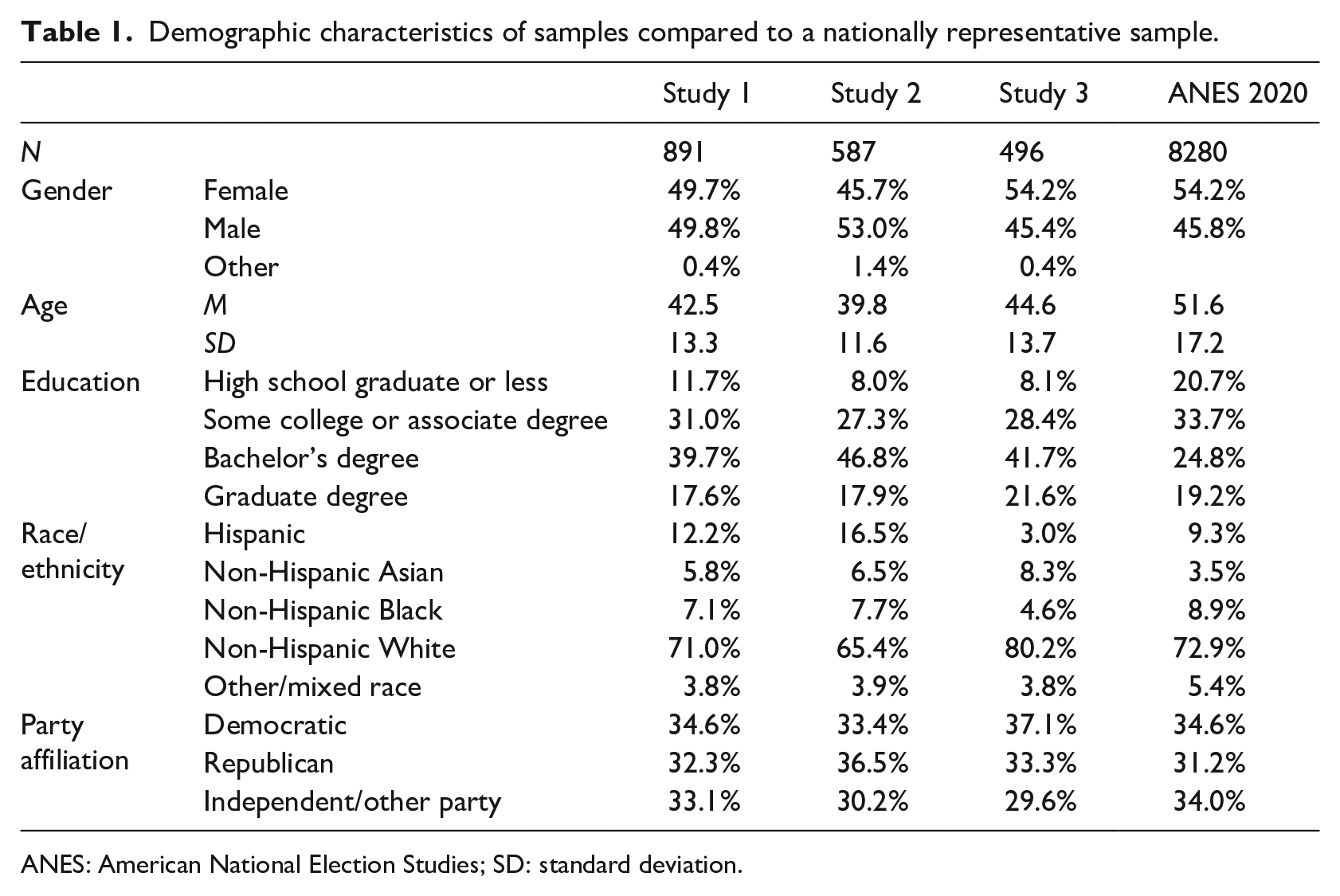
Table 1 shows the demographic characteristics of the three samples. These MTurkers samples were demographically diverse but differed from a nationally representative sample in several ways. MTurk samples tended to be younger and more educated than the nationally representative sample (Table 1).
Demographic characteristics of samples compared to a nationally representative sample.
ANES: American National Election Studies; SD: standard deviation.
Measures
SDO, RWA, and communitarianism–individualism
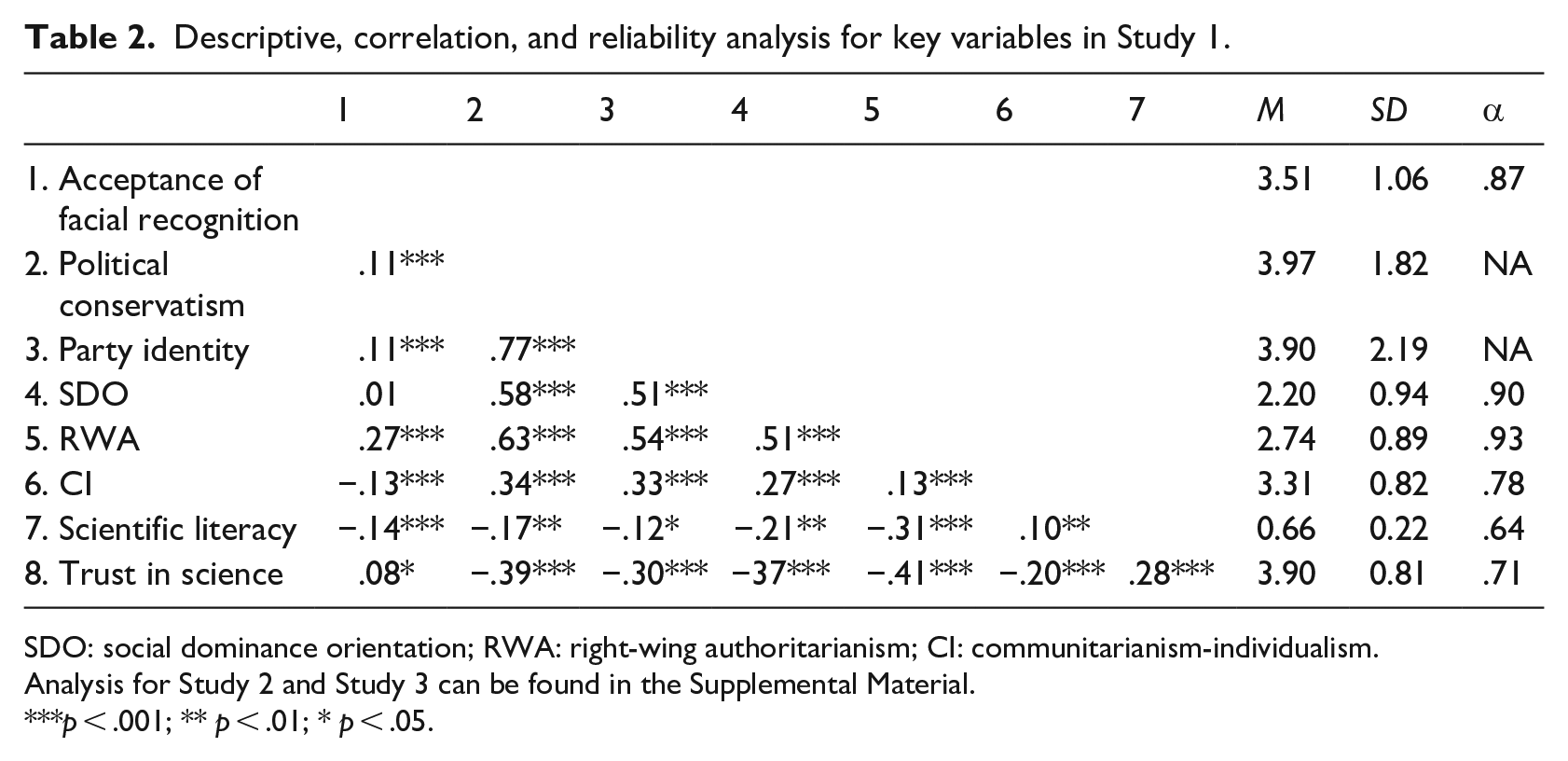
Participants indicated their agreement on 5-point scales (1 = strongly disagree, 5 = strongly agree). Eight items recorded SDO (e.g. “It is unjust to try to make groups equal.” Ho et al., 2015). Eighteen items recoded RWA (e.g. “The facts on crime and the recent public disorders show we have to crack down harder on troublemakers, if we are going preserve law and order.” Duckitt et al., 2010). Six items recorded communitarianism–individualism (“The government should stop telling people how to live their lives.” Kahan et al., 2012). These scales exhibited satisfactory reliability (α > 0.7, see Table 2 and Tables S1 and S2 in the Supplemental Material).
Descriptive, correlation, and reliability analysis for key variables in Study 1.
SDO: social dominance orientation; RWA: right-wing authoritarianism; CI: communitarianism-individualism.
Analysis for Study 2 and Study 3 can be found in the Supplemental Material.
p < .001; ** p < .01; * p < .05.
Acceptance of facial recognition technology
As some participants might be unfamiliar with facial recognition, the survey gave participants a short description that explained what facial recognition technology was and how it worked: A facial recognition system is a technology capable of identifying or verifying a person from a digital image or a video frame from a video source. There are multiple methods in which facial recognition systems work, but in general, they work by comparing selected facial features from the given image with faces within a database. Other types of facial recognition technology can assess the age of the individual whose face is being scanned, or track their emotions and facial expressions (Ada Lovelace Institute, 2019; Petrescu, 2019).
Similar practices have also been adopted in other research studying emerging technology (e.g. Kahan et al., 2009).
Participants indicated their perceived risk (“How risky do you think facial recognition technology is for society as a whole?”) (1 = not risky at all, 5 = extremely risky), perceived benefits (“How beneficial do you think facial recognition technology is for society as a whole?”) (1 = not beneficial at all, 5 = extremely beneficial), level of worry (“How worried are you about the development and use of facial recognition technology?”) (1 = not worried at all, 5 = extremely worried), and level of support (“How much do you favor or oppose the development and use of facial recognition technology?”) (1 = strongly oppose, 5 = strongly favor). Although perceived risk, perceived benefits, worry, and support have been treated as separate concepts in prior research (e.g. Sjöberg, 1998), they were highly correlated in this research and were combined into one scale (α = .87 in Study 1 and α = .82 in Study 2) that reflected an acceptance of facial recognition technology.
Control variables
Control variables included gender, age, education, income, and race. Scientific literacy and trust in science were also controlled for as these two variables are associated with both (1) ideological dimensions like SDO, RWA, and communitarianism-individualism (Hartman et al., 2017; Kerr and Wilson, 2021) and (2) attitudes toward specific science and technology issues (Kerr and Wilson, 2021; Peng, 2020). Seven true or false questions from the General Social Survey (e.g. “Electrons are smaller than atoms”) measured the participants’ scientific literacy. Trust in science was measured by asking participants to indicate how much confidence they had in the scientific community and whether science and technology had an overall positive or negative effect on our society.
Results
SDO, RWA, and communitarianism–individualism (H1, H2, and H3)
In Study 1, as correlational analysis showed (Table 2), acceptance of facial recognition technology was positively correlated with RWA (r = .27, p < .001) and negatively with communitarianism–individualism (β = −.13, p < .001), offering initial support for H2 and H3. Contradicting H1, opposition was not correlated to SDO. Regression analysis (Figure 1, Study 1) showed that acceptance of facial recognition was positively predicted by RWA (β = .37, p < .001) 1 and negatively by communitarianism–individualism (β = −.12, p < .001). Unexpectedly, SDO negatively predicted acceptance (β = −.08, p = .04).
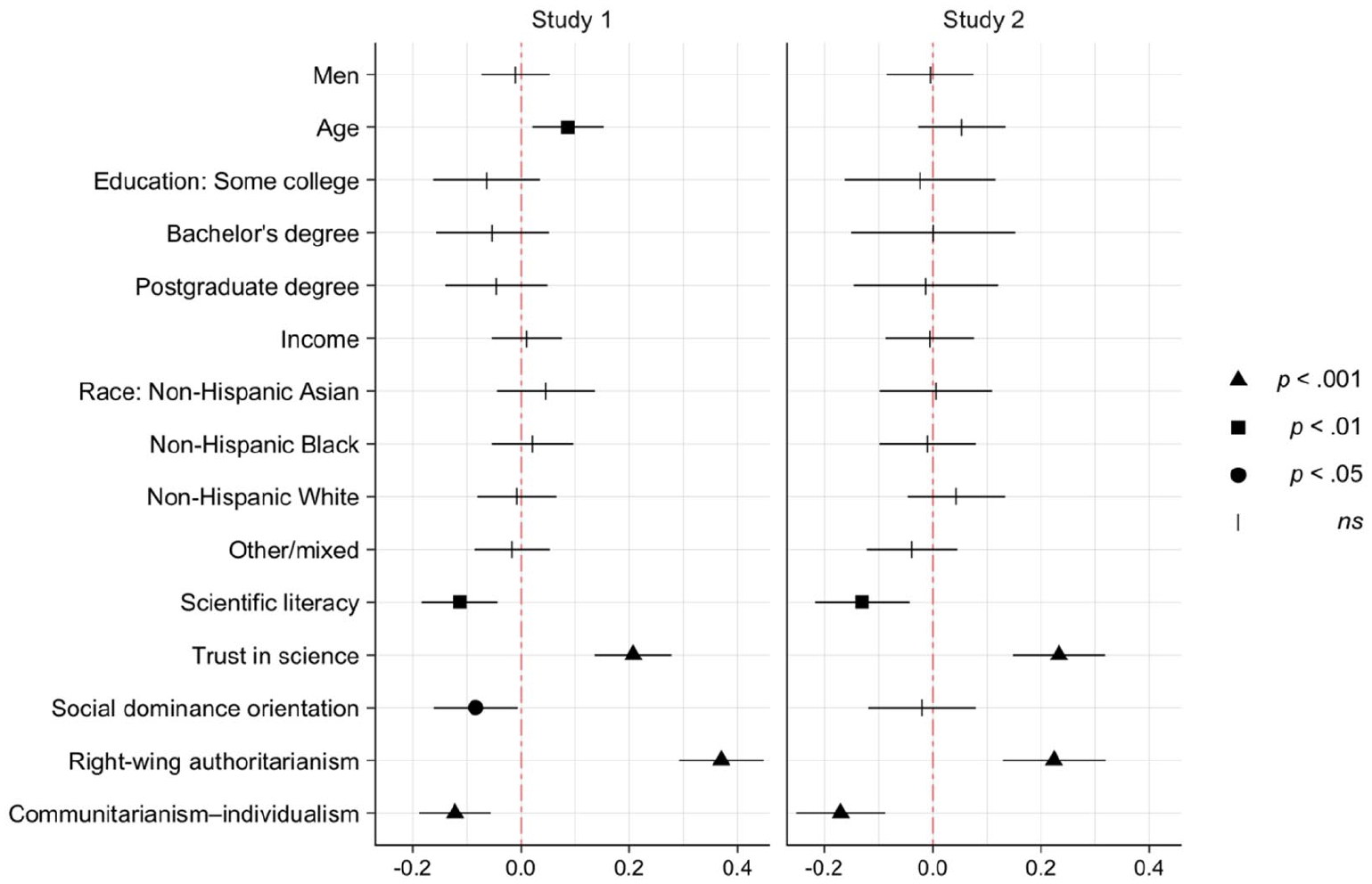
OLS regression analyses predicting acceptance of facial recognition technology.
Study 2 revealed a largely similar pattern. In correlational analysis (Table S1), acceptance of facial recognition was positively related to RWA (r = .17, p < .001) and negatively with communitarianism–individualism (r = −.24, p < .001). Acceptance was not related to SDO. Regression analysis (Figure 1, Study 2) similarly showed that acceptance was positively predicted by RWA (β = .22, p < .001) and negatively by communitarianism–individualism (β = −.17, p < .001). SDO was insignificant.
Across two studies, H1 was rejected and H2 and H3 were supported.
Control variables
In both studies, scientific literacy predicted opposition to facial recognition (β = −.11, p < .001 in Study 1; β = −.13, p < .001 in Study 2) whereas trust in science predicted acceptance (β = .21, p < .001 in Study 1; β = .23, p < .001 in Study 2). Demographic variables generally did not show consistent effects. 2
6. Study 3: Do ideological dimensions moderate reactions to facial recognition bias?
Participants
A similar recruiting strategy was used in Study 3. In February 2021, 500 MTurkers in the United States who had completed 1000 tasks and had an approval rate above 98% were recruited. Four responses were excluded based on IP analysis (Prims et al., 2018).
Procedure
Participants first answered questions regarding demographic characteristics and ideological dimensions. Then, they were randomly assigned into two conditions. In the control condition (N = 261), participants read the same description provided in Study 1 and 2. In the message condition (N = 235), participants read an additional message of facial recognition technology, which cites several studies showing that facial recognition technology displays demographic biases and has higher error rates for racial minorities, which could harm marginalized groups (see Supplemental Material). Participants then indicated their perceptions of facial recognition technology.
Measures
The same measures of SDO, RWA, communitarianism–individualism, and acceptance of facial recognition in Study 1 and 2 were included. Furthermore, Study 3 additionally included a set of questions regarding the acceptance of facial recognition in five specific situations, such as “law enforcement agencies assessing potential security threats in public spaces” and “companies automatically tracking the attendance of their employees” (1 = not acceptable at all, 5 = very acceptable). These five questions were highly correlated and formed one coherent scale (α = .84). Finally, as a manipulation check, this study included a measure of equality-violation beliefs to see whether this message indeed led recipients to believe that facial recognition technology contributed to inequality. On six 7-point scales, participants indicated if they believed that facial recognition technology would bring outcomes related to inequality, such as “harm vulnerable populations,” “increase discrimination against minorities,” and “lead to unfair treatment of people” (α = .94).
Results
Compared to participants in the control condition, participants who received a message about algorithm bias in facial recognition believed that facial recognition contributed to inequality (Mcontrol = 4.42, SD = 1.39; Mmessage = 4.95, SD = 1.41; t(494) = −4.25, p < .001, Cohen’s d = −0.38). Also, consistent with H4, respondents significantly reduced their acceptance of facial recognition overall (Mcontrol = 2.94, SD = 1.01; Mmessage = 2.49, SD = 0.99; t(494) = 4.79, p < .001, d = 0.43) and facial recognition in specific situations after receiving the message about algorithm bias (Mcontrol = 2.72, SD = 1.05; Mmessage = 2.49, SD = .97; t(494) = 2.6, p = .009, d = 0.24).
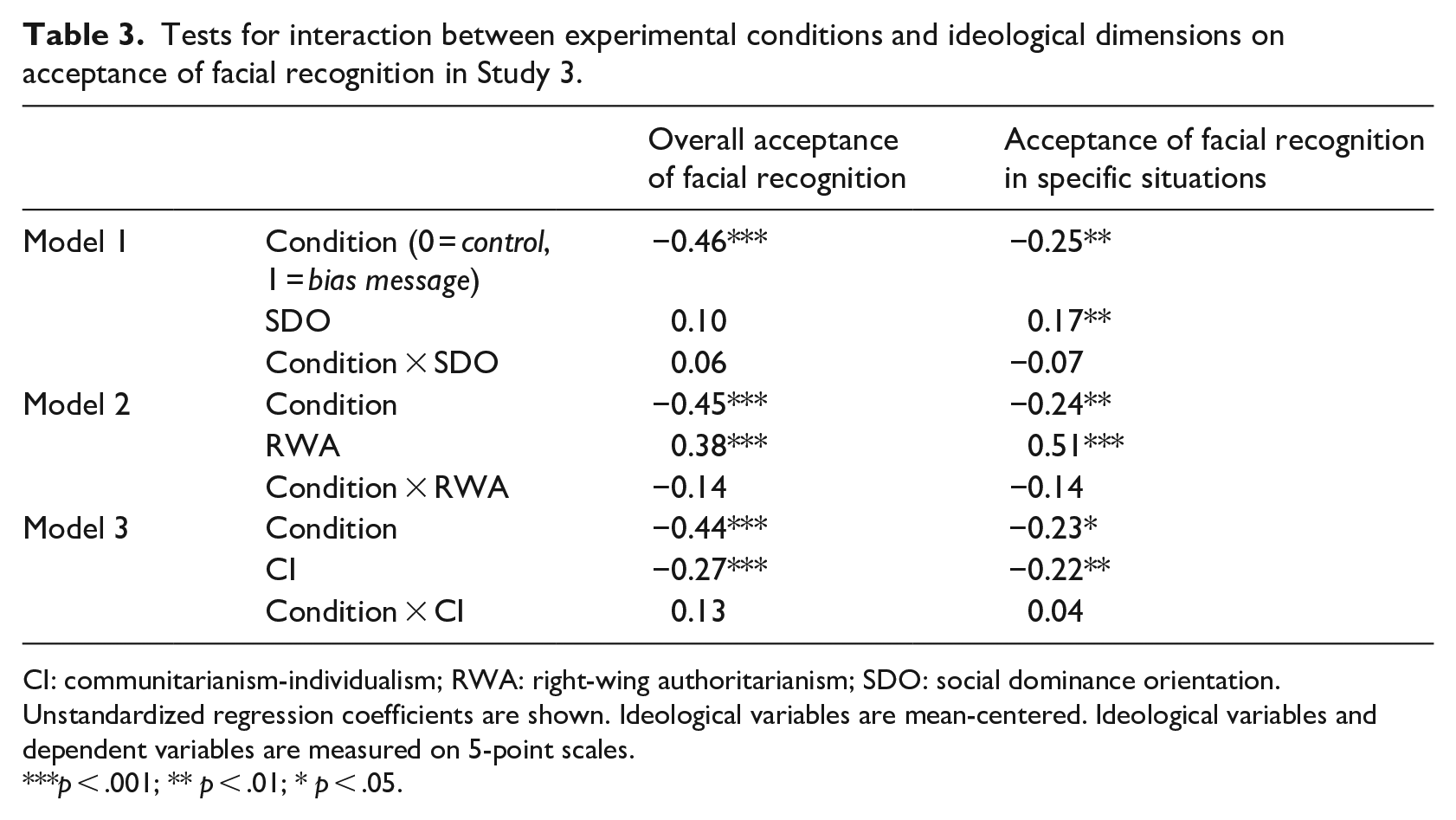
A regression approach tested whether ideological dimensions moderated the message’s effects (Table 3). Each model included the condition (0 = control, 1 = message), one ideological variable, and their interaction term. Contradicting H5, the interaction term of SDO was not significant. Regarding RQ1, the interaction terms regarding RWA and communitarianism–individualism were insignificant as well. Therefore, ideological dimensions did not moderate the effect of messaging about algorithm bias.
Tests for interaction between experimental conditions and ideological dimensions on acceptance of facial recognition in Study 3.
CI: communitarianism-individualism; RWA: right-wing authoritarianism; SDO: social dominance orientation.
Unstandardized regression coefficients are shown. Ideological variables are mean-centered. Ideological variables and dependent variables are measured on 5-point scales.
p < .001; ** p < .01; * p < .05.
Finally, this study replicated the regression analyses in Study 1 and 2 to see if ideological dimensions predicted facial recognition endorsement (Figure 2). The analyses were run separately for participants in the two conditions. In the control condition in which respondents received a description identical to Study 1 and 2, RWA predicted overall acceptance of facial recognition (β = .41) and acceptance in specific situations (β = .51, both ps < .001). Communitarianism-individualism showed negative associations with both overall acceptance (β = −.16, p = .007) and acceptance in specific situations (β = −.18, p = .002). SDO was insignificant for both outcomes. These observations were similar to Study 1 and 2.
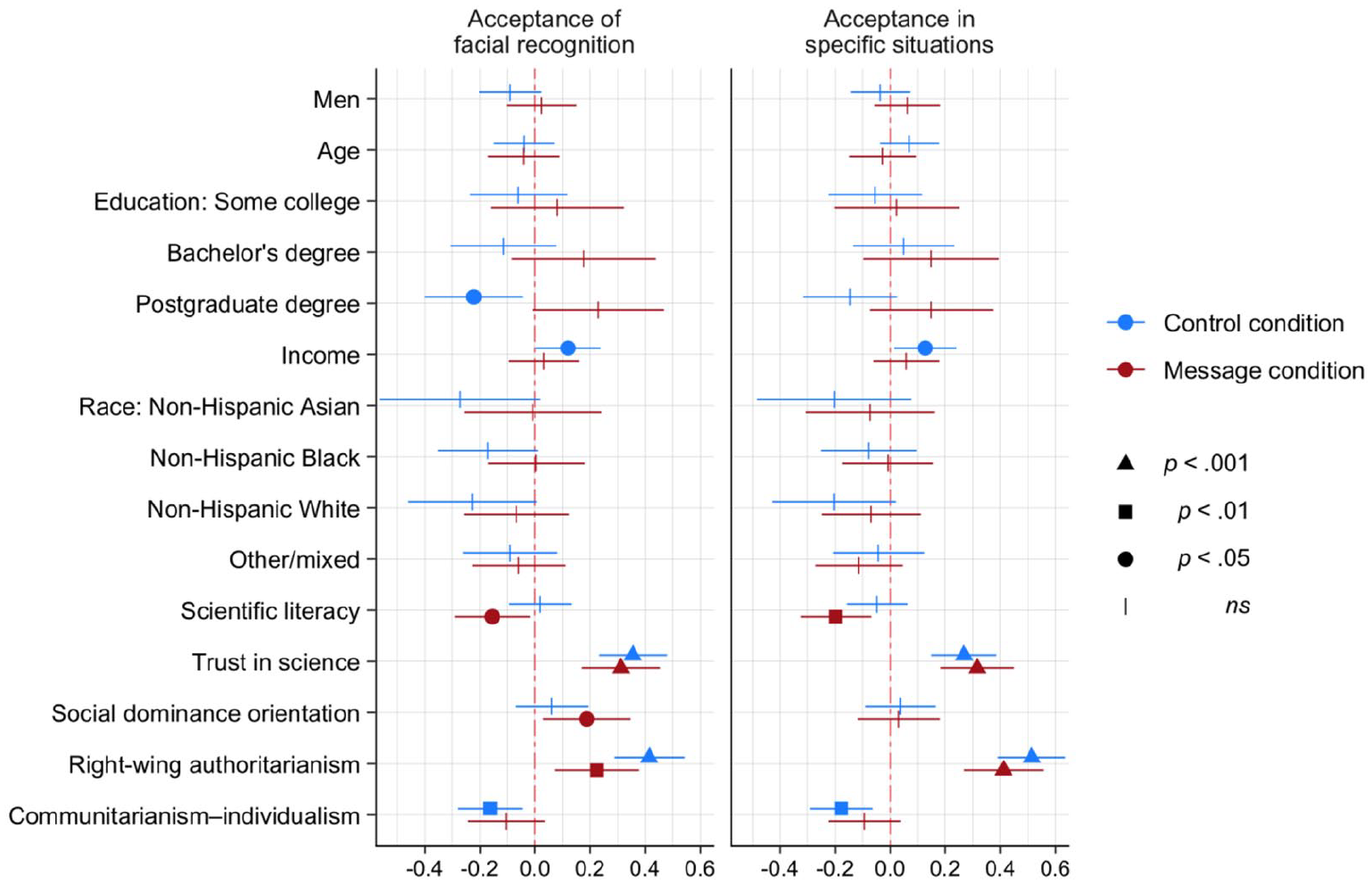
OLS regression analyses predicting acceptance of facial recognition technology in Study 3, separated by conditions.
In the message condition in which participants received a statement about algorithm bias, a slightly different pattern emerged. RWA still predicted both overall acceptance of facial recognition (β = .22, p = .004) and acceptance in specific situations (β = .41, p < .001). But communitarianism-individualism was insignificant for both outcomes. Also, SDO significantly predicted overall acceptance of facial recognition (β = .19, p = .02). This finding indicated that individuals with high SDO significantly supported facial recognition more when the inequality consequences of this technology were made salient. Nevertheless, the difference in the effects of SDO across the two conditions was not large enough and the interaction between the experimental condition and SDO was not significant.
7. Discussion
In summary, this study examines how three ideological dimensions (i.e. SDO, RWA, and libertarianism) predict individuals’ acceptance of facial recognition technology and whether they moderate the effects of a message about algorithm biases in facial recognition applications. First, as shown in the two surveys, RWA was related to higher support for facial recognition applications, whereas libertarianism, measured with the communitarianism–individualism scale, was associated with higher opposition. SDO generally did not demonstrate robust relationships. In the follow-up experiment, a message about facial recognition technology’s biases against certain demographic groups reduced support for this technology. This effect was not moderated by the three ideological variables examined. Still, SDO positively predicted facial recognition acceptance in the message condition in which algorithm biases were made salient.
These results demonstrate that facial recognition likely brings out social changes that resonate with different facets of ideology, which distinctly predict an individual’s perceptions of it. The cultural cognition of risk argues that individuals form risk perceptions that reflect their visions of an ideal society and desired ways of living (Kahan, 2012). In surveys, increased security, surveillance, and privacy violation are frequently listed as possible outcomes of facial recognition technology (Kostka et al., 2021). Therefore, individuals who score high on RWA offer more support for this technology, which could be explained by that facial recognition tools help authorities monitor citizens and exercise control over society, thus echoing authoritarians’ need for security and order. Another ideology, libertarianism, is linked to lower support. This ideology endorses individual liberty and minimal state interference, which goes against facial recognition technology that facilitates government involvement in people’s lives.
The first two studies using surveys did not find clear evidence that SDO, an ideology that justifies group inequality and hierarchy, contributed to an endorsement of facial recognition technology. Nevertheless, in the third study, SDO predicted higher acceptance of facial recognition technology in the experimental condition in which participants became aware of the demographic biases in facial recognition algorithms. These findings indicate that in general, people do not deem facial recognition technology problematic for its potential to exacerbate inequality unless this consequence is explicitly conveyed and becomes salient in their minds. Indeed, one study found that survey respondents rarely believed that facial recognition technology would increase discrimination (Kostka et al., 2021), which suggests that the algorithm bias in facial recognition applications might not be well-known among the public.
Furthermore, this study shows that sharing a message about algorithm bias effectively makes recipients see the consequences of facial recognition technology on inequality and become more resistant to this technology. This effect is not moderated by the three ideological dimensions examined here. Previous research has shown that political ideology and ideological worldviews can sometimes act as perceptual filters that shape how individuals interpret information about emerging technologies (e.g. Kahan et al., 2009), so a message can backfire among individuals sharing certain ideological commitments. Nevertheless, some studies also show that backfire effects are rare in political communication even regarding polarized issues; instead, partisans often adhere to factual information and change their attitudes accordingly (Wood and Porter, 2019). While our manipulation successfully led individuals to reject facial recognition, we should note that this issue is not a highly polarized issue like climate change or vaccination, so respondents’ opinions might not be deeply connected to ideological commitments. Future research can continue testing how messages about facial recognition bias shape individuals’ support for this technology.
Some results regarding control variables might be interesting. In particular, scientific literacy is linked to more skepticism toward facial recognition applications, whereas trust in science boosts support. Such findings echo previous research showing that increased scientific literacy does not always lead to acceptance of scientific claims or emerging technologies (Allum et al., 2008; Kerr and Wilson, 2021). Individuals with higher scientific knowledge might be more aware of the potential harm posed by emerging technologies such as facial recognition technology. In comparison, trust in science often consistently predicts positive attitudes toward a broad range of science and technology issues (Kerr and Wilson, 2021). Trust in science might act as an affective heuristic that boosts support for new technologies.
Many issues around science and technology today are often subject to politicization (Gauchat, 2012; Peng, 2020, 2022a; Zhao et al., 2016). An ideological divide might also be on the horizon regarding the regulation of facial recognition technology, which could present serious challenges for society to achieve a resolution. In particular, RWA, a hallmark of political conservatism, exhibits strong associations with the endorsement of facial recognition applications, likely due to its association with less concern for disadvantaged groups and a higher need for security, order, and social control. Nevertheless, libertarianism, an ideology that advocates small government and individual liberties, also aligns with political conservatism but negatively predicts support for facial recognition technology. Therefore, if framed appropriately, messages and proposals about more carefully regulating facial recognition technology might be able to appeal to both liberal and conservative values and win bipartisan support.
Certain limitations should be acknowledged. This research relies on convenience samples from Amazon MTurk, which may not represent the general public. Prior studies have demonstrated that MTurk samples can yield high-quality data and are more demographically diverse than traditional convenience samples (Berinsky et al., 2012). Compared to a nationally representative sample, MTurk samples in this research tended to be younger and more educated (Table 1). Prior research also shows that MTurkers have more Internet experience and higher digital literacy than the general public (Hargittai and Shaw, 2020). Therefore, this group might be more familiar with new technologies such as facial recognition, have more experience with facial recognition technology, and be more informed about facial recognition, which could bias the results obtained. Future research could use a nationally representative sample or reach less tech-savvy populations to see whether our conclusions are robust.
This research only examines one cultural context: the United States. The acceptance of facial recognition technology varies across different societies. For example, respondents in China generally have a high acceptance of facial recognition technology or other surveillance measures (Kostka, 2019; Kostka et al., 2021). Also, public discussions on AI in China largely focus on the economic benefits of AI with less debate about its social and ethical implications (Zeng et al., 2020). How different ideological facets speak to the social implications of facial recognition will likely vary by culture as well. Furthermore, the relationships among ideological dimensions vary across cultures (Malka et al., 2019). Future research can use nationally representative samples drawn from different cultural contexts to advance this line of inquiry.
Supplemental Material
sj-docx-1-pus-10.1177_09636625221113131 – Supplemental material for The role of ideological dimensions in shaping acceptance of facial recognition technology and reactions to algorithm bias
Supplemental material, sj-docx-1-pus-10.1177_09636625221113131 for The role of ideological dimensions in shaping acceptance of facial recognition technology and reactions to algorithm bias by Yilang Peng in Public Understanding of Science
Footnotes
Funding
The author(s) received no financial support for the research, authorship, and/or publication of this article.

Supplemental material
Supplemental material for this article is available online.
Notes
Author biography
References
Supplementary Material
Please find the following supplemental material available below.
For Open Access articles published under a Creative Commons License, all supplemental material carries the same license as the article it is associated with.
For non-Open Access articles published, all supplemental material carries a non-exclusive license, and permission requests for re-use of supplemental material or any part of supplemental material shall be sent directly to the copyright owner as specified in the copyright notice associated with the article.
