






Abstract
This study examines how scientific literacy dimensions—nature of science understanding, scientific reasoning, positive beliefs about science, and interest in science—are related to willingness to participate in medical research, mediated by conspiracy beliefs about and trust in medical researchers. Survey data were collected from a sample of 600 Slovaks recruited via an online panel. Regression-based mediation analysis revealed that positive beliefs about science and interest in science exhibited total and indirect associations with willingness to participate in medical research. By contrast, nature of science understanding and scientific reasoning were related to willingness to participate in medical research only indirectly. The indirect pathways of all scientific literacy dimensions operated through conspiracy beliefs about and trust in medical researchers, with trust showing the strongest positive association with willingness to participate in medical research. These findings highlight that the association between scientific literacy and willingness to participate in medical research is rather complex, mediated by beliefs about medical researchers. Addressing these beliefs alongside scientific literacy promotion may enhance public willingness to participate in medical research.
Keywords
1. Introduction
Medical research is vital for scientific progress and public health, with participant recruitment being key to its success (Jin et al., 2020). It relies on individuals’ willingness to participate, yet low participation rates remain a persistent challenge (Trauth et al., 2000). Despite extensive research on factors influencing medical research participation (for reviews, see Jin et al., 2020; Moffat et al., 2023; Rodríguez-Torres et al., 2021; Sheridan et al., 2020), the literature is still relatively limited regarding how scientific literacy relates to willingness to participate in medical research (WPMR). This study aims to address that gap.
We hypothesize an indirect link between scientific literacy and WPMR through beliefs about medical researchers, aligning with the reasoned action approach, which posits that background characteristics shape behavioral intentions indirectly through corresponding beliefs (Fishbein and Ajzen, 2011). In particular, we expect that scientific literacy is linked to two beliefs about medical researchers—negatively to conspiracy beliefs about medical researchers and positively to trust in medical researchers. Both these beliefs are suggested to play a role in WPMR (e.g. Abadie and Heaney, 2015; Armstrong et al., 1999; Hall et al., 2006), although they have not yet been examined in the context of scientific literacy. However, a growing body of research provides strong evidence that scientific literacy is closely related to beliefs on science-related issues—positively related to beliefs consistent with scientific consensus and negatively related to epistemically unfounded (conspiracy, pseudoscience, and paranormal) beliefs (e.g. Beniermann et al., 2021; Čavojová et al., 2024; Georgiou et al., 2021; Skolnick Weisberg et al., 2021; Synak et al., 2024). Various scientific literacy dimensions have also been linked to more favorable beliefs and attitudes toward science and scientists (e.g. Blankenship et al., 2021; Lombrozo et al., 2008; Motta, 2018; Sunyík and Čavojová, 2023).
Moreover, studies have shown that exposure to specific conspiracy theories negatively and indirectly affects behavioral intentions—such as being vaccinated, seeking help, or supporting policies for biobank research—through low trust in medical authorities (Jolley and Douglas, 2014; Marques et al., 2024; Natoli and Marques, 2021). We hypothesize similar relationships involving conspiracy beliefs about medical researchers, trust in medical researchers, and WPMR. Examining the proposed relationships may enhance our understanding of the factors contributing to the public’s WPMR and inform more effective recruitment strategies.
Role of scientific literacy
The Programme for International Student Assessment (PISA) defines scientific literacy as “the ability to engage with science-related issues, and with the ideas of science, as a reflective citizen,” highlighting its three categories of dimensions—knowledge-, competence-, and attitude-related (OECD, 2018: 75)—which, broadly speaking, are also acknowledged in other studies (Costa et al., 2021; Fasce and Picó, 2019). Thus, scientific literacy can be viewed as concerning relevant knowledge and competence, as well as attitudes. Following this conception, our study assesses four specific dimensions. Two are knowledge- and competence-related dimensions: (1) nature of science understanding, referring to knowledge of the processes and practices of science (Skolnick Weisberg et al., 2021); and (2) scientific reasoning, defined as the competence to understand methods and principles of scientific inquiry (Bašnáková et al., 2021). In addition to these, we include two attitude-related dimensions: (3) positive beliefs about science, encompassing recognition of the value of science and trust in its reliability (Farias et al., 2013; Hartman et al., 2017); and (4) interest in science, considered a positive attitudinal inclination toward science-related subjects and topics (Krapp and Prenzel, 2011). While the last dimension, interest in science, is explicitly included only in the PISA framework (Krapp and Prenzel, 2011; OECD, 2018), the other three dimensions are also reflected in other conceptualizations (Costa et al., 2021; Fasce and Picó, 2019).
Although related concepts of health (Kripalani et al., 2021) and research literacy (Dykema et al., 2022) have been positively linked to WPMR, research on the role of scientific literacy in WPMR is limited—available evidence suggests a generally positive relationship (Feinstein, 2011), particularly concerning the dimensions of beliefs about science (Abeles et al., 2023; Bleakley et al., 2023) and interest in science (Füchslin et al., 2019; Losi, 2023). By contrast, far greater scholarly attention has been paid to how scientific literacy shapes beliefs about science-related issues. In particular, better understanding of the nature of science (Viciana et al., 2024), better scientific reasoning (Čavojová et al., 2024; Georgiou et al., 2021; O’Brien et al., 2021; Sunyík and Čavojová, 2023; Synak et al., 2024), more positive beliefs about science (Bordignon, 2023; Čavojová et al., 2024; Fasce and Picó, 2019; Hartman et al., 2017; Pilch et al., 2023; Sunyík and Čavojová, 2023; Van Mulukom et al., 2022), and greater interest in science (Bordignon, 2023; Erceg et al., 2022; Fernández-Carro et al., 2023) have all been linked to lower endorsement of epistemically unfounded beliefs, including conspiracy beliefs. Furthermore, better understanding of the nature of science (Beniermann et al., 2021; Lombrozo et al., 2008; Skolnick Weisberg et al., 2021; Viciana et al., 2024), better scientific reasoning, and more positive beliefs about science (Rutjens et al., 2018; Većkalov et al., 2024) have been linked to greater acceptance of beliefs consistent with scientific consensus.
Moreover, better understanding of the nature of science (Abd-El-Khalick and Lederman, 2023; Evans and Durant, 1995; Lombrozo et al., 2008), better scientific reasoning (Bašnáková et al., 2021; Čavojová et al., 2024; Sunyík and Čavojová, 2023), and higher interest in science (Evans and Durant, 1995; Koetke et al., 2025; Motta, 2018) have been linked to more favorable beliefs and attitudes toward science and scientists. Similarly, positive beliefs about science have been positively linked to favorable general attitudes toward science (Lee and Kim, 2018), toward specific research domains (Lee et al., 2005; Liu and Priest, 2009), and to trust in medical researchers (Blankenship et al., 2021). In sum, these findings suggest that scientific literacy—especially when conceptualized broadly—supports the rejection of conspiracy and other epistemically unfounded beliefs, promotes acceptance of science-aligned beliefs, and fosters positive perceptions of science and scientists.
Based on this evidence, we propose that scientific literacy plays a crucial role in shaping beliefs, which, in turn, are key determinants of behavioral intentions. This hypothesized pattern aligns with the reasoned action approach (Fishbein and Ajzen, 2011) and is supported by researchers (Čavojová et al., 2024; Dykema et al., 2022; Sedlár and Grežo, 2022), who argue that background characteristics, such as knowledge, abilities, and personality traits, shape behavioral intentions indirectly through beliefs relevant to those intentions. Accordingly, we posit that beliefs about medical researchers—namely, conspiracy beliefs about and trust in medical researchers—which are proximal to WPMR (e.g. Abadie and Heaney, 2015; Armstrong et al., 1999; Hall et al., 2006; Jin et al., 2020), may mediate the relationship between scientific literacy and WPMR. In particular, individuals with higher levels across the scientific literacy dimensions may be less likely to endorse conspiracy beliefs about medical researchers and more likely to trust them, thereby fostering greater WPMR.
Role of beliefs about medical researchers
The present study centers on two beliefs about medical researchers—conspiracy beliefs about medical researchers and trust in medical researchers. In line with the literature (Brotherton et al., 2013; Douglas and Sutton, 2023; Rutjens and Većkalov, 2022), conspiracy beliefs about medical researchers—a specific category of epistemically unfounded beliefs—can be defined as the belief that medical researchers, as a highly competent and powerful group, are covertly pursuing hidden agendas through malevolent or forbidden actions. To date, no study has explicitly and exclusively examined the role of conspiracy beliefs about medical researchers in the context of WPMR. Only a few studies have partially addressed this issue, yielding inconsistent findings: some suggest a negative relationship (Abadie and Heaney, 2015; Armstrong et al., 1999; Jenkins et al., 2009), while others suggest no relationship at all (Bass et al., 2020; Russell et al., 2011) with the inclination to participate in medical research. Further insights into this relationship come from research examining conspiracy beliefs alongside trust. In particular, studies have shown that the negative effect of exposure to specific conspiracy theories on behavioral intentions, such as vaccination and health-seeking intentions, is largely indirect, operating through lower trust in medical authorities (Jolley and Douglas, 2014; Natoli and Marques, 2021). For example, exposure to a pro-conspiracy article about biobank scientists was found to decrease policy support for biobank research, and this effect was mediated by lower trust in biobank scientists (Marques et al., 2024). Based on these findings, Marques et al. (2024) suggest that a similar mechanism may apply to WPMR and merits empirical verification.
There is strong evidence that trust in medical researchers—defined as the belief in participant safety, researcher fidelity to research purposes, honesty about the nature and purpose of the research, and a global sense of trust in researchers (Hall et al., 2006)—is a key factor positively related to intentions regarding medical research participation (e.g. Abdelhafiz et al., 2021; Hall et al., 2006; Jaffe et al., 2021; Jin et al., 2020; Liu and Li, 2018; Sedlár and Grežo, 2022). Such trust can function as a crucial heuristic for navigating the complexities of the social world (Marques et al., 2024), particularly in the domain of medical research, with which the public is generally unfamiliar and has rare direct contact. Thus, drawing from the work on the sources of trust toward a particular target (Schilke et al., 2021), we propose that public trust in medical researchers must primarily rely on the broader social context in which their reputation is formed. However, this reputation-derived trust is vulnerable to erosion through the development, endorsement, and spread of conspiracy theories about medical researchers, which are often prevalent among the public due to the negatively biased stereotyping of scientists (Rutjens and Većkalov, 2022). This explanation is supported by findings showing that individuals who were exposed to specific conspiracy theories tend to exhibit lower trust in medical authorities (Jolley and Douglas, 2014; Marques et al., 2024; Natoli and Marques, 2021). In simple terms, stronger belief in conspiracy theories about medical researchers may undermine trust in them, which, in turn, is associated with lower WPMR.
Aim and hypotheses
This study aims to investigate how scientific literacy relates to WPMR among the public. Rather than investigating a direct relationship between the two, we hypothesize that they are indirectly related through beliefs about medical researchers. In particular, scientific literacy dimensions—nature of science understanding, scientific reasoning, positive beliefs about science, and interest in science—have been shown to relate to greater endorsement of beliefs consistent with the scientific consensus and lesser endorsement of epistemically unfounded beliefs (e.g. Beniermann et al., 2021; Čavojová et al., 2024; Georgiou et al., 2021; Skolnick Weisberg et al., 2021; Synak et al., 2024), and also to more favorable perceptions of science and scientists (e.g. Blankenship et al., 2021; Lombrozo et al., 2008; Motta, 2018; Sunyík and Čavojová, 2023). Beliefs about medical researchers, in turn, have been suggested to relate to WPMR, with conspiracy beliefs negatively associated (e.g. Abadie and Heaney, 2015; Armstrong et al., 1999) and trust in medical researchers positively associated (e.g. Hall et al., 2006; Jin et al., 2020). Furthermore, previous research has also suggested that the relationship between conspiracy beliefs and WPMR may be indirect, operating through lower trust in medical authorities (Jolley and Douglas, 2014; Marques et al., 2024; Natoli and Marques, 2021). Accordingly, we hypothesize that scientific literacy dimensions are negatively related to conspiracy beliefs about medical researchers and positively to trust in medical researchers. In addition, we hypothesize that conspiracy beliefs about medical researchers are indirectly negatively related to WPMR through trust in medical researchers, which is expected to be positively related to WPMR. The hypothesized model is illustrated in Figure 1.
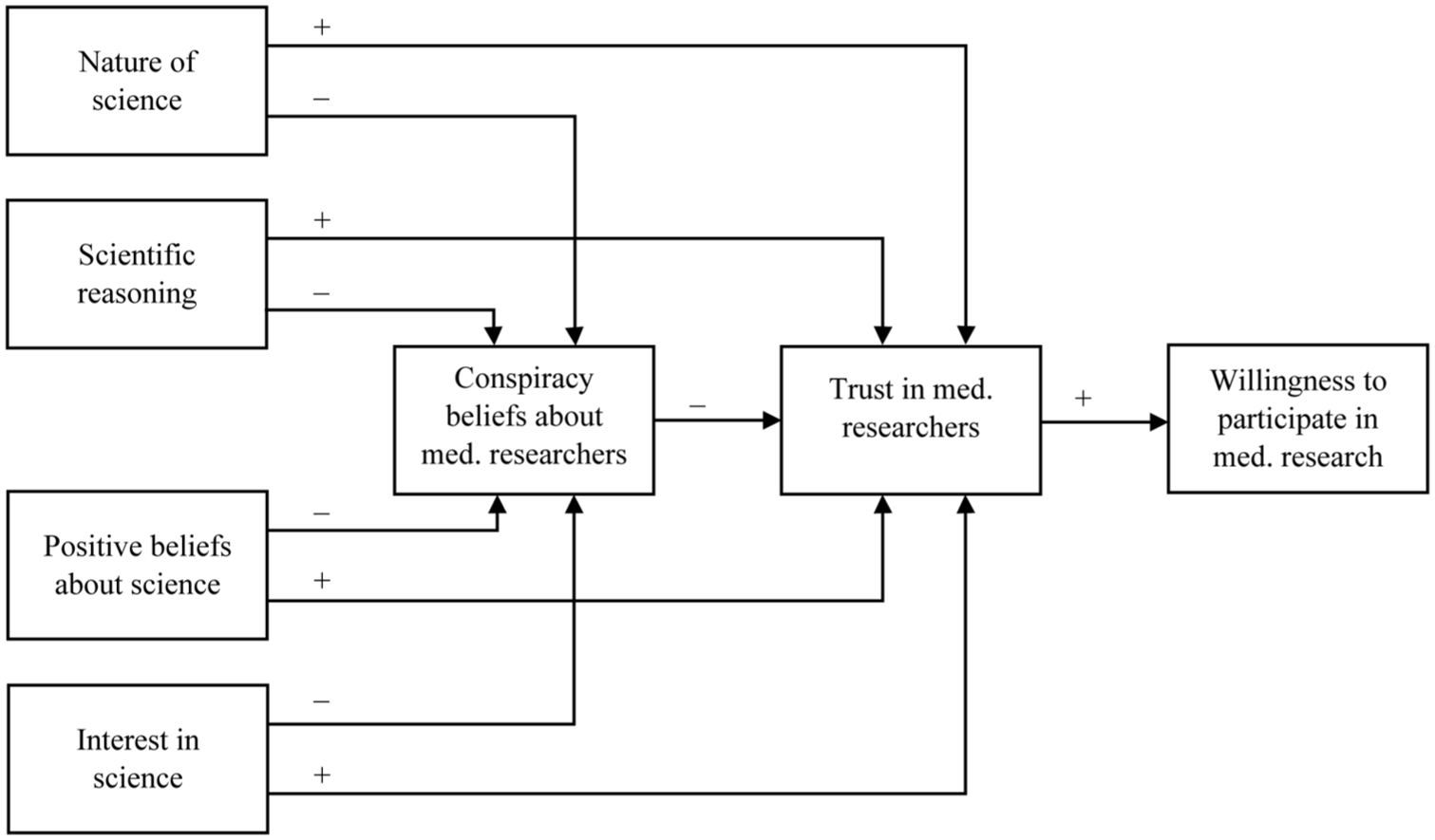
Hypothesized indirect relationship model.
2. Method
Participants and procedure
The research sample from the general adult population in Slovakia consisted of 600 participants from all Slovak regions, living in both urban and rural areas. The sample was representative with respect to gender (300 men, 300 women), age (18–89 years; M = 47.90, SD = 16.44), and educational attainment: primary = 13 (2%), secondary without leaving exam = 63 (11%), secondary with leaving exam = 239 (40%), Bachelor’s degree = 38 (6%), Master’s degree = 223 (37%), and Doctoral degree = 24 (4%). Participants were recruited from an online panel maintained by Talk Online Panel—an external research agency complying to the ICC/ESOMAR International Code. The survey, administered via Qualtrics in May 2023, provided information about the research aim and conditions, followed by nine sections containing research instruments: (1) demographics, (2) WPMR and past participation in medical research, (3) trust in medical researchers, (4) risk propensity, (5) conspiracy beliefs about medical researchers, (6) interest in science, (7) nature of science, (8) scientific reasoning, and (9) positive beliefs about science. The order of these sections was the same for all participants, but the items within the sections measuring scientific literacy dimensions and beliefs about medical researchers were randomized, meaning that each participant saw a different random order of these items. The survey also included two attention-check items to identify and exclude careless respondents. The research design was pre-registered (https://osf.io/8prtn), and the dataset along with detailed methods is publicly available at the Open Science Framework repository (https://osf.io/kq9bf). The research was approved by the Ethical Committee of the Centre of Social and Psychological Sciences, Slovak Academy of Sciences. All participants provided electronic informed consent prior to participation.
Measures
We measured four scientific literacy dimensions: nature of science understanding, scientific reasoning, positive beliefs about science, and interest in science. We also assessed two types of beliefs about medical researchers: conspiracy beliefs about and trust in medical researchers. Finally, we included WPMR and five control variables: gender, age, education, past participation in medical research, and risk propensity. All these variables were measured using separate instruments, except for the positive beliefs about science, which were assessed with two related scales and combined into a single measure.
Statistical analyses
All statistical analyses were performed in SPSS and Jamovi. First, the newly developed measures were analyzed using exploratory factor analysis. Then, the reliability (McDonald’s ω) of all measures was analyzed, followed by descriptive and correlation analysis (Pearson’s r). The indirect relationship model was tested using multiple X procedure in the PROCESS macro (version 4.2), Model 6 (Hayes, 2022). The model tested the pathways through which multiple predictor variables (X1 = understanding of nature of science, X2 = scientific reasoning, X3 = positive beliefs about science, X4 = interest in science) are simultaneously related to two mediators (M1 = conspiracy beliefs about medical researchers, M2 = trust in medical researchers), with only one mediator (M2 = trust in medical researchers) being related to the outcome (Y = WPMR). This model was tested with control variables (gender, age, education, past participation in medical research, and risk propensity). To test the significance of indirect relationships, the bootstrapping method based on 5000 samples and 95% confidence intervals was used.
3. Results
Descriptive statistics and correlation matrix
The results of the correlation analysis, presented in Table 1, show weak-to-moderate significant relationships. All scientific literacy dimensions—nature of science understanding, scientific reasoning, positive beliefs about science, and interest in science—are negatively correlated with conspiracy beliefs about medical researchers. Except for scientific reasoning, these dimensions are also positively correlated with both trust in medical researchers and WPMR. Furthermore, trust in medical researchers is positively correlated with WPMR, whereas conspiracy beliefs about medical researchers are negatively correlated with WPMR.
Descriptive statistics and correlation matrix.
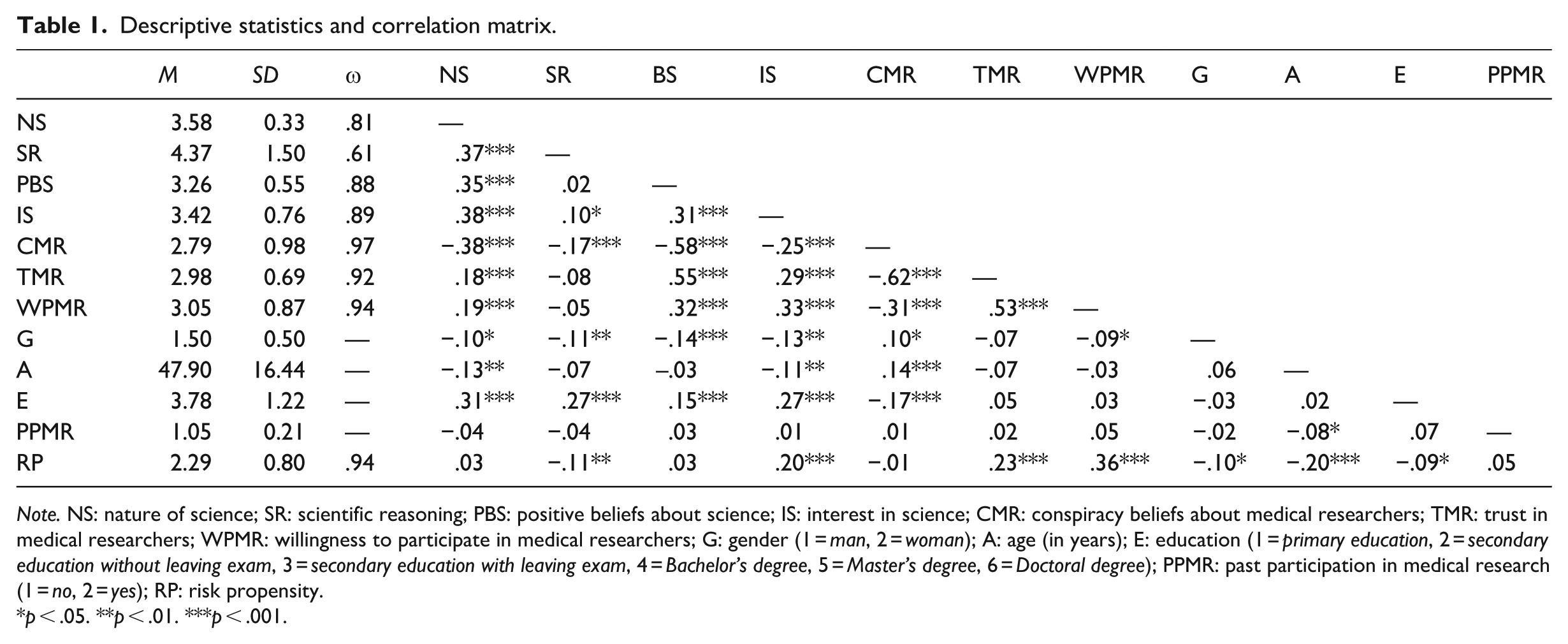
Note. NS: nature of science; SR: scientific reasoning; PBS: positive beliefs about science; IS: interest in science; CMR: conspiracy beliefs about medical researchers; TMR: trust in medical researchers; WPMR: willingness to participate in medical researchers; G: gender (1 = man, 2 = woman); A: age (in years); E: education (1 = primary education, 2 = secondary education without leaving exam, 3 = secondary education with leaving exam, 4 = Bachelor’s degree, 5 = Master’s degree, 6 = Doctoral degree); PPMR: past participation in medical research (1 = no, 2 = yes); RP: risk propensity.
p < .05. **p < .01. ***p < .001.
Model testing
Before testing the indirect relationship model, we assessed multicollinearity among the predictors, mediators, and control variables by calculating the variance inflation factor and tolerance statistics. All variance inflation factor values were below 3 (ranging from 1.03 to 2.19), and all tolerance values exceeded 0.1 (ranging from 0.46 to 0.98), indicating that the regression coefficient estimates were not biased by multicollinearity.
As reported in Table 2, regarding the paths constituting the indirect effects, nature of science understanding, scientific reasoning, and positive beliefs about science were negatively related to conspiracy beliefs about medical researchers. Nature of science understanding and scientific reasoning, as well as conspiracy beliefs, were negatively related to trust in medical researchers, whereas beliefs about science and interest in science were positively related to trust in medical researchers. Finally, trust in medical researchers was positively associated with WPMR.
Path coefficients for the tested model.
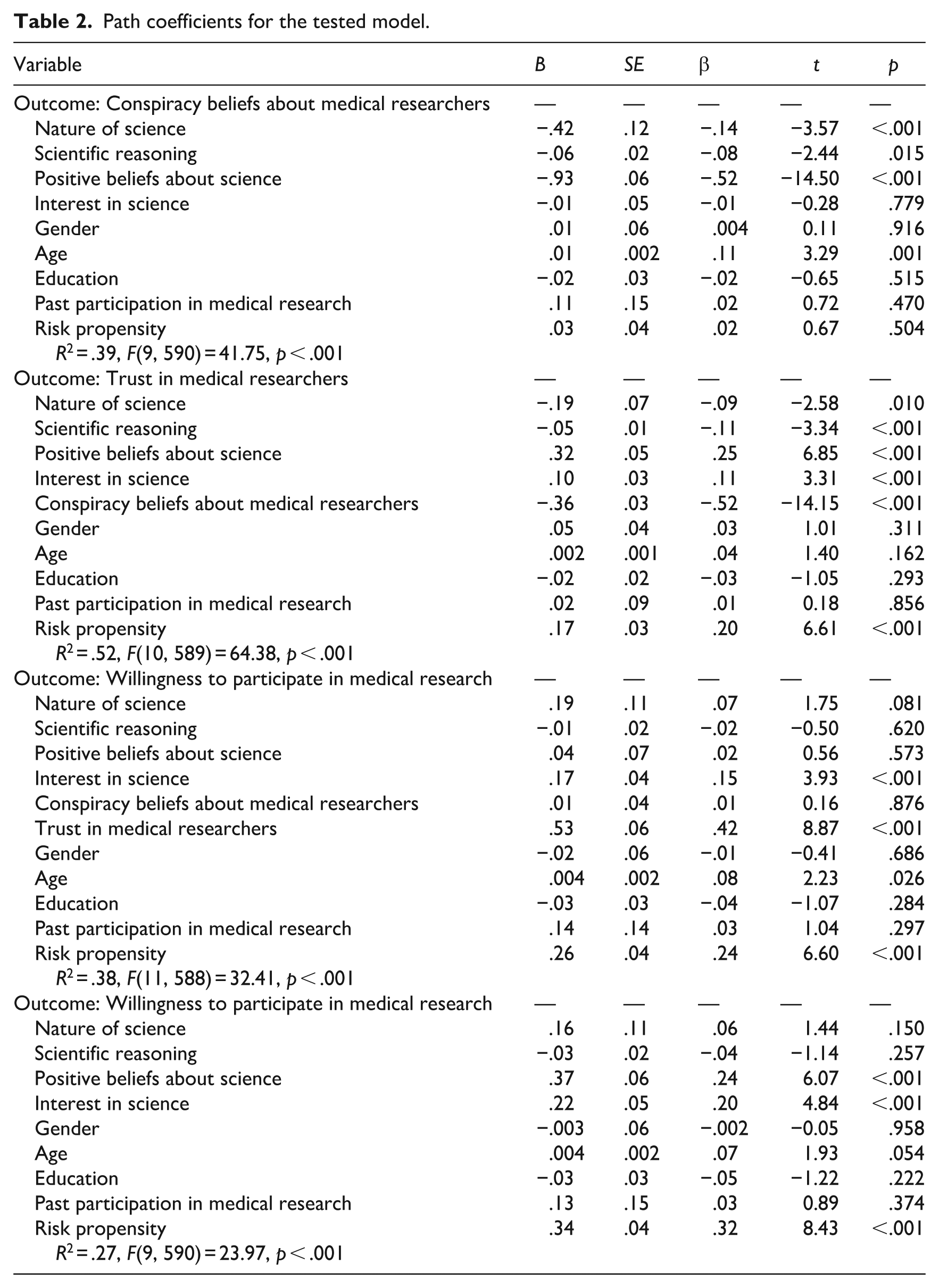
With respect to direct effects, interest in science was the only variable positively and directly related to WPMR. Regarding total effects, both interest in science and beliefs about science were positively related to WPMR. Notably, all reported effects remained statistically significant with the inclusion of control variables.
Indirect effects are reported in Table 3. Nature of science understanding and scientific reasoning were both positively and negatively related to WPMR, depending on the indirect pathway observed. In the serial indirect pathway, the relationship was positive, operating through lower endorsement of conspiracy beliefs and subsequently higher trust in medical researchers. However, in the simple indirect pathway, the relationship was negative, operating solely through lower trust in medical researchers. Positive beliefs about science and interest in science were only positively related to WPMR. Both a serial indirect pathway through lower endorsement of conspiracy beliefs followed by higher trust in medical researchers and a simple indirect pathway solely operating through higher trust in medical researchers were observed. Figure 2 presents the final model with the significant regression coefficients.
Indirect effects of the tested model.
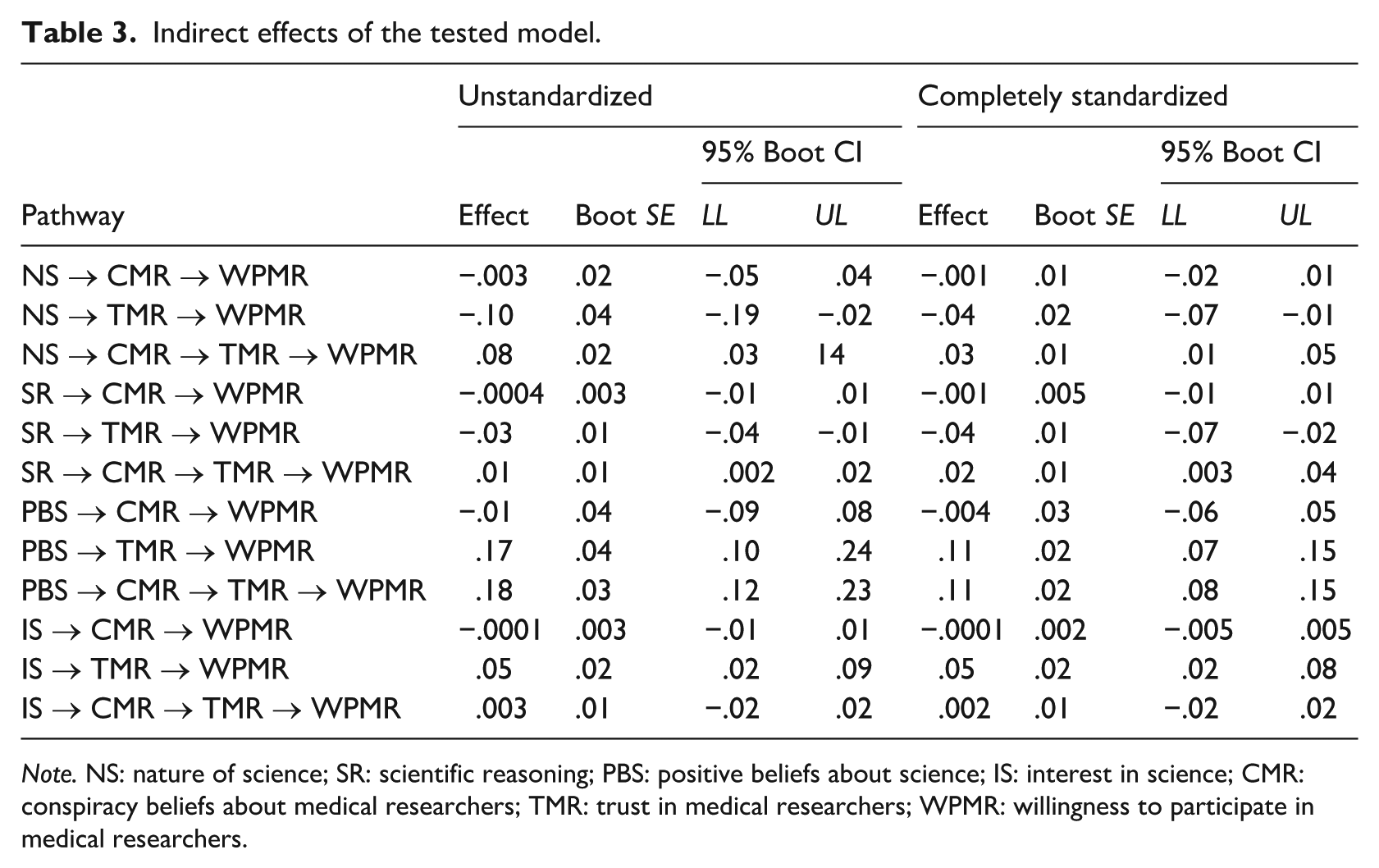
Note. NS: nature of science; SR: scientific reasoning; PBS: positive beliefs about science; IS: interest in science; CMR: conspiracy beliefs about medical researchers; TMR: trust in medical researchers; WPMR: willingness to participate in medical researchers.
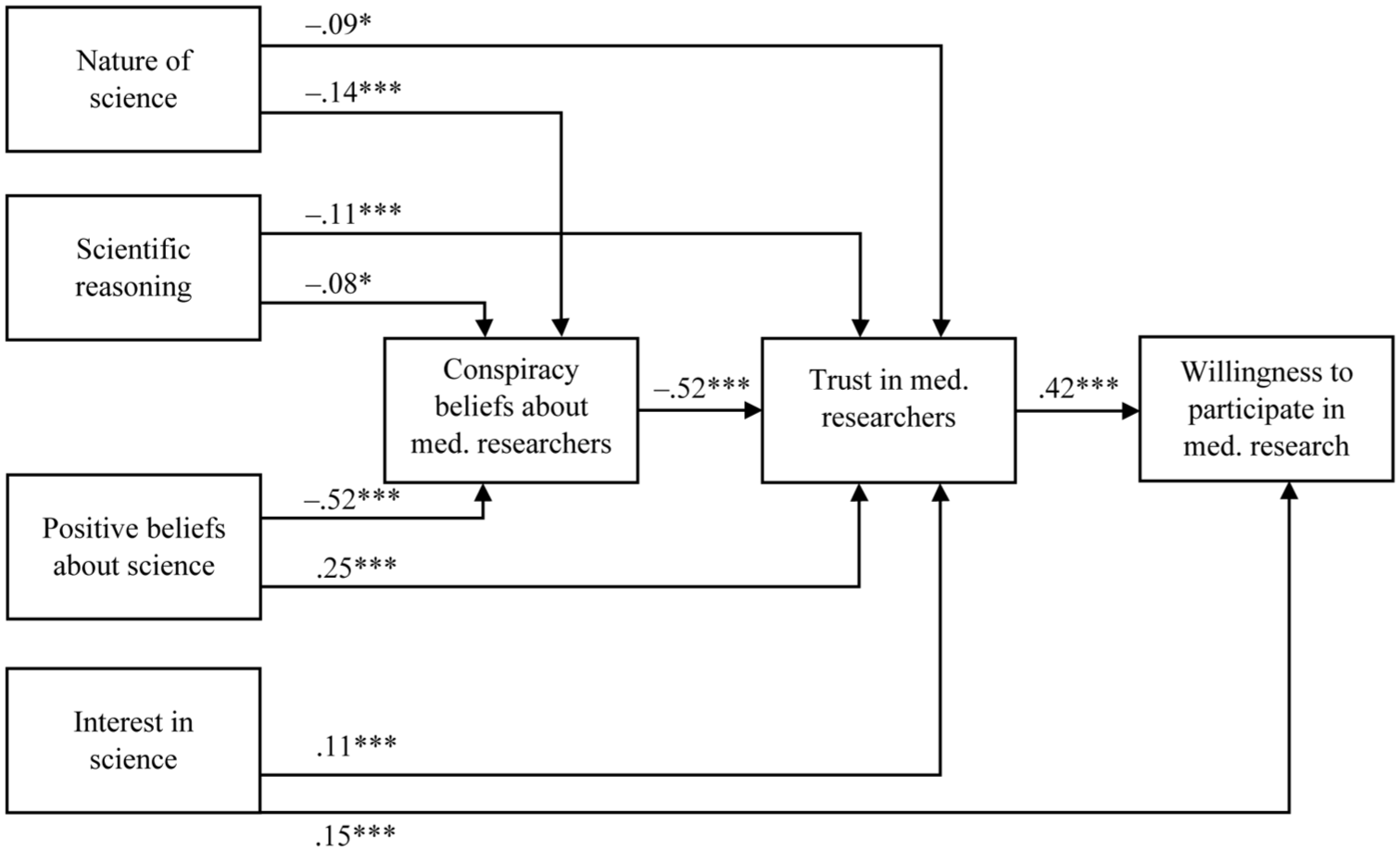
Final model.
4. Discussion
Empirical studies have paid limited attention to how scientific literacy relates to public willingness to participate in medical research. The present study seeks to fill this gap by examining a broader spectrum of scientific literacy dimensions—nature of science understanding, scientific reasoning, positive beliefs about science, and interest in science—in relation to WPMR. Going beyond observing direct relationships, we hypothesized that these dimensions are related to WPMR indirectly, through two beliefs about medical researchers—conspiracy beliefs about medical researchers and trust in medical researchers.
The analysis revealed differing patterns of associations across predictors. More positive beliefs about science were associated with higher WPMR, showing both significant positive total and indirect associations. These indirect associations operated both serially through lower endorsement of conspiracy beliefs and higher trust in medical researchers, and non-serially through higher trust in medical researchers. Higher interest in science was also associated with greater WPMR, showing significant positive total, direct, and indirect associations, operating solely through higher trust in medical researchers.
By contrast, knowledge about the nature of science and scientific reasoning showed significant indirect associations with WPMR despite no significant total or direct associations. Both predictors exhibited two distinct indirect pathways: one positive and one negative. Specifically, greater knowledge and better scientific reasoning showed serial indirect associations with greater WPMR through lower endorsement of conspiracy beliefs and higher trust in medical researchers. In addition, both predictors showed non-serial indirect associations with lower WPMR operating solely through lower trust in medical researchers.
Role of scientific literacy
A very promising finding of this study is that three of the examined scientific literacy dimensions—better understanding of the nature of science, better scientific reasoning, and more positive beliefs about science—were related to lower endorsement of conspiracy beliefs about medical researchers. Notably, positive beliefs about science showed the strongest negative relationship with these conspiracy beliefs, which is justifiable given that both constructs are conceptually adjacent, reflecting orientations toward scientific authority. These results align with the previous literature showing that each of these dimensions is linked to lower endorsement of various conspiracy and other epistemically unfounded beliefs (e.g. Čavojová et al., 2024; Fasce and Picó, 2019; Georgiou et al., 2021; Hartman et al., 2017; Viciana et al., 2024). This indicates that people with greater scientific literacy possess a refined understanding of science, making them less likely to believe that a large group of medical researchers could coordinate a deliberate deception. At the same time, they may be more aware of the challenges such deception would face due to science’s self-correcting mechanisms.
All scientific literacy dimensions appeared to be related to trust in medical researchers; however, the directions of these relationships, surprisingly, differed. As hypothesized, more positive beliefs about science were linked to higher trust in medical researchers, a finding supported by previous research by Blankenship et al. (2021). This positive relationship is also conceptually coherent, as both concepts pertain to beliefs: the former refers to science and scientists at a general level, while the latter concerns medical researchers as representatives of the scientific enterprise at a more specific level. This conceptual closeness likely explains why positive beliefs about science showed the strongest relationship with trust in medical researchers among all scientific literacy dimensions. Similarly, as hypothesized, higher interest in science was linked to higher trust in medical researchers, aligning with previous findings (e.g. Koetke et al., 2025; Motta, 2018), which suggests that interest in science may cultivate openness and confidence toward those who represent the scientific community.
Contrary to our expectations, a better understanding of the nature of science and scientific reasoning were related to lower trust in medical researchers. However, these relationships were among the weakest of the examined predictors of trust in medical researchers; therefore, we recommend verifying them. Notably, our study is not the first that report similar findings. In particular, Lee and Kim (2018) found that individuals with higher factual and procedural scientific knowledge were more likely to hold unfavorable attitudes toward science. These findings reveal a more critical side of science understanding. Some scholars (Abd-El-Khalick and Lederman, 2023; Cobern et al., 2022) suggest that a deeper understanding of the nature of science may paradoxically cast doubt on science. This is because such understanding implicitly carries the notion that science is tentative, subject to revision, influenced by various contexts, and conducted by fallible humans. While these insights can foster healthy skepticism, they may lead to excessive distrust toward scientific authorities. Likewise, strong scientific reasoning skills may sharpen scrutiny of evidence and studies, recognizing limitations, but may divert attention from what is actually valuable knowledge. In short, emphasizing the view that science is imperfect may inadvertently undermine trust in medical researchers. Interestingly, these interpretations contrast with other possible negative outcomes of beliefs about science—instances in which having strong positive (trusting) beliefs about science leads to the uncritical acceptance of false or unsupported claims simply because they sound scientific (Graso et al., 2022; O’Brien et al., 2021).
The interpretation of these results benefits from considering how the observed associations manifest across different analytical levels. In particular, nature of science understanding and scientific reasoning showed positive correlations with trust in medical researchers, whereas their regression weights became negative once positive beliefs about science, interest in science, and conspiracy beliefs about medical researchers were included in the regression equation. This indicates a suppression situation, offering a more accurate depiction of the complex relationships than the simple correlation alone. In other words, the true relationships between nature of science understanding, scientific reasoning, and trust in medical researchers remained hidden until the additional variables were entered into the regression equation, thereby removing (suppressing) irrelevant variance shared among them.
Finally, although we did not formulate an explicit hypothesis, interest in science emerged as the only scientific literacy dimension directly and positively linked to WPMR. This finding is consistent with results reported by other authors (Füchslin et al, 2019; Losi, 2023). Medical research participation may, in fact, represent a specific science-related activity—an expression of interest in science, which intrinsically includes valuing science and feeling positivity toward it, and is associated with a pronounced readiness to acquire new, domain-specific knowledge through engagement in relevant activities (Krapp and Prenzel, 2011). In other words, higher interest in science appears to naturally entail an inclination to engage in research activities, such as participating in medical research.
Role of beliefs about medical researchers
Among the examined variables, greater endorsement of conspiracy beliefs about medical researchers was most strongly related to lower trust in medical researchers, which, in turn, was related to lower WPMR. This finding fills a critical gap in the literature, as conspiracy beliefs specifically targeting medical researchers have not been explicitly examined in relation to WPMR before. Moreover, it provides clear evidence that conspiracy beliefs about medical researchers are indirectly related to WPMR, which may help explain previous inconsistent findings—some studies suggested a negative relationship (Abadie and Heaney, 2015; Armstrong et al., 1999; Jenkins et al., 2009), while others have found no relationship at all (Bass et al., 2020; Russell et al., 2011). Indeed, our explanation is supported by research broadly showing that trust in medical authorities mediates the effect of exposure to conspiracy theories on behavioral intentions (Jolley and Douglas, 2014; Marques et al., 2024; Natoli and Marques, 2021). Our finding is consistent with this pattern, and also corroborates the well-established role of trust in medical researchers as a key factor contributing to WPMR (e.g. Abdelhafiz et al., 2021; Hall et al., 2006; Jaffe et al., 2021; Jin et al., 2020; Liu and Li, 2018; Sedlár and Grežo, 2022). The observed relationships have serious practical implications, as the spread of conspiracy theories about medical researchers among the public may create fertile ground for damaging their reputation—a reputation that appears to serve as a foundation for public trust in medical researchers, particularly given the rarity of direct contact with them. The erosion of this reputation-derived trust ultimately diminishes WPMR. Future research could investigate whether reputation damage accounts for the observed relationships.
Strengths and limitations
The present study offers several strengths. To the best of our knowledge, it is the first to investigate multiple dimensions of scientific literacy collectively in relation to WPMR, alongside conspiracy beliefs about and trust in medical researchers. Notably, this study is the first to utilize a measure specifically targeting conspiracy beliefs about medical researchers, encompassing perceptions of deliberate deception, concealment of information, and potential harm. Furthermore, our WPMR measure comprehensively captures diverse forms of participation, including providing different types of health information, donating various biological samples, and undergoing a range of medical procedures.
Nevertheless, several limitations should be taken into account when interpreting and generalizing these findings. First, participants were recruited from an online panel maintained by a research agency, potentially limiting representativeness. This sample may comprise individuals with greater research experience, higher motivation due to incentives provided by the agency, and enhanced digital literacy, which could contribute to more standardized responses, reduced authenticity, responses that align with what is perceived as “true” or expected, and faster responses with less thoughtful reflection. Second, two measures were specifically developed for this study based on existing instruments; however, the lack of validity testing may restrict the robustness of the conclusions drawn. Third, despite alignment with prior literature, the observed indirect relationships cannot be interpreted causally due to the cross-sectional design and absence of experimental or longitudinal data. Fourth, the WPMR measure assesses self-reported readiness to participate rather than actual participation behavior and should therefore be regarded as a proxy for real-world engagement in medical research.
Implications
Our findings have important implications for science education, science communication, public engagement, and policy strategies aimed at increasing WPMR. They underscore that interventions designed to boost public participation in medical research should target multiple scientific literacy dimensions. However, while enhancing public scientific literacy is necessary, it is insufficient without simultaneous efforts to foster trust in medical researchers and to counter conspiracy narratives surrounding them, as they both are key factors explaining the indirect link between scientific literacy and WPMR. Notably, efforts to enhance public scientific literacy must account for not only positive indirect relationships observed between all examined dimensions and WPMR but also for the potential negative indirect relationships between the two dimensions—understanding of the nature of science and scientific reasoning—and WPMR. This calls for more nuanced efforts, such as emphasizing that, despite the limitations inherent to science, science is a self-correcting, effective, and valuable method for approaching truth, and that scientists endeavor to pursue this goal to the best of their abilities.
Conclusion
This study demonstrates significant relationships between scientific literacy dimensions and WPMR, mediated by conspiracy beliefs about and trust in medical researchers. These findings broadly align with the reasoned action approach (Fishbein and Ajzen, 2011) and corroborate insights from prior research (Čavojová et al., 2024; Dykema et al., 2022; Sedlár and Grežo, 2022). Attitude-related dimensions of scientific literacy—positive beliefs about science and interest in science—exhibited exclusively positive indirect relationships with WPMR. However, knowledge- and competence-related dimensions—nature of science understanding and scientific reasoning—displayed both positive and negative indirect relationships with WPMR, depending on the specific beliefs about medical researchers through which these relationships operate. The unexpected, and at first glance counterintuitive, negative relationships can be understood as reflecting the inherent recognition of science’s limitations that accompanies deeper science understanding, which may lead to doubt about medical research. Consequently, the key challenge for science education and science communication lies in cultivating scientific literacy in a manner that acknowledges these limitations without eroding trust in a particular group of researchers. These findings should inform future strategies aimed at enhancing public willingness to participate in medical research.
Supplemental Material
sj-docx-1-pus-10.1177_09636625261452154 – Supplemental material for Willingness to participate in medical research: Unraveling the roles of scientific literacy and beliefs about medical researchers
Supplemental material, sj-docx-1-pus-10.1177_09636625261452154 for Willingness to participate in medical research: Unraveling the roles of scientific literacy and beliefs about medical researchers by Martin Sedlár and Matúš Grežo in Public Unde/rstanding of Science
Footnotes

Ethical considerations
This research was approved by the Ethical Committee of the Centre of Social and Psychological Sciences, Slovak Academy of Sciences (Approval No.: 10032023).
Consent to participate
All participants provided electronic informed consent prior to participation.
Author contributions
Martin Sedlár: Conceptualization, Methodology, Investigation, Formal analysis, Data curation, Visualization, Writing – original draft, Writing – review and editing.
Matúš Grežo: Conceptualization, Methodology, Investigation, Writing – review and editing.
Funding
The authors disclosed receipt of the following financial support for the research, authorship, and/or publication of this article: This publication has been produced with the support of the Operational Program Slovakia for the project: Systemic Public Research Infrastructure—Biobank for Cancer and Rare Diseases, phase II, co-financed by the European Union. This work was supported by the Scientific Grant Agency of the Ministry of Education, Science, Research and Sport of the Slovak Republic and the Slovak Academy of Sciences (Grant No. VEGA 2/0030/24).
Declaration of conflicting interests
The authors declared no potential conflicts of interest with respect to the research, authorship, and/or publication of this article.
Data availability statement
Supplemental material
Supplemental material for this article is available online.
Author biographies
References
Supplementary Material
Please find the following supplemental material available below.
For Open Access articles published under a Creative Commons License, all supplemental material carries the same license as the article it is associated with.
For non-Open Access articles published, all supplemental material carries a non-exclusive license, and permission requests for re-use of supplemental material or any part of supplemental material shall be sent directly to the copyright owner as specified in the copyright notice associated with the article.
