







Abstract
Organ-on-a-chip (OoC) platforms are microengineered systems that combine microfluidic control with living cells to emulate the physiological functions of human tissues and organs in vitro. OoC has become a transformative tool in pharmaceutical research, offering unprecedented capabilities for predicting drug efficacy, pharmacokinetics, and toxicity with human-relevant precision. This study presents a comprehensive scientometric and patent landscape analysis of OoC studies in pharmaceutical sciences spanning 2008–2025. Using CiteSpace, we mapped 1,786 publications to identify influential authors, landmark works, and temporal shifts in thematic focus. Keyword burst and clustering analyses reveal emerging frontiers in multi-organ integration, disease modeling, and drug screening. Patent data indicate a rapid expansion since 2016, led by China and the United States, underscoring a translational trajectory from fundamental research to applied biotechnology. These findings delineate the evolving intellectual and technological framework of organ-on-a-chip research in drug development and highlight future priorities in multi-organ systems, biomaterials optimization, and clinical translation.
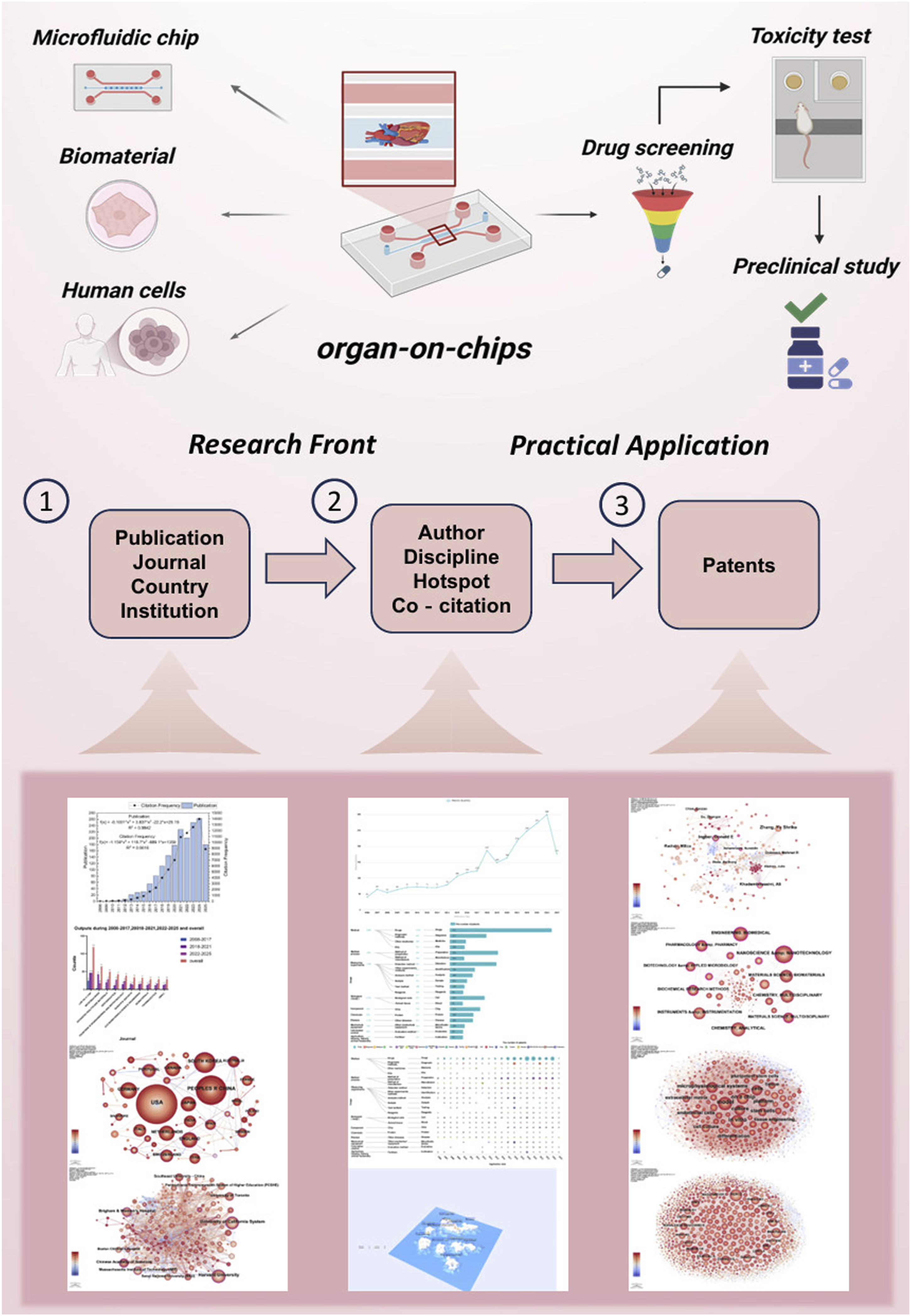
1. Introduction
Organ-on-a-chip (OoC) is a class of bioengineered models that integrate microfluidic technology with cellular engineering to recapitulate organ-level structure and function in vitro. The concept dates back to the early 2000s, when the convergence of microelectromechanical systems (MEMS) and cell-culture technologies catalyzed attempts to construct physiologically functional tissue models on microchips, thereby providing a revolutionary tool for biomedical research. 1 In the early 2010s, functional validation of single-organ chips established the core technical framework that combines dynamic microfluidic microenvironments with three-dimensional cell engineering.2,3 Since then, researchers have achieved breakthrough coupling of multiple organ functions, 4 delivering highly biomimetic platforms for drug-toxicity prediction. 5 Compared with traditional two-dimensional cell culture and, in many contexts, with animal experimentation, OoC systems offer greater physiological relevance and improved predictive power. 6 The rise of this interdisciplinary technology reflects both the limitations of animal models in ethics, cost, and translational predictivity, and the urgent demand from precision and personalized medicine for more faithful human-relevant models. 7 In recent years, notable advances have been made across multiple dimensions, including multi-organ integration and intelligent sensing. For example, Researchers have developed an organ chip for evaluating esophageal pathology. This chip can predict chemotherapy responses and can assist doctors in making better judgments on patients’ pathology and gaining a better understanding of the efficacy of treatment drugs. 8 In addition, a “lung-on-a-chip” capable of emulating human pulmonary gas-exchange function has been reported. 9 Collectively, these advances demonstrate that OoC technologies are evolving from conceptual models toward practical deployment in drug research and development, with substantial potential to enhance both screening efficiency and predictive accuracy.
Drug research plays a pivotal role in advancing human health and well-being, yet the process of drug discovery and development remains lengthy, costly, and fraught with challenges due to the complexity of preclinical validation and clinical trials. Traditional approaches to drug development face multiple limitations: animal models often fail to accurately reflect human physiology, resulting in poor predictive value for drug screening, while the clinical trial stage is characterized by high failure rates. This underscores the urgent need for robust and accelerated strategies to overcome these obstacles. OoC technology—arising from the deep integration of microfluidics and cellular engineering 10 —is rapidly advancing from proof-of-concept to practical applications in drug discovery and safety assessment. 11 Recognized by major regulatory agencies such as the U.S. Food and Drug Administration (FDA) and the European Medicines Agency (EMA) as a valuable complementary tool for evaluating drug safety and efficacy,12,13 OoC systems offer the unique advantage of reconstructing and mimicking the physiological and pathological microenvironments of human organs in vitro. This capacity significantly enhances the accuracy and efficiency of drug screening. 14 Estimates suggest that the adoption of OoC platforms could reduce the development cost of each new drug, while simultaneously lowering failure rates during the preclinical phase of research. 15 To date, OoC technology has been applied across diverse domains of pharmaceutical research, including drug toxicology and safety evaluation, 16 drug screening and efficacy prediction, 17 disease modeling, and personalized medicine. 18 For instance, Abulaiti M. et al. 19 utilized a cardiomyocyte chip derived from human induced pluripotent stem cells to quantitatively evaluate the effects of candidate compounds on human cardiac contractility and electrophysiology within just seven days, thereby greatly enhancing the clinical relevance of early pharmacological screening. Similarly, Bircsak K.M. et al. 20 leveraged a three-dimensional liver-chip platform to simultaneously assess the metabolic stability, cholestasis potential, and mitochondrial toxicity of 128 compounds in a single experiment, providing a high-throughput alternative for drug toxicology research. In the context of disease-specific models, Jalili-Firoozinezhad S. et al. 21 successfully reproduced radiation-induced epithelial cell death on an intestinal chip and quantitatively evaluated the protective effects of radioprotective drugs on epithelial integrity. Furthermore, skin chips and placental barrier chips have been employed to investigate the permeability of topical formulations and pregnancy-related medications through the skin, amniotic membrane, and placental barrier,22,23 effectively overcoming the translational limitations of traditional two-dimensional models and animal studies. By faithfully simulating human physiology, improving predictive accuracy, and reducing costs, OoC technology is reshaping the traditional paradigm of drug development. It offers an unprecedented solution to the challenges of preclinical validation and clinical trial complexity, thereby accelerating the translation of innovative therapeutics that can ultimately benefit human health.
With the rapid advancement of OoC technology in the life sciences and engineering domains—particularly its broad application in drug development—the volume of related research outputs has continued to rise, giving rise to multiple interdisciplinary subfields (Figure 1). While this expansion has fueled the rapid progress of the discipline, it has also created challenges for newcomers seeking to navigate the vast and fragmented body of literature. Although numerous systematic reviews
24
and meta-analyses
25
have attempted to synthesize the applications of OoC technology in drug research, these traditional approaches are limited in their ability to capture the structural evolution of the field, track emerging research hotspots, or map the distribution of leading scholars and institutions. Bibliometric analysis, as a quantitative method for mapping scientific knowledge, has increasingly been employed in recent years to analyze the dynamics of frontier research across a wide range of disciplines. By employing tools such as co-occurrence analysis of keywords, co-citation networks, and burst detection of emerging terms, bibliometric methods enable the visualization of thematic clusters, the identification of key literature and scholarly communities, and the tracing of both the foundational knowledge and evolving frontiers of a field. This approach is particularly valuable for highly interdisciplinary and fast-evolving domains like OoC research, where terminology shifts rapidly and traditional review methods struggle to ensure comprehensive coverage and systematic synthesis. Bibliometrics provides a panoramic perspective that simultaneously integrates macro-level structures with micro-level trends, thereby offering researchers a more nuanced understanding of the field’s trajectory. While high-quality bibliometric studies have already been conducted in areas such as biomedical engineering,
26
providing valuable knowledge maps for researchers, there remains a conspicuous gap when it comes to systematic bibliometric analyses focused on OoC applications in drug development. Addressing this gap is critical for clarifying the research landscape, identifying trends, and guiding future exploration in this emerging and impactful domain. The application of organ-on-a-chip in the field of drug research. (Created with BioRender).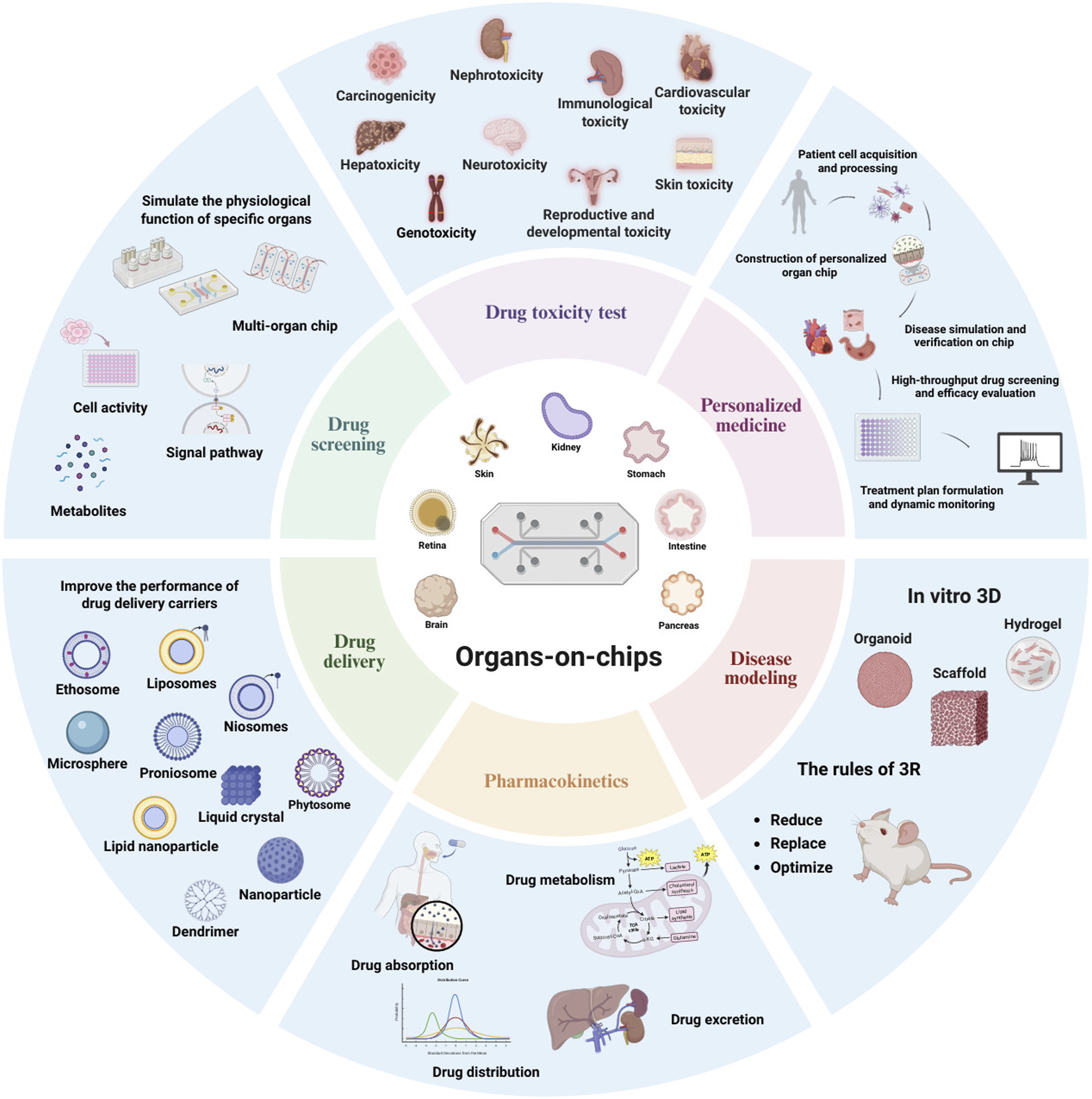
Therefore, this study employs bibliometric methods to systematically examine the current research landscape and evolutionary trends of organ-on-a-chip (OoC) in drug development. The aim is to construct a comprehensive knowledge map of the field, identify prevailing research hotspots and key publications, and provide quantitative evidence to inform future research directions and innovative pathways. Specifically, our objectives are: (1) to conduct a quantitative assessment of OoC-related publications in the drug domain, analyzing annual publication trends and journal distribution; (2) to investigate collaboration networks at the national, institutional, and author levels; (3) to examine the disciplinary evolution of OoC research in drug development; (4) to analyze the dynamics of research hotspots with a focus on keyword co-occurrence and clustering; (5) to perform co-citation analysis of OoC-related articles; and (6) to explore the patent landscape associated with OoC applications in drug development. Finally, we provide an in-depth interpretation of the major findings and emerging trends in the field. Collectively, these comprehensive analyses offer valuable insights to support the advancement of OoC technology within the pharmaceutical sciences.
2. Method
2.1. Data extraction
To systematically investigate the current status and emerging trends of OoC technology in drug development, this study employed bibliometric analysis based on data retrieved from the Web of Science Core Collection (WoSCC). WoSCC was selected because of its comprehensive coverage of high-impact journals, standardized indexing system, and widespread recognition in bibliometric research, which collectively ensure the reliability and academic rigor of our findings. However, academic publications alone may not fully capture the translational and application-oriented aspects of OoC. To address this gap, we additionally incorporated patent data, as patents provide complementary insights into technological innovation and industrial implementation. Patent information was obtained from the incoPat Technology Innovation Intelligence Platform, developed by Beijing IncoPat Co., Ltd., which integrates the majority of valid global patents and is widely regarded for its broad coverage, timely updates, and suitability for monitoring frontier technologies.
2.2. Data analysis and visualization
The bibliometric analysis in this study was conducted using CiteSpace (version 6.4.R1) and RStudio (version 4.4.2). CiteSpace is a widely recognized tool for mapping scientific knowledge structures, capable of performing co-citation analysis, keyword burst detection, and clustering to reveal the intellectual base and research frontiers of a field. RStudio was primarily used to visualize the geographical distribution and collaborative networks of authors, institutions, and countries, thereby complementing the structural analysis provided by CiteSpace. Patent family indicators were obtained from the family-related fields provided by incoPat. Simple family size and extended family size were used as descriptive indicators of the breadth of patent protection and international patent deployment. The search strategy was finalized on August 3, 2025, and was designed to maximize recall while ensuring accuracy. The search strategy is presented in Figure 2; it mainly involved standard constraints on document type, language, and publication year. These restrictions were applied to reduce noise from non-research documents, non-English publications, and early or irrelevant records, thereby ensuring the reliability and comparability of the dataset. Patent data were retrieved using the incoPat Technology Innovation Intelligence Platform, which integrates the majority of valid global patents, including those from the World Intellectual Property Organization (WIPO), the European Patent Office (EPO), and most national patent offices. To improve specificity and avoid retrieving irrelevant patents from other engineering or biomedical domains, targeted queries were performed using the TIAB-DWPI (title, abstract/Derwent World Patent Index) and USE-DWPI (use/application field) fields. This refinement ensured that only patents directly related to the pharmaceutical applications of organ-on-a-chip technology were included, thereby enhancing the validity and interpretability of the results. The patent search terms are consistent with WoSCC. Flowchart of the research literature selection.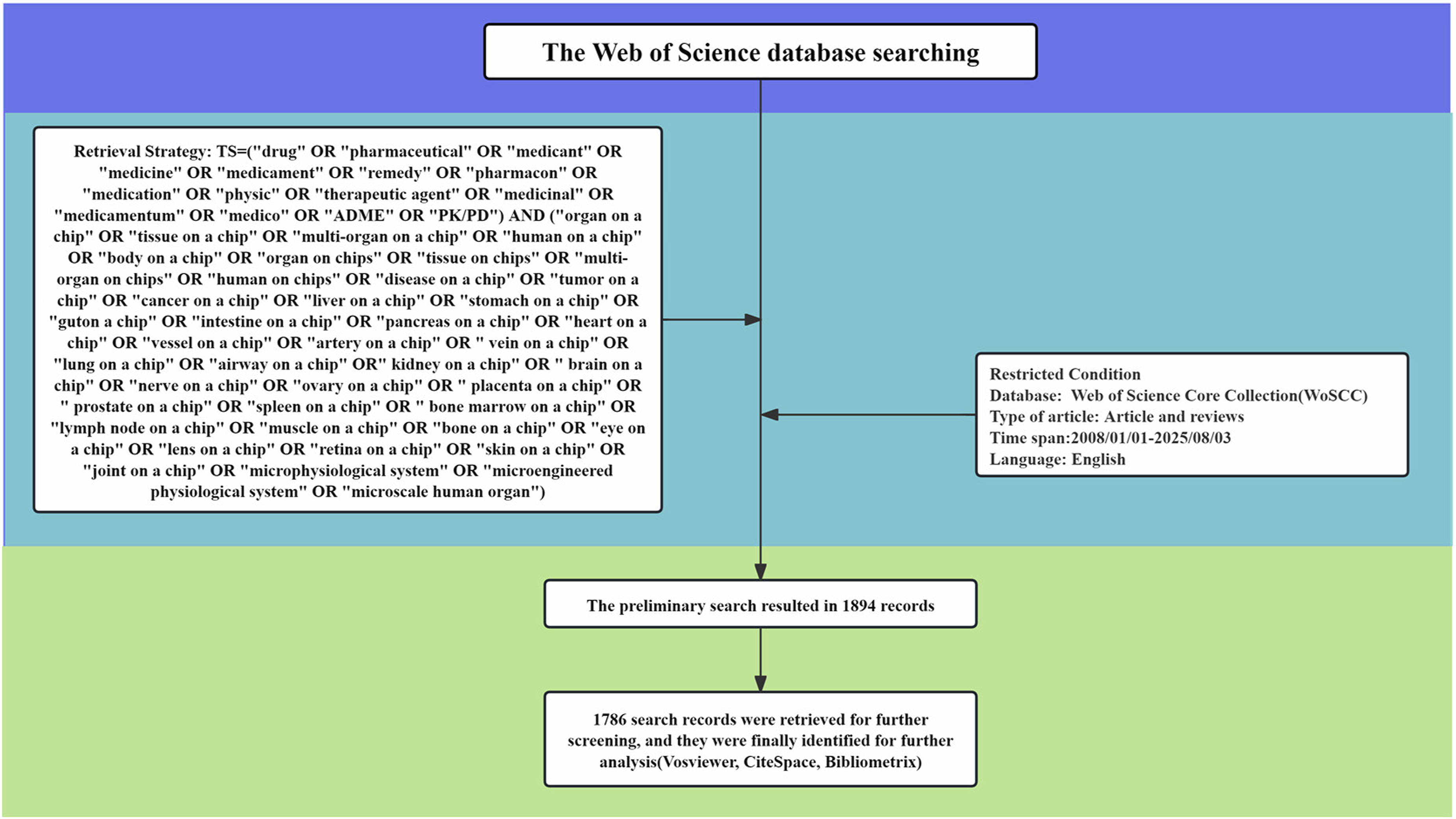
3. Results
3.1. Statistical analysis of publications
To provide an overview of the research landscape, this study first analyzed the annual publication output and citation frequency of organ-on-a-chip (OoC) research in the pharmaceutical field during the retrieval period (2008–2025). As illustrated in Figure 3, both the number of publications and the cumulative citation frequency exhibited a clear upward trajectory, although the pace of growth varied across different time intervals. Based on quantitative changes and qualitative milestones, the development of this field can be broadly divided into three distinct phases. Phase I: Initial exploration, spanning from 2008 to 2017, the number of OoC-related publications remained consistently low, never exceeding 100 publications per year. In fact, before 2012, fewer than 20 papers were published annually, indicating that OoC research was still in its infancy. Although the concept of microfluidic and biomimetic systems had been proposed earlier, the technical bottlenecks in chip fabrication, material compatibility, and multi-organ integration constrained practical applications in drug-related studies. This suggests that while the foundational studies attracted attention, their broader impact on the pharmaceutical sciences had not yet been fully recognized. Phase II: Rapid expansion, from 2018 to 2021, marked a turning point in the evolution of OoC research. The annual publication volume increased dramatically, rising from fewer than 80 papers in 2017 to well over 160 papers by 2021, effectively doubling within a four-year period. This sharp increase coincides with notable breakthroughs in OoC technology, including improved biomaterials, higher throughput microfabrication. Phase III: Consolidation and sustained growth. Publication output continued to increase, but with notable fluctuations. Specifically, annual publications rose to more than 220 in 2022, slightly decreased in 2023, then rebounded to peak above 260 in 2024. Although the year-to-year variation suggests that research activity has entered a more mature stage, the overall upward trend indicates enduring momentum. The citation frequency during this phase continued to rise in tandem with publication numbers, reaching nearly 14,000 citations by 2024. The lag between publication peaks and citation accumulation reflects the natural time delay for scholarly recognition. Importantly, the consistently upward citation trend underscores that the field’s research outputs are not ephemeral; instead, they continue to generate sustained academic interest and recognition over time. To further characterize these temporal patterns, polynomial curve fitting was performed for both publication counts and citation frequency. The fitted models achieved high coefficients of determination (R2= 0.9842 for publications and R2= 0.9816 for citations), demonstrating a strong alignment with observed data. The choice of polynomial fitting was based on the nonlinear growth trajectory typical of emerging research domains, where expansion often accelerates rapidly after a gestation phase before gradually stabilizing. Annual paper output on the application of organ-on-a-chip in drug research and development from 2008 to 2025.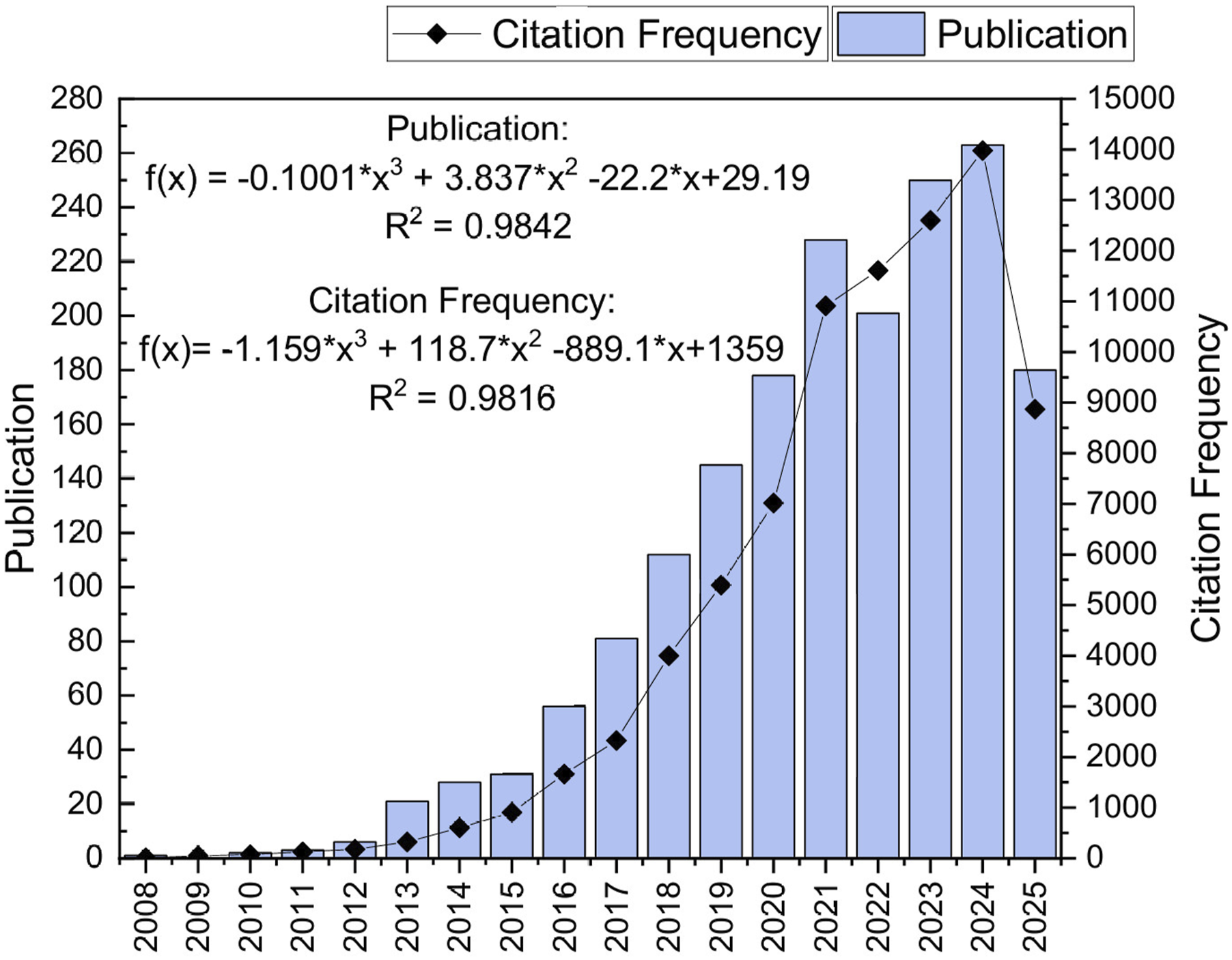
3.2. Analysis of published journals country cooperation network
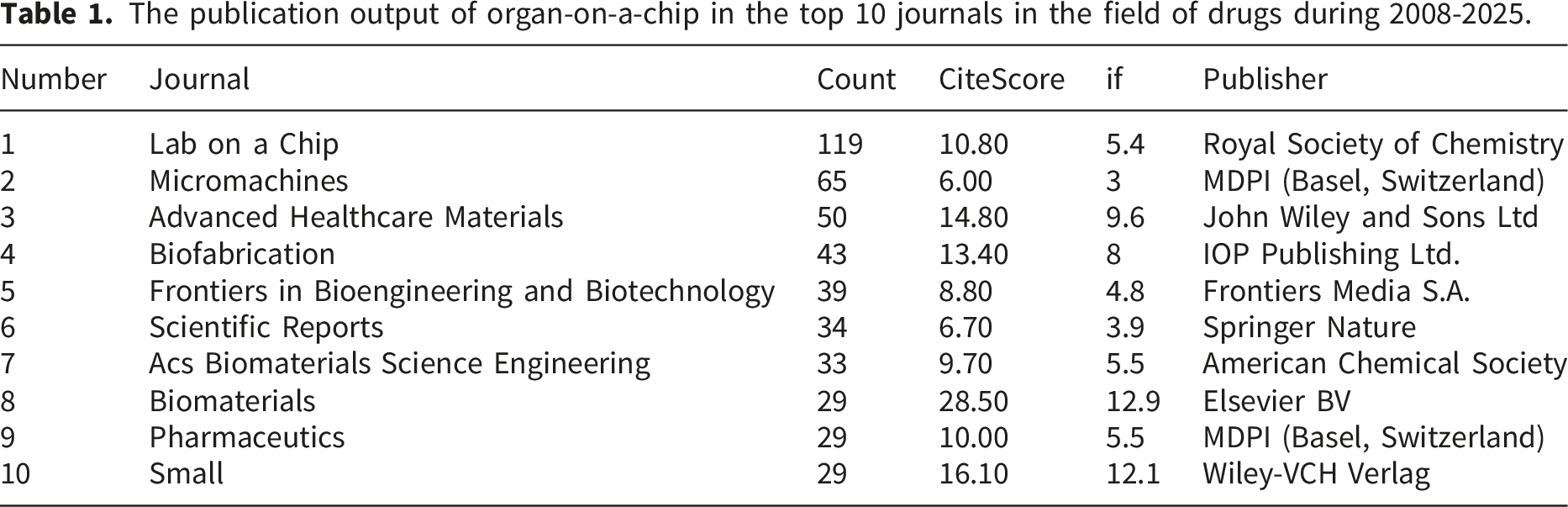
The publication output of organ-on-a-chip in the top 10 journals in the field of drugs during 2008-2025.
A stage-based comparison of publication trends (2008–2017, 2018–2021, and 2022–2025) revealed differences in journal-level contributions over time (Figure 4). Lab on a Chip consistently published across all three stages and remained the leading outlet, reflecting its central role in shaping the discourse on OoC technologies. Meanwhile, several journals exhibited significant growth during 2022–2025, suggesting that both editorial boards and researchers have become increasingly responsive to the evolving applications of OoC in drug discovery and testing. These shifts also reflect how journal priorities adapt to new technological advances and emerging hotspots within pharmaceutical research. The publication output of organ-on-a-chip in the top 10 journals in the field of drugs during 2008-2017, 2018-2021, 2022-2025 and the overall period.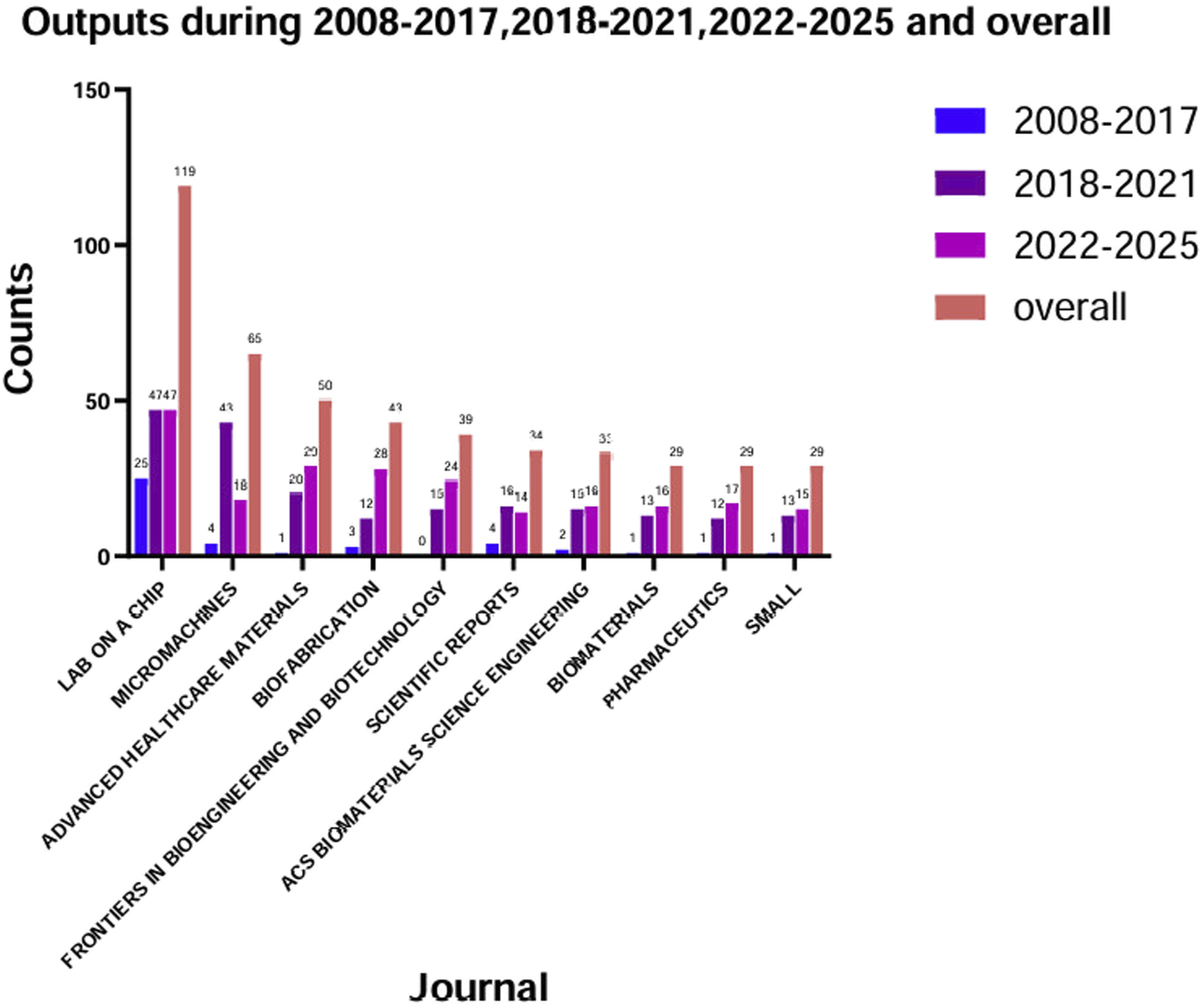
3.3. Country cooperation network
To explore the geographical distribution and collaboration patterns of research outputs, we conducted a comprehensive bibliometric analysis of publications from 2008 to 2025. A total of 73 countries and regions contributed to studies on organ-on-a-chip (OoC) in pharmaceutical research, reflecting the global scope of this field. The top ten contributors, ranked by publication volume, were the United States, China, South Korea, Germany, the United Kingdom, the Netherlands, Japan, Canada, Italy, and Switzerland (Figure 5(A)). National Cooperation Network Analysis of organ-on-a-chip in the field of drug research from 2008 to 2025. (A. Countries ranking among the top 20 in the application of organ-on-a-chip in drug research from 2008 to 2025; B. Geographical distribution of countries in the application of organ-on-a-chip in drug research from 2008 to 2025; C. Network map of countries in the outputs of organ-on-a-chip in drug research from 2008 to 2025; D. Countries ranking among the top 20 in the outputs of organ-on-a-chip in drug research from 2008 to 2017; E. Countries ranking among the top 20 in the outputs of organ-on-a-chip in drug research from 2018 to 2021; F. Countries ranking among the top 20 in the outputs of organ-on-a-chip in drug research from 2022 to 2025).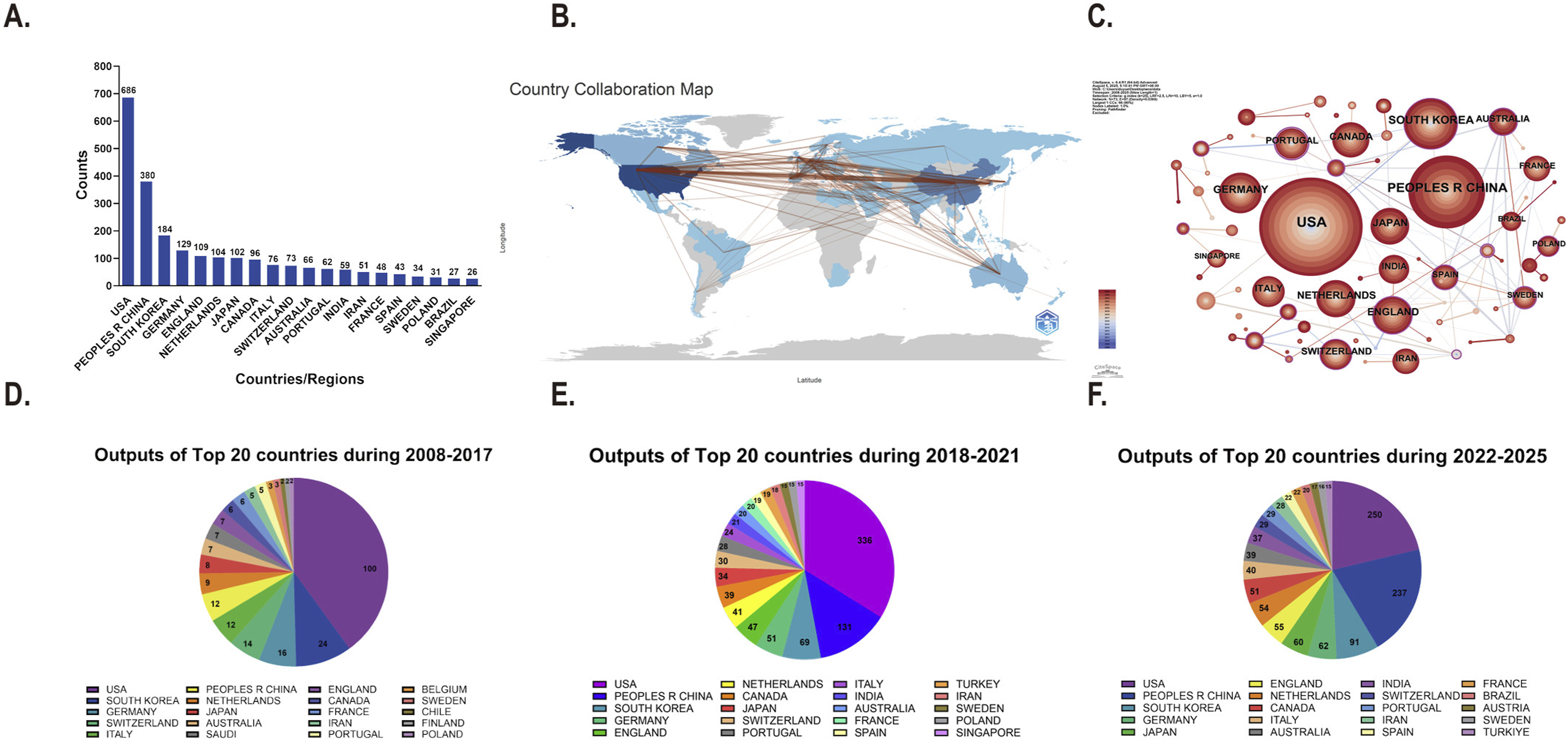
Collaboration analysis, performed using R-bibliometrix and CiteSpace, revealed dense international research connections. Countries such as the United States, China, Germany, and the United Kingdom exhibited particularly close cooperation with others, highlighting their roles as hubs within the global research network (Figure 5(B)). The network visualization (Figure 5(C)) shows node size proportional to citation counts, while connecting lines represent collaboration intensity. Notably, the United States and China stood out for their publication and citation volume, consolidating their influence in the field. However, centrality analysis, which evaluates a country’s position in the collaborative structure, provided further nuance. The presence of purple ring outlines indicated higher centrality values, identifying the United Kingdom and South Korea as pivotal connectors that actively promoted international scientific exchange. The overall multi-centric, multi-layered network structure illustrates the increasing globalization of OoC research. Despite their dominance in publication volume and citations, the United States and China displayed relatively low centrality scores. This suggests that their international collaborations, while present, may be somewhat limited or uneven compared with their overall research output. Such patterns may reflect differences in national research policies, funding priorities, or thematic emphases within subfields of OoC applications. Stage-based analysis of national contributions (Figure 5(D)–(F)) revealed the dynamic evolution of this research landscape. From 2008 to 2017, the field remained in its exploratory stage, with limited outputs across most countries. The United States led with approximately 100 publications, while China, the United Kingdom, and others produced fewer than 25 papers each. Between 2018 and 2021, the field entered a period of rapid growth: U.S. publications surged, China significantly narrowed the gap, and countries such as South Korea, Germany, and the United Kingdom experienced remarkable increases in output. The period 2022–2025 marked an explosive phase of expansion, with China achieving a dramatic rise to 237 papers, nearly catching up with the United States (250). Meanwhile, countries such as the United Kingdom, Germany, and South Korea maintained strong contributions, and emerging players such as Brazil and Austria began to appear. These developments demonstrate both the deepening of research in core countries and the broadening of participation worldwide, signaling a qualitative leap in the global spread of OoC research.
3.4. Institutional cooperation network
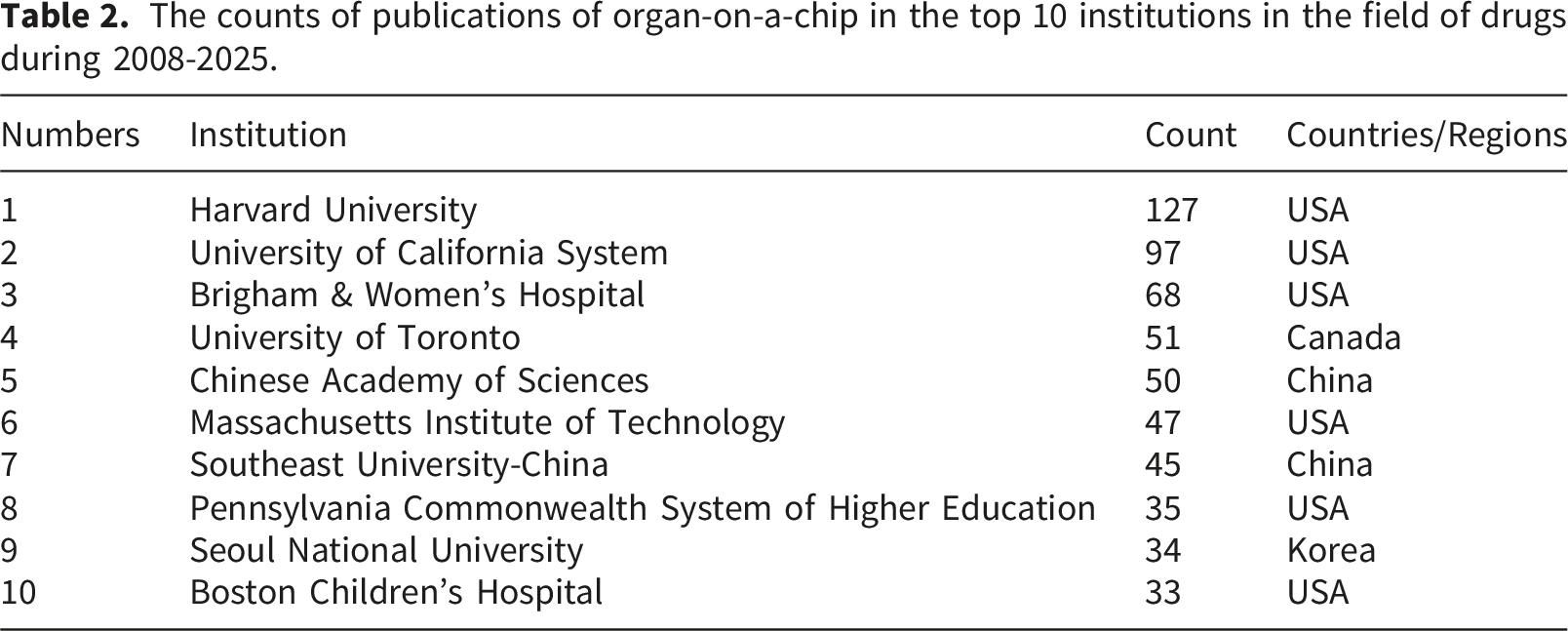
The counts of publications of organ-on-a-chip in the top 10 institutions in the field of drugs during 2008-2025.
The counts of citations of organ-on-a-chip in the top 10 institutions in the field of drugs during 2008-2025.
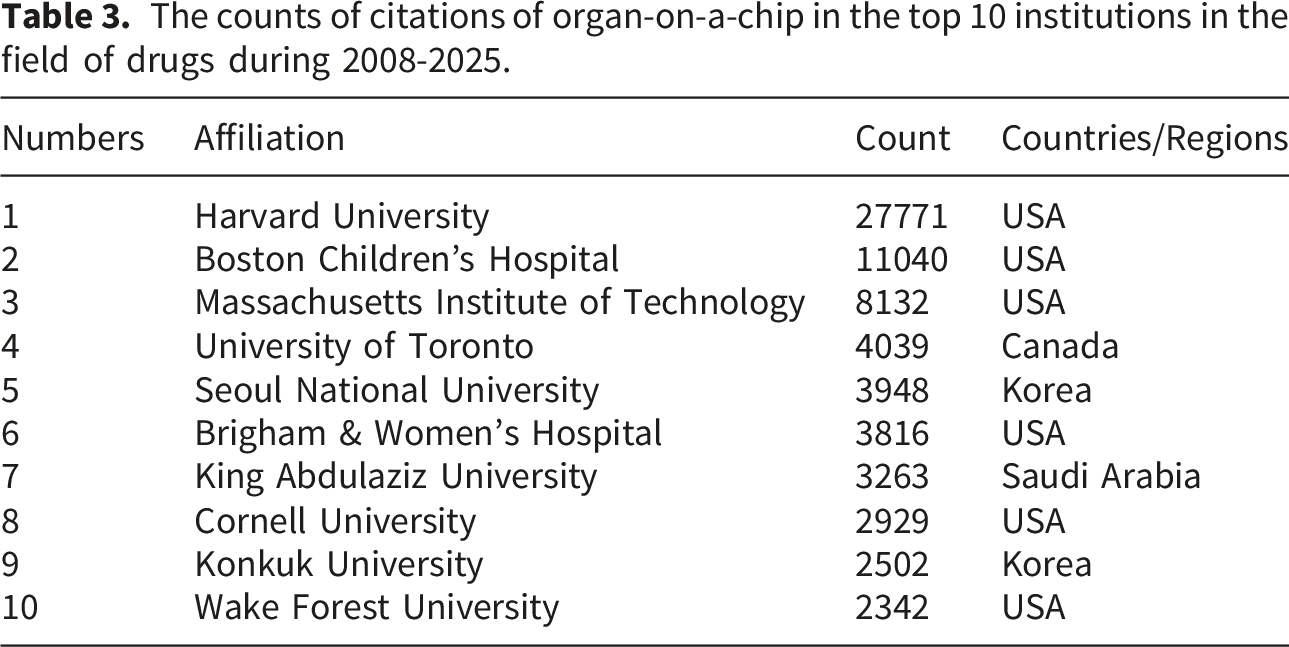
The CiteSpace-generated institutional cooperation network (Figure 6) reveals a complex web of collaborations. Larger and brighter red nodes, such as Harvard University and the University of California System, indicate both high output and strong centrality, confirming their pivotal positions within the global research network. Thicker connecting lines around these nodes reflect dense collaborative ties, while the clustering of U.S. institutions suggests tightly integrated partnerships. By contrast, Chinese and Korean institutions, though present as visible nodes, signal the need for stronger cross-border and intra-national collaboration. The institutional cooperation network of organ-on-a-chip in the field of drug research from 2008 to 2025.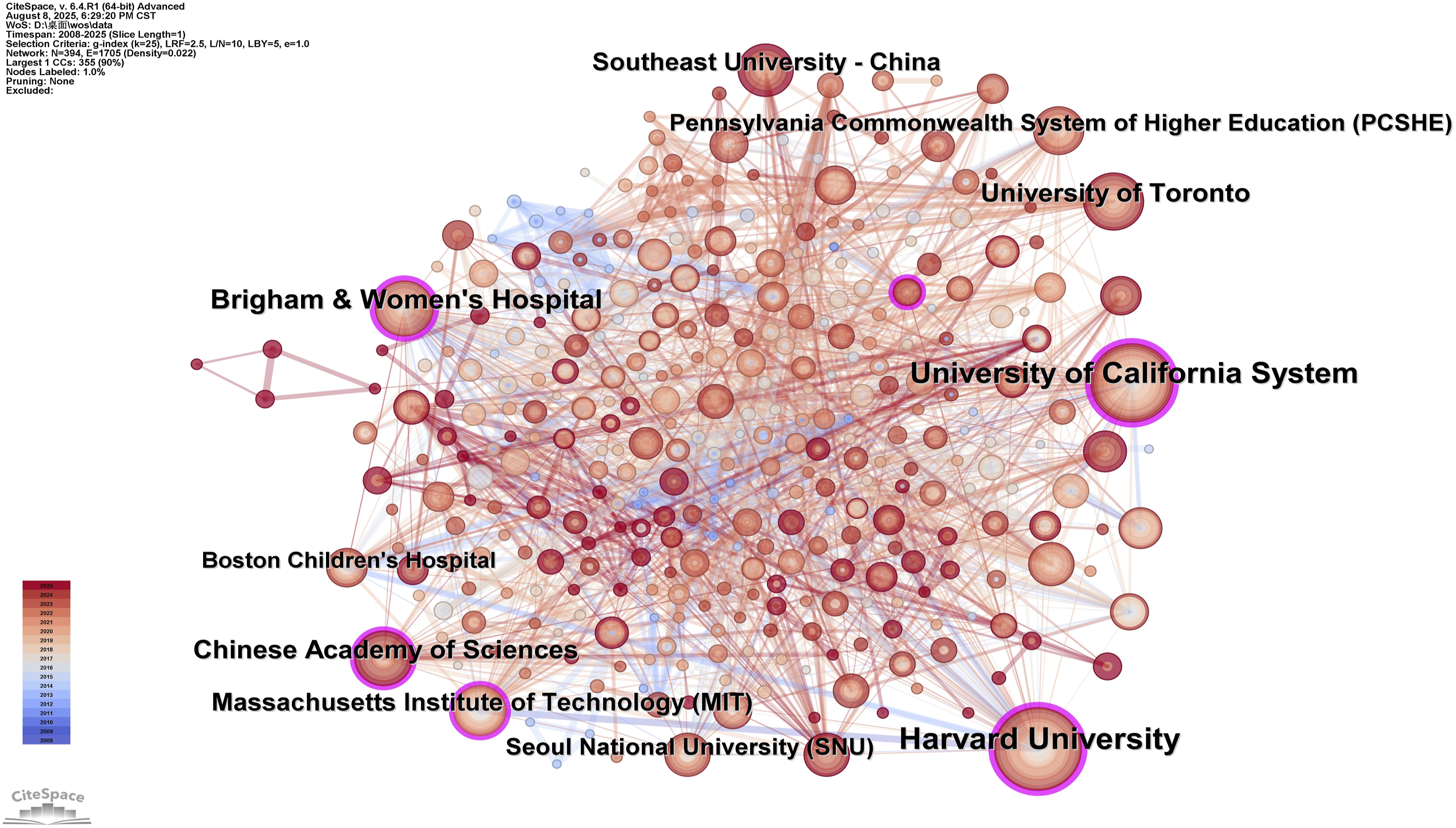
3.5. Author cooperation network
The top 20 authors of organ chips in the field of drug research and application from 2008 to 2025.
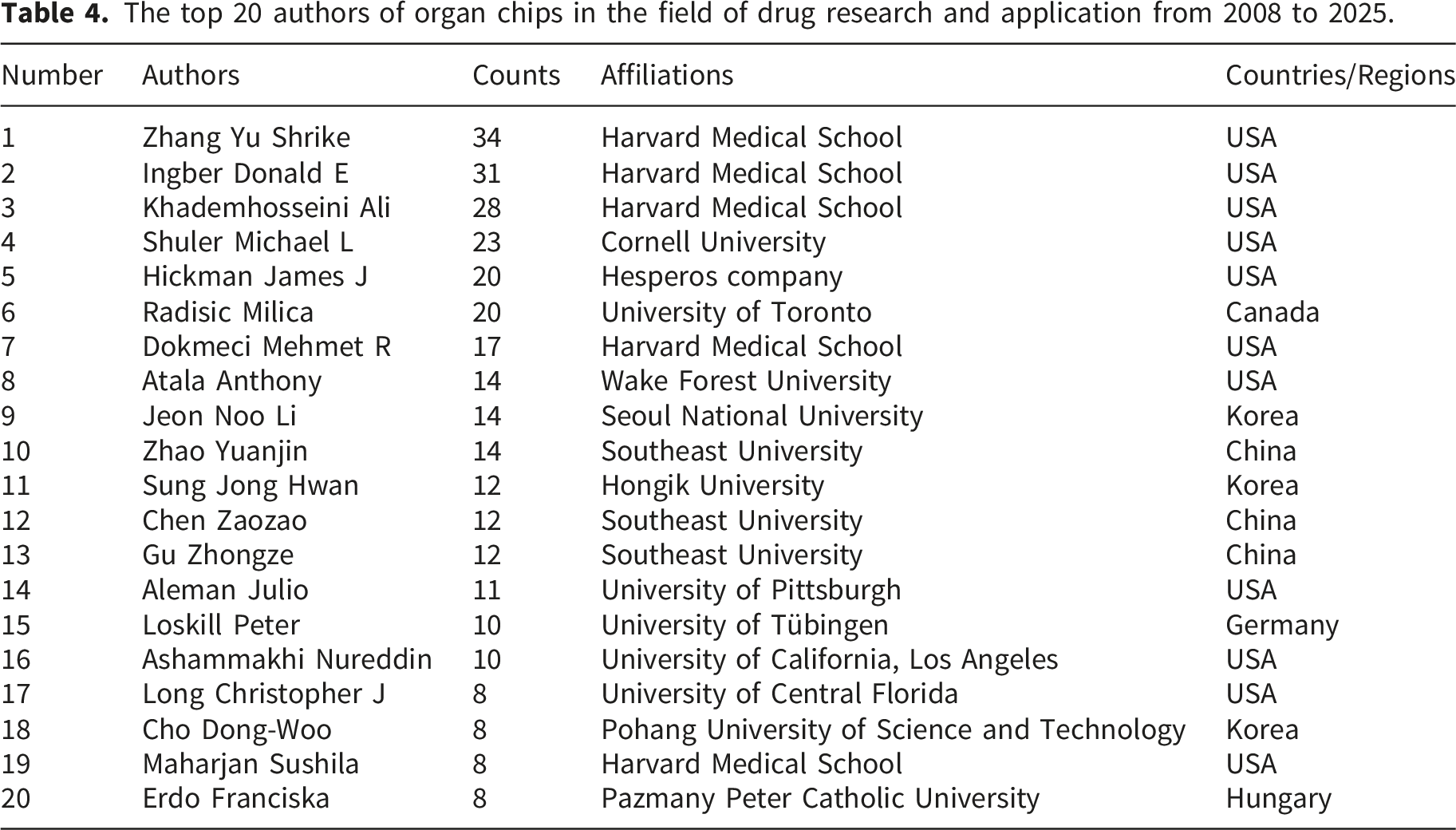
The author collaboration network reveals a fragmented structure compared to the more cohesive institutional and national networks (Figure 7(A)). Only a limited number of dense clusters exist, such as those led by Zhang Yu Shrike, Donald E. Ingber, and Ali Khademhosseini at Harvard Medical School. Their close collaboration is facilitated by shared institutional resources and geographic proximity, accelerating advances in chip design and cell function modeling. Similarly, the strong linkage between Chen Zaozao and Gu Zhongze of Southeast University reflects a team-based research style in Chinese academia, often organized around specific technical themes. Analysis of the author collaboration network of organ-on-a-chip in the field of drug research from 2008 to 2025. (A. Author collaboration network of organ-on-a-chip in the field of drug research from 2008 to 2025; B. Achievements of the top 20 authors ranked by publication volume from 2008-2017, 2018-2021, 2022-2025, and the overall period).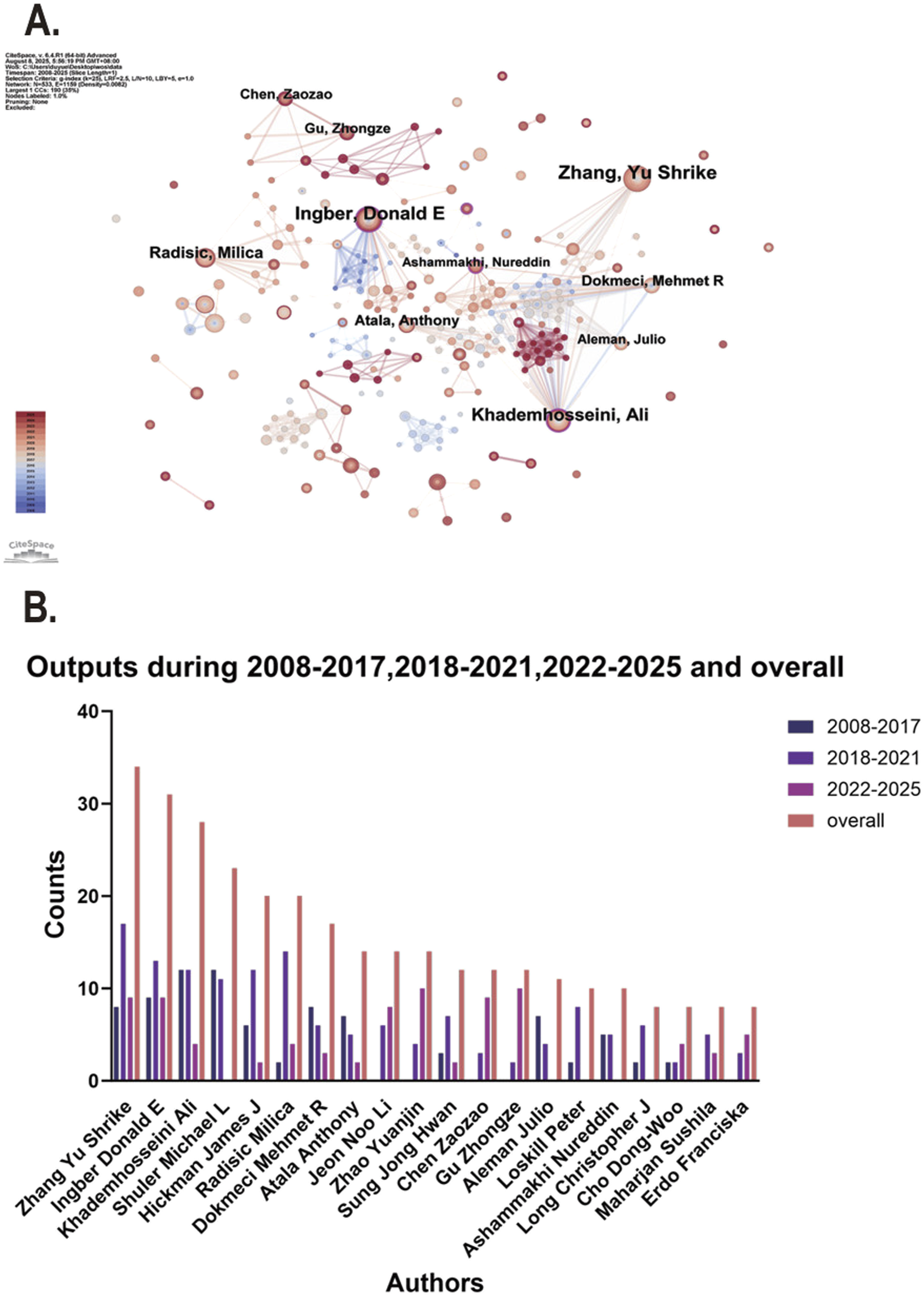
However, the majority of authors display weak or isolated connections, with scarce cross-regional collaborations. For example, Korean and German scholars show little linkage with the U.S.–European core clusters, and even prolific Chinese and American authors remain largely domestically oriented. These gaps suggest that despite rapid growth, the field has not yet established a globally integrated research network. This fragmentation may preserve research diversity but also slows down cross-border knowledge transfer and interdisciplinary integration.
Temporal analysis (Figure 7(B)) further indicates that core authors such as Zhang and Ingber have consistently maintained high output across 2008–2017, 2018–2021, and 2022–2025, underscoring the sustained investment of leading institutions like Harvard in OoC-related pharmaceutical research. In contrast, some authors show productivity concentrated in specific periods, reflecting shifting research foci. For instance, post-2018 publications increasingly emphasize OoC applications in personalized medicine, attracting interdisciplinary participation and fueling stage-specific growth.
3.6. Analysis of discipline evolution
A comprehensive analysis of subject categories was conducted to construct the disciplinary network of organ-on-a-chip (OoC) research in pharmaceutical applications. As shown in Figure 8(A), the field demonstrates a distinctly interdisciplinary structure. The network reveals that OoC research has not been confined to a single discipline but instead draws on a wide spectrum of knowledge domains. Among these, nanoscience and nanotechnology represent a major research direction. Their integration with OoC enables breakthroughs beyond conventional chip limitations by improving scale fidelity, functional biomimicry, and microenvironmental precision, thereby enhancing the accuracy and efficiency of drug screening. Similarly, biomedical engineering emerges as another cornerstone discipline, reflecting the dual nature of OoC systems as both “biological models” that mimic human physiology and “engineered platforms” requiring precise design and fabrication. In addition, analytical chemistry, pharmacology, and biotechnology play vital roles in advancing OoC applications, providing methodologies for drug testing, mechanistic interpretation, and technical implementation. Together, these disciplines highlight the broad coverage and complementarity of OoC in pharmaceutical research. The discipline network and top 20 research directions of organ-on-a-chip in the field of drug research and application from 2008 to 2025 (A. The academic network of organ-on-a-chip in the field of drug research applications from 2008 to 2025; B. The top 20 research directions of organ-on-a-chip in the field of drug research applications from 2008 to 2025).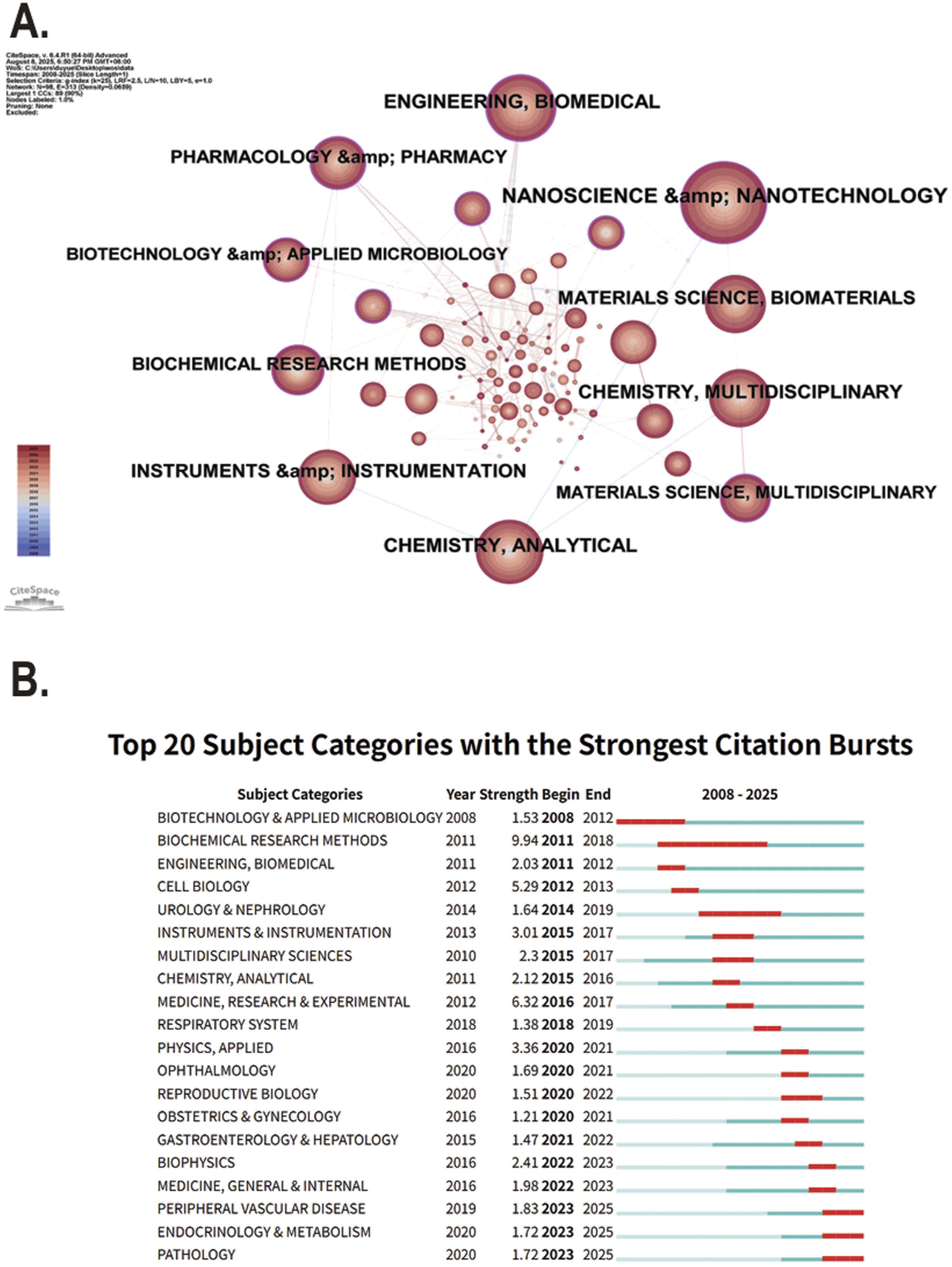
The temporal analysis of disciplinary emergence (Figure 8(B)) underscores the evolutionary trajectory of research hotspots. On average, new subject categories appeared every one to two years from 2008 to 2025. Before 2019, bursts were characterized by longer durations, suggesting a relatively stable focus within specific domains. After 2019, however, bursts became shorter and more frequent, indicating accelerated technological iteration and the deepening of interdisciplinary collaboration. This shift reflects the field’s transition from stable long-term themes to rapidly evolving, stage-specific research fronts. Notably, biochemical research methods exhibited the strongest burst (strength 9.94, 2011–2018), signifying their central role in shaping the methodological foundation of OoC studies. Other categories such as medical research & experimental (6.32, 2012–2013) and cell biology (5.29, 2012–2013), also showed strong but short-lived bursts, which may be attributed to limited research space within these domains—valuable innovations were rapidly explored within a brief period.
Since 2020, the emergence of clinical disciplines such as ophthalmology, reproductive biology, endocrinology & metabolism, and pathology marks a notable expansion of OoC applications. Unlike earlier bursts, these newer categories continue to show strong signals up to 2025, reflecting the growing relevance of OoC in precision medicine and clinical translation. Overall, the evolution of OoC research in pharmaceutical applications follows a discernible trajectory: from basic biomedical methodologies, to interdisciplinary technological integration and finally to clinical precision medicine. This progression indicates that the field is currently entering a phase characterized by rapid clinical expansion and translational potential.
3.7. Analysis of hotspot evolution
Keyword co-occurrence analysis provides an effective approach to identifying research hotspots and detecting emerging frontiers in a specific field. In this study, we applied this method to publications related to organ-on-a-chip (OoC) research in pharmaceutical applications from 2008 to 2025. The resulting network shows that each node represents a keyword, the node size indicates its frequency of occurrence, and the connections reflect the associations among terms, thereby revealing the complex multidimensional relationships within the field.
The ten most frequent keywords include model, in vitro, on a chip, microphysiological systems, culture, cells, stem cells, platform, endothelial cells, and cell culture, among which model is the largest and most interconnected node, underscoring its centrality. When examining the temporal evolution of research hotspots (Figure 9(A)), distinct shifts can be observed. During 2008–2017 (Figure 9(B)), the leading terms such as in vitro, on a chip, cell culture, culture, microphysiological systems, tissue, endothelial cells, differentiation, drug discovery, and liver emphasized the technical construction of OoC systems and the establishment of microphysiological environments for cell-based models. In the period 2018–2021 (Figure 9(C)), the keyword model rose to the core position alongside in vitro, microphysiological systems, culture, endothelial cells, platform, stem cells, and cell culture, indicating a transition of focus from simple chip fabrication to the functional validation of biological models. In the most recent stage, 2022–2025 (Figure 9(D)), the dominant terms included model, on a chip, in vitro, culture, pluripotent stem cells, system, cells, platform, microphysiological systems, and tissue, reflecting a research orientation toward multi-organ integration, disease modeling, and comprehensive drug discovery applications. Taken together, the co-occurrence maps reveal that “model–in vitro–on a chip” has remained persistent cores throughout the timeline, yet their contextual roles have evolved from platform construction (2008–2017) to functional model verification (2018–2021), and ultimately to application-oriented integration (2022–2025). This trajectory highlights the dynamic progression of OoC research in pharmaceutical applications, shifting from technology-driven development toward application-driven innovation, particularly in disease simulation and precision drug discovery. Co-occurring keyword network of organ-on-a-chip in the application of drug research (A. Co-occurring keyword network of organ-on-a-chip in the field of drug research from 2008 to 2025; B. Co-occurring keyword network of organ-on-a-chip in the field of drug research from 2008 to 2017; C. Co-occurring keyword network of organ-on-a-chip in the field of drug research from 2018 to 2021; D. Co-occurring keyword network of organ-on-a-chip in the field of drug research from 2022 to 2025).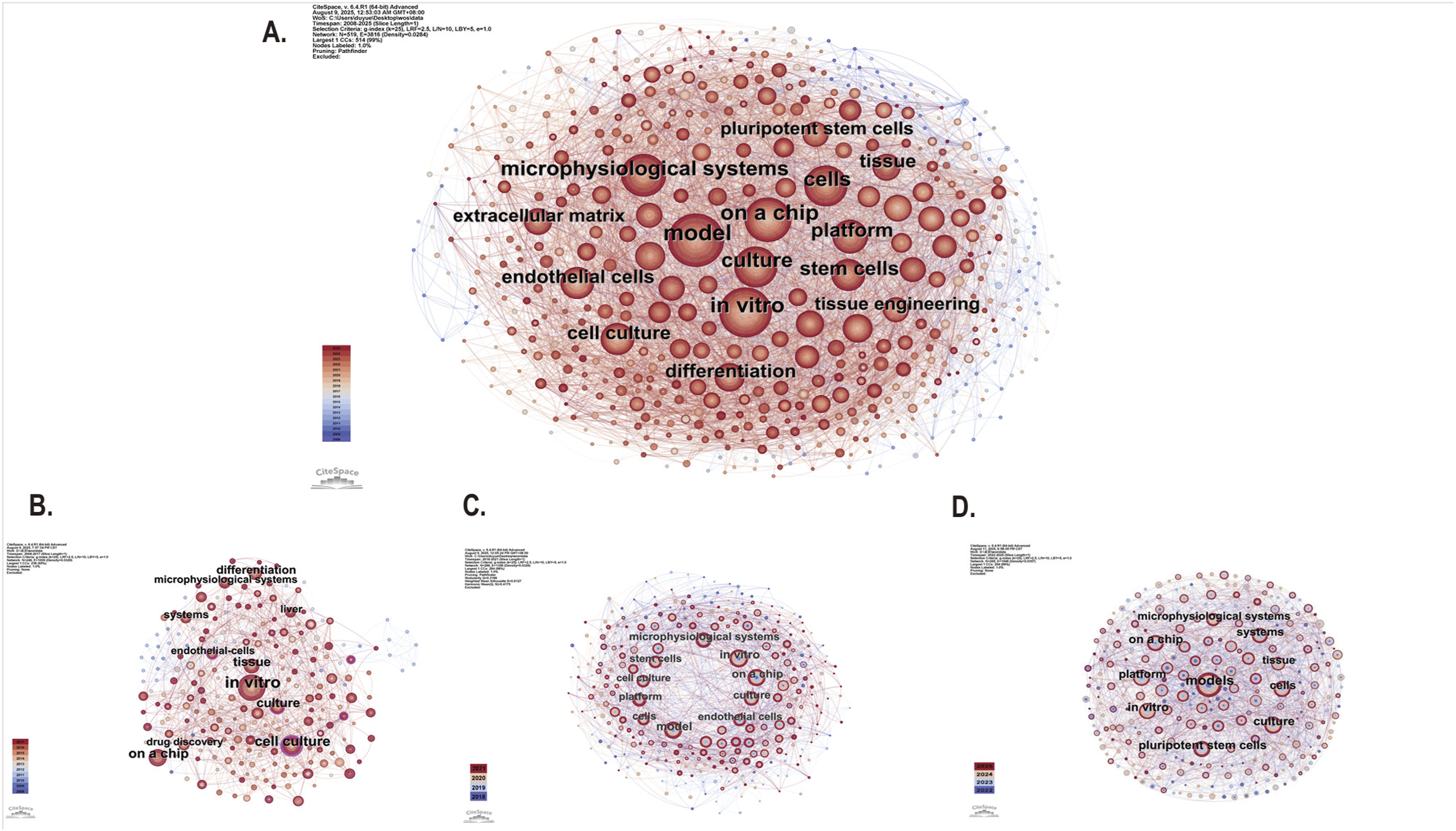
Keyword clustering analysis was conducted to characterize the thematic structure of organ-on-a-chip (OoC) research in pharmaceutical applications (Figure 10). For the overall period of 2008–2025, the co-occurrence keyword network showed acceptable clustering quality, with a modularity Q value of 0.3166 and a mean silhouette S value of 0.6127. Ten clusters were identified, including #0 regenerative medicine, #1 drug development, #2 blood–brain barrier, #3 endothelial cells, #4 3D bioprinting, #5 drug testing, #6 3D cell culture, #7 skeletal muscle, #8 barrier, and #9 drug screening. These clusters indicate that OoC research covers both technical platform development and application-oriented pharmaceutical studies. Co-occurrence clustering keyword network of organ-on-a-chip in the application field of drug research (A. Co-occurrence clustering keyword network of organ-on-a-chip in the application field of drug research from 2008 to 2025; B. Co-occurrence clustering keyword network of organ-on-a-chip in the application field of drug research from 2008 to 2017; C. Co-occurrence clustering keyword network of organ-on-a-chip in the application field of drug research from 2018 to 2021; D. Co-occurrence clustering keyword network of organ-on-a-chip in the application field of drug research from 2022 to 2025).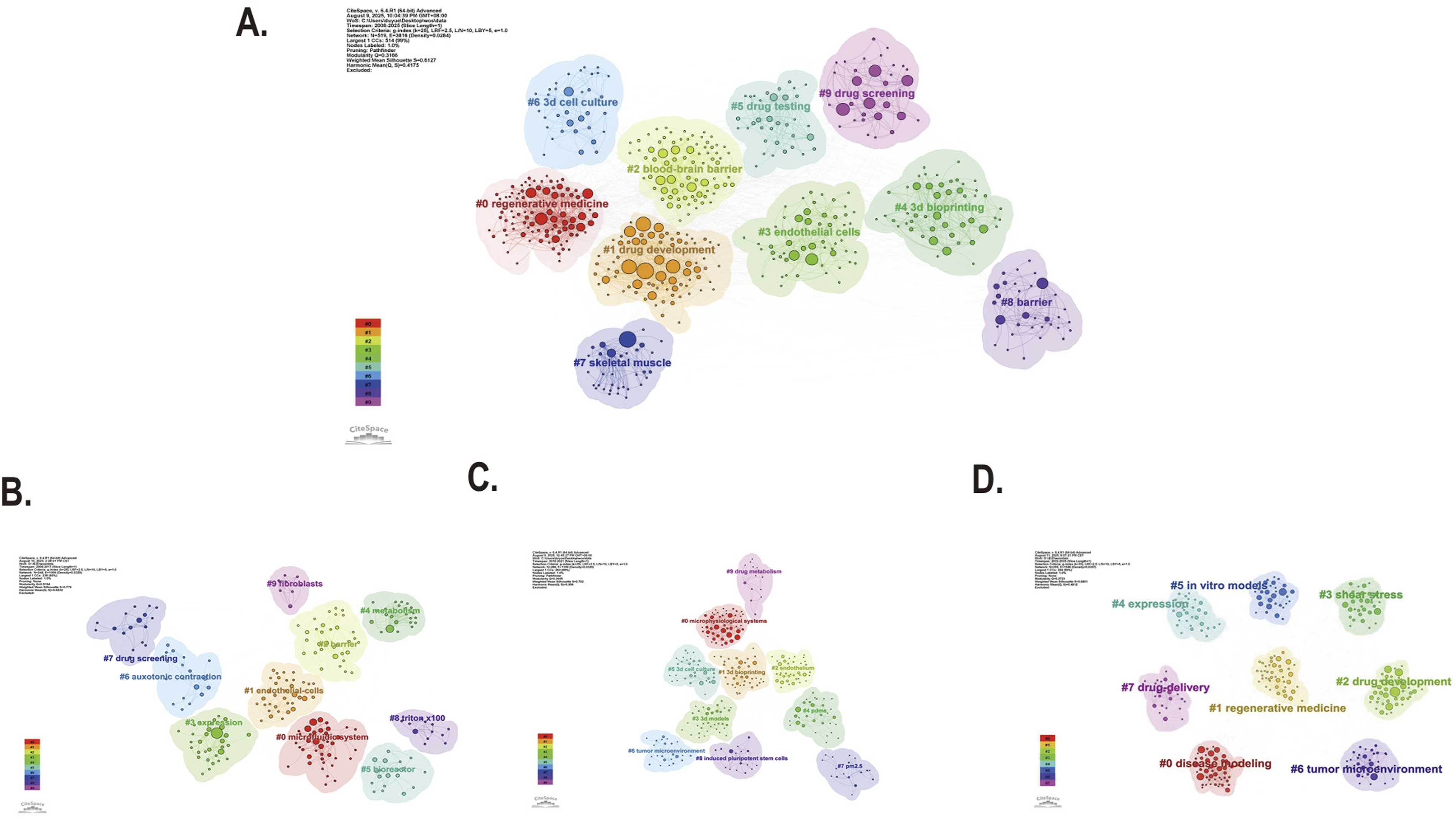
To further examine temporal changes, clustering analyses were performed for three periods: 2008–2017, 2018–2021, and 2022–2025. The 2008–2017 network showed relatively strong clustering quality (Q = 0.5194; S = 0.779), with ten clusters: #0 microphysiological systems, #1 endothelial cells, #2 barrier, #3 expression, #4 metabolism, #5 bioreactor, #6 auxotonic contraction, #7 drug screening, #8 Triton X-100, and #9 fibroblasts. These results suggest that early studies mainly focused on platform construction, cellular components, barrier models, and basic functional assays. During 2018–2021, the network remained reliable (Q = 0.3955; S = 0.702). The major clusters included #0 microphysiological systems, #1 3D bioprinting, #2 endothelial cells, #3 3D model, #4 PDMS, #5 3D cell culture, #6 tumor microenvironment, #7 PM2.5, #8 induced pluripotent stem cells, and #9 drug metabolism. This stage reflects an expansion from basic platform design toward 3D culture systems, biomaterials, tumor microenvironment modeling, stem-cell-based approaches, and drug metabolism studies. In the most recent period, 2022–2025, the clustering analysis identified eight clusters with acceptable validity (Q = 0.3723; S = 0.6801): #0 disease modeling, #1 regenerative medicine, #2 drug development, #3 shear stress, #4 expression, #5 in vitro model, #6 tumor microenvironment, and #7 drug delivery. Compared with previous stages, the research focus has shifted more clearly toward application-driven themes, particularly disease modeling, regenerative medicine, drug development, and drug delivery, while mechanical and microenvironmental factors such as shear stress and tumor microenvironment remain important. Overall, the keyword clustering results suggest a gradual transition of OoC research from early platform construction and cellular-component studies toward more application-oriented pharmaceutical research, including disease modeling, regenerative medicine, drug development, and drug delivery.
CiteSpace was employed to identify burst keywords, providing a basis for evaluating emerging research frontiers in the organ-on-a-chip (OoC) field. As shown in Figure 11, the green line indicates the overall timeline, while the bold red segments represent the periods of citation bursts. The top 25 keywords with the longest burst durations include bioreactor (2013–2016), epithelial cells (2014–2016), skin (2015–2020), regenerative medicine (2015–2017), multi-organ chip (2015–2016), in vitro (2016–2017), cell culture analog (2016–2019), organs-on-chips (2017–2018), microfluidic device (2017–2019), 3D human liver (2017–2019), human hepatocytes (2017–2018), design (2017–2019), microvascular networks (2017–2018), kidney proximal tubule (2018–2020), bone marrow (2019–2022), neurons (2021–2022), mechanical property (2022–2023), epithelial electrical resistance (2022–2025), inflammation (2022–2025), platforms (2022–2023), therapy (2022–2025), clinical trials (2022–2025), proliferation (2023–2025), stress (2023–2025), and precision medicine (2023–2025). Keyword bursts in Organ-on-a-chip in the field of drug development from 2008 to 2025.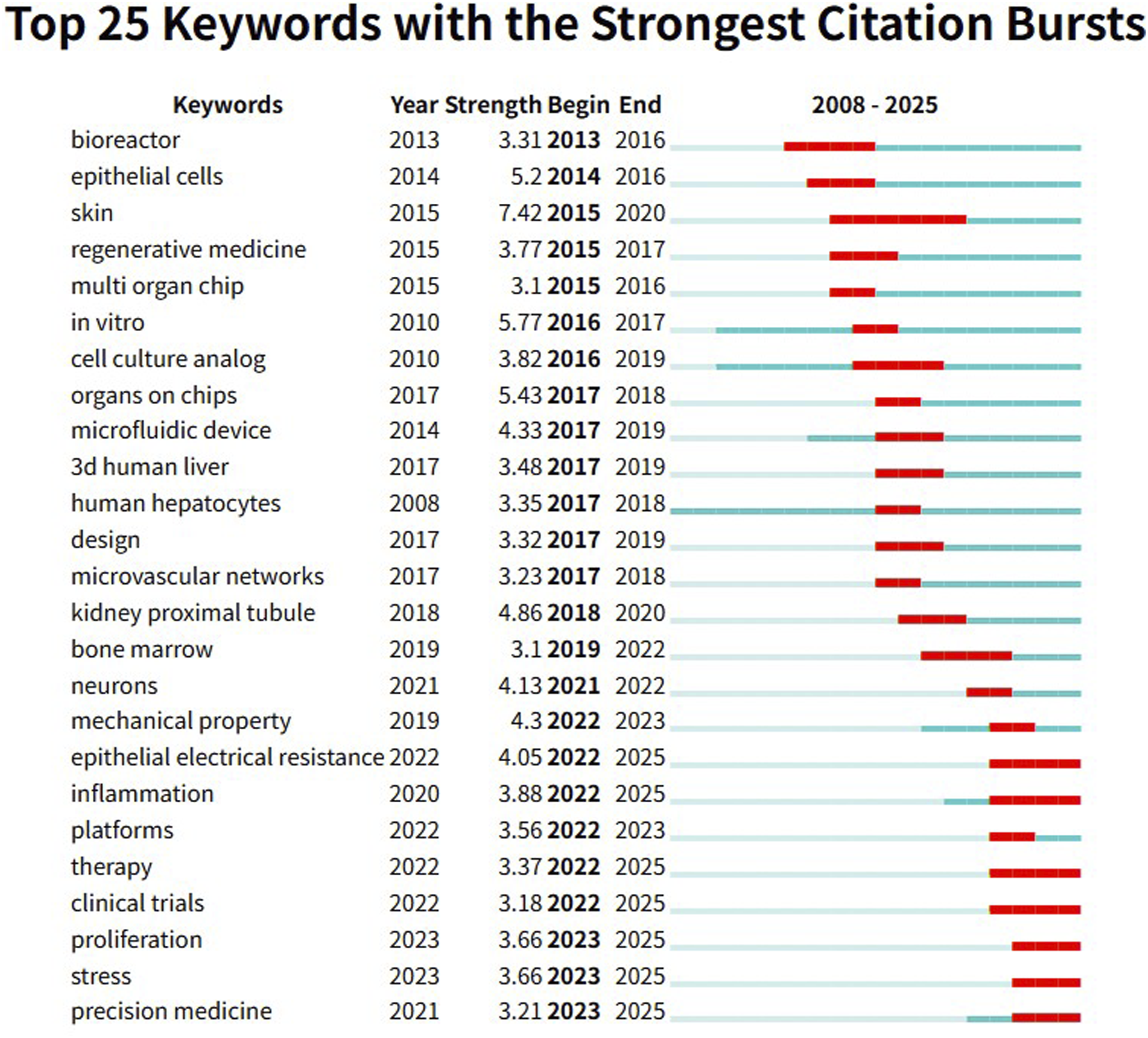
The results reveal a distinct evolutionary trajectory in OoC research. During the early stage (2013–2017), attention was directed primarily toward fundamental technologies and basic cellular models such as bioreactors, epithelial cells, and in vitro culture systems, laying the foundation for subsequent exploration. Mid-stage developments (2017–2020) focused on advancing toward more sophisticated models, including multi-organ chips and specialized tissue constructs such as renal proximal tubules, bone marrow, and microvascular networks, with the goal of enhancing functional complexity and physiological relevance. For instance, Clément Quintard et al. developed a perfusable functional microvascular network that significantly improved the growth, maturation, and function of organoids during culture. 27 Similarly, Kacey Ronaldson-Bouchard et al. designed a multi-organ chip in which mature human heart, liver, bone, and skin tissue microenvironments were interconnected through a recirculating vascular flow. Each tissue was cultured within its optimized environment and separated from the common vascular flow by selectively permeable endothelial barriers. This platform successfully recapitulated inter-organ dependent functions, enabling systemic physiological and pathological studies as well as multi-organ toxicity assessments. 28 In the most recent stage (2021–2025), the burst keywords increasingly emphasize functional assessment and translational applications, with strong attention to mechanical property, epithelial electrical resistance, inflammation, therapy, clinical trials, and precision medicine. This trend highlights a transition from technology-oriented development to application-driven innovation, underscoring the movement toward clinical translation. Looking ahead, OoC research is expected to continue integrating functionally mature models with pharmaceutical and clinical needs, thereby accelerating their implementation in precision medicine and clinical trials. At the same time, simulating inter-organ interactions and complex pathological microenvironments is likely to become a critical frontier, shaping the next phase of development in this rapidly evolving field.
3.8. Analysis of co-citation
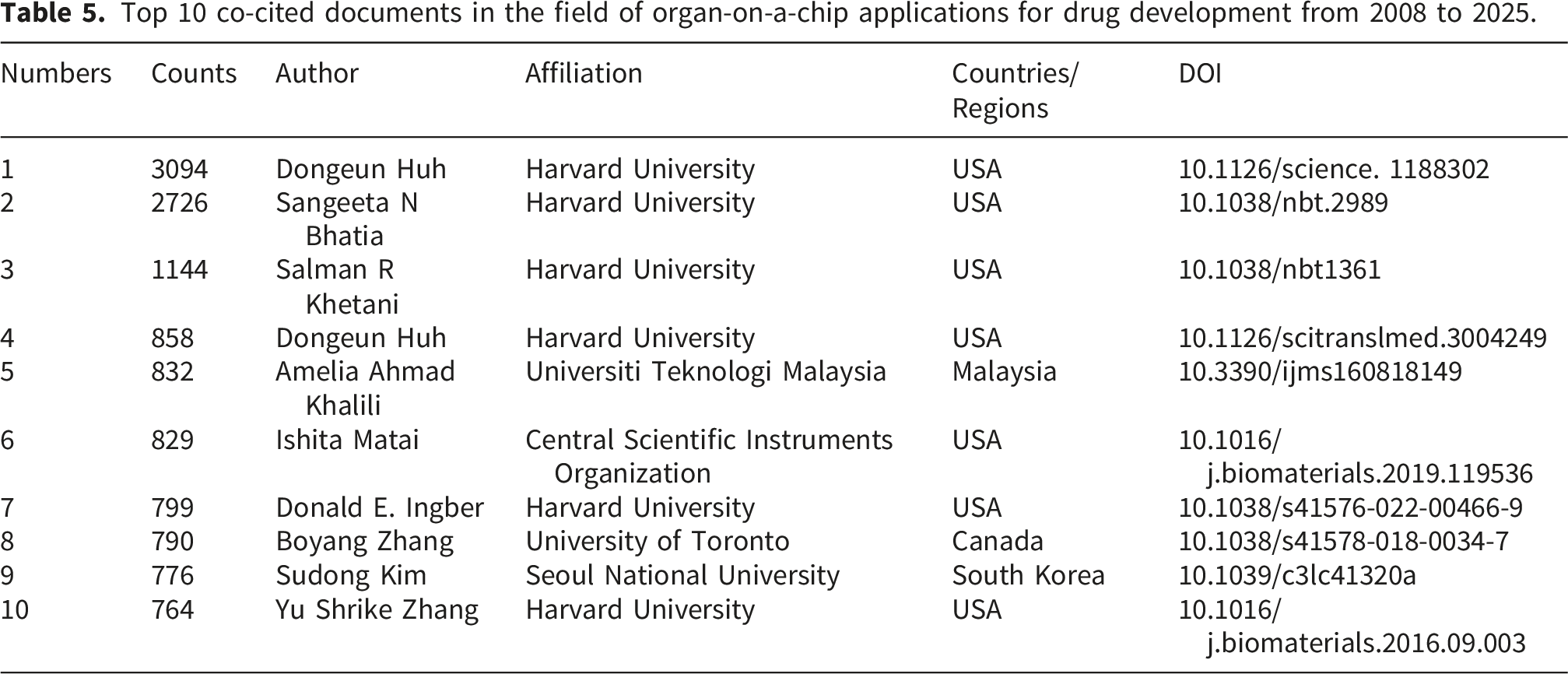
Using CiteSpace, we conducted an author co-citation analysis of 1,786 publications on organ-on-chip research in the pharmaceutical field from 2008 to 2025, with one-year time slices. The resulting co-citation network (Figure 12(A)) comprises 991 nodes and 6,424 links, where nodes represent cited authors and edges indicate co-citation relationships. Node size corresponds to citation frequency, while color and thickness of the inner rings reflect temporal changes in citation intensity; the color of the links denotes the time when co-citation first occurred. Authors such as Dongeun Huh and Sangeeta N. Bhatia emerged as core contributors, with larger nodes indicating their sustained influence. Huh’s group pioneered the development of biomimetic micro-systems that simulate physiological functions on chips, particularly advancing organ-mimicking lung models. Meanwhile, Bhatia has made significant contributions to drug screening and disease modeling, demonstrating the potential of organ-on-chip platforms in precision medicine and translational applications. Together, these researchers have been instrumental in shaping the trajectory of the field. Co-citation analysis of Organ-on-a-chip in the field of drug research from 2008 to 2025 (A. Author co-citation analysis of Organ-on-a-chip in the field of drug research from 2008 to 2025; B. Literature co-citation analysis of Organ-on-a-chip in the field of drug research from 2008 to 2025).
Top 10 co-cited documents in the field of organ-on-a-chip applications for drug development from 2008 to 2025.
3.9. Analysis of patents
To evaluate the practical applications of organ-on-chip technology in the pharmaceutical field, we conducted a multi-dimensional patent analysis using the domestic patent platform Incopat, applying the same retrieval word as in the literature search. This approach enabled us to systematically assess the global patent landscape and trends in this domain.
As shown in Figure 13(A), the number of published patents has steadily increased, reflecting the growing practical value of organ-on-chip technology. The earliest patents related to this field can be traced back to 2006. Before 2015, fewer than 100 patents were published, indicating that the technology was still in its formative stage, a trend consistent with early academic publication output. From 2016 onward, the number of patents began to rise significantly, surpassing 200 in 2021 and entering a phase of rapid expansion. This pattern suggests a deepening of research in materials, device fabrication, and pharmaceutical applications of organ-on-chip platforms. Patent Analysis of Organ-on-a-chip in the Application Field of Drug Research (A. Number of patents related to Organ-on-a-chip in the field of drug research from 2006 to 2025; B. Distribution of world patents related to Organ-on-a-chip in the field of drug research from 2006 to 2025; C. Classification and quantity of patent technologies related to Organ-on-a-chip in the field of drug research from 2006 to 2025; D. Changes in the application purposes of patents related to Organ-on-a-chip in the field of drug research from 2006 to 2025).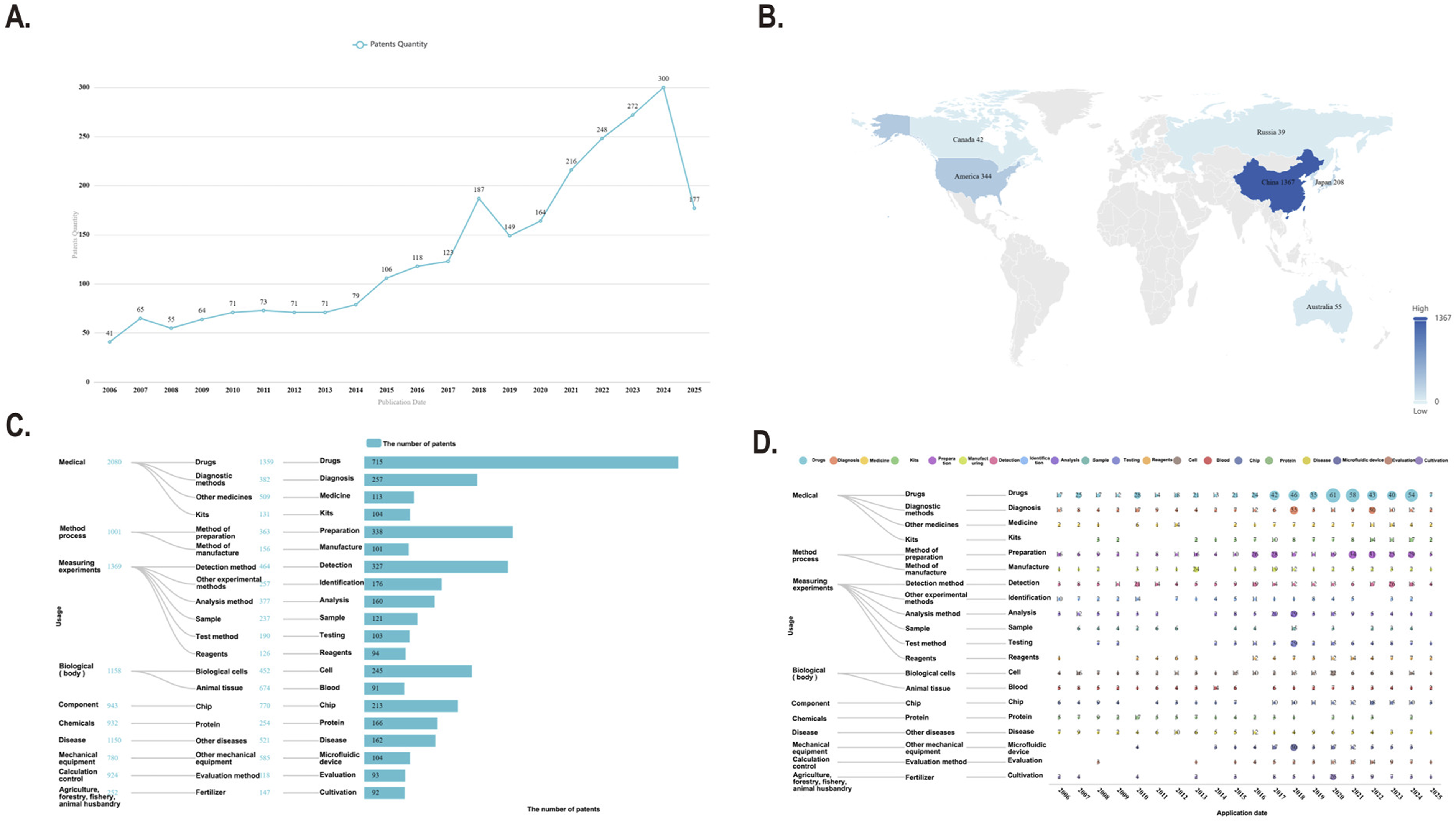
Figure 13(B) visualizes the geographical distribution of published patents. China and the United States dominate in terms of patent output, with activity concentrated in Asia and North America. China ranks first in total patent counts, largely due to extensive filings in foundational technologies for pharmaceutical applications. The United States, by contrast, holds a leading position in frontier applications, exemplified by companies such as Emulate and Hesperos, while Germany’s TissUse has also contributed notable pharmaceutical organ-on-chip patents. In recent years, China has accelerated its efforts, with universities, research institutes, and private companies forming alliances and securing significant investments to expand technological development. Notably, the World Intellectual Property Organization (WIPO) ranks third in terms of filings, with 288 international patent applications.
We further analyzed the technological application fields of these patents (Figure 13(C)). Patents were categorized into three hierarchical levels, illustrating the broad spectrum of organ-on-chip applications in pharmaceuticals. The majority of patents focus on medical and pharmaceutical contexts, with direct drug-related uses representing the largest share. Among these, measurement and testing applications are particularly prominent, highlighting the role of organ-on-chip systems as platforms for drug evaluation and toxicological analysis. By contrast, applications in agriculture and forestry—such as fertilizer testing—remain limited, with the lowest number of patents.
Temporal analysis of patent application fields (Figure 13(D)) shows dynamic changes across categories. In the medical and pharmaceutical sector, drug-related patents (Level II classification) have exhibited rapid and sustained growth since 2017, becoming the dominant area of innovation. Applications in manufacturing follow, whereas those in agriculture, forestry, animal husbandry, and fishery remain at a minimal level throughout the observed period. These findings underscore the fact that organ-on-chip technology has become increasingly integrated into drug discovery and safety assessment workflows, while other potential application domains are still underexplored.
To further elucidate the patent landscape, we performed a clustering analysis of institutions holding a significant number of organ-on-chip patents in the pharmaceutical domain (Figure 14). Based on the quantity of patents, organizations were divided into four groups, with Group 1 representing the highest output and Group 4 the lowest. Each group consisted of three representative entities. Group 1 included TissUse GmbH, the Dalian Institute of Chemical Physics of the Chinese Academy of Sciences, and Tsinghua University; Group 2 comprised Emulate Inc., NanoBiosys Inc., and Soochow University; Group 3 included NanoBiosym Inc., Seoul National University, and the Korea Advanced Institute of Science and Technology; while Group 4 involved the President and Fellows of Harvard College, CHA University Industry-Academic Cooperation, and Cold Spring Harbor Laboratory. The three-dimensional clustering visualization highlights both the breadth and specialization of patent portfolios across groups. Institutions in Group 1 exhibited the widest distribution of applications, spanning nearly all clusters except for cytokine storm. This suggests their research focus is comprehensive, covering mainstream domains such as multi-organ chips, integrated chip systems, biomarkers, and drug screening. By contrast, Group 2 organizations are characterized by a unique concentration in the cytokine storm cluster, reflecting their focus on this specialized subfield with high relevance to drug safety and immunological responses. Group 3 and Group 4 institutions, although contributing fewer patents, demonstrate targeted innovation within niches such as chip fabrication, microchannel chips, and drug signal transduction, thereby sustaining diversification in the overall technological landscape. Patent clustering of organ-on-a-chip in the field of drug research from 2008 to 2025.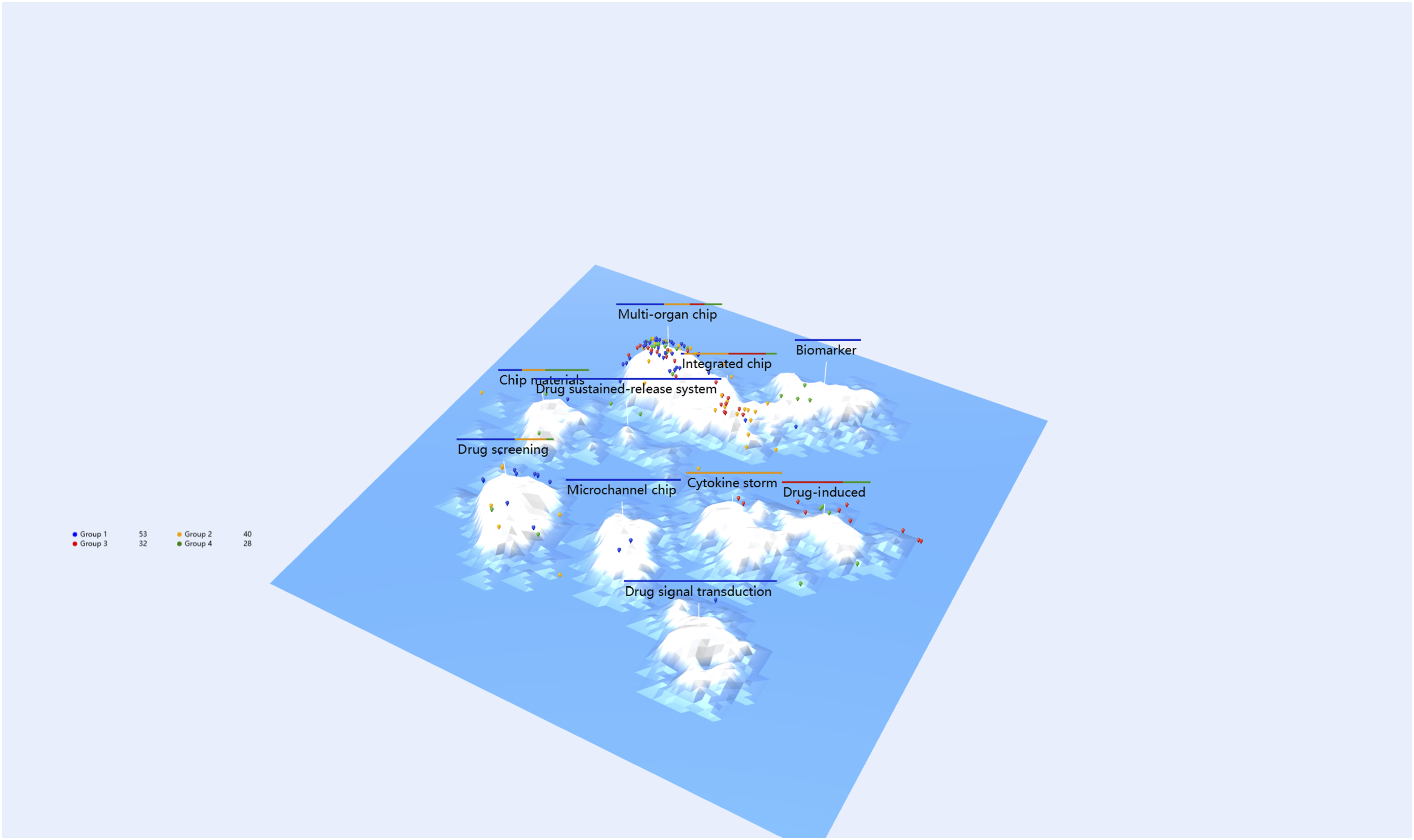
A key observation is the prominence of multi-organ chip platforms, which constitute the largest and most interconnected cluster, often overlapping with integrated chip technologies and biomarker applications. This convergence indicates that multi-organ testing platforms are becoming the mainstream direction in patent development, reflecting their potential as robust tools for drug evaluation, systemic toxicity testing, and precision medicine. Drug screening also emerges as a central cluster with active contributions from multiple groups, underscoring its foundational role in pharmaceutical applications of organ-on-chip systems.
4. Discussion
4.1. Compared with the recent relevant bibliometric studies
In recent years, several bibliometric analyses on organ-on-a-chip and microphysiological systems have been published, providing important references for the results of this study. He C et al. 29 conducted a bibliometric analysis based on 2,305 articles from 2014 to 2023, showing that the United States and China dominated in terms of publication volume and collaboration networks, with top institutions including Harvard University, the Massachusetts Institute of Technology, and the Chinese Academy of Sciences. This is highly consistent with the distribution of countries and institutions in this study. Meanwhile, Qu B et al. 30 carried out a systematic bibliometric analysis of global organoid research from 2009 to 2024, revealing a rapid growth trend in this field over the past decade. The research topics have gradually shifted from basic technology construction to clinical treatment, drug screening, and disease models, while highly relying on interdisciplinary technologies such as microfluidics and hydrogels. This study also pointed out that institutions in the United States and Europe are in the leading position, with research hotspots focusing on clinical translation and high-throughput screening systems, which is highly consistent with the trend judgment of the organ-on-a-chip field in this study. Wang Y et al. 31 pointed out in their review and trend analysis on drug screening with organ-on-a-chip that organ-on-a-chip is developing towards multi-organ integration, high-throughput screening, intelligent sensing, and clinical translation. This conclusion is highly consistent with the keyword burst and patent analysis results of this study. By comparing with the above high-quality bibliometric studies in recent years, the reliability of the results of this study has been fully verified. At the same time, this study integrates bibliometric analysis and patent analysis, more systematically revealing the technological transformation trend of organ-on-a-chip in drug research and development, and has unique reference value.
4.2. Global trends and collaborative landscape
Our analysis positions organ-on-a-chip (OoC) research in the pharmaceutical sciences on a clear expansionary trajectory, quantitatively characterized by distinct growth phases. Between 2008 and 2017, publication output exhibited an explosive compound annual growth rate (CAGR) of 63%, corresponding to the technology’s emergence and rapid conceptual diversification. From 2018 to 2021, the CAGR moderated to 27%, marking a transition from exploratory device construction toward application-oriented studies in efficacy, ADME, and toxicology. In parallel, patent activity demonstrates extensive global engagement, with an average simple family size of 13.24 and an extended family size of 33.61, indicating broad transnational protection of intellectual property. The mean forward citation count of 13.98 further highlights the strong technological impact and translational potential of these inventions. A geographic network analysis reveals a complementary division of strengths: the United States (centrality = 0.34) serves as the principal collaboration hub and scientific driver; England (0.16) and Germany (0.11) follow as key bridging nodes within the global research network, contributing significantly to engineering standardization and methodological innovation. Overall, these data indicate that the growth after 2016 was not stagnant. Instead, it was driven by national strategic planning, regulatory policy liberalization, and industrial synergy. The process of technology transformation and clinical application has significantly accelerated, highlighting the need to consider not only quantity but also quality, network connectivity, and clinical relevance when assessing growth.
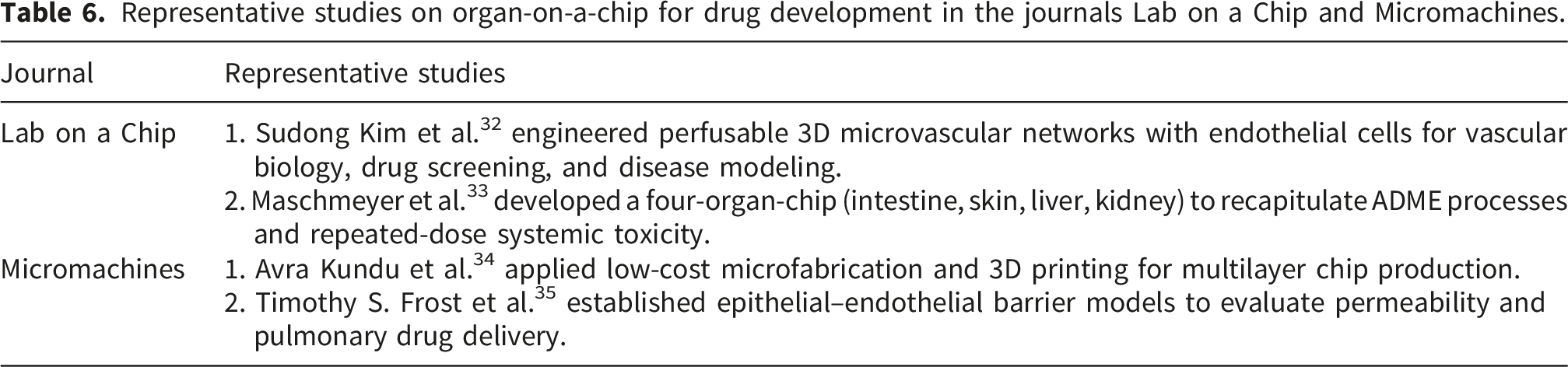
Representative studies on organ-on-a-chip for drug development in the journals Lab on a Chip and Micromachines.
At the investigator level, scientific leadership in the organ-on-a-chip (OoC) domain remains concentrated in the United States, where researchers such as Yu Shrike Zhang, Donald E. Ingber, and Ali Khademhosseini from Harvard Medical School have pioneered deeply interdisciplinary approaches uniting microfluidics, biomaterials, and stem-cell biology. Zhang’s group 36 has combined microfluidic chip design, stem cell differentiation, and drug-screening models, producing a series of landmark studies. With 339 publications, an H-index of 109, and 48,222 citations, it exemplifies this integration through the combination of microfluidic-chip design, stem-cell differentiation, and drug-screening models. In one landmark effort, they addressed the challenge of reconstructing the native laminar architecture of cardiac tissue and vascular complexity by developing a hybrid 3D-bioprinting strategy in which endothelial cells were patterned within microfibrous hydrogel scaffolds and aligned with cardiomyocytes under controlled anisotropic seeding. The resulting engineered myocardium exhibited spontaneous synchronous contraction and, when embedded into a perfusable bioreactor, served as a high-fidelity cardiac-chip platform for cardiovascular-toxicity testing. Importantly, this system was later adapted to human iPSC-derived cardiomyocytes, opening opportunities in regenerative medicine and personalized pharmacology. At the national scale, Europe accounts for ≈ 44.66% and the United States ≈ 38.39% of global output, with the United States maintaining the highest collaborative centrality (0.34 vs. 0.05 for China), highlighting its role as a global research hub. Institutionally, U.S. universities dominate the landscape, led by Harvard University (127 publications) and the University of California System (97), while Southeast University in China (45) stands out among Asian institutions. Teams headed by Yuanjin Zhao, 37 and Zhongze Gu 38 at Southeast University (Chinese) have advanced the integration of biomaterials with functional chips by coupling 3D-cell-culture techniques with microenvironmental regulation, driving applications of liver-on-a-chip systems in drug-metabolism research. Together, these data portray a globally distributed yet hierarchically structured network in which the United States anchors innovation, Europe contributes substantial volume and methodological refinement, and China’s emerging research hubs accelerate translation through biomaterials-driven engineering, collectively propelling the OoC field toward maturity as a transdisciplinary biomedical platform.
From highly co-cited works, these research findings have a continuous influence in this field. For example, Chak Ming Leung et al. 39 demonstrated how OoCs can control microenvironments and preserve tissue-specific functions to better mimic human physiology, serving as next-generation platforms for physiology and pharmacology studies. Maschmeyer, Ilka et al. 33 created a standardized four-organ chip capable of 28+ days of co-culture for ADME analysis and systemic toxicity tests. Eric W. Esch et al. 40 further emphasized the role of OoCs as predictive preclinical testing platforms designed to enhance the success rate of drug discovery pipelines. Collectively, these works established the conceptual and technical foundation for translating microengineered organ models into pharmaceutical applications. At the co-cited-author level, Donald E. Ingber and Lucie A. Low emerge as particularly influential figures in shaping the intellectual landscape of the field. Ingber’s body of work (=226 publications; 163829 citations) has been pivotal in defining the mechanobiological and translational dimensions of OoC research. In 2010, his group introduced a biomimetic microdevice that reconstructed the alveolar–capillary interface of the human lung. 41 This mechanically active “lung-on-a-chip,” cited over ≈ 3,200 times, demonstrated that tissue–tissue interfaces critical to organ function could be reconstituted in vitro, extending the capabilities of cell culture and providing a cost-effective alternative to animal and clinical models for drug screening and toxicology. In 2013, his team developed a perfusable microfluidic platform containing renal epithelial cells that reproduced proximal-tubule function, 42 enabling physiologically relevant assays for nephrotoxicity and transporter activity. More recently, Ingber’s research has become increasingly disease- and organ-specific. 43 In 2025, his group reviewed progress in microfluidic models replicating key features of the human cervix. 44 Highlighting their potential to overcome barriers in cervical-health research and to improve preclinical drug screening for women’s reproductive disorders. In parallel, the team engineered an esophageal adenocarcinoma (EAC) chip that integrates patient-derived organoids and matched fibroblasts. 8 This model recapitulated tumor-specific architecture and predicted chemotherapy responses more accurately than static 3D organoid cultures, advancing translational oncology and precision pharmacology. Lucie A. Low has likewise played a decisive role in consolidating knowledge and policy frameworks for MPS technologies. Across a series of influential syntheses, 45 she summarized advances in tissue-chip platforms over the past five years, emphasizing functional validation, therapeutic screening, and rare-disease modeling. Low highlighted how MPS technologies enhance disease modeling, improve drug-response predictability, and refine clinical-trial design for conditions with limited patient populations. Through her introduction in the NIH Microphysiological Systems Program (35.5 million US dollars), she has detailed the program’s strategic background, milestones, and transformative potential in drug development. 46 Her later work focused on the NIH–ISS National Laboratory collaboration on space tissue-chip initiatives, discussing their implications for advancing biomedical research beyond terrestrial constraints. 47
Keyword burst and cluster analyses further illuminate the dynamic evolution of research frontiers in the organ-on-a-chip (OoC) field. Burst detection identified 25 keywords with strong citation bursts between 2008 and 2025, reflecting a progressive thematic transition from device-centric engineering toward clinical and translational applications. Early clusters (#0 “microfluidic system” and #5 “bioreactor”, 2008–2017) were dominated by technological construction and microenvironmental control, underscoring the field’s foundation in microfabrication and system optimization. Representative early burst terms included “bioreactor” (strength = 3.31, 2013–2016), “epithelial cells” (5.2, 2014–2016), and “skin” (7.42, 2015–2020), corresponding to the establishment of perfusable architectures and tissue-specific interfaces. In contrast, recent clusters (#0 “disease modeling” and #1 “regenerative medicine”, 2022–2025) reveal a pronounced shift toward application-driven research. Emerging burst terms such as “inflammation” (3.88, 2022–2025), “clinical trials” (3.18, 2023–2025), “stress” (3.66, 2023–2025), and “precision medicine” (3.21, 2023–2025) capture the community’s growing emphasis on clinical validation, immune-microenvironment studies, and personalized therapy. This evolution mirrors broader biomedical priorities—regulatory recognition of microphysiological systems, the pursuit of patient-specific modeling, and integration with regenerative approaches. Collectively, these keywords and cluster trends confirm a paradigm shift from microfluidic engineering and device optimization (2008–2017) to disease modeling, regenerative medicine, and translational pharmacology (2022–2025), highlighting the field’s transition from proof-of-concept engineering to clinically relevant biomedical innovation. His transition is substantiated by several cutting-edge applications. The Université PSL team in Paris established a tumor-on-a-chip platform based on primary autologous cells from patients with non-small-cell lung cancer. 48 Through a 3D co-culture system that recapitulates the tumor immune microenvironment, combined with live-cell imaging, they continuously tracked T-cell-mediated antitumor activity, enabling patient-specific evaluation of PD-1-inhibitor responses and uncovering the immunosuppressive role of FAP+cancer-associated fibroblasts—a major advance in addressing clinical immunotherapy resistance. In the domain of stem-cell-derived organoids, Kai Wang’s group at Peking University developed an iPSC-derived venous endothelial model carrying the TIE2-L914F heterozygous mutation. 49 This system faithfully reproduced the pathology of venous malformation and, when coupled with AI-driven drug prediction and Drug-seq profiling, identified bosutinib, an FDA-approved leukemia drug, as a candidate capable of correcting vascular malformation phenotypes—providing a therapeutic strategy for previously untreatable somatic-mutation diseases. Extending OoC research into the space-biomedicine frontier, the collaborative team from Soochow University and the China Astronaut Research and Training Center sent iPSC-derived cardiomyocytes to the Chinese Space Station. 50 Long-term microgravity culture revealed decreased beating frequency, disturbed calcium cycling, and thiamine-metabolism blockade; thiamine supplementation restored cellular structure and function, yielding crucial insights and potential interventions for cardiovascular protection during prolonged spaceflight. Together, these examples embody the field’s shift from engineering feasibility toward physiological and translational relevance, demonstrating how OoC technologies are now addressing authentic biomedical challenges—from cancer immunotherapy and vascular anomalies to astronaut health and beyond.
Research on organ-on-a-chip (OoC) technology is shifting from platform engineering toward practical applications in drug development, regulatory evaluation, and clinical translation. Rather than replacing all existing models, OoC and related microphysiological systems are increasingly being used as human-relevant tools to strengthen preclinical decision-making. For example, efficacy data generated from a Human-on-a-Chip platform supported the authorization of the Phase II proof-of-concept trial NCT04658472 for SAR445088/riliprubart in chronic inflammatory demyelinating polyneuropathy. In oncology, registered studies such as NCT04828486, NCT05401318, NCT03544255, and NCT05196334 are using patient-derived organoids, microfluidic devices, or ex vivo drug-testing platforms to evaluate patient-specific drug responses from biopsy or fresh tumor samples.
Regulatory and funding landscapes are also moving in this direction. The FDA Modernization Act 2.0 removed the previous mandatory reliance on animal testing language and allowed alternative nonclinical approaches, including cell-based assays and microphysiological systems.51,52 The FDA has since announced a roadmap to reduce animal testing in preclinical safety studies and accepted the first organ-on-a-chip Letter of Intent into the ISTAND program for predicting human drug-induced liver injury. 53 Meanwhile, NIH has stated that new funding opportunities will no longer exclusively support animal models or specify a required model type, encouraging broader consideration of human-relevant approaches. 54 These developments suggest that the near-term impact of OoC technologies will most likely emerge in predictive toxicology, patient-derived drug-response testing, clinical-trial-informed model development, and regulatory qualification. However, large-scale adoption still requires harmonized standards for context of use, reproducibility, inter-laboratory comparability, and data interpretation, areas now being addressed by groups such as the IQ MPS Affiliate. 55
4.3 Research limitations
A further limitation of this study is the potential database-coverage and language bias associated with the exclusive use of WoSCC. Although WoSCC offers standardized bibliographic records and broad coverage of internationally visible journals, it may underrepresent non-English publications and regional journals. Therefore, the observed prominence of the United States and other Western countries should be interpreted as dominance within the WoSCC-indexed international literature, rather than as an absolute representation of global research activity. Studies from non-Western regions, particularly those published in Chinese, Japanese, Korean, or other local languages, may be less visible in this dataset. Incorporating regional databases such as CNKI, J-STAGE, or KoreaMed in future sensitivity analyses may help determine whether country rankings, institutional networks, and investigator-level patterns remain stable across different data sources. Nevertheless, such cross-database analyses require careful deduplication, bilingual keyword harmonization, author and affiliation disambiguation, and normalization of citation metrics to avoid introducing additional methodological bias. Despite the above limitations, they did not affect the core judgment of this study on the overall development pattern, research hotspots, and transformation trends in the organ-on-a-chip field. Relying on large-scale literature data and patent information, this study still comprehensively and objectively revealed the global research context and future development direction of this field, providing a panoramic knowledge map of significant reference value for researchers and institutions in related fields.
5. Conclusion
This study maps the evolution of organ-on-a-chip (OoC) research in drug development by integrating scientometric analysis of 1,786 WoSCC publications with a complementary patent landscape. The evidence indicates that OoC has moved from microfluidic platform construction and single-organ modelling toward functionally validated, application-driven systems for disease modelling, drug screening, toxicity assessment and precision medicine. The United States and China dominate research and patent output, whereas collaboration and centrality analyses reveal a still-fragmented international network. Keyword bursts, clustering and co-citation patterns identify multi-organ integration, clinically relevant microphysiological models, biomaterials optimization and translational validation as the main frontiers. Overall, OoC is no longer only an engineering concept but an emerging preclinical infrastructure; its next impact will depend on standardized validation, scalable manufacturing and stronger regulatory alignment.
Footnotes
Acknowledgments
The financial support from the National Natural Science Foundation of China (No.11604120), Natural Science Foundation of Jilin Province Science and Technology Development Program Project (YDZJ202201ZYTS193), the Opening Foundation of Jilin Collaborative Innovation Center for Antibody Engineering (YDZJ202402030CXJD), Jilin Medical University’s College Students’ Innovation and Entrepreneurship Training Program (2024CXXL056) is acknowledged and appreciated. This work is supported by the Hongzhi Plan. Abstract graph Created in BioRender. Xv, Y. (2026) https://BioRender.com/rloxikt. Figure 1 Created in BioRender. Yue D. (2026)  .
.
Ethical considerations
This study is based on published experimental research and is not currently applicable to medical ethics.
Author contributions
Conceptualization P.T.; G.M; data curation, formal analysis, writing—original draft preparation visualization Y.D, Y.X, P.T; writing—review and editing P.T, Y, D, Y, X; Methodology, supervision, project administration, funding acquisition, Validation G, M. All authors contributed to the article and approved the submitted version.
Funding
The authors disclosed receipt of the following financial support for the research, authorship, and/or publication of this article: The financial support from the National Natural Science Foundation of China (No.11604120), Natural Science Foundation of Jilin Province Science and Technology Development Program Project (YDZJ202201ZYTS193), the Opening Foundation of Jilin Collaborative Innovation Center for Antibody Engineering (YDZJ202402030CXJD), Jilin Medical University’s College Students’ Innovation and Entrepreneurship Training Program (2024CXXL056) is acknowledged and appreciated.
Declaration of conflicting interests
The authors declared no potential conflicts of interest with respect to the research, authorship, and/or publication of this article.
Data Availability Statement
All data and materials are available from the corresponding author upon request.