







Abstract
Cascades from culture inform beliefs and norms that guide childrearing, resulting in diverse experiences that shape developmental outcomes. This article explores the influence of cultural beliefs and childrearing practices on infant development, focusing on the traditional gahvora cradling practice in Tajikistan. Cradling in gahvoras involves movement restriction, providing a unique model for investigating how early physical constraints shape developmental trajectories and challenging conventional theories that emphasize the necessity of continuous, unrestricted movement. By situating motor development within a broader social and cultural framework, this article highlights the importance of considering cultural context in developmental research. Despite these physical constraints, infants exhibit adaptive motor activity when unbound, suggesting a flexible and resilient developmental system. These practices illuminate the dynamic interplay of physical, social, and cultural factors, revealing how diverse early experiences shape developmental outcomes.
In kishlaks, the typical villages that characterize much of Tajikistan, infant upbringing is embedded in the cultural and communal lifestyle. These remote and often mountainous communities preserve deeply rooted traditions while incorporating some elements of the modern world, creating a unique backdrop for infant development. Homes are closely connected clusters of single-room houses made of cement blocks or mud, built along irrigation canals, and connected with a small orchard. The cool mud or brick rooms feature traditional decorative elements, colorful textiles, and patterned carpets that add a vibrant and enriching touch to the visual environment. The courtyards include outdoor kitchens, washing areas, and spaces for livestock, contributing to the functional layout of the home (Fig. 1a). These homes accommodate the extended family, surrounding infants with a large network of relatives who all participate in their care. Socialization begins early, with children learning by observing and imitating older children and adults. Children in kishlaks are integrated into the daily routines, including participation in agricultural activities, animal farming, and other tasks that are essential to subsistence. Infants are often present in the fields or around the home, observing and gradually learning through daily immersion.
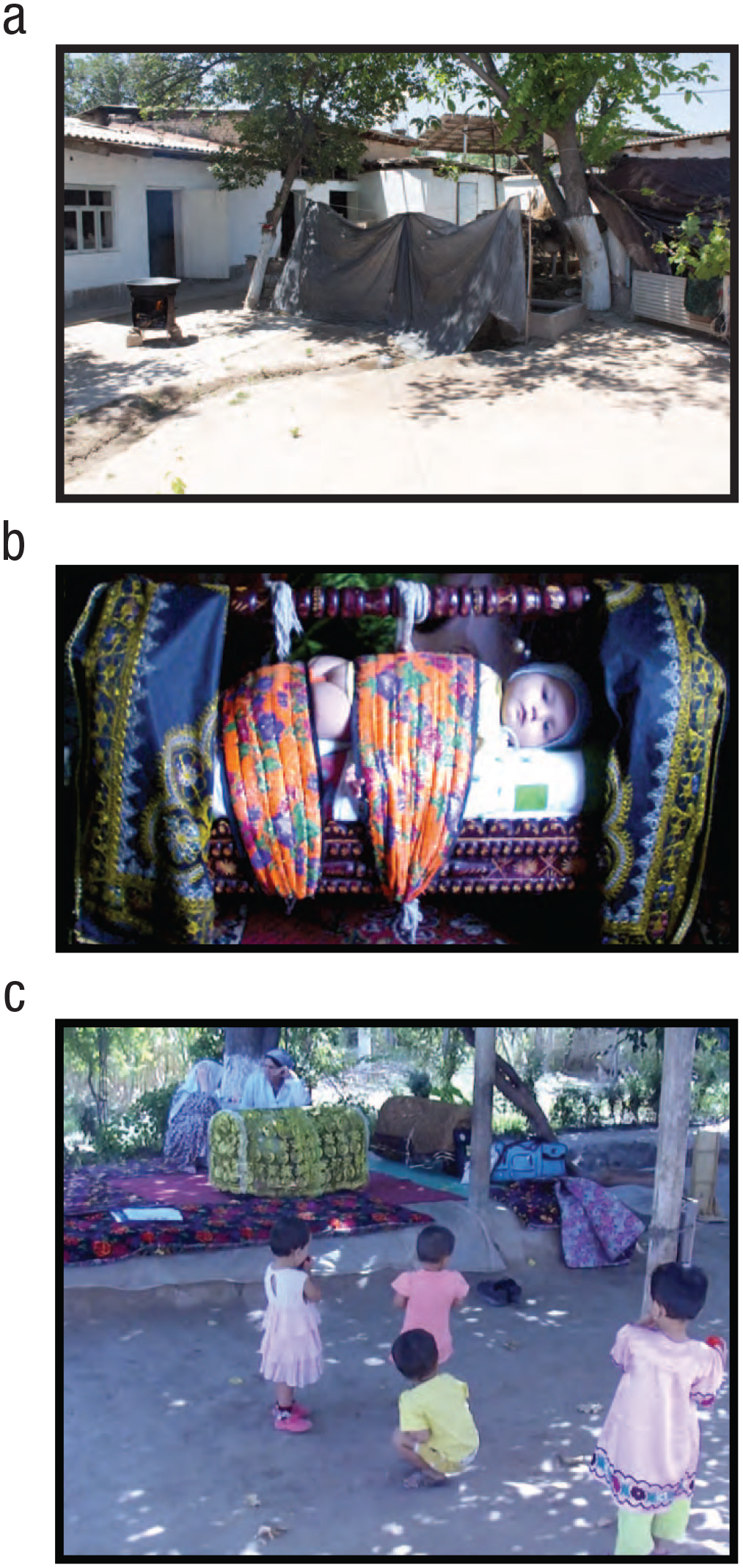
The home environment in Tajikistan. The photographs depict (a) single-room, cement houses situated along an irrigation ditch featuring an outdoor cooking area with a black cauldron over an open fire, a cow grazing beneath a tree, and a small orchard to the side; (b) an infant bound from neck to toe in a gahvora; and (c) a fully covered gahvora in a courtyard. Commonly moved to different locations inside or outside the home, gahvoras keep infants clean with an external catheter and ensure they remain securely in place for both sleep and wakefulness. Multiple gahvoras may be present within a household. When fully covered, gahvoras can block sunlight, reduce noise, and protect infants from insects and drafts.
At the heart of this rich and dynamic physical, visual, and social environment is the traditional childrearing practice of gahvora cradling, which is as common as cribs, disposable diapers, or other childrearing tools or practices used in Western homes. In gahvoras (Fig. 1b), infants’ legs, torso, and arms are straightened, swaddled with cloth, and bound with wide velour bindings because gahvoras lack side walls. Babies are laid bottomless on top of a hole in the mattress, allowing an external catheter to funnel waste into a tuvak bowl suspended underneath. Additional blankets drape the entire gahvora, blocking noise and light and protecting against drafts and occasional insects (Fig. 1c). The gahvora stands on wooden rockers, allowing caregivers to lull infants to sleep or soothe them on waking. After several cycles of vigorous rocking, infants are comforted and soon asleep. Mothers often breastfeed infants while they are bundled in gahvoras, and infants remain clean and dry. Infants can spend up to 20 hr a day secured in the gahvora, allowing mothers to attend to chores and other children (Karasik et al., 2018).
Within the seemingly stimulating environment outside the gahvoras, infants placed inside are physically, and to some extent visually and socially, restricted, especially when cradles are draped. Nonetheless, other children of various ages run around, participate in daily routines, and engage in tasks that far exceed those typically undertaken by Western urban children (Fig. 2). Like other developmental psychologists specializing in the social and cultural aspects of infant motor development, I support the idea that active infants are immersed in rich, diverse, and socially responsive environments (Fig. 3) in which they and their surroundings continuously influence each other, requiring mutual and flexible adaptation over time (Iverson, 2022; Oakes & Rakison, 2020; Tamis-LeMonda & Masek, 2023). However, can infants truly be considered active if they spend extensive hours each day in severe restriction, with gahvora use extending into the second and third years of life (Karasik et al., 2018)?
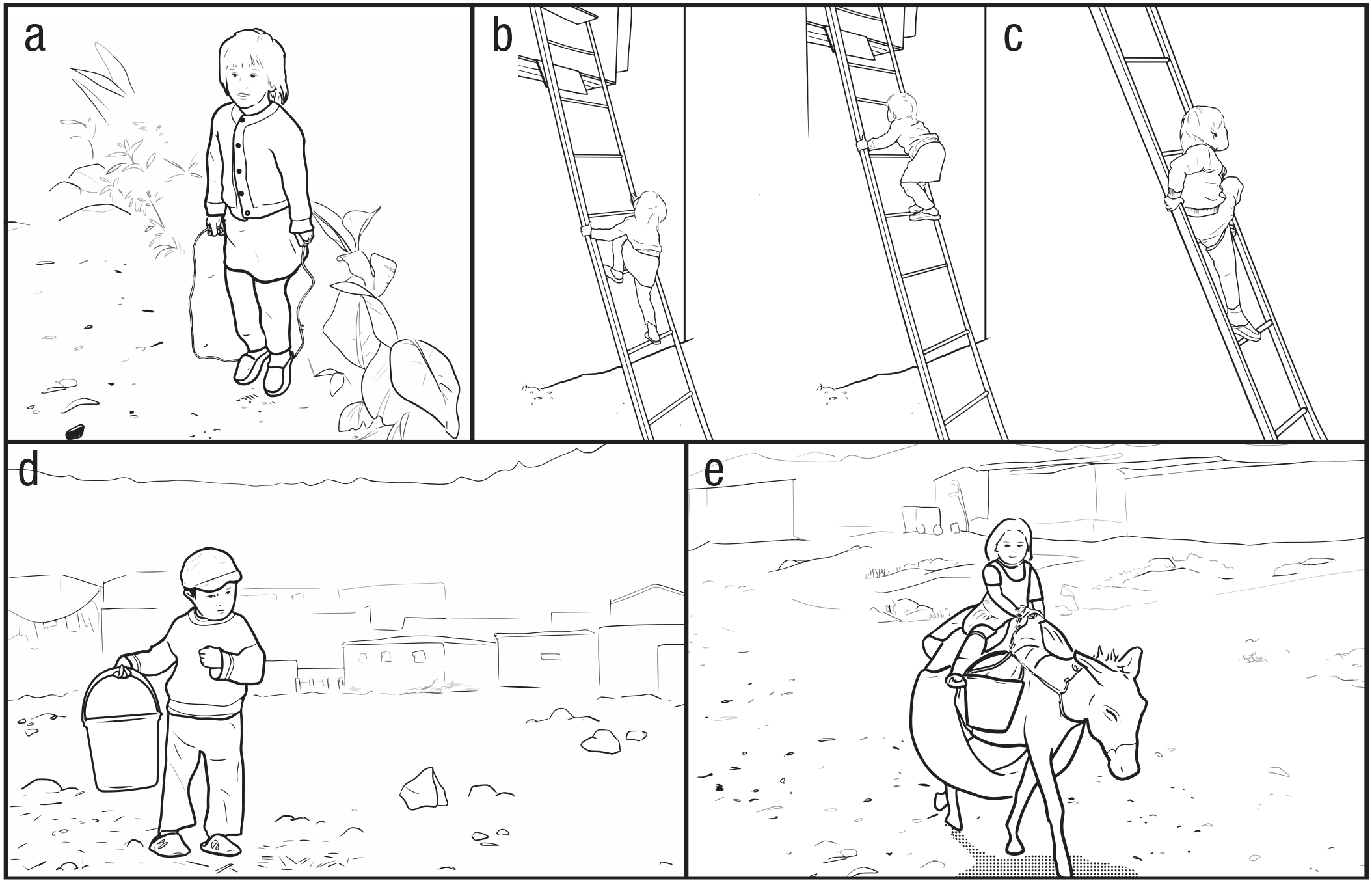
Line drawings of Tajik children engaging in typical everyday activities. A 3-year-old girl (a) jumps rope using a string while wearing slippers, a 3-year-old girl (b) climbs up and (c) descends a wide-rung ladder facing outward, a 4-year-old boy (d) carries a bucket of water, and a 5-year-old girl (e) rides a donkey and carries loads.
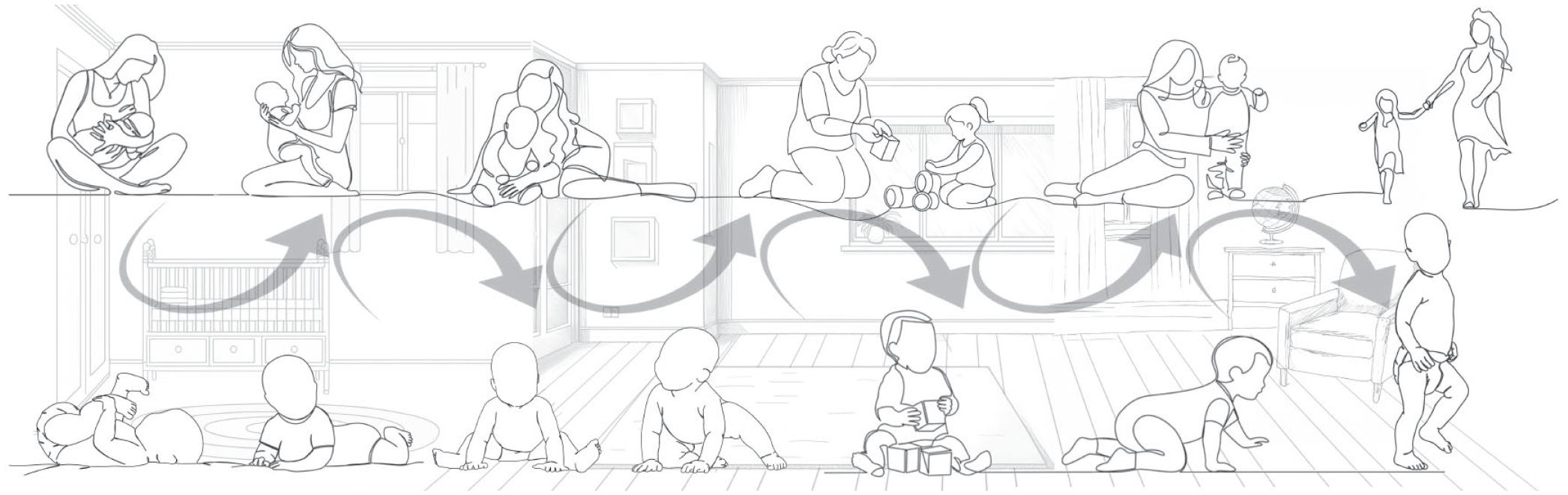
Active role of infants immersed in rich, diverse, and socially responsive environments in which they and their surroundings continuously influence each other. Infants in the bottom row are depicted in various stages of motor development, from lying down to walking, demonstrating the gradual acquisition of motor skills over the first 2 years. The top row shows caregivers providing support and responsive engagement embedded within a physical environment. Curved arrows indicate the iterative nature of infant development, emphasizing mutual adaptation between infants and their interactions with caregivers, objects, and physical spaces. This reciprocal process reflects the constant adjustments infants and caregivers make in response to one another, facilitating flexible and resilient developmental pathways. The diagram reinforces the idea that motor development is not a linear progression but an evolving interplay between infant capabilities, caregiver support, and environmental opportunities over time.
Prominent developmental theories are built on an assumption that unrestricted movement is necessary for neurotypical development (for review, see Adolph & Robinson, 2015; Adolph et al., 2010). Researchers trained in this framework have focused on meticulously documenting the order and timing of motor behavior, recognizing the variability around onsets and speculating that differences in experiences are likely explanatory factors. However, because these studies have primarily included infants reared in Western traditions, researchers have relegated childrearing practices to mere noise and have not investigated their importance in shaping infants’ experiences.
Childrearing Practices Channel Infants’ Experiences
Why is it important to study infant development from a cultural perspective? Culture influences childrearing practices, shaping both the social and physical environments in which infants develop. These practices, in turn, provide infants with unique experiences and opportunities for manual, postural, and locomotor actions.
Role of caregivers in shaping infant motor development
Caregivers cultivate infant behavioral development through culturally grounded childrearing practices. The approaches to childrearing vary widely across cultures, leading to distinct patterns of caregiver-infant interactions. In some African and West Indian communities, for instance, caregivers engage in vigorous handling techniques, including intense massage, daily exercise, and constant close body contact (Adolph et al., 2010). These practices often extend to bathing routines and may involve rubbing, kneading, joint rotation, and limb pumping.
The motivations behind these practices are multifaceted. Stretching and massaging newborns’ muscles and joints are based on the belief that these activities enhance flexibility and encourage spontaneous movement (Rabain-Jamin & Wornham, 1993). Some caregivers use these techniques to monitor infants’ health (Lohaus et al., 2011), whereas others apply them to actively train specific motor skills, which may contribute to earlier skill onset (Adolph & Robinson, 2015). Among the Ache people of Paraguay, caregivers initially restrict infant exploration to protect them from potential hazards in their environment. For instance, vines are tied around children’s ankles to prevent wandering, and they are carried in slings or baskets during camp relocations. These practices reflect the belief that limiting early mobility ensures safety in a high-risk environment. However, as Ache children grow older, they are encouraged to explore extensively, walking several kilometers over challenging terrain and climbing tall trees to play or forage (Hill & Hurtado, 1996).
Passive effects of childrearing on motor development
Beyond direct interventions, childrearing practices such as infant containment and transport methods play a pivotal role in shaping early sensory and motor development. In Tajikistan, the use of gahvoras limit infants’ accessible environment. In parts of East and West Africa, Central and South America, Papua New Guinea, and Mexico, infants are often carried in slings or sacks tied to caregivers’ bodies (for review, see Adolph et al., 2010). This practice results in limited upright positioning and restricted visual access to surroundings during the first year.
Daily activities dictate the settings for childcare, leading to varied experiences and expectations. Physical demands of daily life in Sierra Leone, such as pounding rice and carrying water, contribute to children’s motor development, strengthening their muscles, improving posture, and enhancing motor coordination (van der Niet, 2010). Using heavy wooden pestles, girls learn to synchronize their movements because this rhythmic activity is done in groups. Young 8- to 9-year-old children tasked with fetching water from wells develop the strength, posture, and endurance to be able to maintain a stable upper body while carrying loads that are 30% to 60% of their body weight over uneven terrain.
Cultural practices, such as the way people in different societies squat or sit, depend on their environments and the tasks they perform (Bril, 2018). Squatting has been largely overlooked despite its use for activities such as resting and household chores. Squatting has biomechanical benefits, reducing knee joint forces and lowering metabolic costs, potentially leading to different motor behaviors and physical abilities.
The physical environment both influences and is influenced by parents’ expectations as they adjust infants’ surroundings on the basis of their perceptions of the infants’ current and emerging abilities. In typical Western households, the prevalence of elevated seating surfaces and specialized infant seats reflects deeply ingrained assumptions about infant capabilities and safety requirements. Parents in these contexts frequently secure infants in seating devices, inadvertently limiting opportunities for autonomous balance practice. This stands in stark contrast to practices observed in Kenya and Cameroon, in which mothers routinely position their young infants in unsupported sitting postures. Remarkably, infants in these contexts have demonstrated more advanced sitting abilities (without a single fall) compared with their Western counterparts (Karasik et al., 2015). Researchers trained in Western paradigms have found the independent sitting capabilities of such young infants astonishing. This cultural disparity in expectations is further exemplified by the tendency of U.S. parents to avoid placing infants in unsupported sitting positions, operating under the assumption that young infants lack the requisite balance skills.
However, as infants approach the onset of skills, parental practices in the United States shift in response to infants’ emerging abilities. Parents begin to notice that infants pull themselves up to stand and take cruising steps along furniture, signaling their readiness for upright locomotion. Research findings indicate that, in light of these developments, parents begin to provide more diverse movement opportunities within indoor spaces. They allow increased floor time for spontaneous activity and support upright movement using furniture or maternal assistance. Interestingly, Karasik and Fernandes (2024) revealed that although infants took more steps with maternal support, it was the self-generated upright steps that led to an earlier onset of independent walking. This finding underscores the importance of self-initiated motor experiences in skill acquisition, even within cultural contexts that may not necessarily actively train skills at the outset.
From Culture to Infant Development: The Gahvora Cradling Case Study of Cascades
My interest in gahvora cradling arose from its pronounced contrast to childrearing practices found in other cultures around the world, in particular its extended period of use and severity of restriction. Unlike other swaddling techniques, gahvoras involve tightly bundling the infant with multiple layers of cloth and securing them to the cradle and are used well beyond infancy into the second and third years of life (for review, see Karasik & Robinson, 2022). At first glance, gahvoras appear to be a radical form of child deprivation. However, deprivation studies of children in orphanages, which have reported dramatic developmental delays across various measures (Gunnar, 2001), are not directly comparable. These delays stem from the absence of response-contingent stimulation across social, emotional, and sensorimotor experiences. In contrast, gahvora use involves a more dynamic set of experiences within a rich cultural and social context, suggesting different developmental outcomes.
Although the restrictive nature of gahvora use might initially seem to hinder development, focusing solely on movement restriction misses the broader picture. Infant containment practices, such as carrying or placing infants in gahvoras, limit locomotor exploration but simultaneously create opportunities for joint attention, in which infants are directed to observe whatever the caregiver is doing or looking at. This containment can also promote face-to-face interactions and communicative exchanges. Similarly, although the gahvora restricts movement, much like swaddling, it calms infants and helps them regulate arousal and attention.
Gahvora cradling, situated within this rich social and cultural context, offers a unique model for examining cascading effects in infant development. Traditional studies on developmental cascades have mostly been conducted in cultures in which movement is unrestricted and encouraged. These studies have typically focused on how motor development influences other developmental domains after the transition to independent movement, holding age constant. To truly understand the nature of these cascades, it is crucial to investigate whether effects on other developmental domains persist when motor skills are hindered, as in the case of gahvora cradling.
The practice is intriguing not only because it restricts movement but also because it highlights the ways in which such restrictions channel infants’ experiences, shaping some behaviors while limiting others. Over time, such experiences can influence a wide range of developmental outcomes, challenging the assumption that restriction is synonymous with deprivation.
Across multiple studies, data were collected from nearly 400 families of infants and children using cross-sectional and longitudinal designs, standard tasks, and naturalistic observations (Karasik et al., 2023). Standard assessments measured locomotor status and proficiency, sitting and standing, focused attention tasks, novel object tasks to solve with caregivers, and a conjugate reinforcement mobile task to examine sensorimotor learning. Video was used to ensure consistency and reproducibility, with Tajik collaborators playing a key role in protocol implementation and interpretation.
The structured interviews and video recordings of children and caregivers yielded surprising insights. First, gahvora use was nearly universal; most participants began using it shortly after birth. There were three distinct patterns of use: Some caregivers used it only at night, some used it only during the day, and most used it both day and night, regardless of infants’ age (Karasik et al., 2018), suggesting gahvoras serve purposes beyond sleep. The intensity of restriction in the gahvora is greater than that of the devices that typically restrict infants in the United States (Fig. 4). Outside the cradle, however, Tajik infants enjoy a largely unrestricted environment, apart from occasional time spent in adults’ arms. Because of varying bedtimes, Tajik infants tended to have a slightly longer waking day than their U.S. counterparts. Infants who were in gahvoras during the day but not at night had more unrestricted time than those who slept in gahvoras. This is likely because infants who co-slept with caregivers on the kurpacha (floor mat) could move freely on waking, whereas those in gahvoras at night must wait for a caregiver to release them (Karasik et al., 2022).
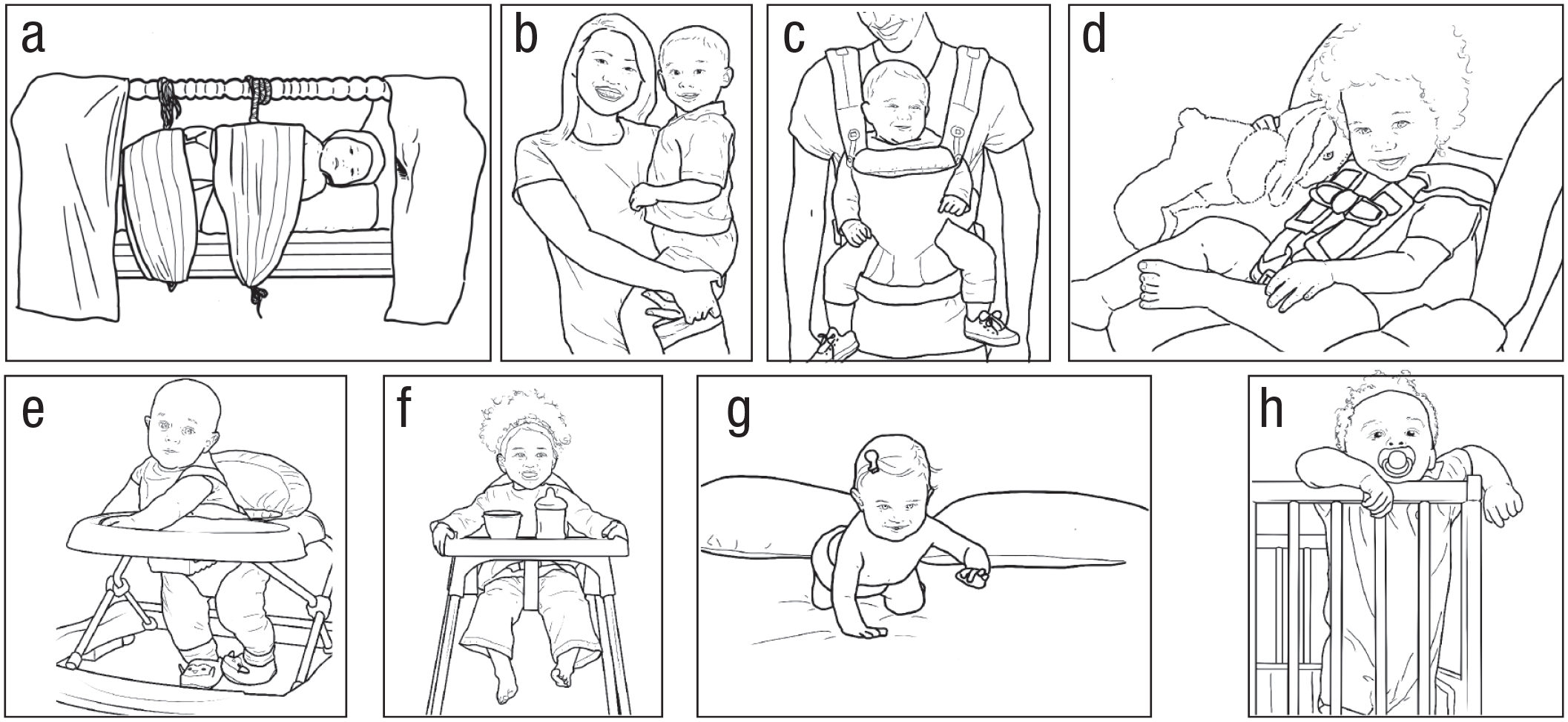
Line drawings displaying infant containment in a gahvora compared with typical U.S. devices. An infant bound in (a) a gahvora has a high degree of postural and movement restriction. Various infant containment devices commonly used in the United States show comparatively less restrictive environments: (b) in caregivers’ arms, (c) strapped to the caregiver in a carrier, (d) in a belted car seat (or stroller), (e) in a mechanical baby walker, and (f) in a high chair. In each of these cases infants’ bodies are fully supported, but their heads and limbs are unrestricted. Infants can also be spatially restricted when they are confined to one space such as (g) elevated adult furniture or (h) in a crib, but their posture and limbs are unrestricted.
When Tajik mothers were asked why they use gahvoras, many were caught off guard by the question, with some struggling to provide an immediate answer. The use of gahvoras in Tajikistan is as ubiquitous and unquestioned as the use of diapers in the United States, so deeply embedded in everyday childrearing practices that it rarely undergoes scrutiny. Caregivers generally view the gahvora as a practical tool for managing sleep, toileting, and childminding, allowing mothers to attend to chores or care for other children. Many mothers noted that children sleep better in gahvoras, that they used them with all their children, and that they themselves were raised in gahvoras. Additionally, caregivers often value the calmness, patience, and obedience they believe the gahvora instills in their infants, viewing the practice as contributing to these traits by keeping babies settled and content.
Second, the study examined whether the timing of restriction and variations in movement opportunities influence infants’ spontaneous motor behavior and learning. In a conjugate reinforcement task, 3-month-olds had one leg tethered to a mobile, requiring them to visually attend to it and learn the contingency through movement during three 3-min learning trials. Tajik 3-month-olds who spent extensive daily hours in gahvoras and had limited motor-visual experience were tested. Some infants had been in gahvoras just before the experiment, whereas others had been out for about 10 min. Both groups increased their kicking when the ribbon was detached, but recently removed infants took longer to adjust. The group out for 10 min doubled their kicking compared with baseline and tripled it in the last trial. In contrast, the recently removed group increased their kicking progressively throughout the trials, suggesting a rediscovery of their limbs and their impact on the mobile, particularly in the final trial. This indicates that both groups exhibited increases in kicking, but the timing and magnitude of their adjustments differed on the basis of their recent experience with the gahvora (Karasik, Robinson, & Dodojonova, 2024).
Third, although Tajik infants had later motor onset ages relative to World Health Organization standards (WHO Multicentre Growth Reference Study Group, 2006), the effects of cradling were not straightforward and likely more complex, possibly because of the timing of restriction. Although the severity of restriction remains consistent, the duration and timing of infants’ time spent in the gahvora fluctuates, leading up to and through developmental time windows when motor skills emerge. Investigations on the relations between the timing of restriction and multiple domains of infants’ development showed that cradling affects motor proficiency, locomotor exploration, and object interactions. For instance, infants who spent fewer hours in the gahvora and were proficient sitters—demonstrating independent sitting and maintaining an upright posture for longer durations—showed different interactions with objects compared with same-age infants who spent more time cradled and were not yet sitting (Karasik & Schneider, 2024). Likewise, gahvora cradling indirectly influenced the locomotor exploration of walking infants, aligning with their walking proficiency. Infants who were more proficient walkers, characterized by faster walking speeds and longer step lengths, covered greater distances and traversed a wider variety of surfaces compared with less proficient walkers (Karasik, Fernandes, & Ferst, 2024). However, cradling had no effect on infants’ contact and time with objects. When observed out of gahvoras in spontaneous activity, mobile infants accrued 50% of their observation time in contact with objects (Karasik et al., 2025), similar to their Western counterparts (e.g., Herzberg et al., 2022). Despite the limited variety of objects, infants readily discovered and rediscovered items in their environment, indicating their propensity to take advantage of play opportunities when given the freedom to do so (e.g., Casey et al., 2022).
Current investigations focus on how gahvora practices influence infant development by shaping key behaviors such as sleep and breastfeeding, both of which are essential for motor and cognitive growth.Studies indicate that sleep and breastfeeding influence infant physical growth and well-being, subsequently affecting motor and cognitive abilities (Horger et al., 2021; Horta & Victora, 2013). Adequate sleep is crucial for brain development because it supports memory consolidation and neural connectivity, which are essential for learning and motor skill acquisition. Breastfeeding provides vital nutrients that promote healthy growth and brain function, facilitating the development of motor skills and cognitive processes during critical early stages of life.
Gahvora cradling shapes these fundamental behaviors. Regarding sleep patterns, younger infants in gahvoras have been shown to experience fewer nighttime wakings compared with those co-sleeping with caregivers, whereas older infants had fewer nighttime wakings when co-sleeping. This suggests that gahvoras soothe young infants, akin to swaddling, but might discomfort older ones (Catalano et al., 2024). Nevertheless, gahvoras showed no effect on breastfeeding quality, regardless of whether mothers breastfed leaning into gahvoras or holding infants in their arms, indicating no hindrance to breastfeeding inclination. Thus, it is important not to rush to conclusions regarding gahvoras’ effect on breastfeeding but rather appreciate their integration within the broader cultural context (Villani et al., 2024). Research on aspects of infancy such as breastfeeding and sleeping must consider culture-specific childrearing practices.
Conclusions: Unraveling More Questions Than Answers
The examples discussed throughout this article highlight the interplay between physical environments, cultural practices, and motor development. They reveal the diverse pathways for motor learning across cultures, demonstrating that developmental trajectories are not monolithic but shaped by culturally specific practices. Despite these insights, significant knowledge gaps remain. We still lack a comprehensive understanding of the contextual factors that influence skill acquisition across cultural settings, the precise timing of certain experiences, and the long-term developmental impacts of these practices. Moreover, it is essential to examine the active role infants play in their own development—how they initiate movement, explore their surroundings, and incorporate feedback from challenges, such as falls, into their learning process. Regardless of when motor skills emerge, their proficiency may have far-reaching effects on cognitive and social development.
An important takeaway from this research is the flexibility of developmental systems. Although gahvora cradling appears to delay the onset of certain motor milestones, we observed that children often “catch up” over time. This resilience is likely supported by other developmental factors, such as cognitive engagement and social interactions within the rich cultural environment. However, the exact mechanisms behind this resilience remain unclear. Future research will explore how cultural practices like gahvora cradling might influence motor, cognitive, and social development, potentially revealing aspects that current developmental models may not address.
Studying gahvora cradling within its broader cultural context provides a unique lens through which to explore how various environmental elements interact to shape infant development. These findings challenge the assumption that movement restriction is inherently detrimental to developmental outcomes. Instead, they emphasize the importance of understanding the adaptive strategies that caregivers and infants use in response to culturally specific practices.
Studies of gahvora cradling carry implications for developmental science that extend beyond the boundaries of Tajikistan. Gahvora use takes place in a larger cultural context, spurring researchers to appreciate the dynamic nature of development in which experiences accumulate and transform across different domains, from the individual child to the broader social and physical environment. Examining this practice within its cultural context can contribute to a more nuanced understanding of how experiences shape developmental outcomes, underlining the importance of considering the broader context in which development unfolds. These findings prompt future investigations into how much practice, and in what distribution, is necessary for healthy development across different domains.
Recommended Reading
Adolph, K. E., & Hoch, J. E. (2019). Motor development: Embodied, embedded, enculturated, and enabling. Annual Review of Psychology, 70, 141–164. Reviews how motor skills are interwined with the body, environment, culture, and opportunities for learning and practice.
Henrich, J., Heine, S. J., & Norenzayan, A. (2010). The weirdest people in the world? Behavioral and Brain Sciences, 33, 61–83. Discusses potential biases in psychological research stemming from the overreliance on samples from a narrow and unrepresented subset of the population.
Iverson, J. M., West, K. L., Schneider, J. L., Plate, S. N., Northrup, J. B., & Britsch, E. R. (2022). Early development in autism: How developmental cascades help us understand the emergence of developmental differences. Advances in Child Development and Behavior, 64, 109–134. Discusses how developmental cascades contribute to the emergence of developmental differences in individuals with autism spectrum disorder.
Oakes, L. M. (2023). Understanding developmental cascades and experience: Diversity matters. Infancy, 28, 492–506. Emphasizes the importance of considering diveristy in experiences and contexts when studying developmental cascades.
Tamis-LeMonda, C. S. (2023). The mountain stream of infant development. Infancy, 28, 468–491. Explores the multifaceted and dynamic nature of infant development.
