







Abstract
Background:
An introductory acupuncture course has been offered to primary health care physicians and family medicine residents in southern Brazil since 2011.
Objective:
To analyze the profile of acupuncture utilization of primary care physicians who completed an introductory course of acupuncture between 2011 and 2018.
Method:
A survey using an electronic questionnaire was sent to all 119 physicians who completed the course.
Results:
Fifty-five physicians answered the questionnaire. The majority of them reported continuation of the practice of acupuncture in scheduled appointments and on spontaneous demand. The most commonly used principles of point selection were traditional acupuncture point function, myofascial trigger point needling and point protocols. As barriers to the practice of acupuncture, time limitation and inadequate physical space were predominant. The participants described the problem-solving potential of the procedure and good patient acceptance as facilitators. The most common problems treated with acupuncture were musculoskeletal pain, and mood and anxiety disorders. A reduction in referrals to specialists and reduced prescription of pain medications were also reported. Most physicians answered that they often combined acupuncture with other medications or associated acupuncture with other complementary practices. The main adverse events reported by the participants were vascular trauma and fainting.
Conclusion:
Most primary care physicians who completed the introductory course and answered the survey still used acupuncture in their routine, primarily for the management of musculoskeletal conditions and mental health conditions. These physicians reported reductions in specialist referrals and prescription of pain medication after integrating basic acupuncture skills into primary care practice.
Keywords
Introduction
Acupuncture is a complex medical intervention that originated in China more than 3000 years ago and can be utilized to dynamically address health-disease processes in humans.1,2 In the Western world, from the second half of the 20th century onwards, acupuncture started to be increasingly assimilated by conventional biomedicine. Thanks to scientific research carried out in several countries in both the East and the West, the therapeutic effects of acupuncture have been recognized and gradually explained in studies published in high quality scientific journals. 3
In Brazil, the regular practice of acupuncture in the public health system started when the Unified Health System (Sistema Único de Saúde, SUS) was created in 1988. In 2006, another milestone in the history of public health acupuncture practice in Brazil was observed with the publication of the Brazilian National Policy of Integrative and Complementary Practices (PNPIC). This national policy came to legitimize and define complementary and integrative approaches within the SUS, focusing mainly on primary health care (PHC).4,5
In compliance with institutional responsibilities, in 2010 the Municipal Health Secretariat (SMS) of Florianópolis appointed a commission to implement Integrative and Complementary Practices, called CPIC. 6 One of the strategies of the CPIC, in collaboration with the Federal University of Santa Catarina (UFSC) and the acupuncture residency program of the University Hospital, was to offer to the physicians of the municipal network, as well as the Florianópolis SMS Family and Community Medicine (FCM) residents, an introductory course in acupuncture focusing on the demands of the PHC. The training program consists of 10 lectures (40 h) and 10 practical classes (40 h) that cover acupuncture-related topics from both the traditional Chinese medicine (TCM) and the biomedical perspective. 7
Few studies have investigated the profile of medical doctors that underwent acupuncture training or provided follow-up data of the repercussion of acupuncture in a physician’s clinical practice.8–12 There is a scarcity of literature that addresses the implementation of acupuncture in the context of primary care 13 or that describes experiences of complementary acupuncture education for PHC physicians and FCM residents. 14 Therefore, the aim of this study was to analyze the profile of acupuncture use by physicians who underwent the Introduction to Acupuncture course offered in the public health system of the city of Florianópolis, Brazil.
Methods
This was a cross-sectional descriptive study involving physicians who participated in different editions of an introductory acupuncture course in the period 2011–2018. A survey study model was adopted, considering its potential to effectively obtain data or information about characteristics, actions or opinions of a certain group of people through a research instrument.15,16 The strategy was to use an electronic questionnaire because it offers several benefits when it comes to health research; it is easy to implement, has reduced costs and does not require advanced programming skills or electronic data entry. 17
The data collection questionnaire was developed by the authors of this research in three stages. Initially, the first author (FB) elaborated an initial version that was discussed and improved by other researchers involved in this study. In the second stage, the questionnaire was sent to five acupuncture physicians who did not participate in the Introduction to Acupuncture course and had close contact with or experience in PHC and who provided feedback on the time required to complete the questionnaire and on its content. Finally, from the information obtained in the second stage, there was a new discussion among the researchers, who reached a consensus on the final version of the questionnaire.
This study followed the guidelines for the elaboration and conduct of surveys for health professionals and was classified as a purposive sampling survey, since individuals were selected according to specific criteria 18 —in this case, they were physicians who completed the Introduction to Acupuncture course between 2011 and 2018. The final questionnaire included 29 questions related to participation in the course and the use of acupuncture (see Supplemental Material for the questionnaire). The estimated time taken to answer the questions was 7–10 min. One of the questions addressed acupuncture-related adverse events. These questions were adapted from a survey on adverse events that was applied at the XXIII Brazilian Congress of the Brazilian Medical College of Acupuncture. 19
An email message was sent to all 119 physicians who had participated in the Introduction to Acupuncture course. Participants received via email a link to a questionnaire built in Google Forms. If there was no response from the participant, a new email was sent each week; no more than three attempts were made. After accepting the research informed consent form, the participant was directed to the questionnaire. The information obtained through the questionnaire was automatically inserted into a database in an electronic medium and later saved in a Microsoft Excel file. Frequencies and response percentages were generated for each question. Since this is a descriptive study, statistical tests were not performed to confirm hypotheses. This research project was approved by the UFSC Ethics Committee (protocol no. 358.044).
Results
One hundred and nineteen physicians who undertook the Introduction to Acupuncture course between 2011 and 2018 were contacted. Fifty-five physicians responded to the questionnaire. Of these, 81.8% were between the ages of 23 and 40. In total, 65.5% were female and 56.4% had graduated less than 5 years ago. The participants had graduated mainly from public education institutions (74.5%) and public PHC was their main activity (83.6%; Table 1).
Socio-demographic data and aspects related to acupuncture practice.

The majority of the participants (81.6%) had undertaken the course during the period of family medicine residency. About 60% of the physicians answered that they had an interest in undergoing post-graduate education in acupuncture after the course, and 20% were undergoing or had already undergone post-graduate training (Table 1).
Of those who completed the course and responded to the survey, 83.6% started acupuncture practice in primary care while taking the course. The main motivation to take the course, cited by 76.4%, was interest or curiosity about the subject. Approximately 93% of those surveyed agreed that the Introduction to Acupuncture course was of fundamental importance for professional practice (Table 1).
The principles of point selection were varied among professionals. The main choice was traditional acupuncture point function (42%) according to the patient’s complaint, followed by myofascial needling (38%) and point protocols (38%). In the practice of the participants, the dominant medical rationale chosen for acupuncture was divided between biomedicine only, with 47.3%, and both rationales (biomedicine and TCM), with 45.5% (Table 1).
A total of 69.1% of the participants stated that they would initiate acupuncture treatment in most patients with an appropriate indication and, if necessary, refer them to an acupuncture specialist later. Only 5.5% refer all patients to acupuncture specialists (Table 1).
As for the use of acupuncture, the main contexts of use in PHC, as shown in Figure 1, were scheduled appointments (n = 47) and spontaneous demand (n = 44). When questioned about the most frequent context in which they used acupuncture, the majority of respondents (58.2%) answered scheduled appointments. Most participants reported that, when using acupuncture, they usually associate it with medications (n = 48) and with other integrative practices (n = 39). The physicians surveyed usually saw one to three (38.2%) or four to six patients per week (30.9%).
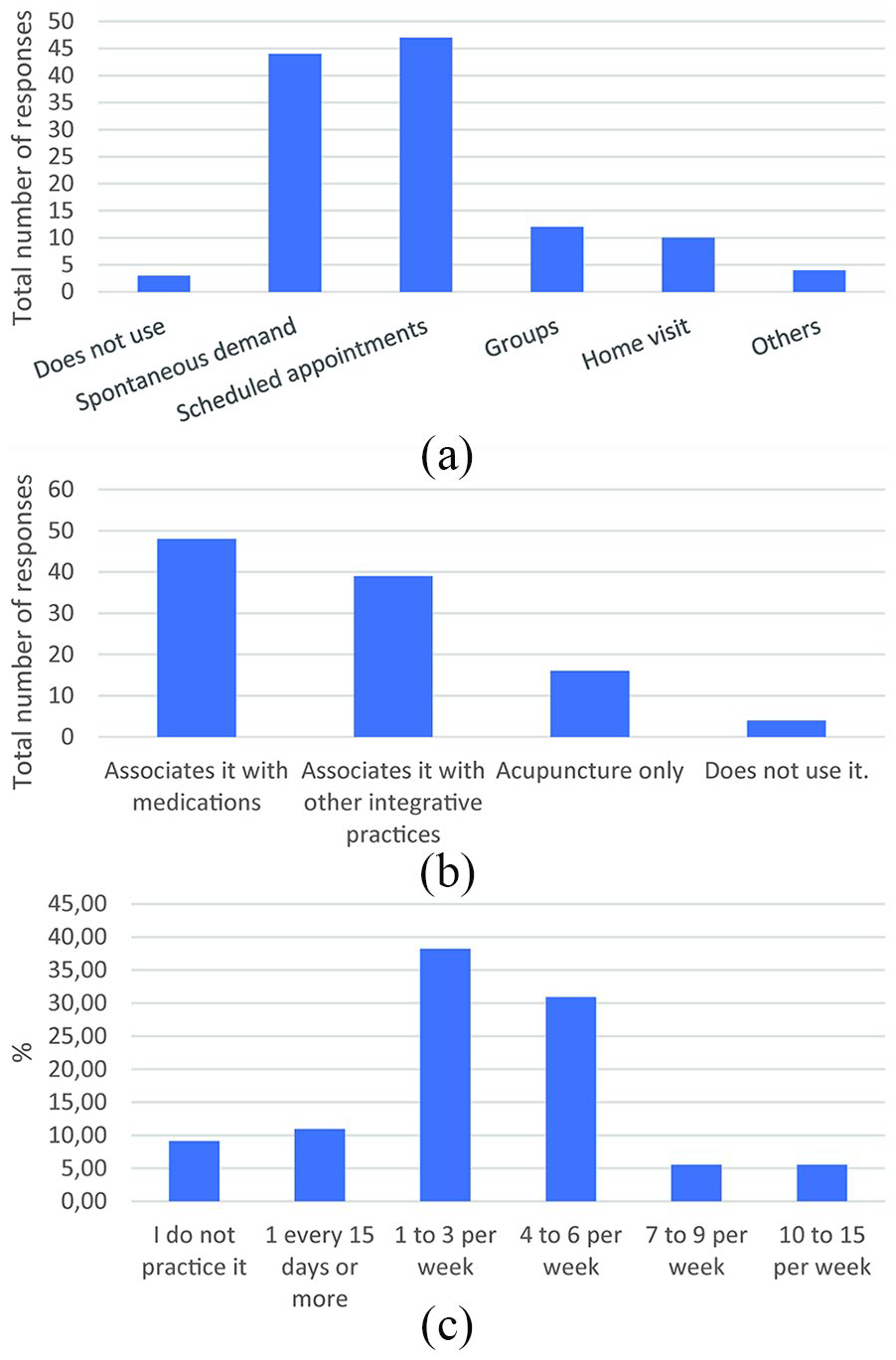
Acupuncture use: (a) contexts of acupuncture use in primary care, (b) other therapies usually associated with acupuncture, and (c) average number of patients using acupuncture per week.
The clinical conditions that had been treated by the respondents in PHC are listed in Figure 2. It can be noticed that all participants had treated musculoskeletal disorders and most of them had managed mood and anxiety disorders with acupuncture. The five most common conditions treated with acupuncture cited by the study participants (in descending order) were anxiety, headache, low back pain, shoulder pain and myofascial pain syndrome.
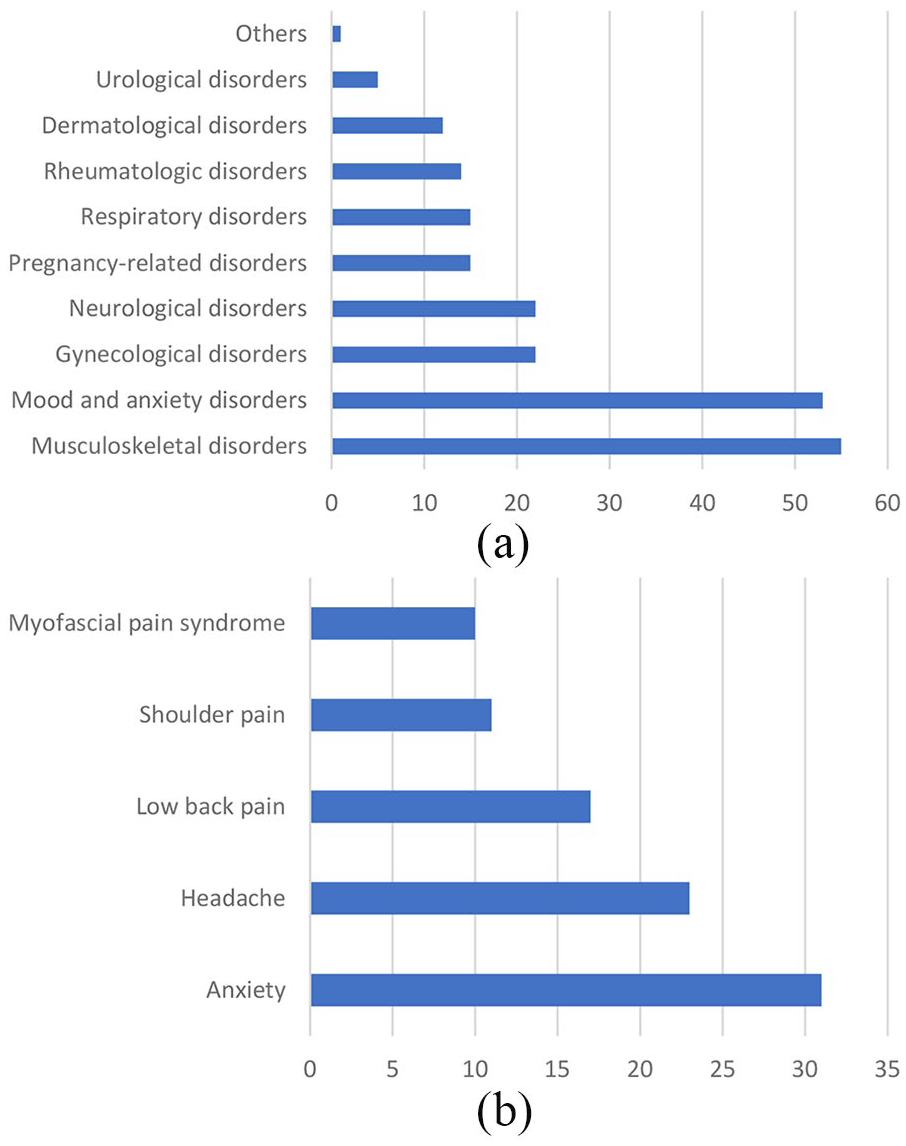
Conditions treated with acupuncture: (a) general conditions and (b) most frequently cited specific conditions.a
The vast majority of study participants (90.9%) perceived that the use of acupuncture reduced the prescription of medications. Anti-inflammatory agents were the medication type with the greatest reduction of use, followed by (in descending order) analgesics, antidepressants, benzodiazepines and corticosteroids (Figure 3). Similar to the perception regarding medication prescriptions, most respondents reported that they had reduced the number of referrals (74.5%). Orthopedics, physiotherapy and rheumatology were the main areas with reduced referrals. As for the perception of a reduction in test requests due to the use of acupuncture, the scenario is different, since the answers were balanced; 44.4% believed that they request fewer tests, and 42.6% did not. Ultrasonography and radiography were the most commonly reported tests cited by respondents who believed the number of test requests was reduced.
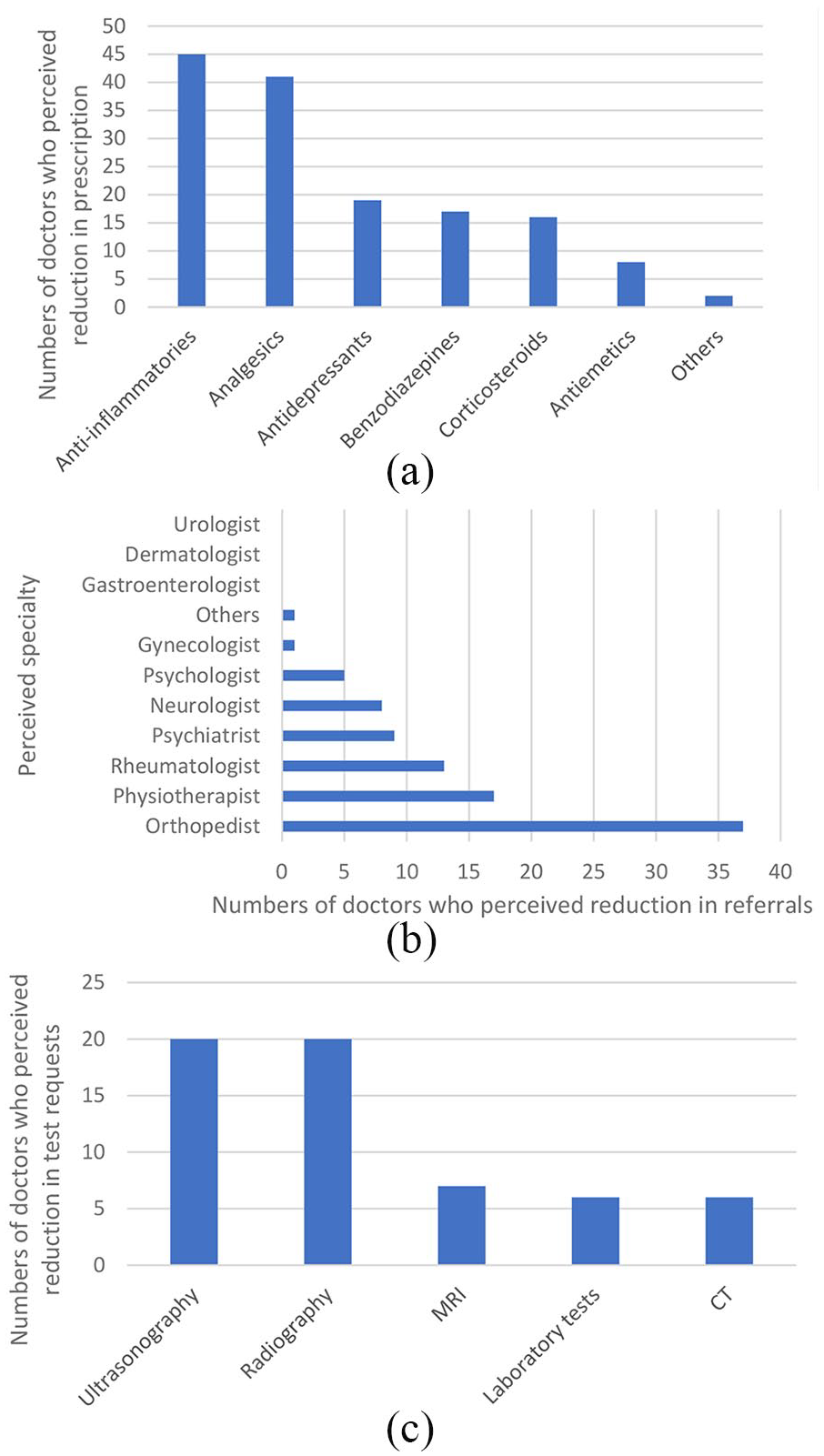
Impact on medications, tests and referrals: (a) medications, (b) reductions in referral to specialists post acupuncture, and (c) tests.
The main barriers to the practice of acupuncture in the work environment pointed out by the participants were inadequate time, inappropriate space, or structure (Figure 4). As facilitators, the majority of respondents cited good patient acceptance and the problem-solving potential of the acupuncture procedure. Acceptance by other work colleagues also appeared frequently in the responses.
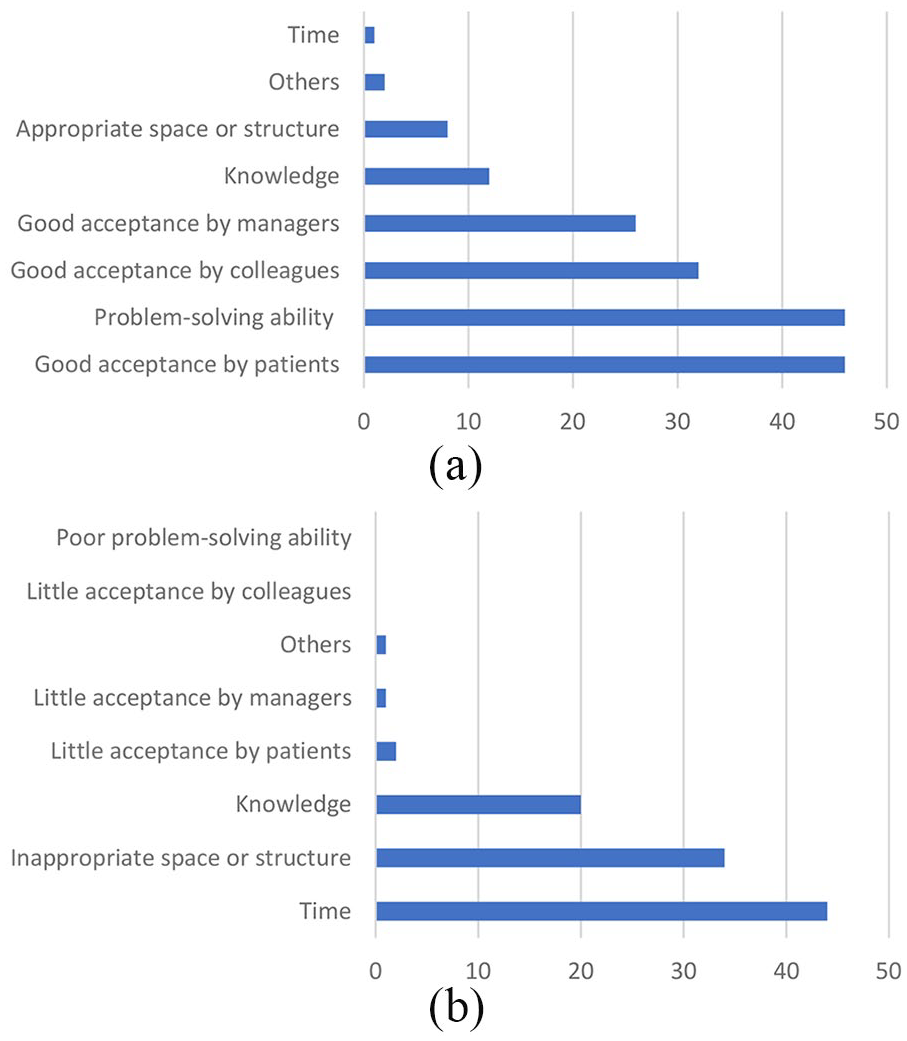
Facilitators and barriers to acupuncture practice: (a) facilitators and (b) barriers.
Acupuncture-related adverse events witnessed at least once in clinical practice by the study participants are described in Table 2. Vascular trauma, fainting and severe pain when inserting the needle were the most frequent events observed. Two participants reported having observed a seizure after an acupuncture session. No cases of organ perforation were reported.
Acupuncture-related adverse events observed by study participants.
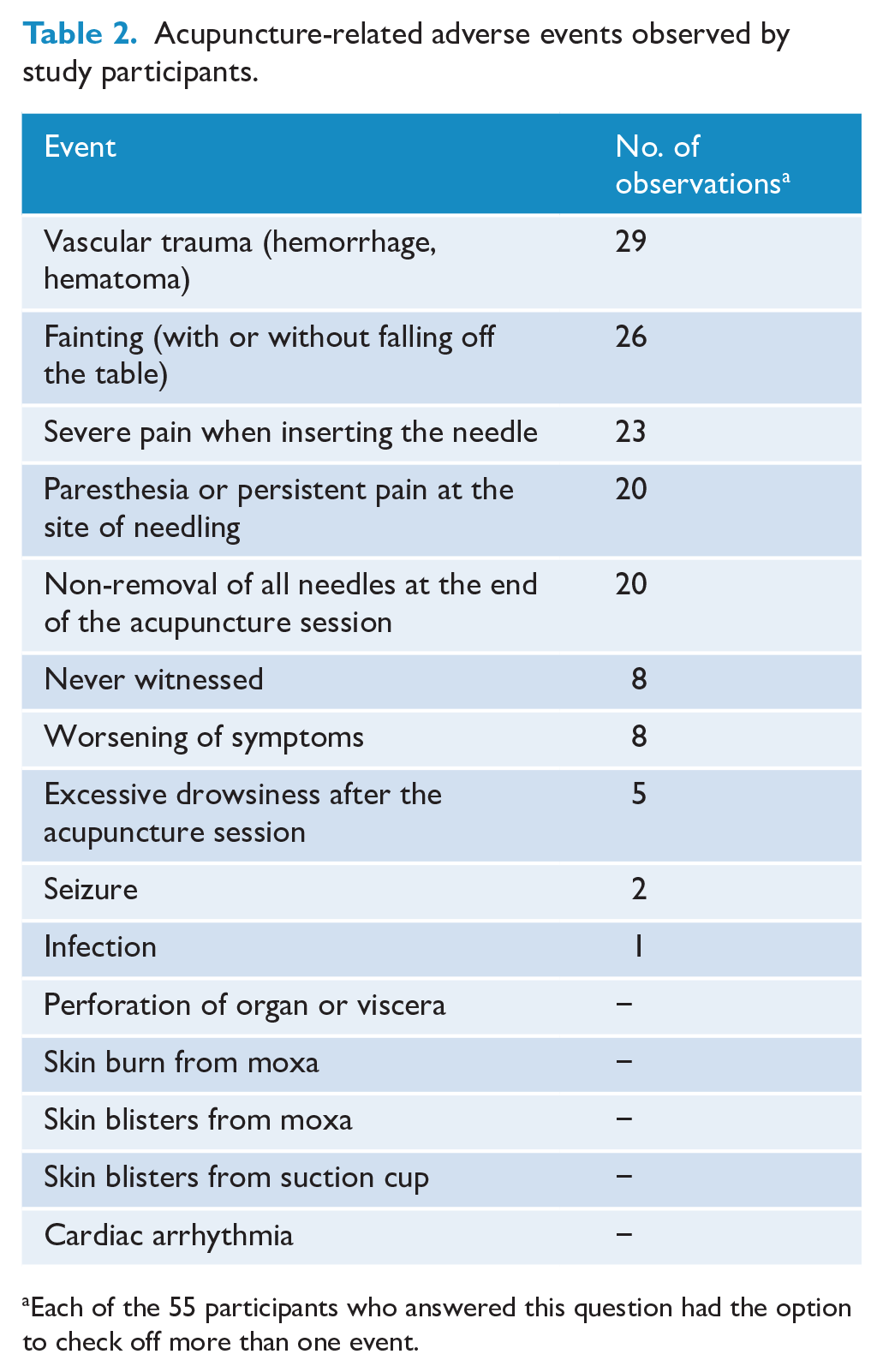
Each of the 55 participants who answered this question had the option to check off more than one event.
Discussion
In the present study, a survey was conducted to evaluate the use of acupuncture by PHC physicians and FCM residents who underwent the introductory acupuncture course offered by Florianópolis SMS and UFSC. The study presents data covering 8 years of follow-up after the beginning of the implementation of this acupuncture educational model.
The percentage of respondents in this study (46%) is within the acceptable range of responses for survey-type studies, which generally achieve between 30% and 60%. 20 Another survey-type study in the context of acupuncture found a response rate of 41%. 21 In a meta-analysis that investigated response rates in studies using online questionnaires, there was an average response rate of 39.6%. 22 Thus, it seems that the percentage of responses in the present study was adequate for the proposal of an online survey.
The sociodemographic profile of the study participants revealed that the majority were young women who had graduated less than 5 years earlier, mainly from public universities, and whose current area of activity was public PHC. In this context, in a study conducted with primary care physicians in Switzerland, it was found that women and young people are more likely to recommend integrative practices, 8 a finding compatible with the profile raised by this study. It was also verified that 81.8% of the respondents underwent the Introduction to Acupuncture course while attending medical residency in family medicine. Among the 119 physicians invited to respond to this survey, 60 of them (50.4%) were family medicine residents during the period of the course (data not shown). This suggests that there was a greater propensity toward survey response among residents than among other physicians.
The vast majority of the respondents started acupuncture practice in PHC while taking the course, and most of them continued to use acupuncture after completing the course. Comparatively, in a survey that investigated the use of acupuncture by physicians who took acupuncture courses at Harvard Medical School, it was found that half of the students did not practice acupuncture after completing the course. 9 One of the possible causes of the difference between the studies is the divergence between the health systems in Brazil and in the United States. In Brazil, the use of acupuncture and other integrative practices is encouraged in the public health system, 14 while in the United States, health insurance companies may not cover acupuncture treatment or may impose restrictions. 9
The main motivation to attend the course was interest in or curiosity around the subject and, after the course, most participants agreed that the course was of fundamental importance to professional practice. In a study conducted in Spain with professionals trained in acupuncture, and in a review study that also evaluated the motivations of health professionals studying and practicing acupuncture, it was verified that professionals were interested in acupuncture because it is an effective therapeutic resource and adopts a holistic approach to the health-disease process and personal knowledge.10,11 These findings are similar to what was found in the survey conducted in this study regarding motivation and importance attributed to the course.
Regarding the details of the acupuncture practice of the physicians who responded to this survey, almost half of the participants described using both biomedical and TCM rationales most of the time in their acupuncture practice. The other half of participants used biomedicine as the dominant medical rationale for their acupuncture practice. These findings are in line with the pedagogical proposal of the course, which presents acupuncture practice according to the perspectives of TCM and biomedicine. 14 Previous studies also suggest that physicians who have this “dual training” in different rationales develop more integrative protocols in their medical practice. 12
The present study found that the vast majority of professionals reported starting acupuncture in PHC when indicated and only a small portion of physicians (5.5%) refer the patient directly to an acupuncture specialist. These data reaffirm the results of an earlier study carried out in Florianópolis, which found that 81% of course participants who continued working in PHC used acupuncture in their daily practice on a regular basis. 7 In Australia, the referral rate reaches up to 80% in some cities. 23 In the United Kingdom, according to a study conducted with physician members of the Royal College of Physicians, 41% of the participants refer patients to complementary and alternative medicine (CAM), with acupuncture being the most common integrative practice within the National Health Service (NHS). 12 In this last study, 6% of the participants reported the use of acupuncture in their own health team and 11% within the local health care organization. 12
Most respondents in the present study reported the use of acupuncture in association with medications and other integrative practices. These data are similar to a study showing that, in the European Union, acupuncturists tend to use other integrative practices associated with acupuncture. 24
All respondents reported that they had already treated musculoskeletal disorders with acupuncture; mood disorders and anxiety were also well represented. Comparing these data with those found in other studies, pain was the most frequently reported condition, and psychiatric conditions and stress were the third most common conditions treated by acupuncturists in Europe. 24 In New Zealand, musculoskeletal disorders and pain have also appeared as the most common conditions treated with acupuncture. 25 In England, the use of integrative practice is common for musculoskeletal conditions (mainly back pain), which accounted for 68% of use; mental health accounted for 12%. 26 In the United States, a cross-sectional survey of 419 acupuncturists identified the top 10 acupuncture indications as low back pain, depression, anxiety, headache, arthritis, allergy, generalized pain, female infertility, insomnia, neck pain and frozen shoulder. 27 Based on these data, there seem to be similarities in the conditions most treated with acupuncture across different countries.
The participants in this study had the perception that they reduced the prescription of medications, especially anti-inflammatory agents and analgesics, due to acupuncture use. Participants also reported reduced referral to specialists such as orthopedists, physiotherapists and rheumatologists. A study evaluating the impact of this introductory acupuncture course in its first two editions (2011 and 2013) found reductions in the number of anti-inflammatory prescriptions and referrals to rheumatology shortly after the first edition of the course. A reduction of anti-inflammatory prescriptions was not observed among the participants of the second edition. 28 In a study conducted in the United Kingdom 29 to assess whether primary care services offering acupuncture had lower referral and prescription rates, it was not possible to demonstrate differences due to wide variation in data. 29 In contrast with this last study, Baars and Kooreman 30 analyzed data provided by a Dutch health insurer over a 6-year period and concluded that patients of general practitioners with additional CAM training had lower costs relating to medication prescriptions. Another study of referrals and cost in the United Kingdom found a decrease in referrals to physiotherapy (86% over 4 years) and rheumatology (51% over 4 years) after introduction of micro-acupuncture. The aforementioned results are similar to those of the present study; however, we have to interpret these findings with caution because of the descriptive nature of this research. New studies that seek more objective data and perform statistical analysis are necessary to confirm this hypothesis.
Nearly half of the participants perceived a reduction in the number of tests ordered. In a previous study, only a reduction in requests for radiography was identified in the group that participated in the first edition of this introductory acupuncture course. 28
The most cited acupuncture-related adverse events, witnessed at least once in clinical practice, were vascular trauma and fainting. In the present study, non-removal of the needle, severe pain, and pain or paresthesia at the site of needling appeared frequently. A prospective observational study with 13,884 appointments evaluated adverse effects in patients who received acupuncture treatment by resident physicians at the Rio Preto Medical School. The study concluded that the rate of minor adverse events per appointment was 7.97%; hematomas and bleeding were the most common events, accounting for 50% of the total, followed by pain at the site of needling and itching. 31 Another study, like that of Rio Preto, concluded that event rates were generally classified as minimal.31,32
The present study shows that almost half of the participants witnessed acupuncture-related fainting at least once. In contrast, neurovegetative-type events were considered uncommon in a large-scale study conducted in Germany on the safety of acupuncture use. 33 The reason for this divergence of results is uncertain, but possible explanations include: (1) differences in the quality of acupuncture needles used, as low-quality needles could lead to a higher level of discomfort and lead to collapse; (2) cultural differences, as tolerance to pain and needling stimuli (with consequent neurovegetative symptoms) in Latin and German populations may be different; and (3) training differences, given that, in Germany, physicians have a minimum of 200 h of training in acupuncture. The greater number of training hours (relative to the 80 h of the Introduction to Acupuncture course) could be associated with better acupuncture technique, thus reducing the incidence of neurovegetative events. The present study did not focus on the frequency of such events, but rather whether or not each participant witnessed the events listed at least once.
One of the study’s limitations is that many of the results report participants’ perceptions rather than objective data or electronic records of their day-to-day protocols. Ideally, further studies should compare the findings of this survey with secondary data from medical records. Another limitation is the fact that the information was obtained at different time points after the conclusion of the course. The time elapsed since the completion of the course may have impacted the decision to answer the questionnaire as well as the characteristics of the practice. However, when comparing the present study with other studies on course implementation, there is consistency in the maintenance of acupuncture use by the participants who took the course.
In conclusion, data from this survey show that the vast majority of primary care physicians who completed the introductory course and answered the survey continued using acupuncture in their daily practice. The main contexts of acupuncture use in primary care were spontaneous demand and scheduled appointments. The barriers to practice identified included time and physical space. Facilitators include patient acceptance and the problem-solving ability of the procedure. Musculoskeletal disorders and mental health disorders were the main conditions treated with acupuncture. Participants described perceiving fewer referrals to specialists and fewer medication prescriptions. Trauma and neurovegetative symptoms were the most common acupuncture-related adverse events. New survey-type studies in different countries and different contexts of acupuncture practice would be desirable for comparison with the results of the present study.
Supplemental Material
AIM912250_Supplemental_material – Supplemental material for Profile of acupuncture use among primary care physicians working in the Brazilian public healthcare system
Supplemental material, AIM912250_Supplemental_material for Profile of acupuncture use among primary care physicians working in the Brazilian public healthcare system by Fernanda Bedin, Ari Ojeda Ocampo Moré, Jardel Corrrêa de Oliveira, Charles Dalcanale Tesser and Li Shih Min in Acupuncture in Medicine
Footnotes
Declaration of conflicting interests
The authors declared no potential conflicts of interest with respect to the research, authorship, and/or publication of this article.
Funding
The author(s) disclosed receipt of the following financial support for the research, authorship, and/or publication of this article: The author CDT was partially funded by a research grant from the Brazilian National Council for Research and Development (CNPq) (grant no. 303999 / 2018-7).
Supplemental material
Supplemental material for this article is available online.
References
Supplementary Material
Please find the following supplemental material available below.
For Open Access articles published under a Creative Commons License, all supplemental material carries the same license as the article it is associated with.
For non-Open Access articles published, all supplemental material carries a non-exclusive license, and permission requests for re-use of supplemental material or any part of supplemental material shall be sent directly to the copyright owner as specified in the copyright notice associated with the article.
