







Abstract
Background
Acupuncture has shown growing evidence of efficacy in managing chronic musculoskeletal pain, headaches, fibromyalgia symptoms and anxiety disorders. 1 The World Health Organization (WHO) recognizes acupuncture as a safe and evidence-based practice when applied by qualified professionals. 2 In Brazil, the integration of acupuncture into the Brazilian Unified Health System – Sistema Único de Saúde (SUS) – began with the National Policy on Integrative and Complementary Practices (PNPIC) in 2006, contributing to a substantial expansion in services. Despite this, epidemiological data on the profile of acupuncture users in Brazil remain limited. 3
Methods
The aim of this observational, retrospective study was to describe the clinical and demographic characteristics of patients treated at a public acupuncture clinic in São José do Rio Preto, SP, Brazil, between February 2023 and February 2024. Variables included sex, age, referring specialty, main clinical diagnosis (International Classification of Diseases (ICD)-10 code), prior experience with acupuncture and adherence to a standardized treatment protocol of six sessions. Data were collected manually from electronic records, validated in Microsoft Excel spreadsheets and analyzed using descriptive statistics.
Findings
A total of 742 records were analyzed. Most patients were female (68.0%), with a mean age of 58.9 years ± standard deviation (SD) of 13.6 and distribution as shown in Figure 1. Primary referrals came from Family and Community Medicine (45.4%), Orthopedics (30.5%) and Rheumatology (12.0%). First-time acupuncture users comprised 61.2% of the cohort. The overall treatment adherence rate was 77.0%.
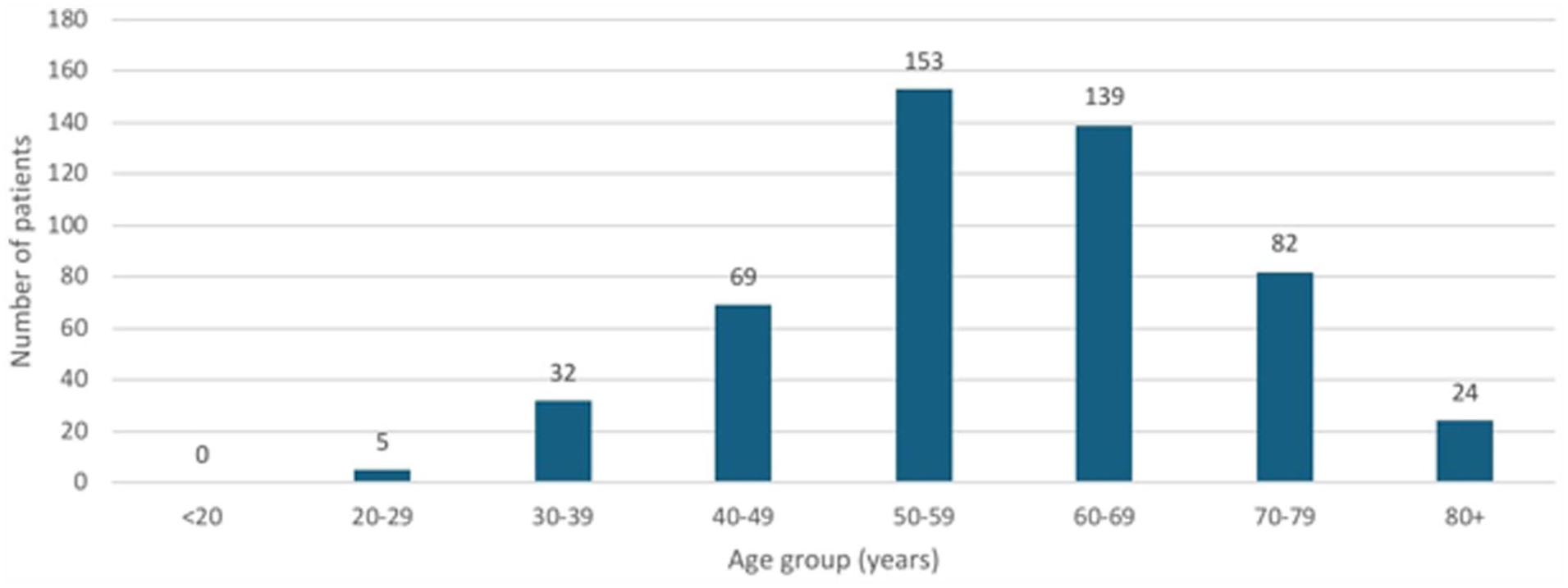
Age distribution of patients treated with acupuncture from February 2023 to February 2024 in São José do Rio Preto, SP, Brazil.
As shown in Figure 2, the most prevalent ICD-10 diagnoses were M54.5 (low back pain; n = 273), M75 (shoulder lesions; n = 161), M54.2 (cervicalgia; n = 121), M17 (knee osteoarthritis; n = 120) and M79.7 (fibromyalgia; n = 71). Diagnostic distribution confirmed the predominance of musculoskeletal pain conditions in the SUS acupuncture setting.
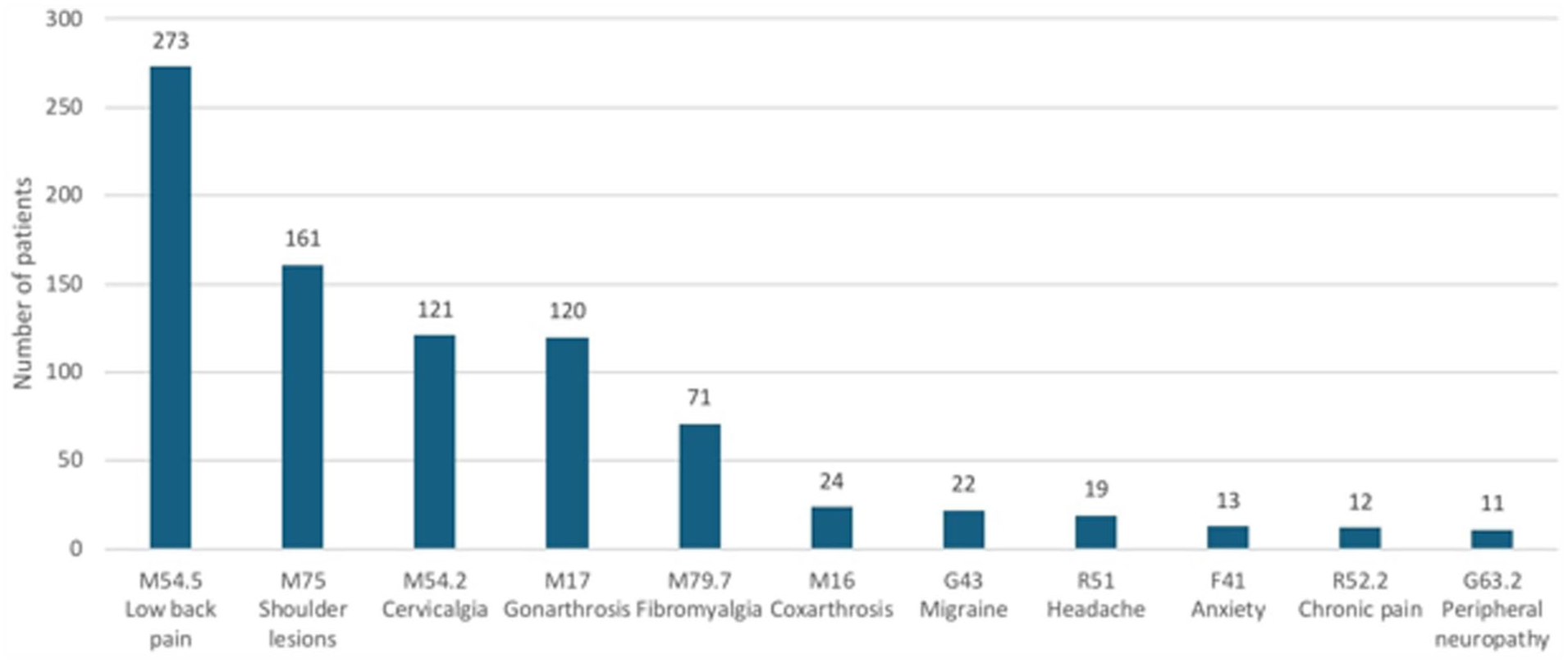
Most frequent clinical diagnoses (International Classification of Diseases (ICD)-10 codes) at acupuncture outpatient visits from February 2023 to February 2024 in São José do Rio Preto, SP, Brazil.
Comment
These findings align with prior literature suggesting greater utilization of acupuncture by women and older adults, often for chronic pain conditions.1,4 Guimarães, in a study conducted in Fortaleza, Brazil, also identified a female predominance (78%) and high prevalence of musculoskeletal complaints among public clinic users. 4 Likewise, our results are comparable to European data reported by Robinson et al., who found that musculoskeletal pain was the leading reason for acupuncture consultations in the European Union (EU), while neurological disorders were more common in Chinese clinical practice. 5
The predominance of referrals from primary care (45.4%) reinforces the strategic role of Family and Community Medicine as the entry point for integrative therapies in the Brazilian SUS. This finding is consistent with previous Brazilian data showing that referrals for acupuncture may be organized through primary care/community health services and with national evidence indicating that most integrative and complementary practices are delivered within primary care. 6
The 23% dropout rate may be considered moderate for public outpatient settings. Nevertheless, targeted efforts are needed to improve adherence, particularly among patients with migraine, osteoarthritis and anxiety, who showed higher non-completion rates in our analysis.
Conclusion
In summary, this study presents a structured and current profile of acupuncture users in the Brazilian public health service, reinforcing its relevance for managing chronic pain in primary and specialized care. It also contributes to filling a gap in national epidemiological data, which remain scarce despite the growing incorporation of acupuncture into public health.
Footnotes

Ethical considerations
The study was approved by the Faculdade de Medicina de São José do Rio Preto Ethical Committee (no. 91228625.70000.5415).
Author contributions
HNY contributed to data collection, statistical analysis and manuscript writing. CACVD contributed to statistical analysis and manuscript writing. JBGdS contributed to statistical analysis and manuscript writing. All authors read and approved the final version of the manuscript accepted for publication.
Funding
The authors received no financial support for the research, authorship and/or publication of this article.
Declaration of conflicting interests
The authors declared no potential conflicts of interest with respect to the research, authorship and/or publication of this article.