







Abstract
Polymer-inorganic hybrid (PIH) materials combine the flexibility of polymers with the mechanical strength and thermal stability of inorganic components, offering significant potential for applications in energy storage, optoelectronics, biomedical devices, and environmental remediation. This review identifies major challenges including poor interfacial compatibility, limited scalability, environmental impact, and discusses strategic solutions such as interface engineering, computational modeling, and morphology optimization. Recent advances are discussed in the context of their transformative applicability for next-generation devices, emphasizing sustainability and practical implementation.
Keywords
Highlights
• • • • •
1. Introduction
Polymer–inorganic hybrid (PIH) materials have emerged as a versatile class of functional materials capable of bridging the longstanding performance gap between organic flexibility and inorganic robustness. By integrating polymers with inorganic phases at the molecular or nanoscale level, PIH systems offer synergistic combinations of mechanical resilience, tunable electrical properties, and multifunctionality, making them highly attractive for applications ranging from energy storage and optoelectronics to biomedical devices and environmental remediation.1–5 Despite this promise, the large-scale deployment of PIH materials remains limited by persistent challenges related to interfacial incompatibility, scalability, long-term stability, and environmental sustainability. Many high-performing PIH systems rely on complex synthesis routes, narrowly optimized compositions, or energy-intensive processing methods that hinder reproducibility and industrial translation. At the same time, increasing regulatory and societal pressure demands sustainable material choices and environmentally benign manufacturing strategies. Unlike conventional materials, which often excel in only one property, PIH materials are engineered to integrate complementary attributes. The functional properties of PIH systems exhibit high sensitivity to synthesis parameters, often resulting in reproducibility gaps during industrial scale-up. Furthermore, the combination of covalent organic bonds and ionic inorganic bonds within a single system enables the formation of PIH structures with unusual mechanical properties such as simultaneous hardness, resilience, strength, and deformability, exemplified by materials like “elastic ceramic plastic”. 6 Despite their opportunity, PIH materials face challenges in scalability, sustainability, stability, and interfacial compatibility, detailed in Section 3.
This review aims to go beyond cataloging individual material systems. Instead, it provides a critical analysis of how interface engineering, morphology control, and computational approaches can address persistent challenges in PIH materials, while explicitly discussing contradictions, failure modes, and remaining uncertainties in the field.
As outlined in Figure 1, PIH materials offer tunable properties (B) and enhanced functionalities (E), which are critical for applications in energy storage (Section 5.1). This figure provides a schematic representation of the advantages of PIH materials, including enhanced solution processability, tunable properties, and greater environmental sustainability and includes: Schematic illustration of the main advantages (A-E) of PIH materials, with each labeled section detailing specific benefits. Comparative evaluation of main synthesis techniques for PIH materials including scalability, energy consumption, and industrial relevance.
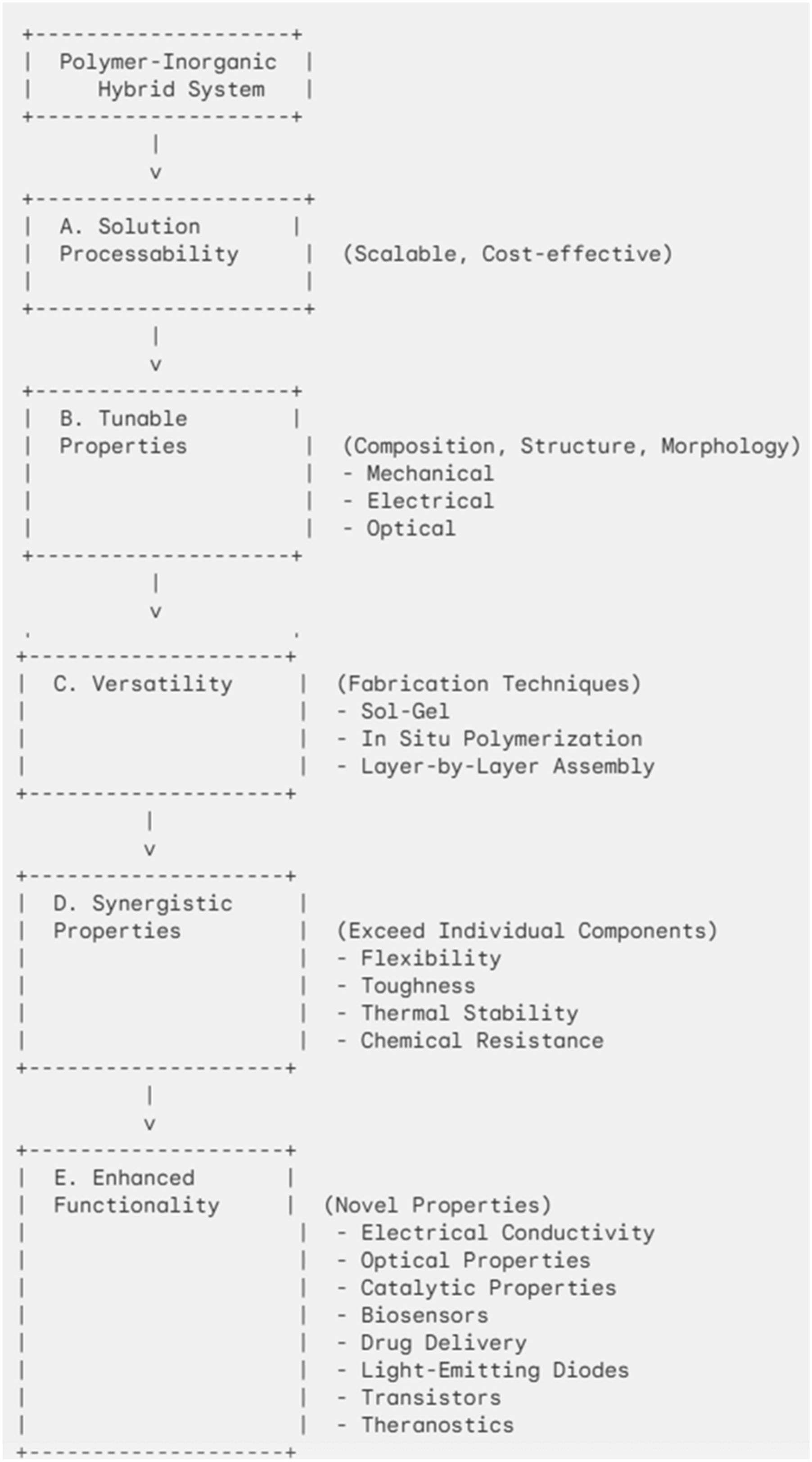

Widespread adoption of PIH materials faces several barriers in scalability and environmental sustainability. Scalability issues arise from complex synthesis methods, high production costs, and material inconsistencies at an industrial scale. Meanwhile, environmental concerns relate to the energy-intensive processes and the potential ecological impact of inorganic fillers. Addressing these challenges requires targeted advancements in synthesis techniques, sustainable material selection, and scalable manufacturing processes.
Here, we present an advanced conceptual framework for PIH material design, integrating interface engineering strategies, nanoscale morphology control, and computationally guided material discovery to systematically address these challenges. Unlike previous studies, which largely focus on empirical optimization, we critically examine how interface engineering, morphology optimization, and computationally guided material design (density functional theory (DFT), molecular dynamics (MD), and machine learning algorithms) can be leveraged to address key barriers in PIH materials. While these tools offer promising pathways toward more predictive design, the degree of control remains highly system dependent. Current literature shows variable success rates, with many studies still relying on empirical optimization. However, current evidence remains system-specific and does not yet support generalized predictive control across all PIH materials. This review discusses advanced material selection and interface engineering methodologies, emphasizing strategies to enhance interfacial compatibility and mitigate phase separation. This review details advancements in scalable synthesis techniques and sustainable solvent-free methods, alongside in-depth analysis of PIH applications across energy storage, optoelectronics, biomedical devices, and environmental sustainability, highlighting case studies of optimized PIH materials. Finally, this review outlines the remaining challenges and future research directions required to unlock the full potential of these materials.
2. Material selection and design
Effective material selection and design are critical in PIH materials for optimizing energy absorption, mechanical durability, and environmental sustainability.42,43 Critical factors such as component compatibility, bandgap alignment, and processability play a central role in determining the stability and application potential of PIH materials. The choice of materials depends on the target application. For example, porous polymer-zeolite hybrids are optimized for gas filtration by enhancing adsorption, while polymer-ceramic hybrids excel in energy storage due to their high ionic conductivity. PIH materials are carefully tailored to optimize key performance traits such as electrical conductivity, mechanical durability, and thermal resistance. For instance, combining conjugated polymers with graphene nanoparticles enhances charge carrier mobility in optoelectronic devices, while PLA-HA hybrids provide the mechanical strength and bioactivity required for bone implants. The compatibility between organic and inorganic components is a critical factor influencing stability, phase separation, and charge transfer efficiency.44,45 However, achieving this compatibility is challenging due to differences in polarity, thermal properties, and mechanical behavior between components. The optimization of energy band alignment at the PIH interface is fundamental to device efficiency. Specifically, the alignment between the polymer’s highest occupied molecular orbital (HOMO)/lowest unoccupied molecular orbital (LUMO) levels and the inorganic component’s valence/conduction bands determines the potential barrier for charge injection. Effective alignment facilitates rapid charge separation and minimizes interfacial recombination, which is directly reflected in macroscopic performance enhancements such as a 2-3x increase in specific capacitance and improved power conversion efficiency. The selection process involves considering mechanical, chemical, physical, and electrical properties, as well as cost, to meet specific application needs. 46
Advanced computational tools, such as machine learning algorithms and DFT simulations, offer promising methods for rapid and precise material optimization. Machine learning (ML) models, such as graph neural networks, now predict optimal polymer-inorganic interfaces for targeted charge transport, reducing experimental trial-and-error. However, their predictive accuracy depends on the availability and quality of input data, and the models may not fully capture complex material behaviors in real-world scenarios. For instance, DFT models can calculate electronic band structures to optimize charge transport, whereas machine learning algorithms analyze large datasets to identify trends in thermal stability and mechanical properties, accelerating material discovery. 47 Increasingly, environmental considerations are shaping material selection for PIH materials. Prioritizing renewable polymers, such as polylactic acid (PLA), and non-toxic inorganic fillers, such as bio-derived silica, reduces the environmental footprint of these materials. However, challenges remain, such as improving the recyclability of hybrids and addressing the toxicity of certain inorganic components like heavy-metal oxides.
Conjugated polymers like polythiophene and polyfluorene, with tunable bandgaps and solution processability, enhance charge transport in organic photovoltaics. 48 Conductive polymers like polyaniline (PANI) further boost performance in electrically demanding applications. PANI exhibits notable electrical conductivity, with values reaching up to 384.0 S/cm depending on the doping acid used.49,50 Conductivity is influenced by preparation methods and environmental conditions, such as temperature and acid concentration. 51 Additionally, ionically conductive polymers like sulfonated polystyrene contribute to ionic transport properties, further enhancing the functionality of PIH materials. 52
Incorporating various inorganic materials (fillers), such as clays, silica, metal oxides, polyhedral oligomeric silsesquioxane, graphene nanomaterials (carbon nanotubes (CNTs) and graphite flakes), and one-dimensional nanostructures (nanowires), into a polymer matrix enhances the electrical conductivity, thermal stability, mechanical reinforcement, and optical properties, boosting device performance.48,53,54 These fillers, due to their strong cohesive interactions, can enhance the mechanical stability and thermal properties of PIH materials. Quantum dots (QDs) exhibit size dependent emission properties, tunable through their composition and surface characteristics, making them suitable for applications like LEDs and solar cells. 55 When incorporated into PIH materials, nanoparticles such as vapor-grown carbon nanofibers, MWCNT, and exfoliated graphite flakes (EXGF) have shown pronounced reductions in mass loss rates under polymer decomposition temperatures and may provide thermal and electrical conductivity enhancements to composites.56,57 Nanoparticles such as silicon, titanium dioxide (TiO2), and zinc oxide (ZnO), when incorporated into PIH materials, provide distinct functionalities tailored to specific applications. For instance, titanium dioxide enhances photocatalytic activity for environmental remediation and solar cells, whereas zinc oxide improves UV protection in coatings and sunscreen formulations. Silicon nanoparticles contribute to lightweight and high-strength composites used in aerospace and electronics. One-dimensional nanostructures like silicon or metal oxide nanowires can provide efficient pathways for charge transport, thereby improving device performance. 58 For example, finely dispersed nanoscale inorganic particles such as montmorillonite clays, alumina, and other metal oxides, along with inorganic fillers like silica (SiO2) and alumina (Al2O3) delay the onset of thermal decomposition and slow down the mass loss rate of pyrolyzed polymers. 56 Graphene-based polymer composites have attracted industrial interest due to their lightweight nature, high strength, chemical resistance, and long durability. Surface modification of graphene facilitates its molecular level dispersion in the polymer matrix, which improves the reinforcement efficiency of these materials. 22 However, challenges such as material cost and device stability persist, highlighting the need for further research and optimization to develop stable and efficient optoelectronic devices. 59
Understanding the interaction between polymers and inorganic phases at the molecular level requires advanced characterization techniques, which can be complex and time-consuming. Moreover, to optimize PIH materials for advanced applications, various fabrication routes can be employed, like self-assembly strategies,18,37 sol-gel processing, 60 blending processes, emulsion polymerization, and electrospinning, 61 which require specific conditions to optimize performance. For instance, sol-gel coating on biocomposite materials has been shown to enhance physical properties like moisture content, water absorption, and water solubility, indicating the potential for improved performance in food packaging applications. 62 The in-situ polymerization of compounds has demonstrated the ability to create high-performance PIH materials with enhanced morphological, electrical, and viscous behaviors, offering a promising strategy for various applications. 63 Moreover, the rise of 3D printing technologies has significantly advanced material fabrication approaches, allowing for the creation of complex structures tailored to specific applications while minimizing waste. 64
Despite their potential, PIH materials face significant obstacles in terms of synthesis and environmental safety. Synthesis complexity often leads to high production costs, and the use of toxic components, particularly inorganic fillers, poses risks. Strategies such as alternative green chemistry methods or the use of non-toxic nanoparticles could help address these issues and promote safer applications.65–67
Polymer-silica hybrids are notable for their mechanical strength, thermal stability, and transparency, making them suitable as optical coatings, sensors, membranes, drug delivery systems, catalysis, and protective films. These hybrids, including polyimide/silica and chitosan/silica gel composites, are synthesized through sol-gel processes, which enhance their mechanical properties and thermal stability by incorporating silica nanoparticles into the polymer matrix. 68 The resulting materials exhibit improved optical clarity and durability, which are essential for applications requiring resistance to thermal degradation. Also, the resulting materials demonstrate improved optical clarity, with transmittance values reaching up to 97% in silica/PVA hybrids, 69 and exceptional thermal stability, with decomposition temperatures exceeding 700 °C in PAE/nano-silica coatings. 70
Polymer-clay nanocomposites (PCNs) have the structural advantages of nanosized clay particles, notably high aspect ratios, which improve polymer matrices in terms of mechanical strength, gas barrier effectiveness, and flame retardancy. These enhancements are particularly valuable in the packaging and automotive industries, where durability, resistance to gas permeability, and fire safety are key performance requirements. Comparative analysis across multiple matrices (PLA, PMMA, Epoxy) indicates that a 5-10 wt% clay loading consistently improves tensile strength by 20–30%. However, when normalized for dispersion quality and aspect ratio, the reinforcement efficiency varies, suggesting that the chemical nature of the interface is a more reliable predictor than weight percentage alone. 71 The excellent barrier properties of these nanocomposites are particularly noteworthy, as they can effectively reduce gas permeability, which is crucial for packaging applications. 71 Achieving uniform nanoparticle dispersion in the polymer matrix is challenging because potential aggregation can diminish the desired properties of materials. 71 Despite these challenges, the benefits of PCNs, including their improved thermal stability and degradation resistance, make them a choice for various industries.
Polymer-metal oxide hybrid nanocomposites are gaining significant attention due to their tunable electrical, optical, and magnetic properties, which are essential for applications in electronics, catalysts, sensors, energy storage devices, and biomedical fields. The synthesis of these hybrids effectively integrates nanoparticles (NPs) with polymer matrices but often presents challenges, particularly the aggregation of metal oxide nanoparticles, which can hinder performance. 72 Advanced synthesis techniques, such as sol-gel processes, electrospinning, and chemical vapor deposition are crucial for optimizing the properties of these hybrids.73–75
Polymer-CNTs hybrids are increasingly recognized for their exceptional mechanical, electrical, and thermal properties, making them suitable for a variety of advanced applications such as conductive films, flexible electronics, sensors, energy storage devices, high-strength composites, and aerospace components. 76 The incorporation of CNTs into polymer matrices significantly enhances the electrical conductivity and tensile strength of the resulting composites, addressing the demand for materials with superior performance characteristics. However, challenges such as high cost, poor solubility, and dispersion issues hinder their widespread application.77,78
Polymer-graphene hybrids are being explored for their high surface area, electrical and thermal conductivity, and mechanical strength. However, challenges such as limited scalability, non-uniform dispersion of graphene within the polymer matrix, as well as cost barriers, can hinder the performance and commercial viability of these materials.79,80 Recent advancements, such as the development of reduced graphene oxide (rGO)/polymer hybrids through UV-induced photopolymerization, show promise in addressing these challenges by creating conductive inks for flexible printed electronics. 81 Techniques like 3D and 4D printing have been employed to fabricate these hybrids, allowing for tailored properties and complex structures that enhance performance in various applications. 82
Polymer-metal nanoparticle hybrids represent a versatile class of materials that exhibit tunable optical, catalytic, and antibacterial properties, making them suitable for various applications. The incorporation of noble metal nanoparticles, such as silver, enhances the optical characteristics of these hybrids, particularly through plasmonic effects, which improve light absorption and scattering capabilities.83,84 This optical enhancement is crucial for photonics and electro-optics applications. In addition to their optical properties, these hybrids are effective in catalysis, accelerating chemical reactions in both environmental and industrial contexts.84,85 Their antibacterial properties, particularly those derived from silver nanoparticles, are significant for medical applications, as they can inhibit bacterial growth and serve as antimicrobial coatings. 86 However, potential toxicity and stability issues must be considered when developing these materials for practical use.
Polymer-ceramic hybrids combine the properties of polymers and ceramics, making them suitable for high-temperature applications and biomedical implants. These composites exhibit high thermal and chemical resistance, excellent dielectric properties, and enhanced wear resistance, which are critical for sectors such as electronics and biomedical engineering. The incorporation of nanoscale ceramic phases into a polymer matrix enhances wear resistance and chemical resistance, addressing the brittleness often associated with pure polymers.87,88 The dielectric properties of polymer-ceramic composites can be tailored by adjusting the weight proportions of the components, which allows for fine-tuning of their electrical characteristics. However, the processing of these materials can be complex, requiring careful control of the dispersion of the ceramic phase and the polymer-ceramic interface to optimize the performance. 89
Polymer-calcium phosphate hybrids advance bone tissue engineering with their osteoconductivity and mechanical properties, supporting cell attachment and proliferation for new bone formation.90,91 However, although these hybrids exhibit good biocompatibility and bioactivity, their mechanical properties may be limited for load-bearing applications, which is a critical consideration in the design of orthopedic implants and scaffolds. 92 Biocompatibility testing is crucial for ensuring that these materials interact safely with biological systems, particularly in applications such as drug delivery systems and dental implants.
Polymer-bioactive glass hybrids represent attractive advances in biomedical materials, particularly for bone regeneration and tissue engineering. 93 These hybrids combine the bioactivity of glass with the mechanical properties of polymers, enhancing biocompatibility and promoting cell growth while addressing mechanical strength limitations. Incorporating polymers like polycaprolactone (PCL) and modified cellulose nanofibers (mCNF) significantly improves the mechanical strength of hybrids, making them suitable for implants. 94 These studies also show that mCNF-reinforced hybrids exhibit enhanced elasticity and biomineralization activity, which are crucial for effective bone repair. 94
Polymer-zeolite hybrids combine the high surface area and tunable pore sizes of zeolites with the flexibility of polymers, enabling effective catalysis by providing abundant active sites. For example, these hybrids can be used in wastewater purification to absorb heavy metals and organic pollutants. The excellent ion-exchange capability of zeolites allows for the selective removal of ions like ammonium and lead, making these hybrids highly effective in water treatment systems.95,96 However, challenges like poor compatibility with certain polymer matrices and uniform zeolite dispersion can hinder the performance of these hybrids. Hybrid zeolites have shown significant improvements in catalytic performance, with enhanced selectivity and conversion rates in chemical reactions. 97
Polymer-quantum dots (QDs) hybrids exhibit remarkable size-dependent optical and electronic properties, making them suitable for various applications, including optoelectronics, solar cells, bioimaging, and sensors. 98 The size of QDs significantly influences their optical characteristics, smaller QDs have shorter wavelength (higher energy) emissions. 99 In sensor technology, QD-polymer composites demonstrate effective fluorescence quenching and enhanced detection capabilities. 100 The synthesis of these hybrids, particularly involving CdSe/ZnS QDs and conjugated polyelectrolytes, allows for tunable optical properties and high fluorescence efficiency, which are crucial for enhancing device performance. 101 However, challenges such as stability issues and toxicity concerns arise, particularly with the use of heavy metals in QDs, causing careful consideration during material selection and application. For example, the use of heavy metals like cadmium raises toxicity concerns, necessitating careful material selection and consideration of potential alternatives. 102
In summary, the material selection in PIH materials should balance mechanical strength, thermal stability, and biocompatibility, with attention to achieving compatibility between organic and inorganic phases. Innovations in conjugated polymers and specific fillers like graphene have shown promise in optimizing these hybrids for high-performance applications.
Table 1 summarizes the principal synthesis techniques used for hybrid organic–inorganic materials, including sol–gel processing, blending, electrospinning, and photopolymerization, and now incorporates a comparative assessment of their scalability and industrial relevance. Beyond morphological control, each method is evaluated in terms of practical yield (typically 70–95% depending on material losses), energy consumption (ranging from <1 kWh m-2 for solution-based coating to >5 kWh m-2 for high-temperature sol–gel processing), and defect density, which critically impacts large-area device performance.
From a scalability perspective, solution-based blending and photopolymerization are highly compatible with roll-to-roll processing, enabling high-throughput fabrication (>10–100 m2 h-1) of flexible hybrid electrodes with relatively low material waste and moderate energy input. In contrast, sol–gel methods, while offering excellent compositional control, often require elevated temperatures and multi-step processing, which increase energy consumption and limiting direct integration into continuous manufacturing lines. Electrospinning, although advantageous for creating nanostructured architectures, faces challenges in uniformity and throughput, with typical production rates remaining below industrial roll-to-roll benchmarks unless multi-nozzle or needleless configurations are employed.
Defect formation also varies significantly across methods. For instance, blending approaches may suffer from phase segregation at scale, leading to inhomogeneous electrical pathways, while sol–gel-derived films can exhibit cracking due to shrinkage during drying and annealing. In contrast, photopolymerization techniques allow rapid in situ network formation, reducing defect densities and improving film uniformity over large areas.
Importantly, these processing-dependent factors directly influence device-level performance and cost. Lower defect densities and higher uniformity contribute to reduced series resistance and improved operational stability, while energy-efficient, high-throughput processes such as roll-to-roll -compatible coating significantly lower manufacturing costs. Therefore, a balanced consideration of yield, energy consumption, defect control, and scalability is essential when selecting synthesis routes for next-generation flexible hybrid devices.
While material selection is critical, achieving optimal performance requires addressing key challenges, as discussed below.
3. Challenges and opportunities
Despite their vast potential, PIH materials face several critical challenges that hinder widespread implementation. First, ensuring robust compatibility between dissimilar organic and inorganic phases is essential to prevent phase separation and performance degradation. Second, maintaining functional stability under diverse environmental stresses—such as humidity, UV exposure, and thermal cycling—is imperative, especially in devices like photovoltaics and implants. Third, scalable manufacturing techniques must be refined to support consistent quality and environmental sustainability. Addressing these challenges requires an integrated approach that includes interface engineering, scalable synthesis methods, and lifecycle assessment to ensure real-world viability and ecological responsibility. These challenges underscore the need for optimization strategies to fully unlock the potential of PIH materials. This section discusses each challenge in detail, along with targeted strategies to improve performance, sustainability, and scalability, ultimately enhancing PIH materials’ potential for real-world applications.
3.1. Material compatibility
Material compatibility is critical in PIH development. Poor interfacial adhesion between polymers and inorganic components can cause phase separation, reducing mechanical strength, charging transport efficiency, and environmental stability. This challenge is especially pronounced in applications such as solar cells and biomedical implants, where exposure to environmental factors can accelerate performance degradation. For instance, in solar cells, moisture and UV light can cause delamination and phase segregation, while in biomedical implants, chemical interactions with body fluids may lead to swelling, reduced mechanical strength, or leaching of toxic ions. Addressing these issues involves designing stable interfaces and incorporating protective coatings or encapsulation layers.
Advanced techniques such as surface modification, doping, and encapsulation can significantly enhance the durability and resistance to degradation of PIH materials. However, robust interfacial compatibility requires a deeper mechanistic understanding of the processes occurring at the organic-inorganic boundary.
At the molecular level,
These fundamental interfacial interactions translate directly to macroscopic improvements. Optimized band alignment and controlled space charge effects have been linked to reduced electrochemical impedance, enhanced charge carrier mobility, and increased photoluminescence quantum yields (e.g., from 20% to 60% in certain conjugated polyelectrolyte-silica hybrids due to efficient energy transfer). In photovoltaic or battery contexts, such mechanistic tuning can yield 20–50% relative gains in power conversion efficiency or cycling stability under operational conditions, though performance remains sensitive to processing parameters and environmental stressors.103,104
Preventing nanoparticle aggregation is vital for maintaining the mechanical, electrical, and optical properties of PIH materials. Methods such as ligand exchange and surface functionalization allow for better dispersion of nanoparticles, reducing clustering that can lead to defects. 103 Strong interfacial adhesion between the organic and inorganic phases is essential in mitigating the effects of humidity, oxygen, and thermal degradation, especially in PIH materials used in optoelectronics and wearable technology.105,106 In wearable technology, the compatibility challenges of different nanomaterials with polydimethylsiloxane (PDMS) substrates significantly influence the advancement of wearable technology. Research has shown that incorporating graphene and CNTs into PDMS composites can enhance their mechanical and electrical properties, but the distribution and interaction of these nanomaterials affect the overall performance. 107 For example, combining PDMS with aluminum oxide (AlOx) has resulted in a water vapor transmission rate (WVTR) of 5.10 × 10⁻³ g m-2 d-1, indicating improved moisture barrier properties. 108 Silicone rubber-based composites incorporating CNTs address challenges related to dispersion by utilizing innovative approaches like composite engineering, where CNTs are integrated into silicone rubber matrices to create functional composites with outstanding flexibility and conductivity. 109
Hybrid organic-inorganic perovskites have shown promise in optoelectronic applications, with reports of high efficiency under specific conditions. However, their practical stability and performance are often limited by issues such as migration and environmental degradation, which require further research. 110 Addressing these issues requires innovative techniques like lattice doping, passivation layers, and encapsulation to suppress ion migration and improve thermal tolerance. The stability of PIH materials, such as a series of ZnX- derivatives, is significantly affected by weak interactions between the organic and inorganic components. These interactions dictate the structural parameters and overall stability of the materials. 111 Thermal stability, in PIH materials like PMMA-SiO2, is influenced by the composition and processing conditions. For instance, PMMA-silica aerogel composites with electrostatic interaction phase interfaces exhibit thermal degradation activation energies of approximately 188.05 kJ/mol, indicating enhanced thermal stability. 112
3.2. Optimizing device performance
Optimizing PIH systems requires balancing flexibility, stability, conductivity and advanced interface engineering techniques. For instance, self-assembled monolayers reduce surface energy and improve the alignment of layers in hybrid solar cells, enhancing electron transport. Beyond simple conductivity, the introduction of ionic liquids or functionalized nanoparticles triggers localized ‘space charge effects’ at the organic-inorganic boundary. These effects create a region of carrier accumulation or depletion that can significantly lower the energy activation for ion transport. In solid-state electrolytes, for instance, ceramic fillers disrupt polymer crystallinity and establish high-speed ion-hopping pathways along the space charge layer, resulting in a ∼100x improvement in ionic conductivity and a corresponding reduction in electrochemical impedance.113,114 Strategies like anti-reflection coating and scattering layers improve light absorption and reduce optical losses. Understanding and mitigating degradation mechanisms, including photo-oxidation, thermal degradation, and moisture ingress, are essential to ensuring long-term device reliability. 115
PIH materials have shown potential in enhancing optoelectronic device performance by combining the properties of organic and inorganic components. Incorporating poly(4-vinylphenol) (P4VP) into ZnO layers improves the flexibility and photovoltaic efficiency of organic solar cells, achieving a power conversion efficiency of 14.05% 116 that often depends on controlled experimental conditions, which may not be easily replicated in large-scale production. The complexity of PIH materials presents challenges for electronic structure theory, necessitating advanced computational methods to accurately predict their properties. 117
3.3. Scalability
Processing techniques significantly influence the final properties of PIH materials, making their optimization critical for practical applications. Scalability challenges include complex synthesis, phase separation, and inconsistent large scale film deposition. Traditional methods, such as sol-gel processing, often suffer from reproducibility limitations, while high-temperature techniques increase costs. To address these limitations, morphology control—such as tailoring porosity or particle distribution—offers a promising strategy. Recent efforts have also shifted toward greener synthesis methods, aiming to enhance scalability while reducing environmental impact. Achieving uniformity in large-scale thin-film deposition is crucial for ensuring consistent material properties. Novel approaches, such as automated quality control and advanced reactor design, could enable consistent, large-scale production. 118 In contrast, emerging techniques like roll-to-roll processing and inkjet printing offer scalable, cost-effective solutions for thin-film PIH materials, especially useful in flexible electronics. Eco-friendly methods, including the use of non-toxic solvents like water or ethanol, both reduce environmental impact and enhance production safety. Furthermore, incorporating bio-based polymers and recyclable fillers can support sustainable manufacturing. These advancements enable the sustainable manufacturing of PIH materials, aligning large-scale production with environmental goals. Another prominent method is the production of hybrid thermoplastic composites, which involves the careful blending of organic and inorganic fibers within a thermoplastic matrix. This process not only ensures the effective dispersion of fibers but also maintains the integrity of the inorganic components, allowing for high-performance materials suitable for diverse applications such as automotive and aerospace industries. Achieving uniform and reproducible large-scale thin film deposition is crucial for ensuring consistent material performance in industrial applications. Uniform thin films prevent defects, which can compromise the efficiency of solar cells and flexible electronics. Techniques like spin-coating, roll-to-roll printing, and atomic layer deposition (ALD) enable precise control over film morphology, thickness, and composition, making them ideal for scalable production. Additionally, addressing cost-related challenges is vital for ensuring the economic viability of fabricating and integrating PIH materials for commercial applications. The use of inorganic fillers, such as metal oxides and nanomaterials, raises both environmental and health concerns. Exposure to nanoparticles during manufacturing can pose health risks, and the lack of biodegradable options challenges disposal and recycling efforts. Sustainable alternatives, such as non-toxic, biodegradable fillers, could mitigate these risks.119,120
Also, transitioning from lab-scale to industrial-scale production presents difficulties, including the complexity of PIH materials needing advanced theoretical models for accurate predictions, complicating scalability in manufacturing processes. 121 Instead, the use of commercially available precursors in hybrid systems allows for scalable production, helping their integration into various industries. 122
3.4. Environmental impact
Environmental sustainability is vital for PIH materials, especially those with inorganic fillers posing disposal and recyclability challenges. Using eco-friendly formulations, such as renewable polylactic acid and biodegradable fillers like silicate or cellulose nanoparticles, reduces environmental hazards and supports recyclability, minimizing the ecological footprint. Sustainable solutions include biodegradable fillers (e.g., silicate or cellulose-based materials) that reduce the environmental footprint. Employing a Life Cycle Assessment can quantify the impact of PIH materials from synthesis to disposal, guiding design choices for eco-friendly applications. Green chemistry approaches, such as solvent-free or recyclable-solvents synthesis, further contribute to environmental responsibility and regulatory compliance. Also, optimizing synthesis parameters (e.g., temperature and reaction time) help reduce overall energy consumption. Together, these practices can make PIH materials a more sustainable choice for both industrial and environmental applications. While PIH materials exhibit impressive mechanical properties, considerations around scalability and environmental impact are essential for sustainable applications. Additionally, implementing green synthesis practices like solvent-free methods and energy-efficient processing minimizes the ecological footprint. As these materials advance, their applications in environmental remediation and sustainable manufacturing will become even more impactful.65,123–125 Addressing concerns related to material recyclability and sustainability includes considering the potential environmental impact of certain inorganic nanomaterials and the challenges associated with recycling and disposing of hybrid device components (Figure 2). PIH materials have shown promise in catalyzing the degradation of toxic pollutants, effectively addressing the release of harmful substances into ecosystems.
126
These materials can be engineered using renewable polymers or waste-derived inorganic components, contributing to more sustainable manufacturing practices. The integration of biodegradable polymers into these hybrids allows for natural decomposition, thereby minimizing plastic waste and promoting eco-friendliness. The integration of nanoparticles into polymer matrices enhances thermal and mechanical properties, making these materials more durable and efficient for various applications.
127
Diagram illustrating the environmental lifecycle of PIH materials, including synthesis, use, and disposal challenges.
In addition, it is important to minimize the energy and resource consumption associated with the synthesis, processing, and integration of PIH materials aligned with sustainable manufacturing practices. Adopting eco-friendly practices, such as recycling solvents or reducing waste, can help minimize resource consumption, making large-scale PIH production both sustainable and cost-effective.
3.5. Material characterization
Characterization of PIH materials is essential for understanding and optimizing their performance in fields like optoelectronics and biomedicine. Due to their intricate nano-architecture and diverse material compositions, traditional characterization methods fall short in capturing the complete picture. Characterization techniques such as X-ray photoelectron spectroscopy (XPS), scanning electron microscopy (SEM), high-resolution transmission electron microscopy (HR-TEM), and atomic force microscopy (AFM), UV-VIS absorption and photoluminescence spectroscopy are essential for evaluating the microstructure of PIH materials. Understanding these fine details helps in optimizing properties like charge mobility, photostability, and structural integrity, ultimately driving better design and application outcomes. By improving our knowledge of the relationship between structure and properties in PIH materials, we can design materials with specific optoelectronic properties. 128 This includes understanding how the composition, structure, and processing conditions affect the optoelectronic performance of PIH materials. Optimizing processing conditions, such as temperature, solvent choice, and deposition technique, is crucial but challenging due to the different requirements of polymers and inorganic components. Advanced characterization techniques such as X-ray diffraction (XRD) reveal the crystalline structure and phase distribution of PIH materials, while SEM provides detailed images of surface morphology. Additionally, Fourier-transform infrared spectroscopy (FTIR) helps identify chemical interactions at the organic-inorganic interface, offering insights critical for optimizing hybrid material performance. 129 Characterization techniques like solid-state nuclear magnetic resonance (NMR) and thermogravimetric analysis (TGA) are vital for analyzing the chemical structure, thermal stability and for elucidating the interactions between organic and inorganic phases in PIH materials. 130 Mechanical testing, including tensile testing and dynamic mechanical analysis (DMA), provides insights into strength, elasticity, and durability, critical for structural applications. Advanced techniques including micro-computed tomography (µCT), enable detailed 3D characterization of PIH materials, providing insights into microstructure and porosity for optimizing performance. 131
Moreover, advanced characterization techniques provide deeper insights into the morphology, composition, and interfacial properties of PIH materials. Techniques such as Time-of-Flight Secondary Ion Mass Spectrometry (ToF-SIMS) 132 offer deep insights into the structure and interface of PIH materials, helping optimize material performance. In situ techniques such as Raman spectroscopy and TEM facilitate real-time monitoring of structural changes, enhancing stability assessments under operational conditions. 133 Moreover, Atomic Layer Deposition (ALD) allows for precise layering of inorganic components, essential for creating thin uniform films in these hybrids. 134
By combining advanced characterization techniques with computational modeling, researchers gain a multi-faceted understanding of PIH materials’ structure-property relationships. DFT calculations can predict electronic, thermal, and mechanical properties, supporting the selection of materials with desired characteristics. 135 MD simulations provide insights into organic-inorganic interactions at the interface, helping optimize hybrid stability and performance under real-world conditions. 136 Studies have shown that the interactions between polymers and inorganic components in these hybrids can lead to changes in energy gaps, absorption bands, and morphologies, indicating the potential for tailoring properties and applications in optoelectronics. 137 Theoretical modeling of PIH materials is complicated by their large unit cells, necessitating high-level computational methods to accurately describe their electronic structures. 117 At the same time, machine learning algorithms are advancing materials discovery by predicting optimal polymer-inorganic combinations and processing parameters, accelerating PIH development. 138 The integration of artificial intelligence in data analysis accelerates the development of novel materials by enhancing prediction accuracy and reducing resource costs. This method can enhance the interpretation of complex datasets generated from characterization techniques, addressing reproducibility issues in material science. 139
3.6. Integration and device engineering
Improved interface engineering (utilizing heterostructures, linker molecules, and surface modifications) offers a pathway to enhance the mechanical, thermal, and electronic properties of PIH materials. Strategies such as introducing linker molecules, using 2D layered materials, and optimizing surface functionalization create robust interfacial adhesion, ensuring stability and functionality across diverse applications. Balancing flexibility and mechanical durability are essential for wearable optoelectronic devices. The trade-off between mechanical flexibility and the robustness of inorganic components in flexible hybrid devices is essential for their successful implementation. 140
PIH materials represent a transformative platform for applications in energy, electronics, and healthcare. Their ability to combine organic flexibility with inorganic durability allows them to meet specific industry demands. However, achieving scalability, ensuring stability, and minimizing environmental impact are essential for broad adoption and sustainable development. Despite these advancements, the inherent complexity of PIH materials poses challenges in both experimental and theoretical domains, necessitating further research.
The following sections discuss specific optimization strategies needed to address these challenges.
4. Optimization strategies for PIH materials
Optimization of PIH materials requires a strategic balance among composition tuning, morphology control, interface engineering, and functionalization.
141
These approaches collectively enable the development of materials with tailored mechanical strength, thermal stability, and electronic properties suited to specific applications. By adjusting the polymer-to-inorganic ratio, controlling nanostructure formation, and engineering stable interfaces, researchers can enhance performance while addressing challenges such as phase separation and charge transport inefficiency. Figure 3 illustrates these strategies and their influence on material functionality, highlighting how compositional and morphological precision leads to application-specific performance. Key strategies for optimizing PIH materials for advanced applications.
4.1. Composition control
Composition control in PIH materials plays a crucial role in enabling the fine-tuning of material properties to meet the specific demands of various applications. By adjusting the ratio of polymer to inorganic components, researchers can precisely optimize mechanical, thermal, electrical, and optical properties, enhancing the versatility of these materials across various technological domains. Increasing the inorganic content in PIH materials typically enhances mechanical strength and thermal stability, making them suitable for high-temperature applications, such as aerospace components or energy storage devices. Conversely, higher polymer content improves flexibility, processability, and optical tunability, which are essential for applications like flexible electronics and wearable devices. 142 For instance, PIH materials incorporating fillers like TiO2 and SiO2 can significantly improve both the mechanical and the heat resistance of the polymer matrix, resulting in materials capable of resisting in critical environmental conditions. For instance, a specific hybrid composition achieved a compressive ultimate strength of 1.3 MPa and a failure strain of 80%. 143 Therefore, achieving a balanced composition is vital for tailoring the bandgap, ionic transport, and emission characteristics to meet specific device requirements. 144 For instance, increasing the inorganic content can enhance charge carrier mobility, making the material more suitable for optoelectronic applications such as solar cells, LEDs, and photodetectors. On the other hand, higher polymer content can lead to better tunable optical properties, providing flexibility in designing materials for specific wavelength ranges or emission colors. 145 The choice of inorganic fillers, such as metal oxide nanoparticles or semiconductor QDs, allows researchers to modulate the bandgap of materials, which in turn affects charge transport, optical absorption, and emission properties. For example, PIH materials with TiO2 or ZnO nanoparticles exhibit increased charge mobility and better electron transport characteristics, making them ideal for high-performance electronic devices, such as transistors and sensors.146,147 This ability to fine-tune the charge transport properties in materials is particularly important because it enhances the performance of energy conversion and storage devices, particularly in applications like organic light-emitting diodes (OLEDs) and quantum dot light-emitting devices (QLEDs). By adjusting the inorganic component’s size, shape, and composition of inorganic components, a significantly improve light emission efficiency and control over emission spectra. For example, embedding QDs or metal nanoparticles into a polymer matrix can lead to enhanced photoluminescence and tunable emission colors. This is particularly valuable for applications in display technologies and light sources, where precise control over color and brightness is necessary.148,149
4.2. Morphology and nanostructure manipulation
Morphology control is another pivotal strategy for optimizing PIH materials. The structure and dispersion of the inorganic fillers within the polymer matrix can drastically affect the material’s mechanical, electrical, and optical properties. Techniques such as phase separation, self-assembly, and template-assisted synthesis allow the creation of well-defined nanostructures that improve light absorption, charge transport and ion mobility. By manipulating parameters such as size, shape, and dispersion of nanoparticles within a polymer matrix, researchers can create PIH materials with tailored properties including light absorption, 150 charge transport, 151 and interfacial interactions,152,153 which is particularly crucial for applications in energy storage, such as batteries and supercapacitors, where the rate of ion movement directly influences device performance. Additionally, by optimizing the distribution of inorganic components, it is possible to prevent aggregation and maintain consistent material properties, ensuring reliable performance in diverse applications. Solvent engineering, spin-coating, and spray-coating techniques refine film thickness and uniformity, critical for optoelectronic and energy applications. 154 Controlling morphology, such as using templates to create uniform nanoparticle dispersions, improves charge transport efficiency, a crucial factor in energy storage devices like batteries. Solvent selection influences self-assembly, affecting inorganic phase size and distribution within the polymer matrix. Additionally, processing techniques like spin-coating, dip-coating, and spray-coating further improve film morphology, thickness, and uniformity. By controlling morphology and nanostructure, researchers can develop advanced materials with superior performance for a wide range of applications.
4.3. Interface engineering
Strong interfaces between the polymer and inorganic components are essential for minimizing degradation and improve the overall stability of the material. Researchers have explored different strategies, including surface modification, 155 interfacial layer introduction, 156 and the use of linker molecules to optimize interfacial properties. Surface modification techniques such as grafting, doping, and the use of coupling agents can improve the interfacial adhesion between the polymer and inorganic fillers, thereby preventing phase separation and enhancing mechanical performance. Beyond empirical approaches, a mechanistic perspective reveals that energy band alignment, localized space charge effects, and tailored ion/electron transport pathways are critical. Favorable type-II band alignments, for instance, enable efficient exciton dissociation and charge extraction, while space charge layers can create additional driving forces for ion diffusion in solid-state electrolytes. These phenomena directly correlate with reduced interfacial impedance, suppressed recombination, and improved macroscopic metrics such as higher dielectric constants, extended device lifetimes, and enhanced photoluminescence in optoelectronic applications. Recent advances in computational modeling (e.g., DFT simulations of orbital hybridization) and experimental probes allow more predictive interface design, though system-specific variations in polarity, crystallinity, and filler dispersion still pose challenges.
Recent studies by Qin et al. 157 highlight the importance of heterointerfaces in energy storage materials, where localized “space charge effects” accelerate mass and charge transfer beyond the limits of conventional electrochemicals. Additionally, integrating two-dimensional layered materials (2DLMs) and 2D polymeric nanosheets (2DPs) create PIH materials with novel properties for energy storage, conversion, and separation applications. 158 Establishing strong interfacial linkages is crucial for enhancing hybrid material properties. For example, research by Shi et al. (2021) demonstrates how interface-engineering can improve fire resistance and mechanical properties in phosphorus-doped cerium oxide and epoxy composites 159 through optimized interfacial linkages. By tailoring the polymer-inorganic interface, next-generation materials with superior efficiency, stability, and functionality can be developed for various energy applications. Composition control and interface engineering can enhance the mechanical properties and electrical conductivity of PIH materials. For applications in flexible electronics, controlling composition and interface engineering are essential to enhance both mechanical properties and conductivity. For instance, precise composition control can improve flexibility without compromising the strength of wearable electronic components.
4.4. Doping and functionalization techniques
Doping and functionalization are also powerful techniques for enhancing the performance of PIH materials. By introducing dopants into the polymer matrix or inorganic fillers, researchers can fine-tune the material’s electronic, optical, or catalytic properties to meet specific requirements. 21 Various methods, such as chemical, electrochemical, and photochemical doping, can be employed to introduce dopants into the polymer matrix. Research has shown that the choice of dopants influences PIH material morphology, structure, and crystallinity, enhancing both thermoelectric performance and electrical conductivity. 160 For example, doping PANI with phosphoric acid has been shown to increase conductivity by up to 300%, making it suitable for high-performance energy storage. 161 Additionally, infiltrating conductive polymer-matrices with reactive metal organics increases conductivity, as demonstrated by the transformation of insulating PANI into highly conductive PANI/ZnO hybrids. 21 Freire et al. 162 highlight that doping with carbon-based materials has been explored for broad applications including catalysis, biomass valorization, energy technologies, and smart devices. Furthermore, Lyuleeva et al. 163 have shown that modifying hydrogenated two-dimensional silicon nanosheets with various molecules enhances film homogeneity and electrical performance through charge transfer.
4.5. Electrospinning and 1D nanostructured PIH materials
Electrospinning is widely used to produce PIH nanofibers, with diameters ranging from 50 nm to 5 µm and resulting material properties are highly sensitive to processing parameters. Fiber morphology, internal structure, and filler distribution are governed by a complex interplay between solution properties and electrohydrodynamic forces, making process optimization critical for achieving reproducible performance. Key electrospinning parameters directly influence fiber structure and performance:
(i) solution viscosity, which controls fiber continuity and diameter, where low viscosity can lead to bead formation and poor filler encapsulation, while excessively high viscosity hinders jet formation; (ii) applied voltage, which governs jet stretching and can promote partial alignment of inorganic fillers along the fiber axis, improving anisotropic conductivity; and (iii) solvent evaporation rate, which determines phase separation dynamics and internal porosity, affecting both mechanical strength and ion transport pathways. 61
Incorporation of 1D inorganic fillers (e.g., nanowires, nanotubes) into electrospun fibers can enhance charge transport and mechanical reinforcement; however, these benefits are strongly dependent on filler alignment and dispersion. Processing conditions that promote axial alignment can significantly reduce charge-transfer resistance, whereas random distribution or agglomeration may increase percolation thresholds and degrade performance. Similarly, uncontrolled phase separation during solvent evaporation can lead to heterogeneous structures that negatively impact both electrochemical stability and mechanical durability. 61
The resulting fiber architecture directly affects device-level performance. For example, aligned nanofibers can facilitate directional ion transport and improved electrical conductivity in flexible electrodes, while optimized porosity enhances electrolyte accessibility. Conversely, structural defects such as bead formation or phase segregation can increase resistance and reduce cycling stability. These trade-offs highlight the need for precise control over fabrication parameters.
These considerations are particularly relevant for wearable electronics and smart textiles, where continuous fiber fabrication must balance mechanical flexibility, durability, and electrochemical performance. Achieving this balance requires careful tuning of processing parameters to ensure uniform fiber morphology and stable filler–matrix interactions under repeated deformation. 61
These optimization strategies not only enhance the core properties of PIH materials but also prepare them for diverse applications across energy, healthcare, and environmental sectors. The following section explores these applications in greater detail, highlighting how optimization translates to practical impact.
5. Applications of optimized PIH materials in advanced technologies
PIH materials are uniquely positioned to meet the demands of diverse high-tech applications through their synergistic properties. Optimized hybrids—achieved through precise composition tuning and interface control—enable advancements in energy storage systems, biomedical engineering, environmental remediation, and wearable electronics. For instance, in supercapacitors and solar cells, tailored hybrids improve conductivity and flexibility. In biomedical devices, biocompatible PIH materials facilitate controlled drug delivery and tissue scaffolding. These applications demonstrate how targeted material optimization directly translates into practical, high-performance technological solutions.
5.1. Energy storage and conversion
PIH materials have emerged as transformative materials in energy storage and conversion technologies by combining mechanical flexibility with high electrical and thermal conductivity. PIH materials have been applied in batteries, supercapacitors, and photovoltaic systems, where their performance improvements arise from coupled electrochemical and structural effects. Specifically, enhancements in ion diffusion kinetics, electrochemical stability windows, and charge-transfer resistance are strongly influenced by the polymer–inorganic interface. However, these improvements are not universal and depend critically on filler dispersion, interfacial compatibility, and operating conditions. In several reported systems, gains in ionic conductivity are offset by increased interfacial resistance or reduced mechanical integrity, highlighting the need for balanced optimization. These hybrids enhance energy density, prolong cycle life, and improve charge-discharge efficiency in batteries, supercapacitors, and flexible photovoltaics. For example, hybrid electrodes have demonstrated reported improvements in cycle life of approximately 20–30% under specific experimental conditions (e.g., electrolyte composition, current density, and testing protocols). However, direct comparison across studies remains challenging due to the lack of standardized testing conditions. Moreover, integrating smart components like perovskites and doped polymers offers scalable, efficient solutions for next-generation solar and energy harvesting devices. By enabling lightweight, durable, and sustainable power systems, PIH materials are instrumental in addressing the growing demand for renewable, compact, and high-performance energy platforms. 164 In energy storage, PIH materials are notable for combining flexibility with conductivity, an often-challenging balance to achieve using traditional materials. When combined with non-toxic, biodegradable polymers, PIH materials offer greater safety and a lower environmental impact than conventional lithium-ion batteries. Additionally, PIH materials show significant potential in energy storage, offering stability and conductivity like carbon-based composites. However, while PIH materials generally offer greater flexibility, CNTs may provide superior conductivity, highlighting the need to balance properties for specific applications. For example, modifying hole transport layers with materials like poly(3,4-ethylenedioxythiophene):poly(styrene sulfonate) (PEDOT:PSS), 165 introducing organic-inorganic interface layers, 166 and utilizing polymeric capping frameworks 167 can significantly boost solar cell efficiency. In flexible solar panels, integrating conductive polymers like PEDOT:PSS with TiO2 nanoparticles result in lightweight, flexible panels that can be incorporated onto surfaces such as tents or backpacks, enabling portable power solutions. 168 Furthermore, hybrid electrode materials based on bio-nanocomposites improve energy storage device performance.169,170
Incorporating smart materials, such as perovskites with tunable bandgaps or phase-change materials for thermal regulation, in solar cells reduces fabrication costs by enabling low-temperature solution processing. These materials also improve efficiency by optimizing light absorption and charge carrier mobility, resulting in higher power conversion rates. 171
PVDF composites play a crucial role in energy harvesting, particularly for enhancing the piezoelectric efficiency of flexible nanogenerators. Studies have shown that integrating materials such as ZnO, multiwall carbon nanotubes (MWCNT), barium titanate (BaTiO3), SnO2, and Cu@AgNP into PVDF composites improves piezoelectric performance, leading to higher energy conversion efficiency.172–174 This enhancement is attributed to the optimized alignment of the PVDF matrix with the nanoscale fillers, resulting in greater charge output under mechanical strain, which is a critical factor for flexible and wearable devices. For example, Mahboubizadeh et al. 175 reported that incorporating 15 vol% BaTiO3 nanoparticles into PVDF composites increased the piezoelectric coefficient (d33) from 21 pC/N (neat PVDF) to 32 pC/N, corresponding to a ∼52% improvement under laboratory conditions (1 Hz, 10 N cyclic load). However, under humid conditions (50% RH), the enhancement dropped to 28%, and after 104 cycles, to 18%.Comparable studies using ZnO fillers 172 achieved only 15–20% improvement under identical testing conditions, suggesting BaTiO3 is superior but still far from commercial PZT ceramics (d33 ∼ 300 pC/N). Without normalization of testing frequency, load amplitude, humidity, and cycle number, cross-study comparisons remain unreliable. Furthermore, PVDF-based nanogenerators, such as PVDF/ZnO-RGO, have been successfully modeled to harness energy from vibrations, demonstrating potential for powering electronic devices. 176
Polythiophene-TiO2 nanoparticle composites exhibit enhanced conductivity and photocatalytic activity, making them advantageous for high-efficiency solar cells 177 and self-cleaning coatings. Moreover, incorporating TiO2 into heterostructures with poly(dibenzothiophene-S,S-dioxide) results in high hydrogen generation rates, showcasing potential for solar-to-hydrogen conversion with improved efficiency and low cost. 178 These composites not only offer high performance but also demonstrate stability and cost-effectiveness, making them attractive for energy applications that also contribute to environmental sustainability. The synergistic properties of polythiophene-TiO2 nanocomposites hold great promise for diverse applications ranging from solar energy conversion to self-cleaning coatings, addressing both energy needs and environmental concerns.
PANI, a widely used conducting polymer, has shown considerable potential in energy storage due to its electrochemical properties. 179 However, its low capacitance has limited its practical use, prompting research into performance enhancement. One approach involves cross-linking PANI with nickel molybdate using chitosan as a biopolymer, resulting in a significant increase in area specific capacitance and improved cyclic stability. 179 Additionally, synthesizing PANI/sulfonated reduced graphene oxide (rGO) nanocomposites has shown high relevant results; for instance, the PANI/S-rGO-1 nanocomposite delivers high specific capacitance, power density, and energy density, making it suitable for energy storage devices. 180 These advancements in enhancing the electrochemical properties of PANI and developing novel nanocomposites contribute to progress in flexible electronics and wearable devices. In PANI-based PIH supercapacitors, the polymer component contributes pseudocapacitance through reversible redox reactions, while inorganic fillers (e.g., graphene, metal oxides) enhance electrical conductivity and reduce charge-transfer resistance. The synergistic interaction between components can improve charge storage efficiency; however, performance is highly sensitive to interfacial contact quality. Poor dispersion or weak interfacial bonding can lead to increased resistance and rapid capacitance fading during cycling.
The development of poly(ethylene oxide) (PEO)-based polymer electrolytes is crucial for advancing lithium-ion battery technology, particularly in solid-state configurations due to its safety and flexibility. However, challenges such as low ionic conductivity and mechanical properties hinder practical application. Recent efforts have focused on enhancing PEO’s performance through various modifications. In solid-state PIH electrolytes, the polymer matrix (e.g., PEO) primarily facilitates ion transport through segmental motion, while inorganic fillers (e.g., ceramic nanoparticles) enhance ionic conductivity by disrupting polymer crystallinity and creating additional ion transport pathways. Furthermore, fillers can improve electrochemical stability windows by suppressing dendrite formation and stabilizing electrode interfaces. 181 Innovations like incorporating ionic liquids and solid plasticizers have led to significant improvements, achieving conductivity of 5.6 x 10⁻⁴ S cm-1 and 6.01 x 10⁻⁴ S cm-1, respectively.181,182 Amorphous PEO-based electrolytes have shown improved stability and maintained functionality for over 500 hours in symmetrical lithium batteries. 183
The development of organic-inorganic hybrid electrolytes has shown significant progress in providing tunability in essential parameters like ionic conductivity, mechanical stability, and electrochemical windows, making them ideal for applications in batteries, fuel cells, supercapacitors, and other energy devices. 184 These advancements highlight the significance of PIH materials in advancing energy storage devices and solar cell technologies.
Looking ahead, PIH materials in energy storage may support the development of next-generation solid-state batteries with higher energy densities, greater safety, and improved environmental sustainability. By combining renewable polymers with inorganic fillers, PIH materials may help drive the development of fully sustainable energy storage solutions, reducing the environmental impact of energy storage technologies while improving their performance.
Across PIH systems, three key electrochemical parameters govern performance: (i) ion diffusion kinetics, influenced by polymer chain mobility and filler-induced transport pathways; (ii) electrochemical stability window, determined by interfacial compatibility and suppression of side reactions; and (iii) charge-transfer resistance, strongly dependent on interfacial contact and electronic conductivity. While many studies report improvements in one or more of these parameters, trade-offs are frequently observed, underscoring the need for system-specific optimization.
Quantitative benchmarking of representative PIH systems compared with conventional materials under reported experimental conditions.

*Reported values are extracted from representative studies and are dependent on experimental conditions (e.g., electrolyte composition, current density, illumination intensity).
While PIH materials often exhibit synergistic enhancements (e.g., 2–3× increase in specific capacitance or ∼100× improvement in ionic conductivity – see Table 2), reported improvements are not universal. Contradictory results exist, particularly in systems with poor interfacial compatibility or nanoparticle aggregation, where performance degradation is observed. For example, increases in conductivity are frequently offset by reduced mechanical integrity or long-term instability under humid or thermal stress conditions. These failure regimes highlight the importance of defining operational boundaries for PIH optimization. We therefore emphasize that many claimed ‘synergistic’ effects are context-specific and require careful normalization of testing conditions before generalization.
Challenges: Maintaining stability under variable environmental conditions and optimizing charge carrier mobility remains critical for the efficient use of PIH materials in energy applications.
5.2. Data communication and optical devices
5.2.1. Data communication
PIH materials hold significant potential for optical data communication, offering essential features such as high refractive indices, thermal stability, and excellent light transmittance. These properties make them ideal for waveguides and optical amplifiers, where miniaturization, low energy consumption, and reliability are critical. For instance, polyimide-silica composites achieve low attenuation and stable light transmission, ensuring high-performance optical communication in compact devices.2,185 The integration of QDs in these hybrids is a practical direction for next-generation optical devices, particularly in 5G and 6G communication technologies. PIH materials such as polyimide-silica composites exhibit high refractive indices and low attenuation, crucial for efficient light transmission. 186 Recent advancements in this field include the development of InP/EO polymer optical modulators, 2 chalcogenide hybrid inorganic/organic polymers, 187 polyimides with inorganic fillers 188 and functional PIH materials like tri-ureasils. 189 Tri-ureasils, for example, show refractive index comparable to optical fibers, low attenuation coefficients, and a high thermo-optic coefficient, making them suitable for thermo-optic devices. These advancements underscore the ability of PIH materials to meet the stringent performance standards required for next-generation data communication technologies. PIH materials serve as solid electrolytes and exhibit high ionic conductivity and mechanical stability, which are crucial for communication devices. 184
5.2.2. Displays
PIH materials offer significant potential for lightweight, flexible display technologies with improved mechanical and optical performance like smartphones, tablet PCs, and laptops. 190 For example, the hybrid systems, such as the thermoregulated CPL-active flexible polymer/perovskite PIH materials discussed 191 can enhance data communication by providing high luminescence dissymmetry factors and luminescent quantum yield, crucial for 3D displays and wearable devices. Hybrid copolymers can create protective layers for foldable displays, improving durability while maintaining optical clarity. 192 Conductive polymer-metal hybrids, such as PEDOT with silver nanoparticles, serve as transparent and flexible electrodes in devices like foldable displays and touch screens. 193 In LEDs and laser diodes, PIH materials improve the performance of optoelectronic devices through enhanced light absorption and emission. Materials like polyimide-silica hybrids are used in protective coatings, improving optical clarity and device longevity. 194
The PIH materials exhibit desirable properties including high light transmittance, mechanical flexibility, scratch resistance, chemical resistance and gas-barrier capabilities crucial for ensuring clear visuals, durability, and protection from environmental factors. 195 Optimizing the balance between these properties while ensuring scalability and cost-effectiveness is crucial for widespread adoption in display technologies.
Challenges: Maintaining optical clarity and thermal stability, especially under prolonged use, is necessary for the effectiveness of PIH materials in optical applications.
5.3. Biomedical applications
PIH materials are well-suited for biomedical applications due to their biocompatibility and mechanical strength. For instance, in drug delivery, PIH nanoparticles enable controlled therapeutic release through tunable porosity, while in tissue engineering, their flexibility supports scaffolds that mimic natural tissue mechanics. 196 Soares et al. 196 emphasize the advantages of hybrid systems over non-hybrid platforms, noting improvements in circulation time, stability, and release kinetics. Their review provides a comprehensive overview of the use of polymer-hybrid nanoparticles in biomedical platforms and in vitro/in vivo applications.
Poly(lactic acid) (PLA) composites reinforced with hydroxyapatite are promising materials for biomedical implants and tissue engineering due to their enhanced biodegradability, biocompatibility, and mechanical properties.197,198 However, maintaining mechanical integrity over time remains challenging in physiological conditions. These composites address the limitations of pure PLA implants, such as low cell adhesion and slow degradation rates, by incorporating HA to improve cell attachment and proliferation. 199 PLA/HA composites show increased elastic modulus from 1.2 GPa (neat PLA) to 2.1 GPa at 20 wt% HA. 198 However, this comes with a 35% reduction in elongation at break (from 6% to 3.9%) and a 40% reduction in impact strength, limiting load-bearing applications. Furthermore, in simulated body fluid at 37°C over 12 weeks, the composite retains only 65% of its initial modulus, whereas neat PLA retains 45% a modest improvement that must be weighed against increased brittleness. 198 Furthermore, the addition of HA in PLA composites reduces the rate of degradation, enhancing the longevity of the implants and maintaining mechanical strength over time.
In biomedical applications, hydrogels serve as highly biocompatible platforms due to their high-water content, making them suitable for tissue engineering and drug delivery. By incorporating nanoparticles such as gold (AuNPs), researchers enhance the functionality of these hydrogels, allowing precise drug delivery and bioimaging capabilities. This integration is particularly useful for targeted cancer treatments, were controlled drug release and imaging aid in monitoring therapeutic efficacy. The inclusion of nanoparticles thus enables multifunctionality within a single biomedical platform, expanding its potential applications.200–203 Hydrogels can be engineered to respond to various stimulus, allowing for controlled drug release, which is crucial for targeted therapies. 200 AuNPs improve the mechanical properties and drug-loading capacity. 201
Collagen and HA are commonly used in bone tissue engineering and biomedical implants due to their biocompatibility and ability to mimic natural bone properties. Research has shown that scaffolds combining HA nanocrystals with collagen and l-arginine exhibit a bone-like nanostructure and composition, enhancing cytocompatibility. 204 Furthermore, microporous biocomposites containing HA and collagen matrices have been developed for the delivery of therapeutic agents to treat osteomyelitis, demonstrating promising biocompatibility in cellular cultures. 205
Chitosan-coated silver nanoparticles (Ch-AgNPs) exhibit potent antibacterial properties and wound healing capabilities, making them promise for biomedical applications such as antimicrobial coatings and medical dressings.206,207 The green synthesis of Ch-AgNPs, using chitosan as a reducing agent results in nanoparticles with sizes ranging from 49 to 530 nm, showing effective antibacterial activity against both Gram-positive bacteria (e.g. Staphylococcus aureus) and Gram-negative (e.g. Escherichia coli).206,208 These nanoparticles are non-toxic to mammalian cells and promote cell proliferation and wound healing, highlighting their potential in medical dressings and wound management. 209 Additionally, incorporating Ch-AgNPs into chitosan-based films enhances their antibacterial properties, extending the shelf life of food products like strawberries while maintaining biocompatibility with cells, suggesting their suitability for food packaging applications. However, the potential cytotoxicity of AgNPs at higher concentrations must be considered, necessitating optimized dosing to balance therapeutic efficacy with safety.
To improve biocompatibility, reducing toxic components in PIH materials is essential, particularly for applications like implants and drug delivery systems. Commonly used inorganic fillers, such as certain metal oxides, can release harmful ions in the body. By replacing these with biocompatible alternatives, like HA or bio-based polymers, researchers can create safer materials suitable for prolonged use in the body. These adjustments enhance the safety profile of PIH materials, making them more suitable for advanced biomedical applications.
Challenges: Achieving stability, avoiding cytotoxicity, and ensuring controlled degradation rates are essential for the biomedical use of PIH materials.
5.4. Environmental remediation
PIH materials offer robust solutions for pollution control and environmental protection due to their high surface area, tunable porosity, and exceptional adsorption capacities (metals, dyes, and organic pollutants). However, factors such as material cost, long-term stability, and adsorption efficiency under real-world conditions require further investigation to validate their effectiveness at scale. As multifunctional materials, PIH materials can support applications in advanced filtration systems, photocatalytic degradation, and adsorption-based contaminant removal.
5.4.1. Catalysis for pollution control
PIH materials exhibit distinctive catalytic properties, offering advantages in activity, selectivity, and stability compared to traditional catalysts. 210 By integrating inorganic nanomaterials such as TiO2, ZnO and graphene oxide onto polymeric substrates, into polymeric substrates, these hybrids enhance sustainability and scalability while minimizing catalyst leaching, 211 a common issue with conventional catalysts. Additionally, the structural design of these materials optimizes light-harvesting, charge carrier dynamics, and photoelectron lifetimes, all of which contribute to superior catalytic performance for pollutants degradation 212 and the facilitation of chemical reactions. 213 Moreover, nanostructured PIH materials demonstrate versatile applications in catalysis, sensors, and other fields, highlighting the benefits of combining inorganic and organic components. 61 Their catalytic efficiency is closely related to their surface characteristics, such as surface area, morphology, and pore structure significantly impact reaction rates and conversion efficiency. 214 For example, the addition of nano-sized catalysts can improve accessibility to active sites, thereby enhancing the degradation rates of harmful chemicals in wastewater. Tuning parameters like phase composition, crystal size, and porosity directly impacts the efficiency of TiO2 powders in photocatalysis. For example, increasing the anatase-to-rutile ratio in TiO2 enhances light absorption, while reducing crystal size increases the surface area available for reactions. Controlling porosity allows better diffusion of pollutants to active sites, improving degradation rates in environmental remediation applications. 215
P3HT–TiO2 (poly(3-hexylthiophene)-titanium oxide) hybrids show great promise in applications ranging from solar cells to environmental remediation. 216 The synergistic interaction within the P3HT:TiO2 heterostructure enhances conductivity and photocatalytic activity, making these materials suitable for both solar energy conversion and water purification. 217 The stability of these PIH materials is crucial for long-term performance, with studies indicating that a 50:50 weight ratio of P3HT:TiO2 optimizes bulk electronic conductivity. 216 Additionally, inkjet printing of P3HT sensors offers a cost-effective method for fabricating sensors, which may report production cost and scalability in various applications in energy and environmental monitoring. Inkjet printing of P3HT sensors is an innovative approach for producing cost-effective sensors, potentially addressing scalability and production cost challenges. This method could enable broader deployment of PIH materials in fields like energy and environmental monitoring, allowing for widespread, real-time detection of contaminants and pollutants in various ecosystems. 218
One of the most advantageous properties of PIH materials in environmental applications is their ability to degrade pollutants via photocatalysis. Photocatalytic PIH materials, especially those with TiO2 and ZnO, can be activated by sunlight to produce reactive oxygen species (ROS) that break down organic pollutants into non-toxic byproducts. This process is particularly effective for eliminating persistent organic pollutants (POPs) that are challenging to treat by traditional methods. The design of PIH materials for photocatalytic degradation not only promotes environmental sustainability but also leverages renewable energy from sunlight, contributing to a greener approach to pollution management. 219 In recent studies, photocatalytic PIH materials have been used to degrade complex pollutants like polycyclic aromatic hydrocarbons (PAHs) and pharmaceutical residues. These materials are designed to function under visible light, increasing their applicability in real-world scenarios where UV light may not be as accessible. The development of doped TiO2 and other visible-light-responsive catalysts within PIH materials holds potential for next-generation photocatalytic technologies. 220
5.4.2. Water purification and contaminant removal
PIH materials have demonstrated remarkable efficiency in adsorbing and filtering a wide range of water pollutants, including heavy metals, dyes, pesticides, and pharmaceuticals. These materials have advanced properties such as high surface area, stability, and reusability, making them suitable for effective water treatment solutions.221,222 The inclusion of functionalized nanoparticles, such as graphene oxide or magnetite, in polymer matrices enhances the adsorption capacity for these contaminants, making PIH materials suitable for high-efficiency water treatment.222–224 For example, magnetite-containing hybrids allow for magnetic separation after pollutant adsorption, offering an easy and cost-effective recycling method for the material. Additionally, PIH materials can be modified to target specific contaminants by adjusting surface charge, porosity, or functional groups, enhancing their selectivity in water treatment systems.
Another promising application is the incorporation of PIH materials in membrane-based filtration systems. These membranes are highly effective at filtering microplastics, pathogens, and other impurities, which are not always removed by conventional treatment processes. By controlling the material’s hydrophilicity and pore size, these membranes can provide superior flow rates and filtration precision, reduce clogging and extending operational lifespans. 225
Challenges: Ensuring the long-term stability and recyclability of PIH materials is essential for environmentally friendly applications. Furthermore, scalability and production costs can limit the practical deployment of some PIH materials, particularly those involving rare or expensive inorganic components.
5.5. Flexible electronics and wearable devices
In flexible electronics, PIH materials provide distinct advantages due to their combination of flexibility and durability. For instance, in wearable health monitors, traditional silicon materials often lack the flexibility needed for comfortable, long-term wear. PIH materials, on the other hand, offer the elasticity required for wearable devices, while their enhanced conductivity ensures reliable performance. This makes them particularly well-suited to applications in flexible screens, bendable sensors, and medical wearables, where durability, mechanical robustness, and flexibility are essential for user comfort and device longevity.
5.5.1. Sensors
PIH materials play a crucial role in sensor technology due to their enhanced properties such as improved electrical conductivity, mechanical flexibility, and functional versatility. These characteristics enable PIH materials to be tailored for specific wavelengths, sensitivities, and environmental conditions, making them suitable for a wide range of applications in environmental monitoring and medical diagnostics. For example, research has demonstrated that PIH materials, like poly(3,4-ethylenedioxythiophene)/ZnIn2S4 microspheres, have demonstrated enhanced photoelectrochemical sensing capabilities, which enable the creation of highly sensitive immunosensors used for early disease detection and pathogen monitoring. 226 Furthermore, molecularly imprinted polymers (MIPs) have been recognized to enhance the sensitivity and selectivity of optical and electrochemical sensors, making them valuable for detecting various analytes including toxins, biomarkers, and pollutants in medical, pharmaceutical, and environmental contaminants. 227 The use of PIH materials like conjugated polymer-based fluorescent nanoparticles and coordination polymeric materials, has further expanded the potential for optical sensing. These hybrid systems offer stable, tunable platforms that enable low-cost, high-sensitivity detection of hazardous materials, including toxic ions, gases, organic pollutants, and heavy metals, which are critical for ensuring environmental safety and public health.228–231
Organic-inorganic hybrid hydrogels have emerged as key components in the development of smart strain sensors, particularly for applications in wearable electronics and healthcare monitoring. These PIH materials combine the advantages of organic polymers and inorganic materials, enhancing both electrical conductivity and mechanical properties. 232 Research indicates that organic-inorganic polymer nanocomposites, particularly those filled with functionalized CNTs, demonstrate significant increases in electrical conductivity with temperature changes. This property makes them promising candidates for thermosensitive and gas sensors, capable of monitoring environmental humidity levels. 233
Flexible substrates, such as PDMS, play a crucial role in enhancing the flexibility and durability of sensors for wearable electronics.234–236 By incorporating nanomaterials such as graphene and silver nanowires (AgNWs), into PDMS-based sensors, to improve their electrical conductivity and mechanical flexibility. 236
PIH materials, such as PEDOT/ZnIn2S4 microspheres have demonstrated excellent performance in photoelectrochemical sensing, particularly in biosensing applications. These hybrids exhibit high photocurrent outputs due to their unique micromorphology and reduced charge-carrier recombination rates, making them more efficient in converting light into electrical signals. 226 These flexible sensors exhibit high sensitivity, wide sensing ranges, quick response speeds, and good stability, making them ideal for applications in health monitoring, motion tracking, intelligent robots, and wearable devices.234–236
Challenges: Balancing flexibility and mechanical durability, as well as ensuring effective material interfaces, is critical for high-performance wearable and flexible electronics.
5.6. Structural and industrial applications
PIH materials, such as foams and polymer matrix composites, are increasingly recognized for their versatility and performance in structural and industrial applications. PIH foam combines a continuous plastic phase with inorganic particles, resulting in materials that are strong, lightweight, fire-resistant, and thermally insulating, making them ideal for construction applications.237,238 For example, Nylon 6/montmorillonite nanocomposites and graphene are increasingly recognized for their enhanced mechanical strength and thermal stability, making them suitable for applications in textiles, packaging, and automotive industries. The incorporation of montmorillonite, particularly Cloisite 30B, which is known for its compatibility with nylon 6, significantly improves the mechanical properties of these composites through effective exfoliation and dispersion of clay particles within the polymer matrix. Research indicates that the amount of montmorillonite used can influence the morphology and transport properties of the nanocomposites, with optimal results observed at specific concentrations. 239 Adding ceramic fillers enhances thermal stability and mechanical strength, making these hybrids ideal for applications that demand high durability, such as automotive parts and structural materials.
PIH materials often exhibit improved mechanical properties, such as increased tensile strength and impact resistance, making them suitable for safety-critical applications like automotive. The integration of clay nanoparticles into polyethylene (PE) composites significantly enhances their barrier properties and flame retardancy, making them suitable for applications in packaging and automotive parts. The morphology of the composites is crucial; low amounts of clay nanoparticles lead to a compact structure, while higher concentrations can create craters 240 and voids, which may pose processing challenges. 241 The quality of dispersion and interfacial interaction between the PE matrix and the nanoclay is vital for achieving optimal performance. Uniform dispersion of nanoparticles is crucial; poor dispersion can lead to micro-aggregation, negatively impacting mechanical properties. 241 Thus, the strategic use of clay nanoparticles in PE composites presents a promising avenue for developing advanced materials with superior properties. To address this, synthesis techniques like surface engineering, interface modification, and morphology control are crucial for enhancing PIH performance across applications.
Polyvinyl chloride (PVC) is widely used as thermoplastic in construction due to its mechanical strength and cost-effectiveness. The incorporation of calcium carbonate (CaCO3) as a filler enhances these properties, although it can also reduce toughness. The optimal use of CaCO3 as a filler in PVC-based construction materials centers on balancing mechanical strength and toughness. Research indicates that specific conditions regarding particle size, modification, and concentration significantly influence these properties. Smaller particle sizes of CaCO3 enhance mechanical properties such as tensile strength and elongation, with optimal performance noted at lower concentrations (around 8%). 242 Increasing CaCO3 content beyond 8% leads to a decline in tensile strength, suggesting a threshold for effective reinforcement. 243 The addition of CaCO3 can improve the stiffness of PVC composites. A study found that optimal dispersion of CaCO3 particles can increase stiffness by 13.8% when the agglomeration coefficient is minimized. 244
The integration of AgNPs into polyimide films enhances their conductivity and thermal stability, making them suitable for applications in electronics and packaging. The addition of Ag nanodots to polyimide films significantly improves their thermal conductivity and energy storage capabilities, achieving a discharge energy density of 5.16 J cm−3, which is 260% higher than pristine polyimide. 245
Examples of PIH materials and their key properties, advantages, limitations, and potential applications.

Benchmark comparison of PIH materials vs. commercial references under reported conditions.

6. Conclusions and perspectives
In conclusion, PIH materials represent a promising platform with demonstrated potential across energy storage, optoelectronics, and biomedicine. However, translating this potential into practical devices requires moving beyond empirical optimization toward a mechanistic understanding of failure modes and interface dynamics. This review has identified several critical, unresolved fundamental questions that currently hinder real-world implementation.281–284
Key unanswered questions requiring fundamental research: - Long-term degradation mechanisms under operando conditions: While short-term performance metrics (e.g., specific capacitance, ionic conductivity) are widely reported, the electrochemical and mechanical degradation pathways of PIH materials under combined electrical, thermal, and mechanical stress remain poorly understood. - Need for advanced in-situ characterization: Conventional ex-situ techniques (SEM, TEM, FTIR) cannot capture dynamic structural evolution at polymer–inorganic interfaces. There is a pressing need for in-situ or operando methods—such as synchrotron-based X-ray scattering, environmental TEM, and Raman spectroscopy during electrochemical cycling—to directly observe fiber–matrix interfacial slippage, filler redistribution, and nanoscale crack initiation under realistic operating conditions. - Predictive interface design rules: Current interface engineering remains largely system-specific and empirical. Fundamental gaps exist in understanding how specific chemical linkers, surface functional groups, and nanoscale topography control energy band alignment, space charge accumulation, and ion/electron transport pathways. Developing a generalized, predictive framework (e.g., through high-throughput DFT screening or machine-learned force fields) is essential. - Scalability–performance trade-offs: Most reported high-performance PIH systems rely on lab-scale synthesis (e.g., electrospinning, multi-step sol–gel). Research is needed to identify which nanostructural features are truly scalable and which represent fundamental blocks.
Collaborative efforts between material scientists, electrochemists, characterization specialists, and industry engineers will be essential to address these fundamental questions.
Footnotes

Author contributions
M. H.: Writing – review & editing, Writing – original draft.
Funding
The author received no financial support for the research, authorship, and/or publication of this article.
Declaration of conflicting interests
The author declared no potential conflicts of interest with respect to the research, authorship, and/or publication of this article.
Data Availability Statement
Data available on request from the authors.