Abstract
The physician Charles-Édouard Brown-Séquard was a neurologist of considerable importance. In 1846 his thesis ‘Researches and Experiments on the Physiology of the Spinal Cord’ brought out knowledge about the sensory pathways which remains until today. The Emperor, Dom Pedro II was the second and last Emperor of Brazil, reigning for 49 years and remembered for defending the nation’s integrity, the end of slavery, support for education and culture, diplomacy and relations with international personalities. He married Dona Teresa Cristina of Bourbon-Two Sicilies (1822–1889) by proxy in 1843, the fourth and last Empress consort of Brazil. This paper reports the exchange of letters between these personalities of the XIX century. Although they lived far from each other and worked in areas so different, they discussed the health of the Empress in letters. Dom Pedro II made contact with Brown-Séquard hoping that ‘ … your knowledge shall help heal my wife of nervous disease … . ’ According to Dom Pedro the Empress suffered ‘ … for a long time with more or less long interruptions of horrible neuralgic pains in the legs, head and the scalp. Two points on the dorsal spine feel the effects more or less with pressure applied … . ’ In addition to describing and documenting the exchange of letters, this paper raises the possibility that the Empress suffered from the fibromyalgia syndrome.
Introduction
Charles-Édouard Brown-Séquard and Pedro II were prominent personalities of the XIX century.1,2 Although they lived in different countries and their main activities were quite different from each other, they were in contact on several occasions. One of these occasions happened when the Empress, Dona Teresa Cristina of Bourbon-Two Sicilies, was ill and the emperor appealed to the neurologist. This paper describes this short story and the exchange of letters between them as well as the possibility of the Empress’s symptoms being due to a chronic pain syndrome nowadays called fibromyalgia, a disease not so-named at that time.
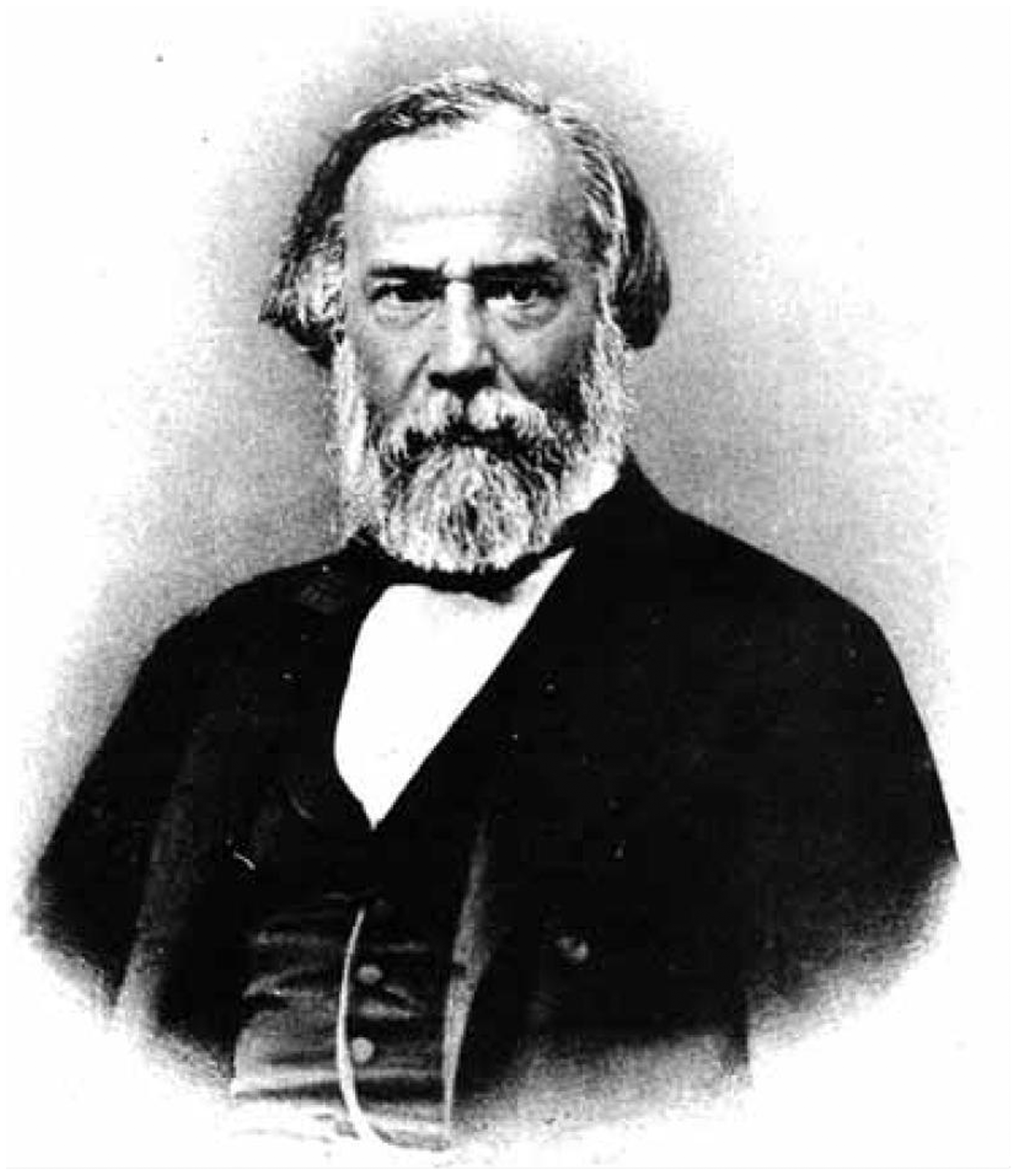
The physician, Charles-Édouard Brown-Séquard
Brown-Séquard was born in 1817 at Port Louis, Mauritius Island.1,3 He lived there until his twenties and it was where he ventured to write poems and manuscripts well accepted by the local critics. 1 In 1838 he embarked for France with his mother and took with him a manuscript. The academician Charles Nodier (1780–1844) assessed his work and discouraged him from a literary career. Disappointed at what Nodier said, Brown-Séquard decided to study medicine and, after overcoming problems, he graduated in 1846 with a report about the physiology of the spinal cord. 1 His work entitled ‘Researches and Experiments on the Physiology of the Spinal Cord’ suggested the decussation of the sensory fibres in the spinal cord and not at the cerebellum as was current thought at that time.1,3
Owing to his excellence in experimental physiology he was appointed Secretary of the Biology Society. 1 There he met Claude Bernard (1813–1878) and their relationship gave rise to new ideas in the scope of Experimental Physiology. 1
In 1852, after Napoleon had staged a coup d’état, Brown-Séquard decided to leave France due to the high risk of his republican ideas. 2 Thereafter he lived in several homes, practising and teaching in Richmond, New York, Boston, Glasgow, Edinburgh, Dublin, London and Paris.2,3
In mid-1860 his reputation as a renowned experimental physiologist had spread to both sides of the Atlantic and he was appointed Professor of Physiology and Neuropathology at Harvard Medical School.1,3 In 1878 he decided to return to France after being invited to succeed Claude Bernard at Collège de France as Professor of Experimental Medicine and there he remained until his death. Among his many contributions the outstanding work related to the sensory and motor pathways in the spinal cord, the influence of the vasoconstrictor nerves, simulation of epilepsy and its genetic inheritance, and his work ‘Elixir of Life’ was very important in relation to early work on the endocrine glands.1,3,4
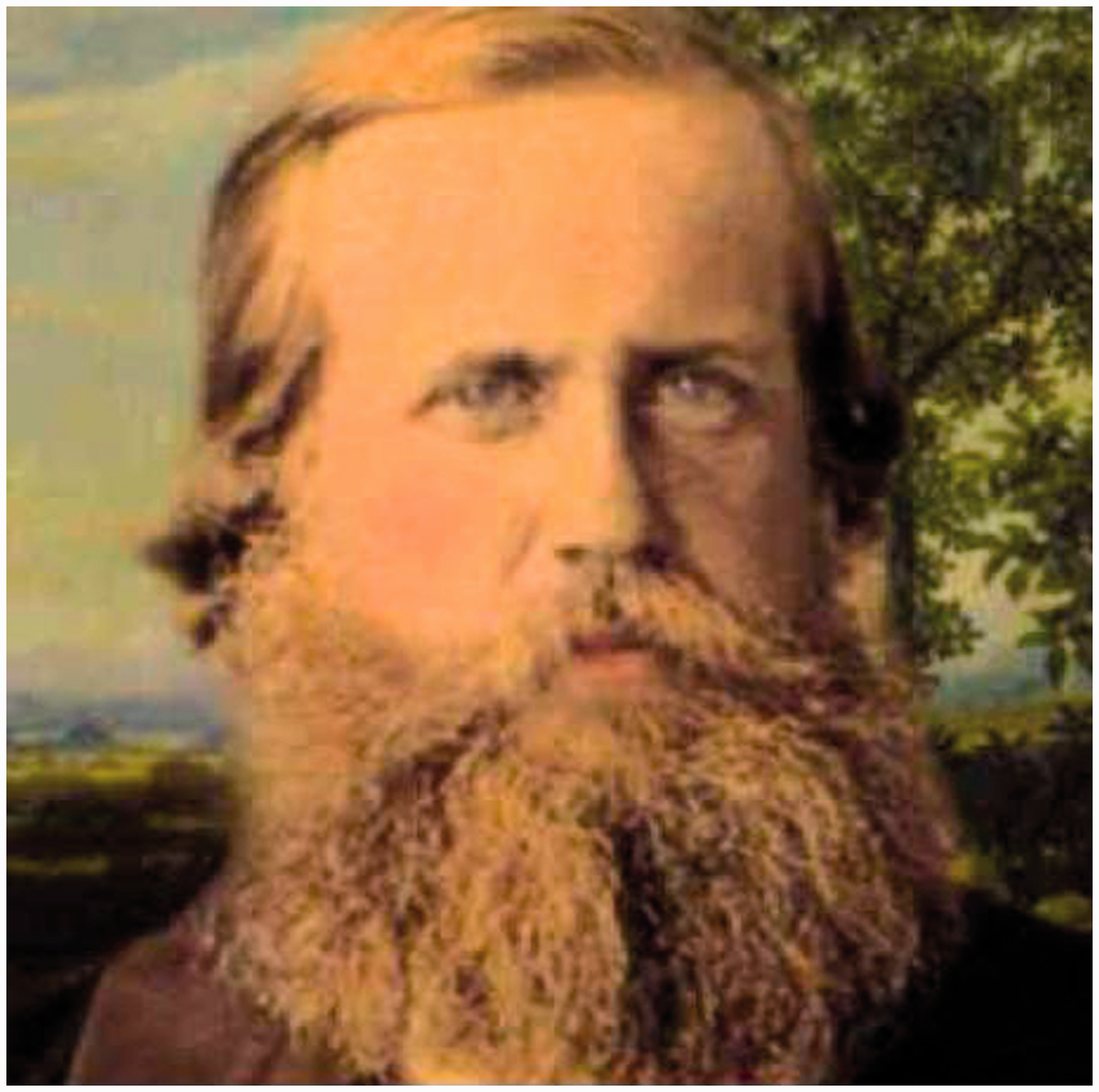
The emperor, Dom Pedro II (1825–1891)
Dom Pedro de Alcântara, or Dom Pedro II, was the second Emperor of Brazil. Born on 2 December 1825, he was the seventh child of Dona Leopoldina (1797–1826) and Dom Pedro I (1798–1834).2,5 He lost his mother when he was a year old and at the age of five he saw his father into exile. 2
After the abdication of Dom Pedro I, Brazil started a troublesome time in its history, the Regency. Regents ruled Brazil because, according to the laws of that time, the Emperor could not take the Empire before 18 years of age. 6 Political disputes between liberals and conservatives, rebellions and revolts were frequent. 6 The economy was not favourable and the dependence of England was evident. 6 To appease the political and economic situation, the liberals led a coup that elevated Pedro II to majority very early. 6 The young infant was then crowned in 1840 when only 14 years old. 5
His education was the work of teachers and tutors who had the obligation to educate a future king. 2 Dom Pedro II studied art, literature, dance and linguistics. 2 He was able to speak several languages including French, German, English, Spanish, Italian and many others. 2 Even from afar his father encouraged his studies. 2 His governess, Dona Mariana, was in charge of his education in moral and religious subjects. 2
His contemporaries considered his education too rigid, leading him to isolation and reclusion. 2 He became a discreet and prudent adolescent with few friends and acquaintances, and contrary to flattering.2,7
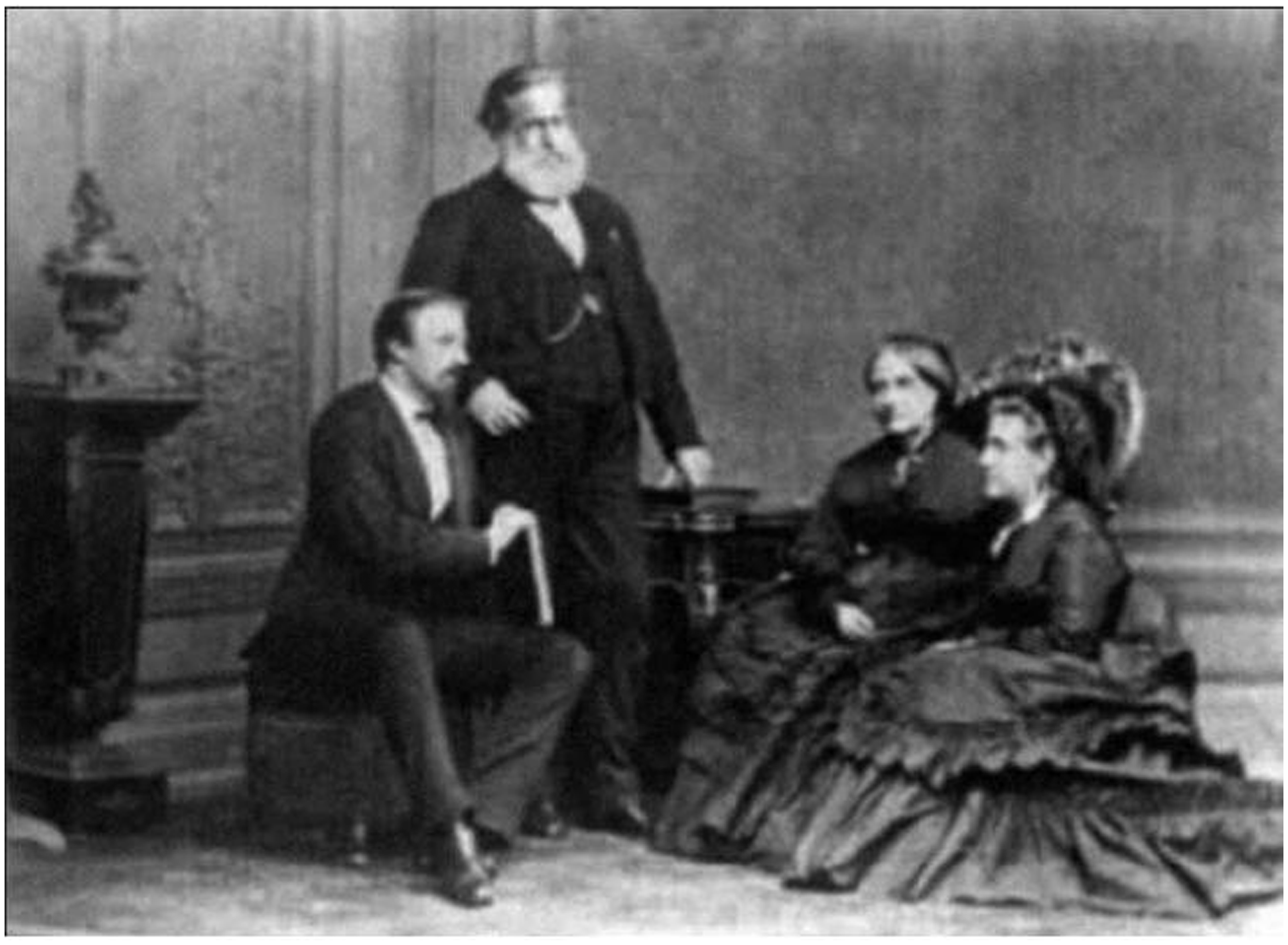
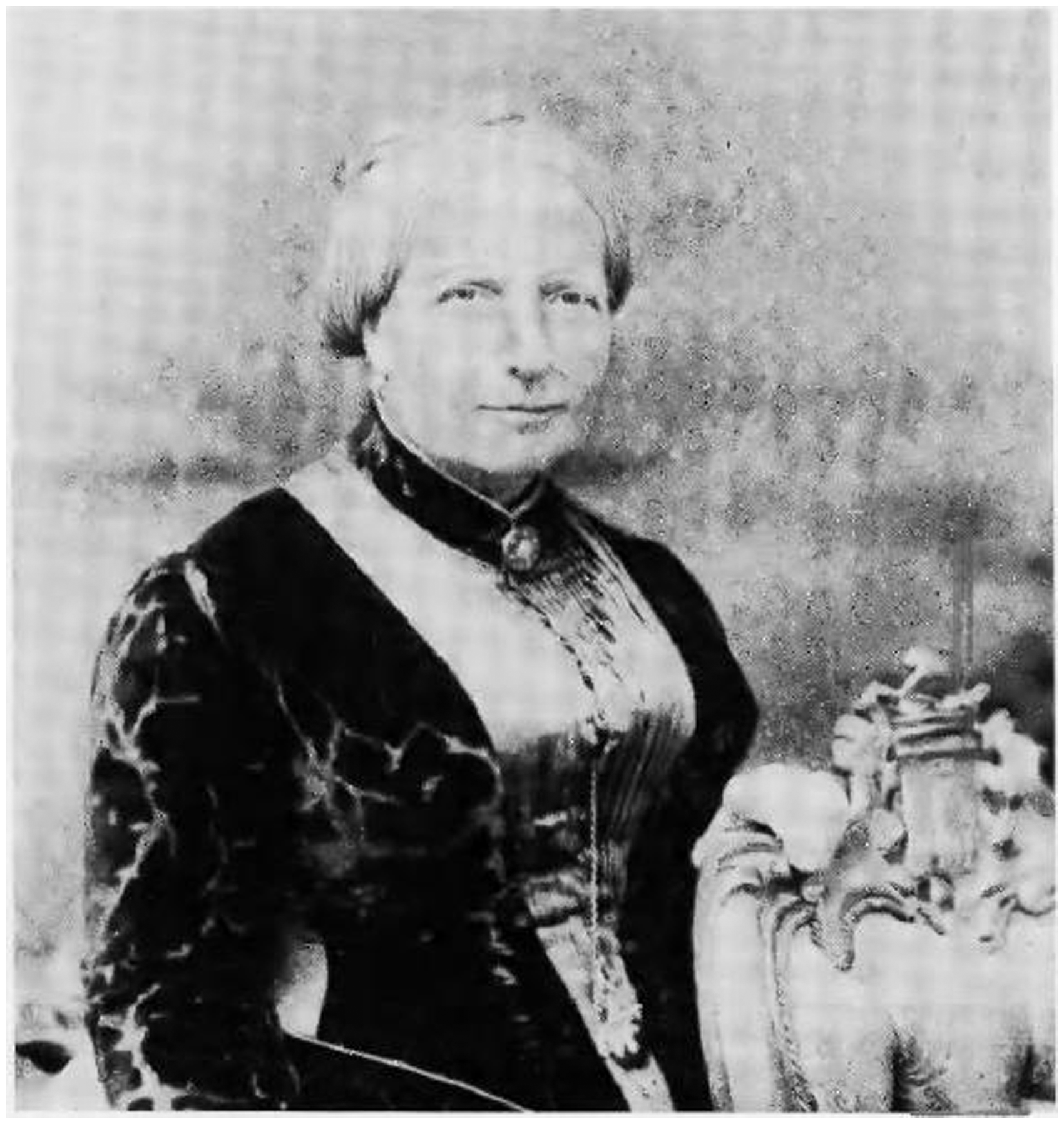
He was married to Dona Teresa Cristina. The Empress was born in 1822 in Naples, Princess of the Kingdom of the Two Sicilies from the Italian branch of the House of Bourbon, she was the fourth and last Empress consort of Brazil after marrying Dom Pedro II by proxy in 1843. She arrived in Brazil on 3 September of the same year. 8 She was described as short, fat and not pretty. Although her sight caused an initial disappointment to the Emperor, he always treated her with great affection. 9 They had a harmonious marriage because of her cordiality, charity and intelligence, besides sharing the same interests in cultural subjects that had always fascinated Dom Pedro II. 10 Dona Teresa Cristina accompanied Dom Pedro II in his countless travels in Brazil and abroad. 10
Dom Pedro developed a great interest in science and kept in touch with outstanding personalities of the XIX century. He discovered a star during his childhood when using the astronomical observatory installed in the palace. 2 This astonished the European scientists of the time. 2 He always kept himself informed about the discoveries of his time, including the work of Alexander Graham Bell (1847–1922) and Charles Darwin (1809–1882).2,5 He was a member of the Paris Academy of Sciences from 1875 to 1891. 11 He hired artistic and scientific personalities to work in Brazil and sent Brazilians abroad for higher education, sometimes at his own expense.2,11
On 15 November 1889, the republicans launched a coup, took the power and sent Dom Pedro II into exile.6,11 Shortly after, on 29 December 1889 the 67-year old Empress died in the city of Porto.11,12 She suffered frail health and suffered from asthma and depression. 9 She regretted not being able to return to Brazil, the land she learned to love. The death certificate noted long-standing catarrhal bronchitic asthma associated with a persistent nervous depression. 9
After her death, Dom Pedro II expressed his feelings in a poem: Rope which breaks out in the played harp You leave like that, oh sweet companion Of the Fortune and the true exile Half of my saddened soul Of august and old trunk, broken stem And transplanted in the Brazilian ground There you had become the hospitable shade In which every misfortune found the nursing Evil to you the ingratitude has made, in its delirium Fell, and I am alone in this abandonment Of your hesitating sepulchre, flickering candle How you were happy! Sleep your sleep Mother of the people, torment is gone Daughter of Kings; gained a great throne.
9
Dom Pedro II was a man of frail health. 2 From childhood he suffered seizures as did his predecessors and his descendants and he suffered excessive sleepiness although a neurological explanation was not found.2,12,13 Diabetic, he was referred to important doctors in Europe including Charles Bouchard (1837–1915), Jean-Martin Charcot (1825–1893) and Brown-Séquard.7,13,14,15
In 1891 Dom Pedro II died of pneumonia, in exile in Paris. 16 It seems that his last journey was to the Paris Academy of Sciences. 11 Many influential persons including Louis Pasteur (1822–1895) and Henri Becquerel (1852–1908) attended his State Funeral.11,16
The physician and the emperor
Dom Pedro II exchanged many letters with Brown-Séquard on various subjects including the Empress’ health.
On 24 February 1876, the Emperor wrote to the notable neurologist ‘I do not know if you remember our meeting at the Paris School of Medicine where I attended your physiological experiments, and you have provided me personal knowledge of Mrs Shaw, a daughter of our late friend, but memories so vivid for me, and especially the reason why I am writing makes me hope that your knowledge shall help heal my wife of nervous disease. It is because of her that I leave a second time my homeland, starting my journey through the United States. I intend to arrive in New York in April 19 or 20, and I shall go to Liverpool after the centennial celebration, before mid-July. I shall only cross England and the strait to reach Brussels where, during my visit, I shall follow the best advice on the choice of water that can be used to my wife. This letter shall reach you wherever you may be, and it shall be easy for you to let me know which way is best for you because I owe you a favour, which I shall be grateful all my life. My wife has been suffering for a long time with more or less long interruptions of horrible neuralgic pains in the leg, and all recently for the first time, reaching the head and the scalp. Two points on the dorsal spine feel the effects more or less with pressure applied. Her general state is good. The doctor who shall accompany her on this trip shall expose what has happened since her initial pain. Even if we cannot meet during the journey, this correspondence will be for me an opportunity to testify my personal esteem for you, and the scientific reputation acquired for you who follow the progress of the physiology. I pray you to believe the very sincere feelings of your affectionate’. 17
To his appeal, Brown-Séquard readily responded ‘Paris, June 1st 1876. Sir, I have for Your Majesty the most precious memories, and I’ll be extremely happy to contribute to the health of your noble companion. I deeply regret that because the errors committed by two of my friends from New York, I just received yesterday a letter that you gave me the honour to send me last February. I hope that you may have received the letter I sent to your Minister in Paris, explaining how I was struck by a terrible telegram from New York, received on April 16, to send you my message this time. In response to what you have asked me at your letter, I am entirely at the disposal of Your Majesty. I was planning to spend some time on summer season in Chester, England. I shall be very close, and there I shall still be at the time of your arrival in Europe. Liverpool is only 1 hour from Chester, and it shall be very easy to put myself at your service at the time of your landing. If, upon arriving in Queenstown, you send me a telegram to the number 44 Russell Square, London, this shall be immediately transmitted to Chester. I shall then, according to your will, make an appointment to Her Majesty the Empress, to instruct me about her health with her regular doctor for one month or more. I am available; I no longer have permanent residence after leaving my office in New York, at the cruel loss of my wife in 1874. On the issue of choice of mineral water, admitting there is no better treatment - I feel I must tell Your Majesty that the best medical authority is Dr H Weber, in London. I read and reread the details that you have mentioned about the health of the Empress. You allow me, I hope, nor anything to comment on the nature of conditions or forms of treatment that can be employed, as well as the chances of cure. To give an opinion on these three points, I shall need to carry out a detailed examination of the state of the patient, as well as collecting all the details that you and your doctor can provide me. I fervently hope that a cure is most possible. Would you accept, Sir, my sincere devotion and respect? CE Brown-Séquard 44 Russell Square London, England To Your Majesty the Emperor of Brazil’. 18
In another letter, Brown-Séquard restates his will to treat the Empress: To Your Majesty, the Emperor of Brazil. Sir, I have received the letter Your Majesty sent me on the 15th of the current month. I shall be in Brussels on July 24, and if Your Majesty wishes so, I shall be glad to be of use to Her Majesty the Empress. I pray you accept, Sir, my deepest respect and sincere devotion. CE Brown-Séquard, Brighton, 17 June 1876.
18
On his way to Europe, Dom Pedro answers Thank you for the excellent letter. I hope this shall be happier than February. As soon as I arrive in England, I will send you a telegram, and I count on your presence in Brussels, hopefully on July 25. I also wish to consult Dr Charcot, and it shall be good you two to meet at the same time with the physician who takes care of my wife, providing you with all the necessary information. In Boston, I spoke well of you to my friends the Agassiz. Farewell, dear Doctor! You can always count on the votes of friendship of your affectionate friend, D Pedro D’Alcantara. Philadelphia, June 29 1876.
19
The physician, the Emperor and the fibromyalgia
In his letter the Emperor describes the Empress suffering from chronic pain with periods of improvement and worsening and notably the pain was not only in one specific area but it affected the lower limbs, neck and scalp, suggesting its diffuse character. Such pain leads to a clinical suspicion of fibromyalgia.
Fibromyalgia is a chronic disorder in which the central processing of pain is defective. 20 As a result affected individuals may have heightened sensitivity to peripheral stimuli. 20 Fibromyalgia pain is often described as a widespread pain that may evolve to allodynia. 20 The pain is diffuse or multifocal; it may appear in periods of worsening and improvement, often being migratory.20,21
It was first described in 1904 by Sir William Gowers (1845–1915) and given the term fibrositis. The current name and concept were described in the 1970s by Smythe and Moldofsky. The change of name reflected the constant impression that it was not an inflammatory disease. They also identified points where soreness was increased, the so-called tender points. The disease is marked by fatigue, cognitive deficits, sleep disturbances and depressive symptoms. 21 Another important milestone was the development of diagnostic criteria by the American College of Rheumatology (ACR) in 1990. These criteria included a history of chronic widespread pain and at least 11 tender points out of 18 tested. 21
The Empress' pain was widespread, horrible and present for a long time although her general state was good. These characteristics reiterate the concept of a non-inflammatory disease that is consistent with the diagnostic hypotheses presented here. The description of ‘ … Two points on the dorsal spine feel the effects more or less with pressure applied … ’ may reflect another peculiarity of the disease, the tender points.
Another factor that leads to the clinical suspicion of fibromyalgia is the death certificate that includes ‘nervous depression’. Depressive symptoms are very common in patients with fibromyalgia and affect their quality of life enormously.
22
In any case, although clinical data on the physical and emotional health of the Empress is lacking, the correspondence is suggestive of fibromyalgia.
Brown-Séquard. Dom Pedro II. Dom Pedro and family. Dona Teresa Cristina.