







Abstract
Notwithstanding the traditional belief that disciples of Jesus Christ introduced Christianity into China, conclusive evidence showed that it was the Nestorian missionaries who entered China in AD 635. Alongside commercial contacts between the West and China during the prosperous T’ang dynasty (618–906), trepanation, bloodletting and the universal antidote theriac were introduced from the Byzantium Empire. Nestorian Christians built churches throughout China and offered some form of medical services. During the Yuan (Mongol) dynasty (1260–1368), foreign physicians were present in the Royal Court; the most famous was the astronomer, linguist and physician Ai-hsieh (Isaiah), Head of the Imperial Medical Bureau. With the fall of this dynasty, Christianity, being primarily the faith of a foreign community, naturally fell into oblivion. It was not until the sixteenth-century’s Age of Discovery when a safe sea route to China was found that a new phase of Christian missionaries began.
Early missionary contacts
From passages in a Syriac Breviary, the ‘Lesson of the Nocturne Service of the Office of Thomas the Apostle’ reads ‘By St Thomas the Chinese and the Ethiopians were converted to the truth; By St Thomas they received Baptism and believed and confessed in the Father, the Son, and the Holy Ghost; By St Thomas the Kingdom of Heaven has been extended even to China’ Breviacum Chaldaicum
1
Again in an anthem ‘The Hindus and the Chinese and the Persians, and all the people of the Isles of the Sea, and they who dwell in Syria and Armenia, in Java and Romania call Thomas to remembrance and adore Thy Name, O Thou our Redeemer’ Bibliotheca Orientalis
2
Christians throughout all Asia from Antioch to China celebrated St Thomas (?–c. AD 72) as their chief and great apostle. He was the first preacher of Christianity among the Hindoos and founded the churches of Malabar. St Thomas, having passed through the country, proceeded over to some coast the east called China and preached in the city of Khan-baliq (‘City of the Khan’, Cabalac, later Peking).3,4
Syrian writers related that ‘Thaddeus, one of the 70 disciples, went into Mesopotamia and that he was sent thither by Thomas the Apostle, soon after our Lord’s Ascension: the same Thaddeus had with him two disciples with him to assist in the propagation of the Gospel, Marus and Agheus ... Marus survived the martyrdom but was obliged to move eastward. He preached in Syria and in all the land of Shinar. He taught in 360 churches and, having fulfilled his preaching for 33 years, departed for the Lord’.3,4
Despite the enormous distance, it was improbable that these zealous missionaries would stop in India without attempting to penetrate its eastern vicinity.3,4 The earliest mention of Christianity in China was by Arnobius (flourished AD 300) who wrote ‘The works wrought by the Lord and his Apostles had subdued the flame of human passions, and brought into the hearty acceptance of one faith a vast variety of races, and nations most different in their manners. For we can count up in our reckoning things achieved in India, among the Seres [silk, Ptolemy’s term for Chinese], Persians, Medes, Arabia, Egypt, Asia, and Syria … in all the islands and provinces which the rising sun or setting sun looks down upon’ Disputationuum adversus Gentes Libri Octo
5
China of the Later Han dynasty (25–220 AD) had been in communication with the Roman Empire, as recorded in the following Chinese history annals: ‘The nation of Ta-ch’in [Syrian province of the Roman Empire] … is to the west of the Great Sea. At the end of the first century, officer Kan was sent by General Pan, Protector of the Western Territories … as envoy to Ta-ch’in. This officer embarked from T’iao-chi [Persia] but turned back for lack of courage … [In AD 166] an envoy from King An-tun [Emperor Marcus Aurelius Antoninus, 121-180] of Ta-ch’in came to China, bearing gifts of ivory, rhinoceros horns, and tortoise shells’.
Introduction of Western medicine
From the Corpus Hippocraticum attributed to Hippocrates the Great (460–375 BC) of Cos ‘When blindness occurs without other diseases, cure can be achieved by operating on both sides of the skull, dissecting the flesh, cleansing the bones, and bleeding. When blindness occurs in the absence of apparent diseases of the eyes, one should make an incision in the parietal region of the head, separate the soft parts, perforate the skull, and evacuate the liquid’. Sight
8
Also, ‘Other diseases are: when water fills within the brain, and acute pain in the head … chills and fever, painful eyes, amblyopia and double vision … Since restoring with food, make an incision in the head, perforate the brain by trepanation with a saw’. Diseases II
9
Aulus Aurelius Cornelius Celsus (25 BC–AD 50) wrote on surgery of the bones ‘Now bone is excised in two ways; if the damaged part is very small, with the modilus (crown trephine); if more extensive by means of trepans(terebra)’. De Medicina Book VIII
10
Notwithstanding whether patients could actually be cured by such means, people who transmitted this information to Chinese annalists believed in this practice. The following comments on Western medicine are recorded in Chinese history annals: ‘There are excellent physicians in Ta-ch’in has who can open the brain to extract worms and cure blindness’ ‘Physicians from Ta-ch’in are experts in eye diseases, dysentery; in prognosis and opening the brain to let out worms’. Reservoir of source material on political and social history
12
Though trepanation for ritual and therapeutic purposes existed from prehistoric times, ‘opening the brain’, most probably trepanation, was not known to the Chinese in application to eye diseases. The act of extracting worms was an imaginative addition by Chinese authors.
7
Here is an account from the T’ang dynasty: ‘When Kao was governor of Ch’iang-wai Prefecture [879-887] a great fire started from the bamboo residence of a foreign sorcerer, destroying thousands of homes. He was arrested and sentenced to death. Before execution, he told his executioner, ‘I have a skill that can benefit mankind.’ Kao, keen to employ skilled persons, was informed and immediately summoned the prisoner. ‘I am expert in curing ta-feng [literally, ‘great wind’, leprosy]’ he said. Kao asked him to demonstrate his skill. A sick person from the leprosarium was placed in a small room, and given several liters of wine that rendered him unconscious. A sharp knife was used to open the skull, a two-inch long worm was extracted. The wound was dressed with a salve, drugs were administered, and dietary regime was restricted. After ten days the wound healed; by one month eyelashes grew back again, and the skin became smooth and bright’. Chats in the Imperial Academy
13
Celsus on bloodletting ‘ … severe fever, when the body surface is reddened, and the blood vessels full and swollen, requires withdrawal of blood; so too diseases of the viscera, also paralysis, and rigour and spasm of the sinews … becomes suddenly speechless. [Let blood from] from that part, or at any rate from a part that is as near as maybe, for it is not possible to let blood from everywhere, but only from the temples, arms and near the ankles’. De Medicina Book II
14
On record is the following account of bloodletting, rarely practised in ancient China because of objection to the shedding of blood ‘[Emperor Kao-tsung] suffered from intractable heaviness of the head, his physician named Ch’in [? man from Ta-ch’in] recommended puncturing the scalp and minor bleeding as treatment. The Empress was skeptical, saying: “How can the head of a person be bled?” His Majesty replied “I am suffering from severe headache, bleeding may not be a bad idea”. After puncturing the temples, he exclaimed now my eyes are clear’’ Old history of the T’ang dynasty
15
The Greek physician-poet Nikander (?–132 BC) of Colophon was credited with a treatise Theriaca on Animal Poisons.16,17 Reputedly invented by Andromachus (flourished AD 60), Nero’s physician, it contained 57 ingredients, the principle being poison viper’s flesh. 18 Claudius Galen (130–200) wrote De Theriaca, hence also the term ‘Galen’s pill’. 19 A prime example of polypharmacy, theriac (triacum, treacle) is an antidote against animal venoms, all kinds of poisons, as well as a universal remedy for diseases. All kinds of substances were incorporated into it including gall, myrrh, opium and hemp. 20 Highly valued in the Roman Empire, this compound naturally became a treasured gift offering.
During the reign of Emperor Kao-tsung (649–683) ‘In the second year of Ch’ien-feng [667], an envoy from Fu-lin offered ti-yeh-ka [theriac]’
19
Ti-yeh-ka had been identified with theriac of ancient and medieval renown.
7
This item is mentioned in the earliest Chinese pharmacopoeia—the T’ang Pen-t’sao (Herbal of T’ang dynasty).
19
This panacea is described: ‘Came from the Western territories; its chief ingredient is pig’s gall bladder; colour is reddish black; taste is bitter and cold; not poisonous, it is said to cure the evil effects of all diseases’.
22
The Chinese may have been right in not giving this celebrated humbug a more prominent place in their pharmacopoeia.
The arrival of Nestorian Christians
Alternating between periods of xenophobia and receptiveness in Chinese history, the powerful and prosperous T’ang dynasty opened its doors to foreigners of every order. Foreigners were welcomed, bringing fresh streams of foreign thoughts. Intercourse with India, Central Asia and the Near East was carried out via trade along the silk route. 23 Christianity following trade had been strongest in commercial centres. The capital Hsi-an-fu (Hsi-an, Shen-shi Province, North-Western China) was a cosmopolitan meeting place where Arabs, Persians and Syrians met with Koreans, Japanese and Tibetans to discuss literature and religion with Chinese scholars. 20
After the banishment of the Patriach of Constantinople, Nestorius (?–450) in 431, his teachings spread throughout the eastern churches. 24 Separation from Byzantine orthodoxy made him acceptable to the Persian and Arabian rulers. They treated Nestorian Christians favourably and they found employment as physicians and secretaries. There was a strong missionary spirit among them during the seventh and eighth centuries.23,25,26
No history of Christianity in China can be complete without mentioning the famous marble Ching-chiao Pei (Nestorian Christianity tablet), a monument of the ‘diffusion of the luminous religion of Ta-ch’in through the Middle Kingdom’.1,27,28 Erected in 781 and excavated in 1625 by workers preparing a building site foundation at the ancient capital of Hsi-an-fu, it provides definite proof of the entry of Christianity into China (Figure 1). Measuring 9ft 1in high, 3ft 4in wide and 11in thick, the top part contains the title in nine Chinese characters surmounted by a Maltese cross (Figure 2). Its contents, recorded by a monk Ching-ching (Adam, flourished 780), described the creation of the world, an account of Christian doctrine and the history of that mission in abstract and figurative prose. It started with an abstract of the Christian doctrine of the Holy Trinity; the creation of the world by A-lo-ho (God in Syriac language); the fall of man through the seduction by Satan; the birth of the Messiah by the Virgin; and the Ascension. Then, followed the arrival of a religious man A-lo-pen (Rabban or Ruben, an apostle, flourished 630) from the empire of Ta-ch’in in AD 635. The Emperor (Tai-tsung, 604–649) sent his ministers to meet him at the Western Gate, had him brought to the palace and ordered him to translate the sacred books that he had brought with him. These books having been examined, the Emperor pronounced the doctrine they contained to be good, permitted its publication and sanctioned its public preaching. Then followed further imperial decree for the building of a church in the capital; a brief description of Ta-ch’in; the continued imperial patronage of A-lo-pen; the subsequent course of the church; a eulogy of a sage who erected the monument; and stanzas in praise of the emperor. The inscriptions conclude with the date of erection-second year of Chien-chung of the Great T’ang dynasty and seventh day of T’ai Tsu (4 February 781).1,27,29
The black marble Nestorian monument at Hsi-an. From: Paul Carus (editor): The Nestorian monument: an ancient record of Christianity in China. Chicago: The Open Court Publishers, 1909. Left: Translation of the inscription on the monument ‘eulogizing the diffusion into the Middle Kingdom [China] of the luminous religion [Nestorian Christianity] of Ta-ch’in [Syrian province of the Roman Empire]’. Right: Rubbing of the top portion of the Nestorian monument at Hsi-an, depicting the Maltese cross. From Paul Carus (editor): The Nestorian monument: an ancient record of Christianity in China. Chicago: The Open Court Publishers, 1909.
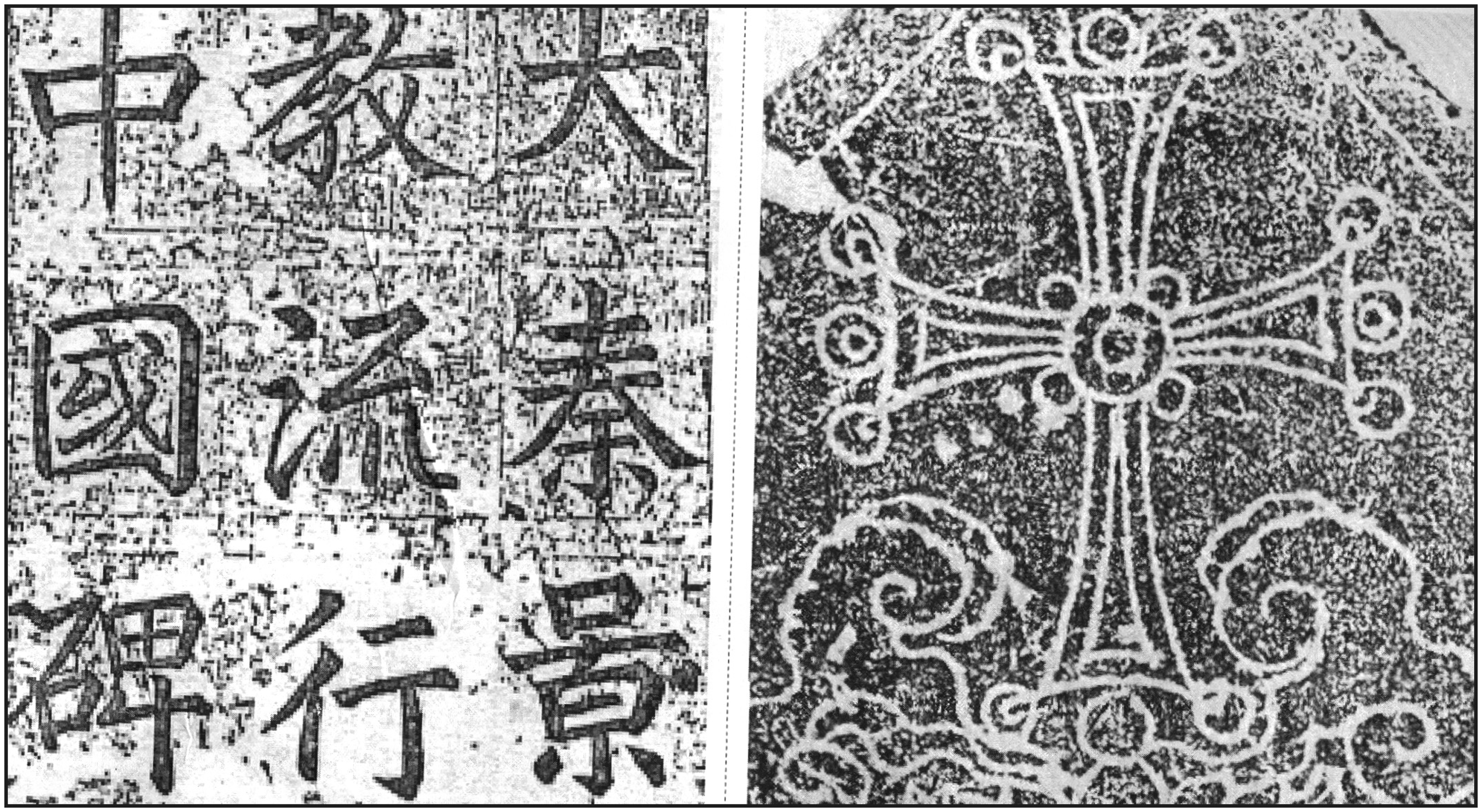
On the side in Syriac characters is inscribed ‘Adam, Deacon, Vicar-Episcopal and Pope of China in the time of the Father of Fathers, the Lord John Joshua, the universal Patriarch’. At the foot of the stone reads ‘In the year of the Greeks one thousand and ninety-two, the Lord Jazed-Buzid, Priest … set up this tablet, whereon is inscribed the Dispensation of Our Redeemer and the preaching of the apostolic missionaries to the Kingdom of China … Adam, Deacon; Mar Sergius, Priest; Sabar-Jesu, Priest; Gabriel, Priest; Adam, Deacon’.1,27,29
Some Nestorian Christians were skilled physicians. They enjoyed a great reputation in Western Asia on account of their skill. They were brought into contact with the hypothesis that trepanning may cure blindness since they translated many Greek medical works into the Arabic language. They might fairly be supposed to have been acquainted with Hippocratic views on the subject. 7 Western medical practice was introduced into China by these Nestorian missionaries 20 who practised whenever and wherever they could.30,31
The Hsi-an-fu monument contains the following passage ‘ … Practising the discipline of the Illustrious Religion, he distributed his riches in deeds of benevolence … The naked came and were clothed; the sick were attended to and restored; the dead were buried in repose ... ’1,29
After two centuries of prosperity, hard times arrived. In 845 the new emperor, an ardent Taoist, published an edict denouncing the increase of Buddhist monks, nuns and convents: ‘With regard to the temples of Ta-ch’in and the Muh-hu [Moslem], when Buddhism was exterminated those heretical religions might thereupon not left in existence. Their adherents must be compelled to return in a body to the secular life and the foreigners among them must be sent back to their native country … Of the 4600 and more convents that are to be pulled down within the empire … and more that are to be demolished, the fattest land of the best kind, measuring several thousands of acres, shall be confiscated …’
32
Nestorian Christianity, being primarily a faith of the foreign community, naturally suffered persecution. The missionaries in China were separated by enormous distances from their base in the Middle East and they lacked adequate support because of poor communication links. Christianity in China henceforth fell to low ebb. With the collapse of the T’ang dynasty, Christianity was to disappear, leaving few traces and no permanent influence on Chinese civilisation. 23 It was not until the influx of European travellers in the days of Mongol conquests of the thirteenth century that a new wave of missionaries arrived.
Christianity under the Mongols
The extensive conquests of Temuchin (Genghis Khan, ‘Very Mighty Khan’, c. 1162–1227) in the thirteenth century opened the way for the western travellers to China. His successors completed the task and created an empire extending from Eastern Europe across Western and Central Asia to China. Trade routes were made safe and commerce flourished. During the Yuan (Mongol) dynasty (1260–1368), foreigners again were common sights in the streets of the capital Khan-baliq. European merchants heard of Cathay (as they called China). Whatever their motives, the Khans were generally tolerant of all religions and subsidized their clergy.23,25
In 1277 a Nestorian physician Mar (Lord) Sargius (or Sergius, flourished 1270) from Samarkland (northeastern Persia) was appointed Governor of the port city of Ch’en-chiang on the south bank of the Yang-tse River where he built seven monasteries to provide medical aid for the poor and needy.23,33
A detailed account of a Christian community in China during this period recorded their activities at the Nestorian centre at Ch’en-chiang: ‘Hsieh-li-chi-ssu [Mar Sargis] the assistant governor of this Circuit, built the Ta-hsing-kuo Monastery [in 1281]) … Hsieh-mi-ssu-hsien [Samarkand] is distant from China more than hundred thousand li [Chinese mile = 575 metres] to the North-West. It is a land where the yeh-li-k’o-wen [Arkgun or Argon, a general term for Christians] practise their religion … His grandfather K’o-li-chi-ssu [George], his father Mieh-li [Mares], and his maternal grandfather were court physicians. When the Emperor T’ai-tsu [Genghiz Khan] took the country, the Crown Prince fell ill. His maternal grandfather administered she-li-pa [sherbet] and the bishops prayed, whereupon the prince recovered. He was appointed she-li-pa-shih [Imperial Purvey of Sherbet] and supervisor of the Christians of his native place … [In 1268] the Emperor [Kubilai Khan, 1216-1294] ordered him to come post haste to make sherbet and rewarded him very liberally. Sherbet is made of a quantity of fragrant fruits boiled and mixed with honey. He had the inherited skill in the method. [In 1277] he was promoted assistant governor. Though raised to splendour and prominence, he held all the more to his religion and was constantly devoted to the propagation of the faith. One evening in dream two angels from heaven and instructed him to build seven monasteries. When he awoke he felt inspired, resigned his office, and devoted himself to building monasteries … Moreover he commanded his descendants to maintain them down the stream of time. Sherbet was a hereditary business to be carefully fostered and must not decay’. History of the Ch’en-chiang in the Chih-shun period [1329–1332]
34
The Yuan dynasty of a foreign ethnic origin divided citizens into four castes in descending order: Mongols, Western foreigners, Chinese (along the Yellow River) and Southern Chinese. 35 Top government appointments were naturally reserved for Mongolians and then for Westerners. Distrust and disdain of the native Chinese led to foreigners being employed extensively by the Court.
Isaiah (aka Ise or Ai-hsieh, 1227–1311), a Byzantine Christian, had held office as Court Physician and Astrologer in 1263. His eldest son, Yeh-li-ya (Elijah), also became a Court Physician.
25
He merited a biography in the History of the Yuan dynasty. ‘Ai-hsieh, from the nation of Fu-lin in the Western regions, was an expert in the languages of the various tribes of the West, and also well versed in astronomy and medicine. He first served under Emperor Ting-tsung [Kuyuk Khan, died 1248] and dared to remonstrate with him directly. At that time Shih-tzu [Kubilai Khan] was still a prince and valued him highly. [In 1263] he was ordered to take charge of the Offices of Western Astronomy and Medicine. The latter was renamed the Kuang-hui-ssu [Bureau of Medicine], and he again was put in charge … He was promoted to the President of the Bureau of History and of the Han-lin [Academy of the Literati]. [1311] he was created Duke of C’hin, and died. He was granted the posthumous titles of T’ai-shih [Grand Master] and Fu-lin Chung-hsien Wang [Loyal Prince of Fu-lin]. He has five sons: Yeh-li-ya [Elijah], Dien-ho [Denha], He-sse [Issa], K’o-li-chi-see [George], and Lu-ho [Luke, President of the Kuang-hui-ssu) … [November 1328] Yeh-li-ya had his name removed for receiving bribes. Lately it has been ordered that he should be President of the Tai-i-yuan [Imperial Medical Office] … [August 1330] Yeh-li-ya together with others were guilty of sedition, practising magic, sacrificing to the Great Bear, and using incantations … They were all beheaded … ’ History of the Yuan dynasty
36
Little is heard of the religious activities of these people beyond that their names sounded Christian. Here is another account of a Christian foreigner’s medical feat: ‘In the third month of Yuan-tung [1333] … the Kuang-hui-ssu [Bureau of Medicine] officer named Neh-che-erh, who was a yeh-li-k’o-wen [Christian] man, told me that the previous year when at Shang-tu [Upper Court, Xanadu, the Imperial summer residence], the husband of the Emperor’s daughter caught a strange disease consequent to a fall from a horse. The pupils of both eyes had disappeared and the tongue projected down to the chest. The physicians were powerless. I [Neh-che-erh] am familiar with this condition, cut off the tongue with scissors, anointed the wound with medicine and so cured him’. New Narratives from the Mountain Dwelling
37
Meanwhile in Western Europe a new age had dawned with revival in intellectual, political and religious cultures. The Crusades had already drawn attention to the Orient. The Catholic Church naturally sought to bear their message to those distant realms. In the face of the Mongol conquests, Louis IX (St Louis, 1214–1270) (Figure 3) with the purpose of political and a religious reconnaissance sent Friar William of Rubruck (?1215–?) in 125323 (Figure 4). He reached Karakorum in Central Asia in December and was received by the Khan. He emphasized that he was a preacher of the Gospel. He met many men and women Christians from France, Allemande, Hungary and Russia who were prisoners.
34
He was not successful in his endeavors and left China in August 1254.1,34 In his travel memoirs, he recorded many valuable accounts of Christian activities in China. He wrote a scathing attack on the Nestorians: ‘In fifteen cities of Cathay there are Nestorians, and they have an Episcopal see in a city called Se-gin [Hsi-an], but for the rest they are all idolaters … These Nestorians know nothing. They say their Offices and have sacred books in Syrian but they do not know the language so they chant like those monks among us who do not know grammar and they are absolutely depraved. In the first place they are usurpers and drunkards; some even among they who live with the Tartars have several wives like them. When they enter church they wash their lower parts like Saracens; they eat meat on Friday, and have their feasts on that day in Saracen fashion. The bishop rarely visits these parts, hardly once in fifty years. When he does, they have all the male children, even those in the cradle, ordained priests, so nearly all the males among them are priests. Then they marry, which is clearly against the statutes of the fathers, and they are bigamists. They administer no sacraments gratis. They are solicitous for their wives and children and are consequently more intent on the increase of their wealth than of the truth’.
38
Saint Louis (King Louis IX of France), patron saint of sick people, death of children, among others, who led two Crusades. From an icon print in the author’s collection. Left: Friar William of Rubruck. Centre: The Blessed Friar Odoric of Pordenone. Right: Bishop John of Monte-Corvino, the first Archbishop of Peking. From Father APM Favier. Yen-ching kai-chao lu (Introduction of the Catholic Faith in Peking), 1905.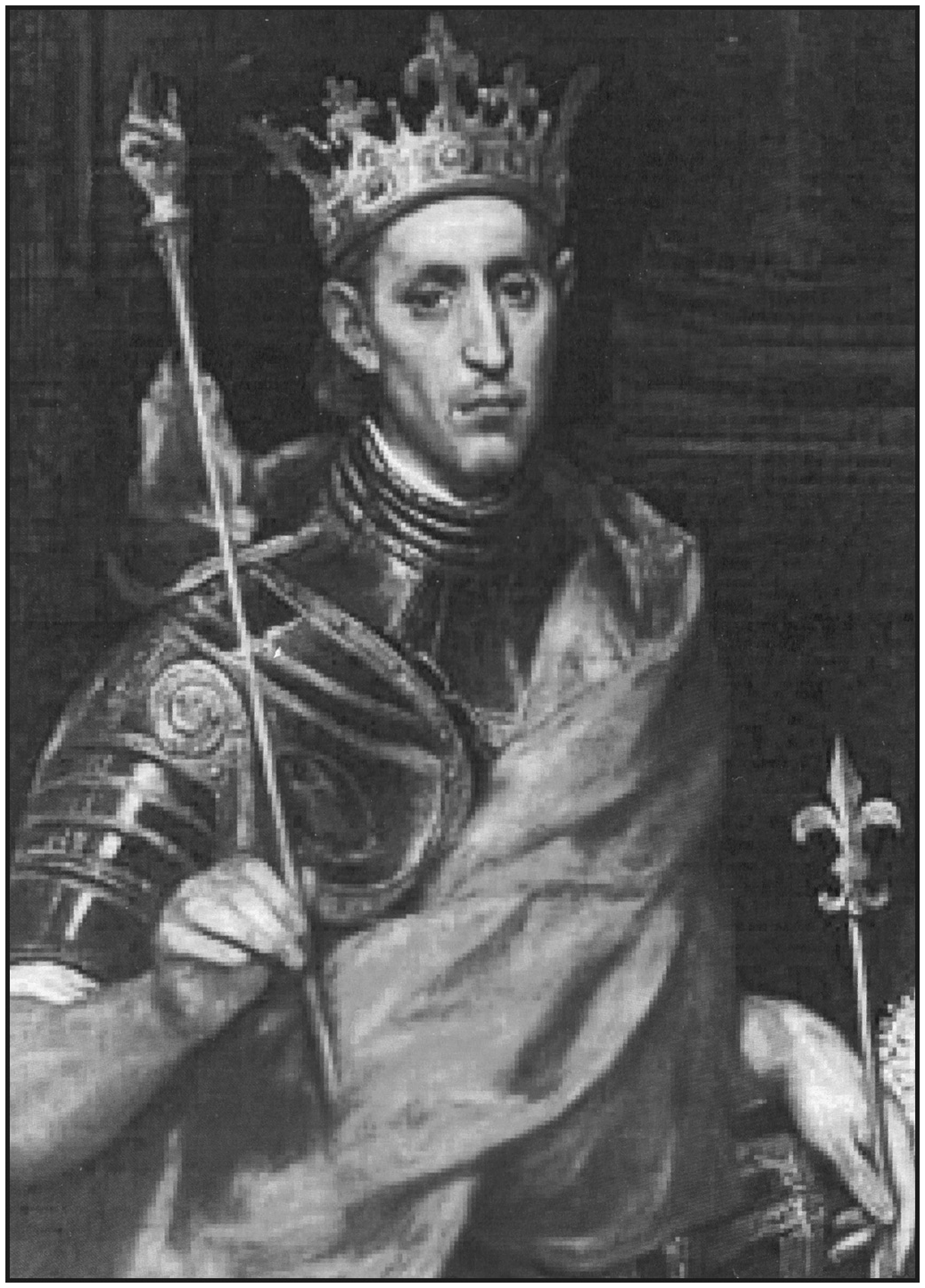
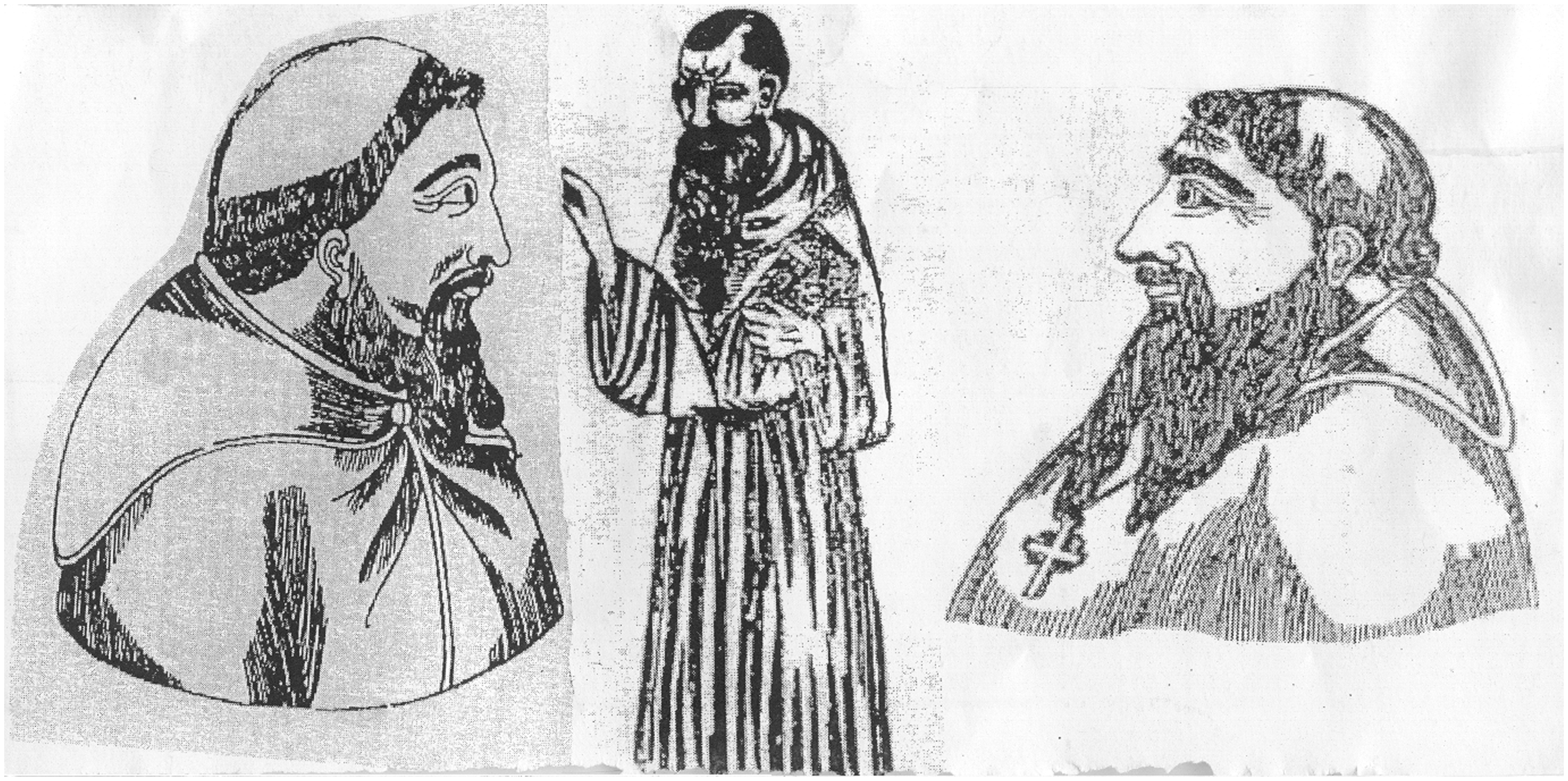
The first Catholic missionary to be established in China in 1294 was by the Franciscan Friar John of Monte-Corvino (c. 1247–1328) (Figure 4). For many years, he laboured single handedly in his ecclesiastical work in spite of opposition from the Nestorians. He built two churches in the capital and converted over 30,000 citizens including several emperors of the Mongol dynasty. Because of his success, he was made Archbishop of Cambalac in 1307.23,39 In a letter to the Pope dated 8 January 1308, John mentioned that a certain physician and chirurgeon named Lombardus the Capital was spreading defamatory messages against the Pope.23,38
The Blessed Friar Odoric of Pordenone (?1265–1331) (Figure 4) in his travels to China found three Nestorian churches in Yang-chau City around 1324. From his travels, he observed: ‘Of leeches [physicians] to take charge of the royal person there be four hundred idolaters, eight Christians, and one Saracen. All these have from the king’s court whatever provision they require. In short the court is truly magnificent and the most perfectly ordered that there is in the world, with barons, gentlemen, servants, secretaries, Christians, Turks and idolaters, all receiving from the court what they have need of’.
40
The decline of Christianity
With the collapse of the Mongol Empire, non-Chinese communities were dispersed. Naturally, foreign Christians suffered as well. Christianity disappeared even more decisively than it had after the T’ang dynasty. 23 Both the Latin and Nestorian Churches had fine opportunities to propagate Christianity. Quarrelling among themselves, they hindered each other’s success. Towards the end of the fourteenth century, the ascendency of the Muslims drove the Christians out. 41 With the closure of the land route to China, these early Catholic missionary efforts were aborted. It had no greater success than the previous Nestorians because its communications with Rome were severed prematurely by political upheavals. 23 After the death of Archbishop John, Catholic mission gradually declined. Various expeditions were sent out but frequently these failed to reach China. 42 Foreigners were expelled after the middle of the fourteenth century with the collapse of the Mongol dynasty. Missionaries were to return later but only when a sea route to China became practicable and safe. 23
A dark mist descended upon the Far East. Cathay, the Royal Courts at Khan-balig and Shan-tu and the old capital city of Hsi-an-fu were all covered in a dark veil. Along the borders of China, Christians probably continued to exist. In the Northern provinces, persecution led to Christians either abandoning or concealing their faith. Christianity left its traces only in some strange parodies of religious rituals and relics in abandoned churches. The old Christian churches, whether Catholic or Nestorian, were engulfed in a sea of paganism. 32 The martyrdom of the last Latin Bishop in China in 1369 marked the end of Western missionary enterprise in China for two centuries. 42 The Ming dynasty that followed the Yuan dynasty reverted to the traditional policy of excluding foreigners. When Italian Jesuits entered China at the end of the sixteenth century, they could find no trace of Christianity and were convinced that the ‘worshippers of the cross’ who entered Cathay in the wake of the Mongol conquerors had largely disappeared.3,23,32
Footnotes
Author biography
Louis Fu is a retired Consultant Orthopaedic Surgeon who has developed an interest in medical history and medical biography. He has contributed six previous papers to the Journal of Medical Biography — Pien Chueh — the Chinese God of Medicine (2002; 10: 92–99), Hua Tuo—the Chinese God of Surgery (2002; 10: 160–166), Sung T’zu and Medical Jurisprudence in ancient China (2004; 12: 95–104), William Arbuthnot Lane and Kenelm Hutchinson Digby: a tale of two Universities (2008; 16: 7–12), Music and medicine: a note on John Hunter and Joseph Haydn (2010; 18: 115–122) and Medical missionaries to China: the Jesuits (2011; 19: 73–79). Currently he is an Honorary Associate Professor in Orthopaedics at the Chinese University of Hong Kong.