







Abstract
This paper focuses on the lesser-known side of the famous neuropathologist, anatomist, and psychiatrist Theodor Meynert (1833–1892): Meynert as a poet. Meynert decided to become a doctor late in life, a decision that required him to give up on having a career as a writer. This analysis outlines that Meynert, as a scientist, was significantly shaped by his multifaceted interests and surrounding environment. It refers to previously unknown archival materials and especially letters that gives new insights into his multifactored personality. Thus, as this paper argues, his poetic affinity is of great importance to understanding his work.
Introduction
Theodor Meynert was an important neuropathologist, anatomist, and psychiatrist. However, there was a lesser-known side of his personality: Meynert was a poet. This side of Meynert is the focus of this essay. Meynert seems to have been endowed with poetic talent since birth, perhaps because his father, Hermann Günther Meynert (1808–1895), was a journalist and writer and because he was part of an environment in which writers and poets played a major role. The family tradition was ultimately upheld by Meynert’s daughter Dora Stockert-Meynert (1870–1947), who achieved fame as a writer herself.
This analysis refers to previously unknown archival materials, especially letters, that highlight new aspects of the subject. a It shows Meynert’s extensive contacts in the Viennese cultural scene in fin-de-siècle Austria, which included numerous famous figures from the art and creative scene. Some contemporaries also have their say, specifically with regard to Meynert’s artistic side. This analysis gives new insights into Meynert’s multi-faceted personality. In particular, his predilection for the famous poet Nestroy stands out.
Finally, a letter that has never been taken into account in this context is cited, wherein Meynert himself indicates his thought “that science, too, requires something related to poetic production.” This assumption, which Meynert was confronted with again and again, can in principle be confirmed for the first time by his own statement. This confirmation should be deepened by showing how Meynert used a metaphor from Goethe’s Faust to understand the functions of the brain’s anatomical structure via an analogy.
This paper also aims to add new, previously unknown findings to Meynert’s biography, which resulted from the author’s intensive study of documents of that time and archive sources.b It was not previously known that Meynert apparently gained his first experience in anatomy through Joseph Hyrtl (1810–1894), who supported him alongside his mentor Carl von Rokitansky (1804–1878). Thus far, Hyrtl is better known as the one who would have doubted Meynert’s plan to venture into the anatomy of the brain (Figure 1).
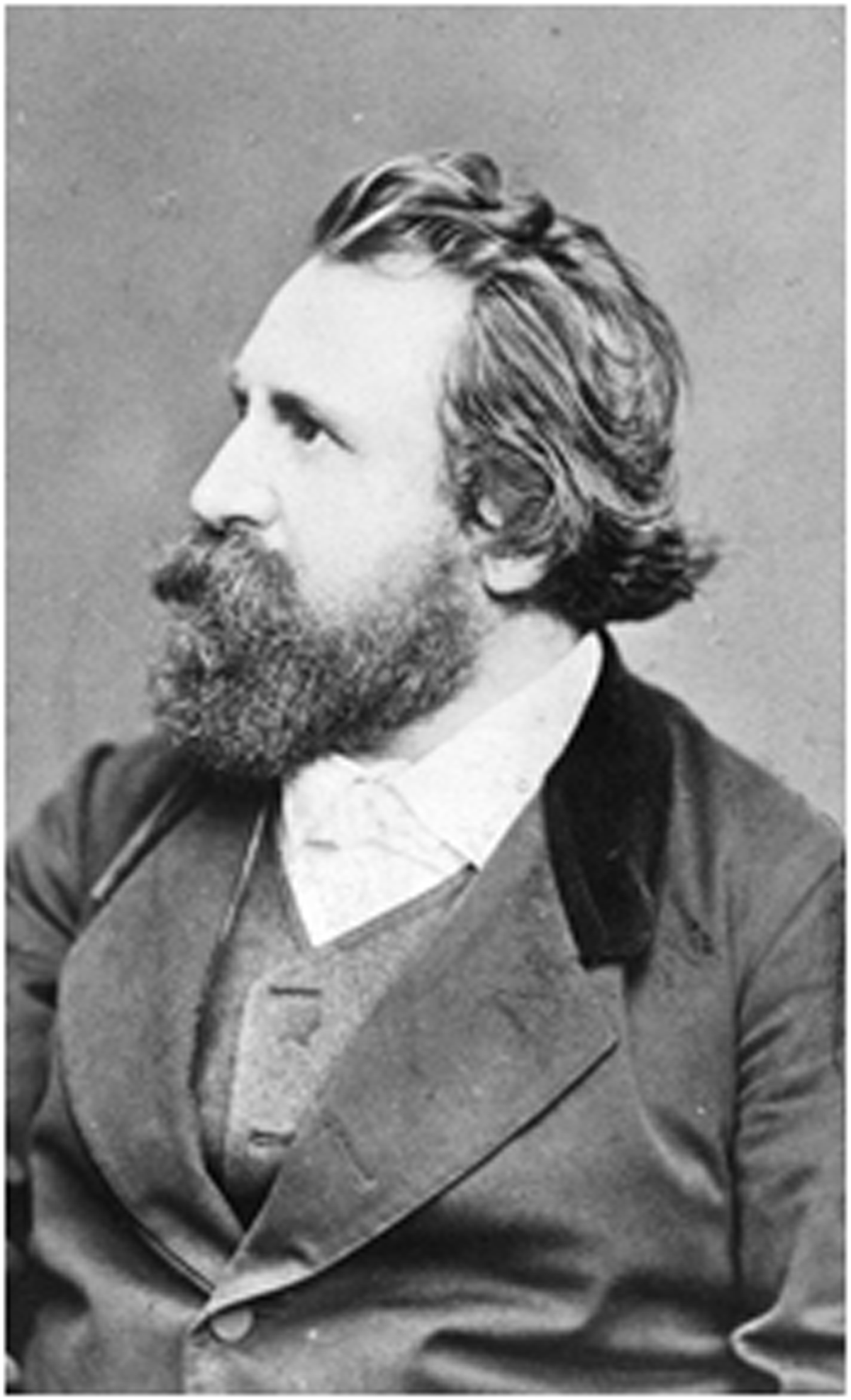
Theodor Meynert (1833–1892). ÖLA Teilnachlass II., Dora Stockert-Meynert. ÖLA 205a/103/4.2.
Early life
Meynert was born in Dresden, the son of the journalist and writer Hermann Günther Meynert (1808–1895), but the family moved to Vienna in his early childhood. There, his father worked as a theatre critic for Adolf Bäuerle’s (1786–1859) “Wiener Allgemeine Theater-Zeitung” from 1836 onward. As a historian, Hermann Günther published several important works, including a history of Austria 2 and a history of the Imperial and Royal Austrian army. 3
Meynert’s mother, Marie Emmering (1807–1882), was born in Vienna. Before her marriage with Hermann Günther, she was an opera singer. She performed at the Dresden Court Theatre, but also in Vienna, where she introduced her husband to the Viennese cultural scene. 4 Her father was the physician Andreas Emmering (1785–1857), who came to Vienna in 1800 to study medicine. Meynert’s godfather was Karl Gottfried Theodor Winkler (1775–1856), a writer, translator, and critic, as well as an opera and theatre director.Thus, a poetic talent seems to have been given to Theodor Meynert in his cradle. Since his youth he had been writing poems, his first publications dating back to his high school years. In Vienna, Meynert attended the “Lyceum,” where one of his teachers was the archaeologist, poet, narrator, and playwright Johann Gabriel Seidl (1804–1874). Seidl was famous for writing the lyrics to the Austrian Imperial Anthem. Seidl promoted Meynert’s poetic talent from an early age and made sure that his first poems appeared in his literary journal, called the “Almanach Aurora.” Seidl also later mediated poetic contributions by Meynert in various media. 5 After graduating, Meynert began studying medicine, which he finally completed in 1861 at the age of 28. Meynert only made a late decision to become a doctor, requiring him to decide against a career as a writer. His strong interest in literature and poetry and in particular his participation in the publication of an anthology initiated by his father, is said to have significantly slowed the progress of his studies (Figure 2). 6
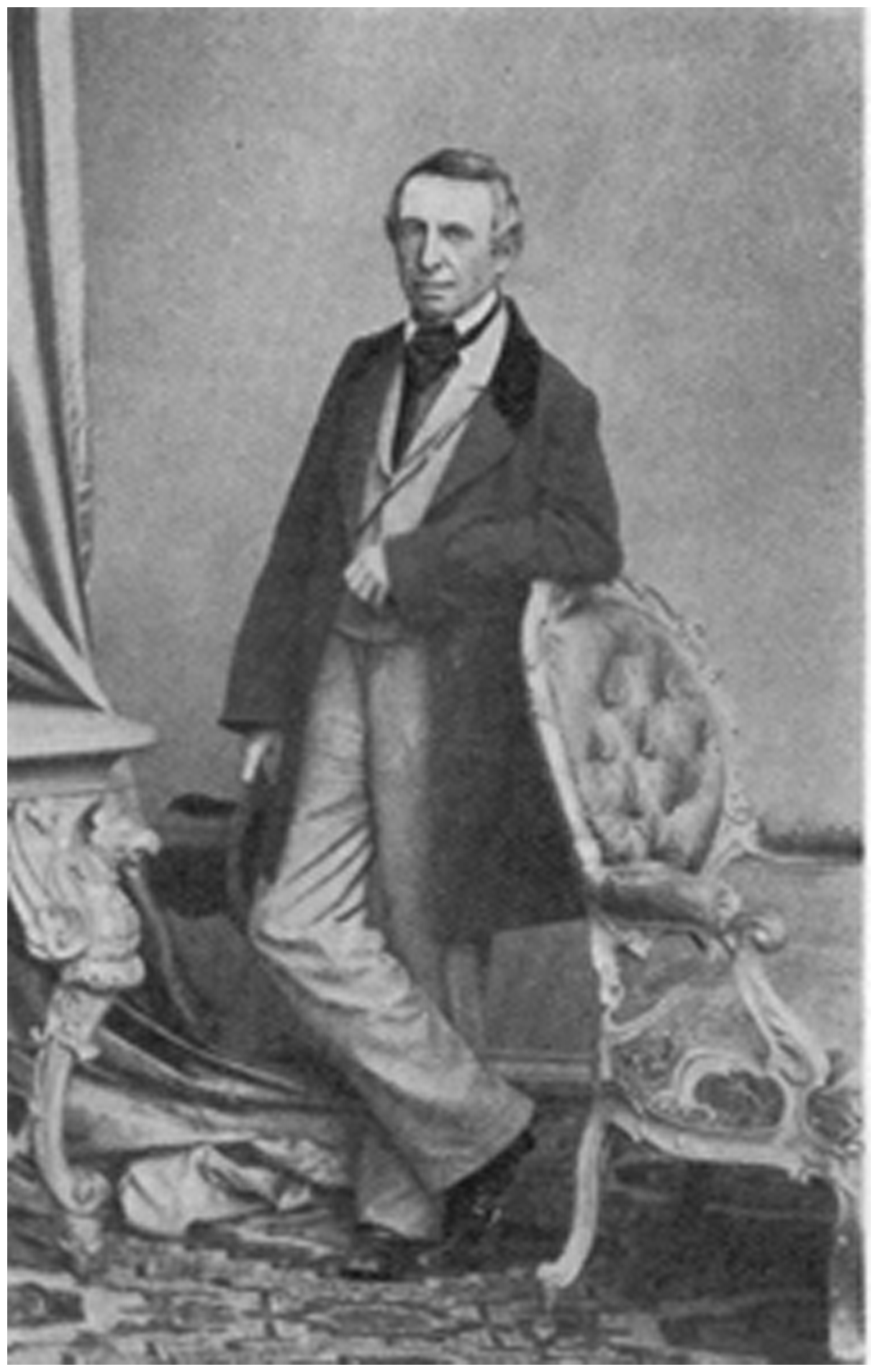
Hermann Günther Meynert (1808–1895). From Stockert-Meynert D. Theodor Meynert. p. 176.
Meynert’s academic career
Meynert’s first contact with histology and anatomy dates back to his time as a medical student. As a student, he worked in Carl Wedel’s (1813–1902) histopathology laboratory. 7 According to contemporary sources, Meynert also worked as a demonstrator for Joseph Hyrtl during this time, which is also said to have aroused his interest in anatomy.8,9 Meynert himself appears to have pointed this out in an early curriculum vitae: “He [Meynert] dealt extensively with the study of anatomy, and from the 6th semester onwards, he frequently gave lessons in anatomy to colleagues.” 6 Hyrtl was also one of the reviewers of Meynert’s habilitation application. In it, he confirms that Meynert had bravely mastered one of the “most difficult areas of microscopic anatomy.” 10 Originally, Hyrtl, who gave Meynert the rights to the brains of animals at the Schönbrunn zoo animals at a very early stage of his career, 11 was initially said to have doubted the usefulness of brain anatomy. Meynert commented on Hyrtl’s doubts as follows: “The value of brain anatomy came about through my work. Hyrtl saw it as folly. ‘Our finest tools are to the structure of the brain as a carpenter’s saw to a spider’s web.’ But nobody stopped me, and I succeeded.” 12
The anatomist and founder of the Second Vienna Medical School Carl von Rokitansky is of central importance for Meynert, not only as a scientist but also for his academic career. Rokitansky’s new somatic paradigm became the starting point of his own research; his expansion of Rokitansky’s paradigm to the area of mental phenomena in the sense of a somatic psychiatry and neuropsychology was its last consequence 13 The amicable relationship between Meynert’s father and Rokitansky went back to the time in Dresden. 4 In Vienna, Hermann Meynert and his wife regularly played cards with Ferdinand Hebra (1816–1880) and the Rokitanskys. 14 Finally, this relationship between these two families led to polemical attacks against Meynert. 15
After Meynert finished his doctoral dissertation, he held a number of clinical positions. In 1861, he became an intern (aspirant) in internal medicine and surgery at the Vienna General Hospital. One year later, he became an assistant doctor (Sekundararzt) in the Gumpendorfer Hospital near Vienna. However, Meynert soon realized that his interest lay elsewhere. He gave up the position due to illness in August of 1862 to devote himself to studying the brain. 6 After Meynert gave up his post as an assistant doctor at the Gumpendorfer Hospital, Rokitansky offered him the chance to work for him. Initially, Meynert made preparations of brains for Rokitansky in home work. In 1863, Meynert published his first publication. 16 A year later, he applied for his habilitation “Structure and function of the brain and spinal cord” (“Bau und Leistung des Gehirns und Rückenmarkes”), which was granted to him in 1865. The same year, he became an assistant doctor (Sekundararzt) in the Lower Austrian State Asylum, and in 1866, he was promoted to dissector. His only competitor for the post was Ferdinand Schott (1830–1887), who had been Rokitansky’s first assistant until 1865 and then dissector at the St. Anna Children’s Hospital. The Lower Austrian State Committee left the decision to appoint the dissector to a council of professors (Professorenkollegium), because both candidates were able to provide “excellent credentials on their academic achievements.” Meynert received letters of recommendation from Rokitansky, 17 Hyrtl, 18 and Ernst Wilhelm Brücke (1819–1892). 19 The Lower Austrian State Committee finally chose Meynert by a small majority. 20
In 1870, Meynert became Extraordinarius and head of the Lower Austrian State Asylum, much in thanks to Rokitansky’s support. 13 That time was accompanied by harsh criticism from traditional asylum psychiatrists: Meynert as a trained brain anatomist without practical experience in dealing with patients – he started his career as a dissector – was accused of not being adequately qualified for the management of a psychiatric clinic, for which patient care must be in the foreground. Ultimately, the Lower Austrian State Committee called for his resignation.17,21 He soon faced deep conflict with Ludwig Schlager (1828–1885), who was appointed as the director of the Lower Austrian State Asylum in 1873, becoming the supervisor for Meynert’s clinic. They soon had a falling out, which was not surprising, after Schlager wrote a votum seperatum against Meynert’s promotion to full professor. 22 Julius Wagner-Jauregg (1857–1940), who was later the most important source for Lesky and her famous book about the Second Vienna Medical School, reports that Maximilian Leidesdorf (1816–1889), who was Meynert’s successor, also had difficulties with Schlager. 23
Under this pressure, Meynert, who was in 1873 appointed as Ordinarius of psychiatry himself thought about leaving Vienna to become the director of the “Irrenanstalt Burghölzli” in Zurich. In the end, Meynert was able to remain in Vienna, since Rokitansky managed to build a second psychiatric clinic especially for him, which was located in the General Hospital. 13
In Zurich, Meynert would have received a generous annual salary of CHF 10,000. In fact Meynert benefited from this also financially, because Karl von Stremayr (1823–1904), at this time Minister of State for Education and Cultural affairs, arranged for an increase in his original annual salary from 2200 to 3000 guilders and the award of the title of a government councilor to keep Meynert in Vienna. Stremayr argues that these interventions were justified by the “scientific importance of this man”, which would make it a duty of the government to hold on to Meynert for the prestige of the fatherland. 24
Meynert died on May 31, 1892 in Klosterneuburg, where he was buried on June 2 at the local cemetery. His funeral took place with all academic honors and the participation of a large number of important personalities from culture and science, including a large number of his colleagues from the medical faculty and members of the Miller von Aichholz and the Hofmann families. The funeral speeches were given by his successor Richard von Krafft-Ebing (1840–1902) and his pupil Gabriel Anton (1858–1933). 25
On May 19, 1901, as a testament to Meynert’s lasting impact, a memorial to Meynert was unveiled in the arcade courtyard of the University of Vienna, which was created by the sculptor Theodor Khuen (1860–1922). Gabriel Anton again gave an oration, 26 which was mostly identical to his later contribution to Kirchhoff’s “German alienists” (“Deutsche Irrenärzte”). 27
Meynert, the poet
Meynert was also recognized as a poet in his adult life and was even invited to contribute to the “German poetry-book of Austria” (“Deutsches Dichterbuch aus Österreich”) (1883), which was edited by the Austrian writer and publicist Karl Emil Franzos (1848–1904). The most famous Austrian poets and writers of the time, including Marie von Ebner-Eschenbach (1830–1916), Franz Grillparzer (1791–1872), Robert Hamerling (1830–1889), and Peter Rosegger (1843–1918) contributed to this special anthology. 28 Meynert’s daughter, who, as mentioned, became a renowned writer, also published a book of poems posthumously. 29 Meynert remained true to this passion until his late years. He exchanged views on poetry with colleagues such as Jean-Martin Charcot (1825–1893) or the surgeon Theodor Billroth (1829–1894), who also wrote poetry. The last trip of Meynert’s life was to Paris in autumn of 1891, where he met the French neurologist Jean-Martin Charcot (1825–1893) and his family. 14 He took the opportunity to send Charcot not only his own poems but also his own German translations of the work of French poet Pierre-Jean de Béranger (1780–1857). Charcot told Meynert that this was why his daughter started learning German so that she could read the translations sent by Meynert. 30 In his last years, Meynert maintained an intensive correspondence with Theodor Billroth (1829–1894) about poetry, especially their own poems. Meynert and other scholars were often guests at Billroth’s villa in St Gilden am Wörtersee (Figure 3). 14
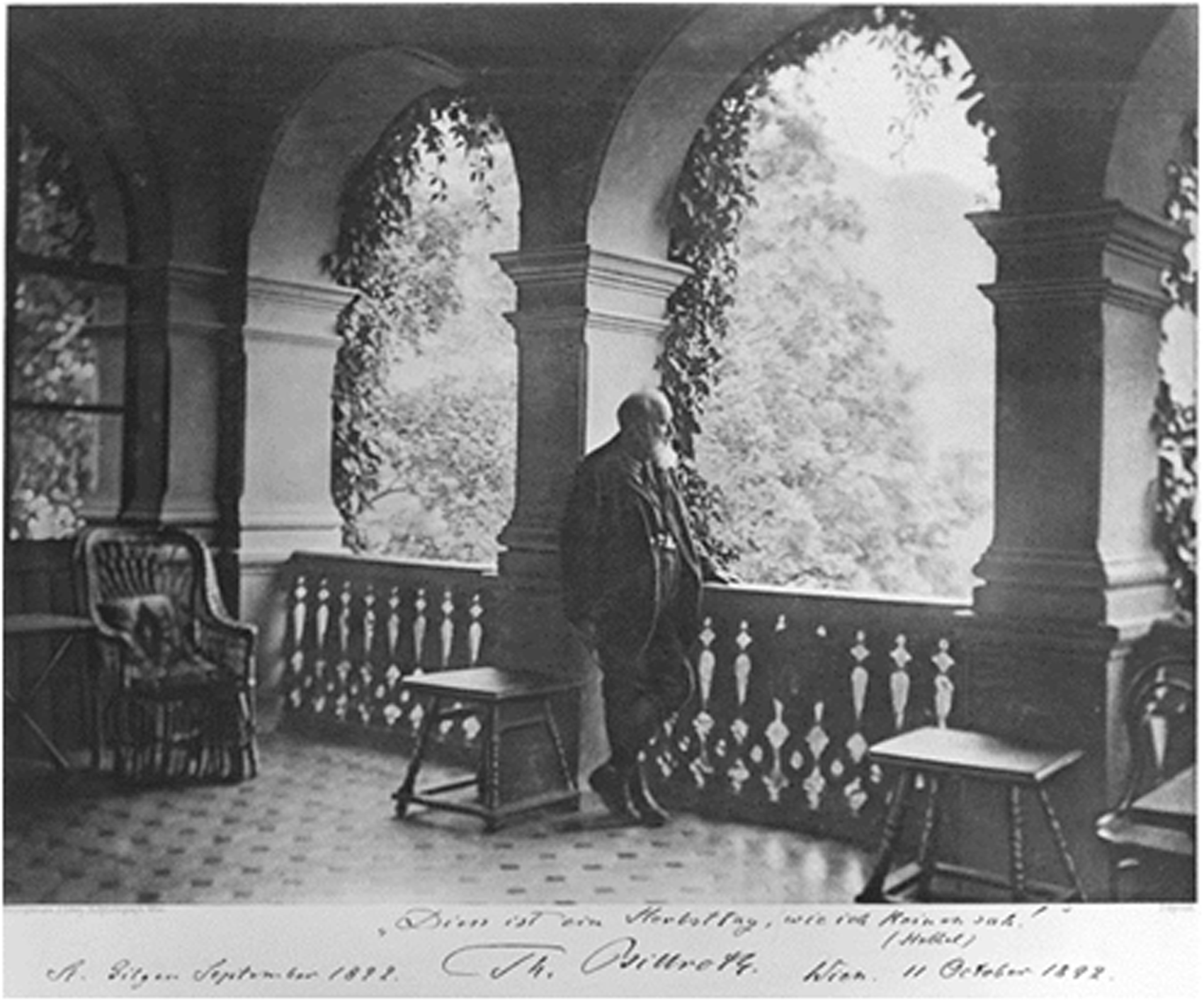
Theodor Billroth (1829–1894) on the veranda of his villa in St. Gilgen. ÖNB Wien, Inv.–Nr. NB 530238-B.
Letters kept in the Josephinum Collections of the Medical University of Vienna and in the manuscript collection of the Vienna town hall library show his extensive relationships with scientists, artists, and intellectuals. In particular, Meynert maintained extensive contacts with writers, this was maybe because of his father’s relationships, but also because of his own interests. The addressees of the letters included many famous writers of the time, such as Karl Emil Franzos, Adolf von Wilbrandt (1837–1911), Ludwig August Frankl von Hochwart (1810–1894), Ludwig Foglár (1819–1889), Marie Eugenie delle Grazie (1864–1931), Helene Bettelheim (1857–1946), Eufemia von Kudriaffsky (1820–1881) or Marianne Hainisch (1839–1936), but also Ferdinand (1833–1887) and Sophie Lotheissen (1861–1919), Moritz Necker (1818–1893) or Constantin von Wurzbach (1818–1893).
A contemporary journalist commented on Meynert: “One can say without exaggeration that from the sixties to the nineties there were not many important intellectual circles in Vienna with whom Meynert was not in some relationship”. 31 Florentine Galliny (1845–1913), a childhood friend of Meynert’s, called him a “well-known and popular personality”. 32 Another journalist called him “undisputedly one of the most ingenious and stimulating causeur’s in the Austrian scholarly world.” 33 The biography published by his daughter Dora Stockert-Meynert is based on personal memories and is still considered an important document of that time. For example, Rossbacher (2003) used it as a resource to describe intellectual relationships in Vienna at that time. 34
Meynert was invited to the most important salons of Vienna. 35 However, sources report that he was not only a frequent guest in the “Salons of Littrow, Miller, Lieben and Wertheimstein”, but also at the “pub evenings at the ‘Ente’”. 36 This circle in the Golden Duck played a decisive role in establishing positivism in Vienna.37,38
Marie Eugenie Delle Grazie, herself an important writer, dramatist, and poet, also reports wonderful evenings at Meynert’s villa in Klosterneuburg, near Vienna. She remembers Meynert as an intellectually stimulating person who preferred to discuss topics of science and art with his friends “over a glass of Rieslinger.” 39 According to Florentine Galliny, Meynert especially had an affinity to Shakespeare, Calderon, and Charles Dickens, but also for Goethe and Schiller. Finally, he was also an admirer of Nikolaus Lenau (1802–1850), August von Platen (1796–1835), Friedrich Rückert (1788–1866), Pierre-Jean de Béranger, and his teacher Gabriel Seidl.
Above all, Meynert was in love with the “Old Viennese popular theatre” (“Alt-Wiener Volkstheater”), and especially with its representatives Ferdinand Raimund (1790–1838) and Johann Nestroy (1801–1862).
32
Meynert was considered to be an expert on the Austrian playwright Nestroy. It is therefore no wonder that the journalist and literary historian Moritz Necker asked him about Nestroy for his research.
40
In 1891, Necker finally published an important biography of Nestroy.
41
This work was the starting point of his career as a literary historian. Meynert’s preference is said to have gone so far that he might have ended every conversation with a quote from Nestroy. A contemporary journalist wrote about Meynert’s famous predilection for Nestroy: Hardly anyone else lived in Vienna who placed this actor-poet as highly as Meynert did. He almost knew all his pieces by heart and used the highlights from them with surprising quick-wittedness. The position of his father as co-editor of Bäuerle’s “Theaterzeitung” made it easy for him to go to the theater in his boyhood and youth, and his familiarity with the Viennese Aristophanes dates from this time.
42
Poetry and brain anatomy
Often an attempt was made to establish a connection between his “poetic affinity” and the theses of his research. Erna Lesky describes him as a “strange mixture of an artist and a natural scientist” 13 and his student Auguste Forel (1848–1931) thought that Meynert, the poet, expressed “the high value of imagination in research”. Although some of his assumptions ultimately turned out to be wrong, Forel thought that important suggestions and ideas were the result of his particular approach: “Science doesn’t advance without imagination; imagination connects the thoughts and creates new paths. You have to keep that in mind when evaluating Meynert.” 43 Gabriel Anton, 44 Theodor Ziehen (1862–1950), 45 Alois Höfler (1853–1922) 46 and finally also Franz Seitelberger 47 and Karlheinz Rossbacher 48 argued in a similar way. Dora Stockert-Meynert also suggests that his “affinity to poetry”, that Meynert himself mentioned in his curriculum vitae, 5 also influenced his work as a researcher: “His nature […] [also] inspired poets because he himself was one who was able to see the hidden secrets of nature with a visionary imagination.” 14 Meynert himself already wrote in a letter to Billroth: “Just as Socrates says that a cobbler also needs philosophy, I was daring enough to think that science, too, requires something related to poetic production if it goes beyond the description and begins to include something like knowledge”. 49
Finally, Meynert was famous for his complex style of writing, likely influenced by his affinity for poetic expressions. Meynert’s style was criticized by colleagues, such as Wilhelm His (1831–1904). In a letter to Auguste Forel (1848–1931), His complained, “Writings like those by Meynert, Flechsig, and so many others are written in a style that makes it extremely difficult to read.”
50
Theodor Billroth frankly admits in a letter to Meynert, “I confess, it is laborious work to follow the expression of your train of thought, and I know many people feel the same way.”
49
Similarly, Meynert’s student Ludwig Edinger (1855–1918) was amazed at how Bernard Sachs (1858–1944), who worked in Meynert’s laboratory between 1882 and 1883, was able to translate Meynert’s Psychiatry (1884) into English, saying “How did you manage to translate Meynert? We Germans can’t understand his language.”
51
In contrast, various scholars have also emphasized Meynert’s haunting style of presentation. Wilhelm Jerusalem (1854–1923) remembers Meynert in this way: Then he goes to the blackboard and creates a schematic drawing of the brain structure with a few strokes. Although it is not easy work to follow him at his ever-increasing pace, the attention remains high. When he then often ends with a beautiful poetic phrase that is certainly not contained in Büchmann,
b
,
c
we are almost overwhelmed by all the great thoughts.
52
Meynert often enlivened his medical work with poetic additions, although that was not entirely unusual in the 19th century. Supporting Phelps’ idea of anatomy and metaphor, Meynert quoted Goethe’s Faust in order to make his theory of brain functions understandable through metaphor.
This relates, in particular, to Meynert’s “association fibers.” Meynert discovered a fibre connection between the individual nerve cells, which he called, based on the concept of association psychology, an association-fibre. Association-fibres connect different areas of the cortex and the “memory images” within each other. They create a “kind of network”
54
with which the individual nerve cells communicate. To do justice to the model of association psychology, he had to explain how memory and association can be realized on the basis of this network. In Meynert’s model, the elementary faculty of memory is taken over by individual nerve cells. They ensure that sensations remain in the form of “memory images.” For Meynert, “memory (…) is a fundamental property of the brain cell”.
54
Association-fibres are responsible for producing perceptions from individual sensations, for they connect the individual nerve cells both within the individual brain centres and the different brain centres as such. Therefore, optical sensations, which are stored in the visual sphere, can be associated with acoustic sensations, which are stored in the auditory sphere. To get closer to the concept of “association fibers”, Meynert quotes Goethe’s Faust: Zwar ist’s mit der Gedankenfabrik Wie mit einem Weber-Meisterstück, Wo ein Tritt tausend Fäden regt, Die Schifflein herüber hinüber schießen, Die Fäden ungesehen fließen, Ein Schlag tausend Verbindungen schlägt. Is like a master-weaver’s fabric, Where the loom holds a thousand threads, Here and there the shuttles go And the threads, invisibly, flow, One pass serves for a thousand instead. Goethe, Faust I, Scene VII, 1920–1925.
In fact, in relation to the Goethe quotation, certain parallels between the tissue that emerges in the course of the weaving process and contemporary representations of neural networks can be drawn, as the illustrations below show. The first figure is from Becher’s “Brain and Soul,” and it looks very similar to a tissue. The third figure is from Sigmund Exner’s (1846–1926) “Entwurf zu einer physiologischen Erklärung der psychischen Erscheinungen” (“Draft for a physiological explanation of mental phenomena”) (1894), which is regarded as the first exemplification of a neural network on the basis of a schema (Figures 4 to 6).
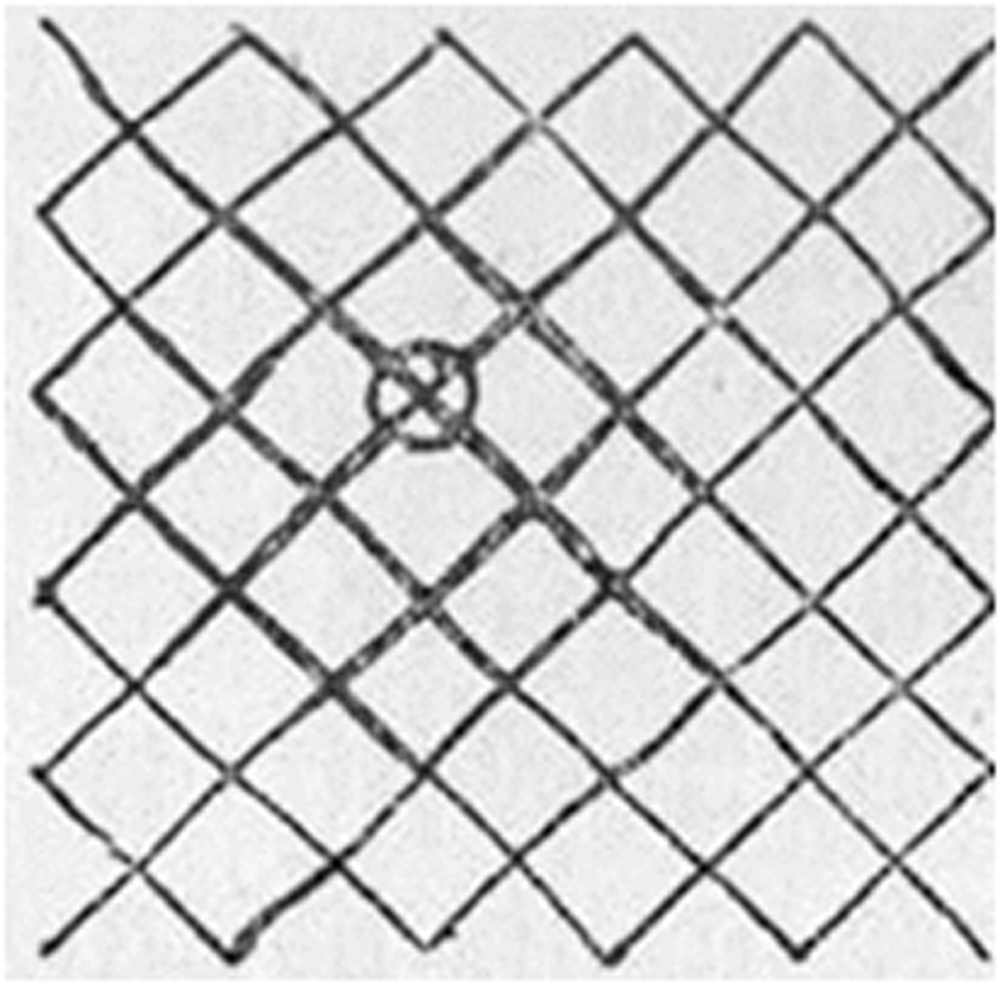
From Becher E. Gehirn und Seele. Heidelberg: Carl Winter, 1911, p. 171.
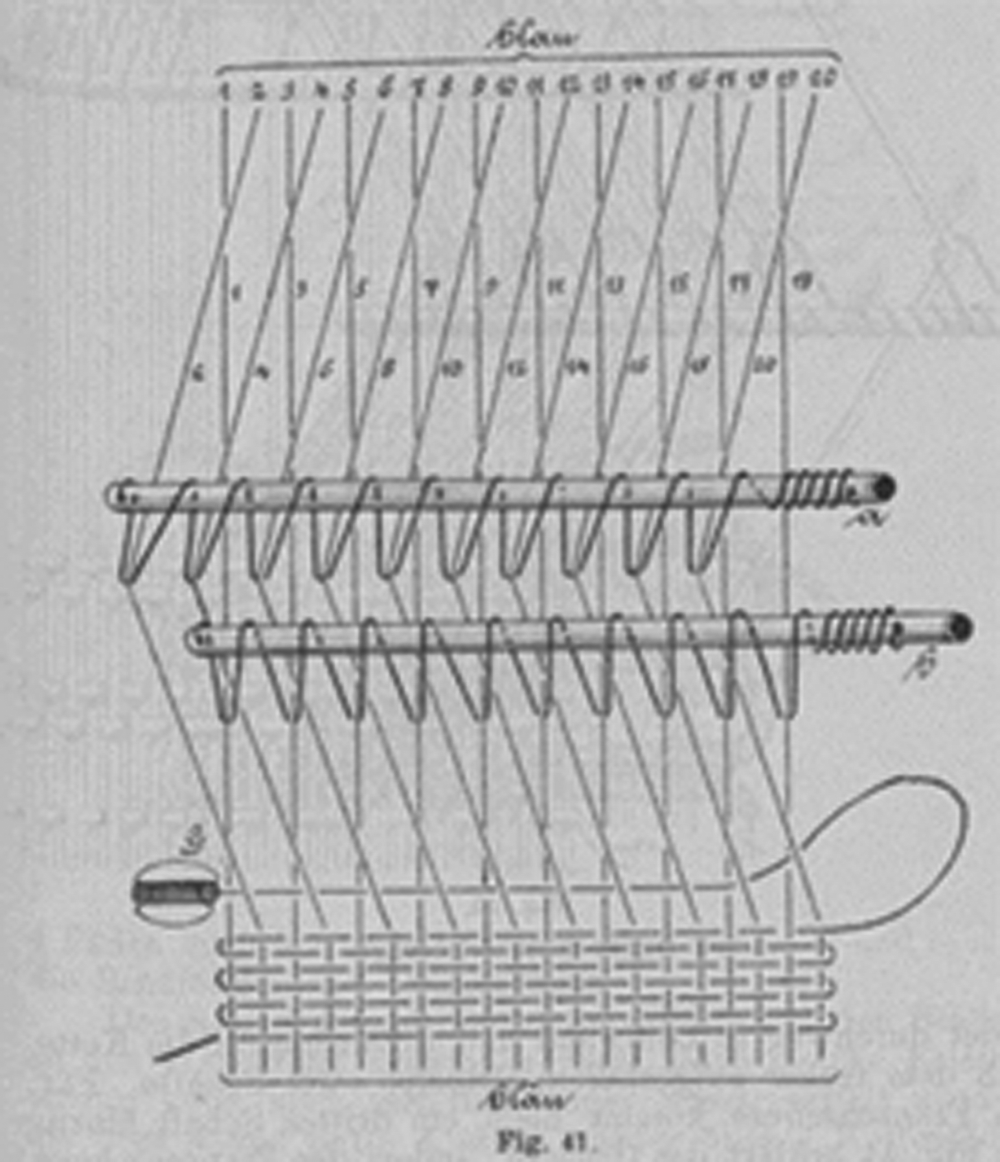
Schematic diagram of a loom. From Braulik, A. Altägyptische Weberei. Dingler’s polytechnisches Journal 1899; 311: 175–180, p. 177.
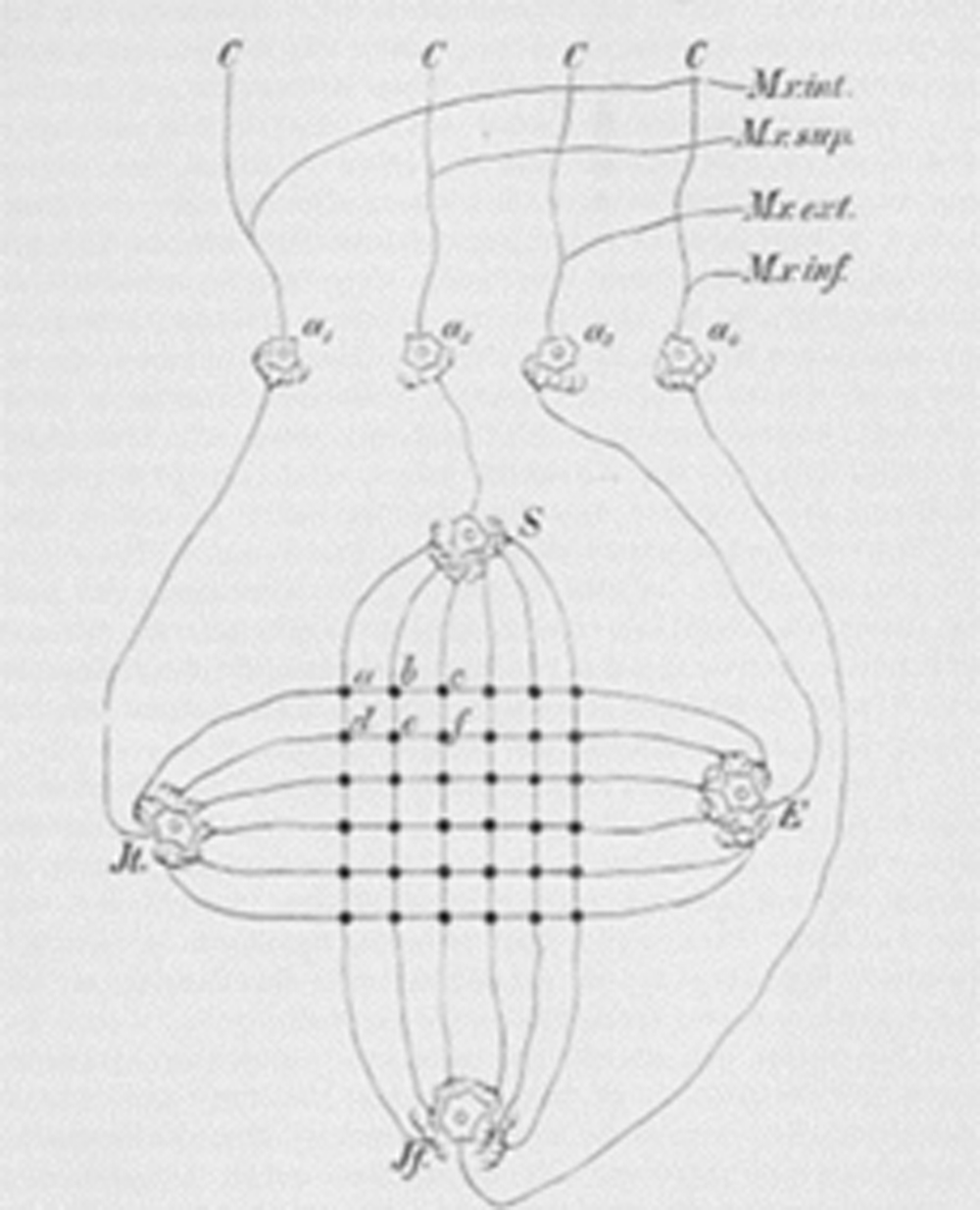
From Exner S. Entwurf zu einer physiologischen Erklärung der psychischen Erscheinungen. Leipzig: Deuticke, 1894. p. 193.
Conclusion
This paper presented an analysis of previously unknown archival materials that showed Meynert was significantly shaped by his family background and the surrounding intellectual environment. For the first time, this paper was able to prove the thesis that Meynert considered imagination to have also played a major role in the natural sciences by citing an original quotation of Meynert that went in that direction. This assumption was deepened by showing how Meynert used a quote from Goethe’s Faust as an analogy to arrive at an understanding of the brain’s anatomical structure.
Meynert was later accused of practicing “obscure brain mythology.” Initially, “brain mythology” was a smear word for the attempt to describe mental function out of anatomical discoveries, specifically for Meynert’s “anatomical constructions” 58 respectively because he “left the field of the purely anatomical”.59,60
From today’s perspective, Meynert’s detractors may have been partly right, though Phelps reasonably argued that Meynert’s combination of anatomy and metaphor in the sense of a “material-discursive circuit,” which belonged simultaneously to science and imagination, also plays a certain role in current discussions. 53 In this context, it is also important that we consider that this accusation was formulated by a special direction in psychiatry that was generally very skeptical about an anatomically oriented psychology. 61 This is largely unexplored in the discussion so far. Jaspers was the author of the most famous variant of the accusation of “brain mythology,” which we can find in his work General Psychopathology. He wrote the book in Munich under Franz Nissl (1860–1919), “in the shadow of Kraepelin,” because the department “was completely Kraepelinian through and through”. 62 Nissl, who used “brain mythology” for the first time with reference to Flechsig’s lecture “Brain and Soul” (1894), 63 rejected any assumption about possible functional significance, including neuron theory, which was at the time controversially discussed and considered unverifiable. 64 Meanwhile, other researchers like Meynert’s scholar Ludwig Edinger, who had an intensive correspondence with Nissl about this matter, 65 defended neuron theory as a “heuristic hypothesis of the highest quality”. 66
Ultimately, the inclusion of at least a pinch of Meynert’s specific approach actually seems unavoidable to be able to achieve scientific progress.
Footnotes
Declaration of conflicting interests
The author(s) declared no potential conflicts of interest with respect to the research, authorship, and/or publication of this article.
Funding
The author(s) received no financial support for the research, authorship, and/or publication of this article.

a.
One English article by Whitrow “Theodor Meynert (1833–1892): his life and poetry” discusses Meynert’s affinity for poetry. The article is more of an analysis of Meynert’s poetry in relation to events in his life. 1
b.
An edition that deals with archive sources on the life and work of Meynert was recently published in: Theodor Meynert (1833–1892). Selected Archive Sources on Life and Work” in European Yearbook of the History of Psychology (EYHP) 6 (2020), 131–188.
c.
Georg Büchmann (1822–1884) was the editor of a famous book called Geflügelte Worte, a German language treasury of quotations.