







Abstract
Ramon Emeterio Betances (1827–1898) stands out as a pivotal figure in the fields of ophthalmology and public health in nineteenth-century Puerto Rico. Trained in France, he returned to the island in 1856, where he treated cholera patients and introduced vital public health interventions. Known as ‘The Physician of the Poor’, Betances dedicated himself to serving marginalised populations, including enslaved individuals. He co-founded a secret abolitionist society and championed Puerto Rican independence, actions that resulted in multiple periods of exile. Together with his contemporaries, Betances helped lay the groundwork for ophthalmology in Puerto Rico, significantly advancing medical knowledge, improving public health infrastructure, and inspiring successive generations of clinicians. His enduring legacy is recognised for its profound medical, social, and political impact.
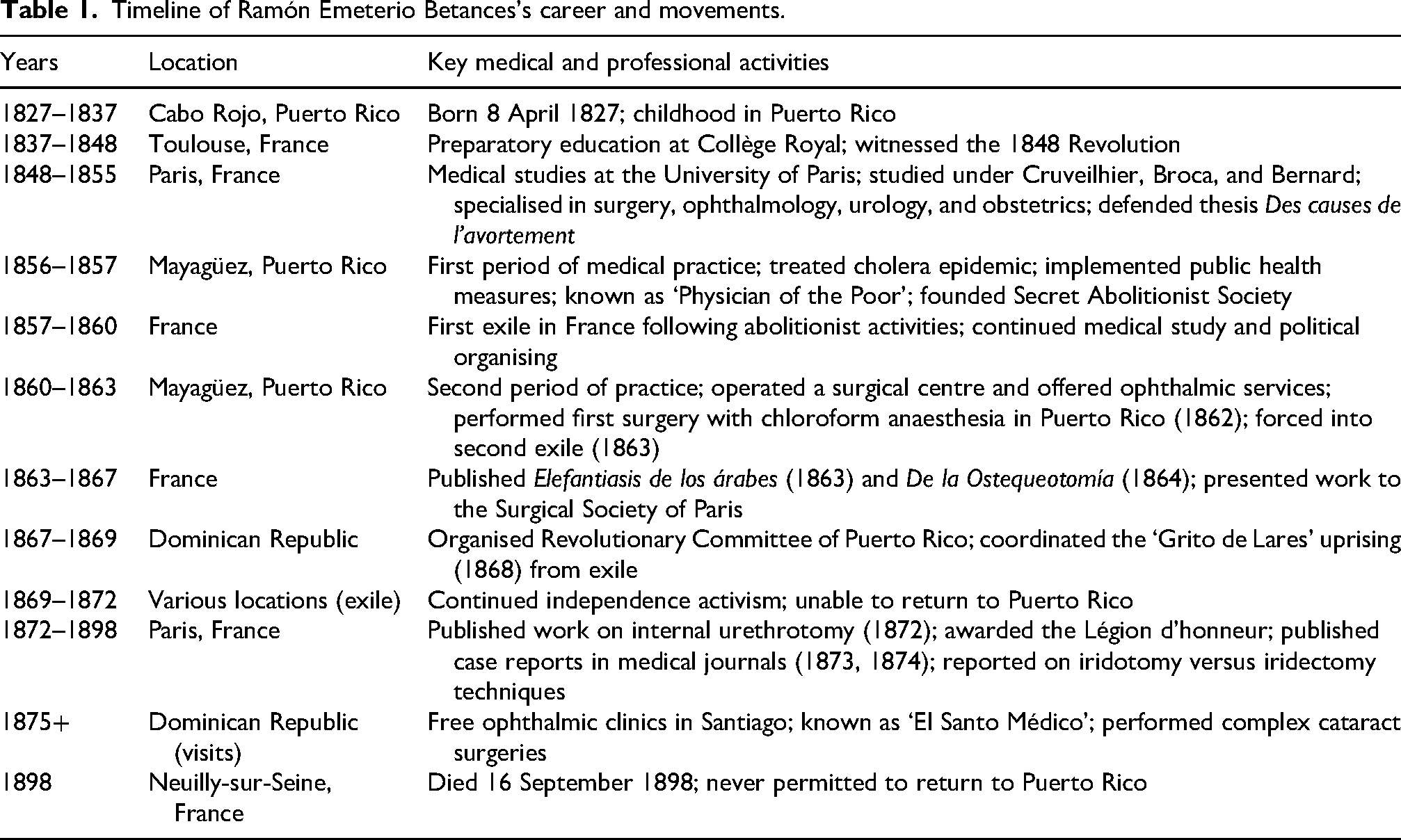
Table 1 summarises Betances's principal locations and professional activities throughout his career.
Timeline of Ramón Emeterio Betances's career and movements.
Introduction
Ophthalmology's early development in Puerto Rico
The earliest documentation of ophthalmology practice in Puerto Rico dates back to 1801, when French physician José María Budet advertised his expertise as a general physician, oculist, and obstetrician in San Germán. 1 Despite having his medical credentials confiscated en route to the island, Budet was permitted to practice due to his Roman Catholic background and the urgent need for ophthalmic and obstetric services. 2 His medical acumen made him indispensable in this colony of Spain with limited specialised care.
In 1818, the Venezuelan physician José María Vargas led the distribution of the smallpox vaccine across Puerto Rico, establishing important standards for its conservation and delivery. He conducted this campaign in partnership with the Superior Board of Health based in San Juan, which at that time was the main health authority on the island. Puerto Rico did not yet have an autonomous, unified island-wide health board; instead, San Juan's board functioned as the leading government-appointed body overseeing major public health measures, with its responsibilities extending in practice across the island.3,4 This collaboration marked one of the earliest examples of coordinated public health initiatives under the colonial Spanish system, with the Superior Board of Health in San Juan playing a central administrative and regulatory role. 5 The following year, Vargas performed Latin America's first documented enucleation on a 14-year-old with a probable ocular tumour. By 1829, Spanish physician Oller advertised cataract surgeries, enucleations, and other ophthalmic treatments in Puerto Rico. Later, in 1854, Cuban physician Carlos Federico Carrión du Villard also offered oculist services on the island. 2
Ramón Emeterio Betances: Pioneer, physician, and advocate
In 1856, Ramón Emeterio Betances (Figure 1) 6 emerged as Puerto Rico's first native-born ophthalmologist, differentiating him from foreign practitioners who previously established ophthalmic care. Beyond his surgical skill, Betances was a public health visionary and a passionate advocate for social reform. Born on 8 April 1827, in Cabo Rojo, to a father from the Dominican Republic and a Puerto Rican mother, 7 he was sent at age 10 to study at Collège Royal in Toulouse, France. Betances was sent to France for education, a common destination among Puerto Rican elite families. His native language was Spanish; he became fluent in French during his studies. There, he earned degrees in letters and sciences, paralleling a modern high school diploma. 8 His exposure to the 1848 Revolution in France deepened his commitment to justice and equity.
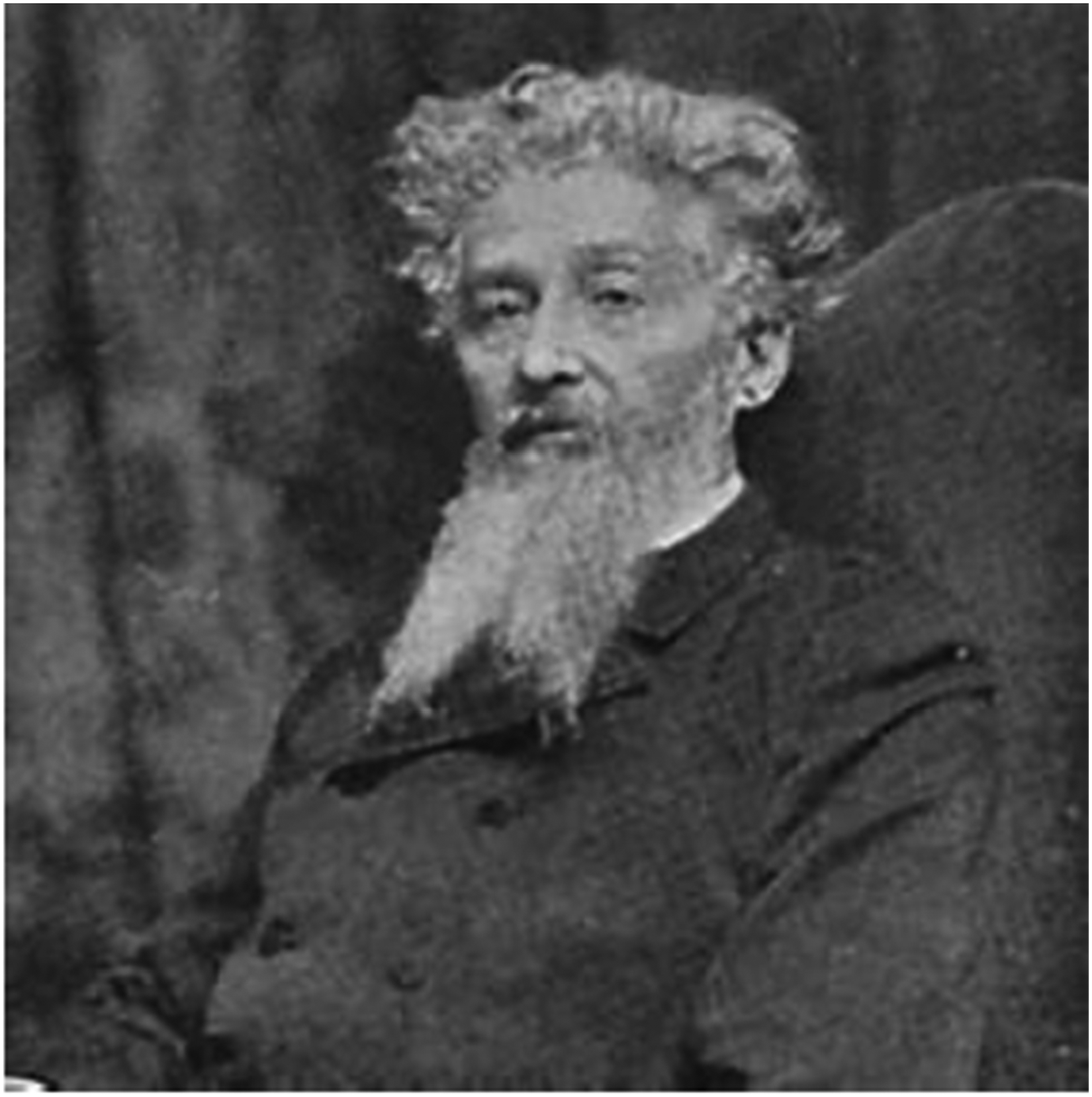
Ramon Emeterio Betances. 6 Credit: Wikimedia Commons. Ramon Emeterio Betances sitting (photograph on the Internet). Wikimedia Commons (cited 4 December 2024). Public Domain. Available from: https://commons.wikimedia.org/wiki/File:Ramon_Emeterio_Betances_sitting.jpg.
At the University of Paris, Betances trained under pioneers such as Jean Cruveilhier, Paul Broca, and Claude Bernard, who established the concept of ‘Le milieu intérieur’, a precursor to homeostasis, a term formalised by W.B. Cannon decades later. 9 In 1855, Betances defended his doctoral thesis, ‘Des causes de l’avortement’ (‘The Causes of Miscarriage’), which examined the surgical and pathological causes of miscarriage and cemented his reputation as an accomplished physician and obstetric surgeon. 7 As a student, he collaborated with Puerto Rican scholars in Spain, contributing to the founding of ‘The Society for the Collection of Historical Documents of the island of San Juan de Puerto Rico’, which paved the way for an academic approach to Puerto Rican history. 8
Medical leadership amid cholera and social injustice
Returning to Mayagüez in 1856, Betances confronted a cholera epidemic head-on, overseeing care for 24,000 people, including enslaved and impoverished groups, alongside three colleagues: Claudio Federico Block, José María Arroyo, and José Francisco Basora. 8 Defying prevailing customs of bloodletting and emetics, 10 he prioritised care based on severity rather than social status, advocating for additional measures to safeguard the people, such as handwashing, patient quarantine, and boiling drinking water and cow's milk before consumption. 11 In his public health writings, he described boiling milk from tuberculous cows to prevent fatal infection in healthy young women, and he advised boiling water for household consumption by those at risk but not yet ill, rather than focusing heat treatment on fluids from patients already infected with cholera. 11 These recommendations show that he understood boiling as a preventive barrier at the level of common food and drink, even though he did not articulate a formal germ theory. 11 Betances's writings during the cholera epidemic demonstrate empirical recognition of the effect of boiling on contagion, in line with emerging scientific awareness in the 1850s, and mark him as an early adopter of infectious disease control measures in the Americas. 11
There came a time during the cholera outbreak when he was the only physician available to serve the patients, labouring day and night for his compatriots in Mayagüez. 1 In 1857 ‘El Pais’ newspaper from Madrid titled Dr Betances as ‘The Physician of the Poor’. His abolitionist stance led him to found the ‘Sociedad Abolicionista Secreta’ (Secret Abolitionist Society) to purchase the emancipation of enslaved children through secret efforts, at the time for 25 pesos, roughly US$912.85 in 2025 currency. 8 Threatened by authorities for these actions, he fled to France in 1857.
Ophthalmology, exile, and political activism
Between 1860 and 1863, Betances returned to Puerto Rico and established a surgical and ophthalmic practice in Mayagüez. His unwavering criticism of Spanish colonial policy, particularly Spain's military intervention to re-annexe the Dominican Republic during the Spain–Dominican Republic War (1861–1865), made him a target of government persecution. As a consequence of his outspoken opposition to Spanish rule, he was forced into exile again in 1863. While in France, he continued to advance medical science by publishing works such as ‘Elefantiasis de los árabes’ (1863) and ‘De la Ostequeotomía’ (1864), contributing to the fields of urology and orthopaedics. Betances's involvement in the ‘Grito de Lares’ uprising (1868) was shaped by his political exile. 12 The declaration of the Republic of Puerto Rico, with its now famous flag embroidered by Mariana Bracetti 13 (Figure 2), and the liberation of enslaved individuals who joined the uprising demonstrated a powerful assertion of self-determination and social justice, beliefs by which Betances lived.
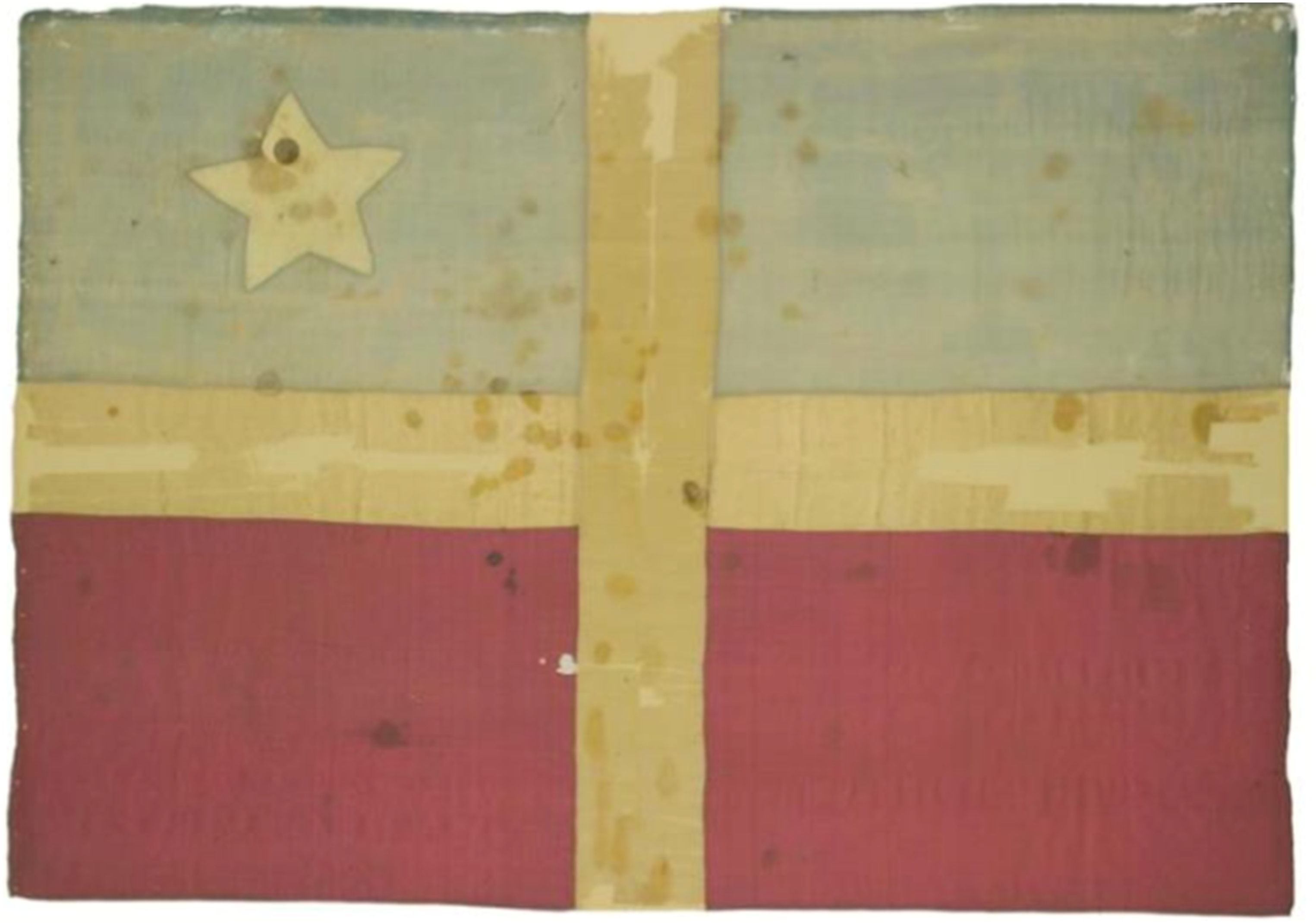
The original ‘Grito de Lares’ flag (Puerto Rico's first flag), silk, 33" × 47", embroidered by Mariana Bracetti in 1868 based on Dr Ramón Emeterio Betances’ design. Currently preserved at the Museum of History, Anthropology, and Art, University of Puerto Rico, Río Piedras. 13 Credit: Museo de Historia, Antropología y Arte, UPR Río Piedras; image reproduced with permission.
This exile corresponded with his most prolific period of medical research and publications, particularly on ophthalmic surgery and public health. During this period, he lived in the Dominican Republic, from where he helped coordinate the Grito de Lares uprising in western Puerto Rico, 14 while many of his medical works were published in France. In 1872, his impactful work on internal urethrotomy earned him France's highest civilian honour, the Légion d’honneur.
Contributions to ophthalmic surgery and thought
Honoured for his research and medical works in various fields, Betances's contributions to ophthalmology were both distinguished and pioneering. His formal education in Paris equipped him with cutting-edge knowledge, which he introduced to the Caribbean, a region previously lacking highly skilled professionals in the specialty. In 1862, Betances performed Puerto Rico's first documented surgical operation using chloroform anaesthesia, assisted by Venezuelan anaesthesiologist Pedro Arroyo, an event well attested in historical sources. 15 Although primary documentation exists for this landmark operation, no surviving records specify anaesthetic use in individual eye surgeries or other procedures by Betances beyond general accounts of his innovative practice. Nevertheless, given his reputation for adopting progressive techniques, Betances likely used anaesthesia for both ophthalmic and general operations, significantly advancing the safety and humanity of surgery in Puerto Rico.
During his tenure in Puerto Rico, Betances was more focused on clinical ophthalmic practice and public health work than on publishing scholarly articles. He treated numerous patients with preventable or treatable eye conditions, which were common due to widespread poverty and lack of accessible care. After relocating to France in the early 1870s, Betances became a frequent contributor to Parisian and Latin American press, both as a reporter and a technical communicator. ‘El Americano’, a Parisian newspaper, noted his reporting on figures such as Herman Snellen and the innovative procedures undertaken at Louis de Wecker's ophthalmology clinic. 11
One notable 1873 report on a surgical case in the 'Gazette Hebdomadaire de médecine et de chirurgie’ described Betances's observations of a complex operation for entropion, a condition in which the eyelid turns inward, and the eyelashes irritate the eye. In that article he detailed the patient's ocular history and explained how Wecker chose not to remove all of the eyelid's supporting tissue, adopting a less aggressive approach consistent with the recommendations of Karl Ferdinand von Richter, and he drew attention to newer eyelid techniques popularised by H. Snellen that used carefully placed incisions and sutures to rotate and stabilise the lid for better functional and cosmetic results. 11
In his 1874 article, ‘Réhabilitation d'une opération réalisée au XVIIIe siècle. Son amélioration et sa prompte vulgarisation’, Betances revisited an artificial pupil operation first described in the eighteenth century and analysed its refinement and wider dissemination in contemporary practice, highlighting Wecker's improvements to the technique. He recommended simple or double iridotomy for eyes with abnormal lens curvature, opaque lenses, or cataracts and argued that iridotomy was often preferable to iridectomy for preserving vision, particularly when inflammatory debris was present; he cautioned that iridectomy could lead to additional vision loss through unnecessary iris removal and set out the advantages of iridotomy in both technical execution and cosmetic outcome. 11 Betances's preference for relatively conservative iridotomy over broad iridectomy reflected ongoing nineteenth-century debates about how much iris tissue could be removed while maintaining a functional pupil. 11 His indications and arguments are consistent with later glaucoma literature, which also weighs the size and configuration of the pupil against preservation of iris structure and function.11,16
After his successes in Paris, Betances returned to the Dominican Republic in 1875, where he was known as ‘El Santo Médico’ for his ability to restore sight to patients deemed untreatable, often performing complex cataract and eye surgeries for free. The Dominican press, including ‘El Orden’, praised his daily public clinics and his humanitarian approach that brought advanced European techniques to local communities. 8 Throughout his career, Betances dedicated himself to sharing knowledge, reporting in the press on medical techniques, and mentoring others in the safe and effective care of eye disease. His teachings and personal example raised the standards for ophthalmic care, medical education, and scientific communication in Puerto Rico.
Conclusion
Ramon Emeterio Betances and his contemporaries were trailblazers who shaped Puerto Rico's ophthalmological and public health landscape. Their pioneering work inspired generations and intertwined medical progress with social justice. While Betances spent a significant portion of his career in exile, his foundational role in establishing ophthalmic practice in Puerto Rico is evidenced by his pioneering clinical work and mentorship during his years on the island. Today, Betances is rightly honoured as a tireless physician of the poor and a visionary leader whose imprint on Puerto Rican medicine and society remains indelible. April 8th is recognised annually in Puerto Rico as a day to commemorate Dr Betances's legacy in public health and medicine.
Footnotes
Acknowledgements
We gratefully acknowledge the Museo de Historia, Antropología y Arte of the University of Puerto Rico for granting permission to reproduce the image included in this article.

Ethical consideration
This article does not contain any studies with human or animal participants.
Consent to participate
Not applicable.
Consent for publication
Not applicable.
Author contributions
Mariela M. Rosas González: Data collection and writing – original draft, review and editing. Stephen G. Schwartz: Conceptualisation, data collection, and writing – review and editing. Christopher T. Leffler and Victor M. Villegas: Data collection, proofreading, and writing – review and editing. Eduardo C. Alfonso: Data collection, writing – review and editing, and final approval.
Funding
The authors received no financial support for the research, authorship, and/or publication of this article.
Declaration of conflicting interests
The authors declared no potential conflicts of interest with respect to the research, authorship, and/or publication of this article.
Data availability
All data analysed in this study are included within this published article. Materials used in this historical analysis were derived from publicly accessible sources; no proprietary or restricted datasets were generated or analysed.
References
Supplementary Material
Please find the following supplemental material available below.
For Open Access articles published under a Creative Commons License, all supplemental material carries the same license as the article it is associated with.
For non-Open Access articles published, all supplemental material carries a non-exclusive license, and permission requests for re-use of supplemental material or any part of supplemental material shall be sent directly to the copyright owner as specified in the copyright notice associated with the article.


