







Abstract
The role of nursing faculty members in charge of ethics education is important. Although all nursing students receive the same bioethics education, their experiences differ, related to ethical qualification, which depends on the personal socialization process. This Korean study aimed to provide nursing faculty members with the basic data to help them develop as bioethics experts and provide nursing students with knowledge to improve their ethical decision-making abilities. We used a survey design to assess recognition of bioethical issues and ethical qualification in nursing students and faculty members. A total of 1225 undergraduate students and 140 faculty members participated in this study. The results revealed that nursing students and nursing faculty members generally understood the seriousness of various bioethical issues and both considered the most serious issue to concern abortion. Ethical behavior can be improved by education, and accordingly, nursing ethics should be a mandatory subject, rather than an elective one.
Introduction
Bioethics places great importance on autonomy and human dignity. 1 The study of bioethics presents ethical activity guidelines in the nursing field. 2 Nursing is a caring profession; its caring ideal and ideology (ethic and ethos) in education and practice will affect how humanity develops and evolves morally. 3 In this manner, bioethics and nursing are studies that focus on human-centered and ethical concepts. However, bioethical issues caused by the development of medical practices can become confusing in terms of the ethical values and humanity inherent in nursing. That is, the development of innovative medical skills such as cloning, fetal discrimination, and artificial insemination have improved the overall quality of life, but yet possess an ambivalence, in which such skills can be construed as ‘infanticide’ when the principles of bioethics are not understood or adhered to.4–6
Bioethical issues in nursing are immediate problems that require ethical judgments to be made, such as do not resuscitate (DNR) orders. 7 In such urgent situations, nursing students need to maintain human dignity and high levels of ethical knowledge. The recognition of bioethical issues and the ethical qualifications of nursing students are directly related to their professional nursing activities after graduation; such bioethical issues are the standard for making informed and sound ethical judgments and are based on ethical problem-solving processes. 8 Through education, ethical decision making is formed. In particular, morality and ethics are not inborn, but are cultivated through education and training. Nursing ethics education improves recognition of bioethical issues and helps in the reduction of moral distress and unethical activity within nursing. 8 Previous studies have already revealed that within an ethic of care, students who have received in-depth training have higher ethical standards than those who have not received such training. 9 Thus it is essential that an ethics curriculum is provided for nursing students.
This means that the role of nursing faculty members in charge of nursing ethics education is very important. However, there is an ongoing dispute that nursing faculty members generally lack interest in an ethic of care and their students’ ethical values. 8 While nursing faculty members are often caught up in this debate, they remain responsible for continually developing and providing bioethics education in step with the developments of medical practice. 10 Bioethics has provided independence within biomedicine, and while recently there has been an increase in bioethics experts and ethics committees, this remains only a slowly growing trend for universities. 11 However, bioethics of nursing science has only been a part of the study of ethics, rather than an independent academic field. Thus, experts with an appropriate level of up-to-date knowledge are still lacking. 2 Similarly, a low proportion of bioethical education focuses on nursing, and there is a lack of training and experience for educating nursing faculty as experts. Because bioethics education plays an important role in the formation of ethical values and moral judgment ability of nursing students, nursing faculty must become experts in order to further knowledge of bioethics for future generations. In nursing science, which possesses a philosophy of care emphasizing and respecting human life, recognition of bioethical issues and the cultivation of ethical values are essential. In the clinical field, where ethical dilemmas are common, nursing educators must exert themselves to instill in nursing students the ability to adhere to moral principles and practice morally correct behaviors.
Therefore, this study aimed to comprehend the current level of ethical and moral qualifications in nursing faculty members and provide nursing faculty with the basic data to help them develop as bioethics experts, as well as provide nursing students with the basic data to improve ethical decision making in their future clinical careers.
Method
Research design
This study used a survey method to assess the recognition of bioethical issues and ethical qualifications of nursing students and faculty, and this study was the first part of national survey of bioethics education in nursing in Korea.
Participants and data collection
Data were collected from both nursing students and faculty members. Different data collection methods were used for each group: students filled out paper questionnaires at their schools, while faculty members answered online questionnaires via e-mail. A total of 1225 undergraduate students and 140 faculty members participated in this study.
Survey of nursing students
A convenience sampling method was used to recruit 1225 undergraduate nursing students in Korea. Recruitment materials were sent to the deans of 38 nursing schools, and 12 of them agreed to participate in this study. The questionnaire package included a consent form, questions on their current and required bioethics education, and three instruments to test the extent of their bioethics education.
A nursing faculty member was contacted in each school to conduct the data collection. One of the authors explained to the faculty member the purpose and method of the survey, and faculty members then recruited participants in their school from all grades, as evenly as possible. A total of 1500 questionnaire packages were distributed, and 1225 completed questionnaire packages were used for the data analysis.
Survey of nursing faculty
Nursing faculty was surveyed via e-mail, as e-mail addresses could be found on school websites. The participants were provided with information regarding the study and were asked for voluntary participation. The online questionnaires were designed to allow participants to proceed only when they had agreed to participate; and the questionnaires were to be finished and returned only when they had completed all items. A total of 1370 e-mails were sent out, and 140 of them were returned.
Measurement
The recognition of bioethical issues questionnaire
To survey the recognition of bioethical issues, the questionnaire consisted of two parts: (a) the self-rating of knowledge of bioethics and (b) the seriousness of bioethical issues. First, knowledge of bioethics was assessed with a four-point Likert-type scale (’do not know at all’ to ‘know very well’). For the seriousness of bioethical issues, two questionnaires were used: (a) a four-point Likert-type scale questionnaire of general recognition of seriousness of bioethical issues (‘not serious at all’ to ‘very serious’) and (b) a 17-items questionnaire of recognition of specific bioethical issues.
For the contents of the recognition of specific bioethical issues, we reviewed an extensive literature of bioethics (16 books and eight articles). First, a total of 39 topics were identified. They were then ordered on the basis of the frequency of discussion in the reviewed sources. In total, 11 topics had been discussed in more than six books, and thus were considered as essential components for bioethics education.
Content validity was assessed by a panel of 17 faculty members who had experience of teaching nursing ethics. A board of 17 nursing faculty assessed the validity of the other 28 topics, using a 3-point rating scale (0 = not relevant, 1 = somewhat relevant, and 2 = very relevant). The assessment resulted in the elimination of eight topics with a low level of validity, which included topics with a low level of adequacy (M < 1.0) such as ‘animal ethics,’ ‘environmental ethics,’ ‘ethical issues in health care systems,’ and ‘attitudes toward illness’ and topics for which the raters’ opinions differed widely (standard deviation (SD) > 0.7) such as ‘suicide,’ ‘child abuse,’ ‘nursing ethics in the future,’ and ‘substance abuse.’ The remaining 31 topics were then processed in order to combine topics with overlapping themes. For example, ‘fetal diagnosis and fetal rights’ and ‘the beginning and definition of life’ were combined into one topic. Ultimately, 17 topics were selected to assess the seriousness of bioethical issues. For the reliability of this scale, Cronbach’s α in nursing students was .86 and that in faculty was .91.
Ethical qualification questionnaire
To identify the contents of nurses’ ethical qualification, 50 nurses working in a university hospital were asked to answer one open-ended question: ‘What virtues are necessary to provide good nursing care?’ These 50 nurses were working in medical–surgical departments, intensive care units, obstetric, and psychiatric departments in the hospital. Their answers were analyzed qualitatively, and the following 23 virtues were identified: honesty, conscience, respect for the dignity of life, love, caring, critical thinking, positive thinking, attitude without prejudice or discrimination, moderation, understanding of patients and human beings, self-reflection, empathy, verity, responsibility, reliability, sincerity, passion, endurance, respect for the privacy of patients, compassion, judgment, spirit of service, and gratitude (appreciation and thankfulness for one’s own physical, spiritual, and economic situation).
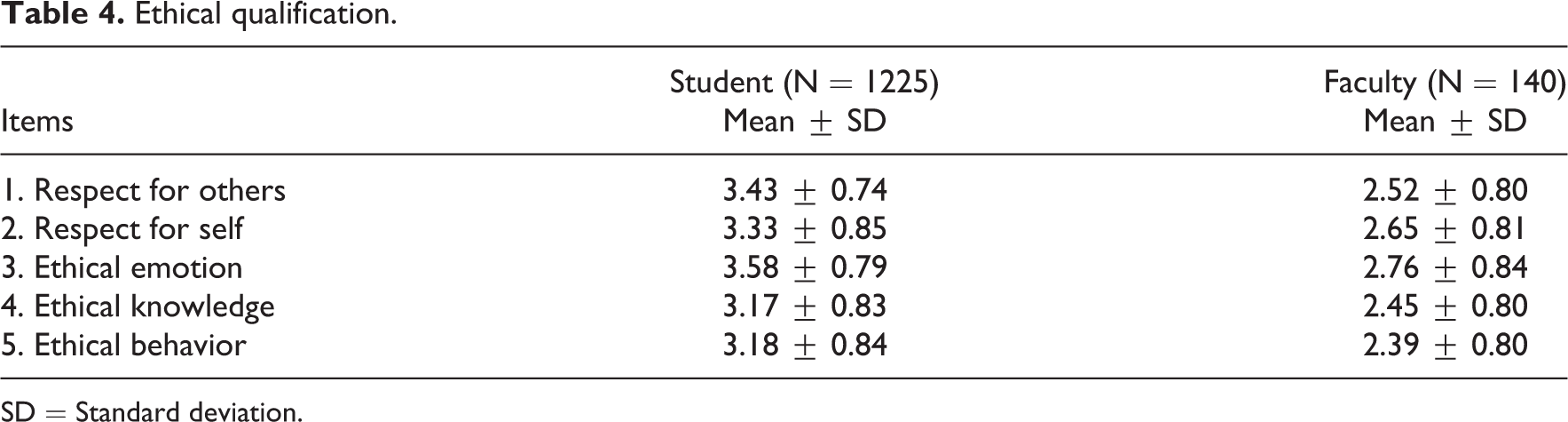
The 23 virtues were categorized into five themes: respect for others (a sense of community), respect for self, ethical emotion, ethical knowledge, and ethical behavior. Cho et al. 12 regarded love, care, and reliability as parts of the domain of one’s respect for others, while Huh et al. 13 considered responsibility, service, and respect for others as constituting a sense of community. Greenawalt 14 classified verity, reliability, and honesty as parts of the domain of respect for others; and endurance, gratitude, and sincerity as reflecting the domain of respect for self. This study considered respect for others and a sense of community as one category. Emotions, knowledge, and behaviors that are considered ethical were defined according to the classified codes of ethical knowledge, ethical emotion, and ethical behavior as presented by Lickona. 15 The categorized contents of nurses’ ethical qualification are presented in Table 4. For the ethical qualification questionnaire, Cronbach’s α was .79 in nursing students and .76 in faculty.
Data analysis
The data were analyzed using descriptive statistics, analysis of variance (ANOVA), and t-test with the SPSS 19.0 program. For all analyses, p < .05 was considered statistically significant.
Results
Sample characteristics
The sample characteristics of the participants are presented in Table 1. The average age of the students was 20.5 (SD = 2.2) and most were female (93.3%). Students were either in associate or bachelor degree programs, with the majority in the latter (68.7%). Sophomores were the most represented in the group (33.1%), followed by freshmen (26.4%), juniors (22.4%), and seniors (18.0%). Students were attending schools mostly in Jeolla Province (28.6%), Seoul (25.9%), and Gangwon Province (18.3%), and most students identified themselves as having no religion (43.1%) or were Protestant (34.0%).
Sample characteristics.
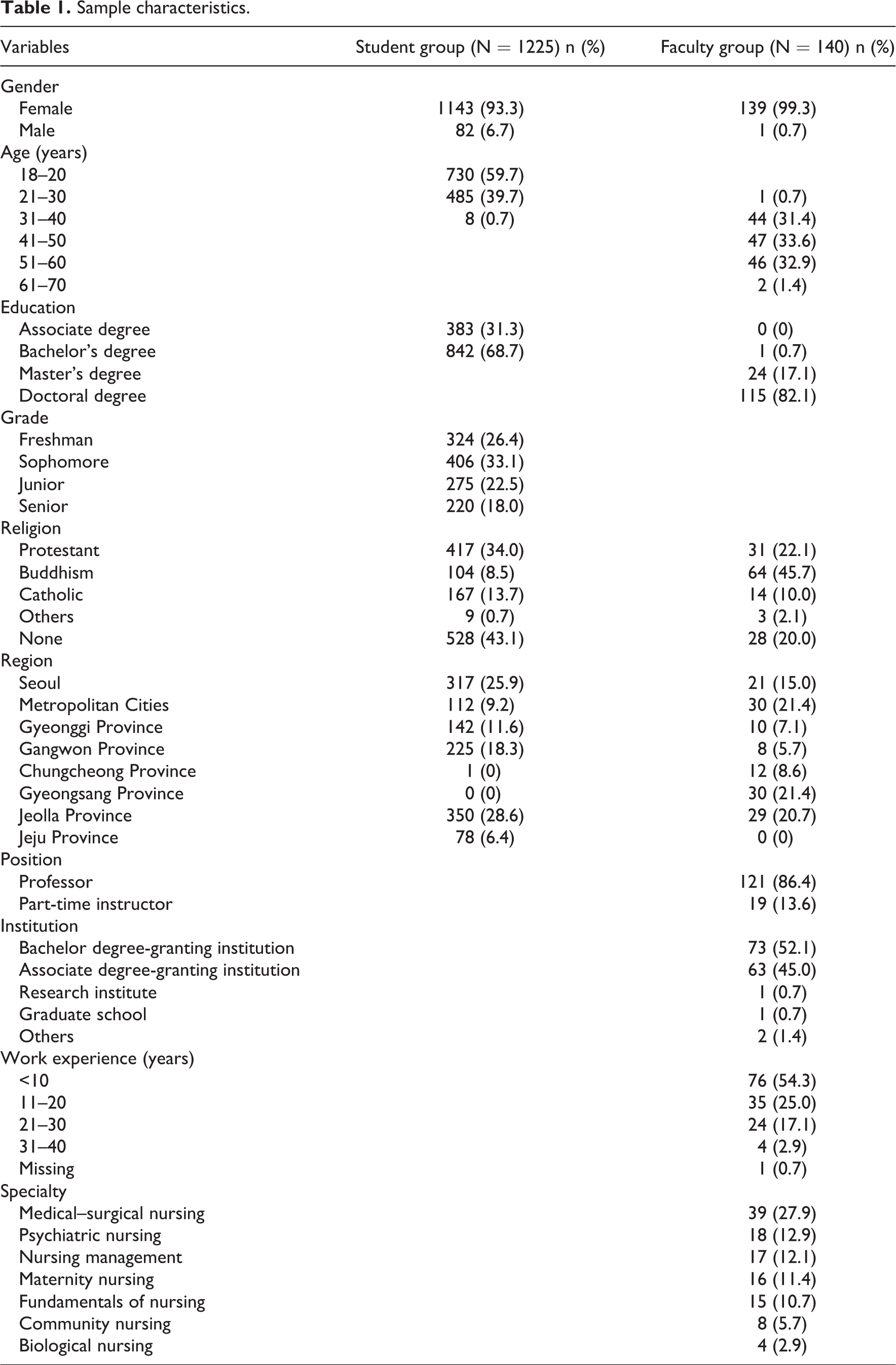
For the faculty group, all but one participant were female (99.3%) and the average age was 45.6 (SD = 8.1). Every participant, except one held a doctorate (82.1%) or a master’s degree (17.1%). Most were professors (86.4%) and the remaining were part-time instructors (13.6%). The participants’ average working experience was 11.6 years (SD = 9.1). For specialty fields, medical-surgical nursing was the most represented (27.9%), followed by psychiatric nursing (12.9%), nursing management (12.1%), maternity nursing (11.4%), and the fundamentals of nursing (10.7%).
Recognition of bioethical issues
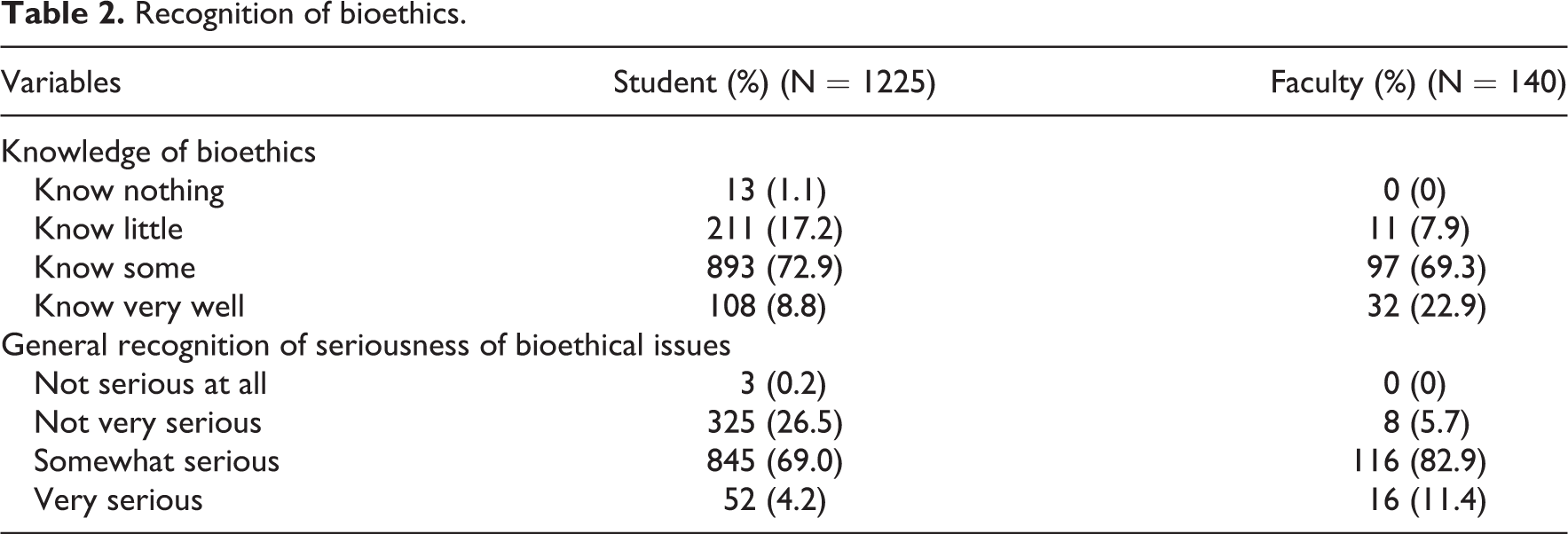
Tables 2 and 3 show how the participants ranked the recognition of bioethical issues. First, knowledge of bioethics was assessed: 13 students (1.1%) reported that they did not know at all about bioethics, 893 (72.9%) reported having some knowledge of bioethics, and only 108 (8.8%) answered that they had considerable knowledge of bioethics. In the faculty group, none of the respondents reported that they did not know anything about bioethics, 97 (69.3%) reported having some knowledge of bioethics, and 32 (22.9%) reported having great knowledge of bioethics.
Recognition of bioethics.
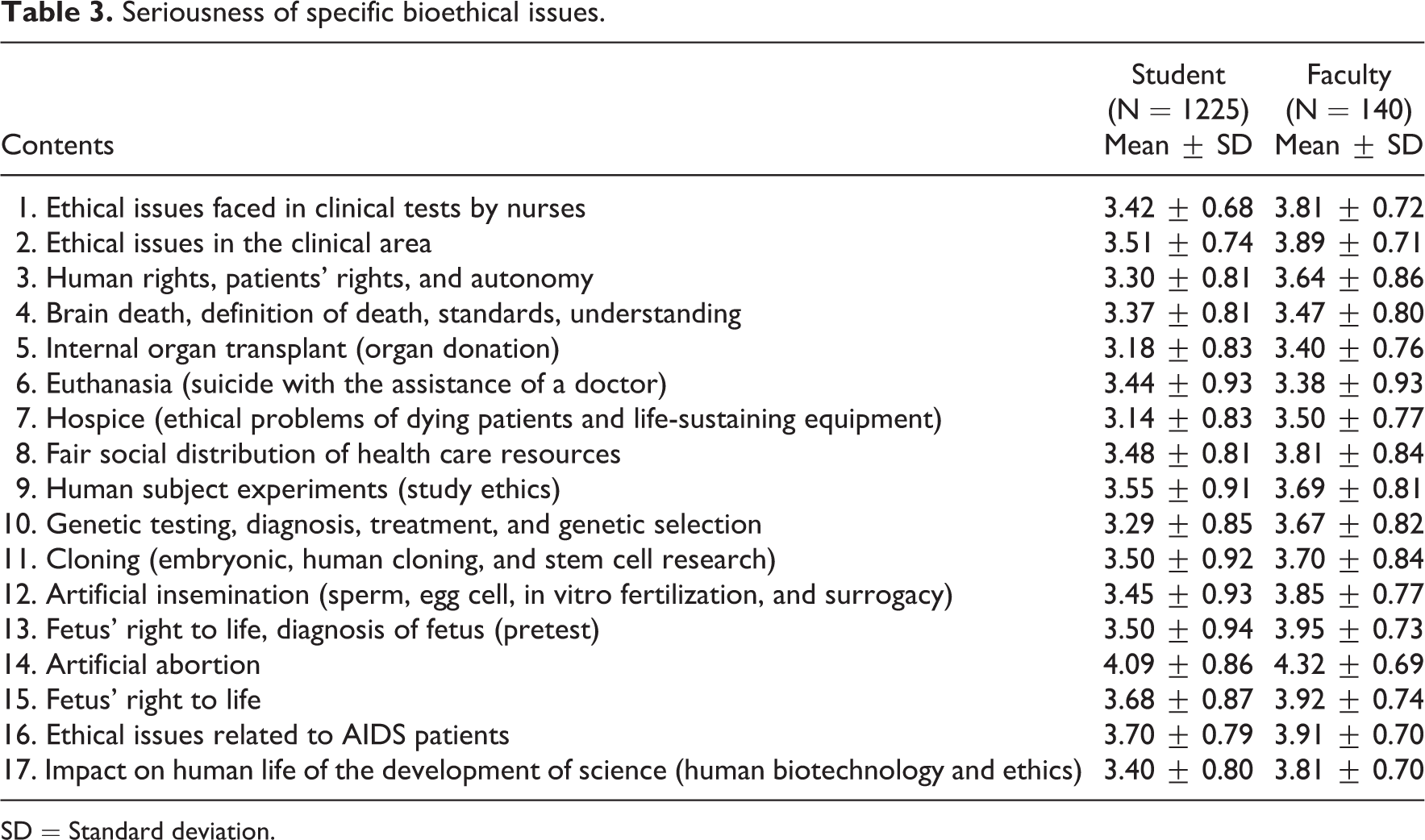
Seriousness of specific bioethical issues.
SD = Standard deviation.
For the seriousness of bioethical issues, two questionnaires were used. To the question about general recognition of the seriousness of bioethical issues, three students (0.2%) answered that bioethical issues were not serious at all, 325 (26.5%) answered that the issues were not very serious, and 845 (69%) answered that the issues were somewhat serious. In the faculty group, eight (5.7%) faculty members reported that bioethical issues were not very serious, but the majority of faculty members (82.9%) reported that the issues were somewhat serious.
Both nursing students and faculty answered that abortion was the most serious issue (Table 3). Students then responded that issues related to AIDS patients were the second most serious, while faculty members responded that the right to life of the fetus was the most serious issue.
Ethical qualification questionnaire
Table 4 shows how participants reported their five virtues. The means of ethical qualification scale were 3.34 (SD = 0.60) in the student group and 2.56 (SD = 0.60) in the faculty group. Ethical emotion was the highest mean in both student (3.58, SD = 0.79) and faculty groups (2.76, SD = 0.84). The total score of ethical qualification was 16.7 (SD = 2.98) with a range of 5–25 in the student group and 12.8 (SD = 2.90) with a range of 5–25 in the faculty group.
Ethical qualification.
SD = Standard deviation.
Differences in variables according to demographic characteristics
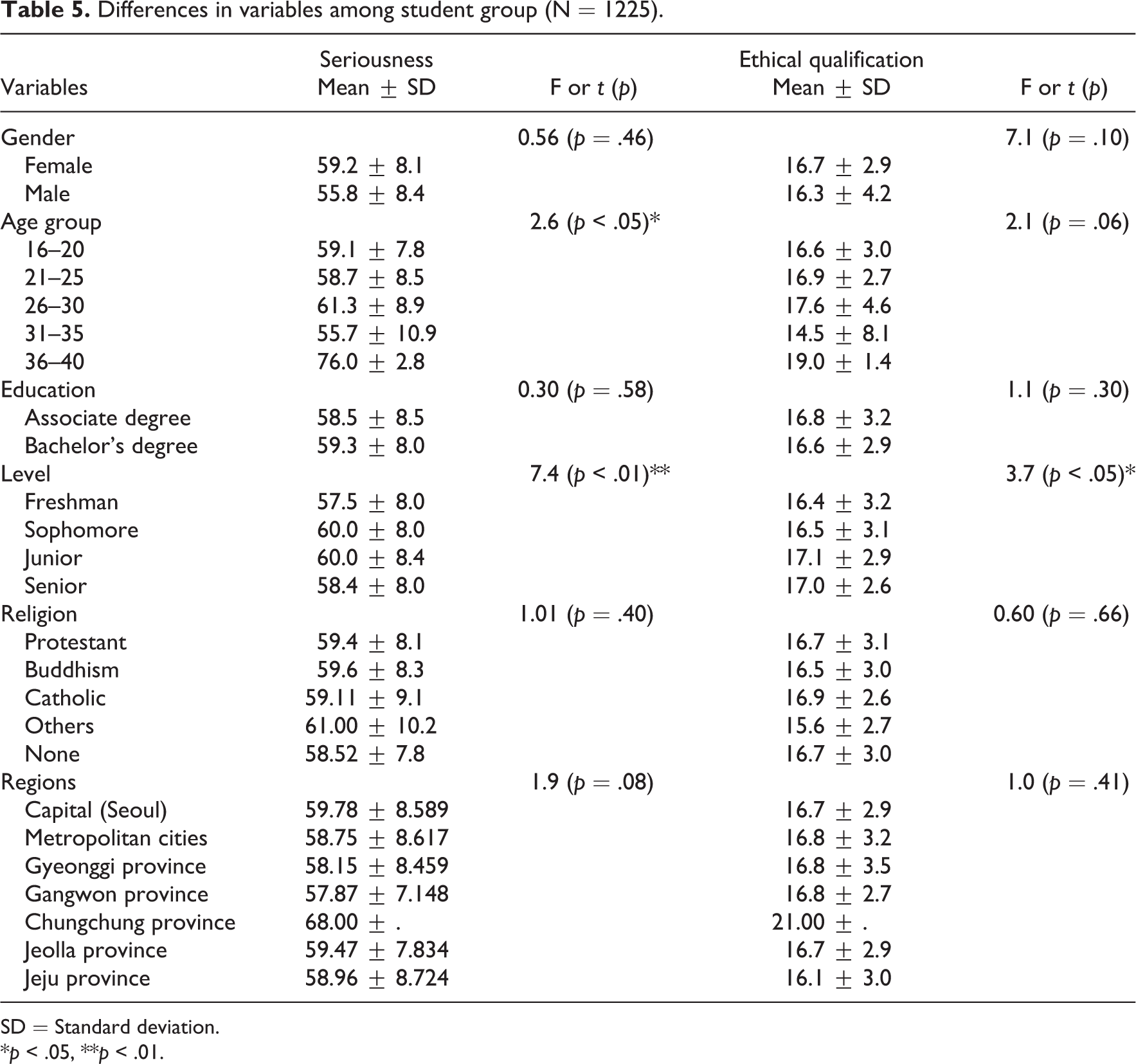
Table 5 presents the differences in variables according to the demographic characteristics in the student group. There was a significant difference (F = 2.6, p < .05) according to age in how seriously they judged bioethical issues. While the mean of seriousness in the 36–40 years age group was 76.0 (SD = 2.8), the mean of seriousness in the 31–35 years age group was 55.7 years (SD = 10.9). There were also significant differences in seriousness (F = 7.4, p < .01) and ethical qualification (F = 3.7, p < .05) according to grade level. Interestingly, junior students had higher scores in seriousness (mean = 60.0, SD = 8.0) and ethical qualification (mean = 17.1, SD = 2.9) compared to other students.
Differences in variables among student group (N = 1225).
SD = Standard deviation.
*p < .05, **p < .01.
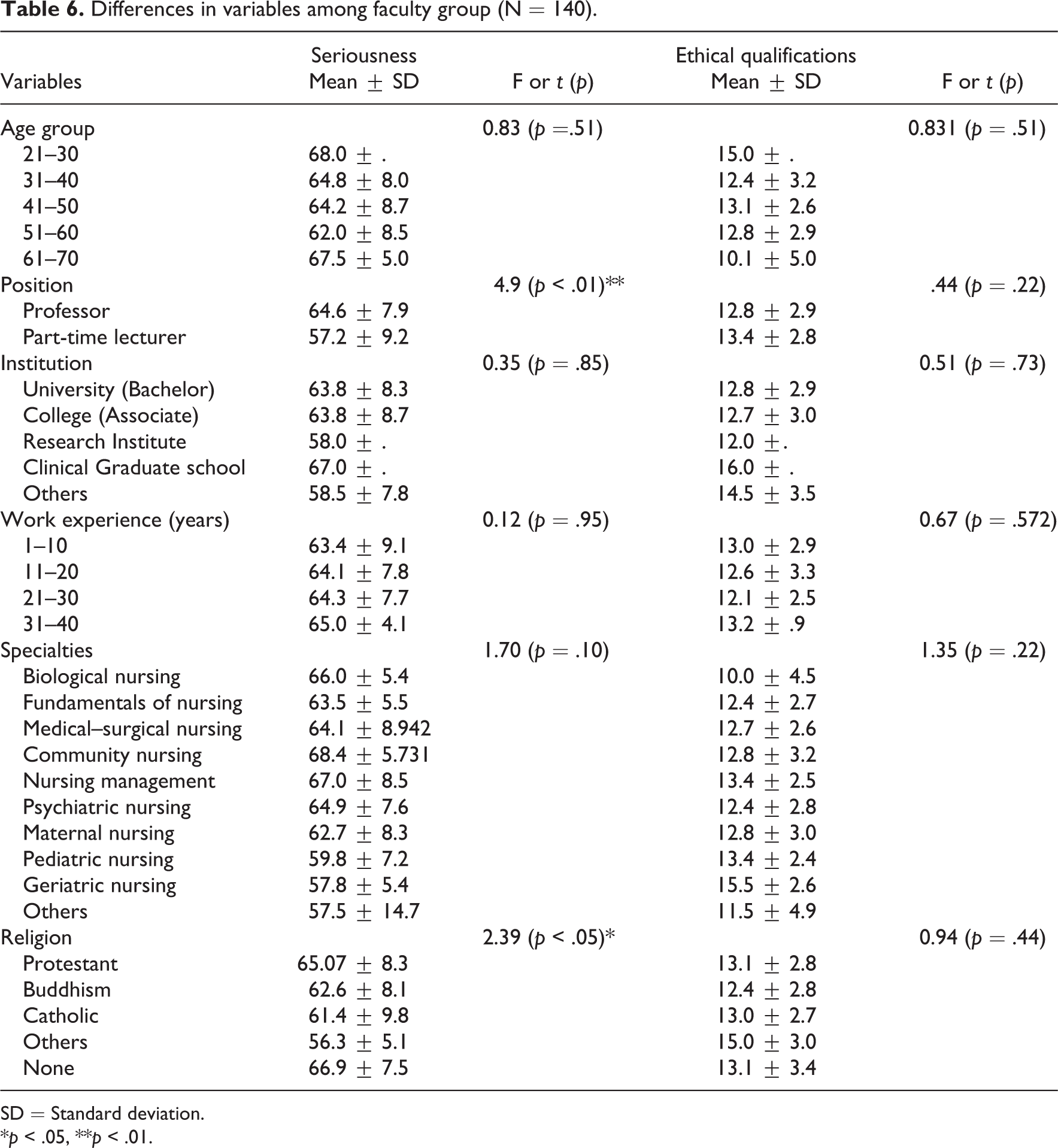
Table 6 presents the differences in variables according to the demographic characteristics in the faculty group. There were significant differences in seriousness according to academic position (F = 4.9, p < .01) and to religion (F = 2.39, p < .05).
Differences in variables among faculty group (N = 140).
SD = Standard deviation.
*p < .05, **p < .01.
Discussion
This study examined Korean nursing students and their recognition of the issues related to bioethics, and ethical qualifications of nursing faculty members. Nursing students and faculty members said that abortion was the most serious problem in bioethics. The right to life of the fetus, prescreening of the fetus, and the seriousness of the right to life of the fetus appeared to be ranked second, third, and fourth, respectively; thus, it seems that issues related to fetal rights are considered very serious. The results of this study are consistent with numerous study results concerning bioethics in Korea. However, Yang et al. 2 conducted a study in Taiwan, which has a Confucian culture similar to that of Korea, and found that life care and euthanasia were considered among the most serious issues in bioethics.
Bioethical issues tend to occur when practitioners adhere to unique cultural beliefs, traditions, and moral decision-making, as well as conventional ethical decision-making processes. 5 This implies that an understanding Korea’s culture is imperative when raising and addressing bioethical issues. Population control policies initiated in in Korea in 1962, were implemented to ensure that families had no more than two children, using abortion and family planning programs at the government level; these measures are now severely restricted. 16 However, fetal sex testing and artificial abortions are today arried out illegally. These bioethical issues have been attributed to one aspect of Korea’s traditional culture called namasunho sasang (a preference for boys) and its family-oriented Confucian culture. Respect for an individual’s cultural diversity is included in the bioethical decision-making process. 17 Accordingly, in order to address the seriousness of this issue, both a respect for cultural life and an ethical approach are needed. To improve Korea’s bioethical problems related to abortion and fetal rights, an international comparison of cases must be organized, and there is a need to integrate western bioethical concepts with those developed in the Confucian cultures of East Asia. 18
Most importantly, fetal sex testing is a very serious bioethical problem related to abortion and concerns the method of selection by secondary sexual characteristics.For women this is a problem that can cause infection, internal bleeding, infertility, uterine perforation, and even death. A cultural approach should be the premise on which to improve this unjust social and cultural atmosphere and help to initiate a change in the sexist culture and consciousness. As bioethics obeys the principles of justice and fairness, the moral discrimination directed at women violates these ethical principles. Thus, the development of a bioethics education curriculum appropriate to an Oriental culture will enable the prevention of the observed trend of making light of life—both that of women and their children—that regularly occurs in society.
In this study, AIDS was the second most serious bioethical issue. While treatments for AIDS are constantly developed and mortality and morbidity have declined remarkably, bioethical recognition of AIDS has not improved. Due to the dramatic reduction of HIV/AIDS prevalence, bioethicists’ interest in the disease and subject has been declining. 19 However, the bioethical issues related to AIDS are still severe. These issues affect every generation, including mothers and their infants, young children, and other adults.20,21 In South Africa, patients who were identified as having AIDS were often killed or expelled from their own community. 20 AIDS patients tended to experience a twofold pain, knowing that they have brought shame on their family and needing to face the social stigma and prejudice themselves. Bioethical issues related to AIDS are not trivial, able to be solved solely by education. In developing and developed countries, national prevention programs and prejudice reduction campaigns should be integrated. For example, the US government has engaged in the fight against AIDS at the national level by implementing a variety of policies. In some states, pregnant women receive mandatory AIDS testing and if not, compulsory HIV testing for newborns is soon to be implemented. 22 These prevention techniques have had a considerable effect on the reduction of AIDS prevalence and need for treatment. 19 Korean AIDS patients and their families also hope that a public approach through the media will soon be implemented. 23 Nursing faculty members and nursing students in Korea must assume a key role in ensuring the social equality of AIDS patients. A bioethical approach for AIDS involves the political and social issues ranging from underdeveloped to developed countries, and nursing faculty members and students should take charge of its support and advocacy.
Nursing faculty and students must also recognize the ethical issues in various clinical fields and the severity of these issues. Nursing students engaged in actual clinical practice often experience unethical behavior, witness nurses subjected to the unethical attitudes of doctors, and meet these situations themselves. 18 Actual nursing care requires considerable patience and sincerity, and nurses should be compliant with hospital policies, doctors, and nurse managers in such situations of ethical conflict. This is related to the ethical behavior highlighted by this study. Nursing students received low scores among five ethical qualification items, and nursing faculty members had the lowest scores. Ethical behavior refers to an attitude of moderation, without ties to any interest group, and is related to the nurses’ authority. We believe that nursing students who had witnessed these unethical situations should have considered the ethical issues involved to be more serious. Ethics education also includes the nurses’ decision-making process. The curriculum of decision-making identifies clinical problems faced by nursing students, analyzes and assesses them objectively, and then suggests possible solutions. An atmosphere that allows students to use these decision-making and assertiveness skills must be created in the clinical environment as early as possible.
In this study, both faculty members and students answered that the most important ethical qualification is ethical emotion. Ethical emotion is defined as conscience, emotion, empathy, self-reflection, and compassion. According to Watson, 24 the core concept of nursing and the moral obligation to protect and maintain human dignity are governed by feelings such as empathy and compassion. Care and reasoning for justice have been found to be highly correlated. 25 This implies that a nurse with high ethical qualifications can play the role of caregiver rather well. Gastmans 26 also argued that ethical concepts such as virtues and emotions should be taught during ethics education classes. For nurses, the ability to empathize is as important as logical judgment and is a virtue necessary for quality nursing practice. In order to be a good nurse, students should be able to balance a logical way of thinking with emotional understanding. In biomedicine, although curing disease and ensuring complete recovery are the main goals, empathy remains an essential virtue for medical students. 27 Similarly, empathy should also be acquired by nursing students through practice. 28 Therefore, nursing faculty members must explain the importance of moral emotions by means of ethics education, while nursing students must apply in practice what they learn in school.
Both nursing faculty and nursing students answered that the second most important ethical qualification is respect for others. The scores of this section from both faculty and students can be viewed as a positive indicator for equipping them with the virtues of good practice. According to the American Association of Colleges of Nursing (AACN), 29 the key values necessary for nursing are equity, human dignity, social justice, and altruism. Our results are favourable in terms of bioethics, in that the participants of this study placed a high value on altruism as an essential virtue for future nurses. It can eb concluded that nursing students think of respect for others as the second most important ethical qualification because they are typically at a point where they have developed the firm values that nurses should have, such as a spirit of service and sacrifice.
While it is unreasonable to compare the results of our ethical qualification measurement with those of other studies, it was still shown in other studies that the lower the grade level of nursing students, the higher the level of ethical qualification for justice and moral reasoning. 25 This probably reflects that younger students tend to have higher nursing synchronization and motivation. However, it is important to maintain the current level of ethical qualifications among future generations. Students’ continuing education should keep pace with their hospital’s or institutions’ own ethics education, so that their ethical qualification to become future nurses is not tarnished.
Consequently, the ethical education curriculum should be used actively to improve the recognition of bioethical issues and qualifications of nursing students. For this purpose, while the traditional education system has established a basis for theoretical education, there is still a need to develop the education of newer ethical standards. Traditional ethics education methods teach nursing students the necessary ethical vocabulary and concepts (ethical principles, judgments, methods of analysis, personality, virtues, and emotions), and then how to apply this comprehensive theoretical approach. 26 However, ethics education, including these traditional methods, should be approached on the basis of an understanding of the current culture of young nursing students. Today, that depends not only on institutional education regarding bioethics but also on information on bioethics transmitted through a variety of media, such as TV, internet, news, and medical plays and dramas. 30 In addition, smart phones and tablet PCs have led to innovative changes in nursing 31 by becoming sources from which nursing students can easily acquire information on the spot. These changes can be actively used in teaching bioethics to nursing students. Progressive changes can be made in various ways, such as initiating discussions after viewing an ethical dilemma scene of a popular medical drama. Innovations should be developed in order to attract the attention and interest of nursing students, as well as motivate them. Therefore, bioethics education must be developed in accordance with progressive science and technology in order to deliver the best possible education to future nurses.
Conclusion
This study conducted a large-scale research study in all areas of Korea concerning bioethics, examining both nursing students and nursing faculty members. It is believed that this data will be helpful in developing independent bioethics education material for nursing science. The concept of care is complex, and one of its important philosophies is not to make light of the decisions of life and death that nurses must make throughout their career. Although science develops continually and state-of-the-art technology is being introduced in medicine, there is no substitute for caring and ethical behavior. Ethical behavior can be enhanced and furthered through comprehensive education, and accordingly, nursing ethics should be a mandatory subject rather than an elective one.
Footnotes
Funding
This study was supported by Basic Science Research Program through the National Research Foundation of Korea (NRF) funded by the Ministry of Education, Science and Technology (grant number: 2011-0005725).
Conflict of interest
The authors declare that there is no conflict of interest.