







Abstract
Nurses are frequently confronted with ethical dilemmas in their nursing practice. As a consequence, nurses report experiencing moral distress. The aim of this review was to synthesize the available quantitative evidence in the literature on moral distress experienced by nurses. We appraised 19 articles published between January 1984 and December 2011. This review revealed that many nurses experience moral distress associated with difficult care situations and feel burnout, which can have an impact on their professional position. Further research is required to examine worksite strategies to support nurses in these situations and to develop coping strategies for dealing with moral distress.
Introduction
Nurses frequently make ethical decisions in the course of their work, even though they may not always be aware of doing so. While rarely in a position to control the actions of others, nurses must decide what their own moral actions should be in a variety of situations, including birth, illness, ageing, suffering and death of vulnerable patients. 1 Moreover, nurses, as patient advocates, support patients who undergo the outcomes of ethical choices made. Nurses make this possible with the help of more powerful agents in the healthcare system. 2 Their conflicting loyalties and responsibilities to patients, families, physicians and other nurses, as well as contextual constraints, further increase the likelihood that nurses will experience moral distress. 1,3–6
Moral distress in nursing practice has been identified and discussed at least since the early 1980s. Jameton 7 defined moral distress as negative feelings that arise when one knows the morally correct response to a situation but cannot act accordingly because of institutional or hierarchical constraints. In discussing moral distress, Jameton distinguished moral distress from other feelings such as moral uncertainty and emotional distress. McCarthy and Deady 8 explained distinctions between moral distress and emotional distress by giving a clear example: ‘Psychiatric nurses may, for example, be emotionally distressed while restraining a patient, but they are likely to become morally distressed only if they believe that restraining the patient is morally wrong’ (p. 256).
Wilkinson 1 developed the Moral Distress Model as a theoretical framework to guide studies and to provide an approach to identify the occurrence and ramifications of moral distress experienced by nurses. She defined moral distress as ‘the psychological disequilibrium and the state of negative feelings experienced when a person makes a moral decision but does not follow through by performing the moral behaviour indicated by that decision’ (p. 16). Corley 9 drew from Jameton’s work in defining the concept of moral distress as the physical and psychological pain and disturbing interpersonal relationships resulting from patient care situations in which a nurse makes a moral judgement regarding the correct course of action.
Hanna 10 defined moral distress as an act of interior aversion in response to a perceived threat to a known good (moral end) and to a perceived violation of a person. Moral distress can result in a disconnection from one’s self and others, although the violation may not be expressed. 10 An individual may experience moral distress after compromising his or her values, which are the bases of a person’s moral agency. If these compromises are negative and constant, healthcare professionals can become desensitized to moral distress or withdrawal from the perceived source of the harm. 11
Some scholars pointed out the lack of conceptual clarity of moral distress and argued the need for a reconceptualized understanding of moral distress. 8,12–15 Lützén and Kvist 14 described the limitation of Jameton’s explanations on moral distress by pointing out that his theory is insufficient to explain ‘relational elements in the whole process of moral distress’ (p. 17). Also, it is difficult to find an apparent definition of moral distress because the level of abstraction of a concept of moral distress is high. 14 Indeed, it has been found that different terms and meanings of moral distress have applied to some nursing studies. 11
A review of qualitative studies on moral distress in hospital nurses has been presented. 16 Qualitative evidence reveals that nurses experience moral distress when they fail to act as advocates for patients based on their moral choices while dealing with institutional constraints. The widespread unequal power structure in institutions aggravates the problem, sometimes leading to nurses resigning from the institution or profession. The effects of moral distress on nurses are systemic; that is, they affect their entire being. Nurses describe losing their self-worth, distress affecting their personal relationships, feelings of depression and physical symptoms such as heart palpitations, diarrhoea and headaches. 16
Considerable quantitative studies on particular aspects of moral distress in nursing have been conducted after Corley et al. 17 advanced their measurement instrument, the Moral Distress Scale (MDS). However, to our knowledge, a general review of moral distress in nursing based on quantitative studies is lacking. A better understanding of the frequency and intensity of moral distress experienced by nurses, as well as that of sociodemographic variables, sources, psychological responses and coping strategies concerning moral distress, may help us gain a more comprehensive view of the phenomenon of moral distress in nursing.
Aims
The aim of this review was to examine the quantitative empirical literature about moral distress experienced by nurses. In this review, we specifically addressed the following research questions: (1) what is the frequency and intensity of moral distress experienced by nurses? (2) what are the sociodemographic variables that influence the frequency and/or intensity of moral distress? (3) what are the sources of moral distress? (4) what are the psychological responses to moral distress? and (5) how do nurses cope with moral distress?
Design
We employed a quantitative methodological review using a narrative review design to provide overviews of moral distress experienced by nurses. We followed the methodology as described by the Centre for Reviews and Dissemination (CRD) for undertaking reviews, 18 so that studies using a quantitative method could be validly included.
Search methods
We conducted an extensive search in the databases MEDLINE, Embase, Cumulative Index to Nursing and Allied Health Literature (CINAHL), PsycINFO, Web of Science and Cochrane Library for articles published between January 1984 and December 2011 on nurses’ moral distress since Jameton first defined the concept of moral distress in 1984. The following keywords were used: ‘nurse(s)’, ‘moral distress’, ‘moral conflict(s)’, ‘moral problems’, ‘ethical conflict(s)’, ‘ethical problems’ and ‘ethical dilemma(s)’. We also used the ‘snowball’ method to identify additional studies. 19
Titles and abstracts were screened, and studies were included if they met the following criteria: (1) empirical research with a quantitative study design, (2) addressed moral distress experienced by nurses, (3) based on the conceptual framework of moral distress as defined by Jameton, 7 Wilkinson 1 or Corley 9 and (4) published in English. Publications were excluded if (1) qualitative or mix-method study designs were used; (2) the studies were reviews, case studies or doctoral dissertations or (3) moral distress was studied only in nursing students.
Search outcome
Phase 1
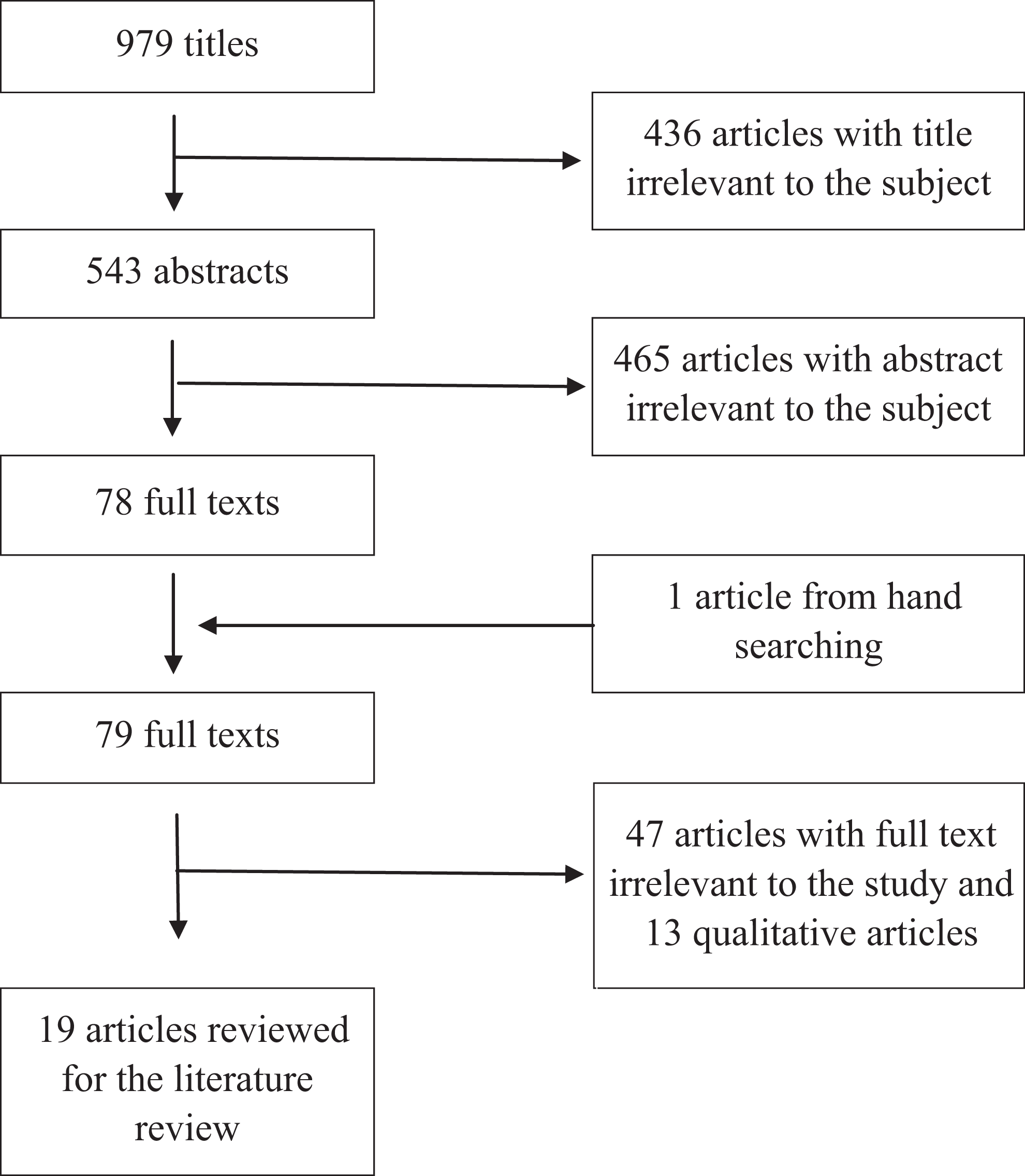
Both researchers (Y.O. and C.G.) carried out the literature search to ensure that all relevant articles would be identified. The search produced a total of 979 articles. Candidate articles were screened by title. Titles that both researchers agreed were irrelevant to the aim of this review were excluded. All other articles (543) that seemed to be relevant to the topic or for those that no consensus between the authors was reached were forwarded to the next phase. Duplicates were also considered (Figure 1).
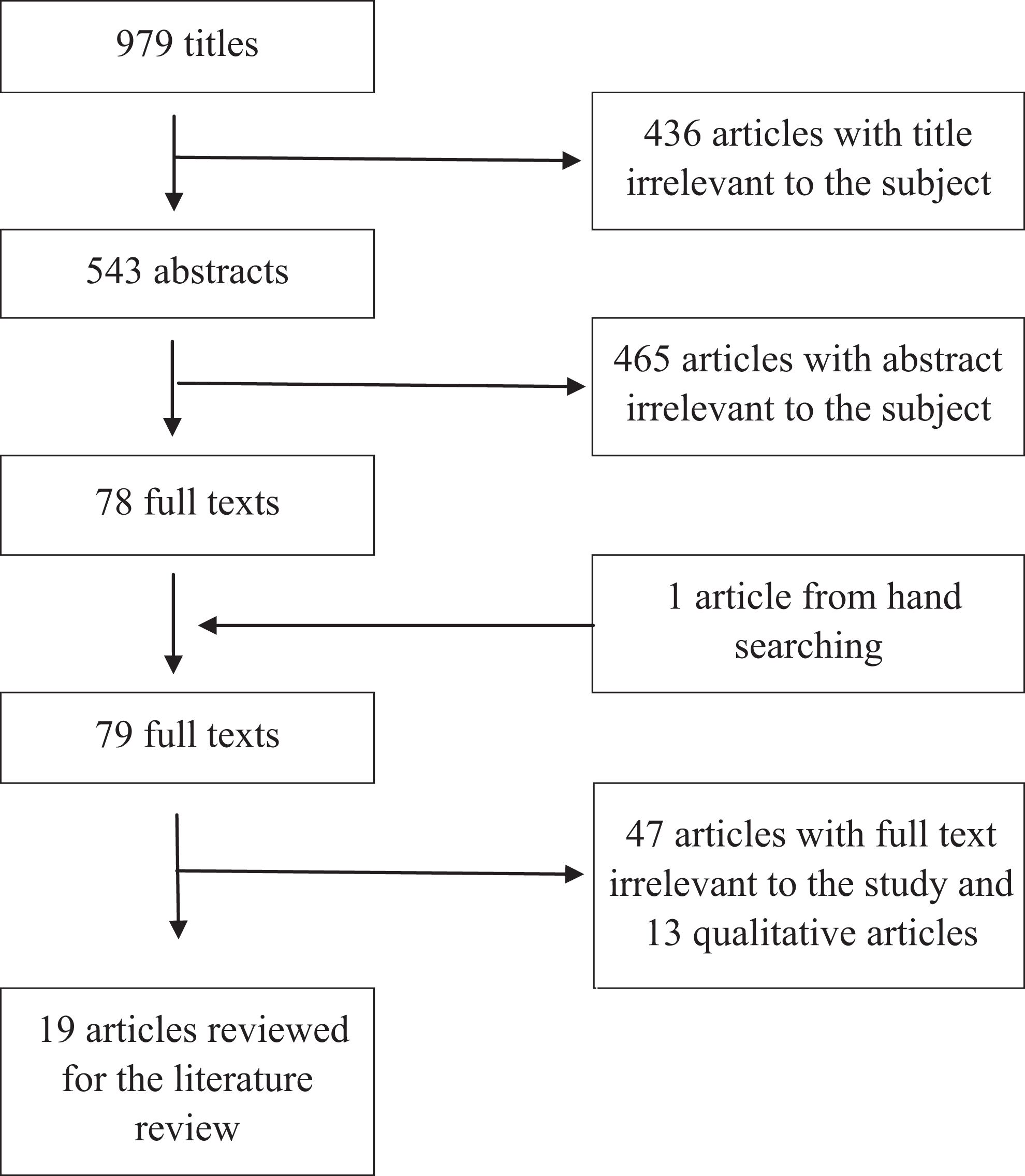
Flow diagram of the process of identifying and including articles for this review.
Phase 2
We evaluated all abstracts of the articles selected during Phase 1 by reading them and checking whether they met the inclusion criteria. Again, all studies that met the criteria were forwarded to the next phase of the search process. If no consensus was reached for a particular article, the article was also forwarded to the next phase. All other studies (465) were excluded.
Phase 3
In the final phase of the search process, a total of 78 articles that were passed on from Phase 2 were read and compared with the inclusion criteria. Additional manual searching of the reference lists of all 78 articles produced one additional article. Of these, articles with text irrelevant to the study (47) were excluded, as the article did not focus on nurses or moral distress as defined by the inclusion criteria. Qualitative studies (13) were excluded as well. A final number of 19 articles were decided to be included.
Quality appraisal
We assessed the included studies using assessment sheets prepared and tested by Hawker et al. 20 Hawker et al. 20 produced an instrument that is capable of appraising methodologically heterogeneous studies. The data extraction sheet explores nine components in detail: title and abstract, introduction and aims, method and data, sampling, data analysis, ethics and bias, results, transferability or generalizability and implications and usefulness. In our review, each of these areas was assessed against criteria and then rated on a scale of 1 (very poor) to 4 (very good). The scores for each assessment were then assumed to obtain an overall score and rating, which ranged from very poor (9) to very good (36). Any article scoring less than 18 was considered to be of poor to very poor quality.
The minimum score was 23 out of 36, and the maximum score was 34. Hence, all studies were included in the review (Table 1). All studies clearly mentioned either a research question or an objective. The theoretical basis used in all studies has been Jameton’s, 17,21,37 Wilkinson’s 5,35 or Corley’s. 22–34,36 Two studies explicitly stated a conceptual framework based on Wilkinson’s Moral Distress Equation. 5,35 In each article, the study design was described. Procedures or interventions were stated in all studies, including one quasi-experimental study. 32 Random sampling and convenience sampling were most commonly employed. Some studies, however, failed to state their sampling method. Four studies determined the sample size by using power analysis. 5,21,22,26 The instruments most studies used for measuring moral distress scored relatively high on reliability criteria. In addition, most studies showed ethical considerations.
Quantitative studies included in the literature review.
EDN: ethical dilemmas in nursing; QNC: quality of nursing care; CRNA: certified registered nurse anaesthetists; RN: registered nurse; PES: Practice Environment Scale; HECS: Hospital Ethical Climate Survey; ICU: intensive care unit; NICU: neonatal intensive care units; MDS: Moral Distress Scale; MDS-P: MDS for Psychiatric Nurses; NP: nurse practitioner; RR: response rate; MBI: Maslach Burnout Inventory; ANOVA: analysis of variance; IRB: Institutional Review Board.
Data abstraction and synthesis
The data abstraction and synthesis process consisted of re-reading, isolating, comparing, categorizing and relating relevant data. Included articles were read repeatedly to obtain an overall understanding of the material. Relevant data were gathered and classified into five categories: ‘frequency and intensity of moral distress’, ‘influences of sociodemographic variables on moral distress’, ‘sources of moral distress’, ‘psychological responses to moral distress’ and ‘coping strategies for moral distress’.
Results
Our review included 19 publications (Table 1). The studies were conducted in seven different countries: United States (n = 13), Belgium, Canada, Japan, Jordan, Israel and Sweden (n = 1, for each country). Research settings consisted of intensive or critical care units (n = 8), hospitals (n = 3), acute care units (n = 2), surgical and/or medical units (n = 2), nursing home (n = 1) and psychiatric care units (n = 1). Two studies did not limit their care settings and collected their samples from the registry of certified registered nurse anaesthetists 5 and a local nurse practitioners organization. 35 In 17 studies, the sample consisted of only nurses. The remaining two studies included nurses and physicians. 28,29
The methodological features of the included studies are summarized in Table 1. All but one of the studies implemented a descriptive design to examine the phenomenon of moral distress. Beumer 32 implemented a pre-test/post-test quasi-experimental design to evaluate the effect of an education programme to cope with moral distress experienced by nurses.
Six studies used the 2005 version of the MDS. 22,23,25,31,33,34 Three studies exploited a modified version of the 2001 version of the MDS, 26,27,36 and three studies employed a modified version of the 2005 MDS. 24,28,29 One study used the original version of the MDS. 17
Moral distress was evaluated by means of the Ethical Dilemmas in Nursing, 21 the Ethics Stress Scale 5 or instruments designed by the investigators themselves. 30,32,35,37
Frequency and intensity of moral distress
All studies measured moral distress frequency, moral distress intensity or moral distress in general (not specified in frequency and intensity), except for two studies. 28,32 With respect to the frequency of moral distress, nurses infrequently experience moral distress based on seven studies, which reported low levels of moral distress frequency, 21–26,31 and one study, which reported a moderate level of moral distress frequency. 27 The studies of McAndrew et al., 22 Pauly et al. 31 and Corley et al. 23 could be easily compared, as they measured the mean score by using the same instrument and scale for moral distress frequency, namely, the 2005 version of Corley et al.’s MDS measured on a 7-point Likert scale (ranging from 0 = none to 6 = very frequently). In these three studies, the mean scores for moral distress frequency ranged from 1.31 (standard deviation (SD) = 0.72) to 1.75 (SD = 0.69). Four studies described moral distress frequency linked to particular situations. 33–36 For instance, the level of moral distress frequency for situations associated with futile care 33,34,36 or patient refusal of appropriate treatment 35 was the highest.
With respect to the intensity of moral distress, nurses feel a moderately high intensity of moral distress based on seven studies, which reported a moderate level of moral distress intensity, 17,21–24,26,31 and two studies, which reported a low level of moral distress intensity. 27,37 Using the same instrument and scale for measuring moral distress intensity – namely, the 2005 MDS with 7-point Likert scale (0 = none to 6 = great extent) – three studies reported a mean score ranging from 3.59 (SD = 1.33) to 3.88 (SD = 1.61). 22,23,31 Three studies described the moral distress intensity linked to particular situations. 25,33,34 For instance, the level of moral distress intensity was high in situations when patients were not given safe and proper care. 25,33,34
Radzvin 5 reported a moderate level of moral distress in general. Two studies presented the level of moral distress in general linked to particular situations. 29,30 For instance, nurses felt more moral distress when they perceived their ethical environment as more negative 29 or observed other nurses’ clinical errors. 30
Influence of sociodemographic variables on moral distress
A total of 15 studies analysed the influence of one or more sociodemographic variables on moral distress. 5,17,21–27,30,31,33,34,36,37 With regard to the association between the frequency of moral distress and sociodemographic variables, older nurses, 33,34 nurses with more nursing experience 33,34 and nurses working at their current position for more years 33,34 were more frequently confronted with moral distress. However, in other studies, no significant association was found between moral distress frequency and age, 17,22,25,27,31 years of nursing experience, 17,22,26,27,31 gender 17,22,31 or education 17,22,31 (Table 2).
Correlation between sociodemographic variables and moral distress.
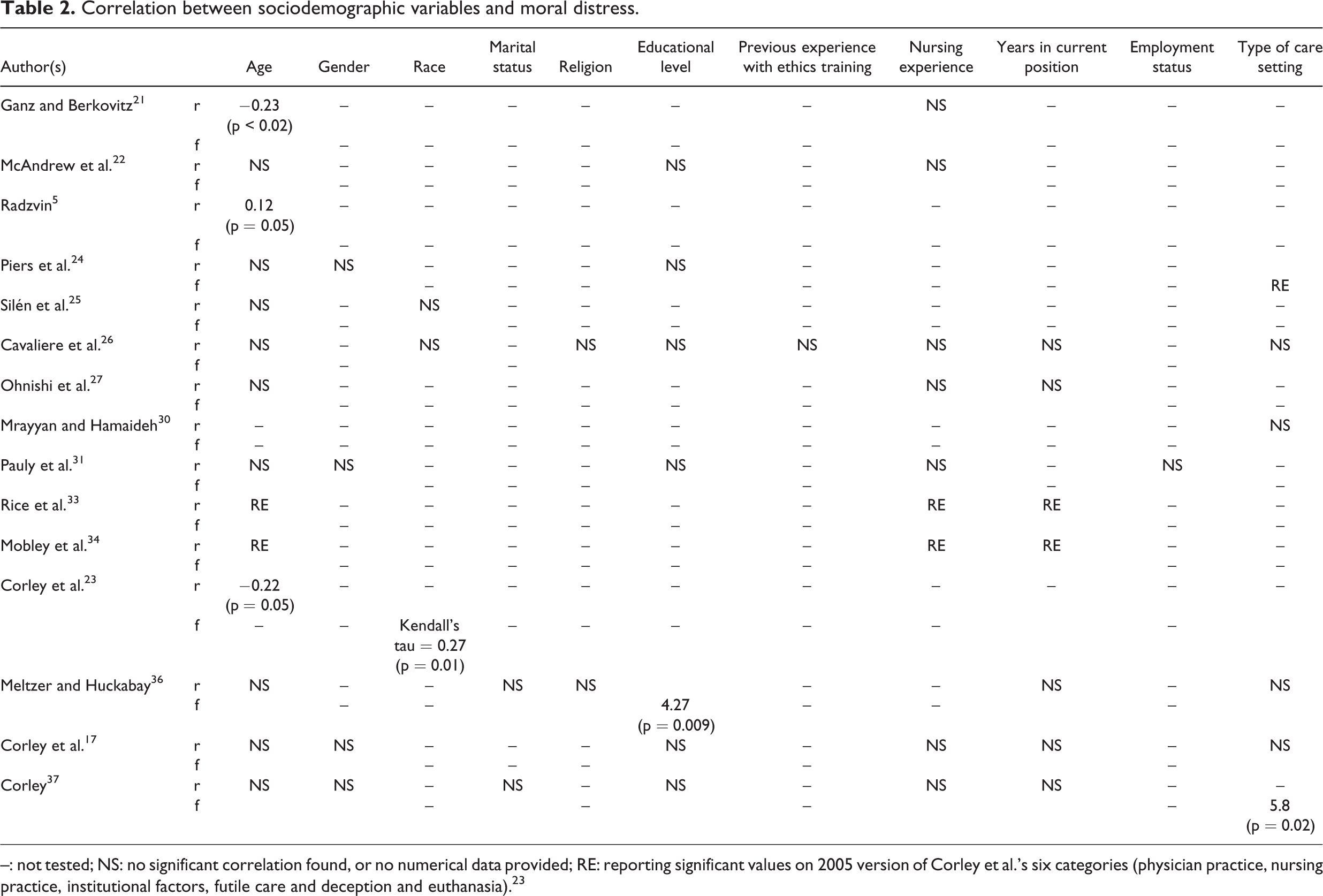
–: not tested; NS: no significant correlation found, or no numerical data provided; RE: reporting significant values on 2005 version of Corley et al.’s six categories (physician practice, nursing practice, institutional factors, futile care and deception and euthanasia). 23
With regard to the association between the intensity of moral distress and sociodemographic variables, it states that as nurses grow older, they experience less intense moral distress. 21,23 However, as for situations of futile care, Rice et al. 33 reported that older nurses experienced more intense moral distress. Rice et al. 33 also found that moral distress intensity increased with accumulated years of nursing experience and years of stay in current position. Corley et al. 23 found that nurses’ lack of power in healthcare systems had greater impact on the moral distress intensity of African-American nurses than nurses of other ethnicities or races. Meltzer and Huckabay 36 found that nurses with a bachelor’s or higher degree experienced a higher intensity of moral distress when confronted with situations of medical futility than did nurses with an associate degree. In other studies, no significant association was found between moral distress intensity and age, 17,22,25,27,31 years of experience, 17,22,26,27,31 gender 17,22,31 or education 17,22,31 (Table 2).
With respect to the association between moral distress in general and sociodemographic variables, older nurses 5 suffered more moral distress. Piers et al. 24 demonstrated that there was more moral distress in the acute care setting than in the geriatric care setting. Corley 37 showed that nurses not working in intensive care experienced higher levels of moral distress related to providing care for the hopelessly ill than did nurses working in intensive care. However, there was no significant association found between moral distress and type of care settings in the study by Mrayyan and Hamaideh 30 (Table 2).
Sources of moral distress
A total of 15 studies investigated situations that frequently gave rise to moral distress experienced by nurses and/or gave rise to intense moral distress. 17,21–26,29–31,33–37 Nurses experienced moral distress more frequently when they perceived a more negative ethical climate in their care settings; 22,23,25,31 when they felt compelled to act in ways they perceived were not in the patient’s best interests, namely, futile care 24,26,33,34,36,37 and/or when a patient or a family member directed inappropriate behaviour towards them. 21,35
Nurses experienced more intense moral distress when they were exposed to negative ethical climates (e.g. working with incompetent staff), 22–25,31,33 futile care, 26,33,34,37 nursing shortage 17 and uncooperative behaviour of a patient and family member. 21 Negative ethical climate, 29,30 futile care 26 and nursing shortage 30 also caused nurses to experience moral distress.
What are the psychological responses to moral distress?
Four studies investigated the psychological responses to moral distress. 5,27,32,36 As nurses experienced moral distress more frequently, they experienced higher levels of emotional exhaustion 27,36 and depersonalization towards patients. 27 These are two of the three components of burnout syndrome, according to the Maslach Burnout Inventory (MBI). 38 Moreover, the intensity of moral distress was positively associated with experiencing emotional exhaustion and depersonalization such that as nurses experienced moral distress more intensely, they experienced higher levels of emotional exhaustion and depersonalization. 27
In Radzvin’s 5 study, nurses became frustrated and angered due to moral distress. In the intervention study of Beumer, 32 anger or frustration decreased after nurses attended a workshop for moral distress. Moreover, prior to participating in the workshop, 54% of nurses who felt moral distress had a cynical attitude towards their patients’ care. However, after the workshop, this percentage decreased to 29%. That is, the nurses experienced less emotional withdrawal from their patients or distanced themselves less from their patients after participating in the workshop.
How do nurses cope with moral distress?
Six studies reported negative coping strategies nurses used to deal with moral distress, such as leaving their job 24,26,28,29,37 and considering leaving their position. 5,24,26,28,29 Particularly, as nurses had higher level of moral distress, they significantly considered leaving their position more frequently. 24,26 Three studies showed that 46.2%, 28 45% 29 and 10% 5 of the nurses surveyed reported having left or considered leaving a position because of moral distress. Moreover, in Corley’s 37 study, of the 111 nurses, 12% had left a nursing position primarily because of moral distress. Beumer 32 noted that the participation in a workshop decreased nurses’ dread of going to work due to moral distress. None of the studies in our review reported positive strategies for coping with moral distress.
Discussion
Methodological issues
This review describes aspects of the phenomenon of moral distress that are not mentioned in the review of qualitative studies. 16 For instance, the association between sociodemographic variables and moral distress is revealed. These findings can now be integrated into nursing management. For instance, intervention or education programmes for moral distress by nurses should be served for all nurses regardless of age, nursing experiences or special units.
Despite the complements of the previous qualitative review’s findings, 16 our review has several limitations. A more synthesized approach should be attempted, including both quantitative and qualitative studies in order to examine some of our research questions (e.g. which were ‘sources of moral distress’, ‘psychological responses’ and ‘coping strategies’) in more depth. Our review is insufficient to explore diverse and meaningful psychological reactions or coping strategies by nurses.
Studies from seven different countries were included. Most of the studies were done in Western countries; only three of the studies were done in Asian countries. 21,27,30 Combining data that originate from different countries and cultures is a complex and challenging task, 39 especially since differences in cultural attitudes on moral distress extend beyond our expertise. The organizational constraints that caused moral distress might be different in each culture. 12 For instance, there might be more medical hierarchical constraints of the organization in Asia than in Western countries. It is reported that nurses in Asia are demanded more to be obedient and are taught about the hierarchy of relationships in hospitals. 40,41 However, we could not integrate more results about moral distress in Asia as only a quite limited number of Asian studies were included. 21,27,30
In the studies of our review, 10 instruments were used. Due to this diversity of instruments, it was difficult to compare and integrate the quantitative data. The length and its nursing focus make Corley’s MDS challenging when it is employed. 11 In addition, some of its items do not mirror current practice. 11 Some recent studies have introduced new instruments for detecting moral distress. 42–44 For instance, Hamric et al. 44 revised Corley’s MDS and developed a short form of Corley’s MDS as ‘Moral Distress Scale–Revised (MDS-R)’ to suit the multivariate research and clinical use.
Previous studies have pointed out that despite the frequent use of the concept of moral distress, some variations on Jameton’s core definition as suggested by some scholars resulted in using different measures or developing instruments for related concepts, such as moral sensitivity, 45 ethical stress 46 and stress of conscience. 47 Moral distress as a relational concept should account for relationships between moral distress and related concepts such as moral sensitivity, ethical climate and moral agency. 13,14 To avoid conceptual confusion as much as possible, we included 19 studies that clearly stated the definition of moral distress according to either Jameton, 7 Wilkinson 1 or Corley 9 in order to synthesize the results based on a coherent concept of moral distress.
A large range in sample sizes and response rates, possible non-responder bias and validation of the instruments restricted to small populations can limit the representativeness of results. Moreover, self-selection may have eliminated nurses with traumatic or limited recognition of moral distress. The nurses who volunteered to participate may have been more articulate and accessible.
Substantive findings
This review clarifies the notion that nurses experience a rather low frequency of moral distress but a moderately intense level of moral distress. Although morally distressing experiences may not be frequent, they may have significant impact when they do occur. One explanation is that nurses continue to experience moral distress even after the situation has passed. The cumulative effects of unresolved moral distress result in what Webster and Baylis 48 have labelled as ‘moral residue’. They describe ‘moral residue’ as that which is powerfully concentrated in our thoughts, when we know how we should act but are unwilling and/or unable to do so. Moral residue can negatively make an impact on psycho-emotional responses and nursing practice by internalizing the problem. It is manifested as guilt, shame and self-blame. Nurses who experience moral residue and continue to work tend to withdraw from patient care and become distrustful of other professionals. 49,50 Moreover, nurses experience more moral distress than physicians. 29,51 In a previous study, Papathanassoglou et al. 51 suggest that nurses feel more moral distress than physicians due to their lack of decision-making authority combined with patient care.
This review complements the results of a previous qualitative review. 16 For instance, the association between sociodemographic variables and frequency and intensity of moral distress can only be revealed by quantitative studies. While a few variables showed significant correlations in some of the included studies, these correlations were absent in other studies. Hence, some evidence exists to support the assertion that there is no clear congruence regarding the relationship between sociodemographic variables and moral distress. Incongruity in the findings might be due to differences in culture and settings (i.e. specified care settings vs hospital settings). In addition, this incongruity could be partially explained by the role experience plays in how nurses learn to address ethical problems that arise in clinical practice. Indeed, older nurses may have learned to cope more effectively with moral distress. On the contrary, Elpern et al. 52 explained that the cumulative level of distressing experiences tends to escalate as the years of nursing profession increase. This finding can be controversial because it is against ‘desensitization’ to moral distress that occurs as time goes by. Some nurses may become accustomed to moral distress as they gain experience, and some may suffer from cumulative moral distress.
Futile care and/or a negative ethical climate clearly contribute to the frequency and intensity of moral distress. This appeared to be true in all cultural contexts. These findings are supported by previous literature reviews, 16,53 arguing that patient advocacy is a desired outcome and is a nursing role obligation. Poor collaboration and leadership, insufficient resources and staff and a negative ethical climate can exacerbate ethical situations, exacting a negative effect on the moral agency of nurses. 13,54 Moral distress must be illuminated not only by the characteristics of each individual but also by the multiple contexts such as healthcare environment 15 and sociocultural context. 12 That is, if healthcare organizations want nurses to act morally and to make good moral decisions, they must critically assess their organizational cultures, policies and practices.
A few studies in this review investigated the relationship between moral distress and burnout as one of the psychological responses to moral distress. Moral distress frequency and intensity were significantly related to emotional exhaustion and depersonalization, two of three components of the burnout syndrome. Emotional exhaustion occurs when a person’s appraisal of occupational stressors exceeds his or her coping capabilities or when they conflict with the person’s values and belief system, so that he or she cannot cognitively reconcile the stressors or cope. 36 The review of the qualitative study revealed a variety of emotional reactions. 16 Rittenmeyer and Huffnan 16 reported that nurses who experienced moral distress responded with various psychological reactions, including anger, loneliness, depression, guilt, anxiety, feeling of powerlessness and emotional withdrawal. Not only did nurses withdraw within themselves but also they isolated themselves from their patients emotionally.
Moral distress is linked to ‘leaving the profession’ as a negative coping mechanism to deal with moral distress. Some nurses in the included studies had either left the profession or considered leaving the profession due to moral distress in different care settings. This type of coping response was also reported in Rittenmeyer and Huffnan: 16 when nurses experience moral distress over time, healthcare systems suffer deleterious effects, such as nurses leaving the institution, nurses leaving the profession or nurses switching to less stressful jobs. However, Hanna 10 suggested that if individuals cope with moral distress successfully, personal transformation and growth can be achieved. Giving attention to all aspects of structural conditions in which moral distress emerges and requires the acknowledgement that such stress can be resolved makes an individual accomplish successful management of moral distress. 13,14 Some qualitative studies noted that in order to cope with or alleviate moral distress, some nurses gathered together and discussed situations, while others sought a social worker or counsellor to discuss their moral distress. 55–57
Implications
We suggest that further research is needed to improve the understanding of the concept of moral distress in a nursing context. It can result in applying a more coherent term and instrument for moral distress in empirical research. This review highlights the necessity to conduct studies on education or intervention programmes related to how nurses cope with moral distress. Organizational factors that can be associated with the frequency and intensity of moral distress should be taken into account. For instance, institutions need to not only create a positive ethical climate but also explore and manage particular situations that can increase the frequency and intensity of moral distress within their contexts.
Although the included studies on moral distress were conducted predominantly with nurses in specific care settings, such as critical care units, nurses in other care settings, such as geriatric or psychiatric care units, also experience moral distress. In these latter contexts, nurses are also morally sensitive to patients’ vulnerability. Hence, more research is needed in other care settings and countries in order to determine how care settings and culture influence nurses’ moral distress. Additional research along these lines also is needed in Asian countries.
Footnotes
Funding
This research received no specific grant from any funding agency in the public, commercial, or not-for-profit sectors.
Conflict of interest
No conflict of interest has been declared by the authors.