







Abstract
Background
Managerial ethical principles and behaviours guide the roles, duties, responsibilities, behaviours, and relationships of nurse managers in healthcare institutions.
Research objectives
The aim of this study was to establish the managerial ethical principles and behaviours for nurse managers.
Research question
What are the managerial ethical principles and behaviours for nurse managers?
Research design
The Delphi method, one of the qualitative research methods, was used in this study. The Delphi process consisted of two rounds. Data were collected by e-Delphi technique.
Participations
42 experts were included in the first Delphi round and 39 in the second Delphi round. These experts consisted of nurse managers, academicians studying in the field of ethics and nursing management.
Ethical considerations
Participation in the study was voluntary and informed consent of the experts was obtained before the study. Approval was obtained from the ethics committee of the university at which the researcher worked (Approval date: 24.07.2020, Decision No: 2020/12-16).
Findings
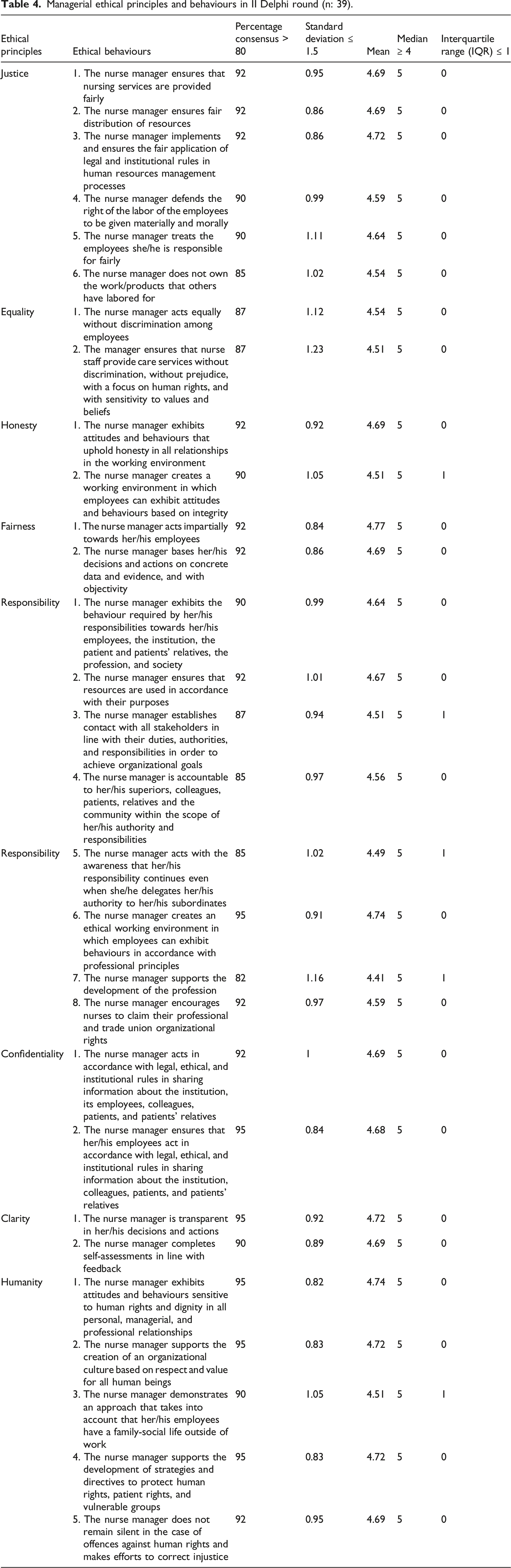
At the end of the Delphi rounds, eight managerial ethical principles and 29 ethical behaviours of these principles were identified. The distribution of these behaviours and principles were: justice (six behaviours), equality (two behaviours), honesty (two behaviours), fairness (two behaviours), responsibility (eight behaviours), confidentiality (two behaviours), clarity (two behaviours), and humanity (five behaviours).
Conclusion
These managerial ethical principles and behaviours are intended to guide nurse managers when providing nursing services but should be updated accordingly in line with changing conditions and developments.
Introduction
Factors such as changes and developments in health, an increase in epidemic diseases, change in generations of health personnel, and the development of technology increase the importance of ethical behaviour in health services management.1,2 For this reason, ethical principles and behaviours should guide the roles, duties, responsibilities, behaviours, and relationships of nurses who provide the effective organization and delivery of healthcare so that they may effectively fulfill their professional obligations.3,4 Nursing services managers are expected to comply with ethical principles appropriate 5 to both professional and managerial roles 6 and address unethical behaviours in accordance with ethical principles in the moral challenges they face. 7
Background
Ethical principles transmit the values, views, and ideology of a profession 8 while ethical behaviour abides by what is right. 9 Ethical principles and behaviours have been determined for many professions worldwide;10,11 for the nursing profession, they have been determined by both national and international professional associations.4,12,13 Management ethics is defined as the principles of behaviour that guide managers in their actions; such behaviour ensures consistency, impartiality, and fact-based management processes; respect of the existence and integrity of individuals; choice of actions that benefit everyone; and choice of actions based on universal values such as justice, equality, impartiality, honesty, responsibility, respect, openness, love, democracy, and tolerance. 14
Ethical principles.
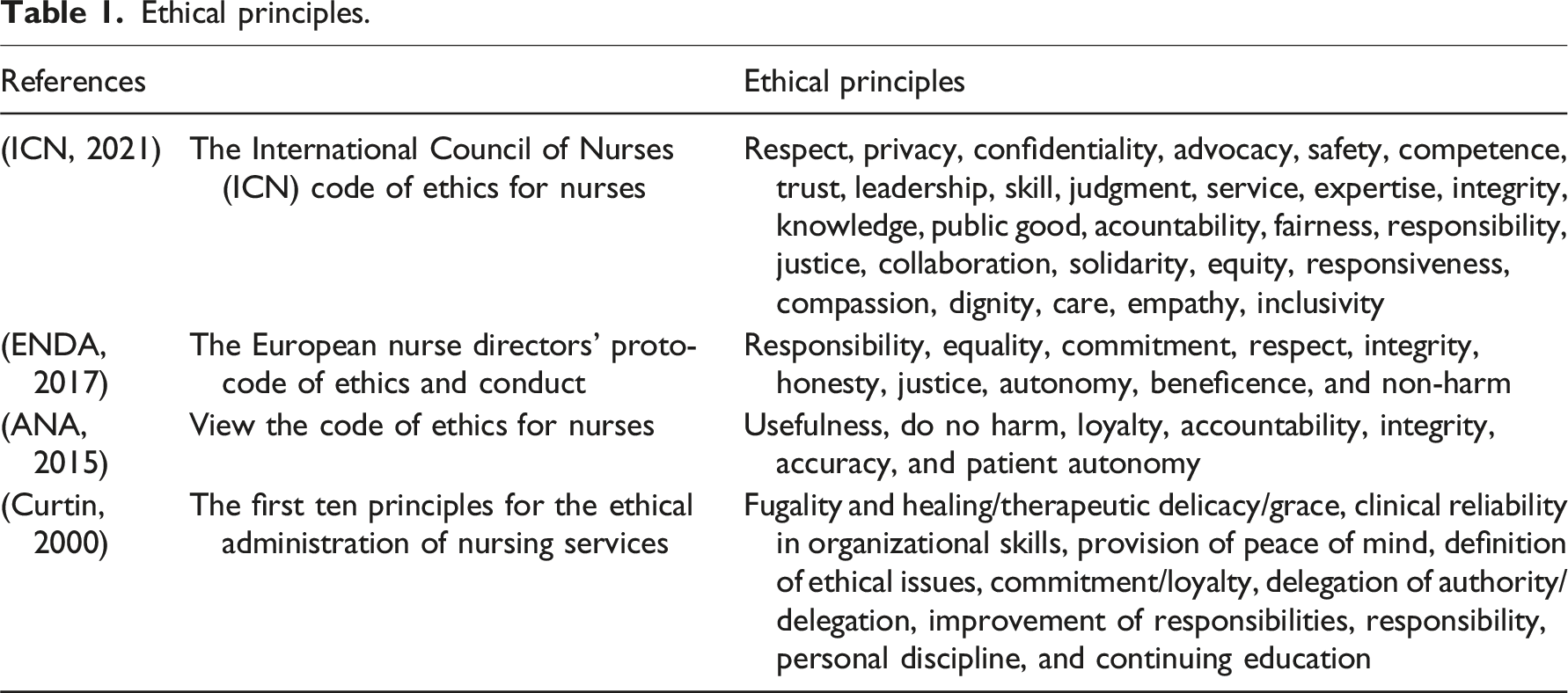
In order for managerial ethical principles to be reflected in behaviour conducive to an ethical working environment, they should be applied alongside the existing laws, regulations, and professional standards governing the nursing practices of different countries. 4 To current knowledge, previous studies have not identified managerial ethical principles and behaviours for nurse managers in our country, although one researcher 22 established the “Administrative Ethical Behaviour Scale” with which nurses used to evaluate the ethical and unethical administrative behaviours of nurse managers in the categories of accuracy and honesty, responsibility and supremacy of law, rights and freedom, good human relations and humanity, and justice and equality. The current study aimed to identify the ethical principles and behaviours used to guide the roles, duties, responsibilities, behaviours, and relationships of all executive nurses at lower, middle, and upper levels.
Methodology
Objective
The aim of this study was to establish the managerial ethical principles and behaviours for nurse managers.
Research questions: • What are the managerial ethical principles for nurse managers? • What are the managerial ethical behaviours for nurse managers?
Design
This study used the Delphi method, a qualitative research method in which more than one consultation is conducted in order to systematically gather the opinions of experts and reach a consensus on the topic.23,24 This process consisted of three steps: a) Identification of items for managerial ethics principles/behaviours and the experts who would participate in the Delphi rounds, b) Implementation and analysis of the first Delphi round, and c) Implementation and analysis of the second Delphi round and finalization of managerial ethics and behaviours (Figure 1). Guidance on Conducting and Reporting Delphi Studies (CREDES) was used to report the research process.
25
Research proccess.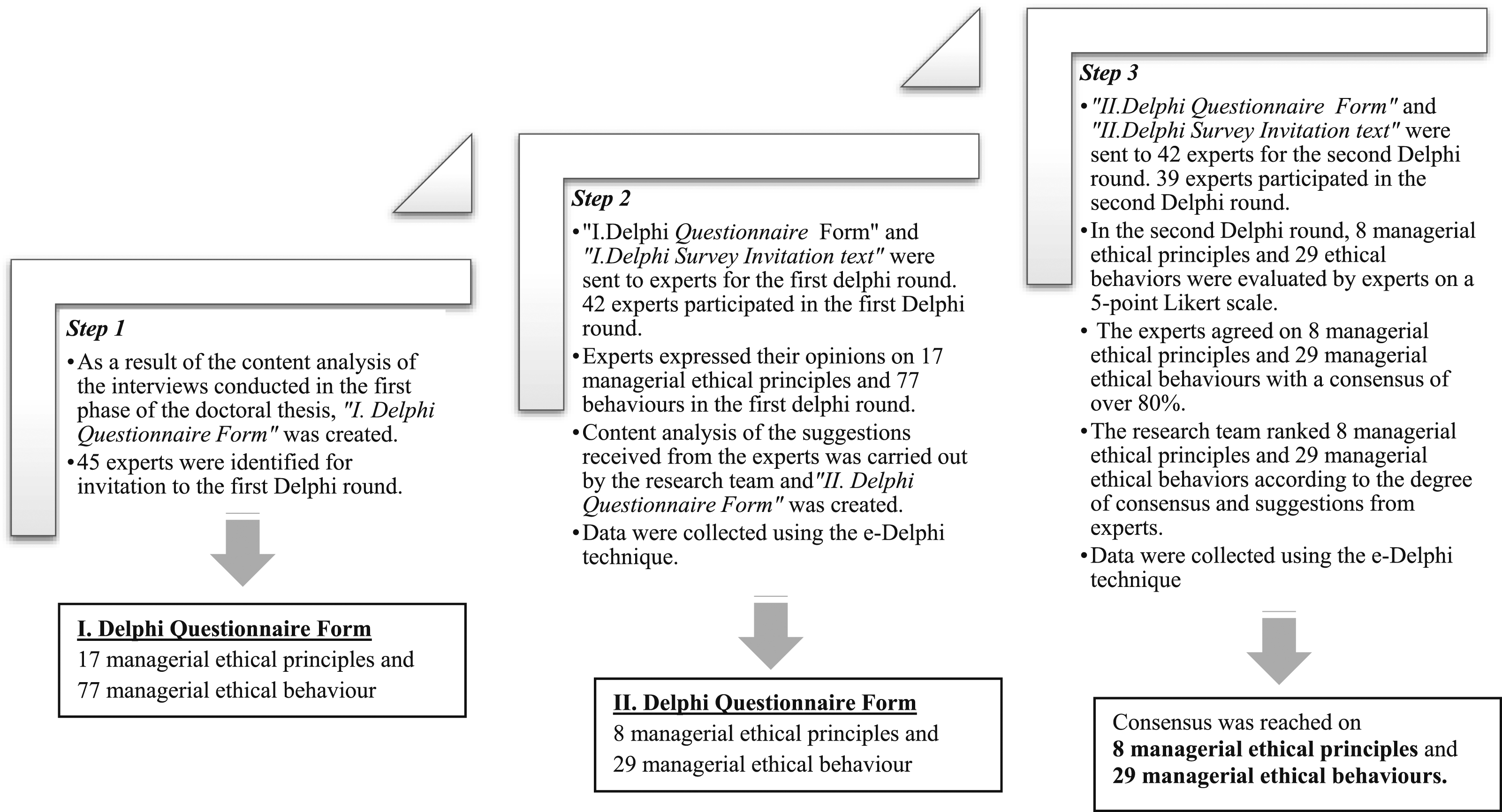
This study is based on a doctoral dissertation in which ethical principles for nurse managers were determined. The doctoral study was conducted in two stages; the first stage included the qualitative section and used the phenomenological research method, and the second stage used the Delphi method, one of the qualitative research methods. The current study also used the Delphi method.
Step 1
The data obtained after individual interviews with 27 participants in the first phase of the thesis study were analyzed by the research team (two experts in the field of management and members of nurses’ associations, including the association of executive nurses) using the inductive content analysis method. 26 The “I. Delphi Questionnaire Form” was created after data analysis.
The Delphi questionnaire form consisted of two parts. The first part included questions about socio-demographic data, and the second part included 17 managerial ethical principles and 77 ethical behaviours. These principles and behaviours were: justice (four behaviours), equality (three behaviours), honesty (three behaviours), fairness (four behaviours), clarity (four behaviours), human relationships (six behaviours), cooperation (five behaviours), human rights (four behaviours), humanity (four behaviours), responsibility (thirteen behaviours), democracy (four behaviours), labor justice (three behaviours), follow the law (six behaviours), frugality (four behaviours), confidentiality (two behaviours), trust (two behaviours), and commitment (three behaviours). The form also included a space under each principle and behaviours in which experts could add additional suggestions.
Although there is no universally accepted criterion for the selection of experts in the Delphi method, it is considered appropriate to select experts who are experienced in their field, follow current information, and can act impartially towards findings. 27 For this reason, this study used maximum diversity (nurses working in management positions in the clinical field, academicians in the department of management in nursing colleges/faculties, or academicians working in the field of ethics) and a snowball sampling method to access more experts on the subject. 28 Although there is no consensus in the literature on the sufficient number of experts for Delphi rounds, 29 it is recommended that each round should consist of 15–50 experts. 24 In this study, 45 experts were selected for the first Delphi round.
Step 2
In the first Delphi round, the “I. Delphi Questionnaire Form” and “I. Delphi Survey Invitation Text” containing information about the purpose and process of the Delphi rounds were sent to the email addresses of 45 experts. One month after the first email was sent, reminder e-mails were sent, and telephone calls were made to the experts. Some experts replied that they could not participate in the study due to their workloads or did not respond to the email at all, so invitation e-mails were sent to 10 more experts recommended by the experts who had already agreed to participate in the study. The first Delphi round was completed with a total of 42 experts, and the return rate was 76%. The 42 experts who participated in the rounds are indicated as (Respondent 1-Respondent 42).
Opinions on managerial ethical principles and behaviours after the first Delphi round (n: 42).
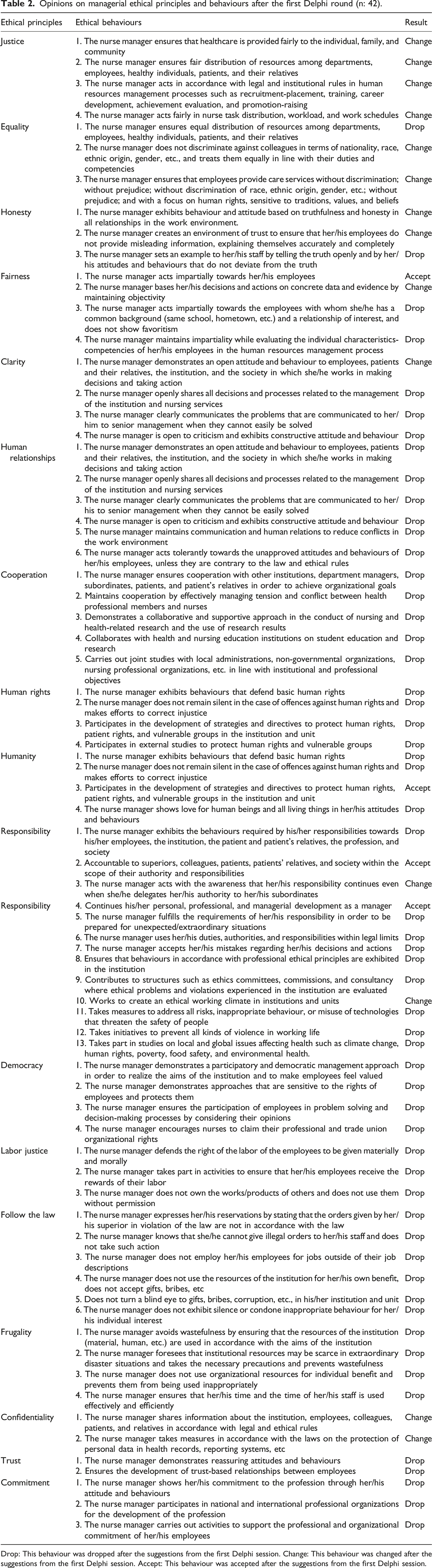
Drop: This behaviour was dropped after the suggestions from the first Delphi session. Change: This behaviour was changed after the suggestions from the first Delphi session. Accept: This behaviour was accepted after the suggestions from the first Delphi session.
Step 3
The “II. Delphi Questionnaire Form” and “II. Delphi Survey Invitation Text” were sent to the 42 experts who participated in the I. Delphi round. Three experts stated that they could not participate in the study due to health problems, so 39 experts participated in the round. The return rate was 93%. Experts were asked to o rate these managerial ethical principles and behaviours on a 5-point Likert scale, 1 (definitely should not be included), 2 (should not be included), 3 (un-decided), 4 (should be included), and 5 (definitely should be included). The form also included a line under each item where the experts could write their suggestions and reasons for their changes. The form also included a space under each item in which the experts could add additional suggestions and reasons for their changes. The data collection process was completed in approximately 1 month (May–June 2022).
The data obtained from the second Delphi round were recorded using Excel, and SPSS 26 (Statistical Package for the Social Sciences) was used for analysis. Descriptive statistics (number, percentage) were used in the analysis of demographic data, and descriptive statistics (percentage of agreement, standard deviation, mean, square, and quartile width) were used in the analysis of Likert data. Although there is no exact value and scientific reality for the percentage of consensus, the literature states that 75% is the lowest level.30,31 The research team ranked the eight ethical principles and 29 ethical behaviours according to the degree of consensus, suggestions from the experts, and frequency of expression.
Findings
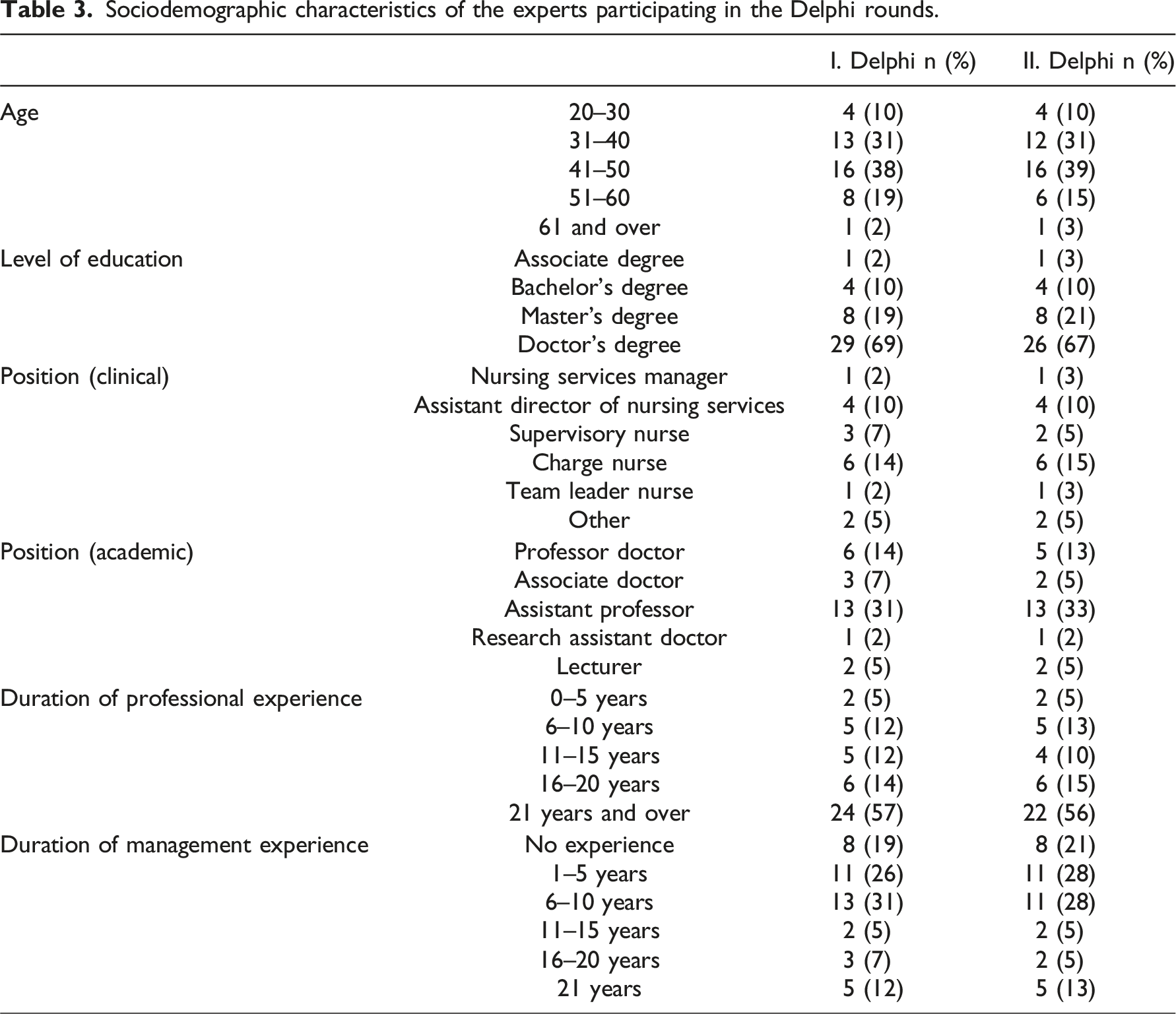
Sociodemographic characteristics of the experts participating in the Delphi rounds.
Some of the experts’ suggestions for the 17 managerial ethical principles and 77 ethical behaviours in the first Delphi round are shared below.
Equality principle 2nd behaviour in the I. Delphi questionnaire form: “In line with her/his duties and competences, the nurse manager does not discriminate against her/his colleagues in terms of nationality, race, ethnic origin, gender, etc. and treats them equally.”
One of the suggestions received from the experts in the first Delphi round for the 2nd behaviour of the equality principle was: “This item should be revised, and the phrase ‘in line with his/her duties and competences’ should be removed, as he/she already has these as a manager.”
The equality principle 2nd behaviour after I. Delphi round was changed to: “The nurse manager shall act equally without discrimination among her/his employees,” (Respondent 23) as reflected in Table 2.
Fairness principle third behaviour in the I. Delphi questionnaire form: “The nurse manager acts impartially towards the employees with whom she/he has a common background (same school, hometown, etc.) and a relationship of interest, and does not show favoritism.”
One of the suggestions received from the experts in the I. Delphi round for the 3rd behaviour of the fairness principle was: “This article should be removed, as it is similar to principle of neutrality 1.” (Respondent 7) This change is dropped in Table 2.
Humanity principle third behaviour in the I. Delphi questionnaire form: “As a nurse manager, she/he takes into consideration that her/his employees have a family-social life outside of work life.”
One of the suggestions received from the experts in the first Delphi round for the 3rd behaviour of the humanity principle was: “This behaviour can be accepted as is.” (Respondent 13) The accepted behaviour is reflected in Table 2.
When the drop decision was made for all behaviours under the managerial ethical principle after the first Delphi round, that managerial ethical principle was deleted. Afterward, the research team met to reduce the 17 ethical principles formed before the I Delphi round to eight ethical principles and the 77 ethical behaviours to 29.
A total of 39 experts participated in Delphi round II. When the most common groups of the experts participating in Delphi II were examined, 13 experts (33%) were Assistant Professors according to academic title, six experts (15%) were charge nurses according to clinical title, 16 experts (39%) were between 41–50 years of age according to age distribution, 26 experts (67%) were PhD graduates according to educational status, 22 experts (56%) had 21 years or more experience according to professional experience, and 11 experts (28%) had 6–10 years of management experience (Table 3).
Some experts’ suggestions for the eight managerial ethical principles and 29 ethical behaviours in the II. Delphi round are as follows: “The principle of justice is the most important for a manager.” (Respondent 11) “I expect a manager to be open after he/she complies with the principles of justice and equality.” (Respondent 35)
Managerial ethical principles and behaviours in II Delphi round (n: 39).
Ethical considerations
Approval was obtained from the ethics committee (Onay tarihi: 24.07.2020, Karar No: 2020/12-16) of the university in which the study was conducted. A link to the “I.-II. Delphi survey invitation text” was sent to the email addresses of the experts, including information on how the process will be followed during the Delphi rounds, that they can leave the study at any time and that participation in the study is voluntary. In addition, written informed consent of the experts was obtained through this link.
The information of the experts involved in the study has been anonymized. Confidentiality was ensured by assuring that personal identifying information (such as institutional information and position) would not be used directly in the study and that the data would be destroyed electronically after the study was completed.
Limitations
This study aimed to select a maximum diversity 28 academicians and clinical nurses, but because the study coincided with the COVID-19 pandemic, access to participants was affected by the increased work intensity of clinical nurses, resulting in a limited distribution. Another limitation of the study is that it was conducted in one specific region.
Discussion
This study identified eight managerial principles for nurse managers and 29 ethical behaviours related to these principles after two Delphi rounds. These principles were: “justice,” “equality,” “honesty,” “fairness,” “responsibility,” “confidentiality,” “clarity,” and “humanity.”
Under the principle of justice, nurse manager behaviour included: ensuring that nursing services are provided fairly, distributing resources fairly, applying and enforcing legal and institutional rules fairly in human resources management processes, treating the employees they are responsible for fairly, advocating that employee labor is assigned materially and morally, and not appropriating the work/products of others. According to the studies of national and international associations, ethical behaviours indicate that managers should work to prevent the occurrence of discriminatory practices that may occur in the institution for patients and other persons served, 32 train their employees in fair service delivery to patients, identify populations receiving inadequate patient care and formulate strategies and policies, 33 and ensure that existing resources of the institution are used consistently and that limited resources are used within the framework of ethical values such as justice, fairness, and transparency. 32 The results of the current study were similar to the results of a study on ethical behaviours that determined that managers should manage those in the management area (such as employees and resources) in line with the principle of justice. 13 The current study’s results were also in line with another study indicating that a culture should be created in which employees are fairly compensated for their labor. 32 Research studies show that managers should distribute the resources of the organization fairly because if not, ethical problems may occur.15,34 Additional studies have also indicated that employees reported that their managers should be fair.15,35
Another managerial ethical principle identified in this study was the principle of equality. The ethical behaviours under this principle indicate that managers should treat their employees equally without discrimination and that their employees should provide care services without discrimination/prejudice, with a focus on human rights, and with sensitivity to values and beliefs. The ethical behaviour guidelines published by nurse associations state that nurse managers should lead their employees regardless of nationality, race, ethnicity, language, culture, and country; 4 without prejudice; 33 and in a culture where all kinds of discrimination (race, ethnicity, sexual orientation, etc.) are prevented. 32 In addition, the International Council of Nurses 4 stated that nurse leaders/managers should provide care that respects human rights, is non-discriminatory, and is sensitive to people’s values, traditions, and beliefs.
Another managerial ethical principle identified in this study was the principle of honesty. The ethical behaviours under this principle indicated that the manager should be truthful and honest in all relationships and should create a working environment in which employees can exhibit truthful and honest behaviours. According to the literature, nurse managers should comply with the principle of integrity 13 for patient satisfaction, patient safety/public protection, and the principle of honesty 36 in order to guide their decisions and choices and to show that decisions taken are accountable and in line with certain standards. In addition, the latest report of the International Council of Nurses 4 pointed out that in order to improve the quality of patient care and safety, organizations should eliminate the fear of punishment in working environments so that employees can exhibit honest behaviour.
Another managerial ethical principle identified in this study was the principle of fairness. The first ethical behaviour under this principle indicated that the manager should be fair to his/her employees and should base his/her decisions and actions on objective concrete data and evidence. Florence Nightingale’s “Notes on Nursing,” published in 1860, stated that nurse leaders should comply with the principle of fairness. 37 Likewise, ethical principles determined for many professions indicate that managers should be fair.14,38 In addition, the International Council of Nurses 4 states that the manager should not discriminate among employees.
Another managerial ethical principle identified in this study was the principle of responsibility. The first ethical behaviour under this principle concerned the behaviour of managers towards their employees, the institution, patients/patients’ relatives, the profession, and society. Ethical behaviours published by international organizations confirm that managers have ethical responsibilities towards the profession, patients and other healthcare providers, the institution, employees, and society, 32 as well as that nurse managers should fulfill the ethical obligations and responsibilities of the profession. 4
The second behaviour under the principle of responsibility concerned the appropriate use of resources. While the European Nurse Directors Association 13 stated that resources should be used in line with the principle of effectiveness and efficiency, the International Council of Nurses 4 drew attention to the insufficiency of resources during the COVID-19 pandemic, stating that managers should reserve resources for emergencies, disasters, conflicts, epidemics, and pandemics.
The third behaviour under the principle of responsibility indicated that the nurse manager should establish connections with all stakeholders in line with their duties, authorities, and responsibilities in order to achieve organizational goals. The European Nurse Directors Association 13 (emphasized the importance of the collaboration of executive nurses with healthcare institutions and professional/multi-sectoral organizations, while the International Council of Nurses 4 emphasized the importance of collaboration with colleagues for research on nursing and health. The fourth behaviour under the principle of accountability indicated that nurse managers were accountable to their superiors, colleagues, patients, relatives, and society within the scope of their authority and responsibilities. A guide on the role of executive nurses in patient safety, published by the American Executive Nurses Organization, 39 stated that managers should be accountable and create an accountable working environment.
Another behaviour under the principle of responsibility indicated that nurse managers should create an ethical working environment in which their employees would exhibit behaviours in accordance with professional principles. Related to this ethical behaviour, the European Nurse Directors’ Association 13 draws attention to the need for nurse managers to provide appropriate working conditions in which employees can provide care in accordance with such principles, and the American Health Care Executives 32 draws attention to the need for a working environment in which ethical problems are easily stated and discussed and in which there is no violence. In addition, the International Council of Nurses 4 draws attention to the need for a working environment in which ethical values are shared. Another behaviour under the principle of responsibility indicated that nurse managers supported the development of the profession. Similarly, the literature points out that nurse managers should attach importance to continuing education, 4 create organizational conditions that ensure the development of professional identity, carry out continuous professional development and accreditation practices, 13 and maintain competence. 32
The last behaviour under the principle of responsibility indicated that nurse managers should provide support so that nurses may exercise their professional and union organization rights. In its recent report on ethics, the International Council of Nurses 4 stated that nurses and nurse managers should participate in national nursing associations to ensure appropriate socioeconomic and working conditions, while the European Nurse Directors Association 13 stated that managers should support their employees in active membership of professional organizations.
Another managerial ethical principle identified in this study was the principle of confidentiality. The ethical behaviours under this principle were that managers and employees should act in accordance with legal, ethical, and institutional rules in sharing information. Similar to these principles and behaviours, international organizations have also stated that nurse managers should respect the confidentiality and privacy of their employees' information, share this information only in accordance with the requirements of the law, 13 and establish processes to protect patients’ confidentiality. 32
Another managerial ethical principle identified in this study was the principle of clarity. The ethical behaviours under this ethical principle were that the manager should be open in his/her decisions and actions and complete his/her own self-evaluation in line with feedback. Similarly, the International Council of Nurses 4 states that managers should encourage open communication among all stakeholders and create an environment in which health-promoting conversations are openly shared. It is also stated that health institution managers should clearly convey information about available health services to patients. 32
The last managerial ethical principle identified in this study was the principle of humanism. The first ethical behaviour under this principle indicated that nurse managers should exhibit attitudes and behaviours sensitive to human rights and dignity in all personal, managerial, and professional relationships, as well as support the development of strategies and directives designed to protect human rights, patient rights, and vulnerable groups. The International Council of Nurses 4 has also identified ethical behaviours related to the protection of human rights such as protecting the privacy of electronic or paper-based health records, participating in human rights actions (such as preventing and detecting trafficking), helping vulnerable groups, providing universal education, and reducing poverty. The European Nurse Directors Association 13 stated that executive nurses should contribute to the development and implementation of policies that ensure respect for patient rights, dignity, and safe care. Another ethical behaviour under this principle was that nurse managers should support an organizational culture based on respect and value for human beings. Many studies also emphasize that managers should be respectful.32,36,37
Another behaviour under the principle of humanism was that nurse managers should acknowledge and respect the family-social life of employees. The latest ethical report published by the International Council of Nurses 4 also includes statements on the importance of work–life balance, a healthy life, and development. The last behaviour under the principle of humanism indicated that nurse managers should not remain silent in crimes against human rights and make efforts to correct injustice. In relation to this behaviour, the International Council of Nurses 4 stated that guidelines should be developed to address workplace problems such as violence and harassment, and the American Health Care Executives 32 stated that executive nurses should create a work environment free of violence.
Conclusion and recommendations
The nursing managerial ethical principles and behaviours identified in this study may form the basis for guiding the roles, duties, responsibilities, behaviours, and relationships of nurse managers. By complying with these ethical principles, nurse managers can ensure that the organization achieves its goals and creates an appropriate environment for the provision of high quality and cost-effective patient care. In this manner, nurse managers can contribute to positive outcomes for patients, staff, leaders, the profession, and society.
According to the literature, professional associations and organizations determine the managerial ethical principles with which nurse managers should comply, and these principles are regularly updated in order to adapt to worldwide needs and developments. For this reason, managerial ethical principles and behaviours should be determined in line with national and international changes in health and the professional field.
It is recommended that the managerial ethical principles and behaviours identified in this study be used by other public and institutional organizations (especially the Association of Executive Nurses), that training programs be established to ensure that executive nurses working at all levels in private and public institutions comply with these principles, that they be included in the ethics course programs of higher education institutions providing nursing education, and that their compliance with these ethical principles and behaviours be evaluated in appointments to managerial positions.
Footnotes
Author’s Note
This study is submitted a doctoral thesis in Istanbul University-Cerrahpasa Institute of Postgraduate Education, Department of Management in Nursing.
Acknowledgments
Thanks to all the experts who participated in the Delphi rounds.
Author Contributions
Güzin Ayan: Conceptualization, Acquisition of data, Analysis and interpretation of data, Data curation, Writing – original draft, Writing – review & editing. Ülkü Baykal: Conceptualization, Acquisition of data, Analysis and interpretation of data, Data curation, Visualization, Project administration, Writing – original draft, Writing – review & editing.
Declaration of conflicting interests
The author(s) declared no potential conflicts of interest with respect to the research, authorship, and/or publication of this article.
Funding
The author(s) received no financial support for the research, authorship, and/or publication of this article.
