







Abstract
Background
Whistleblowing is an action that particularly requires moral courage. Understanding the relationship between nurses’ levels of moral courage and their whistleblowing approaches is important for reducing adverse situations in healthcare services.
Objectives
This study aims to understand and analyze the relationship between nurses’ levels of moral courage and their whistleblowing approaches.
Research design
This is a descriptive and correlational study.
Methods
The study sample consists of 582 nurses actively working in a province in northwest Türkiye. Research data were collected using an Information Form, the Nurses’ Moral Courage Scale, and the Whistleblowing Scale.
Ethical considerations
Ethical approval from the ethics committee, institutional permission, and informed consent from the participants were obtained for data collection.
Findings
Nurses were found to perceive their moral courage as high, and their whistleblowing levels were at a moderate level. There was a significant and moderate relationship between participants’ levels of moral courage and whistleblowing levels (p < .05).
Conclusions
The findings emphasize the importance of promoting moral courage and creating an appropriate environment for exposing ethical violations. This study can contribute to the development of strategies to enhance nurses’ moral courage and foster a more ethical working environment in healthcare services.
Introduction
In the context of nursing, moral courage signifies the ability of nurses to advocate for and implement what is ethically right in challenging or ethically complex situations. This reflects nurses’ commitment to advocating for patients’ rights, adhering to ethical standards, and behaving in accordance with ethical values during patient care. Moral courage enables nurses to remain steadfast in upholding ethical values and principles, even when they may stand alone in their workplace, knowing that they are doing what is right.1–3
Whistleblowing, on the other hand, is the deliberate act of reporting misconduct, illegal actions, unethical practices, or illegitimate activities occurring within an organization to a third party, with the aim of identifying and rectifying such issues. Essentially, it serves as a mechanism for the disclosure of adverse situations and unethical behavior. Whistleblowers typically attempt to serve the interests of society or the organization by exposing such behaviors.4–7
Whistleblowing is an action that particularly demands moral courage. Nurses’ concerns about patient care safety and their tendency to report potential ethical violations reflect their commitment to professional responsibilities and ethical values. 8 These inclinations towards whistleblowing are influenced not only by nurses’ moral courage, honesty, personal beliefs, professional values, and sense of duty but also by social, cultural, legal, and political factors.1,4,9 This study aims to understand and analyze the relationship between nurses’ levels of moral courage and their whistleblowing approaches.
Background
The concept of “moral courage” emerges when an individual faces situations that threaten their own moral and ethical values. In such circumstances, moral courage implies the ability of an individual to confront a threat to their moral and ethical values and exhibit the courage and inner strength to resist it. 10 This courage reflects an individual’s determination to adhere to their moral and ethical beliefs and principles, even in the face of potential negative consequences.1,9
“Whistleblowing” is an act that requires moral courage. This is because whistleblowers often expose themselves to personal risks when taking this step. Revealing wrongdoing or unethical practices within an organization can result in job loss, damage to one’s reputation, or other adverse consequences. However, an individual with moral courage persists in their determination to do what is right and ethical, even in the face of these risks, and seeks to effect positive change by disclosing such situations. As Hooper aptly pointed out, whistleblowing involves a “profound paradox.” This paradox reflects the complexity of whistleblowing and how society, organizations, and individuals perceive such situations. Whistleblowers can be appreciated as brave and virtuous professionals on one hand; while on the other hand, they may be seen as troublemakers or disloyal individuals. 11
Whistleblowing is considered a significant mechanism of oversight for both society and organizations, and it is regarded as a reflection of moral courage. This process provides a means for uncovering and rectifying injustices while emphasizing a commitment to ethical values and the courage to advocate for what is right. Whistleblowing can occur in two different forms, involving the act of disclosing issues or unethical behavior either within or outside an organization. Internal whistleblowing refers to the situation in which an employee reports instances of misconduct or unethical behavior to higher management within the organization, the human resources department, or the internal audit unit. This approach aims to resolve the issue within the organization itself. Internal whistleblowing can be used to encourage adherence to the organization’s ethical standards and address problems through internal mechanisms. External whistleblowing, on the other hand, is when an employee reports an issue they have encountered to an external party, organization, or authorities (such as the media, government agencies, or civil society organizations) outside of the workplace. This is often preferred when internal mechanisms are ineffective in resolving the issue or when the employee fears retaliation or persecution in the workplace. However, external whistleblowing can often lead to more significant repercussions and risks for the employee within the workplace. While internal whistleblowing promotes problem resolution within the workplace and upholds ethical standards, external whistleblowing serves the purpose of informing a broader public audience and mobilizing public action.1,10–12
Whistleblowing is influenced by various factors. For instance, the existence of an effective whistleblowing mechanism at the corporate level holds critical importance for enabling employees to exercise their freedom of expression in a safe environment. It is crucial for these entities to play an active role in facilitating employees to speak in a reliable and secure setting. The ability to speak without fear of reprisal falls within the responsibilities of these units, promoting open communication and safeguarding whistleblowers. Furthermore, providing education to employees and managers about the functionality of whistleblowing mechanisms, how reports are handled, and their rights throughout this process contribute significantly to fostering an ethical culture within the organization. These educational initiatives encourage employees to use whistleblowing mechanisms correctly and adhere to ethical standards. The oversight and sanctioning of corporate-level reports are critical factors in shaping this ethical culture. Handling incoming reports with seriousness, conducting fair investigations, and taking necessary measures within the disciplinary system are essential in communicating the organization’s commitment to ethical values. Failure to take reports seriously or adopting an attitude that dismisses them can impede whistleblowing and lead to trust issues within the organization.13,14
In studies conducted in Türkiye, where the study was conducted, it is generally acknowledged that there is a prevailing negative attitude towards “whistleblowing” and “whistleblowers.” For instance, Çiftçi notes that although academic studies on whistleblowing have increased in recent years, it is not sufficiently researched and discussed in Türkiye, indicating that the societal culture generally does not support whistleblowing. 15 While there are provisions in the Turkish Penal Code and the International Labour Organization (ILO) Convention supporting whistleblowing, it cannot be said that there is a highly supportive environment in practice. Within Turkish culture, the assumption that “silence is golden” and remaining silent is considered a courteous behavior due to the influence of the proverb, which poses inhibitory factors in whistleblowing actions. These inhibitory factors include employees fearing job loss and concerns about being labeled as gossipers or informants. 16 Whistleblowing should be perceived not merely as a personal preference or ethical matter but rather as a collective and institutional phenomenon. However, there are generally no units evaluating whistleblowing at the corporate level or technological systems designed to receive whistleblowing reports in our country. Individuals typically resort to whistleblowing directly to their managers. In our study, we aimed to draw attention to the concept of moral courage in an unsupportive environment, elucidate its relationship with whistleblowing, emphasize its significance in nursing, and offer suggestions on how it could be enhanced, aiming to ignite broader discussions and studies at the corporate level.
Objective
The objective of this study is to understand and analyze the relationship between nurses’ levels of moral courage and their whistleblowing approaches.
Method
This research, designed as a descriptive and correlational study, encompasses nurses actively working in a province in the northwestern region of Türkiye as its population. The study did not employ a specific sampling method; instead, it included all nurses who consented to participate.
Data collection
Research data were collected using a Data Collection Form, the Nurses’ Moral Courage Scale, and the Whistleblowing Scale. Data were gathered through face-to-face interviews or online forms via social media groups accessible to nurses. Participating nurses were informed about the study, and their informed consent was obtained, with assurance that the data would be used exclusively for research purposes.
Data collection form
This form was designed by the researchers based on the literature. It includes questions related to socio-demographic characteristics (age, gender, marital status, years of work, work unit, marital status, school of graduation, and status of ethics education) and topics such as encountering situations requiring moral courage.
Moral courage scale
Developed by Numminen and colleagues in 2019 to measure nurses’ moral courage, the scale’s Turkish validity and reliability were established by Ayaz and Akkuş.17,18 The scale consists of four subscales and 21 items, employing a five-point Likert-type scale as follows: (1) Does not describe me at all, (2) Describes me a little, (3) Describes me moderately, (4) Describes me quite well, and (5) Describes me very well. The total scores that can be obtained from the scale range from 21 to 105. The subscales of the scale include compassion and true presence, moral responsibility, moral integrity, and commitment to good care. Compassion and true presence: 2-10-15-17-20, Moral Responsibility: 3-6-7-13, Moral Integrity: 1-4-9-11-12-19-21, and Commitment to Good Care: 5-8-14-16-18. As the scores obtained from the scale increase, it signifies a stronger inclination of participants towards adhering to professional ethical and moral principles and doing what is right for the benefit of the patient.
Whistleblowing scale
The Whistleblowing Scale was developed by Park and colleagues in 2005 with the aim of measuring employees’ intentions to report unethical or adverse situations within their organizations. 19 The scale consists of three subscales, comprising a total of nine questions: four questions (1, 2, 3, 4) assess internal whistleblowing, three questions (5, 6, 7) assess external whistleblowing, and two questions (8, 9) reflect silent attitudes. Reporting errors within the organization represents the sub-dimension of internal whistleblowing, sharing problems with external organizations signifies external whistleblowing, and remaining passive in the face of incidents indicates the silent attitude sub-dimension. The scale employs a five-point Likert scale, ranging from “1” (strongly disagree) to “5” (strongly agree).
Data analysis
The data were analyzed using the SPSS software package. Descriptive statistics such as percentages and frequencies were employed in the analysis. For binary and multiple comparisons, t-tests and ANOVA tests were conducted. Pearson correlation analysis was employed to determine the relationship between the two scales. The significance level for the conducted analyses was set at 0.05.
Ethical considerations
This study has been reviewed and approved by a university’s Non-Interventional Ethics Committee (Protocol Code: 2022/22). The voluntary participants of the study were provided with detailed information about the purpose and procedures of the research. The personal information and privacy of the participants are of utmost importance, and the confidentiality of this information is rigorously maintained. All participants have given informed consent regarding the details of the study. This reflects our commitment to adhering to ethical principles and protecting the rights of the participants.
Limitations of the study
One limitation of the research is that it only covers nurses working in one specific province. Another limitation of the study is that the participants’ past whistleblowing experiences and union membership status were not learned.
Findings
Distribution of socio-demographic characteristics of participants (n: 582).
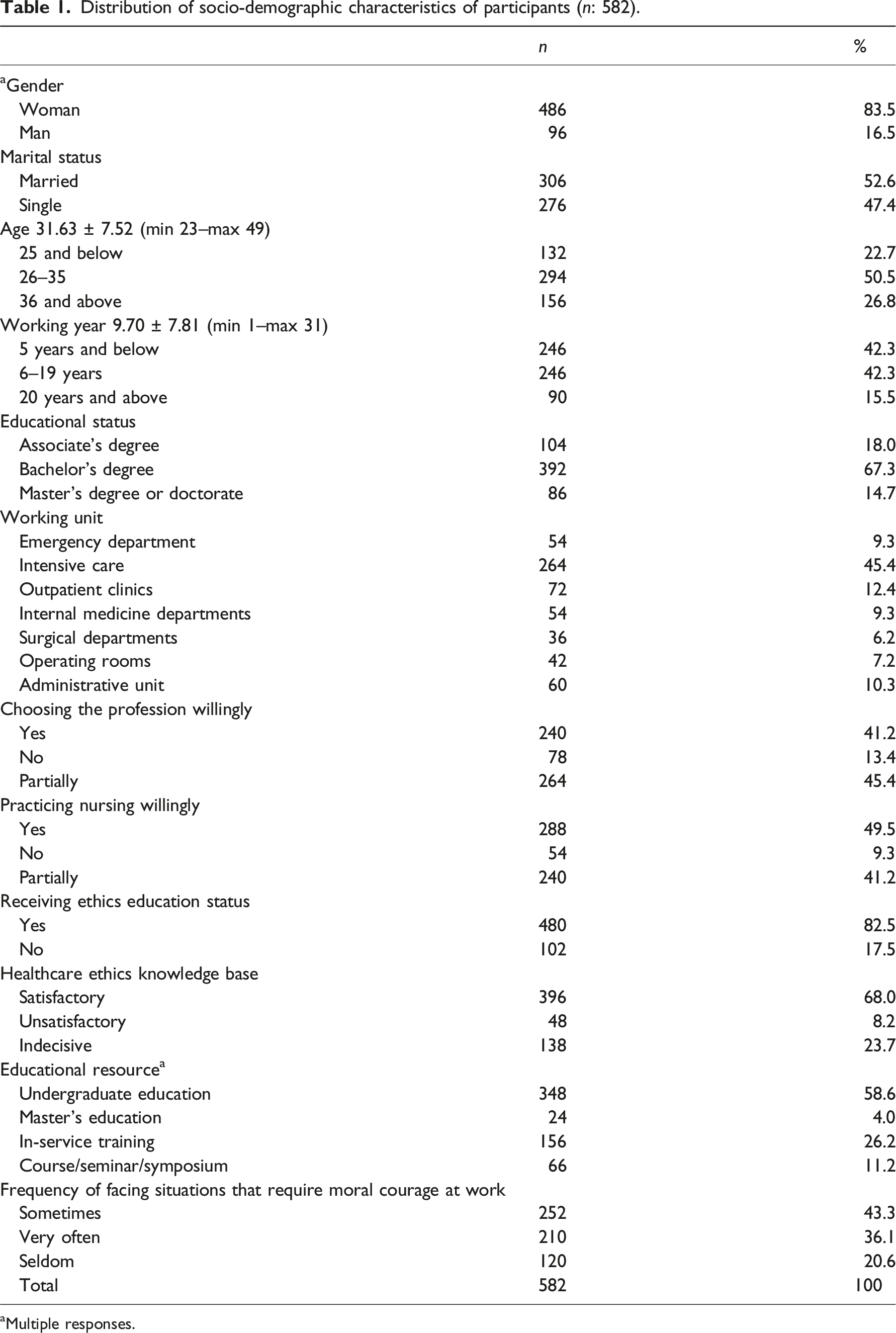
aMultiple responses.
Comparison of the socio-demographic characteristics of the participants with the moral courage scale and its subgroups.
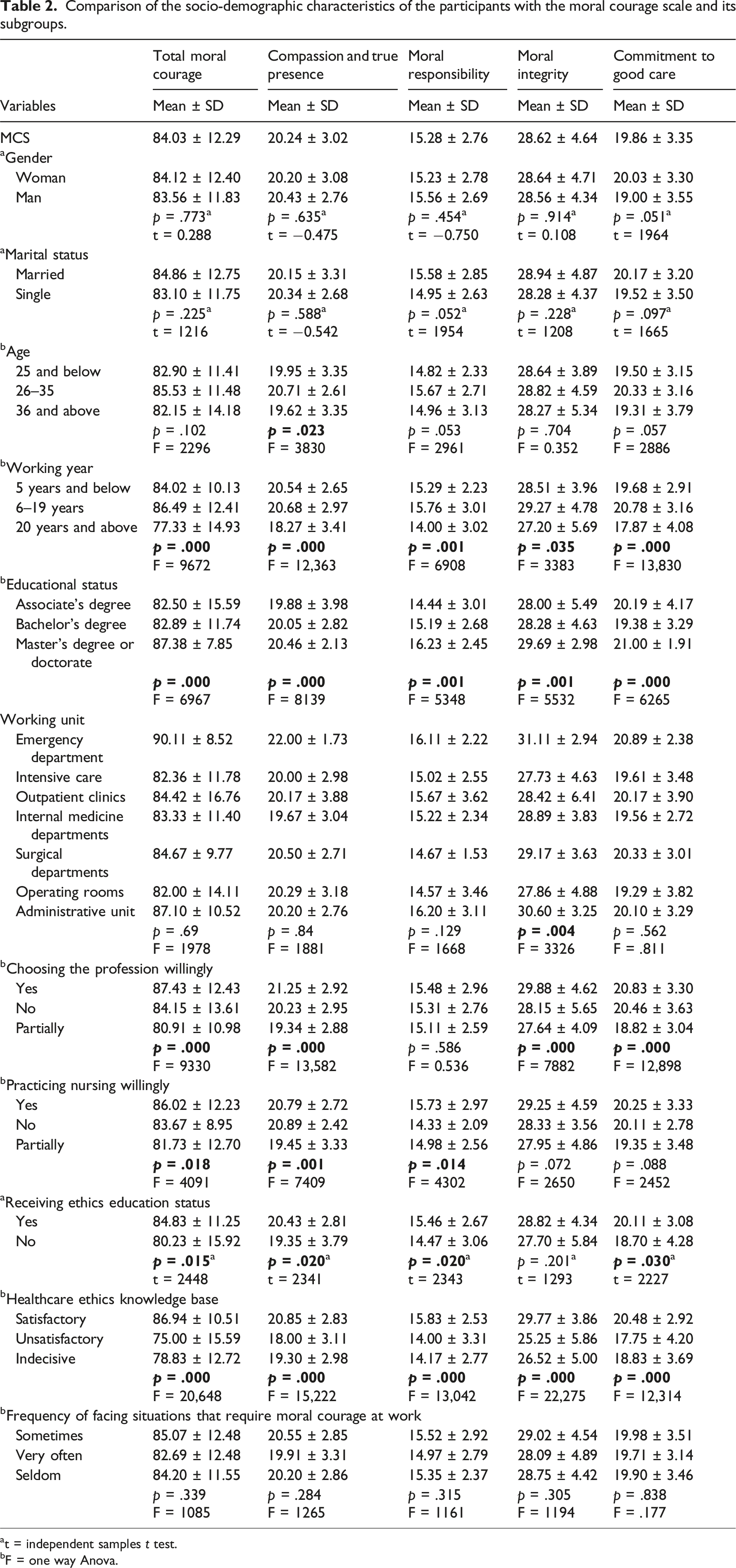
at = independent samples t test.
bF = one way Anova.
Comparison of the socio-demographic characteristics of the participants with the whistleblowing scale and its subgroups.
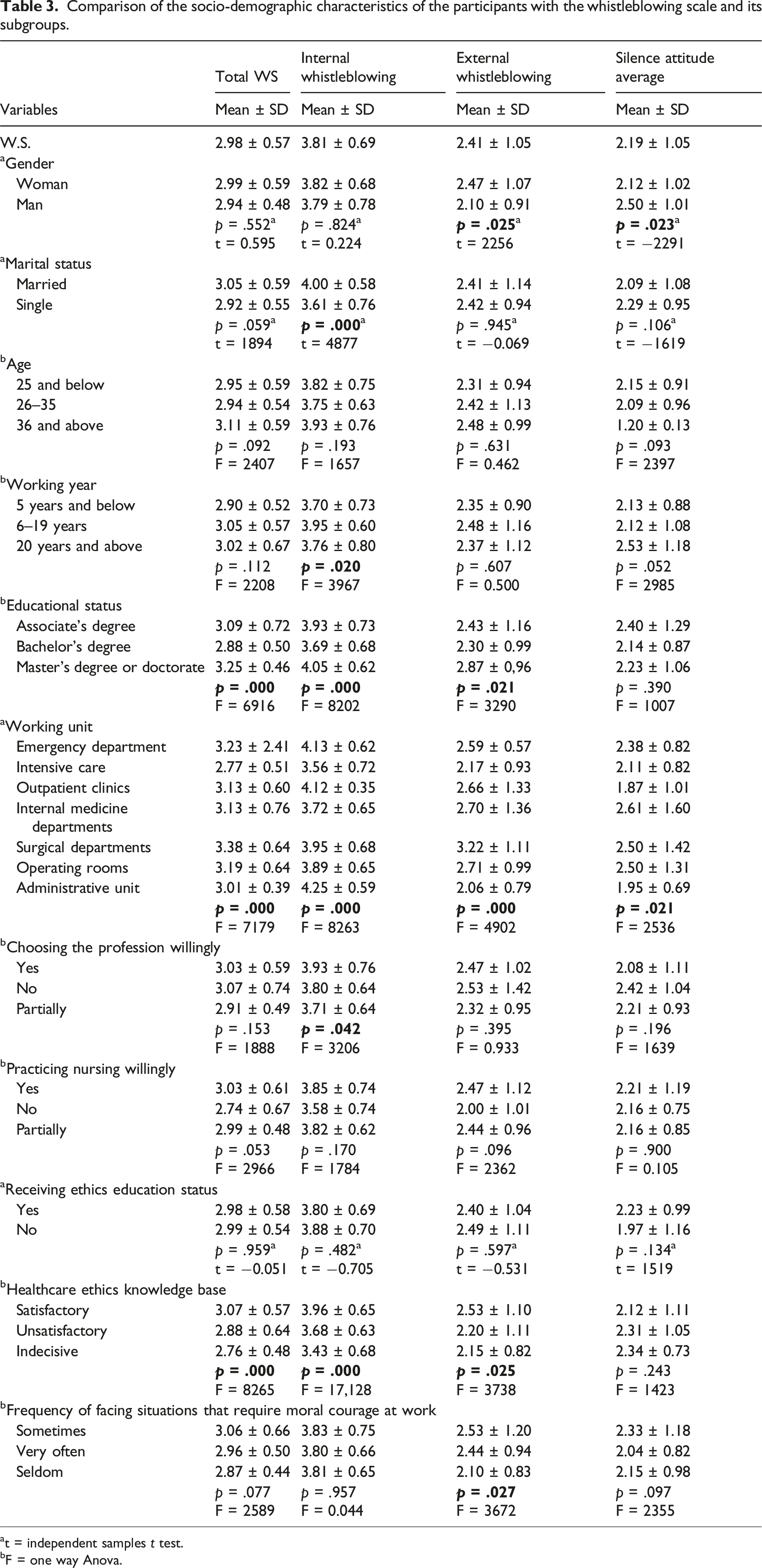
at = independent samples t test.
bF = one way Anova.
The relationship of the whistleblowing scale and the moral courage scale.
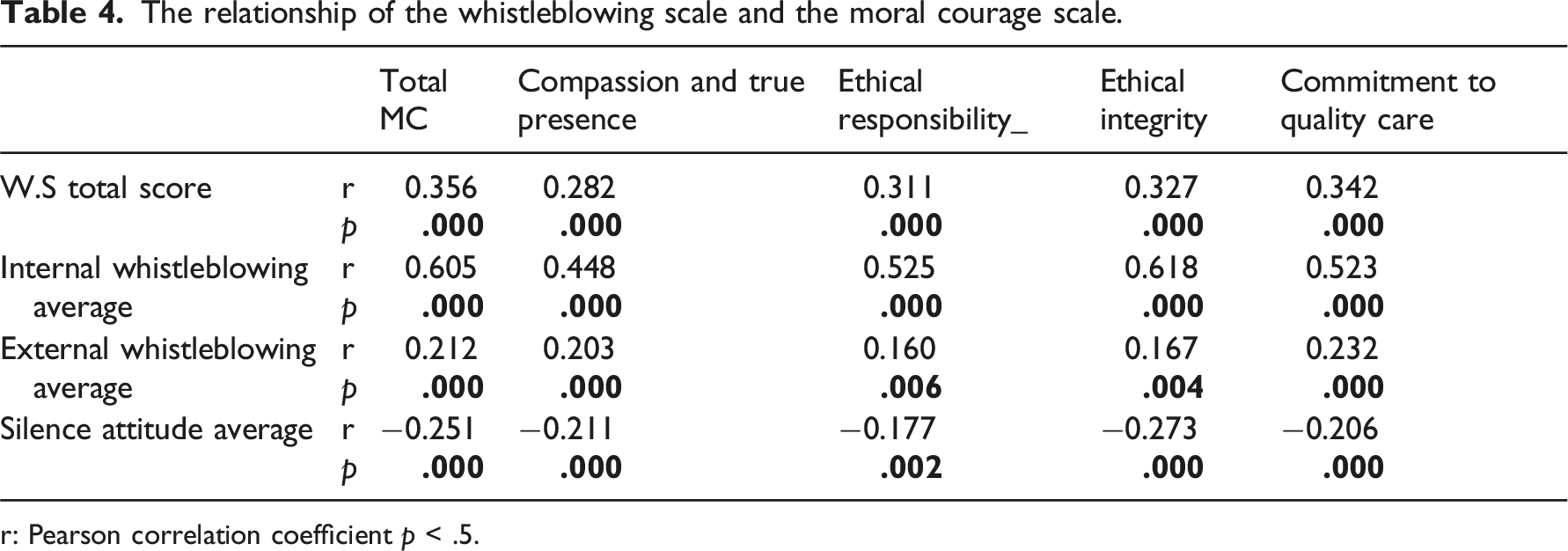
r: Pearson correlation coefficient p < .5.
Discussion
The primary aim of this research is to deeply understand and analyze the relationship between nurses’ levels of moral courage and their whistleblowing approaches. The research findings provide significant insights by examining participants’ demographic characteristics, working conditions, and ethical behaviors in detail.
Nurses are often willing to help others, act courageously from an ethical perspective, and put themselves at risk for the benefit of others.20,21 At the same time, nurses typically have a sense of responsibility for others. 21 Moral courage imposes a responsibility on nurses to take initiatives to protect patient rights. 22 Therefore, nurses need moral courage to provide ethically appropriate care and advocate for patients.2,18,21 Moral courage is rooted in an individual’s personal values, conscience, and commitment to ethical standards. The inclination of an individual to advocate for and implement what is right forms the foundation of moral courage. In this context, an individual’s intrinsic motivation and values shape their ethical behaviors.
In our study, the results obtained using the Moral Courage Scale to measure the level of moral courage among nurses seem to align with the findings of similar studies in the literature. Our participants had a moral courage score of 84.03 ± 12.29. The results of our study are consistent with studies conducted by Hauhio and colleagues, Numminen and colleagues, Wiisak and colleagues, Goktas and colleagues, and Koskinen and colleagues.2,18,21,23–25 These similarities may suggest that nurses generally have a high level of moral courage or act courageously in ethical matters. However, there are also studies that differ from the results of our study. Mohammadi et al., Konings et al., Moosavi et al., and Taraz et al. reported that the levels of moral courage among nurses were moderate.22,26–28 These differences may be attributed to various factors. For example, factors such as the work environment, ethical climate, organizational culture, organizational and managerial support, fear of social isolation, groupthink, and lack of organizational recognition can influence the level of moral courage among nurses and account for variations in the results. 29
In our study, it was concluded that nurses scored 7.89 ± 1.48 on the VAS scores where they evaluated themselves as morally courageous. This indicates that nurses have a high level of commitment to their moral values and the courage to fulfill ethical behaviors. This result appears to be consistent with similar studies, especially studies by Numminen and colleagues, Hauhio and colleagues, and Ayaz and Akkuş. The results of such research emphasize the importance of nurses’ commitment to moral values and ethical practices.2,17,18
When looking at the sub-dimensions of the Moral Courage Scale, it is important to note that participants exhibited varying levels of moral courage in sub-dimensions such as moral responsibility, integrity, commitment to good care, and professional responsibility. These results indicate that the concept of moral courage may vary in different aspects among nurses and that these variations require further in-depth investigation.
In our study, there was no statistically significant difference between demographic factors such as gender, marital status, age, and the unit of work with moral courage. These results indicate that these demographic factors do not influence the level of moral courage among nurses. Similarly, studies by Bickhoff et al., and Wiisak et al., found that gender and age were not significant variables concerning moral courage.2,21,30 However, in contrast to our study, the findings of Konings et al. indicate a statistically significant relationship between age and moral courage. 26 Such discrepancies could be attributed to differences in the study sample, methods, or geographical regions. Additionally, the complexity of the concept of moral courage and its association with various personal experiences, values, and professional ethical understandings might contribute to the diversity of these results. These conflicting results regarding the impact of demographic factors on moral courage may warrant further research. Understanding the factors that influence nurses’ levels of moral courage is important for developing ethical education and support programs and enabling nurses to contribute more effectively to ethical practices.
In our study, statistically significant differences were observed between educational status, the choice of the profession willingly, receiving ethical education, and perceived ethical knowledge level with moral courage. The results indicate that those with postgraduate degrees, individuals who willingly chose and practiced their profession, those who received ethical education, and those who perceived their ethical knowledge as sufficient had higher scores on the moral courage scale. These findings suggest that individuals with more experience, higher educational levels, professional interest, and ethical education tend to have stronger moral courage. Education is an important factor influencing and enhancing moral courage, consistent with previous research in this area. For instance, Konings et al. found a relationship between nurses’ moral courage and their level of education. 26 Wiisak et al. demonstrated that individuals with higher levels of education tend to have higher moral courage levels. 21 Similarly, Göktaş et al. reported that as the level of education increases, the total moral courage scores also rise. 24
Furthermore, Koskinen et al. emphasized that ethical education could influence the moral courage of nursing students who have graduated. 25 Numminen et al. also demonstrated that individuals who had previously attended ethics courses and engaged in self-directed ethical studies had higher levels of moral courage. 18 These findings suggest that while moral courage is a personal quality, it is also a virtue that can be learned, and ethical education plays a crucial role in strengthening this virtue. Therefore, as Aristotle expressed, the importance of ethical education should not be overlooked in the development of moral courage. 2
Moral courage is also closely related to experience and the work environment. Research on this topic has yielded various results. For instance, Göktaş et al. demonstrated that as nurses gained more experience, their moral courage scores significantly increased. 24 Similarly, a study conducted on nurses working in a university hospital in Iran indicated that moral courage was associated with professional experience and that as experience increased, moral courage was at a higher level. 27 The study by Konnings et al. showed that personally perceived moral courage increased with experience and highlighted significant differences between newly graduated nurses and experienced nurses. 26 Similarly, Bickhoff et al. suggested that nursing students lacked moral courage due to their inexperience, which led them to avoid ethical conflicts. 31
However, there are also studies that question the relationship between experience and moral courage. For example, Hauhio et al. found no relationship between work experience and moral courage. 2 While the situation of inexperienced nurses may not be directly comparable to that of nursing students, both groups were noted to potentially lack moral courage. 26 Gibson et al., on the other hand, stated that students might not demonstrate moral courage before graduation but could do so after graduating. 32 In conclusion, the relationship between moral courage and experience is complex, and different studies yield different results. Therefore, further research is needed to explore in more detail the factors that influence the development of moral courage.
The fact that errors in the healthcare sector can potentially have life-threatening consequences underscores the importance of safety and quality protection mechanisms like whistleblowing. Research has identified various factors that influence healthcare professionals’ propensity to use this mechanism. Particularly, studies conducted by Işık et al. and Filiz emphasize the critical role of whistleblowing in maintaining safe and high-quality healthcare services.33,34 However, they also draw attention to the presence of organizational and personal barriers that lead healthcare professionals to avoid using this mechanism. Factors like bullying, exclusion, and the threat of dismissal deter healthcare workers from speaking up and taking action.1,2,21,35
In the literature, there are numerous studies on the inclination toward whistleblowing, factors influencing this tendency, the impact of personal and ethical traits, and more. In Turkey, however, it can be said that there have been more studies on whistleblowing in recent years, yet the number of studies examining the relationship between whistleblowing and moral courage is limited. One aim of this study is to reopen the discussion on this subject, both personally and professionally, in the post-pandemic period, prompting reevaluations. Such studies can provide important insights into better understanding and promoting whistleblowing behavior among nurses. Strengthening the moral courage of nurses can increase their willingness to take action in the face of adverse situations, rather than remaining silent, thereby supporting safety and quality in the healthcare sector. Therefore, conducting more research on such relationships and giving greater consideration to this issue in healthcare service delivery is important.
In this study, the Whistleblowing Scale was used to assess participants’ whistleblowing behaviors. The findings indicate that participants generally exhibited a moderate level of whistleblowing behavior (mean score 2.98 ± 0.57). This result suggests that participants had a certain level of awareness regarding whistleblowing. When examining similar results obtained with comparable scales in previous studies, it is observed that in the study conducted by Işık and colleagues, nurses had an overall whistleblowing average score of 3.24 ± 0.48. When looking at the sub-dimensions, the formal whistleblowing average score was the highest at 4.19 ± 0.71, while the internal and informal whistleblowing average scores were 2.90 ± 1.21, external whistleblowing was 2.43 ± 1.05, and concealed whistleblowing was the lowest at 1.57 ± 0.89. Additionally, in the study by Aydan and Kaya, the overall whistleblowing average score was reported to be 2.96 ± 0.98, with the highest score obtained in the internal whistleblowing (3.60 ± 0.80) sub-dimension. In our study, when examining the scores of whistleblowing, external whistleblowing, and silence attitude sub-dimensions, it is evaluated that participants exhibited a more positive approach to internal whistleblowing behavior, a moderate approach to external whistleblowing, and a lower approach to silence attitude. Furthermore, data from other studies indicate that healthcare professionals generally have above-average whistleblowing tendencies and exhibit variations in different sub-dimensions in this regard. These findings highlight the importance of examining different dimensions of whistleblowing behavior in the healthcare sector and increasing awareness among healthcare professionals.
The relationship of whistleblowing with gender varies in the literature. In this context, Rehg et al. and Aydan and Kaya suggest that women might be more susceptible to retaliation than men.36,37 Aydan and Kaya, in their studies, also found that women had higher scores in the external whistleblowing dimension compared to men. 36 In our study, while no significant relationship was found between gender and the total scale score, it was observed that women scored higher in the external whistleblowing sub-dimension, whereas men scored higher in the attitude of silence sub-dimension. As Aydan and Kaya indicated, the reason for women’s tendency towards external whistleblowing might be due to the increased likelihood of exposing their identities and subsequently facing retaliation from organizational leaders if they engage in internal whistleblowing. Additionally, our study found no significant relationship between marital status and the total scale score. However, it was determined that married participants had a higher average score in internal whistleblowing compared to single participants. There are differing outcomes in the literature regarding this matter. Topgül determined that singles are more inclined towards whistleblowing than married individuals and suggested that this might be due to married employees distancing themselves from the disclosure behavior in order to avoid becoming targets in the organization or being affected by various adversities. 38 Studies exist in the literature showing no significant difference concerning marital status, 33 as well as studies indicating that singles are more inclined than married individuals. 39 Regarding marital status, similar to Aydan and Kaya’s point, we believe that the moral support married individuals receive from their spouses might lead to higher internal whistleblowing scores compared to singles.
The relationship between age and whistleblowing tendencies has various findings in the literature. Some studies have shown that older employees are more inclined toward whistleblowing than younger ones, as they are more committed to the organization’s values.40,41 However, there are also studies, like our own, that show age does not change whistleblowing tendencies. 42
Nurses’ levels of whistleblowing vary significantly based on the length of their tenure in the institution. This difference indicates that nurses who have worked in the same institution for longer years have higher internal whistleblowing scores compared to their colleagues with less experience. This could be due to longer-serving employees having a higher sense of commitment and belonging to their institution. According to studies on years of service in the profession, one study found that those with less experience had a lower tendency toward whistleblowing, 36 while another study found no difference. 42
It has been observed that the unit where nurses work can influence their whistleblowing tendencies. In our study, it was found that nurses working in surgical units had a higher average whistleblowing score compared to those working in other units. The reason for this difference could be that surgical units are more likely to encounter negative situations more frequently. Similarly, Işık and colleagues found that nurses in managerial positions had a higher whistleblowing tendency than those in clinical units, and nurses in clinical units had a higher tendency than those in clinical support units. 34 Additionally, studies by Wiisak and colleagues and Hauhio and colleagues indicated that nurses in managerial positions had higher levels of moral courage.2,21 It can be interpreted that nurses in managerial positions carry more responsibilities, which might lead to higher tendencies toward whistleblowing. Nurses’ whistleblowing tendencies can vary depending on many factors, and factors such as experience, the unit they work in, and managerial positions can influence this tendency. Understanding such factors is important for promoting whistleblowing behavior in the healthcare sector and contributing to the resolution of adverse situations.
The impact of educational level on whistleblowing behavior has yielded various results in the literature. Aydan and Kaya suggested that those with lower educational levels had lower tendencies toward whistleblowing, while Altıntaş and Özata reported no differences in this regard.36,42 However, in our study, it was observed that the highest average scores were among participants who were high school graduates and postgraduates, and those who had sufficient knowledge of ethics also had the highest average scores. These findings suggest that whistleblowing behavior may be associated with demographic factors and working conditions and can vary in different fields. However, it should be noted that further research is needed for a more comprehensive analysis.
In this study, Pearson correlation analysis was used to examine the relationship between moral courage and whistleblowing. Our findings indicate a moderate and significant relationship between participants’ levels of moral courage and their levels of whistleblowing (p < .05). These results suggest a connection between the level of moral courage and whistleblowing behavior. Specifically, our findings clearly demonstrate that as participants’ level of moral courage increases, their level of whistleblowing behavior also increases. In other words, when participants have higher moral courage, they are more inclined to engage in whistleblowing behavior. Moral courage is an important concept that involves individuals having the courage to do what is right by adhering to their ethical values and advocating for ethical standards. Whistleblowing, on the other hand, is the act of reporting ethical violations or wrongdoings to authorities. Therefore, the positive relationship between moral courage and whistleblowing underscores that individuals who act ethically responsibly may be more motivated to expose ethical violations and promote social justice.
These findings underscore the importance of promoting ethical culture and moral courage within organizations. Fostering moral courage and encouraging whistleblowing behavior in workplace environments can contribute to the prevention of ethical violations and the establishment of justice within organizations. Additionally, increasing ethical education and awareness at management levels can contribute to the development of moral courage and promote the prevalence of whistleblowing behavior.
These findings should guide future research and emphasize the need for a stronger focus on understanding and promoting ethical culture and whistleblowing behavior.
Conclusion
Moral courage entails individuals demonstrating the courage to do what is right and advocating for ethical standards while adhering to ethical values. Whistleblowing, on the other hand, is the act of reporting ethical violations or wrongdoings to authorities. In this context, the positive relationship between moral courage and whistleblowing strongly suggests that ethically responsible individuals may be motivated to expose ethical violations and ensure social justice.
However, the demonstration of moral courage by nurses is not solely related to their individual characters; it is also shaped by societal, cultural, and institutional structures. The inadequacy of an environment that encourages the display of this virtue, when considered along with the necessity of virtue ethics, poses a problematic situation.
Social and cultural norms, coupled with legal regulations, can often impose constraints on nurses’ display of moral courage. This limitation emerges as a hindering factor in promoting moral courage. While emphasizing the importance of moral courage to nurses, the societal structure and institutional ethical climate may present difficulties for nurses in exhibiting this virtue if not supportive enough.
Expecting nurses, particularly those working under challenging conditions such as during a pandemic or natural disasters, to demonstrate moral courage necessitates the provision of an environment that supports such courage. The institutional ethical climate should positively influence nurses’ morale and motivation, contributing to the development of moral courage. Without proper institutional regulations and a supportive atmosphere, nurses may find it challenging to exhibit moral courage, which can result in ethical issues at both individual and institutional levels.
Therefore, it is crucial to emphasize the significance of creating an environment that shapes and supports moral courage not only through an individual’s personal character but also through societal, cultural, and institutional regulations. Understanding that moral courage is influenced not only by individuals but also by environmental factors is important to strengthen nurses in exhibiting this virtue.
This study has highlighted important findings by examining the relationship between moral courage and whistleblowing. Overall, it was found that nurses perceive their moral courage highly and exhibit moderate levels of whistleblowing. These findings indicate that as moral courage increases, the inclination toward whistleblowing also increases.
These findings underscore the importance of promoting ethical culture and moral courage within organizations. The development of moral courage in work environments and the encouragement of whistleblowing behaviors can prevent ethical violations and promote justice within organizations. Additionally, increasing ethical education and awareness at management levels can contribute to the development of moral courage and encourage the widespread adoption of whistleblowing behavior.
These significant findings hold great value in guiding future research. Emphasizing the deeper understanding and development of ethical culture and whistleblowing behaviors is imperative. This is a critical step for organizations to firmly adhere to ethical values and create a trustworthy work environment.
Footnotes
Author contributions
Conception and design, acquisition of data, analysis and interpretation of data, manuscript drafting, manuscript revision and final approval of the version to be published: ŞY, GÖG.
Declaration of conflicting interests
The author(s) declared no potential conflicts of interest with respect to the research, authorship, and/or publication of this article.
Funding
The author(s) received no financial support for the research, authorship, and/or publication of this article.
