







Abstract
There is a general consensus that welfare states influence urban inequality patterns in cities experiencing increases in immigration. Whereas much of the existing research focused on the extent to which welfare states affect the well-being of immigrants after their admission, this study focuses on how immigration policy regimes affect the extent to which immigrant flows, and subsequent labour supply, match variations and fluctuations in the composition of demand in urban labour markets. In particular, the article develops a comparison between Malmö and Genoa, an Italian and a Swedish city with similar urban histories that display considerably different patterns of urban inequality. Immigration to Malmö was fuelled largely by humanitarian emergencies in the countries of origin and occurred in a period of economic decline for the city. The growth of the immigrant population was associated with a worsening of the labour market situation for immigrants and an increase in ethnic residential segregation. Immigration to Genoa was mainly driven by demand for cheap labour, particularly in the private-care sector. Therefore, the growth of the immigrant population was associated with an ethnic segmentation of the labour market, but it also resulted in a more dispersed distribution of immigrants than in Malmö. The differences in the urban inequality patterns in Malmö and Genoa can be only partly explained by policies affecting the living conditions of admitted immigrants. An important role has also been played by the immigration policy regimes of the two countries, which prescribed the integration potential of immigrant flows.
Introduction
Immigrants are more likely to work in marginal and precarious occupations than natives. For this reason, immigrants are thought to be more vulnerable than natives to economic downturns (Tilly, 2011). This seems to be the case following the current global financial crisis, whose impact differed cross-nationally but brought about a deterioration of immigrants’ employment situation in many European Union (EU) countries, apparently regardless of the magnitude of crisis-related problems. For instance, Sweden was able to recover from the crisis more rapidly and strongly than other EU countries, but the economic recovery was associated with a (further) worsening of the employment situation of non-western immigrants relative to natives (Ekberg, 2012). Although the crisis had a more severe and prolonged impact on the Italian economy, the deterioration of labour market conditions in this country did not affect immigrants more than natives (Bonifazi and Marini, 2014). Since the onset of the crisis in late 2008, Sweden received a very large inflow of immigrants, with the second highest intake of asylum seekers per head of population in the EU after that of Luxembourg (OECD, 2013: 28). The immigrant population continued to grow also in Italy, albeit at a slower pace than before, with an inflow of labour immigrants, as a percentage of population, larger than that of Sweden (OECD, 2013: 25). Despite the sustained exposure to the global financial crisis, the employment rate of immigrants continued to be higher than that of natives in Italy, while Sweden continued to be marked by a very high employment rate among natives and also by a relatively low employment rate among foreign-born residents (OECD, 2012: 91).
The reasons why the immigrant populations of the two countries have proven to be differently affected by the global financial crisis need to be identified in the different composition of immigrant flows (and stocks) and, above all, in the different ways in which the latter have been incorporated into reception contexts. A crucial factor contributing to cross-national differences in the patterns of immigrant incorporation is the variation in immigration policies, defining the cross-border conditions for non-nationals, and immigrant policies, favouring the integration of immigrants after their admission. The whole set of immigration and immigrant policies is generally labelled as immigration policy regime and is deemed to form an important component of the welfare state, since it delimits the categories of non-nationals who can gain entitlement to public benefits and services (Faist, 1995).
Comparative studies on the impact of welfare states on immigrants’ living conditions have generally focused on the ‘internal’ side of immigration policy regimes, that is, the one affecting the integration of admitted immigrants, without taking into account the ‘external’ side related to the regulation of admissions. In the words of the author of one of the most relevant and comprehensive studies within this field, the focus has been generally ‘on policies affecting immigrants after their arrival in the country and not on immigration policy per se’ (Sainsbury, 2012: 16).
As the examples of Sweden and Italy indicate, an apparent contradiction seems to exist between the level of inclusiveness of immigrant policies and the labour market integration outcomes of immigrants. In fact, Sweden is ranked highly when immigrant policies are compared but, at the same time, seems to be less successful than countries with less inclusive immigrant policies, such as Italy, in favouring the labour market integration of immigrants (Wiesbrock, 2011).
The main hypothesis of this study is that the consideration of immigration policies, in conjunction with immigrant policies, is imperative for explaining this apparent contradiction and understanding cross-national differences in the socio-spatial patterns of immigrant incorporation into cities. In particular, this study investigates this hypothesis by comparing Malmö and Genoa, a Swedish and an Italian city that, during recent decades, have been exposed to the same sort of economic restructuring and followed parallel trajectories of population change as a consequence of immigration. Despite the similarities in their urban histories, the two cities display considerable differences in their urban inequality patterns, whose key determinants can be identified in the macro-scale arrangements of the two countries’ welfare systems, including their immigration policy regimes.
The article is organized as follows. The second section reviews the literature concerning the structuring role of national welfare systems on socio-spatial inequalities in cities. This section adds to the literature by highlighting the crucial role played by immigration policy regimes in prescribing, at least to some extent, the integration potential of immigrants into urban labour markets. The third section describes the institutional contexts of the two countries and presents the data and materials used in the study. The comparative analysis between Malmö and Genoa is then developed in the following three sections. The fourth section provides historical background on the urban development paths of the two cities in the first post-war decades. The fifth and sixth sections explain why the interaction between immigration and post-industrial urban restructuring produced different socio-spatial outcomes in the two cities, in terms of labour market inequalities and residential segregation. Discussions and conclusions follow in the seventh and last section of the article.
Theoretical embedding
A great deal of urban research has engaged critically with the hypothesis that, in recent decades, the post-industrial transformation of the economy brought about a concurrent increase of income, occupational and spatial polarization in cities. This hypothesis was derived from the observation that the growth of jobs at the top and the bottom ends of urban labour markets seemed to have induced a deepening of both occupational and income polarization (Sassen, 1991). In particular, the expansion of bottom-level service jobs was identified as an important driver for international migration to post-industrial cities, mostly from poor countries. As cities became more unequal and their populations more diverse ethnically, social groups tended to become more spatially separated from one another, leading to an exacerbation of spatial polarization (in the form of ethnic residential segregation).
This hypothesis has been criticized mainly for generalizing findings from a small number of non-representative cities (mostly of non-European countries) and for underestimating the extent to which post-industrial economic restructuring tends to be mediated locally through national institutions and policies, hence affecting income, occupational and spatial polarization.
With respect to income polarization, the European ramification of this debate highlighted the importance of welfare states in mitigating inequality through redistributive policies. Therefore, some of the causes for the diversity in patterns of urban inequality have been attributed to the cross-national variation in the institutional arrangements of welfare states, and in the local impact of neoliberal reforms in particular (Musterd and Ostendorf, 1998).
Welfare states are also thought to influence the degree of polarization of occupational structures in post-industrial cities. In fact, welfare states can hinder the expansion of low-paid service jobs in the private sector either by providing benefits to economically inactive individuals (Hamnett, 1996), or by promoting the creation of better-paid jobs in the public sector (as in Northern European countries) (Pratschke and Morlicchio, 2012).
Furthermore, national forms of regulation of housing systems are considered to influence the extent to which income and occupational polarization may be translated into spatial polarization. Housing policies affect the tenure composition of housing markets and, eventually, the quality and supply of affordable housing for low-income groups (including immigrants); instead, urban planning systems determine the degree of spatial concentration, or dispersion, of housing tenures within cities (Arbaci, 2007; Maloutas, 2012). The intensity of spatial polarization in cities depends not only on the level of segmentation of housing markets (i.e., the distribution of different population subgroups across housing types) but also on the spatial location of housing tenures (i.e., the extent to which these tenure are spatially separated from or mixed with each other). In addition, planning and housing systems are expected to define conditions and limitations for potential compositional changes in neighbourhood populations in the context of urban renewal programmes and, by and large, to ‘structure the possibilities, opportunities and rules for housing interventions’ (Van Gent, 2010: 69).
What is missing in this literature, however, is a consideration of the ways in which urban inequality patterns are also influenced by immigration policy regimes and, in particular, by ways in which immigrants are incorporated into reception contexts.
As other forms of welfare state intervention, immigration and immigrant policies may have a redistributive impact on cities. From a narrow economic point of view, these policies appear to be ‘essentially redistributive tools, aiming at reducing negative effects of migration on wages and unemployment among natives’ (Boeri and Van Ours, 2013: 246). Moreover, it has been argued that ‘the preservation of the advantages of the welfare states entails limited access to their benefits’ (Freeman, 1986: 52). Immigration policy regimes play a crucial role in securing such limited access by delimiting the categories of non-nationals to be granted admission to host countries.
As mentioned, the focus of comparative research on immigration policy regimes has been predominantly on the extent to which policies affect the well-being of immigrants after their admission. Evidence from one of the most important studies of this kind indicates that countries with more encompassing welfare states, such as Northern European ones, are more effective in lifting immigrants from poverty than countries with less encompassing welfare states (Sainsbury, 2012). At the same time, the gap in the poverty rates of immigrants and natives is larger in Sweden than in countries with less encompassing welfare states, such as Germany and the UK, because immigrants seem to experience more disadvantages in the Swedish labour market compared to the other two countries (Kesler, 2015).
It has been argued that the composition of labour market demand in European countries determines the type of ‘ethnic penalty’ faced by immigrants (Reyneri and Fullin, 2011a, 2011b). The trade-off is between the scarcity of entry-level jobs, which exposes immigrants to a higher risk of unemployment, and the low quality of these employment opportunities, which contributes to the de-skilling of immigrants and to their concentration in low-skilled and low-paid jobs. However, the outcome of this trade-off depends also on how, on the supply side of the labour market, immigration policy regimes influence the magnitude, composition and timing of immigrant flows – that is, what can be defined as ‘the nature of immigration’ (Reyneri and Fullin, 2011b: 48).
As has been noted, it may prove difficult to draw a clear-cut distinction between mutually excluding forms of immigration since ‘distinctions between types of migrants derive more from bureaucratic necessity than from sociological insight’ (Fussell, 2012: 39). Yet, a somewhat loose distinction can be made in relation to the degree of matching between immigrant labour supply and local labour market demand.
In this respect, the Organization for Economic Cooperation and Development’s (OECD’s) indicators of immigrant integration show that ‘labour migrants tend always to be better positioned in the labour market than migrants who arrived for family or humanitarian reason’ (OECD, 2012: 89). As seen before, much of the social polarization debate assumed that immigration from poor countries is predominantly driven by the demand for low-skilled workers in urban labour markets. This is not the case in countries that have traditionally privileged immigrant reception on the basis of humanitarian and family-related grounds. These types of immigrant flows and the related labour supply may not match variations and fluctuations in the composition of demand in urban labour markets. The case of Sweden can be seen as emblematic of countries in which ‘humanitarian and family-related flows do not correspond to cyclical labour market demand but are rather related to the existence and severity of ethnic conflicts and civil war over the world’ (Wiesbrock, 2011: 60).
Therefore, the responsiveness of immigrant flows to economic cycles is at least partly pre-empted by immigration policy regimes. In fact, immigration policy regimes influence the characteristics of immigrant labour supply and, for this reason, they contribute significantly to shaping the modes of immigrants’ incorporation into cities. The inclusion of immigration policy regimes in the analysis is thus essential for informing a more nuanced and context-sensitive understanding of the variation in the socio-spatial outcomes of post-industrial economic restructuring in cities.
Institutional contexts and research materials
This study aims at explaining how the local interaction of welfare states and immigration policy regimes contributes to the generation of very different urban inequality patterns in Malmö and Genoa, a Swedish and an Italian city that, in the last two decades, have experienced increases in immigration after deindustrialization and related economic restructuring. The two cities are chosen as comparable cases because, as explained below, they have historically occupied similar positions within the urban hierarchies of their respective countries (cf. Glick Schiller and Çağlar, 2011).
Malmö and Genoa replicate, with specific contextual conditions, the features of the national welfare systems. Given the stronger redistributive power of the Swedish welfare state, Sweden is a more equal and less stratified country than Italy (Esping-Andersen, 1990). One reason for this difference lies also in the occupational structures of the two countries. The Swedish welfare state offers an extensive public provision of services that, in Italy, need to be either produced by households themselves or purchased in the market. In particular, the public sector continues to be the main financer and provider of care in Sweden despite recent cuts in spending; for this reason, a larger share of the labour force is occupied in the public sector in this country than in Italy (Da Roit and Weicht, 2013; Williams, 2012).
Another difference between the two cities is related to the characteristics of their immigrant populations, which resemble national patterns.
Immigrant flows to Sweden have been dominated by humanitarian immigrants since the early 1970s, when the trade unions obtained a ban on labour immigration. Since the change in immigration policy, immigrants experienced a worsening of their labour market situation relative to natives and became over-represented among welfare recipients (Bevelander, 2010). The Swedish immigration policy regime has been described as inclusive towards legal immigrants, since residence in the country is sufficient to provide access to welfare entitlements (Sainsbury, 2012). At the same time, this regime is very restrictive towards illegal immigrants, whose estimated share of the population is one of the lowest in the EU (Papadopoulos, 2012).
Immigration to Italy reached significant levels more recently than in Sweden. Italy has traditionally accepted very few refugees per capita, compared to Sweden, and labour immigration has been the main channel of entry. As in other Southern European countries, the large size of the informal economy acted as the main magnet for immigrant flows (Finotelli and Sciortino, 2009; Mingione, 2009; Reyneri and Fullin, 2011b). Many legal immigrants experienced periods of unauthorized residence before being granted a permit. Admittedly, Italy is the EU country with the largest number of immigrants who obtained a legal status through regularization programmes (Ambrosini, 2013: 51).
Despite these differences between the Swedish and the Italian immigration policy regimes, the two countries display a similar pattern of concentration of immigrants in low-skilled jobs (OECD, 2012: 118).
Due to their generally limited economic resources, in both countries immigrants typically begin their housing careers at the bottom the housing market – that is, in public housing apartments in Sweden and in the private-rented sector in Italy (where public housing provision is minimal). Whereas immigrants continue to concentrate in specific immigrant-dense neighbourhoods of Swedish cities even many years after their immigration, in Italy the marginalization of immigrants in the housing market coexists with low levels of residential segregation (Arbaci, 2008; Mingione, 2009).
The focus of the comparative analysis is on how the interaction between these macro-level institutional factors influences the modes of incorporation of immigrants into the two cities, producing different outcomes in terms of labour market inequalities and residential segregation. After having provided a historical background of the two cities in the next section, the two following sections examine the two aforementioned ‘outcomes’ separately.
The data used in the study present some problems of comparability, which are discussed below. Data on Malmö are retrieved from a register-based dataset administered by Statistics Sweden containing a wide range of socioeconomic and demographic information on all legal residents. An analogous nationwide dataset does not exist in Italy. Therefore, population data for Genoa are drawn from municipal registers, while income data are from the Italian Revenue Agency. The latter are only available aggregated at the district level and for the year 2011. Given the different sources of data used, immigrants are defined differently in the two cities – that is, as ‘foreign-born’ in Malmö and as ‘foreign nationals’ in Genoa. The comparison is also based on secondary literature, such as research reports, policy documents and other academic works (many of them in Swedish and Italian).
Historical background
In the first post-war decades, Malmö and Genoa were the most important port cities in Sweden and Italy, in terms of trade volumes, and their urban structures developed subsequently to accommodate the needs of port-related activities.
Genoa is one of the corners of the Italian north-western industrial triangle (along with Turin and Milan) and its port has long been the most important international trade node in the country. Most industrial activities in the city have traditionally been dependent on the port. The urban economy was dominated by a single shipbuilding and engineering conglomerate (Ansaldo), although the central government also acted as an important subsidizer and contractor. Until the mid-1960s, the city experienced a growth attributable to internal immigration, especially from the southern regions of the country (Arvati, 2011).
During the same period, Malmö gained population as a result of internal migration from the rural areas of the country and labour immigration from abroad. The population influx was rapidly absorbed into the local labour market, and the employment rate of immigrants even exceeded that of natives (Ohlsson, 1975). Kockums AB, the local shipyard, was the largest private employer and, until the mid-1970s, about one fifth of the industrial workers living in the city were employed in the shipbuilding sector.
During this phase, Genoa and Malmö followed similar trajectories of socioeconomic and demographic development. The two cities presented typically ‘Fordist’ patterns of urban inequality, and the bottoms of their social structures were occupied by a large, highly unionized, full-time employed working class.
A major change in demographic trends in the two cities occurred thereafter. After Genoa’s population peaked in 1965 (with 848,121 inhabitants) and Malmö’s did the same in 1970 (at 265,505), the populations of two cities began to shrink. This turnaround was related to the contraction of the shipbuilding sector, due to the fall in demand associated with the oil crises of the 1970s and to the emergence of low-cost competitors in developing countries.
Since the mid-1960s, the volume of trade passing through Genoa has decreased progressively. The city lost importance as an industrial centre when Ansaldo closed the main shipbuilding plant in 1966 and transferred production to Trieste (in the northeast of Italy). The contraction of the shipbuilding industry affected other economic sectors through a cascade effect and, between 1971 and 2001, the proportion of industrial workers declined from 38.1% to 22.9% of the labour force (Arvati, 2011).
Deindustrialization had a dramatic impact in Malmö, as well, where all shipbuilding activities were ceased in 1987 and about 25,000 jobs were rapidly lost (Anderson, 2014). In the early 1990s, Sweden experienced a domestic financial crisis that was felt intensely in Malmö, where the unemployment rate became the highest in the country.
Malmö lost 13% of its population in the period 1970–1984, and Genoa continued to lose inhabitants until recent years; the Italian city’s population declined by about 30% between 1971 and 2011. In both cities, the most visible consequence of deindustrialization was that many residential buildings were abandoned and stood unused. As explained below, the apartments that remained vacant were occupied by new waves of immigrants who arrived in both cities between the mid-1980s and the early 1990s.
Immigration and new patterns of inequality in the labour market
Malmö and Genoa received large immigrant flows during a period of economic and demographic decline. Although Malmö and Genoa went through a similar economic restructuring, increased immigration produced very different socio-spatial outcomes in the two cities. The reason for this variation in outcomes can be attributed to the different nature of immigrant flows and, above all, to the different ways in which the latter were incorporated into the urban labour markets.
In Malmö, the migration balance turned positive again in the mid-1980s. Until the late 1990s, population growth was driven mainly by an inflow of asylum seekers fleeing from conflicts in the Middle East (Iraq and Lebanon) and in the Balkans (former Yugoslavia). These non-western immigrant groups created a base of residents who, in subsequent years, attracted co-nationals in a chain-migration process (in the form of family reunification migration). The opening of the Öresund Bridge in 2001, connecting Malmö to Copenhagen, favoured new types of international migration for non-refugee reasons. A large number of Danes moved to Malmö, attracted by lower housing prices, while keeping their jobs in Copenhagen. Furthermore, Malmö received a large number of labour immigrants from EU countries (Poland in particular), especially after the Eastern enlargement.
As a consequence of these immigrant flows, the population matched the peak level of 1970 in the early 2000s, and then reached 300,000 residents by the turn of the following decade (Anderson, 2014). Between 1990 and 2010, foreign-born residents increased from 16.4% to 30.2% of the population and the bulk of this growth can be attributed to non-western immigrants, who increased from 11.3% to 23.9%. 1
As shown in Figure 1, in 2010 the ethnic composition of the immigrant population reflected the variegated nature of flows. Refugees from the Middle East accounted for about one fourth of the foreign-born and those coming from former Yugoslavia accounted for about one fifth. The group from developed countries accounted for another fifth of the total (roughly half of them Danes), while Eastern Europeans accounted for 16% (half of them Poles).
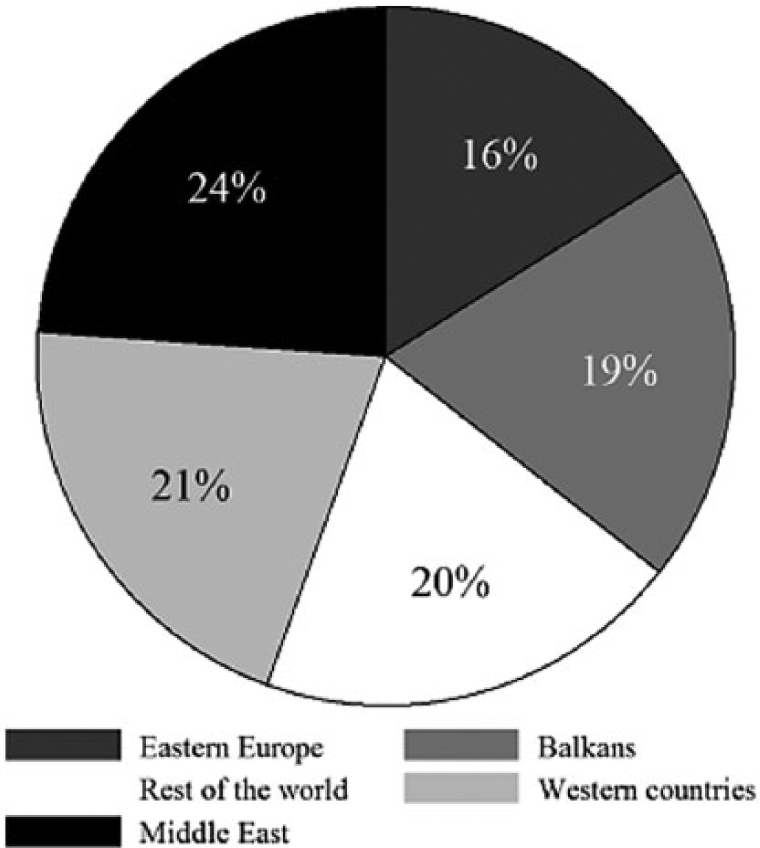
Composition of the foreign population in Malmö by group of origin, 2010.
Therefore, a great deal of immigration to Malmö originated from war-torn countries and was not driven by an unmet demand in the local labour market. In fact, immigration occurred during a period of rising unemployment and after that many residents abandoned the city.
In the period 1985–1994, a dispersal policy encouraged the settlement of newly arrived asylum seekers in municipalities with available housing to prevent their further concentration in the already congested urban areas (Ekberg, 2012). This policy was relaxed in 1994 and, since then, asylum seekers gained more freedom in arranging their place of residence, while waiting for their application to be processed. This reform aimed at reducing the costs for refugee reception and encouraging asylum seekers to take responsibility for their own accommodation (Bevelander, 2010).
As explained in the next section, Malmö became an attractive destination for asylum seekers due to its vacant public housing stock and, after the opening of the Öresund Bridge, due to its geographical proximity to continental Europe.
As part of the general concern for cost-containment, and in line with the national workfarist turn in social policy, local immigrant policies have increasingly emphasized participation in the labour market, versus welfare dependency, as a key requirement for immigrants ‘to be considered full members of Malmö’ (Scuzzarello, 2015: 62).
The growth in the share of the non-western immigrants was associated with their concentration in bottom-level jobs, as indicated by their downward movement in the income distribution (Scarpa, 2015). Data for 2010 show a concentration of non-western immigrants in the low-wage service sector. In that year, the two largest employment sectors for non-western immigrants were the hotel and restaurant industry (7.6% of those aged 18–64 in employment) and cleaning services (6.7%). Instead, the two largest sectors for both natives and immigrants from developed countries (separately considered) were health-care (with, respectively, 7.6% and 8.7% of those employed in the same age group) and primary education (respectively, 6.7% and 5.5%).
What is remarkable in Malmö, however, is the high percentage of non-western immigrants who are out of the labour market. This is evident in the difference in employment rates between these immigrants and the rest of population. In 2010, 42.8% of non-western immigrants aged 18–64 were employed, compared to 61% of all those in the same age group (73.1% of natives). Furthermore, about one fifth (20.6%) of immigrants from non-western countries (in the same age group) received social assistance benefits in that year, compared to a citywide average of 9.4% (4.5% of natives). Because of the high number of recipients, Malmö is the municipality paying the second highest cost for social assistance per capita in Sweden, a level that is 2.3 times the national average (Socialstyrelsen, 2014: 62). There is evidence indicating that the transition of non-western immigrants to employment tends to be slower in Malmö than in other Swedish large cities, controlled for the same individual- and neighbourhood-level characteristics (Hedberg and Tammaru, 2013).
Starting in the early 1990s, the share of immigrants rose also in Genoa, albeit without offsetting population decline. Immigrants constituted less than 1% of the population in 1991, and Moroccans were the largest immigrant group. 2 The composition of the immigrant population changed in the late 1990s, by which time Ecuadorians outnumbered Moroccans, and immigrants became 2.7% of the population. In 2011, immigrants reached 9% of the population and, as shown in Figure 2, the ethnic composition of the immigrant population was quite unbalanced. Latin Americans accounted for 46% of the total, with Ecuadorians representing over one third of all foreign nationals (34.6%). Other important groups were Eastern Europeans, accounting for about one fifth of the total (the largest group being that of Rumanians, 8.3%), and Africans, accounting for 10% (the largest group being that of Moroccans, 5.1%). Immigrants from western countries were less than 5% of the total, while the remainder of the immigrant population was made of Albanian (8.9%), Chinese (3%) and other non-western origins.
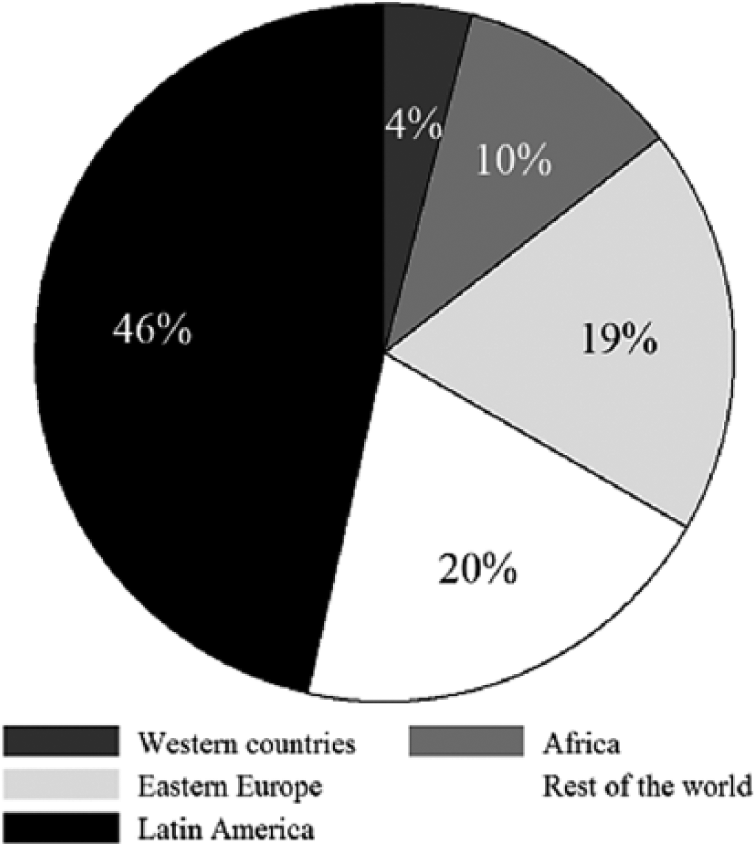
Composition of the foreign population in Genoa by group of origin, 2011.
Unlike Malmö, immigration to Genoa has been driven mainly by labour market demand. North African immigrants who arrived in the late 1980s were mostly men working as street vendors (Arvati, 2011). Ecuadorians, who increased in number beginning in the late 1990s, by contrast, were to a large extent women employed as private-care workers for Italian households.
In the late 1990s, macroeconomic and political instability in Ecuador led to an increase in emigration to Italy. The majority of Ecuadorians in Genoa come from Guayaquil, Ecuador’s most important port city, where a wave of Italian immigrants, mostly merchants from Genoa, settled in the first half of the 19th century. Although the members of the Ecuadorian community in Genoa are not descendants of these Italian immigrants, the existence of such long-lasting transnational ties contributed to the development of a chain-migration process along the previously established channel of movement, facilitated by the perceived cultural and linguistic similarities (Lagomarsino, 2006).
The existence of a large private-care market is not a peculiarity of the Genoese context but represents the typical pattern of integration of immigrant women into the urban labour markets of Italian urban areas (Mingione, 2009). The concentration of immigrant women in this sector has been favoured by a combination of factors, such as the scarcity of public services in Italy, population ageing and the reduction of informal care supply, resulting from women’s increased employment and their changing attitudes towards caregiving roles (Ambrosini, 2013; Da Roit and Facchini, 2010; Tognetti Bordogna, 2012).
In Genoa, specific conditions contributed to the growth in demand for migrant workers in the private-care sector. Firstly, Genoa has one of the oldest populations in Italy and Europe. In 2010, residents over 65 years of age constituted 26.7% of the population and a large proportion of them lived alone (18.9% of men and 40% of women in this age group). Secondly, public provision of care services is very limited in relation to the needs of the population. For instance, in 2011, 1243 elderly received public home care in Genoa compared to 5577 in Malmö, which had about half of the population of the former. 3 Thirdly, many elderly Genoese had worked in the large manufacturing firms of the city before retirement and, for this reason, enjoyed full access to social security and generous retirement conditions. Their pensions are often complemented by a cash-for-care allowance paid to all adults unable to live independently (including frail elderly), whose use is not controlled by public authorities (Ambrosini, 2013; Da Roit and Facchini, 2010; Da Roit and Weicht, 2013). The availability of these economic resources endowed elderly Genoese to purchase low-cost care services from immigrant women with either regular or irregular status.
Already in 2002, the majority of regularization processes carried out in Genoa (5149 out of 8565 cases) concerned immigrant women (3476 of them Ecuadorians) without residence permits, who were already working as private-care workers for Italian households (Erminio, 2005: 129). Recent data indicate that this employment sector remained somewhat sheltered from the consequences of the global financial crisis which, as in the rest of the country, did not drive down the demand for care of Italian households. The concentration of immigrant women in this sector explains why they were less affected by job losses than natives in the aftermath of the recession (Erminio, 2012: 46).
The real number of immigrant private-care workers in Genoa is thought to be higher than the one reported by official statistics, because a large number of immigrant women are employed informally. A 2010 survey estimated that about one third of the 13,200 private-care workers in Genoa were undocumented immigrants, and only 40% of these workers had a regular employment contract (ARS Liguria, 2010). As in other Italian cities, a large number of these immigrant workers (about two thirds of the total, according to the same survey) are employed as live-in domestic workers, cohabiting with the households for which they work.
Immigrant incorporation and residential segregation patterns
Since the early 1990s, Malmö embarked on an urban renewal project that involved private developers in the construction of new expensive housing units in the port area and in the renovation of the built environment in inner-city neighbourhoods. The aim of the project was to contribute to the physical and socioeconomic upgrading of the western waterfront area of the city (Baeten, 2012). The project did not have a similar impact in the neighbourhoods located in the south and eastern parts of the city centre, which remained dominated by high-rise buildings, the majority of them owned by the municipality through the municipal housing company, MKB. MKB is the largest landlord in Malmö. The enduring permanence of a social democratic majority in the municipal council prevented the conversion of public rental housing into owner-occupied units, as happened in other Swedish municipalities that have been governed by right-wing parties (e.g., Stockholm) (Andersson, 2013).
At the beginning of the 1990s, the public housing neighbourhoods of Malmö had a large number of vacant apartments, because of the outmigration of residents. Many of the public housing buildings located in these neighbourhoods were poorly maintained and in need of major renovations (Lind and Blomé, 2012). Given the scarcity of alternatives in a context of cuts in housing policy expenditure (both at the national and municipal levels), these vacant apartments were eventually occupied by newly arrived asylum seekers and also by registered refugees coming from other parts of the country. This development was also encouraged by the changes in immigrant reception policies mentioned in the previous section.
As shown in Figure 3, in 2010 these immigrant-dense neighbourhoods were also characterized by lower-than-average incomes. This is particularly the case of the neighbourhoods at the bottom of the income hierarchy (the neighbourhoods from 1 to 4 on the x-axis in Figure 3), belonging to the district known as Rosengård. Rosengård was completed in the late 1960s, as part of a public housing construction programme, and is located in the east of the city centre. In 2010, the high-rise apartment blocks in this district had 17,726 inhabitants, more than half of them (56.8%) with a non-western background. In the same year, less than one third (30.4%) of those aged 18–64 years living in these apartment blocks were in employment and 27.7% received social assistance.
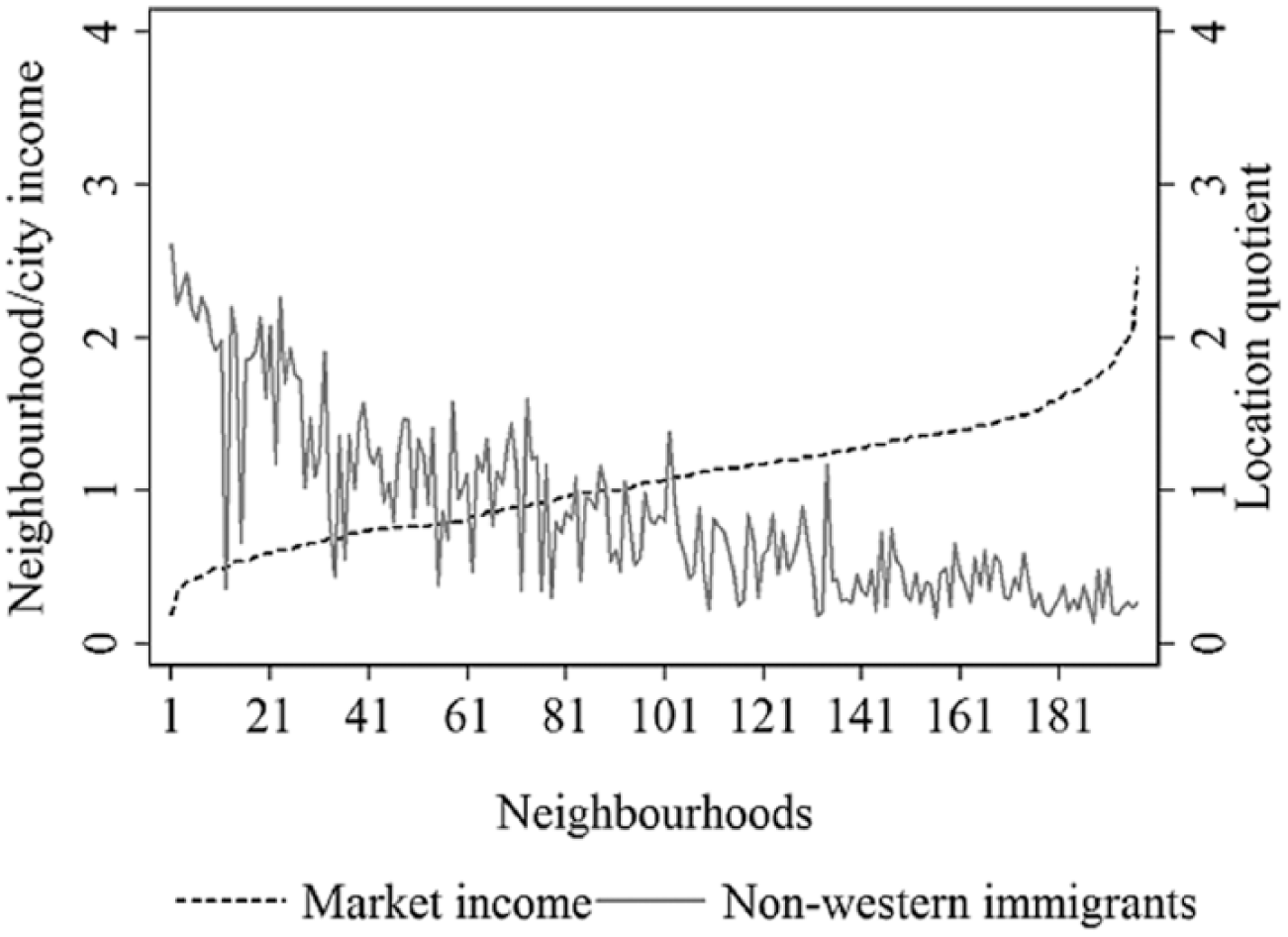
The distribution of market incomes and non-western immigrants across Malmö’s neighbourhoods, 2010.
Other districts presenting similar housing and population structures are Hyllie, Fosie and Södra Innerstaden, located in the south and eastern parts of the city centre. The high-rise apartment blocks in these districts, together with those of Rosengård, accounted for about one fourth of Malmö’s population in the years between 1990 and 2010 (27.9% in 2010). During the whole period considered, about half of the non-western inhabitants of Malmö remained concentrated in these high-rise apartment blocks (49.1% in 2010). Although Rosengård, Hyllie, Fosie and Södra Innerstaden have been involved in different area-based urban programmes since the late 1990s, the income gap with the neighbourhoods at the top of the urban hierarchy remained large. In 2010, these residential areas were still marked by a low employment rate (46.1% of those aged 18–64 years) and by a high rate of social assistance (24.1% of those in the same age group).
What is peculiar in Malmö is that this city is partitioned into large tenure-homogeneous residential areas that present different population characteristics and are spatially separated from one another (as shown in Figure 4).
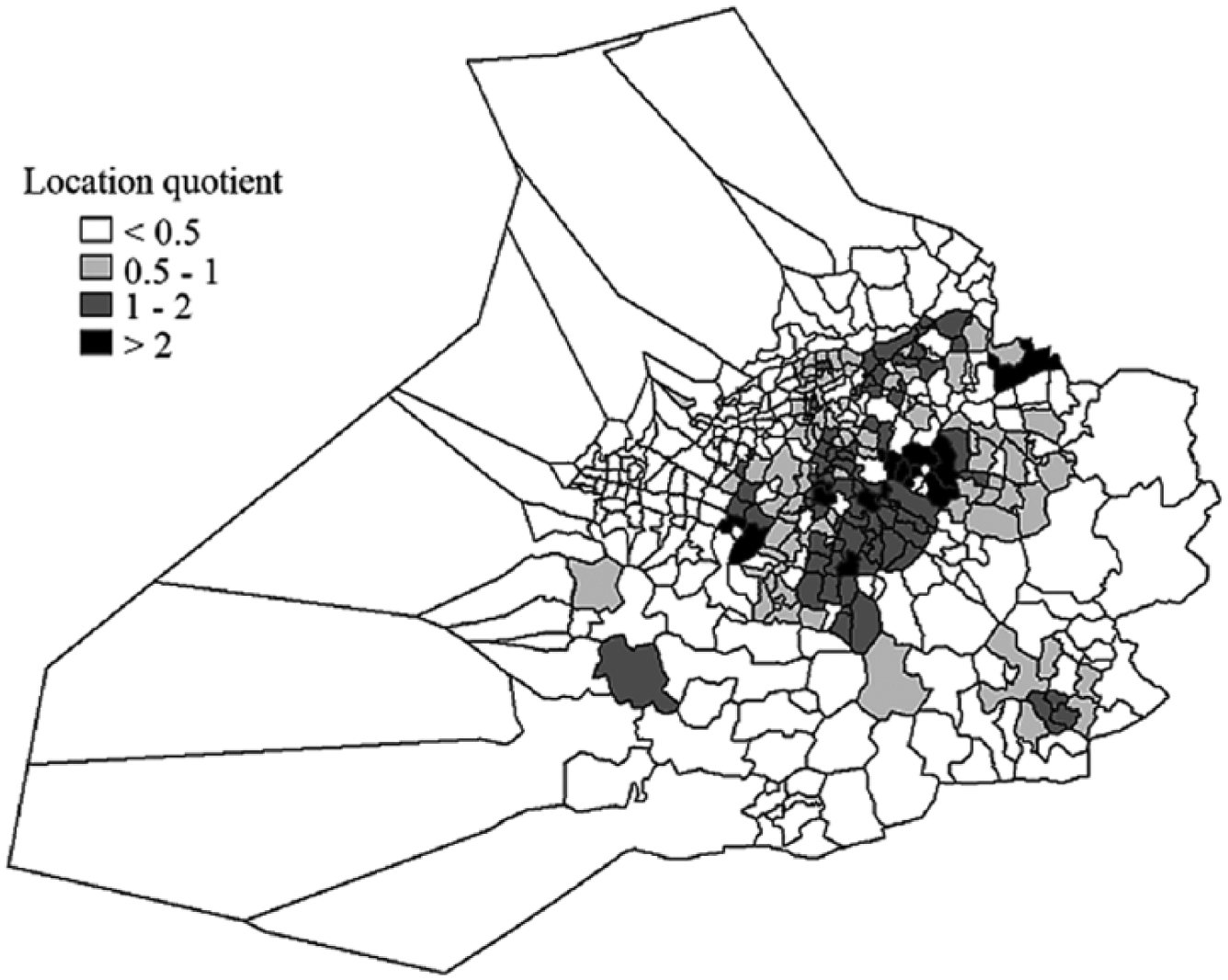
The spatial distribution of non-western immigrants in Malmö, 2010.
The first wave of North African immigrants who moved to Genoa in the early 1990s found accommodation in privately owned and rundown apartments, available for rent, located in the port area, which had lost residents after the downsizing of the industrial sector. At that time, the port area of Genoa presented a concentration of social problems and physical decay, but local authorities thought that it had potential for touristic development owing to its historical heritage. Since 1993, the port area underwent a piecemeal process of renovation and a few ancient buildings (from the 12th and 13th centuries) were converted for use by university faculties to encourage the settlement of students and favour an improvement of living conditions therein (Gastaldi, 2003). The renovation of Genoa’s city centre did not involve a wholesale replacement of the population but resulted in an increase in ‘vertical’ segregation within single apartment buildings. Middle-class and low-middle-class households (including university students) occupied the upper floors comprising larger apartments in better physical condition, while immigrants kept the lower floors comprising smaller and often dilapidated apartments (Gastaldi, 2013).
As shown in Figure 5, the inner-city neighbourhoods, located near to the port, were still those with the highest shares of foreign residents in 2011. Between 2000 and 2011, the number of immigrants residing in these neighbourhoods (belonging to the district Centro Est) increased from 6190 to 10,772, but their overall share of the immigrant population declined from 36.7% to 19.8% (Comune di Genova, 2012: 11). The expansion of the immigrant population in Genoa was in fact associated with a spatial de-concentration of immigrants, who settled in growing numbers in the districts in the north (Val Polcevera) and in the west (Centro Ovest) of the port, characterized by the presence of low-quality apartment blocks built during the construction boom in the 1950s and 1960s (Gastaldi, 2013). Accordingly, in 2011, Centro Ovest (15.7%) and Val Polcevera (12.7%) had a higher proportion of immigrants than Centro Est (11.9%), where the first immigrant groups had settled. Another factor contributing to the dispersed distribution of immigrants throughout Genoa is, as mentioned, the co-residence of many immigrant private-care workers with the households they work for, as indicated by the low level of spatial concentration of Latin Americans (Comune di Genova, 2012: 14).
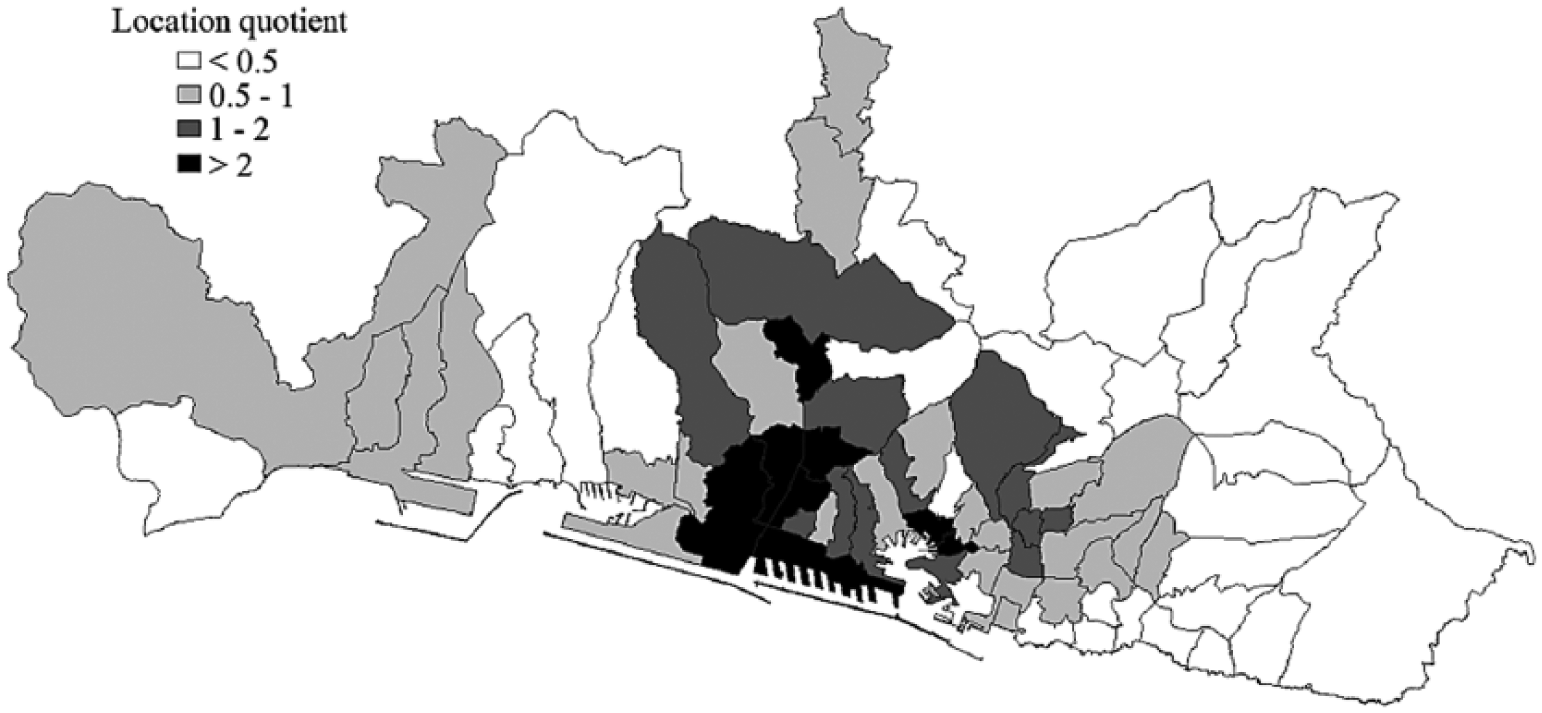
The spatial distribution of immigrants in Genoa, 2011.
Income data for Genoa are only available at the district level and therefore they are only to a limited extent comparable with those available for Malmö (which are aggregated at neighbourhood rather than district level). Figure 6 seems to indicate that the correlation between shares of immigrant residents and mean incomes is less negative across Genoa’s districts than across Malmö’s neighbourhoods. This difference between the patterns of spatial distribution of immigrants in the two cities has to do with the different degree of tenure homogeneity of residential areas. Whereas Malmö’s neighbourhoods have been built by large-scale (public and private) developers, housing production has been to a large extent realized by small-scale (and mostly private) developers in Genoa (Arbaci, 2007). This explains why pockets of immigrant concentration and economic deprivation can be also found in some neighbourhoods with a higher-than-average income, such as Maddalena or Molo, both belonging to the district Centro Est (i.e., the two spikes on the right-hand tail in Figure 6). In these neighbourhoods, the renovation of part of the housing stock resulted in ‘a partial replacement of the local population and the long-term coexistence of gentrifiers and vulnerable groups’ (Arbaci, 2008: 601).
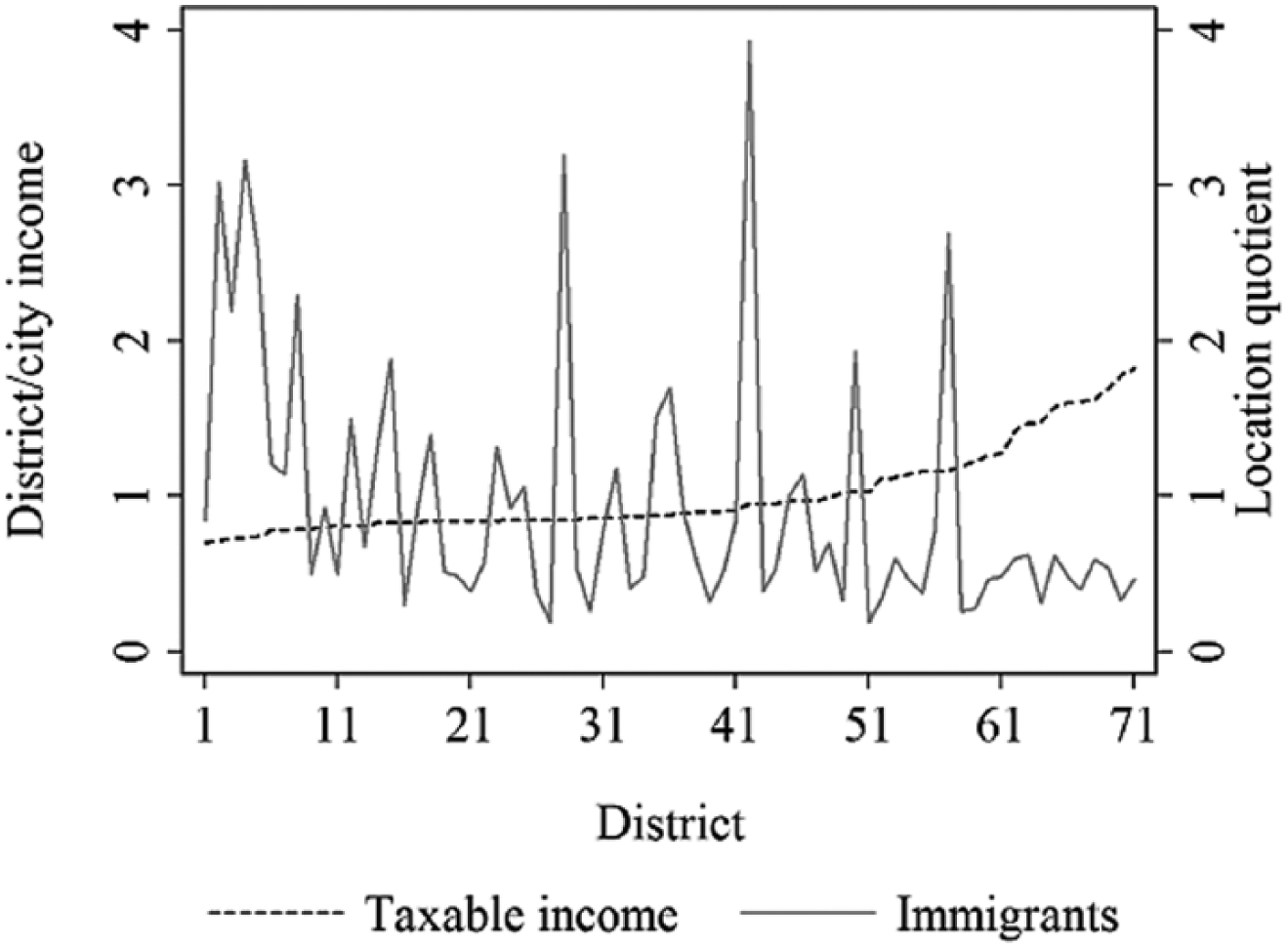
The distribution of market incomes and immigrants across Genoa’s districts, 2011.
Discussion and conclusions
This study analysed and compared the modes of immigrant incorporation in Malmö and Genoa, a Swedish and an Italian city with similar urban histories that began to display considerable differences in urban inequality patterns after deindustrialization and the subsequent increase in immigration. The comparative analysis developed in this study sought to explain how the interplay between immigration and post-industrial economic restructuring has been mediated in contextually specific ways by the local welfare systems, producing very different socio-spatial outcomes in the two cities.
The consequences of welfare state expansion and retrenchment, in terms of social stratification and inequality in post-industrial cities, have been a central object of investigation in the European literature on social polarization. This study added to this literature by highlighting the importance of immigration policy regimes in prescribing, at least to some extent, the integration potential of immigrant flows into cities. The main argument of this study is that the socially stratifying effect of welfare states cannot be reduced to the ways in which policies affect immigrants after their admission to host countries. Immigration policy regimes also play an important and complementary role, by establishing the extent to which immigrant flows and subsequent labour supply match variations and fluctuations in the composition of demand in urban labour markets.
The institutional settings of the Swedish and Italian welfare systems, along with their immigration policy regimes, played a pivotal role in influencing the modes whereby immigrant flows have been incorporated into Malmö’s and Genoa’s labour markets.
In Malmö, the timing and the extent of the increase in immigration has been largely fuelled by humanitarian emergencies in the countries of origin, rather than by local labour market needs. The increase in immigration occurred in a period of economic decline for the city, which became an attractive immigrant destination due to the public housing units left vacant after deindustrialization. The growth of the immigrant population was accompanied by a parallel increase in unemployment among immigrants and also in the level of ethnic residential segregation.
In Genoa, immigration has been driven mainly by demand for cheap labour, particularly in the private-care sector. The micro-scale fragmentation of the urban structure of this city contributed to a spatially dispersed pattern of residential incorporation of immigrants. For this reason, Genoa is characterized by a lower level of residential segregation than Malmö, although immigrants tend to occupy the less attractive apartments even in the Italian city’s more ethnically mixed neighbourhoods.
The differences in the patterns of labour market inequality and residential segregation between Malmö and Genoa can be only partly attributed to diverse sets of policies affecting the living conditions of admitted immigrants. Another factor to be considered is the way in which the magnitude, composition and timing of immigrant flows have been calibrated by the immigration policy regimes of the two countries.
The global financial crisis that began in 2008 in the US developed into a broader crisis of the EU integration project that affected all policy domains, including immigration control and regulation. Immigration increased sharply in size both internally, from crisis-hit Southern to wealthier Northern European countries, and from outside the EU, as a consequence of recent events in Northern Africa and the Middle East, and therefore became a central issue in the political agenda of all member states.
A repeatedly debated issue is related to the alleged weakness of border protection measures in Southern European countries. Italy is one of the countries that are constantly invited by the EU and other member states to improve their control activities on irregular immigration, particularly along the Mediterranean maritime borders (Finotelli and Sciortino, 2009).
At the same time, however, pressures at the EU level are providing impetus for national reforms of immigration policies also in Northern European countries. One example is the new immigration policy introduced in Sweden in 2008, which resembles those existing in other EU countries and established a guest-worker system linking residence permits to employment contracts. It has been argued that, by opening for the possibility of a large-scale importation of labour immigrants from poor countries, the new policy has introduced a new set of inequalities in the Swedish context, in addition to those existing between natives and humanitarian immigrants, and that it may contribute to the creation of a ‘precariat’ in the lower echelons of the Swedish labour market (Schierup and Ålund, 2011). The rationale behind this reform was that a change in the management of immigrant flows may facilitate the access of immigrants to employment and, by and large, their integration into the Swedish society. While much of the recent attention of policymakers has focused on entry conditions, very few efforts have been made to remove the institutional barriers that foreign-born residents face in accessing the Swedish labour market and, in particular, those related to the non-recognition of the human capital acquired in their home countries, which force many highly skilled and well-educated humanitarian and labour immigrants to accept low-paid and precarious jobs (Alatalo and Ostapenko, 2014).
While this study emphasized the differences in the patterns of immigrant incorporation into Swedish and Italian cities, future research could investigate the emerging similarities between the migration experiences of asylum seekers and labour immigrants in Northern European and Southern European cities in a period of fiscal austerity, economic instability and precarization of working conditions.