







Abstract
This study examines the evolving role of digital innovation hubs (DIHs) as territorial intermediaries within the European Union’s (EU’s) digital transformation strategy. DIHs, designed to foster digital innovation and support the digitalisation of small and medium-sized enterprises (SMEs), are pivotal actors in aligning European digital policies with the specific needs of regional ecosystems. Through a qualitative analysis based on 43 in-depth interviews with DIH and European digital innovation hubs (EDIH) representatives, European Commission stakeholders and DIH network coordinators, this research explores the mechanisms through which DIHs facilitate digitalisation and act as crucial intermediaries. Our findings reveal the diverse roles played by DIHs—as promoters, facilitators and enablers—adapting their strategies to address regional disparities in digital maturity. Despite their significant contributions, our analysis highlights persistent mismatches between EU policy objectives and local implementation, particularly in less digitally advanced regions. This study contributes to refining the concept of territorial intermediation by emphasising the need for flexible, context-specific approaches to maximise the impact of DIHs. Policy implications underscore the importance of tailored support mechanisms, proactive needs assessment and enhanced cooperation to effectively bridge regional digital gaps and foster a more inclusive digital transformation across Europe.
Keywords
Introduction
For several years, digitalisation 1 has emerged as a strategic tool for enhanced competitiveness and renewed innovation within companies and territories (Dubois and Sielker, 2022; Matern et al., 2020). The COVID-19 crisis further accelerated this trend and increased its strategic salience (Boikova et al., 2021). This phase of digital transformation, characterised by rapid technological change and profound socioeconomic shifts, calls for policy renewal across the European Union (EU), its Member States, and cities and regions (Boikova et al., 2021). In this context, the EU digital strategy plays a pivotal role, as it aims to establish a more secure, open and democratic European digital market. The strategy emphasises technology as a lever for citizens and businesses and acknowledges the significance of digital transformation in all economic and social sectors. It advocates an integrated approach to overcome digital challenges, with priorities that include Europe’s digital sovereignty and the deployment of high-speed networks.
As part of this strategy, digital innovation hubs (DIHs) 2 have been introduced as fundamental components of the EU policy toolkit for digital transformation (Crupi et al., 2020). The establishment of DIHs reflects a dual objective: accelerate the adoption of digital technologies by European businesses and foster innovation and competitiveness in support of regional economic development. These hubs, structured as one-stop shops and mandated to support companies at the regional level or beyond, facilitate access to knowledge and technologies for businesses, particularly small and medium-sized enterprises (SMEs). Many European businesses struggle to fully exploit technological innovations due to limited access to resources, knowledge and finance. DIHs therefore aim to reduce these constraints through technical expertise, research and development (R&D) support, test before invest opportunities, skills development programmes and access to finance and partnership networks, as outlined by Hervas-Oliver et al. (2021). Among the services cited in the literature, test before invest often appears as the most decisive, as it allows companies to test a product or service in a controlled scenario, reduce risks and obtain results that fit operational constraints (Kalpaka et al., 2020). These hubs function as centres of competence and innovation, with tailored support to address the specific needs of the companies and regions they serve (Rissola and Sörvik, 2018). DIHs are a demand-driven approach to provide technological solutions to problems of companies and public sector organisations and not a technology push. This is the only initiative at the European level of this kind. Taking into account a low level of companies involved in the digital transformation at the EU level due to multiple difficulties they need to face and at the same time the challenge of growing competition, in particular from the United States and China, DIHs propose an approach giving a chance to address these two dilemmas at the EU level. DIHs serve as crucial conduits for multiple stakeholders, assuming diverse roles within their organisational frameworks. DIHs function as catalysts that facilitate the integration of novel technologies while bridging gaps between different entities and sectors. They can also be seen as access points to the broader EU artificial intelligence (AI) ecosystem, including testing and experimentation facilities (TEFs), AI-on-demand platform, trustworthy AI or data spaces (Huckmann, 2024). By establishing connections between businesses of varying scales, local governments, regional agencies and academic institutions, DIHs foster an interconnected ecosystem that enhances innovation and promotes growth (Miörner et al., 2019). This collaborative approach supports strong local roots while it also secures links to a broader European network, which enables the exchange of knowledge and practices across borders (Crupi et al., 2020).
The first call for proposals to create DIHs was launched in 2016. Based on this experience, the European Commission proposed a second step: the establishment of the European DIH (EDIH) network in 2022. According to the DIH catalogue, as of August 2023, there were 655 DIHs across all EU member states. Since then, the EDIH catalogue has become the main public entry point for hub information. As of July 2025, the EDIH network is composed of 254 EDIHs with heterogeneous institutional settings, specialisations and regional anchoring. A total of 168 receive co-finance from the European Commission’s Digital Europe Programme, while 86 hold Seal of Excellence status with finance from national or regional resources (EDIH network website). Despite this diversity, current research has not examined how these hubs operate as territorial intermediaries—in other words, how they translate, adapt or reconfigure European digital objectives within their local contexts.
Within the literature, territorial intermediation refers to organisations—mostly public or para-public—that facilitate collaboration, knowledge circulation and project coordination at the local level (Bourdin et al., 2020; Inkinen and Suorsa, 2010). We go further in three ways. First, we tie intermediary roles to place-specific institutions and resource endowments that set feasibility constraints and opportunity sets (Grillitsch and Sotarauta, 2020; Morgan, 2021). Second, we make the vertical link explicit through mandate alignment across EU, national and regional arenas, which anchors intermediary action in multilevel governance rather than generic brokerage alone (Flanagan et al., 2022; Kroll, 2015). This view aligns with evidence from planning and regional studies that place-based policies require multi-level governance because they mobilise multiple actors across scales; their effectiveness rests on coordination across tiers and on mechanisms that align strategies and instruments (Barca, 2009; Barca et al., 2012). Third, we anchor intermediary action in accountability to territorial coalitions, so that objectives, resources and outcomes face scrutiny from place-based partnerships (Bourdin and Jacquet, 2025). We take the OECD triptych of promoters, facilitators and enablers as a baseline, and we extend it with a territorial specification that states scope conditions, operational instruments and cross-level linkages for each role (Flanagan et al., 2022; Kattel et al., 2022).
Despite the recognised importance of DIHs and territorial intermediation, the literature still lacks a clear account of how these hubs act as territorial intermediaries within the EU digitalisation strategy. Prior work seldom specifies the mechanisms and role configurations through which DIHs address regional firms’ needs and the alignment of these efforts with European policies (Crupi et al., 2020; Gaiani and Ala-Karvia, 2023; Jovanovic et al., 2021).
This article closes that gap. We set out a territorial specification of intermediary roles, we map instruments and cross-level links, and we test this framework on DIHs across diverse regional contexts. Drawing from existing theoretical approaches, we argue that DIHs act as local enablers of innovation while simultaneously fulfilling a strategic function as vertical connectors. They contribute to the translation of EU-level digital ambitions into operational measures adapted to regional contexts. Our research question is as follows: How do DIHs act as territorial intermediaries in the development and implementation of the EU’s digitisation strategy, and to what extent do they contribute to aligning European objectives with local digital needs and capabilities?
This study makes three contributions. First, it advances theory on territorial intermediation through a clear architecture that links intermediary roles, scope conditions and cross-tier connections, with an explicit account of the vertical dimension. Second, it offers a conceptual contribution on DIHs as a class of intermediaries: it defines role configurations under territorial conditions, sets decision rules for role dominance and links each role to concrete instruments and alignment mechanisms across EU, national and regional tiers. Third, it delivers an empirical contribution through a structured comparison between Western and Central-Eastern regions, a transparent protocol to code dominant roles, and a taxonomy of mismatches between European objectives and regional application that reveals asymmetries in capacity, awareness, resources and governance.
At the policy level, our results highlight the necessity of more territorially sensitive frameworks to guide the support and evaluation of DIHs. A standardised approach may fall short in addressing the diversity of regional situations. Greater capacity for DIHs requires a renewed model that reinforces their position within both horizontal ecosystems and vertical governance arrangements. The design of targeted mechanisms adapted to varying levels of digital maturity remains essential for ensuring the long-term success of the EU’s digital agenda.
The remainder of the article proceeds as follows. “Literature review” section reviews the literature on regional innovation systems (RISs) and territorial intermediation. “Methodology” section details the methodological approach. “Results” section presents the main empirical findings. The final sections provide recommendations and conclude the analysis.
Literature review
The literature review section is composed of two main parts. First, a framework of RISs to analyse innovation dynamics in the territorial context is presented, followed by the conceptualisation of territorial intermediation, particularly combined with the digitalisation of economy and society processes. These two strands of literature aim to depict the place and role of DIHs as facilitators of knowledge exchange and orchestrators of the digitalisation processes of businesses and public sector organisations at the local scale. First, we explore the concept of a RIS, particularly in the context of increasing digitalisation, to understand how these systems evolve and adapt. Next, we introduce the concept of territorial intermediation to examine the role of DIHs as crucial actors that facilitate the digital transformation of regional economies. We conclude this section with explicit analytical expectations about (a) role configurations and (b) cross-level alignment, which inform our empirical design.
RISs in the digital age
The RIS provides a framework for studying innovation dynamics on a territorial scale. Seminal works such as Cooke et al. (1997), Edquist (1997) and Asheim and Gertler (2005) have defined RISs as sets of interdependent actors, including firms, universities and public institutions, collaborating within a region to promote innovation and economic development. This collaboration is crucial for knowledge sharing, R&D activities and entrepreneurship. Asheim (2019) recently highlighted the growing importance of these systems in stimulating regional innovation. However, in the age of the digital economy (Antipina et al., 2021), these RISs are likely to undergo significant changes, and the role of digital technology in innovation processes has become decisive (Mura and Donath, 2023).
Over the past decade, the adoption of digital technologies has exponentially grown in all areas of society, impacting businesses, individuals and governments (Batista e Silva and Dijkstra, 2024). In recent years, companies have significantly increased their investment in information and communication technologies (ICTs; Almeida et al., 2020). In particular, the COVID-19 pandemic accelerated this digital transition (European Investment Bank, 2021), with major investments at the national and European levels. Mura and Donath (2023) showed that digitisation of the economy can be a source of growth. However, Rissola and Sörvik (2018) explained that many companies, particularly SMEs, struggle to take full advantage of these benefits. Across the EU, statistics show that in 2024 only 6.2% of SMEs (against 40.7% of large businesses) are considered highly digitised (https://ec.europa.eu/eurostat/web/interactive-publications/digitalisation-2025; https://ec.europa.eu/eurostat/fr/web/interactive-publications/digitalisation-2023). Moreover, there are significant regional disparities in ICT adoption. This point has direct RIS implications: digitalisation amplifies the importance of absorptive capacity, specialised skills and access to experimentation environments, which tend to concentrate unevenly across territories.
While the impact on businesses has been overall positive, assessing the broader effects on local economies and individuals, both now and in the future, is more challenging (European Commission, 2024). Recent studies nevertheless suggest that the impacts can be positive, although they vary from region to region, depending on the structure of their economies and the skills of the workforce (Eduardsen, 2018). Fernandes et al. (2021) and Asheim (2019) explained that current RIS research identifies and categorises various possible development paths for regional industries. Among these paths, digitalisation is becoming increasingly relevant and invites traditional sectors to adjust and adopt new digital technologies, demonstrating their willingness to conform to the necessities of an increasingly digitally oriented economic market (Antipina et al., 2021). For RIS research, the key issue is therefore not digitalisation “in general,” but the territorial conditions that make digital change feasible: workforce skills, firm capabilities, connectivity infrastructures, access to R&D and test facilities and institutional capacity to coordinate joint projects.
Place-based innovation refers to innovation activities that are rooted in specific geographic contexts—cities, regions or local ecosystems—where spatial proximity fosters knowledge exchange, collaboration and specialisation (Cooke, 2001; Hassink, 2020). Digital technologies (e.g. AI, Internet of Things (IoT), cloud computing, blockchain, advanced connectivity) transform how innovation occurs, often transcending traditional geographic constraints. Their interplay lies in how digital tools reshape the spatial logic of innovation—both reinforcing and redefining the importance of place. Digital technologies act as enablers and amplifiers of regional innovation capabilities as regards connectivity and collaboration, smart infrastructure, knowledge diffusion and new local specialisations (Balland and Boschma, 2021). This dynamic creates a central tension for place-based innovation: digital tools can expand access to knowledge beyond local boundaries, yet effective adoption still depends on territorially embedded complements (skills, trust relations, sectoral specialisation, regulatory interpretation and access to demonstration and testing environments). This tension explains why “place” remains decisive, even as some knowledge exchanges become less constrained by distance.
Thus, by enabling closer collaboration and faster dissemination of innovations, digital technologies offer ways of improving the competitiveness and capacity for innovation of RISs. At the same time, however, the challenges associated with digitisation—notably the need to adapt skills, the risk of exclusion for less digitally advanced regions and data security concerns—require particular attention if they are not to hinder the innovative potential of the RIS. The digital divide is therefore not simply a firm-level gap; it is also a territorial coordination problem that affects collective learning, access to infrastructures, and the ability to convert EU digital priorities into regional projects. It is against this backdrop that DIHs were created to support players in the regional ecosystem in embracing digitalisation (Crupi et al., 2020). In this article, we consider these DIHs to be crucial territorial intermediaries that facilitate the digital transformation of the RIS’s actors. DIHs matter for RIS dynamics because they can reduce coordination failures (between firms, technology providers and public support schemes) and capability failures (skills, experimentation capacity, project engineering), which otherwise limit digital adoption at the regional scale.
Territorial intermediation as an analytical framework
Revisiting the concept of territorial intermediation
Over the past two decades, the concept of intermediation has undergone significant theoretical development in fields such as innovation economics, regional science and territorial governance. Initially associated with transactional brokerage in finance and insurance, intermediation has been reconceptualised to describe actors and structures that facilitate coordination, knowledge circulation and policy transfer across fragmented innovation landscapes (Dalziel, 2010; Howells, 2006; Smedlund, 2006).
In the literature different types of intermediaries are described: among others, innovation intermediaries, knowledge intermediaries, territorial intermediaries (Caloffi, et al., 2023; Feser, 2023; Lepore, 2023). Territorial, innovation and knowledge intermediaries each mediate interaction, but they differ in focus and function. Territorial intermediaries, such as systemic collaborative platforms (SCPs) operating at city or regional scales, foster multi-stakeholder governance and shared mandates to drive place-based transitions (e.g. SCPs in urban climate neutrality). Innovation intermediaries, by contrast, act as brokers in the innovation process—connecting actors, enabling collaboration and generating value through roles like knowledge broker, orchestrator or value generator across firm, industry and national levels (Feser, 2023; Noviaristanti et al., 2024). Meanwhile, knowledge intermediaries specialise in facilitating learning and translation of insights, particularly in sustainability transitions and digitalisation: they disseminate information, build networks and offer implementation support, especially by helping actors align around shared visions and adopt new practices (Bäumle et al., 2022). Despite these differences, all three intermediary types overlap: innovation intermediaries often engage in knowledge-brokering, and territorial intermediaries may perform knowledge-translation functions in their localised networks. All are boundary-spanning actors that help align resources, knowledge and goals across different domains (socio-technical, spatial or organisational) to support systemic change. In our article, we treat DIHs as “territorial intermediaries” when three conditions hold: (1) a public or para-public mandate explicitly tied to territorial development objectives; (2) a multi-stakeholder positioning within a regional ecosystem (firms, research, public agencies) and (3) an explicit task of cross-level alignment between EU priorities, national programmes and regional needs. This delimitation avoids treating DIHs as generic innovation brokers and foregrounds the multilevel governance dimension that motivates their existence.
In the literature, territorial intermediation refers to the mediation of actors with the objective of fostering proximities and coordinating efforts to execute projects successfully with a territorial dimension (Bourdin et al., 2020). In this context, a “territory” is defined as a demarcated geographical area characterised by the coexistence of diverse players (institutional, economic and social) and its distinct identity and cultural practices. Additionally, the notion of governance is inherent, as power dynamics and public policies influence the development and management of the area. Accordingly, territorial intermediation facilitates interaction and collaboration among the various stakeholders involved. In this article, we argue that a territorial lens advances research on intermediaries in three respects: it ties intermediary roles to place-specific institutions and resource endowments that condition feasibility (Bourdin and Nadou, 2020); it specifies the vertical links that connect different levels of governance such as the EU, national and regional mandates and explains mandate alignment as a property of governance architectures (Flanagan et al., 2022; Kroll, 2015); and it embeds accountability to territorial coalitions as a mechanism that disciplines intermediary action and performance (Bourdin and Jacquet, 2025). This “vertical” dimension is central for DIHs because their legitimacy and resources often depend on EU-labelled objectives, while their effectiveness depends on local relevance and uptake.
In the context of RIS, intermediaries support interactions between diverse organisations—including firms, universities, public agencies and civil society actors—whose complementarities are essential to collective innovation dynamics (Feser, 2023; Inkinen and Suorsa, 2010). These intermediaries play a decisive role in activating territorial resources, building trust among stakeholders and aligning expectations through structured interfaces (Lepore, 2023). Their contribution goes beyond the support provided to individual firms, as they help shape the relational architecture of innovation ecosystems. Here, we position territorial intermediation at the intersection of RIS accounts and multilevel governance, with translation across scales as a central task under place-specific institutional constraints. This positioning implies a concrete empirical focus: what DIHs do to (i) reduce coordination failures inside the regional ecosystem and (ii) align programmes, incentives and instruments across EU–national–regional tiers.
Howells (2006) proposed a functionalist typology of innovation intermediaries, identifying 10 distinct roles including inter alia foresight, testing, validation, education and network coordination. However, subsequent studies (Bourdin and Nadou, 2018; Bourdin et al., 2020; Wang and Bourdin, 2024) have pointed to the importance of contextualising these functions within territorially embedded institutional frameworks. Nadou and Talandier (2020) argued that innovation is never solely technological or market-driven, but always mediated through place-based institutions and socio-political arrangements. They introduced the notion of territorial intermediation to describe actors whose activities connect multi-scalar policy regimes and activate synergies within local contexts. Our contribution specifies how intermediary functions operate under multilevel governance: mandate alignment across levels, orchestration of resources at the regional scale and accountability to local stakeholders, thus linking roles to concrete institutional architectures. This is decisive for DIHs because identical “services” (training, testing, advisory) can have different territorial meanings and impacts, depending on how they connect with local firms, regional strategies and funding channels.
Intermediaries involved in territorial innovation processes can assume three main roles: promoters, facilitators and enablers (Bourdin and Jacquet, 2025; OECD, 2020). These roles provide a useful analytical framework for examining the different forms of intermediation observed across RISs. These three roles are not mutually exclusive. Depending on the territorial setting, institutional configurations and strategic priorities, intermediaries may combine these functions or shift from one to another over time. We keep this triptych as a baseline and add a territorial specification for each role that states scope conditions, instruments and cross-level linkages between EU, national and regional arenas.
Promoters contribute to the articulation of a strategic vision for transformation, whether digital, ecological or organisational. Their role involves setting clear objectives, mobilising shared narratives and shaping a common culture of innovation. Through agenda-setting, communication efforts and the promotion of transparency, they reinforce the legitimacy of public or collective initiatives. This role echoes the findings of Lepore (2023), who underlines the symbolic power of intermediaries that act as institutional leaders or role models within innovation ecosystems. Within this role, we stress translation of higher-level priorities into regional roadmaps with verifiable milestones and explicit scope conditions (Kroll, 2015; Morgan, 2021). For DIHs, promotion refers in particular to regionally credible digital trajectories (priority sectors, target firms, milestones, shared vocabulary) that connect EU narratives to local opportunities and constraints.
Facilitators operate across multiple domains and governance levels. They create structured connections between public authorities, private firms, knowledge institutions and civil society actors. Their capacity to maintain coherence across local, national and European levels strengthens systemic alignment and fosters meaningful cooperation. This function addresses the increasing complexity of policy environments and the need for cross-scalar coordination, as highlighted in the recent analysis by Caloffi et al. (2023). We define facilitation as interface design under multilevel constraints with protocols for information flow, decision sequence and dispute resolution that address coordination failures. For DIHs, facilitation therefore concerns matchmaking and project engineering (firm needs with technology providers with research actors with public instruments), as well as the practical interoperability of schemes and reporting requirements across tiers.
Enablers focus on creating the conditions necessary for action. They help mobilise financial resources (Kant and Kanda, 2019), create appropriate governance conditions, provide access to technical infrastructure and expertise, and support the development of skills and organisational capabilities. This role aims to improve the capacity of local actors to engage in innovation processes, particularly in regions where gaps in resources, institutional support or absorptive capacity persist. McCann and Soete (2020) emphasise the importance of such territorial infrastructures as essential components for effective innovation strategies adapted to regional contexts.
The digital economy as a field of territorial intermediation
The digitisation of the economy has accentuated the need for place-sensitive support mechanisms, particularly for SMEs and intermediate-sized firms that often lack internal resources to engage in ambitious innovation strategies. Over the past 20 years, European institutions have progressively constructed a support infrastructure aimed at reducing these asymmetries (McCann and Soete, 2020). DIHs represent a cornerstone of this infrastructure. They act as decentralised nodes capable of translating EU objectives—such as those in the Digital Agenda for Europe or the Digital Single Market—into operational interventions tailored to regional realities. We therefore use DIHs as empirical cases to reveal cross-level mechanics of territorial intermediation within EU governance and to connect roles to observable instruments. This choice responds to a recurring gap in the literature: many contributions describe DIH services, yet far fewer specify the governance mechanisms that link EU intentions to regional implementation choices (priorities, targeting, resource allocation, accountability).
Caloffi et al. (2023) demonstrated how the role of innovation intermediaries has shifted from technology transfer towards strategic mediation and institutional brokerage. This evolution reflects the increasing importance of non-technological dimensions of innovation, including organisational change, user involvement and regulatory adaptation. In this context, DIHs are no longer simple service providers. They serve as territorial anchors of the EU’s digital transition strategy, working through embedded ecosystems to strengthen digital capabilities across Europe. Our analysis sets out the vertical links between EU mandates, national programmes and regional implementation, and identifies territorial conditions that strengthen or weaken those links. This directly motivates our empirical focus on “mismatches”: gaps between EU objectives, national programme logics and local constraints (resources, awareness, skills, institutional capacity).
Yet, as Lepore (2023) and Howells (2024) have noted, the mechanisms through which these actors perform their intermediary roles remain insufficiently theorised. Most notably, the vertical dimension of intermediation—linking supranational strategies to local implementation—has received limited empirical attention. Our analysis addresses this blind spot by focusing on the specific configurations through which DIHs navigate this verticality while maintaining a strong local anchoring. In doing so, we contribute to a more comprehensive understanding of the institutional role of DIHs, the diversity of their territorial configurations, and their potential to serve as adaptive interfaces within a fragmented innovation landscape. The analytical lens of territorial intermediation sheds light on their contribution to the coherence, inclusiveness and responsiveness of the EU’s digital agenda.
Based on this literature, we derive two analytical expectations that guide our empirical design. First, DIHs display different dominant role configurations (promoter, facilitator, enabler) across territories, and this dominance relates to territorial capacity, institutional settings and the structure of the RIS. Second, cross-level alignment between EU digital objectives and regional needs varies across DIHs and tends to rely on observable facilitation and enabling instruments (e.g.: project engineering interfaces, access to test facilities, skills offers and pathways towards relevant finance schemes), rather than on network membership alone. These expectations inform our sampling strategy and our coding protocol, which identify role dominance and document alignment mechanisms across EU, national and regional tiers.
Methodology
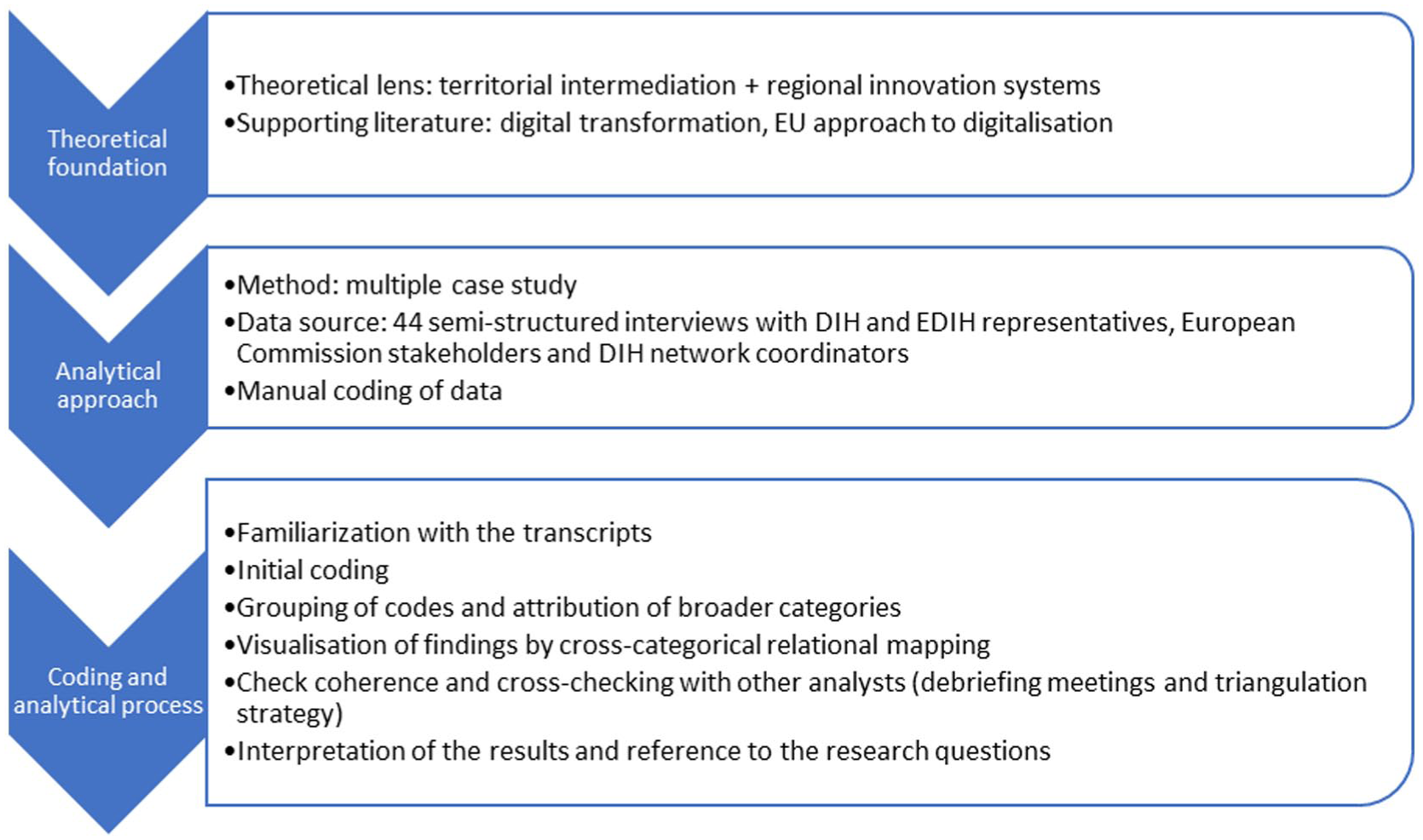
This exploratory research employed a multiple case study grounded in qualitative research methodology to investigate the roles and mechanisms of DIHs as territorial intermediaries within the context of the EU’s digitisation strategy. The qualitative approach was chosen because of its ability to provide in-depth and detailed information (Bluhm et al., 2011). Our investigation utilised semi-structured interviews with DIH-related stakeholders, as well as the analysis of secondary data from DIH-related strategic documents. The analytical framework of the study is shown in Figure 1.
Analytical framework of the study.
As our research has qualitative fundamentals, we refer to the transferability of the results. As stated by Drisko (2025): “Transferability is a process of abstraction used to apply information drawn from specific persons, settings, and eras to others that have not been directly studied.” Qualitative research methods reflect the dynamic complexity of social and economic life, capturing it to guide practice and policy. Instead of aiming for broad generalisation, qualitative researchers aim to provide rich, contextualised descriptions that allow others to judge whether the findings may apply to their own contexts. By providing a thick description—detailed accounts of participants, setting and processes—the researcher gives an opportunity to the reader to determine whether the study’s insights are transferable. In order to enhance transferability of our results, we used purposeful sampling by selecting participants who can provide a wide range of perspectives relevant to the phenomenon and applied the triangulation of primary and secondary date in order to provide a rich picture of the phenomena studied.
Data collection
Case selection follows three criteria on territorial heterogeneity and cross-level governance. This design supports comparison across contrasted settings, with explicit attention to Western and Central-Eastern contexts: (i) institutional setting and governance form of the hub (host organisation type, mandate and formal links with public authorities); (ii) territorial context (regional digital maturity, sectoral structure and ecosystem density); (iii) position in the EU policy architecture (DIH or EDIH status, programme requirements and reporting constraints).
The interview guides cover several core dimensions. They address the organisational background and mandate of the hubs, followed by the origin and rationale underpinning their creation. Particular attention is paid to the service portfolio and its targeting, with a focus on firms and public bodies. The interviews also explore the mechanisms used to identify local needs and to adapt services accordingly. Another section examines the role of hubs in local and regional initiatives, including digital strategies, smart specialisation processes and related policy agendas. The discussion further considers links with national instruments and European programme requirements, before addressing perceived mismatches between European objectives and local constraints. In parallel, interviews with European Commission representatives aim to document EU-level intentions, programme logic and expectations regarding implementation. This dual perspective enables an explicit assessment of vertical alignment between European priorities and territorial practices.
Interviews took place between April and August 2023, with a duration from 25 to 100 minutes. The sample includes 2 interviews with European Commission representatives active on DIH/EDIH policy, 3 interviews with DIH network coordinators, 1 interview with a hub finance support organisation and 38 interviews with DIH/EDIH representatives. All interviews were conducted under strict confidentiality agreements.
In addition to collecting primary data through interviews, we conducted an in-depth review of the secondary data. Secondary data cover DIH/EDIH strategic and public documents (annual reports, service catalogues, project descriptions), EU policy and programme documents relevant to DIHs/EDIHs, and material available through the European Commission hub catalogues and hub websites. We also use thematic hub network webpages and complementary local sources (press, innovation portals, territorial reports) when interviewees cite them as evidence of concrete actions. Secondary sources serve two functions: (i) ex ante contextualisation of each case (mandate, services, ecosystem position); and (ii) ex post validation of interview claims, with identification of documented examples that illustrate intermediary roles and cross-level linkages.
Data analysis
Data analysis was conducted in two stages. First, the interviews were transcribed verbatim to facilitate a detailed examination. We then used manual coding techniques to analyse both the transcribed interviews and the secondary data collected. This involved iteratively reading the data to identify recurring themes, concepts and patterns related to DIHs’ roles as territorial intermediaries (Forman and Damschroder, 2007). Through this process, we categorised the data into codes and grouped these codes into broader themes that reflected the strategic functions and impact of DIHs within the EU’s digitisation strategy. For each hub, we assign role evidence markers to interview segments and document excerpts, then we attribute a dominant role when one role concentrates the largest share of corroborated evidence across sources (interview plus secondary material). When evidence shows balanced configurations, we code a mixed role profile (e.g. facilitator–enabler). We document all coding decisions in an audit trail.
To ensure the reliability of our coding, we held debriefing meetings with the research team to review and discuss the coded data, guaranteeing its accuracy and consistency. Throughout the process, detailed notes were kept in records within a file to document coding decisions and enhance the transparency and rigour of the analysis. Furthermore, to perform a comparative analysis, the codes were converted into binary or nominal variables. Subsequently, cross-categorical relational mapping was employed with alluvial and bipartite network diagrams. This was preceded by the clustering of DIHs’ countries into five main areas. Additionally, following Flick’s (2004) recommendations, we employed a triangulation strategy, cross-checking the results of our interviews with those of the secondary data. We then synthesised the results obtained from primary and secondary data sources to create a comprehensive understanding of how DIHs function as facilitators of digital transformation at the regional level.
Results
First, we investigate the motivations that underlie the establishment of these hubs, with an emphasis on key drivers and regional variations. Then, we identify and analyse the main roles that DIHs assume in the context of territorial intermediation, supported by a detailed typology of their activities. Finally, we examine the discrepancies between European policy objectives and their implementation at the regional level, with insights drawn from empirical data and policy analyses.
Understanding the motivations
Among the motives for establishing DIHs, the respondents pointed to responding to a call for proposals presented by the European Commission 3 and the desire to share expert knowledge on digital transformation with businesses, 4 and the need to reduce local information gaps through awareness among companies about the potential benefits of reaching a higher level of digitisation. In interviews with representatives of DIHs specialising in a particular industry or network of DIHs, they emphasised the desire to share expert knowledge and provide services to sector-specific businesses, for example, in the field of robotics. 5 Additionally, they mentioned the continuation of activities undertaken in previous years, such as running a business incubator 6 or a cluster. 7 Some DIHs also highlighted their participation in a pilot project for DIHs funded by the European Commission, which was later continued in subsequent years by sharing experiences in providing digitalisation support services to businesses. 8
It was also noted that there was work on the DIH programme at the European Commission level and the desire to translate the programme’s objectives to the regional level for businesses. 9 Others reported involvement in the creation and operation of pilot DIHs in Central and Eastern Europe, which combined a new DIH mandate with prior experience from sectoral clusters and regional support organisations. 10 For other respondents, the creation of a DIH provided a basis for discussions about new technologies during the creation and implementation of innovative projects. 11 Across cases, motivations therefore combine (i) programme-driven incentives, (ii) organisational continuity and (iii) problem-oriented objectives linked to local capability gaps.
It is important to note that differences were observed between DIH activities in Western European (WE) countries and those in Central and Eastern Europe, such as Poland. In one interview with a DIH representative, it was emphasised that “In Poland, DIHs have a much broader range of activities than abroad—digitisation in Poland is different—due to the wide variety of companies in terms of digitisation, the hubs must be more multidisciplinary to meet the needs of companies.” 12 This diversity of activities stems from the broader and more multifaceted demand from businesses for services supporting digital transformation and is reflected both in the more diverse motivations of DIHs to undertake this work, as well as in the range of services offered (explored further in “Analysing the main roles of DIH in practicing territorial intermediation” section). In our data, the key contrast concerns the degree of specialisation: in less digitally mature contexts, hubs report broader portfolios as a response to diverse needs; in more mature ecosystems, hubs report more stable portfolios and clearer functional boundaries.
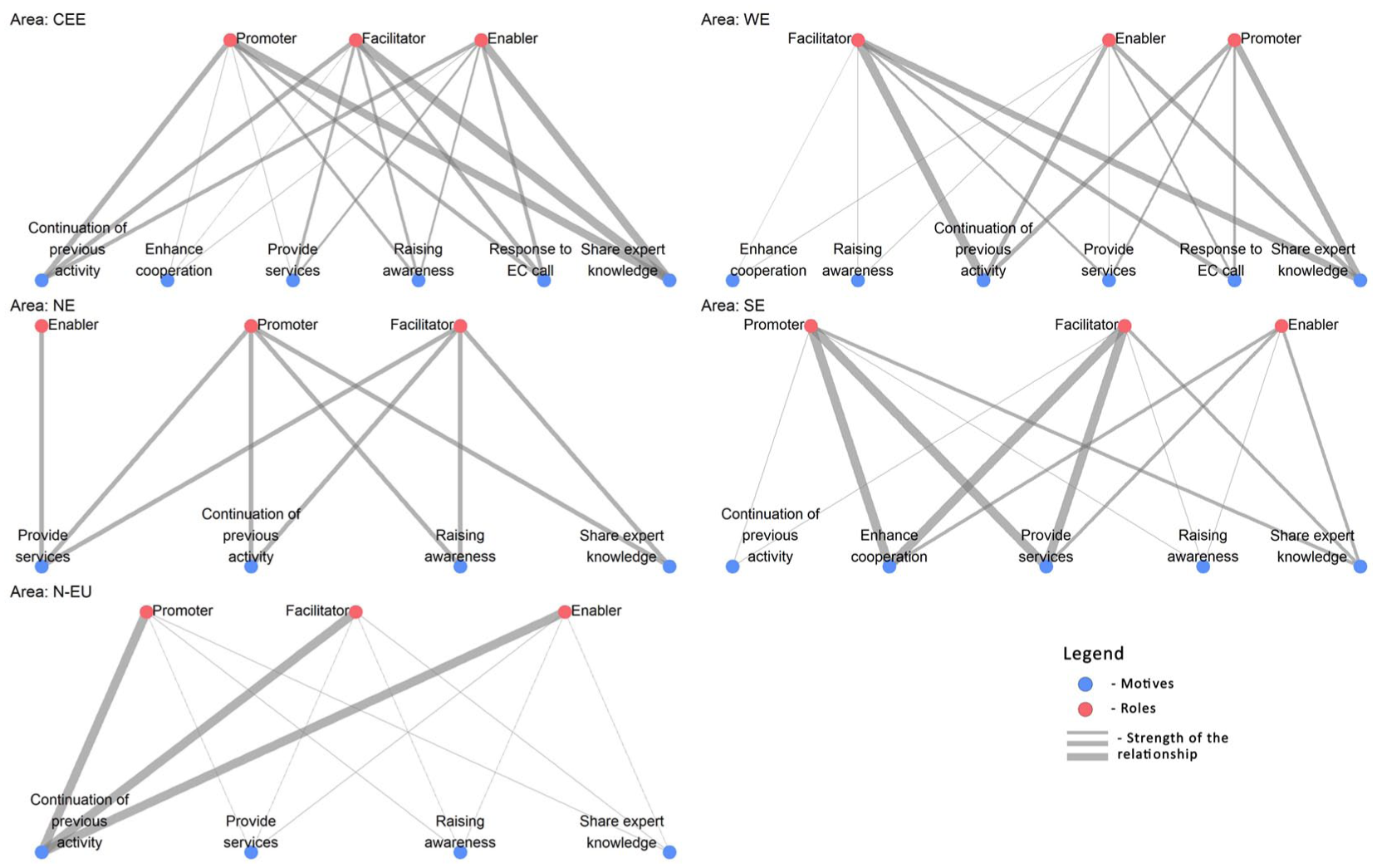
This is shown in Figure 2, where bipartite network graphs illustrate the relationships between organisational motives and the strategic roles undertaken by DIHs. 13 In Central and Eastern European Countries (CEE), activities often build on prior organisational experience and rely strongly on expertise pathways and targeted knowledge provision. In WE countries, associations appear more evenly distributed across roles, which interviewees often relate to more mature innovation ecosystems and clearer division of labour among SME support organisations. We interpret this as a difference in ecosystem structure and task allocation, rather than as a difference in “effort” or commitment.
Motives representing the fundamental drivers of DIHs’ activities.
Similar observations were made regarding DIHs operating in Northern European (NE) countries, which seem to exhibit a continuity- and communication-oriented motivational profile while enabling the sustainment of a broad range of activities. The prominence of cooperation-related motives and the provision of services to sector-specific businesses in Southern European (SE) countries indicates that DIHs in this part of Europe focus on combining accumulated knowledge with an ongoing need to support the interested actors. The very strong continuity motive of DIHs in EU candidate countries highlights their keen interest as a gateway to increasing business capabilities in digital transformation, which, in the future (after the country’s accession to the EU), will translate into enhanced opportunities for these businesses within the EU internal market. 14
Analysing the main roles of DIH in practicing territorial intermediation
An analysis of the intermediation roles
Based on empirical material from interviews with representatives of DIHs and EDIHs, the aim was to identify the roles that individual DIHs and EDIHs may play in territorial intermediation. To answer this question, the typology of roles proposed by OECD was applied, and the modes of intermediation (i.e. the activities undertaken by the DIHs to realise these roles) were matched accordingly (Table 1).
Main roles of DIHs in practising territorial intermediation (based on empirical results).
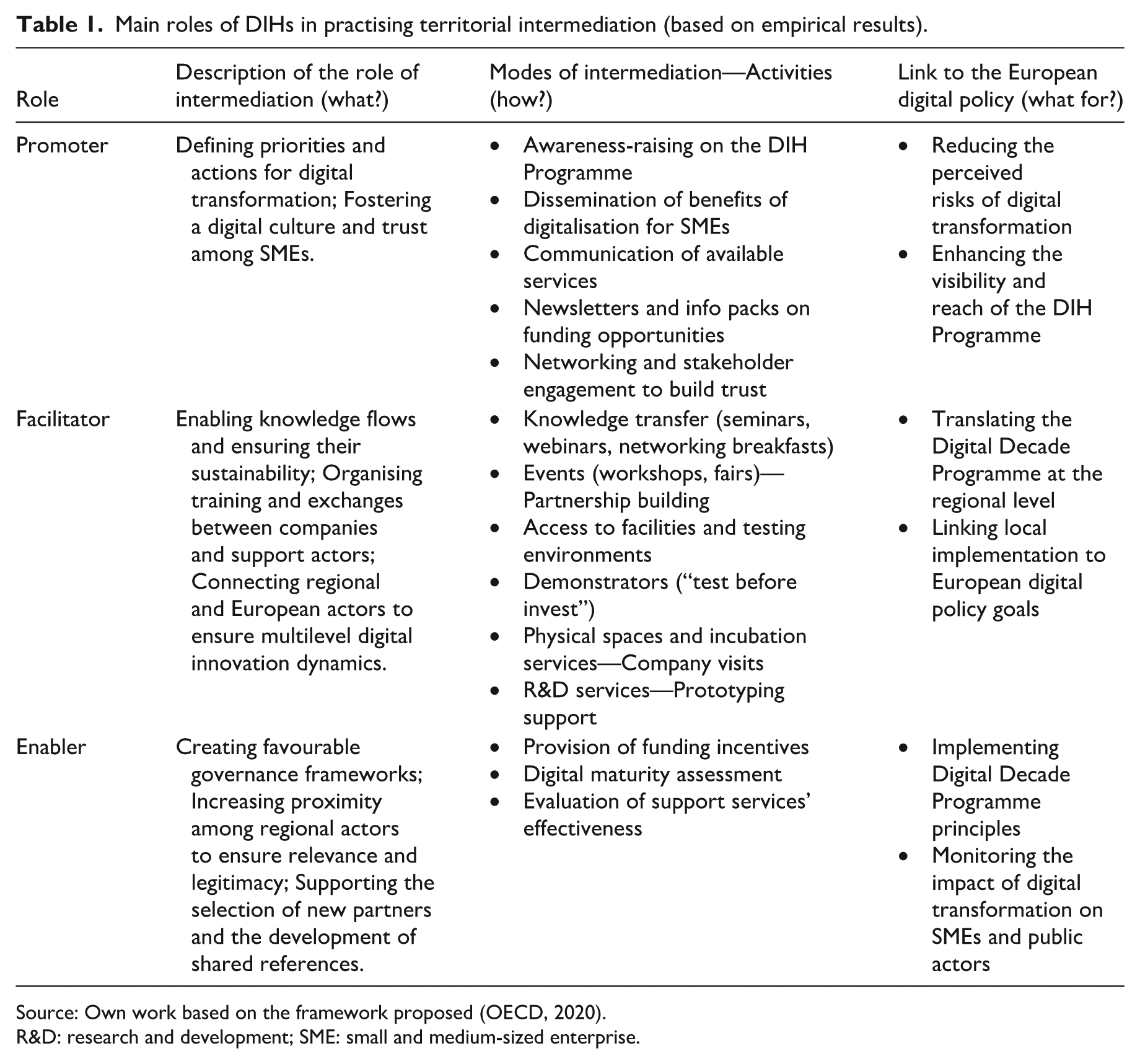
Source: Own work based on the framework proposed (OECD, 2020).
R&D: research and development; SME: small and medium-sized enterprise.
A first observation concerning the surveyed DIHs and EDIHs is that none of these actors play a single role in terms of territorial intermediation; instead, they typically perform two to three roles in parallel. This is partly because the typology used is not entirely distinct, and the roles played by DIHs can obviously overlap. Furthermore, by their very definition, DIHs serve as a single contact point, so their roles must be diverse. Therefore, this study chose to identify a dominant role that best illustrates the wide range of activities undertaken by DIHs.
More than half of the surveyed DIHs play the role of facilitator, engaging in a wide range of activities related to offering facilities for research and test before invest opportunities. They also provide business incubation and pre-incubation services, either by being open to cooperation with any type of SME in the region or by targeting their offerings at specific sectors, such as agri-food, chemicals, manufacturing or others. Additionally, they engage in activities aimed at establishing and maintaining cooperation between businesses and various technology or digital service providers.
The second most important role played by DIHs is that of promoters. In this context, raising awareness of the existence and services offered by the DIH is key. Several interviewees noted that this programme is not well known among companies in the region, primarily due to the overlap between the tasks performed by the DIH and those of other entities that support SMEs in innovation, internationalisation or digital transformation. Awareness-building is closely linked to informing companies about the benefits they can gain from implementing digital transformation.
The analysis also shows that DIHs and EDIHs contribute to the integration and operational translation of EU digital objectives at the regional scale, while they support firms at different levels of digital maturity. This vertical function appears in practices that link EU programme requirements and targets to local implementation choices (service prioritisation, eligibility rules, reporting, partnerships), which creates simultaneous interactions at the regional level (firms, local ecosystems) and transnational level (European networks and EU-labelled instruments). This multiscalar articulation refines the territorial intermediation framework through an explicit “vertical connector” dimension that remains under-specified in earlier work.
Awareness-building and readiness for digital transformation
SMEs, particularly those involved in digitalisation, are a key focus. In this context, the role of DIHs and EDIHs as promoters is essential to their mission of accelerating digital transformation across European regions. Consequently, they advocate for and actively promote digitalisation, ensuring that SMEs, which may lack internal capabilities or awareness, understand what services they offer and how to access their support. DIHs and EDIHs are expected not only to provide technical services but also to raise awareness among companies about the opportunities and benefits of digital transformation. Put differently, through “evangelism,” they aim to make digital transformation tangible and relevant to various sectors and levels of digital maturity.
As can be seen from Figure 2, DIHs and EDIHs taking the role of promoters demonstrate the strongest and most diverse set of connections, especially with the motives: Share expert knowledge, Continuation of previous activity and Raising awareness, emphasising its central role in activities linked to outreach and knowledge dissemination. In Europe, DIHs and EDIHs focus on specific areas and technological fields, including manufacturing, agriculture, robotics, healthcare, as well as augmented reality, human-machine interfaces and cybersecurity. In particular, augmented reality, human-machine interfaces and cybersecurity have been historically overlooked by many institutions but are now gaining traction through 15 DIHs and EDIHs and collaborative projects with European partners. They emphasise understanding and navigating the complexities of innovation and technological advancement, ensuring that ecosystems absorb and benefit from new developments.
Interviews with practitioners show that many enterprises, especially SMEs, still lack an understanding of digital solutions or underestimate their potential benefits. EDIHs, therefore, act as bridges between technology providers and users. Their activities focus on fostering cooperation between companies seeking digital solutions and those capable of providing them. In this way, hubs serve as a “one-stop shop,” making it simpler for firms to navigate the complex digital landscape. This matchmaking role is vital in regions with low levels of digitalisation, as DIHs and EDIHs assist companies not only in identifying solutions but also in building trust in the technologies and the people behind them. Some interviewees noted low adoption rates in digital manufacturing and responded by promoting robotics in SMEs. Awareness is raised through targeted initiatives such as workshops, consultations and thematic sessions. 16 Moreover, awareness-raising is reinforced through the demonstration of proof-of-concepts. By showing concrete examples of how digital technologies such as robotics, machine learning or automated logistics can be applied in practice 17 EDIHs help companies visualise the potential impact. While long-term studies on financial returns may fall outside the immediate scope of EDIHs, collaboration with universities and regional institutions provides a broader evidence base on the benefits of digitalisation. This creates a feedback loop, where practical demonstrations by EDIHs and long-term impact assessments by research bodies complement each other.
Assessment of the companies’ needs and networking
DIHs and EDIHs play a role as facilitators in the innovation ecosystem, connecting diverse players such as startups, corporates, universities and investors. They are involved in conducting training activities and working on research projects. DIHs and EDIHs frequently organise workshops, training sessions and informational events aimed at building digital skills within SMEs. Moreover, DIHs and EDIHs act as intermediaries for technology transfer, helping to brainstorm and define innovative concepts. 18 As shown in Figure 2, facilitator DIHs and EDIHs are consistently linked to improving cooperation and offering services, emphasising their role in coordinating and fostering collaboration within regional ecosystems.
Many interviewees described network development as a key condition for DIH effectiveness, together with awareness work. At the same time, several respondents report that cooperation often remains concentrated within each hub’s immediate partnership set, with fewer cross-hub or cross-border collaborations than EU narratives sometimes suggest. We interpret this as a constraint on vertical and horizontal diffusion mechanisms, not as a failure of hubs. 19 However, when dealing with the realm of technology, innovation and transformation of the European economy, it is crucial to extend beyond local focus to achieve meaningful progress. 20
According to the premise, DIHs and EDIHs were established to offer four types of services: networking, skills, access to finance opportunities and test before invest. The last component should undoubtedly play the most crucial role, as it differentiates DIHs and EDIHs from other support mechanisms available on the market. It provides SMEs with the opportunity to test a technological solution before making an investment, allowing them to check whether the solution is suitable for specific conditions. Thus, it serves as a way to reduce the risk of investing in technology that might be inadequately matched to the company’s needs.
Data collected during interviews showed that the test-before-invest service was the least frequently offered to businesses in previous years. The EDIH programme aimed to change this for the better. Additionally, the interviews revealed that networking played a key role as a service for connecting and building networks between various partners. Services related to access to financial sources were also of interest to entrepreneurs. Overall, it can also be noted that the least interest was shown in services related to skill development. The services provided by DIHs and EDIHs are targeted either at all SMEs in the region or at companies from specific industries (if the DIH or EDIH has a defined area of specialisation, such as focusing on manufacturing or agri-food sectors). When the services target all SMEs, they typically cover a broad range of topics and support forms designed to boost the level of digitisation among the region’s enterprises. Furthermore, these services tend to be quite similar. From an entrepreneur’s perspective, it can be challenging to distinguish between individual DIHs, as their profiles are fairly alike. For DIHs and EDIHs specialising in serving SMEs from particular industries, these services are customised to meet the specific needs of their target businesses and tend to be less general in nature.
Governance structures and capacity building
DIHs and EDIHs assist in building connections with financial institutions, such as banks, to help attract various types of funding. They are gradually fulfilling their roles as enablers by establishing governance frameworks, developing local collaboration ecosystems and working to collect effectiveness data. Funding incentives offered in connection with DIHs and EDIHs can be seen as both direct enablers of digital adoption and trust-building mechanisms. They reduce financial risk for companies, create tangible benefits in the short term and encourage firms to explore innovative technologies they might otherwise not consider. As the interviews reveal, businesses are much more willing to explore new digital solutions when they can receive partial financing, subsidies or free access to services. 21 The possibility of reducing the financial burden acts as a strong stimulus for participation, regardless of whether the company is located in a grant-intensive environment or in a region with more limited public support. 22 DIHs and EDIHs assist enterprises in finding and securing funding options, often by utilising existing networks, such as the Enterprise Europe Network. In doing so, they generate a synergy that helps businesses navigate complex funding landscapes and stay informed about relevant opportunities, including both European and national instruments. Moreover, this is also supported by data in Figure 2, which shows that the enabler role of DIHs and EDIHs is strongly linked to service provision and knowledge sharing, indicating a more operational, service-oriented profile that focuses on delivering expertise and capacity-building support.
A specific instrument, highly valued by companies, is cascade funding. This mechanism enables EDIHs to provide small, easily accessible grants directly to companies, alongside advisory and testing services. Such grants are appreciated for being relatively simple to obtain and quick to implement, enabling firms to experiment with digital tools without excessive administrative burdens. Although cascade funding is not currently planned as a standard feature of EDIHs, its absence is seen as a missing incentive that has previously proven to be highly effective. This leads SMEs to expect EDIHs to also act as gateways to European funding schemes. We report this as a perceived instrument gap rather than as a programme design flaw.
A core element of the service portfolio offered by the DIHs and EDIHs is the digital maturity assessment, a structured process through which companies’ digital readiness and needs are identified. According to the information gathered during the interviews, the DIHs and EDIHs studied did not evaluate the digitisation needs of SMEs in a structured manner, such as through regular surveys of businesses in the region in this area, or by thoroughly analysing this issue with the companies they began cooperating with. Instead, they gathered knowledge about the needs of businesses from conversations, interviews, meetings with entrepreneurs, studies on the digitisation or innovation needs of businesses conducted by local or regional research centres or national reports (in the case of smaller countries or EU candidate countries where DIHs also operate).
One might infer from this fact that DIHs and EDIHs do not truly understand the needs of businesses operating in the region and offer a wide range of services that only partially meet the “average” needs of enterprises. This may be true to some extent. According to information gathered during interviews, almost no DIH or EDIH conducted a needs assessment for businesses in terms of digitalisation and innovation, whether through surveys or interviews. The reasons for this, as mentioned during the discussions, were as follows: (i) No requirement from funding institutions; (ii) The belief that the businesses surveyed would not want to participate; (iii) The view that businesses with a low level of digital maturity would not be able to identify their digitalisation needs on their own and (iv) The conviction that such data cannot be effectively collected through quantitative surveys and that it is best to assess business needs individually, often through lengthy discussions with companies.
Nevertheless, it is crucial to emphasise that assessing SMEs’ digitalisation needs is a necessary step when building a service portfolio for a given DIH. If these needs were not diagnosed early on, it would be challenging later on to find businesses interested in using DIH services and to offer them solutions that genuinely address their digitalisation needs. This also demonstrates the need for DIHs and EDIHs to play a larger role in the digital transformation process, beyond merely offering specific digital or financial services.
Engagement in the creation of strategic documents at the regional level
The last part of the interview concerned the involvement of the DIH in creating strategic documents at the regional level, such as the regional innovation strategy, or other documents related to digital transformation at the regional level. All surveyed DIHs or EDIHs were asked about their involvement in local or regional bodies working on strategic documents that considered innovation and digital issues. Surprisingly, and unfortunately to their detriment, such involvement was noted rather infrequently. The respondents either indicated that no local or regional authorities had reached out to them 23 or mentioned a lack of awareness of the programme among regional decision-makers, which made it difficult or even impossible to invite DIH representatives to forums developing regional strategic documents. One respondent emphasised that even in the Ministry of Digitization, the DIH programme was not widely known. Some respondents were surprised by the question itself, realising that they had never considered why they had not been invited to participate in regional forums.
The respondents who indicated membership in bodies such as a development council noted that their involvement in such forums was minimal. Often, these were individuals actively engaged in the region through creating and managing a regional cluster. They clarified that they participated in the advisory bodies as cluster members rather than as DIH representatives. 24 This gap matters for territorial intermediation: it weakens mandate alignment and reduces the ability of hubs to act as recognised interfaces between EU objectives and regional policy agendas.
The mismatches between EU policy objectives and their actual realisation at the regional level
From the presented results, a picture emerges of the mismatches between the EU policy objectives and their actual implementation at the regional level. In our analysis of the mismatches, we applied a qualitative approach based on a comparison between the EU documents and the discourses of the interviewed actors.
First, it is important to note that the performance of DIHs and EDIHs should not be measured using a single metric (e.g. the number of services provided or other key performance indicators (KPIs) reported by EDIHs). This differentiated approach also stems from the fact that individual DIHs, especially EDIHs, operate under various funding models and face different levels of administrative and financial burdens related to the implementation of the DIH and, currently, EDIH programmes. Measuring the outcomes of their activities certainly does not reflect the real actions undertaken by DIH and EDIH representatives in different regions of the EU.
Second, from a comparative perspective, the alluvial diagram shown in Figure 3 visualises how DIHs and EDIHs across various European areas align with EU policy objectives. Across the areas examined, moderate alignment is the most common pattern, especially in WE and non-EU (N-EU) countries. NE countries stand out for having the highest degree of EDIHs’ actions aligned with EU strategic goals. Conversely, CEE and SE countries display a weaker consistency between EDIHs’ activities and EU policy priorities. From a role perspective, one may observe that DIHs and EDIHs with stronger attachment to strategic objectives tend to adopt more advanced operational roles (enabler, facilitator), while those with weaker alignment remain closer to promoter functions. Additionally, although specific area profiles differ, a relatively weak strategic fit appears to be the most frequently occurring pattern among DIHs and EDIHs. The in-depth analysis of interviews supports these results. In WE regions (e.g. Germany, France or Spain), companies are more digitally mature, whereas in Central and Eastern European regions, they are in the process of catching up with their WE counterparts. Therefore, in the case of the latter, there is a greater need for support in innovation activities and digital transformation (this topic was repeatedly raised in interviews with representatives of DIHs from Poland, the Czech Republic and Slovakia). As a result, the activities of DIHs and EDIHs in these regions, in response to the more diverse needs of SMEs, are also more multifaceted, offering more varied service catalogues. From this diversity, it can be concluded that the European Commission’s approach to EDIHs operating in different parts of the EU should also be varied, taking into account the context outlined above. This result supports a policy implication already stated in the introduction: a uniform implementation and evaluation model risks systematic misfit across territories, and it may penalise hubs that address foundational capability gaps.
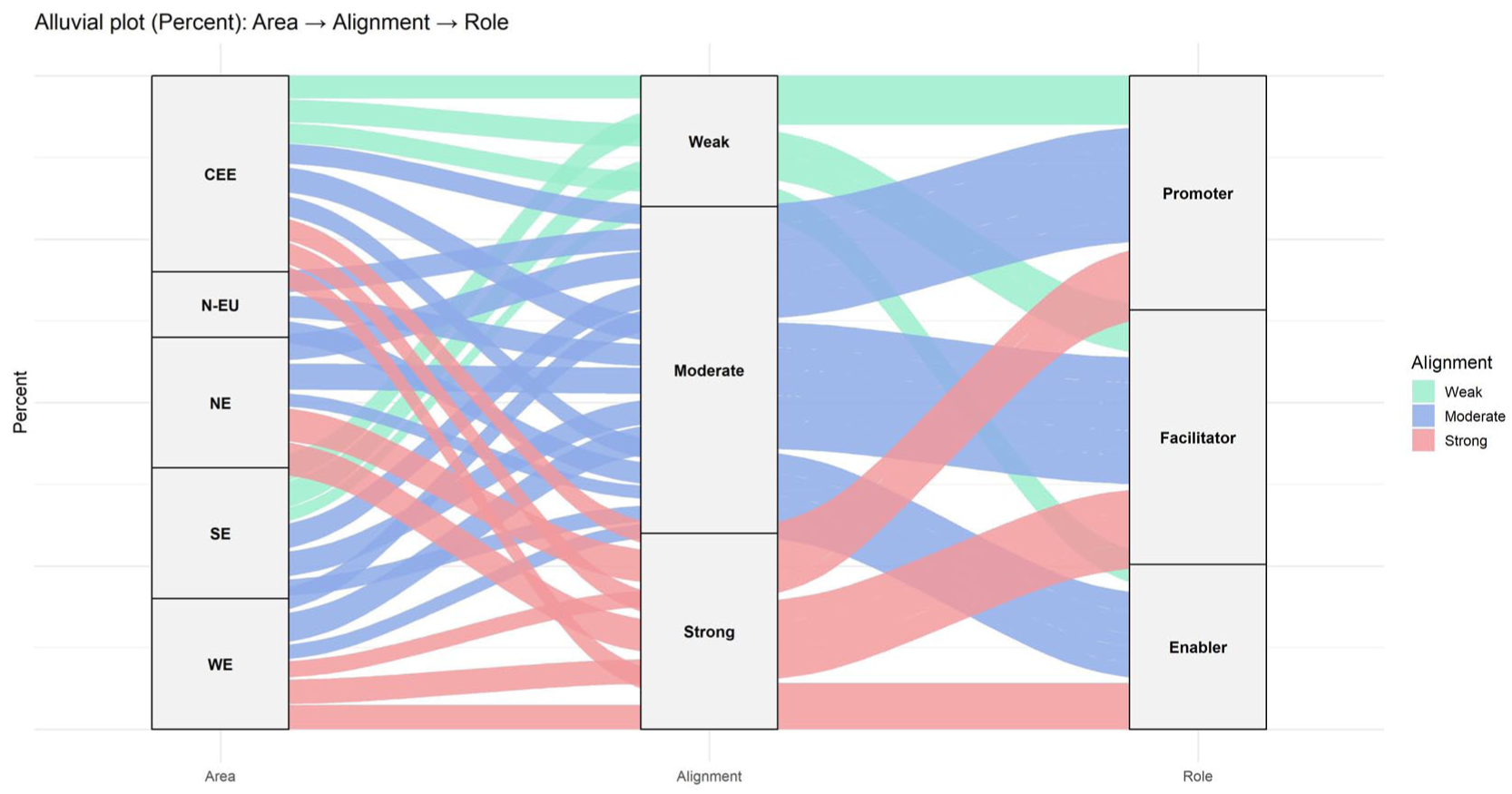
The alignment of DIHs and EDIHs’ activities with EU policy objectives.
Discussion
Discussion of the main results
First, the evidence shows a robust territorial structuring of DIH roles, with systematic multi-role activity patterns but a clear dominant-role profile per hub under our coding rules. We observe a contrast between Western Europe and Central-Eastern Europe. Hubs in Western Europe more often display a facilitator profile, consistent with denser institutional bases, inherited organisational assets and higher firm-level absorptive capacity. Hubs in Central-Eastern Europe more often display a promoter profile, which reflects stronger needs for awareness, a less digitally mature SME fabric, and policy-led emergence through EU calls and translation devices. We interpret this contrast as a difference in “ecosystem task allocation” rather than in DIH quality: where support infrastructures are already dense, facilitation through structured interfaces and test environments becomes more salient; where basic readiness and visibility remain limited, promotion and first-adoption support become central. This heterogeneity confirms that intermediary roles arise from territorial configurations of resources, proximities and collective capacities within RISs and that these configurations can constrain feasible role combinations under lock-in and path dependence (Bourdin and Jacquet, 2025; Caloffi et al., 2023; Hassink et al., 2019).
Second, the results indicate that effective intermediation rests on an explicit vertical link that aligns mandates, instruments and timelines across EU, national and regional arenas. Cases with the clearest articulation combine three recurrent properties: shared objectives and metrics across tiers, stable interface devices for information exchange and decision sequences, and joint review clauses that secure cross-scale coherence. This finding allows us to show concrete mechanisms: “verticality” is observable in interface arrangements (who reports to whom, through which templates, with which decision gates), in the interoperability of funding and eligibility rules, and in the existence of review moments where priorities can be revised in light of territorial feedback. This pattern echoes work in planning and regional studies that relates place-based policy to multi-level governance, due to the number and diversity of actors involved across scales (Barca, 2009; Rodríguez-Pose, 2013). Within this architecture, DIHs act as translation nodes that convert EU priorities into situated operational sequences, with reach that depends on regional institutional thickness and local complementarities (Flanagan et al., 2022; Grillitsch and Sotarauta, 2020). Importantly, our evidence suggests that network membership alone does not secure alignment; alignment depends on whether hubs have the organisational capacity and policy interfaces to turn EU objectives into regionally credible roadmaps, service prioritisation and partnership pipelines.
Third, the analysis reveals a structured geography of “mismatches” between EU objectives and local implementation, ordered into four analytical sources. A first source concerns insufficient institutional capacity at the regional level, notably for resource orchestration and result tracking (Flanagan et al., 2022; Morgan, 2021). A second source concerns low awareness among decision-makers or firms, with poor information on services and transformation pathways (Crupi et al., 2020; Jovanovic et al., 2021). A third source reflects uneven distributions of resources and skills, which limit access to test facilities and advanced expertise (Tranos et al., 2021). A fourth source concerns governance misfit, when mandates, calendars and instruments fail to align across tiers, which weakens the conversion of EU ambitions into credible regional itineraries (Barca et al., 2012; Kattel et al., 2022). We treat these mismatches as a diagnostic device rather than as a performance verdict: they identify where the policy chain breaks (capacity, awareness, resources or governance), and they clarify which intermediary role and instrument set becomes feasible and legitimate in each context. This diagnostic framing also explains why a single KPI-based evaluation model risks penalising hubs that operate in foundational “catch-up” environments, where promoter and enabling functions dominate before large-scale test-before-invest uptake becomes possible.
Contribution
The article advances theory with a territorial specification of the intermediation framework that links roles, conditions of action and cross-tier connections within a single analytical architecture. The OECD triptych remains the baseline; we extend it with scope conditions, observable instruments and vertical links that anchor each role in distinct institutional environments. This extension clarifies how intermediary roles depend on territorial resource endowments, proximity structures and organisational density, a point that the literature on RISs and multi-level governance often suggests but rarely spells out at this level of detail (Grillitsch and Sotarauta, 2020; Morgan, 2021).
The paper also delivers a conceptual contribution on DIHs as a distinct class of innovation intermediaries. We define role configurations under territorial conditions, and we specify decision rules for role dominance, with a clear map from roles to instruments and to alignment mechanisms across EU, national and regional tiers. This map rests on evidence and concepts from the DIH literature: service portfolios that include test-before-invest, capability formation, access to finance and partnership pipelines (Crupi et al., 2020; Kalpaka et al., 2020; Rissola and Sörvik, 2018); functions that connect firms, technology providers and public agencies across regional and European arenas (Jovanovic et al., 2021; Miörner et al., 2019); and links to EU digital infrastructures such as TEFs, AI-on-Demand and data spaces that require multilevel coordination (Huckmann, 2024). Our framework clarifies when a hub qualifies as a promoter (priority to awareness and first adoption under low firm-level readiness), facilitator (priority to access to facilities, pilots and technical expertise under thicker institutional settings), or enabler (priority to governance devices, maturity assessment and resource orchestration under strong regional policy capacity). We then anchor each role in a set of observable instruments and in a vertical alignment logic that connects EU mandates to regional implementation, which extends prior accounts that describe DIHs as one-stop shops without a formal theory of role dominance or cross-tier linkage (Crupi et al., 2020; Gaiani and Ala-Karvia, 2023; Rissola and Sörvik, 2018).
Empirically, the article provides a structured comparison between analysed DIHs’ country groups, a transparent rule-set for dominant-role coding and an operational taxonomy of mismatches tied to traceable evidence. This dual contribution—a territorial specification of the framework and a comparative demonstration—positions the paper within current debates in regional studies and policy-adjacent fields, not as a new category claim, but as a clarification of mechanisms that connect objectives, institutions and regional performance (Caloffi et al., 2023; Flanagan et al., 2022; Kroll, 2015).
Figure 4 summarises the generic framework of territorial intermediation. Territorial conditions—resource endowments, institutional thickness, proximity structures and historical trajectories—and the multi-level governance context—objectives, instruments and timelines across EU, national and regional tiers—jointly feed the core of territorial intermediation, where actors assume promoter, facilitator or enabler roles. From this core flow, two complementary pillars. The first pillar sets the mechanisms that allow translation across tiers, interface design, coordination and trust-based coalition formation. The second pillar specifies the instruments that operationalise these mechanisms, such as shared roadmaps and metrics, experimentation spaces and data access, capability programmes and finance or partnership pipelines. Accountability to territorial coalitions and periodic reviews anchor evaluation and create feedback loops. Outcomes follow through capability gains, diffusion of innovations, territorial coherence and policy learning. At the base, a diagnostic taxonomy orders potential gaps into four sources—institutional capacity, awareness deficits, uneven resources and skills and governance misfit—which feed back into the core to adjust roles, mechanisms and instruments. This framework, therefore, clarifies what “alignment” means in operational terms: the presence of mechanisms and instruments that connect EU intentions to regional feasibility, with feedback loops that allow role rebalancing and instrument adaptation when mismatches persist.
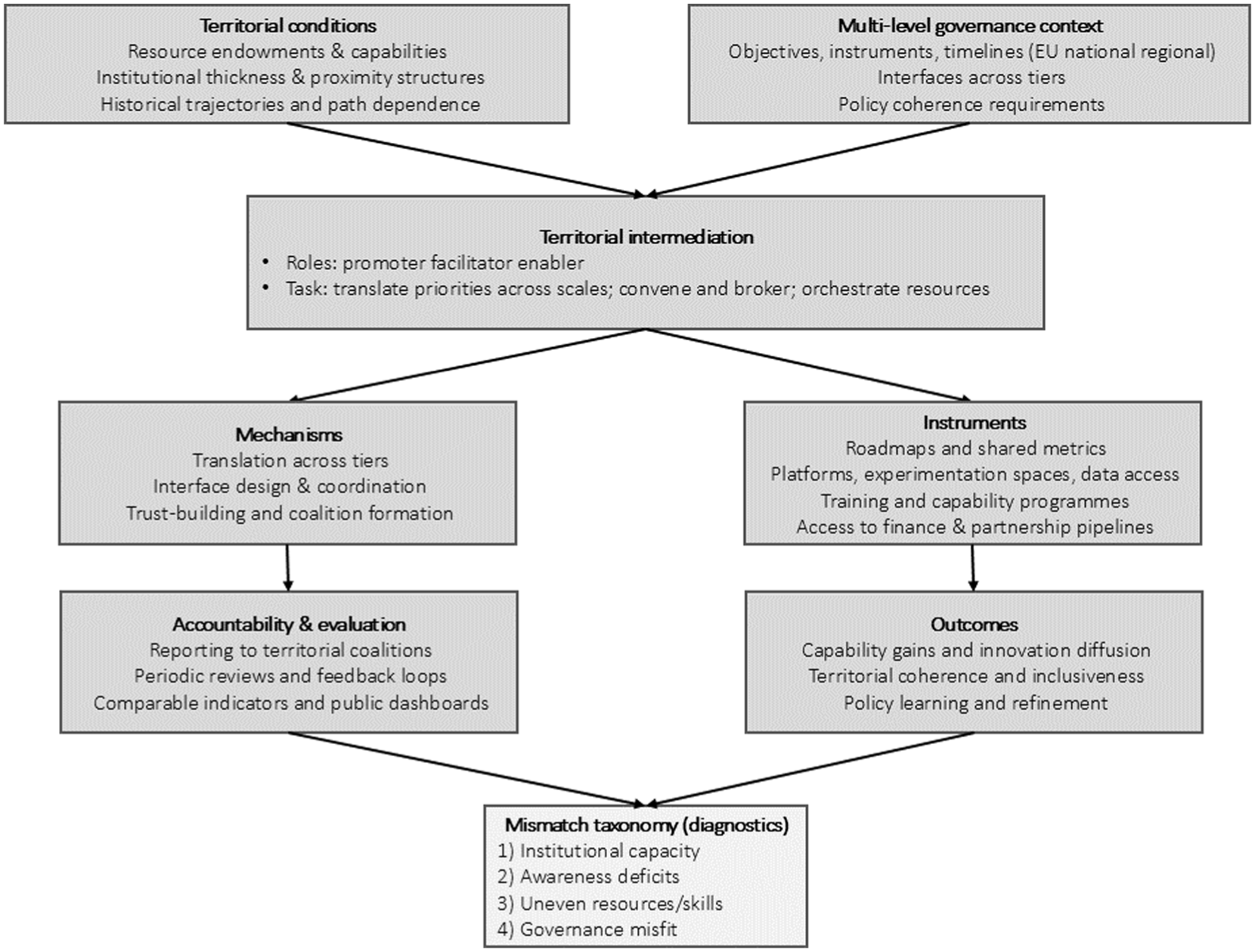
Territorial intermediation: Roles, mechanisms and outcomes.
Conclusion and recommendations
This article answers the following research question: How do DIHs act as territorial intermediaries in the development and implementation of the EU’s digitisation strategy, and to what extent do they contribute to aligning European objectives with local digital needs and capabilities? Our evidence shows that DIHs act as territorial intermediaries through three coupled mechanisms. First, they combine promoter, facilitator and enabler functions, yet each hub displays a stable dominant role profile that reflects territorial feasibility conditions (institutional thickness, resource endowments and SME digital maturity). Second, DIHs contribute to alignment when they operate as vertical connectors, with observable interface arrangements that link EU programme intentions to national instruments and regional implementation choices (service prioritisation, targeting and partnership pipelines). Third, alignment remains partial and uneven because hubs face recurrent “mismatches” that stem from four identifiable sources—limited institutional capacity, low awareness among firms or decision-makers, uneven resources and skills and governance misfit across tiers. Overall, these results demonstrate that DIHs contribute to alignment, but their contribution depends on territorially feasible role dominance and on the presence of explicit cross-tier alignment devices.
These findings support a territorial specification of intermediation that connects roles, conditions of action and cross-tier links within a single architecture. This specification clarifies what the “vertical dimension” means in operational terms: shared objectives and metrics across tiers, stable interface devices that organise information flow and decision sequences, interoperable instruments and periodic joint review moments that allow territorial feedback to reshape priorities.
In light of these results, three policy implications follow directly. First, EU and national authorities should adopt role-sensitive support and evaluation templates. Facilitator-dominant hubs require priority access to test-before-invest facilities, technical expertise and rapid pathways towards pilots. Promoter-dominant hubs require scaled outreach combined with first-adoption support for low-maturity SMEs, with clear progression routes towards experimentation services. Enabler-dominant hubs require governance instruments, explicit maturity assessment protocols and formal coordination arrangements with regional development agencies. A single uniform template weakens additionality in heterogeneous settings; a role-sensitive template improves the credibility of evaluation and increases effectiveness. Second, vertical compacts should become a standard governance device. Each hub should operate under a concise agreement that links EU, national and regional tiers through shared objectives, common metrics, an agreed decision sequence and periodic joint reviews. Our evidence indicates that where such vertical articulation is clearer, EU priorities translate more rapidly into operational roadmaps and diffusion mechanisms. Third, needs assessment and portfolio focus should be strengthened through light-footprint diagnostic routines. Regular, standardised-but-flexible assessments can feed targeted service portfolios and transparent dashboards, reduce overlap with other support organisations, and improve the match between firm needs and hub instruments. Where test infrastructures remain scarce, shared facilities and mobile demonstrators can mitigate territorial inequalities in access to experimentation.
Our results also define three research priorities that follow from documented empirical gaps. First, future work should examine how different interface devices (reporting templates, decision gates, interoperability rules, joint review clauses) shape alignment outcomes, and which combinations remain effective under contrasted territorial capacities. Second, research should develop evaluation approaches that reflect heterogeneous feasibility conditions, so that performance assessment distinguishes between promoter, facilitator and enabler contributions instead of relying on a single KPI logic. Third, longitudinal studies should track how mismatch sources evolve over time and whether role dominance shifts as regions accumulate capabilities, infrastructures and governance capacity. A path dependency lens can inform this agenda by explaining why some regions stabilise advanced facilitation functions while others remain in foundational promotion and enabling phases, and by identifying conditions under which DIHs support path renewal and diversification.
Footnotes
Appendix

Funding
The authors received no financial support for the research, authorship, and/or publication of this article.
Declaration of conflicting interests
The authors declared no potential conflicts of interest with respect to the research, authorship, and/or publication of this article.