






Abstract
The artisanal textile industry plays a vital role in sustaining livelihoods and preserving traditional craftsmanship, but faces declining competitiveness due to industrialisation, fast-fashion expansion and systemic constraints. This study examines critical barriers affecting the sector using an integrated Fuzzy Analytical Hierarchy Process–decision-making trial and evaluation laboratory framework grounded in Systems Theory and Institutional Theory. Using the framework, the study classifies 25 barriers into 8 barrier domains identified based on Porter’s Value Chain and political, economic, social and technological analysis. The study then captures relative importance and causal relationships among barriers based on expert inputs. The findings reveal that financial constraints, regulatory barriers and limited market access act as primary systemic drivers, exerting a strong influence on multiple downstream challenges. Addressing these core financial and institutional bottlenecks can generate broader system-wide improvements. In contrast, operational barriers such as logistics, workforce, technological and social constraints are largely dependent, indicating that they arise from upstream structural inefficiencies and can be better addressed through long-term, integrated interventions rather than isolated actions. The study contributes by offering an integrated analytical framework that simultaneously evaluates priority and causality of barriers, providing a structured basis for targeted interventions in artisanal textile systems. The findings emphasise the importance of addressing root drivers to support sustainable sectoral development and structured policy design.
Keywords
Introduction
India’s traditional handloom industry, one of the oldest micro, small and medium enterprise sectors, represents a key segment of the global textile ecosystem with unique craftsmanship, cultural heritage and artistic expression (Chakraborty et al., 2025). Characterised by labour-intensive, skill-driven processes, it produces unique, intricately designed textiles and apparel via sustainable methods (Dey et al., 2023). Conscious consumers value these products for their unique designs and sustainable qualities. The sector drives inclusive economic development by generating livelihoods in rural and semi-urban areas, preserving intergenerational skills, directly employing 10%–12% of India’s textile workforce, and contributing 15%–20% of its textile exports (Anand et al., 2026; Ministry of Textiles, 2024).
Despite its socio-economic and cultural significance, India’s traditional handmade textile industry faces business challenges in an evolving market, decreasing its competitiveness and visibility (Dalal et al., 2024). Rapid industrialisation, globalisation and advanced technologies like automation, artificial intelligence and data-driven systems have transformed markets, prioritising speed, scale, cost efficiency and standardisation (Bárcia de Mattos et al., 2021). Machine-made textiles outperform handcrafted products in price, availability and volume (Eglash et al., 2020). Fast-fashion models from global brands shift consumer preferences toward short product lifecycles and frequent consumption (Gabrielli et al., 2013). This fast-fashion culture generates approximately 92 million tonnes of waste annually, consumes 79 trillion litres of water, and contributes to 20% of global wastewater, highlighting the scale of environmental concerns (Allary, 2021; Niinimäki et al., 2020). Therefore, this shift marginalises the artisanal textiles business while intensifying ecological problems like excessive resource consumption, pollution and textile waste.
Beyond economic loss, the declining viability of artisanal textiles threatens traditional skills, cultural identity and artisanal livelihoods, as younger generations leave the profession amid livelihood challenges (Dalal et al., 2024). Governments have launched initiatives promoting financial assistance, skill development, design innovation, infrastructure and market visibility to support the sector (Chaudhuri & Bhattacharyya, 2023; Malhotra, 2024). However, their effectiveness remains uneven due to implementation gaps, fragmented coordination and misalignment with artisans’ needs in informal, resource-constrained settings (Mishra et al., 2023). Persistent challenges persist within broader operational, market and social systems (Naik et al., 2025).
Existing studies on artisanal textile challenges broadly examine isolated barriers around technology adoption, market access, finance, policy support, procurement issues and logistics, overlooking interdependencies among barriers across the value chain. Given the complex, systemic nature of these constraints, an integrated assessment is needed to identify and assess the relative importance and interrelationship among barriers from stakeholder perspectives (Anand et al., 2026). Such an approach is essential for designing targeted interventions addressing root causes, not just symptoms. Accordingly, this study addresses the following research questions: What are the critical barriers affecting the performance and sustainability of the traditional artisanal textile industry? How can the identified barriers be systematically categorised, prioritised and analysed to uncover their underlying interrelationships? What evidence-based interventions can be proposed to address the most influential identified barriers?
This study identifies industry barriers through a literature review and finalises them after field visits and expert consultations. It uses Porter’s Value Chain and PEST (political, economic, social and technological) analyses to structure key barrier domains. Expert panels categorise finalised barriers, and kappa statistics validate inter-rater reliability. Further, Fuzzy Analytical Hierarchy Process (FAHP) prioritises barriers under uncertainty. The decision-making trial and evaluation laboratory (DEMATEL) method then reveals cause-and-effect relationships among them. Based on the findings, the study proposes potential solutions aligned with the Sustainable Development Goals (SDGs), delivering a comprehensive systems-level perspective.
The article is structured as follows: ‘Literature Review’ section reviews relevant literature; ‘Methodology’ section details methodology; ‘Results’ section presents results, and ‘Discussion’ section discusses findings and implications. The last section concludes and outlines future scope.
Literature Review
Overview of Artisanal Textile Industry
The traditional artisanal textile industry represents a culturally embedded and economically significant segment of the global textile sector (Das & Swain, 2025). India’s traditional artisanal textile industry contributes to the overall textile business, employing approximately 35–40 million people directly and indirectly, making it the second-largest employer after agriculture (Singh et al., 2025). Contributing nearly 15%–20% of India’s total textile production and around 15% of textile exports, the sector plays a vital role in both domestic and international markets (Majumdar et al., 2021; Ministry of Textiles, 2024). Distinguished by labour-intensive processes, low energy use, minimal environmental impact and intergenerational indigenous skills, it drives inclusive growth, cultural preservation and sustainable manufacturing (Das & Swain, 2025). Despite this, the sector faces declining competitiveness and participation (Anand et al., 2026).
Challenges in Traditional Artisanal Textile Industry
Existing literature identifies multiple internal and external barriers affecting the artisanal textile sector across operational and external dimensions, such as Industry 4.0 adoption, omnichannel marketing, circular economy and social sustainability (Das & Swain, 2025; Raut et al., 2019). Internal challenges include raw material procurement issues (availability, quality and cost), limited access to essential utilities (such as electricity, water and workspace), inefficient operations, outdated tools and a shortage of skilled labour. Additionally, financial limitations, including inadequate working capital, poor cash flow management and low financial literacy, further restrict operational stability (Naik et al., 2025).
Externally, enterprises face increasing competition from machine-made textiles, weak branding, limited market access, dynamic market conditions and shifting consumer preferences, restricting market competitiveness. Social vulnerabilities and limited support systems further amplify the vulnerabilities among artisans (Dalal et al., 2024).
The government has introduced multiple initiatives to improve the artisanal textile and handicraft sectors, including financial assistance, skill development, infrastructure development and market promotion. Key programmes such as the National Handicraft Development Programme under the Ministry of Textiles focus on infrastructure, technology upgradation, skill development and market access via Urban Haats, exhibitions, fairs and digital marketing (Yadav et al., 2020). The Raw Material Supply Scheme for Handlooms provides yarn and transport subsidies. The Comprehensive Handicrafts Cluster Development Scheme and the PM MITRA scheme aim cluster-level support through shared infrastructure development, establishment of common facilities, skill training, design innovation and marketing linkages (Gunda et al., 2025).
However, literature identifies limited effectiveness of these interventions due to implementation gaps, limited artisan awareness, bureaucratic complexity and weak alignment with ground-level needs (Dalal et al., 2023).
Research Gaps
Persistent challenges despite policy presence suggest that barriers cannot be effectively addressed through fragmented, single-dimensional approaches. Existing studies largely examine barriers within individual domains, with limited integration across the value chain. While frameworks such as Porter’s Value Chain and PEST are used to structure internal and external factors, their combined application for structuring industry-wide barriers remains limited. Moreover, they do not capture causal interdependencies among barriers. Multiple studies prioritise barriers but overlook causal interrelationships, lacking systems perspectives to identify root causes and design effective interventions. This study addresses the gaps with an integrated and theoretically grounded framework to examine industry-wide artisanal textile barriers.
Theoretical Foundation
The study adopts a multi-theoretical perspective to explain the complex interdependent nature of barriers affecting the artisanal textile sector. Systems Theory and Institutional Theory provide the conceptual foundation to explain the interdependencies and persistence of barriers, while Porter’s Value Chain and PEST analysis are used to structure barrier domains.
From a Systems Theory perspective, the artisanal textile industry can be viewed as a complex socio-economic system where financial, operational, institutional and social components interact dynamically (von Bertalanffy, 1968). This supports the use of DEMATEL to identify causal relationships among barriers, distinguishing between root drivers and dependent outcomes. Institutional Theory complements this view by explaining how formal structures (such as policies, regulations and financial systems) and informal mechanisms (including social norms, awareness and community practices) shape the operational environment (Meyer & Rowan, 1977).
Building on this foundation, the study integrates FAHP and DEMATEL to prioritise barriers and analyse their causal interrelationships, offering a more comprehensive understanding of barrier dynamics in the artisanal textile sector. Unlike existing FAHP–DEMATEL studies that primarily focus on ranking or isolated causal mapping, this study offers a system-level interpretation of barriers by linking their relative importance with their structural influence across the value chain. This enables the identification of high-leverage intervention points. This approach contributes both theoretically and practically by supporting targeted, data-driven policy and managerial interventions in the artisanal textile sector.
Figure 1 outlines the conceptual framework linking theoretical foundations, barrier structuring, and the FAHP–DEMATEL analytical approach. The following sections discuss the identification of barriers across broad domains identified in Porter’s value chain and the PEST analysis.
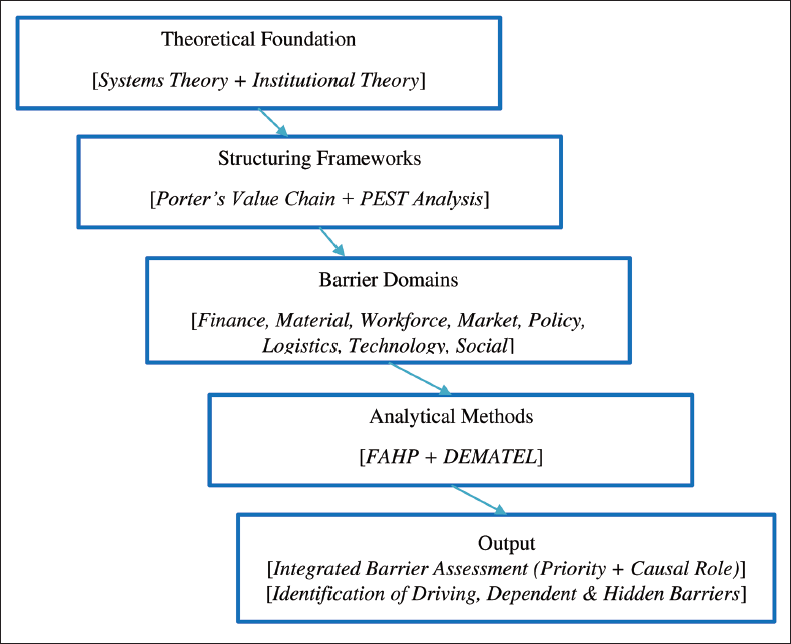
Conceptual Framework for Barriers Identification and Assessment.
Identification of Barriers
Porter’s model (Porter, 1985) outlines internal value chain activities, particularly human resources, procurement, logistics, operations, marketing and technology. PEST examines external PEST forces influencing firm performance (Aguilar, 1967). Together, these frameworks enable a comprehensive categorisation of barriers across internal and external dimensions. Although external factors shape technology and logistics, their constraints are primarily experienced within the value chain. Accordingly, they are classified as internal value‑chain activities, reflecting their locus of impact within firms and clusters. Under the recognised barrier categories, the study discusses barriers in the traditional handloom sector identified from the literature:
Finance: Operating on low capital, many weavers struggle to secure bank loans and rely on high-interest private loans from traders and moneylenders (Mishra et al., 2023). Limited credit, delayed payments, irregular income, supply chain inefficiencies and low financial literacy hinder effective cash flow. Rising production costs and price constraints further narrow their profit margins (Dalal et al., 2024; Khurana, 2022). Material: Quality raw materials are essential in manufacturing high-quality artisanal textiles (Roy Maulik, 2021). However, procuring quality raw materials at affordable rates remains challenging due to market fluctuations, weak distribution networks, inadequate quality assurance, and supply chain disruptions that affect delivery timelines (Dalal et al., 2024). Due to affordability and availability issues, weavers often depend on substandard materials, thereby affecting overall sales (Dalal et al., 2023). Workforce: The sector demands skilled weavers across key value chain stages, including spinning, weaving and dyeing (Roy Maulik, 2021). However, difficult working, social and economic conditions, such as low wages, poor working conditions and limited training, result in low job engagement and subsequent shift to alternative livelihoods (Mishra et al., 2023). Educational gaps hinder the acquisition of technological skills, while weak knowledge transfer limits the availability of a skilled workforce (Panigrahi & Rao, 2018). Market: Artisanal textiles face stiff competition from cheaper, mass-produced, branded machine-made textiles (Khurana, 2022). Weak branding, poor marketing, limited e-commerce penetration and restricted market access constrain competitiveness (Naik et al., 2025). Dependence on intermediaries limits direct market reach and consumer engagement (Das & Paltasingh, 2024). Policy and regulations: Although schemes aim to promote fair trade and financial support, their effectiveness remains limited due to vote-centric policymaking and weak implementation, including procedural delays (Dalal et al., 2024). Many weavers remain unaware of the existing schemes due to inadequate support and inconsistent information from implementing agencies (Naik et al., 2025). Logistic infrastructure: Weak logistics and warehousing issues inflate input costs and delay deliveries, undermining value chain efficiency and incurring financial losses (Dalal et al., 2023). High transport costs and poor connectivity limit market access, forcing weavers to rely on intermediaries, thereby affecting profit margins (Roy Maulik, 2021). Technology infrastructure: In the handicraft sector, despite potential productivity gains, technology upgradation remains low due to high costs, outdated tools and limited technical literacy (Dalal et al., 2024). For many local weavers, investing in modern equipment remains risky and unaffordable (Naik et al., 2024). Many weavers rely more on traditional methods and tools, which hinders transition to new technologies (Majumdar et al., 2021; Mkansi et al., 2025). Social: Societal challenges, including social marginalisation, community discrimination, under-recognition of craftsmanship and economic exploitation, discourage artisan participation, compelling them to switch to other businesses (Shaw et al., 2024). Low income restricts access to quality education and healthcare, while caste, gender and community differences deepen exclusion and weaken intergenerational continuity in the craft (Panigrahi & Rao, 2018).
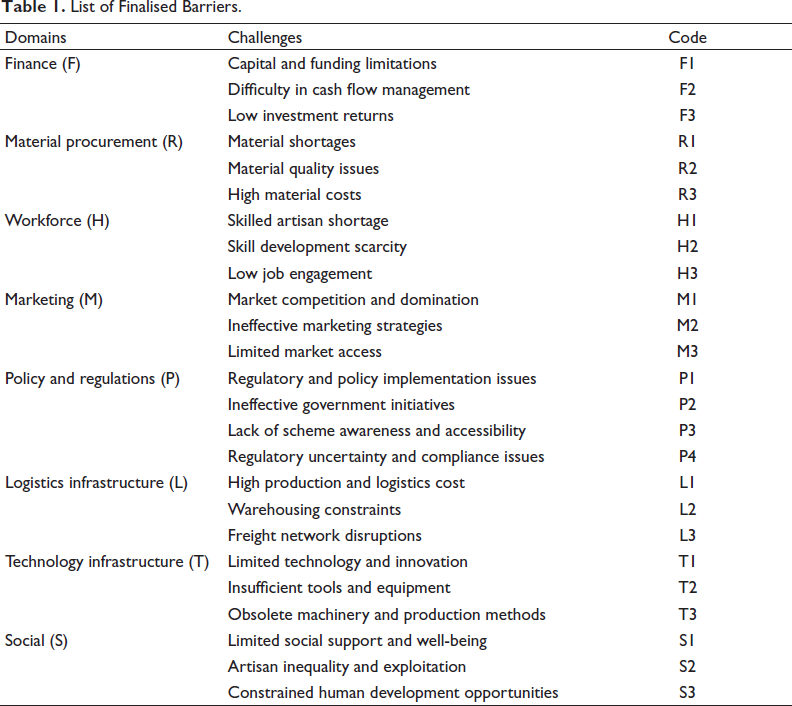
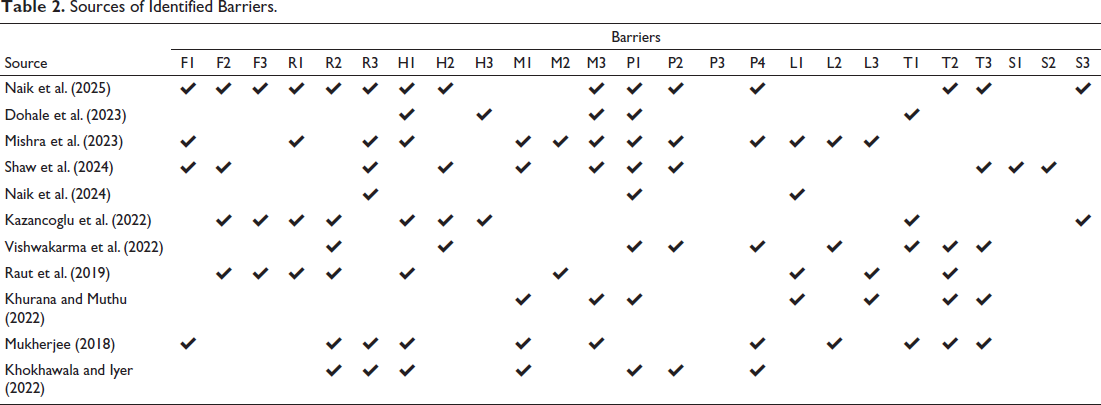
To validate the identified barriers, unstructured field visits were conducted in handmade weaving communities in Akhorhi (Jalaun), Ayana (Auraiya) and Dudhi (Sonbhadra), Uttar Pradesh, India. During these visits, open-ended discussions with weavers provided firsthand insights into value-chain challenges. Weavers voluntarily participated in the discussion and were assured of privacy and anonymity. This approach aligned literature-based findings with ground realities, strengthening the validity and relevance of the study. Initially, 31 barriers were identified from the literature, which were refined to 25 through consolidation of overlapping and contextually similar barriers based on field insights and expert input. Table 1 presents the finalised barriers, while Table 2 lists their respective literature sources. The subsequent section details the research framework for barrier assessment.
List of Finalised Barriers.
Sources of Identified Barriers.
Methodology
This study follows a four-phase methodology to assess industry barriers (Figure 2). Phase one identifies barriers through literature review and is validated via field visits and expert consultations. Barrier domains are identified from Porter’s Value Chain and PEST analysis. In phase two, expert inputs are used to finalise and classify barriers into relevant domains. The Fleiss’s kappa statistic then evaluates inter-rater reliability among experts, ensuring statistically significant agreement beyond chance (Moons & Vandervieren, 2025).
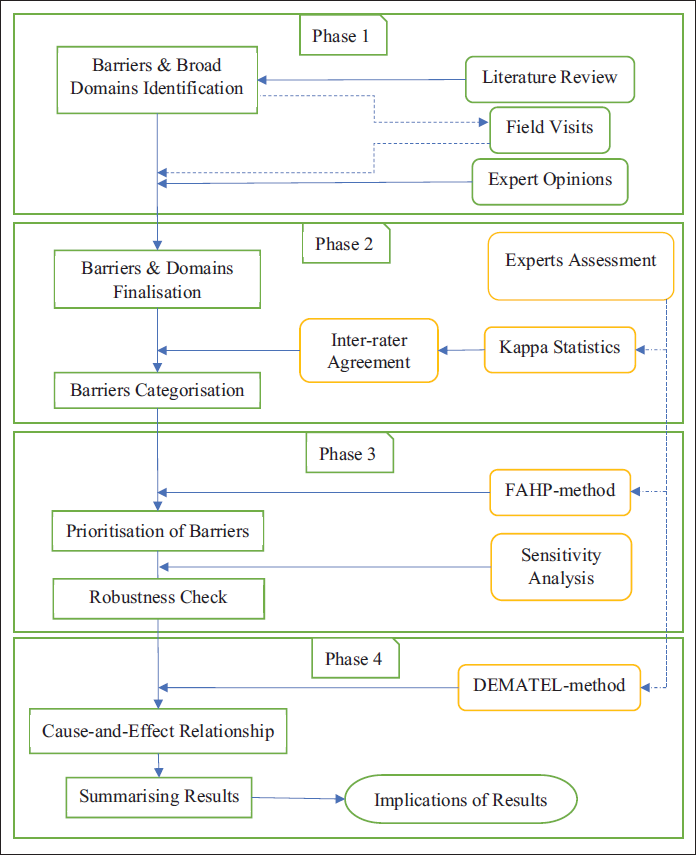
Research Methodology for Barriers Identification and Assessment.
To complement this, exploratory field visits were conducted in selected weaving clusters, involving unstructured interactions with artisans (approximately 12, 8 and 15 participants across three locations). Open-ended discussions captured ground-level insights. Insights from field notes were used to validate and contextualise barriers identified in the literature.
Phase three prioritises barriers using FAHP, while phase four applies DEMATEL to analyse causal relationships and interdependencies among barriers. This integrated approach enables simultaneous assessment of barrier importance and structural influence, facilitating identification of key constraints. The study concludes with theoretical, managerial and political implications aligned with SDGs for more impactful interventions. The subsequent section outlines the analytical tools applied at each stage.
Kappa Statistics
Cohen’s kappa is a statistical metric measuring the level of agreement between two evaluators while accounting for chance agreement (Cohen, 1968). As this study involves the assessment of multiple experts, Fleiss’s kappa is employed to evaluate the reliability of barrier categorisation (Moons & Vandervieren, 2025). The procedural steps for calculating the kappa value (Fleiss, 1971) are mentioned below:
First, the analytical parameters are defined: N denotes the number of barriers, M the number of categories, and E the number of experts. A classification matrix is constructed to record the number of experts
Third, the overall proportion of assignments for each jth category
Fourth, the observed agreement (P
o
) representing average consensus is obtained as the average of individual barrier agreements (Equation (3)), followed by calculation of expected agreement due to chance
As the last step, Fleiss’ kappa
A high kappa value (k) indicates strong agreement among experts. The kappa value (k) ranges from −1 to 1, where 1 denotes perfect agreement among experts, 0 represents agreement by chance, and negative values indicate disagreement beyond chance. Consensus levels include perfect consensus (0.81 ≤ k ≤ 1), significant consensus (0.61 ≤ k ≤ 0.80), reasonable consensus (0.41 ≤ k ≤ 0.60), moderate consensus (0.21 ≤ k ≤ 0.40) and slight consensus (0.10 ≤ k ≤ 0.20) (Moons & Vandervieren, 2025). Thus, kappa quantifies agreement and enhances the objectivity and reliability of the classification process, minimising subjective bias.
Fuzzy Analytical Hierarchy Process
FAHP is employed to prioritise barriers. Unlike classical analytic hierarchy process (AHP), FAHP uses fuzzy numbers to represent subjective judgements. Fuzzy logic addresses uncertainty and imprecision in expert judgements, making it suitable for complex decision-making environments where precise quantification is difficult (Bakir & Atalik, 2021). Following Buckley (1985) for FAHP calculation (outlined in Figure 3), triangular fuzzy numbers (TFNs) are used to convert linguistic comparisons into quantitative scales, offering a flexible and realistic representation of expert perceptions. This study uses TFNs rather than trapezoidal fuzzy numbers due to their simpler structure, fewer parameters and higher computational efficiency (Giachetti & Young, 1997). Compared to alternative approaches such as Chang’s extent analysis method (Chang, 1996), which may exhibit inconsistencies in normalisation and ranking, the Buckley method provides more stable and interpretable results (Wang et al., 2008).
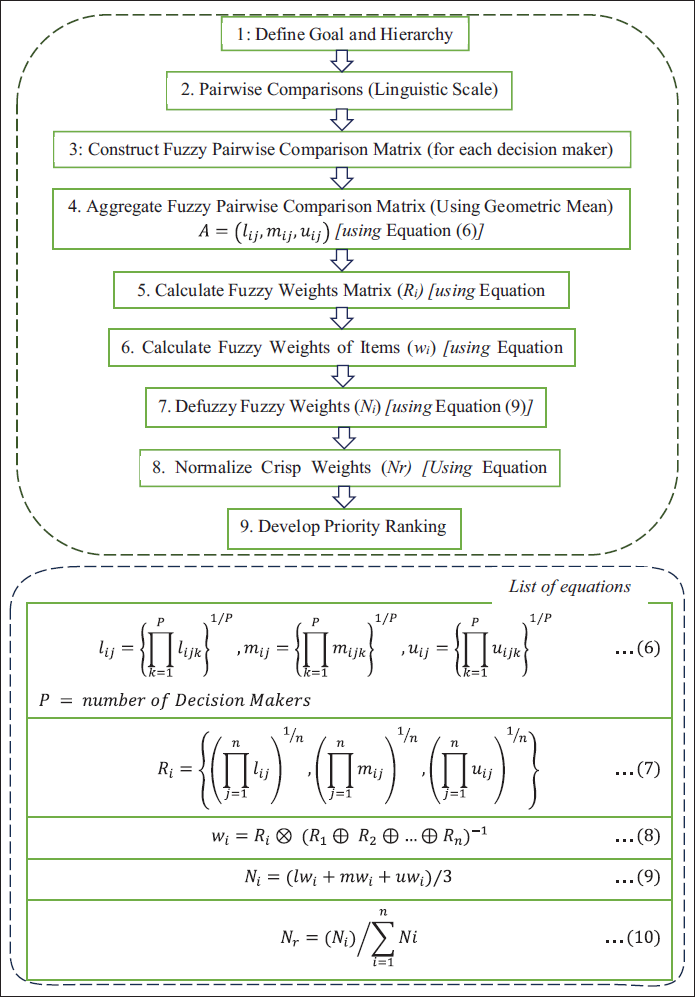
Fuzzy Analytical Hierarchy Process (FAHP) Execution Framework for Deriving Prioritised Barrier Weights.
The computational steps follow standard FAHP procedures as outlined in Buckley (1985) and related studies. The process begins by constructing a fuzzy pairwise comparison matrix in which experts compare barrier domains (level 1) and barriers within each category (level 2) based on relative importance using linguistic terms using linguistic terms and the corresponding triangular fuzzy number conversion scale presented in Table A1 (Appendix A), which are then translated into TFNs. For multiple evaluators, judgements are aggregated using the geometric mean. Fuzzy weights are computed via row-wise geometric mean, defuzzified using the centre of area method, and normalised, converting fuzzy numbers into crisp weights (Bakir & Atalik, 2021). Further, the consistency of expert judgements is evaluated using consistency ratios adapted from the classical AHP framework.
The FAHP results are assessed for robustness through a sensitivity analysis. Adopting the approach of Bakir and Atalik (2021) and Kaur et al. (2024), the most influential criteria weight is varied from 0.1 to 0.9 to observe the effects on other weights and ranking, assessing model stability under varying scenarios.
Decision-making Trial and Evaluation Laboratory
DEMATEL is used to analyse cause-and-effect relationships among barriers by mapping direct and indirect influences. It helps identify interdependencies and prioritise influential elements (Nimawat & Gidwani, 2021). DEMATEL process is summarised in Figure 4, which begins with defining the problem and identifying barriers. Then, experts assess the direct influence of one barrier over another, forming an initial direct-relation matrix. For multiple evaluators, the assessments are averaged to create an average direct-relation matrix, which is then normalised and converted into a total relation matrix that captures both direct and indirect influences of each barrier (Shieh et al., 2010).
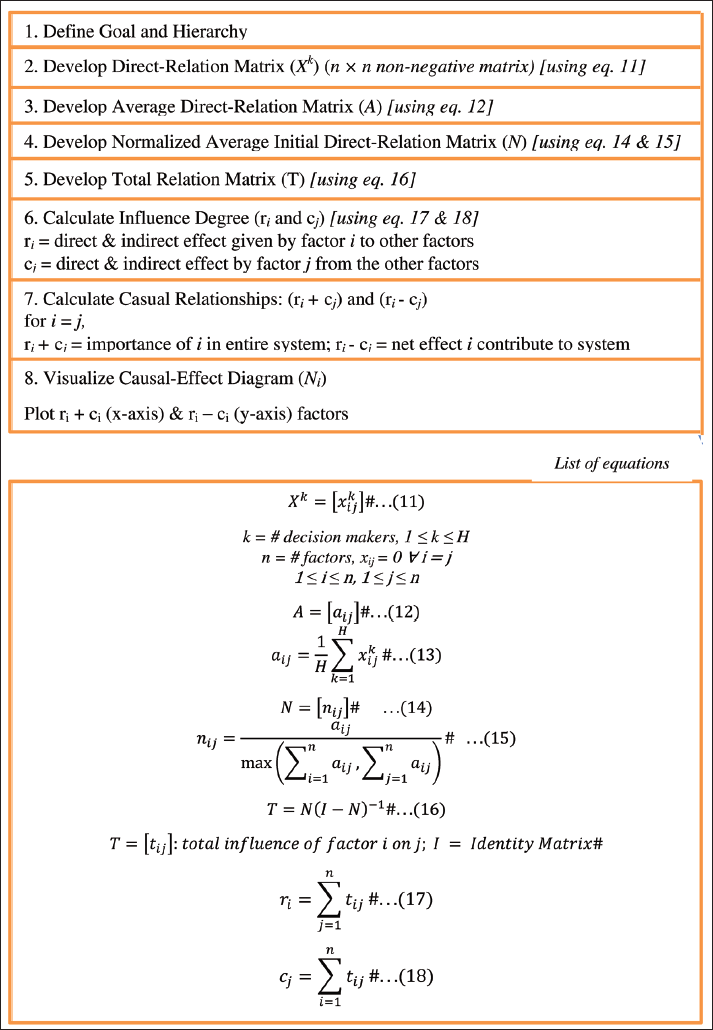
Decision-making Trial and Evaluation Laboratory (DEMATEL) Process Framework.
From the total relation matrix, prominence
Data Collection
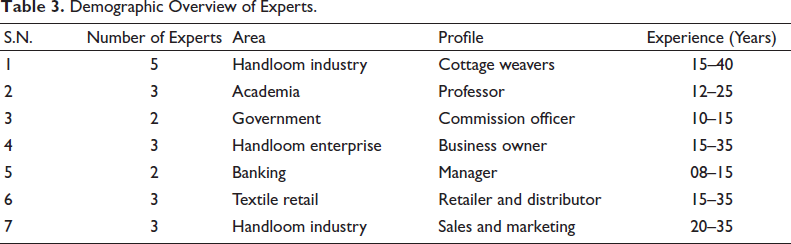
This study employed a purposive sampling strategy to select domain experts with substantial experience across the artisanal textile value chain. The panel included handloom weavers, academic researchers, government officials, business owners, banking professionals and marketing practitioners, ensuring comprehensive coverage of the value chain, including production, finance, policy and market interfaces. A total of 25 experts were initially approached for the analytical stages of the study, of whom 21 completed all evaluation stages and were retained for the final analysis. All selected experts had at least 10 years of domain experience, with most having more than 15 years of professional experience. Such a sample size is consistent with established practices in multi-criteria decision-making studies, where expert-based evaluation prioritises depth of knowledge over large sample sizes (Yeganeh et al., 2023).
Primary data for barrier assessment were collected using structured questionnaires administered in multiple stages. The finalised barriers validated after field visits were classified and evaluated by selected experts. In stage one, experts categorised barriers into relevant domains and evaluated interrelationships using a DEMATEL questionnaire, where influence was assessed on a scale of 0 (no influence) to 3 (high influence) (see Table B2 in Appendix B). Inter-rater agreement was examined using Fleiss’s kappa. The presentation of the barrier classification questionnaire (Table B1) and the DEMATEL questionnaire (Tables B3 and B4) is outlined in Appendix B for reference.
In the second stage, the same experts provided pairwise comparisons of barriers within domains using a linguistic scale for FAHP, later converted into TFNs. Table B5 (Appendix B) provides details of linguistic scale and a questionnaire for FAHP assessment of a barrier domain is highlighted in Table B6 (Appendix B) for reference. A total of 21 experts completed all stages, and their responses were retained for final analysis to ensure consistency across classification, causal assessment and prioritisation. The questionnaires were pre-tested with academic experts and refined through a pilot study involving four research scholars.
To minimise potential bias, the study ensured diversity among experts and avoided the over-representation of any stakeholder group. Aggregating judgements using the geometric mean further reduces individual bias in the analysis. Table 3 lists domain-specific experts who voluntarily participated in the assessment. Data collection was done between February and October 2024. The following section describes the significant findings from the barrier assessment.
Demographic Overview of Experts.
Results
Categorisation of Finalised Barriers
Based on the research framework, 25 barriers were finalised for assessment. In phase two, 21 experts independently categorised barriers into their respective domains. The kappa statistic yielded a value of 0.65, indicating strong consensus among raters and confirming the classification’s reliability.
Prioritisation of Barriers
In phase 3, the FAHP method was employed to prioritise barriers based on their relative importance, following the steps summarised in Figure 3. Experts, through a questionnaire, performed pairwise comparisons of domains (primary level) and barriers within each domain (secondary level), using linguistic terms, which were replaced with triangular fuzzy values using a nine-point conversion scale from van Laarhoven and Pedrycz (1983) (see Appendix A), forming a fuzzy pairwise comparison matrix. Expert inputs were aggregated using the geometric mean to compute fuzzy weights. The weights were defuzzified and then normalised to derive local weights for barriers and domains. Their product yielded global weights for all 25 barriers (see Table 4). This layered structure enhances precision and hierarchical clarity in prioritisation.
Summary of Calculations from Fuzzy Analytical Hierarchy Process (FAHP) and Decision-making Trial and Evaluation Laboratory (DEMATEL).
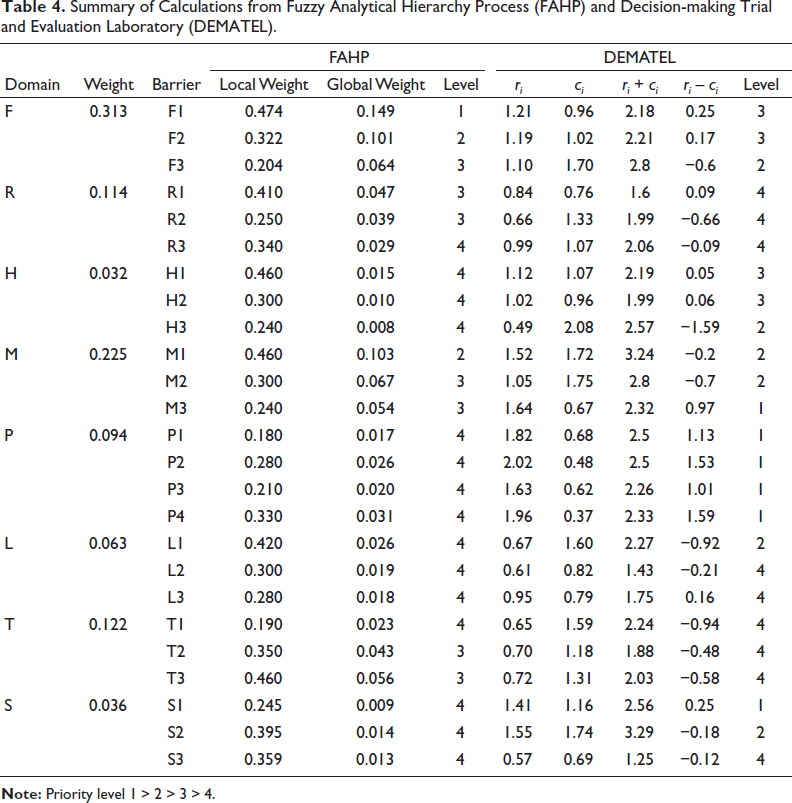
Based on the global weights generated, barriers were categorised into four priority levels, ranging from Level 1 (highest priority) to Level 4 (lowest priority) as presented in Table 4. The consistency ratios of comparison matrices remained below the threshold of 0.10, confirming the reliability of judgements (Bakir & Atalik, 2021). Results reveal finance, marketing, material and technology as the most critical barrier domains for weavers. Workforce and social challenges exhibit low concern, while regulatory challenges hold moderate significance within the artisanal textile industry.
A sensitivity analysis was conducted to assess the robustness of the FAHP results. The weight of the most influential domain (finance) was varied from 0.1 to 0.9 to observe its impact on the other domains (see Part A, Figure 5). Further, the ranking of barriers based on global weights for different scenarios was calculated (see Part B, Figure 5). Different scenarios summarised in Figure 5 (Parts A and B) show that finance remains dominant across scenarios, while marketing, technology and procurement barriers gain prominence as financial influence weakens. Workforce, logistics and social obstacles consistently ranked low in all scenarios, highlighting the need for targeted policy and managerial interventions to ensure they are not overlooked due to structural underrepresentation. Overall, the ranking remains stable across scenarios, confirming the robustness of the FAHP results.
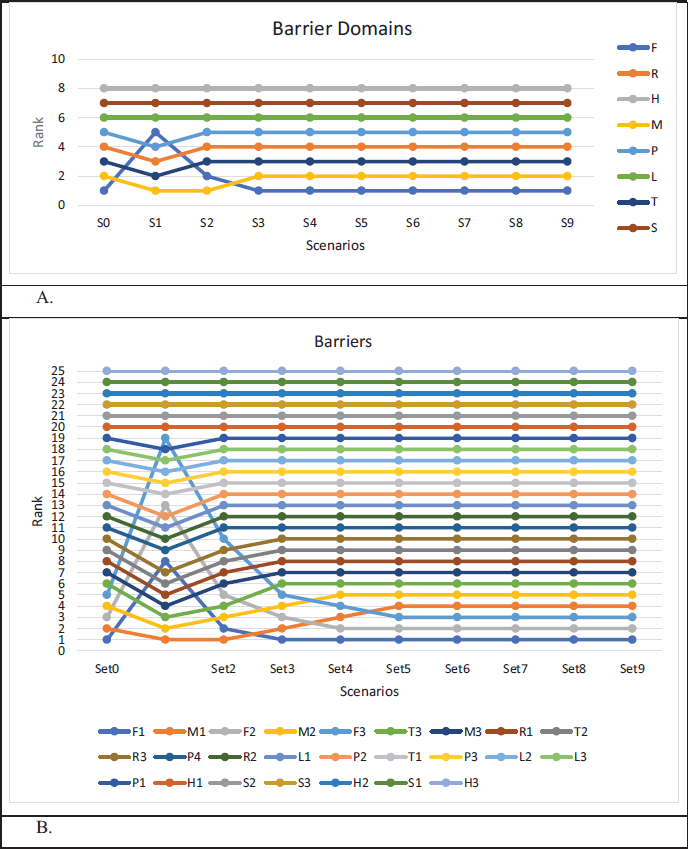
Sensitivity Analysis. (A) Weightage Change in Domains. (B) Changes in Global Weights for Different Domain Local Weights.
Cause-and-effect Analysis
The DEMATEL method was used to uncover cause-and-effect relationships among identified barriers. Experts evaluated the direct influence between barrier pairs on a scale of 0 (no influence) to 3 (high influence) (Shieh et al., 2010). Such direct influence matrices from all experts were averaged to form a single initial direct-relation matrix (A), which was normalised and converted into a total relation matrix (T). Following the steps in Figure 4, prominence
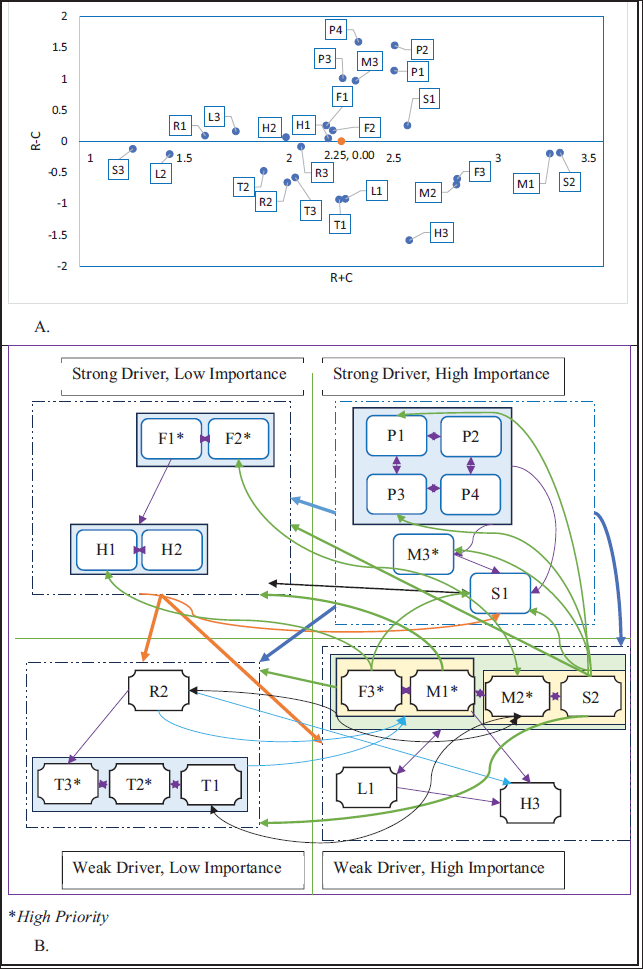
Cause-and-effect Relationship Among Barriers. (A) Cause-and-effect Diagram of the Barriers. (B) Causal Relations and Interdependencies Among the Barriers.
Results show that capital and cash flow issues (F1–F2), trained workforce unavailability (H1–H2), limited market access (M3), policy constraints (P1–P4), and limited social support (S1) function as substantial causal barriers influencing multiple interconnected challenges. In contrast, technology limitations (T1–T3), logistics constraints (L1–L2), procurement constraints (R2–R3), workforce engagement issues (H3), low investment returns (F3), marketing inefficiencies (M1–M2), and social inequality (S2–S3) emerge as effect barriers exhibiting comparatively lower systemic influence.
The following section discusses the outcomes from the integrated FAHP–DEMATEL assessment and explores the theoretical, managerial and policy implications, aligned with the SDGs, to support globally applicable interventions.
Discussion
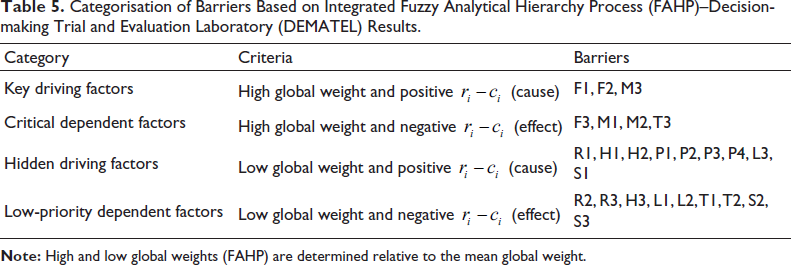
Identifying the need for barrier assessment in the artisanal textile industry from artisans’ perspectives, this study employs FAHP and DEMATEL to identify key influential barriers by their relative importance (using global weights from FAHP) with their causal behaviour (using prominence and relation values from DEMATEL). Specifically, barriers with high weights and positive relation Financial constraints: Funding limitations (F1) and cash flow constraints (F2) emerge as high-weight causal drivers with moderate systemic importance Resource constraints: Procurement barriers (R1–R3) exhibit low to moderate weight and predominantly dependent behaviour (low Human capital issues: Shortage of skilled artisans and scarcity of skill development (H1, H2) display low weight, moderate systemic importance Institutional and regulatory framework: Regulatory inhibitors (P1–P4) hold low relative weightage combined with strong causal influence (positive Market dynamics: Limited market access (M3) stands out as the central leverage point, exhibiting high global weight, moderate to high prominence (positive Logistical and operational infrastructure: High production costs (L1) show low weightage and moderate importance Technological limitations: Technological barriers (T1–T3) emerge as low-leverage constraints with low to moderate relative weight and dependency on causal barriers (negative Social challenges: Social challenges exhibit low relative weightage with diverse roles. Limited social support (S1) shows moderate importance and causality (positive
Categorisation of Barriers Based on Integrated Fuzzy Analytical Hierarchy Process (FAHP)–Decision-making Trial and Evaluation Laboratory (DEMATEL) Results.
The findings of this study offer actionable guidance for researchers, analysts, entrepreneurs and policymakers, supporting informed and SDG-aligned solutions tailored to sector-specific dynamics.
Theoretical Implications
This study advances barrier assessment in complex artisanal production systems by integrating FAHP and DEMATEL within a structured framework supporting data-driven decision-making. Consistent with Systems Theory, it shows that barriers with greater causal influence have a stronger system-wide impact than those with a higher priority alone.
Findings reveal that high-priority barriers (F1, F2 and M3) act as active drivers, while other priority challenges (F3, M1–M2, T1–T3) are reactive to upstream causal barriers, highlighting the operational framework’s dynamicity. Similarly, hidden drivers (P1–P4, S1) exert a strong influence despite low-priority rankings, highlighting their strategic relevance. Conversely, there are overvalued bottlenecks, such as technological constraints (T1–T3), that are considered essential but demonstrate limited systemic impact. By linking barrier importance with causal dynamics, the study provides a more nuanced understanding of how constraints operate within interconnected systems. This multidimensional perspective contributes to both theory and practice by enabling more targeted intervention strategies and improving the analytical robustness of barrier assessment frameworks.
Market Implications
The study brings operational and strategic insights for entrepreneurs, firm owners and industry leaders involved with the traditional textile sector:
Prioritise financial and institutional capabilities: Financial constraints (F1–F2) and regulatory barriers (P1–P4) serve as pivotal levers to drive downstream improvements in logistics, technology and procurement. Therefore, these should be addressed through cluster-level financial planning and institutional support mechanisms involving cooperatives, microfinance institutions and local administrative bodies. Strengthening financial literacy, simplifying loan access, and facilitating the use of government schemes such as the Pradhan Mantri Mudra Yojana can improve credit utilisation for small-scale artisans with limited credit availability. Foster strategic collaborations: Limited market access (M3) suggests that independent weavers and small cooperatives should adopt collective approaches and avoid competing in isolation. Partnerships with cooperatives, e-commerce platforms and sustainable fashion networks can reduce market-entry costs and improve visibility. Additionally, they can enhance access to technology, logistics and resources, driving sustainable development in the artisanal textile sector. Target reactive barriers through sequenced interventions: Barriers, particularly low investment returns (F3), marketing competition and marketing challenges (M1–M2), low workforce engagement (H3), social exploitation (S2), and logistic expenses (L1), should be addressed through phased strategies after strengthening financial access and market linkages, rather than isolated actions. Design modular strategies: Technology impediments (T1–T3) receive priority but result in low system impact. Procurement issues (R1–R3) and warehousing-transport constraints (L2–L3) exhibit limited systemic leverage. These observations suggest integrated interventions within long-term reform programmes for cost-effective, sustainable impact rather than standalone investments.
Political Implications
Recognising the systemic influence of regulatory barriers, the study highlights key political implications for strengthening the artisanal textile sector:
Strengthen industry policies and trade agreements: Regulatory barriers (P1–P4) undermine competitiveness. Policymakers should streamline licensing procedures into a single step through one-stop, dedicated facilitation centres and digital platforms operating at multiple locations, via banks, post offices and local service centres like Jan Seva Kendras, to reduce procedural delays. Financial assistance should be improved through subsidised credit schemes and scheme integration units at the tehsil (subdivision) level. Inclusive trade policies should be co-designed with cooperatives and artisan unions to ensure participation and alignment with grassroots needs. Community-level awareness programmes delivered at the block (subdivision) level through non-governmental organisations and local governance bodies can improve scheme utilisation. Boost financial inclusion mechanisms: Financial constraints (F1–F3) underscore the need for targeted, accessible funding initiatives supported by simplified procedures. Microfinance institutions, cooperative banks and fintech platforms should be mobilised and digitalised at the subdivisional level to provide accessible credit. Government‑backed business grants and tax relaxations can improve liquidity, while public–private partnerships and financial literacy programmes can ensure effective credit use. Proper monitoring mechanisms and digital transparency can ensure the effective utilisation of subsidies and credit schemes. Market ecosystem development: Limited market access (M3) calls for cluster-based trade infrastructure, digital marketplaces, geographical indication (GI)-tagged product zones, and direct-to-market platforms. Implementation requires state departments to establish artisan clusters that reduce dependence on intermediaries. Enhance social welfare and artisan rights: Social barriers (S1–S2) necessitate expanded healthcare, education and worker protections for textile artisans at the division level. Establishing anti-exploitation cells to monitor ground-level discrepancies at the subdivision level can safeguard artisan rights and improve livelihood security. Long-term focus on enablers: Technology (T1–T3), logistics (L2–L3) and material (R1–R3) barriers require sustained infrastructure development rather than short-term measures, through government-backed supply chain reforms, transport incentives and warehousing facilities managed through public–private partnerships. Collaboration with technical institutes (National Institute of Fashion Technology [NIFT], Indian Institutes of Technology [IITs], National Institute of Design [NID]) can drive innovation and craft-tech incubators to improve artisanal textiles on a global fashion platform. Establishing cluster parks can reduce long-term logistics, technology and resource barriers.
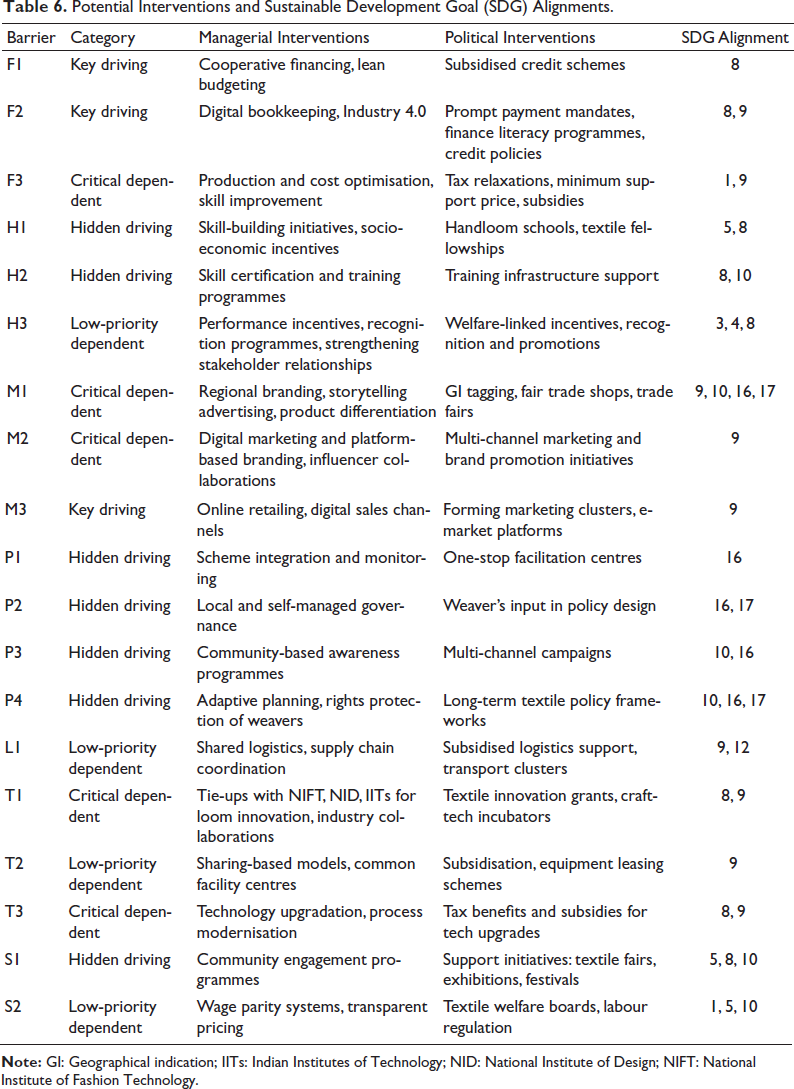
The artisanal textile sector requires coordinated interventions across financial, market, institutional and social dimensions, operationalised through coordinated efforts among industry actors (entrepreneurs, cooperatives, financial institutions, government agencies and firms). The implementation of interventions should follow a structured approach, like prioritising key driving barriers before addressing dependent constraints. Given the resource constraints of small-scale artisans, emphasis should be placed on scalable, cost-efficient approaches, such as shared infrastructure, cluster-based development and digital platforms. Additionally, this study aligns the proposed solutions with the relevant SDGs for global relevance and long-term impact, particularly SDG 1 (no poverty), SDG 3 (good well-being), SDG 8 (decent work), SDG 9 (industry, innovation and infrastructure) and SDG 17 (partnership for the goals). The alignment with SDGs is intended as a contextual mapping to position the identified interventions within broader sustainability and development priorities, rather than as a standalone analytical framework. Table 6 consolidates barrier-specific managerial and political actions to translate analytic findings into actionable insights. Figure 7 connects the domains to relevant SDGs, offering a consolidated view for market and policy stakeholders to visualise the barrier domains that directly influence specific sustainability targets.
Potential Interventions and Sustainable Development Goal (SDG) Alignments.
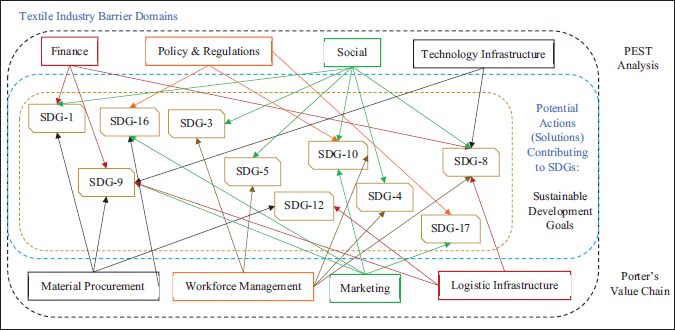
Barrier Domains and Sustainable Development Goal (SDG) Alignment.
Conclusion
The traditional handmade textile industry contributes significantly to national development by preserving cultural heritage, sustaining craftsmanship and generating employment. As eco-friendly alternatives to synthetic fabrics, artisanal textiles support environmental sustainability. Despite this potential, persistent structural challenges constrain operational efficiency and limit sectoral growth. This study examines key barriers affecting artisanal textiles, integrating FAHP and DEMATEL to assess their relative importance and interdependencies from artisans’ perspectives, thereby ensuring contextual relevance.
The findings show that financial constraints and market access are key drivers, exerting a strong influence on downstream challenges. Regulatory and institutional barriers emerge as hidden drivers, reflecting systemic importance despite relatively low to moderate priority. In contrast, market competition, low investment returns, logistics and technology constraints function as dependent barriers shaped by upstream inefficiencies. This classification provides a clear basis for prioritising interventions: addressing core drivers can generate broader, system-wide improvements, while dependent barriers should be managed through incremental, cost-sensitive strategies.
However, the study holds some limitations. Although efforts were made to incorporate diverse perspectives by engaging experts across multiple value chain domains, reliance on expert evaluation may still introduce some subjectivity. The FAHP–DEMATEL approach captures relationships within a static analytical framework, which may not fully reflect the dynamic evolution of barriers over time, indicating the value of longitudinal research designs. Furthermore, while the barriers were identified from the existing literature, their prioritisation and interrelationships were derived from expert inputs from diverse regions and domains. They were shaped by specific institutional, resource and socio-economic contexts.
Consequently, the relative importance and causal structure of barriers may vary across industries and regions depending on manufacturing systems, resource availability and local socio-economic contexts. Therefore, the generalisability of the findings is subject to the context. However, the proposed framework remains applicable across regions and product contexts to analyse the relative importance and interrelationships among barriers.
These limitations propose directions for future research. Studies incorporating broader stakeholder perspectives can enhance robustness, while longitudinal studies may capture the evolving nature of barriers. Cross‑sectoral studies in related handicraft industries may also identify common structural constraints, supporting more adaptive and balanced development strategies.
Footnotes
Acknowledgements
The authors acknowledge the support they received from researchers and mentors of Industrial Engineering at the Mechanical Engineering Department, IIT Delhi, and the Public Systems Lab set up at IIT Delhi in partnership with the United Nations World Food Programme. The authors also thank the Ministry of Education, India and the Department of Mechanical Engineering at IIT Delhi, India, for their support.
Authors’ Contribution
Shivam Singh: Conceptualisation, data curation, formal analysis, investigation, methodology, resources, validation, writing—original draft.
Nomesh Bhojkumar Bolia: Writing—review and editing, supervision, project administration, software.
Consent to Participate
Artisans and experts voluntarily participated in the study for validation and evaluation purposes.
Data Availability
The data will be made available on request.
Declaration of Conflict of Interests
The authors declared no potential conflicts of interest regarding the research, authorship and/or publication of this article.
Ethical Approval and Informed Consent
For this research, the experts and weavers were provided with detailed information about the study’s procedures and fully informed about the purpose of the research and its aim. The authors ensured their discretion, privacy and anonymity. The decision experts and artisans voluntarily participated in the study.
In addition, the authors have observed all ethical issues, including plagiarism, informed consent, misconduct, data fabrication and falsification. The authors affirm that this manuscript was not previously published and is not under consideration for publication in any other journal or publication outlet.
Funding
The authors received no financial support for the research, authorship and/or publication of this article.

Appendix A
Appendix B. Questionnaire Design.
Instruction to experts
You are requested to review the list of identified barriers affecting the artisanal textile sector. Based on your experience, please assign each barrier to the most appropriate domain from the following categories:
Finance (F), Material Procurement (R), Workforce (H), Marketing (M), Policy and Regulations (P), Logistics Infrastructure (L), Technology Infrastructure (T) and Social (S).
If a barrier appears relevant to multiple domains, select the domain where its primary impact is observed.
Instruction to experts
You are requested to evaluate the degree to which one barrier influences another. For each pair of barriers (i and j), indicate how strongly barrier i affects barrier j using the following scale:
The list of barriers is:
Instruction to experts
You are requested to compare the relative importance (preference) of barriers within each domain. For each pair of barriers, indicate which barrier is preferred (more important) and to what extent using the linguistic scale provided below.
Question format
Between Barrier A and Barrier B, which is more important and to what extent? Finance domain
Barrier description:
F1: Capital and funding limitations
F2: Difficulty in cash flow management
F3: Low investment returns