







Abstract
Purpose:
The board of directors is a crucial aspect of corporate governance, especially in the case of family-owned firms with diverse dynamics. This article investigates the relationship between board characteristics and performance in family businesses, analysing how family involvement shapes governance structures and their impact on achieving business objectives.
Design/Methodology/Approach:
A bibliometric research design is used to review the existing body of literature in the context of the identified research problem. A total of 554 documents relevant to the study were identified from the Scopus database and analysed using the Biblioshiny software.
Findings:
The 554 relevant articles ranged between 1996 and 2024. The research trend showcased a steady increase in the output in this domain over the recent decade. Thematic analysis revealed motor themes such as corporate governance and corporate strategy and basic themes such as board size, composition and independence. The study further shed light on five thematic clusters and built a conceptual framework pertaining to board–performance relationship, which can be empirically tested by future studies.
Originality:
Several features of the board such as board size, diversity and independence have garnered the interest of researchers since many years, and there are several bibliometric studies in the area of family business management in general. However, there is an absence of a consolidated study which reflects the existing body of literature and shows the way forward for future research in the domain of impact of board characteristics on the performance of family businesses.
Implications:
Based on the analysis, future research directions in terms of under-explored independent and dependent variables are provided. The study provides theoretical implications in terms of proposing a conceptual framework, which explains the influence of board attributes on firm performance. Several managerial and policy implications are also laid out.
Introduction
The board of directors serve as an eminent pillar of corporate governance, which is actually responsible for looking over management and ensuring the strategic alignment of organizational goals. Board characteristics, as defined by Zahra and Pearce (1989), include aspects such as size, diversity, independence and expertise, which shape the effectiveness of decision-making and governance. In family businesses, these characteristics take on added complexity due to the involvement of family members in board composition and governance processes (Chrisman et al., 2005). Family businesses are unique entities where the influence of family dynamics extends to governance structures, including the board. According to Jwalapuram et al. (2025), governance structures in family businesses may include family councils, advisory boards and formalized governance policies. This structure helps in aligning family interests with business objectives and mitigating potential conflicts. Performance in family businesses is not limited to financial outcomes; it includes the ability to achieve long-term sustainability while preserving family harmony (Davis & Harveston, 1998). Hence, in the current study, performance comprises financial as well as sustainability metrics in terms of environmental and social impact and governance.
This article investigates the relationship between board characteristics and performance in family businesses, analysing how family involvement shapes governance structures and their impact on achieving business objectives. A review of the existing body of literature has been done for this purpose by employing bibliometric analysis. The Scopus database was checked for any existing bibliometric studies on the current topic. A search relating to keywords such as ‘family business’, ‘performance’ and ‘bibliometric’ resulted in 18 documents. The significant articles are reported in Table 1.
Existing Bibliometric or Systematic Literature Review Studies.
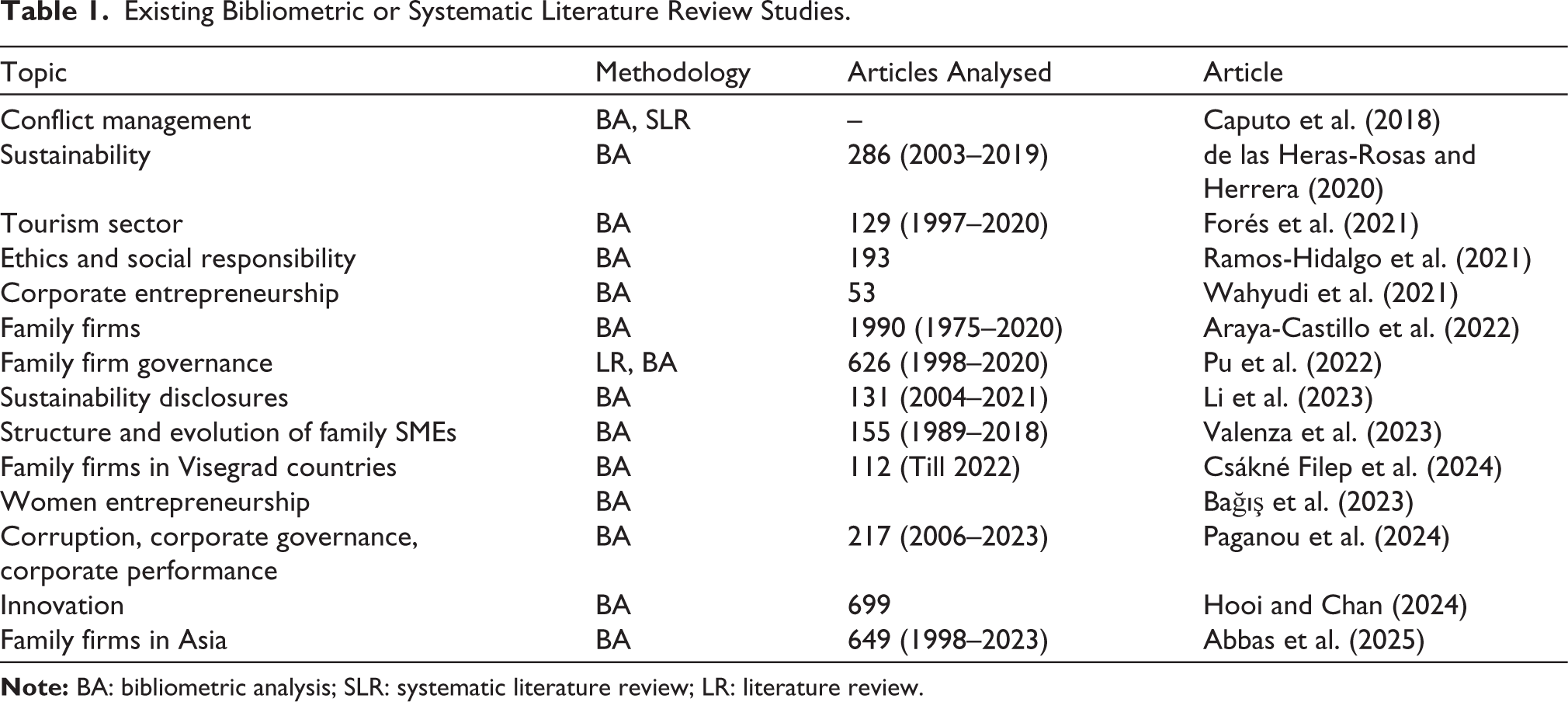
It is evident from Table 1 that while several bibliometric studies are available in the domain of family businesses, some studies are quite broad in nature wherein they have studied the family firms from a regional context (Abbas et al., 2025; Csákné Filep et al., 2024) or from the sectoral perspective (Forés et al., 2021) or from the structure and evolution point of view (Valenza et al., 2023). The more niche studies are focused on aspects of ethics and social responsibility (Ramos-Hidalgo et al., 2021), corporate entrepreneurship (Wahyudi et al., 2021), governance (Pu et al., 2022), women entrepreneurship (Bağış et al., 2023), innovation (Hooi & Chan, 2024) and sustainability (de las Heras-Rosas & Herrera, 2020; Li et al., 2023). Further narrowing the search to ‘board’ along with the previous keywords resulted in one document by Paganou et al. (2024). However, the focus of the article was specifically on the role of corporate governance in mitigating corrupt or fraudulent practices in family businesses. As opposed to this, the current study looks broadly at the effect of board characteristics on the performance of family-owned firms. Hence, it becomes increasingly clear from the results that while governance is an important cluster of research in family businesses, there is no documented study which reviews the impact of board characteristics on the performance of family businesses. Thus, the current study contributes, first, by expanding the theoretical knowledge of family business governance with a focus on board characteristics and their impact on firm performance. Second, the study classifies the literature into five clusters and results in a conceptual framework pertaining to board–performance relationship, which can be empirically tested by future studies. Third, the study systematically identifies the gaps in literature and derives detailed future research directions based on the same.
The rest of the article is designed in the following manner. The research methodology is elaborated in the second section, and the third section deals with the bibliometric analysis and the results thereof, while the fourth section summarizes the findings in the form of discussion and lays down the conceptual framework. The fifth section provides the future research directions, implications and limitations and closes the article.
Research Methodology
The article aims to examine the knowledge development, delineate the existing literature in clusters and identify future research directions in the domain of family business with an emphasis on its board characteristics and the resultant impact on firm performance. The bibliometric analysis approach is used to fulfil the aforementioned aims. The research questions outlined for this purpose are as follows:
RQ1: Which are the most effective studies, writers, journals, organizations and nations in the context of board characteristics’ effect on the performance of family-owned firms? RQ2: What is the conceptual framework of the research of the impact of board characteristics on the performance of family-owned firms? RQ3: What is the current intellectual framework of influence of board characteristics on the performance of family-owned firms’ research? RQ4: What are the next steps in the sphere of influence of board characteristics on the performance of family-owned firms’ research?
To address the above research questions, a bibliometric analysis was conducted from December 2024 to March 2025. The Scopus database was used for identifying the relevant research papers as it is a comprehensive database which includes more than 90 million content records. A search in the article’s title, abstract and keywords was performed using the search terms ‘board’ OR ‘board AND characteristic*’ OR ‘board AND diversity’ OR ‘board AND member’ OR ‘governance’ AND ‘performance’ OR ‘success’ AND ‘family business’ OR ‘family firm’ OR ‘family owned’ OR ‘family enterprise’ OR ‘family company’ OR ‘family run’. The search yielded 782 documents. Then, the documents were filtered as follows: (a) to include articles written in English language only and (b) to include only articles and conference papers in the document type. The restricted search resulted in 660 documents. These documents were then checked for relevance with the current study. This was done by scanning the title of the paper and reading the abstracts by one of the authors. This was then verified by another author so as not to exclude any paper which would have been of relevance. Finally, the exercise resulted in 554 documents relevant to the study. These documents were used for conducting the bibliometric analysis using the Biblioshiny software.
Bibliometric Analysis and Findings
Descriptive Analysis
To answer RQ1 (which are the most effective studies, writers, journals, organizations and nations in the context of board characteristics’ effect on the performance of family-owned firms?), we hereby provide a description of trends in scientific production, highlighting the most relevant studies, writers, journals, organizations, nations and popular topics in board characteristics and family business performance.
Data Set
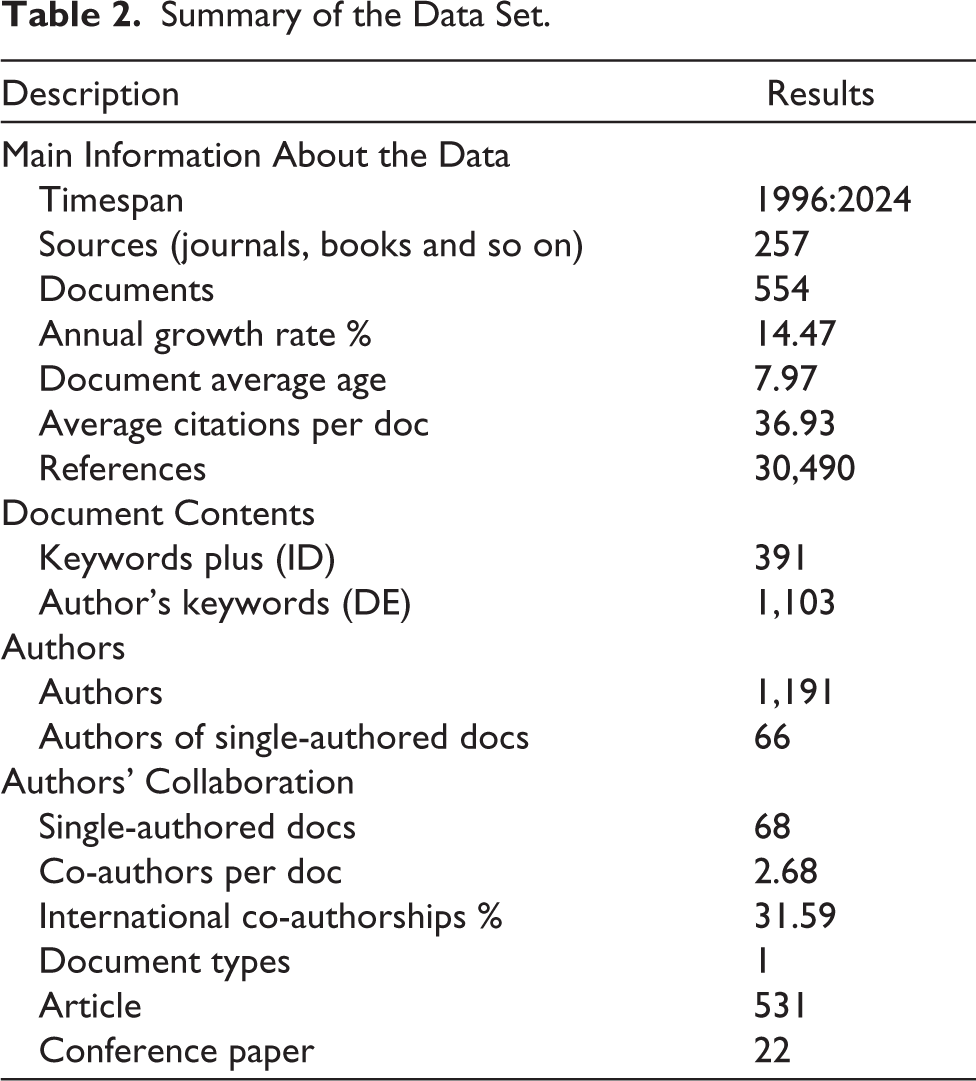
Table 2 presents the final database derived through cleaning and filtering processes to make the data relevant to the topic under research. A total of 554 articles were published in 257 journals between 1996 and 2024 by 1,191 authors. The research shows an annual growth rate of 14.47%, reflecting a steady increase in scholarly interest over the years. On average, each document in the data set has an age of 7.97 years and receives approximately 36.93 citations, demonstrating relevance and the impact of literature.
Summary of the Data Set.
Three-field Plot
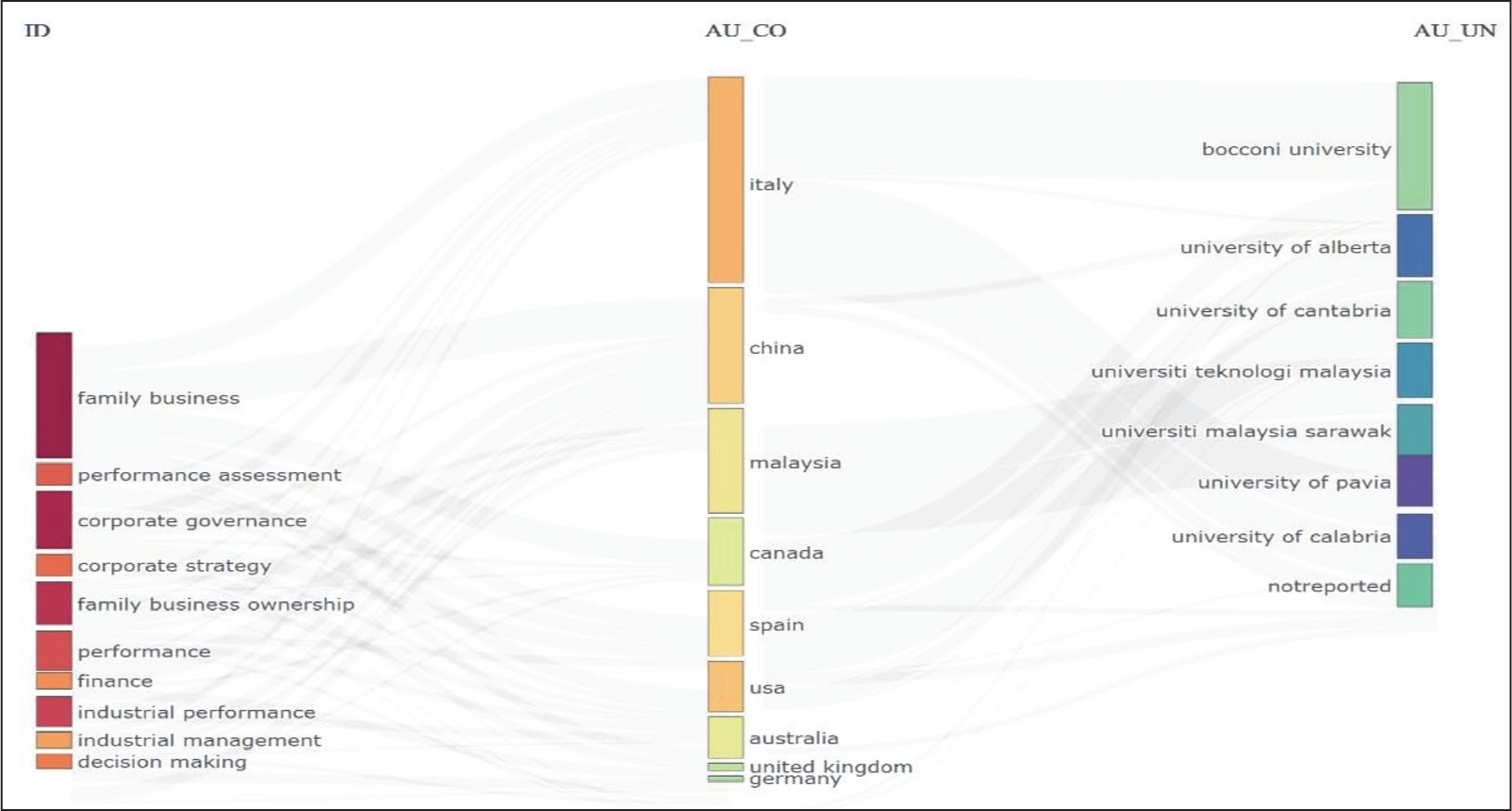
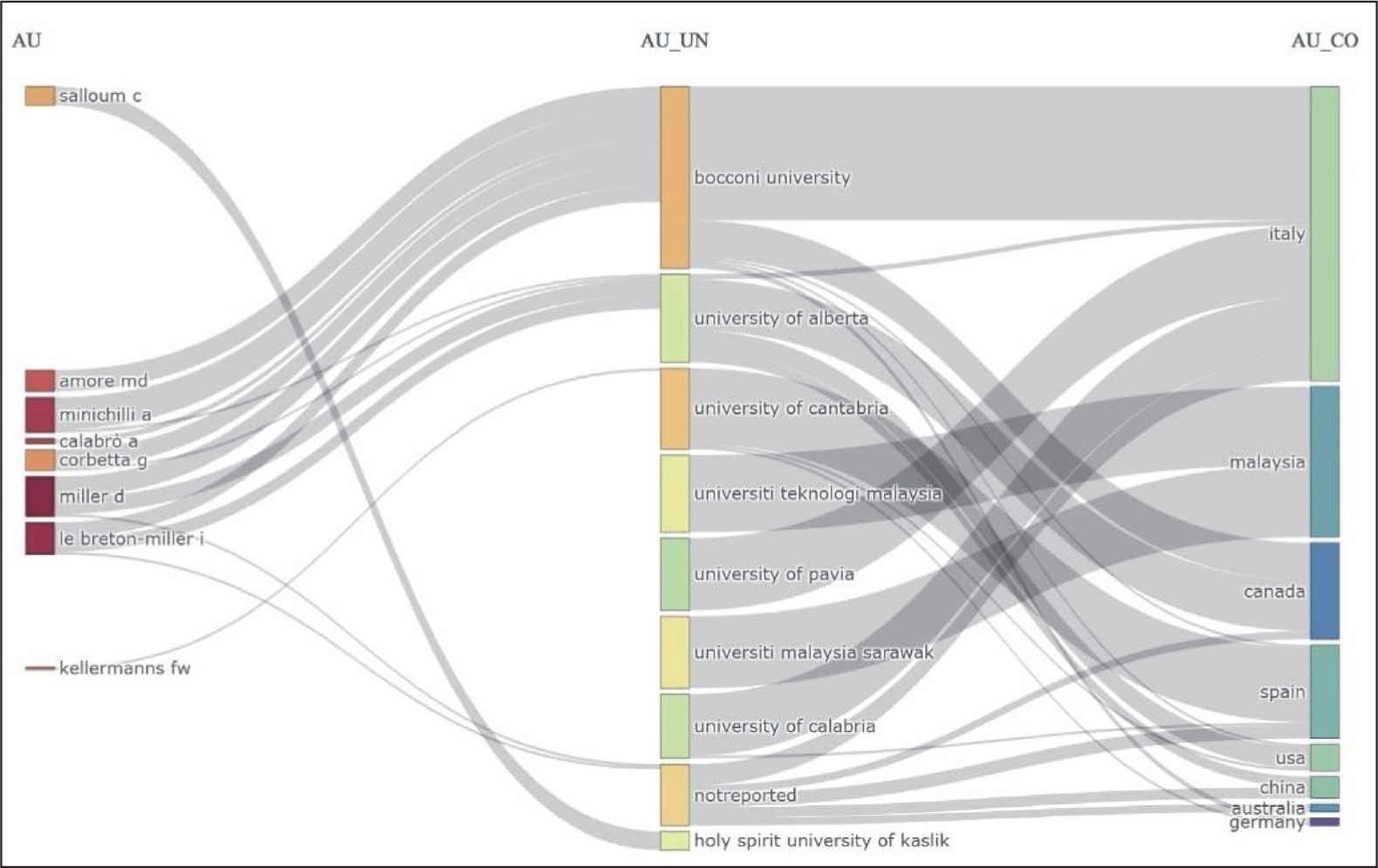
The three-field plot shows the keywords, authors and sources and is used to identify the connections among these. As evident in Figure 1, terms such as ‘family business’ and ‘corporate governance’ are connected with Italy, more specifically with Bocconi University and Universiti Teknologi Malaysia. It can be inferred that these universities are basically the hubs of research focused around the effects of governance not only on the performance but also on the succession of family businesses in the regional context. Other factors considered in this research were the presence of the family on the board, agency costs and independent directors in firms with family shareholder managers. ‘Performance assessment’ tends to be another important keyword expressing research interest around different performance indicators, which can be used for the assessment of family businesses. Overall, the growing literature also highlights a rising attention of countries and institutions towards family business and its vanguard issues related to governance, performance, ownership and strategic management.
Three-field Plot.
Annual Scientific Production
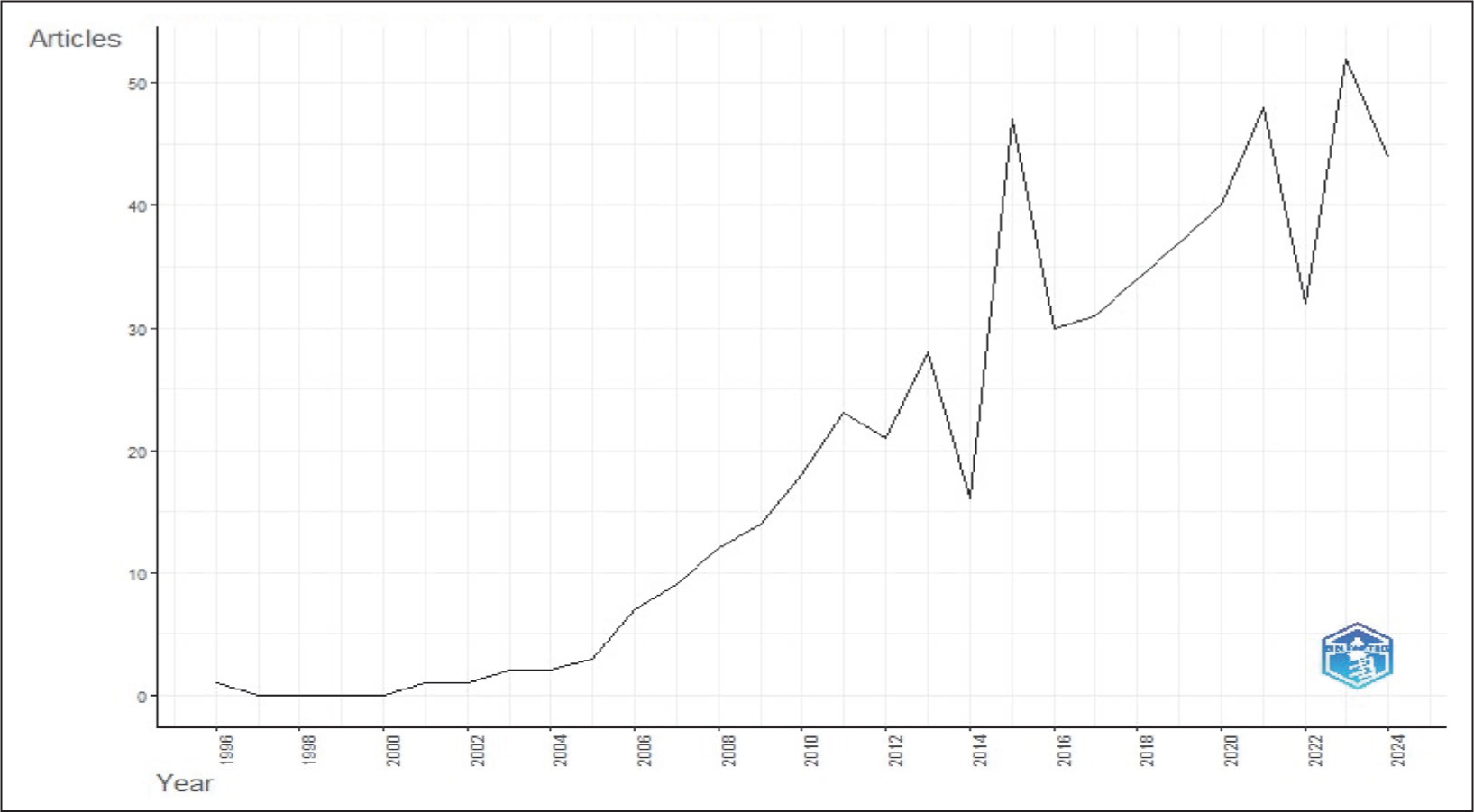
The data in Figure 2 reveal a steady increase in articles which are published on board characteristics and family business between 1996 and 2024. But over the past few years, there has been a sharp increase in publications, with the highest occurring between 2014 and 2016. The upwards trend in publications indicates the recognition of the growing importance of board characteristics in family businesses, thereby influencing their performance and sustainability.
Annual Scientific Production.
Sources
A total of 554 articles on board characteristics and family business appeared in 257 journals. Figure 3 highlights that ‘Corporate Governance: An International Review’ has the highest cumulative number of publications, followed by ‘Corporate Ownership and Control’. The ‘Journal of Family Business Strategy’ reveals an increase in publications in recent years. However, the results also indicate a trend of authors publishing research on board characteristics of family businesses in journals with an expanded scope to include corporate governance and ownership topics, which in turn leads to the addition to dedicated family business journals.
Most Relevant Sources.
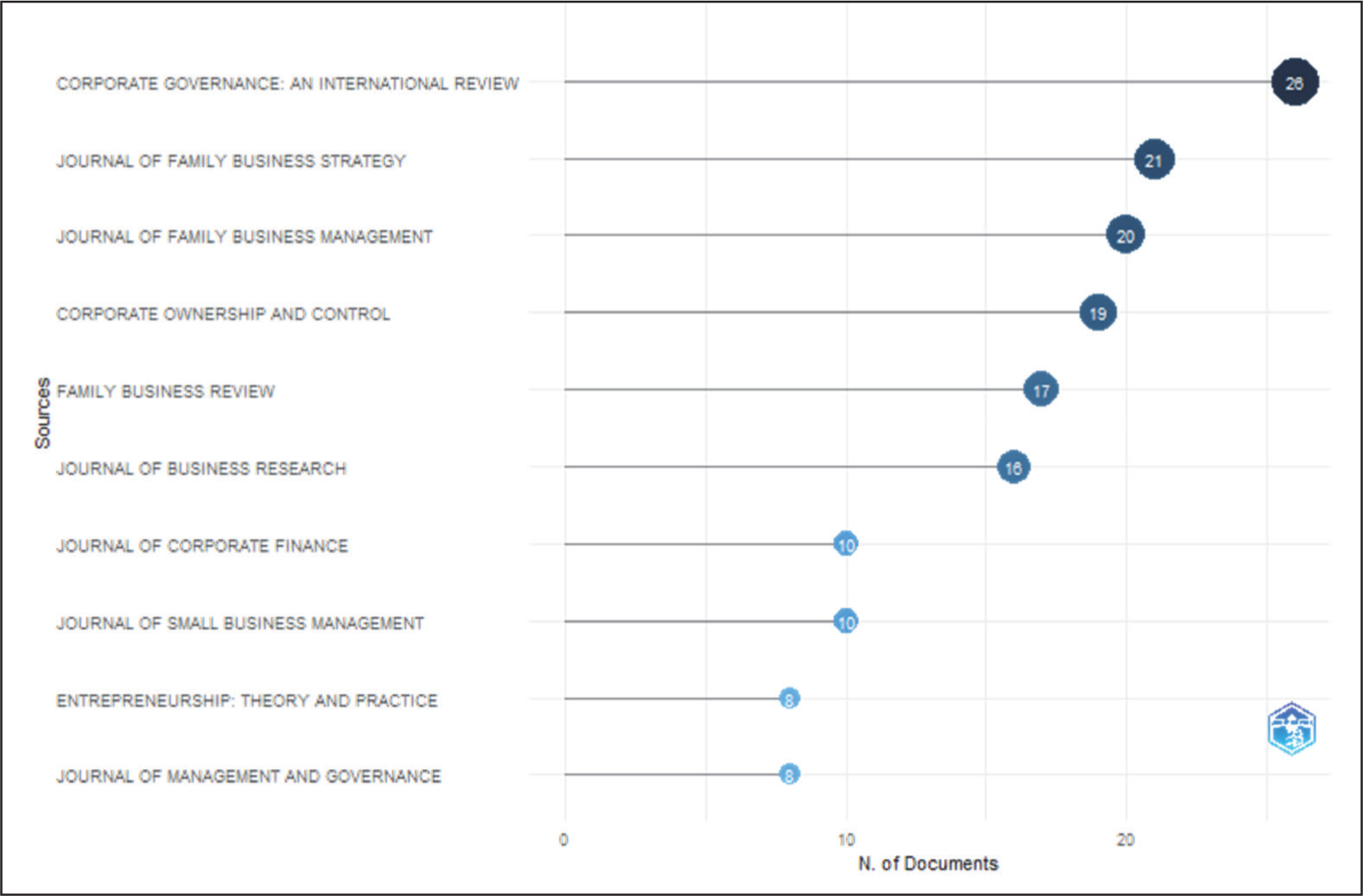
There are contrasting patterns between the quantity of publications and the influence of their citations. Despite having the most publications overall, ‘Corporate Governance: An International Review’ does not have a citation impact that is proportionate. Journals like the Journal of Family Business Strategy, on the other hand, show a notable rise in citations, suggesting greater influence per article, even though they have fewer publications.
The research in this area portrays its complex and varied impact, which demonstrates its multifaceted nature. While specialized family business publications maintain their importance, it is the interdisciplinary journals focusing on corporate governance and ownership that are increasingly influencing the overall discourse.
Authors, Affiliations and Countries
The trend (refer to Figure 4) showcases an increase in research output on family business and board characteristics at institutions such as the University of Alberta (Canada), Bocconi University (Italy) and Mississippi State University (USA). Hasselt University (Belgium) can be looked upon as an emerging institute with a rapid increase in research output in recent years. A total of 1,191 articles around board characteristics and family business were published in 485 affiliations and 92 countries between the years 1996 and 2024. The authors who were the most pertinent in the field of research were determined by considering the overall number of publications and referrals. Although the overall articles published reveal the productivity of the authors, the overall citations reveal the impact of the authors on the field of the study. The top five most-cited authors and co-authors of the most-cited articles are Miller, D., Maury, B., Jackling, B., Andres, C., and Barotina, R. S. Highly published articles are from Italy, China, Malaysia, USA, Canada, Spain and Australia.
Authors, Affiliations and Countries.
Document Citation Analysis
Citation analysis helps in determining a document’s impact and its scope within the field of study. Global citations also quantify a document’s overall impact by showing how frequently it is cited in other works. As evident in Figure 5, the most eminent papers with the most worldwide citations include a study by Miller et al. (2007), which examines whether family firms are more profitable than non-family firms and, also, whether board characteristics can explain this phenomenon. The authors conclude that family businesses with well-structured boards which strike and try to maintain a balance between the founder family and professional managers are more likely to outperform their peers. Another highly cited study by Maury (2006) analyses the effect of family ownership on corporate performance in the case of companies from Western European countries. The findings suggest that overall control by families is found to have a positive impact on firm performance. At the same time, a connection between families and organizations’ boards results in an improved transparency of interest with the help of management and shareholders, which sparks improved performance. Jackling and Johl (2009) highlight the importance of proper board structures in the improvement of firm performance, especially in the context of emerging markets, where concentrated family ownership dominates.
Most-cited Global Documents.
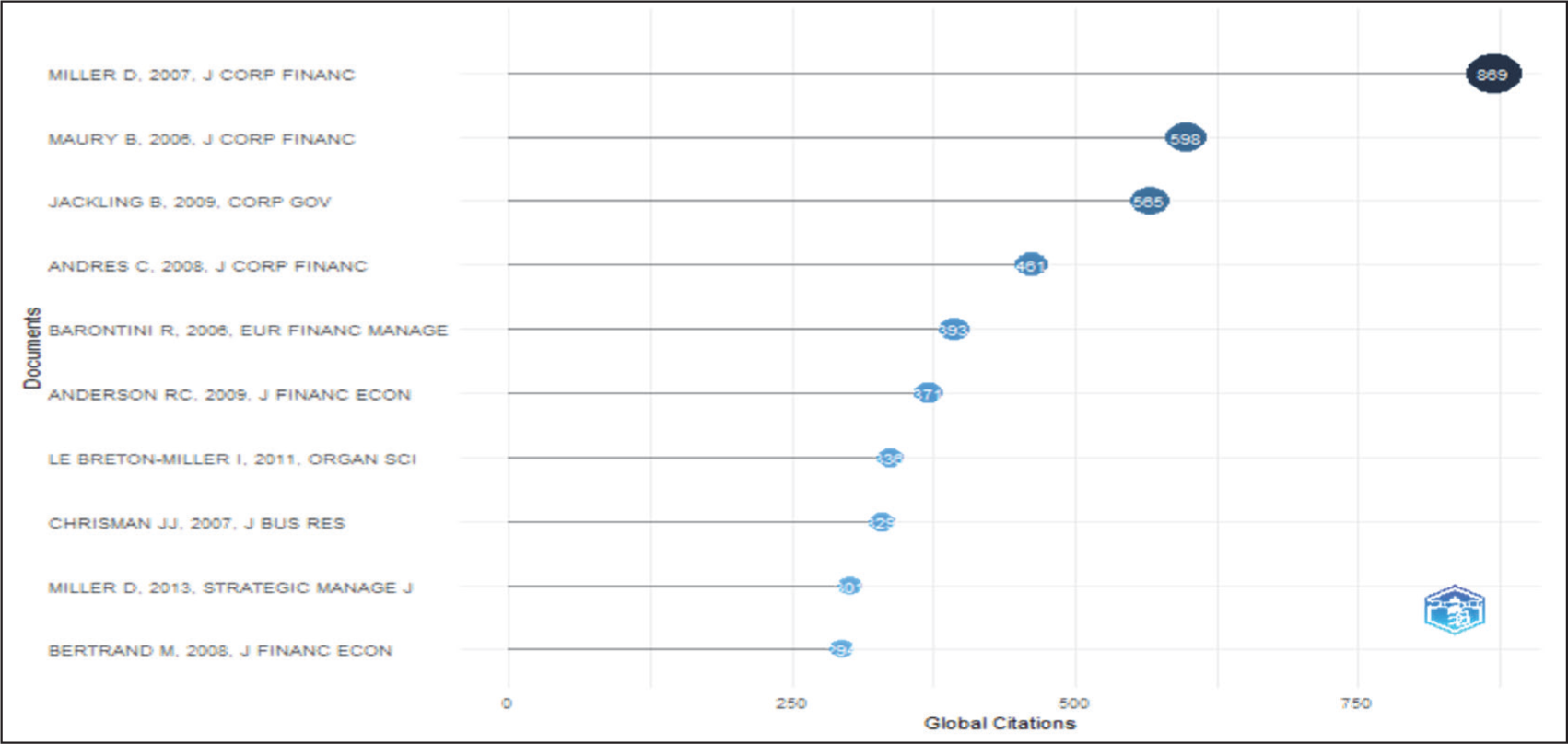
Hence, studies state that there is a strong correlation between board characteristics and a firm’s performance, especially in the context of family firms; more specifically, an optimal of balance of inside and outside directors, an adequate size of the board and clear separation of the chairmanship and the managing director positions significantly contribute to improved firm performance.
Conceptual Structure
To investigate RQ2 (What is the conceptual framework of the research of the impact of board characteristics on the performance of family-owned firms?), we analysed the conceptual structure of the field through the most frequent keywords and co-occurrences of keywords while also studying the thematic map of research related to the influence of board characteristics on the performance of family firms.
Most Frequent Keywords
Board characteristics, performance and family business were the keywords used in the search strategy. Based on the results, a word cloud of 50 most influential keywords was generated (refer to Figure 6). Family business, corporate governance, ownership, industrial performance, corporate strategy, finance, performance assessment and decision-making emerge as the most prominent keywords. This gives an idea of the most developed themes in this area of research. The corporate governance theme explores the impact of board, agency problems and independent directors on firm performance. Similarly, ownership structure may involve ownership concentration among family members, family involvement and its impact on the performance of family businesses. The keywords related to performance, namely performance, industrial performance, performance assessment and financial performance, can be clustered together. It needs to be noted that environmental management, sustainable development, corporate social responsibility (CSR) and innovation are the emerging keywords. It can be inferred that performance assessment measures are shifting from the more traditional financial performance metrics to current trends of measuring sustainability of a business. From the country point of view, the USA and Italy emerge as the most popular regions.
Word Cloud.

Co-occurrence Analysis of the Authors’ Keywords
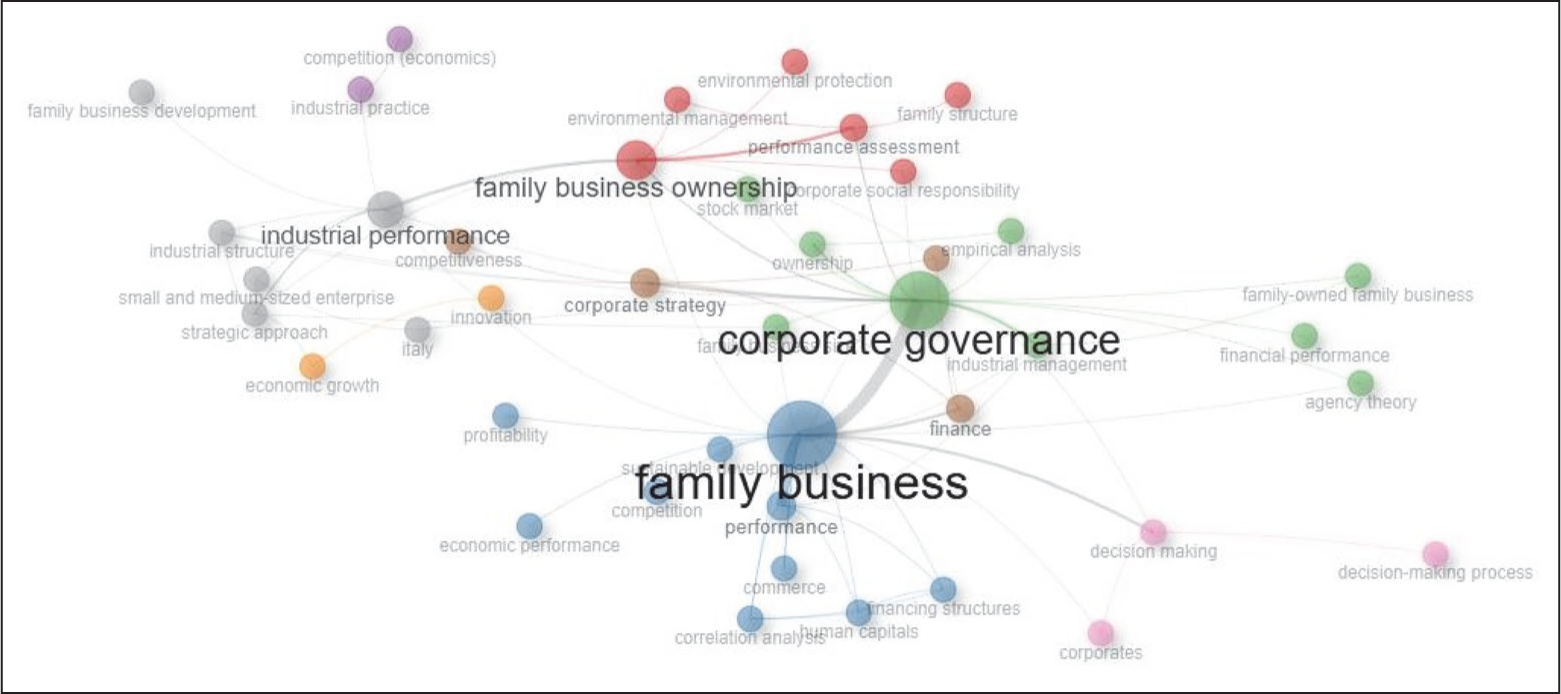
Co-occurrence analysis uncovers significant themes within the realm of family business and board characteristics. The network delineates primary subjects, with family business and corporate governance at its nucleus. Noteworthy connections, such as the ones between family business ownership and corporate strategy, industrial performance and economic growth, as well as finance and decision-making, underscore essential intersections in scholarly inquiry.
The analysis as reflected in Figure 7 pinpoints key themes, including the influence of governance frameworks on business outcomes, the contribution of family businesses to economic development and the critical role of financial management in strategic decision-making. The relationships between CSR and performance evaluation indicate an increasing focus on sustainability and ethical considerations in family business operations. Additionally, peripheral themes such as environmental management and agency theory highlight emerging interests in governance challenges and the incorporation of environmental and social dimensions.
Keyword Co-occurrence Analysis.
Thematic Map
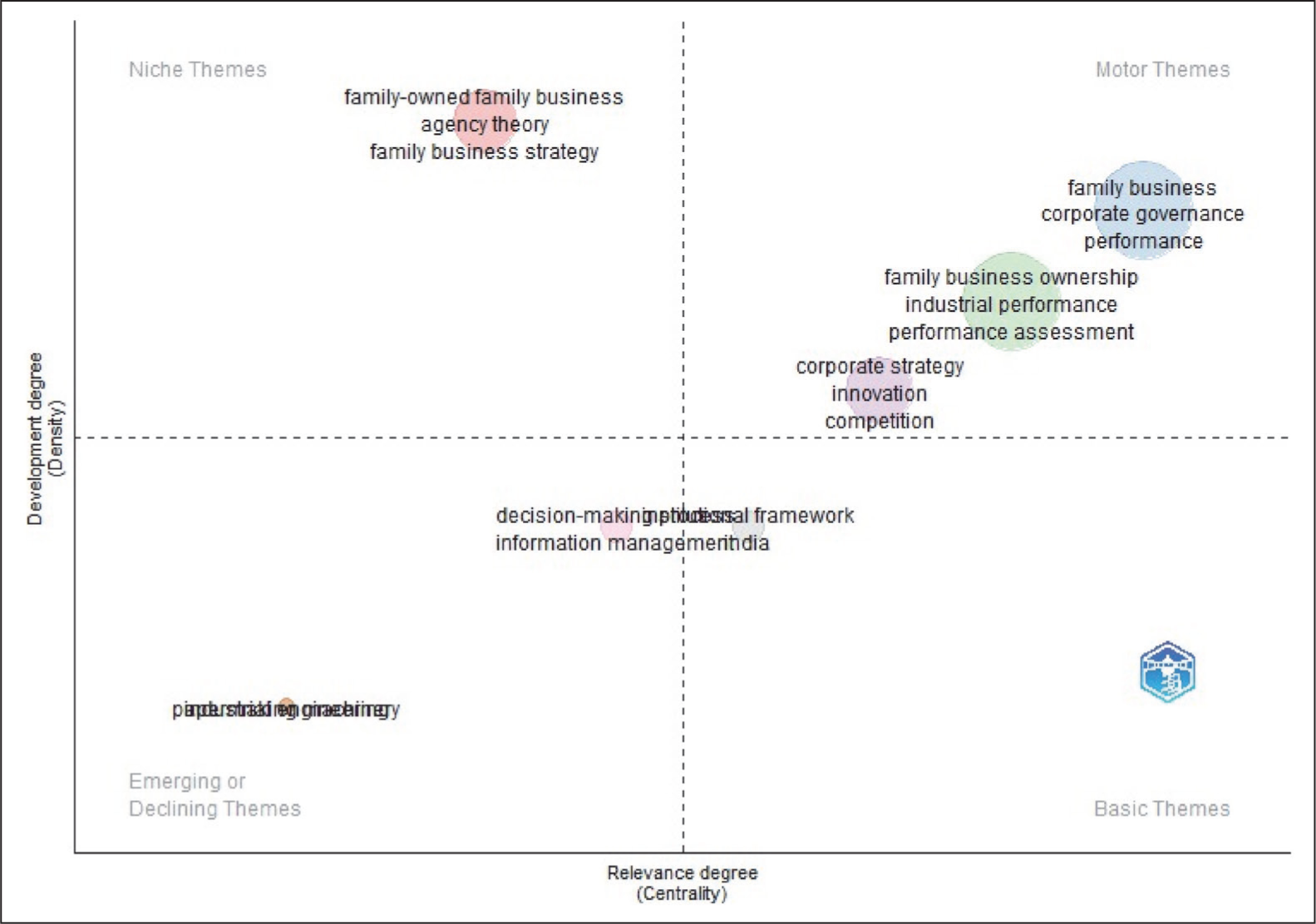
The thematic map segregates the existing literature into various themes and classifies these themes into four main matrices based on their development and centrality. Figure 8 depicts the thematic map for the current study.
Thematic Map.
Motor Themes
In the context of family businesses, corporate governance and corporate strategy appear as well-developed themes. The impact of these variables is studied on the performance of firms, which is reflected through keywords such as industrial performance, performance assessment, innovation and competition.
Basic Themes
Basic themes are highly relevant to the research domain under consideration. They are well linked to other themes; however, they are stagnated and do not develop effectively. In the family-owned firm context, features of the board, such as board size, composition and board independence, were developed as basic themes. These factors are core to understanding family-owned firm governance and performance. They hold significant importance and remain closely linked to broader themes in corporate governance and organizational dynamics.
Niche Themes
These themes are highly developed but may not be highly relevant to the topic of research. The agency theory and family business strategy are reflected in this category. This may be the case as the agency theory is a very well-researched theory in different contexts, especially in the case of listed companies. Hence, while the construct is well researched, it may find less relevance in the context of family businesses which are predominantly private in nature.
Emerging Themes
Emerging and declining themes are marginal themes; that is, they are neither fully developed nor to a very relevant extent connected to other themes. These are themes that are either young or losing their significance. The increase in interest regarding the diversity and independence of boards, the governance of family-owned firms, has also emphasized the impact of boards on firm performance. This theme has indeed emerged as an emerging theme in relation to family and governance issues in corporations.
Intellectual Structure
To answer RQ3 (What is the current intellectual framework of influence of board characteristics on the performance of family-owned firms’ research?), we present a co-citation network and content analysis of the most pertinent documents.
Co-citation and Content Analysis
Co-citation analysis helps in identifying the structure, directions and developments in a research field (Liu et al., 2015). In the present context, this analysis yields clearly different clusters of articles and suggests that studies on board characteristics in family businesses are found in relatively separated but interrelated streams. The detailed discussion on these clusters is given below:
Cluster 1: Gender Diversity and Board Effectiveness
This cluster comprises studies on board characteristics such as gender diversity, presence of independent directors and their impact on board effectiveness as well as several aspects of firm performance. Godbole and Manogna (2024) found that among other variables, boards with women and adequate number of female executives make significant positive contributions towards the return on equity of family firms. Further, Cordeiro et al. (2020) observed that family-controlled and dual-class firms commonly use female directors to push towards environmental CSR, suggesting that the interaction across ownership form and gender diversity enhances environmental outcomes. This was also reinforced by Nadeem et al. (2020), who reported that board gender diversity enhances stakeholder value creation, notably in the social and environmental aspects, with the highest effects in family firms.
Gender-diverse boards also reduce agency conflicts, improving governance quality and performance in family firms (Amin et al., 2024). Female representation is associated with lesser financial distress, and obligatory quota regulations have enhanced performance, notably in firms owned and controlled by families (Karuna, 2020).
In addition to the above, several papers have also discussed the number of independent or non-family female directors and their influence on firm performance. A study by González et al. (2020) found that female directors from within the family tend to demonstrate weaker contribution as opposed to outside independent women directors, hinting towards potential gender bias in skill acquisition in the families of heirs. Family versus non-family female directors’ conflict may impair performance, yet non-family female directors in adequate numbers result in better outcomes (García-Meca & Santana-Martín, 2023). In Indian firms, the positive contribution of women directors is largely due to independent women, and the level of contribution decreases when the management is predominantly filled with family members (Sarkar & Selarka, 2021).
Some papers in this cluster also address board effectiveness in family businesses. As observed by Vandebeek et al. (2016), board effectiveness is shaped by internal dynamics, as fault lines based on family membership, gender or director type can weaken control and service roles, but formal evaluations help offset this challenge. Certain governance configurations emerge as particularly effective, such as when firms have 100% family ownership combined with first-generation leadership, along with either high board presence and low management involvement or high management involvement supported by outside directors (Samara et al., 2018). These combinations drive both environmental and workplace social performance. To summate, the literature increasingly recognizes gender diversity and balance of family versus non-family members in the board to strengthen board effectiveness and firm performance.
Cluster 2: Family Involvement and Governance
This cluster addresses how family involvement interacts with governance structures to influence various features such as entrepreneurial orientation, performance, long-term sustainability and succession choices. Bauweraerts and Colot (2017) observe an inverted-U-shaped relationship between family involvement on boards and entrepreneurial orientation, where moderate family participation fosters innovation but excessive dominance reduces it. Governance mechanisms, such as effective board monitoring, can reduce these negative effects, though service tasks show a limited impact. Long-term continuity is supported by family governance and business family identity, which encourage communication, emotional investment and a strong transgenerational orientation (Suess-Reyes, 2017). While re-iterating the positive influence of family protocols on the functioning of the family, a study by Barbera et al. (2023) also observe that family involvement in the top management team has adverse effects on the firm’s competitive advantage. Succession choices are influenced by prior performance as well as family board composition such that poor performance elevates the probability of choosing non-family CEOs but stronger family board representation favours family (Untoro et al., 2017). However, boards play a critical role in managing intergenerational transitions and mitigating conflicts of interest (Davis & Harveston, 1998; Miller & Le Breton-Miller, 2013). Several studies emphasize the dual role of boards in balancing professional management with family influence, particularly in founder- or successor-led firms (Anderson & Reeb, 2003; Andres, 2008). Hence, overall, the literature indicates the significance of governance mechanisms such as monitoring, conflict management and balancing the views of professionals and family members in family-run businesses, for better performance and sustainability.
Cluster 3: Innovation and Board Attributes
Research in this cluster reveals the influence of governance structures, leadership styles and generational dynamics on the family-owned firm’s ability to innovate. Family representation on boards strengthens the link between R&D and innovation, while direct family management tends to weaken the association (Liang et al., 2013). A study by Wong and Chen (2018) shows that firms led by unrelated internal successors experience stronger market reactions to innovation, whereas those led by family heirs or external hires face weaker responses. However, the continued presence of the founder on the board helps offset these disadvantages. Further, innovation outcomes are also shaped by governance quality. As per studies in China, firms led by married couples (Fu, 2020) and restructured family businesses (Cheng et al., 2022) have a higher degree of innovation performance. However, both the studies laid emphasis on effective governance mechanisms in deriving this result. Bennedsen and Foss (2015) have supported this argument by observing that family networks and resources that support innovation initially may lose their effectiveness unless such innovation is embedded in governance structure. It is also noted that family interlocks (the presence of a firm’s family directors on the boards of other firms) strengthen the positive relationship of family involvement and environmental innovation of the firm (Han et al., 2021). However, as indicated by Chi (2023), high levels of family control may raise agency costs, lowering innovation performance. This negative influence is moderated when external governance and better intermediated finance access are present. Hence, as reported by Wei and Chen (2023), a balanced distribution of power between family and non-family executives leads to improved innovation performance, among other benefits. Moreover, board independence strengthens the relationship. Hence, the literature clearly states that if family firms wish to innovate or garner stronger market reactions towards their innovative capabilities, a balanced power equation between family and non-family members and good governance mechanisms are required.
Cluster 4: Sustainability and Long-term Value Creation
This cluster contains articles which discuss the role of governance on sustainability aspects of family firms. Due to their transgenerational perspective, family firms often prioritize long-term value creation over short-term financial gains (Maury, 2006; Miller et al., 2007). A study by Canavati (2018) notes that the relationship between family firms and CSR is positive, especially when firms have family involvement at the level of ownership as well as management. Liang and Huang (2024) find that in family contexts, co-governance between parents and children strengthens environmental, social and governance (ESG) through reduced agency costs and paternalistic care. Higher ESG scores are found to correlate with reduced default risk and reduced debt financing costs; however, the dominance of family members on the board and ownership concentration weaken this relationship and increase the risk (Liu & Zhang, 2024). Broccardo and Zicari (2020) observe that while family-owned SMEs surpass non-family companies in profitability and sustainability reputation, sustainability practices remain only partially ingrained in their business models. Extending this further, Piyasinchai et al. (2024) find that professionalization can solidify the sustainability–performance relationship in family firms through minimized agency concerns and stewardship support. On the same lines, Hsueh (2018) indicates that while family firms usually suffer from a credibility gap in voluntary sustainability disclosures due to perceived governance deficiencies, independent external assurance has been observed to reduce such a gap and increase trust levels of stakeholders. Hence, while family dominance may enhance the social performance of family firms, the presence of independent directors and good governance mechanisms plays a crucial role in accentuating the sustainable performance of these firms.
Cluster 5: Socio-emotional Wealth and Strategic Decision-making
The socio-emotional wealth (SEW) theory put forth by Gómez-Mejía et al. (2007) emphasizes the function of the family firm, which fulfils the family’s affective needs without stating any financing implications for the firm. Subsequently, scales to measure SEW emerged, which include models known as FIBER (Berrone et al., 2012), REI (Hauck et al., 2016) and RREI (Gomez-Mejia & Herrero, 2022). The five dimensions included in the FIBER model are family influence (F), identification of family members with the family firm (I), binding social ties (B), emotional attachment of family members (E) and renewal of family bonds through intrafamily succession (R). Accordingly, the literature in this cluster ranges through all topics from family control, board composition and family CEO to succession planning in family firms. As per Salvato and Aldrich (2012), SEW can also explain the differences between family and non-family businesses, as well as differentiate among family businesses. Labelle et al. (2018) observe a curvilinear relationship between family control and CSR. The performance rises up to modest ownership levels due to SEW-instituted engagement, but it diminishes when economic temptations dominate. This resonates with the study by Barontini and Caprio (2008), which observes that family-dominated boards often prioritize decisions that protect family reputation and influence, even when such choices may limit short-term financial performance. This tension between economic and socio-emotional objectives affects strategic areas such as succession planning, stakeholder management and risk assessment (Le Breton-Miller et al., 2011). With regard to board composition and governance structure, Basco and Voordeckers (2015) note that family and business-oriented roles of boards have positive effects on performance, while outside directors’ involvement displays an inverted-U-shaped relationship with firm performance. Yu et al. (2018) find that family–external manager conflicts, when handled constructively, increase efficiency and capital investments, indicating that contained tension might build innovation. In the context of family versus non-family CEOs, Fassler et al. (2022) observe that family CEOs tend to enforce preferable social performance in areas such as labour and human rights, subject to governance determinants such as outside independence, gender diversity and board size. Addressing the debate of CEO dismissal in family firms following a poor performance, Visintin et al. (2017) note that the dismissal of non-family CEOs is less likely in firms wherein ownership is concentrated among few family members or the involvement of family members on the board is low. Overall, Jayantilal et al. (2024) propose that custom governance tools like family protocols help in managing complex family business interactions. These structures help in establishing business continuity by mitigating conflicts, ensuring smoother transitions and setting standards for the management of family firms. On similar lines, Paganou et al. (2024) note the board’s crucial role in mitigating conflicts and preventing opportunistic or fraudulent practices while safeguarding SEW in family-controlled firms.
Each cluster offers a new understanding regarding the multifaceted role of board attributes in family firms, with potential future research directions to fill in gaps between these thematic streams.
Discussion
Board Attributes
Prior studies document that moderate family involvement enhances strategic outcomes, while excessive dominance may constrain innovation and competitiveness (Barbera et al., 2023; Bauweraerts & Colot, 2017). At the same time, Helwege and Packer (2009) have observed boards in family businesses to be dominated by family members primarily to take advantage of control, privacy and enhanced trust.
Moreover, bibliometric findings consistently highlight that gender-diverse boards enhance governance quality, CSR performance and financial outcomes in family firms (Cordeiro et al., 2020; Godbole & Manogna, 2024; Nadeem et al., 2020). Independent female directors, in particular, are found to reduce agency conflicts and improve performance (García-Meca & Santana-Martín, 2023; Sarkar & Selarka, 2021).
Governance Mechanisms
Bibliometric analysis reveals the role of the board in conflict resolution (Miller & Le Breton-Miller, 2013), balancing the views of external and internal members (Anderson & Reeb, 2003) and helping with intergenerational transitions (Davis & Harveston, 1998). Moreover, several studies argue that external governance improves board effectiveness (Samara et al., 2018; Vandebeek et al., 2016). The literature (Barbera et al., 2023; Jayantilal et al., 2024) also states that setting up protocols in family firms ensures disciplined functioning and business continuity.
Socio-emotional Wealth
The SEW theory (Berrone et al., 2012; Gómez-Mejía et al., 2007) emphasizes non-financial priorities such as family identity and legacy, which strongly shape board behaviour and strategic choices. Family-dominated boards may have a tendency to take decisions, prioritizing family reputation over short-term financial gains. However, an effective board can play a crucial role in balancing the socio-emotional factors with economic gains in family-controlled firms (Paganou et al., 2024).
Strategic and Performance Outcomes
The literature suggests that board diversity, balanced family involvement and governance quality positively influence innovation (Liang et al., 2013; Wei & Chen, 2023). Family governance can both enable and constrain innovation outcomes. While long-term orientation supports innovation investments, excessive family control may reduce risk-taking and experimentation (Chi, 2023; Meroño-Cerdán et al., 2018).
Prior research finds family firms to be positively associated with CSR and sustainability due to long-term orientation and reputational concerns (Canavati, 2018; Liang & Huang, 2024). The literature highlights how family-controlled boards balance financial objectives with social and environmental responsibilities, reinforcing the strategic importance of sustainability-oriented governance (Bertrand & Schoar, 2000). At the same time, studies indicate that board diversity and effective governance mechanisms enhance sustainable performance and responsible business practices in family firms (Córdoba et al., 2024).
Thus, drawing insights from the existing body of literature, the conceptual framework shown in Figure 9 has been developed.
Conceptual Framework.
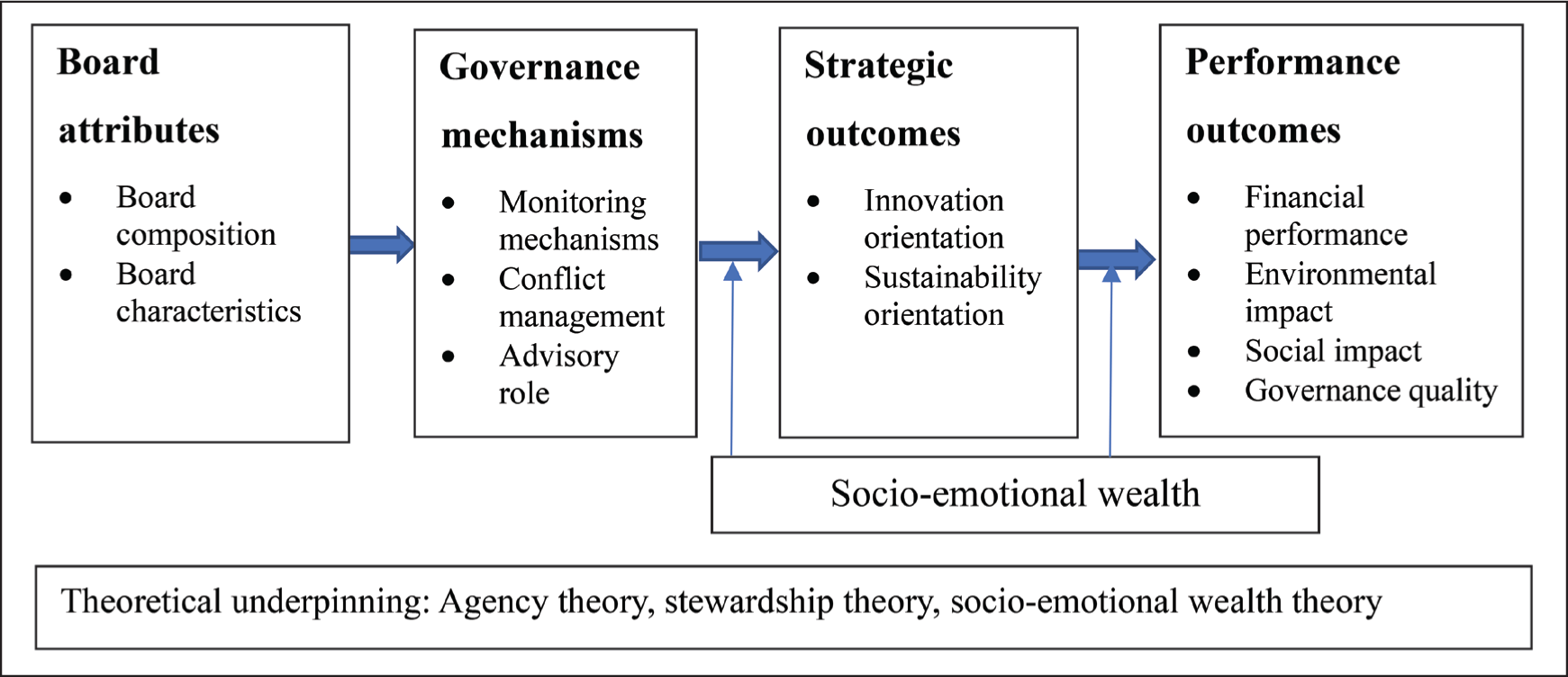
The framework positions board attributes as the foundational drivers of governance effectiveness. Board attributes can be categorized into board composition (including the balance between family and non-family members, the presence of independent directors, the distinction between executive and non-executive role and so on) and board characteristics, reflecting diversity in terms of gender, age, experience, functional expertise and so on. It is hypothesized that board attributes exert their influence primarily through governance mechanisms. These governance mechanisms encompass control-oriented functions like monitoring as well as advisory functions. In family firms, governance quality influences the extent to which firms engage in innovation, pursue sustainable value creation and make forward-looking strategic decisions that balance economic and non-economic goals. Hence, the effectiveness of governance mechanisms is proposed to affect the strategic outcomes of a business. Finally, the framework links strategic outcomes to multidimensional performance, recognizing that performance in family-owned firms extends beyond short-term financial returns. Accordingly, performance is conceptualized in terms of financial outcomes, governance quality and sustainability-oriented long-term value creation. Further, SEW is proposed to have a moderating influence on the relationship between governance mechanisms and strategic outcomes as well as between strategic outcomes and performance. SEW is observed as a differentiating factor between family and non-family firms as well as among family businesses. Hence, by taking SEW as a moderator, the heterogeneity of family firm behaviour despite having similar governance structures may be explained.
Future Research Directions, Implications and Conclusion
While the earlier sections of the article helped understand the existing body of literature in the area of board characteristics and the performance of family business, some research gaps still remain. Some future research directions have been identified so as to answer RQ 4 (What are the next steps in the sphere of influence of board characteristics on the performance of family-owned firms’ research?). These future directions are broadly classified into three parts: the first part discusses the under-explored independent variables, while the second part discusses the dependent variables, which could be taken into consideration. The third part, in general, discusses some other variables whose presence can differentiate the relationship of independent and dependent variables.
Independent Variables
Board Composition
While literature has discussed board composition from the perspective of family versus non-family members and male versus female members (Sarkar & Selarka, 2021; Tao-Schuchardt & Kammerlander, 2024), many other dimensions such as qualifications, skills and professional experience remain under-explored. Further, while board gender diversity has been studied in reference to the financial, environmental and social performance of the family firm (Cordeiro et al., 2020; Godbole & Manogna, 2024; Nadeem et al., 2020; Veltri et al., 2021), future studies can extend the findings by comparing the performance of external to internal female directors on the board in the context of these individual performance metrics. Secondary investigation may also be done to determine whether the critical mass of women on the board modifies the board dynamics, that is, decreasing conflict and promoting collaboration to generate both social and economic values (García-Meca & Santana-Martín, 2023). Future studies can also look at how board diversity differs across different scales, the type of business and market competitiveness (Yu et al., 2018).
Board Characteristics and Governance Mechanisms
Future studies can investigate the effect of various board characteristics, such as tenure of membership, independence of directors, CEO duality, distribution of power between family and non-family directors, meeting frequency and attendance of members, on the governance quality and performance of family businesses. Similarly, future studies can also compare the functioning of various sub-committees under the board such as the Audit Committee, Risk Management Committee and Nomination and Remuneration Committee for family versus non-family firms (Al-Okaily & Naueihed, 2020). Further, as indicated by Goh et al. (2014), studies need to be conducted on the identification of the governance systems that may enhance supervision and reduce internal struggles, especially in industries such as manufacturing or those experiencing stiff competition.
Boardroom Conflict and Behaviour Management
The other potential avenue to pursue is examining the influence of boardroom behaviour and the dynamics of people on strategic choices and the performance of firms. Family and non-family directors, or different sub-groups like female directors, may have conflicts, which may influence decision-making significantly (García-Meca & Santana-Martín; González et al., 2020). This could be one of the reasons as to why board memberships are restricted to family members, even while the diversity brought in by outside professionals is acknowledged. Researchers need to explore how it is possible to balance socio-emotional goals and personal values with different perspectives and achieve effective governance, particularly in different cultural contexts (Tao-Schuchardt & Kammerlander, 2024). In-depth analysis of these behavioural factors should help explain why specific board attributes, either a demographic or a psychological one, are always associated with a high level of performance (Basco & Voordeckers, 2015).
Dependent Variables
Succession Planning
Succession planning remains an important, but under-researched field in family businesses. In light of this, an excellent question is whether a board with high family membership levels is more prone to internal or external professional successors and the effect of these decisions on long-term continuity, stability and innovation (Jayantilal et al., 2024; Untoro et al., 2017). In addition to the CEO selection decision, future studies can also contribute to the debate surrounding CEO dismissal, with reference to features such as family versus non-family CEO, poor versus good firm performance, family involvement and board diversity among others.
Innovation, Digital Capability and ESG Performance
With the modern business environments being transformed by technology and sustainability, it is significant to investigate how the board can facilitate innovation, digital transformation and ESG results (Chi, 2023; Cordeiro et al., 2020; Liang et al., 2013). Innovation in the context of family businesses has been explored in various ways starting from identifying the drivers (Park et al., 2019) to understanding the impact of family governance (Meroño-Cerdán et al., 2018) and family ownership structure (Chi, 2023) on innovation. However, the effect of board composition on innovation is not explored thoroughly. Future research may examine the benefits of balanced power-sharing between family and non-family executives in enhancing the performance of innovation and sustainability, more so in the case of industries which are driven by research and development (Wei & Chen, 2023).
Other Variables
Cultural, Regulatory and International Environment
Some studies have cited that cross-cultural differences influence family firms. The correlation between board diversity, governance quality and firm performance can be examined in future research by looking at the influence of national culture, gender quotas and regulatory environments (Houcine & Derouiche, 2024; Tao-Schuchardt & Kammerlander, 2024). As an example, the effects of gender diversity can be very conditional upon the cultural norms or on the presence of legal quotas and the need to have females represented. Knowing these nuances may enable a better design of context-rightful governance practices by policymakers and family firms (Cordeiro et al., 2020). The variables of internationalization and foreign ownership can also be associated with the characteristics of the board to observe the impact of global exposure on the standards of governance and competitiveness (Godbole & Manogna, 2024).
Development of Human Capital and Board Effectiveness
Finally, the possibilities of investigating the role of education, experience and development of human capital among the board members, including family heirs and external professionals, in terms of their contribution to the governance effectiveness are vast (González et al., 2020). Future research requirements would be to examine focused training and mentoring programmes that can assist board members, particularly women and next-generation leaders, to wade through unbiased perceptions and make a valuable contribution to the strategic decision-making process.
Longitudinal Studies
Family firms by design are transgenerational in nature, and hence, conducting longitudinal studies while researching family firms makes sense. Moreover, board composition and characteristics also change with time. As indicated by Yu et al. (2018) and Tsao et al. (2016), longitudinal studies would help map the effects on family business performance over a period of time.
Implications
This study offers several significant theoretical, managerial and policy-related implications for research and practice in family business governance. Theoretically, it advances corporate governance and family business literature by proposing a conceptual framework which explains the influence of board characteristics on firm performance through governance mechanisms and strategic outcomes, rather than assuming a direct board–performance relationship. By incorporating SEW as a moderating variable, the study addresses heterogeneity among family firms and highlights the behavioural foundations of governance, thereby enriching the SEW theory and moving beyond purely structural explanations of board effectiveness. From a managerial perspective, the findings emphasize the need for family firms to design boards more deliberately, balancing family and non-family representation, strengthening independence and enhancing diversity in expertise and experience. Boards should be leveraged not only for monitoring but also for advisory and strategic roles that foster innovation and long-term orientation. The moderating role of SEW suggests that family owners must consciously manage emotional and legacy-driven objectives alongside economic goals to avoid suboptimal strategic decisions. For policymakers and professional bodies, the results suggest the importance of differentiated governance guidelines for family firms that promote board professionalism while recognizing family-specific dynamics.
Conclusion
This study utilizes a bibliometric approach to investigate the influence of board characteristics on family business performance. The study started out with revealing the statistics related to the existing literature knowledge in terms of the most influential articles, authors, institutions and countries. This was followed by outlining the conceptual structure analysing, the most important keywords, co-occurrence of keywords and drawing out the thematic map from the same. From the study, it is evident that while corporate governance and ownership structure feature as motor themes, emerging themes like board characteristics such as diversity and independence are crucial in shaping governance structures with far-reaching implications for the sustainability and innovativeness of family businesses.
The article then focuses on the intellectual structure by conducting a cluster analysis on the available literature. The bibliometric analysis resulted in five clusters, which were reviewed in detail. This review resulted in a conceptual framework pertaining to the relationship between board attributes and firm performance. Additionally, several recommendations for the future scope of research were detailed.
In conclusion, the study reinforces that board characteristics are central to the governance and performance of family-owned firms. The literature points to sustainability, innovation and board diversity as critical areas for exploration. Future research should adopt a multidimensional lens, incorporating both measurable attributes (e.g., gender, skills and independence) and intangible factors (e.g., legacy, trust and family values) to better capture the complexity of board effectiveness in family businesses. The study suffers from some limitations. First, we have taken papers only from the Scopus database for bibliometric analysis. Future studies can enlarge the scope by taking papers from other databases such as WoS. Additionally, the keywords used were specific to the topic under study. A different combination of keywords may result in additional insights.
Footnotes
Declaration of Conflicting Interests
The authors declared no potential conflict of interest with respect to the research, authorship and/or publication of this article.
Funding
The authors received no financial support for the research, authorship and/or publication of this article.