







Abstract
Globalisation is transforming the lives, ideals and development of youth worldwide, including adolescents in Guatemala. We hypothesised that the attitudes of today’s Guatemalan adolescents as reflected in their views of the ideal man and woman would more closely converge with those of the global adolescent compared to their compatriots 25 years earlier. Urban adolescents’ ratings and drawings in 2014 (N= 397, Mage= 12.55, 63.13 per cent girls) were compared to those from 25 years earlier (1988–1990; N= 488, Mage= 12.82, 46.35 per cent girls). Core characteristics such as kindness and honesty were important in both time periods. Other qualities (the importance of being fun and the depiction of sexiness in the drawings) were more prominent among present-day adolescents. However, adolescents in 2014 were less likely to draw the ideal person with adult responsibilities. Adolescent values and beliefs are nuanced and depend both on globalisation and the specific cultural context.
Adolescence marks not only a period of transition, but also one of exploration and identity formation. As a part of identity development, adolescents commonly adopt role models, heroes or idealised images that guide or inform their plans for future roles (Freedman-Doan & Eccles, 1996; Gibbons & Stiles, 2004). Globalisation is impacting adolescents’ worldviews and may lead to greater similarity among ‘global adolescents’, including their ideals and role models (Arnett, 2002). The purpose of the current study was to explore how contemporary Guatemalan adolescents’ views of the ideal person differ from views expressed 25 years ago by comparing data from urban youth from 1988 to 1990 to those from 2014. With respect to their ideal persons, are Guatemalan adolescents becoming more similar to the ‘global adolescent’?
An inclination and capacity to contemplate the future allow adolescents to explore ideas regarding the ideal man and the ideal woman. Cognitive advances that emerge during this developmental period include sophisticated abstract thinking and the ability to think about and plan for the future (Blakemore & Choudhary, 2006). The development of the brain’s prefrontal cortex facilitates this maturation in executive function, contributing to the complexity of adolescent thinking, planning and decision-making (Blakemore & Choudhary, 2006). These biological advances have implications beyond the neurological level, as adolescents’ ideals about the future will shape our world when today’s youth assume adult roles (Gibbons & Stiles, 2004).
Research on adolescents’ goals for the future is abundant. A meta-analysis revealed that goals related to education and career were the most prevalent among diverse international adolescents (Massey, Gebhardt, & Garnefski, 2008). Personal goals (i.e., goals pertaining to the adolescent’s own future) were more common than goals for society at large. Goals followed a characteristic developmental pattern with entertainment goals prevalent in early adolescence, followed by educational goals in mid-adolescence and family and career goals in late adolescence. A similar developmental pattern was evidenced by Colombian youth ages 12–18 years, with older participants more likely to report career-related expectations (Rincón, 2011).
Role models may facilitate adolescents’ identity development (Erikson, 1968) by helping to shape potential careers, activities, attitudes and behaviours (Estrada, García-Ael, & Martorell, 2015; Freedman-Doan & Eccles, 1996). Role models can be people adolescents know personally (e.g., parents, friends; Estrada et al., 2015; Freedman-Doan & Eccles, 1996) or those they have never met (e.g., celebrities; Bush, Martin, & Bush, 2004; Giles & Maltby, 2004). In addition to parents, friends, teachers and athletes, adolescents admire actors and actresses, historical figures and singers, siblings, other family members (e.g., grandparents) and adults who they know personally but are not related (Estrada et al., 2015). Research with U.S. adolescents suggests role models or heroes may change developmentally with early adolescents citing parents as known heroes more than mid-adolescents (Freedman-Doan & Eccles, 1996). Older youth often named teachers, coaches and friends as their known heroes. No age differences were reported for famous heroes and athletes emerged as the most popular hero in that category. A study with French and Spanish 10- and 15-year-olds revealed that younger participants favoured heroes with interpersonal qualities (e.g., honest, kind), while older participants favoured those with personal (e.g., rich, intelligent) qualities (Gash & Rodríguez, 2009). Cultural differences also emerged: French adolescents described their heroes as kind, honest, beautiful and rich, while Spanish adolescents typically described them as caring, good and brainy.
One multi-method approach to learn about adolescents’ ideals is the Ideal Man Ideal Woman paradigm (Gibbons & Stiles, 2004; Stiles & Gibbons, 2000). Adolescents rate 10 characteristics (e.g., kindness, intelligence, and wealth) of the ideal man and/or the ideal woman and draw a picture of the ideal man and/or ideal woman doing something. The drawings are systematically coded according to Stiles and Gibbons (2000) on 19 elements (e.g., the type of activity the person is engaged in and whether or not he/she is smiling).
Implemented in over 20 countries, results have revealed both commonalities and differences across cultures (Gibbons & Stiles, 2004). Honesty and kindness consistently emerged as the most important characteristics of the ideal person and liking children and being fun were also highly rated in most countries. Having lots of money, on average, was considered the least important characteristic of the ideal. In addition, being popular and sexy were rated as of little importance. Generally, adolescents rated inner characteristics (e.g., honesty) as more important than more surface-level ones (e.g., being sexy). With that said, differences were observed across cultures. For example, being fun was significantly more important for youth from individualistic (e.g., the U.S.) versus collectivistic cultures (e.g., Guatemala), while intelligence showed the reverse pattern.
The Guatemalan Context
The central aim of the study was to explore patterns of Guatemalan adolescents’ views of the ideal man and woman in their cultural context. Guatemala, located in Central America, is classified by the World Bank (2015a) as a lower-middle-income country (average income ranging from US$ 1000 to US$ 4000). It is ranked 125th of 187 countries on the Human Development Index (United Nations Development Programme, 2014). Poverty remains a major problem—75 per cent of the population lives below the poverty line—compounded by the highly unequal distribution of wealth (CIA, 2015; World Bank, 2015b). With a population of 14 million, Guatemala is Central America’s most populous country (CIA, 2015). Approximately 58 per cent of the population age is 24 years and under, suggesting that youth-centred issues are timely and important (CIA, 2015). Furthermore, just over half of the population lives in an urban setting with 2.8 million Guatemalans living in the capital, Guatemala City (CIA, 2015). Guatemala, according to Hofstede’s data (1980), is the world’s most collectivistic country, with a culture characterised by a strong duty to the in-group and one’s family (Hofstede, 1980; Oyserman, Coons, & Kemmelmeier, 2002). The country is also quite diverse with over 25 languages (Spanish, Garifuna, Xinca and 22 Mayan) and four ethnic groups (Maya, Garifuna, Xinca, and Ladino; Instituto Internacional de Aprendizaje para la Reconciliación Social, IIARS, n.d.).
Access to education remains limited for many youth, especially at the secondary level (United Nations International Children’s Emergency Relief Fund, UNICEF, 2013). Although nearly 100 per cent of the country’s children complete primary school, fewer than 50 per cent are enrolled in secondary school (UNICEF, 2013; U.S. Agency for International Development, USAID, 2014). Furthermore, despite lower enrolment rates in secondary school, gender parity exists at both the primary and secondary levels (UNICEF, 2013).
Beyond education, the lives of men and women in Guatemala are quite different and strong gender roles still define daily life (Gibbons & Luna, 2015). For example, urban women in Guatemala make approximately 50 per cent less than their male counterparts (Programa de las Naciones Unidas para el Desarrollo, PNUD, 2002). Types of jobs held by men and women in Central America also tend to be gender-typed, suggesting the rising gender parity in schools has not yet translated to more equal opportunities in the workforce (Gibbons & Luna, 2015). Research also suggests that women are far more likely to be employed in the informal sector doing domestic work and selling in the streets than men; the percentage of urban women working these kinds of jobs is particularly high in Guatemala (62.2 per cent; Wintour & Garazo, 2013).
Despite a history of distinct gender roles, globalisation may mean the future is quite different for Guatemalan youth than for past generations. Globalisation is defined as ‘a process by which cultures influence one another and become more alike through trade, immigration, and the exchange of information and ideas’ (Arnett, 2002, p. 774). That is, the spread of ideas from the more egalitarian and individualistic global north may relax the strictness of these gender roles over time with the spread of Western culture. Globalisation is often facilitated by access to technology. The expansion of technology in Guatemala is profound: in the span from 2000 to 2013, the percentage of Guatemalans using the Internet grew from less than 1 per cent to almost 20 per cent (International Telecommunications Union, ITU, 2014b). Cellular phone subscriptions have also seen similar growth, rising from just over 850,000 in 2000 to over 21,000,000 in 2013 (ITU, 2014a).
Guatemala appears to be no exception with respect to youth embracing technology; the following quote by Rifkin (2010, p. 573) commenced a current report on the state of Guatemalan youth, ‘Estoy conectado; luego existo’ [I am connected; therefore I exist] (PNUD, 2012, p. 100). In short, ‘being connected’ means being constantly aware of communicating and networking with others (PNUD, 2012). Not surprisingly, young Guatemalans are the group mostly likely to use information and communication technologies (ICTs; PNUD, 2012). However, access to ICTs varies by gender, ethnicity, urban/rural residence, socioeconomic status and educational level for Guatemalan youth (PNUD, 2012).
Given youth’s enthusiasm for technology, adolescents stand to be impacted in meaningful ways by increased access. Exposure to technology may be influential in adolescents’ identity formation and future plans (Jensen, 2003). Research with youth in other cultures has pointed to the impact of globalisation in challenging tradition including resistance to arranged marriage in Armenia and to social roles and other traditions in India (Huntsinger, 2013; Rao, Berry, Gonsalves, Hostak, Shah, & Roeser, 2013). Globalisation has also contributed to the spread of Western brands and goods and has suggested adolescents who can afford those goods enjoy high status among their peers (Gil, Kwon, Good, & Johnson, 2012).
Prior to the spread of global ideas through technology and media, ideal man/ideal woman data from 25 years ago suggested Guatemalan adolescents upheld cultural values in their descriptions of the ideal person by including kindness, honesty and hard work in their depictions of the ideal man and ideal woman (Gibbons, Stiles, Schnellmann, & Morales-Hidalgo, 1990). Guatemalan adolescents’ depiction of the ideal person reflected their collectivistic cultural orientation; they rated kindness and honesty and liking children as important qualities of the ideal. One participant wrote that the ideal man ‘works to improve his family, and his community, and above all his country’ (Gibbons et al., 1990, p. 97). The ideal person was also often drawn in a relational capacity, for example, as a mother.
Some differences were reported for the ideal man and the ideal woman. It was more important for the ideal man to have a good job than the ideal woman and for the ideal woman to be sexy than the ideal man (although students did struggle with the meaning of ‘sexy’). Activities were stereotyped by gender (e.g., construction and agriculture for men and housework for women). Adolescent girls also rated the importance of having a good job higher for the ideal woman than did adolescent boys.
A 2004 study that compared the results of the Guatemalan adolescents to samples of teenagers from 20 other countries revealed that compared to adolescents in other parts of the world, Guatemalan teens saw liking children, having a good job, being intelligent and popular as more important for the ideal person (Gibbons & Stiles, 2004). The Guatemalan adolescents saw being fun, sexy and having a lot of money as less important. In sum, Guatemalan youth valued kindness and honesty in the ideal person and depicted the ideal in relation to others, consistent with Guatemala’s collectivistic orientation.
Current Study
The central purpose of the current study was to explore differences in Guatemalan adolescents’ views of the ideal person conducted by replicating work conducted in 1988–1990 (Gibbons et al., 1990). An urban Guatemalan youth sample was used to replicate the methods of the previous studies as closely as possible, highlighting any changes between the groups. We hypothesise that in general, adolescents’ views of the ideal person will be shown to be more similar to those of the global adolescent in 2014. Specifically:
Due to the increased exposure to global ideas, we expect adolescents in the 2014 sample to rate values like fun and sexiness as more important for the ideal person. In light of globalisation, we expect to find fewer differences in the importance of characteristics for the ideal man and ideal woman.
Method
Participants
Participants from both the 1988–1990 sample and the 2014 sample were students attending school in Guatemala City.
1988–1990 Sample: The sample included 488 students from seven schools in Guatemala City, ranging in age from 11 to 17 years (Mage= 12.55, SD = 1.27). Of the 479 participants reporting their gender, 46.35 per cent were girls. Participants were given a pencil as compensation for their time.
2014 Sample: The recent sample included 397 students in the U.S. equivalent of sixth and seventh grades (sexto grado and primero basico in the Guatemalan school system) from 11 schools in Guatemala City, ranging in age from 11 to 16 years (Mage= 12.82, SD = 1.01). Of the 396 participants reporting their gender, 63.13 per cent of participants were girls. Participants were given a pencil and an eraser as compensation for their time.
Materials
Characteristics of the ideal man and ideal woman: Participants were asked to rate the importance of 10 characteristics (likes children, has average height and weight, is intelligent, has a lot of money, is kind and honest, is fun, is popular, has good looks, is sexy and has a good job) for the ideal man or ideal woman on a Likert scale from 1 (not important at all) to 7 (very important).
Drawings of the ideal man and ideal woman: In addition to completing the ratings, participants were asked to draw a picture of the ideal man or ideal woman doing something and to provide brief description of what he/she was doing. The drawings were scored using an established coding procedure (see Stiles & Gibbons 2000 for more details). See Table 1 for a list of codes, their explanations and the Kappa values for the 2014 sample.
Drawings in both samples were scored by two coders; the coders for the 2014 drawings were the first and third authors. Kappa statistics were calculated as measures of inter-rater reliability. In the 2014 sample, an adjusted Kappa statistic was used because of high prevalence and low bias (Sim & Wright, 2005). Kappa values in the 1988–1990 sample ranged from 0.62 to 0.97 (Gibbons et al., 1990); the values from 2014 were similar ranging from 0.62 to 0.91. These values suggest a range of substantial to (near) perfect agreement in both samples (Landis & Koch, 1977).
Drawing Codes and their Explanations based on Stiles and Gibbons (2000)
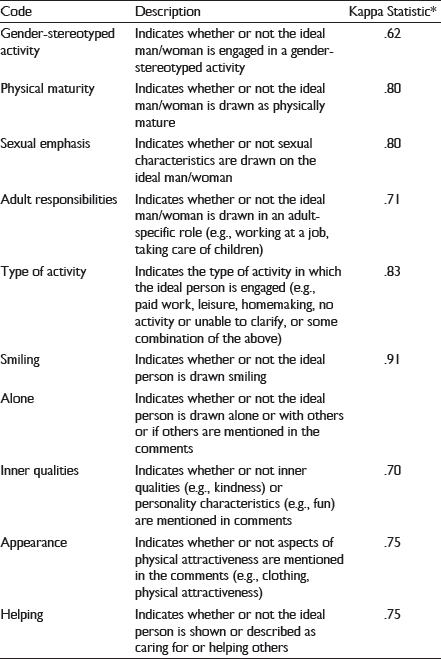
Kappa statistics refer to the 2014 data
Procedure
In both samples, participants were recruited through their schools. Both parental consent and adolescent assent were obtained prior to the start of the study. Participants completed questionnaires and the drawings in their classrooms during a minimally disruptive time during the school day. Participants provided limited demographic information including their age and grade and then answered the 10 rating questions described above. Following the ratings, participants drew the ideal man or ideal woman on the backside of their questionnaire packets and were asked to include a brief explanation about what the depicted person was doing.
In the 1988–1990 sample, participants were randomly assigned to answer questions about and draw either the ideal man or the ideal woman. In the 2014 sample, participants answered questions about and drew both the ideal man and the ideal woman; the order of man and woman was randomly assigned. For the purpose of these analyses, we randomly selected data either from the ideal man or the ideal woman from each 2014 participant to maintain congruence with the earlier sample. For the 1988–1990 sample, 50 per cent of participants answered questions about the ideal man and 50 per cent about the ideal woman. In the 2014 sample, after random selection 50.6 per cent of the data described the ideal man and 49.4 per cent of the data described the ideal woman.
Results
Results regarding the ratings of the characteristics of the ideal man and ideal woman are presented first, followed by analyses of the drawings.
Characteristics of the Ideal Man and Ideal Woman
Descriptive statistics: Mean importance ratings for characteristics of the ideal man and ideal woman at the two time points are presented in Table 2. The ideal person ratings reflect the mean ratings for the ideal man and ideal woman combined.
Computation of Z scores: Ratings of the importance of the characteristics were converted to Z scores, computed across the 10 characteristics for each participant. In other words, the participant’s score for each quality or characteristic was subtracted from their mean rating across all 10 qualities divided by the standard deviation. This transformation allowed for comparison of the rating of each quality to the participant’s ratings of the other qualities and accounted for variation in participants’ response styles (e.g., some using the extreme ends of the scales while others using all scale points).
Characteristics of the Ideal Person in 1988–1990 and 2014*
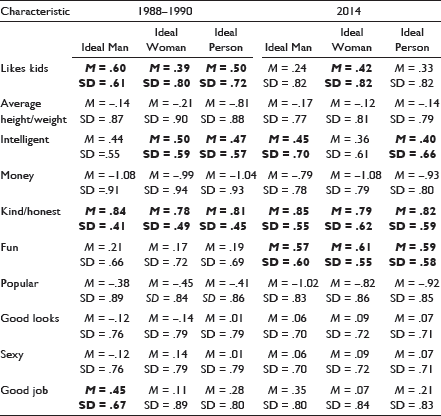
The top three ratings in each category are bolded.
Effects of participant gender, gender of the ideal, and time period: To further investigate the differences in importance ratings for the ideal man and ideal woman over time, a series of 2 Gender of Ideal (Ideal man or ideal woman) X 2 Participant Gender (Male or female) X 2 Time Period (1988–1990 or 2014) analyses of variance (ANOVAs) were conducted. Z scores based on the 10 ratings served as the DV in the series of ANOVAs. To correct for Type I error, a Bonferroni correction was used based on the traditional p < 0.05 significance level and the 10 ANOVAs. Therefore, the significant results presented below are significant at the p < 0.005 level. Pairwise comparisons were used to follow-up significant interactions. After analysing all main effects and interactions, there were no significant results (at p < 0.005) for the importance of having average height/weight, F(7, 864) = 0.76, p > 0.005, nor being intelligent, F(7, 862) = 1.37, p > 0.005.
Honesty and kindness: Results of the ANOVA indicted a significant Participant Gender X Gender of Ideal interaction, F(1, 863) = 9.84, p = 0.002 and partial η2 = 0.011. The interaction suggested that adolescent boys thought it was more important for the ideal man (M = 0.86, SD = 0.46) to be kind and honest than adolescent girls did (M = 0.83, SD = 0.49, p = 0.051) and adolescent girls thought it was more important for the ideal woman (M = 0.87, SD = 0.51, p = 0.051) than did adolescent boys (M = 0.70, SD = 0.59, p = 0.051).
Attractiveness: The ANOVA for attractiveness revealed a main effect for Gender of the Ideal, F(1, 863) = 11.67, p = 0.001 and partial η2 = 0.013 that was qualified by a Participant Gender X Gender of Ideal interaction, F(1, 863) = 48.03, p < 0.001 and partial η2 = 0.053. Post hoc tests suggested that it was more important for the opposite sex ideal to be good looking. That is, adolescent boys rated attractiveness as significantly more important for the ideal woman (M = 0.36, SD = 0.68) compared to the ideal man (M = –0.18, SD = 0.76, p < 0.001) and adolescent girls rated attractiveness as more important for the ideal man (M = 0.07, SD = 0.70) than for the ideal woman (M = –0.12, SD = 0.76, p = 0.008).
Likes children: The ANOVA revealed two significant main effects of Participant Gender F(1, 864) = 35.92, p < 0.001 and partial η2 = 0.04 and Time F(1, 864) = 20.46, p < 0.001 and partial η2 = 0.023 for liking children that were qualified by significant Participant Gender X Time Period F(1, 864) = 8.95, p < 0.003, partial η2 = 0.010 and Gender of Ideal X Time Period F(1, 864) = 12.99, p < 0.001 and partial η2 = 0.015 interactions.
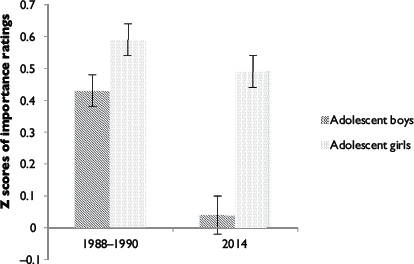
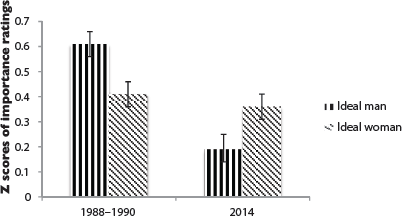
The Participant Gender X Time Period interaction indicated that although adolescent girls (M = 0.54, SD = 0.67, p = 0.022) claimed it was more important for the ideal person to like children than did boys at both time points (M = 0.29, SD = 0.86), the gender differences were greater in 2014 (Mboys = 0.04, SDboys = 0.96, Mgirls = 0.49, SDgirls = 0.67, p = 0.001) than in 1988–1990 (Mboys = 0.43 SDboys = 0.76, Mgirls = 0.59, SDgirls = 0.65) (see Figure 1). The Gender of Ideal X Time Period interaction revealed that while it was considered more important for the ideal man (M = 0.61, SD = 0.61, p = 0.003) to like children in 1988–1990 compared to the ideal woman (M = 0.51, SD = 0.75), the opposite pattern was true in 2014 (p = 0.027). That is, it was more important for the ideal woman to like children (M = 0.42, SD = 0.82) than in 2014 (see Figure 2).
Popularity: Overall, it was relatively unimportant for the ideal person to be popular. The ANOVA revealed two main effects for the popularity rating. The main effect for Gender of Ideal, F(1, 862) = 11.83, p < 0.001 and partial ƞ2 = 0.031 suggested that it was more important for the ideal man to be popular than the ideal woman. The main effect of Time Period indicated that during the earlier time period (M = −0.41, SD = 0.86), adolescents reported greater importance of popularity, F(1, 863) = 27.80, p = 0.001 and partial η2 = 0.014 compared to the later time period (M = −0.92 1, SD = 0.85).
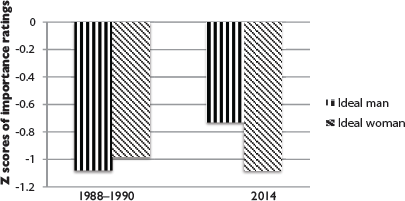
Wealth: In general, having a lot of wealth was relatively unimportant for the ideal person. The ANOVA revealed a significant Gender of Ideal X Time Period interaction, F(1, 864) = 13.73, p < 0.001and partial η2 = 0.016. Post hoc tests revealed that in 2014 it was significantly more important for the ideal man (M= – 0.78, SD = 0.78) to have a lot of wealth in 2014 than for the ideal woman (M= –1.08, SD = 0.80, p < 0.001), while differences between the ideal man (M = –1.08, SD = 0.91) and woman (M = –0.99, SD = 0.94) were not significant in 1988–1990 (p > 0.05) (see Figure 3).
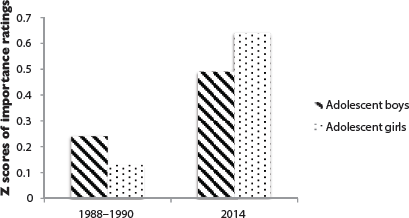
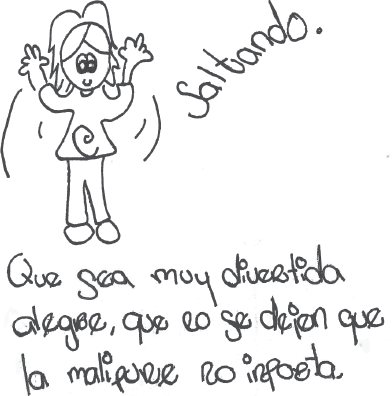
Fun: The ANOVA revealed a main effect of Time Period F(1, 865) = 71.95, p < 0.001 and partial η2 = 0.077, qualified by a Participant Gender X Time Period interaction, F(1, 865) = 8.78, p < 0.001 and partial η2 = 0.031. The main effect of Time Period indicated that being fun was more important for the ideal person in 2014 (M = 0.59, SD = 0.58) compared to 1988–1990 (M = 0.19, SD = 0.69), F(1, 865) = 38.25, p = 0.003 and partial η2 = 0.010. The Participant Gender X Time interaction revealed that both adolescent boys and girls rated being fun as more important for the ideal person in 2014 (M = 0.19, SD = 0.69) than in 1988–1990 (M = 0.59, SD = 0.58). However, adolescent girls rated being fun as significantly more important for the ideal person in 2014 (M = 0.64, SD = 0.57) than adolescent boys (M = 48, SD = 0.58, p = 0.020) (see Figure 4 for a graph of the interaction and Figure 5 for an illustration of the ideal woman as fun).
Sexy: The ANOVA yielded a main effect of Gender of Ideal, F(1, 863) = 11.67, p = 0.001 and partial η2 = 0.013 that was qualified by a significant Participant Gender X Gender of Ideal interaction, F(1, 863) = 48.03, p < 0.001 and partial η2 = 0.053. Like attractiveness, it was more important for the opposite sex ideal to be sexy. In other words, adolescent boys rated sexiness as significantly more important for the ideal woman (M = 0.19, SD = 0.77) compared to the ideal man (M = 0.05, SD = 0.78, p < 0.001) and adolescent girls rated sexiness more important for the ideal man (M = –0.09, SD = 0.82) than for the ideal woman (M = –0.15, SD = 0.67, p = 0.008).
Good job: The ANOVA revealed main effects of Gender of Ideal F(1, 862) = 28.91, p < 0.001 and partial η2 = 0.032 and Participant Gender, F(1, 862) = 32.06, p < 0.001 and partial η2 = 0.036 that were qualified by a Participant Gender X Gender of Ideal interaction, F(1, 862) = 17.89, p < 0.001 and partial η2 = 0.020. Although boys (M = 0.16, SD = 0.86) and girls (M = 0.41, SD = 0.71) rated the importance of having a good job similarly for the ideal man, girls (M= 0.36, SD = 0.76) rated it as significantly more important for the ideal woman than did boys (M = –0.04, SD = 0.76, p < 0.001).
Drawings of the Ideal Man and the Ideal Woman
As described above, participants were asked to draw pictures of the ideal man or ideal woman and to briefly describe what he or she was doing in the drawings. To assess the content of the drawings, a series of 2 Participant Gender (Boy or Girl) X 2 Gender of Ideal (Ideal man or Ideal woman) X 2 Time Period (1988–1990 or 2014) X 2 Attribute of the ideal person log-linear analyses were conducted. The scored attributes of the drawings included gender-role stereotyping, physical maturity, sexual emphasis, adult responsibility, smiling, alone or with others, inner characteristics, physical appearance, caring/helping others, and whether or not the ideal person was drawn with the same occupation as the participant’s parent. Because fewer than 4 per cent of the drawings depicted or described the ideal person with respect to money, name brand goods, signs of achievement or success, helping others, religion, drugs or military activity/violence, no analyses were conducted for those attributes. To control for Type 1 error, a Bonferroni correction was used (10/.05), yielding a new critical p value of 0.005 for the log-linear analyses. Chi-square analyses were used to follow-up any significant interactions revealed in the log-linear analysis. Only the helping/caring for others code did not yield any significant interactions at the p < 0.005 level, although the model itself was significant X2(11) = 31.24, p= 0.001.
Log-linear Analyses of the Drawings
A four-category code for the depiction of gender roles was collapsed into two categories, gender-role stereotyped (e.g., a woman cleaning the house or a man holding a football) or not stereotyped (e.g., a man or woman praying or walking; Stiles & Gibbons, 2000). The 2 (Participant Gender) X 2 (Gender of Ideal) X 2 (Time Period) X 2 (Gender Role Stereotyping) log-linear analysis was significant, X2(11) = 63,77, p < 0.001 and revealed a significant Time X Role interaction, partial X2(1) = 24.61, p < 0.001. The follow-up chi-square analyses revealed adolescents were more likely to draw the ideal person in a gender-stereotyped activity in 1988–1990 than in 2014, X2(1, N = 747) = 24.61, p < 0.001.
Coding for physical maturity of the ideal person was based primarily on body shape (e.g., breasts in women or broad shoulders in men; Stiles & Gibbons, 2000). The 2 Participant Gender X 2 Gender of Ideal X 2 Time Period X 2 Physical Maturity log-linear analysis was significant, X2(11) = 65,54, p < 0.001 and revealed two significant interactions, Time X Physical Maturity, partial X2(1) = 23.26, p < 0.001 and Gender of Ideal X Physical Maturity partial X2(1, N = 741) = 10.96, p = 0.001. The follow-up to the Time Period X Physical Maturity indicated that the ideal person was more likely to be drawn as physically mature in 1988–1990, X2(1, N = 748) = 20.46, p < 0.001. In addition, the ideal woman was more often drawn as physically mature than the ideal man, X2(1, N = 748) = 10.96, p < 0.001.
On a related note, emphasis on sexual characteristics in the ideal person was analysed, for example, depiction of genitals (Stiles & Gibbons, 2000). The 2 Participant Gender X 2 Gender of Ideal X 2 Time Period X 2 Sexual Emphasis log-linear analysis was significant, X2(11) = 33.88, p < 0.001 and revealed a significant Time Period X Sexual maturity interaction, partial X2(1) = 7.85, p = 0.005. The chi-square analysis revealed that adolescents were more likely to draw the ideal person with a sexual emphasis in 2014 than in 1988–1990, X2(1, N = 748) = 7.50, p = 0.006.
As noted earlier, participants were asked to draw the ideal person doing something. That activity was coded as whether or not the ideal person was engaging in an adult-related responsibility (e.g., working at one’s job, taking care of children; Stiles & Gibbons, 2000). The 2 Participant Gender X 2 Gender of Ideal X 2 Time Period X 2 Adult Responsibility log-linear analysis was significant, X2(11) = 46.69, p < 0.001 and revealed a significant Time Period X Adult Responsibility interaction, partial X2(1) = 8.59, p = 0.003. The chi-square analysis suggested that participants were more likely to draw the ideal person carrying out adult responsibilities in 1988–1990 than in 2014, X2(1, N = 747) = 7.93, p = 0.005.
Because of the non-verbal social cues that can be conveyed with a smile, researchers coded whether or not the ideal person was depicted with a smile (Stiles & Gibbons, 2000). The 2 Participant Gender X 2 Gender of Ideal X 2 Time Period X 2 Smiling log-linear analysis was significant, X2(11) = 104.54, p < 0.001 and revealed a significant Time Period X Smiling interaction, partial X2(1) = 69.59, p < 0.001. Follow-up tests indicated youth were more likely to draw the ideal person smiling in 2014 compared to 1988–1990, X2(1, N = 733) = 69.59, p < 0.001.
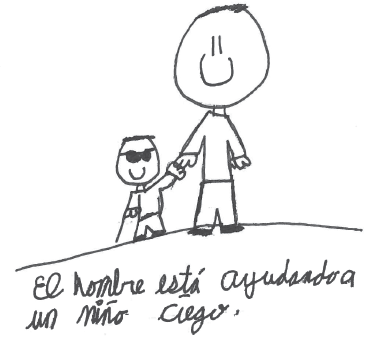
In addition, drawings were coded to describe whether or not the ideal person was drawn alone or with others (see Figure 6 for an illustration of the ideal person with others). Originally there were three coding categories for whether or not the ideal person was depicted alone, with others, or whether others were mentioned only in the comments. In this study, the final two categories were collapsed to yield two categories: alone and with others. The 2 Participant Gender X 2 Gender of Ideal X 2 Time Period X 2 Alone log-linear analysis was significant, X2(11) = 43.11, p < 0.001 and revealed a significant Time Period X Alone interaction, partial X2(1) 15.55, p < 0.001. The chi-square follow-up suggested that the ideal person was more likely to be drawn alone in 1988–1990 compared to 2014, X2(1, N= 746) = 16.49, p < 0.001.
In order to capture the inner or internal qualities or personality characteristics (e.g., humorous, compassionate) of the ideal person, the drawings and comments were coded with respect to how frequently adolescents mentioned inner qualities in their comments on the drawings (Stiles & Gibbons, 2000). The 2 Participant Gender X 2 Gender of Ideal X 2 Time Period X 2 Inner log-linear analysis was significant, X2(11) = 85.85, p < 0.001 and revealed a significant Time Period X Inner interaction, partial X2(1) = 34.66, p < 0.001. Girls were more likely than boys to describe inner characteristics in their descriptions of the ideal person, X2(1, N = 741) = 19.45, < 0.001. In addition, adolescents were more likely to include inner characteristics of the ideal person in 2014 compared to 1988–1990, X2(1, N = 748) = 41.24, < p 0.001.
We also scored comments regarding the appearance of the ideal person (e.g., physical attractiveness, clothing). The 2 Participant Gender X 2 Gender of Ideal X 2 Time Period X 2 Appearance log-linear analysis was significant, X2(11) = 50.06, p < 0.001 and revealed a significant Participant Gender X Appearance interaction, partial X2(1) = 13.83, p < 0.001. Girls were more likely to include physical appearance in their portrayal of the ideal person than boys, X2(1, N= 741) = 14.29, p < 0.001.
Finally, participants were asked to report the occupation of both parents. This information was later coded to indicate whether or not the ideal woman and ideal man were depicted in the same career as the adolescent’s mother and father, respectively. The 2 Participant Gender X 2 Gender of Ideal X 2 Time Period X 2 Parent Occupation log-linear analysis was significant, X2(11) = 80.89, p < 0.001 and revealed a significant Gender of Ideal X Parent Occupation interaction, partial X2(1) = 9.16, p < 0.001. A follow-up chi-square revealed that adolescents were more likely to draw the ideal woman in the same occupation as their mothers than the ideal man in the same job as their fathers, X2(1, N = 603) = 10.06, p = 0.001.
Discussion
Results from this study suggest that the ideals of Guatemalan adolescents in 2014 align with those of the global adolescent in various ways. For example, in the ways that they were already similar (e.g., valuing kindness and honesty) those similarities remained in the more recent sample. However, in some of the ways in which Guatemalan youth had previously diverged from the global ideals, they evidenced greater similarity in 2014.
In the 2014 sample, several findings speak to the importance of having fun in life, potentially by delaying adult responsibility. For example, adolescents in 2014 rated being fun as much more important for the ideal person in 2014 compared to 25 years earlier. Furthermore, youth in the later sample were less likely to draw the ideal person carrying out adult responsibilities in than in the earlier group. The ideal person was also drawn with a smile more in 2014 regardless of ideal person gender, again suggesting being happy and joyful are important in the ideal. Both the patterns of physical and sexual maturity converge with those results. That is, despite portraying the ideal person in 2014 with fewer adult responsibilities, it was more common in 2014 for the ideal to be drawn with sexual characteristics. This finding is consistent with the emphasis placed on sexuality in the Western media (Hatton & Trautner, 2011). Furthermore, the ideal person was drawn as less physically mature in 2014 compared to 1988–1990, converging with the finding of fewer depictions of adult responsibilities and a greater importance of fun for the ideal person in 2014.
The ideal person was less likely to be drawn in a gender stereotyped role in 2014 than in 1988–1990, supporting our second hypothesis. This provides evidence for the ‘rising tide’ phenomenon (Inglehart & Norris, 2003). Yet there is still opportunity for improvement in terms of gender equality as adolescent girls rated the having a good job as more important for the ideal woman than did adolescent boys.
Another important finding is that adolescents in 2014 were more likely to describe the ideal person in terms of inner characteristics (i.e., personality traits) than adolescents in 1988–1990. Describing the ideal person in terms of traits is characteristic of individualist cultures (Arnett, 2002). For example, when asked to describe themselves by completing ‘I am’ prompt, participants from individualistic cultures response by listing traits (e.g., intelligent, kind), while those from collectivistic cultures used social roles or group membership (e.g., daughter, sister; Trafimow, Triandis, & Goto, 1991). Thus, the frequent use of inner characteristics in the ideal person descriptions in the 2014 sample may suggest Guatemalan adolescents are shifting more towards this trait-based portrayal of the ideal man and woman that is consistent with individualism promoted by globalisation.
Despite the gradual shifts in Guatemalan culture associated with globalisation (and individualism), Guatemala’s orientation as a collectivistic culture is still alive and well with regard to seeing the ideal person as connected to others. More specifically, adolescents in the recent sample were even more likely to draw the ideal person with others or describe the ideal person in connection with other people compared to the earlier group. This may be taken as evidence for the continued importance of core Latin American values of strong interpersonal relationships and family connectedness, despite heavy influence from the individualistic West (Silva & García, 2014).
Like the youth from India (Rao et al., 2013) and from Armenia (Huntsinger, 2013), Guatemalan adolescents are confronted with the challenge of merging ideas exposed via globalisation and the beliefs endorsed by their cultures. Although the process by which they absorb new ideas, uphold long-standing ones, and integrate the global and traditional is not yet clear, the results of the study suggest that Guatemalan adolescents hold a strong desire for interpersonal relationships along with characteristics emphasised and celebrated in Western culture like being fun and delaying adult responsibilities. As Jensen (2003) notes, this conflict contributes to the challenges faced by adolescents during their cultural identity formation. That is, as adolescents are exposed to other cultural worldviews, they are often forced to reconcile how these identities converge. This process is nuanced and complex likely varying across cultures and its consequences are yet to be revealed (Hermans, 2015).
Strengths, Limitations and Future Directions
The strengths of this study include its mixed-method approach, large sample sizes and the demographic similarity between the two samples. Both groups of adolescents were from urban Guatemalan schools with diverse socio-economic backgrounds, thus reducing the likelihood that the differences between the time points could be attributed to demographic or related factors.
In light of its strengths, this study is not without limitations. First, the samples from both time points were drawn from urban Guatemalan youth enrolled in school. As noted earlier, many Guatemalan children do not attend school past the elementary grades (UNICEF, 2013). In addition, the lifestyles, opportunities and future perspectives are different for urban versus rural youth, suggesting these results may not generalize to Guatemalan adolescents in rural settings (Gibbons, 2013). Finally, the effect sizes in the ANOVAs were small, suggesting that important variables were not addressed in this study. However, to counteract the potential for Type I error, the Bonferroni correction was used and provided a more conservative significance level.
Future research should attempt to build on the strengths and address the limitations of the current study. For example, future studies should employ a longitudinal design with a sample that includes students and non-students in both rural and urban settings. Additionally, as globalisation continues to impact adolescents and their families, understanding the implications of this process is of paramount importance to psychologists and those who work with youth, not only in Guatemala, but in all parts of the developing world.
Footnotes
Acknowledgement
The authors would like to acknowledge the school administrators, teachers, parents and especially the adolescents who made this project possible.