







Abstract
This study proposed victimisation-by-ingroup consciousness as a novel concept, which denotes that intragroup violence or wrongdoings by some group members victimise other members of the same group and may elicit sense of physical, material, cultural and psychological sufferings among the victim members. Applying this concept to the context of religious radicalism, this study revealed that among a sample of Indonesian Muslims (N = 810), the perceptions of physical, material and cultural sufferings positively predicted psychological suffering. This sense of psychological suffering turned out to motivate participants to perceive intragroup violence as illegitimate. This perceived illegitimacy of intragroup violence ultimately facilitated participants to report less emotional, attitudinal and intentional radical tendencies to support terrorists. Finally, we found as expected that Islamic blind patriotism negatively predicted, but constructive Islamic patriotism positively predicted participants’ victimisation-by-ingroup consciousness. These empirical findings broadly suggest that accepting the deficiency of the ingroup may be beneficial for tackling Muslims’ radical tendencies, but this prospect depends on modes of Muslims’ emotional attachment to their own group. We close by discussing the theoretical and practical implications of those empirical findings, as well as limitations and practical implications of this study.
From corruptions, political oppressions, religious persecutions, terrorism and revolutions to civil wars, anecdotal records have demonstrated that collective misdeeds by some members of an ethnic, religious or national group may victimise fellow ingroup members (Hipp et al., 2009; Kauzlarich et al., 2001; Malešević, 2013). Yet despite its real-world relevance, there is a shortage of empirical socio-psychological studies that have examined the phenomenon of intragroup violence. To fill this void, this study aimed to investigate the extent to which people are aware of some Muslims’ sufferings from intragroup violence, and the antecedents and consequences of this tendency, which we assessed as ‘victimisation-by-ingroup consciousness’. In particular, we applied victimisation-by-ingroup consciousness to the context of radicalism and examined the psychological mechanisms by which it holds the potential for attenuating Muslims’ radical tendencies against non-Muslims.
We focused our investigation primarily on Muslims’ radicalism for a specific reason. Radicalism is not unique to any particular group, be it religious or non-religious. Research shows that all the major religious groups such as Christians, Muslims, Hindus, Buddhists and Jews are susceptible to committing violent actions, and so are the non-religious groups such as right-wing or left-wing extremists and separatist groups (Doosje et al., 2016). However, Muslims’ radicalism has gained much media attention (Esposito, 2019; Kabir, 2019) and has become one of the trending topics of empirical research (Scarcella et al., 2016), owing to the notoriety of terrorist attacks of September 11, 2001, and those of Islamic State of Syria and Iraq (ISIS). In our study, we used Indonesia as the contextual background to portray the phenomenon of Muslims’ radicalism.
The Context of the Present Work
Indonesia is a country where approximately 229 million Muslims reside, which is equivalent to 12.7% of Muslim populations in the world (‘Muslim population by country 2021’, 2021). This makes Indonesia a country with the largest Muslim population across the globe (Jamaluddin et al., 2020). The most recent census in 2010 released that of the total Indonesian population (i.e., 237.6 million), 87% are self-declared Muslims, 9.87% Christians, 1.7% Hindus, 0.72% Buddhists and 0.56% are from other faiths (‘Indonesia Population 2021’, 2021). Pancasila (English: The Five Pillars) is Indonesia’s national ideology, despite Muslims being the religious majority group (Jonathan, 2018). Being more inclusive than Islamic ideology, the first pillar of Pancasila declares ‘Beliefs in One Supreme God’ and the state formally recognises five religions beyond Islam including Protestantism, Roman Catholicism, Hinduism, Buddhism and Confucianism (Zaduqisti et al., 2020).
However, some segments of Muslims in Indonesia have resisted Pancasila and aspire to replace it with Islamic ideology, in order to establish an Islamic state (Nakissa, 2020). In Indonesia’s history, the most prominent example was the resistance waged by the Darul Islam movement (Indonesian: Darul Islam/Tentara Islam Indonesia, DI/TII). Refuting Pancasila and struggling to transform Indonesia into an Islamic state, between the 1950s and the mid-1960s the Darul Islam movement embroiled in armed revolts against the state (Van Bruinessen, 2002). To achieve this end, that is, to establish an Islamic state, recent development shows that some Muslim radicals in Indonesia have fought through cultural movements, whereas others have fought violently through religious persecutions and even acts of terrorism (Jones, 2013). Besides non-Muslim minorities (Beech & Suhartono, 2021), Muslims themselves often become victims of the violent actions by Muslim radicals in Indonesia (Mashuri et al., 2017). Intragroup violence denoting acts of persecutions or terrorism by Muslim radicals that victimise other Muslims is hence of high relevance to the Indonesian context. In what follows, we will explain why acknowledgement of such an intragroup violence that we dub as victimisation-by-ingroup consciousness may contribute to the reduction of Muslims’ radicalism. We also demonstrate that blind patriotism and constructive patriotism vary in their role in explaining Muslims’ victimisation-by-ingroup consciousness.
Victimisation-by-ingroup Consciousness
To better understand the nature of intergroup conflict and violence, interdisciplinary scholars (e.g., Bilali & Vollhardt, 2019; Jacoby, 2015) have recommended the importance of delving into the perspectives (i.e., feelings, thoughts and behaviours) of both the perpetrating groups and victim groups. For the perspectives of victim groups, to which we direct our attention in this study, existing social-psychological literature differentiates between collective victimisation (Bar-Tal et al., 2009; Vollhardt, 2012) and collective victimhood (Noor et al., 2017). Both concepts result from collective violence, which according to World Health Organisation (WHO, 2002, p. 215) refers to ‘the instrumental use of violence by people who identify themselves as members of a group—whether this group is transitory or has a more permanent identity—against another group or set of individuals, in order to achieve political, economic or social objectives’. What makes the two concepts distinct from each other is that collective victimisation has to do with the objective, but collective victimhood has to do with the subjective experience of collective violence. In this regard, the objective experience denotes violent incidents against a certain group, whereas the subjective experience denotes the interpretations of such misdeeds that may vary among members of that group (McNeill & Vollhardt, 2020; Vollhardt, 2020).
Victimisation-by-ingroup consciousness in our work originates from the concept of collective victimhood or collective victim consciousness. In this regard, victimisation-by-ingroup consciousness denotes people’s subjective or psychological perceptions that some Muslims’ wrongdoings have caused sufferings to other Muslims. However, the well-documented definition of collective victimhood commonly thinks of collective violence as intergroup violence denoting infractions or misdeeds one group has done against another group (Noor et al., 2017; Vollhardt, 2012, 2019). Unlike this cross-group or intergroup orientation of collective violence, the focus of victimisation-by-ingroup consciousness is on within-group or intragroup collective violence, reflecting the degree to which people acknowledge that the actions of their ingroup may harm fellow ingroup members. Characterised as such, victimisation-by-ingroup consciousness differs from two popular forms of intergroup-oriented collective victimhood, namely, competitive victimhood and common or inclusive victimhood.
People engage in competitive victimhood by unilaterally claiming that their ingroup has suffered more than the outgroup in conflicts involving both groups (Noor et al., 2012). Meanwhile, common or inclusive victimhood ensues from people’s beliefs that the severity of suffering of their ingroup and of the outgroup is comparable (Vollhardt, 2015). Whereas competitive victimhood tends to exacerbate intergroup conflict (Young & Sullivan, 2016) and, common or inclusive victimhood tends to attenuate it (Vollhardt, 2015; cf., Cohrs et al., 2015), the impact of victimisation-by-ingroup consciousness on intergroup relations remains unexplored in existing social-psychological literature.
We conceptualised victimisation-by-ingroup consciousness and applied it to the context of conflicts among Muslims, based on Noor et al.’s (2012) four dimensions of suffering: physical (e.g., injuries and deaths), material (e.g., unemployment and loss of property), cultural (e.g., discontinuity of norms and values) and psychological (e.g., trauma). Regarding physical suffering, as estimated by the University of Maryland’s Global Terrorism Database, most terror attacks by Islamist groups factually took place in Muslim-majority countries such as Iraq, Afghanistan and Pakistan (Alexander & Moor, 2015). And in spite of the media representations that overwhelmingly portray Muslims as the actors of terrorism, research by the University of Maryland’s National Consortium for the Study of Terrorism and Responses to Terrorism (Hayden, 2017) and the French Terror Victims Association (‘Overwhelming majority of terror victims are Muslims’, 2019) revealed that Muslims themselves are the most afflicted by terrorism worldwide.
In addition to Islamist terrorism, Muslim-majority nations are also prone to domestic armed conflicts with insurgent groups. Again, victims of this collective violence are mostly Muslims (Gleditsch & Rudolfsen, 2016). Yet, terrorism and wars are just examples of direct violence. The alternative of direct violence is indirect violence, in the form of structural and cultural tensions (Galtung, 1990; Galtung & Fischer, 2013). Structural violence operates through arrangements of social, economic or political structure that limit people to utilise their full abilities to meet their basic needs, generating social injustice, inequalities and deprivations. Cultural violence, meanwhile, denotes systems of religion or ideology that may cause cultural deprivations and threats, entailing the loss of certain groups’ unique identities (e.g., language, religious practices and customs). Galtung (2011) further theorised that the presence of either direct violence or indirect violence obstructs the establishment and maintenance of intergroup peace between groups in dispute.
Previous work has demonstrated that lack of political openness, high levels of political instability, corruption, as well as terrorist activity, have been destructive to economic growth in Islamic countries (Meierrieks & Gries, 2013; Zeb & Ahmed, 2019). Besides physical and material sufferings, the ideology of some Muslims, particularly that of Islamist terrorists, may cause cultural suffering for other Muslims. The Gallup survey in 2008 reported that most Muslims across the world opposed terrorism (i.e., killing civilians to defend Islam), reflecting that mainstream Muslim majority perceives its values and beliefs to be contrary to those of Islamist terrorists (Esposito & Mogahed, 2013). The 2015 Global Attitude Survey released by Pew Research Centre further demonstrated that people in countries with significant Muslim populations including Indonesia, Turkey and Malaysia disliked and felt threatened by the ISIS (Poushter, 2015). These observations suggest that structural violence indeed exists in Islamic world that may produce material suffering among its Muslim community, so does cultural violence which may produce cultural suffering among them.
It is worth highlighting that in our study, victimisation-by-ingroup consciousness zooms in more on the subjective than objective experience of the four dimensions of suffering as described above. Indeed, some scholars (e.g., Noor et al., 2012, 2017) posited that physical, material, cultural and psychological sufferings are not limited to people who are directly but also indirectly exposed to collective violence through narratives transmitted across generations. In the current digital era, the internet may make it easier for people to experience such vicarious sufferings.
Noor et al. (2012) argued that physical, material and cultural sufferings may induce trauma and distress among the victimised groups. Indeed, many Muslims have been traumatised by wars and terrorism (Richa et al., 2020) and decided to flee from their country to be refugees in other countries (Kira et al., 2014). It is particularly important to note that trauma and distress may evolve not only from actual physical, material and cultural violences but also from the perceived threat of this harmful action (Noor et al., 2012). Some Muslims hence may experience psychological suffering, which results from intragroup violence. Building upon this argument, we predicted that the perceived physical, material and cultural sufferings would heighten the perceived psychological suffering due to intragroup violence by some Muslims against other Muslims (Hypothesis 1).
Illegitimacy of Ingroup’s Wrongdoings
Victimised groups usually view collective violence inflicted upon them as illegitimate, that is, unjust, immoral and undeserved (Bar-Tal et al., 2009). However, this perceived illegitimacy is particularly ascribed to collective violence perpetrated by an outgroup against an ingroup. When the actor of collective violence is the ingroup, people sometimes justify and legitimise their group’s wrongdoings against another group (Doosje et al., 2006). While literature (Malešević, 2013) suggests that intragroup violence is perceived to be more illegitimate than intergroup violence, there has been no empirical research to date that assesses the dynamics of such perceived illegitimacy of ingroup perpetrated harm against fellow ingroup members. However, research on ‘black sheep effect’ may provide clues regarding this phenomenon.
The black sheep effect constitutes group members’ proclivity to pass higher levels of negative judgment on unlikeable, deviant ingroup members than comparable outgroup members (Marques et al., 1988). As a group member, people tend to hold a positive expectation that their own group is seen in a favourable light by an outgroup (Doosje et al., 1998). This positive expectation can be obstructed by the actions of deviant ingroup members that threaten the ingroup’s positive images. Expectancy-violation theory (Jackson et al., 1993) suggests that people tend to have positive expectations about their own group and evaluate negatively ingroup members who violate those expectations. Using this theoretical framework, it can be argued that intragroup violence that causes Muslims’ physical, material, cultural and psychological sufferings may pose violations of the positive expectations, from which the judgment of illegitimacy of such actions arises. Based on this rationale and Noor et al.’s (2012) argument that physical, material and cultural sufferings may trigger psychological suffering, we proposed a meditation hypothesis. This hypothesis specified that the perceived psychological suffering would mediate the role of the perceived physical, material and cultural sufferings in augmenting Muslims’ perceived illegitimacy of intragroup violence (Hypothesis 2).
Radical Tendencies
Prior social-psychological work has found that illegitimacy of structural violence (i.e., social inequality; Miron et al., 2006) may promote feelings of empathy towards the harmed outgroup. In a similar vein, research by Iyer et al. (2007) showed that perceiving direct violence (i.e., occupation of another country) by the ingroup against the outgroup as illegitimate was positively associated with feelings of shame, guilt and anger towards ingroup wrongdoings, as well as with intentions to protest against a perpetrating ingroup and to support compensation for a harmed outgroup. What can be derived from these findings is that illegitimacy of the ingroup’s wrongdoings against the outgroup may curb radical tendencies and rather enhance a range of conciliatory tendencies.
However, no research to date has tested the consequences of illegitimacy of intragroup violence on radical tendencies. But these consequences can be implied from the research on intergroup emotional exchange by Shore et al. (2019). They found that participants who observed an ingroup member violate their expectation of reciprocating to an outgroup’s positive gestures reported feelings of vicarious guilt over the action. This guilt in turn drove participants to increase their resource allocation to the outgroup. Expressing feelings of guilt over the ingroup’s wrongdoings in part connotes acknowledgement of illegitimacy of the ingroup’s misdeeds (Iyer et al., 2007; Miron et al., 2006). Linking this argument to the research by Shore et al. (2019), we reckon that illegitimacy of intragroup violence may reduce radical tendencies against the outgroup.
Muslims’ radical tendencies in this study consisted of multi-level constructs, that is, affective, attitudinal and intentional tendencies to support ingroup actions to harm the outgroup. The affective tendencies include Muslims’ feelings of sympathy towards the violent acts of terrorist groups (McCauley, 2012; McCauley & Moskalenko, 2017). We also included Muslims’ anger against terrorists as a reverse indicator of affective radical tendencies, deriving from previous research (Iyer et al., 2007) showing that anger against the ingroup wrongdoings can reduce ingroup members’ support for actions that are harmful to the outgroup. Attitudinal tendencies manifest as Muslims’ justification for the use of violence to actualise Islamic ideology (Doosje et al., 2016). Finally, intentional constructs have been assessed as personal obligation to support terrorist groups (McCauley, 2012; McCauley & Moskalenko, 2017). Based on the theoretical rationale and empirical findings above, we predicted that participants’ perceived illegitimacy of intragroup violence would be related to their decreased radical tendencies to support terrorists (Hypothesis 3).
Sageman (2008) proposed a theoretical model in which victimhood is arguably linked to Islamic radicalism given its role in inducing Muslims’ (il)legitimate judgment of the actions of their group. Applying this theoretical insight to the context of this study, we argued that the perceived psychological suffering or victimhood Muslims experience that results from violent acts by other Muslims is likely to motivate them to judge such intragroup violence as illegitimate. This judgment, in turn, attenuates Muslims’ radical tendencies that take the form of their reduced support for terrorists. Based on this argument, we predicted that the illegitimacy of intragroup violence would mediate the role of the perceived psychological suffering in attenuating participants’ radical tendencies against non-Muslims (Hypothesis 4).
Blind Patriotism and Constructive Patriotism
Victimisation-by-ingroup consciousness in our work reflects people’s open-mindedness to accept the failures of their own group. This open-mindedness is likely to ensue as literature (Hornsey & Imani, 2004) suggests that by acknowledging the ingroup failures, people aspire to reform their own group. Here the contradiction emerges since, people have a strong tendency to defend their group if they strongly identify or feel attached to the group (Tajfel & Turner, 1986). However, group identification can manifest in various modes, each of which may have a distinct impact on people’s tendency to defend their ingroup. Schatz et al. (1999) differentiated between two modes of group identification: blind patriotism and constructive patriotism. Blind patriotism is a form of group identification characterised by intolerance of group-directed criticism for ingroup protection, whereas constructive patriotism connotes a form of group identification characterised by support for group-directed criticism with intentions for ingroup improvement. Based on this premise, we assume that blind patriotism hinders, whereas constructive patriotism promotes victimisation-by-ingroup consciousness. Applying this argument to the context of our study, we hypothesised that Islamic blind patriotism would be a positive predictor, but Islamic constructive patriotism would be a negative predictor of the perceived physical, material, cultural and psychological sufferings resulting from intragroup violence (Hypothesis 5).
Blind patriotism is closely related to ingroup glorification as both constructs contain a component of group members’ subjective claim over the superiority of the ingroup as compared to the outgroup (Kende et al., 2019). Ingroup glorification has been found to prevent people from acknowledging illegitimacy of their own group’s wrongdoings (Leidner et al., 2010; Roccas et al., 2006). With reference to this finding, we assume that blind patriotism spurs a denial, which renders people to resist illegitimacy of intragroup violence. Vice versa, constructive patriotism may encourage people’s acceptance of illegitimacy of such ingroup actions, since this attitude characterises people’s open-mindedness to ingroup failures. Based on these arguments, we hypothesised that Islamic blind patriotism would be a negative predictor, but Islamic constructive patriotism would be a positive predictor of participants’ perceived illegitimacy of intragroup violence (Hypothesis 6).
Previous studies have also shown that blind patriotism contributes to ingroup members’ support for aggressive actions against the outgroup. For example, in responding to the 9/11 terrorist attacks, American participants’ self-reported blind patriotism positively and significantly predicted their support for the Bush administration to wage war against Iraq. Constructive patriotism was suboptimal or non-significant in explaining pro-attitudes towards the war (McCleary et al., 2009; Sahar, 2008). Taking these empirical findings into account, we hypothesised that Islamic blind patriotism would be a positive predictor of either justification of violence or personal obligation to support terrorists (Hypothesis 7).
Method
Participants and Design
We recruited a total of 810 undergraduate Muslim students through convenience sampling from various universities in Indonesia (506 were females, 304 were males; Mage = 20.59, SDage = 2.29; 322 were exact science students, 488 were social science students). 1 The participants were volunteers who took part in this research in return for a small compensation. The research was designed as a correlational survey to understand relation among all the variables.
Procedure and Measures
The questionnaires were distributed through an online survey, which comprised of a series of questions on which participants were asked to indicate their agreement on a 5-point Likert scale ranging between 1 (not at all) and 5 (very much). The questionnaire aimed to assess tendencies of blind patriotism, constructive patriotism, perceived physical victimisation, perceived material victimisation, perceived cultural victimisation, perceived psychological victimisation, perceptions of illegitimacy, sympathy towards terrorists, anger towards terrorists, justification for terrorism and personal obligation to support terrorists. 2 Scores were tabulated by averaging participants’ answers on the items measuring each of the variables.
Upon reading and signing inform consent, participants were presented with 11 items to assess blind patriotism (e.g., ‘Muslims are virtually always right’; α = .80) and 6 items to assess constructive patriotism (e.g., ‘Muslims should work hard to move them in a positive direction’; α = .70). We adapted each of these scales from Schatz et al. (1999). The perceived physical suffering was assessed with 5 items (e.g., ‘Some Muslims have been victims of violence by other Muslims’; α = .85), perceived material suffering was assessed with 4 items (e.g., ‘Some Muslims are not well-educated because they are victims of injustice [e.g., discrimination, greed] by other Muslims’; α = .85), perceived cultural suffering was assessed with 10 items (e.g., ‘Some Muslims are deliberately left with no choice but to adhere to other Muslims’ ideologies’; α = .95), whereas perceived psychological suffering was assessed with 8 items (e.g., ‘The acts of violence by some Muslims have traumatised other Muslims’; α = .93). We developed these scales ourselves based on Noor et al.’s (2012) theoretical arguments on four dimensions of suffering. Perceived illegitimacy of intragroup violence was assessed with 6 items (e.g., ‘Violence by some Muslims that victimises other Muslims is illegitimate’; α = .93), which we adapted from Iyer et al. (2007) as well as Shepherd et al. (2013).
In the next part of the questionnaire, participants were presented with brief information about two acts of Islamic terrorism, along with the pictures of the perpetrators and those of the devastating impacts of the tragedies. The first was the 12 October 2002 suicide bombings striking Kuta, an area of the Indonesian tourist island of Bali, which took 202 lives (Paddock, 2019). The second was September 11 attacks in the United States, leaving 2,977 people dead (CNN Editorial Research, 2020). Participants were then asked to indicate how much sympathy (3 items; e.g., ‘sympathetic’; α = .85) and anger (3 items; ‘furious’; α = .91) they felt towards the perpetrators of those acts of Islamic terrorism, both of which were adapted from the research by Iyer et al. (2014).
Justification for terrorism was assessed through 6 items. Five items were adapted from Ludigdo and Mashuri (2020) (e.g., ‘The actions of the perpetrators in the pictures above are right’). One item was adapted from McCauley and Scheckter (2011) wherein participants were asked how much they personally felt that the acts of Islamic terrorism presented in the pictures above are often justified to defend Islam. Combined, the six items of justification for terrorism had high reliability (α = .88) and loaded on a single factor accounting for 60.98% of the total variance. Personal obligation to support terrorists was assessed by 5 items (e.g., ‘Without asking for advice from the Ulama [Muslim scholars], I feel morally obligated to carry out the actions of the perpetrators in the pictures above’; α = .88), which the authors self-developed building upon the theoretical arguments of McCauley and Moskalenko (2017; see also McCauley, 2012).
In the last part of the online survey, participants were asked to self-report their gender, age and study field (i.e., an exact science or a social science) and in the end debriefed, thanked and paid upon finishing the study.
Results
Descriptive Statistics
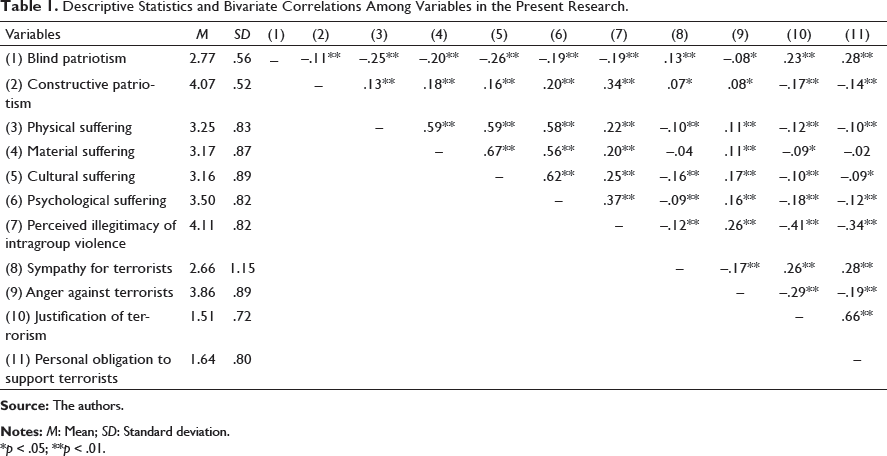
Table 1 below presents bivariate correlations among variables in this research, showing firstly that, blind patriotism was negatively related, but constructive patriotism was positively related to each aspect of victimisation-by-ingroup consciousness or the perceived illegitimacy of intragroup violence. Secondly, more perceived illegitimacy of intragroup violence was related to less radical tendencies including sympathy towards terrorists, justification of terrorism and personal obligation to support terrorist. In contrast, it was negatively related to a reverse construct of radicalisation, that is, anger towards acts of terrorism.
Exploratory Factor Analyses for Screening the Items of Victimisation-By-Ingroup Consciousness
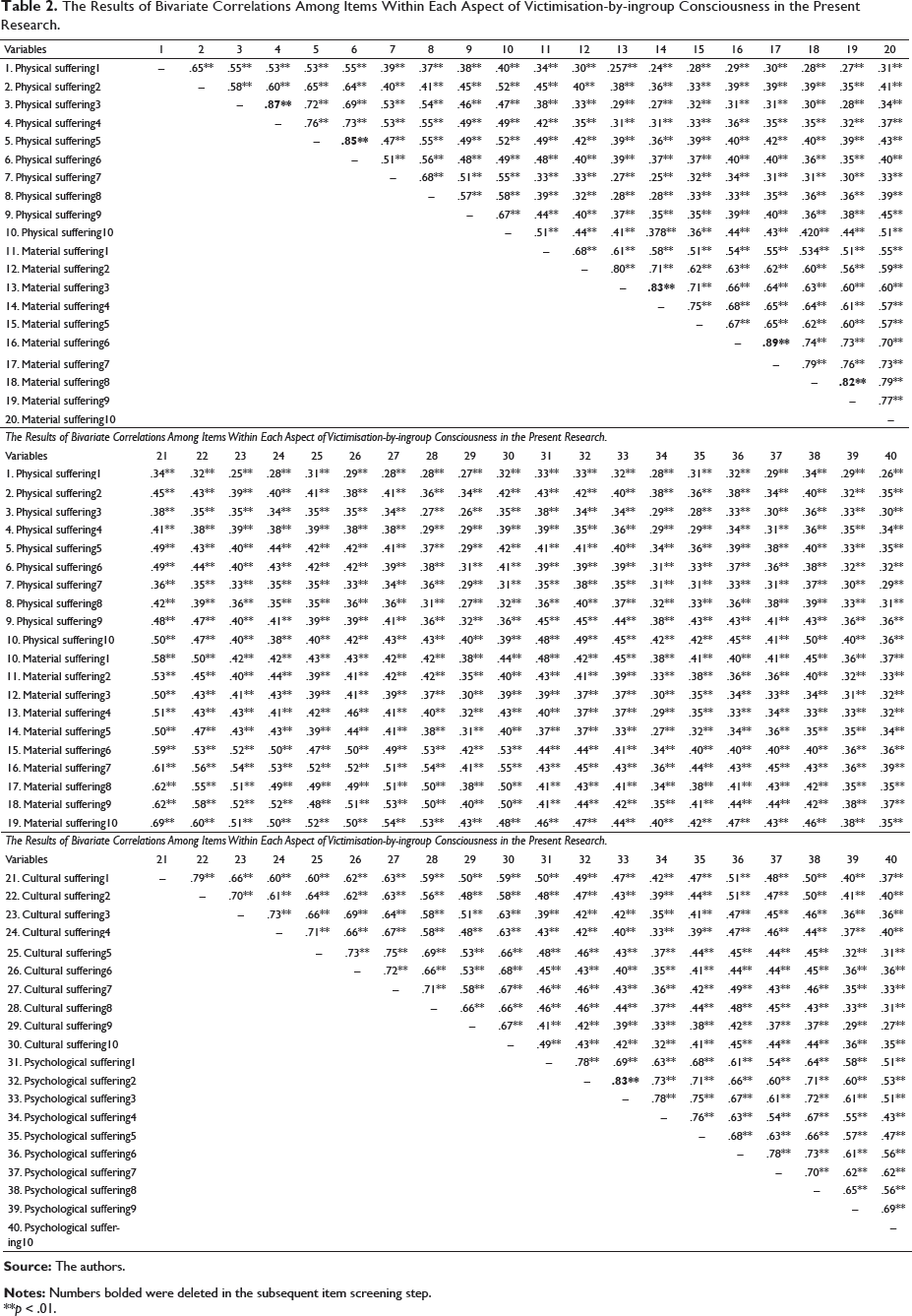
The four aspects of victimization-by-ingroup consciousness (eg., the perceived physical, material, cultural, and psychological sufferings) initially consisted of 10 items. Given that items for each aspect of victimization-by-ingroup consciousness were self-developed, we conducted exploratory factor analysis (EFA) using SPSS version 17 to determine the psychometric quality of the construct. Following a recommendation by Watson (2007), the EFA took four steps. The first step was to delete the items that had bivariate correlations above .80. This step resulted in the deletion of a number of item pairs, which included items 3 and 4, as well as items 5 and 6 in the perceived physical suffering. The rest were items 3 and 4, items 6 and 7, as well as items 8 and 9 in the perceived material suffering, and, finally, items 2 and 3 in the perceived psychological suffering (see Table 2).
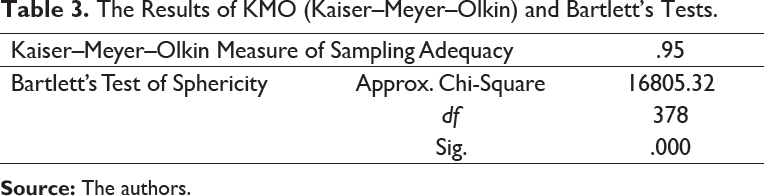
The second step implemented Kaiser-Meyer-Olkin (KMO) test and Bartlett's test of sphericity to determine the sampling adequacy in the present work. The value of KMO was .95, which is greater than minimum standard .60 (Tabachnick & Fidell, 2013), whereas that of Bartlett's test of sphericity was significant, χ2 (378) = 16805.32, p <.001. These results are taken to suggest that the number of participants in our work (N = 810) is sufficient (see Table 3).
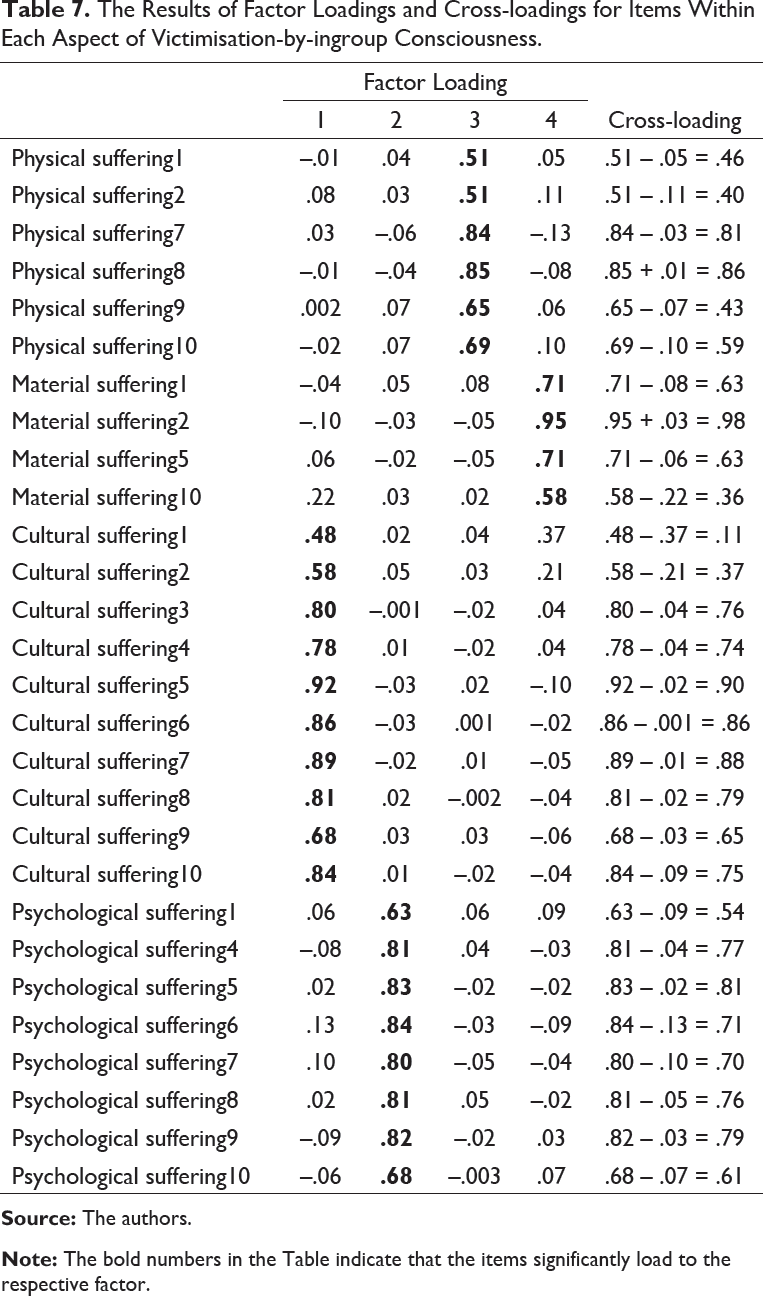
The third step was to determine the number of factors or dimensions to be retained. In this step, we chose Principal Axis Factoring with no rotation, which is suitable for data that violate the assumption of multivariate normality. This analysis yielded four factors that deserved retaining as Eigenvalues of each of these factors were greater than 1.00, with cumulative variance extracted being greater than 50% (see Table 4). The fourth step was to select Promax as rotation factor method. With this method, we allowed each aspect of victimisation-by-ingroup consciousness to correlate (see Table 5), and the results were then assessed on the basis of two criteria. The first criterion was that items with communalities being less than .40 should be removed. On the basis of this criterion, item number 1 in the perceived physical suffering should be eliminated (see Table 6). The second criterion was that items with a factor loading being less than .32 and with a cross-loading being less than .10 should be removed. All remaining items passed these criteria because their factor loadings were greater than .32 and their cross-loadings were greater than .10 (see Table 7).
Predicating upon the four steps described above, in our work we assessed the perceived physical suffering with five items, the perceived material suffering with four items, the perceived material suffering with 10 items, and the perceived cultural suffering with eight items.
Preliminary Analyses
To test the hypotheses in this study, data were analysed by means of path model using Mplus version 7.4 (Muthén & Muthén, 1998–2015). Data in this research contained no missing values. An initial inspection revealed that the data violated the assumption of multivariate normality (Skewness = 15.21, M = 2.11, SD = 0.18, p < .001; Kurtosis = 189.96, M = 142.74, SD = 1.14, p < .001). We accordingly generated the hypothesised path model using MLM estimator, which is considered appropriate to use for non-missing data with non-normal multivariate distributions (Muthén & Muthén, 1998–2015).
Hypothesis Testing
The hypothesised path model (see Figure 1) fitted to the data very well, root mean square error approximation or RMSEA = 0.04, 90% confidence interval (CI) = [.03, .06], comparative fit index (CFI) = 0.98, and Tucker–Lewis index (TLI) = 0.96 (for a review of the criteria for the goodness of fit, see Hu & Bentler, 1999).
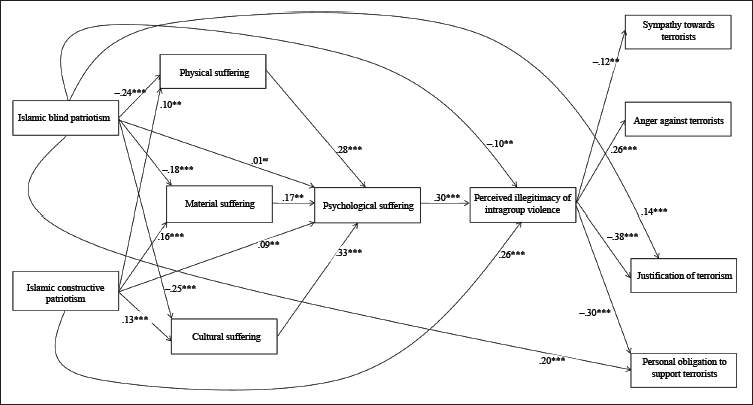
As shown in Figure 1, physical suffering positively predicted psychological suffering (β = .28, SE = 0.05, p < .001, 95% CI = [.19, .36]), so did material suffering (β = .17, SE = 0.05, p = .001, 95% CI = [.06, .27]) and cultural suffering (β = .33, SE = 0.05, p < .001, 95% CI = [.23, .44]). These findings were in support of Hypothesis 1. In line with Hypothesis 2, psychological suffering significantly mediated the positive relationship between physical suffering (Indirect effect: β = .08, SE = 0.02, p < .001, 95% CI = [.05, .12]), material suffering (Indirect effect: β = .05, SE = 0.02, p = .004, 95% CI = [.02, .08]), cultural suffering (Indirect effect: β = .10, SE = 0.02, p < .001, 95% CI = [.06, .14]) and the perceived illegitimacy of intragroup violence.
The perceived illegitimacy of intragroup violence was negatively related to sympathy for terrorists (β = −.12, SE = 0.04, p = .001, 95% CI = [−.18, −.05), justification of terrorism (β = −.38, SE = 0.04, p < .001, 95% CI = [−.46, −.30]), personal obligation to support terrorists (β = −.30, SE = 0.04, p < .001, 95% CI = [−.37, −.23]), but positively related to anger against terrorists (β = .26, SE = 0.04, p < .001, 95% CI = [.18, .34]). Hypothesis 3 was therefore substantiated. Regarding Hypothesis 4, the findings showed that the perceived illegitimacy of intragroup violence significantly mediated the negative relationships between psychological suffering and sympathy (indirect effect: β = −.03, SE = 0.01, p = .003, 95% CI = [−.06, −.01]), psychological suffering and justification of terrorism (indirect effect: β = −.11, SE = 0.02, p < .001, 95% CI = [−.16, −.07]), psychological suffering and personal obligation (indirect effect: β = −.09, SE = 0.02, p < .001, 95% CI = [−.12, −.06]), as well as the positive relationship between psychological suffering and anger (indirect effect: β = .08, SE = 0.02, p < .001, 95% CI = [.04, .11]).
The results also showed that Islamic blind patriotism negatively predicted physical suffering (β = −.24, SE = 0.04, p < .001, 95% CI = [−.31, −.17]), material suffering (β = −.18, SE = 0.04, p < .001, 95% CI = [−.25, −.11]), and cultural suffering (β = −.25, SE = 0.04, p < .001, 95% CI = [−.32, −.18]), but did not significantly predicted psychological suffering (β = .01, SE = 0.03, p = .841, 95% CI = [−.05, .06]). Islamic constructive patriotism positively predicted physical suffering (β = .10, SE = 0.03, p = .004, 95% CI = [.03, .17]), material suffering (β = .16, SE = 0.04, p < .001, 95% CI = [.09, .23]), cultural suffering (β = .13, SE = 0.03, p < .001, 95% CI = [.07, .20]), and psychological suffering (β = .09, SE = 0.03, p = .002, 95% CI = [.03, .14]). These findings overall partially verified Hypothesis 5.
Supporting Hypothesis 6, results showed that Islamic blind patriotism negatively predicted (β = −.10, SE = 0.03, p = .002, 95% CI = [−.17, −.04]), but Islamic constructive patriotism positively predicted the perceived illegitimacy of intragroup violence (β = .26, SE = 0.03, p < .001, 95% CI = [.20, .33]). The final findings revealed that, in line with Hypothesis 7, Islamic blind patriotism positively predicted both, justification of terrorism (β = .14, SE = 0.04, p < .001, 95% CI = [.07, .21]) and personal obligation to support terrorists (β = .20, SE = 0.04, p < .001, 95% CI = [.12, .27]).
Discussion
In this study, a novel concept of victimisation-by-ingroup consciousness was proposed and its role in persuading Muslims to express less affective and attitudinal radical tendencies against non-Muslims was tested. In particular, we operationalised victimisation-by-ingroup consciousness as Muslims’ sense of physical, material, cultural and psychological sufferings that arise from intragroup violence, that is, wrongdoings by some Muslims against other Muslims. As expected, we found that the perceived physical, material and cultural sufferings triggered psychological suffering. In turn, the psychological suffering negatively predicted Muslims’ radical tendencies given its role in prompting Muslims towards viewing intragroup violence as illegitimate. The final finding was in the predicted direction showing Islamic blind patriotism and Islamic constructive patriotism had an opposing impact on victimisation-by-ingroup consciousness and the perceived illegitimacy of intragroup violence. Whereas Islamic blind patriotism was a negative predictor, Islamic constructive patriotism was a positive predictor of each component of victimisation-by-ingroup consciousness (i.e., physical suffering, material suffering, cultural suffering and psychological suffering) and the perceived illegitimacy of intragroup violence.
Theoretical Implications
We found that the perceived physical, material and cultural sufferings elicited the perceived psychological suffering due to collective transgressions by some Muslims against other Muslims, which in turn augmented the perceptions of illegitimacy of such intragroup violence. This observation suggests that victimisation-by-ingroup consciousness may reflect on intersectional consciousness (Greenwood, 2008; Nair & Vollhardt, 2019), which constitutes ingroup members’ awareness of differences within their group. In the context of this study, intersectional consciousness points towards Muslims’ construal of their ingroup as consisting of diverse instead of uniform subgroups. However, some scholars (Bar-Tal, 2000; Wohl et al., 2010) have argued that when faced with intergroup violence, group members may suppress the existing differences within their group, in their attempt to maintain social cohesion and protect the ingroup. In our study, shifting the context from intergroup violence to intragroup violence, such ingroup defensive reactions can be overcome. Consequently, participants acknowledge rather than deny that some Muslims have psychologically suffered from the harm done by other Muslims.
Descriptive Statistics and Bivariate Correlations Among Variables in the Present Research.
*p < .05; **p < .01.
The Results of Bivariate Correlations Among Items Within Each Aspect of Victimisation-by-ingroup Consciousness in the Present Research.
**p < .01.
The Results of KMO (Kaiser–Meyer–Olkin) and Bartlett’s Tests.
The Results of Principal Axis Factoring with No Rotation to Determine the Number of Factors.
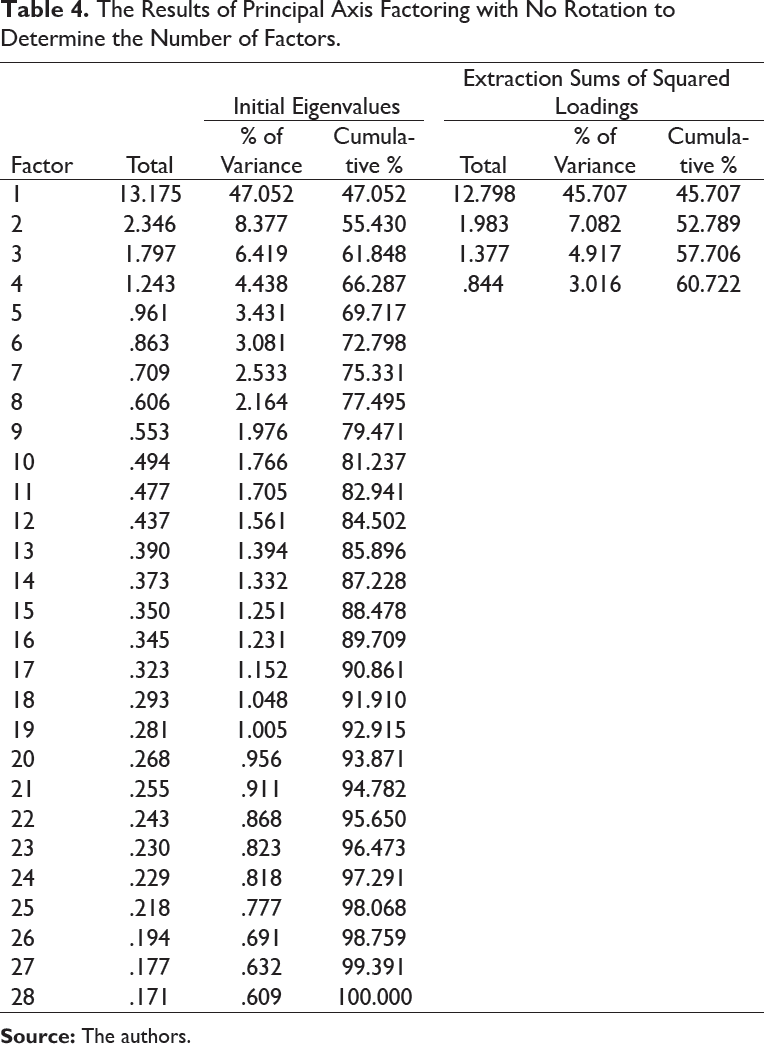
The Results of Promax Rotation.
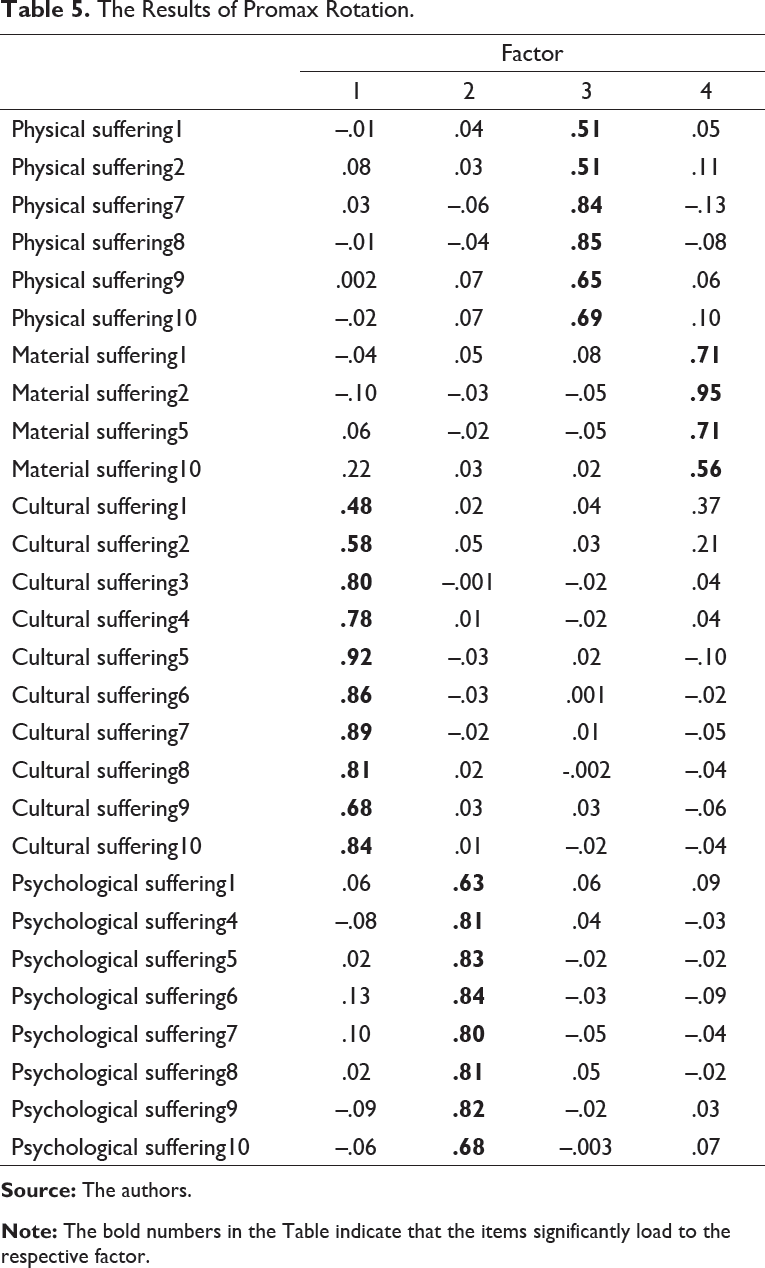
The Results of Communalities Analysis.
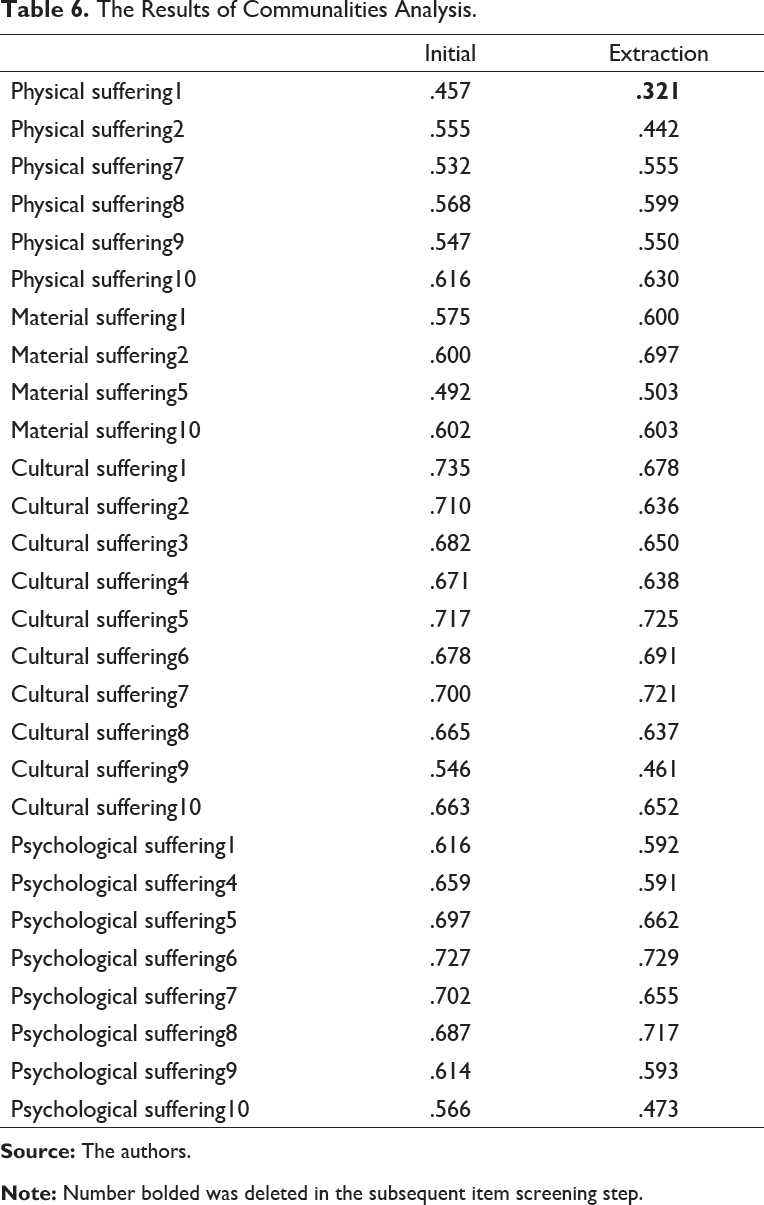
The Results of Factor Loadings and Cross-loadings for Items Within Each Aspect of Victimisation-by-ingroup Consciousness.
Existing literature (Hogg & Adelman, 2013; Hogg et al., 2010) suggests that with increasing radicalisation, group members tend to see their ingroup as an entitative group, that is, a group with rigid and closed boundaries, which has high levels of internal homogeneity and consensus. This perception makes radical group members view their ingroup as a cohesive group with less internal polarisation among themselves (Swann et al., 2012). Victimisation-by-ingroup consciousness seems to run counter to such perceived ingroup entitativity and cohesion. By acknowledging the sufferings of some Muslims stemming from intragroup violence, victimisation-by-ingroup consciousness leads to recognising Muslims consisting of two or more subgroups with heterogeneous roles (e.g., perpetrators and victims of violence). Also, victimisation-by-ingroup consciousness constitutes the perceptions of ideological intragroup polarisation, denoting contradictions between ingroup members’ different beliefs, attitudes and values pertaining to the ideal social order (Harel et al., 2020). In the context of our study, such polarisation corresponds with different visions between the Muslims who justify the use of violence for political ends and those Muslims who disagree with such a violent ideology (Esposito & Mogahed, 2013; Uz & Kemmelmeier, 2014; Uz et al., 2009). It thus makes theoretical sense to find how victimisation-by-ingroup consciousness reduces Muslims’ radical tendencies given its role in motivating Muslims to perceive intragroup violence as illegitimate.
The perceived illegitimacy of intragroup violence in this study was negatively related to Muslims’ affective (i.e., sympathy towards terrorists), attitudinal (i.e., justification of violence) and intentional (i.e., personal obligation to support terrorists) radical tendencies against the outgroup (i.e., non-Muslims). This observation supports the literature on moral disengagement and its relationship with radicalism. This literature (Bandura, 2004) suggests that outgroup blame is one primary indicator of moral disengagement that provokes ingroup members’ radical tendencies against the outgroup. In a similar vein, Borum’s Four-Stage Model of the Borum (2011) describes how outgroup blame serves as an impetus for vilifying the adversary group, which leads to justification of acts of intergroup violence. The said illegitimacy hence indicates Muslims’ lower tendencies to blame the outgroup, by acknowledging that it is the ingroup responsible for their problem, not the outgroup (i.e., non-Muslims). By decreasing this outgroup blaming, the perceived illegitimacy negatively predicted Muslims’ affective, attitudinal and intentional radical tendencies against non-Muslims in this study.
Limitations and Recommendations for Future Research
One limitation of this study is related to the validity of victimisation-by-ingroup consciousness that focused on its internal structure and dimensionality (i.e., physical, material, cultural and psychological sufferings). To overcome this shortcoming, follow-up studies can assess the degree to which victimisation-by-ingroup consciousness is distinct from, or overlaps with the related constructs such as competitive victimhood and inclusive victim consciousness. Future studies may also test to what extent victimisation-by-ingroup consciousness is similar to inclusive victim consciousness in promoting positive intergroup relations, as well as to what extent it has the opposing role compared to competitive victimhood in exacerbating negative intergroup relations.
Perceptions of illegitimacy in this study contained judgments of unfairness and, to some extent, those of immorality of intragroup violence (i.e., some Muslims’ wrongdoings against other Muslims). This assessment constitutes another limitation of our study as Tost (2011) proposed a model of (il)legitimacy judgments that does not merely cover a moral component but also includes pragmatic and relational components. In the context of our study, this pragmatic judgment may explain how Muslims view intragroup violence as illegitimate because such misdeeds hamper the material interests of the victimised Muslims. The relational judgment may explain how Muslims view intragroup violence as illegitimate because such misdeeds threaten the positive images of Muslims in general. As Tost (2011) argued that each of (il)legitimacy judgments are unique to one another, future studies may assess the three components and examine the extent to which they are distinctly predicted by victimisation-by-ingroup consciousness and distinctly predict Muslims’ radical tendencies.
Third, this study assessed victimisation-by-ingroup consciousness, in general, highlighting intragroup violence of some Muslims that cause sufferings to other Muslims. In the beginning, we discussed violent acts of Islamist terrorists as the most extreme example. However, Corruption Perceptions Index reported that from 2016 to 2019, Muslim-majority nations such as Afghanistan, Yemen, Syria and Somalia were consistently ranked in the top 10 of the most corrupt countries. Across these years, the surveys also showed that even the well-off, oil-producing nations such as the United Arab Emirates, Qatar, Jordan and Saudi Arabia as well as Oman did not fall within the top 10 least corrupt countries (‘Corruption Perceptions Index’, 2019). Moreover, the government in predominantly Muslim countries has persecuted not only non-Muslims but, even more harshly, also Muslims who dissent with the state’s version of Islam (Uddin, 2014). In Indonesia, where this study has been conducted, such act of religious intolerance is typically initiated by radical Islamic groups, who have attacked the Muslims they consider heretical (Sebastian & Arifianto, 2020). Overall, these anecdotal records suggest that the potential actors of Muslims’ intragroup violence can be multiple, not only terrorists but also the government and a certain group of Muslims. These different actors may make the nature of victimisation-by-ingroup consciousness to be more dynamic, so does its impact on the perceived illegitimacy of intragroup violence and, in turn, radical tendencies, which can be investigated in future studies.
Fourth, this research recruited Muslim students as participants. We did so because in Indonesia, radicalism among Muslim students is a matter of great concern to both, the government and the public in general (Sirry, 2020). However, future studies may employ non-student participants, to examine the extent to which empirical findings in our work can generalise to more diverse samples.
Practical Implications
The empirical findings in this study suggest the importance of victimisation-by-ingroup consciousness among Muslims. With this consciousness, Muslims are accorded open-mindedness to acknowledge that the problems they encounter in part are attributable to their own group rather than the outgroup. This ideal, however, is challenging to actualise as religion in and of itself indoctrinates that the ingroup is right and the outgroup is wrong (Van Niekerk & Verkuyten, 2018). As a result, internalisations of victimisation-by-ingroup consciousness may meet with strong resistance, especially by Muslims who blindly support their ingroup.
As for non-Muslims, our empirical findings highlight the importance for this religious group to think of Muslims as a group that consists of diverse instead of uniform subgroups. With this consciousness, non-Muslims may reduce their prejudice towards Muslims (e.g., Islamophobia), which is rampant nowadays since the 9/11 attacks (Helbling & Traunmüller, 2020). This decreased prejudice has implications for non-Muslims’ views that not all Muslims are terrorists, which would help them to differentiate between Islam and terrorism which has been found to attenuate the first group’s negative emotions and attitudes against the latter group (Von Sikorski et al., 2017).
Footnotes
Declaration of Conflicting Interests
Funding
The authors disclosed receipt of the following financial support for the research, authorship, and/or publication of this article: This research was funded by Hibah Penelitian Pemula (HPP) LPPM University of Brawijaya (Grant number 436.144/UN10.C10/PN/2020), which was awarded to the first author.