







Abstract
Discontinuous change is becoming the norm. This has consequences for how organisations are managed and led. Strategic entrepreneurship—the simultaneous practice of advantage-seeking behaviour and opportunity-seeking behaviour—has been proposed as a solution. But practice of strategic entrepreneurship confronts challenges requiring a special type of leadership for its successful implementation—entrepreneurial leadership. People who display such leadership behaviours are called entrepreneurial leaders. We know little about such individuals. We purposively studied three different types of organisations that renewed themselves under such leaders and inductively arrived at three unique mindsets—purpose-oriented, people-oriented and learning-oriented—which help us unpack one aspect of what makes a leader entrepreneurial. We contribute to the entrepreneurial leadership literature by contributing a more nuanced view to mindsets of such leaders which is an important cognitive filter. Our findings also contribute to the literature on strategic entrepreneurship by indicating how leaders with certain combination of mindsets are better at implementing renewal. We advance practice by enabling organisations better identify and develop mindsets among potential leaders who can take on entrepreneurial roles. Limitations and future research are discussed.
Keywords
Disruption and change are the new normal. This new normal is characterised by four forces—change, complexity, chaos and contradiction (Kuratko & Audretsch, 2009). Organisations desirous of thriving in such rapidly changing environments need to go beyond strategic exploitation of their present competitive advantages. This requires organisations to practise strategic entrepreneurship—the simultaneous practice of opportunity-seeking and advantage-seeking behaviours (Ireland, Hitt, Camp, & Sexton, 2001). Strategic entrepreneurship can manifest in one of five ways—strategic renewal, sustained regeneration, domain redefinition, organisational rejuvenation and business model reconstruction (Kuratko & Audretsch, 2009). Ireland, Hitt, and Sirmon (2003) highlighted that an entrepreneurial mindset is essential for the practice of strategic entrepreneurship and indicated the entrepreneurial leadership was the way for organisations to successfully engage in strategic entrepreneurship. They defined entrepreneurial leadership as ‘…the ability to influence others to manage resources strategically in order to emphasise both opportunity-seeking and advantage-seeking behaviors’ (Ireland et al., 2003, p. 971). Therefore, it is imminent that entrepreneurial leaders are the drivers of entrepreneurial leadership within organisations. They possess an entrepreneurial mindset and can drive entrepreneurial actions among those they lead.
Studies on entrepreneurial leadership focusses on the behaviours and attitudes of senior organisational executives (Gupta, MacMillan, & Surie, 2004), new venture founders (Ensley, Hmieleski, & Pearce, 2006) and what makes leaders and entrepreneurs similar or dissimilar (Vecchio, 2003). But restricting entrepreneurial leaders and entrepreneurial leadership to any type of organisation, industry or culture limits its usefulness and value. It can manifest in new or established firms, for-profit or not-for-profit organisations, formal or informal groups (Renko, Tarabishy, Carsrud, & Brännback, 2015). Entrepreneurial leaders are responsible for maintaining an entrepreneurial culture and entrepreneurial mindset among employees (Ireland et al., 2003). Since entrepreneurial leaders are so critical to the successful practice of strategic entrepreneurship within organisations, it is important to understand their mindsets—cognitive filters used to view the world—which drives their entrepreneurial behaviour and actions and those they lead.
McGrath and MacMillan (2000) view an entrepreneurial mindset as a way of thinking about business that focusses on and captures the benefits of uncertainty. Ireland et al. (2003) define entrepreneurial mindset as a growth-oriented perspective through which individuals promote flexibility, creativity, continuous innovation and renewal. While we now understand that entrepreneurial leaders have certain mindsets that they use to drive entrepreneurial behaviour among themselves and others, it remains abstract and anecdotal (Renko et al., 2015). Therefore, we believe that it is time to unpack what these mindsets are and how they drive leaders to act entrepreneurially. This leads us to our research question—what are the specific mindsets, if any, used by leaders who successfully practise strategic entrepreneurship actions?
Our findings allow us to contribute in at least two ways. First, we contribute to the literature on entrepreneurial leadership by providing at least three mindsets possessed by such leaders: people-oriented, purpose-oriented and learning-oriented. While existing literature has attempted to highlight the importance of such leaders, analysed their abilities to handle uncertainty and explored measuring their styles, we know little about the cognitive filters used by such leaders in acting entrepreneurially. We believe our unpacking of the three mindsets expands our understanding of what drives certain leaders to act entrepreneurially. Second, we contribute to the literature on strategic entrepreneurship by unpacking what is meant by entrepreneurial mindset held by such leaders. While existing literature within strategic entrepreneurship discusses the importance of entrepreneurial mindset and entrepreneurial leadership for its successful implementation, our findings add nuance to one specific aspect of the model. We find that certain combinations of mindsets among leaders are more suitable for the practice of strategic entrepreneurship. This helps expand the study of entrepreneurial mindsets within strategic entrepreneurship. Our findings have implications for the above-mentioned literature streams, future research and practice which we highlight later in the article.
The remaining article is structured as follows. We first present the theoretical background and the method. We then present the findings and situate the contributions within existing literature. We conclude by stating the limitations and highlighting potential future research topics.
Theoretical Background
Strategic Entrepreneurship and Entrepreneurial Leadership
Entrepreneurship is the act of engaging in opportunity-seeking behaviours (Shane & Venkataraman, 2000). Strategic management is the act of engaging in advantage-seeking behaviours (Rumelt, Schendel, & Teece, 1996). Both opportunity-seeking and advantage-seeking behaviours are critical for wealth creation and firm growth (Amit & Zott, 2001; Ireland & Hitt, 1999). Strategic entrepreneurship ‘involves taking entrepreneurial actions with a strategic perspective’ (Ireland et al., 2003, p. 966). Strategic entrepreneurship has been conceptualised as a model containing three key input components—entrepreneurial mindset, entrepreneurial culture and entrepreneurial leadership (Ireland et al., 2003). Entrepreneurial mindset is defined as ‘… melding the best of what older models have to tell us with the ability to rapidly sense, act and mobilise even under highly uncertain conditions’ (McGrath & MacMillan, 2000, p. xv). Entrepreneurial mindset has been visualised as both an individual and a collective phenomenon and is important for established firms to think and act entrepreneurially (Covin & Slevin, 2002; McGrath & MacMillan, 2000). In this article we use the definition of entrepreneurial mindset offered by Ireland et al. (2003, p. 968) ‘a growth-oriented perspective through which individuals promote flexibility, creativity, continuous innovation and renewal’. Entrepreneurial mindset is said to have the following components: recognising entrepreneurial opportunities, entrepreneurial alertness, real options logic, an entrepreneurial framework and an opportunity register (Ireland et al., 2003). Ireland et al. (2003, p. 979) define entrepreneurial culture as ‘is one in which new ideas and creativity are expected, risk taking is encouraged, failure is tolerated, learning is promoted, product, process and administrative innovations are championed, and continuous change is viewed as a conveyor of opportunities’. Entrepreneurial mindset and culture are important for the successful practice of strategic entrepreneurship. They are inextricably interconnected and require strong leadership for their nourishment and growth. The kind of leadership that promotes an entrepreneurial mindset and culture is called entrepreneurial leadership and comprises six essential characteristics: nourish an entrepreneurial capability, protect innovations threatening the current business model, make sense of opportunities, question the dominant logic, revisit the deceptively simple questions and link entrepreneurship and strategic management (Covin & Slevin, 2002; Ireland et al., 2003). Therefore, entrepreneurial leadership is a critical component of strategic entrepreneurship and there is a growing need to understand leaders who practise such leadership—entrepreneurial leaders.
Entrepreneurial Leaders and Their Mindsets
Entrepreneurial leaders—individuals who lead organisations to think and act entrepreneurially are thought of as rare and mystical. Yet, we know from entrepreneurship literature that thinking and acting entrepreneurially comprises a set of mindsets, intentions, behaviours and actions, rather than traits, which can be studied and learned (Cogliser & Brigham, 2004; Gartner, 1985). Building on this view there has been an interest to learn more about entrepreneurial leaders by scholars in both entrepreneurship and leadership (Kuratko, 2007; Leitch & Volery, 2017). While one stream of literature focusses on exploring the entrepreneurial behaviours and actions of leaders in large organisations (Gupta et al., 2004), another stream explains the leadership behaviours and roles of entrepreneurs, especially in small and new firms (Zaech & Baldegger, 2017). It has been acknowledged that the concept of entrepreneurial leadership is both complex and large, but there continues to be an interest in attempting to define and measure it from a variety of levels (Gupta et al., 2004; Renko et al., 2015). Although there has been an interest in studying the actions of entrepreneurial leaders, we know little about their mindsets—cognitive filters used to view the world—that drive such actions. Mindsets are beliefs that orient the way we handle situations, but remain hidden (Dweck, 2017; Klein, 2017). While Dweck (2017) suggests that individuals can have either a fixed or a growth mindset, others have indicated that multifaceted nature of mindsets (Rucker & Galinksy, 2016). Therefore, it becomes imperative that we understand the mindsets of entrepreneurial leaders, especially in the context of strategic entrepreneurship.
Methods
Considering the nascent state of the literature on entrepreneurial leadership and the limited understanding we have on the mindsets of entrepreneurial leaders we designed an inductive study by purposively identifying and studying three different types of organisations which renewed themselves under entrepreneurial leaders.
Context and Case Selection
We identified and selected three firms which successfully practised strategic entrepreneurship of various kinds: (a) Vittala International Institute of Ophthalmology (Vittala), a charitable eye hospital; (b) Telangana State Civil Supplies Department (TCSD), the department was responsible for the procurement of food grain from farmers at the minimum support price; getting the grain milled; storage of custom-milled rice (CMR); and its distribution to the low-income people in the state and (c) Symphony Limited (Symphony), a leading maker and seller of branded air coolers in India and now across the globe. These organisations provided enough variety in their characteristics: Vittala was a non-profit charitable venture; TCSD was a government department, and Symphony was a for-profit firm. All of them faced tremendous challenges in their existing forms (Vittala could not use its original model; TCSD was almost dysfunctional and Symphony filed bankruptcy) and underwent large-scale transformation, almost reinventing themselves, under leaders who would fit our earlier definitions of entrepreneurial leaders. All three organisations are today examples of various forms of strategic entrepreneurship (Vittala—business model reconstruction; TCSD—organisational rejuvenation; Symphony—strategic renewal). Although K. R. Murthy (KRM) and his sons at Vittala (all of them were ophthalmologists), C. V. Anand at TCSD (an Indian Police Service officer) and Achal Bakeri at Symphony (entrepreneur) designed and implemented the reinvention of their respective organisations in very different ways, they provided us an opportunity to look at mindsets of leaders who reinvent their organisations. While the above substantiated our reasons for selection of the cases, we provide a brief overview of the cases and the protagonists’ actions in Appendix 1.
Data Collection
Data were collected from multiple sources. This helped triangulate primary and secondary data which helped in richer understanding of the phenomenon.
Semi-structured interviews were the principal source of primary data (Eisenhardt, 1989). The first author and a researcher working with him interviewed a variety of stakeholders in every case to reduce the effect of ‘retrospective sensemaking’ (Eisenhardt & Graebner, 2007). The informants helped identify other individuals of interest. Interviewing stopped in every case when we did not gain any new insights (Strauss & Corbin, 1998). Our main objective was to build new theoretical insights and the existing literature helped to focus empirical efforts and evaluate the applicability of a priori identified constructs (Eisenhardt, 1989). The interview guide contained one general section and four specific sections tailored to each informant group. As the interviews progressed, we continuously altered the interview guide in alignment with the constant comparative method (Strauss & Corbin, 1998). When new and relevant topics emerged, we updated the interview guide to reflect the theoretical potential of these areas. We read all previous interview transcripts for each case prior to each new interview.
The interviews in general proceeded through three phases allowing enough provisions for informants to take detours (Suddaby, 2006). First, we covered the firm’s growth process from its founding until the initiation of renewal effort. For this part, we leaned heavily on our documented history of the firm (see secondary data below) and focussed on corroboration of facts and addition of richer insights. Second, we focussed on the intricate details of the reinvention process. Third, we covered the events post-renewal such as consolidation activities.
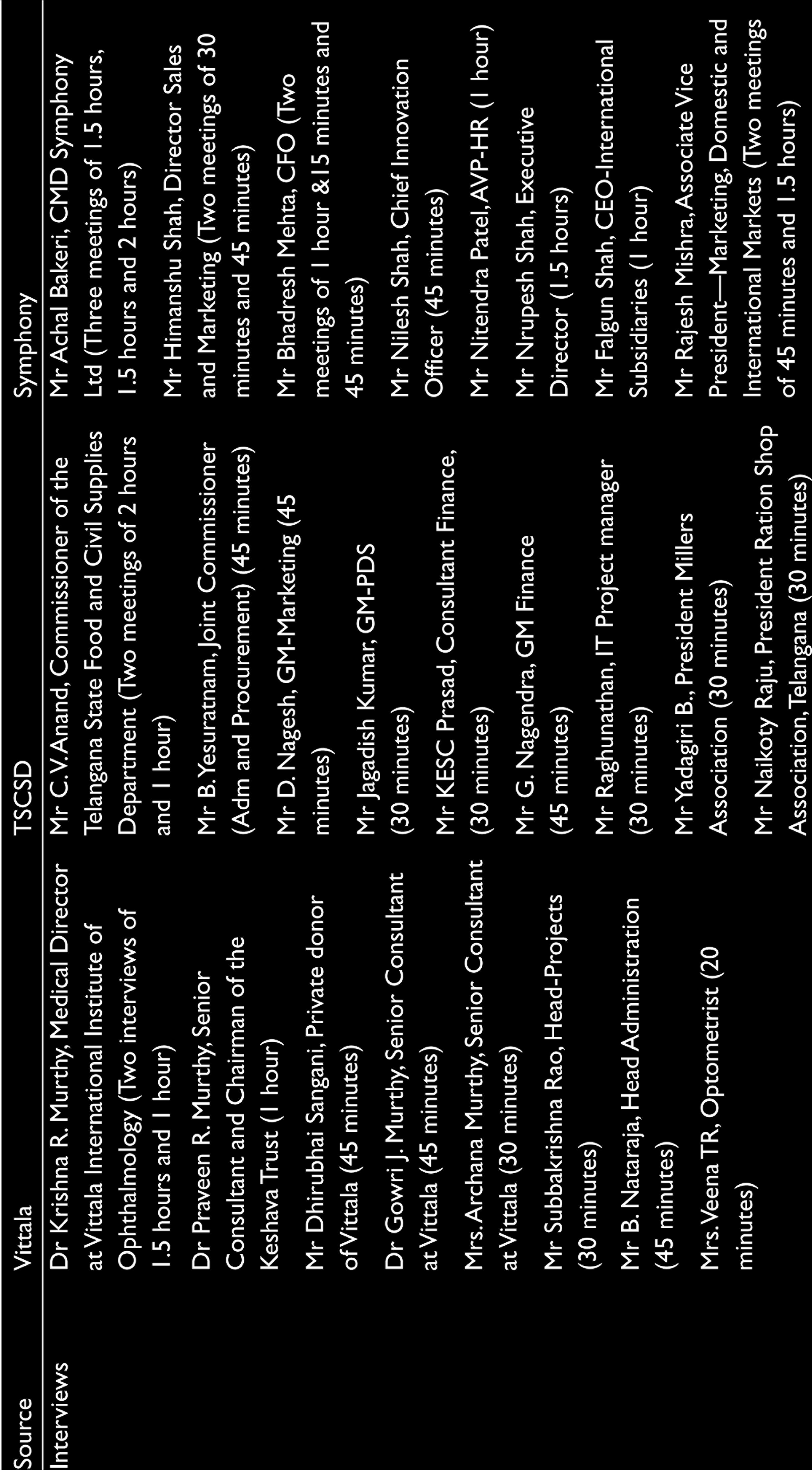
We conducted 32 semi-structured interviews between December 2016 and December 2018 covering the three cases. The number of informants per case ranged from eight and nine. The interviews lasted between 20 and 120 minutes. Taped sessions were transcribed as soon as possible after the completion of the interview. We took notes and made additional observations which were written down soon after the visit. This was done to capture our in-situ reflections.
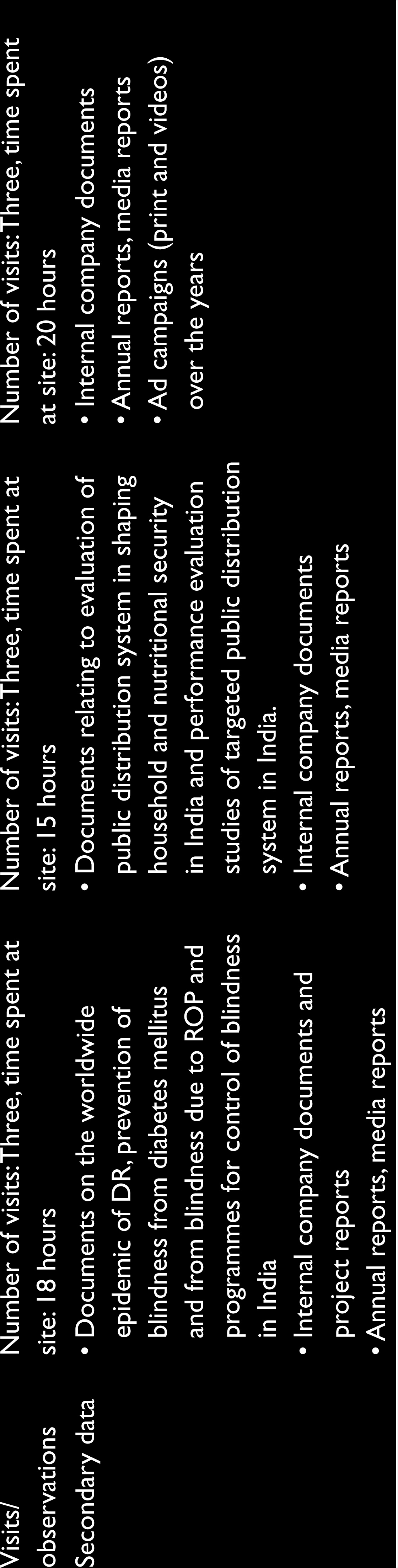
We also identified and collected a range of secondary data sources including: (a) published reports by government bodies and respected international agencies; (b) internal organisational documents; (c) annual reports and (d) media reports. During our many visits to each of our case sites, we also sat through presentations and meetings. This gave us an opportunity to gain an insight into the perspectives and practices of the case firms. Table 1 provides a summary of the various sources of data for each of our cases.
Data Sources for Cases
Data Analysis
Our analysis followed the prescriptions of Gioia, Corley, and Hamilton (2013) and has been widely used in management and entrepreneurship research (Huy, Corley, & Kraatz, 2014; Shankar & Shepherd, 2018). Although recursive, our analysis moved through three broad phases.
Identifying First-order Categories
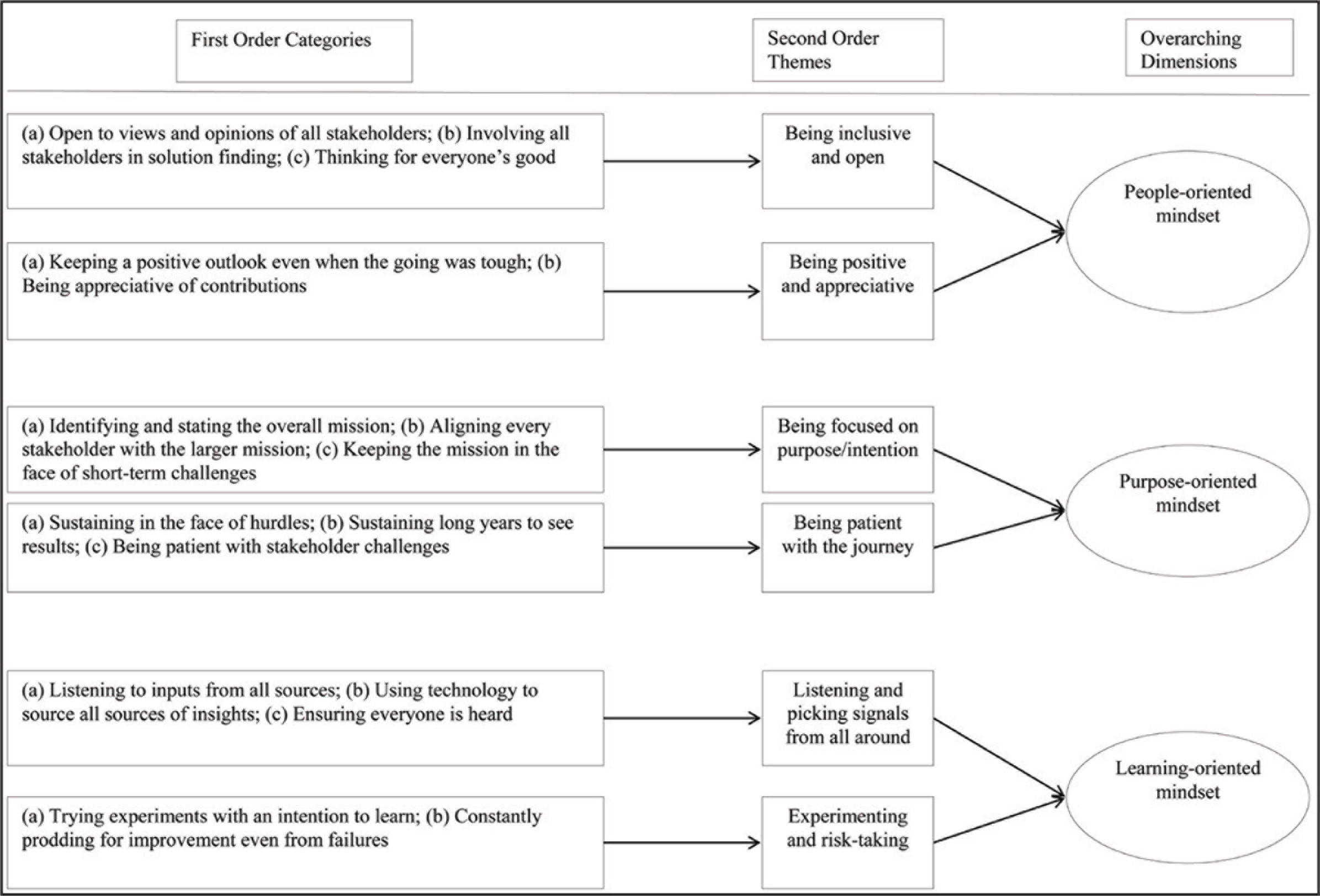
The first step involved identifying informant-centric themes from the data (Gioia et al., 2013). We used ‘open coding’ (Strauss & Corbin, 1998), assigning initial descriptive labels to themes emerging from the data. First, we imported all interview transcripts (preserving annotations and comments) to NVivo (version 10). We assigned sections of informant statements to emerging themes, known as nodes in NVivo, assisted by relevant secondary data and notes. We used constant comparisons to divide, delete, merge and alter nodes, making sure to reduce the number of nodes to a manageable number of first-order categories (Gioia et al., 2013). The process concluded when the node structure was stable, at which point 34 first-order categories were identified (see Figure 1).
Developing Second-order Themes
In the second step, we moved to more abstract coding of categories. In line with most inductive traditions we clustered first-order categories into second-order themes to segregate and relate categories (Gioia et al., 2013) which is like axial coding in grounded studies (Strauss & Corbin, 1998). Concepts emerged analytically when they provided relevant answers to our research question, while maintaining strong grounding with the empirical data (Gioia et al., 2013). We eventually grouped the first-order categories into higher order themes resulting in 14 researcher-centric themes.
Theoretical Dimensions and Data Structure
The final step involved moving the second-order themes into higher order theoretical dimensions. Using the principles of constant comparison (Strauss & Corbin, 1998), we drew boundary conditions which helped group second-order themes into overarching theoretical dimensions. Interestingly, the analysis pointed to three distinct dimensions in the reinvention process, with differing perspectives of the different actors at each stage, and underlying tensions within them.
Although the analysis is presented linearly, it was highly iterative and frequently moved back and forth between data collection and analysis. We also constantly compared the emerging theoretical concepts with the incoming interviews, secondary data and relevant existing theory. We stopped analysis upon reaching theoretical saturation and when the data structure did not change with new information. We present the data structure, an artefact of the analytical process, in Figure 1.
Findings
Three Mindsets that Make an Entrepreneurial Leader
Our analysis found that leaders who successfully implemented strategic renewal, organisational rejuvenation and business model reconstruction possessed multiple mindsets which enabled them to see their environments differently, listen to cues more sensitively and respond ably. We found at least three mindsets which enabled these leaders engage their organisations to act entrepreneurially when faced by uncertain and ambiguous situations. While Figure 1 showcases how we abstracted the three mindsets, in this section we delve into the three mindsets and their constituent parts.
People-oriented Mindset
The people-oriented mindset of entrepreneurial leaders comprised of two components: staying inclusive and open; and being positive and appreciative. Using these enabled the leaders win the support and trust of their employees and team members. This was critical to creating an entrepreneurial culture within the organisation while also triggering the entrepreneurial thinking and action of employees.
Inclusive and Open
All the three leaders in our cases displayed a strong inclination for being inclusive and open, though they practised it in very different ways. Mr Murthy in Vittala clearly acknowledged the contributions of every family member involved in making Vittala see the light of day. He constantly involved every member of the family in decision making, despite knowing that there could be conflicting inputs and delay in implementation. Mr Anand in TCSD had even greater challenges in engaging with stakeholders. In TCSD many stakeholders were external agencies, and some had legal disputes with the organisation. There existed a high level of mistrust between TCSD and its stakeholders. As expressed by number of stakeholders, especially millers and ration shop owners, Mr Anand went beyond expectations and call of duty to engage with them, acknowledge their problems and challenges, express his interest to find mutually valuable solutions and involve them in solution finding. Mr Anand’s approach of inclusivity and openness brought a feeling of belongingness among stakeholders. In the case of Symphony, this went beyond national borders. Symphony had bought a sick Mexican unit which was riddled with large internal and external problems, apart from facing existential challenges. Mr Bakeri went against popular wisdom and asked his senior managers to only act as catalysts and facilitators and support the existing management in driving the change to resurrect themselves. His belief in the existing team at the Mexican unit, his openness to listen to their views, at times bitter towards symphony, and insisting on engaging them in solution identification and implementation, increased the confidence among previously disgruntled employees. In all three cases, the leaders’ ability to stay open and inclusive enabled them to receive the support of their people, even external stakeholders, and this influenced their choice of entrepreneurial actions.
Positive and Appreciative
Staying positive was characteristic of all our three protagonists. Mr Murthy went through enormous difficulties in raising money for Vittala, gaining the confidence of the local ophthalmologists (LOs) and even support of his beneficiaries. Mr Anand in TCSD faced enormous challenges in working against the bureaucratic inertia, gaining trust from embattled stakeholders and generating vigour within the public organisational machinery. Mr Bakeri owned up his past mistakes that had led to bankruptcy, worked out of it and enabled couple of other sick enterprises beyond national borders acquired by Symphony to rise out of their sickness. Through all the challenges we find that the leaders stayed positive in their outlook and this energised their followers to not lose hope. For example, when his team could have turned sour and demotivated with the poor turnout of beneficiaries for their free eye camp drives, Mr Murthy asked them to analyse why their beneficiaries did not turn up for free treatments offered. He indicated to his team that it is important to appreciate that people had reasons for their actions, and it was Vittala’s responsibility to unearth them. He stayed positive, joined them and enabled the organisation to eventually rework its approach to offering subsidised eyecare to the marginalised population. Mr Bakeri did not get upset that the members of the Mexican unit were hostile and defiant at being bought by a relatively unknown Indian company which was itself recently caught up in bankruptcy struggle. Instead, he appreciated their reasons for having such a view and was empathetic to their arguments. This helped him not only gain their trust and cooperation, but also retain his focus on his plan to turn around the unit and integrate it into the Symphony ecosystem.
Purpose-oriented Mindset
While people-orientation can give an impression that the entrepreneurial leaders were open, inclusive, positive and appreciative, they were equally purpose-oriented. All three entrepreneurial leaders displayed an interesting balance between people-orientation and purpose-orientation which enabled them to not only be patient but also catalyse action. This ability to stay patient for the long haul was catalysed by their strong focus on the purpose. Staying focussed on purpose/intention and being patient with the journey make up the two components of a purpose-oriented mindset.
Focussed on Purpose/Intention
Mr Murthy realised early that reaching the masses with their diabetic retinopathy (DR) treatment was critical to the success of Vittala’s ‘Nayana’ project. To enable this happen he required the commitment of LOs. He acknowledged their inherent trade-offs when it came to spending time with Vittala and went beyond all economic logic to offer attractive pricing and sharing arrangements to the LOs and ensured they remained wedded to the project’s success. Mr Anand in TCSD knew that millers and ration shop owners were not going to be happy talking to him due to their prior experiences and legal challenges. Despite that he broke all traditions to engage with them and insisted that he was not just doing a job but wanted a solution for all of them inclusively so that the organisation could achieve its mission of serving the two vulnerable sections of the society—marginal farmers on one side and people with low income on the other. His commitment to the cause brought support from even the most difficult of collaborators. All three leaders faced trade-offs and their strong focus on the purpose/intention led them take strong decisions and lean into uncertain situations with ease.
Patience with the Journey
The other aspect that enabled entrepreneurial leaders stay purposeoriented was their extraordinary levels of patience with their journeys. They realised and acknowledged early that their journeys were not easy or short. They believed in their causes so much that they were willing to be patient at times even over long periods of time. Mr Murthy faced over 40 rejections for the Vittala’s Nayana project and even criticism over his project’s infeasibility. Mr Anand realised that he was up against bureaucracy, traditions, vested interests, and corrupted interfaces and that it was not going to be easy to bring transparency to any of TCSD’s operations without the support of all involved. He worked hard with each of the stakeholders and it took many months before he could showcase the larger benefits. Mr Bakeri took almost 7 years after filing bankruptcy to turn around and become profitable again. In all the three cases, their purpose-orientation was not just belief in their causes, but their extraordinary levels of patience with the journey that enabled them to succeed in implementing a large-scale fundamental change.
Learning-oriented Mindset
The learning-oriented mindset of entrepreneurial leaders comprised of two components: listening and picking signals from all around; and experimenting and risk-taking. Listening and staying alert to signals is characteristic of anyone entrepreneurial. It enables identifying opportunities. The experimental nature of their actions and the calculated risk-taking demonstrated and motivated employees to engage in similar actions too.
Listening and Picking Signals from All Around
All the three leaders ensured there were enough communication channels created for smooth exchange of information. They also remained accessible to all interested in their projects/enterprise. This was reflected in several interactions with stakeholders. The leaders were keen on listening to all, taking cues from their inputs and acknowledging their contributions. This made even the front-line employees and external stakeholders connect and share insights on how to respond to challenges and opportunities alike. Mr Murthy was an active listener and engaged in direct conversations with everyone involved in Vittala. This enabled him to see and pick signals of potential challenges and opportunities early. Mr Anand pioneered the use of technology in a public enterprise, especially across organisational levels and boundaries, which was unheard and thought untenable. His quick responses to the inputs received and acknowledgement of all contributions made people own the change as theirs. In Symphony too, Mr Bakeri was open and sought inputs from all involved. He was open to ideas and feedback even from inexperienced people at much lower levels. He was constantly seeking inputs to take forward the projects and his curiosity made him seek insights from the most surprising of places.
Experimenting and Risk-taking
Vittala’s case is filled from the beginning with numerous instances of experimentation and risk-taking. Mr Murthy’s idea of taking the equipment in a vehicle to rural parts of India was met with scepticism with more than 40 funding agencies rejecting the proposal. But his persistence in experimenting with it, working along with the equipment manufacturer and making it happen is an example of the leader practising both experimentation and risk-taking. Mr Murthy’s insistence on exploring workable models of engagement with LOs is another example of both experimentation and risk-taking. He expected it out of his team too. Mr Anand in TCSD attempted to change the way one public sector department functioned. It was clearly high risk and his approach to dealing with the various parts of the bureaucracy highly experimental. He had his fair share of challenges but his persistence in keeping up with the experimentation ultimately bore fruit. Mr Bakeri in Symphony took on a huge challenge to revive an ailing organisation and experimented with numerous changes in the business model, strategy and distribution. His experiment to use this specialised knowledge of turning around organisations in acquiring foreign units demonstrated both his risk-taking and insights that he had acquired from his numerous experiments. Overall we saw that all three leaders maintained a positive orientation towards experimentation and risk-taking for themselves and their organisations.
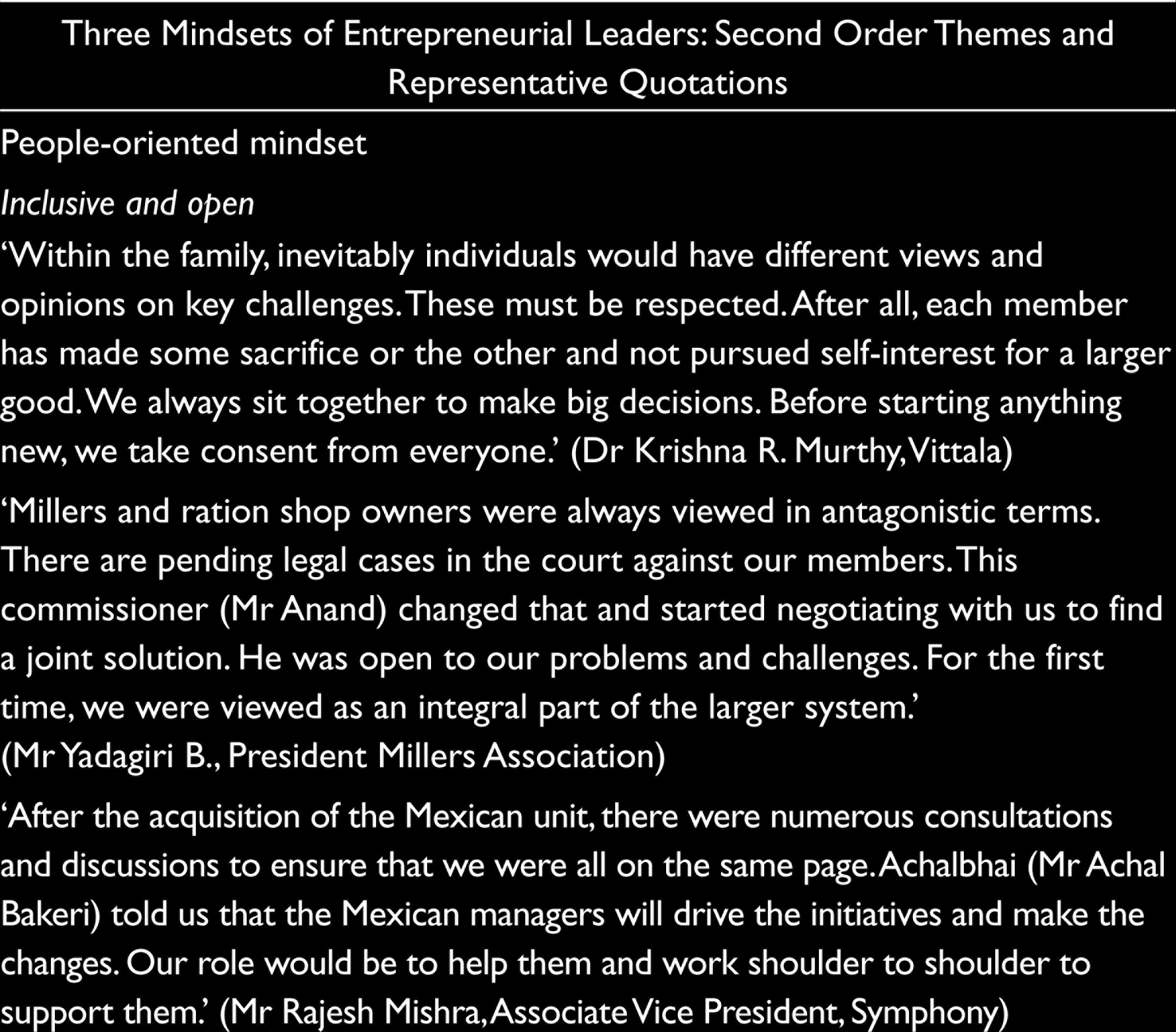
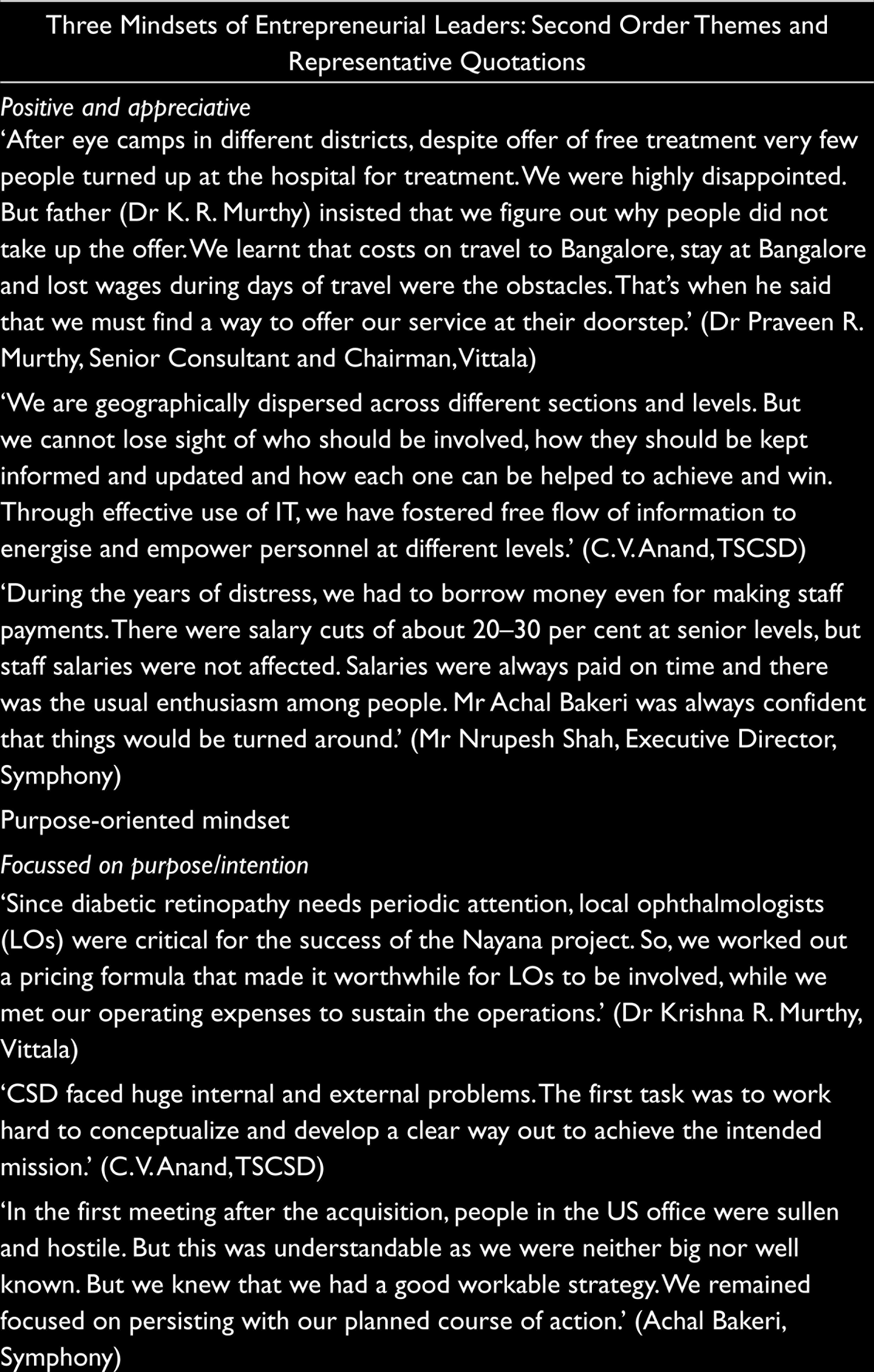
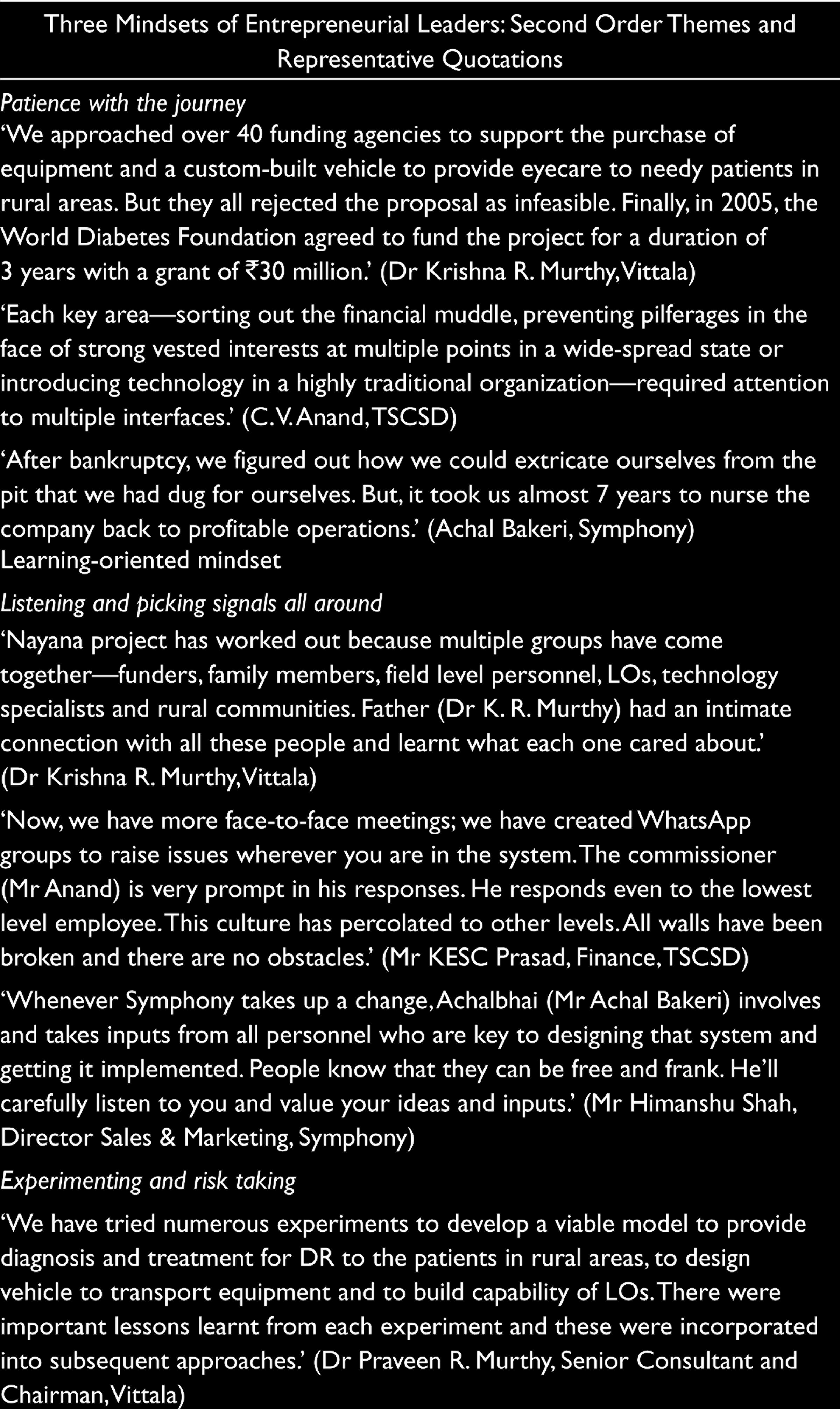
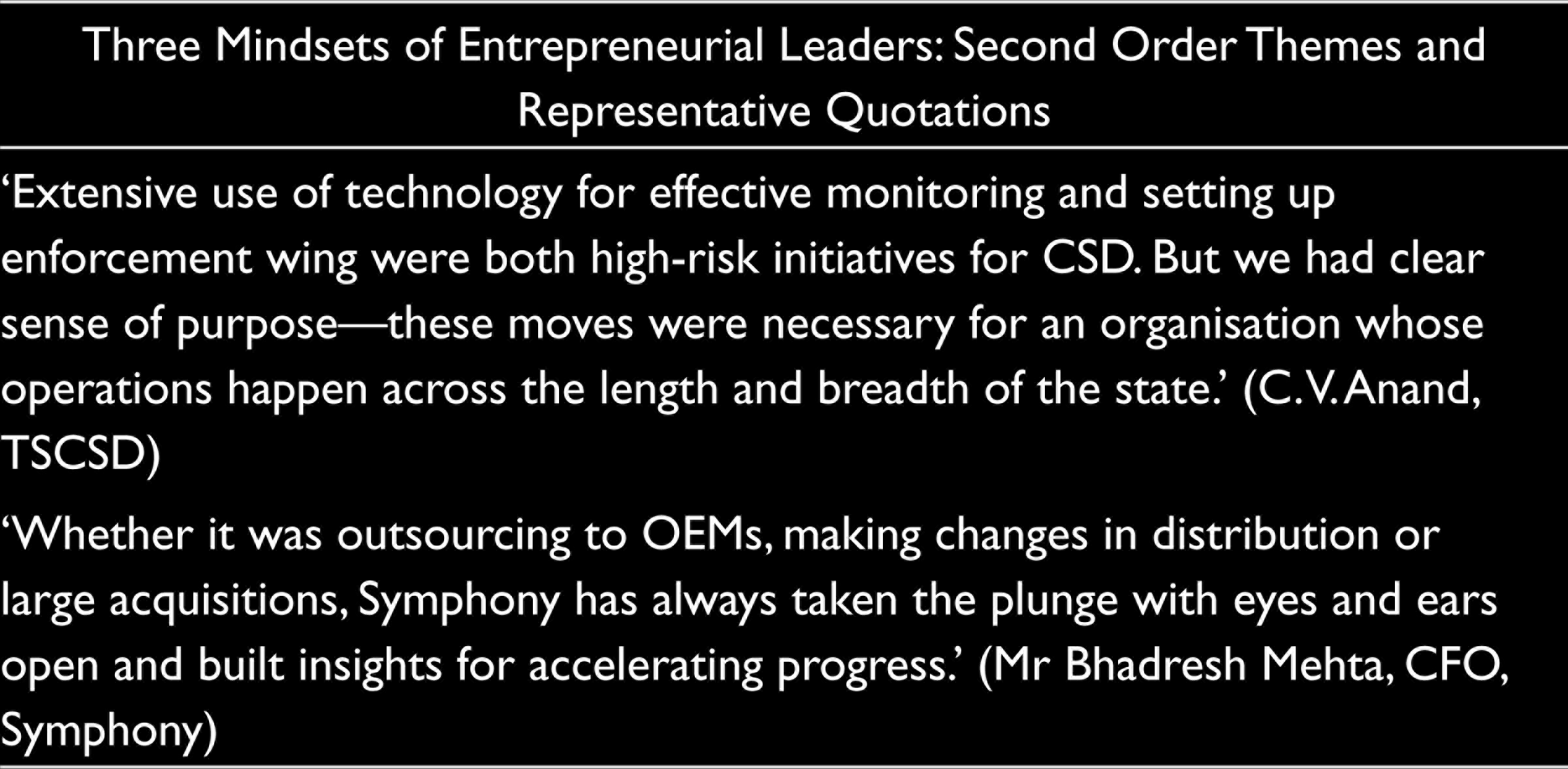
The above analysis led us to find that the entrepreneurial leaders practised all three mindsets in parallel. Balancing these also was probably a craft they learned and practised. Table 2 provides a few representative quotes to highlight each of the mindsets and their components.
Three Mindsets—Representative Quotations
Discussion
We confirm that successful practice of strategic entrepreneurship requires strong entrepreneurial leaders driving them (Ireland et al., 2003). We discovered that such leaders hold at least three mindsets—people-oriented, purpose-oriented and learning-oriented—which makes their large-scale change interventions successful. These findings have implications for theory and practice of strategic entrepreneurship. We specifically highlight our contributions to entrepreneurial leadership and strategic entrepreneurship literatures. Our findings enable us provide suggestions for practice and several future research opportunities.
Contribution to Entrepreneurial Leadership Literature
Entrepreneurial leadership sits at the cusp of entrepreneurship and leadership with potential benefits from cross-pollination (Antonakis & Autio, 2006; Leitch & Volery, 2017). Organisations need entrepreneurial leaders for their survival and growth (Gupta et al., 2004). The world is amid an entrepreneurial revolution which requires more widespread practice of entrepreneurial leadership (Kuratko, 2007). Existing literature has attempted to highlight the processual nature of entrepreneurial leadership (Leitch, McMullan, & Harrison, 2009), analysed the competencies/behaviours of entrepreneurial leaders (Lichtenstein & Plowman, 2009; Swiercz & Lydon, 2002) and explored measuring their styles (Renko et al., 2015). Yet, we know little about the cognitive filters used by such leaders in acting entrepreneurially. We believe our unpacking of the three mindsets expands our understanding of what drives certain leaders to act entrepreneurially. This lays the foundation for exploring what makes entrepreneurial leaders display certain behaviours and undertake specific actions. This provides a trigger to explore entrepreneurial leadership literature in new ways.
Contribution to Strategic Entrepreneurship Literature
We contribute to the literature on strategic entrepreneurship by advancing our understanding of a key factor—entrepreneurial leadership (Ireland et al., 2003). Entrepreneurial leadership is referred to as the ability to influence others to manage resources strategically to display both opportunity-seeking and advantage-seeking behaviours (Ireland & Hitt, 1999). Six imperatives are said to characterise entrepreneurial leadership: nourish an entrepreneurial capability, protect innovations threatening the current business model, make sense of opportunities, question the dominant logic and revisit the deceptively simple questions (Covin & Slevin, 2002). We find that a combination of mindsets (the three mindsets) among leaders is more suitable for the successful practice of strategic entrepreneurship. Our findings add nuance to the study of strategic entrepreneurship by indicating that entrepreneurial mindset and entrepreneurial leadership need to be explored separately and remain conceptually distinct (Leitch & Volery, 2017). Leaders interested in practising entrepreneurial leadership may need to develop and hold multiple mindsets in parallel for successfully implementing strategic entrepreneurship initiatives. This provides an opportunity to unpack the model of strategic entrepreneurship (Ireland et al., 2003) further which we highlight in the future research section.
Implications for Practice
Disruption is becoming the norm. Leaders within incumbent organisations realise that staying entrepreneurial is a way of handling disruptions. Yet, practising organisational innovation and staying entrepreneurial is a journey filled with challenges (Kuratko, Covin, & Garrett, 2009). The three mindsets of entrepreneurial leaders provide a small, yet significant step in realising this goal. Entrepreneurial leaders will find that, being people-oriented, purpose-oriented and learning-oriented, can help them face uncertainty and ambiguity, with greater tenacity and support of their teams. These mindsets can be consciously developed (Dweck, 2017). It is important to acknowledge that these mindsets are not naturally aligned to each other. At many times, as evidenced in the cases, they can lead to situations requiring difficult trade-offs. Organisations must take this into cognisance while designing their training and development initiatives for senior leaders. Developing such mindsets among senior leaders will result in the creation of a larger pool of entrepreneurial leaders and build organisational capability to handle disruptions better.
Limitations and Future Research
We have built our article based on purposively selected cases of three firms that successfully implemented strategic entrepreneurship. All three firms were based in India. The methods we used to collect data were predominantly interviews. To ensure validity we adhered to the prescribed tenets of good qualitative research (Tracy, 2010). Although we ensured the firms selected were from different parts of India, from different sectors and implemented different strategic entrepreneurship actions, we see that it can limit the generalisability of the findings. India is still a largely factor-driven country which is experiencing an entrepreneurship wave (Bosma & Levie, 2019). The contextual elements may also limit the transferability of our findings. Despite the limitations, our findings add insight to our understanding of entrepreneurial leadership and strategic entrepreneurship and provide several opportunities for future research of which we particularly highlight three below.
First, we see many opportunities for advancing our understanding of entrepreneurial leaders and their actions through the lens of mindsets. Mindsets are akin to worldviews and influence how leaders see the world, receive inputs, interpret information, decide and engage in action (Dweck, 2017). In our study we uncovered at least three mindsets possessed by leaders engaging in certain specific strategic entrepreneurship actions. But we see this as the start and urge future researchers to explore if there are other mindsets and other combinations of mindsets that are more effective in entrepreneurial settings. Many times, mindsets can also lead to paradoxes and tensions which can complicate the creation of an entrepreneurial mindset among team members and an entrepreneurial culture within organisations (Volery, Müller, & von Siemens, 2015). While there are many research questions that arise due to these, here we present a representative set: Do certain mindsets or their combinations more useful in attracting/developing/retaining entrepreneurial employees? Are certain mindset combinations better than others in creating an entrepreneurial culture? How do entrepreneurial leaders balance multiple mindsets when navigating uncertain situations?
Second, we suggest future research to focus on all five forms of strategic entrepreneurship. In our study we explored three forms of strategic entrepreneurship (strategic renewal, organisational rejuvenation and business model reconstruction) in different sectors (for-profit, not-for-profit and public sector). Future research must explore other successful implementations of forms of strategic entrepreneurship and use them to study the mindsets and actions of entrepreneurial leaders. This can unpack the entrepreneurial leadership component within the strategic entrepreneurship framework (Ireland et al., 2003) while also adding to the distinctive, yet growing literature on entrepreneurial leadership (Leitch & Volery, 2017). Some specific research questions include: Are certain combinations of mindsets more effective for the successful implementation of certain strategic entrepreneurship actions? Do these combinations of mindsets hold across sectors (e.g., public sector, for-profit) or do we see contextual influences? Do certain mindsets or combinations obstruct the implementation of strategic entrepreneurship?
Third and finally, we see that the entrepreneurial setting provides an opportunity to inform the mindset literature by bringing a specific boundary condition—uncertain and ambiguous situations. Holding multiple mindsets and switching between them can be stressful (Hamilton, Vohs, Sellier, & Meyvis, 2011). We believe studying leaders in entrepreneurial settings provides an opportunity to inform the larger discussion on mindsets as a multilevel and hierarchical concept (Klein, 2017). We also see the opportunity to explore how mindset influences actions of leaders in entrepreneurial settings (McMullen & Shepherd, 2006). Future research can explore how mindsets of leaders in uncertain and ambiguous settings inspire others to act entrepreneurially. A few specific questions include: Do entrepreneurial leaders holding multiple mindsets experience greater stress than leaders in other situations? Are certain mindsets more useful in facing uncertain and ambiguous situations? How can individuals learn and develop to hold multiple mindsets and the trade-offs in using them?
Conclusion
Entrepreneurial leadership is a necessary condition for the practice of strategic entrepreneurship within organisations. But the practice of entrepreneurial leadership appears mystical and finding entrepreneurial leaders serendipitous within organisations. While behaviours and styles of entrepreneurial leaders have received attention, we know little about their mindsets—cognitive filters used to act—that influence their actions and decisions. Our study found that entrepreneurial leaders develop and practise three mindsets in parallel—people-oriented, purpose-oriented and learning-oriented—which makes them more comfortable at handling uncertainty and ambiguity. The mindsets also appear to play an important role in the successful implementation of strategic entrepreneurship. Identifying and developing such leaders is critical for the survival, sustenance and vigour of organisations.
Footnotes
Appendix 1. Outline of the Three Cases
Declaration of Conflicting Interests
The authors declared no potential conflicts of interest with respect to the research, authorship and/or publication of this article.
Funding
The authors received no financial support for the research, authorship and/or publication of this article.