






Abstract
A growing interest has recently been directed to the ways by which organisations and leaders can drive individual intrapreneurship (intra-organisational entrepreneurship). However, this research has been slow to accumulate, particularly regarding how leaders motivate employees to engage in intrapreneurial behaviours. It adopts a relational leadership theory to guide and integrate research on inclusiveness, regulatory focus and work engagement to develop and test a mechanisms model that explains why inclusive leadership facilitates intrapreneurial behaviours. Structural equation modeling and meta-analysis results of multiple studies across settings in two countries indicate that psychological availability, openness to experience and promotion gains are key mechanisms whereby inclusive leadership influences intrapreneurship. In addition, psychological availability was positively related to gains, whereas other sub-dimensions of regulatory focus theory did not show a similar pattern. Our findings also indicate a positive interactive influence of openness to experience and promotion gains on intrapreneurship. This study advances the literatures of leadership and intrapreneurship by revealing the mechanisms whereby inclusive leadership facilitates employee intrapreneurial behaviours.
Keywords
Research on entrepreneurship, ‘a process by which individuals pursue opportunities’ (future situations which are ‘deemed desirable and feasible’; Stevenson & Jarillo, 1990, p. 23) and seize them, has tended to focus on individuals leaving their organisations to form their own ventures. However, scholars have recently witnessed a growing interest in the management of talents in ways that allow members to realise their potential and thereby contribute to the organisation (Cappelli, 2008; Collings & Mellahi, 2009; Kacperczyk, 2012). Members’ potential can take many forms, and one manifestation is their entrepreneurial behaviours within the organisation, namely, intrapreneurial behaviours or intrapreneurship (Blanka, 2019; Gawke et al., 2017; Hisrich, 1990; Parker, 2011). A focus on intrapreneurship is important because organisational growth and development often derives from venture initiatives that members come up with and promote within the organisation (Rigtering & Weitzel, 2013). While intrapreneurship captures specific proactive behaviours 1 at the individual level, which may even emerge without the instruction or consent of the organisation (Pinchot, 1985), organisations and leaders may be instrumental and devote substantial effort to create conditions that facilitate such behaviours.
Leaders play a key role in developing work conditions and motivating employees to initiate new ventures with an organisation. Such intrapreneurial endeavours often involve high risks as they might entail creative ideas that ‘defy’ existing work organisation and processes and might need to be advanced by the intrapreneur without ex ante consent of higher authority (Vesper, 1984). A key question concerns how leaders can develop work conditions that motivate employees to engage in intrapreneurship, but this issue has thus far understudied in the literature (e.g., Moriano et al., 2014). This study advances the relational leadership theory (Fletcher, 2004, 2007) and more specifically an inclusive leadership perspective (Carmeli et al., 2010; Gu et al., 2018; Hammann, 2006; Hirak et al., 2012; Nembhard & Edmondson, 2006; Randel et al., 2016) to study the conditions that leaders can create for employee intrapreneurship to flourish. Inclusiveness is a key mechanism by which organisations can harness the power of the diversity and unlock the entrepreneurial potential of all members, including those in the peripheral space where the most promising venture ideas can emerge (Shore et al., 2011). Entrepreneurs in organisations are talents who need conditions that will enable them to realise their potential. They may find themselves in a unique space because of their endeavour to pursue ventures that may defy existing processes, and the inclusion is a key process (Adams et al., 2020). In these settings, organisations provide support for intrapreneurial behaviours (Itzkovich & Klein, 2017), and the leaders help employees to satisfy their needs and harness their entrepreneurial potential.
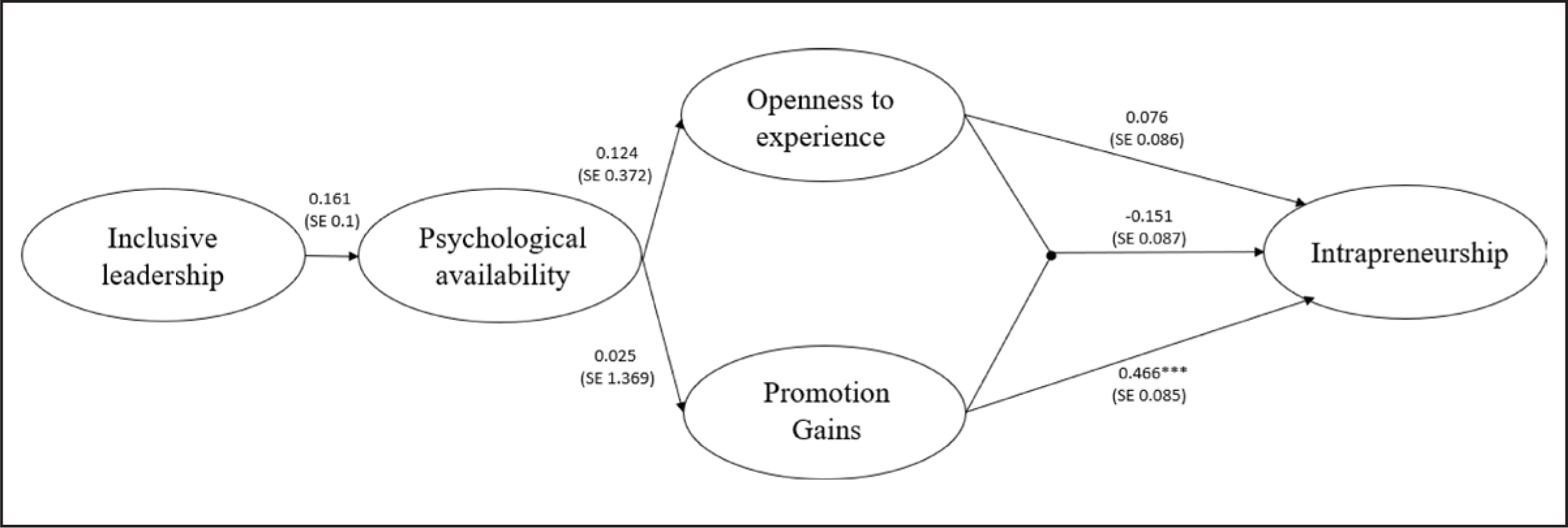
By expanding on relational leadership theory (Fletcher, 2004, 2007) and, more specifically, drawing from research on inclusive leadership (Carmeli et al., 2010; Gu et al., 2018; Hammann, 2006; Hirak et al., 2012; Nembhard & Edmondson, 2006; Randel et al., 2016, 2018), this work endeavours to enrich our understanding about the socio-psychological conditions that inclusive leadership cultivates for employees to engage in intrapreneurship. Specifically, this study integrates work engagement theory (Kahn, 1990, 1992) and regulatory focus theory (RFT) to explain why inclusive leadership is vital for shaping socio-psychological (Higgins, 1997) conditions and motivating individuals to exhibit intrapreneurship. Finally, this work seeks to explain why these motivational forces interact with one’s personality of openness to experiences in driving his/her intrapreneurial behaviours (see Figure 1).
Theoretical Background and Hypotheses
Inclusive Leadership and Intrapreneurship
Inclusive leadership is one form of relational leadership, a theoretical lens that specifies reciprocal processes of influence and development in which leaders and followers affect each other and enable mutual growth and development (Carmeli et al., 2010; Fletcher, 2004, 2007; Stephens & Carmeli, 2017; Uhl-Bien, 2006). It also acknowledges the importance of context in the study of these relational dynamics (Osborn et al., 2002) that provides emotional, cognitive and physical resources conducive for one’s flourishing. For example, research indicates that inclusive leadership may help enhancing individual well-being (Choi et al., 2017), psychological safety (Carmeli et al., 2010), work engagement (Cenkci et al., 2020), creativity (Choi et al., 2015), innovation (Mansoor et al., 2021) and change-oriented behaviour (Zeng et al., 2020).
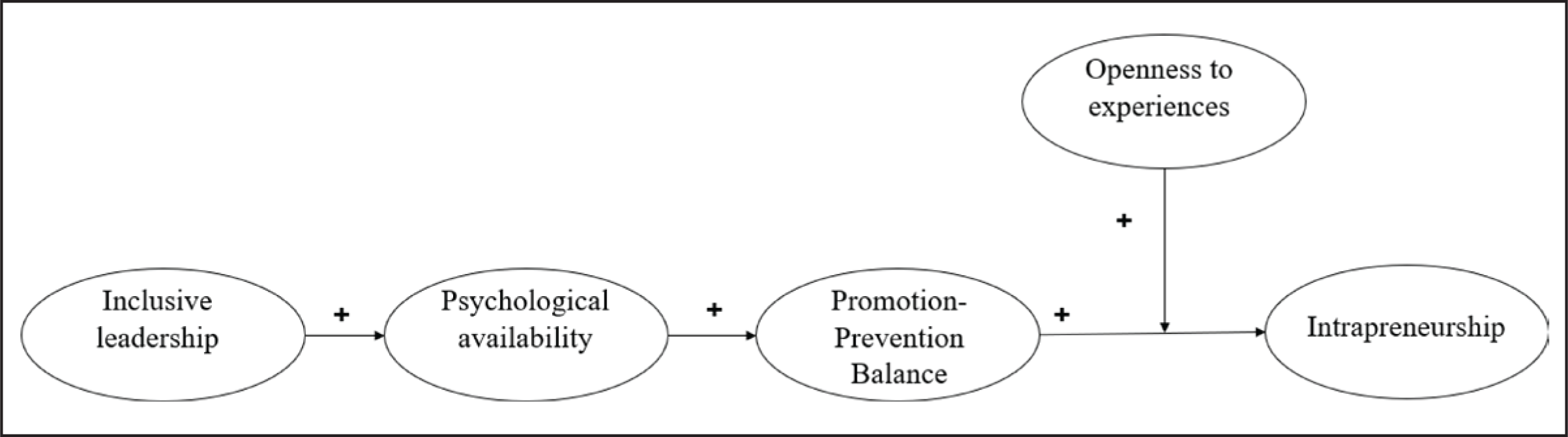
Unlike other traditional forms of leadership, inclusive leadership cultivates a sense of belongingness and acknowledges the value of uniqueness (Randel et al., 2018). However, this research conceptualises inclusive leadership as relational in nature as it captures behaviours that invite inputs from others, thus helping shape team members’ belief that ‘their voices are genuinely valued’ (Nembhard & Edmondson, 2006, p. 948). By manifesting relationships that can accomplish things for mutual benefit in the spirit of ‘doing things with people, rather than to people’ (Hollander, 2009, p. 3). Inclusive leaders promote open and safe interpersonal dynamics (Carmeli et al., 2010) that include all members of the organisation, particularly those in the peripheral space (Shore et al., 2011); they elicit support in the followers by making themselves accessible and available to them, maintaining open communication channels, listening and paying attention to their needs (Carmeli et al., 2010; Fleishman & Cleveland, 2009; Nembhard & Edmondson, 2006) and reduce possible perceived status differences that may spur collaboration across professional boundaries (Mitchell et al., 2015).
This study suggests that inclusive leadership is key to facilitating and driving employees’ intrapreneurial behaviours for several reasons. Inclusive leaders invite followers to participate and engage (Carmeli et al., 2010; Cenkci et al., 2020; Choi et al., 2015; Hirak et al., 2012; Hisrich, 1990; Nembhard & Edmondson, 2006; Randel et al., 2018; Shore et al., 2011). They also challenge, motivate and support employees to make a greater contribution to their organisation (Hollander, 2009) and engage in activities that go beyond their formal job requirements (Detert & Edmondson, 2011) and engage in creative and innovative effort (Carmeli et al., 2010; Mansoor et al., 2021).
The Mediating Role of Psychological Conditions and Regulatory Focus Behaviours
Our theorising suggests that inclusive leaders facilitate employee intrapreneurial behaviours by cultivating socio-psychological and motivational conditions conducive to such proactive behaviours to flourish (Stam et al., 2012). Specifically, this work theorises that inclusive leadership instills a sense of psychological availability which, in turn, engenders personal motivation to take the risk of initiating new ventures with an organisation.
Inclusive Leadership and Psychological Availability
Psychological availability, defined as a ‘sense of having the physical, emotional, or psychological resources to personally engage at a particular moment’, is a key socio-psychological condition for one’s engagement at work (Kahn, 1990, p. 714). This is because when people feel psychologically available, they have a clear mind and thus have the resources to fully engage in their role performance (Kahn, 1990, 1992, 2001; see also Rich et al., 2010; Vinarski-Peretz & Carmeli, 2011). Individuals, who develop a sense of psychological availability, are more open to the variety of experiences (Stephens & Carmeli, 2017) and come up with creative ideas (Binyamin & Carmeli, 2010).
This research suggests that by exhibiting inclusive behaviours, leaders create a work environment in which employees are more likely to feel psychologically available, freely express themselves (Stephens & Carmeli, 2017) and tend to reciprocate by investing themselves more fully in their work role (Choi et al., 2015). Specifically, by making themselves available and accessible and inviting followers to participate and contribute their inputs, inclusive leaders create a ‘holding environment’, a space where ‘people demonstrate care and concern for others in particularly skillful ways’ (Kahn, 2001, p. 265). In such environment, employees develop a sense of psychological availability that spurs them to engage; they feel appreciated and valued, experience low levels of distraction and develop a clearer mindset that enables them to channel efforts and energies to engage in a particular work task (Carmeli et al., 2010). Thus,
Inclusive Leadership, Psychological Availability, and Regulatory Focus Behaviours
Intrapreneurial behaviours require high levels of work engagement for which psychological availability is a key motivational force (Khan, 1990). Though, entrepreneurial behaviours depend primarily on one’s personal motivations (McClelland, 1961), leaders can either foster or stifle followers’ motivation to engage (Bass, 1997). This study expands on RFT (Higgins, 1997) to explain the ways leaders augment employee motivation to engage in entrepreneurial behaviours within organisations. A growing body of research alludes to the link between RFT and entrepreneurship (Brockner et al., 2004; Johnson et al., 2015; Neubert et al., 2008), but our study provides a first attempt to explain why and how inclusive leadership affects employees’ regulatory focus and shapes their motivation to engage in intrapreneurial behaviours.
RFT focuses on the process of self-regulation in which people seek to align themselves, their behaviours and self-conceptions, with their appropriate goals and standards (Brockner et al., 2004; Higgins, 1997). RFT states that human survival depends on two basic needs: security and growth, each with its own regulatory system. One regulatory system is security-related and calls for prevention focus, which deals with the result of intense obligations and security needs and adjusts behaviours to avoid punishment (focusing on the negative and evaluating potential outcomes through ‘loss/non-loss’ lenses). The other regulatory system is nurturance-related and calls for a promotion focus, which promotes the positive adjustment of activities (focusing on the positive, pursuing the ‘ideal’ self and fulfilling aspirations and growth needs through ‘gains/non-gains’ lenses; Wenlong & Maolin, 2017).
Higgins (1997, 1998) states that regulatory foci are both chronic (a personality trait) and situational (a temporary motivational orientation state). Situations that emphasise the need for growth, the realization of the ideal and potential benefits tend to trigger promotion focus, while situations that emphasize the need for safety, performance obligations and potential losses tend to trigger prevention focus (Brockner & Higgins, 2001; Higgins, 1997, 1998). This suggests that situational triggers can induce one focus over another (Crowe & Higgins, 1997). Leaders have the capacity to shape an organisational context which influences employees’ psychological experiences which are conducive for adopting prevention/promotion focus (Neubert et al., 2008). However, both promotion and prevention foci may drive entrepreneurial behaviours (Brockner et al., 2004).
This work theorises that by displaying inclusive behaviours, leaders instill a sense of psychological availability in their followers, and those psychological available individuals are likely to develop higher levels of work motivation. A sense of psychological availability allows individuals to be less distracted and more likely to be fully engaged in exploratory behaviours (Binyamin & Carmeli, 2010; Kahn, 1998). A sense of psychological availability can also allow individuals to commit themselves to engage in particular tasks and to be open to the variety of experiences associated with it (Stephens & Carmeli, 2017). Our theories suggests that inclusive leaders make themselves accessible to their followers, making the followers feel more emotionally, cognitively and behaviourally resourceful and psychologically available to engage, thus propelling a promotion focus behaviour. Thus,
Regulatory Focus and Intrapreneurship
Over the past two decades, regulatory focus has gained prominence as a theory of self-regulatory motivation (Johnson et al., 2015). Self-regulation is ‘a process in which people strive to bring themselves into alignment with their intentions, standards and goals’ (Brockner et al., 2004, p. 205), a theory that can explain when and why employees exhibit entrepreneurial behaviours (Brockner et al., 2004; Higgins, 1998; Hmieleski & Baron, 2008; Wu et al., 2008). Entrepreneurial activities can be seen as goal-directed social behaviour (Hmieleski & Baron, 2008), and that a balance between regulatory foci is key for higher levels of engagement in intrapreneurial behaviours. Our view expands on research that shows that the interaction of both promotion and prevention foci appears to play a significant role in achieving higher levels of performance (Brockner et al., 2004; Bryant, 2014; Hmieleski & Baron, 2008).
Promotion focus is needed in order to facilitate entrepreneurial activity. First, entrepreneurial initiatives derive from the entrepreneur’s ideals and aspirations (Brockner et al., 2004). In the idea-generating stage, individuals try to envision what could be reflecting upon a wide range of ideas in order to ‘ensure a hit’. This idea-generation process, which represents a gain relative to the status quo, requires promotion focus (Brockner et al., 2004). It spurs individuals to be more eager to consider a wide range of ideas and to generate more alternatives than prevention-focused individuals do (Brockner et al., 2004; Friedman & Förster, 2001; Johnson et al., 2015; Trevelyan, 2011). It involves the active search and alert association components of alertness (Johnson et al., 2015) as well as the integration of various sources of information by identifying connections and patterns between seemingly unrelated events or trends (Baron, 2012). Finally, promotion focus also assists in motivation maintenance of the entrepreneurial endeavour. This focus is essential for success, and it encourages entrepreneurs to proceed in order to increase gains (Kluger & Van-Dijk, 2004; McMullen & Shepherd, 2002).
At the same time, the hands-on approach of prevention focus evokes trust among potential investors and proves to be most advantageous in minimising losses and in focusing on potential costs (Brockner et al., 2004). Prevention focus also has an important role in effectively screening innovative ideas once the idea-generating stage is over. At this point, hard questions must be asked regarding the accuracy of the ideas and whether or not to go forward with them (Brockner et al., 2004). This requires analysis, like synthesising or testing ideas, and accomplishing administrative tasks, in which prevention focus proves to be most advantageous (Johnson et al., 2015).
The balance between potential benefits and potential costs of these foci may vary strongly across various process phases (Johnson et al., 2015). Brockner et al. (2004) provided a framework for understanding how RFT can help clarify key aspects of the entrepreneurial process. They concluded that both promotion focus and prevention focus offer advantages and disadvantages during the various phases of the entrepreneurial process. Bryant (2014) also recognised the need for a dynamic RFT orientation due to the fact that different entrepreneurial stages and changing circumstances call for different regulatory foci. Moreover, the combination of promotion and prevention foci may also serve as a source of energy and motivation in the face of both negative and positive feedback (Brockner et al., 2004). Having a prevention-promotion balance fuels the energy needed to go forward regardless of how well the venture seems to be doing (Brockner et al., 2004). Thus, a combination of the two forms of regulatory focus is advantageous to the intrapreneur. Thus,
The Moderating Role of Openness to Experiences
Openness to experience refers to the degree to which individuals are open-minded, intellectually curious, exploring and imaginative (McCrae, 1987) and is a personality trait that characterise those who engage in entrepreneurial behaviours (Zhao et al., 2010). Entrepreneurs are motivated to learn and explore new ideas to solve problems creatively, and engage in search behaviours (McCrae, 1987; McCrae & Costa, 1997; Slavec, 2014; Zhao & Seibert, 2006).
Open individuals are known for their cognitive flexibility. Changing circumstances and achieving different goals of the new venture and its processes require entrepreneurs to possess complex schemas that regulate opposing RFT orientations. Open-minded individuals, who are capable of developing cognitive flexibility, are able to regulate and alternate between these opposing RFT orientations. Openness to experience interacts with balanced RFT orientations in ways that drive intrapreneurial behaviours, because they allow individuals to more successfully pursue their endeavours (Bryant, 2014). Thus,
This research further posits an indirect, moderating influence in the relationship between inclusive leadership and intrapreneurial behaviours:
Method
Overall Description of the Studies
This work tested the conceptual model and hypotheses using one exploratory study (study 1) and two studies in which the respondents were asked to complete a structured survey. In addition, a meta-analysis study was applied on studies 1–3. The studies were conducted in different locations (Israel and the USA) among different populations (students who work full time, local government employees and research platforms’ respondent pools) and across different sectors (public and private). Studies 2 and 3 were conducted by research institutes through an electronic questionnaire platform, while in study 1 data were collected on site. Relational energy and prevention-security were controlled for, and performed an exploratory factor analysis (EFA), confirmatory factor analysis (CFA), structural equation modeling (SEM), and bias corrected with 5,000 replicates bootstrap, using version 8 of the Mplus software.
Study 1, Method
Participants
The goal of study 1 was to conducted an exploratory study and to validate the measurement model. About 140 respondents were sampled. Seventy-eight of them were MA students enrolled in a social science program at a major university in Israel. All respondents were students who work full time. The remaining 62 participants were employed in the local government sector. The participants in this study had relatively homogeneous demographic backgrounds. Women comprised 69% of the research sample. This number is similar to the representation of women in both MA studies and local government departments in Israel, and therefore does not reflect any response bias. The common age group was 31–35 years (26%), their mean tenure in the organisation was 9.3 years (SD 9.8) and their mean current position seniority was 7.4 year (SD 9). The mean professional seniority was 11.3 years (SD 10).
Design and Procedure
Respondents were asked to complete structured questionnaires in Hebrew. Most of the items in the questionnaires were originally developed (in English) by previous researchers (Measures section). The questionnaires were translated and reviewed by a group of nine reviewers according to Brislin’s (1970) procedure. Filler task questions were employed to alleviate the potential bias effect of previous answers. Surveys were completed by the respondents on site during scheduled work/study-time sessions (a response rate was 87.5%).
Measures
In order to increase the measurement models’ validity, an EFA procedure was first conducted followed by a CFA procedure on each of the variables.
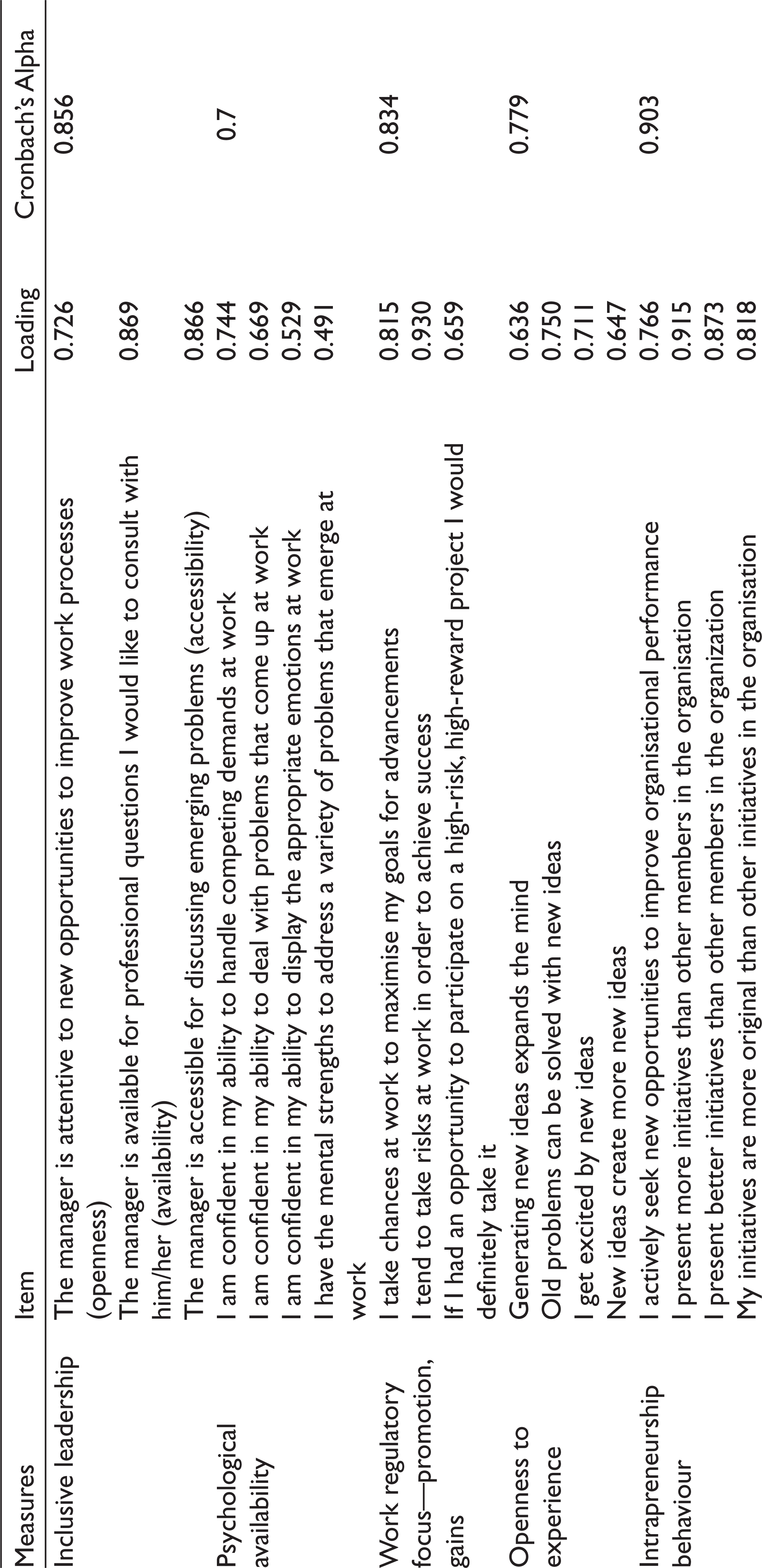
Inclusive leadership. The nine-item scale employed by Carmeli et al. (2010) was employed by asking participants to assess, on a 5-point Likert scale (ranging from 1 = not at all to 5 = to a very large extent), the extent to which their leader displays openness, availability, and accessibility for them at work. Sample items are ‘The manager is attentive to new opportunities to improve work processes’ (openness); ‘The manager is available for professional questions on which I would like to consult with him/her’ (availability); and ‘The manager is accessible for discussing emerging problems’ (accessibility). The Cronbach’s alpha for this measure was 0.856.
Psychological availability. The scale items employed by Binyamin and Carmeli (2010) was used. Respondents were asked to assess, on a 5-point Likert scale (ranging from 1 = not at all to 5 = to a very large extent), the extent to which they feel psychologically available at work. Sample items are as follows: ‘I feel that I can direct my abilities to manage different job requirements at work’, and ‘I feel that I can think clearly at work’. The Cronbach’s alpha for this measure was 0.70.
Regulatory focus theory. Higgins (1997) distinguishes between the promotionally focused who emphasise hopes and accomplishments (gains), and the preventively focused who emphasise safety and responsibility (non-losses). In order to measure a person’s regulatory focus at work—his or her disposition towards promotion or prevention—the18-item work regulatory focus (WRF) measure developed by Neubert et al. (2008) was used. The measure focuses on a specific work setting and was designed to measure the three sub-dimensions of promotion (gains, achievement and ideals) and prevention (security, oughts and losses). Respondents were asked to assess, on a 5-point Likert scale (ranging from 1 = not at all to 5 = to a very large extent), the extent to which they have promotion/prevention focus (nine items for each facet). Sample items are as follows: ‘I tend to take risks at work in order to achieve success’ (promotion focus) and ‘I concentrate on completing my work tasks correctly to increase my job security’ (prevention focus). The Cronbach’s alpha for promotion-gains measure was 0.834 and for prevention-security measure was 0.776.
Openness to experience. This was assessed using the items from the International Personality Item Pool (Goldberg, 1999). Responses were assessed on a 7-point Likert scale (ranging from 1 = very inaccurate to 7 = very accurate). Sample items are as follows: ‘Generating new ideas expands the mind’, and ‘I get excited by new ideas’. The Cronbach’s alpha for this measure was 0.779.
Intrapreneurial behaviour. Eight items were constructed and employed to assess employee intrapreneurial behaviours, which were constructed through a pilot study among 138 respondents recruited from MTURK. They held full-time positions and 77 were women. EFA produced a two-factor solution where the first factor—opportunity recognition—explained 64.49% of the variance and the second factor—opportunity realization—explained an additional 12.51%. Opportunity recognition is the stage where a potentially successful venture idea is identified or created (Kuckertz et al., 2017; Shane & Venkatamaran, 2000). Over time, however, the focus shifts to realising the opportunity, which is the stage where an opportunity has already been recognised and is now being fulfilled (Shane & Venkatamaran, 2000). These two facets reflect the intrapreneurship process. In this study (study 1), respondents were asked to assess, on a 5-point Likert scale (ranging from 1 = not at all to 5 = to a very large extent), the extent to which they engage in entrepreneurship activities within the organisation. Sample items are as follows: ‘I actively seek new opportunities to improve organisational performance’, and ‘I actively seek new opportunities to improve work processes in the organisation’. The Cronbach’s alpha for this measure was 0.903.
Data Analysis
To develop the research measurement model, CFA using SEM was performed. The fit of the final measurement model was assessed using several goodness-of-fit indices, including chi-square statistics divided by the degree of freedom (χ2/df); the comparative fit index (CFI); the Tucker-Lewis coefficient (TLI), the root mean square error of approximation (RMSEA) and the standardised root mean square residual (SRMR). The model selected in study 1 was confirmed in all the next studies.
Study 1, Results
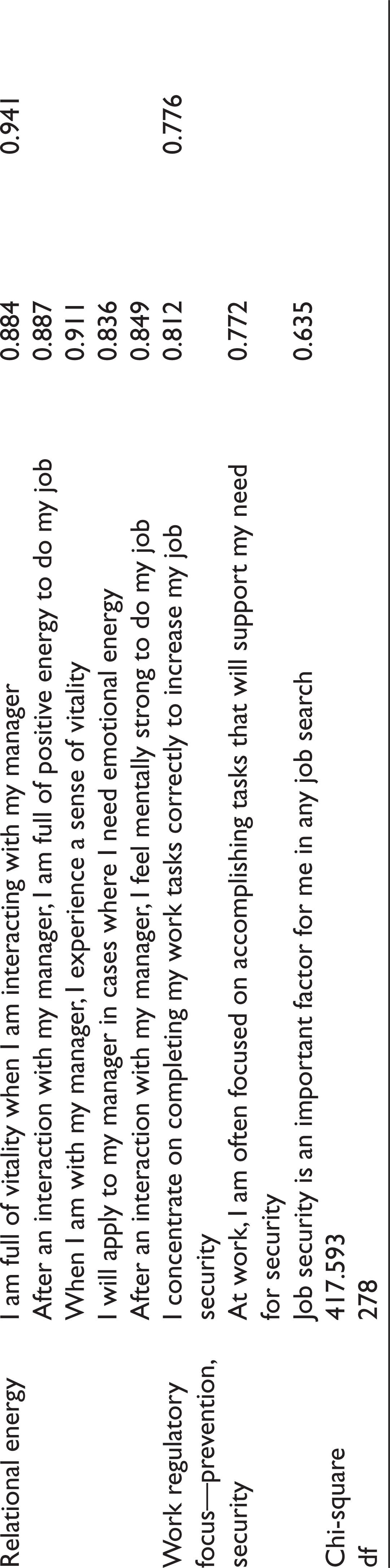
The goodness-of-fit statistics of the final measurement model showed an acceptable fit with the data: χ2/df = 1.502, p < 0.01, CFI = 0.930, TLI = 0.918, RMSEA = 0.060 and SRMR = 0.067. Cronbach’s alphas for the model factors were between 0.7 and 0.941 (Table 1). Standardised items loadings ranged from 0.491 to 0.93. The results yielded a measurement model that utilised seven variables that were consequently used throughout studies 2–3 (see Table 1).
Standardised Parameter Estimates from Items to Factor for Study 1
Study 1, Discussion
The goal of this study was to assess the research measurement’s model. The CFA results indicate that the relationship between each indicator variable and its respective variable had an acceptable fit with the data. To our knowledge, this is the first field study to explore the combination of promotion and prevention foci influence on intrapreneurship. Our studies used the previously known Neubert et al. (2008) WRF questionnaire. The Neubert et al. (2008) questionnaire exhibits good reliability results (e.g., Gorman et al., 2012).
The CFA analysis indicated that only two sub-dimensions of the WRF questionnaire exhibited adequate loadings: security (prevention) and gains (promotion). These findings were consistent across the studies using different locations, populations, sectors and points in time (see studies 1–3). As proposed by Gorman et al. (2012), our findings are also consistent with the notion that research using RFT factors should identify patterns or ‘profiles’ of regulatory focus rather than combining them into a single attribute (Wallace & Chen, 2006).
Study 1, Limitations and Future Research Directions
Future research is needed to compose items that correspond with the remaining RFT sub-dimensions: achievement and ideals (promotion); losses and ought (prevention).
Moreover, given Higgins’ RFT (e.g., Higgins, 1997; Higgins et al., 1994; Van Dijk & Kluger, 2011), which suggests that context may have an altered effect on the prevention and promotion foci; it may be important to identify the specific conditions in which the influences on intrapreneurial behaviours unfold.
Study 2 and Study 3, Method
Participants
The aim of studies 2 and 3 increases external validity by using respondents from both the public and private sectors, across different locations and cultures (Israel and the USA). The attempts were to use an instructional manipulation check (IMC) (Oppenheimer et al., 2009), as well as to increase external validity by using respondents from both the public and private sectors, across different locations (Israel and the USA). The measurement model that was described in study 1 was applied. In study 2, 252 Israeli respondents 2 were sampled using a research platform. The respondents were asked to complete an electronic questionnaire. Women comprised 52% of the research sample. The most frequent respondent age group was between 36 and 45 years (37.5%), their mean tenure in the organisation was 7 years (SD 6.5), their mean current position seniority was 6 years (SD 5.7) and their mean professional seniority was 9 years (SD 7.2). Among the respondents, 59% held a bachelor’s degree or above and 61% were from the public sector.
Study 3 involved 218 American respondents, who were asked to complete an electronic questionnaire. Women comprised 59% of the research sample. The most frequent respondent age group was between 36 and 45 years (43%), their mean tenure in the organisation was 6.2 years (SD 5.2), their mean current position seniority was 6 years (SD 5.5) and their mean professional seniority was 8.4 years (SD 6.1). Among the respondents, 42% held a bachelor’s degree or above and 47% were from the public sector. The measurement model described in study 1 was applied.
Data Analysis
Studies 2 and 3 were designed to further examine the measurement model presented in study 1 and to assess the research model. We used the same research method and similar sample sizes in studies 2 and 3. In addition, we formally examined the model invariance between Israel and the USA to test whether we could utilise the same measurement model in the study of intrapreneurship in both the Israeli and the American cultures.
A SEM was used to test the mediating effect of psychological availability, openness to experience and promotion gains on the relationship between inclusive leadership and intrapreneurship. For each study, a possible interaction between the openness to experiences and promotion gains was explored, performing simple slopes analysis of both promotion gain and openness to experience on intrapreneurship, producing appropriate interaction plots and calculating conditional indirect effects and their index of moderated mediation (IMM) (Hayes, 2015).
Since model-fit-indices used in SEM have not been developed for latent interaction models, a two-step method was conducted. First, model-fit-indices were assessed for the null model (model without interaction). Then, the model with the interaction was tested using a likelihood ratio test to assess whether the model with the interaction is significantly better than the one without it (Maslowsky et al., 2015). A chi-square test and the Akaike information criterion (AIC) were compared to each model. Further comparison of the null model with the interaction model using the AIC measure was done; this also demonstrated the superiority of the model with the interaction (Akaike, 1973; Wagenmakers & Farrell, 2004).
Study 2 and Study 3, Results
CFA was conducted to assess a 7-factor structure (inclusive leadership, psychological availability, openness to experience, promotion gains, relational energy and prevention security) consisting of 26 items. The model fit using various fit indices and the significance of the completely standardised path estimates were assessed (Bollen, 1989).
The results of CFA for both studies indicate that the model fits the data well. In study 2, the following fit-of-indices were obtained: χ2/df = 1.75, p < 0.01, CFI = 0.944, TLI = 0.935, RMSEA = 0.055 and SRMR = 0.057. Cronbach’s alphas for the model factors were between 0.798 and 0.966 (Table 2). In addition, the results for the study’s CFA indicate that all the relationships between the indicator variables and their corresponding latent variables were significant (p < 0.01). Table 2 shows the correlations obtained in the CFA among study 2 variables. In study 3, the following fit-of-indices were obtained: χ2/df = 1.67, p < 0.01, CFI = 0.951, TLI = 0.942, RMSEA = 0.055 and SRMR = 0.054. Cronbach’s alphas for the model factors were between 0.78 and 0.933 (Table 3). In addition, the CFA results indicated that all the relationships between the indicator variables and their corresponding latent variables were significant (p < 0.01). Table 3 shows the correlations obtained in the CFA among the study 3 variables.
Study 2 Estimate Correlation Matrix for the Latent Variables

Mean and standard deviation are calculated for the observed model variables (observed variable values are calculated by averaging the relevant items).
N = 252, *p < 0.05, ** p <0.01 and ***p < 0.001.
Study 3 Estimate Correlation Matrix for the Latent Variables

Mean and standard deviation are calculated for the observed model variables (observed variable values are calculated by averaging the relevant items).
N = 218, *p < 0.05, ** p < 0.01 and ***p < 0.001.
To assess the cross-cultural measurement invariance of our model, a multi-group CFA using Mplus was conducted to demonstrate metric invariance between respondents from Israel and respondents from the USA. A metric against configural invariance analysis was crafted, which yielded non-significant differences between the samples’ measurement models (χ2 = 28.66; df = 19; n.s.). This finding supports our practice of utilising the same measurement tool in the study of intrapreneurship in both the Israeli and the American cultures.
Since the model-fit-indices generally used to interpret the fit of structural equation models, such as CFI, TLI, RMSEA and χ2, have not been developed for latent moderated structural (LMS) equation models, following Maslowsky et al. (2015) is not an option. However, a two-step method for assessing the overall fit of each LMS model may be used instead (Klein & Moosbrugger, 2000; Muthen, 2012). First, CFI, TLI, RMSEA and χ2 values are obtained from the model without the interaction term (the null model). Then, using a log likelihood ratio test, the relative fit of the null model and the alternative model with the interaction are both estimated and compared. The log likelihood ratio test is used to determine whether the null model represents a significant loss in fit relative to the more complex interaction model.
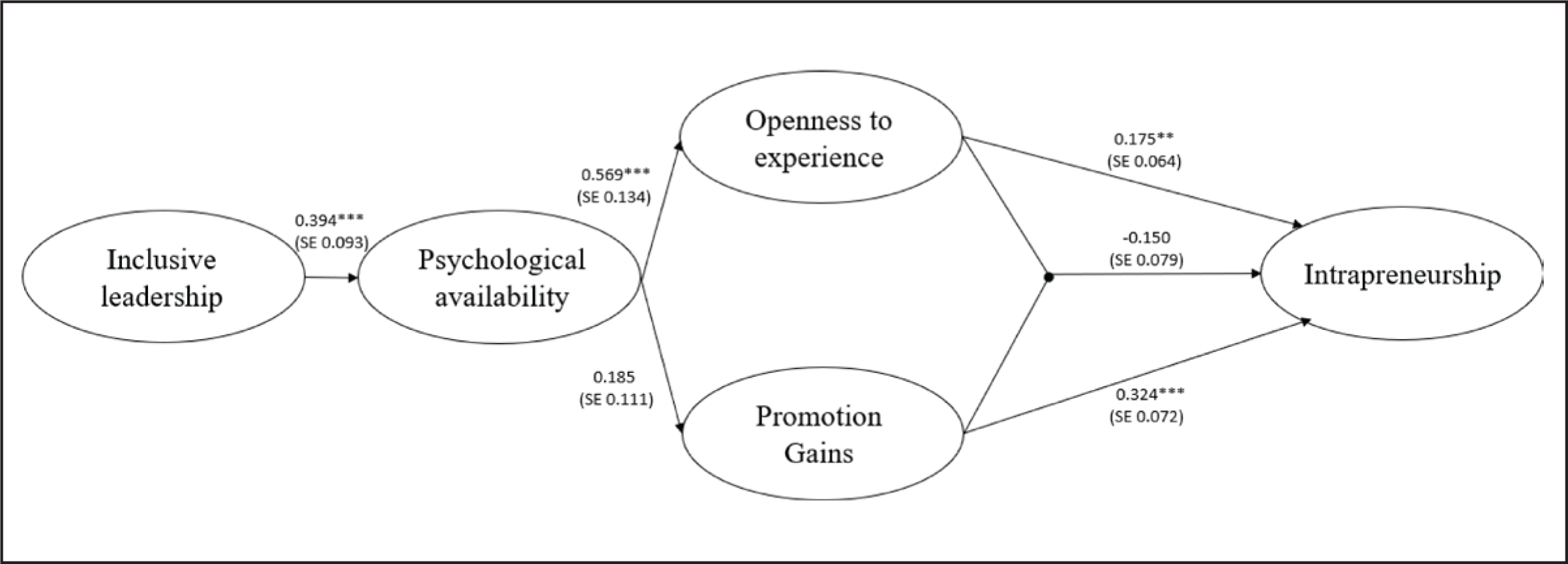
The model without the interaction term was estimated; the results indicated that the model fits the data well: χ2/df = 1.765; p < 0.05; RMSEA = 0.055; CFI = 0.942; TLI = 0.934 and SRMR = 0.060. Next, the model with the interaction term (see Figure 2) was estimated. The analysis of study 2 revealed that the research model with interaction provided better results: AIC = 15486.125 as opposed to AIC = 15490.359 for the model without the interaction. The log likelihood difference between the models was significant (χ2 = 6.232; df = 1; p = 0.012), demonstrating that the model with the interaction was significantly better than the model without it. Figure 2 presents the study 2 research model with the interaction.
In study 3, the research model presented in the previous study was further assessed. Following the method explained in study 2, the study 3 model without the interaction term was estimated; the results indicate a good fit with the data: χ2/df = 1.736; p < 0.05; RMSEA = 0.058; CFI = 0.945; TLI = 0.937 and SRMR = 0.060. Next, the model with the interaction term (see Figure 3) was estimated. The findings indicate marginal support for the research model with interaction: AIC = 12727.755 as opposed to AIC = 12730.569 for the model without interaction. The log likelihood difference between the two models was significant (χ2 = 4.812; df = 1; p = 0.028).
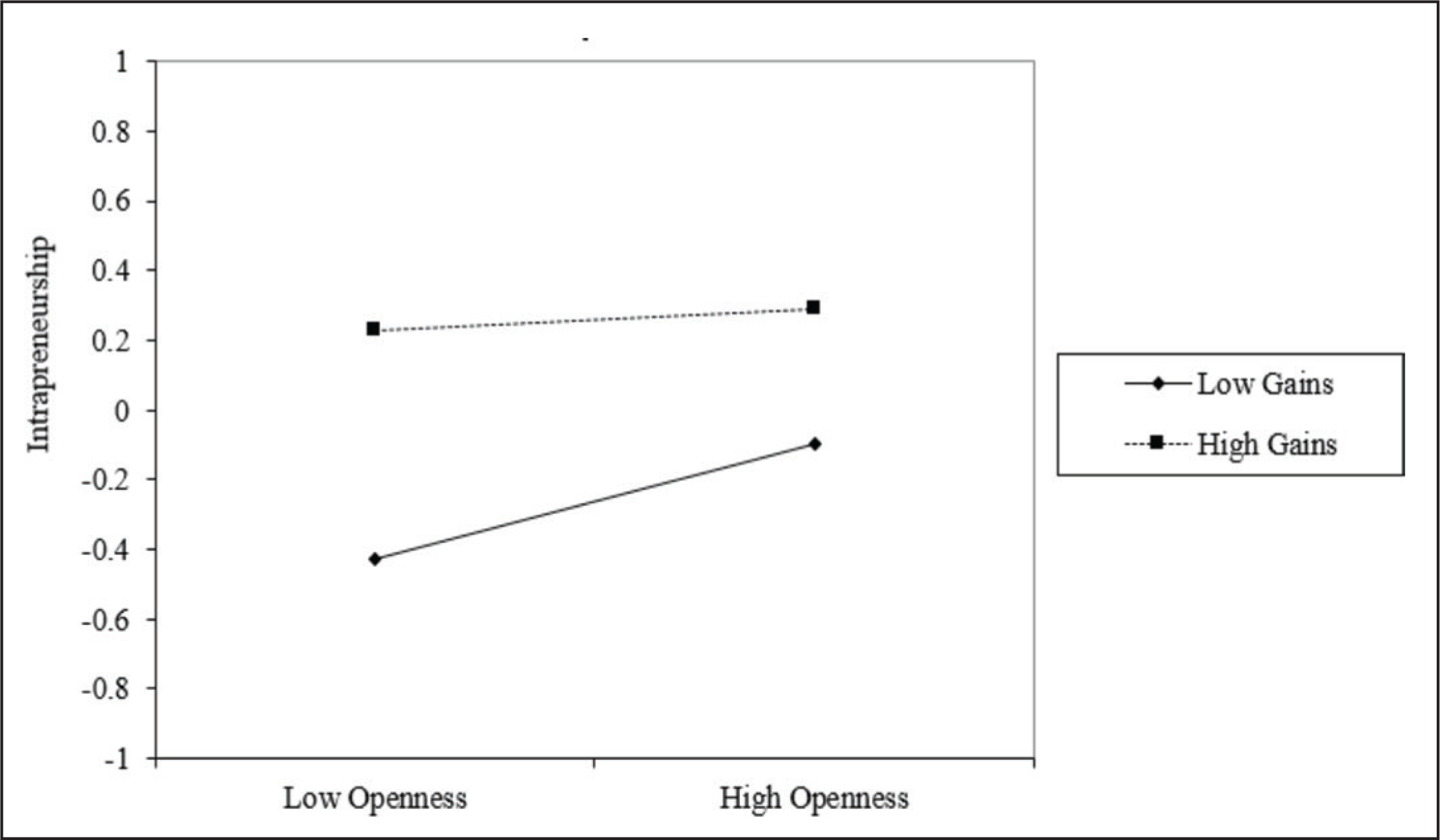
Simple slopes analyses of openness to experience on intrapreneurship for different values of promotion gains were conducted to reveal the nature of the interaction. This was accomplished by using high and low values of promotion gains (mean ± SD) (see Figures 4 and 5). Simple slopes analysis indicated that for low values of promotion gains, openness to experience was positively significantly related to intrapreneurial behaviour (b = 0.296), while for high values of promotion gains, openness to experience was not significantly related to intrapreneurial behaviour (b = 0.055). The results of the interaction for study 2 are illustrated in Figure 4.
To test the statistical significance of the indirect effects, the 95% bias-corrected bootstrap confidence intervals were calculated. For study 2, the results suggest that the indirect effect of inclusive leadership on intrapreneurial behaviour via psychological availability promotion gains is positively significant for both low and high openness to experiences (for low openness to experience: estimate = 0.030; CI [0, 0.81]; for high openness to experience: estimate = 0.018; CI [0, 0.061]). The indirect effect of inclusive leadership on intrapreneurial behaviour via psychological availability and openness to experience is significant only under the condition of low gains (estimate = 0.066; CI [0.019, 0.151]). To quantify the effect of the moderator of openness to experience on the indirect effect of inclusive leadership on intrapreneurial behaviour through psychological availability and promotion gains, this study calculated the index of moderated-mediation (IMM) and calculated bias- corrected bootstrap confidence intervals to assess its significance (Hayes, 2015). The results indicate that the IMM of openness to experience equals –0.034, 95% CI (–0.096; –0.003). This indicates that openness to experience is a statistically significant moderator of the indirect effect of inclusive leadership on intrapreneurial behaviour through psychological availability and promotion gains. Similarly, the IMM of promotion gains equals –0.011, 95% CI (–0.040; –0.001), indicating that a promotion gain is a statistically significant moderator of the indirect effect of inclusive leadership on intrapreneurial behaviour through psychological availability and openness to experience.
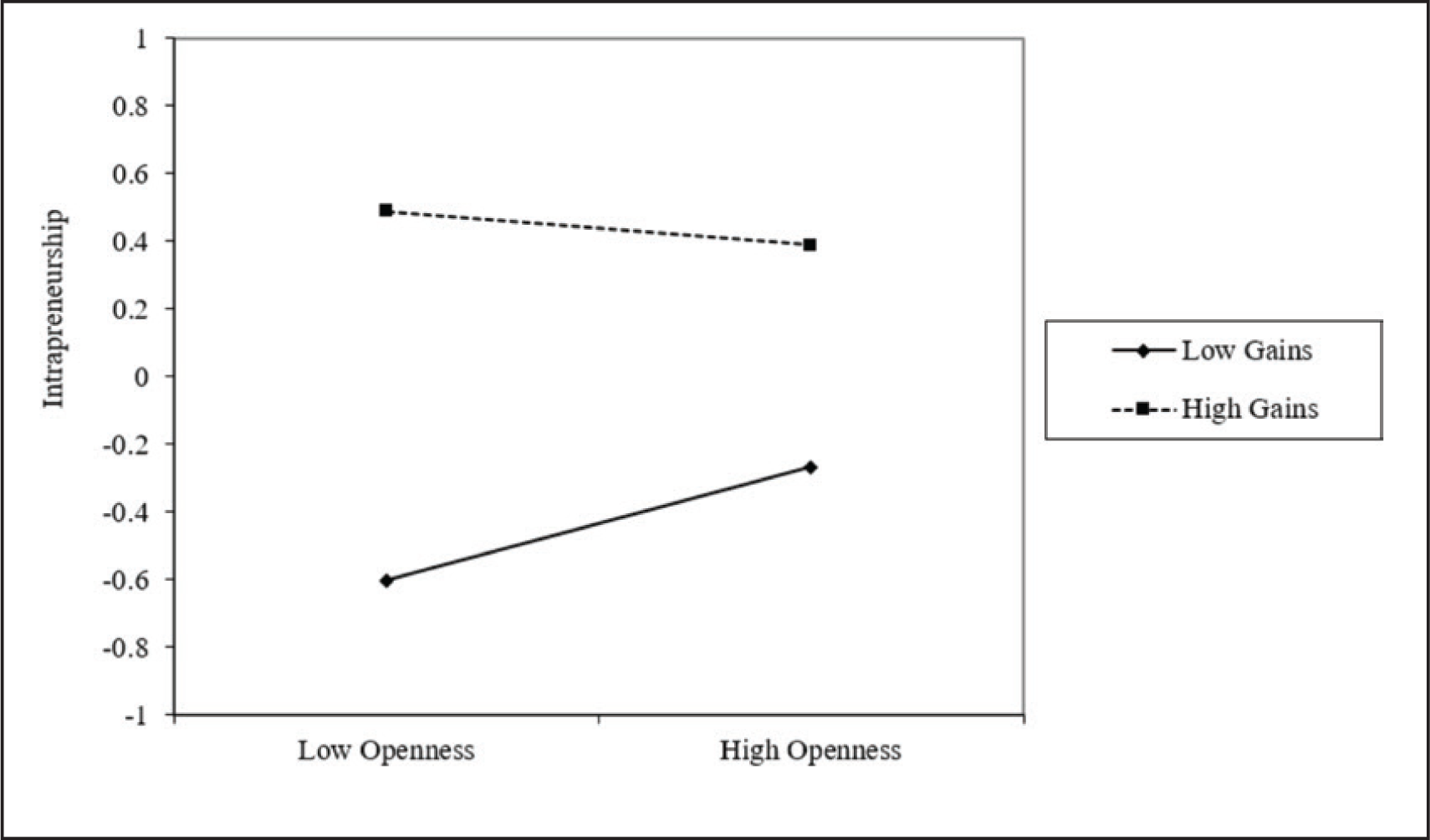
Simple slopes analyses of openness to experience on intrapreneurship for different values of promotion gains were conducted to reveal the nature of the interaction. This was accomplished by using high and low values of promotion gains (mean ± SD) (see Figure 5). The results of study 3 indicated a pattern similar to those of study 2. For low values of promotion gains, openness to experience was marginally significantly related to intrapreneurial behaviour (b = 0.218; p = 0.062). For high values of promotion gains, openness to experience was not significantly related to intrapreneurial behaviour (b = –0.067). All the indirect effects and IMM in study 3 were not significant but presented the same direction for IMM and indirect effects that were found to be significant in study 2.
As mentioned above, the study 2 research model with the interaction provided better results than that of study 3, which provided marginal results. According to Wasserstein and Lazar (2016) ‘…large p-values do not imply a lack of importance or even lack of effect’ (p. 132). One possible explanation for this could be the small sample size. In light of this, a meta-analysis was performed to examine the relationships between all the empirical research studies.
As mentioned before, a structural analysis of studies 2 and 3 revealed that individuals who were characterised by high gains were more intrapreneurial with little regard to their tendency to be open to experience. On the other hand, individuals who had an inclination to embrace low gains showed a different pattern: those with low levels of openness to experience were less likely to engage in intrapreneurial behaviours; in comparison, those with higher levels of openness to experience were more likely to engage in intrapreneurial behaviours. These results expand the knowledge gained in previous studies that an essential component of intrapreneurship is a high-risk propensity of which openness to experience is a key personality factor as well as a motivational force (Sinha & Srivastava, 2013).
Meta-analysis, Method
Participants
This study follows the Sánchez-Meca and Marín-Martínez (2010) definition of meta-analysis as ‘a research methodology that aims to quantitatively integrate the results of a set of empirical studies about a given topic’ (p. 151). This is consistent with Mcshane and Böckenholt (2017) research according to which a meta-analysis, which merges results from the studies using a weighted average, would offer, on average, a more accurate estimate than that of any individual study. Hence, it increases statistical power relative to individual studies and provides a tool that presents the results of the studies, pinpoints conflicting results between them, and offers an opportunity to develop a ‘big picture’ when all the studies are considered together (Mcshane & Böckenholt, 2017). Therefore, meta-analysis as recommended by Mcshane and Böckenholt (2017) was performed to examine the relationships among the three empirical studies, with a total sample size of 610 respondents.
Data Analysis
This research is a single-paper meta-analysis (SPM) (Mcshane & Böckenholt, 2017) which is based on the data collected from studies 1 to 3. In order to compare the variables across the three studies, a CFA procedure was performed with the same items to measure each latent variable across the three studies. Each variable was standardised, and its mean scores were calculated. In our study, the effect size of the interaction between the moderators and the independent variables was expressed by a partial correlation (which is equal to the square root of the partial eta square, taking into account its sign). The Fisher transformation was applied to the partial correlations and, after pooling the transformed correlations, the pooled value was re-transformed to express the summary effect as a correlation, and the R meta-analysis package of Schwarzer (2007) was utilized.
Meta-analysis, Results
Across the three studies, our results support that psychological availability, openness to experience and promotion gains mediate the relationship between inclusive leadership and intrapreneurship.
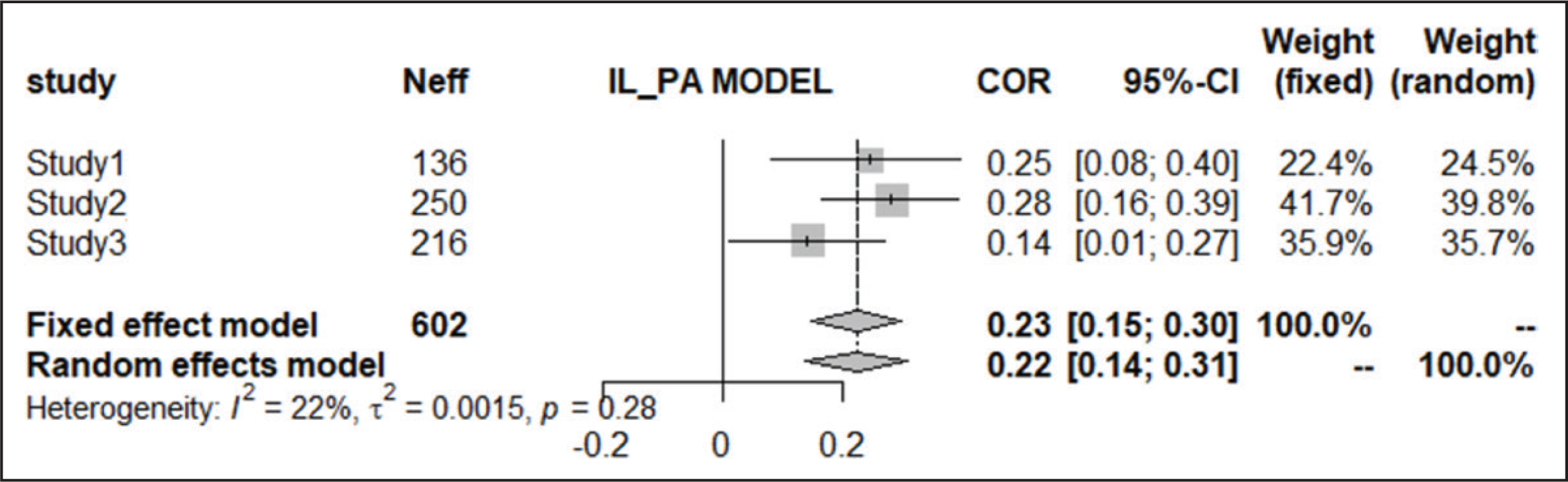
Inclusive leadership had a homogenous effect (heterogeneity estimate Q = 2.57; df = 2; p = 0.2763) and significantly predicted psychological availability across all three studies and had a fixed effect model (COR = 0.2251; p < 0.0001; see Figure 6).
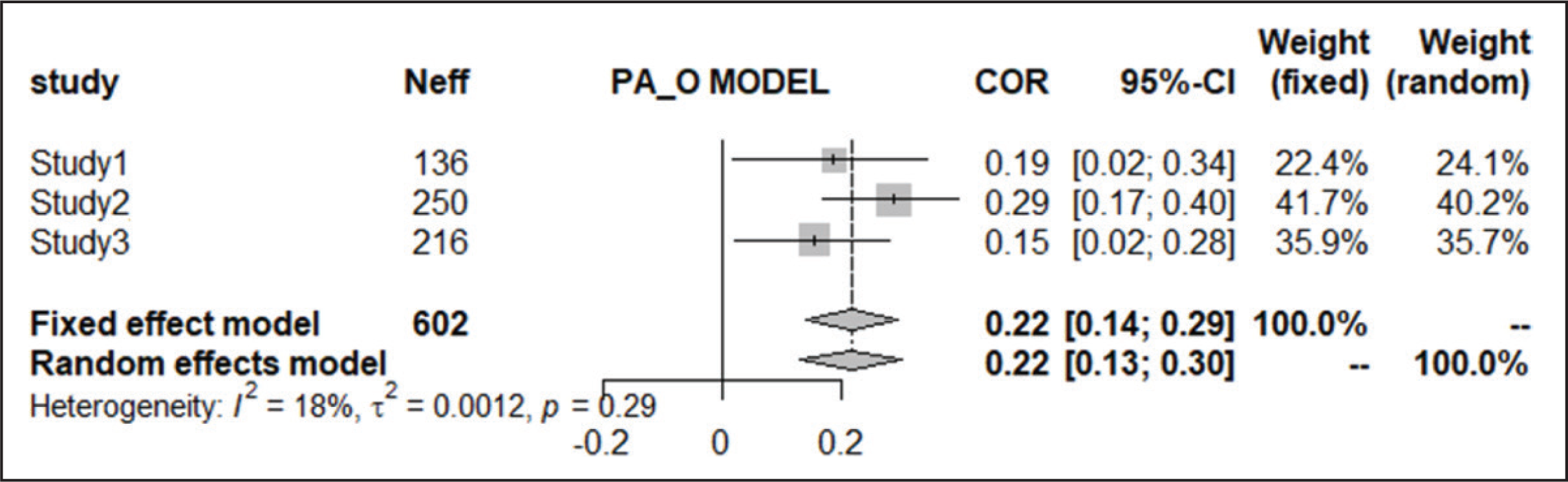
Similarly, psychological availability had a homogenous effect (heterogeneity estimate Q = 2.44; df = 2; p = 0.2946) and significantly predicted openness to experience across all three studies yielding a fixed effect model (COR = 0.2182; p < 0.0001; see Figure 7).
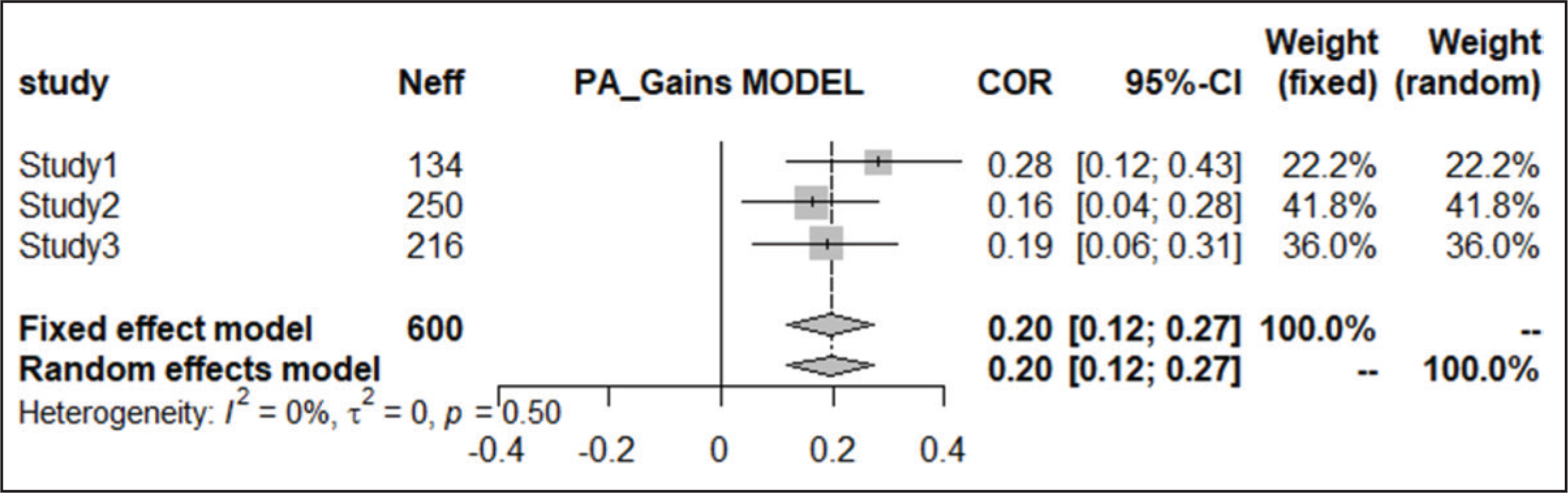
Psychological availability also had a homogenous effect (heterogeneity estimate Q = 1.39; df = 2; p = 0.4984) and significantly predicted promotion gains across all three studies: Fixed effect model (COR = 0.1981; p < 0.0001; see Figure 8).
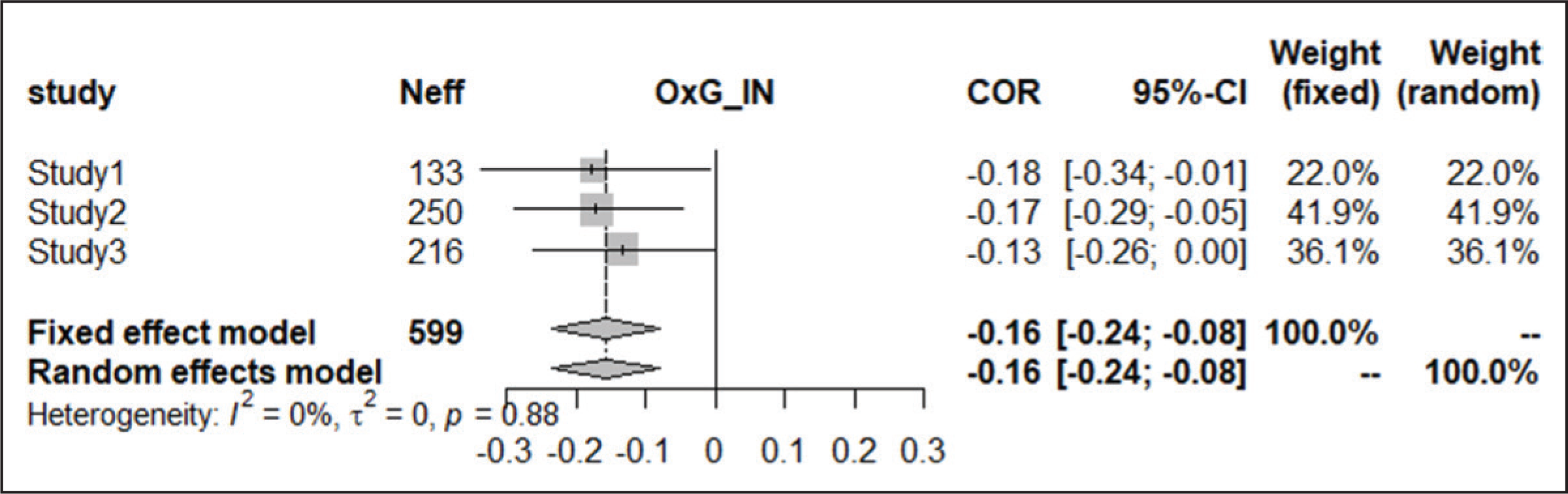
Moreover, the interaction between the mediators—openness to experience and promotion gains—had a heterogeneous effect on intrapreneurship (heterogeneity estimate Q = 0.24; df = 2; p = 0.8848; see Figure 9).
However, study 1 data were used for developing the measurement model (though not the structural model), a second meta-analysis was performed without the inclusion of study 1 data (Appendix A). The results supported the conclusions of the previous meta-analysis.
Meta-analysis, Discussion and Limitations
The current research integrates the results of three studies that focused on how inclusive leadership, psychological availability, openness to experience and promotion gains facilitate intrapreneurship. To our knowledge, this is the first SPM of intrapreneurship to have appeared in the literature. In it, a research model stability across the three studies was identified.
Our analysis revealed three characteristics of leaders and employees that displayed strong relationships with intrapreneurship. First, inclusive leadership augments employees’ sense of psychological availability. Second, psychological availability allows people to display more openness to experience. Third, the results indicate that psychological availability influences promotion gains. The interaction between openness to experience and promotion gains had a negative effect in studies 1–3.
Nevertheless, although the present meta-analytic findings contribute to the intrapreneurship literature, there is a limitation in the measure of intrapreneurship across all three studies. This work utilised a self-report data-collecting method to gather information about intrapreneurship. Evaluating intrapreneurship by using peer and leader assessment may further validate the findings of this study. It calls for further studies to explore the research model across different populations. In addition, scholars can further replicate constructively this research using other populations (e.g., private and public sectors employees and leaders). Recognising the limitations and applying the described recommendations will provide a better understanding of intrapreneurship.
General Discussion
This research aimed to shed light on a vital work behaviour—intrapreneurship—by addressing a key theoretical issue of whether and how leaders influence employee intrapreneurial behaviours (Gu et al., 2018; Hammann, 2006; Moriano et al., 2014). The findings of three different studies across different populations, sectors and countries indicate that inclusive leadership indirectly, through psychological availability and promotion gains, facilitates employee intrapreneurial behaviour. However, the results did not support Brockner et al.’s (2004) notion of prevention-promotion balance focus—a third focus of a mixed nature that describes a state in which a person is driven by both prevention focus and promotion focus. Nevertheless, our results unveiled the role of promotion gains in the process, which was consistent across all studies. By compiling three studies into an SPM, meta-analysis results were introduced and supported this research model.
Our work contributes to extant theory on leadership and intrapreneurship in several ways. First, this research advances the literature of leadership by unpacking the power of inclusive leadership (Hirak et al., 2012) and the socio-psychological conditions in which individuals, while considering their openness to experience, are likely to engage in intrapreneurial behaviours. In so doing, this study enhances our understanding about the process and conditions that facilitate and foster intrapreneurship at work (Blanka, 2019; Gawke et al., 2017). This is theoretically important because it allows us to develop a more nuanced understanding of the specific leadership behaviour that leaders exhibit to manage the organisation’s talent in general and, in particular, develop the socio-psychological mechanisms that motivate employees to make the effort to come up with and pursue initiatives and ventures that benefit their organisation (Cappelli, 2008; Collings & Mellahi, 2009; Kacperczyk, 2012). Our focus on inclusive leadership was theoretically instrumental since inclusiveness aims to harness the power of diversity, such that the potential of members across all corners of the organisations can be harnessed (Randel et al., 2016; Shore et al., 2011). Specifically, this research advances this body of knowledge by expanding on Burgelman (1983), who stated that ‘…the role of entrepreneurial activity is to provide the required diversity’ (p. 1349) by further highlighting the power of inclusive behaviours for fulfilling the true potential of a diverse workplace (Nembhard & Edmondson, 2006; Randel et al., 2016; Shore et al., 2011).
Second, this work shifted the discussion from corporate entrepreneurship which tended to focus on the macro-level efforts to promote entrepreneurial behaviours, directing innovative organisational strategy towards a meso- to individual-level perspective which occurs voluntary and ‘bottom-up’ to enhance organisational performance (Blanka, 2019; Dinh et al., 2014). This is important because even if an organisation formulates plans and programs to promote intrapreneurship (Wolcott & Lippitz, 2007), it is up to the middle-level management to exhibit the leadership behaviours that create the conditions for driving employee engagement at work (Tims et al., 2011). Work engagement can take many forms, but intrapreneurial behaviours manifest perhaps an engagement that requires substantial efforts. Our research contributes to a better understanding of this process by specifying psychological availability as a particular mechanism that fosters engagement through regulatory focus behaviours. In so doing, this work extends research on work engagement by shedding further light on the importance of developing a sense of psychological availability (Binyamin & Carmeli, 2010; Kahn, 1990; Stephens & Carmeli, 2017) and shaping regulatory focus behaviours (Brockner et al., 2004) in driving a particular form of work engagement—intrapreneurship.
Previous research on employees’ engagement has largely been examined in general terms. This research contributes to the study of what enables and drives individuals to engage in intrapreneurial behaviour (Blanka, 2019) by expanding on the literatures of work engagement (Kahn, 1990), motivation (Higgins, 1997) and personal factors (Goldberg, 1999). Our study sheds light on the socio-psychological conditions that drive one’s engagement at work by showing that inclusive leadership cultivates psychological availability, which increases motivation and in turn results in a high level of intrapreneurial behaviour. This findings highlight how organisational leaders may harness intrapreneurship. This work also contributes to the literature by focusing on a specific work engagement and applying Kahn’s (1990) concept of engagement to the field of intrapreneurship, an application that is still relatively infrequent (Gawke et al., 2017).
This endeavour also extends Brockner et al.’s (2004) research advocating further effort to clarify how individuals’ regulatory focus contributes to intrapreneurial behaviour. While scholars have been witnessing a growth in research on the relations between RFT and entrepreneurship (Brockner et al., 2004; Neubert et al., 2008), this research informs this body of knowledge by explaining why and how leaders can shape employees’ regulatory focus which, in turn, influences their motivation to engage in intrapreneurial behaviours. Specifically, this study helps in elaborating Higgins’ (1997, 1998) RFT by revealing and explicating why theorising about promotion gains in the process was supported whereas other sub-dimensions of promotion and prevention were not, thus opening up this line of research for further theoretical refinement. Put differently, this research revealed a specific regulatory focus ‘profile’ that stimulates intrapreneurship. Finally, across all the presented studies, results indicated that openness to experience and promotion gains interact to moderate the serial indirect influence of inclusive leadership on intrapreneurship. This finding extends research by Sinha and Srivastava (2013) that aimed to better understand the constellation of relationships among personality factors, work motivation and intrapreneurship.
Practical Implications
Intrapreneurship is ever more vital to both the for-profit and public sectors. While intrapreneurship enhances competitive advantage in the for-profit sector (Blanka, 2019), it is crucial for enhancing social welfare (Windrum, 2008). Our study informs organisations and leaders about the mechanisms and conditions they need to develop for intrapreneurship to flourish in the workplace. This study points to inclusive leadership as a form of leadership that is particularly vital for harnessing diversity and driving employees to engage in intrapreneurial behaviours. Furthermore, our research shows that managers can encourage intrapreneurship among their employees without the need for extensive structural reforms or allocation of resources. They can achieve the desired behaviour by creating an enabling context in which individuals across all corners of the organisations are encouraged to engage in intrapreneurial behaviours. This is important because the success of any organisation largely depends on employees who come up with new venture initiatives that allow it to sustain its growth development goals.
Limitations and Future Research Directions
Our research and findings should be interpreted with caution due to several limitations. First, this research assessed intrapreneurial behaviours and this can be more robustly evaluated utilising peer, customer or other forms of external evaluation. While measures to minimise potential biases associated with self-report data were taken, scholars are encouraged to use external sources, like supervisor and peer evaluation. Further constructive replication and extension are also encouraged. Second, while data were collected from Israeli and the American respondents, there is a need to test our model in other countries, particularly in evaluating the model across individualistic–collectivistic cultures. Third, the effects of time on our model were not directly assessed. Further longitudinal research is needed to reveal temporal effects on our model. Fourth, further research is needed to address the question of whether intrapreneurship in the private sector differs from that in the public sector. Since the research had a relatively small sample, any inferences on this issue should not be conclusive. Finally, research on the conditions in which such proactive behaviour (Fuller et al., 2015) may be recognised or not in an organisation may be important to develop.
Conclusion
Driving intrapreneurship is like cultivating the growth of a delicate seed; it requires leadership that creates the proper conditions for this behaviour to flourish. Our research points to inclusive leadership as key for creating the conditions in which diversity can be harnessed and for intrapreneurship to emerge. By integrating research on inclusiveness, regulatory focus and work engagement our work reveals a socio-psychological mechanisms model that explicates why and how inclusive leadership facilitates intrapreneurial behaviours. Like a careful gardener, who seeks to reveal the ideal conditions that promote growth, this research sheds light on the process and conditions in which leaders can encourage intrapreneurship.
Footnotes
Acknowledgements
We wish to thank Etti Doveh and Yasmin Alkalay for their help and advice, as well as the reviewers for their helpful comments and suggestions. We also appreciate the financial support of Jeremy Coller Foundation, The Raya Strauss Family Business Research Center and The Henry Crown Institute of Business Research in Israel.
Declaration of Conflicting Interests
The authors declared no potential conflicts of interest with respect to the research, authorship and/or publication of this article.
Funding
The authors received financial support for the research from Jeremy Coller Foundation, The Raya Strauss Family Business Research Center, and The Henry Crown Institute of Business Research in Israel.
Appendix A
Inclusive leadership had a homogenous effect (heterogeneity estimate Q = 2.48; df = 1; p = 0.1151) and significantly predicted psychological availability across the two studies, yielding a fixed effect model (COR = 0.2188; p < 0.0001; see  ).
).
Similarly, psychological availability had a homogenous effect (heterogeneity estimate Q = 2.26; df = 1; p = 0.1324) and significantly predicted openness to experience across the two studies, yielding a fixed effect model (COR = 0.2271; p < 0.0001; see ).