







Abstract
The outbreak of the Second World War saw a wider recruitment of women for various roles in intelligence, counter-intelligence and espionage. There had already been an active policy of their recruitment by spy agencies in Britain, continental Europe and the United States, not just for desk work and signals intelligence but for active field duty as well. Agencies and organisations inimical to Western interests, such as the Naródnyy komissariát vnútrennikh del or People’s Commissariat for Internal Affairs of the Soviet Union, Comintern (the Communist International), its London-based proxy, the Anti-War Movement, and a range of socialist and left-oriented workers’ unions, were arguably a few steps ahead in recruiting women and deploying them in sensitive roles. Using contemporaneous declassified records, this article briefly looks at three entangled women agents across the colonial–imperial sphere of conflict during the Second World War and the decade leading up to it. Drawing from contemporary conceptions of transnationalism and entangled histories wherein actors, entities and ideas across temporal and topographical spaces find common conceptual ground, this article relies on secret intelligence documents to discuss hitherto unexplored narratives, ambiguities and affective details.
Keywords
A small section titled ‘Women as Spies’ appeared in an article published in The Bombay Chronicle on 13 April 1939. It claimed that the Gestapo (the Nazi secret police) and its Italian counterpart and predecessor, the Organizzazione di Vigilanza Repressione dell’Antifascismo, had ‘woven a net of espionage’ and that ‘like a swarm of locusts’, numerous women agents posing as cabaret artistes were conducting fascist propaganda in the Near East. The article alleged that these women in the hundreds ‘took a course in espionage in Hamburg’ before being deployed overseas. Additionally, ‘specially chosen, pretty girls’ endeavoured to find employment with government officials in order to access information that may be useful back home. 1
Some months later, Germany attacked Poland and consequently, Britain and its allies declared war on 3 September 1939. In India, official detentions of German male expatriates began immediately, and ‘approximately 900 men were arrested and deported either directly to camp Ahmednagar, or via smaller camps, such as Fort William in Calcutta’ (Lubinski et al., 2018, pp. 17–18). Rumours and reports of Nazi and fascist spies and propaganda had been regularly appearing in Indian newspapers for over a year and a half, leading up to the official commencement of the Second World War. These matters were also discussed in the Central Legislative Assembly in September 1938. 2 In intelligence circles, the activities of Nazi groups, propagandists and anti-Nazi activists were well known and under scrutiny. Confidential information regarding German and Italian fascist propaganda and espionage was carefully tracked and circulated amongst officials. There also appeared suspicions regarding the spouses of the German (and other European) men interned in Ahmednagar and other camps. As a consequence, on 2 February 1940, seven Europeans including three women were arrested by the Bombay Criminal Investigation Department (CID) and were charged under the Defence Rules. One of these women was Therese Urchs, the wife of the interned Dr Oswald Urchs, a manager of the Havero Trading Company in Bombay, who was also a well-known Nazi propagandist and the Landesgruppen Fuehrer of the Ausland Organisation of the Nationalsozialistische Deutsche Arbeiterpartei (NSDAP) or National Socialist German Workers’ Party, or the Nazi Party for India, Ceylon (Sri Lanka), Burma (Myanmar) and the Federated Malaya States. 3
While the breakout of the war saw a wider recruitment of women in various roles in intelligence, counter-intelligence and espionage, there was already in place an active policy of their recruitment by spy agencies in Britain, continental Europe and the United States not just for desk work and signals intelligence but for active field duty as well. Agencies and organisations inimical to Western interests, such as the Naródnyy komissariát vnútrennikh del, or People’s Commissariat for Internal Affairs, Comintern (the Communist International), its London-based proxy, the Anti-War Movement, and a range of socialist and left-oriented workers’ unions, were arguably a few steps ahead in recruiting women and deploying them in sensitive roles. From the 1930s onwards ‘a significant number of men and women in the United States, Britain, Europe, Australia and Canada were recruited by the Soviet intelligence services’ driven, as many were, by an ideological belief that communism and the Soviet Union would lead the world into a new era free from oppression and exploitation (McKnight, 2012, p. 1). In all the shadowy corners of ideology, war and politics, female spies were ‘trailing their coats’, 4 so to speak.
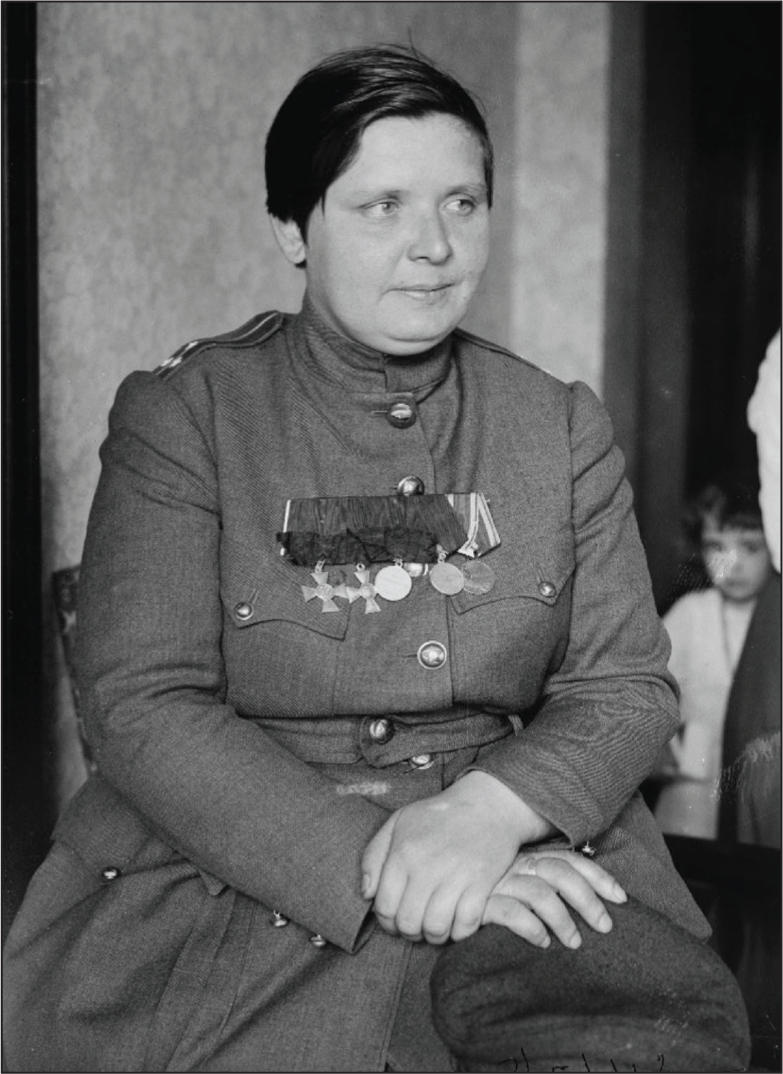
As Juliette Pattinson explores in her work on women recruits of the Special Operations Executive during the Second World War, gender roles were clearly defined during wartime, with ‘a combatant male fighting to protect the non-combatant female’ (Pattinson, 2007, p. 9). Regardless of established cultural norms and archetypes, and ‘the presumed affront to notions of femininity that any kind of combat would represent’, there was a ‘voyeuristic fascination’ for women who took on wartime roles (Pattinson, 2007, p. 9). In showing how gender impacted the recruitment, deployment and wartime captivity of women in clandestine roles, Pattinson opens up several interesting lines of enquiry. The normative archetypes of the seductress, the femme fatale and the prostitute-spy have held appeal in the public sphere, not to mention officialdom. Recalling Mata Hari, Boudicca, Joan of Arc, Flora Sandes and Maria Bochkareva (Figure 1), who commanded the first Russian Women’s Battalion of Death during the First World War, Pattison writes that these women ‘also retain enduring appeal precisely because they transgressed conventional codes of behaviour’ (Pattinson, 2007, pp. 9–10). Indeed, as the former American Intelligence Officer Elizabeth McIntosh indicates in an Association of Foreign Intelligence Officers’ monograph, from the biblical Delilah, Empress Wu Chao, the Byzantine Empress Theodora and the high priestesses of Delphi, ‘over the centuries there have been colourful, clever, drab, untrained, dedicated women’ in the covert realm (McIntosh, 2012, p. 1). The ‘early Mata Haridans’, McIntosh adds, were not trained but instead ‘relied on sex, good sense and a woman’s natural instinct to be devious when the situation called for covert action’. Their trade was ‘a convenient merging of the first and second oldest professions’ (McIntosh, 2012, p. 1).
Interest in the role of women in covert affairs and a broader institutional declassification of secret records of security agencies opens up numerous avenues for researchers of all hues. Drawing from contemporaneous intelligence documentation declassified over the last decade, this article looks at three entangled women agents across the colonial–imperial sphere of conflict during the Second World War and the decade leading up to it. These women, operating out of Britain, Germany and India, are linked through intersecting networks of the colonial state, clandestine operations of the Axis powers and hostile anti-colonial agencies. Drawing from contemporary conceptions of transnationalism and entangled histories, 5 wherein actors, agencies and ideas across temporal and topographical spaces find common conceptual ground, this article relies on secret intelligence documents to discuss hitherto unexplored narratives, ambiguities and affective details. This common conceptual ground is a realm that includes unverifiable facts, unknown linkages, ambiguities and speculations connecting the three agents who were at the same time purveyors of covert information and subjects of surveillance. In a narrower sense, the core conceptual link that entangles them is that of state intelligence documentation.
The Drab Secretary
A historical report 6 on the work conducted by MS (Agents) or the M Department of the MI5 (the domestic security service of the United Kingdom) during the war years of 1939–1945, penned by the legendary spymaster and head of the department Maxwell Knight, offers details on the recruitment and deployment of women agents. At the outset, Knight or ‘M’, as he was known, lays out the mandate of the spy agency: ‘The proper function of M.S. lies in the recruitment and operation of agents who are trained for the purpose of penetrating subversive political bodies, and for the investigation of suspicious individuals or groups of individuals’ (The UK National Archives [UKNA], 1945a, p. 1). There has, he adds, unfortunately ‘always been a stigma attached’ to the very word ‘agent’; they are often regarded as ‘unscrupulous and dishonest’, but ‘nothing could be more untrue’ (UKNA, 1945a, p. 2). Advocating for a long-term policy wherein agents would penetrate organisations and eventually assume positions of responsibility, M points out that the ‘Russians are past masters at the art of long-term policy’ (UKNA, 1945a, p. 4). Prior to 1938, the focus was on communist and fascist groups, but with the advent and outbreak of war, a ‘small group of agents’ were tasked to spy on German and NSDAP-affiliated organisations in Britain. There was also a fear in the general public of a German Fifth Column. Consequently, M recruited the socially connected interior decorator Mrs Neville Gladstone, along with her stockbroker husband, Captain Neville Gladstone, on the logic that a woman agent would be more suitable to interview women suspects and targets.
M brings up the topic of recruitment of women agents, something which he is often asked about (UKNA, 1945a, p. 22):
Now, there is a very long-standing and ill-founded prejudice against the employment of women as agents; yet it is curious that in the history of espionage and counter-espionage a very high percentage of the greatest coups have been brought off by women […] It is frequently alleged that women are less discreet than men: that they are ruled by their emotions, and not by their brains: that they rely on intuition rather than on reason; and that Sex will play an unsettling and dangerous role in their work. My own experience has been very much to the contrary.
7
Asserting the helpful and accurate intuition of a woman, M goes on to say that a women’s intuition can be harnessed productively by an intelligence officer. Often veering into gendered clichés, M argues that he is not a votary of the ‘Mata-Hari methods’. An advantage of a woman agent, he adds, is that she may be infiltrated into a target organisation as a secretary, since a person in a clerical or secretarial position ‘has the opportunity for obtaining information covering a wide area’ and can unobtrusively observe the day-to-day functioning of an organisation (UKNA, 1945a, pp. 22–23).
It is this very strategy that M employed in recruiting Olga Gray, codenamed ‘Miss X’, who came from a middle-class conservative background in Birmingham. As M’s biographer Henry Hemming interestingly points out, this was a time when spy movies were very popular: Fritz Lang’s breathtaking Spione, in 1927, had been a harbinger, followed by the first ‘talkie’ from Alfred Hitchcock, Blackmail, and another classic spy caper, The W Plan, directed by Victor Saville’ (Hemming, 2017, p. 85). Young women such as Olga would have ‘daydreamed at some point about what it would be like to be a spy’ (Hemming, 2017, p. 85). Following her recruitment by M, Miss X was infiltrated into the left-wing movement in August 1931. She began attending meetings of the Friends of the Soviet Russia, which led to her at first volunteering for them. Her efficiency found favour and she began working with Percy Glading, a member of the Communist Party of Great Britain (CPGB), who had, in 1925, secretly visited India to assess the condition of communism and radical labour movements. Glading was, at the time, involved with the affairs of the Comintern-aligned proxy organisations in Britain—the Anti-War Movement and the League Against Imperialism. Miss X was invited to join the CPGB and given full time employment at the Anti-War Movement offices at Gray’s Inn Road, and very soon ‘she attained that very enviable position where an agent becomes a piece of furniture, so to speak’ (UKNA, 1945a, pp. 34–35).
Miss X managed to provide regular intelligence to M over time, including identities of people associated with the CPGB and its proxies. In the early summer of 1934, she was asked by Percy Glading and the then head of the CPGB, Harry Pollit, to travel to India. This presented to M ‘a very desirable situation’ (UKNA, 1945a, p. 35)—a unique and highly valuable counter-espionage operation. Consequently, as I have written earlier on Miss X’s covert mission to Bombay in 1934, 8 she sailed to the city with a cover story developed by M (unbeknownst to CPGB), according to which she had been advised by her doctor to travel to India, where she would visit a relative. This was to safeguard Miss X from the risk of a possible refusal of entry at the Bombay harbour. At the time, young, unaccompanied women travelling to India were often viewed as prostitutes, and some were denied entry failing a plausible travel reason. 9 Miss X successfully disembarked at Bombay, secretly rendezvoused with communist leaders, conveying to them money and instructions from London, and after several anxious weeks fearing arrest by local authorities, she set sail for London. Upon her return, her nerves were shot and she suffered a health crisis. As M says: ‘She retired from the scene, while still maintaining certain personal contacts with the Party’ (UKNA, 1945a, p. 37). But she returned to work soon after as an undercover agent on one of the most important and successful intelligence operations of the time, which came to be known as the Woolwich Spy Ring Case (Figure 2). 10
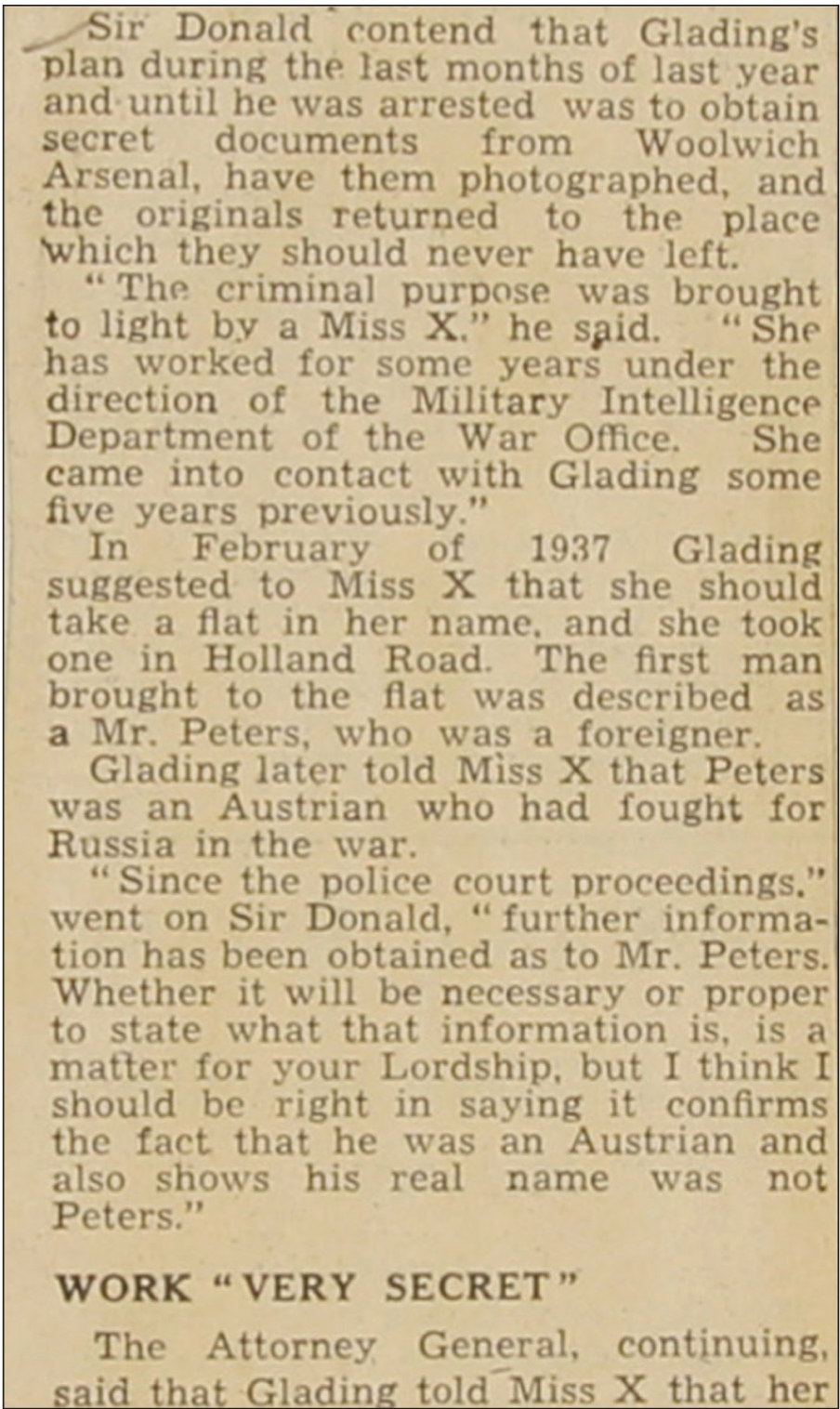
The case was widely reported in the press, and Miss X was characterised as glamorous and pretty (Hemming, 2017, p. 189), amplifying the gendered discourse related to women in covert roles. Her mission to Bombay and subsequent intelligence work for her handler M brings together several intersecting strands of enquiry—from gender issues in war, intelligence and espionage, sexual politics, imperial and colonial administrative practices of surveillance to anti-colonial politics, transnational mobilities and more.
The Colourful Hostess
Fritz Lang’s landmark espionage thriller Spione (1928) romanticised spydom for Miss X and other young ladies (Kizirian, 2022). The screenplay for the film, and the book on which it was based, was written by Thea von Harbou, his wife then and collaborator. Von Harbou was already quite successful as a novelist by the time she met Fritz Lang in 1919, and the two ‘discovered an instant kinship’ and ‘among their common interests was a restless curiosity about foreign cultures’ (McGilligan, 2013, pp. 63–64). They were intrigued by India, and von Harbou cherished a dream to someday visit the country. Lang was married when he first met von Harbou. A tragedy and ugly scandal would ensue at the end of 1920, when Lang’s wife Lisa Rosenthal, upon discovering her husband and von Harbou in a state of intimacy, rushed to the other room and shot herself dead. Suspicions about the roles of the illicit lovers in relation to Lisa Rosenthal’s death persisted, but they were exonerated. In August 1922, Lang and von Harbou married. They would soon become the power couple of German cinema and the toast of Berlin society (Figure 3). But Lang was a philanderer and became involved with other women soon after the marriage. As P. McGilligan writes, the marriage seemed perfect to outsiders, but this was far from the truth. Lang became romantically involved with the leading lady of Spione, Gerda Maurus, the ‘super-spy’ Sonia who was:
[A]ssigned to track and destroy opposing agent number 326. Agent 326 was working on the side of good government, while Sonia was manipulated by ‘the most dangerous man in Europe’, the arch-sinister Great Haghi. When Agent 326 and Sonia fall in love at first sight, Haghi’s master plan begins to unravel. (McGilligan, 2013, pp. 135–136)
11
The recursivity between the lives of Lang and von Harbou and the dramatic screen stories they created began to further complicate as the political climate in Germany darkened with the rise of the NSDAP in the late 1920s. Fritz Lang ‘had been sleepwalking politically for most of the 1920s’ but then began to take notice of newly minted supporters of the Nazis (McGilligan, 2013, p. 157). Thea von Harbou’s estranged husband prior to her marriage to Lang, Rudolf Kliene-Rogge, a character actor in several of Lang’s films, including M and Spione, ‘was an early NSDAP partisan’ (McGilligan, 2013, p. 157). Von Harbou ‘tilted’ towards the Nazi regime, admiring their ‘pageantry and symbolism’, McGilligan writes. In fact, she ‘grew infected by the Nazi vision’ (McGilligan, 2013, pp. 157–158). Despite the progressive politics of her early youth, which included abortion rights and women’s rights, von Harbou was regarded as a conservative nationalist. As Nazi propaganda intensified, Lang and his assistant Conrad von Molo ‘shook their heads’ at Thea von Harbou’s ‘steady rightward drift’ (McGilligan, 2013, p. 162). The two men spoke of leaving Germany despite Lang’s alleged secret efforts to ingratiate himself with the establishment, but as von Molo noted, the decision to leave the country and distance themselves from the Nazis was understood between the two of them. By then, Thea von Harbou and Fritz Lang had drifted apart and soon their marriage was dissolved. As Lang was quoted to have said in an interview: ‘Our separation was amicable. The only thing that divided us was National Socialism’ (McGilligan, 2013, p. 181). The fact that Fritz Lang was ‘not Aryan’ and partly Jewish played into the widely reported news of the power couple’s broken marriage.
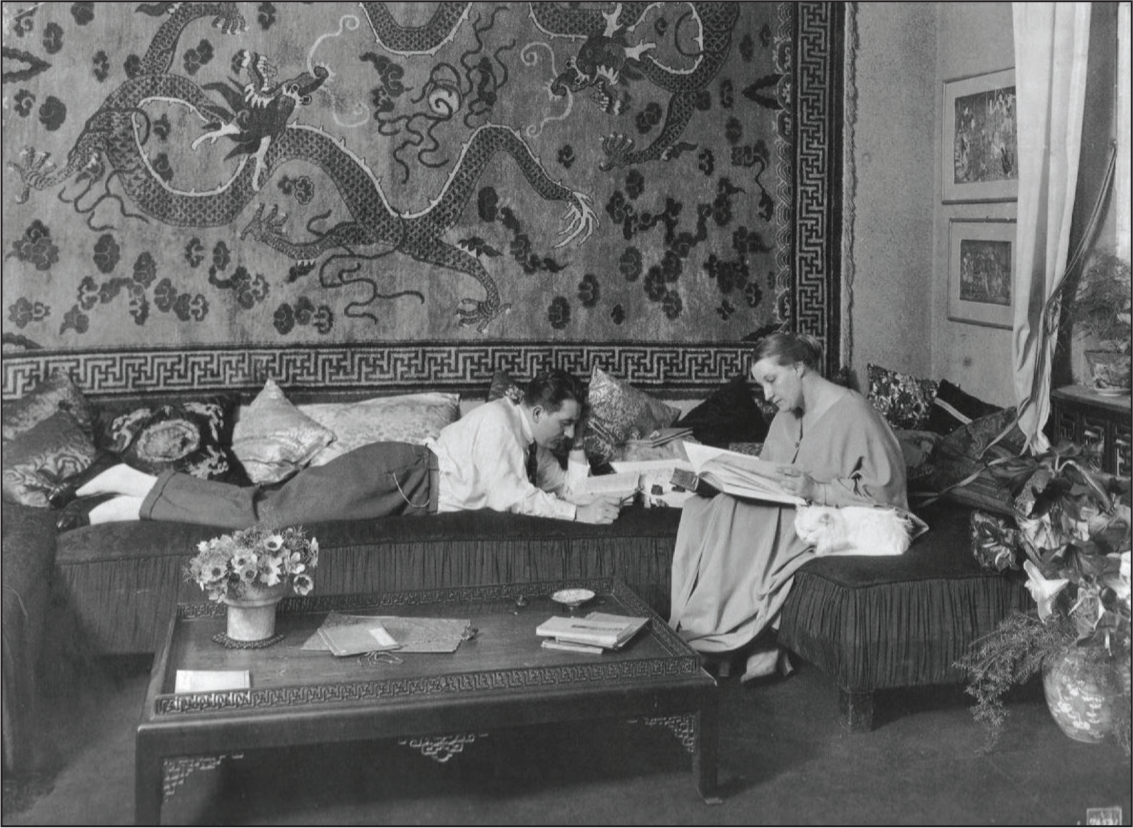
The proximate cause for the end of the couple’s marriage, however, was Lang’s discovery of Thea von Harbou in bed with Conrad von Molo’s Indian flatmate, Ayi Tendulkar. 12 Von Harbou had met Tendulkar in January 1933 at von Molo’s editing studio. Having returned from a stint in India as a correspondent for Berliner Tageblatt, Tendulkar was studying engineering and had been involved with the nationalist movement against colonial rule in India. The affair caused great scandal in Berlin social circles, and Lang was said to have felt greatly humiliated. Tendulkar was not only Indian; he was 17 years younger than von Harbou (McGilligan, 2013, p. 163).
Von Harbou’s association with the Nazis deepened. She made some films herself, and as the propaganda minister Goebbels noted in his diaries, she presented plans for an anti-Bolshevist film. Additionally, she acted as a go-between, petitioning Goebbels on behalf of others who had ‘aroused the government’s ire’ (McGilligan, 2013, p. 184). The question of whether Thea von Harbou was ‘an ardent Nazi’ or not remains uncertain from the few accounts of her. In a biography of Ayi Tendulkar, his daughter, Laxmi Tendulkar Dhaul, writes of how von Harbou lived a secluded, private life with her father during the Nazi regime. The couple had secretly married since racial purity laws restricted their union. Von Harbou, it seems, would often discreetly entertain Jewish friends at her home. According to Dhaul, von Harbou was against the Nazi racial laws but joined the Nazi party in 1941—‘something that has led to her being labelled a sympathizer and anti-Jew’ (Dhaul, 2013). Later, in a denazification clearance certificate, von Harbou claimed that her intention in joining the party was to help her Indian friends. Von Harbou also claimed that she did not attend any meetings ‘but reluctantly paid the membership fees’ (Dhaul, 2013).
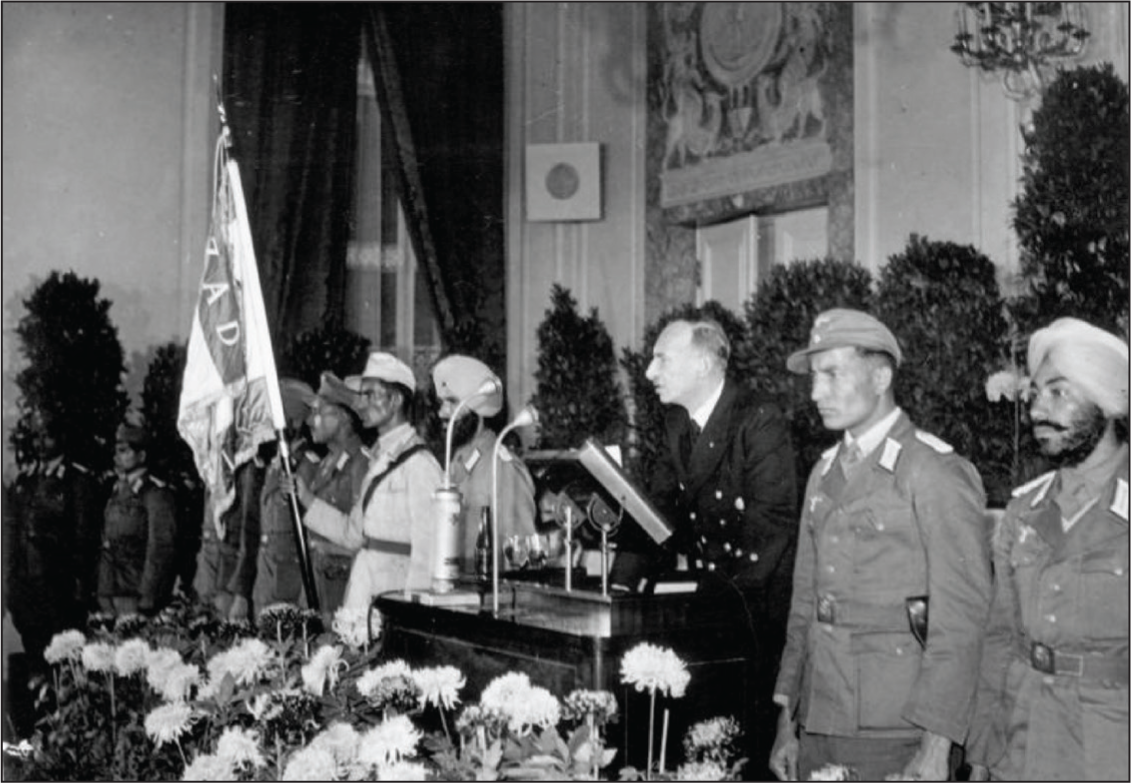
Importantly, Dhaul mentions von Harbou’s association with the Indian national leader Subhas Chandra Bose during the latter’s stay in Berlin in the early 1940s, prior to his secret departure to the Far East. As is well known, Bose forged strategic alliances with Nazi Germany and Imperial Japan during wartime, with the intention of overthrowing the British in India with the help of the Axis Powers. Arriving in Berlin in 1941, Bose set up the Free India Centre (FIC) which ran anti-British propaganda radio stations, raised a military unit comprised of Indian Prisoners of War known as the Azad Hind Fauj, Legion Freies Indien or the Free India Legion and established an Indian government in exile (Figure 4). Dhaul writes that von Harbou was supposedly present during the broadcast of Bose’s famous manifesto of the Azad Hind radio station in January 1942. As Jan Kuhlmann reveals in his book, it appears that the Nazi propaganda minister Joseph Goebbels suggested that von Harbou make a film ‘with Bose as its hero’ (Kuhlmann, 2012, p. 110). 13 Kuhlmann also mentions that von Harbou would host a dinner for Indians every Wednesday (Kuhlmann, 2012, p. 151). During this period, there were efforts by the Special Indian Bureau of the German foreign office, the Sonderreferat Indien, 14 to set up a sort of hostel for the Indians since there was inadequate facility for their lodging and leisure.
It is here that intelligence documents provide interesting details of the role that Thea von Harbou played in these affairs. Two letters of the Political Archives of Federal Foreign Office dated 29 and 30 April 1942 reveal communications that von Harbou had with Wilhelm Keppler, the director of the Sonderreferat Indien, regarding the proposed hostel for the Indians (Politisches Archiv Auswärtiges Amt [PAAA], 1943). In the first letter, she writes of her inability to find a suitable place and that houses formerly owned by Jews were not accessible. The second letter says that she had spoken to Herr Regierungsrat (senior bureaucrat) Dr Kretschmer about her efforts to find a suitable house in the Old West or Tiergarten and she received his assurances that a positive outcome was possible. However, these efforts on her part were not successful and the Indians were eventually allotted quarters in the SS (elite gaurd of the Nazis) headquarters, the Ahnenerbe, much to their dissatisfaction. Von Harbou signed off her letters with a ‘Heil Hitler’ (PAAA, 1943).
The man running the FIC and the radio stations was Subhas Chandra Bose’s right-hand man and plenipotentiary, A. C. N. Nambiar. He would be appointed the staatsminister (Minister of State) of the provisional government of Free India (Azad Hind) that Bose had declared in October 1943. 15 Following his capture and arrest by allied troops in 1945, Nambiar was interrogated by a British Indian military intelligence officer for over 5 weeks. The layers of ambiguity and interconnectedness between the various stakeholders desiring shared and diverse outcomes at the same time become starkly apparent from the details revealed by Nambiar during his interrogation (UKNA, 1945b).
Nambiar confirmed that following her separation from Tendulkar (who had left for India in 1938), von Harbou was hosting dinners and gatherings for Indians both at her house and restaurants. He said that he later received confirmation that she was working for the propaganda ministry and the German foreign office in this regard. Some of the Indians supported her and others were against her. As Nambiar claims, initially, due to von Harbou’s influence, Subhash Chandra Bose had an understanding with her on the formation of the Indian Legion. Also,
By offering opportunities of wine and women to the P.W. [Indian Prisoners of War] and so relieving the monotony of their lives, she came to have a considerable influence over young Indians. BOSE said she was very keen on keeping close relations with him and as she obviously had considerable influence he was at first in favour in keeping in with her. But when he found she was opposed by the very group who had joined the F.I.C. and that Frl. SCHENKL was also opposed to her, he started criticising Indians who visited her. (UKNA, 1945b, p. 53)
Nambiar adds further that von Harbou had visited the Legion at Frankenberg and taken some photographs without the knowledge of the FIC. In fact, the Foreign Office liaison Adam von Trott du Solz conveyed to Nambiar that von Harbou had done so without their knowledge as well. Bose would protest about this since it came to light later that the Foreign Office had known about it all along. Both von Trott and Keppler had kept Bose and the FIC in the dark about several matters. As Nambiar says: ‘VON TROTT also exercised a check on Bose through various people, one of the whom was HARBOU, and despite BOSE’s protests, Indians in Berlin continued to visit HARBOU and she maintained close relations with the leading Legionaries’ (UKNA, 1945b, p. 53). It appears that von Harbou developed a special liking for a man named Samant who lived in her house. He had joined the FIC in May 1942 despite the objection of several members. Samant was the head of a radio station called ‘Namaste Hind’ with some Indians working there, who had come through von Harbou. As Nambiar claims, in September 1943, he obtained documents to leave the country for Lisbon by an airplane through the influence of von Harbou. This was viewed with great suspicion. Summarising his account of her activities, Nambiar says: ‘I have no doubt that HARBOU obtained intimate knowledge of the Azad Hind Movement in order to keep the Germans informed’ (UKNA, 1945b, p. 54). Effectively, as per Nambiar’s claims made during his interrogation, von Harbou was a Nazi spy planted in the FIC.
The Dedicated Revolutionary
On 19 September 1935, The Bombay Chronicle reported that the Bombay CID had raided several locations across the city and suburbs in the hunt for ‘Red’ literature. Amongst the places searched, there was also the Khar residence of Suhasini Nambiar. Earlier that year, a question regarding the refusal of a passport for J. M. Adhikari of Bijapur by the Bombay Government was raised in the Legislative Assembly. A confidential document of the Home Department reveals that he was the younger brother of G. M. Adhikari, one of those arrested in March 1929 in the Meerut Conspiracy Case. 16 The intelligence note says that J. M. Adhikari was ‘a confirmed Communist’ and was on friendly terms with Suhasini Nambiar (NAI, 1929). Suhasini, the estranged wife of A. C. N. Nambiar, was living in Bombay with her sister Mrinalini Chattopadhyaya in the north-western suburb of Khar. Both were younger siblings of the leading nationalist leader, poet and former president of the Indian National Congress, Sarojini Naidu, as also of their estranged brother, the well-known revolutionary Virendranath Chattopadhyaya, aka Chatto, who had moved to Soviet Russia in 1931. 17 He would eventually be put to death in 1937 during Joseph Stalin’s purges. Suhasini Nambiar was considered to be the first woman member of the Communist Party of India (CPI).
There is intelligence documentation on the activities of Suhasini Nambiar from the very moment she returned to India in 1928. Vappala Balachandran’s perusal of the Bombay Police CID Special Branch archives reveals that surveillance on Suhasini Nambiar continued till 1951. 18 The little that was known of Suhasini was often coloured by myths. Her sister-in-law Kamaladevi Chattopadhyaya claimed in an interview that Suhasini had escaped Nazi Germany as a stowaway in a ship (Balachandran, 2017, p. 95). On the contrary, secret documents record the precise date of her arrival in Bombay. Suhasini’s surveillance file reveals that she arrived at Bombay harbour on the S. S. Cracovia on 17 September 1928 with the British communist agent Hugh Lester Hutchinson (Balachandran, 2017, p. 96).
Communications between the Home Department in Simla (Shimla), Bombay Police and the India Office in London add that Hutchinson’s empire-wide travel endorsement was to be cancelled on his arrival, but that was not done. It further shows that Hutchinson was staying with Suhasini at her residence in Khar (NAI, Home_Political_NA_1929_NA_F-24-92, 1029). There is, in fact, a photograph in the police records of Suhasini and Lester Hutchinson with her sister Mrinalini taken at the Khar residence of the two sisters (Balachandran, 2017). British intelligence noted that Hutchinson and Suhasini were lovers. 19 It would only be several months later, in February 1929, that A. C. N. Nambiar would reveal to his estranged wife Suhasini, that he was involved with someone else, causing her profound heartbreak and despondency, evident in the intercepted letters that they exchanged between Bombay and Berlin. A month prior to this, in January, Suhasini had written to M. N. Roy 20 with a request that he contribute to the Marxist publication The New Spark, which Hutchinson edited. Suhasini also issued an advertisement in The Times of India dated 26 January 1929, seeking secretarial work (Balachandran, 2017, pp. 102–103). By this time, as a member of the illegal CPI, she had become a part of the radical labour movement in the city. 21
A. C. N. Nambiar’s own recollections of his wife are sparse. Their whirlwind romance and marriage was the cause of his estrangement from the patriarch of the family, his older brother Madhavan Nambiar. The young couple initially set up house in London but were soon persuaded by Sarojini Naidu’s son, Jayasurya Naidu, to move to Berlin (Pemmaraju, 2022, p. 118). As Nambiar recalls:
He spoke to me very confidently of my getting in Berlin work relating to India and of it giving me, if not a very comfortable living, a better one than I was having in London. Without waiting longer news from India, accompanied by Suhasini, I left for Berlin. (Nambiar, 1985)
In Berlin, by virtue of their association with Chatto, Nambiar found employment with a trade magazine that had the support of his revolutionary brother-in-law. The couple mingled with other Indian revolutionaries and anti-colonial activists as well as German communists. Suhasini was known in Indian circles in Berlin for her beauty (Figure 5) and her many admirers (Diwakar & Nargundkar, 1983). Among them was also Agnes Smedley, then the common-law wife of Chatto, who described Suhasini in glowing terms (Smedley, 1943, p. 18), who often hosted salons where a diverse range of people gathered and exchanged ideas. Suhasini had, during the mid-1920s, travelled to Moscow to attend the Communist University of the Toilers of the East (KUTV) on the recommendation of M. N. Roy (Dang, 2007, pp. 123–125).
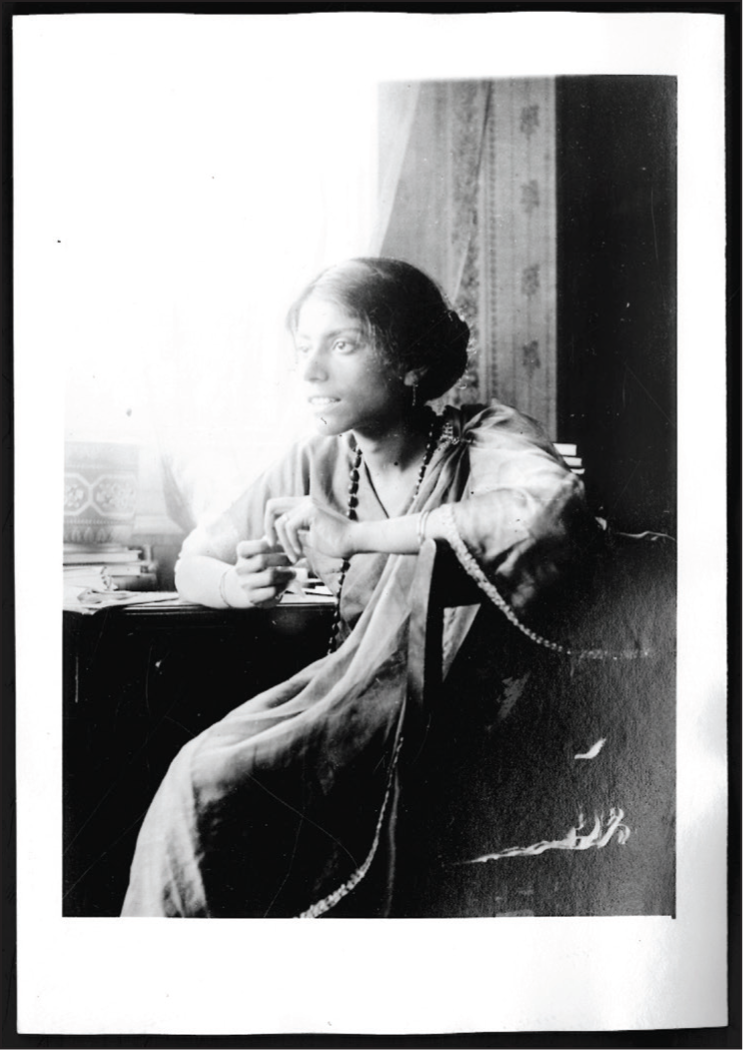
Suhasini became a contact person for couriers and activists travelling from abroad to India. Several of them were sent by M. N. Roy to convey literature, money and instructions to his comrades in India. She had become a prominent secret organiser for the CPI. Lester Hutchinson had managed to work through the Workers’ and Peasants’ Party (WPP), the legal front of the illegal CPI. He became a senior functionary of the powerful radical textile workers trade union, the Girni Kamgar Union (GKU) (Haithcox, 2015, pp. 103–104). 22 But in March 1929, the British struck a body blow by arresting 31 labour leaders and communists across India, including the three British agents who were operating in Bombay at the time—Philip Spratt, Benjamin Bradley and Lester Hutchinson. Intercepted letters revealed that Suhasini met the arrested men in Meerut jail in June and later in July 1929. 23 She was also elected by the Bombay group for the Meerut Defence Committee. That December, Suhasini travelled to Lahore to attend the Naujawan Bharat Sabha 24 Conference as the President elect.
By this time M. N. Roy had been formally expelled by the Comintern. As he had already managed to escape Moscow and align with the German communist opposition in Berlin, he became inimical to the Comintern’s interests in India. With his imminent return, colleagues were instructed to resist any efforts by Roy to influence them. Suhasini Nambiar’s role in these affairs became complicated, and surveillance provided the British with intelligence on her activities and associations. Her house had been raided in March that year during the Meerut Conspiracy arrests, and letters from her estranged husband had been seized. 25 In the lead up to M. N. Roy’s secret return to India in December 1930, surveillance on Suhasini continued. In this unusual phase of crossed loyalties, it is unclear how Suhasini navigated her work with the official CPI and members of the Royists (a close group loyal to M. N. Roy). It is known from V. B. Karnik’s account 26 that at one secret meeting of the Bombay Youth League, which Suhasini and Hutchinson attended, her brother, the poet and playwright Harindranath Chattopadhyaya, betrayed the identity of M. N. Roy who was there in disguise. M. N. Roy’s expulsion from the Comintern also played into the rivalry between Roy and Chatto. While the rivalry seemed mostly to do with Roy’s erstwhile influential position in the Comintern establishment and Chatto’s failed attempts to seize Moscow’s attention and support, it was also linked to the personal involvement of both men with Agnes Smedley. What role Suhasini played in the eventual arrest of M. N. Roy while still acting as a Bombay conduit for his instructions remains elusive. Perhaps the answer is buried in a close reading of documents waiting to be accessed and examined.
Conclusion
The narratives of these three women are entangled by their shared associations and can be located in the ‘interstices of empires’, 27 wherein shadow conflicts operated in liminal forms as proxies for the larger events of nation-states and world powers. Importantly however, these women and their narratives are linked by the ‘symbiotic, intimate’ (Harper, 2021, p. xxvii) intersections of institutional surveillance and intelligence gathering by the empire, covert activities of its adversaries and the overarching topography of conflict of the times, wherein colonialism, imperialism and capitalism were being countered by revolutionary and nationalist movements in the colonies; large ideological and expansionist agendas driven by fascism and bolshevism were engaged in a quest for a new world order; and the promise of a new internationalism of self-governed sovereign powers appeared as a global ideal.
In an overt sense, Miss X (and CPGB) was connected to Suhasini Nambiar through the anti-colonial Comintern network focusing on India 28 ; Thea von Harbou was directly connected to A. C. N. Nambiar and other anti-colonial activists in Berlin; and all three women were interconnected through the intersection of anti-British German agendas going back to the First World War and the debris of the ‘Great Game’ of empires. Britain was struggling to contain nationalist struggles in their colonies, battling anti-British bolshevism, communism and pan-Islamism across the world, while Germany patronised anti-British organisations keeping intact their own imperialist ambitions. Consequently, British intelligence operations were expanded over the first three decades of the 20th century to meet the many challenges to the British Empire—from revolutionaries of all hues to militant nationalists, socialists, syndicalists, anarchists, communists and anti-imperialists. Within this complex matrix of interconnectedness lie the hidden narratives of women and their roles in conflict. In bringing these narratives together, this article has explored the role of women deployed in covert roles across colonial–imperial spaces during the interwar period, entangled as they are through surveillance networks and imperial intelligence agencies. The close reading of intelligence documents reveals not only operational details of their covert roles, but also brings up ambiguities regarding their loyalties, and affective considerations that inform their secret lives and political mobilities, thereby offering an alternative history of marginal, clandestine figures involved in geopolitical affairs. An important point that demands reiteration is that formal institutional declassification of confidential documentation will aid scholarship immensely and further our understanding of the relatively less studied role of women in matters of historical importance.
Footnotes
Acknowledgements
I would like to thank Ole Birk Laursen, Julia Hauser and Vappala Balachandran for providing valuable inputs.
Declaration of Conflicting Interests
The authors declared no potential conflicts of interest with respect to the research, authorship and/or publication of this article.
Funding
The authors received no financial support for the research, authorship and/or publication of this article.