







Abstract
The outbreak of the coronavirus disease in 2019 (COVID-19) wreaked havoc on the social, psychological, economic, and political buoyancy of all economic activities worldwide. The economic challenges caused by the interruption in worldwide economic activities significantly impacted remittances flow to low- and middle-income economies (LMIEs). This study used the past, present, and predicted remittances data of migration dynamics within countries to analyse the economic impact on remittances. Remittances to most LMIEs plunged during the pandemic intense period; however, the decline was temporary as the flows increased due to countrywide policies and individuals’ emergent needs. The trend of economic contagion is fundamentally unique in that even the primary source of remittance sending nations have been greatly impacted. The global nature of this pandemic raises numerous questions, including whether the decline in remittances will continue for a short term or will last for an extended period to stagnate LMIEs. This current study’s results reveal that while remittances flow to key recipient nations declined between 2019 and 2020, there has not been a sharp decrease and most of the nations were on the path of recovery in 2021. This study proposes that policymakers support remittances flow on a higher growth trend in successive years based on Sustainable Development Goals to attain global inclusive development. This research further recommends the adoption of higher technology transfer of remittances of migrant workers within the emerging and low- and middle-income economies.
Introduction
COVID-19 pandemic as a global health risk has transformed the lives of many individuals, economies, and businesses, urging government and policymakers in many regions to re-examine how living conditions would be adjusted in the new normal (Ataguba, 2020; Forman & Mossialos, 2021). COVID-19, as a multifaceted calamity, has influenced the world phenomenon that the United Nations (UN) directly reversing nations’ hard gains earned toward the sustainable development goals (SDGs) (Akanle et al., 2022), necessitating multiple combinations of policy initiatives to revamp economic growth and provide remedies to respond, significantly influencing extant services and infrastructure (UNDP, 2020). Thus, the merits of economic development through enhanced technology and innovation have been emphasised as a critical tool to achieve the SDGs in 2030 (European Commission et al., 2016; Senise et al., 2021). Therefore, science, technological advancement, and innovation, including blockchain technologies and fifth generation (5G) wireless technologies, are critical for shifting inclusive development pathways and strengthening collaboration and knowledge sharing (European Commission et al., 2016; Senise et al., 2021). It suggests that economic growth is one of the essential factors for determining the strength and progress of an economy (Suri et al., 2011; Thirlwall, 2003; Van Stel et al., 2005). Growth has occurred in several regions across the globe, several low-income nations have accelerated rapidly, and millions of individuals have been elevated from impoverishment (Agyeman et al., 2022b; Akanle et al., 2022). The proponents of standard growth theory (SGT) posit that impoverished economies will expand faster and catch up to affluent economies (Gould & Ruffin, 1993; Larson et al., 2016).
Nevertheless, relatively few economies have attained high-income standards, and income growth around several nations has been varying and fluctuating (Larson et al., 2016). Hence, many citizens of LMIEs move to different affluent countries as migrants to work to earn money and make a living to support their families back home (Chowdhury & Chakraborty, 2021). The monies earned by the migrant workers are described as remittances. Remittances are financial transactions made in kind by migrants to relatives and friends in their communities of origin (Chowdhury & Chakraborty, 2021). Notwithstanding, international remittances only partially demonstrate this common understanding (Migration Data Portal, 2022). These migrants usually maintain close ties with their families in their home countries, exhibiting the substantial streams of employees’ remittances transferred home annually. According to global knowledge partnership migration and development (KNOMAD, 2019), migration is mainly driven by income and employment disparities between destination and origin nations, economic and social inequality, demographic imbalances, and climate change. Therefore, this study aims to analyse the influence of COVID-19 on the inflow of remittances to the LMIEs due to the global economic contagion posed by COVID-19 and its corresponding economic downturn in transferring migrants remittances (Bisong et al., 2020a; Janssens et al., 2021). Migrants’ remittances transferred home are essential avenues of external financing to LMIEs (Ratha, 2019).
However, within the surge of the COVID-19 pandemic, the World Bank revealed a decline of remittances to LMIEs by 20%, which may impede the economic growth pace of these nations and deteriorate the living standards of beneficiaries (Bălan, 2020; Bisong et al., 2020b; Janssens et al., 2021), as most migrant workers are from the LMIEs (Larson et al., 2016). Monies these labour force working abroad earn and send to their acquaintances’ homes are becoming an integral part of economic growth all over the globe. Remittances in the LMIEs were growing in significant proportion and accounted for $539 billion in 2018 and were projected to reach $550 billion in 2019 (Barne & Pirlea, 2019). Recently, remittances flowing to the LMIEs are deemed more extensive than the official development assistance and more stable than the private capital flow (Barne & Pirlea, 2019; KNOMAD, 2021; Ratha, 2021). According to (KNOMAD, 2021), migrant remittances flowing to the different regions are equivalent to foreign direct investment (FDI) and significantly contribute to FDI exchange earnings. Remittances flowing to LMIEs were projected to have grown 7.3% in 2021, accounting for $589 billion (Ratha, 2021). Thus, the rebound of growth in remittance is more robust than earlier dire predictions (World Bank, 2021). In most countries, remittance flows have surpassed FDI and serve as the most significant avenue of external financing (Ratha, 2021). Thus, the top five economies noted for high recipients of remittances within 2019 were projected to be India, China, Mexico, the Philippines, and Egypt (Ratha et al., 2019). Also, the highest percentages of remittances to GDP within 2019 were among countries comprising Tonga, Haiti, Nepal, Tajikistan, and the Kyrgyz Republic. Figure 1 demonstrates the top countries with remittance receivers in 2019 and the corresponding remittance percentage to GDP.
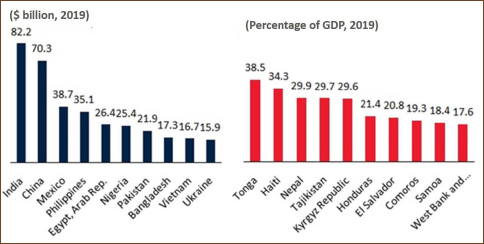
Figure 1 shows India is the leading country with the highest remittances of $82.2 billion, followed by China, Mexico, the Philippines, Egypt, Nigeria, Pakistan, Vietnam, Bangladesh, and Ukraine with their respective gains. All these benefits gained in the respective nations were almost halted in 2019 due to the emergence of the pandemic, which nearly collapsed all essential economic activities. Remittances are effective avenues to alleviate poverty and a lifeline to several LMIEs because they are directly received by their families (Barne & Pirlea, 2019; Ratha, 2021). Although remittances serve as the lifeline of LMIEs they are accompanied by a huge transaction cost. Figure 2 delineates that most of sub-Saharan Africa’s regions are characterised by high transaction expenditure in receiving remittances. Thus, Figure 2 demonstrates that the most negligible percentage charge on remittances from migrants to their family members is 9.7 from Angola to Namibia. The highest costs are 17.7%, which could be observed from South Africa to Angola and South Africa to Swaziland, respectively (Barne & Pirlea, 2019). This pattern of remittance charges has made the United Nations (UN) recognise the importance of remittances to attaining SDGs (Akanle et al., 2022). These benefits derived from remittances have made the UN seek solutions to the higher transaction costs associated with remittances. Thus, the advantages of remittances to recipients are decreased by the associated high expenditure of transferring the monies, which averagely hovers around 7% through a money transfer of $200.
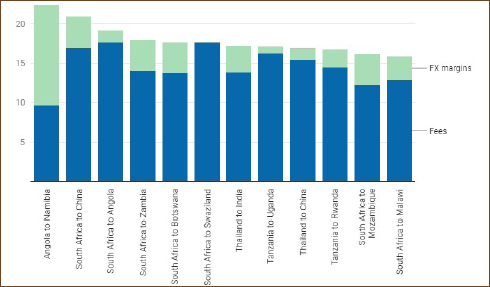
Besides, financial institutions in most countries are characterised by high charges for transferring remittances, at 10.9%. For instance, in sub-Saharan Africa, the expenditure on transferring money is more than the average of 9.3% (Barne & Pirlea, 2019). This condition has been heightened due to the COVID-19 contagion economic impact. Thus, the cost of transferring remittances to indigenes calls for great concern because remittances are significant and robust sources of financial development for nations and contribute to reducing poverty and increasing the welfare of recipients. Therefore, in ensuring the attainment of SDGs in all regions, policymakers must implement measures for reducing all costs incurred in transferring remittances to hover around 3% of the amount transferred by migrant workers. It is argued and projected that bitcoins and cryptocurrency or digital currency may increase access and eliminate many charges (Locke, 2021). It is revealed that international digital remittances may surpass $300 billion worldwide in 2021, accounting for about 44% of official international remittances (Kachingwe & Nicoli, 2019).
The worsening of economic situations through lockdowns and the social and financial expenditure of returning and moving back to their destinations may compel several migrant workers to stay put in their current destinations (OECD, 2020b). These conditions made migrant workers apply several strategies to cope with the COVID-19 pandemic economic impact, including lowering spending, searching for alternative jobs, moving to less expensive accommodations, limiting savings, and selling belongings (Hossain, 2021; Marwah & Ramanayake, 2021; Meegaswatta, 2021; Siddiqi, 2021; Yadav & Iqbal, 2021). The reverse impact on the migrants’ families is the sharp decline in remittances transfer (Tang & Li, 2021). COVID-19 plunged the remittances of many LMIEs; however, the decline was temporal, and the flows are increasing after almost a year of decline (World Bank, 2021). An essential factor for the quicker remittances rebound is attributed to the reverse of the transferring sources; thus, the unaffected migrants in different regions sent remittances home, compensating for the losses (World Bank, 2020).
COVID-19 economic contagion is primarily unique because remittance-sending nations within the globe have also been negatively impacted. Therefore this research raises the question: will the present pandemic economic contagion have short-term repercussions on remittances? Also, should LMIEs prepare for a stagnant long-term remittance decline? These valuable logical questions are essential for analysing remittances inflow to the LMIEs. This research seeks to present the probable repercussions of the pandemic on remittances to LMIEs. The contribution of this research is not to provide solely quantitative estimations of the pandemic repercussion on remittances as it may be quite early to engage in long-run causal analysis and predictions; instead, the purpose is to provide an indicative overview of the trending and repercussions that have been experienced in preceding periods or could be experienced in the subsequent period. This study contributes to the scholarly debate on the economic consequences of the pandemic on remittances of LMIEs. This study furnishes effective and efficient policies that need to be instituted for the rebound of employment for migrant workers to aid the continual flow of remittances to the LMIEs. This research also contributes to the SGT, which emphasises that with respect to time, LMIEs will develop and complement the roles performed by developed countries. This research further examines the merits of remittances as a catalyst for sustained economic growth when harnessed properly in the LMIEs. It suggests positioning the migrant workers as strategic partners in pursuing development for LMIEs and attaining the SDGs.
The other sections of this study are organised as follows: the second section expounds on the historical trends of investigations conducted on remittances in LMIEs and some specific examples of nations within the region’s performance. The second section further provides a theoretical foundation based on the SGT. The third section three provides the methodology. The fourth section elucidates the repercussion of the pandemic on the inflows of remittances to the LMIEs. The final section provides the conclusion, policy recommendation, limitations, and future direction of research.
Literature
This current study is based on the COVID-19 economic impact on remittances to LMIEs. This analysis is relevant because the economic performance of nations is extensively assessed through the economic benefits of remittances to individuals in attaining the SDGs. This study is founded on the SGT.
Standard Growth Theory
The SGT (Solow, 2005) or the classical theoretical concept is a channel through which financial globalisation contributes to economic growth. In other words, the standard growth model suggests that financial globalisation will result in capital flows from capital-rich economies to capital-poor economies because capital returns will be more significant in the latter (Hansen & Ohanian, 2016; Solow, 2005). In theory, these capital inflows should supplement limited internal investing in capital-poor economic systems while also allowing for massive investments by lowering the cost of capital (Hansen & Ohanian, 2016; Nelson, 1998; Solow, 2005). The foundation of neo-classical growth theory emphasises that it is plausible to explain the broader dimensions of economic changes throughout nations by observing the lens of aggregate production function (Banerjee & Duflo, 2005). The aggregate production’s function connects the total output of an economy to the aggregate number of labour, human capital, and physical capital in the economy, and some simple measurement of the standard of technology in the economy in general (Banerjee & Duflo, 2005). Based on human capital deployment across regions, it is believed that migrant workers would continue to earn money from affluent countries and transfer money back home to increase remittance flows and economic prosperity (Ma et al., 2019).
Repercussions of COVID-19 on the LMIEs Migration and Remittances
The International Labor Organisation (ILO, 2020), projects that about 1.6 billion workers within the informal sector lost about 60% of their incomes, with little or no opportunities and investments for social protection during the surge of the COVID-19. The loss in income during the COVID-19 era affected migrant workers’ remittances sent to their families (Guha et al., 2021). Poverty was projected to rise due to pandemic, rendering millions of people abject in poverty (UNDP, 2020). Projections were made concerning the revenues of the LMIEs’ earnings to experience a massive decline accounting for 20%, reducing an enormous source of income for a much-underprivileged populace (World Bank, 2020). Economic transactions to the LMIEs were anticipated to revive and grow by a percentage of 5.6, equivalent to $470 billion, within 2021 (Neopane & Waglé, 2020; World Bank, 2020). The pattern of the pandemic repercussions on economic expansion and strategies to control the disease is crucial to determine the flow of remittances to countries in a period of economic upheaval (Feld, 2021; Meijer & Webster, 2020; Mishra, 2020; Neopane & Waglé, 2020; World Bank, 2020). The prices of commodities in different jurisdictions fell by a margin of 20% within March 2020 due to the sharp decline in crude oil prices (Barua, 2020; Gharib et al., 2021; Rajput et al., 2020). Crude prices fell considerably, selling around 40% lower at the inception of 2020 (Black, 2020; Federal Reserve Bank, 2021). Also, the COVID-19 prevalent heavily affected the tourism sector (Fotiadis et al., 2021; Gössling et al., 2020; Nicola et al., 2020; Rahman et al., 2021; Škare et al., 2021). All these economic factors, including job loss and labour demand reduction, lead to lower remittances transactions to family members within the COVID-19 intense period in 2020 (Agyeman et al., 2022a).
Therefore, remittances are the essential avenues of external capital flows in LMIEs (Buch et al., 2002; Buch & Kuckulenz, 2010; Fayissa & Nsiah, 2010). Thus, remittances are vital in increasing economic growth via savings, investment, and the corresponding positive influence on consumption (Fayissa & Nsiah, 2010; Feld, 2021). This suggests that remittances inflow is critical to developing economies and households’ resilience which requires an in-depth investigation to explore its enormous benefit (Fayissa & Nsiah, 2010; Feld, 2021; Sharma, 2020). Hence, these advantages of remittances concerning economic growth have made policymakers and researchers propose various models to determine the connection between economic growth and remittances inflow with their respective input and output structures (Acemoglu et al., 2016; Perez-Saiz et al., 2019). Therefore, the fluctuation or shock from one economic source of revenue flow may invariably influence the interconnected input and output sources (Acemoglu et al., 2016). Further, remittances enhance health and education (Amega, 2018). Nonetheless, the coronavirus pandemic has created enormous economic constraints on individuals, countries, and organisations, culminating in a decrease in the gains of the citizens, the LMIEs, and the world at large, leading to a significant reduction in remittances (Bisong et al., 2020a; Kalantaryan & McMahon, 2020). A projection by (World Bank, 2020) indicated that most LMIEs, especially the African countries within the sub-Saharan region, would experience an enormous drop in remittances that may hover around 23.1%, compared to the aggregate decline in the world. Also, projections by (Ratha et al., 2019) revealed that African countries (sub-Saharan) and most LMIEs received a more significant percentage of remittances in 2018. These estimations were anticipated to increase to $551 billion in 2019 and are forecasted to reach $597 in subsequent years should the COVID-19 cases decline and individuals bounce back to their regular duties.
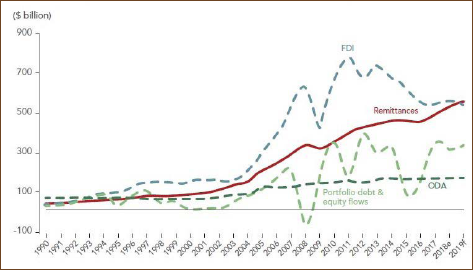
In 2018, the highest remittance receiving economies were the African countries (sub-Saharan) and some Asian countries that heavily depend on remittances (Ratha et al., 2019). Nevertheless, the growth pattern experienced a paradigm shift in 2019 due to the surge in COVID-19 in all regions (Ratha et al., 2019). The growth rate of remittances flows declined to 4.7% in 2019 compared to a robust 8.6% in 2018. Cyclical factors influencing the increase in remittance flows comprise economic growth, oil price, and exchange rate pattern variations (Zhang et al., 2021). For instance, robust economic development and employment conditions may facilitate buoyant remittance flows to diverse economies (Ratha et al., 2019). However, predictions about the decline in remittances may be defied because remittances flowing to different countries continue to be strong (World Bank, 2021). Thus, it is optimistic that in 2021 through 2022, international remittances within the globe and especially the LMIEs, would rebound to $565 billion. Hence a percentage increase of 2.2 in 2022 is estimated (World Bank, 2021). Figure 3 demonstrates the LMIEs remittances flow from 1990 through 2019. The trend in Figure 3 indicates an unprecedented remittance growth over the past decades.
Based on the above, this study envisions a well-structured procedure comprising a rapid and widespread vaccination roll-out program, significant lifting of traveling bans, coordinated action among countries on traveling protocols, precise information required about health protocols, adoption of digital tools to enhance safe mobility, accessible or affordable COVID-19 testing and other necessary measures recognised globally is the sure way of curbing the pandemic economic global contagion to increase workers remittance flow to their families.
Methodology
This study employed the remittances data from LMIEs to elucidate the research questions raised in this current study and furnish critical demonstration about the prospect of remittances within the LMIEs and countermeasures to overcome the current conditions (KNOMAD, 2021; Ratha, 2021). This study used the past, present, and predicted remittances data revealing migration dynamics within LMIEs to analyse the pandemic economic impact on remittances. Thus, studies have demonstrated a dynamic shift in most countries’ remittances due to the economic impact of COVID-19 (Mishra, 2020). Remittances of nations are measured based on the International Monetary Fund (IMF) balance of payment (BoP) data supported by data from central banks. Where recent data are not yet available, estimations and forecasts are applied. For the estimation of 2019, 2020 and 2021, partial data were available for the remittance’s inflow. Therefore, this study adopted the scenarios used to estimate and forecast the inflows of remittances for each nation based on data from the central banks and applied the growth rate to the preceding year for which data were available (Ratha et al., 2019). The forecast of the flow of remittances is based on the stocks of migrants in various destination nations and estimates of how the variations in the migrants’ income impact remittances transferred by these migrants.
Therefore, remittances received by nation

where

The elasticities

where

Study Area
This research is conducted in LMIEs characterised as the highest recipients of remittances to determine the performance trend of remittances inflow amidst the COVID-19 economic contagion. This study selects six economies, including India, China, Mexico, Philippines, Egypt and Nigeria, within the LMIEs based on the current classification of countries according to GNI, which incorporates the atlas methodology in 2020 (OECD, 2020a; Wellcome, 2022) for analysis as a result of their enormous receipt of remittances. This study is critical to help improve policies and sustain the gains of nations in case of unforeseen events like pandemics and the global financial recession that occurred in 2009.
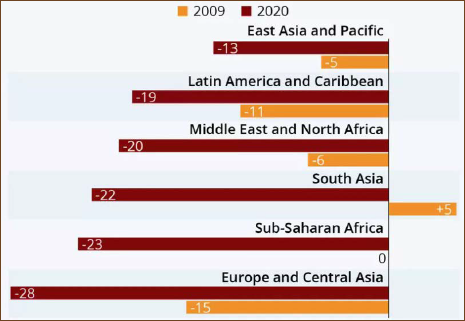
Figure 4 demonstrates the trend of remittances decline in the period of COVID-19 and the 2009 global financial recession. It could be observed that the decline in remittances in 2020, shown in red, outpaces the overall decline experienced during the 2009 great recession, indicated in yellow (Roper, 2020). Thus, the trend of economic impact on economies during the COVID-19 pandemic is higher than during the global recession in 2009. For instance, the sub-Saharan region that was not affected during the worldwide recession in 2009 was significantly impacted by the COVID-19 pandemic in 2020 by recording a –23% decline in remittances (Roper, 2020). Based on the enormous impact of the COVID-19 pandemic on remittances, this study selects the top six LMIEs classified as the highest remittances receiving economies for analysis. Further, it investigates their countrywide performance and policies initiated during the COVID-19 intense period.
Results and Discussions
This study examines the global economic repercussions of COVID-19 on remittances premised on six economies within the LMIEs, regarded as high remittance-receiving countries in 2019. Thus, this study examines the COVID-19 economic impact on remittance as follows:
Migration and Remittances in LMIEs
Global remittances transfers soared significantly from 2010 through the third quarter of 2019, and LMIEs, including Asia, have been the pivot of this massive transformation, as seen in Table 1. Table 1 demonstrates the increase in remittances to the LMIEs compared to the aggregate world records and the other regions. The movement of inflow of the remittances suggests that remittances to the LMIEs are the lifeline of many family members’ advancement.
Estimations and Projections of the Flow of Remittances to LMIEs from 2010 to 2021.
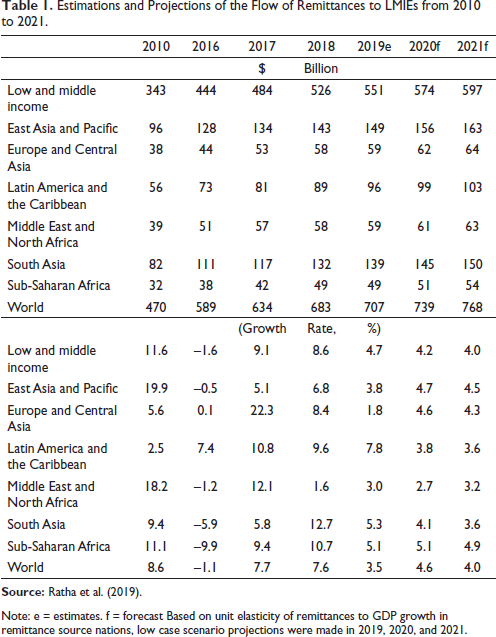
The significant decline in remittance growth rate is between 4.7% to 4.2% for estimates and a forecasted decline of 4.0%, which might be defeated based on the current statistical findings being projected as 7.3% growth in remittances in the latter section of 2021 (Ong, 2021). Several critical reasons for the continuous expansion in remittances transfers to LMIEs have been studied (Amega, 2018). First, migration flows have remained persistently high. Further, the drive-in remittances expansion can be moderately attributed to the greater adoption of official avenues for transferring money outside territories and the increased capacity of many central banks in LMIEs to record these flows. Previously, central banks were not paying much attention to remittance flows as they were perceived as insignificant. Notwithstanding, the justification of the relevant influence of these remittances flow on recipient nations has motivated several governments to supervise the transactions closely. The increased record keeping and monitoring of remittances flows are essentially a reaction to concerns put forward by governments in developed economies regarding money laundering and financing of terrorism programs (Lubambu, 2014; Maimbo & Passas, 2004). Therefore, this research suggests a massive endorsement of government policies that support the eradication of money laundering and enhance the credible channels of remittance transfer.
Country-Specific Cases
Trend of India’s Remittances Flow
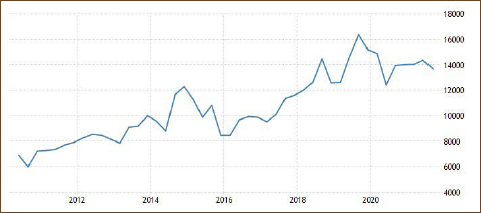
India is one of the nations recognised globally and within Asia, with the highest inflow of remittances accounting for about $82.2 billion (Ratha et al., 2019). Remittance inflows have been increasing continually in the past decades and even at the inception of the COVID-19 pandemic. The remittances increase in India is greatly attributed to the enormous wave of high skilled migrants to the United States in the middle of the 1990s and they mostly operate within the technology industries. Further, the withdrawals made by non-resident Indians who deposit monies into their account are counted as remittances (Chishti, 2007). Further, the large inflows of remittances received in India are attributed to the rigid to flexible exchange rate policies. It is worth noting that remittance transfers demand a foreign exchange transaction and an adjustable exchange rate that reduces the motivation of remitting via informal avenues where migrant workers may access the most satisfactory exchange rate. Figure 5 demonstrates that India has been receiving an enormous increase in the inflow of remittances over the past years. Although India is one of the countries with the highest recipient record of remittance transactions, it experienced a decline in remittances from $14,354.76 million in the second quarter of 2021 to $13,668.02 million in the third quarter of 2021 (Trading Economics, 2022c). Remittances in India were projected to decline and rebound if the COVID-19 pandemic incidence decreases.
Trend of China’s Remittances Flow
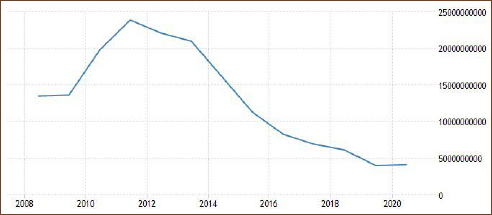
China is considered the second-largest economy globally and the second-largest recipient of remittances within Asia and other regions receiving about $70.3 billion (Ratha et al., 2019). The opening-up policy initiated by the government of China has attracted numerous foreigners who work as migrants and have been transferring monies back home to cushion their families and friends. Migration in China has promoted integration and peaceful coexistent with other migrants (Canales & Zlolniski, 2001; Martin, 2016). In China migration is considered significant as majority of Chinese are located in North America, Europe, and other Asian nations which supports the inflow of remittances to the economy. The number of Chinese migrants in different countries contributes to the substantial increase in remittances. Further, rural to urban migration plays a crucial role in remittance growth in China (Carrillo, 2004; Lu & Xia, 2016). Notwithstanding the enormous gains derived from remittances, the pandemic nearly halted all business activities, affecting all migrants’ transfer of remittances. Remittances in China were reported to be $4,166,101,258 in 2020 based on the BoP in current USD (Trading Economics, 2022a). Figure 6 demonstrates the pattern of remittance flow to China from 2008 through 2020, which could be observed that there was a minimal decline from 2019 through 2020. Although there was a decline in remittance growth in 2020, current statistics demonstrate a rebound in remittance as pandemic cases continue to decline and people assume their regular duties (World Bank, 2021).
Trend of Mexico’s Remittances Flow
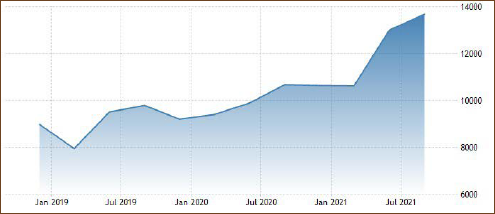
In 2019, Mexico was projected to be the 3rd highest remittance receiving nation accounting for about $38.07 billion (Ratha et al., 2019). It suggests that the flow of remittances to Mexico dramatically contributes to economic growth and development. Previous research reveals that remittances to Mexico were estimated to surpass official aid by a factor of three and would exceed FDI flows of many nations within 2019 (Parrado & Frisancho, 2021). Notwithstanding, the COVID-19 affected migrants’ remittances transferred to households in Mexico. For instance, the flow of remittances to Latin American countries was estimated to decline by 19.3% in 2020, a decrease more significant than the shock of the 2009 financial contagion. The cause of the decline in remittance was due to COVID-19 restrictions on business closure, ban on major economic activities, and most migrants who predominantly operate in the construction and service sectors were prohibited from operation, which led to a more significant loss in income. The income loss greatly affected the remittances inflow to households and the migrants economy. Figure 7 demonstrates the trend of remittances flows to Mexico from 2019 through 2021. Figure 7 portrays that aside from many experts’ projections of remittances decline made in 2020, remittances receipt in Mexico soared to $13,686.84 million in the 3rd quarter of 2021 from the value of $13,002.89 million in the 2nd quarter of 2021 (Trading Economics, 2022d). The increase in remittances could be attributed to the effective and efficient measures put forward by the policymakers within the country to control the spread of the pandemic and adoption of digital services for transfers to overcome the prohibitions imposed around the globe.
Trend of the Philippines’s Remittances Flow
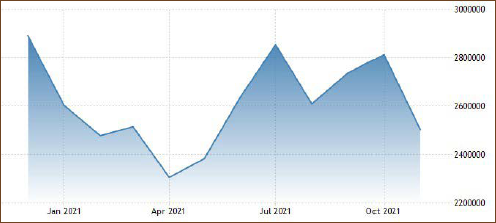
According to the records of the top remittances receiving countries, the Philippines occupied fourth place in 2019. It was projected to have received $35.1 billion in 2019 (Ratha et al., 2019). Most remittances to the Philippines flow from East Asian nations (Hossain, 2021; Marwah & Ramanayake, 2021; Yadav & Iqbal, 2021), and the Pacific, which helps to build their economy and helping to attain the 2030 SDGs (Concepcion & Latoja, 2020). The annual remittances of the Philippines declined by 8% between 2019 and 2020, aside from the predictions made by many institutions (Takenaka et al., 2020). Figure 8 indicates the trend and performance of remittances flow to the Philippines from 2021 January to November 2021. Figure 8 reveals that during the COVID-19 pandemic intense period, the Philippines’ remittances declined from $2,812,044 thousand in October 2021 to $2,502,000 thousand in November 2021 (Trading Economics, 2022f). The COVID-19 economic impact has created the most significant economic catastrophe the world has ever encountered compared to the world’s earlier financial crisis. However, most regions’ decline in remittances was temporal and are currently performing better (Takenaka et al., 2020).
Trend of Egypt’s Remittances Flow
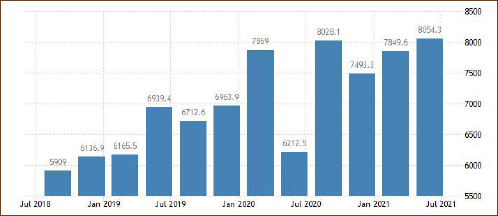
Among emerging economies, Egypt is one of the major countries noted for high development and attracting a high volume of remittances. Egypt was ranked 5th among top countries with higher remittances in 2019, accounting for $26.4 billion (Ratha et al., 2019). Since 2016 many reforms have been initiated to cushion economic growth in Egypt; however, the emergence of the COVID-19 pandemic nearly halted the pace of development and remittance flows. An enhanced effort projected to improve Egypt’s economy and to ensure diversification and economic growth within 2020 and beyond was nearly halted due to the COVID-19 pandemic (Breisinger et al., 2020). Figure 9 demonstrates that amidst the surge of the COVID-19 pandemic, Egypt had an increase in its remittances in the second quarter of 2021, amounting to $8054.30 from $7849.60 in the first quarter of 2021 (Trading Economics, 2022b). The rebound of the remittances transferred to relatives and friends suggests that the Egyptian government introduced an effective and efficient economic stimulus package as a policy response to reduce the economic impact of the COVID-19 pandemic on the economy and the flow of migrant remittances. Thus, the government invested a $6.4 billion stimulus package equivalent to the Egyptian Pound of 100 billion, represented as 2% of GDP, to alleviate the economic repercussion of the COVID-19 pandemic.
Trend of Nigeria’s Remittances Flow
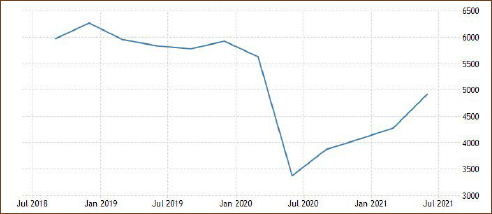
The COVID-19 economic impact affected many countries in the sub-Saharan African continent, including Nigeria, that heavily depend on remittances. As a significant remittance receiving nation, Nigeria was significantly impacted by the COVID-19 pandemic, which reduced the volume of remittances flowing to the low-income households that rely on remittances for daily living and investment in petty trading. Nevertheless, the impact was short-lived because of the prudent measures instituted to contain the pandemic and the massive engagement of digital payment platforms and services. Figure 10 demonstrates that amidst the COVID-19 intense period, remittances increased in Nigeria from $4,278.12 million in the 1st quarter of 2021 to $4,922.23 million in the second quarter of 2021 (Trading Economics, 2022e). Although Nigeria experienced a decline within 2020, it has increased remittance, as shown in Figure 10. During the COVID-19 intense period, the government officials initiated an economic recovery stimulus package as an avenue to aid the COVID-19 interventional funding scheme by introducing a $1.4 billion equivalent to Nigerian currency (N 500 billion) to incentivise the employers, healthcare facilities, enhance tax relief, and for retaining and recruiting employees during the COVID-19 intense period. The interventional measures led to increased remittances internally and from other nations.
Conclusion and Theoretical Contributions
Remittances serve as insurance for millions of families and friends in LMIEs. Therefore, variations in international transfers may be a crucial factor in the transmission of the induced COVID-19 economic contagion from affluent to underprivileged countries and from urban to rural destinations. Based on the SGT, human capital deployment across regions is believed to assist migrant workers in earning money from affluent countries and transfer money back home to increase remittance flows. Effective measures to lessen the contagion and the mortality rate of COVID-19 all over the globe may undoubtedly impact the magnitude and frequency of remittances flows and the avenues adopted to transfer remittances to their economies. The contribution of this research is structured twofold. Initially, this research expounds on the repercussion of a negative shock on remittances, economic activities, and household incomes; Second, this investigation is conducted from the perspective of migrant employment losses in the context of LMIEs heavily dependent on remittances. The research results portray that the COVID-19 economic repercussion greatly impacted most LMIEs remittances. However, the impact was temporal, and most of the LMIEs are currently on the path of regaining their losses.
This study reveals that COVID-19 economic impact relating to the decrease in remittances flows to LMIEs could force migrant-dependent families to fall under the poverty line. This study further demonstrates the importance of remittances to households and necessitates a flexible approach to reduce the associated high remittance transfer cost to meet the SDGs target of below 3%. Thus, most families within the LMIEs depend on remittances to enhance their access to essential public services, including education and healthcare. Further, this study reveals that remittances of migrants contribute significantly to the macro economy of nations and are very critical in the period of economic upheaval. Additionally, remittances serve as a private capital supply that is meant to support individuals and the governments. Remittances assist the central banks in building up foreign currency reserves to cushion economies against pandemic shock, including the COVID-19-induced recession. In summary, the immense contribution of remittances to households and nations suggests that governments and policymakers institute appropriate and effective policies to protect legal migrant workers in raising funds to support their families and economies.
Policy Recommendations
Premised on the findings of this research, it is suggested that global policies should be instituted in the issuance of COVID-19 vaccine travel health certificate as a legal document to permit all movement into places and boarding public transportation (CDC, 2021). It would be beneficial to incorporate a digital COVID-19 vaccine certificate and test result as an official travel document to ensure travellers’ safety. An essential global policy in facilitating world traveling may include fast reliable, affordable testing and vaccine administration. Also, unanimous decisions implemented globally that may eliminate traveling, and quarantine on arrival of travellers may consist of an agreed protocol for testing on departure by all countries to ensure migrant workers return to their place of work on time and resume their regular duties to earn money and transfer some back to their families and friends. This study recommends that policymakers promote the integration and continual adoption and usage of digitalised systems such as blockchain technologies and 5G wireless digital services to speed up inter-remittance transfers. Further, it is evident that remittances facilitate the growth of LMIEs. Therefore, in comprehending the influence of remittance increase on the welfare of individuals through consumption, access to credit facilities, capital accumulation, savings and economic expansion, this research suggest that governments support legal migrants to have access to employment in the economies that are located. This research suggests that growth and employment policies should be strengthened by providing stimulus packages aiming at the sectors that demonstrate increased vulnerabilities to faster reduction of remittances inflow as a result of a worsened economic phenomenon within the nations. Further, this research suggests that since the LMIEs are still progressing to achieve better interlinkages and sectoral sophistication, they must establish industrial and university collaborations to investigate measures to enhance the expansion of remittances to ensure economic growth and citizens’ wellbeing.
In attaining the SDGs, policymakers and other organisations within the LMIEs should incorporate the World Bank and SDGs initiatives on remittance cost reduction policies to comply with the measures to mitigate money laundering and terrorist financing (KNOMAD, 2019). Thus, migration is critical for the inflow of remittances. Therefore, governments and other international migration stakeholders should strengthen migrations policies to achieve positive, sustained development and mutual benefits of remittances across borders. Hence, stakeholders must emphasise significant attention to reducing transferred fees for remittances to motivate the migrants to use authorised channels for transactions. Also, Banks and other financial institutions must emphasise the need for inclusive savings and product plans for travellers’ family members. By incorporating these policies, the trajectory linking remittances, global partnership and employment opportunities may be linked to facilitate a vibrant tool to achieve the SDGs. Situations relating to mixed and intra-regional migration must be resolved in country-based policies to enhance cooperation and the free flow of remittances.
Limitations and Future Studies
The unavailability of comprehensive data characterises this study to conduct detailed quantitative and causal analysis. Further studies will be conducted in the future based on the availability of data to outline the significant measures needed to overcome the obstacles encountered by migrants and citizens’ employment culminating in reducing remittances in periods of crisis and the need to diversify a nation’s resources.
Footnotes
Declaration of Conflicting Interests
The authors declared no potential conflicts of interest with respect to the research, authorship and/or publication of this article.
Funding
The authors received no financial support for the research, authorship and/or publication of this article.
