







Abstract
Historically, governments of developing countries, such as India, have promoted technological advancement to facilitate socioeconomic development. This has led to a rise in information and communication technology for development (ICT4D) projects. While such technological interventions have undeniably resulted in economic growth, their true developmental roles call for critical analysis through the lens of development to human freedom. Technology often fails to eliminate the prevalent inequality in social structures, resulting in continued restricted human freedoms for the marginalized sections, reinforced by the technology. To examine this, we compare technologies from three eras targeted to aid the marginalized: technologies in the Green Revolution (1967–1978), the agrarian supply-chain, the eChoupal telecentre (2000–present) and mobile payments (2016–present). We use secondary data for the technologies from previous eras, and primary interview data of 44 mobile payment users across India, to understand how the technologies have evolved over the years in terms of the freedoms offered by them. The findings show that freedoms of economic facilities, transparency and protection during crises are provided by the technologies, but not uniformly across the various sections of society. The implications for policymakers include regulations and initiatives to ensure greater participation of all and, thus, facilitate development.
Introduction
Historically, over decades, governments of developing nations, including India, have aggressively promoted modern technology, aiming for economic and social development through innovations (Lema et al., 2021). In recent years, with the rise of digitization, we have witnessed the implementation of government-endorsed information and communication technology for development (ICT4D) projects, such as telecentres, mobile phones and e-government systems, to facilitate socioeconomic development (Schelenz & Pawelec, 2022; Venkatesh et al., 2019). On the other hand, digital technologies have often been criticized for their role in further widening the digital divide, rather than bridging it (James, 2011; Schelenz & Pawelec, 2022). To examine this dichotomy of the role of technologies, we investigate those technologies that held the promise of empowerment across various strata but have questionably achieved so due to existing socioeconomic disparities and pre-existing power structures (Oreglia & Srinivasan, 2016). This brings us to our broad research question: Are developmental technologies empowering their beneficiaries equally?
To answer this question, we draw evidence from technological advances from three eras that were promoted by the government, aiming at socioeconomic development. The three cases were selected to ensure a similar population in terms of beneficiaries being small-scale producers or sellers, using technologies designed for development in the developing economy of India, accounting for the variations arising from societal transformations over the years (Eisenhardt, 1989). Our first historic evidence is drawn from the agrarian technology implementation during the Green Revolution in 1967, to increase productivity for food self-sufficiency (Dhanagare, 1987). We question its affordability to small-scale farmers. Moving to a new era, we examine the eChoupal procurement system, launched in mid-2000, for farmers to sell their produce at a higher price, instead of through middlemen (Kumar, 2004). But certain social groups faced possible exclusion by design. Our third evidence is two decades later, when mobile payment services through Unified Payments Interface (UPI) promised significant financial inclusion for the unbanked in India (Rana et al., 2019). We enquire whether UPI-based mobile payments further alienated those who did not have a smartphone or internet (Pal et al., 2020). With these questions posed, we use a critical research methodology to analyse primary and secondary data to investigate technology implementation as a socio-political phenomenon (Myers & Klein, 2011). We examine: Did the three technologies operationalized in India for socioeconomic development overcome the social inequalities and lead to individual empowerment for all? The individual empowerment is examined through the lenses of human freedom, employing them to understand how and if the technologies offer these freedoms to all sections of society (Sen, 1999). These freedoms reflect the beneficiaries’ empowerment based on how they can exercise their freedom of choice without constraints and use the technology for achieving economic goals (Desai, 2021; Kleine, 2009). We derive from secondary data on technologies from earlier periods and primary interview data from 44 mobile payment users across India to examine how these technologies have evolved in the freedoms they offer. The evidential findings show that, while all three technologies have led to economic development, individual empowerment begins to emerge with eChoupal but matures with mobile payments, with continued unfortunate reinforcement of social inequalities.
This study contributes to the past ICT4D literature that examines the social impacts (Masiero & Prakash, 2019; Pal et al., 2020), as the three-tier comparative analysis accentuates the technology as a social construct (Prakash & De, 2007). The developmental implications for government and policymakers are related to awareness of more inclusive technology policies, particularly with the growing number of e-government projects in this digital era.
Motivation
We draw motivation from past episodes to investigate the social inequalities reinforced by technologies in India. The context of India is shaped both by the fact that ‘issues of inequality and participation are particularly crucial in India, where social divisions … are pervasive and have tended to take a heavy toll on both economic development and social opportunities’ (Drèze & Sen, 2002, p. 10), and by the long history of social reforms to aid the underprivileged (Balasubramanian, 2013). Therefore, the choices of the three technologies were based on their role in aiding the disadvantaged population of small-scale producers or sellers across the three notable periods of the nation’s technological growth post-independence in 1947. In 1960, the nation witnessed its first country-wide technological intervention through the Green Revolution, supporting the farmers to produce greater yields, followed by the next major technological national milestone through the Yellow Revolution for soya farmers, where eChoupal played a critical role in enabling market linkages (Bhattacharjee, 2025). This inspired the two historic technologies for our analysis. Post the 2000s in the modern age, pushed by the global digital expansion and the growth of ICT4D in the Global South (Sahay et al., 2025), India witnessed multiple ICT4D interventions in terms of telecentres, e-governance projects and education technology (Prakash & De, 2007), and more recently, the digital public infrastructure (DPI), such as the UPI, by the government to promote digital transactions (Desai & Manoharan, 2024). The phenomenal surge of UPI transactions, pushed by two events, the demonetization of 2016, rendering many banknotes invalid and the COVID-19 pandemic, causing cash usage risks (Pal et al., 2025), motivated us to focus on UPI-led mobile payments as the technology of the modern era, along with its capability of financial inclusion of the unbanked, marginalized groups.
As a policy, the Green Revolution was optimistically estimated to bring forth lasting results through greater food production and the alleviation of rural poverty (Dhanagare, 1987). It marked the transition of agriculture from traditional to modern state to modern agricultural innovations. The Green Revolution had faltered because technological advancement was corrupted by existing social stratification, leading to unequal distribution of its benefits (Saini, 1976), excluding the poorer farmers who could not afford sophisticated irrigation mechanisms (Paul, 1990). This inadequacy led to a rise in economic inequalities, which were a reflection of the existing social disparities.
Launched by ITC 1 in June 2000, eChoupal facilitated a procurement system for the farmers (Upton & Fuller, 2004), through kiosks for the farmers to sell their produce directly to ITC at a fair market price, instead of unfair rates to middlemen in the local markets (Kumar, 2004). ICT4D researchers noted the various economic and developmental goals achieved by eChoupal. However, the major challenge lay in the absence of resources such as electricity, internet connectivity, telephone network and other basic infrastructure in many rural regions of India (Rao, 2008). This puts the relatively modernized villages at an advantage, leaving out the underdeveloped areas from the eChoupal network. Moreover, the eChoupal kiosks are set up in a house with supporting infrastructure, typically someone from a hierarchically upper class (Upton & Fuller, 2004), resultantly differential benefits to farmers based on their social backgrounds.
The revolutionary power of mobile payment technology is in its promise for the financial inclusion of the masses, who were unable to access formal banking institutions (Donovan, 2012). In India, the UPI was launched in 2016, enabling individuals to directly transfer funds across banks through mobile phones (Wright, 2017). Between 2016 and 2020, the monumental growth of UPI can be seen with a steep 20,000% rise (NPCI Website, 2020). Yet, a majority of the poorest citizens did not own a smartphone or the internet to transact online (Dutta, 2018). Despite its strong apparent benefits, there is evidence that local people and smaller vendors are migrating back to cash (Kwatra, 2019). To find an answer as to why this is happening, in this article, we investigate whether this digital payment revolution, driven by UPI, was also reinforcing the existing social inequalities.
Literature
To ensure the developmental success through technology, the participation of all the sections of the community becomes particularly critical (Mohanty et al., 2021). However, ICT4D technologies and projects are frequently faced with challenges related to participation from various categories of users, including the rural population, digitally incompetent users and the elderly (Abubakre & Mkansi, 2021). The process of participation through ICT4D projects depends on the representations of the actors in the hierarchical structure of the technology (Schelenz & Pawelec, 2022). Often, the inequalities in benefits from technology stem from divides in society between the rich and poor or the technically competent and the digital illiterates (Abubakre & Mkansi, 2021). Complications are also related to the human values in the communities that may reinforce social rules in the systems, such as the caste system, constraining human freedoms (Desai, 2021). Such social inequality shapes how individuals think, decide and interact with resources, such as technology, within society (Goya-Tocchetto & Payne, 2022), influencing not only social and personal identity but also the expression of human values (Du et al., 2024; Sagiv et al., 2017). Relative distribution of resources, or technology in our case, frequently functions as a social context beyond the personal and social identity, by shaping human needs, desires and expectations (Goya-Tocchetto & Payne, 2022). The environment, thus, is impacted by technology use (or lack of it) based on which values—such as equity, inclusion and openness—are considered socially normative (Inglehart & Baker, 2000; Sánchez-Rodríguez et al., 2022). In effect, digital inequality in access and use of ICT affects people’s interaction with the technology, which motivated us to examine inequalities in ICTs historically. For instance, eChoupal kiosks are predominantly managed by dominant classes in their homes, thereby causing accessibility issues for the low minority caste members (Cherupelly, 2022). Therefore, it is worthwhile to study how ICT4D fails the underprivileged sections of society in terms of equal participation (Harris, 2016), which we contribute to in this article.
To study participation, we use Sen’s capability approach as a theoretical principle that states that individual freedom for participation leads to development (Sen, 1999). Scholars working on ICT4D have repeatedly recognized Sen’s capability approach as a theoretical principle for the study of socioeconomic development facilitated by the ICT projects (e.g., Bahr et al., 2025; Prakash & De, 2007; Yim & Gomez, 2021). Developmental technology offers freedoms resulting in empowerment and emancipation, through participation across sections, including the underprivileged (Hasan et al., 2022). This eventually leads to societal emancipation as the people control the decision-making for the society (Hatakka & De, 2011). Contributing to this narrative, in this article, wequestion this assumption and critically investigate if technologies have promoted Sen’s freedomsor reinforced the prevalent social inequality.
Theoretical Background: Sen’s Freedoms and Participation
The five freedoms developed by Amartya Sen (1999) are critical concepts for socioeconomic development through building individual capabilities. Sen challenged the pure economic measures and suggested human-centric development as key to individual emancipation in a society (Prakash & De, 2007). Following the guidelines by Drèze and Sen (2002), it essentially entails the freedom of choice and demonstrates empowerment of the beneficiaries by developing their capabilitiesto achieve the required economic goal using resources, employing their own agency and facing minimal constraints (Desai, 2021; Sen, 1999). In the context of analysing the role of technology, we would examine how the technology empowers the beneficiaries, making them capable of exercising their agency and enhancing their economic goals through processes such as better market linkages or business expansion (Kleine, 2009). For this, we develop a theoretical framework to analyse the technologies in terms of Sen’s freedom with participatory lenses. The three freedoms/capabilities relevant to the participatory role of the technologies studied include ‘economic facilities’, ‘transparency guarantees’ and ‘protective security’ (Sen, 1999). ‘Economic facilities’ allow people to freely exchange goods and services and to avail facilities that help in their economic welfare (Sen, 1999), offering individuals to freely participate in the market (Díaz Andrade & Urquhart, 2012). ‘Transparency guarantees’ make transactions visible, such that individuals are not victims of dishonesty by more powerful actors in the market. In ICT4D research, researchers show how e-government portals and systems reduce the scope for corruption by government officials processing citizens’ applications, providing ‘transparency guarantees’ (Andrade & Urquhart, 2012). ‘Protective security’ concerns how well the citizens are protected during times of crisis, such as disasters or emergencies. We would examine how the technologies in the Green Revolution, eChoupal and UPI payments offer economic facilities by enabling various sections to participate in the market. We investigate citizen equal participation and benefits from technology usage by analysing the three dimensions of the capabilities available to the actors from various strata. (We leave out the two freedoms—‘social opportunities’ and ‘political liberties’—since these are out of scope for the technologies examined.)
Research Methodology
To investigate the social inequality of technology beneficiaries persisting across the eras,we selected developmental technologies as comparable cases with a similar population of users (small-scale producers/ sellers) from India, with diversification in terms of technology characteristics and societal nuances, to theoretically explain the larger question of technology overcoming inequality over time (or not) (Eisenhardt, 1989). Additionally, the choice of the technologieswas based on their characteristics to address our core research question on inequality (Koivu & Hinze, 2017), since all three technologies by design promised disadvantaged beneficiaries(small-scale farmers and vendors) support in the form of better sustainable livelihoods (Duncombe, 2007). To examine the social inequality for users of these technologies, we employ a critical research methodology for the analysis of both the primary and secondary data, as discussed in this section.
Data Collection
To examine the social inequality, in the case of the technologies in the Green Revolution, we drew evidence from secondary data from government databases—the National Sample Survey Office (NSSO Website, 2020), with additional data reported in academic journals (see details in Appendix Table A1). For the initial analysis, the overall themes of the datasets were noted. The secondary data source for eChoupal’s analysis in terms of the aim of this article consisted of academic research papers. Data on eChoupal, being a private-sector venture, were not available on the government databases. These articles were chosen based on the richness of their data reports and the critical take on the social issues existing for eChoupal (see details in Appendix Table A2).
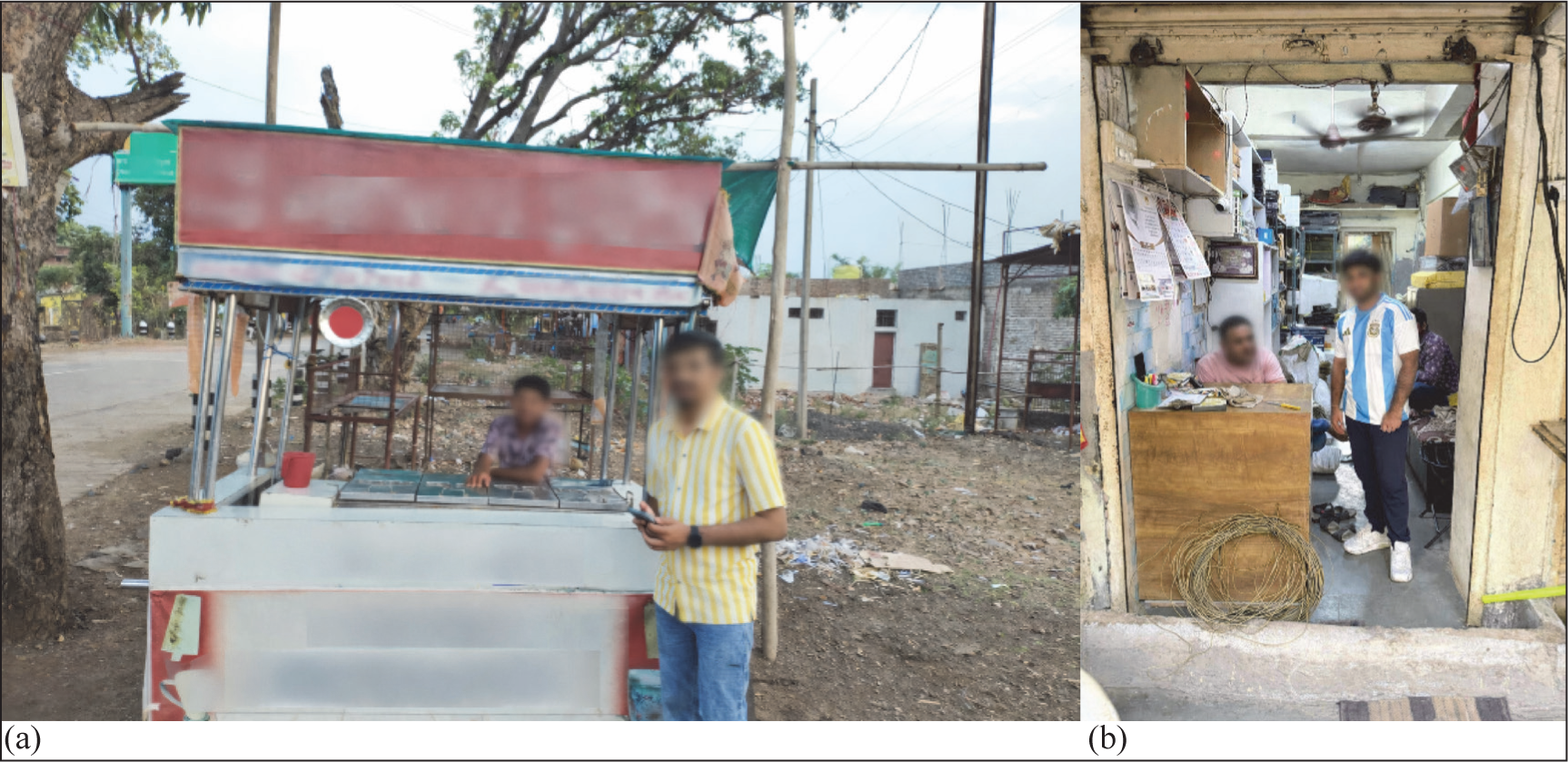
The analysis of UPI-based mobile payments, being a present-day technology, is performed using primary qualitative data from user interviews with a total of 44 interviews only from street vendors of both urban cities, New Delhi, Mumbai and Indore, as well as a rural town, Chhindwara, in Madhya Pradesh, central India (see respondent details in Table 1 and exemplary field image from two locations in Figure 1). This helped us understand the access inequality across the different geographies across the country. The choice of a greater number of interviews from urban locations (34 out of 44) is because of the high number of UPI users who are street vendors, qualifying as the disadvantaged population in question, in line with the other technology users analysed. The interview duration ranged from 5 to 15 minutes, in the local language, Hindi. The semi-structured questionnaire offered a direction while not confining the interview within preset boundaries, to allow for a progressively improvised conversation in a fluid manner as the interview progressed (Myers & Newman, 2007) (see questionnaire in the Appendix Table A4). The interview spanned over three months, from July to September 2025. This period of interview offers an interesting perspective since UPI has witnessed a massive growth since its launch in 2016, reaching 14 billion monthly transactions in 2025, with the year 2025 marking a revolutionary phase (NPCI, 2025). We concluded after 44 in-depth interviews, as it was adequate to explain the phenomenon of UPI’s ability to provide the freedoms examined, since a relatively small number of participants is sufficient for qualitative research when theoretical maturity through relevant information gathering is reached (Malterud et al., 2016). The findings of the interviews are discussed in the next section.
Field Image from the Interview Data Collection. (a) Field image of an ice-cream vendor respondent at his cart in Chhindwara (rural). (b) Field image of a vendor respondent from a metal scrap shop in Mumbai (urban).
Demographic and Other Details of the Respondents.
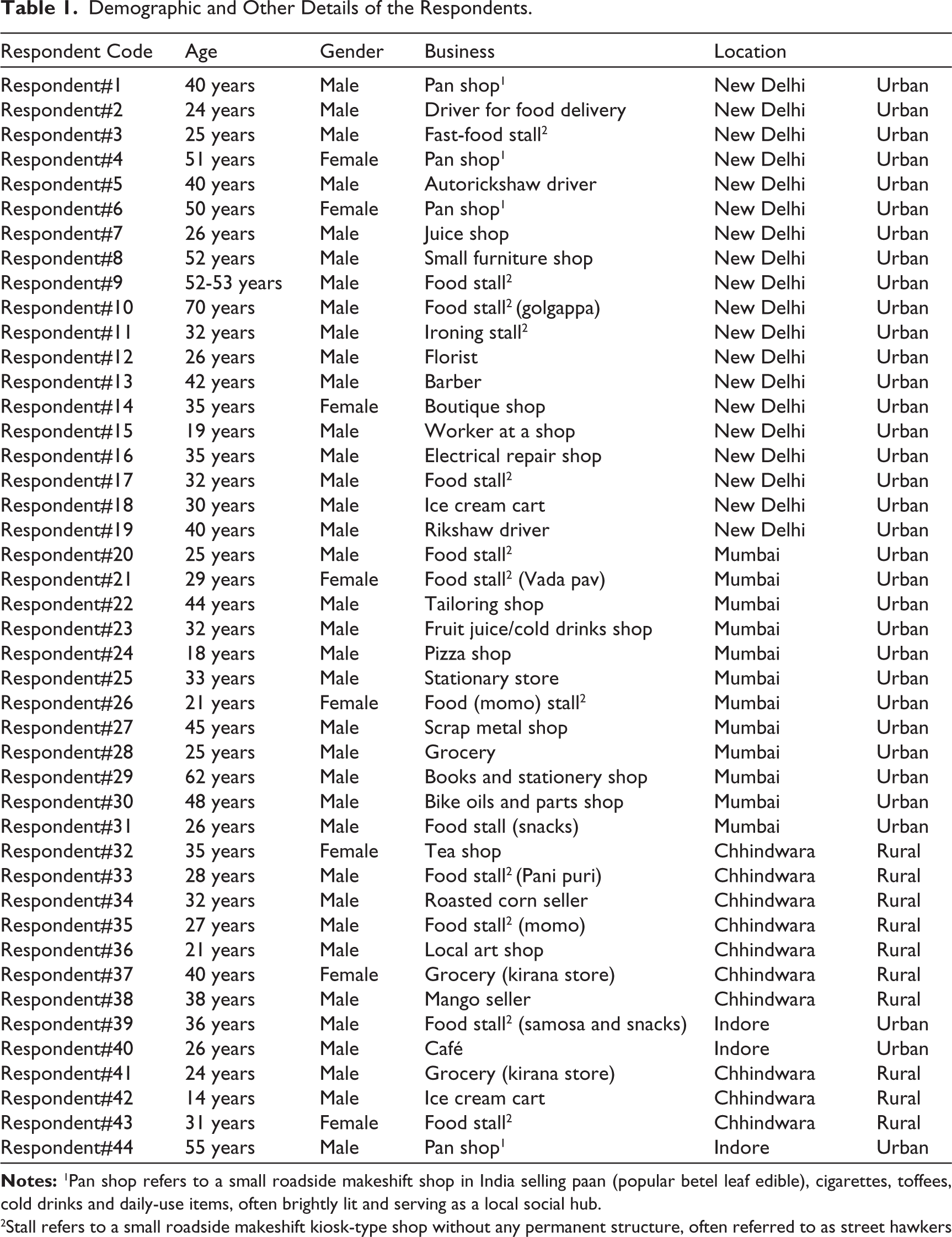
2Stall refers to a small roadside makeshift kiosk-type shop without any permanent structure, often referred to as street hawkers
Data Analysis Through Critical Research
‘For more than thirty years of critical research in information systems (IS) has challenged the assumption that technology innovation is inherently desirable and hence to the benefit of all’ (McGrath, 2005). With unequal benefits for individuals across domination categories as our underlying assumption, critical research provides the appropriate ontology for the data analysis. As critical research unveils social realities to promote emancipation, there is an ethical and moral nature to this methodology (Conboy et al., 2012). To analyse our claims of social inequality fostered by technology interventions across three eras, we employ critical research methodology by following the guidelines for IS critical research by Myers and Klein (2011). The data set consists of both primary (interviews with UPI-based mobile payment users) and secondary data (for Green Revolution technologies and eChoupal), as discussed below.
Findings
We critically analysed the data collected for the three technologies through the lenses of Sen’s three freedoms—economic facilities, transparency guarantees and protective security—and understood the participatory opportunities. We discuss the results for each of Sen’s freedoms comparatively for the three technologies and then draw combined conclusions.
Freedoms Provided by Technology in the Green Revolution
The Green Revolution led to an overall increase in agricultural productivity and the resultant increase in farm incomes across the various categories of agricultural products and farmer categories. As per the study done by Saini (1976), using the National Sample Survey, 16th and 17th rounds, it was revealed that the levels of absolute poverty per capita had reduced. However, ‘…Green Revolution was limited to a few pockets and also to the affluent sections only, has created a wide economic gap in the rural society and aggravated the tensions’ (Das, 1970). Additionally, access to irrigation facilities, again confined to the richer section, also determined the degree of positive effects of the technologies in that period, therefore challenging the economic facilities’ freedom for all.
Using the primary household survey along with NSSO validation data, we observed that farmers in regions with closer proximity to markets had greater success through the Green Revolution. Further, wealthier farmers with better resources also saw better resource utilization than the poorer ones (Singh et al., 2023). Evidence shows region-wise income bifurcation based on the effect of the Green Revolution. High-income states such as Punjab, Haryana and Gujarat reported a 95% policy utilization, while the low-income states such as Bihar, UP and Jharkhand achieved a mere 68% policy access. The primary reason for the inequality in policy access can be attributed to the differences in technological adoption of the policies undertaken by different states during the Green Revolution era, especially with reference to using HVY seeds, fertilizers and irrigation methods (Modi, 2025). A systematic literature review of more than 300 studies on the Green Revolution published during 1970–1989 highlights that 80% of the studies show how the Green Revolution increased economic inequality amongst various agricultural households. In agricultural zones that offered better irrigation and credit facilities, farmers benefited from larger yields and financial gains compared to the zones that adopted these technologies more slowly. Additionally, households with better resources saw a growth in their capital gains, therefore widening the gap between low-income farmers and the resource-rich farming households (Freebairn, 1995). Using the 70th round of NSSO published in 2013, an empirical work suggests that households with larger farming land holdings saw a 3.7:1 income gap with farming households that held land sizes of less than 10 hectares. This shows regional disparity within a state, between farming households, continues (Saini & Kaur, 2022). Transparency guarantees pertain to the transparency presented to the citizen by the technology adopted as part of the Green Revolution. Using data from the National Sample Survey, 30th round (Dhanagare, 1987), asserted that technology awareness was limited to the upper castes and often unavailable to low-caste, poorer farmers, India being a highly casteist, discriminatory society (Barua, 2019). Reportedly, ‘it was found that users came only from among landowners and high caste farmers and not even one came from among tenants or low (scheduled) caste ones’ (Deva, 1980, p. 268). Therefore, transparency guarantees become unfreedom for the discriminated lower caste farmers.
Considering that the Green Revolution was a policy initiative to respond to farm crises, findings suggest that protective security was not available because the mechanization did not benefit everybody. In terms of the need for agricultural loans during the financial crisis or events such as droughts, rich peasants were in a much better position than poorer farmers or labourers to purchase large amounts of fertilizer on credit and secure good harvests (Dhanagare, 1987). Hence, protective security during a crisis was available to a few but not all.
Freedoms Provided by the eChoupal System
Our findings suggest that while eChoupal eased out some of the financial constraints for soya farmers, eChoupal did not alter the existing inequalities in the social system. Our findings contest the dominant rhetoric that technology reduces social inequalities.
Farmers experienced a rise in disposable income due to an increase in overall yields and a considerable reduction in transaction costs compared to selling their produce in local markets (Kumar, 2004). While the technological intervention created suitable conditions ‘for large-scale diffusion of technology, it also narrowed the gaps between technology and people’s needs’ (Sharma, 2013). However, infrastructure inadequacies such as the non-availability of electricity connection, internet and computer literacy meant lesser participation of the small and medium farmers. It is pertinent to note here that often economic class and caste have considerable overlaps in Indian peasantry (Barua, 2019). India has long faced caste-based discrimination, leaving lower castes economically and socially disadvantaged, especially in rural areas (Frankel, 2006). In many villages, minority caste members are excluded from upper or dominant caste spaces, limiting access to systems such as eChoupal, since such systems would be managed by dominant classes (Cherupelly, 2022). Therefore, the eChoupal telecentres placed in the households of the upper-class/caste farmers could not be accessed by farmers from lower sections, with restrictions on entry inside the premises. Once again, the class and caste structure reinforced the existing unequal social system and the economic facilities offered by eChoupal were partially beneficial to certain sections.
Transparency was integrated into the design of the eChoupal system as farmers could directly contact ITC, crop prices were universal and transparent, and selling information was available to all users. Depending on the technological requirement and eChoupal kiosks, no generalizations can be made about the impact of eChoupal on the transparent functioning of the rural agricultural procurement markets. While there was an improvement in procurement efficiency and a reduction in transaction costs for farmers with access to telecentres and kiosks, the same cannot be asserted for farmers without access, thereby questioning transparency guarantees, although with greater transparency than the Green Revolution era. Unquestionably, eChoupal promoted business during the agricultural crisis related to drought, but only for certain sections and certainly not for the truly marginalized belonging to the lower class/caste groups.
Freedoms Provided by UPI-based Mobile Payments
The respondents were vendors or gig workers who used UPI, that is, the mobile payment equivalent in India. Most users reported using mobile payments for receiving payments from customers, highlighting the ‘economic facilities’ or benefits it offers, as a vendor noted: ‘30 mins ago there was a big order and the customer paid using UPI’ (Respondent#21, female food stall owner). On the other hand, a vendor pointed out that if they stop using mobile payments, they are likely to lose business, ‘it will affect [business] since customers do go back if they don’t have change [cash] so that will be a loss for us and if we dont keep it, they will go to some other general store which keeps it’ (Respondent#28, male grocer). This hints at the disadvantage for small vendors operating with minimal resources and lack of smartphone access (Parthiban et al., 2024), as a vendor further explains that customer prefers mobile payments for even small value items sold by small vendors, ‘… people do not like to carry cash and pay using mobile only, everyone has become quite fond of it, they even pay 10 rupees online for a bottle of water’ (Respondent#32, juice shop owner). This comment reveals how smaller vendors without digital access are excluded from economic facilities in the mobile payment era.
Mobile payments also offered ‘transparency guarantees’ as a form of freedom by enabling users to track their expenses, as they note, ‘Because in the morning, the money shows up, all the money shows up’ (Respondent#9, male food stall owner); ‘That way, we can track transactions separately’ (Respondent#3, male fast-food vendor). What was an interesting observation was that the new technology of the audio system that read out the transaction loudly helped these small vendors have enhanced assurances about transparency, ‘system tracks everything, … we even get the confirmation from the machine when it announces, so it is not like someone can scam and leave’ (Respondent#20, male food stall owner). However, there was a counterargument arising too, which hindered transparency, due to the lack of digital literacy, as two vendors explained: ‘we don’t know how to track a number or anything’ (Respondent#6, female chai/pan shop owner); ‘You can’t track who paid what. Only educated people can handle this’ (Respondent#11, male ironing shop owner). In summary, as is often the case with ICT4D use and digital literacy (Pal et al., 2021; Stevenson, 2009), low literacy among the vendors constrains them from benefiting from transparency,
The interviews displayed ‘protective security’ during a crisis arising from fraudulent or incorrect transactions, opening up multiple dimensions of financial risk of losing money (Pal et al., 2025). While, on the one hand, the vendors agreed in principle with the safety, ‘one good thing in UPI is we get the proper report of money and people cannot fraud easily’ (Respondent#22, male tailor), ‘there’s no fraud, then I’ve been using it for one and a half, almost two years now and have no complaints’ (Respondent#1, male chai/pan shop owner). However, the fear of fraud was significantly overwhelming since the respondent group was typically low-income vendors or gig workers (such as drivers or tailors), and the financial risk and sensitivity were very high. Comments ranged from ‘There’s a lot of fraud on PhonePe’ (Respondent#5, male autorickshaw driver) to ‘There’s too much fraud these days’ (Respondent#6, female chai/pan shop owner), further explaining how difficult it becomes once money is lost. These findings are discussed comparatively with the other historic technologies in the next section.
Discussion of Findings
A comparative analysis based on the findings of the Green Revolution, eChoupal and mobile payments, using Sen’s capabilities framework, reveals that while all three aimed for development, their outcomes were unequal. The Green Revolution largely excluded poor small-hold farmers. eChoupal improved economic and transparency freedoms, but remained inaccessible to low-class farmers from remote areas. Mobile payments, though empowering many through financial convenience and transparency, excluded non-users and small merchants, reinforcing existing inequalities. Despite their developmental intent, these technologies failed to ensure human freedoms for all, raising questions about their role in deepening the digital divide rather than bridging it. See Table 2 for the comparative analysis and Table A3 in the Appendix for the summary of the interview findings.
Comparative Analysis of the Three Technologies in Terms of Sen’s Freedoms.
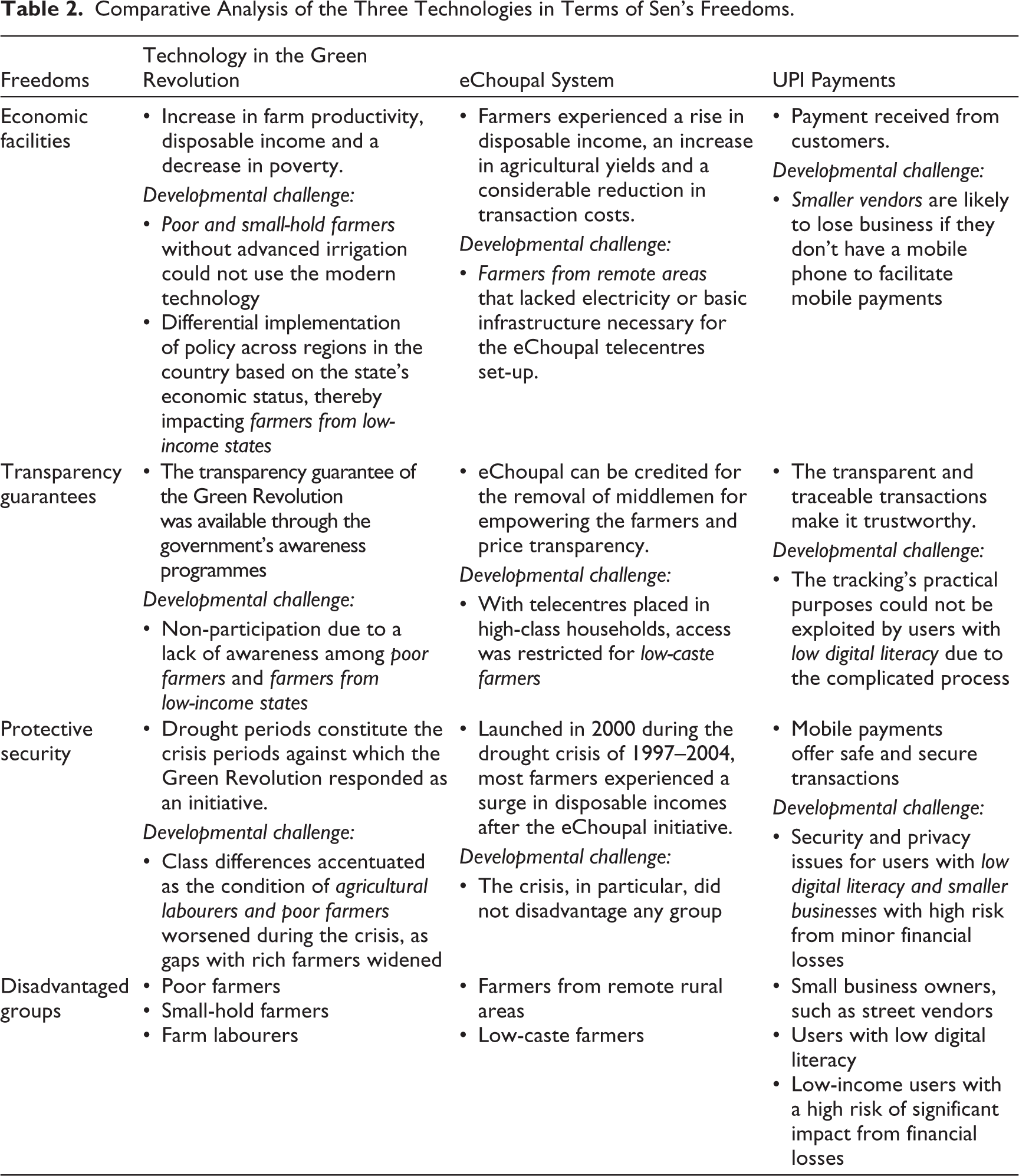
In summary, the three technologies across different historical eras show notable benefits after their introduction for many small producers and workers, including farmers and small vendors. The freedom of economic facilities was similar across cases—higher yields during the Green Revolution, better market linkages through eChoupal and seamless fund transfers via mobile payments. Protective security was also evident, offering farmers resilience during droughts and supporting vendors during the banknote crisis and COVID-19 (Pal et al., 2025). However, clearer differences appeared in relation to transparency guarantees—a relatively less visible yet crucial freedom shaping beneficiary agency (Sen, 1999). Transparency was limited in the Green Revolution due to weak communication and restricted access to information. eChoupal improved this by providing farmers with key market price information, while mobile payments advanced it further through real-time, traceable transactions and full access to financial information.
While the average beneficiaries experienced expanded developmental freedoms, the benefits for disadvantaged groups remained persistently unequal across eras. During the Green Revolution, limited access and affordability widened the gap between beneficiary farmers and smallholders or farm workers (Dhanagare, 1987). In the eChoupal era, farmers without access to the system remained dependent on exploitative intermediaries. These were typically minority caste farmers with small holdings, who continued to be excluded from full access to the system, as the control of the kiosks was with the dominant caste farmers (Cherupelly, 2022). Similarly, in the modern technology era, social disadvantage appeared in the form of a lack of technology access due to unaffordability or low digital literacy (Stevenson, 2009). Such vendors, unable to afford or use smartphones, faced exclusion from increasingly digital market transactions. Thus, while technological development has enhanced opportunities for many, it has also enhanced their capabilities through greater exercise of their freedoms (Sharma & Sharma, 2015), it was not the same for all. Though the nature of the ‘disadvantaged’ changed from socially low-caste farmers, to socioeconomically minority caste small-hold farmers, to economically poorer vendors without mobile phones, it reinforced the digital divide for emerging marginalized populations of the era. Seemingly different from eChoupal and mobile payment technologies, the Green Revolution exhibited quite similar attainment of freedoms of economic facilities and protective security. However, weak communication and restricted access to information technology led to an ineffective realization of transparency guarantees during the implementation of the Green Revolution. Hence, diversification in terms of technology characteristics for small-scale producers must be equipped to enhance the transparency guarantees. Drawing from the learnings of the Green Revolution, policymakers should take concerted efforts to ensure transparency guarantees for the policies intended for farmers.
Developmental Implications
Our findings suggest that, often, the adoption of technology is assumed to benefit all sections equally, which was challenged by this study. The technological intervention was subject to pre-existing barriers to access, resulting in non-availability to all. As emphasized by the World Commission on the Social Dimension of Globalization, shared human values should guide globalization through ICT policies promoting social justice and collective well-being (Kochuthara, 2017). Accordingly, we developed policy recommendations to empower marginalized groups through ICTs, both socially and in line with human-centred principles. Our analysis equips us to recommend some policy changes for enhanced proliferation of technology across all strata:
Policy design must address societal inequality and include provisions to ensure marginalized groups have equal access to technology. For instance, Kenya’s M-Pesa operates on basic mobile handsets, avoiding the need for smartphones (Hughes & Lonie, 2007). A similar approach in India would promote inclusion for those who cannot afford smartphones orinternet access. Acknowledging that income inequality among agricultural households is very large and significant, which in turn impacts technology benefits (as observed in the Green Revolution and eChoupal findings), efforts should involve ensuring participation of small-hold farmers, decentralized bureaucracies, continuous monitoring and secure stakeholder compliance (Goyal et al., 2022), where ICTs can play a significant role in operationalizing these measures. Since India continues to have persistent caste-based discrimination even in ICT4D participation, as observed in eChoupal, the government should consider technology design to lower the alienation. ICT4D tools that can be used directly through personal devices such as mobile payments, without face-to-face interactions required for access like in kiosks, reduce the possibility of caste-based discrimination by those in control of the system (Prakash et al., 2024). The DPI launched by the government of India, enabling multiple app-based systems for commerce and citizens (Desai & Manoharan, 2024), is a step towards reduced societal discrimination. Large-scale technological diffusion cannot erase deep-rooted caste structures in India. As with eChoupal, telecentres failed to eliminate caste distinctions. Policies ensuring participation across castes in ICT4D initiatives can help reduce caste-based exclusion. Technological interventions risk reinforcing or widening existing socioeconomic gaps. Policymakers must avoid regulations that disadvantage those unable to access new technologies, such as enforcing digital transactions during COVID-19, thus excluding the marginalized from the market network. Private player interests may not always align with social welfare; hence, a mandatory corporate social responsibility framework in India can be fine-tuned to better suit the requirements of the medium and small producers/sellers (Srinivasan, 2014), promoting their access to modern technology. Government oversight is essential to ensure equitable developmental outcomes, while partnerships with private players can strengthen implementation through technology.
While technology cannot fully eliminate inequalities rooted in social structures, thoughtful policy and regulation can help reduce their impact. This study highlights the social barriers that prevent marginalized groups from fully benefiting from technology, aiming to call for critical speculation in the future.
Conclusion
ICT4D literature highlights the developmental promise of information technologies (Bahr et al., 2025; Masiero & Prakash, 2019), with criticisms of how it failed the poor and the marginalized (Harris, 2016). In this direction, we examine mobile payments, instrumental to financial inclusion and development (Donovan, 2012), and compare them to past technologies such as those from the Green Revolution and eChoupal telecentres, from the perspective of Sen’s concept of freedoms (Sen, 1999). The findings show how these technologies benefit different social groups differentially, putting certain marginalized groups at a disadvantage.
A limitation of the study is the possible bias in the secondary data as obtained from the works of other researchers, constrained by the analysis of the historical technologies. A second limitation was the inability to obtain interview data from small vendors using mobile payments, since the period of the study was during the COVID-19 pandemic, when marketplaces were mostly under a lockdown or had major visitor restrictions. This leads us to an interesting future research area.
Footnotes
Data Availability
Primary data will be made available on request; secondary data sources are listed in the article.
Declaration of Conflicting Interests
The authors declared no potential conflicts of interest with respect to the research, authorship and/or publication of this article.
Ethics Approval
IRB approval was obtained for the primary interview data.
Funding
The authors received no financial support for the research, authorship and/or publication of this article.
Appendix
Questionnaire for Mobile Payments’ Respondent Interview.
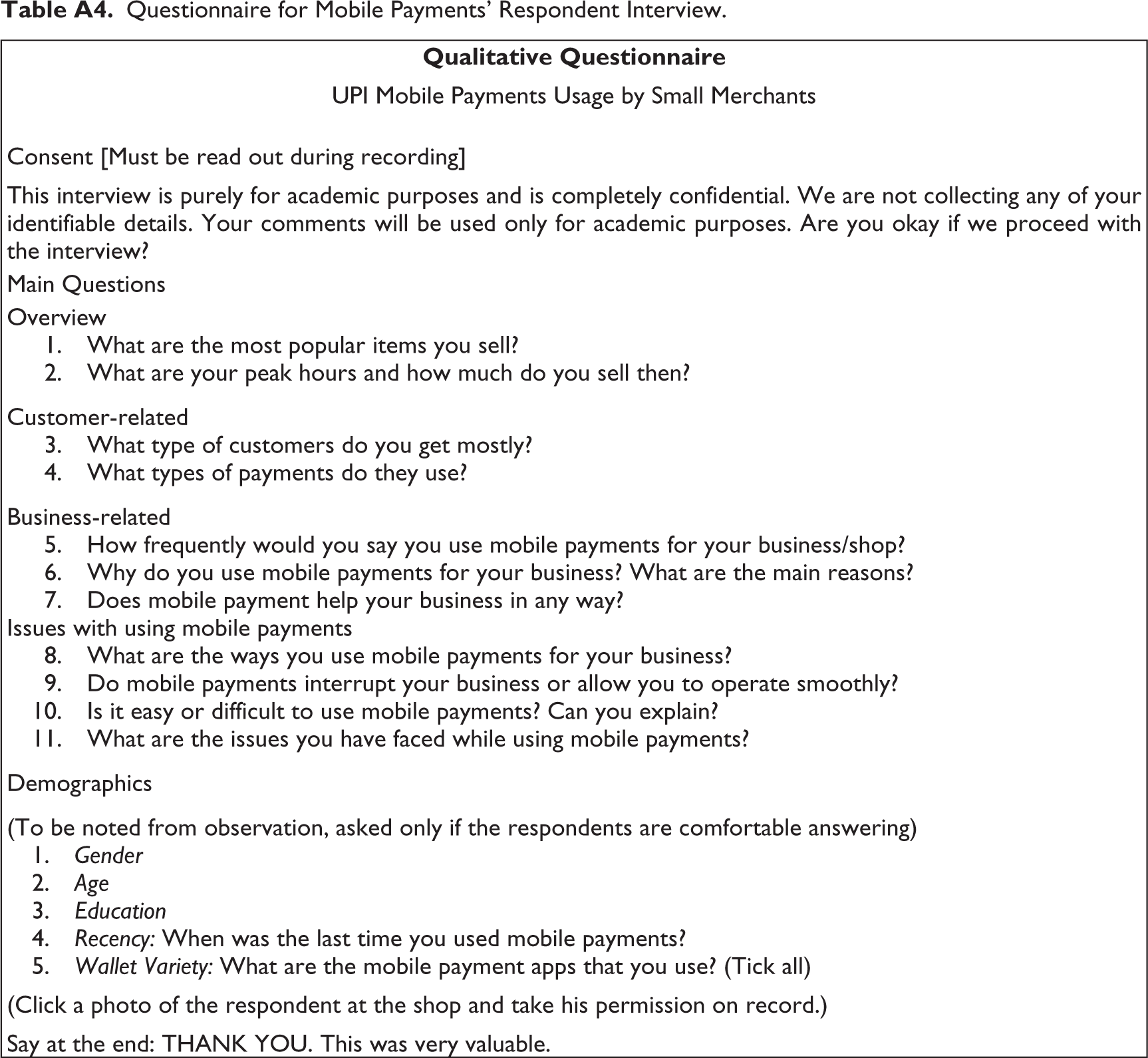
UPI Mobile Payments Usage by Small Merchants Consent [Must be read out during recording] This interview is purely for academic purposes and is completely confidential. We are not collecting any of your identifiable details. Your comments will be used only for academic purposes. Are you okay if we proceed with the interview? Main Questions Overview 1. What are the most popular items you sell? 2. What are your peak hours and how much do you sell then? Customer-related 3. What type of customers do you get mostly? 4. What types of payments do they use? Business-related 5. How frequently would you say you use mobile payments for your business/shop? 6. Why do you use mobile payments for your business? What are the main reasons? 7. Does mobile payment help your business in any way? Issues with using mobile payments 8. What are the ways you use mobile payments for your business? 9. Do mobile payments interrupt your business or allow you to operate smoothly? 10. Is it easy or difficult to use mobile payments? Can you explain? 11. What are the issues you have faced while using mobile payments? Demographics (To be noted from observation, asked only if the respondents are comfortable answering) 1. Gender 2. Age 3. Education 4. Recency: When was the last time you used mobile payments? 5. Wallet Variety: What are the mobile payment apps that you use? (Tick all) (Click a photo of the respondent at the shop and take his permission on record.) Say at the end: THANK YOU. This was very valuable. |