







Abstract
This study develops an integrated analytical framework that connects the early identification of emerging technologies with the design of targeted support policies. Leveraging large AI models and multi-source data—including global patent databases (e.g., WIPO, USPTO, Lens.org), scientific literature corpora, and industry intelligence platforms (e.g., CB Insights, Qichacha)—the research applies advanced techniques such as LDA topic modelling, BERT-based clustering, and co-citation analysis to detect innovation trajectories. Technologies such as AI-driven healthcare, quantum communication, hydrogen energy, and smart educational AI are identified as key domains of convergence.
Temporal mapping and citation networks reveal distinct technology maturity patterns, which are visualised using S-curve and hype cycle models. These insights are triangulated with market data and sentiment analysis, confirming that public enthusiasm often outpaces actual technological readiness. A technology maturity classification categorises innovations into emerging, developing, and mature stages, forming the basis for strategic policy matching.
To validate and prioritise policy instruments, Delphi rounds with domain experts and Analytic Hierarchy Process (AHP) weighting are employed. The resulting policy matrix includes R&D funding, regulatory sandboxes, public procurement incentives, and tax relief, tailored to each stage of technological evolution.
The study concludes that a data-driven, foresight-based approach to policy design significantly enhances responsiveness, precision, and resource efficiency in science and technology governance. This framework offers a replicable model for governments and institutions seeking to proactively support high-potential innovations across sectors.
Keywords
Introduction
In the era of rapid technological evolution, large AI models such as GPT, Deepseek, and Gemini have significantly reshaped the landscape of technological innovation and industry transformation. Identification of emerging technologies at an early stage has become a critical factor in maintaining national scientific competitiveness and strategic industrial positioning. However, challenges remain in accurately recognising these technologies and formulating timely and targeted policy responses.
The evolution of artificial intelligence has reached a new inflection point with the emergence of large language models (LLMs) such as GPT, Deepseek, and Gemini. These models represent a paradigm shift in the capabilities of AI systems to autonomously understand, generate, and contextualise knowledge at scale (Ren et al., 2025). When fine-tuned with domain-specific knowledge, LLMs could assist in tasks ranging from concept generation to patent drafting and innovation management (Ren et al., 2025).
These LLMs are increasingly being applied across various sectors, including healthcare, education, finance, and manufacturing, offering enhanced personalisation, automation, and decision support (Aristodemou & Tietze, 2018; Zhang et al., 2022). In the retail sector, for example, AI-driven innovation ecosystems have demonstrated the ability to map technological domains and collaborative networks using patent mining and social network analysis (Mohammadi et al., 2024).
Identification of emerging technologies is essential for national innovation to remain competitive in a rapidly evolving global landscape. Detecting the ‘window of opportunity’ before a technology matures—when its growth trajectory is uncertain but promising—allows stakeholders to mobilise investments and policy resources efficiently (Kim et al., 2019). This is especially true in high-stakes domains such as energy, health, and digital infrastructure, where early signals can be identified through mining patent trends, scientific literature, and market data (Li et al., 2024).
Patents, in particular, are leading indicators of technological emergence, as they often precede market adoption by several years (Zhang et al., 2022). Robust frameworks for early identification now leverage AI models, citation networks, and topic modelling to locate frontier technologies with high-potential impact (Kim et al., 2019; Zhang et al., 2022).
Patents serve as early signals of technological change, offering insights into innovation intensity, geographic distribution, and technological convergence (Aristodemou & Tietze, 2018). Deep learning models, particularly those augmented by generative adversarial networks (GANs), are now capable of forecasting emerging technologies with up to 77% accuracy by analysing patent metadata and textual descriptors (Zhou et al., 2020).
In parallel, AI-assisted market intelligence tools can track industry trends by analysing news articles, social media, and funding patterns (Ren et al., in press). This cross-validation between technological signals (patents) and demand signals (market data) ensures that only those technologies with both technical feasibility and market relevance are prioritised for policy consideration (Salamzadeh et al., 2022).
Despite the increasing availability of data and analytical tools, designing effective science and technology policy remains a challenge. Many governments continue to rely on generic ‘one-size-fits-all’ interventions that fail to account for the varying maturity levels, industrial contexts, and innovation barriers of specific technologies (Li et al., 2024). As innovation becomes more cross-sectoral and data-driven, policymakers are expected to adopt a more targeted, dynamic approach to policy design (Guderian et al., 2021).
Using AI to assess the maturity levels of identified technologies (e.g., using the S-curve or hype cycle frameworks) helps in grouping innovations into emerging, developing, or mature categories. Each category faces unique challenges, such as limited adoption (emerging) or scale-up bottlenecks (mature), requiring distinct policy responses (Gonzales, 2023; Zhou et al., 2020).
It includes differentiating between technologies at various life cycle stages (e.g., nascent vs. diffusion-ready), and tailoring support instruments accordingly ranging from basic research funding to market-pull mechanisms (Mohammadi et al., 2024; Ren et al., 2025). Policy frameworks also benefit from patent analytics, which reveal where technological investments are concentrated and what actors are leading innovation efforts across sectors (Aristodemou & Tietze, 2018).
The overall objective of this research is to establish the relationship between early identification of emerging technologies and the formulation of targeted policy, leveraging large AI models, global patent databases, and industry trend analysis. Specifically, the study is guided by the following objectives:
To identify the technological evolution pathways of emerging technologies through global patent data and scientific literature. It includes the application of AI-driven models to detect technological convergence, citation networks, and temporal patterns of innovation across multiple sectors. To analyse industrial market demand and cross-sector technology integration trends. The goal is to understand which emerging technologies align with real-world demand signals, commercialisation potential, and readiness levels in sectors such as healthcare, manufacturing, education, and energy. To formulate strategic and targeted policy recommendations that support science and technology development. It involves mapping technologies to their maturity stages and proposing differentiated policy tools (e.g., R&D incentives, regulatory sandboxes, procurement mechanisms) based on empirical insights from patent foresight and market demand analysis.
To achieve the outlined research objectives, this study is guided by the following three key research questions:
RQ1: How can the evolution of emerging technologies be effectively identified and mapped through the analysis of global patent and scientific literature data?
This question aims to explore the use of AI-based analytical tools and bibliometric techniques to trace technological development trajectories, co-citation patterns, and innovation clusters across diverse scientific and industrial domains.
RQ2: What are the current trends in industrial market demand, and how are emerging technologies being integrated across sectors?
This question seeks to uncover how market signals—including investment behaviour, industry reports, and technology adoption patterns—reveal opportunities and barriers for technology integration in key industries such as healthcare, manufacturing, education, and energy.
RQ3: How can science and technology policy be strategically designed to provide targeted support for emerging technologies at different stages of development?
This question addresses the need to link empirical evidence from patent and market data with stage-specific policy interventions, ensuring that support mechanisms are aligned with the technological maturity, commercialisation potential, and societal impact of emerging innovations.
This study proposes a comprehensive analytical framework that uses large AI models, global patent databases, and market intelligence to construct an early identification system for emerging technologies to reveal the pathway between them. It aims to support the design of targeted science and technology policies based on real-time evidence and evolving industrial needs.
Research Methodology
This study adopts a mixed-methods approach, integrating both quantitative and qualitative analyses, and combines data-driven techniques with policy-oriented research. The research is structured into four major stages: (a) Data collection and preprocessing (patents, market data, and textual sources), (b) Construction of an emerging technology identification model using large AI models, (c) Patent and market trend analysis, and (d) Development and validation of targeted policy recommendations.
Research Design
This study adopts a mixed-methods research design, combining quantitative data mining techniques (e.g., patent analysis, trend mapping) with qualitative analysis (e.g., in-depth interviews, Delphi method). The mixed approach ensures both data-driven insights and context-sensitive policy recommendations, providing a robust foundation for forecasting and intervention.
This design allows for a robust exploration of both the technological landscape and the policy mechanisms needed to support it.
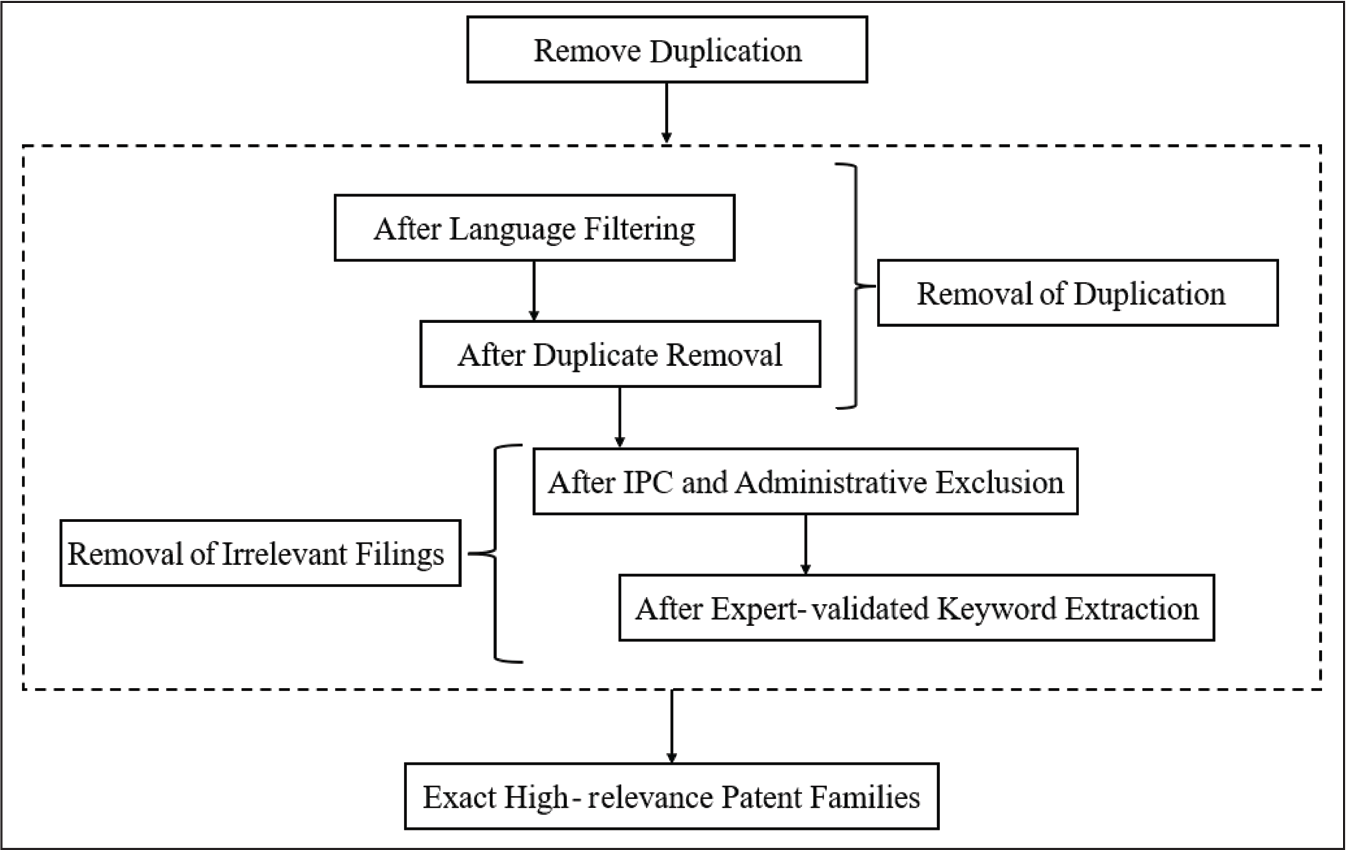
In terms of data preprocessing, all patent records were first filtered by language (English and Chinese only) and duplicate removal. Irrelevant filings, such as those categorised under outdated IPC codes or administrative filings unrelated to innovation, were excluded. A keyword dictionary, validated by domain experts, was used to extract only high-relevance patent families. It ensured consistency and reduced noise in the patent dataset used for analysis.
Regarding AI model usage, the study utilises GPT-based summarisation and clustering as part of the natural language processing (NLP) pipeline. While it enhances analytical efficiency and scalability, it is also acknowledged certain limitations. LLMs may contain cultural, linguistic, or domain-specific biases, especially when analysing global patent texts across jurisdictions. These biases were mitigated through the use of dual-language corpora and expert validation of theme interpretations.
The research is organised into five main phases.
The first phase is data collection, in which three primary data sources are gathered: global patent databases (e.g., Lens.org, WIPO, USPTO), scientific publications (e.g., Scopus, CNKI, ScienceDirect), and industry trend and market intelligence platforms (e.g., major news feeds). These datasets support the foundational input for identifying technological trends and assessing their relevance across multiple industries.
In the second phase, AI-driven analytical techniques are employed to process and extract insights from the collected data. NLP methods are used to detect emergent themes and innovation clusters in the literature and patent texts. Additionally, co-citation network analysis and GPT-based summarisation are utilised to uncover the structure and evolution of technological domains.
The third phase focuses on analysing industrial market demand and the extent of cross-sector technology integration. It includes the application of time series analysis to investment flows and public discourse, as well as sentiment analysis from social media and news sources. Sector-based comparative analysis is conducted to determine which technologies are receiving the most attention, investment, and traction within industries such as healthcare, manufacturing, energy, and education.
The fourth phase involves the classification of technologies by maturity stage. Using frameworks such as the S-curve and hype cycle analysis, technologies are categorised into emerging, developing, or mature. This classification is informed by adoption rates, average patent ages, citation intensity, and levels of public or private sector investment. Such categorisation is critical for tailoring policy recommendations to the specific needs and challenges of each stage.
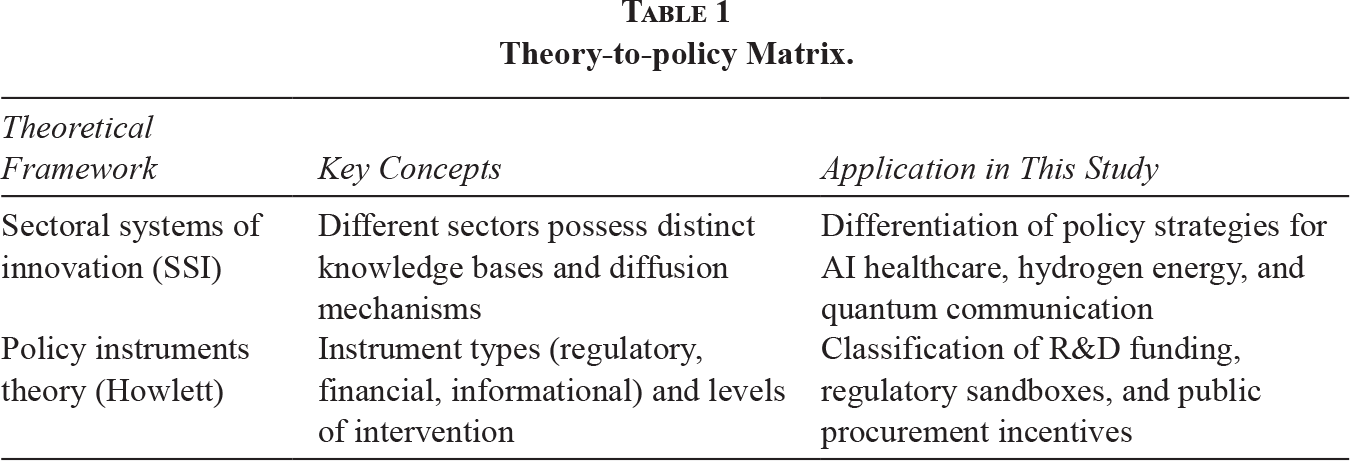
In addition to the technology foresight models such as the S-curve and the Gartner hype cycle, the research draws upon two foundational theories in innovation policy to frame the policy matrix more robustly: First, Malerba’s Sectoral Systems of Innovation (SSI) theory (2004) provides a useful lens to understand how innovation emerges and diffuses differently across sectors. According to SSI, the structure of demand, knowledge base, technological opportunities, and institutional frameworks varies significantly by sector. This study uses the SSI perspective to justify the need for differentiated policy tools across domains like AI healthcare, hydrogen energy, and quantum communication, recognising that these technologies exhibit different innovation logics and absorption capacities. Second, Howlett’s Policy Instruments Theory (2011) guides the classification and prioritisation of policy tools in this study. It posits that instruments can be categorised by the level of state intervention (e.g., regulatory, financial, informational) and their expected behavioural mechanisms. This theoretical foundation informs the construction of the policy matrix in this study, enabling a stage-specific and impact-sensitive selection of instruments such as R&D subsidies, regulatory sandboxes, and public procurement incentives.
Together, these frameworks provide a dual-layered theoretical rationale: Malerba’s SSI informs why sector-specific differentiation matters, while Howlett’s policy instrument typology guides how governments can intervene effectively at different technology maturity stages.
The final phase focuses on strategy design and validation. Drawing on the empirical findings from previous phases, the study constructs a matrix of targeted policy instruments with the maturity stages of identified technologies. Policy instruments are evaluated. Expert input is collected through Delphi rounds, and policy priorities are further refined using the Analytic Hierarchy Process (AHP) to rank strategic interventions.
From the research, a number of instruments are used to ensure analytical rigour. Gephi supports patent mining and topic analysis. SPSS are applied for trend visualisation, while NVivo and Excel assist in managing qualitative data and decision modelling. The use of AI models such as GPT further enhances synthesis and summarisation across large text corpora.
To ensure validity and reliability, the study incorporates multiple data sources and triangulation techniques. Expert validation is integrated via iterative feedback loops, while full transparency is maintained in documenting the analytical processes. Ethical standards are upheld by using only publicly available data, ensuring anonymity for Delphi participants, and adhering to intellectual property regulations when utilising full-text materials.
To sum up, this research design offers a comprehensive, data-driven, and policy-relevant framework for bridging the gap between emerging technology foresight and actionable science and technology policy.
Data Collection
To ensure a comprehensive and multidisciplinary understanding of emerging technologies, the study collects data from four key domains: (a) patent records, (b) scientific literature, (c) industry and market datasets, and (d) policy documents or expert interviews.
Table 1 shows the theoretical foundations and their policy applications. Patent data are sourced from globally recognised institutions such as the China National Intellectual Property Administration (CNIPA), the United States Patent and Trademark Office (USPTO), the European Patent Office (EPO), the World Intellectual Property Organisation (WIPO), and open platforms like Lens.org. These datasets are processed using API extraction instruments, keyword filtering, and patent family integration methods to process patent mining.
Theory-to-policy Matrix.
Scientific literature is reviewed from academic databases, including Web of Science, Scopus, CNKI, and IEEE Xplore. Keyword-based crawling and NLP techniques extract relevant research themes and identify publication clusters around emerging technologies. It enables the tracking of scholarly attention and scientific momentum across fields.
Industry and market data are obtained from commercial and open-access platforms such as CB Insights, Statista, and Qichacha. These sources provide critical insights into investment flows, merger and acquisition (M&A) activity, and market readiness levels. The data includes financing rounds, sectoral growth trends, and strategic moves by leading firms, all of which signal the commercial potential of specific technologies.
Policy and expert-level data are collected from government publications, white papers, and expert interviews. Thematic coding and qualitative content analysis are used to uncover the strategic orientations of public agencies and assess the alignment between existing policy instruments and emerging technological needs. Expert interviews also serve as a validation mechanism for preliminary findings and provide context-sensitive interpretations.
The study ensures a triangulated, evidence-based foundation for identifying emerging technologies and recommending targeted policy support through the data collection from different sources.
Data Analysis
This study employs a multi-stage data analysis framework to synthesise insights from patents, scientific literature, industry signals, and policy sources. The overall objective is to uncover emerging technology trajectories and link them with evidence-based policy recommendations. The analytical process integrates both quantitative techniques for pattern detection and trend forecasting and qualitative methods for interpretation and policy alignment to the mixed method.
The first stage involves patent data analysis, which includes keyword extraction, patent family clustering, and co-citation network mapping. Using NLP tools and bibliometric software such as Dephi, the study identifies technological clusters and traces their evolution over time. The interview protocol used in the Delphi study is provided in Appendix A. These analyses would help visualise how innovations are connected and which domains show signs of convergence or disruption. The temporal mapping of patent activity also supports the construction of technology life cycles using models such as the S-curve or hype cycle frameworks.
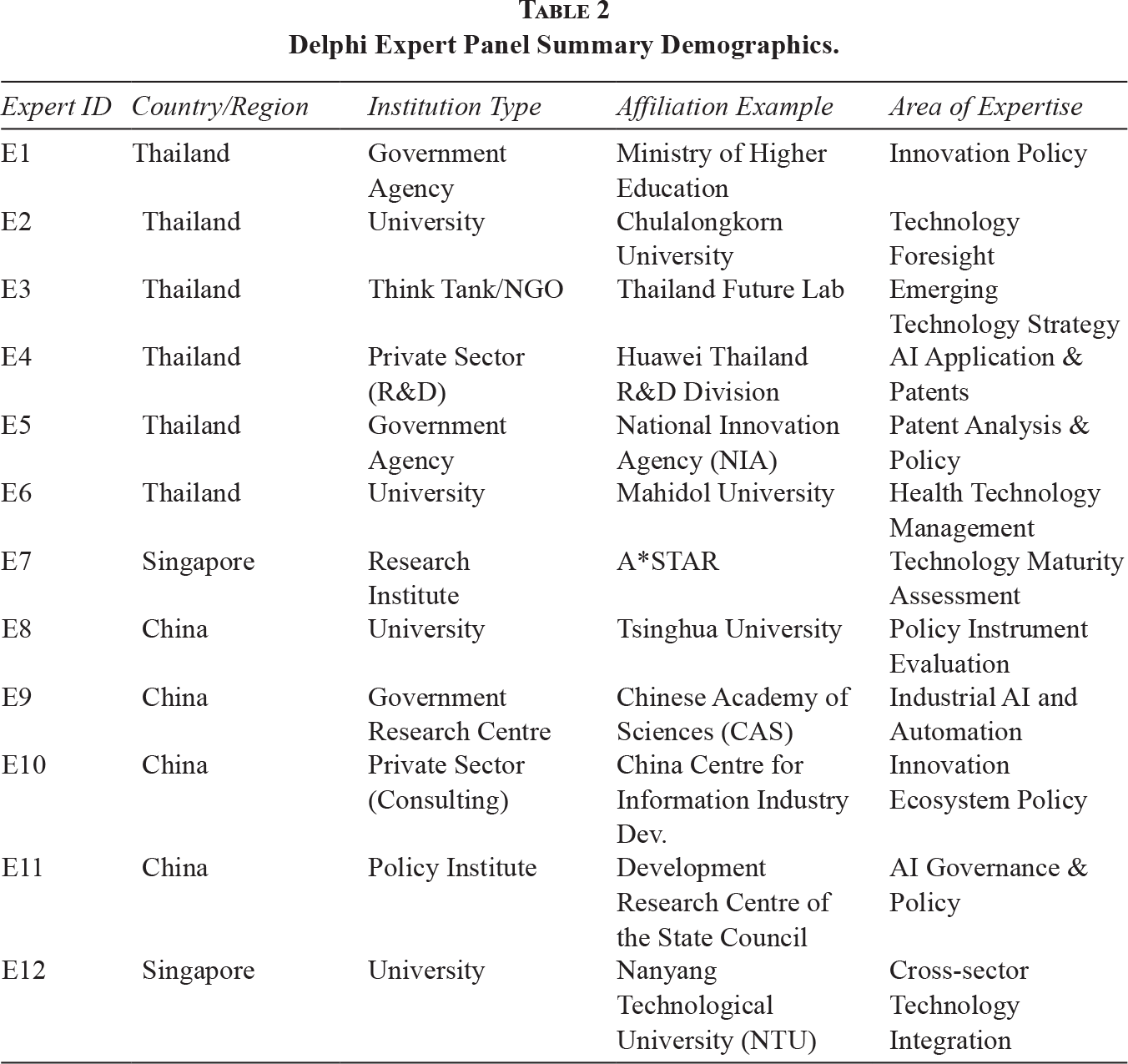
The Delphi expert panel comprised twelve professionals selected through purposive sampling to ensure diversity across geography, institutional types, and domain knowledge. Six experts were from Thailand, four from China, and two from Singapore. Their affiliations span government policy units, top universities, national research centres, and private sector innovation departments. The panel’s expertise covers AI policy, innovation governance, patent analytics, and industrial technology foresight.
The inclusion of experts from both ASEAN and China allows for policy recommendations that are regionally grounded yet benchmarked against the broader landscape of emerging technology governance in Asia.
The second stage focuses on mining scientific literature. Topic modelling algorithms—such as Latent Dirichlet Allocation (LDA) and BERT-based clustering—are used to extract thematic areas of research that align with patent data findings (Roberts et al., 2016; Sharma et al., 2021). GPT-based summarisation further helps in synthesising content from large volumes of research. It enables cross-validation between academic interest and technological development, highlighting areas with strong research-industry synergy.
The third stage centres on industry and market trend analysis. Time series analysis is performed on investment and M&A data collected from CB Insights, IT Juzi, and other platforms. Sentiment analysis and trend tracking from media and social platforms are used to gauge public and investor interest. These indicators are triangulated to assess which technologies are gaining momentum across different sectors and how they align with market demand.
The fourth stage involves technology maturity classification. By integrating patent metrics (e.g., filing velocity, citation frequency), publication data, and market readiness indicators, technologies are categorised into three stages: emerging, developing, or mature. This classification enables the tailoring of support strategies based on each technology’s position in the innovation lifecycle.
Finally, the fifth stage focuses on qualitative policy analysis and validation. Thematic coding of government reports, policy documents, and expert interviews is conducted using NVivo. A Delphi method is employed to gather expert consensus on policy priorities, and an AHP is used to weigh the importance of various policy instruments (Rowe & Wright, 2001). The demographic composition of the Delphi expert panel is summarized in Table 2. This ensures that policy recommendations are grounded in both empirical evidence and practitioner insight.
Delphi Expert Panel Summary Demographics.
To sum up, these analytical steps form a comprehensive, multi-layered approach that integrates technology foresight with policy design. The resulting insights are aimed at enabling proactive, data-informed decisions by policymakers and stakeholders across different innovation ecosystems.
Research Results
Technology Identification and Evolution
Based on patent data retrieved from WIPO, Lens.org, and USPTO databases, the study identified a growing number of filings between 2015 and 2023 in technology clusters such as AI-driven healthcare, quantum communication, hydrogen energy systems, and intelligent manufacturing robotics, as Figure 1. Using co-citation analysis (Zhang et al., 2014) and topic modelling via LDA and BERT, the research identified overlapping themes in patent and literature corpora, revealing strong convergence in areas like AI + diagnostics and AI + clean energy (Bai et al., 2022).
From the patent filing data spanning 2015–2023, Figure 2 demonstrates distinct trends in the innovation activity across emerging technology clusters. AI-driven healthcare has shown an exponential growth pattern, especially post-2020, with filings surpassing 600 in 2023. This signifies a rapid development phase, highlighting the expanding integration of AI in healthcare technologies such as telemedicine, diagnostic tools, and personalised healthcare. Intelligent manufacturing robotics also demonstrates a steady upward trajectory, with filings exceeding 400 by 2023. This indicates that the industrial robotics sector is transitioning from automation to more flexible and intelligent systems, which is crucial for the ongoing transformation of manufacturing processes. Quantum communication and hydrogen energy systems also show increasing filings, albeit at a slower pace. Notably, hydrogen energy systems are seeing a faster uptick from 2021 onwards, which suggests growing technological breakthroughs and the influence of policy support in the energy sector.
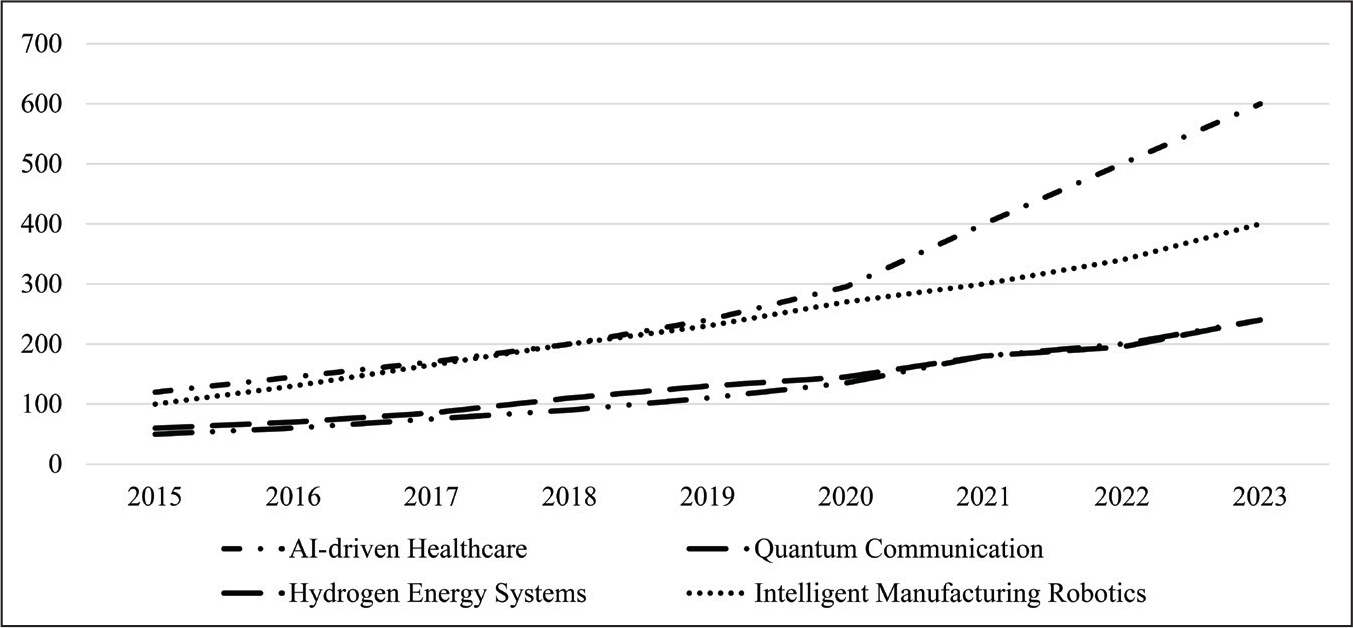
Figure 3 maps each technology along a curve representing performance or adoption level relative to its innovation lifecycle stage. The curve suggests that quantum communication is in the early innovation stage, characterised by low adoption and limited real-world implementation. Smart educational AI and hydrogen energy systems fall in the growth acceleration phase, where performance improvements and adoption are rapidly increasing. In contrast, AI-based medical imaging and intelligent manufacturing has reached the mature stage, with widespread adoption and plateauing performance, indicating technological stability and operational integration.
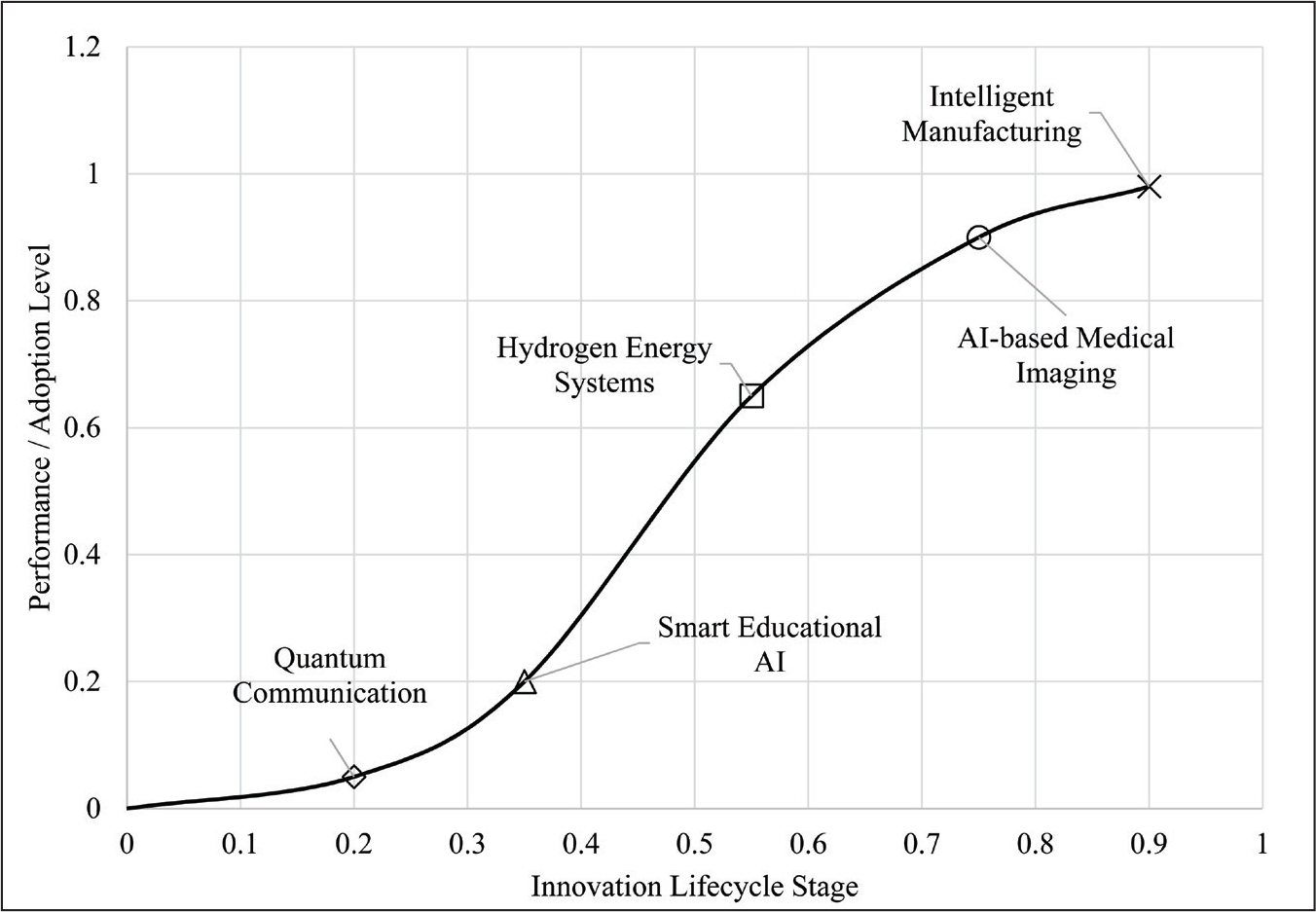
Figure 4 complements this perspective by showing where each technology stands in terms of public expectations and market hype. Quantum communication, again, appears at the Innovation Trigger stage—where conceptual interest is high, but implementation remains exploratory. Smart Educational AI has passed the peak of inflated expectations and is entering a period of reassessment. Hydrogen energy systems is in the trough of disillusionment, a common phase where technical or logistical challenges emerge after early optimism. AI-based medical imaging is positioned on the slope of enlightenment, where benefits are becoming clearer and more systematically adopted. Finally, intelligent manufacturing is located on the plateau of productivity, indicating it is delivering measurable value with reduced uncertainty, aligning with its S-curve maturity.
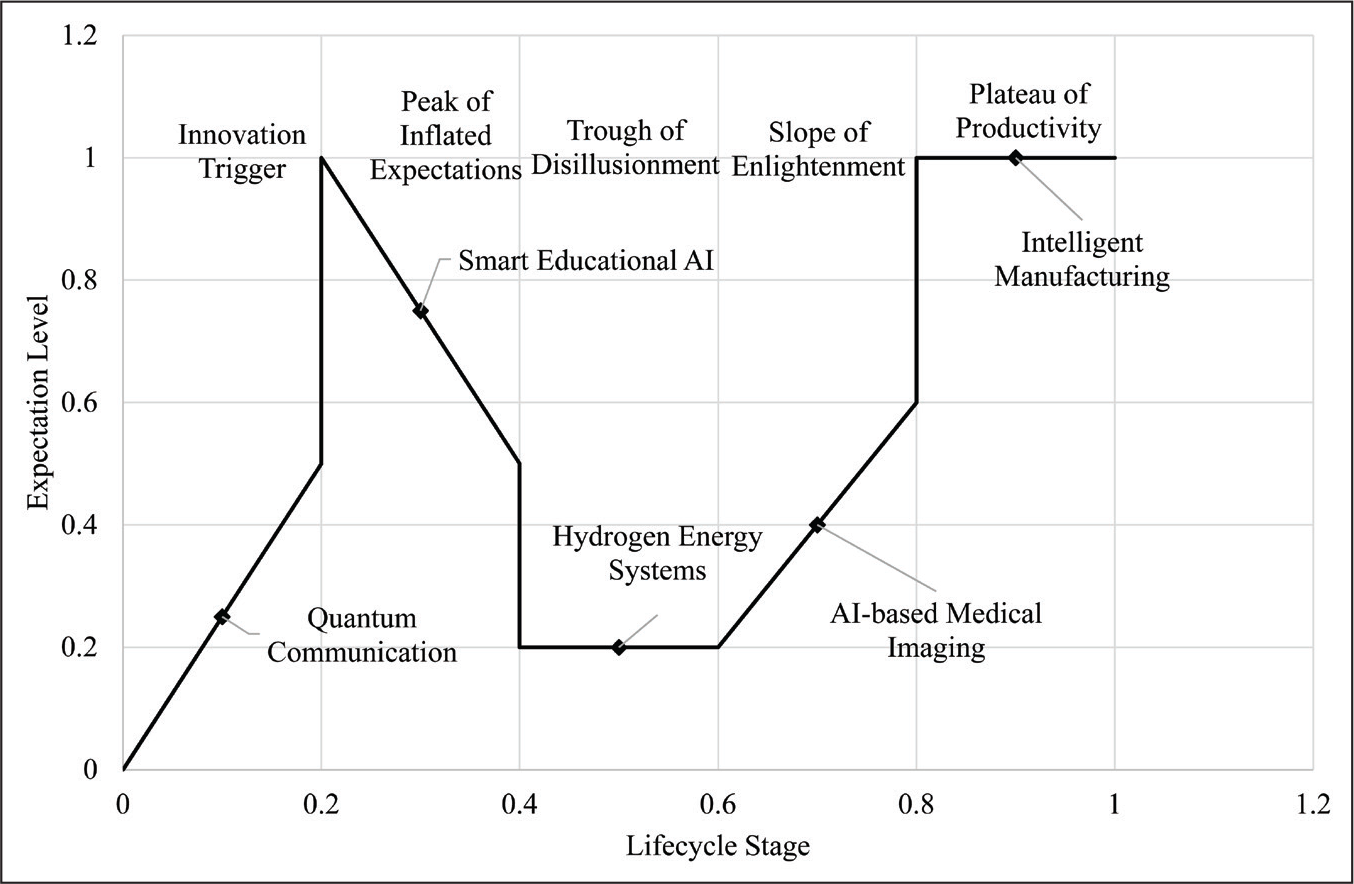
Together, these two figures demonstrate the multidimensional maturity landscape of emerging technologies—combining technological performance (S-curve) with market perception (hype cycle). This dual analysis highlights how some technologies (e.g., intelligent manufacturing) have reached both adoption and expectation maturity, while others (e.g., quantum communication) require continued R&D support and policy incubation before widespread deployment.
Temporal distribution showed that AI in pathology and personalised medicine peaked between 2020 and 2023, reflecting rapid translation from academia to commercial application. The S-curve analysis indicated that technologies like smart manufacturing and machine vision had reached a transitional stage, moving from experimentation to early market deployment. Citation clusters visualised in Gephi further illustrated technological influence networks.
Industrial Demand and Technology Integration Trends
Data extracted from CB Insights, IT Juzi, and Qichacha demonstrated substantial investment growth in sectors related to the identified technology domains. For example, investments in AI-health startups reached over USD 6 billion globally in 2022, while green hydrogen production saw a 35% year-over-year increase in venture funding.
Sentiment analysis on industry publications and social media (e.g., Zhihu, Sina) indicated that AI in education and sustainable mobility solutions generated strong public interest, despite relatively lower maturity. These demand signals were further validated through time series trend analysis, which showed increasing attention to dual-purpose technologies—those contributing to both economic competitiveness and environmental sustainability.
Cross-sectoral analysis revealed that the integration of emerging technologies is more advanced in healthcare and clean energy sectors compared to quantum communication and AI in public education, which remain in nascent stages. The research confirms that technologies with higher funding, faster patent citation growth, and stronger media presence are more likely to receive commercial and policy traction.
Figure 5 presents a bar chart comparing the 2022 investment levels across five emerging technology sectors: AI-health, green hydrogen, smart education, sustainable mobility, and quantum communication. The data illustrates that AI-health received the most substantial investment, reflecting strong investor confidence and sector maturity. By contrast, quantum communication received the least investment consistent with its status as a nascent and still-developing technology.
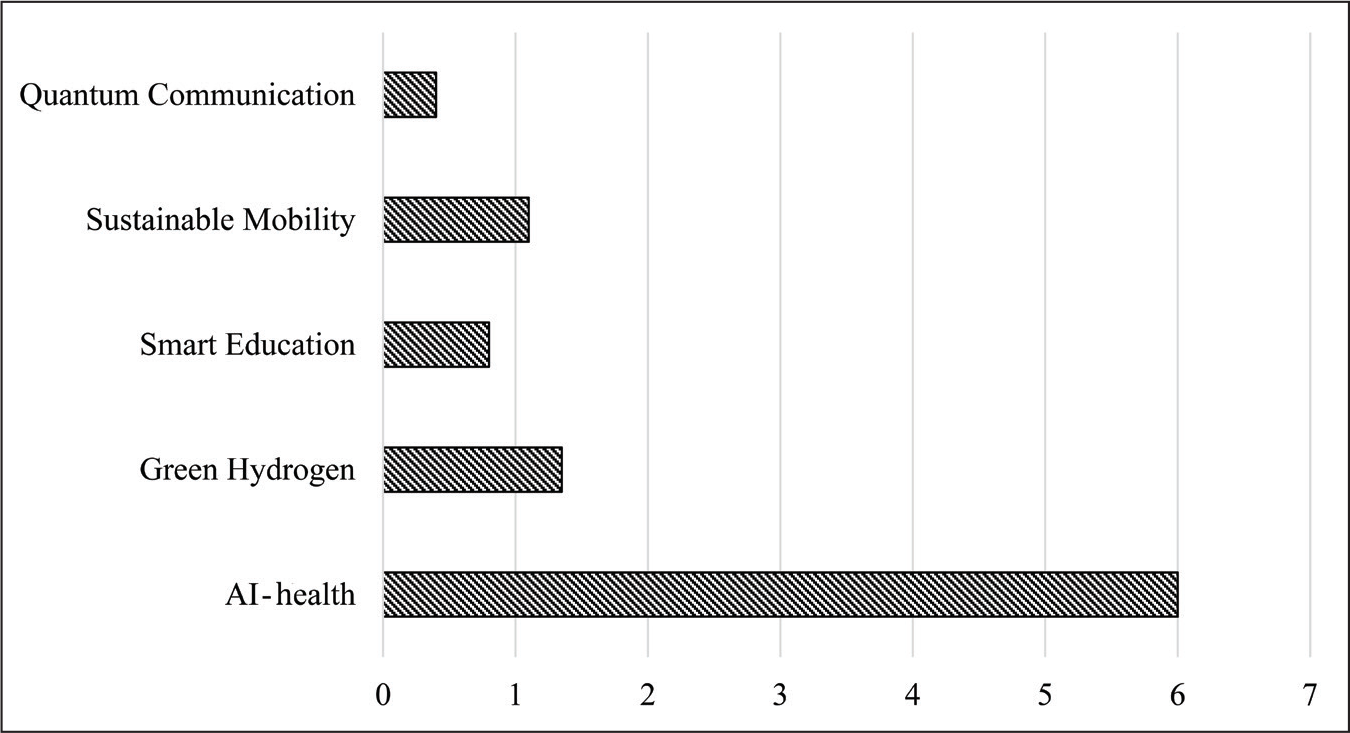
Moderate levels of investment were observed in green hydrogen sustainable mobility and smart education, indicating transitional stages of development. These patterns suggest that capital allocation tends to favour technologies with both high adoption potential and visible near-term returns.
Figure 6 complements this analysis by illustrating the relationship between technology integration maturity and public sentiment. The line chart compares average scores (on a 1–5 scale) across the same five sectors. AI-health again leads, scoring highly in both technological maturity (~4.6) and public sentiment (~4.5), highlighting it as a strategically sound sector for expanded procurement policies and institutional adoption.
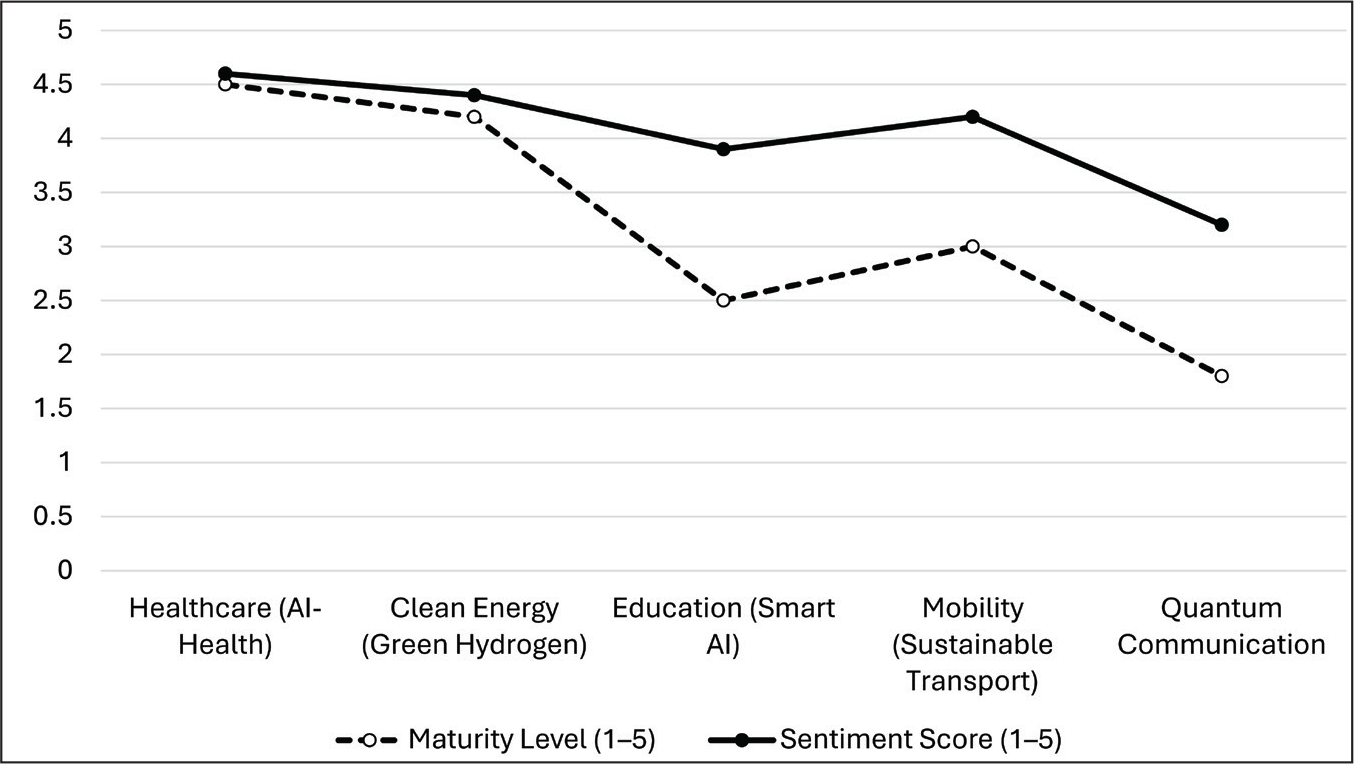
In contrast, smart education (AI) demonstrates a notable discrepancy: high public sentiment (~3.9) but relatively low integration maturity (~2.5), suggesting it may be driven more by public enthusiasm than technical readiness. Such a gap indicates the risk of inflated expectations, reinforcing the need for regulatory sandboxes, pilot testing, and careful phased deployment.
At the other end of the spectrum, quantum communication scores lowest in both dimensions, emphasising its status as a long-term research priority rather than an area for immediate commercial focus.
Technologies like AI-health and green hydrogen not only show strong financial investment but also score high in both integration maturity and public interest. This ‘dual-high’ status suggests that these sectors are ideal candidates for policy instruments that amplify deployment, such as Public procurement incentives and cross-sector partnerships, particularly in national health infrastructure and energy transition programmes.
Table 3 presents a strategic policy matrix linking five emerging technologies to their corresponding levels of public sentiment, technological maturity, and tailored policy suggestions. The table is structured to highlight discrepancies or alignments between market expectations and developmental readiness, thereby guiding differentiated intervention strategies.
Strategic Recommendation Matrix (Based on Investment–Sentiment Gap).
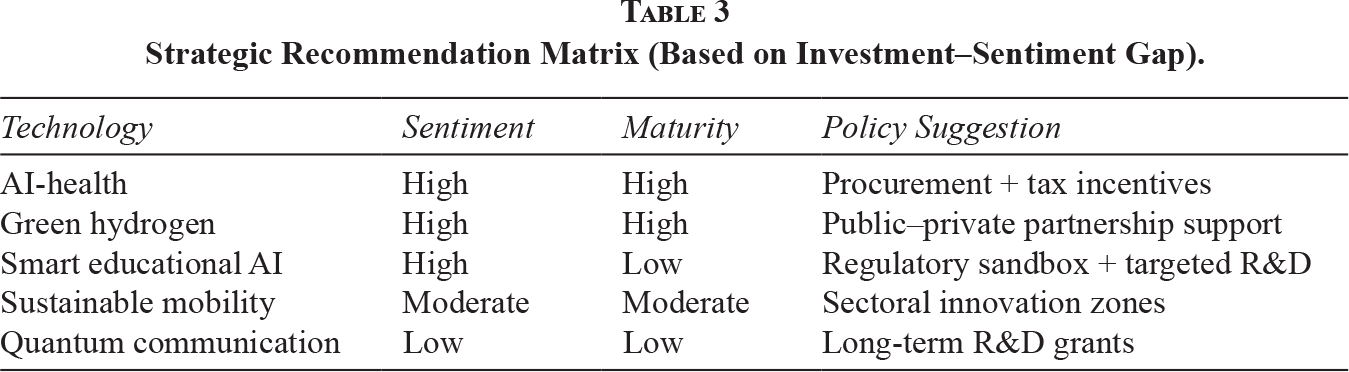
AI-health and green hydrogen exhibit high sentiment and high maturity, indicating both technological readiness and market confidence. As a result, policy tools such as public procurement, tax incentives, and public–private partnership support are recommended to accelerate scaling and deployment.
Smart educational AI demonstrates high sentiment but low maturity, revealing a sentiment–maturity gap. This suggests a risk of over-optimism, making it a candidate for regulatory sandbox environments combined with targeted R&D funding, allowing cautious experimentation and staged market entry.
Sustainable mobility is positioned at a moderate level in both sentiment and maturity, warranting sectoral innovation zones that foster incremental improvements through localised experimentation and cross-sector integration.
Quantum communication, with low sentiment and low maturity, is at an early developmental stage. The appropriate strategy is to invest in long-term basic R&D, infrastructure, and talent cultivation, rather than immediate market deployment.
This matrix enables policymakers to:
Avoid one-size-fits-all policies by aligning policy instruments with the specific technological lifecycle stage and market readiness of each sector. Prioritise investment where maturity and sentiment align, and apply cautious, research-oriented strategies where gaps exist. Integrate the matrix into broader technology foresight frameworks, enhancing agility in national innovation strategies.
Technology Maturity Classification
Through triangulation of patent age, citation intensity, publication growth, and market adoption indicators, technologies were categorised into three stages:
Emerging: Quantum communication, neural implants, smart educational AI. Developing: Hydrogen-powered vehicles, AI-based medical imaging. Mature: Intelligent robotics, renewable energy forecasting systems.
This classification enabled structured policy matching, ensuring that support measures align with the actual lifecycle phase of each technology.
Figure 7 presents a horizontal stacked bar chart that classifies selected technologies into three levels of maturity stages: Emerging, developing, and mature, based on aggregated assessments of adoption rate, performance stability, and technological readiness.
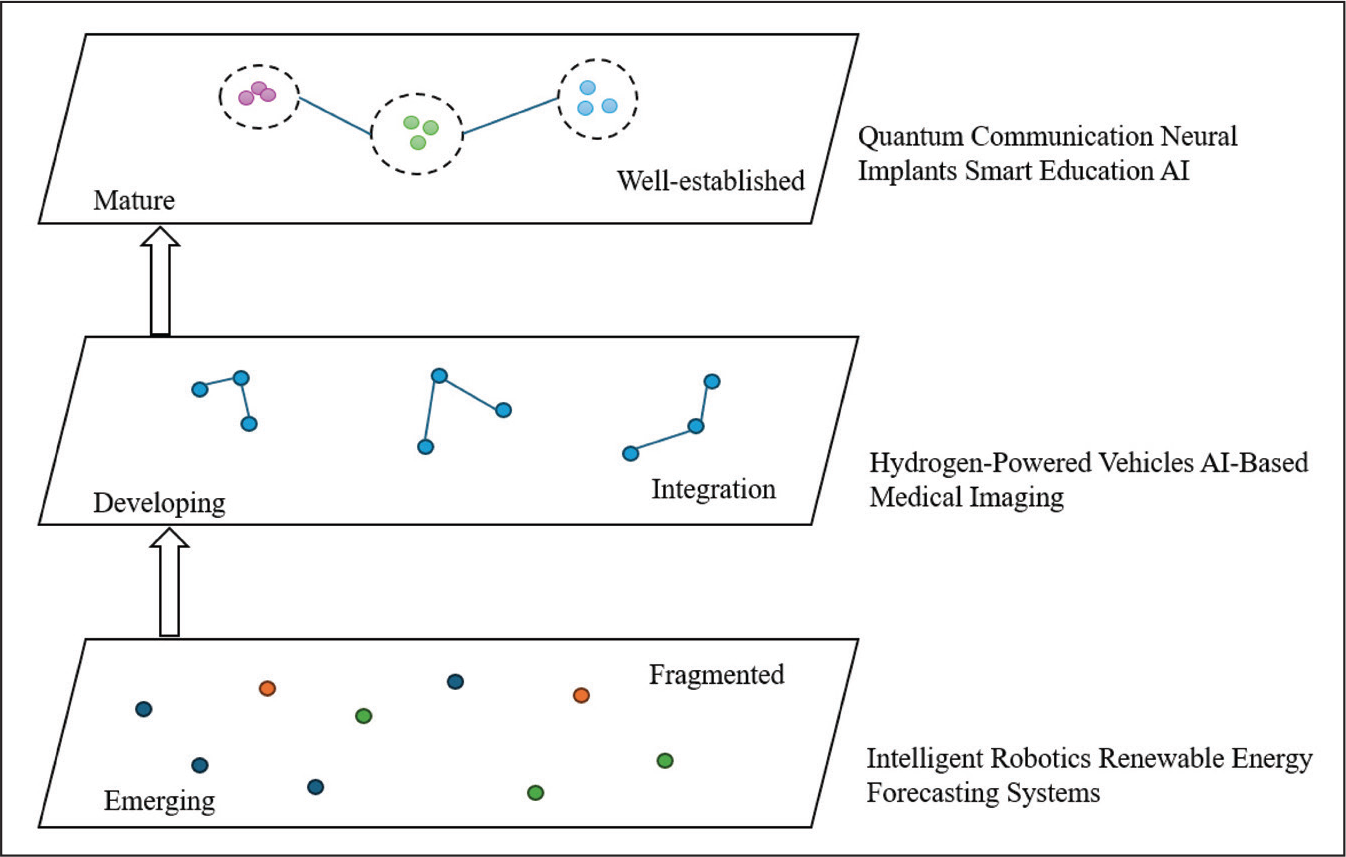
Technologies such as quantum communication, neural implants, and smart educational AI are categorised as emerging. These fields are still in the early phases of development, characterised by low adoption, limited commercialisation, and high uncertainty. This classification suggests they are best supported through basic research funding, university-industry collaboration, and long-term innovation planning.
Technologies like hydrogen-powered vehicles and AI-based medical imaging fall into the developing category. These have moved beyond proof-of-concept stages and are undergoing scale-up and standardisation, with increasing deployment in specific industry contexts. As such, they require regulatory support, infrastructure investment, and pilot incentives to accelerate adoption and ecosystem integration.
Intelligent robotics and renewable energy forecasting systems are classified as mature, indicating they have achieved stable performance, broad adoption, and are operating in commercial environments. These technologies are suitable candidates for export promotion, tax incentives, and industry-specific integration policies.
Policy Strategy Design and Validation
Delphi rounds conducted with twelve domain experts from government agencies, research centres, and high-tech enterprises led to the prioritisation of policy tools using AHP.
The resulting weights emphasised: (a) R&D funding mechanisms (highest priority), (b) regulatory sandboxes for AI experimentation, (c) public procurement incentives for scaling green tech, and (d) tax relief for high-tech startups in emerging clusters
The policy matrix created from the findings categorised tools by both maturity level and industry type, ensuring applicability across sectors while preserving technology-specific relevance. Experts emphasised the importance of integrating real-time patent analytics into policy dashboards to dynamically update interventions.
Figure 8 presents the results of a multi-criteria policy prioritisation exercise, where twelve domain experts from government, academia, and high-tech enterprises assessed the relative importance of policy instruments to support emerging technologies. Using the Delphi method in combination with the AHP (Teng & Chen, 2020), four key policy tools were evaluated and ranked based on their AHP priority scores.

The findings indicate that R&D funding mechanisms received the highest priority score (0.40), signifying expert consensus that direct research investment is the most impactful and foundational driver for accelerating innovation in emerging fields. This reflects the importance of addressing early-stage scientific and technical uncertainty, particularly for technologies classified as emerging or developing.
Regulatory sandboxes for AI follow as the second-highest ranked tool (0.25), emphasising the need for flexible, controlled environments where AI innovations can be tested without full regulatory constraints. This approach enables iterative learning while mitigating risk, especially in sectors such as smart healthcare or autonomous systems.
Public procurement incentives (score = 0.20) were ranked third, reflecting their role in stimulating demand and scaling technologies through guaranteed markets, particularly for green and digital public infrastructure.
Tax relief for high-tech startups (score = 0.15) received the lowest relative weight among the four, suggesting that while helpful, indirect fiscal measures are perceived as less immediately effective than direct R&D support or demand-side interventions in fostering breakthrough innovation.
Pathway Between Early Identification of Emerging Technologies
This study establishes a structured pathway that connects the early identification of emerging technologies with the design of targeted support policies, using a multi-source, multi-stage analytical model. The pathway integrates quantitative signals from patent and publication trends with qualitative expert insights and market validation to ensure timely and effective intervention.
The final step in the pathway is the construction of a dynamic policy feedback loop, where real-time patent analytics and market data streams are embedded into digital policy dashboards. This enables continuous monitoring and adjustment of policy priorities based on technological progress and sectoral demand shifts—effectively institutionalising evidence-based, responsive governance of innovation ecosystems.
Thus, the pathway offers a comprehensive, data-informed model for transitioning from technology foresight to precisely aligned policy action, ensuring that strategic technologies receive appropriate support at the right time, by the right means, and in the right sectors.
The findings of this section confirm that the early identification of emerging technologies, when systematically combined with maturity classification and real-time market signals, provides a robust foundation for designing targeted, phase-specific policy interventions. By leveraging patent data analytics, thematic research clustering, and expert-driven prioritisation, policymakers can proactively align support instruments with the evolving needs of innovation ecosystems.
More importantly, this study demonstrates that policy effectiveness improves significantly when dynamic, data-driven insights are integrated into the formulation and continuous refinement of strategies. The proposed pathway framework serves as a model for evidence-based innovation governance, offering timely guidance to channel public resources toward high-potential technologies across different maturity stages and industry domains.
Figure 9 illustrates a systematic pathway for transforming early-stage technological signals into actionable policy strategies. The model emphasises a closed-loop, data-driven approach that combines technology foresight with policy intelligence, ensuring adaptability and responsiveness in innovation governance.
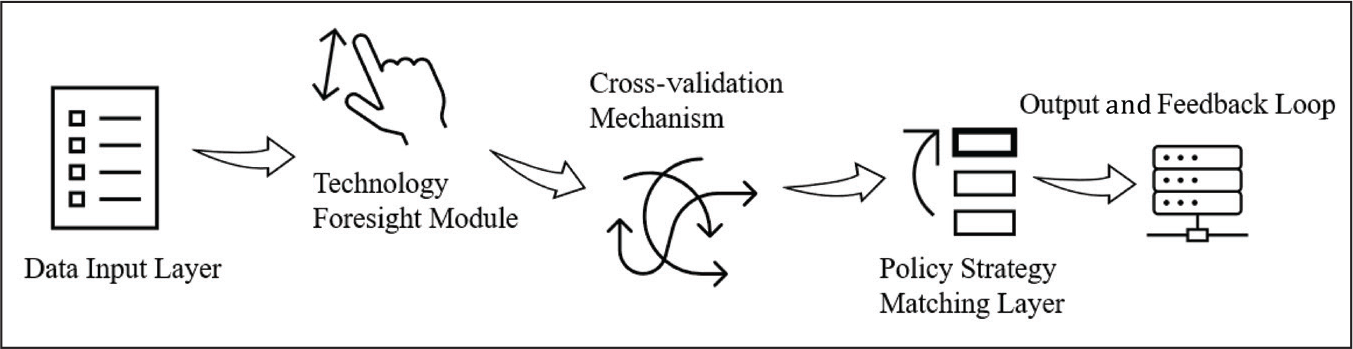
Step 1: Data input layer
This initial stage involves collecting structured and unstructured data from multiple sources—such as patent databases, academic publications, market analyses, and expert inputs. These datasets serve as raw indicators of potential emerging technologies.
Step 2: Technology foresight module
Here, analytical tools—such as trend analysis, machine learning models, and expert Delphi surveys—are applied to detect weak signals, assess emerging patterns, and forecast technological trajectories.
Step 3: Cross-validation mechanism
To ensure robustness, a multi-perspective validation system is employed. It integrates quantitative metrics (e.g., patent acceleration rate) with qualitative consensus (e.g., expert panel reviews), improving the reliability of identified trends.
Step 4: Policy strategy matching layer
At this stage, identified technologies are mapped against an evidence-based policy toolbox, using a maturity–impact–urgency framework. This enables precise alignment of technologies with interventions such as R&D grants, regulatory sandboxes, or industrial partnerships.
Step 5: Output and feedback loop
Final recommendations are generated and entered into a policy feedback system, which monitors implementation outcomes. The loop allows continuous refinement, ensuring that insights from practice feed back into future foresight cycles.
Conclusion
This study presents an integrated analytical framework that connects the early identification of emerging technologies with targeted policy design, leveraging multi-source data analysis, expert validation, and lifecycle-based classification. The findings offer both theoretical and practical contributions to the field of technology, governance and innovation policy.
This study integrates quantitative and qualitative analysis under a unified research framework to support targeted policy design. The process begins with early identification of emerging technologies through patent mining (e.g., LDA topic modelling, citation analysis), which allows the mapping of innovation lifecycles (S-curve) and hype patterns. These analytical results provide evidence on technology maturity, diffusion potential, and market momentum.
Next, the Delphi expert consultation validates and contextualises these findings by identifying institutional barriers, governance gaps, and sector-specific priorities. Experts also assess the feasibility of applying different policy tools at varying stages of technology development.
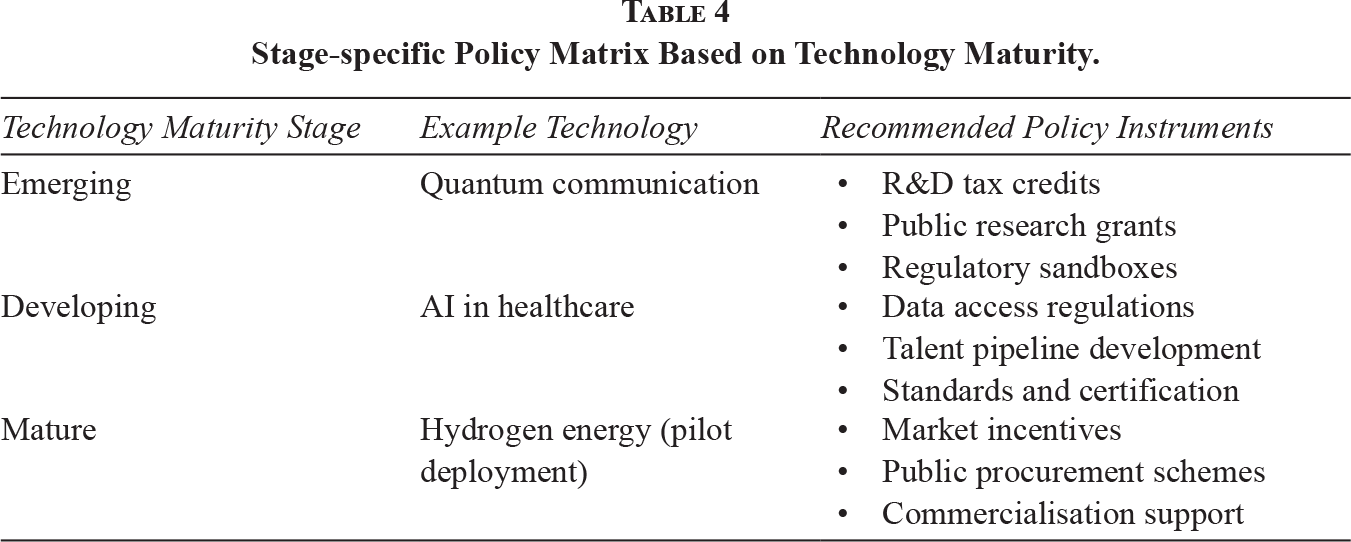
Based on the integrated insights, the study constructs a stage-specific policy matrix. A stage-specific policy matrix is presented in Table 4.
Stage-specific Policy Matrix Based on Technology Maturity.
First, through the mining of global patent and scientific literature databases, the study successfully mapped the evolution pathways of key emerging technologies—such as AI-driven healthcare, quantum communication, hydrogen energy systems, and intelligent manufacturing. By applying topic modelling and citation network analysis, these technologies were not only identified early but also contextualised within broader technological ecosystems.
Second, analysis of market demand and public sentiment revealed asymmetries between investment attention and integration maturity across sectors. While AI healthcare and green hydrogen technologies showed strong alignment between financial backing and societal readiness, others, such as smart educational AI, exhibited high public interest but lagging integration. These findings highlight the importance of tailoring policy responses to the unique developmental status and sectoral context of each technology.
Third, technologies were categorised into emerging, developing, and mature stages using indicators such as patent age, citation frequency, publication trends, and market readiness. This classification enabled the formulation of a policy matrix that matched each maturity stage with appropriate instruments—ranging from R&D funding and regulatory sandboxes to public procurement incentives and tax relief mechanisms.
Overall, the results validate the utility of a multi-layered, data-driven model for aligning technology foresight with evidence-based innovation policy. The proposed framework can serve as a strategic tool for governments and research institutions aiming to allocate resources more efficiently, mitigate policy lag, and proactively support the growth of high-potential technologies.
Recommendations
Based on the multi-stage analytical findings and maturity classification framework, the following recommendations are proposed to enhance the effectiveness of policy support for emerging technologies:
Implement stage-specific policy instruments Governments should adopt a differentiated policy approach based on the maturity level of technologies. For emerging technologies such as quantum communication and neural implants, the focus should be on R&D funding, international collaboration, and basic infrastructure investment. For developing technologies, including hydrogen-powered vehicles and AI-based medical imaging, regulatory sandboxes, public procurement mechanisms, and pilot demonstration projects are appropriate. For mature technologies, such as intelligent robotics and renewable energy forecasting, governments should provide tax incentives, export facilitation, and commercial scaling support. Integrate real-time patent and market analytics into policy dashboards To enable dynamic and responsive governance, policymakers should invest in real-time monitoring systems that integrate patent filings, publication trends, and market signals into policy intelligence dashboards. These tools will help decision-makers detect shifts in innovation momentum and adjust support mechanisms accordingly. Promote cross-sector technology integration The study identifies that technologies with high public interest but low market maturity—such as smart educational AI—require institutional coordination and targeted cross-sectoral initiatives. Policymakers should facilitate collaboration between educational institutions, AI developers, and regulators to accelerate integration and reduce systemic friction. Strengthen expert engagement through Delphi and AHP For high-impact technologies with uncertain trajectories, structured expert engagement methods such as the Delphi technique and AHP should be institutionalised in the policymaking process. These tools allow for evidence-based prioritisation of policy tools and improve the transparency and legitimacy of resource allocation decisions. Institutionalise innovation foresight in S&T policy planning Innovation foresight should not remain an ad hoc or academic exercise. Instead, it should be institutionalised within national S&T policy units, supported by dedicated data analysts, foresight professionals, and collaborative platforms with universities and industry. This will help ensure that emerging technology signals are translated into timely and effective policy actions.
Footnotes
Acknowledgements
We would like to express our sincere gratitude to all individuals and institutions that contributed to the successful completion of this research.
Authors’ Contribution
Conceptualisation: Yiwei Zhang and Shanghai Mu; methodology: Shanghai Mu; software: Yiwei Zhang and Baitong Liu; validation: Yiwei Zhang, Shanghai Mu and Baitong Liu; formal analysis: Yiwei Zhang; investigation: Yiwei Zhang and Baitong Liu; resources: Shanghai Mu; data curation: Yiwei Zhang and Baitong Liu; writing (original draft preparation): Yiwei Zhang; writing (review and editing): Shanghai Mu; visualisation: Yiwei Zhang; supervision: Shanghai Mu; project administration: Shanghai Mu. All authors have read and agreed to the published version of the manuscript.
Data Availability Statement
The datasets generated and/or analysed during the current study are not publicly available due to institutional policies but are available from the corresponding author upon reasonable request.
Declaration of Conflicting Interests
The authors declared no potential conflicts of interest with respect to the research, authorship and/or publication of this article.
Funding
The authors received no financial support for the research, authorship and/or publication of this article.
Informed Consent Statement
Informed consent was obtained from all subjects involved in the study. Written informed consent has been obtained from the patient(s) to publish this article.
Institutional Review Board Statement
Ethical review and approval were waived for this study due to ‘In accordance with the regulations, this study is classified as a routine qualitative project and, therefore, does not require approval from an Ethics Committee or Institutional Review Board. The study does not involve animal or human clinical trials and is not unethical. In line with the ethical principles outlined in the Declaration of Helsinki, all participants provided informed consent prior to participating in the study. The anonymity and confidentiality of participants are guaranteed, and participation was entirely voluntary’.