







Abstract
Consanguineous marriage is the legal union of male and female of a common ancestor related by blood. The most common prevailing form of consanguineous marriages is between first cousins. Middle East Asian countries and southern states in India show high prevalence. A comparative analysis between the two rounds of National Family Health Survey 1 and 4 have shown a declining trend for the practice of consanguineous marriages. The highest percentage of consanguineous marriages is seen among the first cousins from both father’s and mother’s side, most commonly practice in the southern states of Andhra Pradesh, Telangana, Tamil Nadu, and Karnataka except Kerala. Importantly, the practice of consanguineous marriage is higher among the Muslims of North India and Hindus of Southern India, among the Other Backward Classes and the less educated population of the middle and richer wealth index. A significant relationship can be noticed among consanguineous marriages and socio-economic variables.
Introduction
Consanguineous marriage is defined as the ‘legal union of male and female of a common ancestor or between a man and woman related by blood’ (Al-Salem & Raishdeh, 1993; Bittles and Hussain, 2000; Centerwall, 1965; Centerwall & Centerwall, 1966; Jurdi & Saxena, 2003; Tamim et al., 2003; Yunis et al., 2008). Marriage within the same clan, tribe, caste or biraderi boundaries largely remains the rule in more traditional societies and is strongly favoured in many migrant communities now resident in western countries (Bittles, 2005). Consanguineous marriage is a practice where individuals favour to marry within their own group. The word ‘consanguinity’ comes from two Latin words con meaning shared and sanguis meaning blood. The most common prevailing form of consanguineous marriage is between first cousins (Al-Salem & Raishdeh, 1993). Consanguinity is characterised by early-age marriage and early-age childbearing in females (Bittles et al., 1991; Hussain & Bittles, 2000).
Several communities of North Africa, Middle East, West Asia and Southern India follow the tradition of consanguineous marriages, where intra-familial unions collectively account for 20% to 50% of all marriages, with first cousin’s union accounting for almost one-third of all marriages (Tadmouri et al., 2009). The prevalence of consanguinity and rates of first cousin marriage vary widely within and between populations and communities, depending on ethnicity, religion, culture and geography. Consanguineous marriages are also practiced among emigrant communities from highly consanguineous countries and regions, such as Pakistan, Turkey, North Africa and Lebanon, now resident in Europe, North America and Australia (Schulpen et al., 2006). Generally, the highest rates of consanguineous marriage have consistently been associated with low socioeconomic status, illiteracy and rural residence (Bittles et al., 1991; Bittles, 1994). In some populations, a high prevalence of consanguineous marriages has also been reported among land-owning families (Rami & Chandrasekhar, 1979) and in traditional ruling groups and the highest socioeconomic strata (Al-Thakeb, 1985). Social, religious, cultural, political and economic factors still play roles in favouring consanguineous marriages among the new generations just as strongly as they did among the older generations, particularly in rural areas.
The first National Family Health Survey (NFHS-1; 1992–1993) shows the prevalence of consanguineous marriages in India at 14%, whereas the second Indian Human Development Survey (IHDS-II, 2011–2012) shows its prevalence at 8%. In order to understand the prevalence of consanguineous marriages in India, it is desirable to understand three basic cultural aspects that are the configuration of the linguistic regions, the institution of caste and the family organisation. The institution of caste is one of the important factors which leads to consanguinity (Chakravarti, 1968). Typically, the highest rates of inbreeding are seen in the Hindu population, especially among tribal groups and Scheduled Castes (Ghosh & Majumder, 1979), but inbreeding is also favoured by the Muslim and Christian communities suggesting social compliance with the prevailing Dravidian marriage customs (Bai et al., 1981; Rao, 1983). Interestingly, caste Hindus and tribal groups who originated in North India but now are resident in the southern states maintain their strenuous avoidance of inbreeding (Pingle, 1983; Rao & Murthy, 1984) in keeping with the strict Aryan outbreeding tradition (Centerwall et al., 1969). The major reason advanced by South Indian groups for the popularity of consanguineous marriages is perceived benefit in terms of social stability, resulting from marriage to a close relative, allied to the maintenance of family property. In general, consanguinity is negatively correlated with socio-economic status (Dronamraju, 1964; Khan, 1963) although exceptions have been reported in major land-owning families in Andhra Pradesh. Hindus favour cross-cousin unions, whereas parallel cousin marriages are more common form in the Muslim community. Uncle–niece marriages (mother’s brother with sister’s daughter) are arranged in many parts of Andhra Pradesh, Karnataka and Tamil Nadu, but their prevalence is low in Kerala (Centerwall et al., 1969; Dumont, 1953; Good, 1980; Reid, 1973).
Recently, India has been experiencing large-scale socio-economic transformation. The existing research on consanguineous marriages in India has become quite outdated now which cannot be generalised anymore (Babu et al., 1994; Beck, 1972; Centerwall, 1965; Centerwall & Centerwall, 1966; Devi et al., 1981; George et al., 1992; John & Jayabal, 1971; Khan, 1963; Kulkarni & Kurian, 1990; Rao & Inbaraj, 1977, 1979, 1980; Sureender et al., 1998). Hence, there is a need to update the knowledge and information on consanguineous marriages: their levels, differentials and determinants, by providing a comprehensive assessment of national-level data considering the variation in the levels of consanguineous marriages by all the states and socio-economic groups across India.
Data and Method
The data for this study has been used from the NFHS-1 and NFHS-4 conducted during 1992–1993 and 2015–2016 respectively. Details of the survey design, instrument and findings are available in the national reports (IIPS, 1995; IIPS & ICF, 2017). The National Family Health Survey is a large-scale, multi-round survey conducted in a representative sample of households throughout India. It includes information on the respondent’s background, reproduction, marriage and cohabitation, contraception and others. In the first round of NFHS-1 (1992–1993), interviews were conducted with a nationally representative sample of 88,562 households and 89,777 ever-married women aged 13–49 years across India, while NFHS-4 (2015–2016) covered a representative sample of 601,509 households and 699,686 women aged 15–49 years. To make a comparative analysis, ever-married women aged 15–49 years have been considered in the study. Therefore, the analytical sample in this study was restricted to 89,426 and 540,670 women who had ever been married aged 15–49 in NFHS-1 and NFHS-4 respectively. The questions taken to determine consanguineous marriage are that whether the respondent was related to her current husband in any way before marriage and what type of relationship it was. The first question was to be answered in yes/no and the second question had the categories of first cousin on father’s side, first cousin on mother’s side, second cousin, uncle, other blood relative, brother-in-law and other non-blood relative. The women who report that their husband was related to them by blood before their marriage are considered as consanguineous marriage.
To find out how the consanguineous marriage varies across the background characteristics, a set of background characteristics has been considered. These are current age of women, caste, religion, educational level, wealth index, place of residence and region. The age group of women has been divided into three categories, that is, 15–24, 25–34 and 35–49. Caste has been divided into four categories, namely Scheduled Castes (SCs), Scheduled Tribes (STs), Other Backward Classes (OBCs) and others. Religion has been grouped into Hindu, Muslim, Christian, Sikh and others. Educational level of women has been divided into four categories, that is, no education, primary, secondary and higher. The wealth index has been categorised as poorest, poor, middle, richer and richest. The place of residence has been categorised as rural and urban. India has been divided into six geographical regions, that is, north, south, east, west, central and north-east. The northern region includes the states Chandigarh, Delhi, Haryana, Himachal Pradesh, Jammu and Kashmir, Punjab, Rajasthan and Uttaranchal. Central India includes three states, namely Chhattisgarh, Madhya Pradesh and Uttar Pradesh. Similarly, the eastern region comprises of four states (Bihar, Jharkhand, Odisha and West Bengal). When it comes to the north-eastern region, it includes eight states, that is, Arunachal Pradesh, Assam, Manipur, Meghalaya, Mizoram, Nagaland, Sikkim and Tripura. The western region covers Dadra and Nagar Haveli, Daman and Diu, Goa, Gujarat and Maharashtra. The southern states, on the other hand, include five states and three union territories (Andaman and Nicobar Islands, Andhra Pradesh, Karnataka, Kerala, Lakshadweep, Puducherry, Tamil Nadu and Telangana). Bivariate analysis is used to understand the differentials in consanguineous marriages by the socio-economic, demographic and regional contexts. Multivariate analysis is used to understand the significant determinants of consanguineous marriage in India. Binary logistic regression is an appropriate technique to analyse the relationship between a set of predictor variables and a dependent variable which is dichotomous. The predictor variables may be either categorical or in ratio scale. As our dependent variable is categorical and consists of two outcomes, consanguineous and non-consanguineous marriages, we have used binary logistic regression. The model allows the effects of the independent variables to differ for each outcome and handles the non-independence of the categories of the dependent variable by simultaneous estimation of the models for both the outcomes. The analysis is carried out using Stata 14.
Results
Prevalence of Consanguineous Marriage in India
Figure 1 shows the prevalence of consanguineous marriages in India for the two datasets of NFHS-1 and NFHS-4. The percentage distribution of consanguineous marriages (marriage to the blood relatives) in NFHS-1 was 14.4% which shows a decline by 2.5% in NFHS-4 to 11.9%. The prevalence of marriage to other non-blood relatives which was 1.9% in 1992–1993 has shown a slight increase to 2.4% in 2015–2016. Whereas the percentage of marriage to non-relatives, which was 83.7% in 1992–1993, has shown an increase to 85.7% in 2015–2016, which may be due to a decline in the percentage of consanguineous marriages.
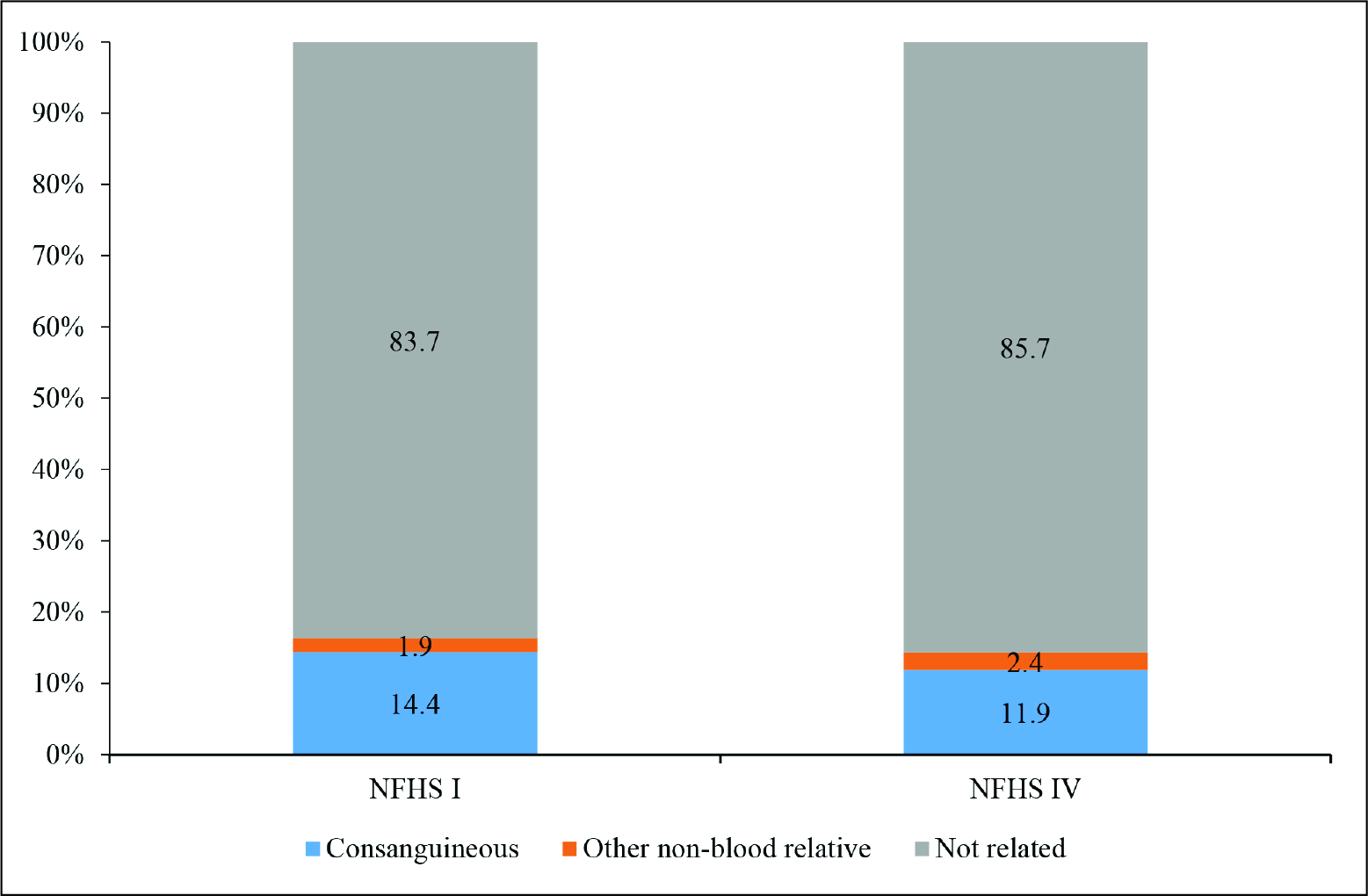
Relationship to Current (Last) Husband Before Their Marriage, NFHS-1 and NFHS-4.
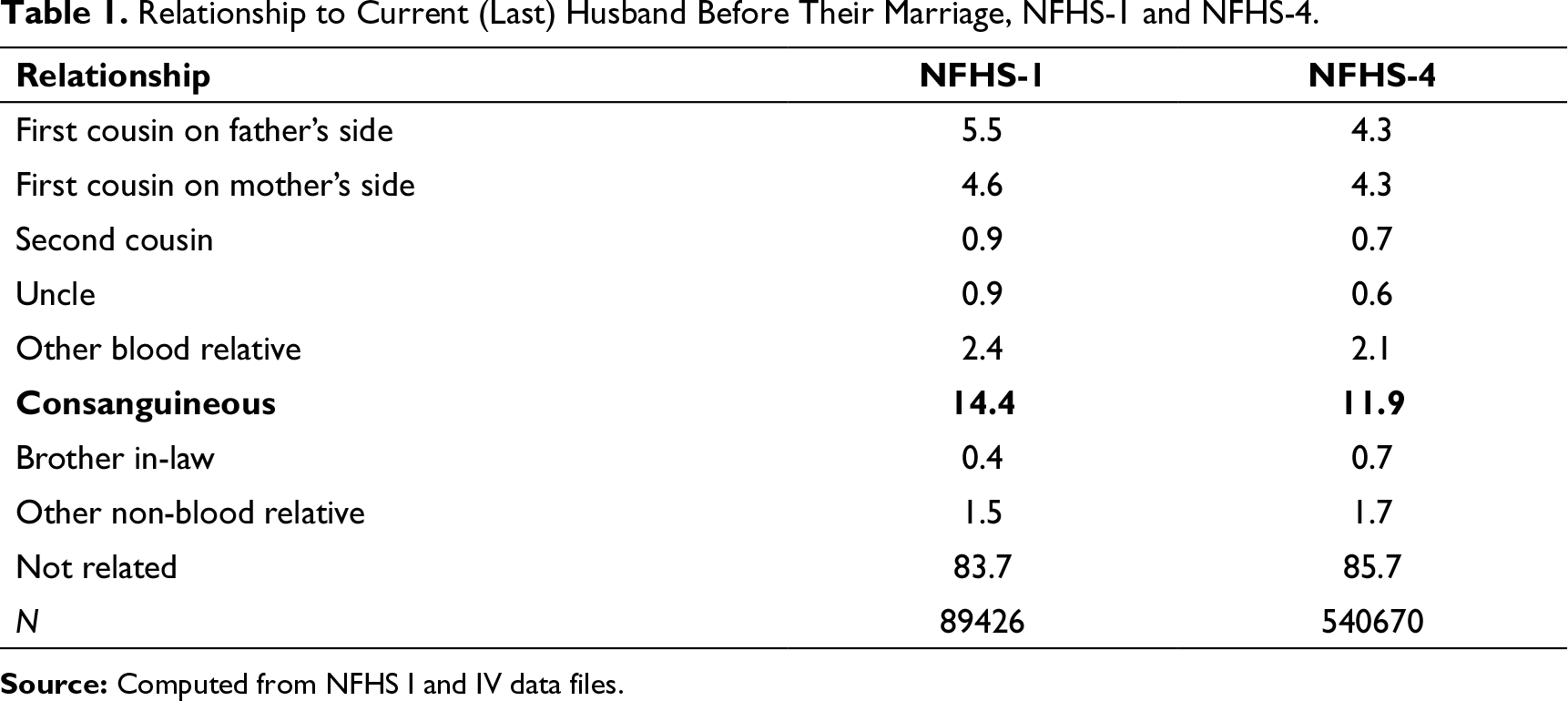
Table 1 shows the relationship of women to current husband prior to marriage with six categories, namely, first cousin on both father’s and mother’s side, second cousin, uncle, other blood relative, brother-in-law, other non-blood relative and not related. The relationship to the current husband prior to marriage is seen to be highest among the first cousin from both father’s and mother’s sides. The percentage of women married to their first cousin from their father’s side was 5.5% as per NFHS-1, which later came down to 4.3% according to NFHS-4. Women married to their first cousin from their mother’s side have also declined from 4.6% in NFHS-1 to 4.3% in NFHS-4. Marriage to other non-blood relative and brother-in-law shows a slight increase from NFHS-1 to NFHS-4, that is, 1.5% to 1.7% and 0.4% to 0.7%, respectively, whereas women getting married to their second cousin (0.9%–0.7%), uncle (0.9%–0.6%) or other blood relative (2.4%–2.1%) has shown a declining trend from NFHS-1 to NFHS-4. The consanguineous marriages are calculated by combining the categories of first cousin from both father’s and mother’s side, second cousin, uncle and other blood relative, which has shown a decline from NFHS-1 to NFHS-4 (14.4%–11.9%).
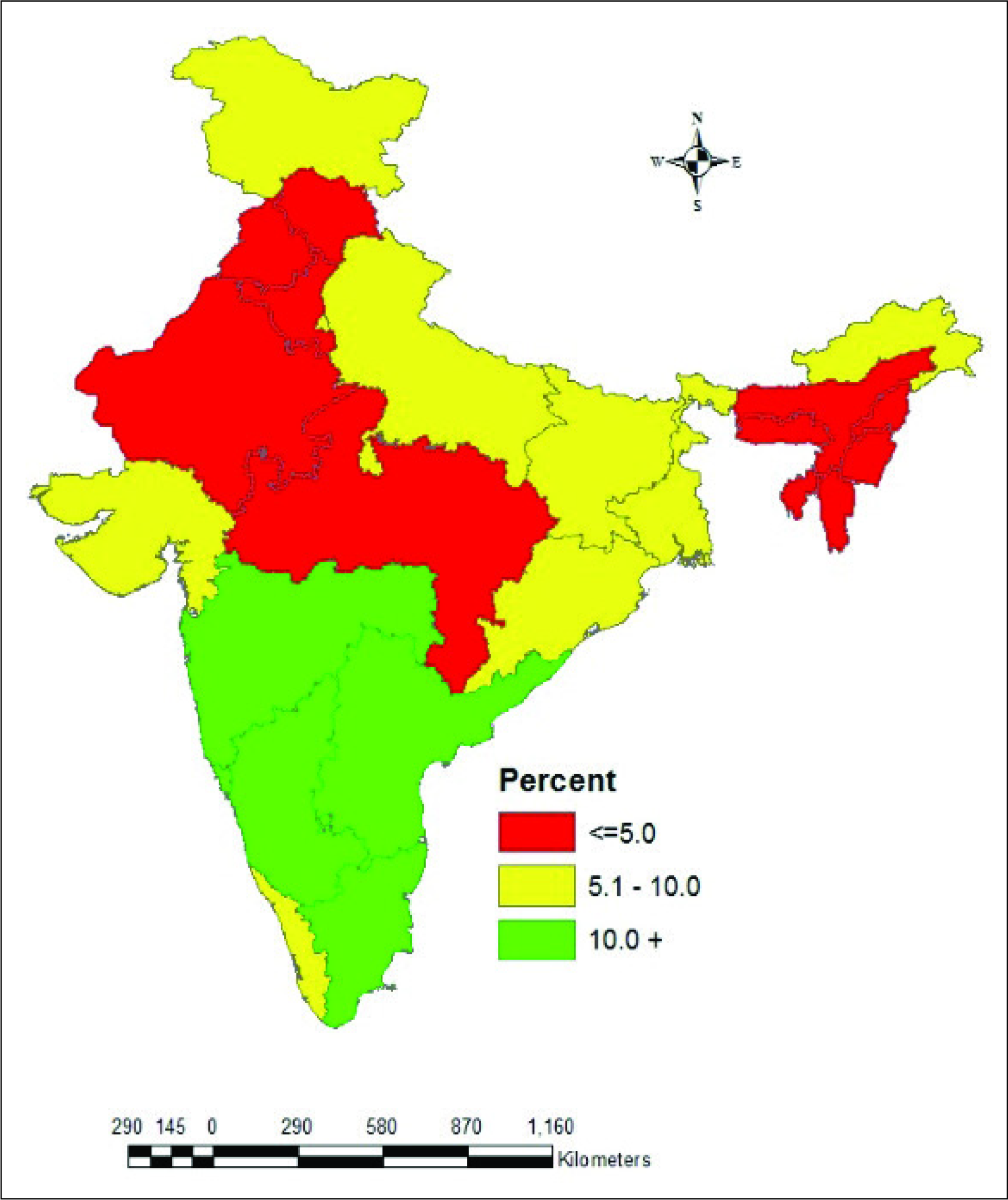
Percentage of Consanguineous marriage by States, India, NFHS I.
Percentage of Consanguineous marriage by States, India, NFHS IV.
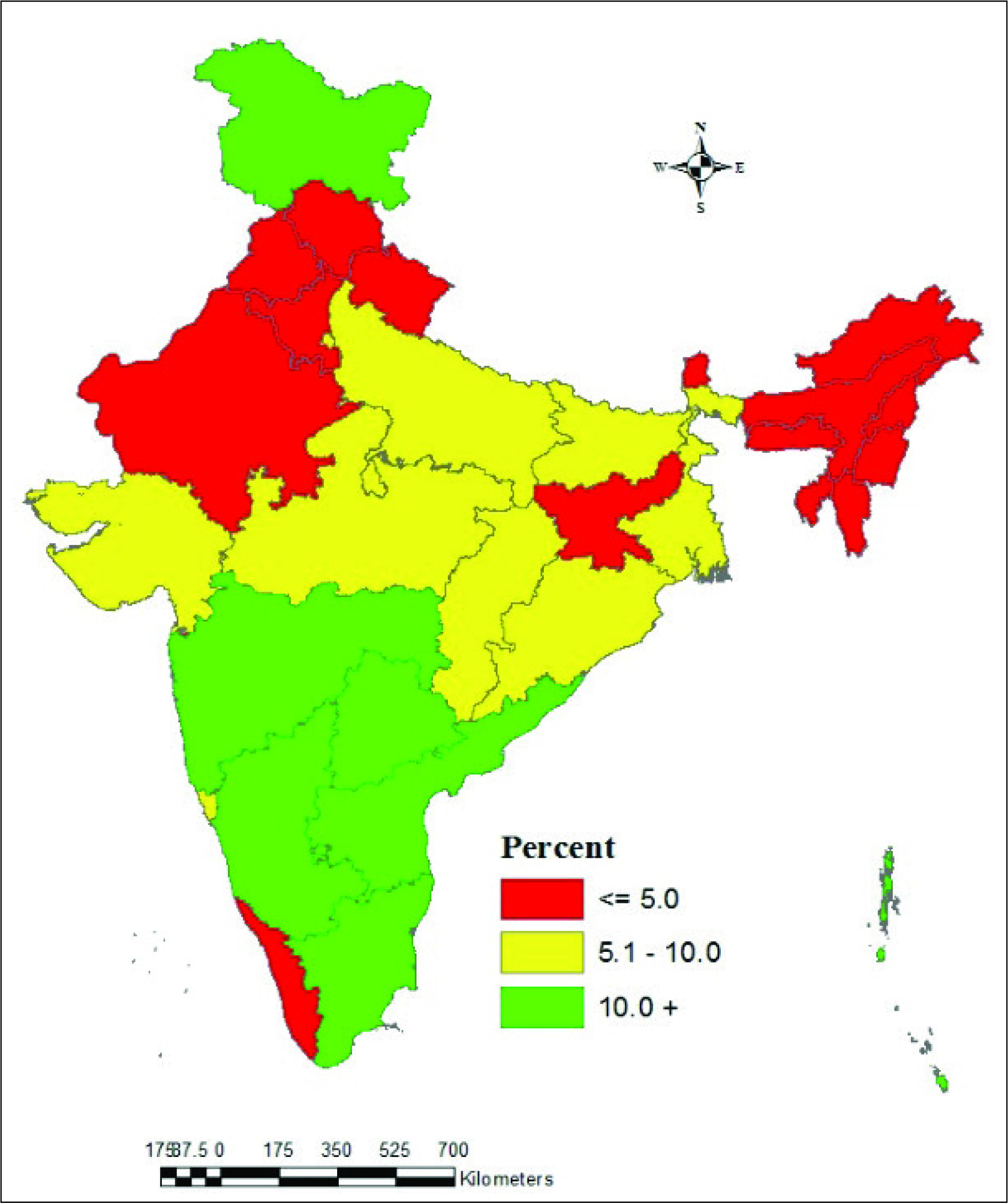
Percentage of Consanguineous Marriage by States, India, NFHS-1 and NFHS-4.
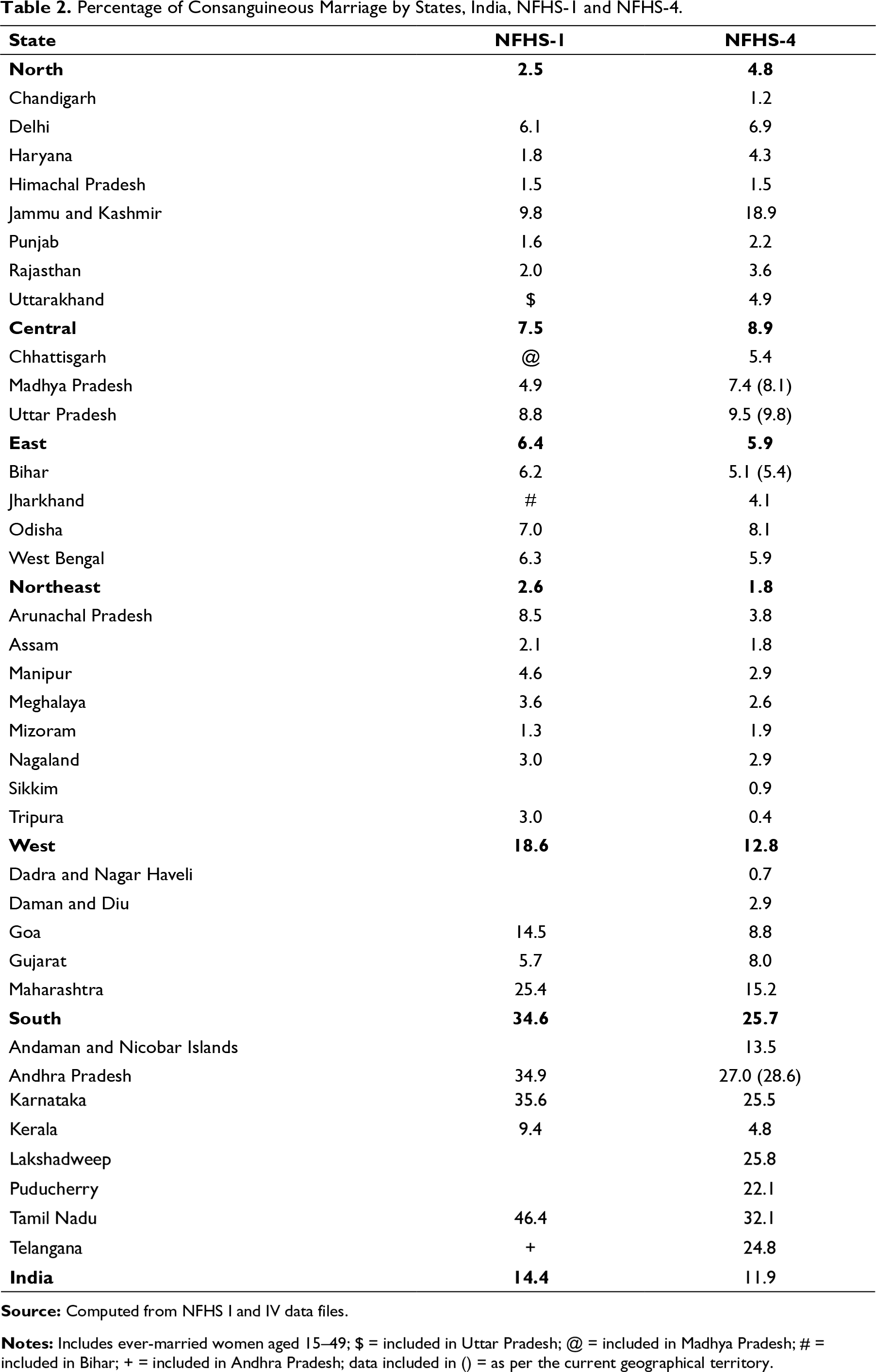
Table 2 presents the prevalence of consanguineous marriages by state/union territories and relationship to current husband prior to marriage for the two datasets of NFHS-1 and NFHS-4. Combining the six categories of relationship to current husband the category of consanguineous marriages has been formed. The states have been divided into six regions of north, central, east, northeast, west and south. The highest prevalence of consanguineous marriages can be seen in the southern region, 34.6% for NFHS-1 and 25.7% for NFHS-4. The states with the highest prevalence of consanguineous marriages according to NFHS-1 are Tamil Nadu (46.4%), Karnataka (35.6%), Andhra Pradesh (34.9%) and Maharashtra (25.4%). And the states with the lowest prevalence of consanguineous marriages according to NFHS-1 are Mizoram (1.3%), Himachal Pradesh (1.5%), Punjab (1.6%) and Haryana (1.8%). It is observable that the higher prevalence states are mostly from the southern region and the lower are from the northern region. A prevalence of more than 5% can also be observed in most of the states of the central and eastern regions. Uttar Pradesh marks the highest percentage of consanguineous marriages among all the central states. The overall percentage for consanguineous marriages in India is 14.4% according to NFHS-1 which shows a decline to 11.9% in NFHS-4, with the highest prevalence being in the southern region (25.7%). Tamil Nadu maintains its position at the top with 32.1% followed by Andhra Pradesh (27%), Karnataka (25.5%) and Telangana (24.8%), except for Kerala which remains at a low prevalence of 4.8%. The north-eastern region marks the lowest percentage of consanguineous marriages at 1.8% including Tripura (0.4%), Sikkim (0.9%), Arunachal Pradesh (1.2%) and Mizoram (1.9%). The union territory with the lowest percentage of consanguineous marriages is Dadra and Nagar Haveli (0.7%) followed by Chandigarh (1.2%). Except for the northern and central regions, all the other regions have shown a decline in the percentage of consanguineous marriages from NFHS-1 to NFHS-4. Almost all the states have shown increasing percentages except the states of Bihar, Arunachal Pradesh, Assam, Manipur, Meghalaya, Nagaland, Tripura, Goa, Maharashtra, Andhra Pradesh, Kerala and Tamil Nadu, which have shown declining percentages for consanguineous marriages from NFHS-1 to NFHS-4.
District-Wise Variations in the Prevalence of Consanguineous Marriage
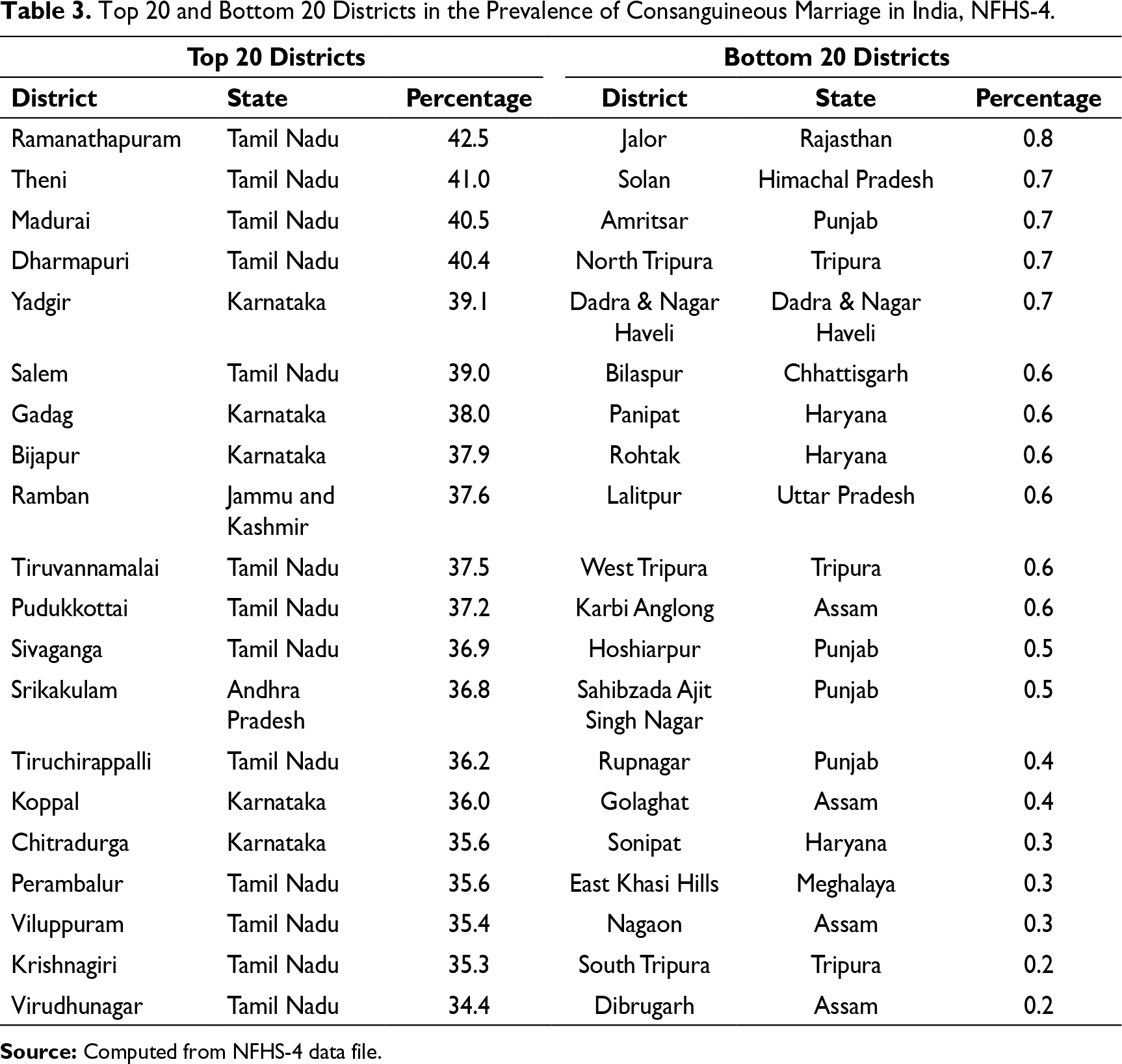
Top 20 and Bottom 20 Districts in the Prevalence of Consanguineous Marriage in India, NFHS-4.
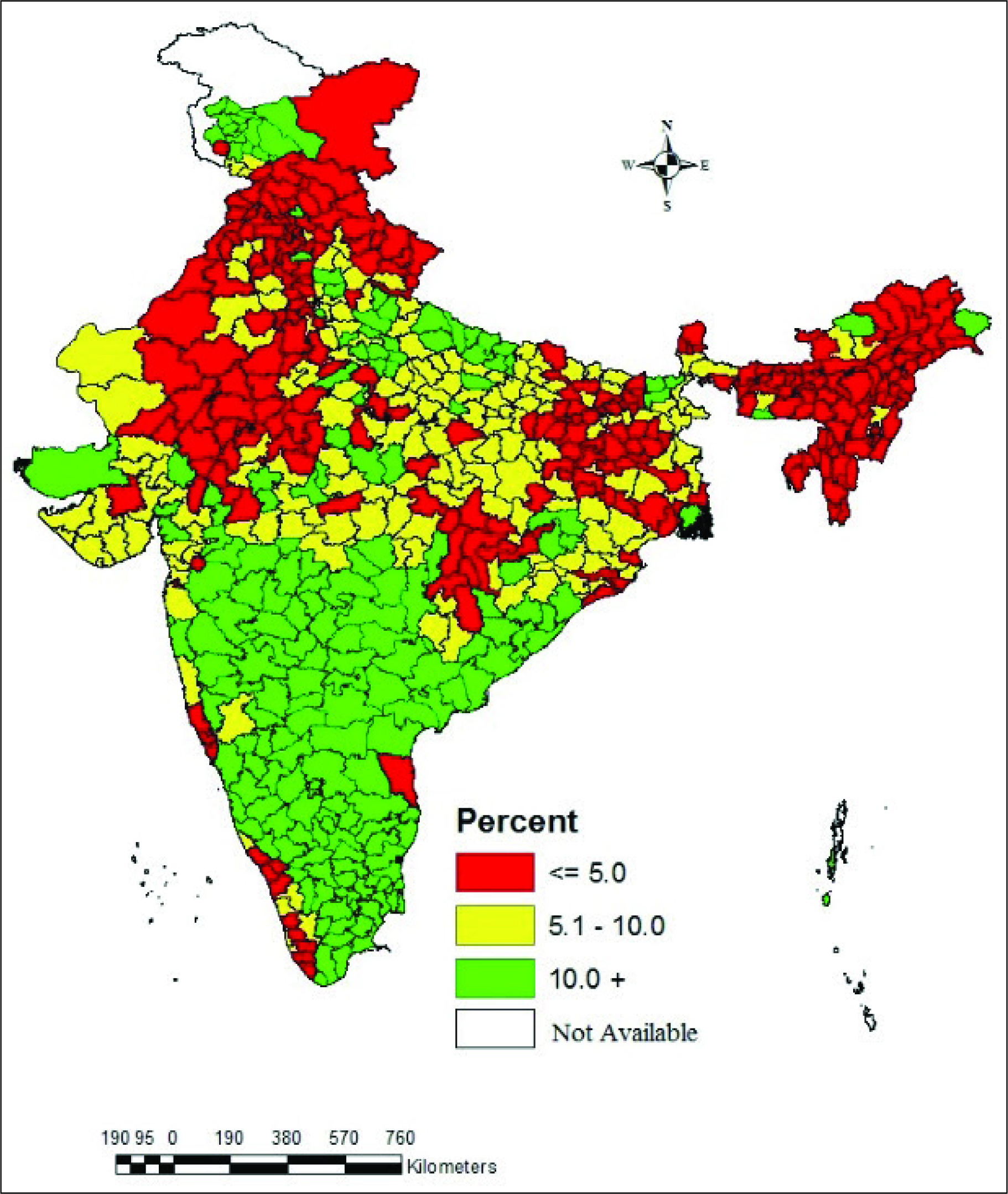
Percentage of Consanguineous marriage by Districts, India, NFHS IV.
Differentials in Consanguineous Marriage in India
Percentage of Ever-Married Women age 15–49 Who Had Consanguineous Marriage by Background Characteristics, India, NFHS-1 and NFHS-4.
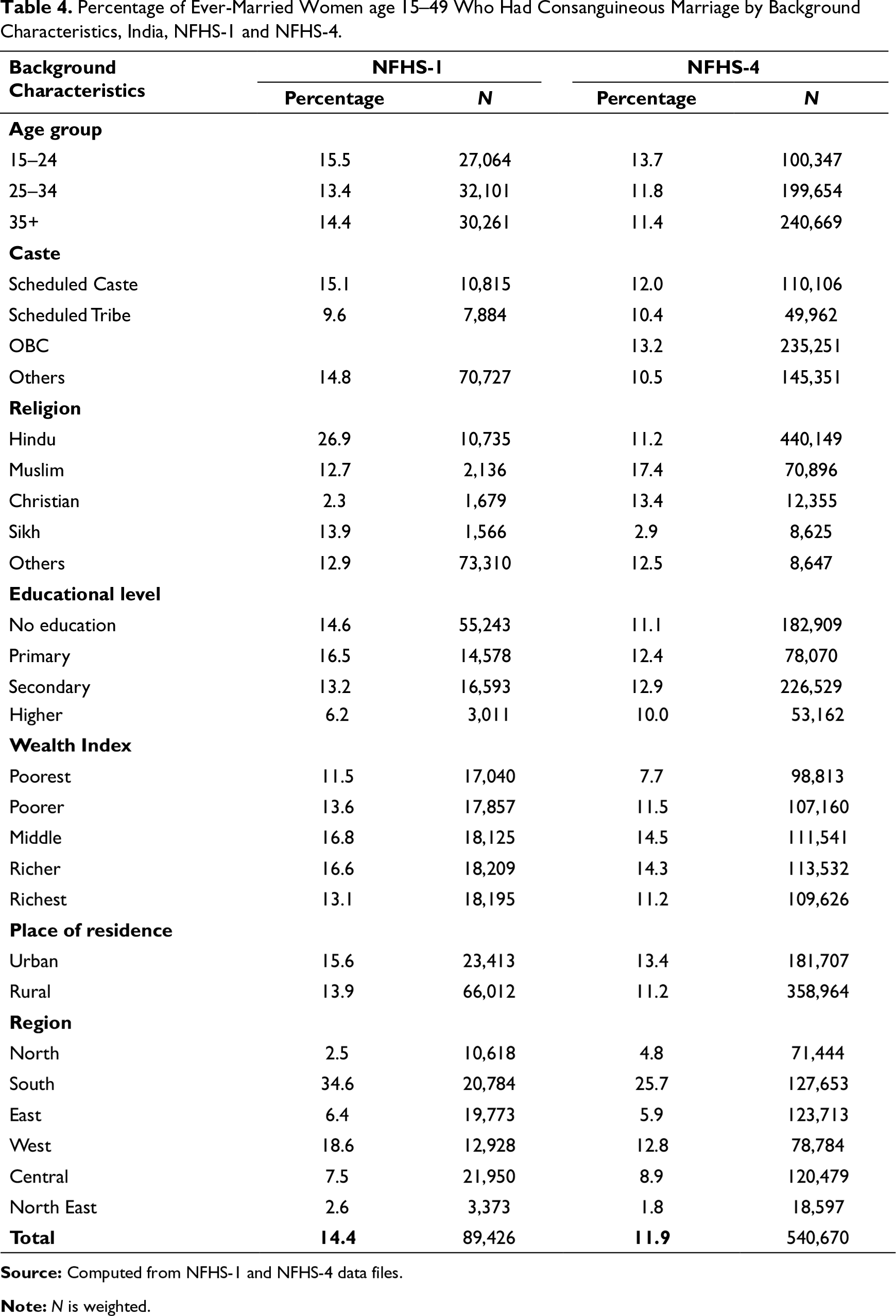
It can well be observed that the prevalence of consanguineous marriages by the level of educational attainment is a hill-shaped curve for both datasets. The highest prevalence can be seen for the population who have completed primary level of education (16.5%) for NFHS-1, followed by those who never went to school (14.6%), secondary (13.2%) and higher (6.2%), whereas the highest prevalence of consanguineous marriages according to NFHS-4 can be seen for those who have completed secondary level of education (12.9%), followed by primary (12.4%), no education (11.1%) and higher (10%). For both the rounds, the pattern in the prevalence of consanguineous marriages by wealth index remains the same; the population belonging to the middle category shows the highest prevalence (16.5% and 14.5% respectively for NFHS-1 and NFHS-4), which is followed by the richer (16.6% and 14.3%), poorer (13.6% and 11.5%), richest (13.1% and 11.2%) and the lowest prevalence of consanguineous marriages could be observed for the poorest category (11.5% and 7.7%). The prevalence of consanguineous marriage is higher in urban areas (15.6% and 13.4%) than the rural areas (13.9% and 11.2%). Consanguineous marriage is a usual practice in southern region of India with 34.6% in NFHS-1 and 25.7% in NFHS-4, followed by western region (18.6% and 12.8%), central region (7.5% and 8.9%), eastern region (6.4% and 5.9%), northern region (2.5% and 4.8%) and north-eastern region (2.6% and 1.8%). The northern and central regions have shown an increase in the prevalence of consanguineous marriages whereas all the other regions have shown a decline in their prevalence.
Determinants of Consanguineous Marriage in India
Odds Ratio Showing the Effect of Background Variables on the Consanguineous Marriage: Results from Logistic Regression Analyses.
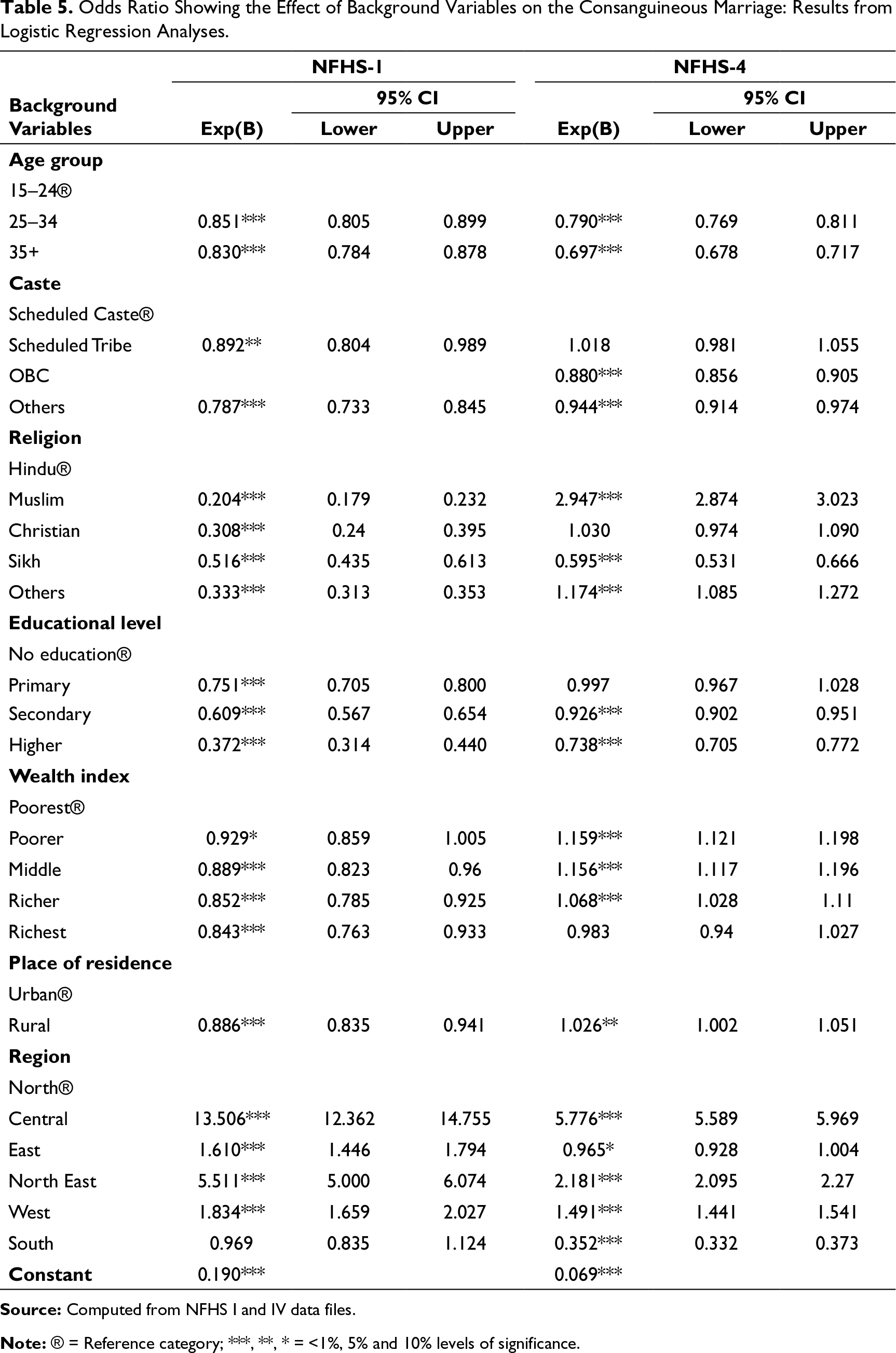
Controlling the effect of other variables, the wealth index had a negative relation with the consanguineous marriage in NFHS-1, that is, as the wealth index increases the prevalence of consanguineous marriage decreases which was statistically significant. But the likelihood to go for consanguineous marriage is about 1.1 times higher among women with poorer, middle and richer categories than the women with the poorest category in NFHS-4. Place of residence is a significant determinant of consanguineous marriages. Taking urban as the reference category the odds for the women residing in the rural areas are 11% less likely to go for consanguineous marriage than their urban counterparts in NFHS-1 while it is 1.026 times higher among rural women in NFHS-4. With respect to the region, the odds for the NFHS-1 remain comparatively higher than NFHS-4. The central region shows higher odds with 13.5 and 5.8 times more than the women residing in the northern region. The odds of the eastern region have declined from 1.6 times in NFHS-1 to 0.96 times in NFHS-4. Similarly, the north-eastern region has also declined from 5.5 times to 2.2 times. The western region, too, shows a declining trend from NFHS-1 to NFHS-4 which was 1.834 times to 1.491 times during NFHS-1 to NFHS-4.
Discussion and Conclusion
This study focuses upon the practice of consanguineous marriages, differentials and determinants in India for the two rounds of NFHS, that is, 1 and 4. For this purpose, eight categories of relationship to current or last husband have been considered, where first cousin on both father’s and mother’s side, second cousin, uncle and other blood relative have been combined to form consanguineous marriages and the other three categories are brother-in-law, other non-blood relative and not related to the respondent. The prevalence of consanguineous marriages seems to follow a declining trend from NFHS-1 to NFHS-4, that is, 14.4% to 11.9%. The most preferred relationship for such union is among first cousins from both father’s and mother’s side which show the highest prevalence among all the other categories. The findings accord with the previous studies (Beck, 1972) that the highest prevalence of consanguineous marriages can be seen in the southern states of Tamil Nadu, Andhra Pradesh, Telangana and Karnataka. The state-wise picture remains almost the same for both the rounds with only some slight changes with time for the states of Kerala, Arunachal Pradesh, Uttarakhand, Goa and Jharkhand that have shown a decline in their prevalence, whereas Madhya Pradesh, Chhattisgarh and Jammu and Kashmir have shown an increase in their prevalence. The distribution of consanguinity in India is lop-sided towards the southern states with some exceptions like that of Jammu and Kashmir due to its religious composition (Chakravarti, 1968) and Maharashtra, where consanguinity is a frequent practice. As far as the district-wise picture is concerned, according to the NFHS-4 dataset, the high prevalence districts are mostly from the Deccan plateau as well as the northern part of Uttar Pradesh and the low prevalence districts are mainly from the north-eastern and north-western parts of the country. Consanguinity is characterised by early-age marriage and early-age childbearing in females (Bittles, 1991), a declining trend can very well be noticed between the two rounds. The practice of consanguinity when seen from the caste lens portrays an interesting picture where the SCs show a declining trend while the OBCs remain the highest among all the categories. The STs have shown an increase of around 1% between the two time periods. It was observed that the Hindus had a great practice of marrying their blood relatives according to the first round of our data, which has certainly declined in NFHS-4, whereas the Muslims marrying their close cousins has risen in India. The level of educational attainment showed an inverse relationship for the first round with the rising level of educational attainment the prevalence of consanguineous marriages declines but interesting this trend is not very clearly visible for the fourth round of NFHS. The findings of this study are similar to the previous studies that show the highest rates of consanguineous marriage are consistently associated with lower levels of illiteracy and rural residence (Bittles et al., 1991; Bittles, 1994). The socio-economic status of the prevalence of consanguineous marriages follows the same pattern of a symmetrical curve for both rounds which certainly shows some decline in the proportions over time. The logistic regression analyses show a clear decline in the odds from the first till the fourth round indicating the decline in this practice, which may probably be due to increased awareness about genetic disorders and dissolving caste rigidities, reduced endogamy practices in the society
The findings demonstrate that consanguineous marriages are unevenly distributed throughout the country. Besides first cousin marriages with four forms, the practice of uncle–niece marriage is also prevalent in several parts of South India which is completely non-existent in the north. Analysis suggests that consanguinity has a strong association with early age marriage of the women who are mostly Muslims and belong to the OBCs. A very strong association can also be observed with the women of lower levels of educational attainment as well as those who belong to the lower socio-economic status in the rural areas. It is an age-old practice that has been carried on for years together as endogamy (marriage within the same community). It has mainly been practiced to retain the ancestral property within the same community, and the high prevalence of consanguineous marriages in the southern states can also be attributed to the comparatively better position of women than that of the women of north Indian states.
Footnotes
Declaration of Conflicting Interests
Funding
The author received no financial support for the research, authorship and/or publication of this article.