







Abstract
The retailer’s operating environment today is far more complex and interconnected than that which prevailed during the closing of the last century. Given the trends of changing consumer preferences and the growing importance of the emerging destinations for retail expansion, the focus is definitely on the untapped markets owing to their relatively high market growth potential. Whether global or local, the retailer’s adaptation to market conditions is crucial. However, heterogeneity of the business landscape and divergence of consumer tastes in the ‘spiky world’ calls for well suited format adaptations specific to markets. Hence, this article aims to have a clear understanding of the consumers’ perspectives on organized retail forms in two contrasting markets with the pioneering use of single and multi-brand format classifications. The research respectively uses datasets from the developed US market and the potentially strong evolving retail market in India to explore format perceptions of shoppers in the respective scenarios. The forming format perception of 126 sampled apparel shoppers in urban India is compared with 107 sampled respondents from the US with the use of exploratory factor analysis. Consequently, the failure of confirmatory factor analysis (CFA) to confirm the factors in the Indian case is used to highlight some interesting insights on the inherent departures in the status of consumers’ store learning pertaining to the two markets, giving directions for future research and practices in the domain.
Introduction
A decade of contracting global economy, inimitable technological advances and increasingly knowledge-driven customer base alongside the high-profile retail bankruptcies, extreme pricing pressures and fragmented, value conscious demographics have left retailers reiterating and revising their perceptions of the present retail market opportunities and threats (Shabat et al., 2011). The need for an ongoing process of proactive thinking on creating and managing sustainable retail business models is strongly felt (Reynolds et al., 2007). Whether global or local, the retailer’s adaptation to market conditions and varying consumer preferences is crucial for carving winning format strategies (Iyer and Leonard, 2007).
Globalization and reduced trade barriers are fuelling new age retail practices and trends (Kalish, 2008). A 7 per cent increase in the global retail sales over the last decade establishes the position of the developing markets with a 42 per cent share of the global retail sales and a 91.5 per cent increase in the per capita retail sales amounting to US$ 3.847 in 2010 (Shabat et al., 2011). A reported 225 per cent expansion in retail space and 11 per cent increase in the population of evolving markets over the last decade are attracting international players to focus on emerging markets (Shabat et al., 2012).
However, irrespective of the attractions, the emerging markets pose certain challenges. Getting it right in the developing markets has left world-class retailers in a perplexed state where the trade-offs are pretty costly. The results have been mixed. Initially the large retailers penetrating developing markets especially among their lower-to-middle class segments experienced modest progress (D’Andrea et al., 2004). International retailers like Wal-Mart, Carrefour, Metro and Tesco managed to stand out by taking globalization through developing market expansion as their priority. Carrefour’s presence in 34 countries accounting for 54 per cent of its sales came at the cost of nine exits during 2005–2009. Germany’s Metro took the early mover advantage in 33 countries, while Tesco and Wal-Mart conquered 14 countries each outside their territory as a part of their much rewarding global expansion strategy (Shabat et al., 2011).
Among the emerging markets, the top five countries are China, India, Russia, Vietnam and Chile that consistently featured in A. T. Kearney’s Global retail development index over the 10-year period till 2011. The Compound Annual Growth Rate has been consistently higher than the average index of 9 per cent for all of them. Whatsoever, these markets differ in terms of their respective stages in the retail development process. Lessons from several high-profile retailers making mistakes in getting their market suited business models necessitates timely introspection of the consumers specific to the evolving markets. The discerning consumers especially in markets with strong local competition demands long-term view and appropriate understanding of the rules for working out safer market entry and penetration strategies (Filho et al., 2003).
Therefore, understanding the convergences or divergences of consumer behaviour in the ‘spiky world’ (Florida, 2005) becomes pertinent. Given the trends of changing consumer preferences and the growing importance of the emerging destinations for retail expansion, retailers are encouraged to explore the new markets and its consumers (Kim and Kincade, 2007; Rahman, 2012; Sinha et al., 2002). For instance, relevant retail implications emanating from recession in the US market, with consumers shifting to lesser expensive products against premium brands (Bohlen et al., 2009) when contrasted with the growing consumerism of rising young working population, working women, nuclear families and disposable income in India with over a billion population (Iyer and Leonard, 2007; Kalish, 2008) raises research interest. Nevertheless, direct comparisons between the consumer perceptions in these two contrasting markets are rare in available literature (Kim and Kincade, 2007).
In this light, the present article attempts to compare the prevalent consumer perceptions and preferences towards the modern retail formats pertaining to two contrasting retail markets. An appraisal of the forming perception and attitude of the retail customers in the developing organized apparel retail market of India against those prevalent in the already developed apparel retail market in the US is central to our study. Hereafter, the article is structured as follows. The section ‘Review of Literature’ details a critical review of the literature available on retail formats and related customer perception pertaining to developed and evolving retail markets. The specific research objectives for the present study are enumerated in the section ‘Research Objectives and Scope’ followed by a brief section on the methodology of the study. The section ‘Data, Analysis and Results’ documents the analytical procedures with the consequent results of the two-phase survey along with relevant discussion. The final section ‘Implications and Conclusion’ concludes the article with highlights of the managerial implications, limitations and directions for future research.
Review of Literature
The need to understand retail customers led to the application of the conventional consumer behaviour research in the retailing context (Puccinelli et al., 2009). Behaviour of retail consumers also interchangeably referred as the customer or shopper in literature are observed within the framework of a simple stimulus–response model where the consumers undertake extended, limited or routine decision making depending on the task to be accomplished (Berman et al., 2011). Retail consumer behaviour research concentrate on a wide array of issues specific to retail in the changing times to theoretically understand typical problems like those of retail shopping pattern, retail store choice, retail consumer perception and others. Recent changes in retail forms and newly emerging retail markets compels timely modification and combination of the existing theories to address concurrent retail market challenges (Kim and Kincade, 2006). Tailored studies addressing the inherent heterogeneity across retail landscapes (Hollander, 1964) mark retail research in modern times.
Retail Formats and Shopper’s Perception
Among the various environmental factors affecting retail businesses, the influence of the consumer’s interest and preferences greatly control the process of developing sustainable retail business solutions (Thang and Tan, 2003). The retail formats defined as ‘broad, competing categories that provide benefits to match the needs of different types of consumers and/or different shopping situation’ (Benito et al., 2005) constitute an important facet of the retail competitive structure. Review of literature on retail store formats bear testimony to the ever evolving nature of formats that results in inexact and ambiguous definitions of retail formats (Dawson, 2000). However, formats as the physical embodiment of the retail business model serve as a good way to segment retailers (Reynolds et al., 2007). Evidently the marketing policies vary largely across formats as the retailers use a mix of variables like assortment, price, transactional convenience and experience to develop an effective format (Fox et al., 2004). As formats are evolutionary and incremental rather than a holistic creation (Mintzberg, 1994), their long-run sustainability is assured through constant nurturing (Reynolds et al., 2007).
The fundamental polarization in consumer behaviour involves preference for large-scale and convenient formats alongside a growing interest in specialty formats (Messinger and Narasimhan, 1997). Hence many retailers while choosing their format strategies opt for multi-channel strategies to distribute the risk of gambling with one format (Mathwick et al, 2002). With different formats offering overlapping merchandize the nature of the competition in the retail domain is often unpredictable in terms of the effects of intra-format or inter-format struggle to gain coveted market share (Tripathi and Sinha, 2008). Cleeren, Verboven, Dekimpe and Gielens (2009) in their article clarified that inter-format competition results as different formats provide different benefits across overlapping product categories and compete with each other for the same consumers. Besides, when retailers of the same format compete for their respective market share the phenomenon is called intra-format competition. The modern retail domain experience intense competition of both inter and intra types (Kharif, 2009) where the consumers have the privilege of choosing from a wide array of format alternatives (Carpenter and Balija, 2010).
The studies on store or format choice understandably emphasize on where the consumers are buying (Benito, 2004). The role of consumer’s format perceptions conditioned by his store learning (Sinha and Uniyal, 2005) adds to the complexity. In the continuously evolving retail markets with a large number of comparable format alternatives (Carpenter and Balija, 2010) the shopper’s decision to choose ‘where to shop’ and ‘how much to buy’ varies largely across formats, than that within similar formats (Fox et al., 2004). Moreover, choice of formats that precedes the ultimate store choice of retail customers (Benito et al., 2005) when studied from the perspectives of a particular product category (Kenhove et al., 1999) and particular market proves to be more effective (Sinha and Banerjee, 2004).
The consumer’s decision over format choice is a product of his mental orientation comprising of his cognitive and affective characteristics (Sproles and Kendall, 1986). Conceptually such behaviour is based on the flow of information about store format options that enters their cognition and affects their perception leading to the ultimate selection (Martineau, 1958). The concept of store image as perceived by the consumers with respect to the tangible and intangible format attributes received credit in studies on format choice (Farhangmehr et al., 2001; Martineau, 1958). Solgaard and Hansen (2003) in their work reiterate the same on premise of a consumer’s utility maximization objective. Thus, the awareness of the format alternatives and perceptions around the format attributes are important determinants of the shoppers’ preferences and behaviour (Reutterer and Teller, 2009).
Retail Formats in Emerging India
A look at the world’s top 250 retailers reveals 13 different formats that these players are operating with (Kalish, 2008). The supermarkets and other specialty stores that include stores specializing in sporting goods, furniture, home décor, toys or hobby goods dominate the list of successful retailers in this era. The mix of formats continues to evolve with more and more retailers opting for hypermarket or superstore formats. Retail internationalization being more of a recent phenomenon (Evans and Mavondo, 2002) lacks large volume of research that specifically address issues of global retailers getting concerned over the choice of standardized or adapted format when moving into the newer markets (Burt et al., 2011).
In contrast, the emerging retail market in India show a different picture as nation of ‘dukandars’ 3 having approximately 12 million retailers and lowest per capita retail space (Company, 2000). The Indian retail market which is estimated to almost double from a US$ 330 billion in 2008 to a US$ 637 billion by 2015 (Tripathi, 2008) is giving strong indication of a retail boom for the country as modern retail formats started gaining marketshare since thethe post liberalization era of the 1990s (Akhtar and Equbal, 2012). The real diffusion of organized 4 retail in India started around January 2006 with the announcement of its progressive relaxation policy of 51 per cent FDI in single brand retail (Roy et al., 2011; Singh and Bose, 2011). In terms of share in organized retail, clothing and footwear constituted the highest 41 per cent amounting to ₹ 251 billion with a 14.3 per cent CAGR during 2004–2007 (Joseph et al., 2008). The comparatively higher retail margins ranging from 35 per cent to 50 per cent makes clothing retail an attractive business (Vittal, 2010). Conceptualization of the modern formats started mostly in the apparel sector followed by sustantial investment commitment by the indigenous corporate giants in the top 100 cities in India (IBEF, 2011). Around 2010 the influx of the international brands and stores shaped the lifestyle of transforming India (Akhtar and Equbal, 2012).
The store formats include malls, speciality stores, departmental stores, discount stores or the factory outlets, supermarkets, hypermarkets, convenience stores and the category killers in the form of multi-brand stores (Rahman, 2012; Roy et al., 2011). The most popular format that have been adopted earliest in the Indian markets are the malls in the metro cities that range between 60,000 sq. ft. and 700,000 sq. ft. From 2001 the small-sized single-category specialty store with an average size of 800 sq. ft. dominated the organized retail market followed by the departmental stores with an average 30,000 sq. ft. space and supermarkets or convenience stores of 1,000 sq. ft. average space. The hypermarkets with an average store space of 40,000 sq. ft. emerged much later around 2006, when 75 large-sized hypermarkets were accounted from the bigger Indian cities (Joseph et al., 2008).
Relaxations in the Indian FDI regulation particularly for single brand stores attracted the best known brands (Roy et al., 2011) to set up exclusive stores alongside the more traditional multi-brand formats. Some of the internationally prominent single brand stores include Nike, Adidas, Gucci, Gautier, Zara, Levis that compete with the indigenous brand stores like Biba, Fab India, Gatha, Raymonds, Wills Lifestyle to name a few. The larger single brand stores are mostly in the form of category killers like in the case of Nalli stores that specialize in silk sarees. Multi-brand stores traditionally offer multiple brands and include all variants of departmental stores, hypermarkets, sized between 1,000 and 20,000 sq. ft. in area (Singh and Bose, 2011). Pantaloons retail is the country’s largest retailer with its hypermarket chain Big Bazaar, Supermarket Food Bazaar and departmental stores. Other key players include Tata Trent’s Westside, Raheja’s Shopper’s Stop, Reliance Retail and RPG group’s Spencer and others. The multi-brand segment which is expected to open up soon for foreign investments will make the markets all the more competitive.
The estimates by Technopak India Pvt. Ltd suggests investments amounting to US$ 35 billion in the next 5 years of which 70 per cent have been promised by some of the well-known Indian players like Reliance Industries, Future Group, Aditya Birla Group, Bharti Wal-Mart and three others. International players like Wal-Mart, Metro, Tesco, Auchan and others also feature as significant contributors (Joseph et al., 2008). Germany’s Metro AG with six wholesale stores is already planning further expansion as France’s Carrefour plans its entry (Singh and Bose, 2011). The AAA cities for the investments will include Delhi NCR, Mumbai and Kolkata, followed by the AA cities of Hyderabad, Bangalore, Chennai, Pune and Ahmedabad.
Research Objectives and Scope
Emanating from the academic and industry perspectives associated with the idea presented earlier, the purpose of this research is pretty clear. While the agenda is to understand the present state of affairs for the various organized store formats that are doing business in categories like apparel in the emerging markets like India, the objectives that we seek to achieve with this study are: Explore the differences in the format perception of shoppers in two contrasting retail markets (those of evolving India and the developed US), Initiate discussion on developing guidelines for retailers from the developed market in adjusting their retail store format strategies for successful marketing in emerging India.
It is apparent that the non-store formats like internet or e-retailing, catalogue, mail order, tele-shopping, automatic vending and other similar forms are kept outside the purview of this study due to some pertinent reasons. First, the popularity or acceptance of e-retailing in the developed countries is no way comparable with that in the emerging markets (Lu and Rucker, 2006). Second, specific to the scenario in India problems with the payment system, credibility with payment modes, problems with shipping hinder growth non-store options (IBEF, 2011). Third, diversity of culture, language, education levels and lower levels of internet connectivity amongst Indian shoppers makes the case for non-store retailing weak. Finally, dominance of store retailing over non-store retailing due to the basic attitude of Indian shoppers to touch, feel, bargain will take time to change and this justifies the omission of the non-store variants from this study.
Methodology
The lack of previous research on the problem justified an exploratory study (Malhotra and Birks, 2000) to accommodate new insights around the research objectives (Saunders et al., 2007). The survey was carried out to conceptualize the customer’s perceptions about the organized retail store formats in India and the US in two respective phases.
The methodological procedures adopted for the research were determined by a thorough analysis of the methodological pedagogy followed by researchers tackling similar problems. Following the works of Angell et al. (2012), Fowler and Bridges (2010), Seock (2009), Kaur and Singh (2007) and Lu and Rucker (2006) and considering the problem of getting proper responses from attentive respondents amidst their shopping activity, a convenience sampling method is used over mall intercept surveys. Exploratory factor analysis is used as in the works of Goswami and Mishra (2009), Kaur and Singh (2007) and Kim and Kincade (2007). A confirmatory factor analysis (CFA) with structural equation modelling is also used as an attempt to establish a model with the respective datasets.
A scrutiny of India’s organized apparel retail revealed the prevalence of two broad format categories among the modern apparel store formats, namely, the single brand apparel stores and the multi-brand store formats. A list of items was drawn from the available literature relating to the consumer’s perception of these two formats. Expert opinions were used to draw 20 most relevant items. In the pilot phase with 24 shoppers, items indicating attitudinal preferences of apparel customers towards single and multi-brand stores with variables like variety, quality of products, service, ambience, fashion and designs, sales staff behaviours were used. The items were measured on a scale of 1 to 7, with ratings of ‘very strongly disagree’ and ‘strongly agree’, as end points. By careful examination of the pilot survey data, seven items were selected for the study. The rest were eliminated because of problems related to ambiguity, clarity, significance and communality. The final questionnaire was administered by the researcher covering four Indian metros, namely, Kolkata, Delhi, Bangalore and Mumbai, owing to the relatively higher presence of developed organized retail in these metro cities. A total of 150 respondents answered the questionnaire. All the questionnaires were scrutinized and those with incomplete or unlikely responses were deleted, resulting in a final sample size of 126.
The questionnaire designed for the Indian shoppers were adopted for the US samples with minor changes in terms of sentence construction and linguistic elements in consultation with academic experts and linguistic differences pointed out by 20 respondents who participated in a face-to-face interview during the pilot study of the survey. The population frame used for the study was again a convenience sample of the adult American shoppers. A total of 150 questionnaires were distributed. Data were collected mainly through face-to-face interviews. E-mailed responses were also considered. Cost and time constraints along with problems of limited availability of willing respondents yield a final sample of 107 after the deletion of the unlikely and incomplete forms.
Data, Analysis and Results
The survey concentrated on understanding the format perception of apparel shoppers in the emerging Indian market and the developed US market. An exploratory factor analysis is used to examine the shopper’s clarity in distinguishing the feature of the single brand formats from those of the multi-brand formats in the two markets, respectively.
Profile of Sampled Indian Respondents
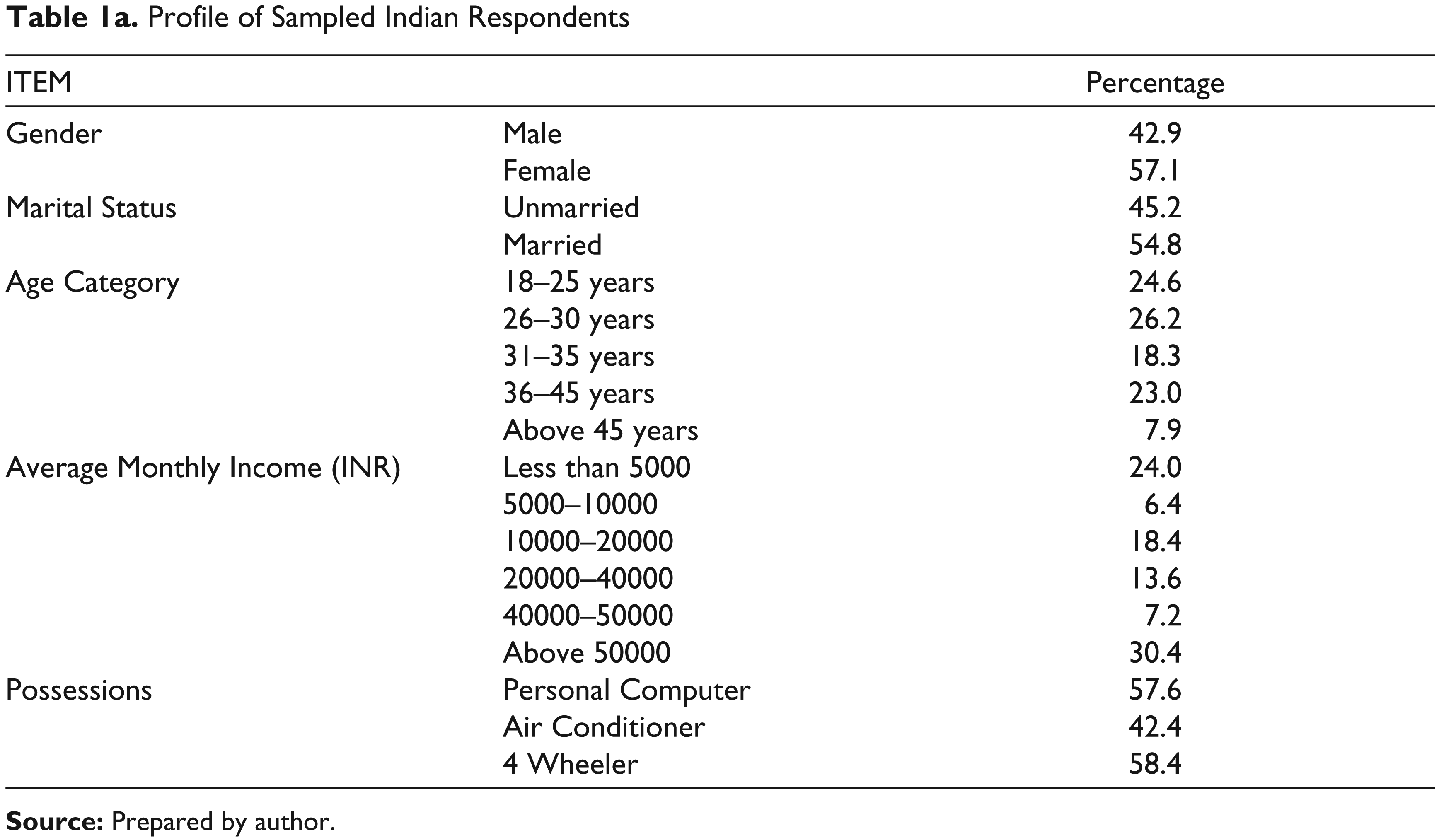
The final sample from India (Table 1a) of 126 adult respondents collected from four metro cities in India covered a range of socio-economic classes evenly spread across both gender and marital status indicating a suitable representation of the cross-section of the urban population. The demographic details of the shoppers were recorded for gender, marital status, age, average monthly income along with his possession of consumer durables to check on the lifestyle of the shopper. With 42.9 per cent male and 57.1 per cent female, majority of the sampled respondents (92.1 per cent) were equitably spread across 18–45 years age. Although 24 per cent of the sampled respondents were having an average monthly income of less than ₹ 5,000, a further scrutiny of the average monthly family income figure of the respondents was required to justify the purchasing power of the sampled respondents in the present context. A total of 94.2 per cent of the respondents were found to have an average monthly income of more than ₹ 10,000 with 83.5 per cent having more than ₹ 20,000 as average monthly family income. This justifies their position as active consumers in the Indian marketplace. Further, the low average monthly income figure for 24 per cent of the sampled respondents can also be attributed to the fact that 21.4 per cent of the sampled respondents were students and 1.6 per cent was housewives.
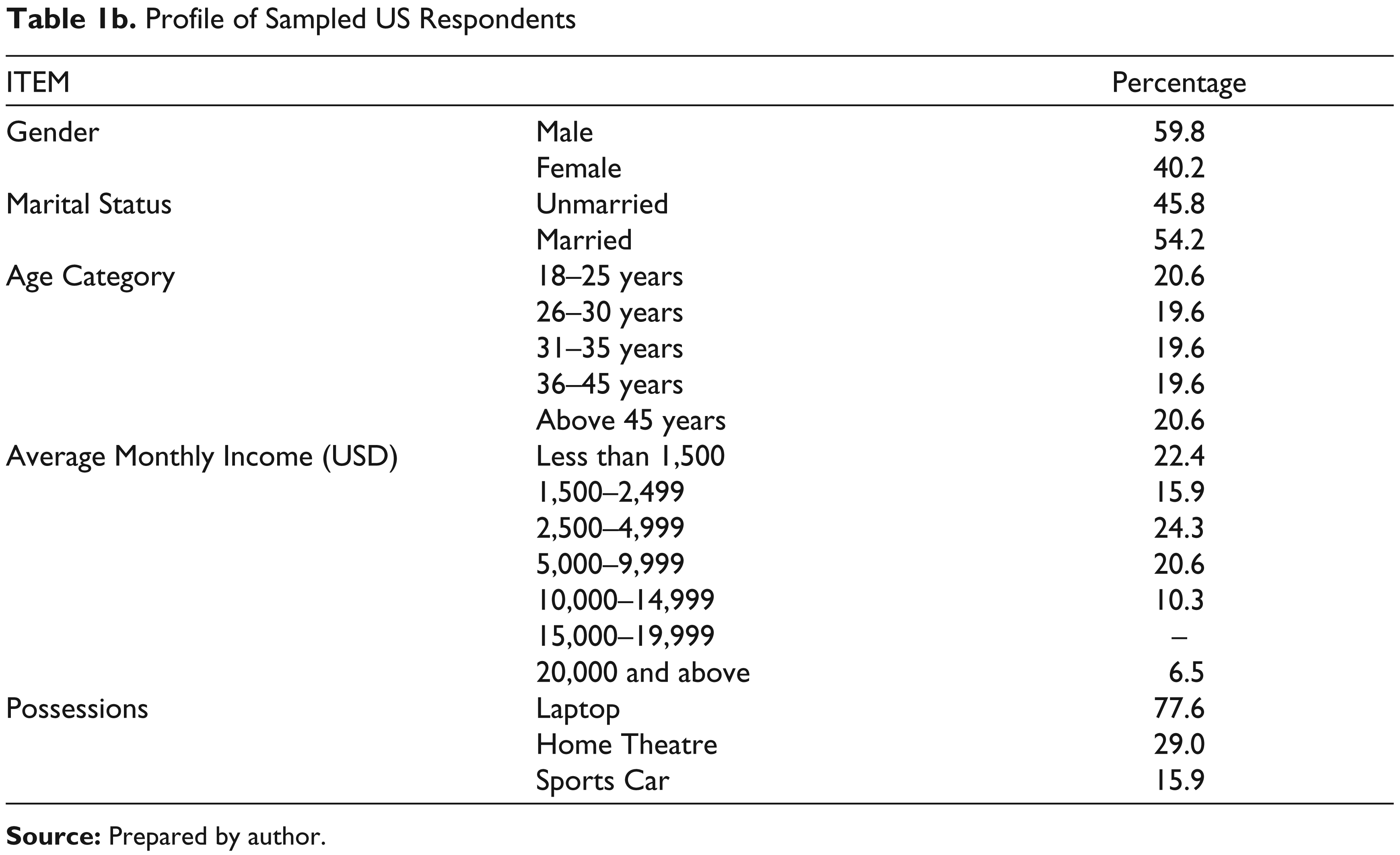
With the purpose of understanding the perceptions of shoppers about the newer formats consideration of such a sample is bound to give us more clarity, as this would indirectly imply the consideration of more active shoppers with greater understanding and exposure to the modern formats. The sample of 107 US apparel shoppers covered all 50 US states. Demographically 59.8 per cent of the respondents were female while 45.8 per cent were unmarried very similar to that in the Indian data (Table 1b). The US samples were also equitably spread across all age groups like their Indian counterparts to justify the basis of comparison. Similarly for the lifestyle check a different set of possessions were recorded keeping in view the inherent differences in lifestyles of consumers in the US and India.
Profile of Sampled US Respondents
Exploratory Factor Analysis (EFA) and the Factor Model
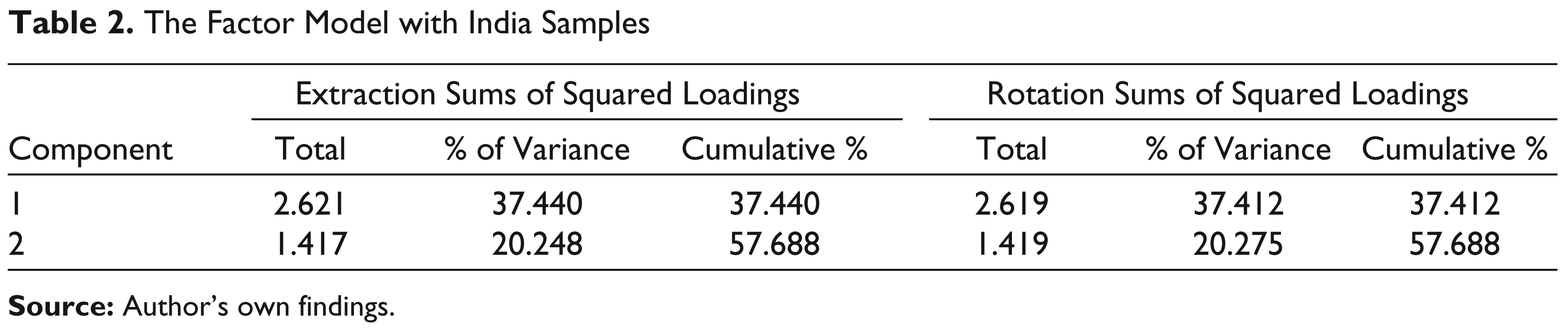
The differences in the perception of shoppers with respect to the single brand stores and multi-brand stores were identified with seven items which directly reflected some positive perception or attitude towards one of the two store formats. Two of the items reflected a positive perception around multi-brand stores while the rest five indicated positivity towards single brand stores. An exploratory factor analysis using principle components method with varimax rotation of factors revealed two well-defined factors for the considered formats. The KMO and Barlett’s test score (0.702) indicated a reliable model as exhibited in Table 2. The model with Indian samples extracted nearly 58 per cent variance in the data, where the first factor (single brand trait) contributed 37.4 per cent and the second (multi-brand trait) contributed 20.3 per cent of the variation.
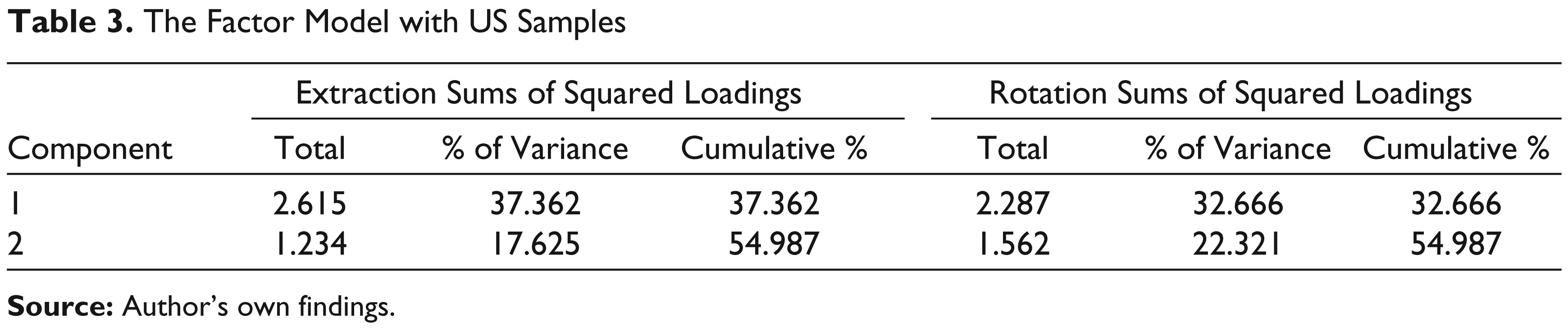
The US data also had similar results concerning the extraction of factors. The data were able to draw a reliable model with a KMO and Barlett’s test score of 0.723. The more or less similar results with the US data showed that Indian shoppers were in line with their counterparts in the developed markets in terms of their perceptions about organized retail formats. The model extracted nearly 55 per cent variance in the US data, where the first factor (single brand positivity) contributed 37.4 per cent and the second (multi-brand positivity) contributed 17.6 per cent of the variation as seen in Table 3.
The Factor Model with India Samples
The Factor Model with US Samples
Rotated Component Matrix: Comparing Factor Loadings of India and the US
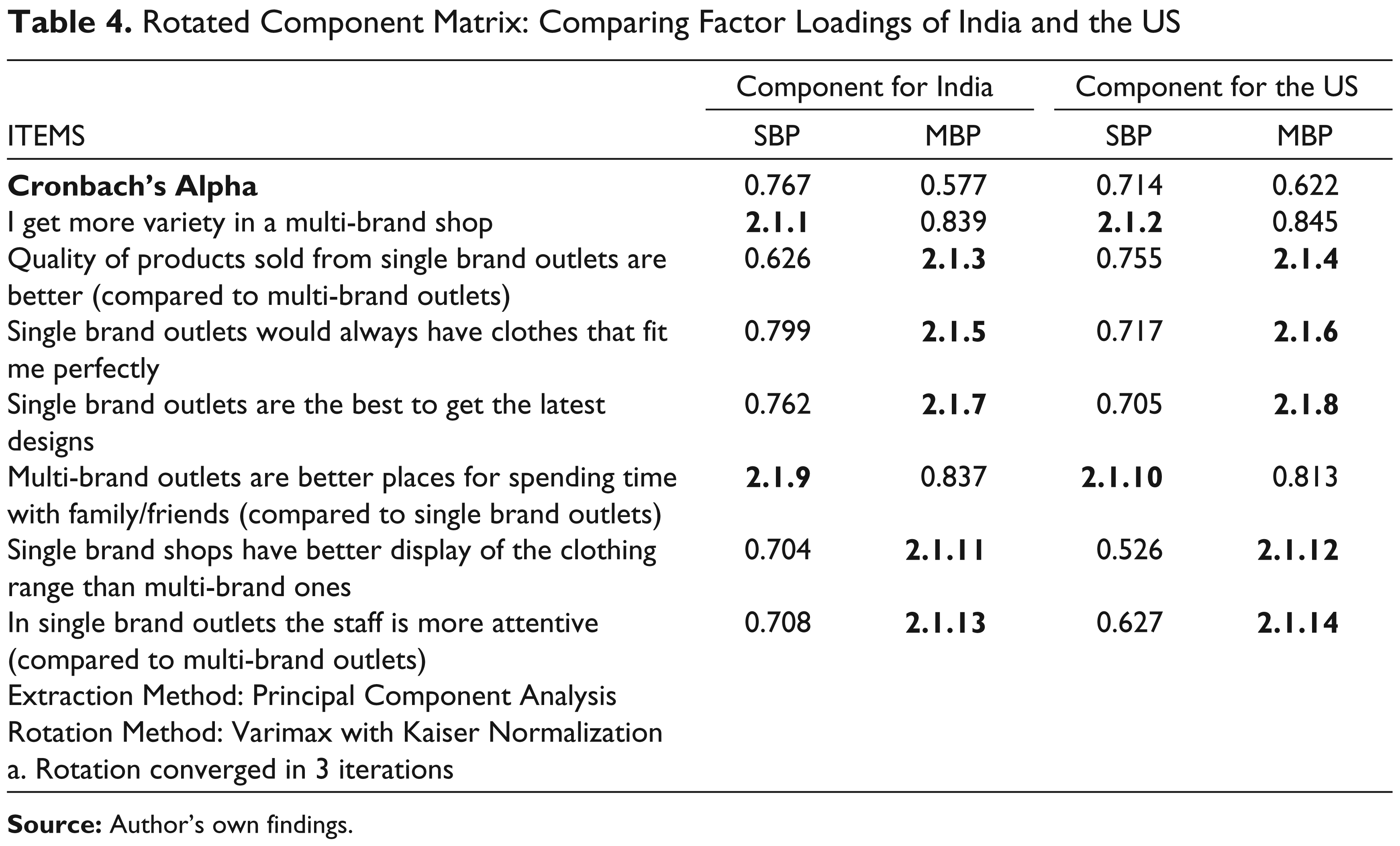
The two extracted components demarcated the relationships among the variables for single brand stores and multi-brand stores respectively. The reliability of the factors was measured using Cronbach’s alpha scores, which happen to be a satisfactory 0.77 and 0.58, respectively in the Indian case as against a similar 0.71 and 0.62 for the US sample. The canonical correlation coefficients of the factor components as illustrated in Table 4 gives the items comprising the two factors. It can be noted that that apparel shoppers in India were in line with their counterparts in the US as far as their perception about the modern retail formats goes. The validity of the two factors across diverse market adds to its significance in understanding the point of similarities between the urban retail consumers in emerging India with retail consumers from the developed markets like the US.
Factor 1 has the common underlying dimension of shopper’s perception in the form of single brand positivity (SBP) orientation. Positive attitude towards single brand stores can be expected when a customer knows what to buy or at least which brand/label to buy. To some extent he would already have a budget in mind with a clearer purpose of buying. Target shoppers are probably sensitive to the quality, spread and proper fit of the merchandize and are sensitive to the time taken to find the right merchandize. Single brand stores with better assortment within the product category are perceived as better stores by target-driven shoppers looking for latest designs or the season’s choicest collection.
Factor 2 reflects a multi-brand positivity (MBP) orientation. A more casual approach towards shopping drives a shopper to choose multi-brand stores over single brand ones. Departmental stores, hypermarkets or even shopping malls with their entertainment oriented in-store features coupled with amenities like in store refreshment areas; play areas for children are best suited for shopping as a fun or leisure activity. Here the actual buying results more out of a shop-and-fun motive confirming the works of Sinha and Uniyal (2005) on the behavioural segmentation of the Indian shoppers. The shoppers choosing multi-brand stores are more likely to be sensitive to the overall servicescape 5 as they seek a satisfying shopping experience. Time sensitivity is less owing to the leisurely attitude.
Confirmatory Factor Analysis (CFA)
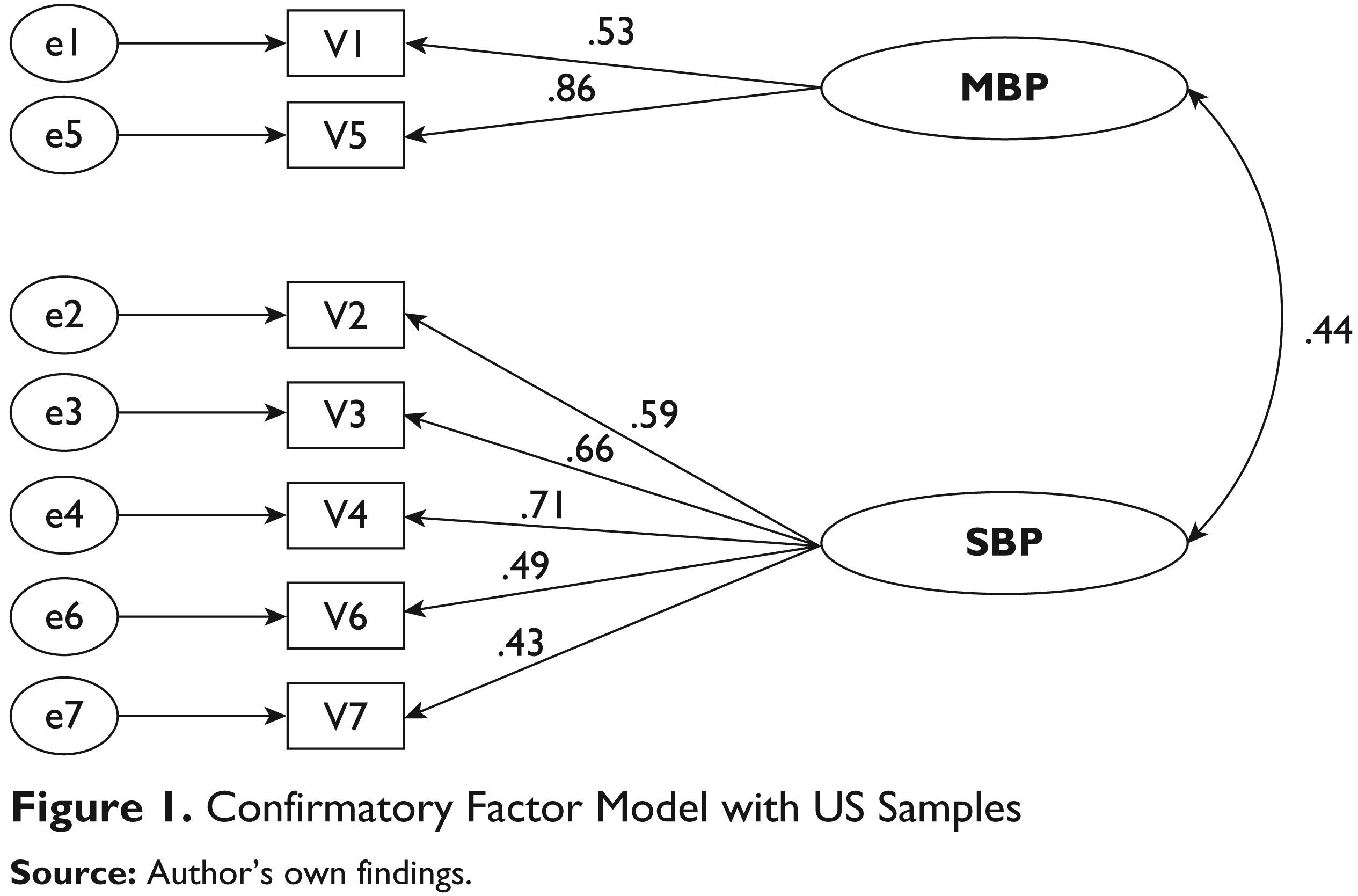
The CFA attempts highlight interesting departures between the two markets. CFA with Indian data failed to yield results. However, with the US data the SBP and MBP factors shows noteworthy results. This can be explained in terms of the still evolving organized retail market in India and the forming perceptions of its shoppers against the already developed perceptions of American shoppers in the developed US markets. The indices pertaining to CFA with the US data suggest a good model fit with AGFI > 0.8, NFI > 0.9, IFI > 0.9, TLI > 0.9 and CFI > 0.9, well above the threshold value. The RMSEA is 0.21 with acceptable lower and upper limits. The model successfully confirms the two factors, namely, SBP and MBP as shown in the Figure 1.
Implications and Conclusion
The research findings of the present article suggest that the synergies in shoppers’ perceptions about the organized apparel retail formats in emerging Indian and developed US markets are critical for retailers to understand. The literature review section of the article highlighted the need to adjust retail practices with country-specific and consumer-oriented retail format strategies as sustainable retail business plans in the emerging retail markets. Considering both, the empirical understanding of the significant congruence between two contrasting markets from the perspectives of the consumer’s retail perception gives a rather farsighted direction to retailers in terms of anticipating the future trends. Nevertheless, the failure to ascertain the prevalent perceptions in the Indian case gives retailers a greater opportunity to work around their forming perceptions with more customer-centric format strategies complementing their overall consumer learning process around the emerging retail market in India.
In tune with the format classification used by the government policy makers in India the study considers the demarcation of single and multi-brand formats and achieves to be more relevant and practice oriented. The perception of multi-brand stores as fun shopping destinations and single brand store as target shopping destination across markets adds an interesting dimension. Further, considering the distinct appeal of single and multi-brand formats the findings reflects a notable market prospect for both. From a retailer’s marketing perspective the multi-brand retailers offering the best possible leisure shopping experience and single brand stores concentrating on offering the best possible assortment and service for serious and focused customers will be best suited.
However, the achievement of the research objectives does not presuppose an ideal framework. Lacunas arouse curiosity and makes way for improvisations. The differences in consumer culture across developing markets limit the generalizability of the finding to other emerging markets or product categories. The results, findings and limitations of the present study naturally facilitate more curiosity on the subject generating the need for renewed insights. Studies on the basis of more rigorous classification of apparel store formats including comparisons between the exclusives brand store, fashion boutiques, departmental stores or discount stores may be interesting to review. Studies on socio-economic and behavioural segmentation of the shoppers according to the category of stores patronized by them may be a useful extension.
Footnotes
Acknowledgements
The author is grateful to the anonymous referees of the journal for their extremely useful suggestions to improve the quality of the article. Usual disclaimers apply.