







Abstract
Market orientation–performance relationship is moderated by competitive intensity, market turbulence and technological turbulence. The primary data for the study were collected using census method from 150 owners, sales managers and marketing managers of small-scale industries (SSIs) registered in Battal Ballian Industrial Estate in Udhampur, J&K. Output from moderated regression analysis revealed insignificant impact of market turbulence but significant impact of technological turbulence and competitive intensity on market orientation–business performance relationship. Subgroup analysis showed that higher the level of technological turbulence, weaker is the market orientation– business performance relationship, and higher the level of competitive intensity, higher is the market orientation–business performance relationship. The article suggests that SSIs should be induced to create a competitive environment by extending markets of their products, adding new products to their lines and catering to the needs of new sets of customers. They must keep themselves updated with new technologies through either collaboration with large-scale units or linkages with R&D labs within or outside India. Managers are suggested to use information technology effectively to enable new value creation processes, inter-functional coordination and linkages with external stakeholders. Further, the government should take steps to meet expansion needs of SSIs by providing concessional infrastructure conducive for competitiveness and business sustainability.
Introduction
Market orientation is one of the most studied areas of marketing and a business philosophy where determining and satisfying of customers’ needs is considered to be the reason of superior financial performance. The focus is towards the sequence of information-based behaviours and a culture of customer orientation, competitor orientation and inter-functional coordination for creation and delivery of superior customer value. Kohli and Jaworski (1990) identified competitive intensity, market turbulence, technological turbulence and general economy as potential moderators of market orientation–performance relationship. Market turbulence refers to the rate of change in the composition of customers and their preferences. In industries where market turbulence is high, customers’ needs seem to change quite rapidly forcing firms to consider modifying their products and services continually to be able to satisfy the changing preferences of customers. Technological turbulence is the rate of change in the process of transforming inputs to outputs and the delivery of those outputs to the end consumers. When technological turbulence is high, firms fail to keep up with the technological changes, and may not survive. Competitive intensity refers to the degree of competition and competitor resources, abilities and actions to differentiate (Jaworski & Kohli, 1993). In markets characterized by high degrees of competitive intensity, customers will be able to choose among the products and services of multiple firms and these firms will continuously attack each other on a number of different strategic dimensions (Kohli & Jaworski, 1990; Narver & Slater, 1990). Performance is a two-dimensional construct comprising objective performance and subjective or judgemental performance, namely, profitability, market share, return on investment (ROI), capacity utilization, customer satisfaction, employee satisfaction, service quality and long-term relationship.
One of the major hurdles in the development of small-scale industries (SSIs) in India is the challenge that they face in marketing their products effectively. Irrespective of market turbulence and competitive intensity, the industry focused on market orientation to create superior customer value and competitive advantage that sustained high business performance (Singh et al., 2010; Subramanian & Gopalakrishna, 2001). Compared to competitor orientation, customer orientation and inter-functional coordination positively affect manufacturing performance in a robust manner, across different environmental and resource configurations in Indian small manufacturing units (Shergill & Nargundkar, 2005). Literature on the moderating role of technological turbulence on market orientation–performance relationship is scanty, that too in Indian SSI context.
The article is divided into six sections, namely, review of literature and theoretical design, rationale of the study, hypotheses development, research methodology, data analysis and interpretation and conclusion and managerial implications.
Review of Literature
Environmental turbulence via market turbulence, technological turbulence and competitive intensity impacts an organization’s level of market orientation (Greenley, 1995; Jaworski & Kohli, 1993; Slater & Narver, 1994; Voss & Voss, 2000). The effect of market orientation on business performance is pervasive when the perceived intensity of market competition is high because market competition typically intensifies as the product life cycle progresses (Atuahene-Gima, 1995). It impels managers to collect and disseminate market intelligence inputs so that attractiveness of various alternatives could be evaluated to enhance business performance (Song & Parry, 2009). In a meta-analytical analysis of 114 studies, Kirca et al. (2005) demonstrated insufficient and mixed empirical evidence regarding the significant moderating impact of market turbulence, technological turbulence and competitive intensity on the relationship between market orientation and performance. Even if there exists an insignificant relationship between market orientation and business performance, it could become significant under low market turbulence environment because as the market grows increasingly turbulent, the required changes in operations increase, leading to escalation in costs and a decline in overall profitability. Technological turbulence cannot yield additional benefits from technological innovations beyond certain levels (Greenley, 1995; Slater & Narver, 1994). During conditions where competitive intensity is low, organizational attention to developing market orientation is unlikely but during conditions of stronger competition, the need for market-oriented strategies rises (Appiah-Adu, 1998; Harris, 2001). In small manufacturing firms, environmental turbulence significantly moderates the relationship between market orientation and business performance and more attention is paid to determine and satisfy customer needs and preferences (Charles et al., 2012). Technological turbulence and competitive intensity do not improve the strength of influence of market orientation towards business performance, whereas strong competition leads to a greater relationship between market orientation and performance in these firms (Aziz & Yasin, 2010).
In large domestic and multinational Indian firms, emphasis is placed on a high degree of market orientation behaviour, which in turn could generate higher performance regardless of the impact of environmental moderators in this relationship (Harris & Ogbonna, 2001, Subramanian & Gopalakrishna, 2001). This relationship, however, becomes stronger when market turbulence and technological turbulence are high (Jain & Bhatia, 2007; Singh, 2003). It has been found that in a highly competitive market, firms are so much involved in deploying their resources towards meeting such challenges that their cost increases substantially resulting in a decline in business performance. In small firms, competitive intensity has an important significant role to increase the relationship between market orientation and business performance (Gaur et al., 2011). The positive influence of market orientation on business performance in the presence of market turbulence and competitive intensity takes time to respond (Kumar et al., 2011). As more firms become market oriented, a competitive advantage may diminish under conditions of high technological turbulence. There is a mixed consensus regarding the impact of market turbulence, technological turbulence and competitive intensity on market orientation–business performance relationship in both foreign business context and Indian business context. Market-oriented firms in developing regions like India focus on leading competitors, when competitive intensity increases. The moderating effects of environmental turbulence depend on the general sociocultural, economic and political circumstances that characterize the context in which firms are immersed. With the opening up of the economy and competition both from domestic front and from abroad, to remain in market a firm has to keep track on customers’ needs and competitors offerings on an ongoing basis.
Theoretical Framework
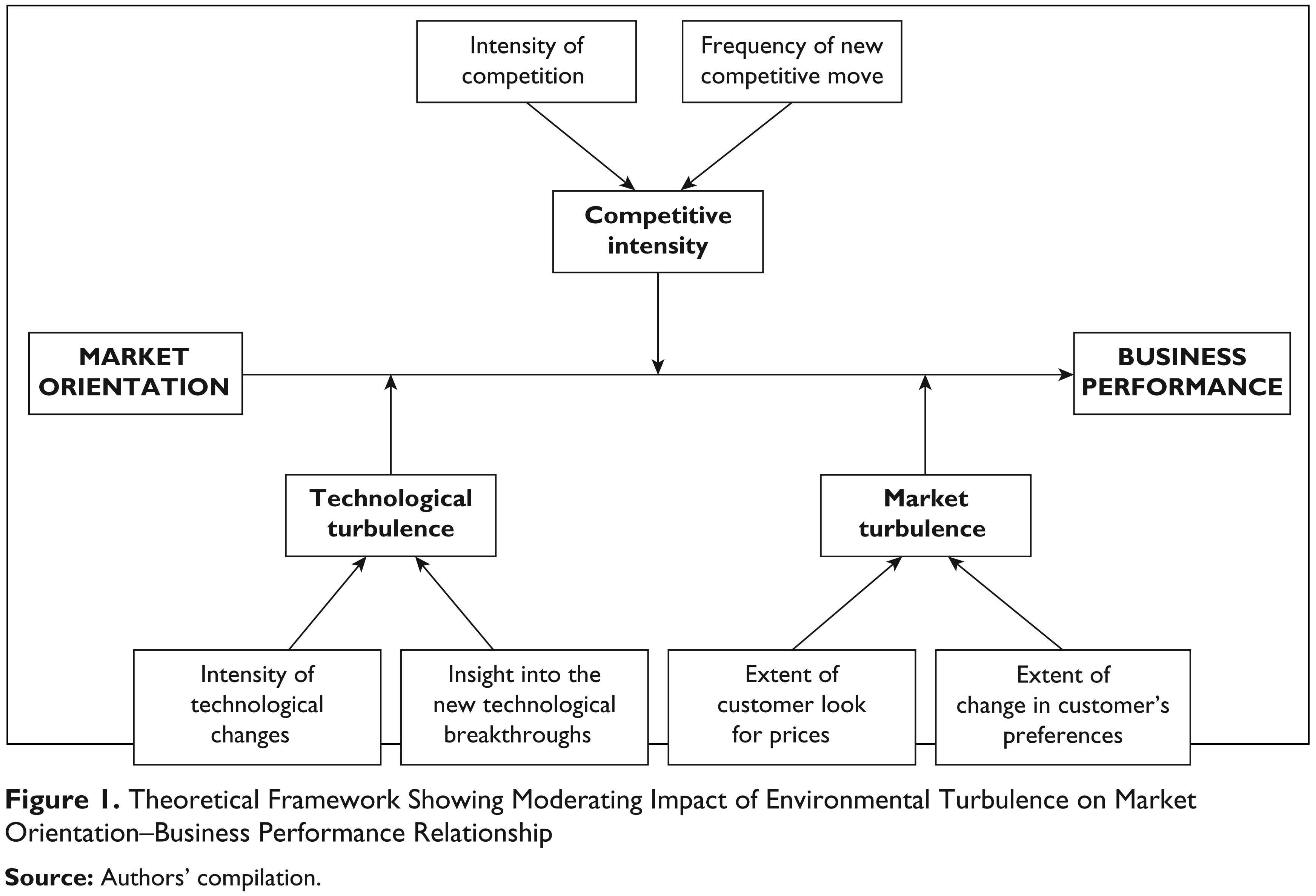
Based on the review of literature, a theoretical framework showing the moderating impact of environmental turbulence on market orientation–business performance relationship is presented in Figure 1.
Hypotheses Development
In an environment characterized with a high level of market turbulence, a good understanding of competitors’ actions and customers’ preferences becomes very important for firms (Harris & Ogbonna, 2001). On the contrary, in a stable environment, where customers’ needs and preferences do not change frequently, firms do not have to be market oriented. Consequently, it becomes important to have not only a high level of competitor orientation but also a high level of customer orientation to better understand customer expectations and a high level of inter-functional coordination to effectively respond to the challenges of the marketplace (Appiah-Adu, 1998; Aziz & Yasin, 2010; Gaur et al., 2011; Jaworski & Kohli, 1993; Kohli & Jaworski, 1990; Kumar et al., 2011; Song & Parry, 2009).
Market orientation helps to achieve competitive advantage by understanding customers’ needs and offers products and services accordingly (Kaur & Gupta, 2012). However, competitive advantage cannot be limited to understanding customers’ needs. It may be gained if there are some other alternatives such as new technological developments and effective integration of all knowledge in the production process. Thus, organizations that work with recent technologies may obtain competitive advantage; hence, the importance of market orientation for improving business performance diminishes (Jaworski & Kohli, 1993).
The possibility of a moderating effect is consistent with a long tradition of support for the theory that environment moderates the effectiveness of organizational characteristics. Kohli and Jaworski (1990) proposed that the degree of market orientation is influenced by the market environment that constitutes market turbulence, competitive intensity and technological turbulence. The number and power of competitors might affect the market orientation–performance relationship (Jaworski & Kohli, 1993; Slater & Narver, 1994). Further, literature supported the view that in an environment where the competition is low, customers have limited choices and they are stuck with whatever is available in the marketplace. In contrast, intense competition provides many options for the customers, and they will prefer the products and services that meet their expectations.
Rationale of the Study
The extant body of research on market orientation studies used samples drawn from developed countries such as USA, UK and Australia. Very few studies have been conducted in developing countries such as Nigeria, Spain, Turkey, Finland, Chile and India. These studies were conducted mainly on large-scale manufacturing industries and service sectors with specific emphasis on products such as automotive, insurance, white goods, banking, tourism, textile, furniture and metal and plastic. Studies on market orientation in the Indian context are limited to metropolitan/big cities, namely, Mumbai, Kolkata, New Delhi, Chennai, Hyderabad and Pune, and findings derived from one context may not be applicable to another context especially when there are substantial differences in terms of nature and characteristics of firms and business environment. The present article is exhaustive, integrative and focuses on the role of environmental moderators on market orientation–performance link in SSIs functioning in the district of Udhampur in J&K state. The district economy is totally dependent on small-scale sector which is receiving wider attention for employment generation, inclusive growth, export and regional development.
Research Methodology and Design
The primary data were collected from SSIs operating at Battal Ballian Industrial Estate in Udhampur district of J&K state. We chose the owners, marketing and sales managers of these firms in our sampling frame since such people are likely to have rich and accurate information regarding the marketing activities of their respective units. A list of operational SSI units was obtained from District Industries Centre, Udhampur, and census method was adopted in contacting owners, sales managers and marketing managers numbering 150 through a self-administered questionnaire. The questionnaire was divided into two parts. In the first part, general information of managers like name, age, department, experience, etc., was collected. Second part contained the information relating to the constructs of the study. The necessary information was collected on a five-point Likert scale with 1 indicating completely disagree and 5 indicating completely agree. The questionnaire was prepared after a thorough discussion with the scholars and subject experts; this determines its content validity. Narver and Slater’s scale for measuring market orientation, which stated that market orientation consisted of customer orientation, competitor orientation and inter-functional coordination, was used in the study. Items for measuring market orientation and environmental moderators were assessed by a scale developed by Jaworski and Kohli (1993) and performance was measured using objective measures (such as ROI and market share) and judgemental measures used by Kohli and Jaworski (1990), Slater and Narver (1993), and Kumar, Subramanian and Yauger (1997). Secondary sources used were books, journals and Internet. Normality of data was tested using box plot, and 10 outliers’ observations were deleted from the data sheet. After factor analysis, the validity of the factorial structure so emerged was checked using confirmatory factor analysis. To check the internal consistency of the data collected, the reliability tests, namely, Cronbach’s alpha and construct reliability, were used. Validity of the scale was checked using face/content validity, construct validity, convergent validity and discriminant validity techniques. Hypotheses were checked using moderated regression analysis.
Operational profile of SSI units under study comprised cement group (6), battery/lead/alloy group (4), insecticides/pesticides group (4), conduit pipes group (5), gates/grills/varnish/paints group (5), mineral group (4), metal group (3), steel group (4), atta/maize/dal group (1) and miscellaneous group (14). Unit-wise, annual turnover was between ₹25 lakhs and ₹50 lakhs (27), between ₹50 lakhs and ₹75 lakhs (7) and above ₹75 lakhs (16). Gender-wise, all the respondents were males. Of them, 45 per cent were graduates, 39 per cent postgraduates or having other qualifications and 16 per cent were below matriculation level of education. Age-wise, 43 per cent respondents were from the age group of 30–40 years, 35 per cent were above 40 years and 22 per cent were in the age group of 20–30 years. In terms of salary, 26 per cent of respondents were drawing salary between ₹10,000 and ₹20,000 per month (pm), 37 per cent between ₹20,000 and ₹40,000 pm and 37 per cent above ₹40,000 pm. In terms of experience, 62 per cent were having work experience of more than 3 years, 26 per cent between 1 and 3 years and those having previous work experience of 6 months to 1 year constitute 12 per cent of the total respondents. Respondents’ background: 8 per cent were Punjabi, 47 per cent Dogri and 45 per cent were Kashmiri or from other background.
Data Analysis and Interpretation
Output from Factor Analysis
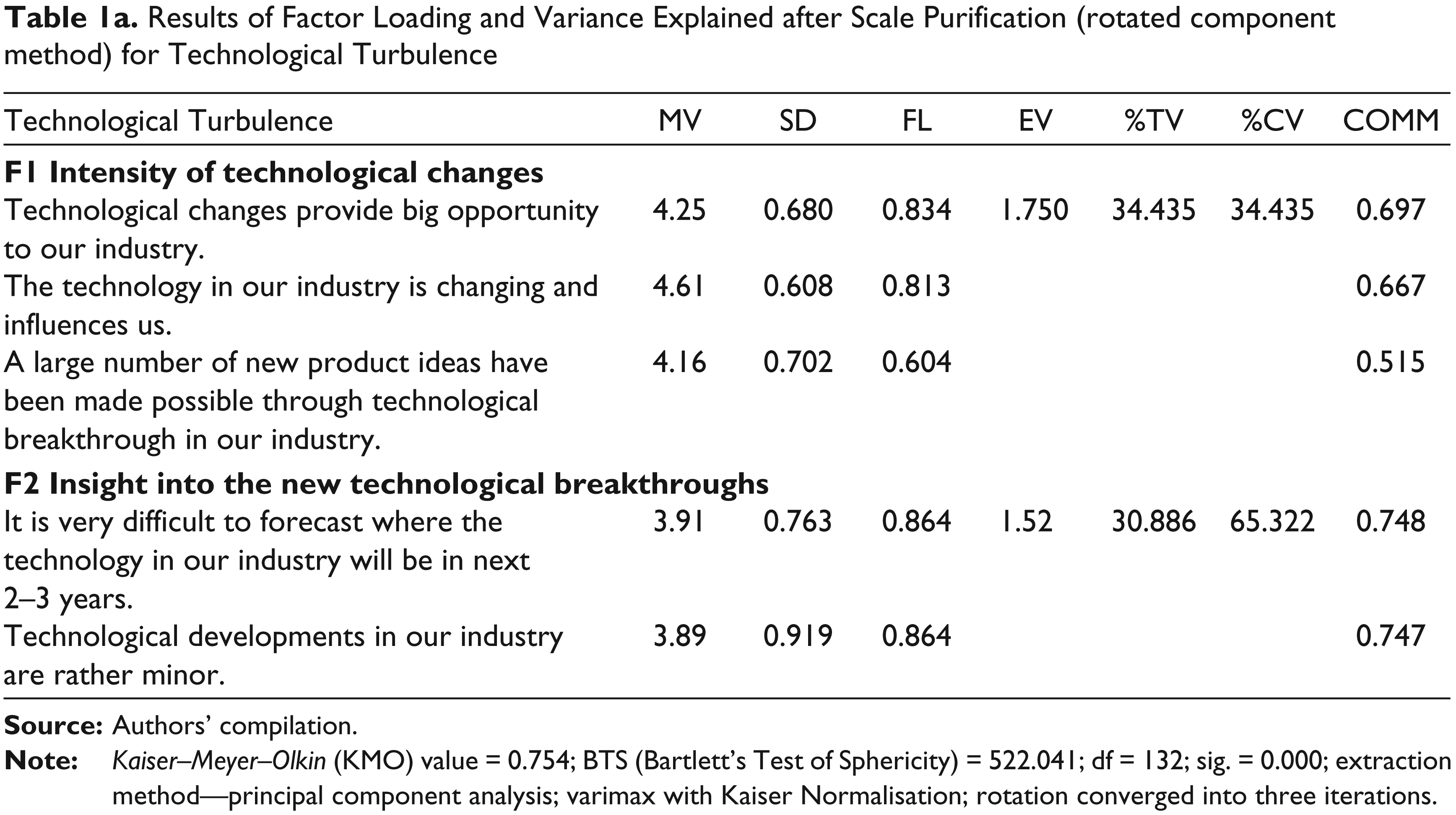
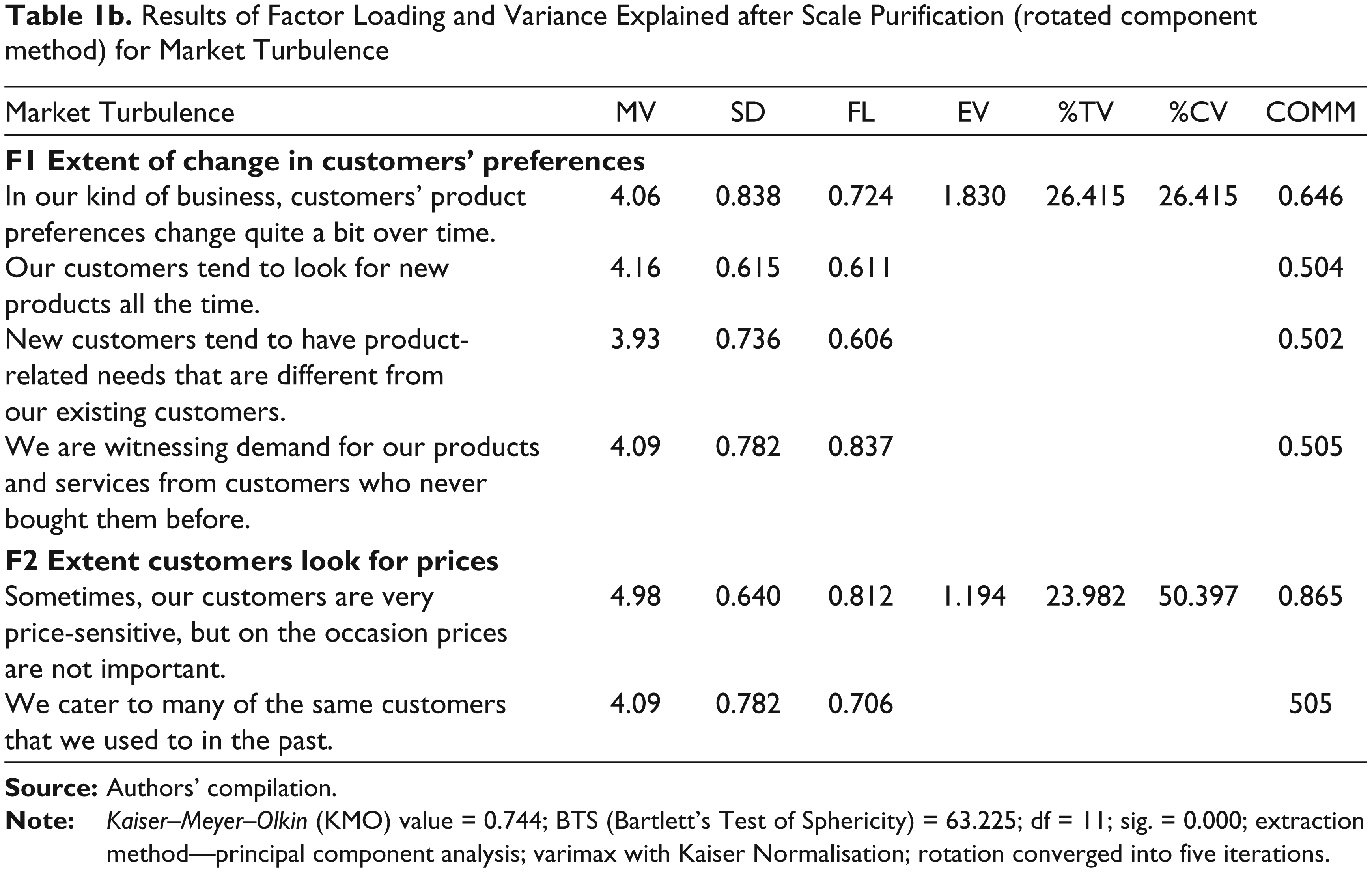
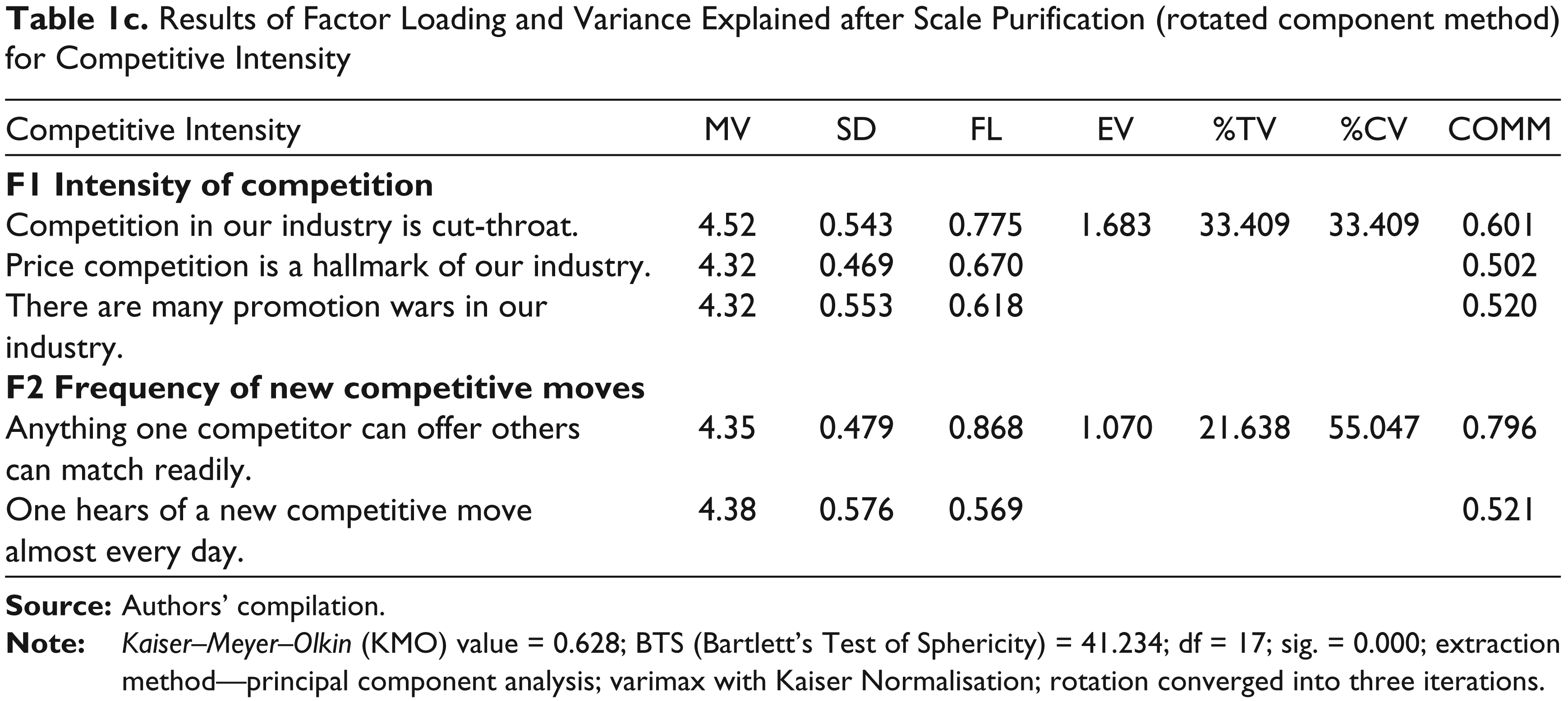
Factor analysis (SPSS 16 version) was used to analyze the interrelationship among variables that are highly correlated and for the retention of maximum number of factors. Market orientation emerged with three factors, namely, customer orientation, competitor orientation and inter-functional coordination, having 65.70 per cent variance explained. Technological turbulence emerged with five items and two factors having 65.322 per cent variance explained; market turbulence contained seven items under two factors with 50.39 per cent variance explained; competitive intensity comprised two factors having five items with 55.047 per cent variance explained; and business performance emerged with two factors with 53.28 per cent variance explained. A brief explanation of the emergent environmental turbulence factors is given below.
Results of Factor Loading and Variance Explained after Scale Purification (rotated component method) for Technological Turbulence
Technological Turbulence
In this dimension, two factors, namely, ‘Intensity of technological changes’ and ‘Insight into the new technological break-through’, emerged (Table 1a). Intensity of technological changes comprised three items with high communalities and good eigenvalues, namely, ‘Opportunities by technological changes’, ‘Influence of change in technologies’ and ‘New product ideas through technological break-through’. The important contributing item with highest factor loading (0.834) was ‘Opportunities by technological changes’. This result indicated that technological changes emerged as a major source of competitive advantage for SSIs because they can integrate this technological knowledge in the production process and thus can outperform their counterparts. The other contributing item was ‘Influence of change in technologies’ (0.813) followed by the item ‘New product ideas through technological break-through’ (0.604). It showed that new technological changes provide big opportunities for SSIs which can help SSIs to develop new product ideas and secure competitive advantage. The second factor, ‘Insight into the new technological break-through’ emerged with two items, namely, ‘Difficulty in forecasting technological changes’ and ‘Rate of technological developments’. These items obtained high factor loadings simultaneously (0.864). This result showed that even in difficult times, SSIs keep in touch with technological breakthroughs and technological developments.
Market Turbulence
The two factors under this dimension were ‘Extent of change in customers’ preferences’ and ‘Extent customers look for prices’ (Table 1b). Extent of change in customers’ preferences comprised four items, namely, ‘Change in customers product preferences’, ‘Look for new products’, ‘Different product-related needs of customers’ and ‘Demand for products from new customers’. The most important contributing item came was ‘Demand from new customers’ with the highest factor loading (0.837) followed by the item ‘Change in customers’ product preferences’ (0.724). The other two items obtain relatively low factor loadings. This result showed that change in product preferences, new and continuous demand for products and services from new and existing customers impose a challenge to SSIs and it becomes very important for them to acquaint themselves with the level of changes in customers’ product preferences. Thus, a good understanding of customers’ preferences and what new customers want becomes very important. Extent customers look for prices comprised two items, ‘Price sensitivity among customers’ and ‘Catering same customers’ needs’. It revealed that although customers of SSIs are price-sensitive, they always go for quality products. Moreover, SSIs are continuously fulfilling the demands of their customers which shows that price is not an important consideration for their customers.
Results of Factor Loading and Variance Explained after Scale Purification (rotated component method) for Market Turbulence
Competitive Intensity
It emerged with two factors, namely, ‘Intensity of competition’ and ‘Frequency of new competitive moves’, with items having communalities above 0.5 and significant eigenvalues (Table 1c). Intensity of competition comprised three items, namely, ‘Cut-throat competition’, ‘Price competition’ and ‘Promotion wars’. ‘Cut-throat competition’ was the important contributing item which emerged with a factor loading of 0.775 followed by the item ‘Price competition’ with a factor loading 0.670. This showed that in an environment of cut-throat competition, prices are an important factor. A competitive situation is created through various price and promotional methods adopted for marketing the products and services. Hence, a focus on differential strategies that create cut-throat competition becomes very important for SSIs to retain the existing customers as well as to attract the attention of new prospects. Items obtained under ‘Frequency of new competitive moves’ were ‘Competitors match the products readily’ (0.868) and ‘New competitive moves’ which obtained a comparatively low factor loading. The result showed that although frequency of competitive moves is low, whenever a new product or services arrives in the market, competitors are always ready to adapt it. Thus, in this way SSIs are experiencing new competition.
Results of Factor Loading and Variance Explained after Scale Purification (rotated component method) for Competitive Intensity
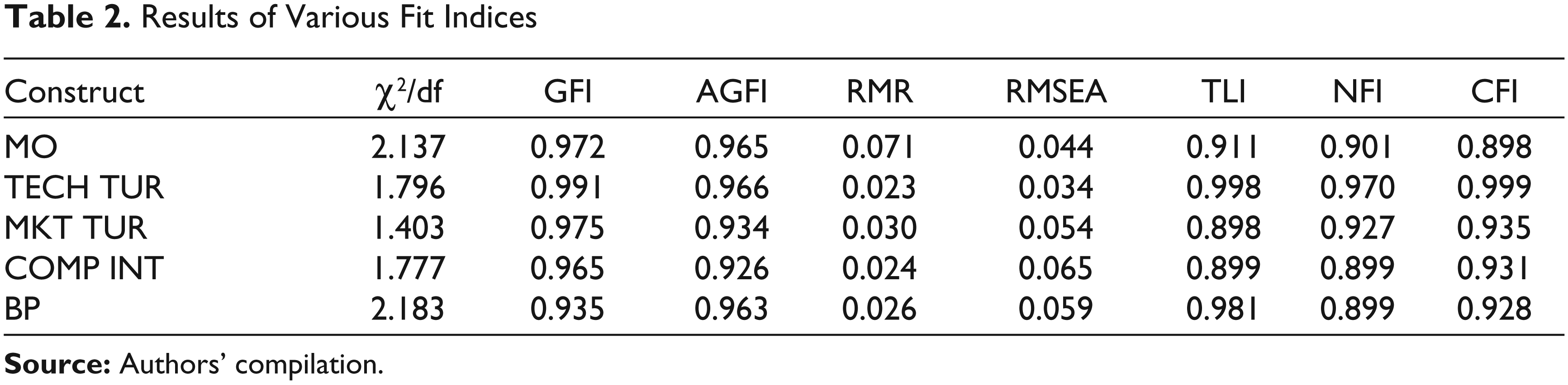
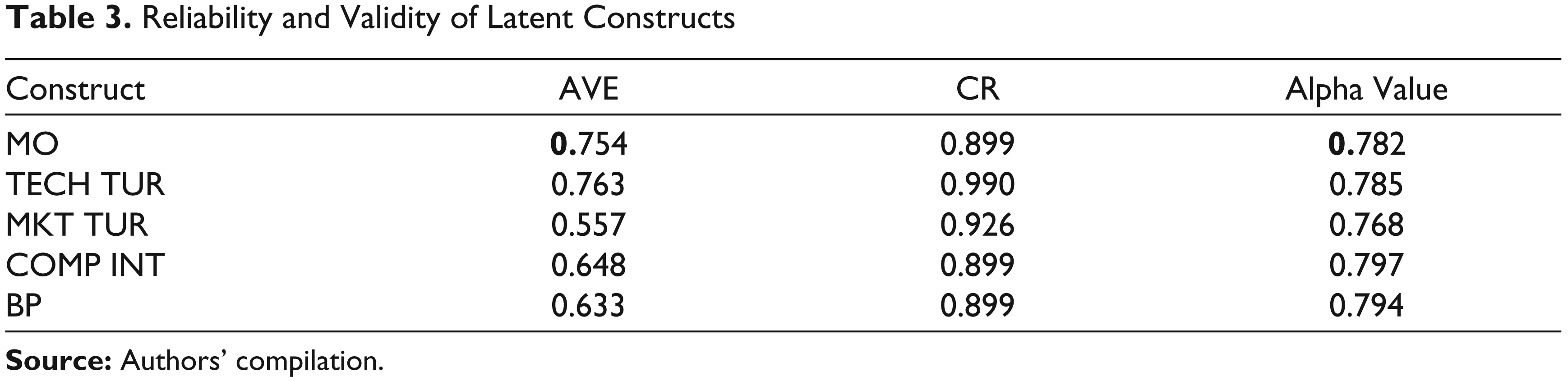
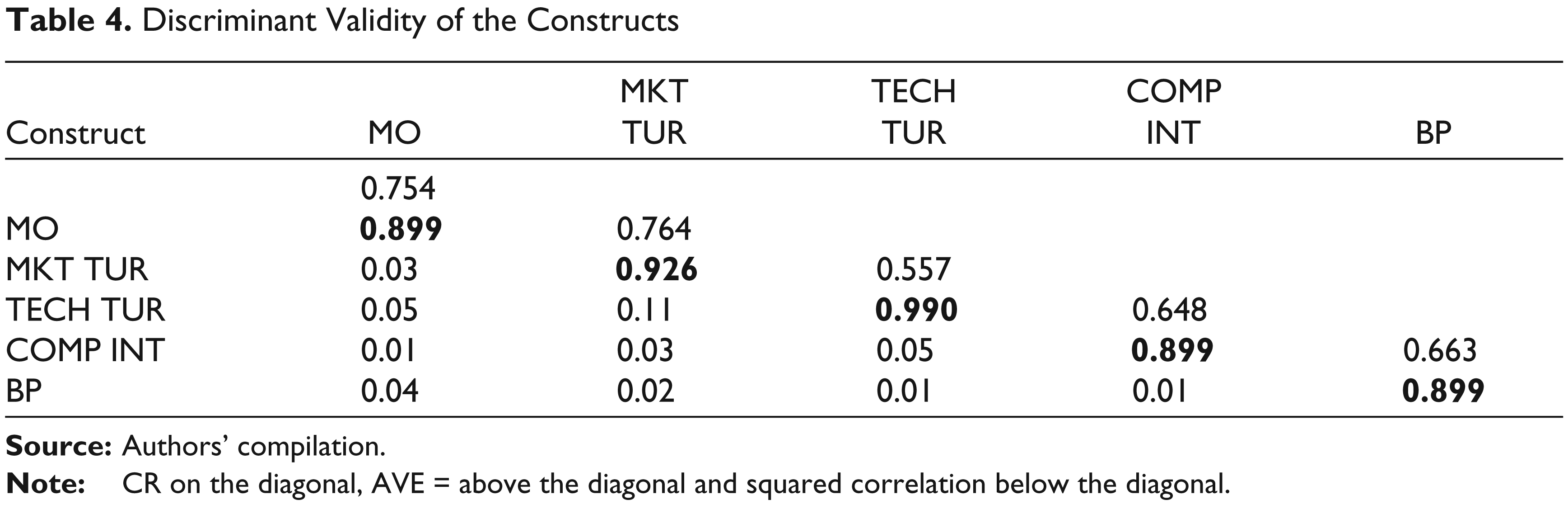
After factor analysis, the validity of the factorial structure so emerged was checked using confirmatory factor analysis. Measurement models were prepared and all the models emerged to be good-fit models as per the various fit indices (Table 2). To check the internal consistency of the data collected, the reliability tests, namely, Cronbach’s alpha and construct reliability, have been used. Validity of the scale was checked using face/content validity, construct validity, convergent validity and discriminant validity techniques (Tables 3 and 4).
Results of Various Fit Indices
Reliability and Validity of Latent Constructs
Discriminant Validity of the Constructs
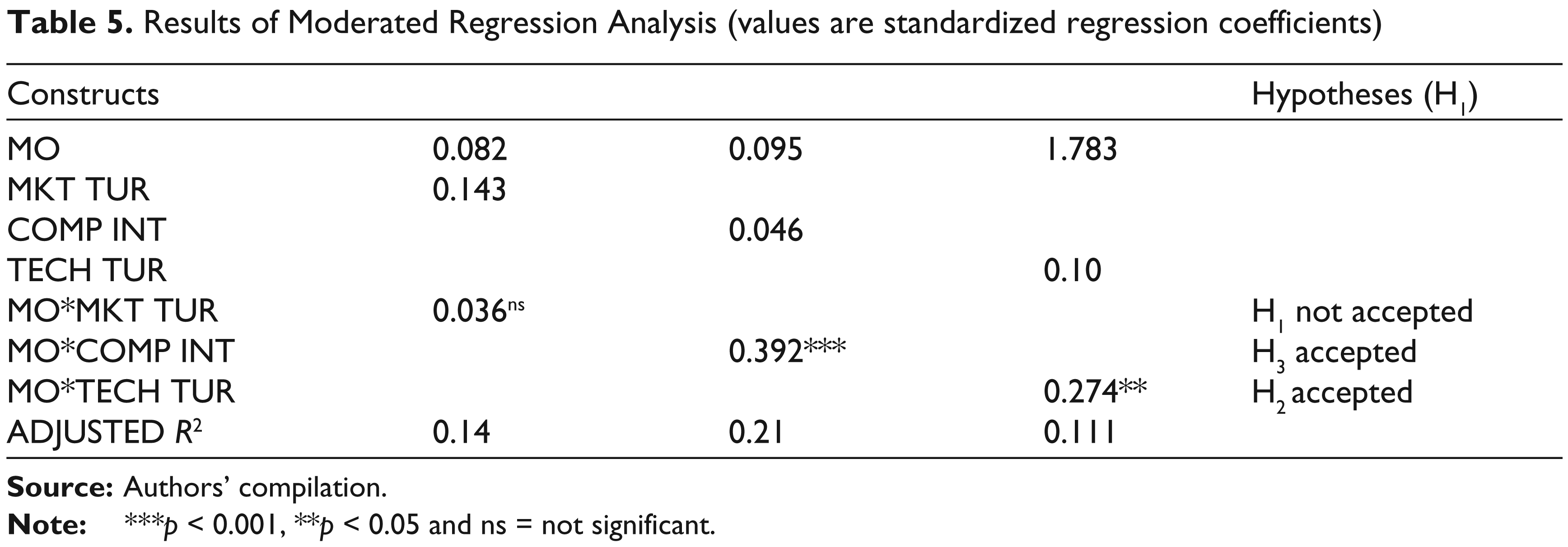
Moderated Regression Analysis
A combination of moderated regression and subgroup analysis was used to investigate the effects of the proposed environmental moderators, namely, market turbulence, competitive intensity and technological turbulence, on business performance. The output as represented by Table 5 reveals that except market orientation, interaction effects between MO and TT and MO and CI are significant, thereby indicating the moderating effect.
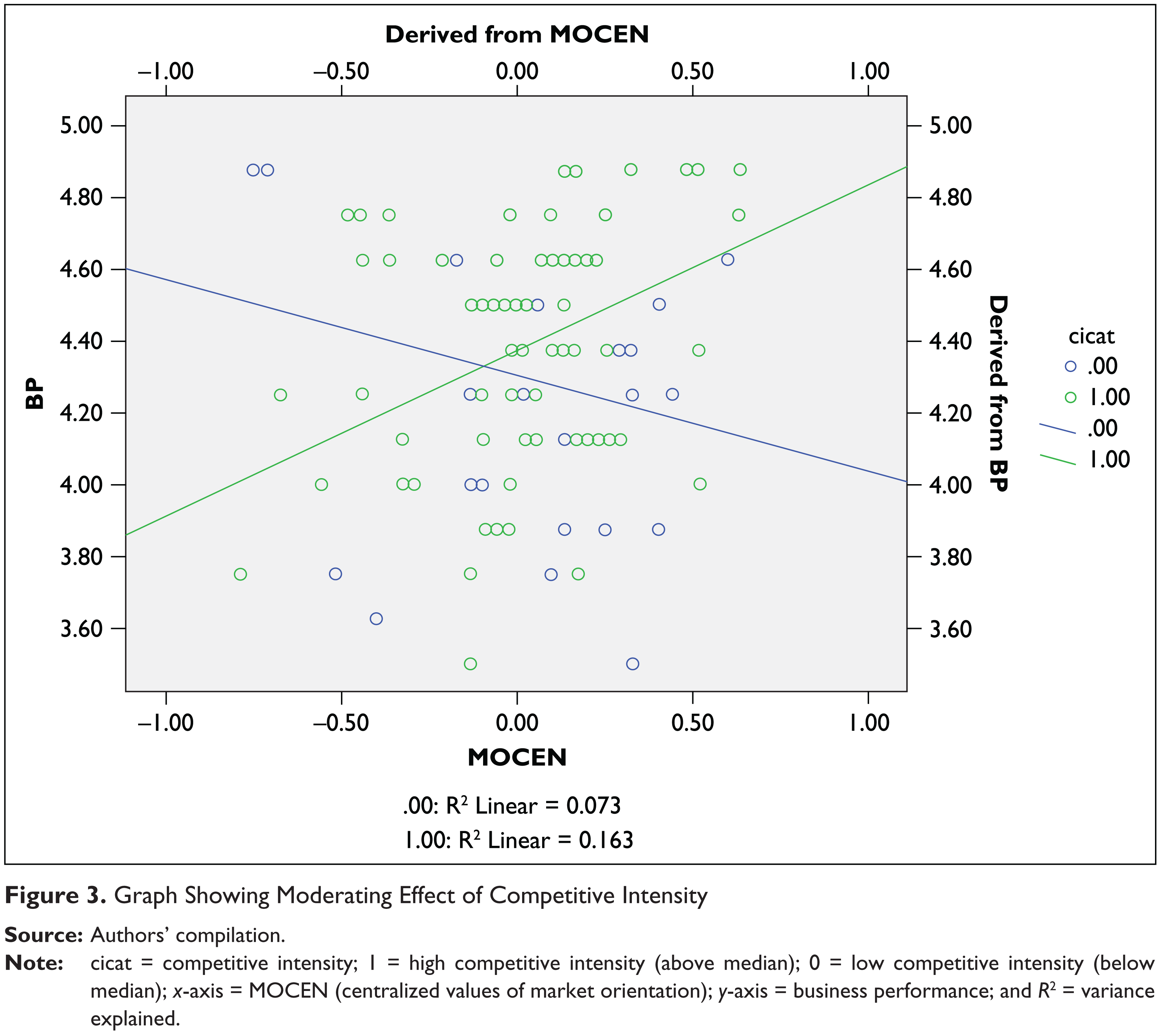
A subgroup analysis (Sharma et al., 1981) was conducted to find out the strength of the relationship through scatter plot in SPSS (version16). The moderator variables first were split on median and then values above median were categorized as 1 (high values) and values below median were categorized as 0 (low values). The result of the scatter plot for technological turbulence showed an upward slope along with high values of business performance at high values of technological turbulence where R2 = 0.191, which means that 19 per cent variance can be explained in business performance with the combined effect of market orientation and high values of technological turbulence (Figure 2). Similarly, in Figure 3, the slope went upwards along with high values of business performance at higher values of competitive intensity categorized by 1 which indicates that the combined effect of market orientation with high level of competitive intensity contributes 16 per cent of the variance in business performance.
Results of Moderated Regression Analysis (values are standardized regression coefficients)
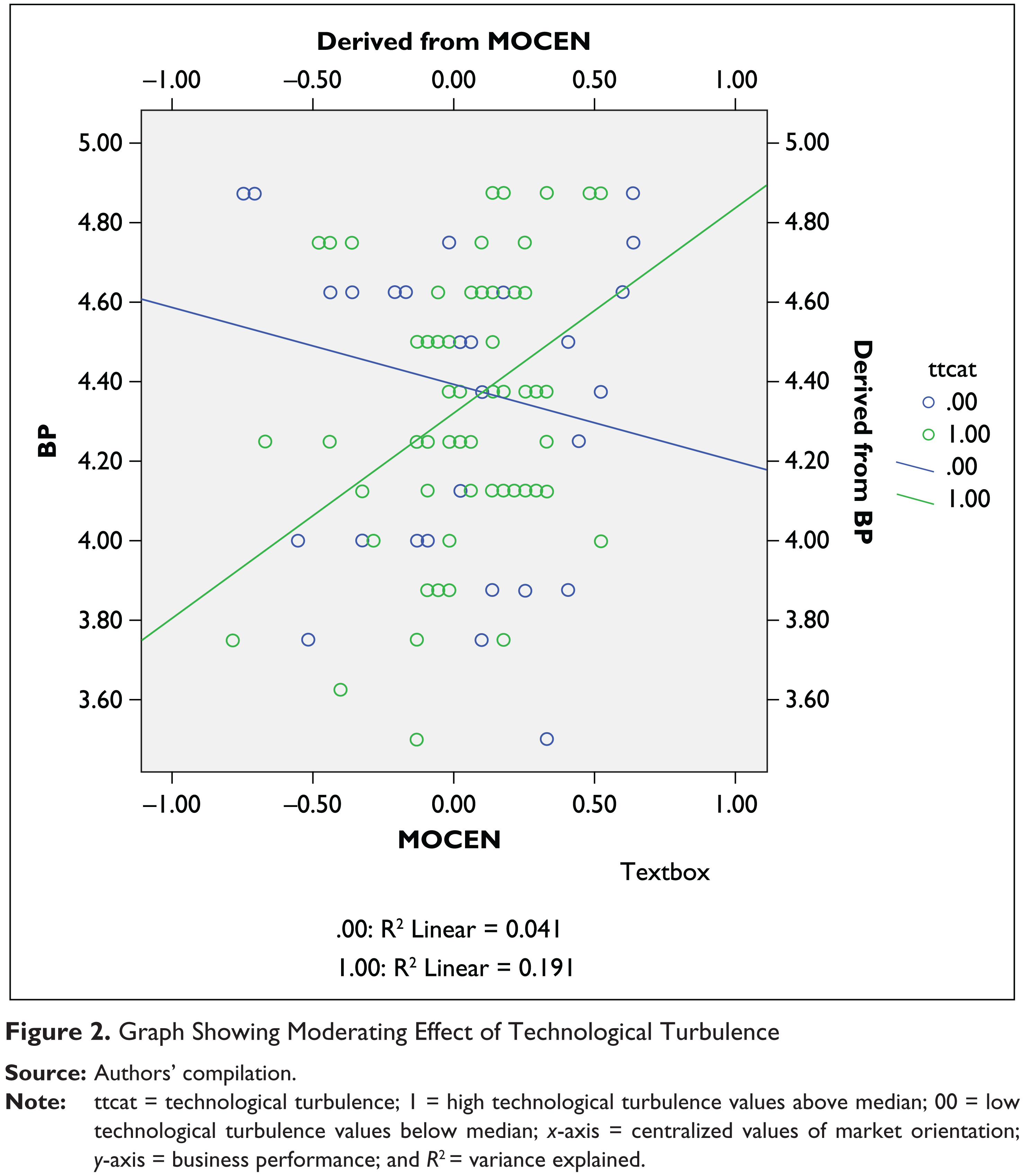
Thus, the hypothesis H (2a) higher the level of technological turbulence, weaker is the market orientation–business performance relationship is not supported by the result (R2 = 0.191).
Thus, the hypothesis H (3a) higher the level of competitive intensity, higher is the market orientation–business performance relationship is supported by the result (R2 = 0.163).
Conclusion and Managerial Implications
The results of regression analysis showed moderating impact of technological turbulence and competitive intensity on market orientation–performance relationship. Our results were consistent with Gaur et al. (2011), Bhuian (1997), Kumar et al. (1998) and Shoham and Rose (2002). Further, our results did not find support for moderating effect of market turbulence. The result was consistent with Jaworski and Kohli (1993), Gray et al. (1999), Subramanian and Gopalakrishna (2001) and Gaur et al. (2011), where moderator effect of market turbulence was not identified. These moderator effects were partly consistent with those identified by Slater and Narver (1994). Further, a significant relationship between market orientation and business performance emerged. This was supported when the findings of a non-significant market orientation coefficient when matched with a significant interaction term merely suggested that market orientation has only a combined effect with competitor orientation and technological turbulence on business performance (Greenley, 1995; Harris, 2001). Consequently, while the results found no significant association, the moderated regression found a moderated link between market orientation and business performance. Thus, it becomes essential to focus on market needs, wants and demands in order to remain competitive in dynamic environmental conditions (Harris & Ogbonna, 2001).
The results of the present study show that although the market orientation concept is widely accepted in the SSIs located in the district Udhampur, yet problems relating to its effective execution still subsist. One of the main reasons may be the developing nature of the area. Appiah-Adu (1998) also pointed out that owing to the low propensity towards market orientation by businesses in developing regions, it takes a fairly strongly competitive environment for organizations to respond to market-oriented behaviours. With growing competition in the marketplace and an increase in competitive activities, firms will be driven to increase their market orientation, first to counteract the strategies of competitors and second, to solicit customers because of the wide variety of alternatives which will become available. Small-scale industries should be able to adapt and develop their market orientation in line with the conditions in the business environment and with their internal factors (Harris & Ogbonna, 2001). Managers wishing to improve their performances need to monitor their market-oriented behaviours constantly and develop their goals and strategies accordingly. Our results showed that market orientation with combined effect of competitive intensity increases business performance significantly. Thus, SSIs should create competitive environments by extending markets of their products, adding new products to their lines and catering to the needs of new sets of customers, in order to increase business performance. Emerging technological improvements are posing a great threat for SSIs; thus, they should keep themselves updated with new technologies which can improve their business performance in terms of new product success, market share, sales growth and product quality. The managers of the SSIs should design and implement customer-centric strategies. Considerable research has shown that organizations are more successful when they embrace a customer orientation and competitor orientation (Deshpande et al., 1993; Han et al., 1998; Jaworski & Kohli, 1996; Narver & Slater, 1990). Managers are suggested to use information technology effectively to enable new value creation processes and to store market information in accessible information systems which will enhance the information coordination process in SSIs (Day, 1994; Homburg et al., 2000). Negative organizational behaviour could be counteracted through fostering work culture and team spirit and empowering employees. Participative or supportive leadership style to implement market orientation is also suggested which in turn would increase inter-functional co-ordination by reducing centralized impact. It is also suggested that managers should reduce the number of hierarchical levels, appoint key accounts managers and fill key management positions with managers having a marketing background. During the survey, it was disclosed that there is no scope for further expansion of the industrial estate due to non-availability of land. Therefore, it is suggested that the government should arrange land for the development of the industrial area by levelling the hilly terrain in the district for further expansion of the SSIs. Small hydro-power projects should be constructed in the area so that uninterrupted power supply can be made available to these SSIs. The other non-conventional power sources, such as solar and nuclear, can also be explored. Setting up of water recycling plants could overcome water shortages, which the SSIs are facing at present. Encouragement and support to manufactures’ cooperative societies for manufacturing, warehousing, transportation, branding and promotion would assist the SSIs in reviving competitiveness and business sustainability.
Footnotes
Acknowledgements
We are grateful to the anonymous referees of the journal for their extremely useful suggestions to improve the quality of the article. Usual disclaimers apply.