







Abstract
The present study made an effort to investigate the tri-linkage between information systems (ISs) and supply chain management (SCM) practices to enhance the operational performance (OP) of an organization. The study made an effort to find out, how different kinds of ISs help the supply chain to achieve greater OP. Three constructs, namely, operational IS, strategic IS and infrastructural IS, have been identified from literature. Four plant-level supply chain constructs, namely, strategic supplier partnership, information sharing and information quality, purchasing management and inventory management, have been identified. The co-relation between ISs, supply chain practices and OP has been tested. Finally, both ISs and supply chain impact on OP have been evaluated. The ISs create an indirect impact on OP via supply chain practices, which results in OP. The OP can be in the form of reduction in number of defects in operations, quality improvement in products, delivery of products or raw material at right place, at right time and in right quantity. The study leads to interesting implications for practitioners. The ISs should be connected at various levels, that is, operational, strategic and infrastructural, to support the entire supply chain. With the changing dynamics of accuracy and speed in operations and the target of achieving economies of scale, the role of ISs becomes critical in the entire supply chain. The supply chain and information technology practices impact on OP has been studied by the number of authors. However, the classification of ISs and plant-level supply chain impact on OP has not been studied in detail by authors.
Introduction
Companies experience a challenge in marketplace to compete with other competitors. This situation arrived due to continuous increase in expectations of customers and complex supplier relationships. Due to intensive competition, the supply chain management (SCM) has become the focal issue for many organizations. Supply chain focus is to improve the operational performance (OP) of an organization. Supply chain also helps to have cost-effectiveness in operations. The OP will automatically contribute majorly to overall organizational performance. To catalyze the steps in entire supply chain, the role of information systems (ISs) becomes crucial. Information systems backed by advanced technology attempt to fasten business process, with accurate information and easy access of data to the other departments of an organization (Bayraktar, Demirbag, Koh, Tatoglu & Zaim, 2009; Mehrotra, 2010).
Cost-effectiveness can be achieved through efficient supply chain (Chin, Tummala, Leung & Tang, 2004; Kuei, Madu & Lin, 2001). Time and swiftness seek attention in SCM research with the aim of quick delivery and the lowest possible cost. Flexibility to respond to the needs of market/customer and speed to market are essentials of SCM (Samaranayake, 2005). Faster communication channel, flow of material from one process to another and information flow are pillars of SCM (Chase, Jacobs & Aquilano, 2007, p. 406; Lummus, Duclos & Vokurka, 2003). This process-to-process communication is possible only with the support of ISs.
Other concepts, tools and techniques are also applicable in SCM processes. This varies from scenario to scenario, such as quick response (QR) and efficient customer response (ECR) in an industry, vendor-managed inventory (VMI) in automobile industry (Vanichchinchai & Igel, 2009) and flexible response in electronics or technologically comprehensive industry or industry with uncertain environment.
Many organizations gaze for operational effectiveness through best practices at every node of the supply chain. Many authors have focused on financial performance of an organization and it is important also; however, most of the strategic issues and day-to-day operations are often handled with non-financial measures (Maskell, 1991).
Pharmaceutical industry plays an important role in an economy and individual’s life. The pharmaceutical products are developed in the form of drugs and formulations. The pharmaceutical products (drugs) start their journey from raw materials to customer for consumption via manufacturer. That is why a manufacturing plant plays an important role in supply chain from value addition point of view. In pharmaceutical industry, operational effectiveness will affect the quality, cost, delivery and flexibility of products. The Indian pharmaceutical industry serves the domestic as well as international market in different capacities. The remainder of the article is organized as follows: the second section includes literature review and the third section includes objectives of the study. The fourth section includes the rationale of studies and hypothesis development. The fifth section includes research methodology adopted for the study and the sixth section represents the results for the measurement model followed by results and the seventh section includes discussion. The eighth section includes the managerial implication followed by the ninth and tenth sections of conclusions and limitations and future scope.
Literature Review
Strategic Supplier Relationship/Partnership
Supplier relations increase the performance of both suppliers and buyers. The long-term cooperative relationships with ‘few suppliers’ result in efficient supplier quality management, when quality and delivery are buyer priorities (Flynn, Schroeder & Sakakibara, 1995). There is a positive relationship between customers and suppliers on performance (Baird, Hu & Reeve, 2011; Cua, Mckone & Schroeder, 2001; Flynn et al., 1995; Kaynak, 2003; Parast, Adams, Jones, Rao & Raghu-Nathan, 2006; Yeung, Cheng & Lai, 2005). These studies recommend that managers should focus on ‘customers’ and ‘suppliers’ involvement as it would permit organizations to enhance quality performance, which leads to customer satisfaction.
The high-level integration and partnerships are advocated for multifarious business conditions and complex components and products (Vaart & Van Donk, 2008; Wasti, Kozan & Kuman, 2006). The partnership with suppliers can be classified in four categories, namely, partner (full service provider), mature (full system provider), child (customer call and supplier respond to demand) and contractual (supplier acts as an expansion of customer’s manufacturing operations) (Kamath & Liker, 1994).
Level of Information Sharing and Information Quality
Majority of supply chain practices decisions taken by managers are based on information and analysis. Various authors underlined the key role of information and analysis in decision-making (Flynn et al., 1995; Kaynak, 2003; Yeung et al., 2005). Sadikoglu and Zehir (2010) reported that information helps organizations in defining and achieving short-term and long-term goals and to cope up with internal and/or external change. Quality charts, graphs and tables are the commonly used sources of information on shop floors. These tools help in enhancing supply awareness among the employees.
In supply chains, the importance of information sharing, exchanging the ideas, skills and technologies is described as the part of the process of supply chain input–output model. The supplier supplies a lot of information to a firm, which adds a value to take appropriate measure to optimize further (Lettice, Wyatt & Evans, 2010). In supply chain, the most important is quality of information sharing, which includes the accuracy, timeliness, credibility and adequacy of information (Moberg, Cutler, Gross & Speh, 2002; Monczka, Petersen, Handfield & Ragatz, 1998). The impact of information quality on SCM depends upon what information is shared, at what place, when and how it is shared and with whom (Chizzo, 1998; Holmberg, 2000).
The literature shows the negative impacts of inaccurate/delayed information on supply chain, because information moves throughout the supply chain (Lee, Padmanabhan & Whang, 1997; Mason-Jones & Towill, 1997; McAdam & McCormack, 2001; Metters, 1997). Due to divergent interests, behaviour of supply chain stakeholders and asymmetric information impact the quality of information (Feldmann & Müller, 2003). It has been observed that firms deliberately distort information, which may reach to their competitor, suppliers and customers (Mason-Jones & Towill, 1997). There is building resistance to provide more than a minimum of information (Berry, Towill & Wadsley, 1994). In view of these predispositions, the sharing of quality of information becomes a critical aspect from effective SCM point of view (Feldmann & Müller, 2003). That is why the organizations should consider the information as a strategic asset and have to ensure the flow with minimal distortion.
Procurement/Purchasing Management
The importance of purchasing as a strategic interest of the companies has been grown in last two decades. This is due to the several factors such as increase of purchasing costs and globalization (Sheth & Sharma, 1997) and tremendous increase in outsourcing strategies (McIvor, 2000). In result of this, there is a shift from single time transaction to long-term relations, which rely more heavily on suppliers as one of the major driver of company’s revenues (Gadde & Hakansson, 2001).
Adopting a close relationship with suppliers is a means of having access to the supplier’s resources, which helps to build up their organizational activities (Araujo, Dubois & Gadde, 1999). This approach also emphasize that the role of purchaser is not only to manage flow of goods and services to company, but also to manage the entire supply process (Cousins & Spekman, 2000).
In today’s purchasing process, the environmental and social factors make the decisions and processes very complex (Carter, 2004; Handfield, Walton, Sroufe & Melnyk, 2002). In this view, today the purchaser needs to look beyond financial matrix while purchasing. Purchaser also have to monitor new set of risks, such as employee security, waste of resources and pollution, (Carter & Rogers, 2008), the risk of negative impact on their corporate image (Foerstl, Reuter, Hartman & Blome, 2010) and impact of purchasing activities on society (Ghai & Vivian, 1995).
Inventory Management
Inventory signify the value or quantity of raw materials, work in progress (WIP), supplies and finished goods that are stored or kept for use when required (Lysons & Gillingham, 1981). Raw materials are the commodities, such as ingredients, to be used in manufacturing (in case of FMCG industry). Supplies refer to items such as maintenance, repairs and operating (MRO) inventory that do not go to the finished product. Work in progress is materials that have been partly manufactured, but yet to be completed. Finished products are items that are ready for shipment (Kothari, 1992). Inventory management is an ability of the organization to maintain stock levels of given group of items. It is very crucial that executives in the organizations have to adopt the mindset of keeping inventory costs at a minimum level. Inventory cost include shortage cost, holding costs and ordering cost (Drurry, 2004).
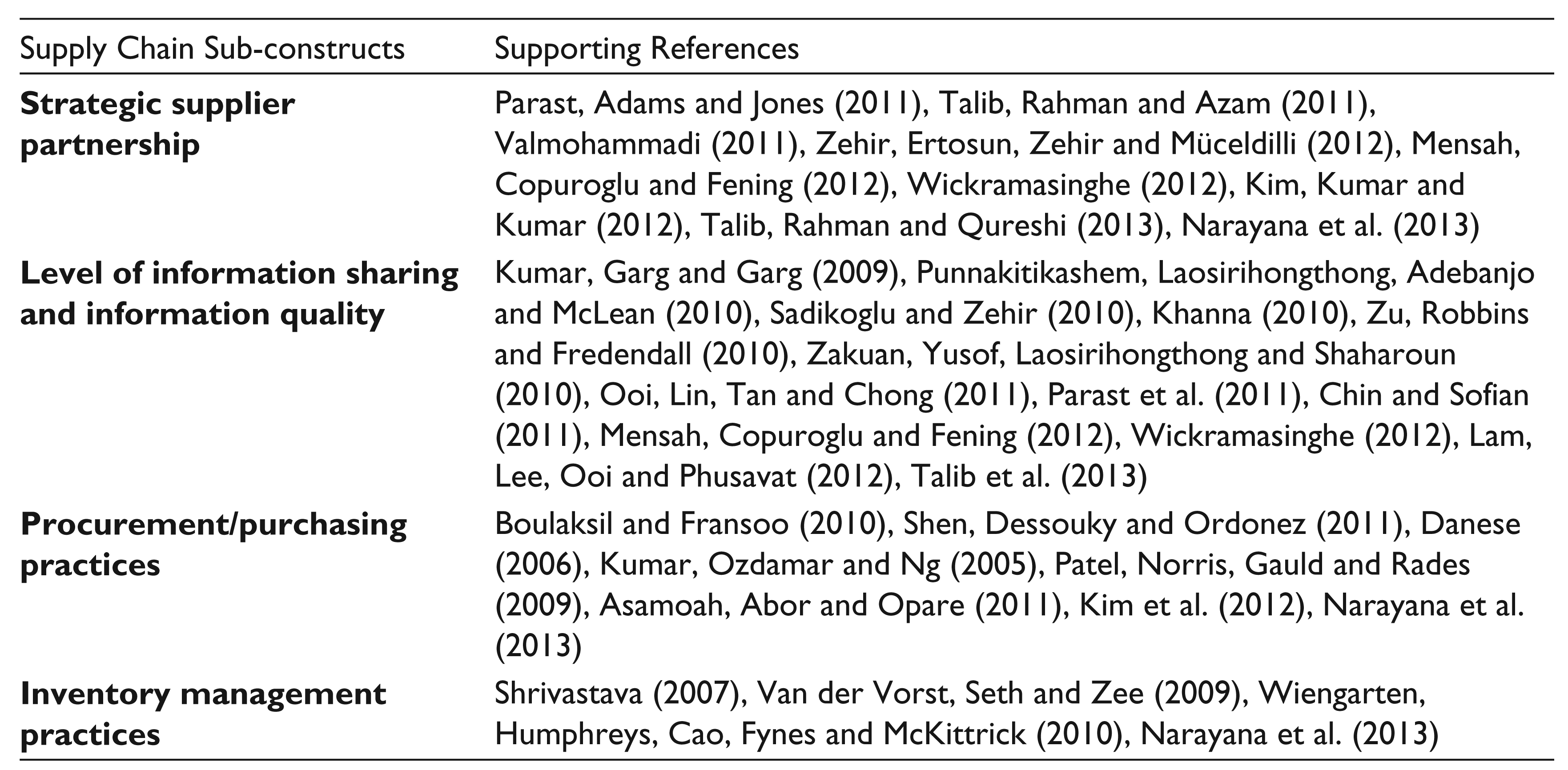
The trade-off between holding cost and ordering cost advocates the transaction approach to inventory management. This approach is represented by economic order quantity (EOQ) models of inventory, developed a decade before (Koumanakos, 2008). The new concepts, such as just-in-time (JIT), material requirement planning (MRP) and enterprise resource planning (ERP), are popularized and used in last decade vigorously. From critical review, four SCM practices applicable for plant-level supply chain have been identified and listed in Table 1.
Information System Management
Information systems are the backbone of any supply chain (Barut, Faisst & Kanet, 2002). Information system has become key to the operations of a supply chain. Information system helps to integrate the members from suppliers to customers in supply chain (Huang & Gangopadhyay, 2004; Gunasekaran & Ngai, 2004). Information systems’ role has emerged from back office to operational and from operational to strategic and from strategic to infrastructural. Organizations are focusing on usage of ISs to influence the processes in the entire value chain (Rushton & Oxley, 1994, pp. 248–249; Williams, Nibbs, Irby & Finley, 1997). The ISs help to facilitate the internal coordination within the firms and enable firms to coordinate with suppliers and customers and other stakeholders.
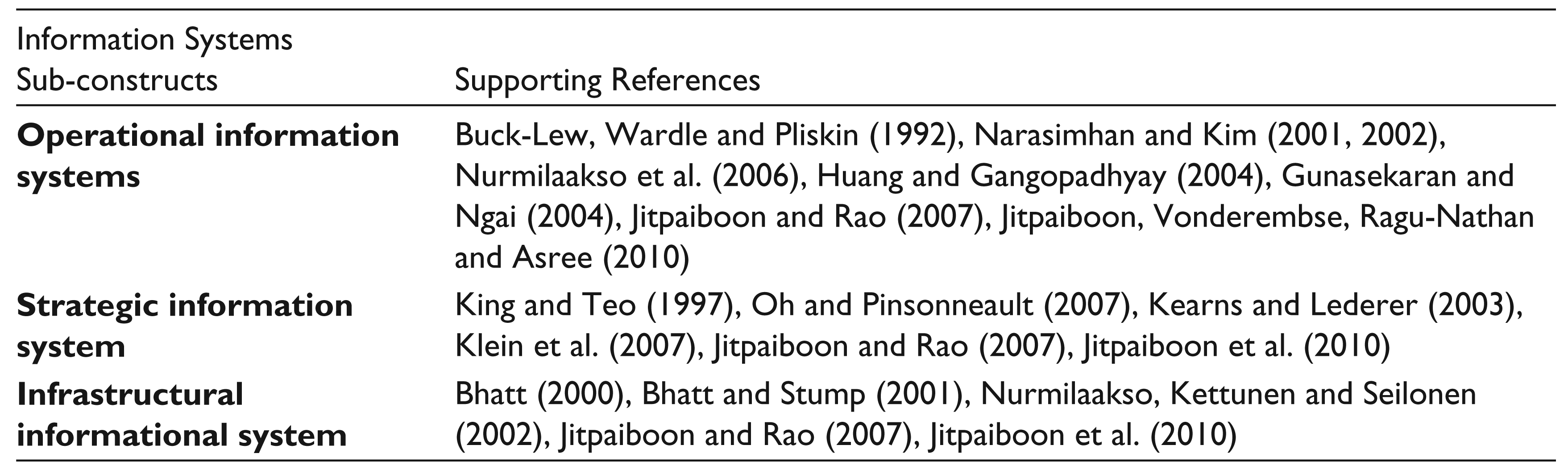
Information systems can be divided into three sub-components at three levels, that is, (i) operational IS, (ii) strategic IS and (iii) infrastructural IS (Narasimhan & Kim, 2001, 2002).
Operational IS focuses on continuous monitoring, daily improvement and kaizen activities, which helps executives to take daily decisions. Operational IS promotes the improvement of day-to-day operations for achieving shift-wise or day-wise operational goals (minimum number of defects, inventory management, supplier relationship management, order fulfilment, total production, quality assurance and control). The day-to-day operational IS plays a critical role by integrating technologies in manufacturing and inter-departmental information sharing (Thakur & Jain, 2008).
Supply Chain Practices and Supporting Literature
Strategic IS in a firm used to focus on long-term planning and formulation of polices, which will benefit the firm in long run (long-term investment justification, project analysis and capacity planning and competitor analysis). Strategic IS is valuable for creating competitive edge over others and to reduce the cost of operations (Kearns & Lederer, 2003; Oh & Pinsonneault, 2007). Strategic IS should be emphasized within the firm and across the supply chain, to share the information effectively across supply chain. Strategic IS will help firm to develop capability, which will help to achieve effective supply chain operations (Klein, Rai & Straub, 2007).
In infrastructural IS, firm uses information technology to facilitate communication of data and information sharing across the departments of an organization and stakeholders. It also addresses the implementation of security, the coordination among work activities. Infrastructural IS also focuses on improvement of information sharing to benefit the efforts of executives from different parts of the firm. Infrastructural IS enables executives to take a factual base decision with respect to firm goals (e.g., setting up security devices, setting up advanced manufacturing technology, plant layout, data communication, etc.). From critical review, three IS approaches applicable for plant-level supply chain have been identified and listed in Table 2.
Information Systems Management and Supporting Literature
Operational Performance
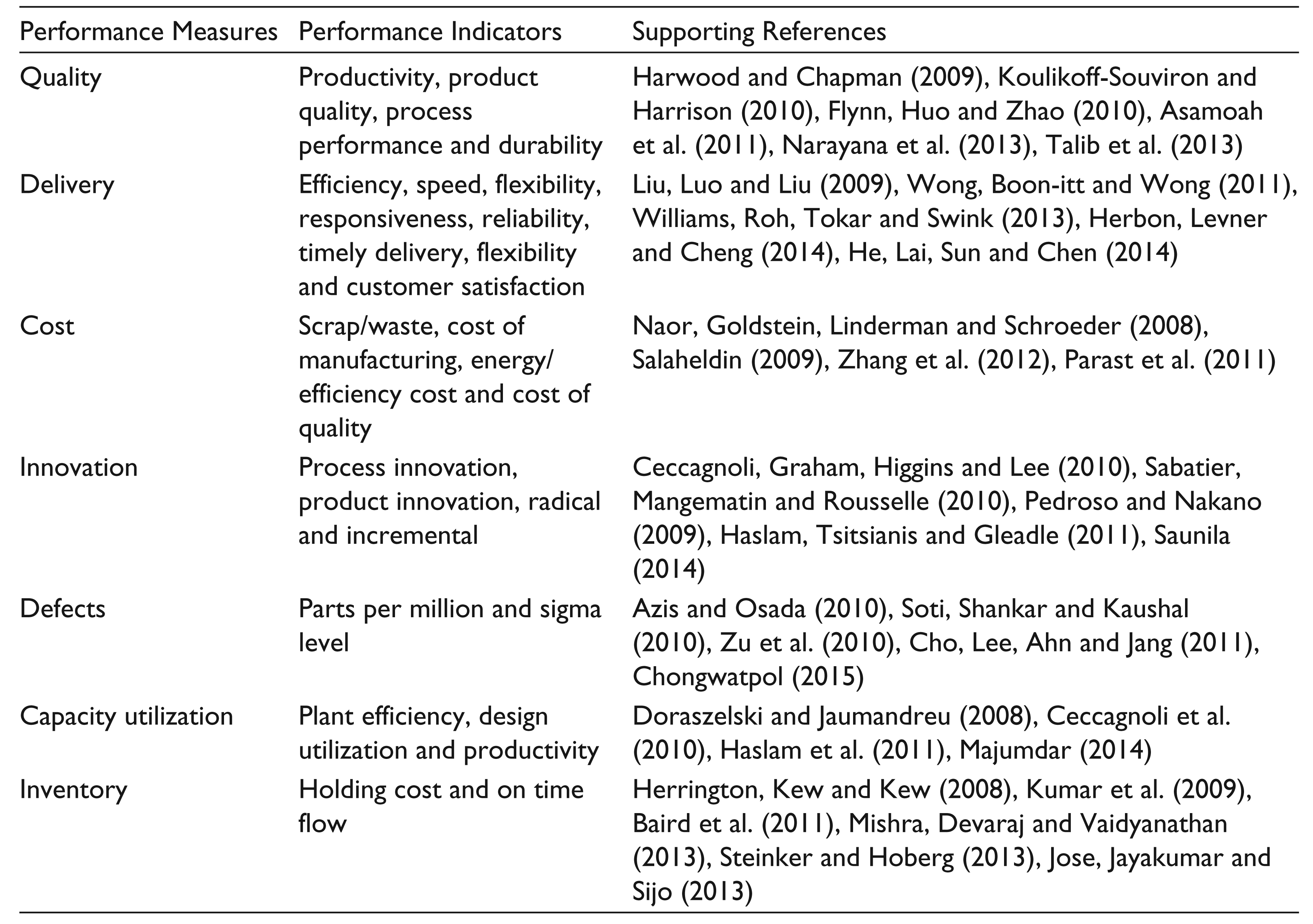
Operational performance has improved and changed its parameters over a period of time. It is changed from simply enhancing the productivity in 1980s to operate on economies of scale and intra-operational alliances. Unlike traditional way, OP leads to financial performance of an organization indirectly (Kaplan & Norton, 1992). The main objective of operations is to reduce the cost and enhance efficiency in operations, whether the performance is time based or cost based (Yeung, 2008). The OP can be measured in terms of productivity, decrease in scrap, improvement of quality and product innovation (Green, Zelbst, Meacham & Bhadauria, 2011; Prajogo, Huo & Han, 2012; Zhu, Sarkis & Lai, 2008). However, the measures of supply chain and IS are delivery, innovation, defects and capacity utilization and inventory is mentioned in Table 3 along with performance indicators and supporting literature.
Research Objectives
In this study, the authors made an attempt to:
Study the three types of ISs and their role for supporting the plant-level supply chain to achieve OP in pharmaceutical industry. Study the direct and indirect impact of ISs on OP in pharmaceutical industry.
Theoretical Framework
Each organization strives to be a market leader in the industry. Due to increase in competition in almost each industry, it is critical to have strong strategies to survive. The adoption of ISs helps to operate its daily operations smoothly. The ISs help the company to use its data in an efficient manner and also assist with mandatory compliances. The ISs help to integrate data from outside and inside sources of the company. The ISs help company to be on update with reference to OP. The OP of a firm depends upon its strategic planning. The efficient usage of ISs helps firms to take decisions. The decision-making is important at every stage of supply chain (Fisher & Kenny, 2000). The business ISs are the bundle of techniques, tools and procedures at operational, strategic and infrastructural level (Hooper & Page, 1997). This involvement of ISs helps firms to enhance business growth and competitiveness. The ISs may differ from firm to firm, as need varies (Chaffey & Wood, 2005).
Information systems help a firm to achieve cost leadership and differentiate its operations from others. The ISs help a firm to link with its partners effectively. Strategic ISs help organization to bring new products to market and which defines the speed to market. Information systems analyze the information about competitors, environmental changes and products. Information system helps a firm to connect to its suppliers, customers, dealers and retailers (Clemons & Hann, 1999). Information system helps supply chain to run operations smoothly. Thus, ISs positively impact supply chain practices and performance (Qrunfleh & Tatafdar, 2015). Supply chain practices impact OP. The OP can be measured in terms of cost, quality delivery and flexibility (Bayraktar et al., 2009; Miguel & Brito, 2011; Rungtusanatham, Salvador, Forza & Choi, 2003). However, the SCM practices differ from firm to firm and country to country. There is evidence that economic conditions, social and cultural aspects also impact the supply chain practices (Kaufmann & Carter, 2006; Mentzer et al., 2001). Today’s supply chain practices are essentially in support of ISs. Information systems thus help to perform daily operations effectively. Information systems help to achieve OP of a firm (Pérez-Méndez & Machado-Cabezas, 2015; Santa & Pun, 2009; Silveira & Caqliano, 2006).
List of Operational Performance Measures, Performance Indicators and Supporting References
Rationale of the Studies
Today, ISs are supporting at every point in supply chain, by transforming the exchange of inter-departmental activities (Chen & Paulraj, 2004; Palmer & Griffith, 1998). Supply chain requires the support of inter-organizational and intra-organizational ISs for enabling the process (Christiaanse & Kumar, 2000; Teng, Grover & Fiedler, 1996). Information systems enhance the supply chain efficiency by having real-time information regarding shipment status, production requirements and inventory level (raw material, work in progress and finished goods) (Radstaak & Ketelaar, 1998).
Information systems have potential to support collaborative planning in entire supply chain by sharing data and information on production schedules. Information systems also support in demand forecasts and inter-departmental collaboration, which include supply chain activities (Karoway, 1997).
Today, the goal of ISs is to help in purchasing, inventory and supplier partnership with exact information. Thus, constructs of ISs at three levels, that is, operational, strategic and infrastructural, are conceptualized to facilitate the organizational supply chain practices. Supply chain includes the electronic transactions and communication in numerous forms between supply chain members (Carr & Pearson, 1999; Greis & Kasarda, 1997). Information systems enable supply chain to achieve OP of an organization. Therefore, we propose, ISs positively impact the supply chain practices (H1).
In Figure 1, the conceptual framework has been explained.
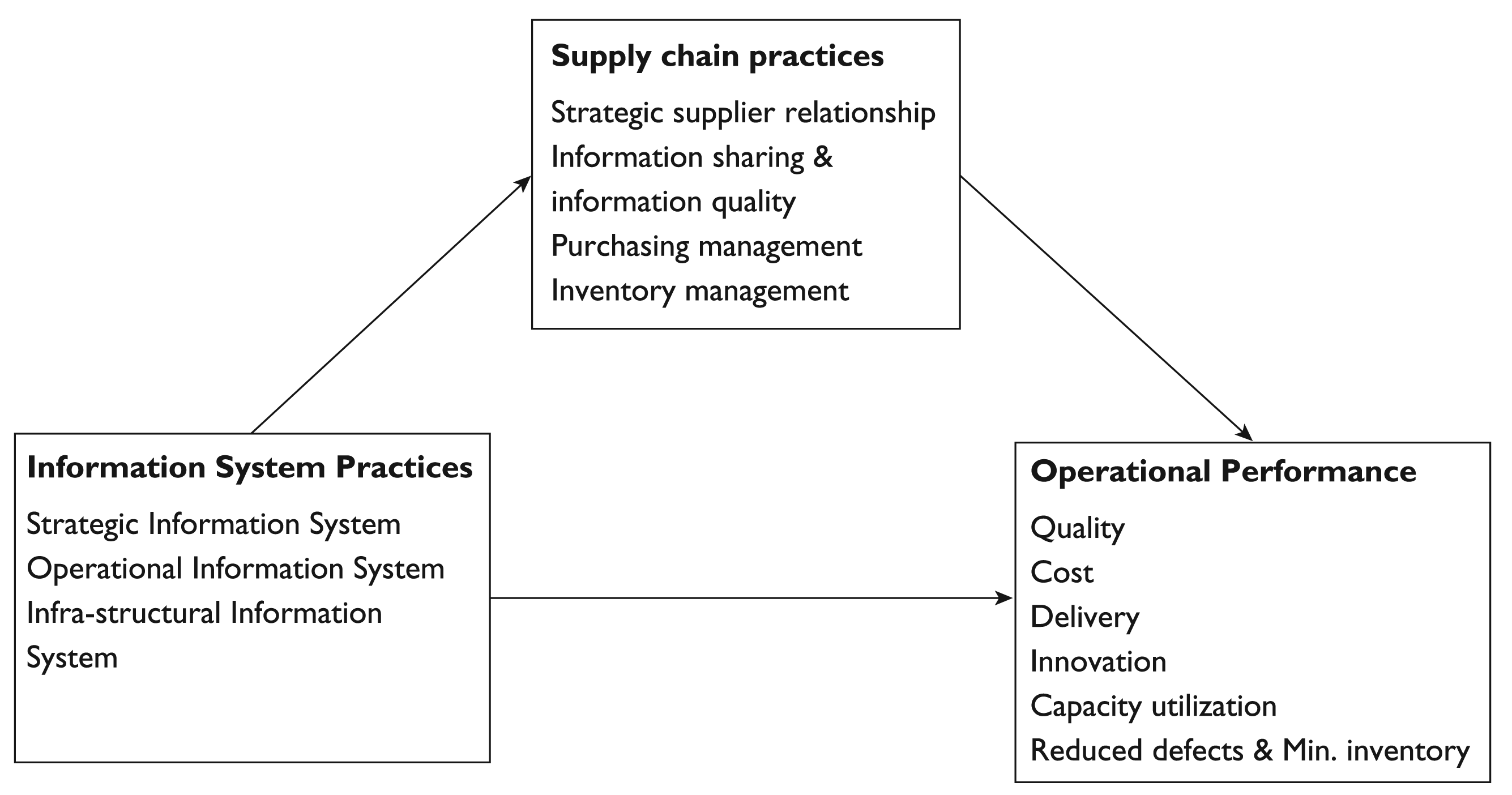
Supply chain includes its internal departments first and then external members of the chain. In this article, the authors have focused on internal supply chain, which is within the organization. Supply chain sets up alliances with its members to achieve OP. The supply chain has been evolved from process integration to the strategic view. In process integration, different departments/members join efforts to coordinate particular business activities to improve next departmental/internal customer satisfaction (Cooper, Lambert & Pagh, 1997). In strategic view, organization assigns efforts and resources to achieve exclusive strategy, which leads to OP, through lower costs and lean operations (Mentzer et al., 2001). Supply chain practices include purchasing management, inventory management and information sharing and information quality, strategic supplier relationship. Information sharing draws the knowledge exchange. Information quality provides the information without any distortion throughout the supply chain. Strategic supplier partnership helps to reduce transaction costs by development of reputation and trust (Cooper et al., 1997; Mentzer et al., 2001). Purchasing management focus on hunting for environment friendly raw material, cost reduction and close relationship with suppliers. Therefore, we propose, SCM practices positively impact the OP (H2).
The technology investments will be different in industries and countries. According to Swamidass and Newell (1987), the overall OP also depends upon the ways of ISs management. There is a strong correlation between process structure and manufacturing competencies (Safizadeh, Ritzman, Sharma & Wood, 1996). The product-based manufacturing generally uses advance manufacturing technologies to enhance the performance.
Organization size decides the indicator of purchase and use of new manufacturing technology. The larger companies are in better position to take advantage of large production to reduce the cost per unit (Buonanno et al., 2005; Salaheldin, 2007; Sohal, Schroder, Uliana & Maguire, 2001).
With advancements in technology and vital usage of ISs in organization from last decade, it has been observed as a critical link between processes management and OP. Information systems have been conceptualized at three levels: (i) operational, (ii) strategic and (iii) infrastructural. Operational ISs help the executives to take daily decisions, for example, production requirement, forecast for next day production, etc. Strategic-level ISs include investment planning, strategic locations for new plants and annual budget allocation to different departments. Infrastructural ISs include new technology installation at different locations in an organization (installation of cameras for security purpose, new machinery installation to improve productivity). These ISs help to achieve efficiency in daily operations, hence OP. Therefore, we propose, ISs positively impact OP (H3).
The ISs help the smooth flow of information in every node of operations. The day-to-day activities require accuracy and precision in reporting with speed. The on-time delivery of related information enables the process that is capable to achieve OP.
Research Methodology
Instrument Development
The instrument has been developed, after structured interviews followed by pilot study. Rigorous statistical methods were used to assess and validate the scale. Content validity, reliability (Cronbach’s alpha) and exploratory factor analysis (EFA), confirmatory factor analysis (CFA) and structure equation modelling (SEM) have been used in the analysis.
A useful instrument has to cover the content domain of each construct (Churchill, 1979; Nunnally, 1978). The items measuring a particular construct should agree among themselves (should converge) and the items of one construct should disagree with the items of other constructs. Each construct along with its items should be reliable, short and easy to use and understand by researcher and respondent. Scale development and refinement are always a two-phase process. In very first phase, the definitions of constructs as well as measurement items of that construct have been established. This phase indicates about the tentative validity and reliability of the instrument and constructs. In this phase, item generation and content face validity have been carried out.
In the second phase, more refinement of scale validation and also construct addition and deletion along with items were carried out using pilot survey based on scale developed in the first phase. A questionnaire has been developed to test the research model. The items and constructs were adopted from the existing studies. The questionnaire was pre-tested with several experts from industry as well as academics. The detailed procedure taken up is explained in Phase I and Phase II.
Phase I
To develop the scale for survey instrument, an extensive literature review was conducted to identify the scale used in most of the previous studies, with strong reliability and validity. The critical variables of IS and SCM Practices along with dependent variable OP were identified from literature. An extensive literature was studied for selection of items and constructs. These were followed by discussion with industry experts and academicians in pharmaceutical context.
Content validity represents the sufficiency of a specific domain of the content (construct) was ascertained (Ahire, 1996; Nunnally, 1978). The major respondents for face validity were mainly academicians and industry professionals (pharmaceuticals). Data from professionals were also collected and complied via email and interviews were conducted through telephonic mode.
Research design is a functional strategy of any empirical research, which requires an appropriate approach: sampling method, tools and techniques to be used for collecting and analyzing empirical data (Punch, 2000). The present study has applied descriptive cross-sectional study design. Further survey method has been followed to collect significant number of responses in short period of time. The questionnaire method offers advantages, such as it is inexpensive in nature and gives quick results. Considering the advantage of this method, both self-administered questionnaire and email have been used as an instrument for data collection. The responses have been collected according to the convenience of the respondents and anonymity was assured to the respondents.
Sample Frame
The purposive sampling technique has been adopted in present study. This method was emphasized by Talavera (2004), which helps to collect the sufficient information from respondents to make statistical inference. The target respondents were manufacturing heads, operations managers and internal (plant level) supply chain managers.
The researcher approached 365 respondents from pharmaceutical manufacturing organizations through e-mail and personal visits for data collection. These respondents were requested to complete the questionnaire designed. Out of these 365 respondents, 270 respondents agreed and responded. The response rate for this was 74 per cent out of which eight responses were incomplete. Hence, data collected from 262 pharmaceutical manufacturing organizations was used for the analysis.
Phase II
The second phase consists of using items from the first phase for the various constructs for convergence and discernment validity and reliability of the assessment scales. The adopted procedure was mainly to identify the most suitable drivers for strategic IS, operational IS, infrastructural IS, strategic supplier partnership, level of information quality and sharing, procurement/purchasing practices, inventory management practices. The instrument used in this study is a structured survey questionnaire. The questionnaire consists of eight constructs, having total 41 items. Seven-point Likert interval scale has been used to collect the responses.
Validity and reliability test has been conducted to assess final items of the independent constructs, which have been used for statistical analysis. The field study was performed in 110 pharmaceutical manufacturing plants in India. Discriminant validity has been checked before performing confirmatory factor analysis (CFA), which shows the composite reliability above 0.5 in Table 4. Average variance extracted (AVE) is greater than maximum shared variance (MSV) and MSV is greater than average shared variance (ASV) displayed in Table 4.
Results for the Measurement Model
Instrument that measures SCM practices, IS practices and OP was adopted from the authors. Supply chain includes strategic supplier partnership (Chong, Chan, Ooi & Sim, 2011; Li, Ragu- Nathan, Ragu Nathan & Rao, 2006), level of information sharing and information quality (Chong et al., 2011; Li et al., 2006; Prajogo & Hong, 2008), inventory management (Borade & Bansod, 2010; Rabinovich & Evers, 2002; Rajeev, 2008; Tan & Winser, 2003), purchasing practices (McMurray, Islam, Siwar & Fien, 2014), whereas IS includes operational IS, strategic IS and infrastructural IS (Jitpaiboon et al., 2010) and OP (Green et al., 2012; Prajogo et al., 2012; Zhu et al., 2008). The following section will discuss statistical analysis used to determine the reliability and validity of each construct.
Convergent and Discriminant Validity
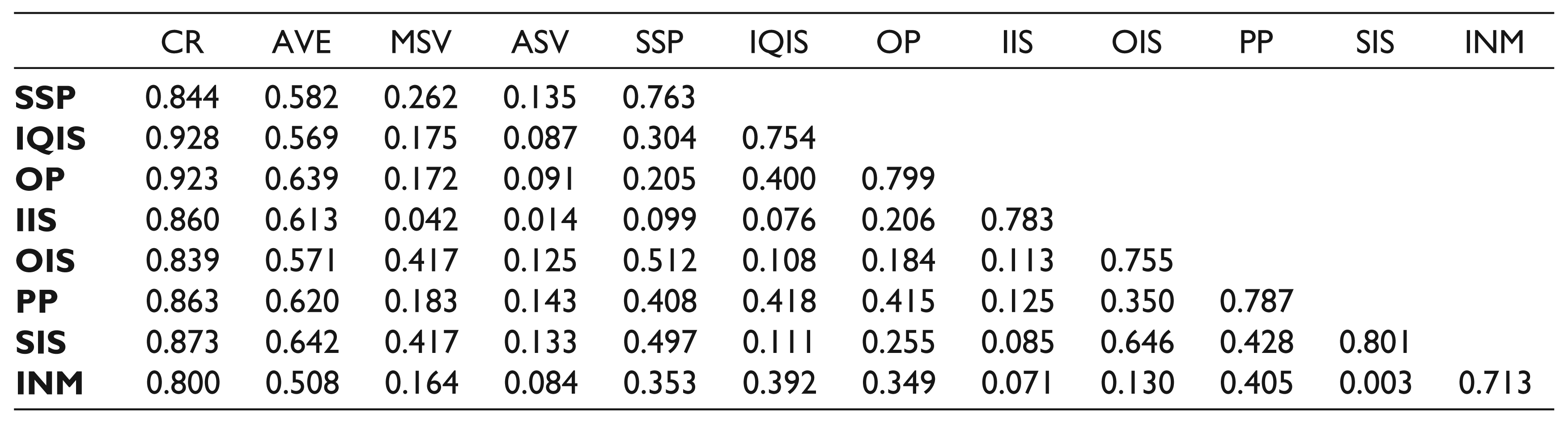
Convergent and Discriminant Validity
For supply chain practices, a factor analysis was conducted using four constructs 26 items; four items have been dropped due to cross loadings and finally, 22 supply chain items have been considered. For supply chain practices, a factor analysis was conducted and items above 0.50 have been listed in Table 5a. All items have been loaded to their respective factors and having value above 0.66. The cumulative variance explained by all four factors is 64.93 per cent.
The ISs had three factors and a total of 14 items. Two items were deleted due to cross loadings and final factor analysis was conducted on 12 items under IS construct as shown in Table 5b. All items have been loaded to respective factors and having values above 0.76. The cumulative variance explained by all three factors is 70.70 per cent.
Operational performance has seven items and single factor. The factor loadings are above 0.51. The cumulative variance explained by the factor is 68.80 per cent as shown in Table 5c.
Reliability Analysis
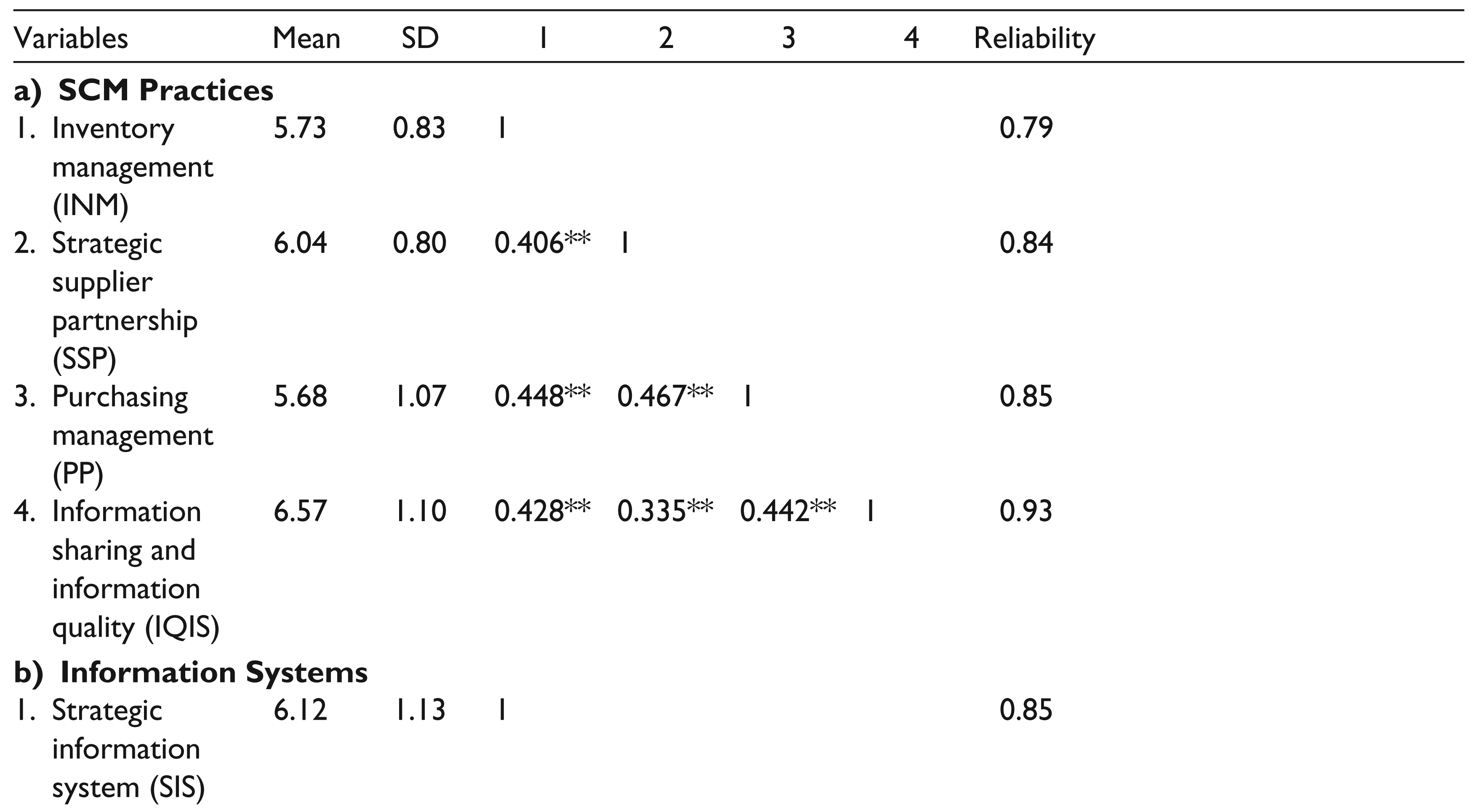
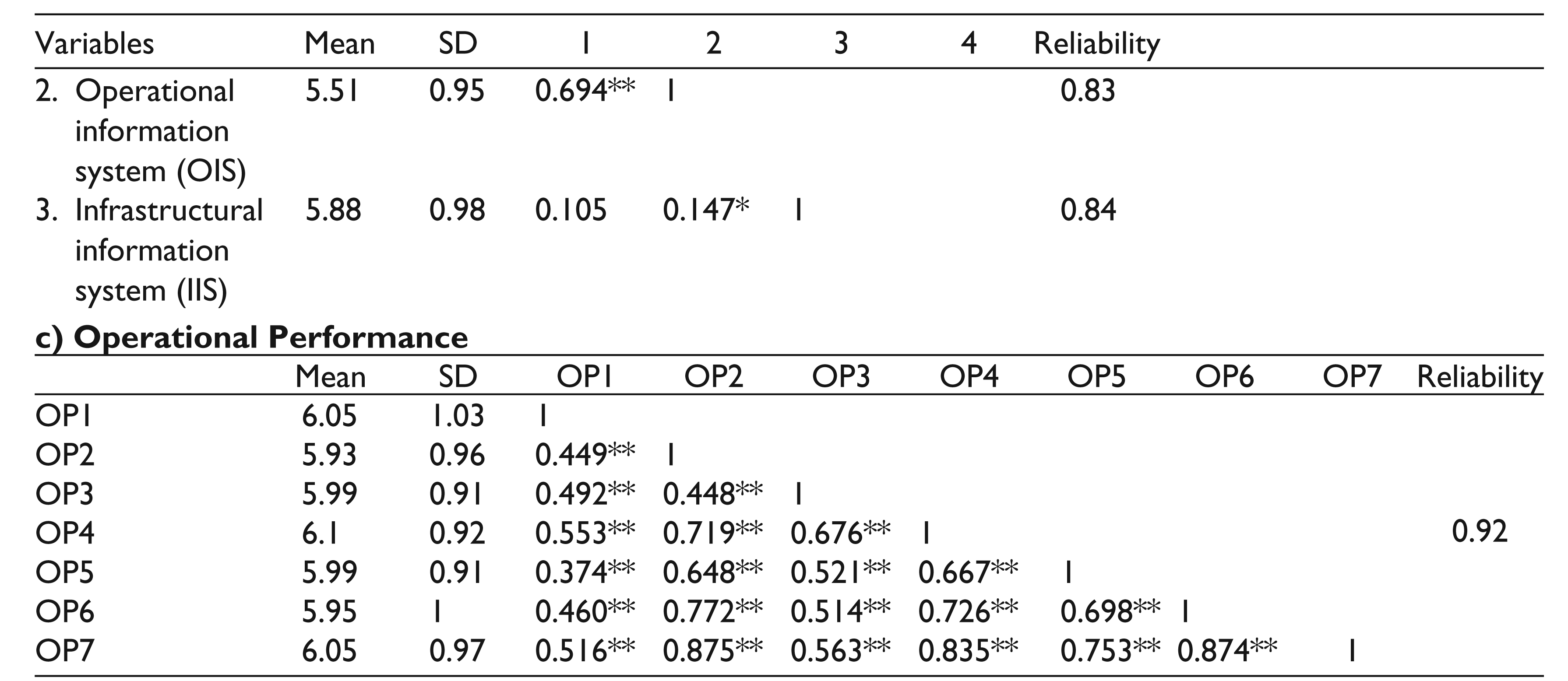
The reliability analysis of supply chain, IS and OP has been displayed in Table 6 (a to c), which include means, standard deviations, Cronbach’s alpha and correlation values for each construct. The reliability values of all the constructs are above 0.79, which are surpassing cut-off value, that is, 0.70 (Nunnally, 1978).
Factor Analysis Result for Supply Chain Practices
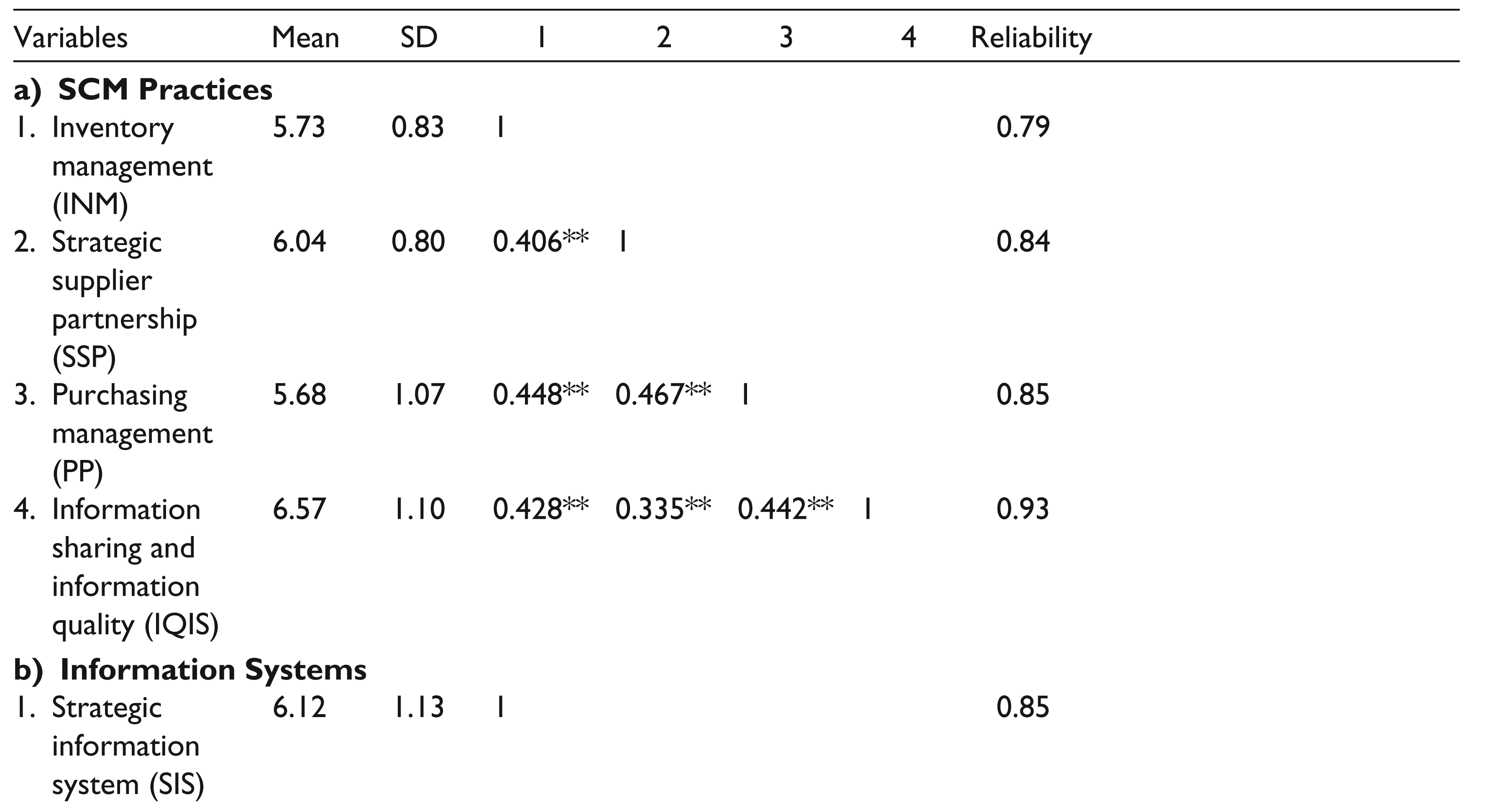
Factor Analysis Result for Information System Management
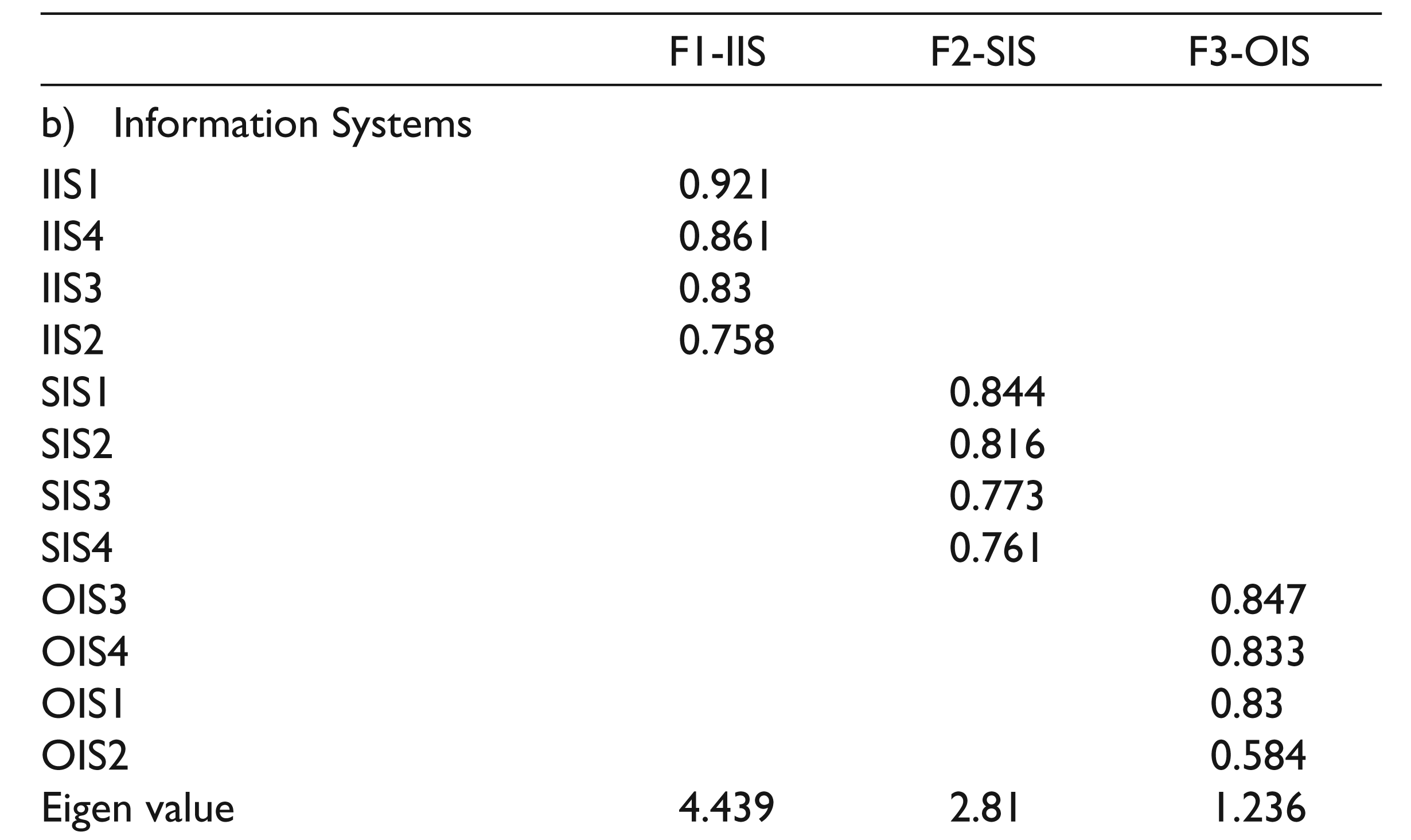

Factor Analysis Result for Operational Performance
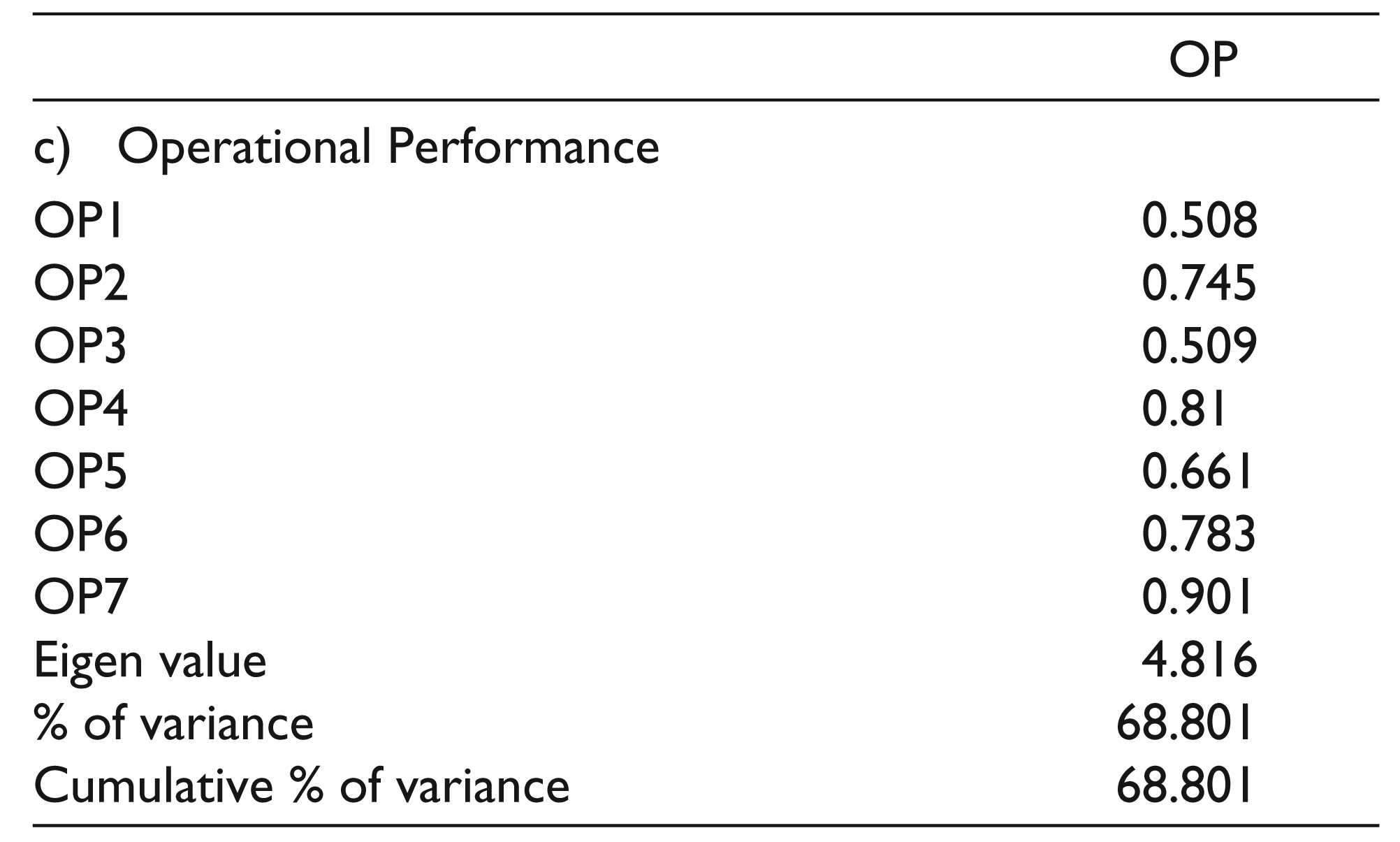
Means, Standard Deviations, Correlations and Reliability of (a) SCM Practices, (b) Information Systems and (c) Operational Performance
Validation of Second-order Constructs
Information systems were conceptualized as a three-dimensional second-order model. AMOS 20.0 was used to determine whether a high-factor model is appropriate for ISs. The fit statistics for second-order model were CFI = 0.97, RMSR = 0.047 and RMSEA = 0.056, which represent a reasonable model data fit. The λ coefficients were significant at p < 0.01. The target coefficient (chi-square value of first-order model/chi-square value of second-order model), which explains the variation in first-order factors explained by second-order model, was 0.94 (i.e., 90.32/95.49) (Table 7).
For supply chain practices, the fit indices for second-order model were CFI = 0.96, RMSR = 0.05 and RMSEA = 0.04 which indicates a moderate model fit. The λ coefficients were significant at p < 0.01. The target coefficient, which indicates the existence of higher order supply chain practices, was 0.88 (280.17/317.56) (Table 8).
Results and Discussion
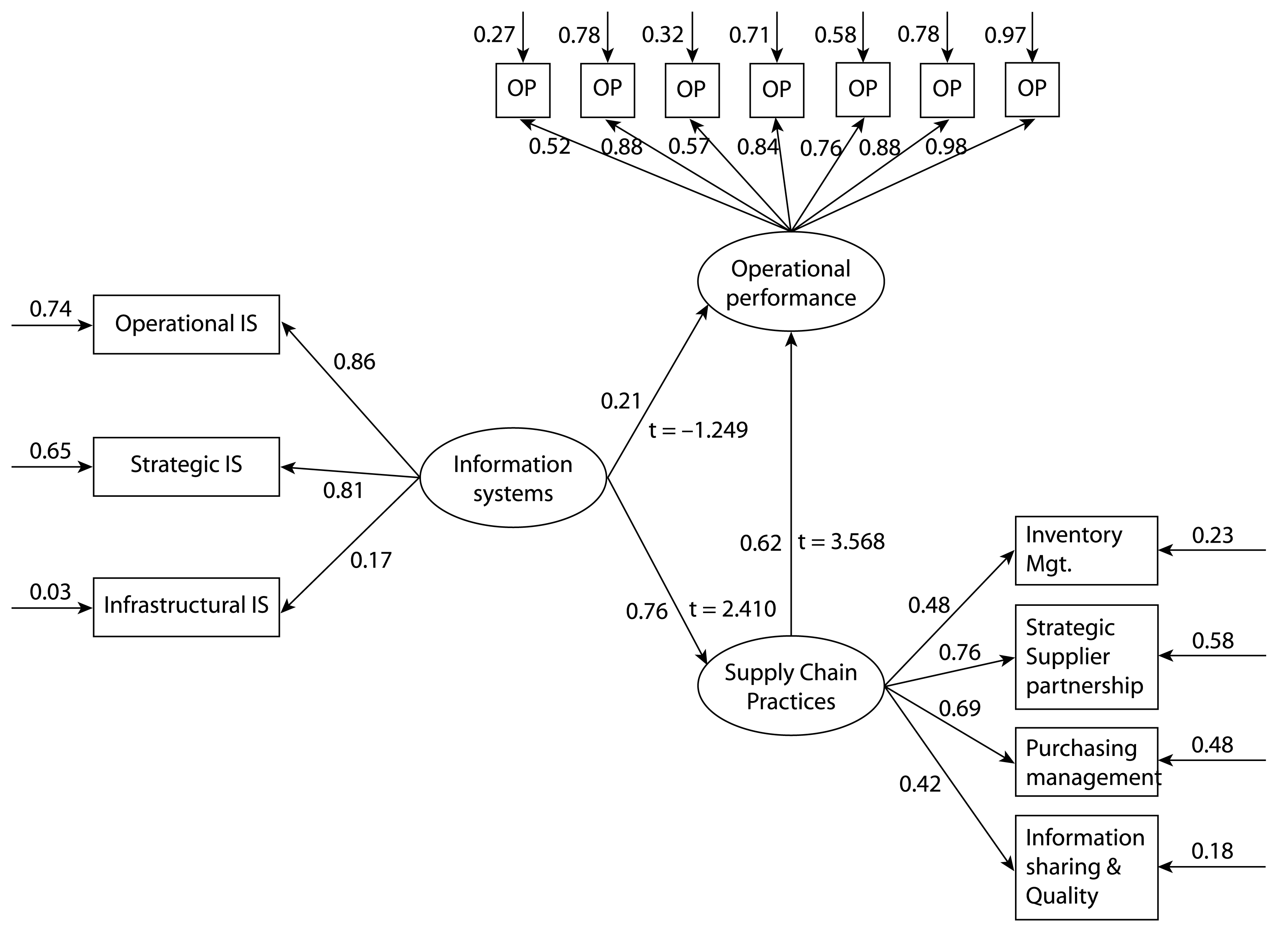
The conceptual research framework has been illustrated in Figure 1 and has three hypothesized relation-ships among ISs, supply chain practices and OP. Figure 2a shows that measurements have reasonable loadings to second-order construct. Overall, the model has just moderate fit with CFI = 0.91, SRMR = 0.098 and RMSEA = 0.10, which is just on border of cut-off value of RMSEA of moderate fit (0.10) (Hair et al., 2010). It should be observed that t-value of relationship between ISs and OP is having negative value –1.249 indicating that ISs do not have direct impact on OP. Also the ϒ value between infrastructural IS and ISs is 0.17, which indicates infrastructural IS may not be a strong indicator of ISs as compared to the other two dimensions (operational IS and strategic IS). This may be true, as it depends upon the industry and how and where industry uses the IS. The infrastructural ISs (setting up of new machinery, security cameras) are required once in a while; once they are set up, they become operational ISs.
Comparison of Alternate Models

Results for Proposed Structural Equation Model

To test whether the proposed model 2a is the best fit, alternate ways to achieve OP were evaluated by removing the link between high-order constructs (Figures 2b and 2c). In Figure 2b, the ISs and supply chain practices are treated as separate constructs, both of which impact OP. The path coefficient for supply chain practices on OP was 0.54 as compared to 0.02 for IS, which means that ISs individually cannot have a significant impact on OP of an organization. In Figure 2c, the direct link between IS and OP was dropped, which means supply chain practices are impacted by ISs and in turn supply chain practices impact OP of an organization. The model fit statistics were also good as compared to other two models, that is, 2a and 2b.
Chi-square differences tests (SCDTs) were conducted to test the model further and comparison with alternate models with degree of freedom equal to the difference in degree of freedom of two other models. From Figure 2c, it is evident that ISs have positive impact on supply chain practices, which in turn impact OP. Table 6 indicates that the alternate model Figure 2c is accepted as compared to the proposed model at significance of 0.05.
The results from structural equation modelling of alternate model are presented, which support first two hypotheses and reject the third one. For the first hypothesis, which states that ISs have positive impact on supply chain practices, the standard coefficient is 0.76, which is significant at p < 0.05 (t = 2.24). Hypothesis one confirms that ISs have positive impact on supply chain practices, whether it is purchasing management, inventory management or strategic supplier partnership.
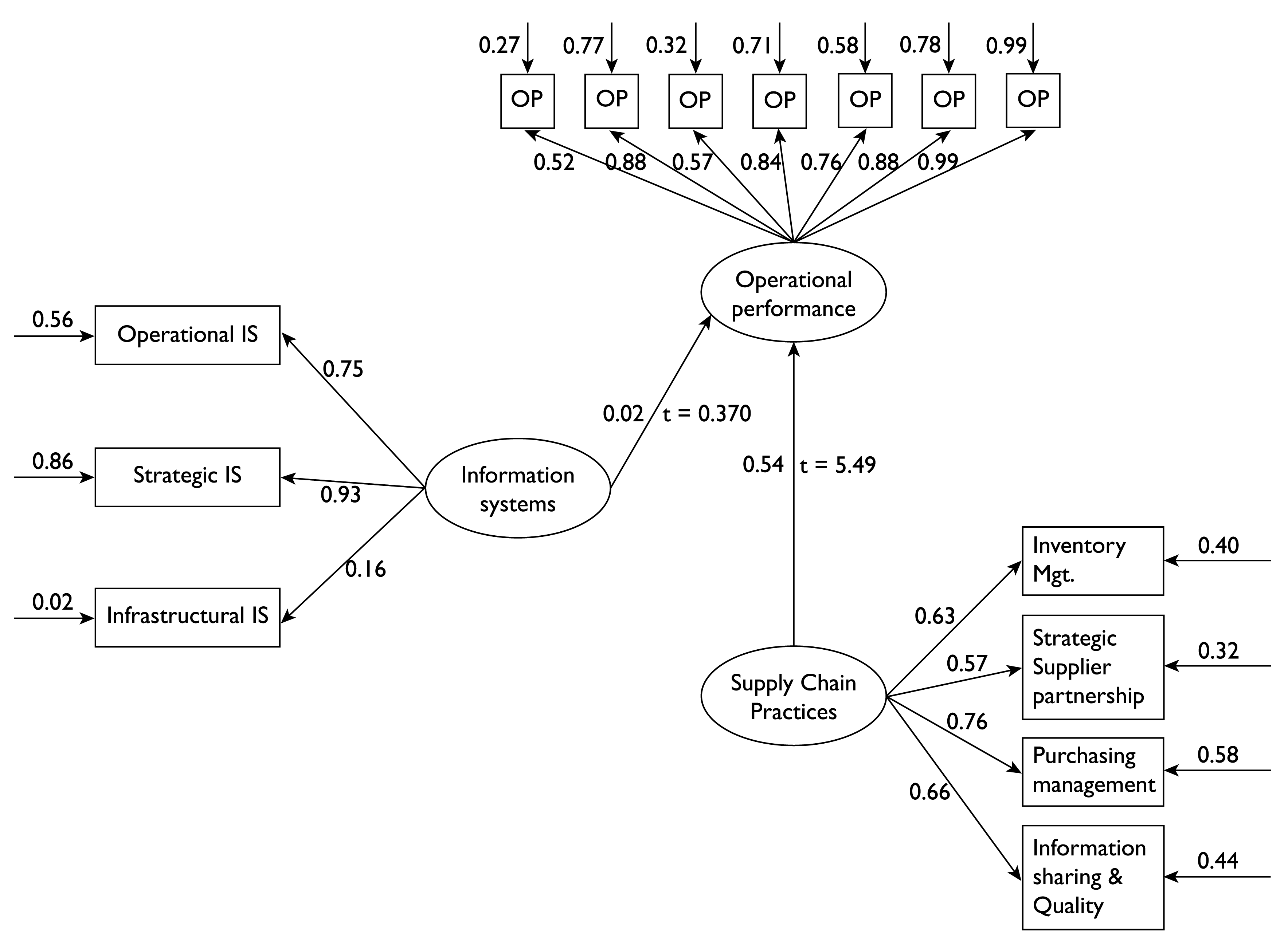
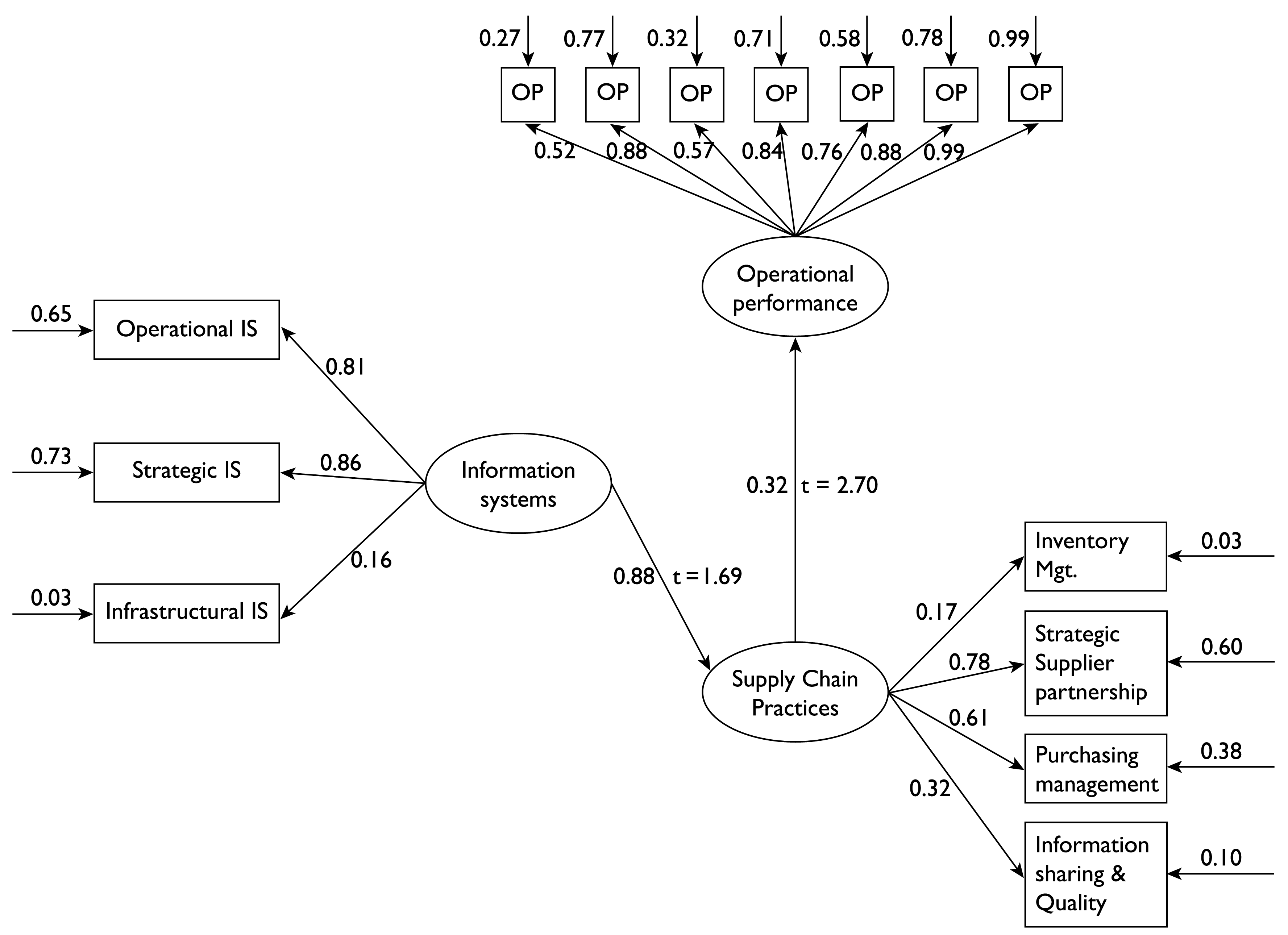
Hypothesis two confirms that supply chain practices have direct impact on OP, with coefficient 0.48 which is statistically significant at p < 0.05 (t = 3.56). The supply chain practices, namely, information sharing and information quality, purchasing, inventory and supplier partnership, have bottom line impact on OP, whereas hypothesis three states that ISs have positive impact on OP which has been rejected. This requires the ISs to be speedy enough to deliver. Information system also will be helpful to have faster purchasing system right from generation of the order from marketing department to handover the material to production department for production. Information systems can be very useful to have strong strategic supplier relationship by providing the real-time information of requirements and involvement of suppliers in the organizational operations to achieve OP.
Managerial Implications
The present study correlates the tri-dimensional linkage between ISs, supply chain practices and OP in Indian pharmaceutical industry.
In pharmaceutical industry, it is quite possible that ISs can impact positively OP through supply chain practices. In pharmaceutical industry, the batch production system is prevalent. The information regarding the whole batch whether it is in progress of manufacturing or finished product or in market can be tracked through an efficient IS. In pharmaceutical industry, the role of ISs has been dramatically enhanced since automation and replacement of human beings is in process. The raw materials are crucial in pharmaceutical industry and so their flow through the entire supply chain. The ISs play an important role in controlling the inventory management right from raw material to semi-finished and semi-finished to final product. The smooth flow of raw material in the entire manufacturing ensures the capability of ISs. In pharmaceutical industry, the product requirement in the market is faster than the other industries, as it is directly related to the life.
Since 1990s, quality management systems (QMS) have been started, after International Organization for Standardization (ISO) came into force. Quality is one of the critical aspects that pharmaceutical industry cannot skip at any cost. For attaining the quality in products, it is important to have organized, robust and structured processes in place. Once internal processes and systems are established, the next sector is supply chain. The role of supply chain is very crucial to interact and integrate with each node, which will influence the ultimate supply chain. As information technology advanced in other sectors, it has made its space in pharmaceutical industry also, which made supply chain efficient and responsive. The starting point of any supply chain is a small plant, rather from one department to other department movement, either in the form of physical raw material/semi-finished product/finished products or information in the form of verbal or non-verbal. This flow of raw materials, semi-finished products and finished products is possible with the help of an active IS. Further ISs can be divided into three categories: (i) operational ISs, (ii) strategic ISs and (iii) infrastructural ISs. In an organization, all these three kinds of ISs are required to run smooth operations.
Conclusion
As today the competition is not between organizations, but in their supply chains, so the essence here is how one can offer efficient supply chain with strong back up, accuracy, speed and responsiveness. No one can afford costs more than revenues, which is possible with the help of information from time to time at various nodes of supply chain and transmission of information to next level with accuracy and speed. ISs help in achieving operational benefits from entire supply chain. To start with purchasing, the cost savings resulting from less paper-based transactions, to reduce the order cycle time and to achieve just in time inventory to reduce the total carrying cost of inventory and to monitor the inventories at raw material, work in progress (WIP) and finished good level. Information systems help organization to develop strategic partnership with suppliers through web-based network of communications.
Once the pharmaceutical supply chain is backed by ISs, the organization can reap the operational benefits in terms of improved quality of products, faster delivery at right place and time with right quantity, reduced cost through improved cycle time, improvement in revenues through innovative products, production with minimum number of defects and reduction in inventory levels by achieving just in time.
Limitations and Future Scope
Limited number of observations (262) has been gathered in this study from pharmaceutical industry. Revalidation of measurement scale has not been performed in this study, which creates the scope for the future. The concept of ISs and supply chain may not be sufficient to check the impact on OP; the concepts such as total quality management can be considered in this respect to expand the study and to consider more constructs which may affect the overall OP. Additionally, in this study, the plant-level supply chain has been considered; however, the supply chain consists of its members from supplier’s supplier to customer’s customer. The future research can include the dimensions such as logistics, inter-departmental coordination and supply chain network. The future research can also include the other aspects of ISs at various levels in upstream and downstream supply chain. The inter-dependencies of ISs construct and supply chain constructs have not been checked, which leaves a gap for future research. The future research should include more number of respondents from an organization, which will help to enrich the research findings. Future studies may consider the analysis of supply chains across organizations, which may give a holistic view. The strategic supplier partnership has been considered with first tier suppliers only in this research, which leaves a space to consider next tier suppliers. Also the contextual factors, size, culture, organization position in supply chain, supply chain structure and hierarchy have not been the part of the study, which may be considered in future. In the present study, the OP consists of only one construct, which may further be divided into quality performance and business performance, which may include market share and growth of the company and financial perspective.
Footnotes
Acknowledgements
The authors are grateful to the anonymous referees of the journal for their extremely useful suggestions to improve the quality of the article. Usual disclaimers apply.