







Abstract
The rationale behind this study is to test the apathy of the rural youth to engage in agriculture as their profession. This research was conducted across five universities in eastern India on a sample of 345 postgraduate students to analyse their agri-entrepreneurship intent and the determinants of agri-entrepreneurship. The findings of the study show a significant positive correlation among the variables of agri-entrepreneurship intent and career planning and agri-entrepreneurship intent and entrepreneurial capabilities. Regression analysis reveals that career planning, entrepreneurship capabilities and family background (FB) in agriculture have a significant contribution as predictors of agri-entrepreneurship intent. Categorizing the respondents based on their career planning and entrepreneurship capability tendencies, the findings indicate that career planning and FB explain the growth of agri-entrepreneurship intent. This article will be of great value to educationists to carry out the pedagogical transformations and include career planning programmes and capacity-enhancing training in their curriculum for students. It will also be relevant to agri-business entities who explore growth opportunities in agri-allied sectors.
Keywords
Introduction
In recent times, entrepreneurship research has contextualized and is foraying into auxiliary areas of entrepreneurship. Studies on building entrepreneurship theory are emphasizing the context in which entrepreneurship has taken place (Stam, 2016). Till date, researchers have seldom studied a sector, or an industry, as a central contextual feature in entrepreneurship research (Shane, 2007). This is a noteworthy gap as even though individuals and firms in a sector interact with their stakeholders (customers, regulatory bodies, competitors) to achieve profitability and other goals, the fundamental mechanisms through which the entrepreneurship initiative is influenced by the specific sector context has remained mostly undertheorized (De Massis et al., 2016). This study addresses this gap and is based on the Indian agricultural sector to provide the contextual understanding of entrepreneurship.
Agriculture in India
Agriculture contributes to 16 per cent of India’s GDP and 55 per cent of the population is engaged in agricultural production (Gulati et al., 2020). The farmlands are divided among family members and such fragmented farms currently comprise nearly 85 per cent of agricultural land holdings. During 2005–2007, the Fruits & Vegetables segment comprised only 13.6 per cent of total production but accounted for 30 per cent of harvest and post-harvest losses. In addition, poor cropping practices, soil nutrient deficiencies and fertilizer misuse have caused 60 per cent of the agricultural land to be at risk. As a result, the farmers’ income has remained comparatively lower than income of those working in the non farm sectors. Low farm income, coupled with losses and shocks from farming, has also led to farmers’ suicides, accounting for 7.7 per cent of all suicides in India in 2018 (NCRB Report, 2020). Hence, farming is not a preferred occupation for the youth, and it results in intergenerational mobility in hope of availability of better opportunities. One way of encouraging the farming community to gain economic advantages and social acceptance is by encouraging the youth to start innovative agri-businesses.
Agricultural Entrepreneurship
A review paper on agricultural entrepreneurship has identified that conventional entrepreneurship research has mostly overlooked the agricultural sector (Fitz-Koch et al., 2018). While there is no proper conceptualization of the term ‘agricultural entrepreneurship’ in India, the Department of Agriculture, Government of India has mentioned that transformation of agriculture to agribusiness helps enterprising farmers practice profitable agriculture. The start-ups can provide missing links in the agri-value chain and deliver efficient products, technologies and services to the farmers as well as to the consumers. The National Bank for Agriculture and Rural Development (NABARD) has proposed maintaining and custom-hiring of farm gear, sale of inputs and services in agriculture and allied areas, post-harvest management and market linkages for development and sustenance of agri-entrepreneurship.
In effect, entrepreneurship and the agricultural sector have remained separate research domains with largely isolated theoretical origins and empirical approaches, which has restricted the scope of any interdisciplinary collaboration. In recent years, scholars from the areas of both mainstream entrepreneurship and agricultural economics have undertaken research in entrepreneurship (Dias et al., 2019). A strategic diversification is being observed in agricultural entrepreneurship, from core activities in agriculture to agri-businesses, for achieving growth (McElwee & Robson, 2005). Studies mention that monitoring the agricultural sector in developing countries assists in providing a better understanding of institutional perspectives on entrepreneurship (Zahra & Wright, 2011). Agricultural entrepreneurial activities create a positive impact, particularly on rural economies and communities (Barbieri, 2013).
However, no major study has been conducted on the Indian youth’s orientation towards agri-entrepreneurship. In addition, not much work on the role of universities/higher education institutions (HEIs) in developing entrepreneurship intent among the postgraduate students is available in the Indian context till date. This article identifies this gap and studies the intentions of postgraduate students in eastern India towards taking up agricultural entrepreneurship as a career.
The article proceeds as follows: in the subsequent section, the existing literature has been reviewed. The third section outlines the objectives of the study. The fourth section presents the theoretical framework. The fifth section describes the sources of data, characteristics of the respondents and the empirical model. The sixth section provides the analysis and discussion on the results. The seventh section concludes, and the eighth section provides the managerial implications of the study.
Review of Literature
The word ‘entrepreneurship’ is derived from the French word entreprendre, which means to embark on an initiative (Varadjanin et al., 2014). Most agricultural entrepreneurship takes place in rural areas, owing to which agricultural entrepreneurs face specific challenges such as relatively small markets, poor communications and less availability of human and financial capital (Korsgaard et al., 2015). Similar major impediments perceived by youth for undertaking agricultural entrepreneurial initiatives have been identified as lack of skillsets, support systems, market opportunities and risks (Pande, 2015). The high risks of investments and returns that are associated with the agricultural sector dissuade many young agricultural graduates and propel them to do business in other sectors (Parcel, 2003). A recent study conducted in Ghana has shown that a lack of institutional support in the form of training in the appropriate management of a new technology has adversely affected the farmer-entrepreneurs and their businesses (Adobor, 2020). A firm intention to start any venture needs to be expressed in an ultimate attempt irrespective of the situation (such as marriage, attractive job offer, pregnancy and earthquake), which may delay the process (Murugesan & Jayavelu, 2015). It has also been observed that post-motherhood some women take up entrepreneurship initiatives as the available opportunities, family support, social help and their personal values, enable their self-employment (Rebecca and Aegean, 2020).
The term ‘creative destruction’ had been coined to describe entrepreneurial occurrences (Schumpeter, 1942). Creativity corresponds to innovation and together they form the basis of enterprise development (Yar Hamidi et al., 2008). Though it remains contentious till date that whether entrepreneurs are born or made (Haase & Lautenschläger, 2011), it is a gradually accepted notion that certain knowledge, skillsets and attitudes for entrepreneurial capabilities (ECs) can be instilled (Rae & Harris, 2013). HEIs play the role of knowledge creators, educators and change agents in a society (Etzkowitz et al., 2000). With changes in the socio-economic conditions, increasing unemployment and evolving employer needs, the focus of entrepreneurship education has shifted from preparing a limited number of students for self-employment (Greene & Saridakis, 2008) into providing entrepreneurial skills to all (Miclea, 2004). Authors have reiterated that entrepreneurship education should surpass focusing exclusively on business students and include non-business students as well in its purview (Plumly et al., 2008). Studies have acknowledged the constructive role of universities and HEIs (Ertuna & Gurel, 2011) and entrepreneurship education (Müller, 2011) in the development of students’ entrepreneurial intentions. In contrast, other studies have indicated insignificant impact of entrepreneurship education on entrepreneurial intentions (Olomi & Sinyamule, 2009) and negative impact too (Graevenitz et al., 2010). A study conducted in the Indian state of Uttarakhand has observed that HEIs have not been effective in building entrepreneurial awareness and students’ knowledge base (Sharma, 2015).
A review of existing literature indicates that a number of previous studies by social psychologists on entrepreneurial intent have been based on the theory of planned behaviour (Ajzen, 1991). Three attitudinal antecedents of the entrepreneurs’ intention—attitudes towards behaviour, subjective norms and perceived behaviour control of the entrepreneurs—have been used extensively in these studies. Yet, no major study has been conducted in the Indian context on analysing the role of HEIs through its facilitation in career planning (CP), in harnessing ECs and in building entrepreneurial intent of its students. This study has considered the actual interventions that the students have undergone from HEIs, by way of institutional courses, training and workshops, in analysing their entrepreneurial intent.
Objectives of the Study
Based on the research gap and the theoretical framework, this research attempts to explore the constructs of entrepreneurship intention (EI), CP, ECs and family background (FB) in agriculture, among postgraduate students in the Indian context. It aims to assess the relationships between the constructs of EI and CP and EI and ECs. The study also proposes to examine the predictive ability of CP and ECs in explaining EI and determine the unique contribution of each construct as a predictor of EI. It also identifies the role of FB in developing EI among the student community.
Theoretical Framework
Entrepreneurship Intention
Entrepreneurship intention explains entrepreneurial behaviour and indicates the effort that the entrepreneur will take for demonstrating the behaviour (Linan et al., 2011). Between the individual entrepreneur and the context where the enterprise is formed, entrepreneurial intentions assist by forming a link (Bird & Jelinek, 1988). Critical factors for developing entrepreneurship are innovation, product quality, apt human resources, access to funds and agility (Ahmed & Julian, 2012). The motivations that prompt individuals to undertake entrepreneurial initiatives can be caused by both positive and negative stimuli (Shapero & Sokol, 1982). Positive stimuli (‘pull’ motivations) are a desire for independence, need for achievement, opportunities for social development, etc. Negative stimuli (‘push’ motivations) include unemployment, pressure from family, a general dissatisfaction with current circumstances, etc. Similar ‘push’ factors have been observed in several instances in India’s agricultural sector (Sandhu et al., 2012). Potential competition has been observed as creating greater mental pressure on entrepreneurs than actual competition (Devi & Thangamuthu, 2006). With the passage of time, students’ entrepreneurial intentions had declined (Varamäki et al., 2015), while in other circumstances, the students’ entrepreneurial intentions had increased (Sánchez, 2013). In some instances, pursuing entrepreneurial education had resulted in insignificant development of entrepreneurial skills that turned into negative outcomes in due course (Oosterbeek et al., 2010), and such contradictory results may be explained as outcomes of diverse methodologies or statistical tools used for the studies (Martin et al., 2013).
Career Planning
When in university, students undertake CP activities and ascertain whether they have an affinity towards pursuing entrepreneurship as a career option (Saks & Ashforth, 2002). Entrepreneurial education carries a more extensive impact on individual growth and career choice compared to the basic intention to start a business (Rae & Harris, 2013). Some studies suggest that the guidance of the faculty member of entrepreneurship studies influences the students to choose their career with relevant information (Matlay, 2008), while other researchers have contradictory findings indicating that teachers and career guidance counselling have an insignificant impact on career choice among post-graduate students (Henderson & Robertson, 2000). Rather, the dominant factors that influence their CP include their own experience and the family context.
Entrepreneurial Capabilities
Capability reflects the competence that an individual has and can be used to promote valued working (Alkire, 2002). Entrepreneurial intention can be highly influenced by the individual capabilities and skills (Angelica, 2014). Students’ capabilities relating to initiative-taking, such as risk-taking and self-confidence, affected their entrepreneurial initiatives in Spain (Marzo-Navarro et al., 2009), as those who had greater confidence in their own competence were willing to undertake the challenges of entrepreneurship. Many youth undertaking entrepreneurship as a necessity ‘push’ instead of an opportunity ‘pull’ utilize their talent and hard work capabilities to diminish their educational gap (Slack, 2005). The skills, attributes and capabilities required for starting a business enterprise can be further developed by well-designed pedagogies (Gibb & Hannon, 2006). Higher education institutes that develop ECs of students and provide them with the necessary expertise, skills and networks can lessen their fear of failure and instil in them confidence to start their own enterprises (Ho et al., 2014).
Family Background
The parents who are engaged in entrepreneurship significantly stimulate the career choice and intention for entrepreneurship in the individuals (Crant, 1996) as the children look at their parents, learn from them and acquire credence in entrepreneurship. Besides parents, even relatives and other family members also have strong impact on the individual, which can result in both positive and negative consequences (Matlay, 2008). Even students having entrepreneurial parents are found to be more interested in entrepreneurship than the students whose parents are not engaged in entrepreneurial activities (Philipp et al., 2016). Various studies have asserted that difference in culture also has an impact on the entrepreneurship intent and it varies among individuals (Lee et al., 2005). Individual’s age (Levesque & Minniti, 2006) and gender (Minniti & Nardone, 2007) also influence the entrepreneurship inclination.
Methodology
The item generation for the four constructs has been based upon theoretical and prevalent concepts. Adaptation has been done from earlier studies in which these constructs have been used (Block & Wagner, 2010; Bommes & Kolb, 2004; Farashah, 2013; Fossen & Büttner, 2013; Jančíková 2004; Olowa & Olowa 2015; Reynolds et al., 2005; Shapero & Sokol, 1982). The questionnaire includes EI comprising 5 items, CP including 7 items, ECs consisting of 11 items, and Socio-demographic profile and contextual factors like FB, etc. A 5-point Likert scale format was used for the items with responses ranging from strongly disagree (1) to strongly agree (5).
The sample was selected from the total 27 state universities in West Bengal, 13 of which have postgraduate courses in agriculture. One university has its courses delivered by private colleges Maulana Abul Kalam Azad University of Technology (MAKAUT) and another university is an open university Netaji Subhas Open University (NSOU), which were left outside the ambit of the study. The other 11 universities were approached for permission to conduct the survey on students, following a workshop on ‘Agri-entrepreneurship as an Alternate Career Mode’ in their campus premises. However, only five universities responded positively, such as University of North Bengal, West Bengal University of Animal & Fishery Sciences, Aliah University, Bidhan Chandra Krishi Viswavidyalaya and University of Kalyani. The researchers tried to communicate with the other six universities but incidentally did not get any response during the study period. Faculty members had coordinated the workshops in their respective universities to arrange for their students to participate in them. The research team administered the survey questionnaire following the workshops where 495 postgraduate students participated. A total of 421 responses were received, of which 76 incomplete responses were not considered. The balance of 345 usable responses were then coded and analysed for the study.
Analysis of the EI–CP and EI–EC relationship has been achieved by the determination of bivariate correlations. The predictive ability of CP and EC in explaining EI and determining their unique contribution as a predictor of EI has been attained by the multivariate analysis technique of linear regression. The linear regression model that has been considered is
Analysis and Discussion
Descriptive Analyses
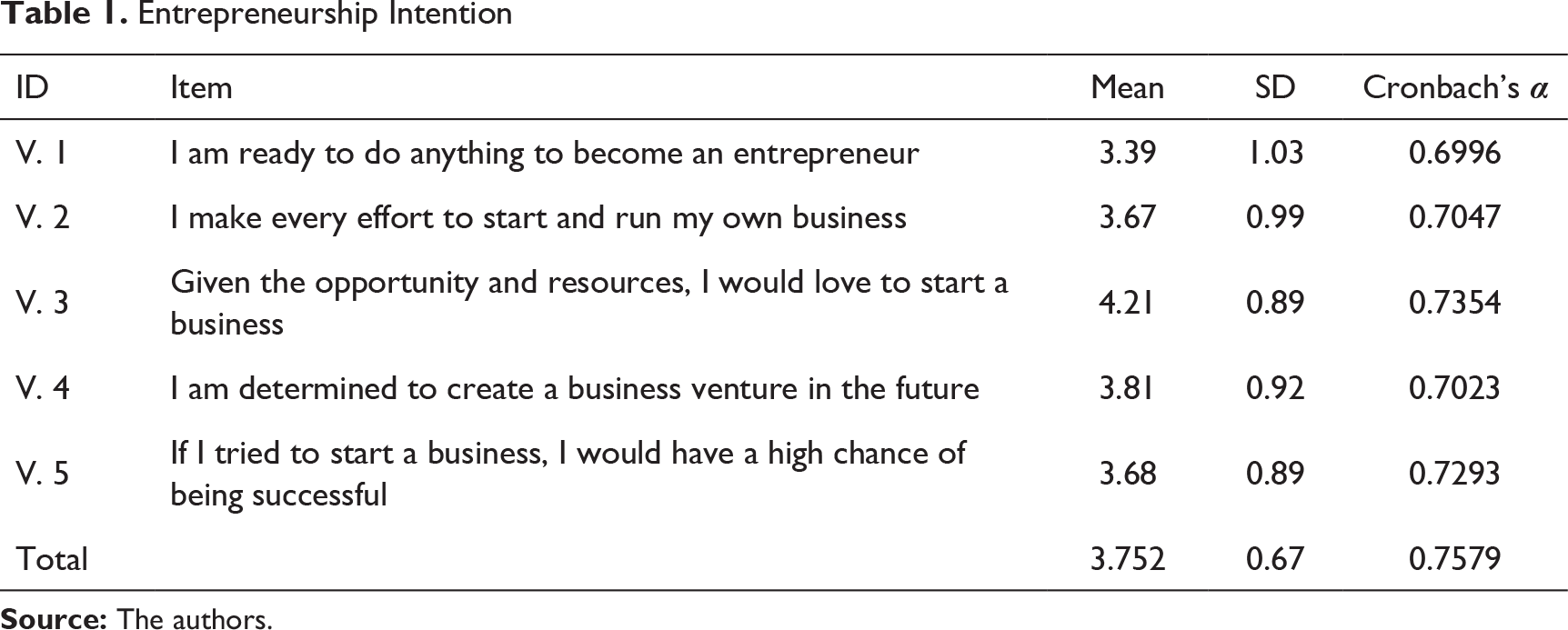
The descriptive statistics for the study constructs are summarized in Tables 1–3. As is evident from the data in Table 1, the average mean of the five EI dimensions is high at 3.75. It is apparent that should availability of resources and access to opportunities not be a problem, the university students are favourably disposed towards being an entrepreneur (4.21). The item with a lower mean reflects that when the students consider holistically the efforts that will be required of them for undertaking entrepreneurship, they have certain doubts about their readiness (3.39).
Entrepreneurship Intention
Career Planning
Entrepreneurial Capability
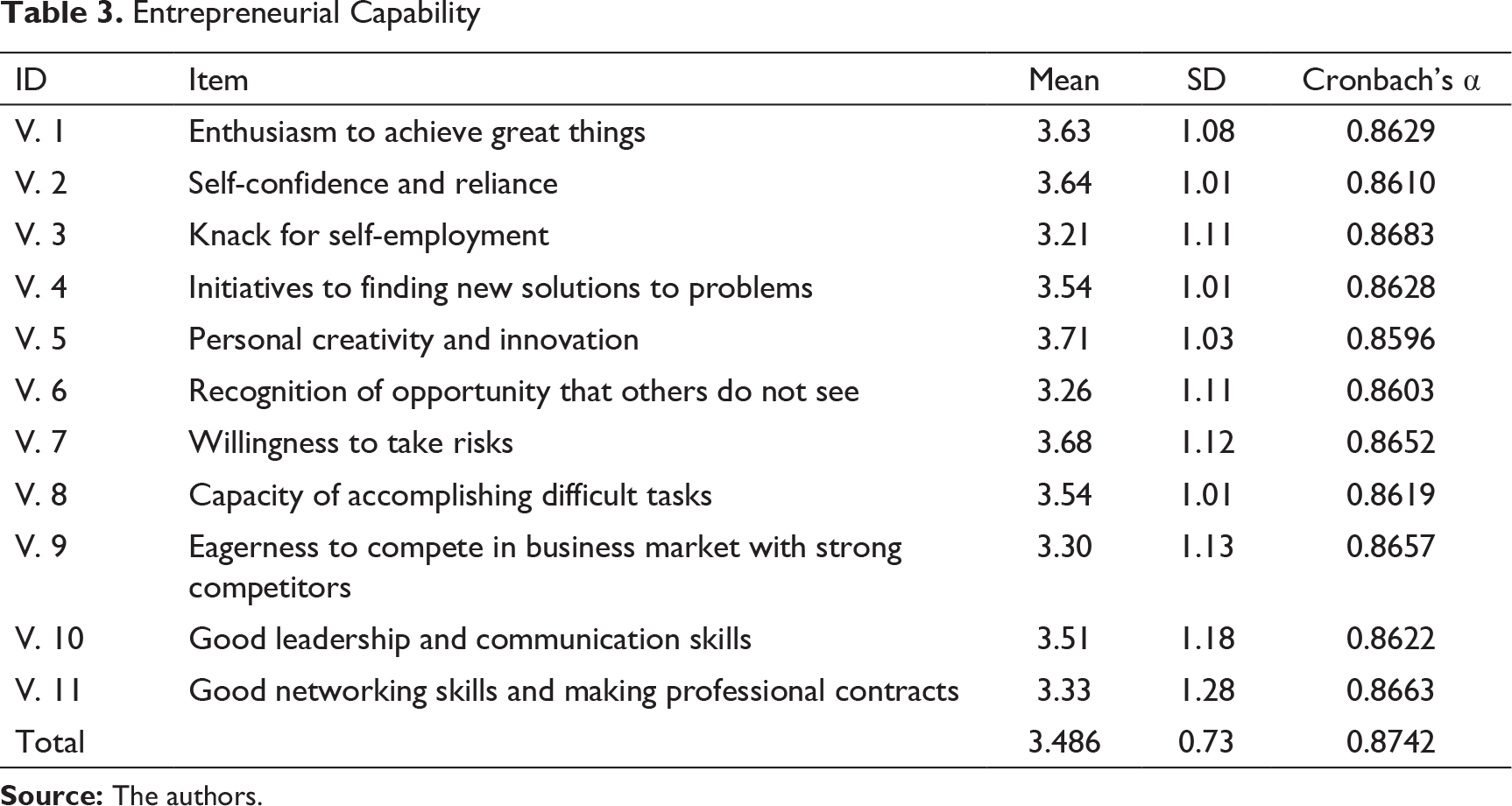
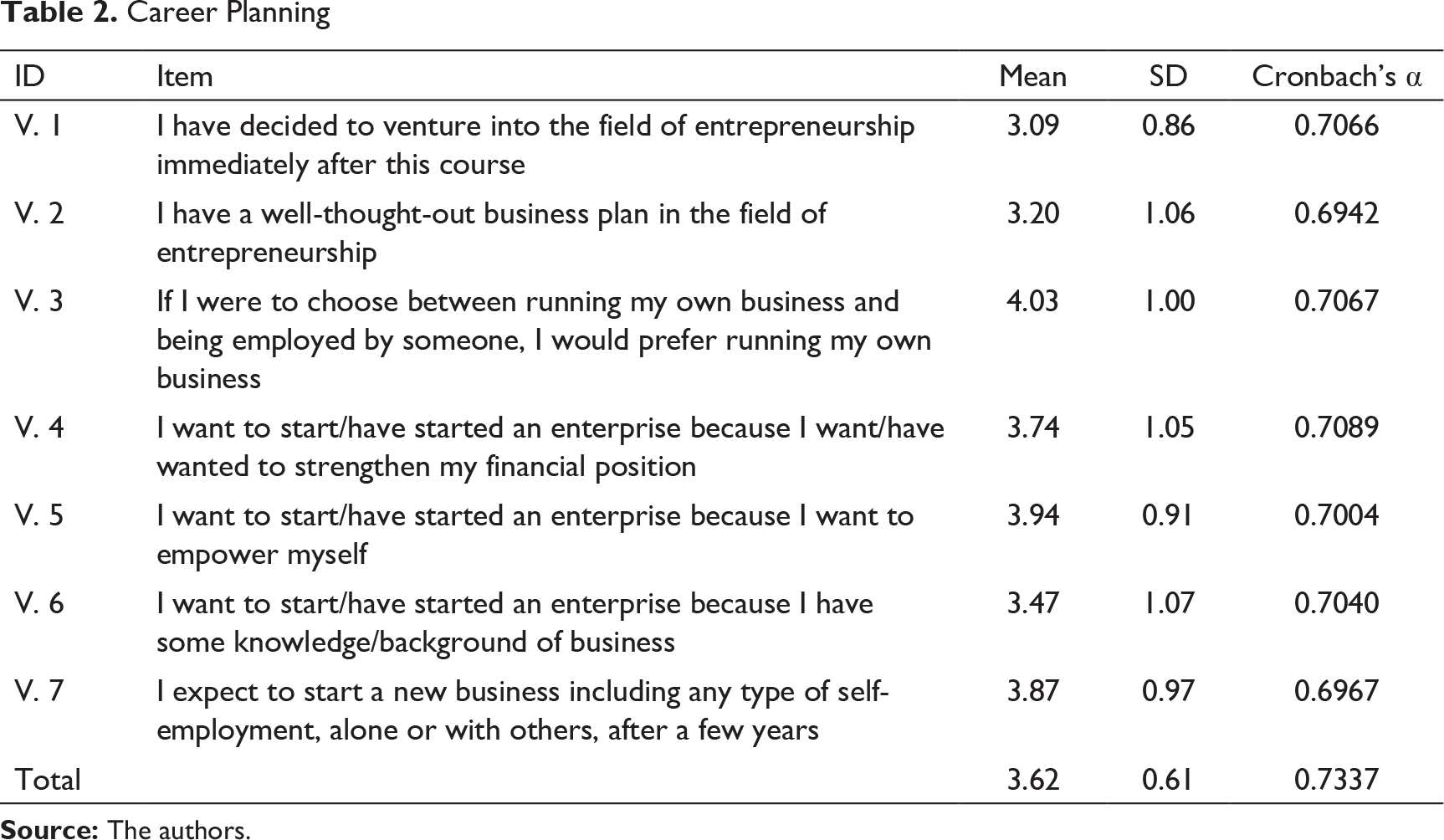
Table 2 dimensions depict the CP initiatives the students have taken towards pursuing entrepreneurship and the average mean of the seven items is relatively high (3.62). Most of the students prefer running their own business to seeking employment (4.03). To them, entrepreneurship is a form of empowerment (3.94). However, there is some concern about undertaking an entrepreneurship initiative immediately after their course completion (3.09) and the state of readiness of their business plans (3.20).
Dimensions in ECs indicate the traits that the students have identified in themselves for undertaking entrepreneurial initiatives. In Table 3, the average mean of the EC dimensions is moderately high at 3.49. The students perceive themselves to be creative and innovative (3.71) and are willing to take risks (3.68). However, they perceive that they lack the networking skillsets and a generic disposition towards self-employment (3.21).
Cronbach’s coefficient alpha was calculated to test the reliability of the entire scales for EI, EC and CP and separately for their dimensions. If the a-value is greater than 0.5 and towards 1.0, the measuring instrument has high reliability (Bagozzi & Yi, 1988). The construct reliability is confirmed with Cronbach’s alpha value of 0.758 for the 5 dimensions measuring EI, 0.874 for the 11 dimensions measuring EC and 0.734 for the 7 dimensions measuring CP. All dimensions too have acceptable reliability properties. Principal component analysis was conducted to verify the number of factors and to check their independence. Five factors with eigenvalues greater than 1 emerged for EI, 11 factors for EC and 7 factors for CP, which validated the scales.
Statistical Analysis: Bivariate Correlation
Bivariate correlation analysis was used to study the relations between the factors of entrepreneurship intent and CP and entrepreneurship intent and ECs.
Entrepreneurship Intent Factors and Career Planning Factors
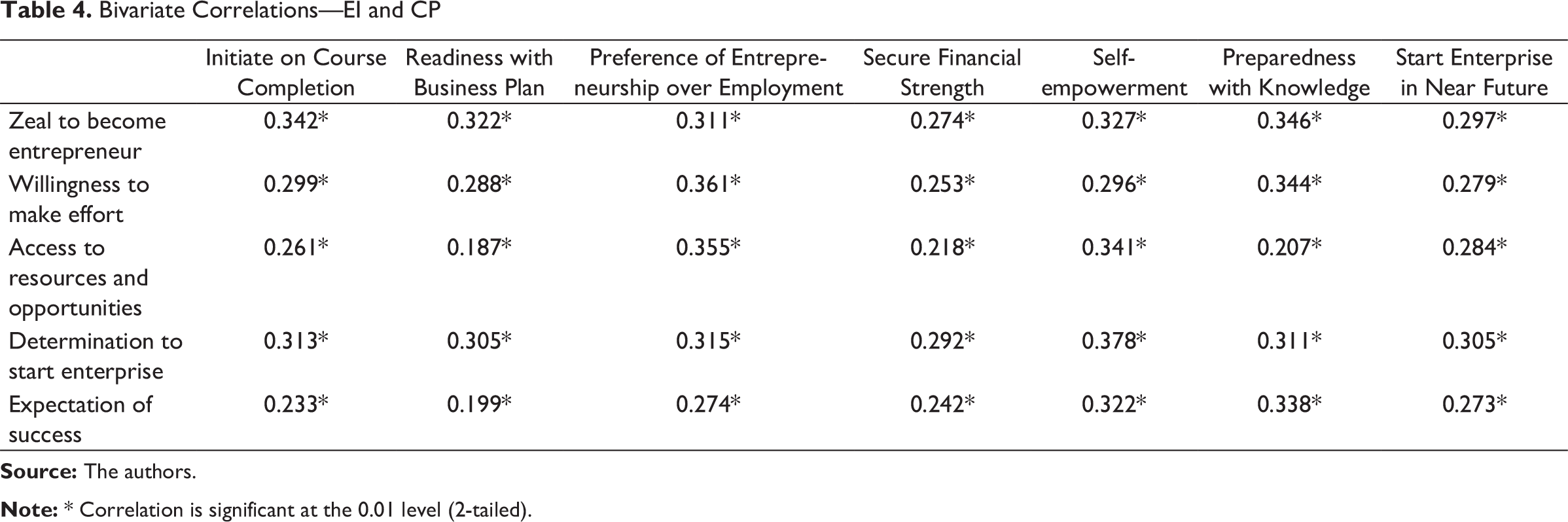
Almost all components of CP, namely preparedness with knowledge, tool of self-empowerment, readiness with business plan, initiation on course completion and preference of entrepreneurship over employment, have moderately significant impact on the EI factors of determination to start an enterprise and the zeal to become an entrepreneur (Table 4). This corroborates that the students attribute great importance to preparing themselves with the fundamental building blocks that are essential for undertaking entrepreneurship. It also indicates that they are willing to make an effort to achieve their preference of entrepreneurship over employment and build their knowledge base on functional skillsets. It is not surprising that the students’ preference of entrepreneurship over employment, affinity for self-empowerment, move towards gaining knowledge on starting a business have a moderately high impact on almost all aspects of creating entrepreneurial intent. However, readiness with a business plan has a weak positive correlation with expectation of success on launching a venture and the desire to start a business, given the opportunity and resources. A plausible explanation is that the students are still lacking in designing a well-thought-out business plan, and this state of unpreparedness affects their chances of starting a business and their expectations of success. Overall, the bivariate relations suggest a moderately significant relationship between the constructs of entrepreneurship intent and CP.
Entrepreneurship Intent Factors and Entrepreneurial Capability Factors
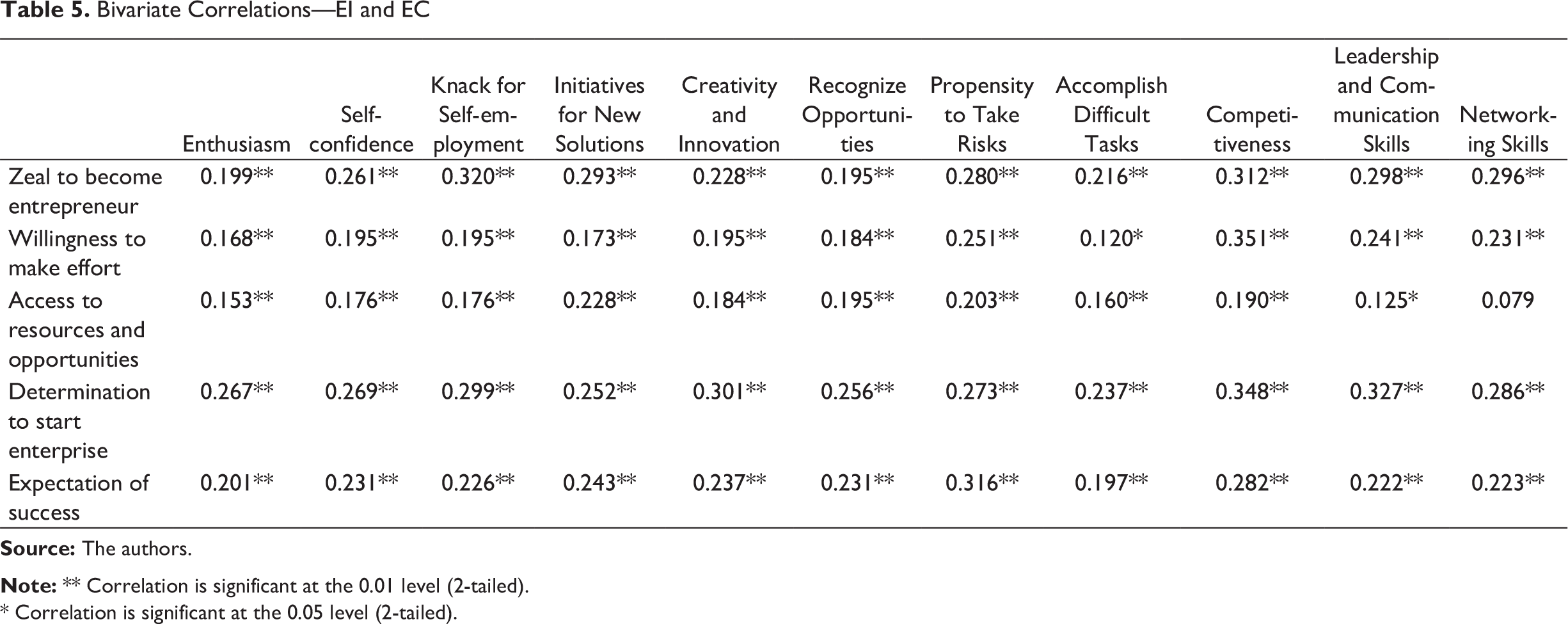
All attributes of EC have a positive relationship with the EI factors with varying levels of significance (Table 5). Findings suggest that the intention to start a business or getting access to the resources and opportunity does not have a significant relationship with any attribute of EC. This can be explained by the fact that the students lack access to the support systems/resources that can develop the entrepreneurial ecosystem, and they do perceive their enthusiasm, self-confidence, creativity and innovation skillsets and leadership and communication skillsets, which may help them secure the necessary resources. EC, along with the students’ ability to take new initiatives, recognize opportunities and accomplish difficult tasks, does not seem to substantially influence their willingness to run their own business. It may be submitted that the capabilities that are inculcated in the students in their courses are not channelized to integrate with the ecosystem to yield entrepreneurial initiatives. The students’ eagerness to compete in the business market with strong competitors is moderately correlated to the attributes of zeal, willingness and determination. Most of the EC outcomes are contributing towards entrepreneurial intent factors, and consequently, the entrepreneurial intent factors are also contributing towards EC outcomes.
Bivariate Correlations—EI and CP
Bivariate Correlations—EI and EC
* Correlation is significant at the 0.05 level (2-tailed).
Regression Analysis
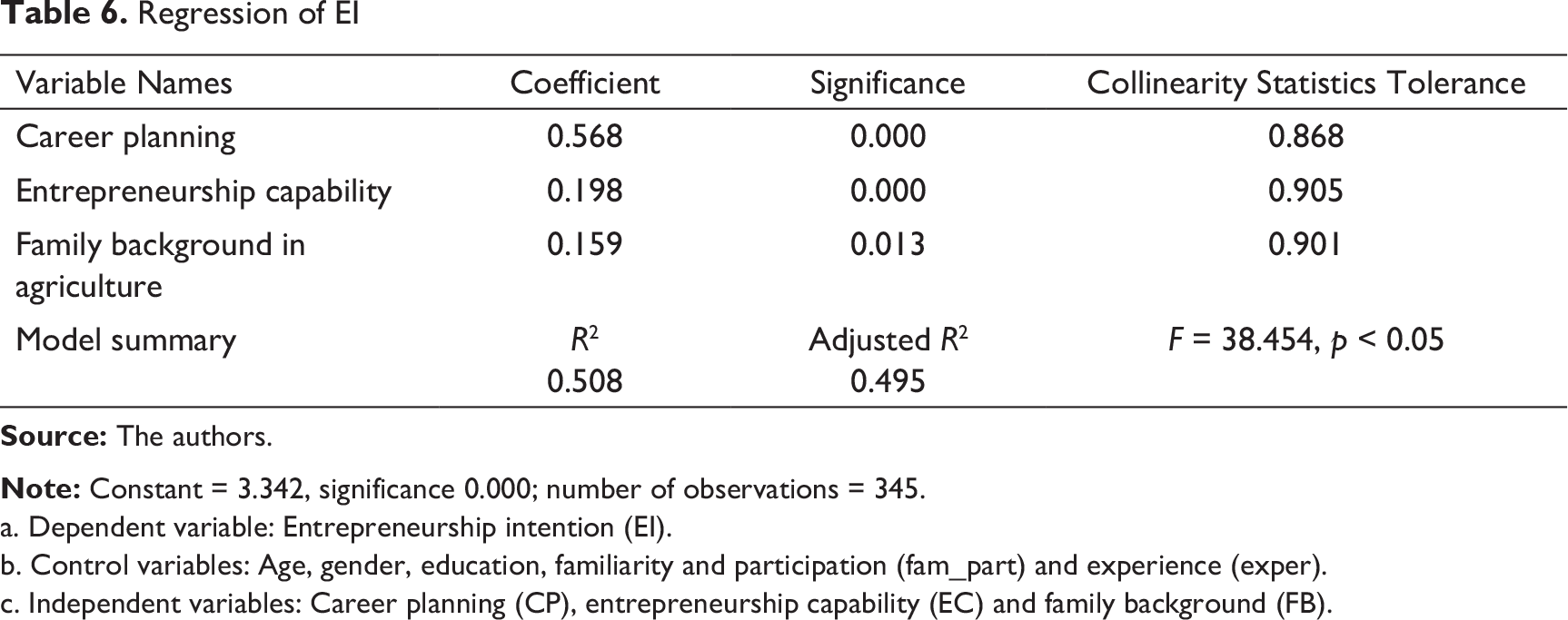
Multivariate linear regression has been employed to identify the explanatory powers that CP, EC and FB have on entrepreneurship intent. Table 6 depicts the result of the regression model with EI as the dependent variable. As this study is focused on ascertaining the impact of CP, EC and FB on EI, control variables have been used for the socio-demographic factors; specifically, age, gender, studies (course/programme), and personal familiarity with & experience in agri-business. The tolerance values for all explanatory values are greater than 0.2 and, hence, multicollinearity is not an issue. The regression coefficients of CP (0.568), EC (0.198) and FB (0.159) are highly significant. On further observation of the characteristics of the regression coefficients, we determine that CP has a significant positive influence on the development of entrepreneurship intent.
Categorization of Respondents in a 2×2 Matrix for Further Regression Analysis
As the parameters CP and EC have exhibited significant explanatory powers on entrepreneurship intent, the study further categorizes the respondents based on the central tendency of CP and EC. For each of the identified categories of respondents, analysis is done to ascertain the predictive ability of the independent variables for measuring entrepreneurship intent.
A 2×2 matrix has been used to depict the two dimensions of CP and EC on its two axes. The 2×2 matrix is a decision support technique and has categorized the respondents across the matrix diagram by defining the four quadrants with high CP/low CP and high EC/low EC combinations (Table 7). The axes have been formed such that the data with the most desirable characteristics (high CP and high EC) are placed in the upper-left quadrant and the data with the least desirable characteristics (low CP and low EC) are positioned in the lower-right quadrant. Median values of CP (3.71) and EC (3.55) have formed the bases for defining the quadrants. Out of the 345 respondents, 111 respondents have CP greater than 3.71 and EC greater than 3.55 (high CP/high EC). Hundred and ten respondents have CP less than 3.71 and EC less than 3.55 (low CP/low EC). Sixty-six respondents have CP greater than 3.71 and EC less than 3.55 (high CP/low EC). Fifty-eight respondents have CP less than 3.71 and EC greater than 3.55 (low CP/high EC).
Regression of EI
a. Dependent variable: Entrepreneurship intention (EI).
b. Control variables: Age, gender, education, familiarity and participation (fam_part) and experience (exper).
c. Independent variables: Career planning (CP), entrepreneurship capability (EC) and family background (FB).
2×2 Matrix of CP and EC Dimensions—Respondent Categorization

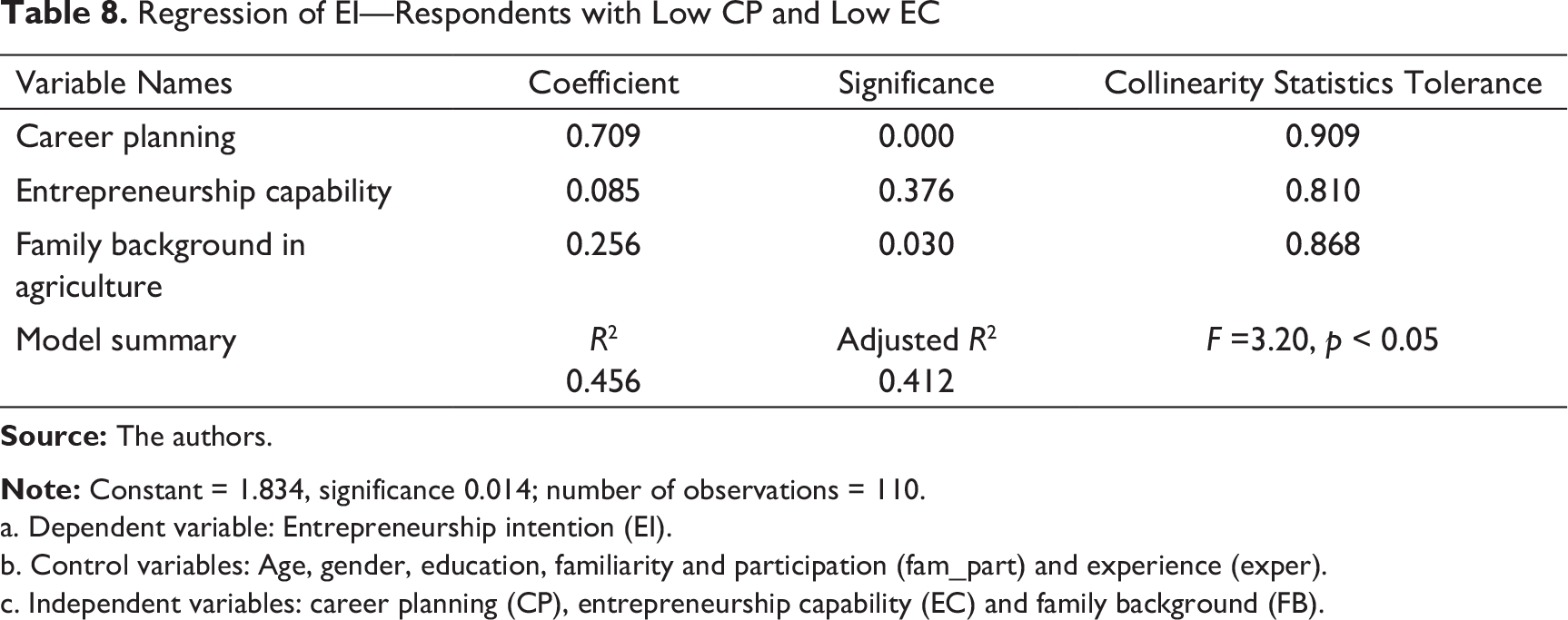
Individual multivariate linear regression analysis has been conducted for each of the four quadrants. The quadrant with low CP/low EC (110 respondents) alone shows moderate predictive power of the regression model (Table 8), and 45.6 per cent of the variability of EI can be explained by CP, FB and EC. The tolerance values for all its explanatory values are greater than 0.2, indicating that there is no multicollinearity in the model. The regression coefficients of CP are highly significant, while FB as a predictor of EI is significant though it has a lower contribution than CP. EC is rather insignificant and does not depict sufficient effect on EI. It is inferred that CP and FB in agriculture with regression coefficients of 0.709 and 0.256 have significant contribution as a predictor of entrepreneurship intent. It must be recalled that these respondents have low ECs as per their self-assessment (Table 7) and, hence, have not invested resources in planning their careers in the direction of becoming entrepreneurs. A plausible explanation can be that these students predominantly value CP as an important attribute for developing entrepreneurship intent. Simultaneously, a FB in agriculture is another vital aspect for developing agri-entrepreneurship. Review of existing literature had revealed that farming is not a preferred occupation for the rural youth and, given an opportunity, farmers’ progeny avoid farming. However, our study suggests that those respondents with a FB in agriculture have substantial inclination, maybe a naturally inherent tendency, to be agri-entrepreneurs, and intergenerational mobility is not expected to happen in case of the youth with a FB in agriculture.
Regression of EI—Respondents with Low CP and Low EC
a. Dependent variable: Entrepreneurship intention (EI).
b. Control variables: Age, gender, education, familiarity and participation (fam_part) and experience (exper).
c. Independent variables: career planning (CP), entrepreneurship capability (EC) and family background (FB).
Conclusion
This study provides an assessment of agri-EIs of university students in eastern India and analyses the underlying factors that contribute towards their decision of taking up agri-entrepreneurship. It reveals that CP and entrepreneurship capabilities have a significant positive influence on promoting agri-entrepreneurship intent. In addition, a FB in agriculture also enables nurturing agri-entrepreneurship among the youth. Further categorizing the respondents based on their CP and entrepreneurship capability tendencies, the findings indicate that CP and a FB in agriculture explain the growth of agri-entrepreneurship intent.
This study estimates agri-EI among respondents having low ECs and low CP initiatives. It is likely that they have not proactively engaged in planning their careers or focused on becoming agri-entrepreneurs. It is also likely that though the universities/HEIs are providing the students with functional skillsets in the course of their education, the programmes/courses seem inadequate in equipping the students with effective CP and instilling their ECs. In addition, it is possible to infer that intergenerational mobility is not expected to happen in case of the youth with a FB in agriculture as they may have a natural, inherent tendency to be agri-entrepreneurs.
Managerial Implications
The present study is based on university students for analysing their agri-entrepreneurial intentions and, hence, the findings may be of significance to educationists to enable them to bring about pedagogical transformations in their curriculum, for providing effective entrepreneurial education. Almost no university/HEI in India that has entrepreneurship as a course in their curriculum provides the students with customized CP programmes, or capability-enhancement training for upskilling their entrepreneurial competencies, or connects them to the ecosystem network. Hence, we suggest that entrepreneurial CP should be developed in the universities/HEIs to nurture entrepreneurial intent among students. It will be a deviation from the generic functional/technical knowledge-driven training programmes on agri-entrepreneurship that are currently provided in the classrooms, but fail to achieve development of entrepreneurial intent among the student base. (Annexure 1 outlines a conceptual model of pedagogical transformation for enabling CP in agri-entrepreneurship, which our research has designed and imparted as a pilot programme in SR Innovation Exchange (SRIX), Warangal, India. Feedback from the pilot project and subsequent applications will reinforce the strength of the model and ensure its replicability and scalability.) This study will also be relevant to agri-business entities, like agri-input suppliers and agri-tech companies, which are exploring growth opportunities in agri-allied sectors. The business houses can invest in providing the infrastructure and establishing capacity-building centres, where the trainers/facilitators scientifically train and develop entrepreneurial career plans and capabilities among the students. Once the students have honed their capabilities and skillsets to operate as agri-entrepreneurs, they become important actors of the agricultural value chain and can generate business volumes for the agri-business entities.
Limitations and Future Research
One of the limitations of the study is in its sample selection: all the HEIs from which the sample has been taken are in the state sector. Thus, the lacunae in CP that serves the base of this proposed pedagogical transformation may be due to a limitation of the state schools only. The other limitation is that the proposed conceptual model of pedagogical transformation has been pilot tested on a small sample of about 50 young adults. Being a small sample and a relatively short time span post training, an assessment of the feedback of the unique training programme is due.
Future research can entail studying similar programmes conducted over a sustained duration and unfold a timeline study of success stories and takeaways, which will help to identify replicable and scalable models for developing entrepreneurship intent among the youth. Such blended programmes incorporating pedagogical transformations have the potential of playing a pivotal role for promoting entrepreneurial intentions.
Footnotes
Acknowledgement
We are thankful to the students and faculty members of North Bengal University, West Bengal University of Animal & Fishery Sciences, Bidhan Chandra Krishi Viswavidyalaya, Kalyani University and Aliah University for the support that they have extended for the survey. The authors are grateful to the anonymous referees of the journal for their extremely useful suggestions to improve the quality of the article. Usual disclaimers apply.
Declaration of Conflicting Interests
The authors declare no potential conflicts of interest with respect to the research, authorship and/or publication of this article.
Funding
The authors disclosed receipt of the following financial support for the research, authorship and/or publication of this article: The study has been undertaken as a part of the UKIERI (UK India Education Research Initiative) research grant project on ‘Fostering Entrepreneurship for Sustainable & Inclusive Agri-Food Innovation—A Comparative Analysis of India and UK’, from March 2018 to December 2020.
Annexure 1 Conceptual Model of Pedagogical Transformation
For developing agri-entrepreneurship, a pilot programme of Pedagogical Transformation has been designed and run in SRIX (SR Innovation Exchange), Warangal, India. This programme is intended to supplement the functional/technical knowledge that is provided by the universities in their curriculum.