







Abstract
A number of women are leading a variety of organizations in Pakistan. The available research on the effectiveness of women’s leadership is not so clear, and there have been mixed findings across different contexts. The present research attempts to view women’s transformational leadership as a source of employees’ trust and connectivity that leads to innovative behaviour of employees in women-led organizations of Pakistan. The study also investigates the simple as well as sequential mediation of trust and connectivity in the relationship between women’s transformational leadership and employees’ innovative behaviour. Using a survey-based questionnaire, cross-sectional data were collected from 366 employees of different organizations which are led by women. These organizations include educational institutes, advertising agencies and fashion houses. The data were analysed using the MEDTHREE analysis for direct and indirect hypotheses (single and sequential mediations). The results indicate that women’s transformational leadership fosters trust, connectivity and innovative behaviour in the employees. Further, the results supported that employees’ trust in their leader and connectivity mediate the relationship between women’s leadership and innovative behaviour of the employees.
Introduction
Leadership has been one of the most investigated topics in organizational research (Bryman, 2011; Sahni & Sinha, 2018). Previous research has focused on leadership styles, leadership theories and its outcomes, yet the literature has turned a blind eye towards women’s leadership (Kellerman & Rhodes, 2014; Mayer, 2017). There is no clear argument about the superior behavioural outcomes of employees (e.g., trust, connectivity and innovative behaviour) working under the leadership of women (Khalili et al., 2016; Williams & Tiedens, 2016; Yammarino et al., 2017). Review of literature shows that studies on women’s leadership effectiveness have shown rather mixed results throughout different contexts including developed and developing countries (Kaiser & Wallace, 2016; Williams & Tiedens, 2016). According to Williams and Tiedens (2016), women in the leadership positions tend to be perceived as unlikable. A recent meta-analysis by Williams and Tiedens (2016) found that subordinates evaluate female leaders slightly more negatively than their male counterparts. However, there are other studies that demonstrate the superiority and comparatively greater effectiveness of women leaders (e.g., Khalili et al., 2016; Verma, 2018).
With respect to gender differences, another debate is the different leadership styles of men and women when it comes to leading the organization. Male leadership has a variety of styles ranging from servant leadership style to dictatorship, while literature shows that women have a particular leadership style, that is, transformational leadership style. Women are considered sensitive, emphatic and humble in nature which gives them an edge to be more trustworthy. A research study by John Molson School of Business (JMSB) suggested that transformational leadership style is best suited to women leaders. This is because women have the ability to motivate, connect (Jaskiewicz & Tulenko, 2012) and develop trust among their subordinates (Berson et al., 2001). A number of studies have shown that women tend to build high-quality relationships with their employees, where employees show innovative behaviour without any fear (Jung et al., 2003; Khalili et al., 2016). Research also indicates that women have a higher emotional intelligence which is significant in leadership success, especially for creative and innovative organizations (Mayer, 2017). An extensive survey of 7,280 leaders conducted by Zenger and Folkman (2012) revealed surprising results where women scored higher compared to men in overall leadership effectiveness at all levels. In another survey, women outscored men in 15 out of 16 competencies, which are considered most significant for outstanding leadership. Eagly et al. (2003) showed that employees show more innovative behaviour under female leadership compared to male leadership.
Although the relationship of women’s leadership with employees’ outcomes has been extensively investigated, there are relatively few empirical studies and models to validate the role of women leaders to induce employees’ trust and connectivity, which lead to employees’ innovative behaviour (Girdauskienė, 2015). Literature on gender and leadership styles, however, indicates that women who are more empathic, caring and friendly towards subordinates are considered better transformational leaders compared to men (Ayman et al., 2009). As Growe and Montgomery (1999) state, women leaders are more interested in transforming the self-interests of people into organizational goals by encouraging feelings of self-worth and greater participation. Transformational leaders have been found to connect better with subordinates (Ayman et al., 2009), making them aware of organizational goals and develop followers’ trust which leads to better organizational performance (Brown et al., 2005). Thus, we believe that women leaders possess greater competencies to connect with subordinates and develop followers’ trust, which will be quite instrumental in inducing employees’ creativity behaviour. Hence, the main purpose of the study is to investigate this inquiry by studying the impact of women’s transformational leadership on employee trust and connectivity, leading to employees’ innovative behaviour.
Contextual View
The participation of female workforce in Pakistan has increased tremendously in the last decade (Sohail, 2018). There has been an increase of 7 million Pakistani women in the corporate world, and the participation of female workforce in economy has increased by 10 percentage points since 1990 (Salman, 2017). Although, the situation does not allow for self-congratulation, the trend of female workforce participation has significantly increased in the last two decades. As compared to other countries, though Pakistani women still have a long way to go, much progress has been made in this area. Women in Pakistan are working at different organizational levels, that is, non-managerial, lower level, middle level and top-level. In Pakistan, a growing trend has been witnessed in which women leaders are leading many organizations like educational institutions and NGOs (Salman, 2017). However, the current knowledge on women’s leadership concept does not show much evidence of the effectiveness of women as organizational leaders in Pakistan (Sohail, 2018). The current study thus not only addresses the knowledge gap between women’s leadership and employees’ innovative behaviour through greater trust and connectivity but also highlights how Pakistani women play a leading role in managing employees’ innovative behaviour.
The remainder of this article is structured as follows: The first section elaborates the objectives of the study. The second section presents review of literature and theoretical foundation for the study hypotheses. The third section presents the methodology of the study followed by the fourth section presenting the findings of the study. The fifth section covers conclusion and discussion on the study findings. The sixth section discusses the implications of the study followed by the seventh section which highlights directions for future research.
Objectives of the Study
Based on limited research as well as inconclusive findings on women’s leadership effectiveness throughout different contexts including developed and developing countries (Kaiser & Wallace, 2016; Khalili et al., 2016; Williams & Tiedens, 2016; Yammarino et al., 2017), this study aims to investigate the effect of women’s transformational leadership on employees’ trust and connectivity with leader, and their subsequent effect on employees’ innovative behaviour.
Review of Literature
Though literature on gender and leadership style is inconclusive (e.g., Kaiser & Wallace, 2016; Williams & Tiedens, 2016), it indicates that female leaders have a greater tendency of transformational leadership style compared to their male counterparts (Ayman et al., 2009). The proponents of transformational leadership have a common view that followers of transformational leaders have the maximum trust in their leaders (Bart & McQueen, 2013). These leaders respect their followers through which employee motivation is achieved (Butler et al., 1999; Conger & Kanungo, 1987), which ultimately helps to them trust their leaders and perform beyond expectations (Sashkin, 1988). The meta-analysis of ‘transformational leadership and followers’ trust’ suggests that trust is one of the most important features of transformational leaders (Dirks & Ferrin, 2002). Berson et al. (2001) suggested that out of many leadership styles, transformational leadership is the strongest predictor of trust. As stated earlier, transformational leadership style is more suited to women leaders (Ayman et al., 2009), and women leaders are known to be more empathic and humble in nature and more sensitive (Ayman et al., 2009). It has been predominantly stated that female leaders who display regarding, empathic and intuitive behaviour focus mostly on the softer side of leadership (Brandt & Laiho, 2013; Eagly et al., 2003). Eagly et al. (2003) believe that female leaders are more supportive and compassionate and hence display personal concerns for subordinates which promotes trust among subordinates (Powell & Graves, 2003). Numerous other studies (Gundersen et al., 2012; Raes et al., 2013) have advocated that though transformational leadership style can manifest in both genders, it, however, more closely matches with women’s leadership (Sharif, 2019), and some have even termed it as ‘feminine leadership style’. Hence, women are believed to be more transformational and are more likely to elicit trust among their followers (see Figure 1). Based on the discussion above, we theorize that:
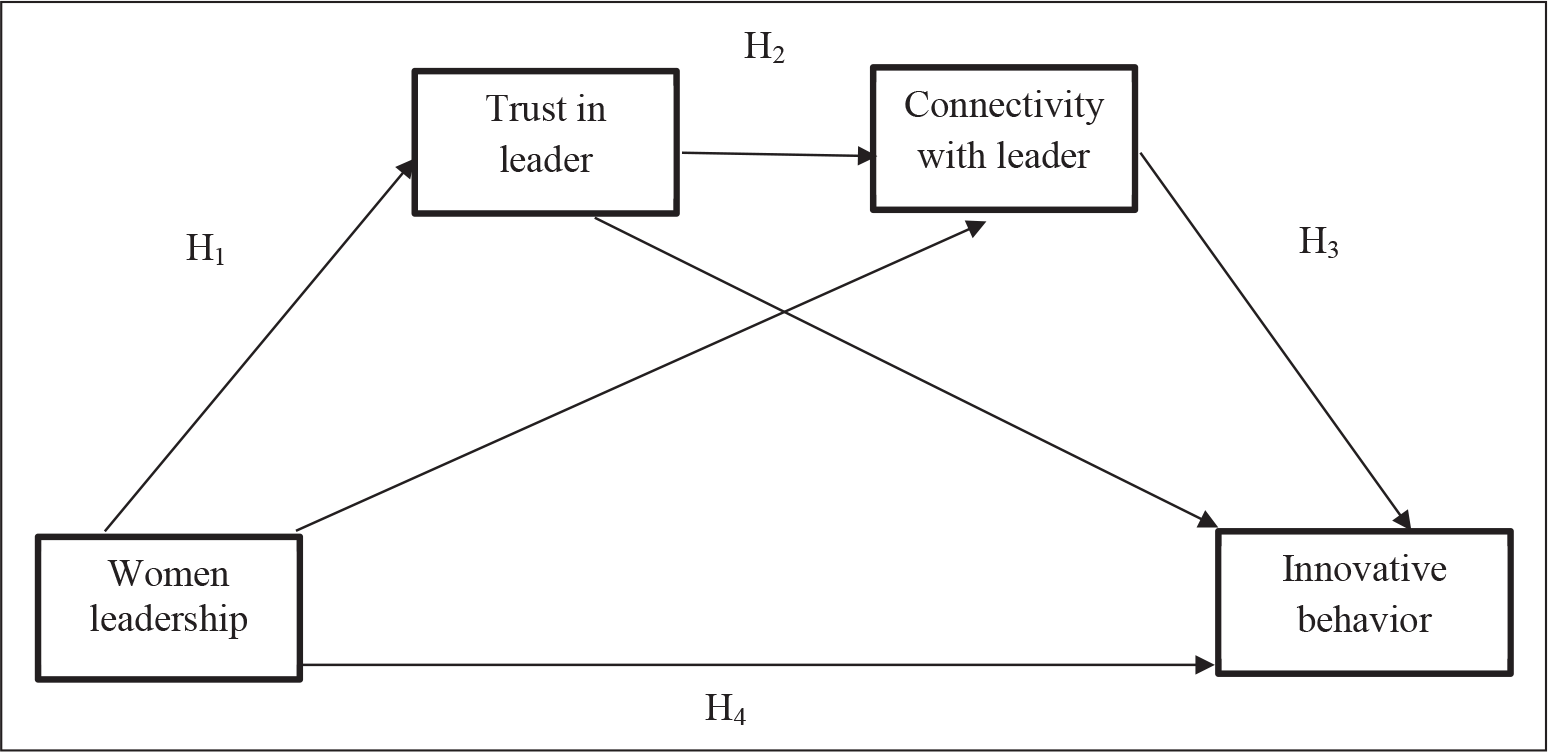
The linkage between employees’ trust in his/her supervisor and employees’ performance outcomes has been overwhelmingly stated (Cropanzano & Mitchell 2005; Dirks & Ferrin, 2002; Udomki et al., 2019), and the concept of trust and its effects on employees have received enormous attention in organizational research in the past two decades (Dirks & Ferrin, 2002). Trust can be defined as the trait of believing in the honesty and reliability of others (Brown et al., 2005). As stated earlier, employees’ trust in leader has been linked to better positive employees’ attitude, better citizenship behaviour and greater connectivity with supervisor (Colquitt et al., 2007), which encourages openness between a leader and his/her subordinates (Dutton & Heaphy, 2003). Advocates that even the slightest trust is likely to build extended relationships. It is this trust and respect that motivate the subordinates to perform above their expectations. According to Gillespie and Mann (2004) and Dirks and Ferrin (2002), subordinates’ trust in the leader is a significant factor in shaping the leader–subordinate relationship. Bijlsma and Koopma (2003) assert that trust is the primary element that builds cooperation and is a key to organizational performance. Trust is closely linked with how an individual is treated (fair/unfair), whether their promises are honoured and whether promises and obligations will be honoured in future (Fuchs, 2003); hence, it is argued that subordinates’ trust in their leader will lead to close connections with their leader. Further, as advocated earlier, trust is one of the most significant features of transformational leadership (Dirks & Ferrin, 2002). Berson et al. (2001) explicitly relate greater subordinate trust with transformational leaders. In the same vein, De Cremer and van Knippenberg (2005) believe that one of the key behaviours of transformational leaders is their ability to develop trust in the follower–leader relationship. Since transformational leadership suits women’s leadership better (Ayman et al., 2009; Jaskiewicz & Tulenko, 2012), we theorize that women’s transformational leadership will be more trusted by their followers, which in turn will help to develop a close connection between the leader and subordinates. It is therefore postulated that trust in women transformational leaders will significantly affect subordinates’ connectivity with their respective leaders.
Further, the followers’ connectivity with their leader encourages a safe environment, which enables a trustworthy relationship with co-workers (Losada & Heaphy, 2004), resulting in sharing of new ideas with one’s leader. Further, reported that people show creative and innovative behaviour when they have a connection with their co-workers. This connection places employees in a psychologically safe environment (Losada & Heaphy, 2004), where they feel free to share their new ideas (Delbecq & Mills, 1985). The leaders in an organization can induce creative and innovative behaviour by encouraging subordinates and connecting with them (Albrecht et al., 1991). Kanter (1983) reported that one of the strongest indicators of employee innovative behaviour is connectivity with the managers. The literature on connectivity and innovation provides sufficient evidence that connectivity creates innovation (Christensen et al., 2006). Based on the social exchange theory and leader–member exchange (LMX) theory, there is substantial evidence that innovation depends on an employees’ network of relationship and ties within the organization such that this relationship provides the requisite information resources and inspiration, helping employees develop new and innovative ideas (Perry-Smith, 2006; Zhou et al., 2009). Parallel with the same argument, numerous researchers (Perry-Smith, 2006; Zhou et al., 2009) explicitly assert that a well-connected employee obtains valuable inputs from group leaders and develops high-quality LMX which in turn facilitates employees’ innovative behaviour. It has been advocated that transformational leaders who are more empathic and trustworthy help followers to get well-connected, which in turn helps the followers to reciprocate with greater commitment and innovative behaviour (Graen & Uhl-Bien, 1995; Liden & Graen, 1980). Hence, it is postulated that employees who are well connected with their leaders lead to innovative behaviour (see Figure 1).
Literature about innovation also evidences that innovation is the creation of unique and different products or services for the betterment of an organization (Woodman et al., 1993). Innovation is considered to be one of the important competitive weapons of the learning organizations. Transformational leadership has been identified as a source of innovative behaviour. These leaders motivate their employees and enhance their willingness to work innovatively (Mumford et al., 2002). Literature on leadership and innovation provides ample support that transformational leadership has a positive impact on innovative behaviour (Waldman & Leanne, 1994). In one of the studies, Jung et al. (2003) assert that transformational leaders possess the tendency to promote innovative behaviour in their subordinates. Similar findings are presented by Howell and Higgins (1990) who suggested that in order to promote organizational innovation, organizations must develop transformational leaders. Wang et al. (2015) also found a significant effect of greater employees’ connectivity (social exchange theory) and LMX quality on employees’ innovative behaviour. Michaelis et al. (2009) found a significant positive effect of transformational leadership on subordinates’ innovation behaviour. Therefore, it is hypothesized that women who are more empathic and transformational will induce better innovative behaviour among their subordinates.
The relationship between a leader behaviour and organizational behaviour is well established (Rajnandini et al., 1999; Sims & Brinkman, 2002). Transformational leaders have the capacity to enhance psychological safety of employees, which leads to an environment of trust in their leaders leading to greater employee connectivity (Dirks & Ferrin, 2002; Gillespie & Mann, 2004), and ultimately results in employees’ innovative behaviour (Walumbwa & Schaubroeck, 2009). Transformational leaders who are empathic and supportive are highly regarded among followers (Butler et al., 1999). Researchers have a consensus that trust is one of the significant features of transformational leaders (Dirks & Ferrin, 2002). As suggested by Berson et al. (2001), out of many characteristics, trust is the most significant feature of transformational leaders. Further, as already advocated in the preceding sections, it is this trust and respect that induce subordinates to perform beyond expectations. Further, due to greater amount of trust, the risk of vulnerability is also decreased, and employees do not hesitate to share their ideas with their leaders (Gmach et al., 2015). Research provides adequate evidence of the significant association between the number of ideas and likelihood of creativity (Rossmann & Fink, 2010), suggesting that the likelihood of innovative idea increases as the number of ideas increases. Hence, it is implied that women transformational leaders who are more responsive provide an environment where trust develops and creativity flourishes. More explicitly, we theorize that followers’ trust in women transformational leaders mediates the effect of women’s transformational leadership on followers’ innovative behaviour.
Further, once trust is cultivated, the employees feel connected to their leader (Christensen et al., 2006) and feel secure and associated. This feeling of connectivity encourages new idea generation by the employees (Björk & Magnusson, 2009). As mentioned in the earlier sections, researchers have used social exchange theory as well as LMX theory and argued that transformational leadership develops a good relationship network among subordinates, which is considered a vital factor in fostering employees’ innovative behaviour (Zhou et al., 2009). Employees who are well-connected with their leader reciprocate with greater commitment and innovative behaviour (Graen & Uhl-Bien, 1995; Liden & Graen, 1980). As Albrecht et al. (1991) assert, through encouragement and engagement with subordinates, leaders can induce subordinates’ creativity. There is sufficient evidence confirming the connection between transformational leadership, employees’ connectivity and innovation (Christensen et al., 2006). Hence, we postulate that subordinates’ connectivity with their leaders significantly mediates the relationship of transformational women’s leadership and followers’ innovative behaviour. Since, women transformational leaders develop trust among the subordinates (Brandt & Laiho, 2013; Eagly et al., 2003) which further leads to employees’ connectivity (Colquitt et al., 2007) that ultimately results in innovative behaviour of followers (Christensen et al., 2006), we further deduce that both trust and connectivity sequentially mediate the relationship between woman transformational leadership and followers’ innovative behaviour.
Methodology
Sample and Data Collection
The study is quantitative in nature for which cross-sectional dual-source data were collocated using a survey-based questionnaire. The data were collected from women-led organizations including educational institutions, advertising agencies and fashion houses situated in the twin cities of Islamabad (National Capital) and Rawalpindi. Subject to voluntary participation, the questionnaires were provided to employees in printed form. The purpose of the study was explained to the respondents before data collection. A total of 700 questionnaires were distributed, out of which 360 were finally used for hypothesis testing (response rate = 51%).
Measurement and Data Analysis
The study adopted validated measures from the previous literature. Women’s transformational leadership was measured using seven items adopted from Gong et al. (2009) (α = 0.91). Innovative behaviour was measured using a 7-items scale developed by Scott and Bruce (1994) (α = 0.94). To measure connectivity, a 7-item scale developed by Oldham and Cummings (1996) was used (α = 0.93). To measure employee trust in his/her employer, a 4-item scale developed by Robinson (1996) was used (α = 0.81). The collected data were analysed using SPSS 20. Cronbach’s alpha, descriptive statistics and Pearson’s correlation were used initially. For direct and indirect hypothesis testing, Hayes’s (2013) MEDTHREE analysis was used, which is considered the most sophisticated method of sequential mediation available today.
Before testing the hypotheses of the study, it is essential to determine the validity and internal consistency of the scales used to measure the variables. To determine the internal consistency, Cronbach’s alphas were calculated for women’s transformational leadership, employees’ innovative behaviour, employee connectivity and employee trust which were found to be 0.91, 0.94, 0.93 and 0.81, respectively, and are significantly exceeding the threshold level. Secondly, the corresponding composite reliability was measured for all the four study variables (CR = 0.89 to 0.96), indicating sufficient reliability of the scale. Furthermore, the average variance extracted (AVE) values for all the four variables (0.54 to 0.67) confirmed convergent validity. The Kaiser–Meyer–Olkin statistics (Table 1) are showing significant adequacy of the sample size (χ2 = 9549.92, p < 0.01) (see Table 1).
Convergent and Discriminant Validity
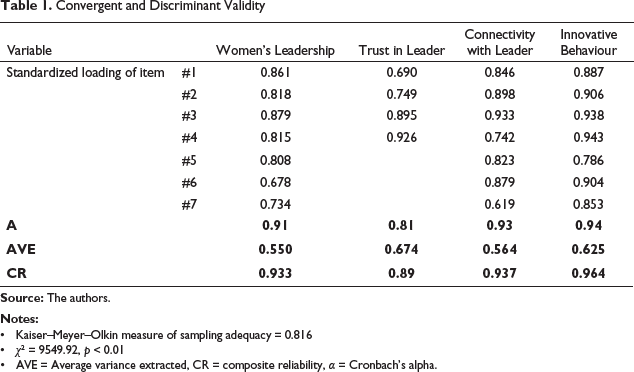
Kaiser–Meyer–Olkin measure of sampling adequacy = 0.816 χ2 = 9549.92, p < 0.01 AVE = Average variance extracted, CR = composite reliability, α = Cronbach’s alpha.
Sample Characteristics
Results and Findings
The sample characteristic, descriptive statistics, correlation and the analysis of direct and indirect hypotheses are shown in Tables 2–6 and discussed in detail.
Descriptive Statistics
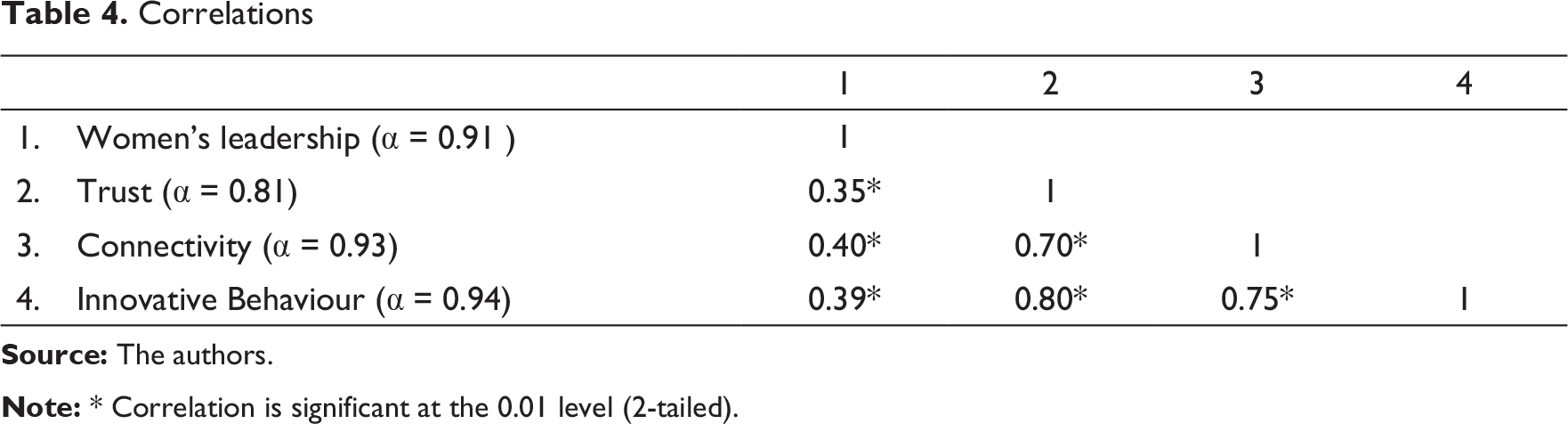
Correlations
Results of Direct Hypotheses
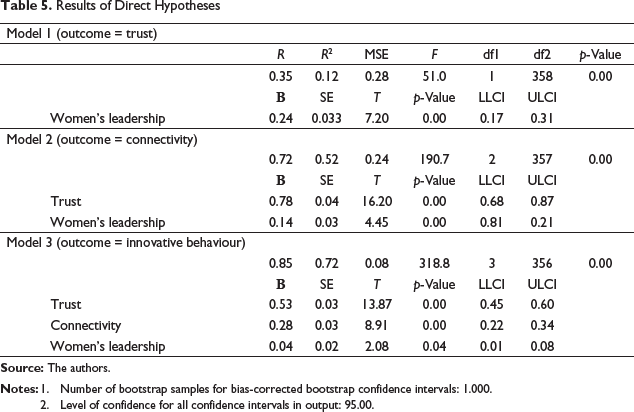
Number of bootstrap samples for bias-corrected bootstrap confidence intervals: 1.000. Level of confidence for all confidence intervals in output: 95.00.
Results of Indirect Hypotheses
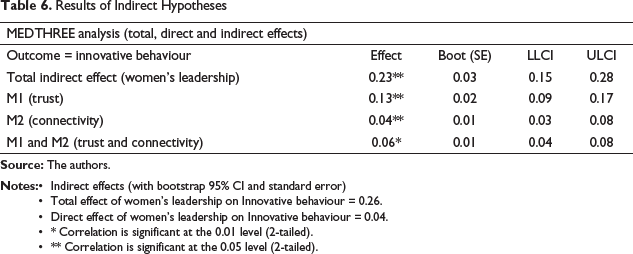
Indirect effects (with bootstrap 95% CI and standard error) Total effect of women’s leadership on Innovative behaviour = 0.26. Direct effect of women’s leadership on Innovative behaviour = 0.04. * Correlation is significant at the 0.01 level (2-tailed). ** Correlation is significant at the 0.05 level (2-tailed).
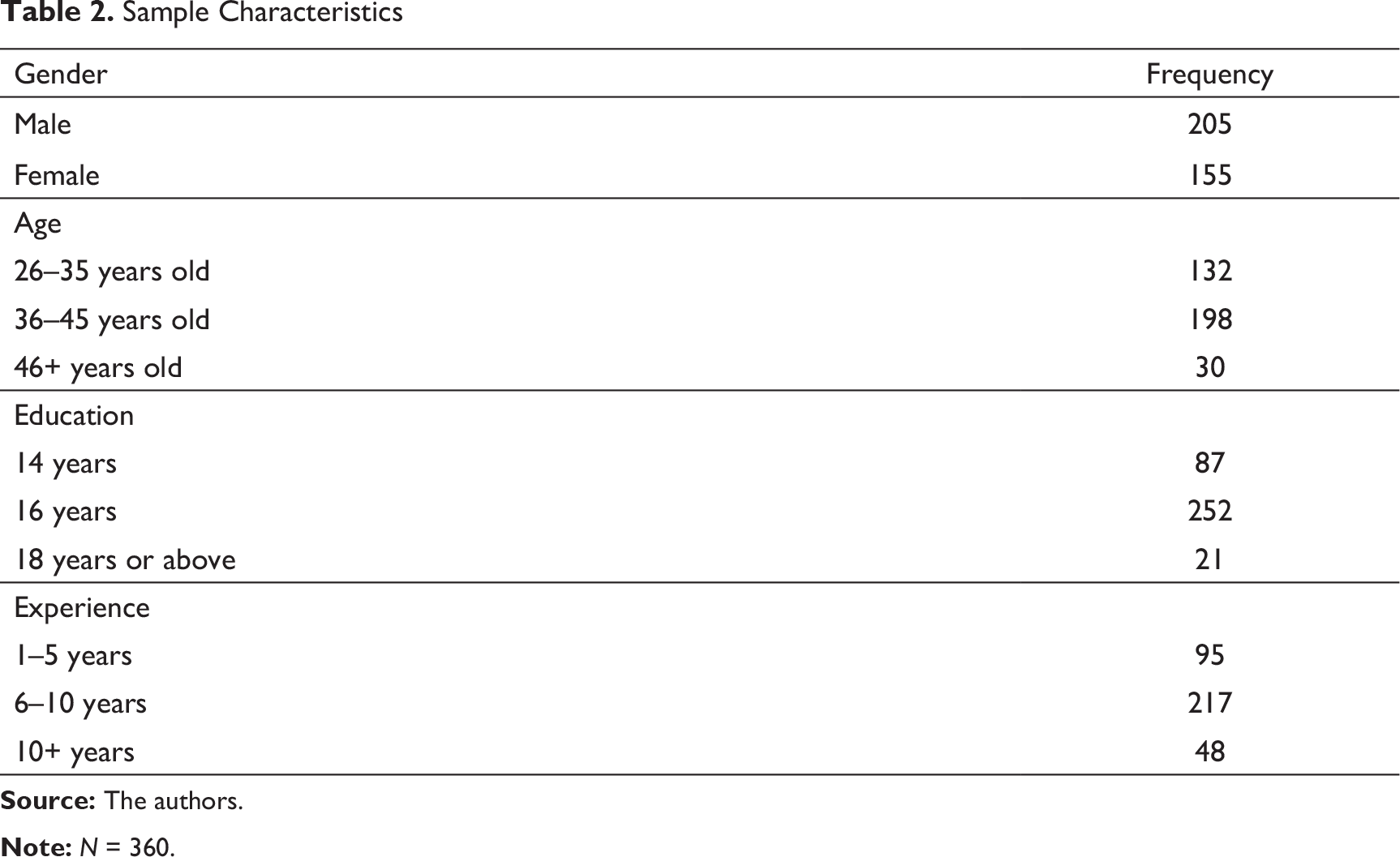
Table 2 shows the demographic attributes of the employees working under a female leader from different organizations of Pakistan. Out of 360 respondents, 205 were male while 155 were females. A total of 132 employees were in the age bracket of 26–35 years, 198 were 36–40 years old and 30 employees were above the age of 46. Out of the total sample, 87 respondents were having 14 years of education, 252 respondents having 16 years of education whereas 21 respondents were having 18 years and above qualification, thus confirming sufficient educational background of the respondents. The experience of the employees was also recorded, and it was observed that 95 respondents have 1–5 years of experience, 217 respondents have 6–10 years of experience and 48 have more than 10 years of experience.
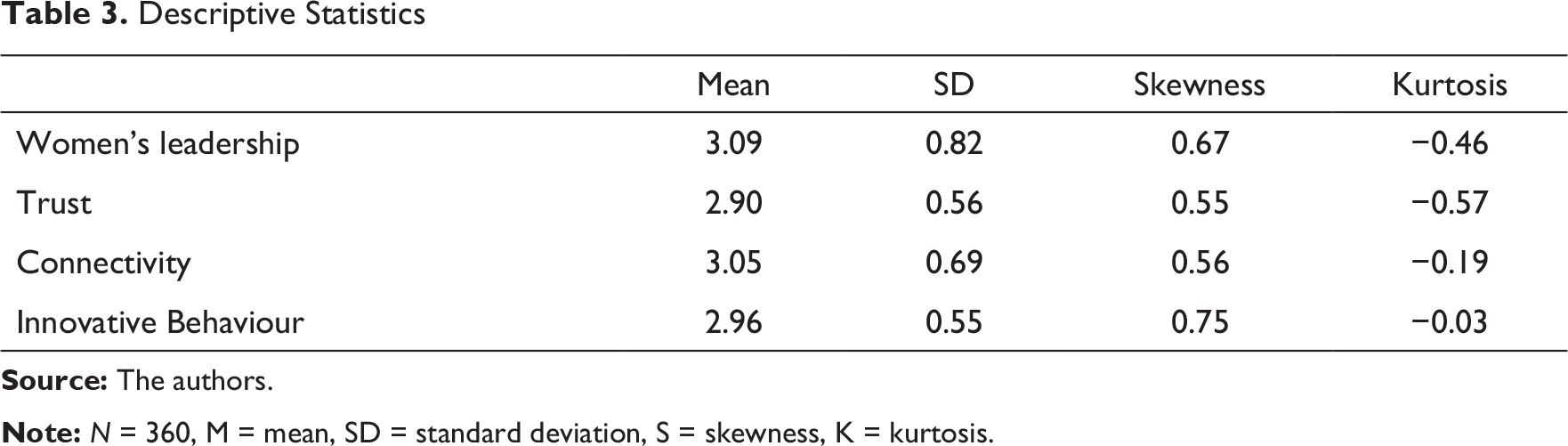
Table 3 provides the mean, standard deviation, Skewness and Kurtosis of the study variables. The descriptive values for women’s leadership (M = 3.09, SD = 0.82), trust (M = 2.90, SD = 0.56), connectivity (M = 3.05, SD = 0.69) and innovative behaviour (M = 2.96, SD = 0.55) as well as the Skewness and Kurtosis values are within the appropriate range.
The correlation analysis between the variables, as shown in Table 4, evidences that all relationships were significant in the expected direction. The results indicate that women’s leadership is positively related to trust in the leader (r = 0.35, p < 0.001), connectivity with the leader (r = 0.40, p < 0.001) and innovative behaviour (r = 0.39, p < 0.001). The results also confirm that trust is positively related to connectivity (r = 0.70, p < 0.001) and innovative behaviour (r = 0.80, p < 0.001). Connectivity also has a positive correlation with innovative behaviour (r = 0.75, p < 0.001).
The study tested seven hypotheses using four variables. The MEDTHREE analysis technique was applied to test the four direct and three indirect hypotheses. The results are tabulated in Tables 5 and 6. The result of hypothesis 1 indicates that women’s leadership has a positive association with trust in the leader (β = 0.24, t = 7.20, CI [0.17, 0.31]); hence, hypothesis 1 is supported. The result of hypothesis 2 is also significant (β = 0.78, t = 16.20, CI [0.68, 0.87]), which supports the fact that employees’ trust in leader leads to connectivity with the leader, therefore, hypothesis two is also accepted. The result of the third hypothesis was also found to be significant (β = 0.28, t = 8.91, CI [0.22, 0.34]), indicating full support to the fact that connectivity has a positive impact on innovative behaviour of the employees. In the same vein, hypothesis 4 stated that women’s leadership has a positive impact on innovative behaviour of the employees. The statistical evidence confirmed it (β = 0.04, t = 2.08, CI [0.01, 0.08]) and H4 is supported.
The results of the indirect hypotheses showing the total, direct and the indirect effects are presented in Table 6. The total indirect effect of women leadership on innovative behaviour is 23% as shown in Table 6 (β = 0.23, SE = 0.03, CI [0.15, 0.28]). The result indicated full support for hypothesis 5, confirming the mediating effect of trust on the relationship between women’s leadership and innovative behaviour (β = 0.13, SE = 0.02, CI [0.09, 0.17]). The estimates showed that 56% influence of women’s leadership on innovative behaviour is mediated by trust in the leader. The result indicated full support (β = 0.04, SE = 0.01, CI [0.03, 0.08]) for hypothesis 6, confirming that connectivity mediates the relationship between women’s leadership and innovative behaviour. The estimates showed that 17% influence of women’s leadership on innovative behaviour is mediated by connectivity with the leader.
Hypothesis 7 postulated that both trust and connectivity sequentially mediate the relationship between women’s leadership and innovative behaviour. The MEDTHREE analysis (see Table 6) supported the hypothesis that trust and connectivity sequentially mediate the relationship between women’s leadership and innovative behaviour (β = 0.06, SE = 0.01, CI [0.04, 0.08]). The estimates showed that 26% effect of women’s leadership on innovative behaviour is sequentially mediated by trust in and connectivity with the leader.
Conclusion and Discussion
Although, the body of literature on women and gender issues has progressed, there have been very few empirical studies that shed light on working women, especially in the context of women’s leadership. The findings of the present study revealed that employees working under women’s leadership develop trust and connectivity with their leader, which fosters employee innovative behaviour at the workplace. The study finds that women’s transformational leadership has a positive impact on employees’ trust which is supported by earlier researchers (e.g., Berson et al., 2001). Based on this finding, it can be argued that organizations with women’s leadership also have high level of employees’ trust in their leader. Bennis and Nanus (1985) assert that under transformational leadership, followers have maximum trust in their leaders. Berson et al. (2001) suggested that out of many leadership styles, transformational leadership is the strongest predictor of trust which has been found to develop employees’ connectivity and subsequently leads to employees’ greater innovative behaviour (Jaskiewicz & Tulenko, 2012). This study finds similar results confirming a positive connection between employees’ connectivity with leader and employee innovative behaviour, which is parallel with earlier findings (Beaty et al., 2014; Jaskiewicz & Tulenko, 2012). These findings also imply that employees working under women’s leadership have a greater likelihood of idea generation and idea implementation within their workplace. Similarly, the study findings also unveil a positive connection between woman transformational leadership and employees’ innovative behaviour which is in line with earlier researchers (Amabile, 2012; Eagly et al., 2003). This also confirms the earlier findings of this study that woman transformational leaders develop greater trust and connectivity among the subordinates which eventually result in employees' innovative behavior.
The other argument of this research was to investigate the single and sequential mediation of employees’ trust and connectivity between the relationship of women’s transformational leadership and employees’ innovative behaviour. The study findings indicate that women’s leadership fosters employees’ trust in leader, which enhances employees’ connectivity and leads to employee innovative behaviour. This supports the proposition that transformational leaders have the capacity to enhance psychological safety of employees, which leads to an environment of trust in their leaders and to innovative behaviour (Walumbwa & Schaubroeck, 2009). Further the study findings also parallel with Björk and Magnusson (2009) who reported that once the trust is cultivated, employees feel connected, secure and associated with their superordinate which encourages new idea generation by employees (Sims & Brinkman, 2002; Townsend, 2010). Hence, the study findings also confirm that women transformational leaders sequentially create employees’ trust and connectivity, and hence the sequential mediating effect of trust and connectivity between women’s transformational leadership and innovative behaviour is supported.
Implications of the Study
The study has two-fold implications. First, the study strengthens the notion of LMX and social exchange theory. In this dynamic era, it is impossible to survive and compete without being innovative and creative. One of the main sources of generating innovative ideas is the role of a leader. The findings of this study imply that women’s transformational leaders are much capable of influencing their subordinates by creating trust among them, which leads to strong connectivity with the leaders and ultimately results in followers’ innovative behaviour. Prior literature shows ample evidence about the relationship between transformational leadership and innovative behaviour of the employees. The present study elaborates the findings of the previous research in the context of women’s leadership—inevitable for future businesses.
Second, the study findings suggest the inclusion of women leaders in organizations, especially where the innovative behaviour of the employees is desired, such as advertising and fashion industries. The current trends in the corporate governance and management validate the findings of the present study. The code of corporate governance by the Security and Exchange Commission of Pakistan (SECP) has made it compulsory for companies to include at least one female member in the corporate board of directors. The findings of the study also corroborate the psychological perspective of women leaders by imparting higher trust and connectivity among their followers and leading to innovative behaviour (Björk & Magnusson, 2009; Christensen et al., 2006; Zhou et al., 2009).
Limitations and Future Research Directions
The extant research shows a great deal of evidence of the leadership-related outcomes, yet researchers have turned a blind eye towards the most emerging form of leadership, that is, women’s leadership. Hence, the current study embarked upon this emerging form of women’s leadership and employees’ innovative behaviour. The present study is, however, limited in its scope in a number of ways. First, the study is explanatory in nature and has used a quantitative approach for hypotheses testing. Future research can further explore the area of women’s transformational leadership in more depth using a qualitative approach. This will help to clarify the effectiveness of women’s leadership and more particularly the underlying mechanism of how woman leadership works. Further, the results of the study are based on responses collected only once (Cross Sectional Study), hence a longitudinal study may be conducted for better generalization of the results. Women leaders have different styles when it comes to managing organizations; however in the present study, women’s leadership has been measured with transformational leadership style only. Future research may investigate other styles of leadership for further investigation of the phenomenon.
Footnotes
Acknowledgement
The authors are grateful to the anonymous referees of the journal for their extremely useful suggestions to improve the quality of the article. Usual disclaimers apply.
Declaration of Conflicting Interests
The authors declared no potential conflicts of interest with respect to the research, authorship and/or publication of this article.
Funding
The authors received no financial support for the research, authorship and/or publication of this article.
